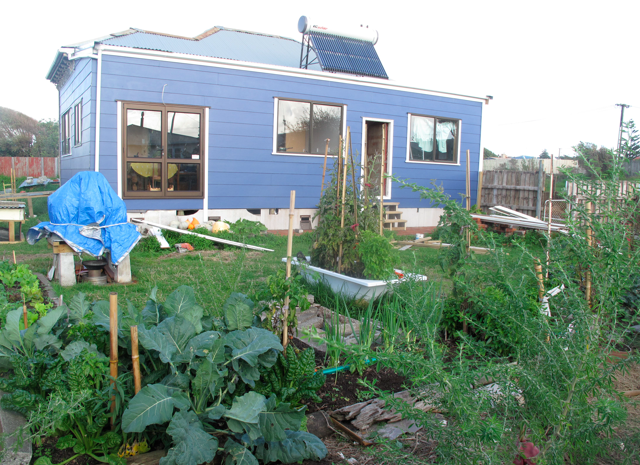


It is hard to believe that we’ve been onto this for nearly six months. But the first blast of Antarctic wind yesterday put an end to the ‘Indian Summer’ and foretold of days to come. A neighbor called it a “lazy wind.” “Doesn’t bother going around you. It goes right through.”
We spent time on the weekend further transitioning our garden from summer mode to winter mode. This included harvesting basil…
…and seeding carrots, boc choi and chives.
We also made time to save bean seeds for next year.

And we even had enough surplus for the first time to give some greens away to our neighbors.

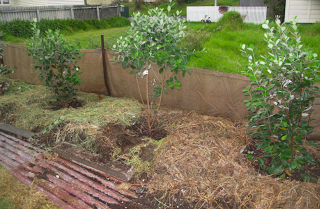
The productivity has been amazing. This tagasaste tree was up to my knee 6 months ago when we planted it, and now it’s over my head.

The whole place has blossomed from an abandoned wreck into a home.

Life has been bountiful here at Arawa Place.

And when life gives you basil…
Peace, and pass the pine nuts, Estwing


Planted in 600 mm of compost, the banana is so happy that it had a baby!
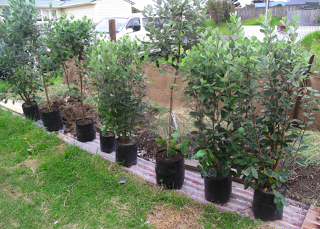
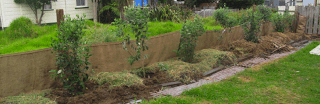
This reverse angle shows the new fence built by me and our new intern, Dave. And it shows the old fence built by Amy the intern. Note that Amy’s fence is not meant to be a wind fence, but Dave’s is. The spacing is different for each one.
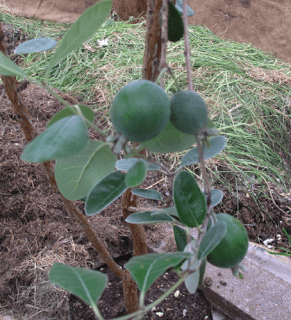
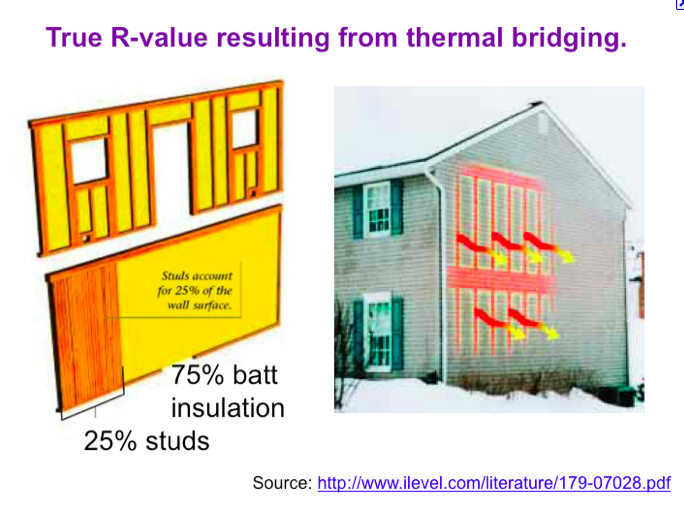
Feijoas will be on the way soon. I’ve written about attention to detail regarding insulation and draft-proofing in previous posts. Today’s topic is a lesser-known factor in building performance but no less important. Thermal bridging. And attention to detail is key here as well.

This diagram does a great job of illustrating the cumulative effect of thermal bridging. Since wooden (or steel) framing has a much lower r-value than insulation, heat can flow (escape) through the studs and dwangs more quickly. In the example above, the framing makes up 1/4 of the total wall space where there is zero insulation. Since heat tends to rise, the problem of thermal bridging is even worse for ceiling insulation.

When insulation is installed between the joists, every joist becomes a thermal bridge, and the overall r-value of the ceiling is calculated as:
In other words, the r-value above your head is not simply the r-value as shown on the bag of insulation. If you have thermal bridging, then your r-value is lower.
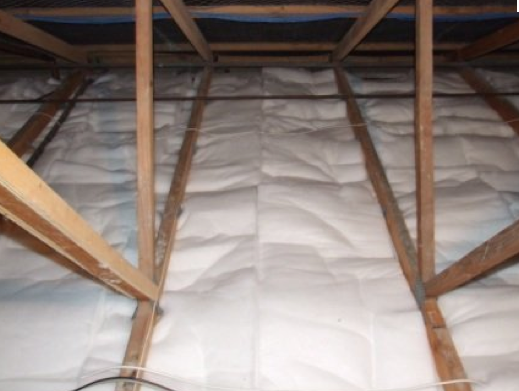
We are dealing to this by using a suggestion from Ian Mayes, the Eco-Design Adviser for Hamilton City Council. (I reckon this is about the best use of rate-payers money there ever was or will be.) Ian suggests laying the batts perpendicular to the joists and covering them completely.

Not very exciting, but that’s what it looks like. But we did run into some extra challenges around the extra framing we had to add to support the solar hot water on the roof.

But we dealt to that in the same way.

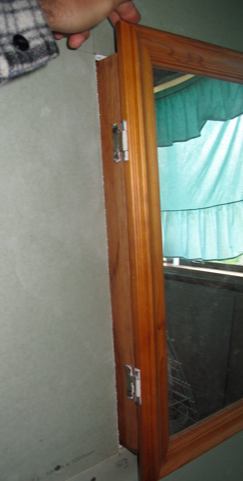
Even a small layer of insulation will break the thermal bridge enough to save energy. This is what we’ve also done in the bathroom behind our home-made medicine cabinet (future post). You can see the black building paper directly in contact with the exterior cladding. Brrr.
So instead of pushing the cabinet all the way back, we’re installing a thin layer of insulation…

…and pulling the cabinet out about 25 mm (1 inch).

Please note that a frame will have to go around the medicine cabinet to hide the gap with the plasterboard. This will further disguise the fact that it hangs out into the room.
Voila! Eco, thrifty, attractive.
Peace in the Middle East (but keep the oil price high), Estwing
The back yard is just full of rockets these days.

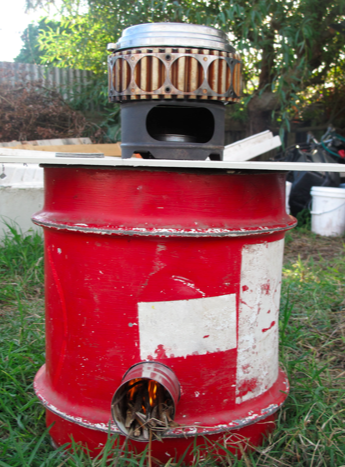
Rocket greens (arugula) in the garden and a new rocket stove on the burn. Rocket stoves are incredibly efficient for cooking. They require only small twigs and use very few of them at that. You’ll see the key to this “small is beautiful” approach to cooking in the elegant construction explained below.

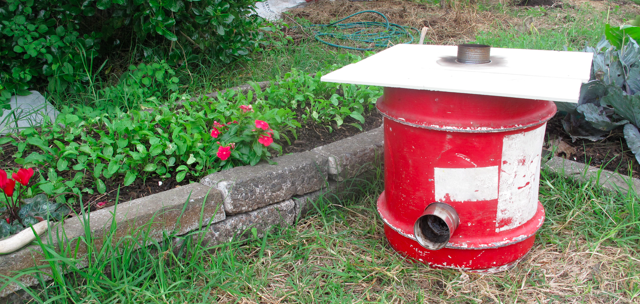
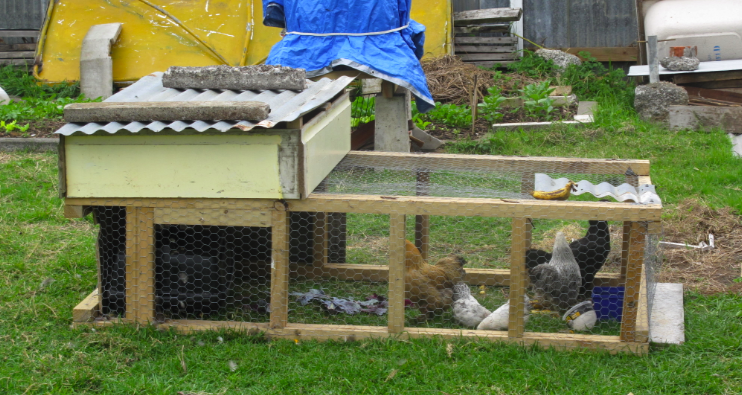
One of the last projects that Amy the intern and I worked on before she left was building the rocket stove. Well, she did most of the building and I served as technical adviser and steel cutter. Here is how the process worked. First, we chose a steel drum that we got at the auction house.

Then Amy raided our recycling bin…

…and did some tin can oragami.

Then she went to the beach to collect pumice.

One of the harder parts was cutting a perfectly round hole in the barrel to minimize air flow in and out. We used a combination of hack saw and roofing snips (the kind with curved blades) with great success.

We inserted Amy’s oragami “stove pipe” into the drum and packed it with pumice for insulation. From what I understand, it is key to use a “light” material like pumice instead of a “heavy” (dense) material like sand. That way the heat from the twiggy fire heats your meal instead of the mass of the packing material inside the barrel.

In order to seal the top with a non-flammable material, we chose some off-cuts of James Hardie weather boards leftover from siding the house. Again, cutting a perfectly round hole is important to minimize air flow. We used a hole saw for this. The Hardie boards provide a nice “counter top” working surface around the stove and protect the steel drum from the rain.
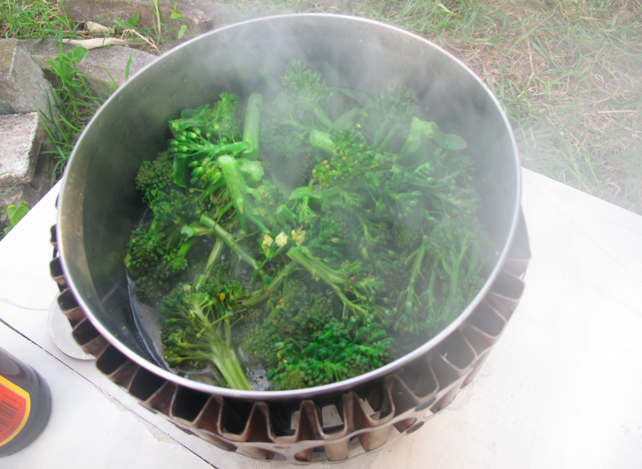
And finally, we harvested some fresh broccoli from our garden and a handful of twigs from under the willow tree…and a Tui (see bottom left-hand corner).
Peace in the Middle East, Estwing
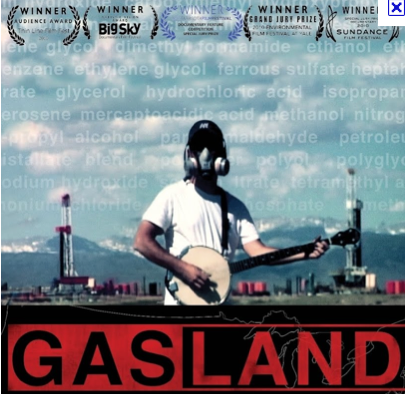
We watched the film Gasland on the weekend.

Heart-breaking and highly recommended. That is unless you would rather watch a vampire movie than a documentary. Or you love Dick Cheney. Or have stock in Haliburton. Or you condone the exploitation of the rural poor by wealthy corporations. Or you hate banjo music. Or you get squeamish about lighting tap water on fire.
Despite the Yankees cap, Josh Fox is a rad dude who has produced an amazing film.
The film was screened at the Whanganui Environment Base on Saturday. A couple from Parihaka on the western slope of Taranaki spoke before the film about oil and gas exploration in the Taranaki region and the use of hydraulic fracturing (fracking) there. We were all surprised, especially after watching the film on the devastating effects of fracking on groundwater and human health.

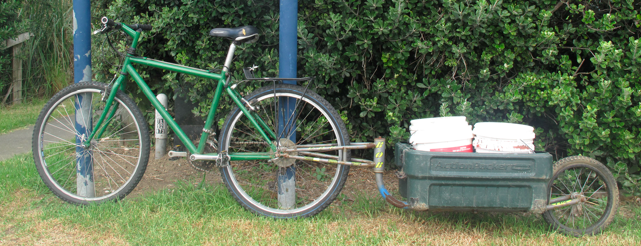
As we rode our bicycles home after the film, I was pissed.

As I picked up our dinner off the solar cooker, I was pissed.

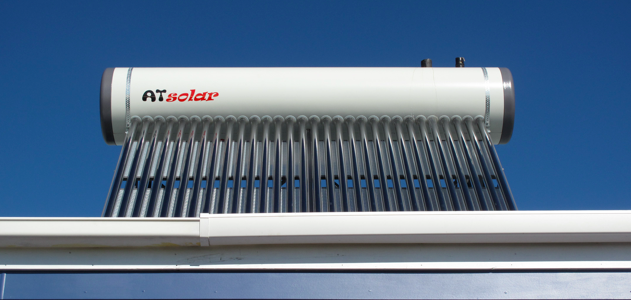
As I took a shower with our solar hot water, I was pissed.

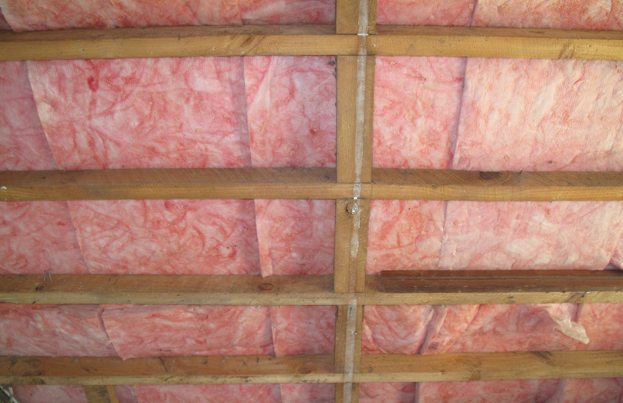
Even as I ate my dinner underneath a thick ceiling of fiberglass insulation, I was pissed.

Why doesn’t someone do something about this energy issue?!?
Peace in the Middle East, Estwing