NEW DELHI |
(Reuters) – Global climate talks need to focus on the growing threat from extreme weather and shift away from political squabbles that hobble progress toward a tougher pact to rein in greenhouse gas emissions, the head of the U.N. climate panel said.


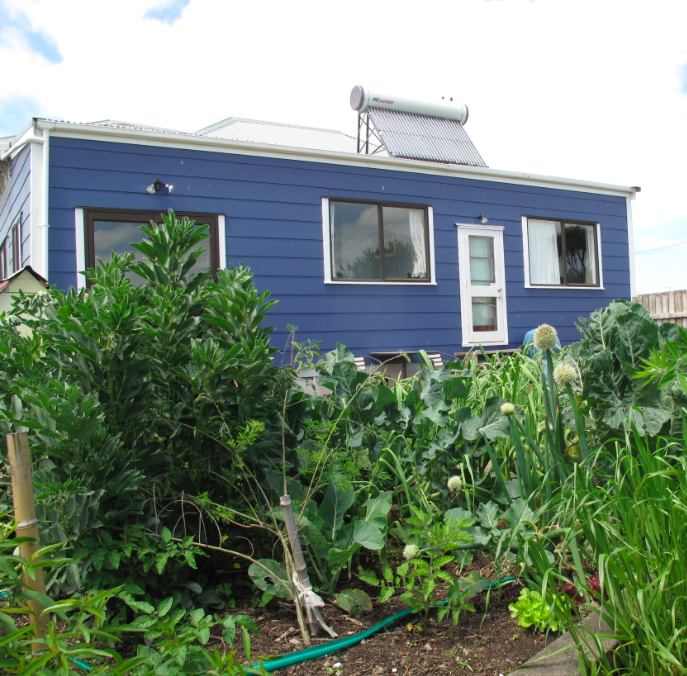
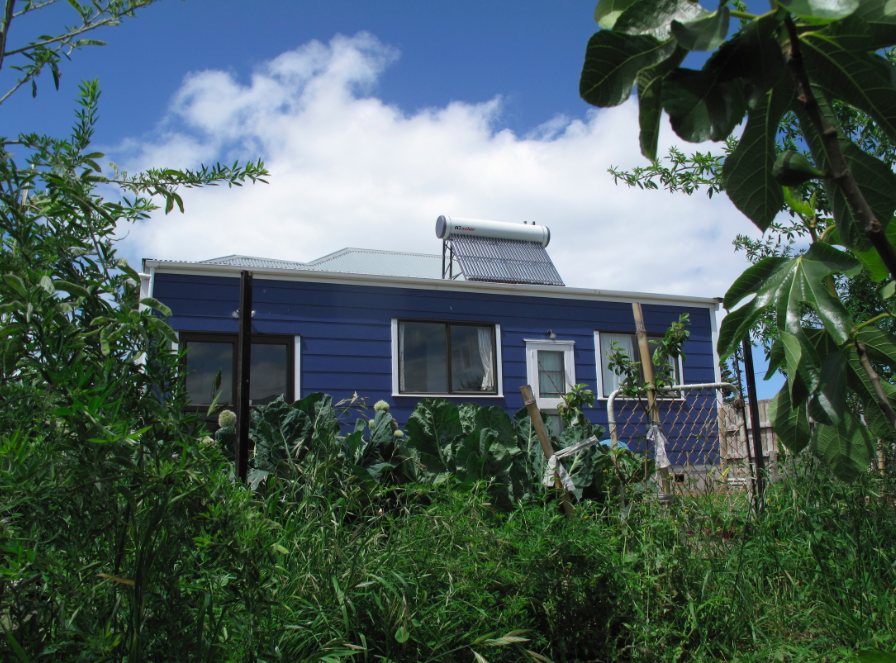
The Little House That Could (TLHTC) is a model for whole community sustainability education based on eco-renovation and permaculture food production. It engages school children from the earliest grades all the way through senior citizens with local, tangible, affordable and realistic approaches to ecological, economic and social sustainability. The programme emphasizes ecological literacy, thermodynamic literacy and financial literacy.
At the primary school level, teachers are trained in high quality cross-curricular approaches to topics such as solar energy, growing food, recycling and composting. At the intermediate and high school levels, teachers are encouraged to get students to “think globally and act locally” through systems thinking exercises and carefully planned field trips to TLHTC site. Adult education includes hands-on workshops on passive solar design, energy efficiency, solar cooking, permaculture design and low-input/high-productivity gardening. And TLHTC reaches older residents with less mobility through PowerPoint presentations at seniors clubs and rest homes. On a global scale, TLHTC maintains an educational blog, a Facebook page and Twitter account.
Every community on Earth has a run down house with a yard full of weeds. Therefore, every community could be a TLHTC community. Through online networking and sharing, we just might achieve a Little Planet That Could. This programme holds great promise due to it’s low costs and high quality and effectiveness.
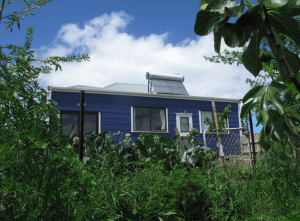
Anniversary Workshop: Eco-Thrifty Permaculture on 700 Square Metres
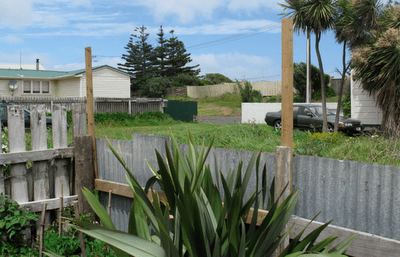
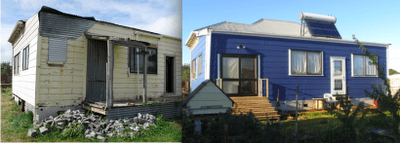
In the last 12 months we have turned an abandoned house into an energy-efficient home, and a section full of weeds and rubbish into an abundant foodscape. This workshop provides vivid examples of applied permaculture design on a human scale with lots of practical advice. Topics include sector analysis and zoning, wind protection, sun traps, annual vegetable production, composting, food forests, incorporating poultry, passive solar design, creative reuse of materials and alternative cooking methods.
Tutor: Nelson Lebo has been an environmental educator for over 20 years. Between 2000 and 2008 he developed one of the most sustainable properties in North America. From 2008 he has conducted PhD research in permaculture education at the University of Waikato.
04-12-11
2 pm to 5 pm
10 Arawa Place, Castlecliff, Wanganui
$30. (Discount for Castlecliff residents.) We accept REBS.
Preregistration required before 01-12-11
Minimum 4 and maximum of 10.
What does it cost? We have acquired funding from the Positive Futures Trust to educate about Zero Waste at events. Commercial events contribute roughly the same amount again as the educational component. This amount is usually recouped in disposal costs saved.
Traditional schooling never worked for the way my brain functions. I suspect I’m not alone.
Enhancing Student Learning Through Sustainability
My Year 3 teacher told my parents I would never read. It was the early seventies and many learning disabilities were yet to be recognized. I was not so interested on the ink on the page, but the space between the ink and the space between the school and my home, which, thankfully, was mostly lush and green and wild. While I struggled through school, I thrived outdoors. I learned more from turtles than from teachers.
Traditional schooling did nothing for me because it was all about objects and goals and marks when I was more interested the interconnectedness of things. Even courses in ecology were taught in a reductionist manner. In University I did my best to gravitate toward what was then called environmental studies, although even in those papers I spent most of my time sitting in lecture halls taking notes. It was not until I reluctantly entered a Masters programme that I first experienced a different way of teaching and learning. I never looked back, and now I am three quarters my way through a PhD, which examines student responses to learning ecology in ecological ways.
But holistic approaches to teaching and learning are not limited to the study of ecology. In fact, journals are full of research that indicates the value of education that is cross-curricular, experiential, relevant, student-centred, action-oriented and based on the needs of the community. I have been lucky enough to bring this type of education to schools in Wanganui thanks to funding from the District Council and administrative support from the Sustainable Whanganui Trust.
From a Year 1 classroom at Aranui School to every student at Wanganui Intermediate, and on to a Year 13 class at WHS, holistic, solution-oriented educational approaches have engaged students in high quality learning experiences. Each programme was designed to meet the needs expressed by individual teachers and to align with the New Zealand Curriculum. Feedback from teachers, students and principals has been excellent, and more programmes are underway.
An exciting programme that is being run for four rural schools during Term 4 is called “The Little House That Could.” This cross-curricular programme integrates science, maths, English and the arts while students learn about passive solar home design and energy efficiency. Student learning is supported by a curriculum guide provided to teachers and interactive web pages on The Eco-Thrfity Renovation blog. A culminating experience is being planned for the students to visit the actual “Little House That Could” in Castlecliff.
First and foremost, the programme aims to provide the highest quality learning experiences for students in numeracy, literacy, science and the arts based on current education research and the New Zealand Curriculum. After all, schools are for student learning. It is up to the education community to strive to provide the best learning experiences for children. With budget cuts coming from Wellington, the financial support from Council and other local charitable sources will be increasingly valuable for innovative approaches to student learning.
Sidebar: There will be a presentation on The Little House That Could as a model for sustainable living and for high quality teaching and learning at the Castlecliff School library on Tuesday the 29th of November at 6:30 pm. A koha is suggested to support high quality sustainability education in our community.


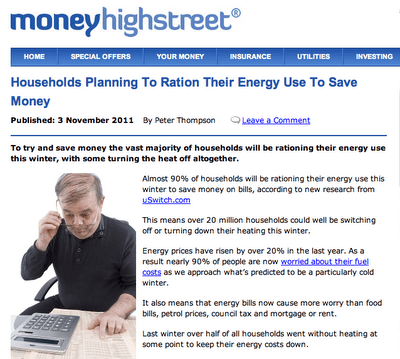
Almost 90% of households will be rationing their energy use this winter to save money on bills, according to new research fromuSwitch.com
This means over 20 million households could well be switching off or turning down their heating this winter.
Energy prices have risen by over 20% in the last year. As a result nearly 90% of people are now worried about their fuel costs as we approach what’s predicted to be a particularly cold winter.
It also means that energy bills now cause more worry than food bills, petrol prices, council tax and mortgage or rent.
Last winter over half of all households went without heating at some point to keep their energy costs down.
Some reduced the number of hot baths or showers they took, others bought less food or cut back on lighting or even went without hot dinners or sacrificed buying medicines just so that they could pay their heating bills.
Household disposable income has been hit hard with 90% of households believing that their disposable income has reduced because of rising energy prices.
The worry is that growing numbers are finding themselves with debt problems with over one in three households struggling to pay their essential bills and have turned to debt to cover them

The Little House That Could (TLHTC) is a model for whole community sustainability education based on eco-renovation and permaculture food production. It engages school children from the earliest grades all the way through senior citizens with local, tangible, affordable and realistic approaches to ecological, economic and social sustainability. The programme emphasizes ecological literacy, thermodynamic literacy and financial literacy.
At the primary school level, teachers are trained in high quality cross-curricular approaches to topics such as solar energy, growing food, recycling and composting. At the intermediate and high school levels, teachers are encouraged to get students to “think globally and act locally” through systems thinking exercises and carefully planned field trips to TLHTC site. Adult education includes hands-on workshops on passive solar design, energy efficiency, solar cooking, permaculture design and low-input/high-productivity gardening. And TLHTC reaches older residents with less mobility through PowerPoint presentations at seniors clubs and rest homes. On a global scale, TLHTC maintains an educational blog, a Facebook page and Twitter account.
Every community on Earth has a run down house with a yard full of weeds. Therefore, every community could be a TLHTC community. Through online networking and sharing, we just might achieve a Little Planet That Could. This programme holds great promise due to it’s low costs and high quality and effectiveness.
We continue to seek out partners in all of our initiatives. Please contact us with your interest.
On a final note, warm thoughts go out to my home town.


Linoleum: $50 on TradeMe (3 metres by 3 metres)
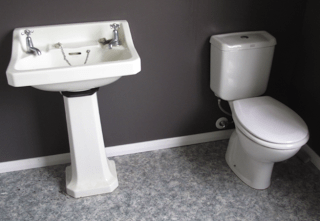
Sink: $20 at Hayward’s Auctions
Toilet: $99 at the Renovator’s Centre

Lights: $20 on TradeMe
Medicine Cabinet: Mirror ($15 at Hayward’s Auctions) and Drawer ($1 on TradeMe)

Bath: $55 on TradeMe
Bath Taps: $150 at Mitre 10 (New)

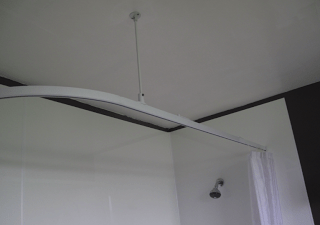
Curved Curtain Rod: $12 at Hospice Shop
Seratone Panels: $400 at Mitre 10 (New)

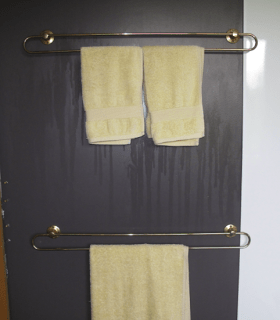
Towel Racks: $2 at Hayward’s Auctions

Laundry Tub: Traded other materials for store credit at Renovator’s Centre
Washing Machine: $700 at Mitre 10 (New) *Not included in total

Cabinet: $15 at Hayward’s Auctions
Other expenses:
Paint: $90 at Mitre 10 (New)
Plumbing Parts and Services: $1,000
Electrical Parts and Services: $100
Total: $2,029
I’m not including the price of the washing machine because that is not a usual bathroom expense. I’m also not including the cost of replacing the ceiling because most people who spend $20,000 would not to have to replace their ceiling either. This is not meant to be the definitive eco-thrifty bathroom, as the available second hand resources will always vary. This is about as good as we could do in our particular place at this particular time while following the NZ Building Code and keeping down costs and ecological footprints.
Tread lightly, Estwing