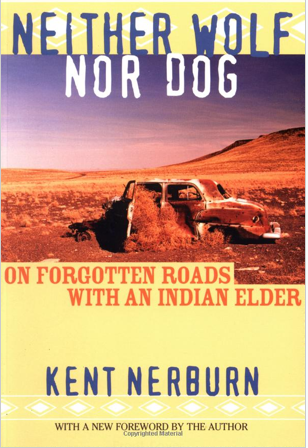
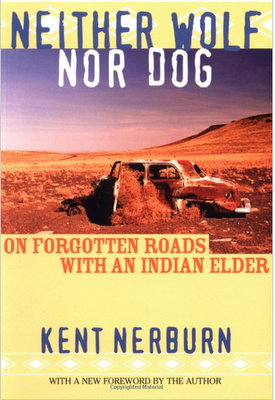
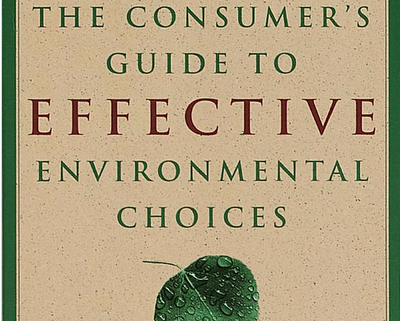
I ran across this book today. The title is what has haunted me for the last five years.
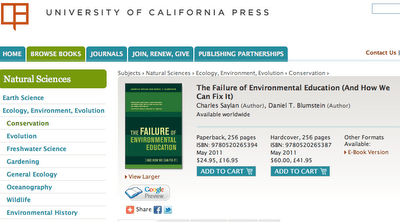
At a time when wild places everywhere are vanishing before our eyes, Charles Saylan and Daniel T. Blumstein offer this passionate indictment of environmental education—along with a new vision for the future. Writing for general readers and educators alike, Saylan and Blumstein boldly argue that education today has failed to reach its potential in fighting climate change, biodiversity loss, and environmental degradation. In this forward-looking book, they assess the current political climate, including the No Child Left Behind Act, a disaster for environmental education, and discuss how education can stimulate action—including decreasing consumption and demand, developing sustainable food and energy sources, and addressing poverty. Their multidisciplinary perspective encompasses such approaches as school gardens, using school buildings as teaching tools, and the greening of schoolyards. Arguing for a paradigm shift in the way we view education as a whole, The Failure of Environmental Education demonstrates how our education system can create new levels of awareness and work toward a sustainable future.
Interestingly, one of the main reasons the failure of EE has haunted me is that my teaching practice in a school included organic gardens, using school buildings as teaching tools, and efforts at greening the campus grounds. And it still failed. Now this may be down to my rubbish teaching skills. But I did get plenty of positive feedback from a diversity of sources and a number of teaching awards. And I do not mean to say that this is not where schools should be headed. I was lucky enough to work at one with excellent token environmental programmes that benefited a small minority of students tremendously. But there was no systemic change. So instead of settling for tokenism any longer I left teaching to become a student. My research is still along the lines of Saylan and Blumstein, but more looking at the barriers and opportunities to actually do what they are proposing. It is neither straightforward nor easy.
One of the recent barriers I’ve come up against – not in my PhD research per se, but in other EE efforts I’m involved with – is what I am calling the Ego-movement. I’ve been saddened and discouraged by the amount of damage that those within the eco-movement inflict on others in the movement. Don’t we get enough thrashing from the outside? Why do those within the eco-movement hold the movement back because of ego? It’s a cryin’ shame. No really, it does make me want to cry, and it is a shame on our movement.
I am an eco-designer. I design systems with the intention that they be adaptive, exploratory and symbiotic. The business model of the ECO School is synergy. In other words, we seek to enter into symbiotic relationships where both parties benefit and the resultant whole is greater than the sum of the individual parts.
• What I have learned while trying to implement this ecological vision for environmental education is that most people and organizations have little or no interest in working cooperatively.
• What I have learned by taking an exploratory (evolutionary) approach to building symbiotic relationships is that most people and organizations do not answer emails which express an interest in working cooperatively. From a large number of emails sent to Transition Town groups, permaculture groups, conservation groups, environment centres, etc., my response rate is well below 20%. I understand that people are busy, but if you put your email address on your website, I would suspect that you may expect to be contacted. I find it very sad that so many of those who place themselves in leadership positions in the eco-movement cannot bring themselves – at a minimum – to say, “Thanks for the inquiry. Sounds cool, but it does not suit our present needs.” In some cases where websites explicitly call for input, those in control fail to thank contributors or even acknowledge their input.
• What I have learned about email lists, Meet-up groups, and newsletters, is that many of them are not democratic. Many of the leaders of the eco-movement who control these networks for the dissemination of sustainability information do not share the power democratically. In my opinion, sustainability networks belong to the people, and they should decide what they want to learn about or not.
• What I have learned about answering all email enquiries I receive is that many people do not make an effort to thank me for my time and effort. From what I understand, everyone has their opinion on whether saying thank you on email is appropriate or not. Call me old fashioned, but when I know that someone has gone out of their way to provide information for me or to compliment me on something I’ve done, I write a thank you note. At very least, it builds good will in the eco-movement.
One final note which may come as a surprise to those outside of academia. Since I have become a PhD student I have sent about half a dozen emails to researchers in the fields of science, psychology, and education. And I have gotten a response from every single one. Some say that academics have big egos, but they do not appear to get in the way. And so the sadness is greater that in the eco-movement, ego does appear to get in the way.
While this does not relate specifically to my research, I am still very interested in learning why this unfortunate situation (the ego-movement) appears to be retarding advances in the eco-movement. If you have any ideas or insights, please post them in the comments section or email me at the ecoschool. I promise I’ll thank you.
Peace maker, Estwing


































 Eco Thrifty Living