I appears that many global forces of unsustainability have been swirling of late. The synergy with which these forces interact, and the non-linear effects make predictions near impossible. Most economists and politicians appear to be in utter denial of anything other than a return to “growth” and “business as usual.” (I’d say that is the one place we are not headed.) But one economist in particular seems to be able to recognize potential problems better than others.
You may recall that Roubini was the one who accurately predicted the financial crisis of 2008. Are you going to believe him, or someone like Greenspan or Bernanke or Geitner who had no clue?
While the right mixture of forces can, indeed, make storms perfect, the right combination of design, communication and education can make solutions perfect. For example, this weekend the ECO School helped the YMCA manage the waste stream for the Connecting Families Day.
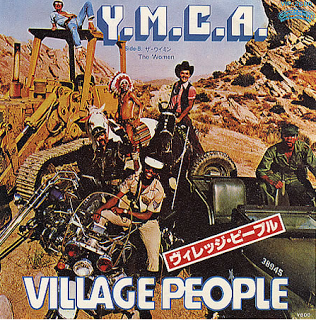
No, not that YMCA, this YMCA.

With over 20 years of experience in award-winning resource recovery programs, we felt confident about working with the Y with the goal of a zero waste event. I’ll write more about the mechanical details in another post, but the guiding principles for success when managing events such as this are:
1) Plan ahead. Sometimes called “pre-cycling,” this means thinking about the entire waste stream of the event and planning accordingly. For example, we ordered compostable cups for both hot and cold drinks. Zero waste.
2) Design. (“Failure to design is to design to fail.”) The physical lay out of collection containers is important. They must be clustered together. For example, we had bins for compost, paper recycling, drinks bottles recycling, and miscelaneous rubbish all together at one station.
3) Communication. This comes in a couple of forms. A) Signage must be brief, clear, colorful and at eye-level for both children and adults. B) Announcements can be used to remind attendees that this is a zero waste event and their efforts are crucial for success.
4) Education. Including the why and how of resource recovery is important to give people reason to act. Our education effort took two forms this weekend. A) I manned the resource recovery station to interact with people and monitor quality control. B) Our friend, Hadi, provided home composting advice at the Sustainable Whanganui table.
5) Quality control. Essential, essential, essential. No one wants to pick through dirty bins afterwards. Make sure everything goes in its proper place during the event. As mentioned above, quality control can and should go hand-in-hand with education.
By employing the above strategy, we were able to divert over 95% of the waste stream from landfill while role modeling positive behaviours to families. Those are world-class results. Not bad for weekend work.
More details on our composting process in a later post.
Peace, Estwing


















 Eco Thrifty Living