I’m sad because my beautiful wife has become stranded in Sydney on her way from New York to Wellington because of a Chilean volcano. She has been there for three days and it looks like at least one more. They stamped her passport “Indefinite.” (Yesterday she went to a wildlife park and hugged a Koala.) But I know this sadness will pass.
This sadness, however, is another story.
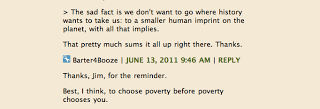
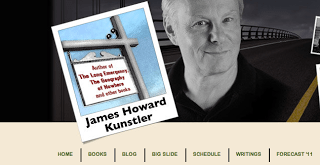
Before my wife became stranded in Oz, I used to spend my idle hours (between dissertation writing and eco-renovation) talking with her. But these days I fill those hours reading blogs. One of my favorite is James Howard Kunstler’s weekly contribution. Not only is the post a good read, but the comments section is equally insightful and entertaining. The image above is from the comments section quoting JHK, “The sad fact is we don’t want to go where history wants to take us: to a smaller human imprint on the planet, with all that implies.”
As an environmental educator for over 20 years, this sad fact is…a very sad fact. I for one, do want to go there, but I appear to be in the minority. The next comment in the thread reads: “Best, I think, to choose poverty before poverty chooses you.” Indeed, I have been living below the poverty level in the USA and NZ for over a decade – often below half the poverty level as measured by income and expenditure. And during that time I have lived a rich, full life in beautiful places with healthy food and friendly people. My lovely wife, god bless her, has agreed to live this way too.
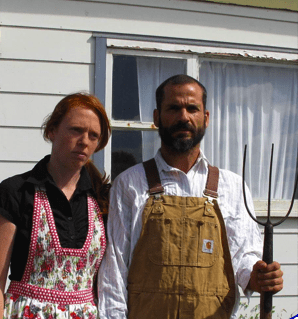
And we have fun doing it!
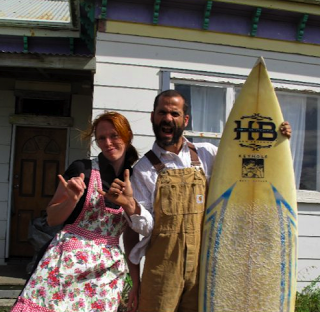
But there is a big difference between voluntary poverty and involuntary poverty. For us it is a mindful endeavor where we are simultaneously saving money, saving resources, and reducing waste. It is win-win-win for us, our bank balance and the Earth. That is why it is so sad that most people refuse to voluntarily shrink their ecological footprint. And now, from what I can observe, it is being forced on many of them by: high energy prices, high food prices, high personal debt, high municipal debt, high national debt, austerity measures, unemployment, population growth, etc.
I read a great blog yesterday talking about how the “Baby Boomers” lived far beyond their means during the real estate bubble (house = ATM) and are now having to postpone retirement because of the fall in house prices and the stock market crash (not to mention, gulp, the coming under-funded pension disaster). Forgive me, but I have no sympathy.
Living beyond your means = Destroying the planet on credit
To me, this is another sad fact. 😦
Peace and poverty! Estwing



 Eco Thrifty Living