Category Archives: global issues

MLK and LBJ and me and you

Editors note: This is an opinion piece I wrote for our newspaper, The Wanganui Chronicle, on Monday. Part of an eco-thrifty life is working with our community to move toward fairness and resilience. I have found the newspaper is an excellent forum to address important community issues.

Screen shot 2014-01-23 at 7.46.10 AM

Martin Luther King, Jr. was shot and killed less than three weeks before my birth in April, 1968. Within two months, Robert “Bobby” Kennedy had also died from an assassin’s bullet.

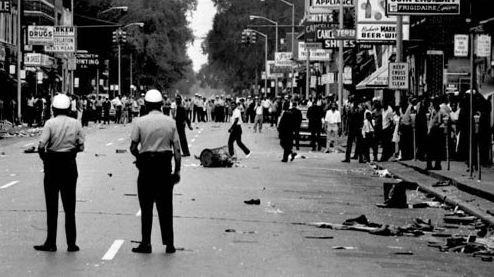
But to say I was born into an age of turmoil is nothing compared to that of my best childhood friend. He was born in Detroit to mixed-race parents seven months after the riots of ’67 that resulted in 43 dead, over 1,000 injured, over 7,000 arrests, and 2,000 buildings destroyed. His mother was two months pregnant at the time.
 Screen shot 2014-01-23 at 7.48.59 AM

He was given up for adoption, and spent most of his childhood living next to my family in one of Detroit’s suburbs. Today he is a successful professional with a fabulous wife and two adopted mixed-race children.

There is no way of knowing he would have ended up differently if he had not been given up for adoption, but statistically his chances would not have been good.

 Screen shot 2014-01-23 at 7.49.14 AM

Growing up 16 miles outside of downtown, we were in a different world. Throughout the 70’s and 80’s, we watched from a safe distance as jobs, people, and wealth exited the Motor City, leaving behind debt and poverty. Last year, 50 years after King’s famous “I have a dream” speech, Detroit faced the nightmare of bankruptcy.

Research shows that very few people who grow up in poverty ever escape it. Those who go on to achieve great success are rare, and often adopt one of two diametrically-opposed viewpoints: one of empathy for those still in poverty or one of callous disregard for them.

Of the latter, recent research shows that many so-called “self-made” people are not generous with their riches toward those in need, and often adopt right-wing capitalist ideologies. Their thinking may go something like this: “I lifted myself out of that situation, why don’t they.” When interviewed, these people tend to discount luck and timing as factors in their success.

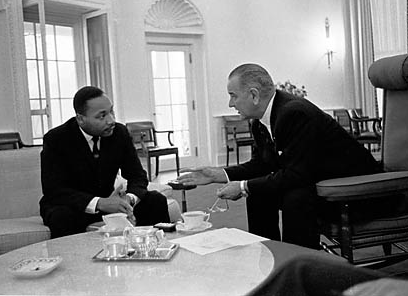
One notable exception to this was Lyndon B. Johnson, who took over as President after the assassination of John F. Kennedy. Fifty years ago this month, his State of the Union address included the declaration of a War on Poverty in America.

 Screen shot 2014-01-23 at 7.46.34 AM

Johnson, who spent much of his childhood living in poverty, said in his speech that the causes of poverty may lie “in a lack of education and training, in a lack of medical care and housing, in a lack of decent communities in which to live.”

He went on to state that too many people were “living on the outskirts of hope”:

“Some because of their poverty, and some because of their color, and all too many because of both. Our task is to help replace their despair with opportunity. This administration today, here and now, declares unconditional war on poverty in America.”

 Screen shot 2014-01-23 at 7.47.05 AM

Although my best friend still experienced racism in our suburban community, he had a warm and dry home, good medical care, and an excellent education. Taking poverty out of the equation, the color of his skin has not in itself held him back from achieving many successes in his life.

I am sure that New Zealand is full of similar stories, but unfortunately we also hear too many tales of poverty in this nation and in this city. I believe there is ample evidence that the Wanganui District Council rates structure exacerbates poverty in our community, and that it is one of the few things that our councilors can address to actually improve the quality of life for many residents.

While not declaring war on an unjust and unsustainable rates structure, I would not hesitate to call it a skirmish. I am eager to hear from all those who wish to join me, especially sitting councilors who made statements about rates during their recent campaigns and/or any councilors who see themselves as left-of-centre.

2013: Year of Eco-Thrifty

It was a close competition, and the results have been delayed, but it is finally confirmed that 2013 was the Year of Eco-Thrifty.
Runners-up include: The Year of Pete & Andy; The Year of Obama’s embarrassments; The Year of Sonny Bill; and, The Year without defeat (All Blacks).
Eco-Thrifty narrowly beat out Pete & Andy due a strong cast that included Lorde, Macklemore, and Francis (aka, ‘da pope’).
Lorde (Auckland’s Ella Maria Lani Yelich-O’Connor) became the first New Zealander to reach number one on the Billboard Hot 100 with her single, “Royals.” According to various sources (including Wikipedia), she wrote the song in response to the opulence celebrated in much of hip-hop and rap music, including big, expensive cars, expensive alcohol, and the obligatory “bling.”
If the lyrics in “Royals” slipped your attention, then the lyrics and beat of Macklemore’s “Thrift Shop Song” surely didn’t. Although the song experienced heavy rotation on Whanganui radio for only a month or two before falling off the radar, its rotation was very heavy.
Macklemore, too, takes the piss out of consumer culture (and R. Kelly) by ridiculing those who would purchase a t-shirt for $50 (US), when one could outfit oneself from head to toe at an op shop for $20 and “look incredible.”
They be like, “Oh, that Gucci – that’s hella tight.”
I’m like, “Yo – that’s fifty dollars for a T-shirt.”
Limited edition, let’s do some simple addition
Fifty dollars for a T-shirt – that’s just some ignorant @#$%
This is, in my opinion, hands-down the best profanity-filled song of the millennium.
Coppin’ it, washin’ it, ’bout to go and get some compliments
Passin’ up on those moccasins someone else’s been walkin’ in
Bummy and grungy, @#$% it, man
I am stuntin’ and flossin’ and
Savin’ my money and I’m hella happy that’s a bargain, @#$%
As would be suspected from a pope, Francis sends his eco-thrifty message with less profanity, but his words have been called profane by those who wish to maintain the status quo in the Catholic Church. Gone is the opulence of previous popes, and in steps a man of humility unafraid to challenge the devastating effects of wealth inequality around the world.
Conspicuous displays of wealth are in almost every case the antithesis of eco-thrifty. Instead of the win-win-win situations I write about that save money while being good for people and the planet, I would describe them as lose-lose-lose. Specifically, opulent lifestyles often waste money while having large environmental impacts. Additionally, research shows a strong correlation between wealth inequality and social problems (The Spirit Level, Wilkinson & Pickett, 2009).
While Francis’ courage undoubtedly upsets the wealthiest 1%, it has surely boosted the morale of the poorest 50% of global citizens be they Catholic or not. It appears he has taken seriously the teachings of an earlier proponent of eco-thrifty lifestyle, Jesus, instead of embracing the power and prestige of The Church. Good on you, Frank.
And finally, the Light Bulb Moment Award for 2013 goes to the Wanganui District Council for finally recognizing that running eight light bulbs outdoors on sunny days was neither eco nor thrifty. WDC is also the recipient of the Kicking-and-Screaming Award for the same action (turning off outdoor lighting during the day) because it took over three years and four columns in the Chronicle to get Council to take action.
But as a wise person once said, “Better late than never.” Let’s hope that 2014 finds WDC coming to the table on time.
 Peace, Estwing

Is there an H in Hypocrite? Climate Change Denial

Editor’s note: This ran as an opinion piece in the Wanganui Chronicle on Friday, 27th December.
Beware those bearing H’s.
No, this has nothing to do with the spelling of W(h)anganui, although I suspect there is ample crossover with those who have come to embrace the word hypocrite when attacking individuals who speak out on climate change. In other words, it’s likely that the same people who do not want an H in Whanganui are more than happy to draw the mighty H from their quiver and quill as a first-line offensive against climate change activists and ordinary citizens who have the courage to bring up the issue in the press.
In our feel-good, consumer, deflect-blame Western culture, I reckon the worst thing you can call someone is a hypocrite. We all know that we do not live 100% by our values 100% of the time, but the last thing we want to hear is someone else telling us. I suspect it is part of a psychological defense mechanism.
Knowing this human tendency, the worldwide, corporate-funded climate change denial network has come to advise its “trolls” to use the term at every possible opportunity. Calling someone a hypocrite has become a common technique of climate change deniers when asking climate scientists or activists how did they travel to a certain conference, protest, or other event. It is meant to shut down the conversation before it begins by calling their credibility into question because they may have traveled by automobile or airplane.
In Whanganui, our Chronicle Letters Page climate change denial trolls – two of whom do not live anywhere near the River City – have learned this technique, presumably from an on-line tutorial from the right-wing Heritage Foundation or other such corporate-funded denial organization.
About six weeks ago, a local writer to the Chronicle – who appears to lack enough courage to use their first name when signing her or his letters – suggested I was a hypocrite for expressing my opinion that a predicted increased incidence of severe weather events would likely make clearing sand from the Castlecliff Beach car park more costly in the future. A prudent approach, I suggested, that would both save money (rates) and reduce pollution (carbon dioxide) would be to downsize the massive, underused car park in a managed retreat.
Of course the obvious response to this reasoned, win-win, eco-design solution is to call the messenger a hypocrite. Duh.
I have been called many things in my long and lonely life, but never a hypocrite. My street ‘cred’ is ‘legit’, yo.
I suspect that anyone who knows me would agree I am many things good and bad, but not a hypocrite. Regardless of political affiliation, it would be difficult to find a former colleague of mine willing to say I am nothing if not genuine in my words and deeds. Although I would not hold a candle to Buddha or the Dalai Lama, a colleague did once call me Bodhisatva. Go ahead and laugh, but this may be closer to the truth than you think. After all, I did teach Walter Becker’s son when he was in year 9, but do not remember if he took me by the hand during our parent-teacher conference*.
Although I share a car with my wife, I ride a bicycle and take the bus the vast majority of the time. I have traveled between Whanganui and Hamilton over a dozen times on board Intercity. When purchased a week in advance, the return fare costs less than half the price of petrol alone. Public transport reduces carbon emissions, and I have time to read, write and sleep on the bus.
I suppose this means those who wish to call me a hypocrite will simply say I’m self-righteous. With some people you cannot win, but that does not stop them writing letters to the paper, nor should it. Keep ‘em coming peeps, but please follow these simple instructions: do your homework first; only use quotation marks for direct quotes; include sources and references for anything that is not considered common knowledge; have someone proofread your work; Use your full name; and, above all else, don’t write anything that will end up embarrassing you in front of the entire city.
It takes courage to write something for public consumption, and I admire courage.
* In case you missed it, Walter Becker is ½ of Steely Dan.
Peace, Estwing

Conservative Like Me

Editor’s note: This piece ran today as an opinion in the Wanganui Chronicle. It is in response to some complaints by the (radical) right that there are too many ‘libral’ columnists. This should give you a laugh.

Saturday was the summer solstice, the longest day of the year: a time for celebration and the harvesting of garlic; a time for BBQs and surfing (although, always is also a good time to catch waves); a time to bask in light before the long and slow slide back into the darkness of winter.
Exactly three months ago – 21st September – I wrote the first of five opinion pieces that have appeared in the Chronicle. It may have been beginners luck, but I consider that piece, which linked research on income inequality to social problems, and then to the WDC rates structure, as the best of the lot. On the day it ran, I got a text from a surfing buddy that went something like this: “Awesome article in da paper, bro. Chur. Chur.” Another friend told me, “The Chronicle shouldn’t have labeled it as an opinion. That’s the type of investigative journalism they should be doing.”
Working with the editors of the Chronicle, I had planned specifically for the piece to run on the vernal (spring) equinox as a way to reflect on balance and imbalance in our world and in our city. If you believe the international research that shows a correlation between income inequality and social problems (The Spirit Level, Wilkinson & Pickett, 2009), and can perform basic addition, multiplication and division, you will easily recognize that the WDC rates structure serves to increase the wealth gap in our city, and the annual Council rates rises widen the gap each year. (More on this, hopefully, in 2014.)
The reasons I think it was my best effort include: it is based on respected research and clear local data; it is relevant to everyone who lives in Whanganui; it was written as objectively as possible; and, the equinox was a fine metaphorical launching pad for a critical discussion on this important local issue, although from what I can tell that discussion has not really been happening…yet.
But equinoxes are easy to write about, and peer-reviewed research and replicable data is so boring. Objectivity – Shmogjectivity! The solstice is a time to be bold, opinionated, controversial!
And in that spirit, I would like to point out what has become glaringly obvious in the pages of the Chronicle: So many radicals writing so many opinions. The Chron is clearly out of balance and needs more conservative voices like mine!
Who, besides me, will stand up for conserving natural resources, other than Nicola Young and the throng of writers in Monday’s “Conservation Comment”?
Who, besides me, will advocate for a conservative position on climate change, other than Nicola Young and the gaggle of writers in Monday’s “Conservation Comment”?
Who, besides me, thinks that selling high performing government assets to foreign private investors is risky, other than Nicola Young and the pride of writers in Monday’s “Conservation Comment”?
Who, besides me, embraces the precautionary principle when considering the potential impacts of hydraulic fracturing, offshore drilling, iron sands mining, and genetic engineering, other than Nicola Young and the flock of writers in Monday’s “Conservation Comment”?
I mean, give me a break! Am I the only one, along with all of these other conservatives, who thinks wasting energy, wasting money, and wasting resources while taking radical positions on the economy, society, and environment must be addressed in a public forum?
We need more conservative voices in the Chronicle to address the radical policies of extremists that put our economy and social structure at risk.
Please join me, fellow conservatives, to stand up for risk aversion, fiscal responsibility, and the precautionary principle. Together, our combined voices and the power for the press may be able to move this new Council toward truly conservative positions. Let the radicals take the Letters page, if we can dominate the Opinions! 

TPPA Bad for Health of New Zealand

Editor’s note: This piece ran in the Wanganui Chronicle as an opinion piece last week.
As a general rule, I’m not fond of the word expert. I feel it’s used too often, especially among self-proclaimed experts. At very least the designation should only be bestowed by a third party. In modern, Western culture, universities have taken on that role: A Masters Degree implies one has achieved a certain level of “mastery” of a subject, while a PhD implies the highest level of mastery, ie expertise.
When I was in the initial stages of my doctoral research, my supervisor said something to the extent: “When you’re finished you will be the world expert on your topic.” At the time I was more intimidated than inspired. Now I’m more-or-less indifferent. What good is being an expert in a field in which few people appear interested?
Recently I have ventured from my field of study and into a realm in which I am most assuredly not an expert. That realm is democracy, and if you have read previous opinion pieces, you’ll know I have tried to carefully construct logical, sequential arguments based on observable phenomenon, simple data, and the work of real experts on any given topic. That I am allowed back on the Opinion page appears to indicate that at least a few readers appreciate this approach to promoting democracy in Whanganui.
This time, however, we leave the River City to discuss topics more central to discussions happening in Wellington, Washington D.C., and the netherworld of corporate secret negotiations. The topic of this column is the ethereal Trans-Pacific Partnership Agreement (TPPA), but first a word on the timely topic of asset sales. (Remember to vote!)
While not an expert on asset sales, I do rank myself highly on the common sense scale. Considering this, I subscribe to the following simple argument I have heard in a number of places: If an asset performs well (returning an acceptable or better rate), it would appear too valuable to sell. On the other hand, if an asset is underperforming, the selling price would be so low that the state would hardly make anything from the sale.
Put another way, if private money considers public assets so potentially profitable as to purchase them, wouldn’t that expert financial insight be a signal to government that any given asset is too valuable to sell? Right-leaning politicians are always on about “trusting the wisdom of markets.” So why not trust that wisdom and hold on to those profitable assets for the people?
Globally, asset sales have been used as a technique to transfer public wealth into private hands. From what little the public has been able to glimpse of the TPPA, it appears to do the same but in different ways.
From what I have been able to gather, the TPPA is a trade agreement between nations in the general vicinity of the Pacific Ocean that is being negotiated in secret. As such, who could possibly be an expert on the topic except those insiders already sworn to secrecy?
Fortunately for democracy, some material from the TPPA has been leaked, including a 95-page excerpt published by WikiLeaks in Mid-November. Following that leak, the Herald (14 November, NZ WikiLeaks Scoop) reported that information in the excerpt includes disputes between New Zealand and US negotiators on issues of internet freedom, industrial innovation, ownership of endemic plants and animals, and, near and dear to my heart, access to affordable medicines.
(Before I go on, I would love to see a Maori perspective on “ownership of plants and animals” as related to the TPPA on this Opinion page.)
From the Herald, “A large section reveals the battle between the US pharmaceutical lobby and countries such as New Zealand that want to continue to buy cheaper generic medicines.”
In order to dissect this sentence we need to know a couple of facts: 1) the utmost duty of a corporation is to return profits to its shareholders; 2) the US – where corporations have used lobbyists to sculpt health care policy – has the most expensive health care system in the world while ranking close to 40th in performance by the World Health Organization; 3) New Zealand health care remains reasonably priced in part due to the ability to bulk buy generic medicines.
Using the numbers above in a mathematical equation: 1 – 3 = 2. In other words, if pharmaceutical corporations have their way through the TPPA, NZ health care will more closely resemble that of the US.
What this means for Whanganui is that our already strapped health services would become even more so. For example, the funds now available to pay a doctor may have to be shuffled to cover the increased costs of medicines. Along with the dollars vacuumed away, we would lose a valuable human being who lives in our city, owns a home, pays rates, and buys local products. Every dollar associated with that doctor’s salary would be wisked away to New York, San Francisco, or Hartford. We lose, they win.
I reckon it is our democratic duty to do our best to resist corporate influence globally and locally, but we need to do so proactively. Once the deal has been done, it won’t easily be undone.
Nelson Lebo, is a consultant, educator, and advocate for affordable health care.

Citizenship Day (?!?)

I discovered this week on my Yankee Magazine calendar (thanks mum) that the 17th of September is Citizenship Day. There was no further clarification as to whether this citizenship extends beyond New England, or the USA, but I will assume that this is a global event. And so I’ll write about being a global citizen.
When thinking about what it means to be a global citizen, I submit that the permaculture ethics are a good place to start: earth care, people care, fair share. As a matter of fact, that may even be a good place to end. Through this lens, let’s look at an example of poor citizenship.
This data comes from a recent article in Forbes: Wasting Away: Our Garbage by the Numbers. One of the saddest bits about this is that I recall numbers like this when I started my career as an environmental educator 20 years ago. But back then the amount of garbage the average American produced was “only” 4 pounds. It is interesting that the current number is 4.4 pounds, because that is 2 kilograms. I have not seen the number for New Zealand, but I suspect it would be similar.
The three Rs (reduce, reuse, recycle) are so fundamental that I won’t write extensively on them except to say that global citizens would take them into account with every purchasing decision they make. During our renovation and in our domestic life we produce next to no rubbish: about one bag every two months.
I’d like to challenge global citizens to raise the bar for global citizenship beyond the 3 Rs by taking serious steps at energy conservation. We have had great success with our passive solar redesign and are using less than 10% of the electricity of even what is considered a “low user” (8000 kWh/year) in New Zealand.
This is the power bill that came this morning, after a month that included the coldest week in New Zealand recorded history. During this record cold spell, with no supplemental heating except electric, we averaged just over 2 kWh per day.
Even a “low user” can average over 21 kWh per day year round. Presumably, that may vary from 15 kWh per day in summer and 25 kWh per day in winter. By comparison, our 2 kWh appears to fall into the truth-is-stranger-than-fiction category. But its true. You can see the bill above. That is the power of sunlight, thermal mass and insulation.
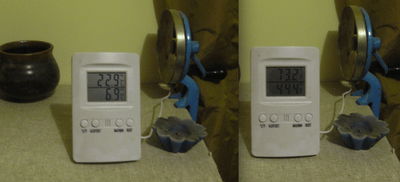
Indoor/Outdoor Temperatures in C and F at 6 pm, Sept. 4th.
Indoor/Outdoor Temperatures in C and F at 6:30 pm, Sept. 6th.
And we’re not even done insulating and draft-proofing yet.
Global citizens who are concerned about drought in East Africa, flooding in Pakistan and Bangladesh (formerly “East Pakistan”), and rising sea level in Tuvalu should feel an obligation to cut their energy use even if much of it comes from renewables like here in NZ. Even renewables have “side effects.”
Our friends in Raglan are fighting the wind mills proposed for the coastline to the north. I’ll be there a week from today helping them start that fight from home one kWh at a time.
Peace, Estwing

Perfection

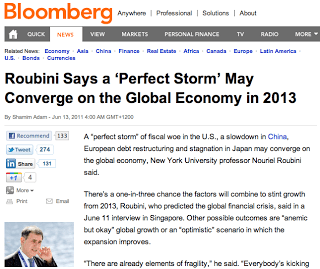
I appears that many global forces of unsustainability have been swirling of late. The synergy with which these forces interact, and the non-linear effects make predictions near impossible. Most economists and politicians appear to be in utter denial of anything other than a return to “growth” and “business as usual.” (I’d say that is the one place we are not headed.) But one economist in particular seems to be able to recognize potential problems better than others.
You may recall that Roubini was the one who accurately predicted the financial crisis of 2008. Are you going to believe him, or someone like Greenspan or Bernanke or Geitner who had no clue?
While the right mixture of forces can, indeed, make storms perfect, the right combination of design, communication and education can make solutions perfect. For example, this weekend the ECO School helped the YMCA manage the waste stream for the Connecting Families Day.
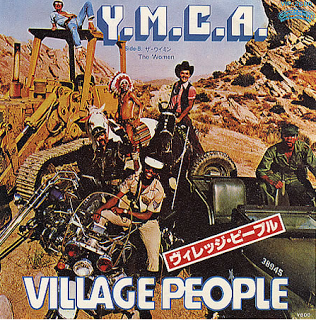
No, not that YMCA, this YMCA.
With over 20 years of experience in award-winning resource recovery programs, we felt confident about working with the Y with the goal of a zero waste event. I’ll write more about the mechanical details in another post, but the guiding principles for success when managing events such as this are:
1) Plan ahead. Sometimes called “pre-cycling,” this means thinking about the entire waste stream of the event and planning accordingly. For example, we ordered compostable cups for both hot and cold drinks. Zero waste.
2) Design. (“Failure to design is to design to fail.”) The physical lay out of collection containers is important. They must be clustered together. For example, we had bins for compost, paper recycling, drinks bottles recycling, and miscelaneous rubbish all together at one station.
3) Communication. This comes in a couple of forms. A) Signage must be brief, clear, colorful and at eye-level for both children and adults. B) Announcements can be used to remind attendees that this is a zero waste event and their efforts are crucial for success.
4) Education. Including the why and how of resource recovery is important to give people reason to act. Our education effort took two forms this weekend. A) I manned the resource recovery station to interact with people and monitor quality control. B) Our friend, Hadi, provided home composting advice at the Sustainable Whanganui table.

5) Quality control. Essential, essential, essential. No one wants to pick through dirty bins afterwards. Make sure everything goes in its proper place during the event. As mentioned above, quality control can and should go hand-in-hand with education.
By employing the above strategy, we were able to divert over 95% of the waste stream from landfill while role modeling positive behaviours to families. Those are world-class results. Not bad for weekend work.
More details on our composting process in a later post.
Peace, Estwing

Alternatives to wheat and potatoes?

Not to harp on this climate change thing too much, but it just does not seem to go away. Of course along with the extreme weather events predicted by climate scientists are equally dire warnings of drought. That seem to be widespread at the moment.
Well, 2011 seems to be shaping up as a poster child for climate change. Combine the extreme weather with the ongoing global financial crisis and elevated yet still volatile oil prices and you have what some call the “Toxic Trilogy”; Environment, Economy, Energy. Each of these systems is highly unsustainable at the moment with little indication of change in the near term. As permaculturists, we design to protect ourselves from these powerful outside factors beyond our control.
We have written extensively on energy savings on this blog and warned about the dangers of debt and how to hedge against energy inflation. But we have not written much about hedging against food inflation, which goes hand in hand with energy inflation and is made worse by weather extremes such a drought and floods. Of course we have a large and growing vegetable garden and burgeoning food forest, but what about starch? Like most people of European descent, we eat too much bread and pasta. As indicated in the story above, the price of wheat is near record levels with no indication of coming down. My long time strategy has been to grow potatoes as a staple crop, but here in NZ we are having trouble with an aphid that is compromising all nightshades. Both our potato and tomato crops this year were poor. So last week I planted Jerusalem artichoke.
And in the spring we’ll plant kumara.
Any other suggestions?
Peace, Estwing

The good, the B.A.D. and the ugly

Just when you think there are not already enough problems in the world, something comes on the radio.
But luckily, there is resistance.
If there is anything NZ needs less than GE foods from the US, it is American-style child beauty pageants. All I can say is…I’ve enjoyed working with the beautiful and intelligent children at Wanganui Intermediate School to work toward a more sustainable world. We don’t need no stinking pageants.
And so I turn off the radio and put on my Ipod and select something more than welcome in Aotearoa: Big Audio Dynamite.
And I cut a large hole in the floor.
Peace, Estwing

Too Hot

“Too hot, this town is too hot.” – The Specials
While Aotearoa enjoyed its warmest May on record, there were a few drawbacks associated with the balmy weather.
Source: TVNZ
Source: New Zealand Herald
(Who on Earth would name their city Nelson?)
And back state-side at Ma and Pa’s place.
Source: USA Today

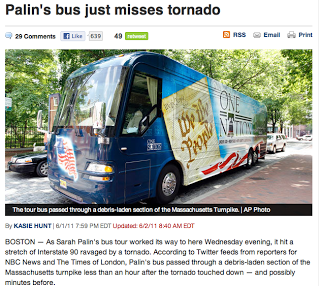
Climate scientists have long predicted that warmer average global temperatures will lead to increases in the frequency of extreme weather events and cause increased precipitation in some areas. When scientists believe something will happen, it is sometimes called a hypothesis. When they observe that actually to be the case, its called – in the case of climate change – yikes!
Joplin, Misouri
However, it is possible for tornados to do good…almost.
If only.
We are taking advantage of our own version of the ‘greenhouse effect’ here on Arawa Place in the form of passive solar design. Ultraviolet sunlight comes through our northeast and northwest windows, strikes solid surfaces within the home, is converted into infrared light (heat) and that heat is held (for a while) in by the walls, windows and insulation.
Northern corner in the morning sunlight.
It has worked very well so far. And as I seal up more gaps to eliminate drafts, it works better and better. It worked so well just the other day (June 1st) that well after sunset as I was preparing my dinner it was still 24.5 degrees C (76 F) in the kitchen. Earlier it was 29 C (84 F). This, of course, is too hot. Which means our passive solar design lacks enough thermal mass to absorb the excess heat during the day and re-radiate it at night. But help is on the way.
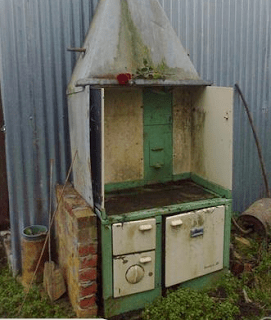
We are in the process of pouring the concrete foundation for our multi-fuel stove. The heavy, vintage Shacklock 501 will be surrounded by brick on 3 sides. Full winter sun will strike all of this thermal mass through 3 windows during 3 parts of the day. This ‘heat sink’ should provide enough thermal mass (along with other strategies we’ve used) to moderate day/night temperature swings.
And, of course, on cloudy days we’ll fire her up.

Peace, Estwing