Category Archives: garden

Eating Us out of House and Home

There is an expression in permaculture that goes something like “You don’t have too many snails, you have too few chickens”.

Well, we don’t have a snail deficiency, we’ve got a baby duck surplus.
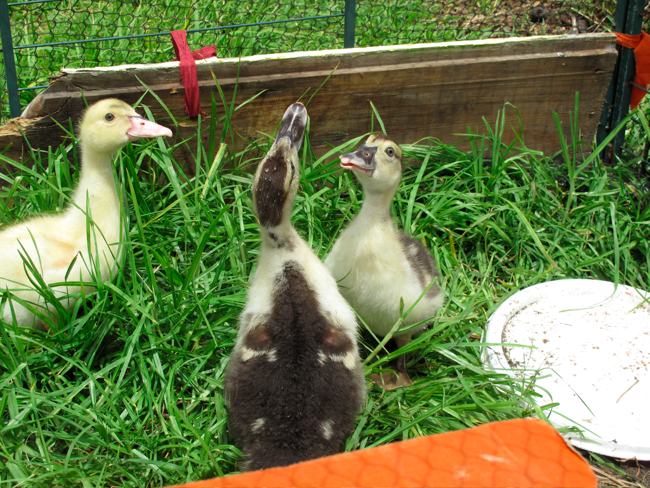
Our ducklings have just about doubled in size in the week that we’ve had them. Part of the goal of having ducks was to have a protein source that we did not have to buy food for, making small gains in self sufficiency. We thought we had tons of snails. In fact we were crunching them underfoot walking up our driveway after a late night out two weeks ago. But the recent cairina moschata population boost has put a bit of a strain on our small backyard eco-system. Our normal go-to spots for snails have been picked dry by the need to feed our ducklings’ insatiable appetite.
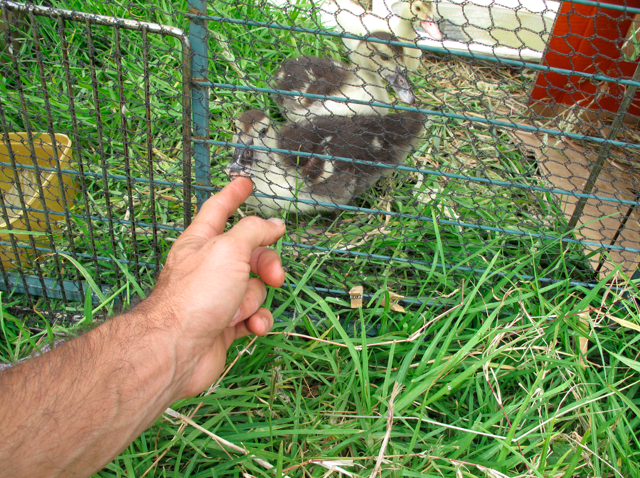
So, after some internet research we have begun improvising some snail traps. Most people use these traps to lure snails away from their garden beds. We are hoping they lure snails out of their summer hiding places, and into an easy collection point.

Here is an example of the bricks and damp cardboard method.

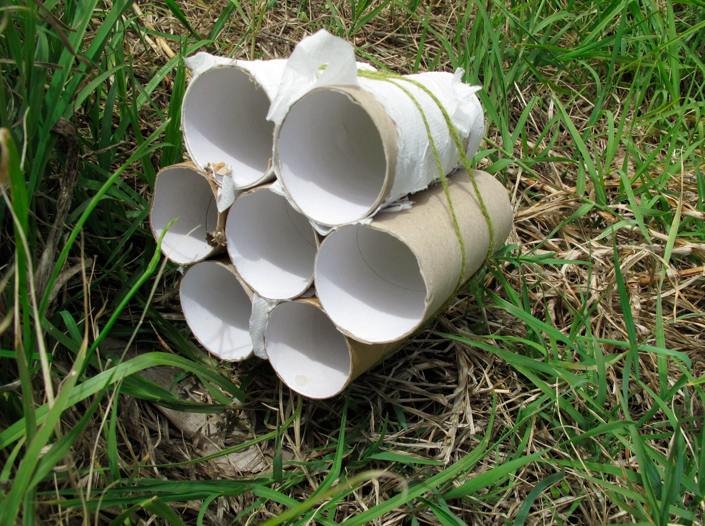
And here is the toilet paper tube cluster method.
From past experience we know that the beer method works well, but we’re a little afraid of the effects of intoxicating our wee babies just yet.

Ducks cannot subsist on snails alone, even when they are eating 20+ per day. So we are supplementing their diet with another resource we had in abundance, seedy grass. We were using grass to line the bottom of the duck’s inside home, an unused bath tub, and found that they really liked eating the grain from the tops of the grass. Thanks to a preoccupied scyther our yard was a veritable sea of waving amber grain, or as the duckies see it, a sea of food waiting to be harvested.
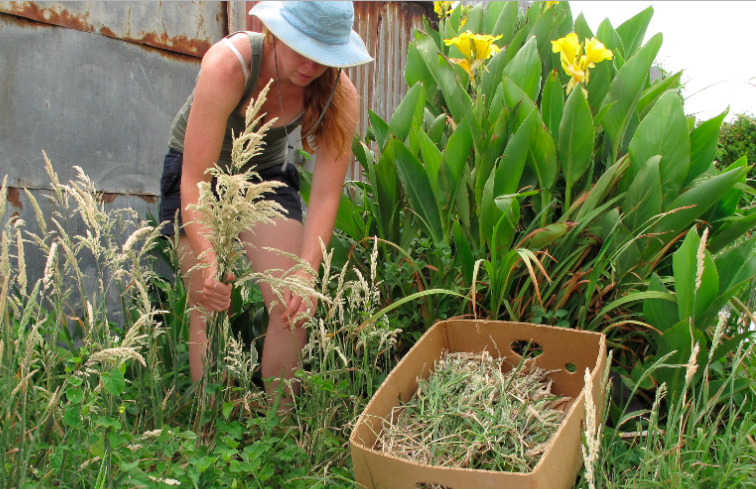
This is pretty perfect since every grain of grass seed is one more future weed waiting to invade our garden beds.

So far the ducks are proving their worth by ridding us of two potential problems, and converting them both to fertilizer. As William McDonnough says “Waste = Food”, or in this case, waste = … more useful waste.

Have you found any good waste = food solutions lately? Pass them on.

Wow, Willow Tree!

Remember how our Christmas tree was a branch of willow that we had coppiced and were attempting to pega-pega in a bucket of sand? Of course you do.

Well, that minor trim got me in the mood for a major haircut. For the willow, not for me.

When we bought our house our willow was in a bad state. She had been neglected for years and was covered in a thick layer of vines that had killed one major branch and were choking out all of the upper foliage.

Sad neglected willow.

So I gave her a good healthy dose of TLC. I painstakingly removed all of the vines and dead branches to let the healthy ones flourish. Well shoop, baby shoop. My efforts, combined with the nice sunny weather we’ve been having, mixed with a good bout of rain allowed her to grow, grow, grow.

I was a proud parent, for a while. Then I noticed that our willow was turning into a bit of a glutton, taking over our yard, and a bit of a bully, shading out everything in its path. I had created a monster.

Ferocious willow.

Another problem was that while our willow tree has three primary branches, most of the growth was the occurring on one major branch on the southeastern side. The tree was unbalanced from the weight of this one branch, which was also drawing most of the nutrients from the roots.

There are two reasons behind this. Firstly, our dominant winds come from the northwest, so the tree is constantly being blown toward the interior of our yard, helping that branch to flourish. Also, the primary branch on the northern side of the tree had been trimmed heavily sometime in the past, and the primary branch on the western side was choked out by convolvulous. If left unchecked I was worried that the tree would eventually topple.

Ferocious June.

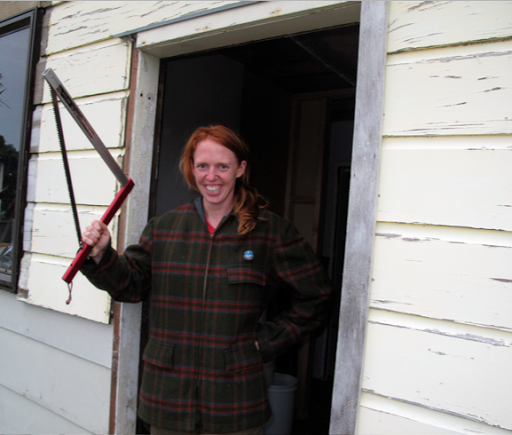
After a day of bonding with a handsaw, our willow was tamed, slightly. We took off the lower branches from the southeast side which will hopefully serve five functions:
1) give us some of our yard space back
2) help re-balance the tree towards the fence (you can see that it is still leaning into the yard quite a lot)
3) allow the native trees on the eastern side more light and space
4) makes it tougher for convolvulous to climb into the tree
5) provide us with firewood for the winter

Trimmed willow.
I’m not sure if we used proper coppicing techniques, or if what we did will serve the tree in the long run. Looking at the tree and the property, we did what seemed to make sense. It was hard to know just how much to take off, wanting to reap the most benefit, but not damage the tree. I have a feeling we could have pruned even more heavily, but we will watch to see how the tree reacts, and wait and see how quickly the branches regrow before pruning again. I think the tree is healthier now, at least she looks more balanced and the convolvulous will have a tougher time taking over.

We will watch these branches for resprouts.

Our Christmas tree is still sitting in a bucket of wet sand in a wheelbarrow in our living room. She seems to be holding up fairly well. Once we get around to it we will transplant her along the fence next to the big willow. Eventually we are hoping this will become a living fence, from which we will be able to coppice for firewood, and will replace or at least camouflage the existing iron.

Side-benefit of coppicing: fuel.

-June Cleverer

Oh Willow Tree

Did you know that willows can be coppiced? Did you also know that when placed in water or damp soil, a willow will resprout roots? We like to use the spanish term for this “pega-pega” (“stick-stick”), mostly because its fun to say.

Anyhow, my desire for a christmas tree this year led me to do a bit of experimenting with coppicing and pega-pega on the willow tree growing in the back corner of our yard. Of course you can’t cut down a tree without a lumber-jacket on (I think I just invented a new word), even if it is 20 degrees Celsius.
I headed out bravely into what more closely resembles a junk yard than a wilderness. And after quick rendevous with a particularly overgrown willow branch…

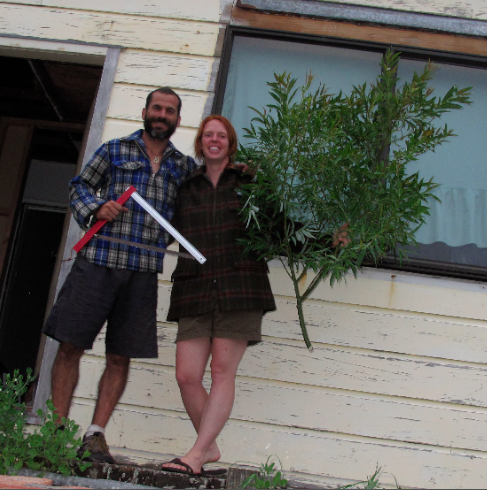
I emerged triumphant. I allowed my trophy husband to pose with me and our harvested tree, because I think he’s cute. I was feeling all merry, and humming christmas carols. Its a bit hard to get into the Christmas spirit when its hot and muggy out, but we were trying our best.

Earlier that day I had made some bundles of lavender harvested from the bush outside our front door.

I added these to a garland and angel I bought at Trade Aid and the bride and groom cake toppers my sister made us for our wedding.

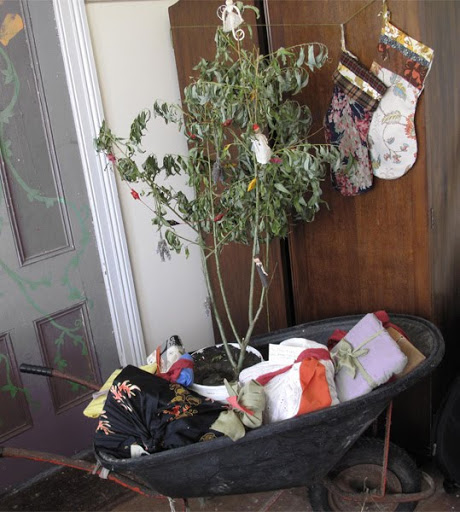
Then we set the willow branch in a bucket of sand, and lacking placement options in our home-in-progress, decided to set it in a wheel barrow, for easy transport. Then, while belting out that song from “Love Actually” and listening to that rock and roll Christmas CD we used to listen to growing up. (You know, the one with Sting and Cyndi Lauper singing Christmas Carols). We decorated that bad boy.
And look! It’s already filling up with presents.
As the kids at my day camp say… “Only 2 sleeps ’till Santa”.

-June Cleverer

First Things First

Yeah, so maybe our roof had some holes in it. Maybe the brace holding up our front porch was leaning at a precarious angle. Maybe the plumbing and electricity were not quite functional yet. When we arrived in Whanganui four weeks ago, for the first time after our wedding, we knew exactly where we needed to start work here at the house… tree planting! Priorities.

Thanks to our fabulous friends we ended up with thirteen tagasaste trees, 10 kilos of compost, three native shrubs, two passion-fruit vines, a dual-variety apple tree, and a fig tree (partridge not included). . We also inherited a mass of foliage at the back of the property that looked like some sort of vine-covered monster.

Well creature from the vine-lagoon beware!

Look out vines. We are out to get you.

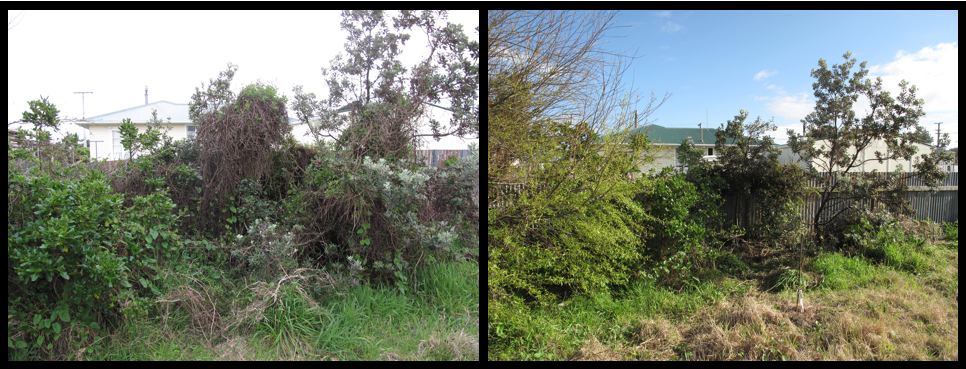
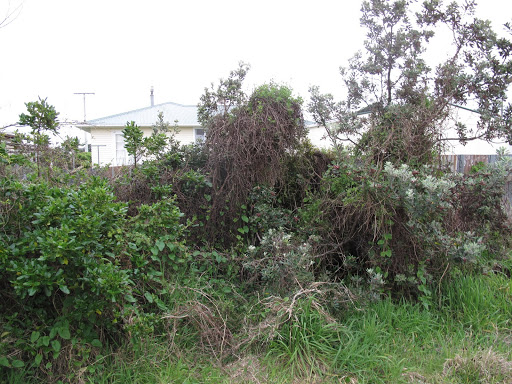
Who knew vine wrestling could be so addictive? After two days of work our viney-mass of unidentifiable trees went from this… to this:

Can’t tell the difference? Well, trust me. It’s massive.

Hey there’s a willow under there. And a bottlebrush tree. And three other mysterious little guys who were suffocating under a mass of convolvulous and some other crazy fast-growing parasitic flora. You could almost hear them squeak out a little “thank you” as their branches were free to reach for the sun. No worries little guys. I got your back.

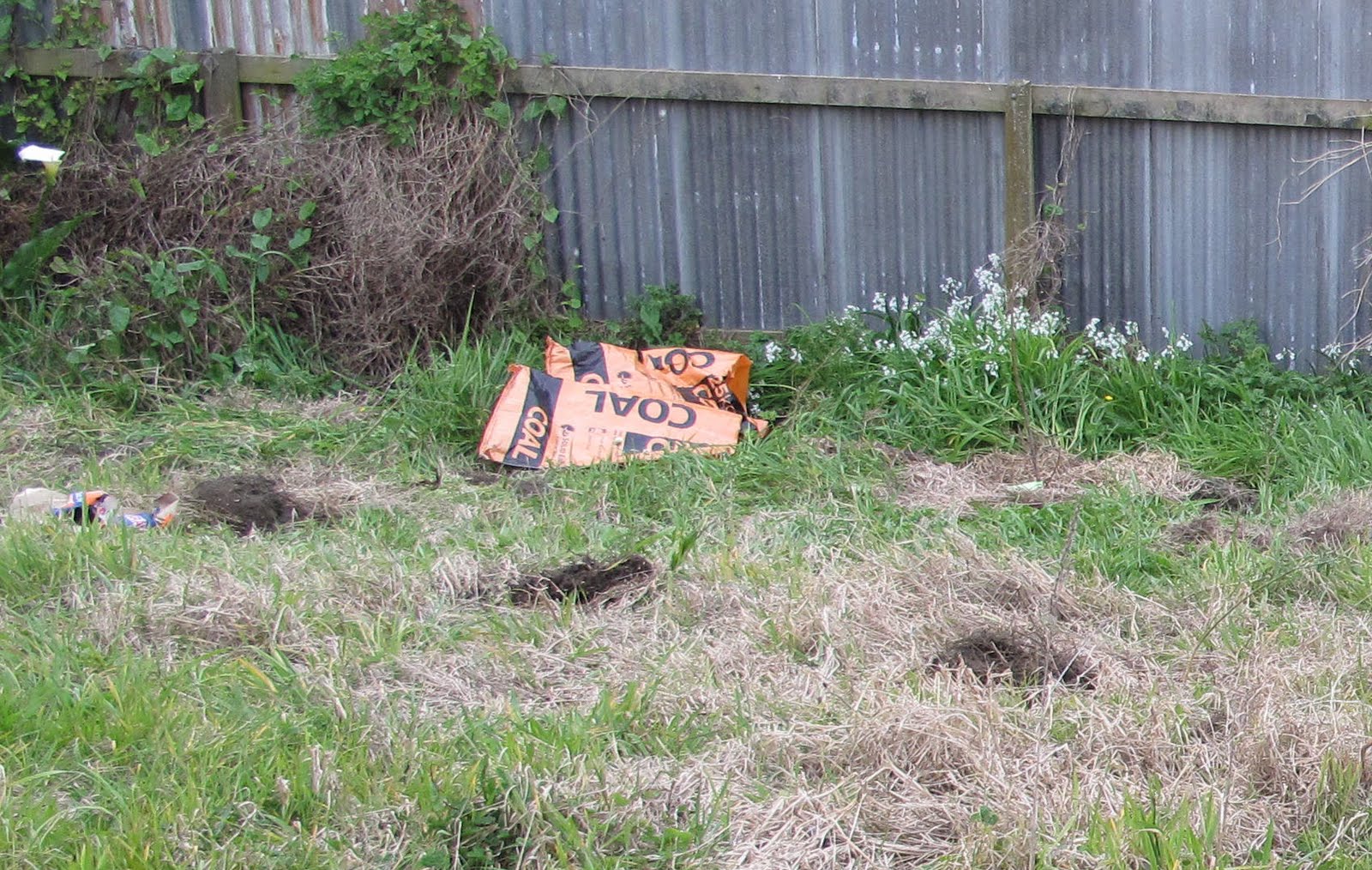
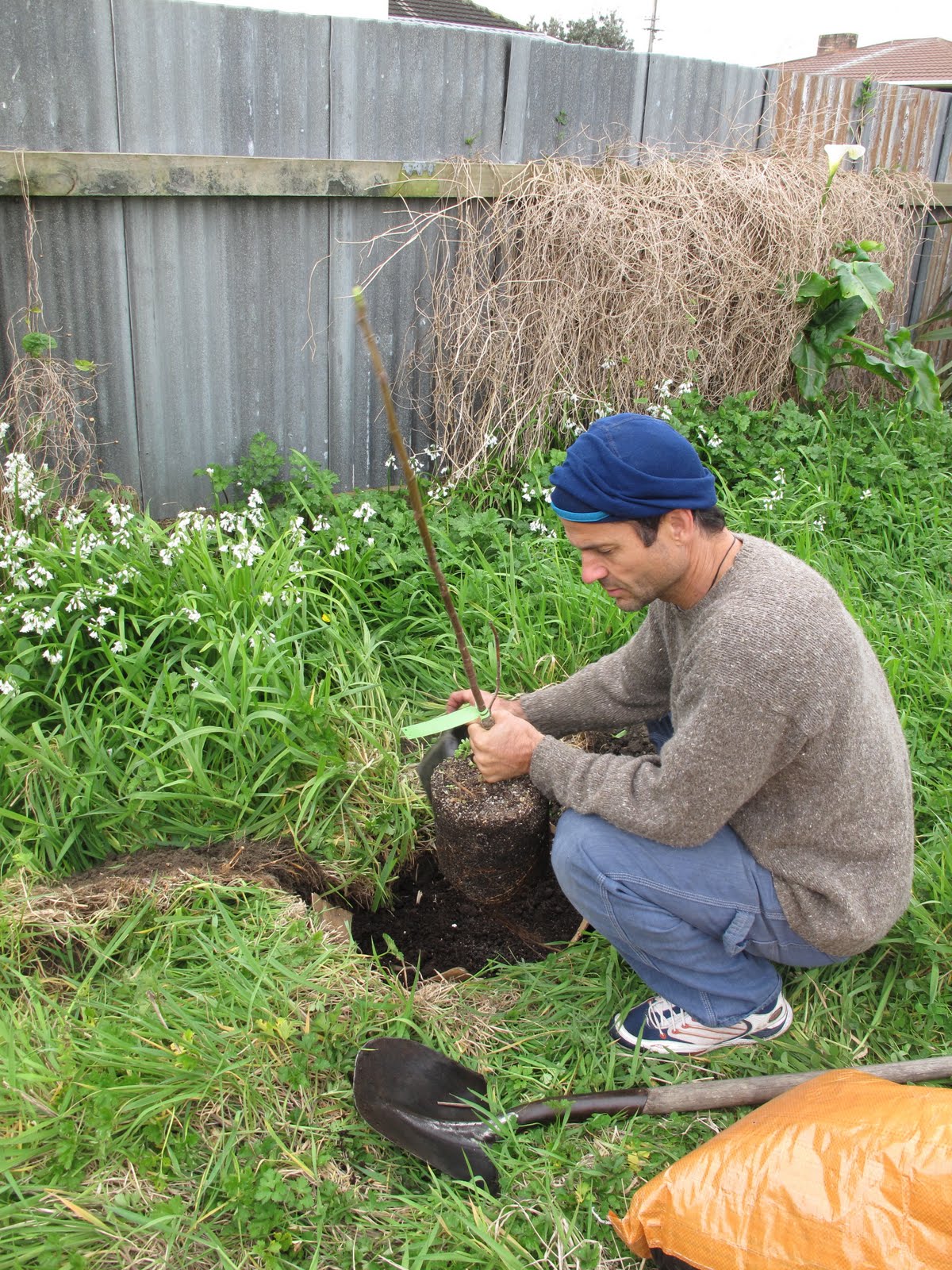
Then it was time to get all those other trees in the ground. The apple went to the front of the house with the natives, right along the fence so that we can train it to run low. Lazy apple pickers or smart apple pickers? The passionfruit went along the eastern fence so they can climb up and away. And the tagasaste and fig went in the back, to create a bit of wind shelter and some fodder for our eventual chooks.

Not quite a forest yet, but give them time.

So “why?” you might ask. “Why would you spend all that time on trees when there’s so much else to do?”. It’s not as frivolous as it may seem.

We knew that once we started on the house, the project would be all consuming, and who’d be able to take time out to play in the yard? Plus, by getting the trees in earlier, they will have a better chance of survival through the summer, and we will be able to enjoy the fruits of our labor sooner. Tee hee. I crack myself up.

-June Cleverer