Category Archives: growing food

Nature Directs Us for Best Design

Screen shot 2014-01-18 at 7.18.46 AM

Holy Wellington, Bat Man, the winds have wreaked havoc on Whanganui holiday-makers and on our recently groomed local beach. On the heals of what has been called the windiest October in decades we’ve been hit by another blast in late December/early January.

This tumultuousness appears to exhibit what has been observed by climate researchers, such as Jennifer Francis of Rutgers University (USA): The hotter the world’s climate gets, the more energetic its weather tends to become.

The good news is that eco-design can address this to a certain degree. The bad news is that non-eco-design is likely to fail with greater frequency over time.

One essential part of the eco-design process is looking for patterns in nature. This can be as simple and predictable as morning and evening sun angles during winter and summer.

For a passive solar building, the aim is to allow winter sunlight to penetrate deep inside the structure while preventing direct summer sunlight from entering. Along with the strategic placement of windows, something as simple as eaves can achieve these aims.

Other patterns in nature are slightly more difficult to observe, but still obvious to those who engage eco-design habits of mind. For example, part of the permaculture design process is called a sector analysis, which includes identifying the directions of both the prevailing winds and strong seasonal winds.

There are lots of ways to find out this information: live in a place for a year; do some research on the internet; ask trustworthy locals; look for sub-patterns in nature that reflect wind direction.

Screen shot 2014-01-18 at 7.19.03 AM

In Castlecliff it is fairly easy to ascertain the direction of prevailing winds. One way is to look at the pattern of trees listing to leeward. On our section we have a large willow that grows 30-degrees from vertical, leaning away from the northwest as shown in the photo. To quote Paul McCartney (and Wings), “The willow turns its back on inclement weather; if he can do it, we can do it.”

Another way is to go to the beach and look at patterns in the sand. The photo shows small ridges that form perpendicular to the wind as well as scour marks that run parallel to the wind and appear to converge at a “vanishing point” in front of Duncan Pavilion.

Screen shot 2014-01-18 at 7.18.55 AM

While part of eco-design is recognizing patterns in nature, and part of it is working with nature, another part is protecting human constructions from its destructive power. An easy example of this is the New Zealand Building Code’s strict rules on weather-tightness, and earthquake and wind resistance.

Another example is protecting fruit trees and vegetable gardens from coastal winds. We have spent many hundreds of dollars on wind protection on our section. Almost all fruit trees – even those that are marketed as tolerant of sea winds – need a certain level of wind protection to thrive or even survive.

Screen shot 2014-01-18 at 7.19.22 AM

This is clearly evident at one poorly designed community garden in Castlecliff that lacks wind protection, and where roughly half of the fruit trees have died. Planting a tree without adequate site preparation is neither eco nor thrifty.

Screen shot 2014-01-18 at 7.19.11 AM

It is hoped that the advice in this column will inspire others to engage in eco-design habits of mind that will result in a healthier, happier, more resilient community for us to share. Again, quoting McCartney and Wings, “With a little luck we can make this whole damn thing work out.”

Peace, Estwing

Mid-Summer Permaculture Update

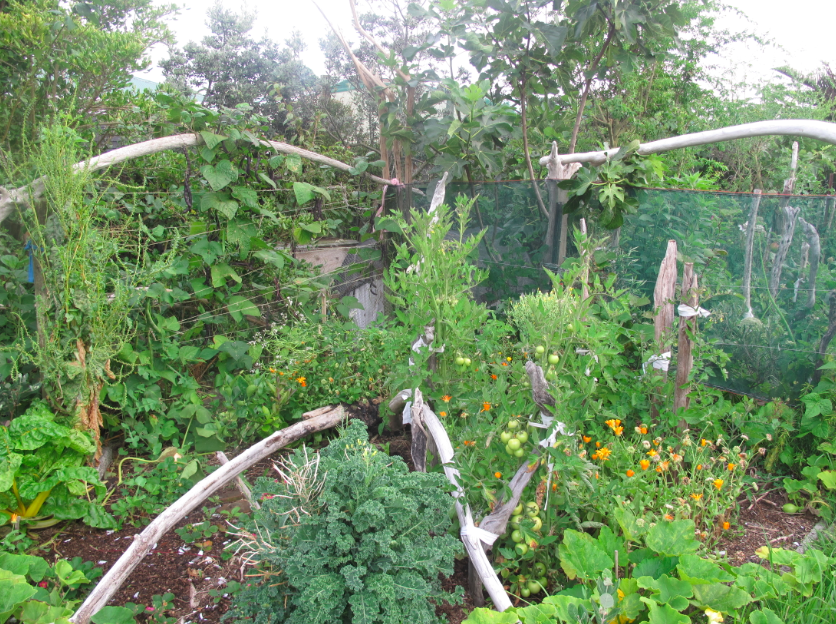
Here are some images of our productive permaculture property during the first and second weeks of January. Highlights include our first apricots, first olives, and first kumara plants.

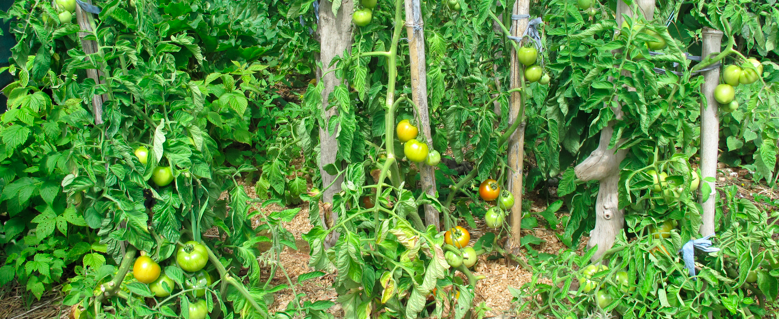
Beans, tomatoes, plums and apricots.
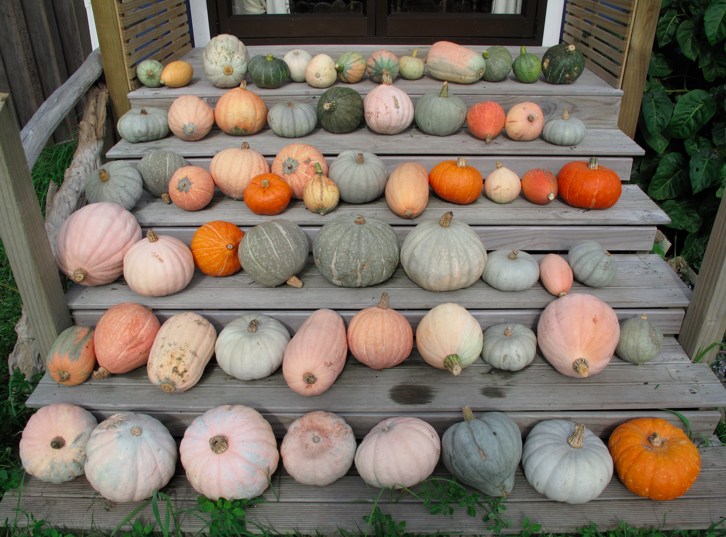
Our first pumpkins are ready.
Kumara: a new experiment.
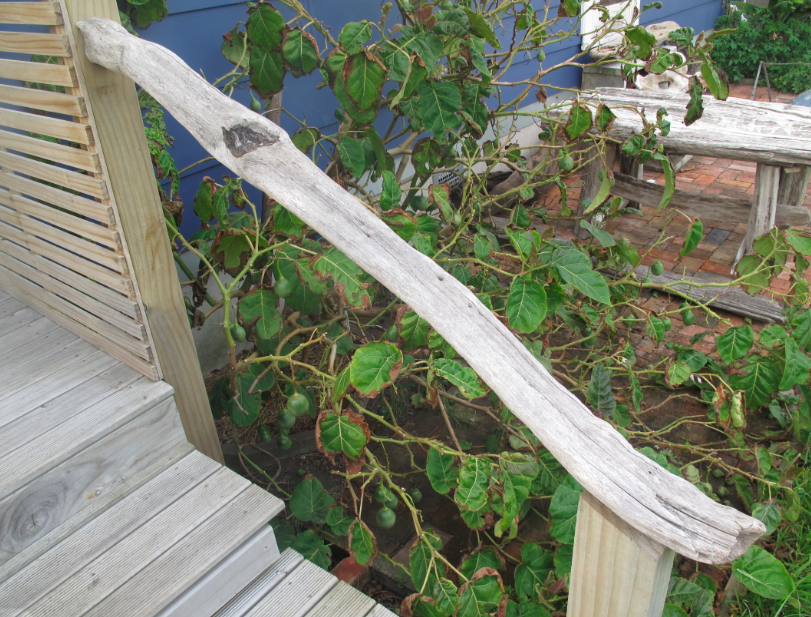
Hiding this iron fence with driftwood.
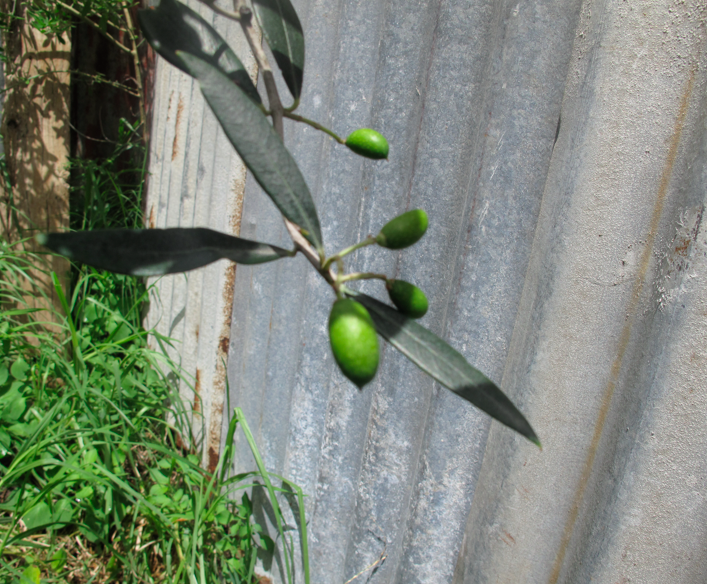
Our first olives forming.
Agapanthus flowering everywhere.
Pears coming along. 
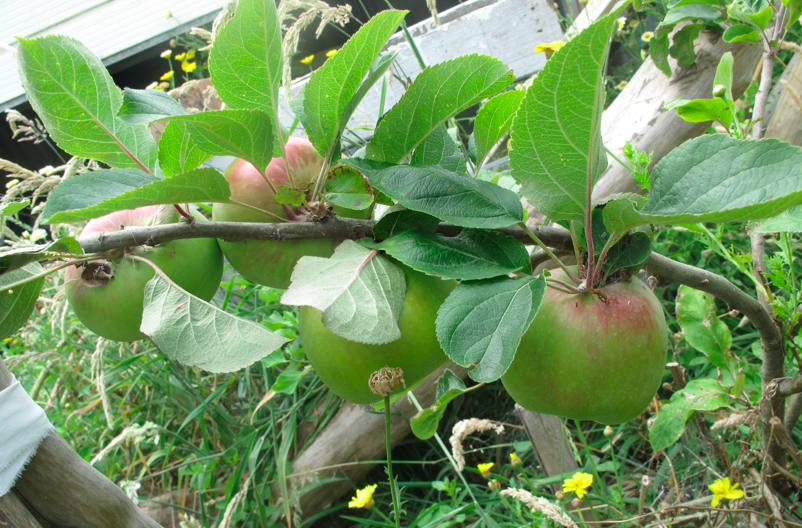
Monty’s Surprise apples. 
Blueberries.
Black Boy peaches. So excited. 
Yum.
A very attractive lettuce. 
Pretty cool mottling. 

Peace, Estwing

New Years Permaculture Update

Here are some pictures of our pumping permaculture property.

Good eats
A lettuce crop where I harvested garlic just 2 weeks ago. 
More on the vine
Bawberries, as Verti would say.
Looking forward to our first grapes this year.
Mo bawberries pwees.
Pumpkins forming.
Another cubic metre of compost.
Spuds in the ground.
“Wild” purslane.
Kittens next door.
A little colour.
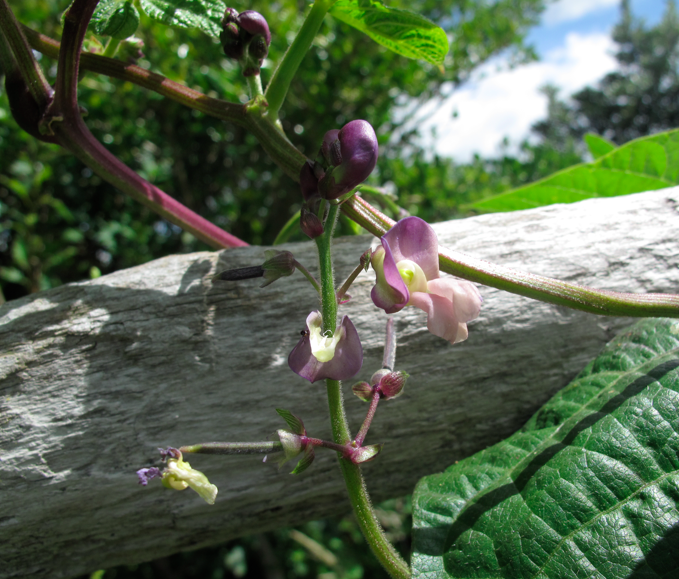
Bean blossoms.
Bean blossoms.
Bean blossoms… fooled you. Apples.
Plums.
Baspberries.
Melons in the ground. Hopefully it will be hot enough for fruits to form. 
Red hot chilly peppers – blossoming.
Our first oranges.
Guava fruits forming from fertilized flowers.
Dinner tonight.
Dinner tonight.

Peace, Estwing

Swales and Rain Gardens for Water Management

It is encouraging to see the number of people engaging in meaningful dialogue about important local issues through the Letters page of the Chronicle. Sadly, too often these letters include references to failed attempts to work with Wanganui District Council on strategies that work with nature instead of against it.
For some reason, our Council appears stuck in the past on many issues of infrastructure and economic development. From most accounts, the 1950s were a great time to be alive, but in many cases ‘50s thinking no longer applies.
All of this makes it particularly significant that WDC Chief Water Engineer, Kritzo Venter, has been active and vocal about promoting progressive water management strategies that ‘mimic’ those that nature itself has developed over millions of years. (That is some investment in R&D, ain’t it?!?)
Small swale and rain garden. 
One of those water management strategies – swales – has been in use for decades in some places around the world. A swale is a long, narrow earthwork that runs perpendicular to slope. They slow the flow of surface runoff and facilitate infiltration into the ground. They are perfectly level, unlike ditches, which are sloped to drain water away like a river. Water in a swale soaks into the ground instead of running over it. A carefully constructed swale includes a level-sill spillway that gently allows it to be overtopped in a controlled manner in the event of extreme rain.
The use of swales is the type of win-win-win situation I write about in this column because it: 1) reduces stream and river levels during flood events; 2) increases groundwater reserves that can be called upon during periods of drought; and, 3) significantly reduces the overall cost of infrastructure. Eco-thrifty at its best.
For example, two years ago I was asked to consult on a proposed residential development in Kaiwhaiki that had significant drainage problems. I was told the 10-year-old quote to ‘solve’ the problem the ‘old way’ using pipes and culverts was for half a million dollars. After picking my jaw up off the floor, I told them that good eco-design, which would include cluster housing and the use of swales, would significantly slash that price. WDC Chief Planner, Jonathan Barrett, appeared supportive of those ideas during one meeting held at Council.
The other strategy promoted by Kritzo – and praised by Chronicle assistant editor, Anna Wallis – is the use of rain gardens. A common use of rain gardens is to absorb and filter runoff from new parking lots or other such impermeable surfaces. In this way, rain gardens function like wetlands: sponging up excess water and cleaning it through natural processes.
A series of mini-swales and vege gardens make up this garden.
I first learned about rain gardens in 2005 while taking a certificate programme in the States on Organic Land Care. Shortly thereafter I advised a school to install rain gardens in a number of locations where they had persistent drainage problems. This was particularly meaningful in the context of the school because it became a relevant learning experience for students.
In 2009, while living in Raglan, I built a small management system to control an excess of runoff coming from the roof of a newly built outdoor kitchen at a campground. The system consisted of a swale, a level-sill spillway, and a rain garden. We planted the swale with feijoa trees and the rain garden with plants that tolerate periods of wet and dry.
Swales and vege gardens soak up water and keep it from flooding this lawn.
While in Raglan, I also used swales as a metaphor for eco-design during a Pecha Kucha night, where artists and designers share their work through 20 slides with narration of 20 seconds per slide. That presentation, “Thinking Like a Swale,” became the inspiration for a programme I offered at the Josephite Retreat Centre earlier this year to acknowledge the UN year of water. Hopefully, when River Week 2014 comes around next year, I’ll get a chance to present it again to compliment and support the education efforts Kritzo has already made in the community.
Us ‘swale-thinkers’ gotta stick together. It’s a watershed out there.
Making Small-Scale Vegetable Production Pay

Any small-scale organic farmer or market gardener knows it’s very hard to make anything more than a minimum wage unless one has unprecedented access to a population that is willing to pay fair prices for high quality food. Paradoxically, the land values near these population centres are extraordinarily high, basically preventing small-scale farming or market gardening.

For the rest of us, it is a hard slog for the moment. I have three pieces of advice for the aspiring market gardener who wishes to make a fair wage for their skills and time: 1) find a niche product; 2) be first to market with a common product; 3) grow the best of the best of anything.

Finding a niche product, however, can be hard so I’ll focus on the other two for the moment.

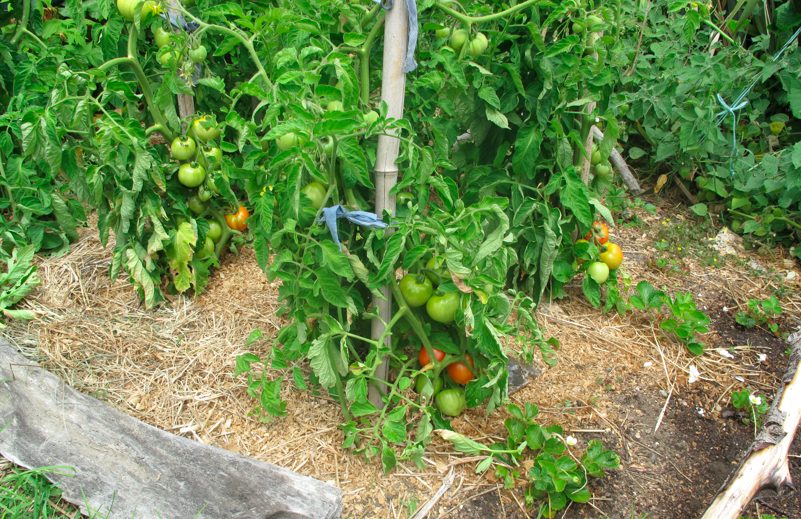
Last year I beat everyone to our local market with fresh, local, organic tomatoes by over three weeks. As such, I could charge a premium for being the first, and then drop out of the competition when everyone joined me and prices fell.

Being first to market means planting early varieties and getting them in the ground early.

It also means planting these early varieties in the hottest spots.

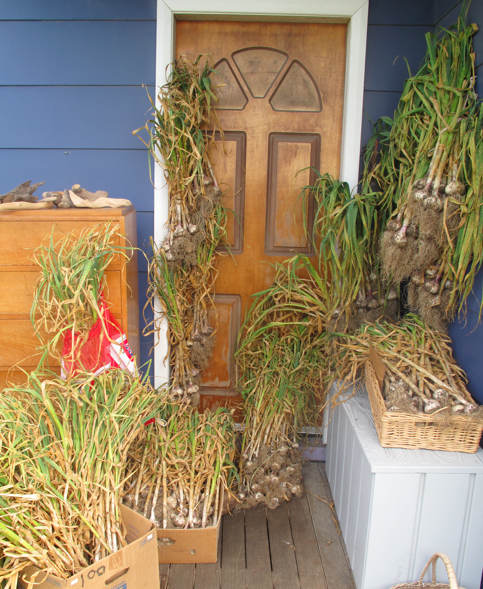
I would not call garlic a niche crop, but I will say that discriminating cooks will pay for the best garlic.

We will sell and give away about half, save a quarter to replant, and eat a quarter ourselves.

Peace, Estwing

Upcoming Workshops

Two Workshops, One Day. June 1st, 2013
1:30-3:30 pm. Window Blanket DIY Workshop
4:00-5:30 pm. Growing Great Garlic, Plentiful Pumpkins, and Tomatoes Before Christmas

Window Blanket DIY Workshop.
1st June, 2013. 1:30-3:30 pm. Quaker Meeting House. 256 Wicksteed St.
As effective as double-glazing but at a small fraction of the cost, window blankets are one of the best things a householder can do to make their home warmer, dryer and healthier. In this workshop, you will learn how to make your own custom fit window blanket to take home and install. You’ll also gain the knowledge and skills to make more of them at home.
All tools will be supplied. Either bring your own materials or buy them at the workshop for a small fee.
Space is limited.
Registration essential. theecoschool@gmail.com – 344 5013
Workshop fee: $20 ($15 unwaged)
Materials fee: $8 – $16
Growing Great Garlic, Plentiful Pumpkins, and Tomatoes Before Christmas

This workshop shares  some lesser-known tips and techniques to enhance the growing of common garden vegetables organically. On our small section in Castlecliff, we grow 400 beautiful garlic and over 100 kilograms of pumpkins with very little effort. Last year we had our first ripe tomatoes on 15th December without a glass house.
1st June, 2013. 4:00-5:30 pm. Quaker Meeting House. 256 Wicksteed St.
Space is limited.
Registration essential. theecoschool@gmail.com – 344 5013
Workshop fee: $15 ($10 unwaged)

Sun Angles: Winter and Summer

Mid-way between the autumnal equinox and winter solstice we find ourselves in the unenviable position of short days and long nights, and looking forward to even shorter days and longer nights for some weeks to come. Despite this, our renovated, passive solar villa has been performing well – the indoor temperature has not dropped below 18 degrees in 2013. (More on this in subsequent columns.)
The scientific explanation for the change in day length is that the Earth’s axis is ‘leaning’ the Southern Hemisphere away from the sun slightly more each day until June 21st. The way we perceive the sun in relationship to ourselves is that it rises a little further northeast and sets a little further northwest each day, as well as hanging lower in the sky at noon. Mind you, this is gradual. It takes 6 months for the ‘tilt’ to change from the sun’s highest point in the sky – and longest day of the year – and its lowest point in the sky.
A good eco-designer takes his of her lessons from nature. And nature takes his or her lessons largely from the sun. Using the transitive property, you can get the rest.
In the space below, I’ll explain two examples of good eco-design that take full advantage of the predictable behaviour of the sun: one biological and one physical.
 WBG, sold out quick-as.
If you were at Whanganui’s Saturday market for its last session before Christmas 2012, you may have been among the lucky few to have purchased The World’s Best Garlic. There is a lot that goes into growing The World’s Best Garlic besides humility. One important ingredient is timing. When I arrived in New Zealand five years ago I was told: “Plant garlic on the shortest day of the year and harvest it on the longest.” Generally speaking, this translates into June 21st to December 21st.
Please be aware, however, that this has nothing to due with full moons, cow poo vortexes, or Grecian Formula 44. It does have to due with soil temperature and gradually increasing sunlight day by day for half a year.
Also be aware that growing The World’s Best Garlic involves the right kind and amount of compost, mulch, and watering regimen, all of which are highly protected trade secrets.
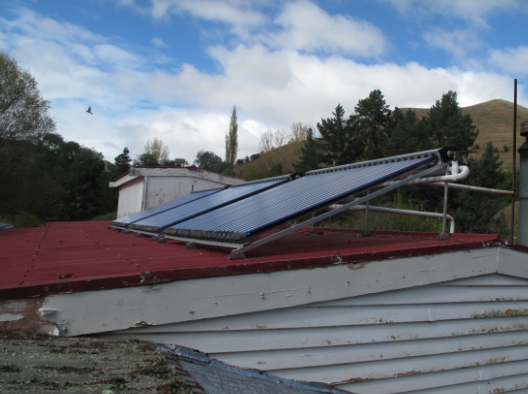
The other example of good eco-design involves two examples of solar hot water that are dramatically different from one another but each serves its own users most appropriately. One system is set on an acute angle and one on an obtuse angle to the sky. In other words, one system is set up for maximum efficiency in the winter and one for maximum efficiency in the summer.
Solar hot water set for a winter sun. 
The solar hot water system on our home is set for a winter sun angle because we know that there are fewer total hours of daylight in winter, and that our insulated tank loses more heat each night in July than in January. There also tends to be more rain and clouds in winter, so we need to take advantage of every clear patch and fine day.
Even set at this high angle, our system can boil over any given day of the summer if we don’t use enough hot water. This ‘boiling’ water shoots down the gully trap as a safety feature to the system.
Solar hot water set for a summer sun. 
So who, you may ask, would set their solar hot water system for a summer angle when there are plenty of long, fine days. Answer: YMCA Central’s Raukawa Falls Adventure Camp. They get heaps of visitors all summer long, many of whom want a warm shower at the end of each day. But for much of the winter, the camp lays more or less dormant, and a back-up wood-fired hot water system can easily fill in when needed.
As spring follows winter, so form follows function…if the design is good. 

Reactively Proactive


I had great hopes for the Copenhagen Climate Conference in December 2009…and then I was very disappointed. In the two years since, it has become clear that most governments worldwide no longer consider carbon reductions as an approach to dealing with climate change. Rather, the focus seems to have shifted to adaptation.

That saddens me because we are now essentially condemned to deal with the predicted extreme weather effects of climate change instead of trying to avoid them by reducing emissions.

I consider this a lack of will. It gives me little hope that humanity will have the will to deal with other pressing environmental, economic and social issues facing us.


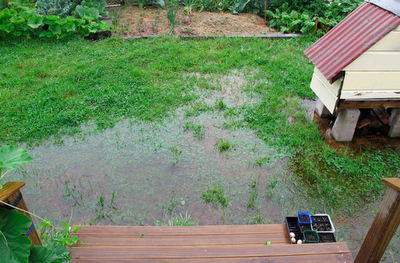
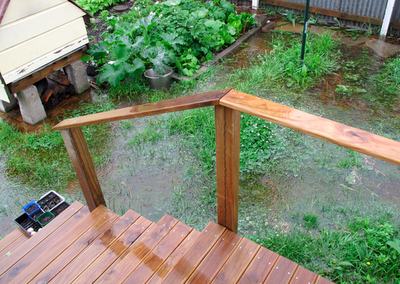
We are feeling an increasing rate of extreme weather events in our community.

And out our back door.
January 1, 2012

We are on pure sand, and January is usually a dry month.

Yet we had standing water that remained for hours. Permaculture founder Bill Mollison is famous for saying, “The problem is the solution.” A partial solution to our flooding problem can be dealt to by collecting and storing some of the water.

This 1,000 liter water tank is not large enough to take all the excess water during a major rain event, but it will take some. And it will serve other functions too. A major principle of permaculture is redundancy. Currently we only have one water source: city mains. Yet if there is an earthquake like the ones in Christchurch, we would be left high and dry. By having the capacity to collect and store our own water we protect ourselves against natural disasters.
Additionally, we have had some extreme wind events lately which prompted us to put up wind netting last month.

But that was not enough. I recently purchased 20 more meters to install soon.

I have come to the conclusion that governments cannot be depended on to avoid disasters be they environmental or economic. Therefore, we need to protect ourselves. Investing in wind netting and water tanks are just two examples of protecting against weather extremes. Wind breaks and water storage are central to permaculture landscape design. Even on our 700 square meters we are designing for resiliency in these ways and others too. I’ll explain some of those another time.

Peace, Estwing

Brains Not Brawn in the Garden

At the ECO School, we believe in making the highest quality sustainability education affordable. Money should never be a barrier to getting top notch information to people of moderate means, and delivering that information expertly by making it logical, practical, relevant, easy to understand, and teaching to multiple intelligences.
We reach the world through the Web, and we reach out in our community (and those communities where we are invited) by working with teachers in schools, presenting to community groups, running workshops and offering consulting services. Most of our local initiatives are payable 100% in REBS, our local currency, meaning anyone can join that network and attend a workshop “on credit” and “pay” for it later by offering their own talents to the REBS network. And on top of that, all of our workshops and consulting services are designed to help people save money. In most cases, the cost of the education pays for itself in a matter of months, and after that it is all savings. Compare that to the average US or NZ university degree!
By far our most popular and most successful workshop has been “Organic Weed Control: Human Scale Design and Management” aka, “Low-Maintenance / High-Productivity Gardening.” We’ve trained over 300 people over the last four years in Australia, USA and New Zealand with excellent feedback. We will be offering this workshop on Sunday, November 13th from 1 to 5 pm here on Arawa Place. Some aspects of the programme include:
• Designing garden beds with the mantra, “Tools, Timing, Technique.”
• Improving germination rates in chunky soils.

• Tips for transplanting, spacing, staking, propagating and pruning tomatoes.
• The judicial use of mulch, and growing great garlic and onions.

• Super lazy, super productive pumpkin patches.
• Eco-thrifty compost making. For more details, click here.
And while you’re here, check out the rest of or eco-thrifty landscaping…
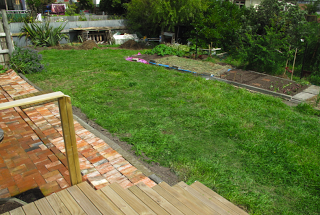
… including our almost finished brick patio. (John and Amy, Come back and help us complete it!)
And, most importantly, someone tell me the name of this plant. It has a thick, perennial woody root but the foliage dies back in winter. It grows everywhere in our sandy section.

Pre-registration required. Contact us through the ECO School. As always, discounted rate for our neighbors in Castlecliff.
Peace, Estwing