Category Archives: kiwi as

Celebrating Our Local Heroes!

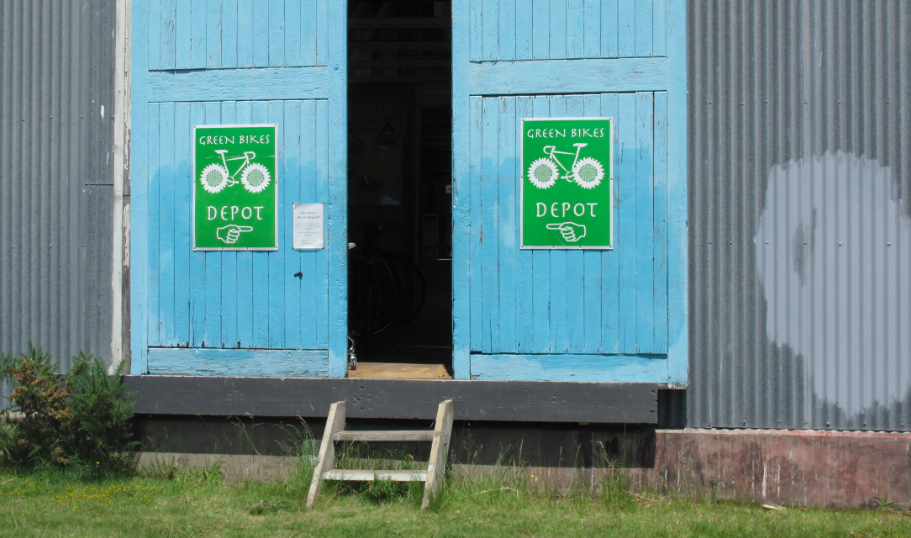
Inaugural Unsung Hero Award to Green Bikes Whanganui  Screen shot 2014-04-10 at 9.22.22 AM

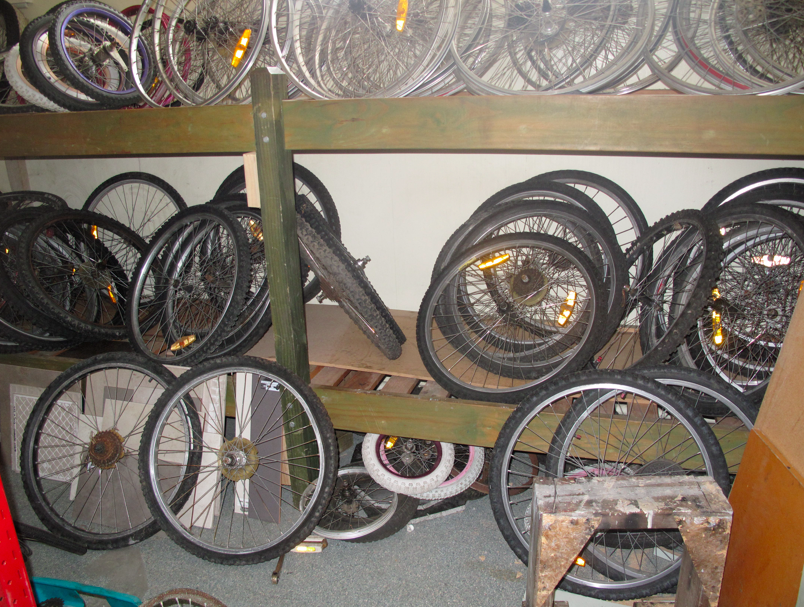
Green Bikes Whanganui has been a quiet, consistent contributor to the sustainability movement in our city for nearly six years. From beginnings in Taupo Quay, then shifting to Heads Road, and now at the Resource Recovery Centre in Maria Place, Green Bikes has provided hundreds of low-cost bicycles to our community, as well as cycle repairs, and education.

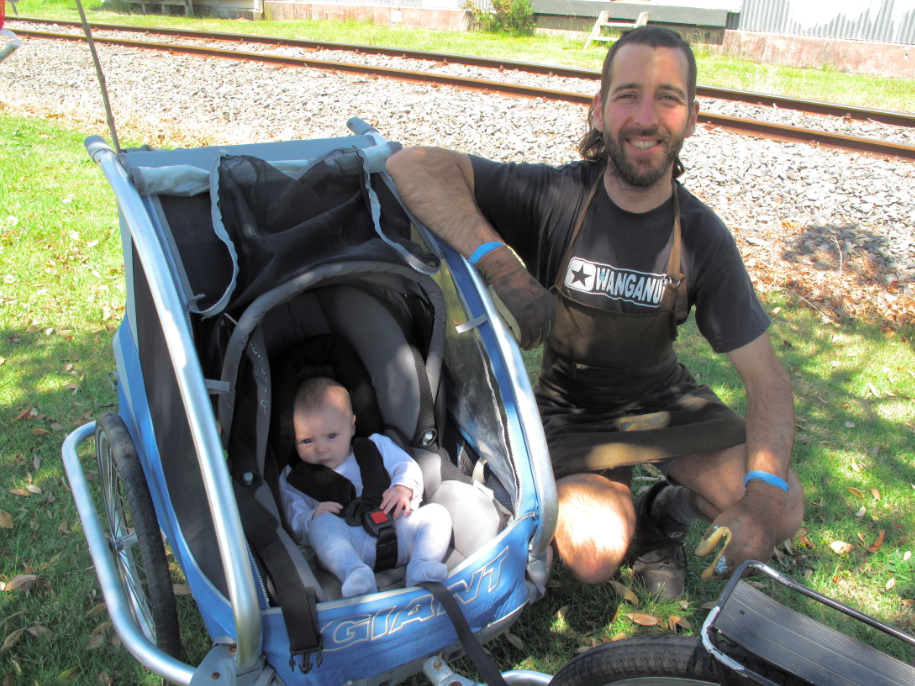
The vast majority of this effort has been done by Jonah Marinovich, in a humble manner, although with a rich, rye sense of humour.

Screen shot 2014-04-10 at 9.22.34 AM

Although Jonah has handed Green Bikes over to the capable hands of Alan and Peter – both too shy to pose for a photo or even have their last names published – I think it is quite appropriate for us as a city to recognize the dedication that Jonah has shown over the last half decade.

The ECO School is proud to present the inaugural Unsung Hero Award to Green Bikes as Jonah has requested.

 Screen shot 2014-04-10 at 9.20.56 AM

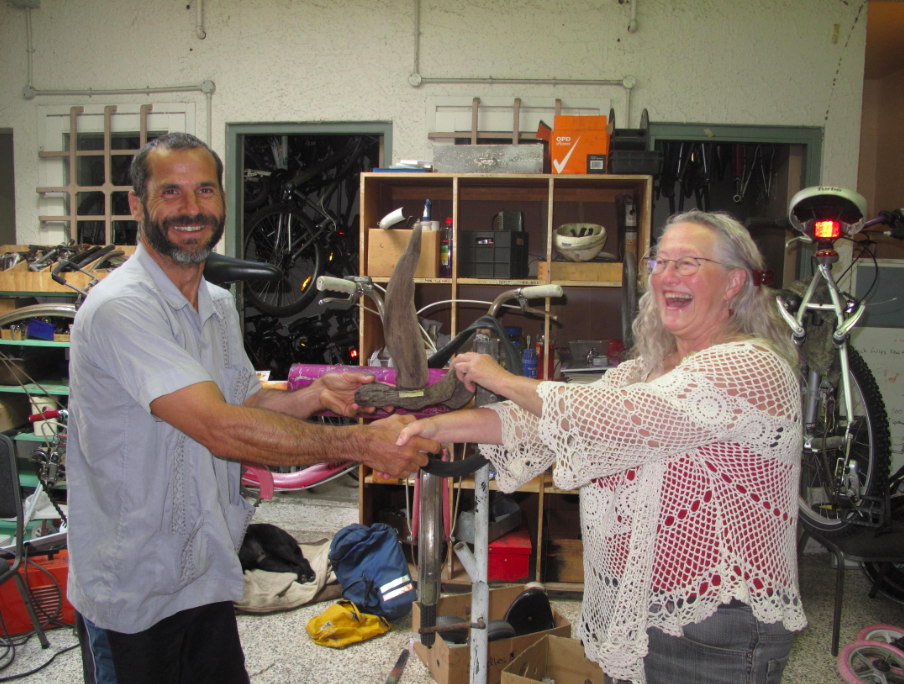
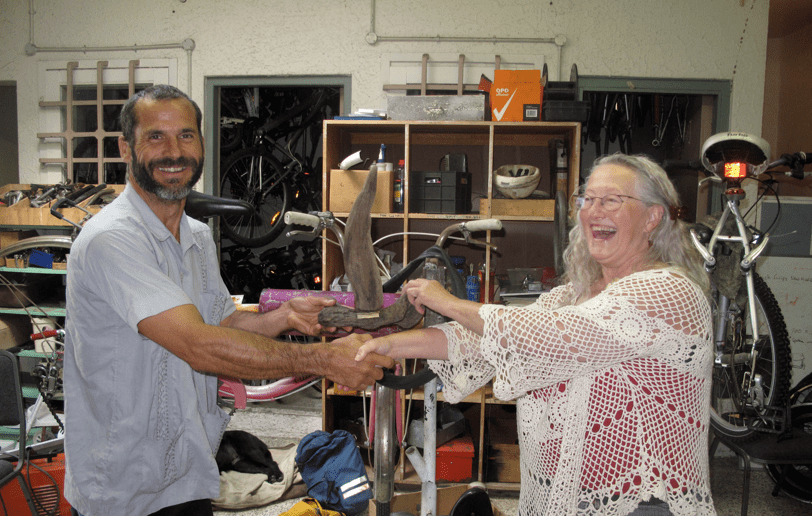
Photo: Robin Williamson of the Sustainable Whanganui Trust is shown accepting the award from Nelson Lebo while Alan and Peter are behind the scenes cracking us up.

Screen shot 2014-04-10 at 9.23.37 AM


Engaging Children in Recycling & Composting

Last week I had every intention of writing about Sea Week, Castlecliff Children’s Day, recycling and composting. I even had the photos picked out.

Screen shot 2014-03-21 at 10.29.00 AM

But then I saw a cryptic invitation in the Chronicle about writing poems for St. Patrick’s Day. Then I saw a letter from Bob Walker on the costly and impotent “odour fence” and an article that included a remarkably uninspired statement by a councilor about “growth” and “lifestyle.”

What started as an innocent limerick in the spirit of St. Patrick’s Day rolled into 650 words of critique on what appears to be a pattern of reductionist, ineffective and costly decisions by council.

While I stand by every word, I did not mean offend anyone with undeserved insult – especially not the Chronicle editors. I think they, along with the entire Chronicle team, have guided our paper to a secure place of relevance at a time when many newspapers around the world are reducing circulation, down-sizing, digitizing, and disappearing entirely. Over the last two years, the Chronicle team has built what must be best network of local columnists of any paper in the country.

Long live the Chron

May all celebrate her in song…

Never mind, on to the rubbish…I mean waste management.

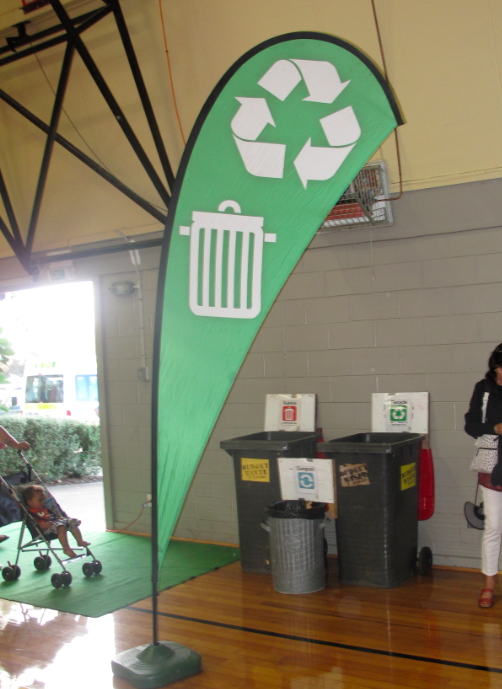
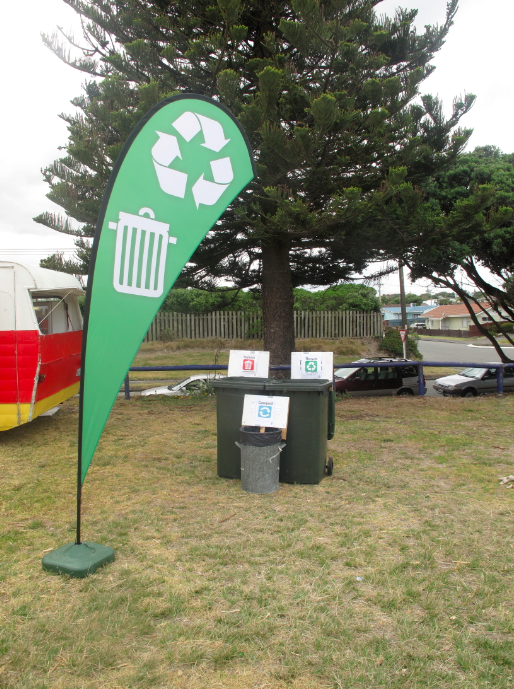
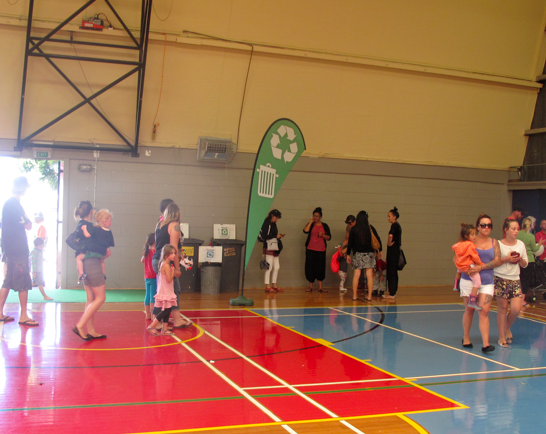
Good on Des Warahi for committing Castlecliff Children’s Day to waste minimization. Like SKIP’s Children’s Day a week earlier, we were able to work together to divert a large amount of materials from landfill by making recycling and composting easy for attendees.

 Screen shot 2014-03-21 at 10.29.10 AM

Castlecliff’s Children’s Day wrapped up Sea Week, which saw many school children helping clean up our coastline. While it is important to engage children in this type of overt action to help the environment, it’s even more important to make sure that they do not perceive it as a one-off. In other words, tokenism has the potential to do more harm than good if children see “the environment” as something “out there” that they engage with only on certain occasions.

The Enviroschools programme has done a good job throughout New Zealand of making sustainable practices such as recycling, composting and worm farming regular parts of operations for the schools that join. Equally important is that children experience those practices at home. Screen shot 2014-03-21 at 10.28.53 AM

Waste minimization is a great example of eoc-thifty thinking because it so obviously saves resources and money. For example, it takes our family about two months to fill one bag of rubbish. It may not be that we have any less total ‘waste’ than other families, but that we divert most of it from landfill by recycling and composting.

Screen shot 2014-03-21 at 10.28.28 AM

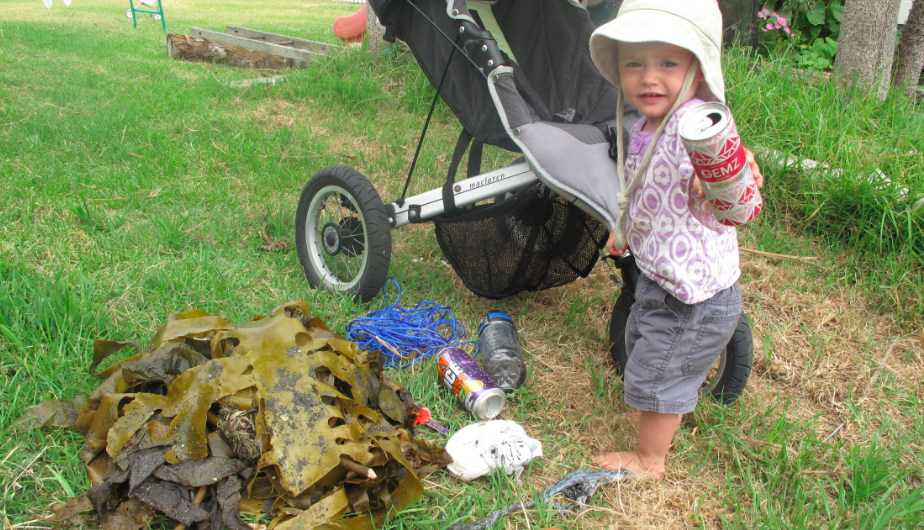
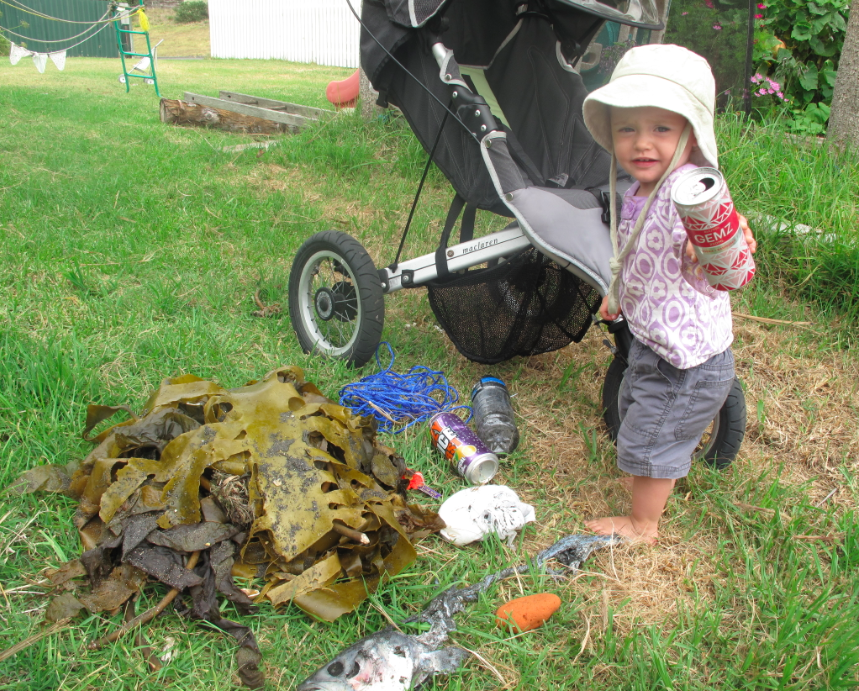
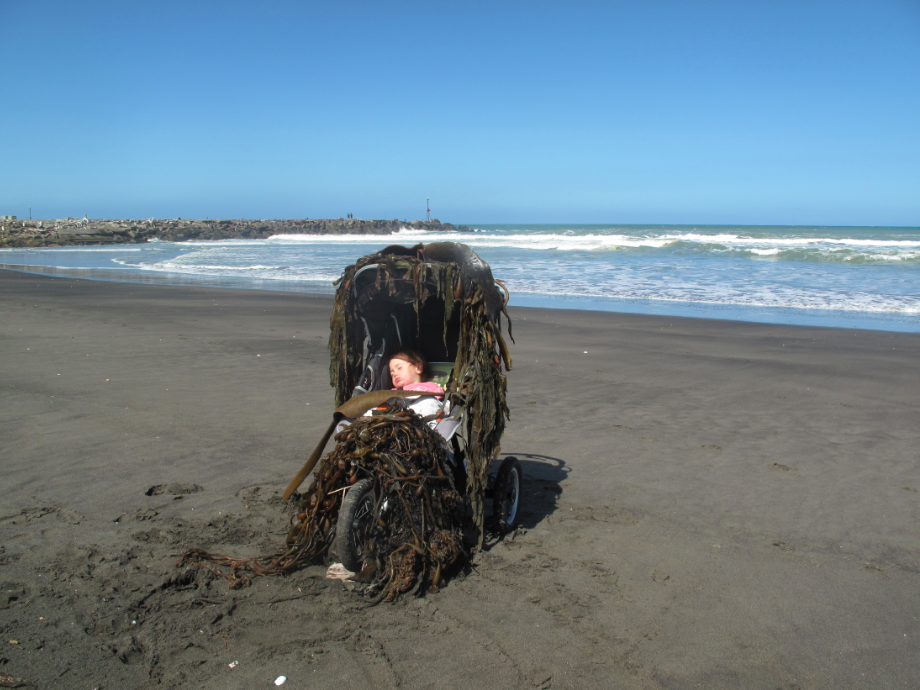
Much of the ‘waste’ that makes its way onto our property comes home with Verti and me from our walks along the beach. If there is anything I’ve learned as a new parent it is that my 18 month old daughter loves imitating and helping. From this perspective, I can’t think of many things more valuable than walking with her along the seashore collecting discarded cans and bottles, bits of plastic, and organic matter for our compost.

Plus, I get to check out the waves so I can plan for a surf after mum gets home.

  Screen shot 2014-03-21 at 10.28.43 AM

Sidebar: TPPA Alert!

We face many challenges ahead, but perhaps the most immediate one is the Trans Pacific Partnership Agreement (TPPA) being negotiated in secret at the behest of transnational corporations whose one and only mandate is to return maximum profits to share holders. The likelihood of the TPPA being good for people or the planet is about that of the All Blacks falling to Japan in a test match. Please attend the rally against New Zealand signing onto the TPPA Saturday 29th March at 1 pm. Meet at the Silver Ball sculpture at the River Market and walk to Majestic Square.

Health Benefits of Heirloom Tomatoes

A friend of ours who lives in Whanganui is active in researching the health benefits of tomatoes and apples. I’ll write about apples in a few weeks, but here is a blurb about their tomato research:

Screen shot 2014-03-18 at 8.04.15 AM

This research is looking to find the best open-pollinated tomato varieties in the world for human health, particularly those highest in lycopene for cancer prevention.
The research is also seeking to determine whether hybrid tomato varieties (and vegetables in general) are nutritionally deficient in comparison with traditional open-pollinated varieties.

Screen shot 2014-03-18 at 8.04.26 AM

Here is a bit about their findings:

Discovery of the Real Tomato (12 April 2013)

We are delighted to announce a break-through in our understanding about the superior health benefits of specific tomato varieties.

Two types of lycopene can be found in tomato. All-trans-lycopene is commonly found in red (and other colour) tomatoes; and tetra-cis-lycopene (also known as prolycopene) is found in some orange heirloom tomatoes.

Read more here.

Screen shot 2014-03-18 at 8.04.34 AM

I stopped by to visit him last week, and took pictures around his glasshouse. There are some really amazing varieties.

Screen shot 2014-03-18 at 8.03.43 AM Screen shot 2014-03-18 at 8.03.52 AM Screen shot 2014-03-18 at 8.04.01 AM    Screen shot 2014-03-18 at 8.04.47 AM Screen shot 2014-03-18 at 8.04.56 AM Screen shot 2014-03-18 at 8.05.10 AM Screen shot 2014-03-18 at 8.05.41 AM Screen shot 2014-03-18 at 8.06.03 AM Screen shot 2014-03-18 at 8.09.13 AM


Peace, Estwing

Reductionist Thinking Does Not Serve Us

Editor’s Note: This is another of my weekly columns in our newspaper, the Wanganui Chronicle. I refers to a wastewater treatment plant that we’ve had to build (and pay for) twice because the first one failed after less than seven years. Council’s short-term ‘fix’ for the smells wafting over our windy, coastal city was to install a million dollar ‘odour fence’ spritzing ‘tutti frutti’ deodorizer into the air. Seriously…


Three cheers for the Chronicle editors

I prefer them to letters page predators

But sometimes their headlines

While rushing toward deadlines

Can leave me feeling discredited


My point is that eco-design thinking, as described in this column, is not about “going green” (headline 22-02-14) or being “eco-warriors” (headline 01-03-14). It is about recognizing and maximizing beneficial relationships within systems to develop strategies that are good for people, good for the planet, and save money.

This type of holistic, win-win-win design thinking helps our family save hundreds of dollars on our power and food bills every month. It is opposite to the lose-lose-lose situation Wanganui District Council has saddled us with regarding the wastewater treatment plant: bad for people, bad for the planet, and expensive.

On top of the original poor design and/or management, the finger-pointing and excuse-making, council has added insult to injury by piling on more debt by running a useless odour fence, which according to my conservative calculations will cost every household in Whanganui over $60.

Thanks to Cr Vinsen and Bob Walker for questioning this grossly reductionist thinking that will likely cost over a million dollars when interest is factored in to the total cost of the fence.

This would be a good time to point out to Whanganui ratepayers and voters that two large U.S. metropolitan areas have recently sought bankruptcy protection because of grossly mismanaged municipal projects. Montgomery County, Alabama, ended up over $4 billion (U.S. $) in debt because of a disastrous sewer project, while Harrisburg, Pennsylvania (the state capitol) faced over $300 million (U.S. $) of debt over a rubbish incinerator.

Sadly, it appears that a long history of reductionist thinking has boxed Whanganui into a debt corner from which council sees only one escape: growth. Put another way, WDC has racked up so much debt that it would be politically unpalatable for the current ratepayers to pay it off. Indeed, my combined WDC and Horizons rates are already on track to double in about nine years. How sustainable is that?

Let me make this perfectly clear: I think we should fight for every job and every dollar to stay in Whanganui, and that we should seek to create meaningful employment for those who seek it. But continued reductionist thinking is unlikely to get us there.

For example, I do not know if I have ever read a more generic, unimaginative statement than one attributed to Cr. Laws in a Chronicle article (26-02-14) regarding council’s “vision of growing the economy and a better lifestyle.”

Someone please name a city in New Zealand or a country on Earth that does not hold these exact goals? Given what appear to be misguided decisions and poor execution by WDC on a slew of issues that have appeared in the press recently, do they really think they can out-compete Palmy, New Plymouth, Hamilton, Wellington, Auckland, Christchurch, China, India, Thailand, Vietnam and Australia at the same game?

 Screen shot 2014-03-15 at 8.21.35 AM

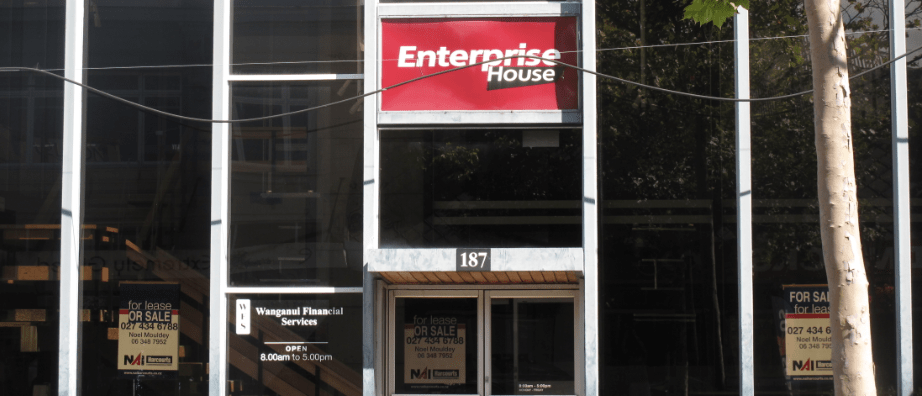
Signs of the times: Vacant “Enterprise House” on Victoria Ave.

I recently told a well-attended Rotary luncheon that our council suffers from glass-half-empty thinking: constantly claiming that if we could only fill the glass…

Eco-thrifty design thinking, on the other hand, would be considered glass-half full. It seeks out and eliminates waste within systems that serve neither people nor the planet, and also waste money. A good example of this was turning off the lights in front of Central Library during daylight hours. That simple act will save ratepayers thousands of dollars in the years to come, but sadly could not save the thousands already wasted over the decades since the poorly designed system was installed.

As one always willing to give credit where credit is due, I acknowledge council’s decision to dowse the light, as I also acknowledge what appears to be the holistic thinking of senior stormwater engineer, Kritzo Venter, and the foresight of Cr Visser regarding the reductionist practice of continually pushing sand to windward on Castlecliff Beach.

May I suggest to my editors that I would rather see council “in the black” than “going green”, and that I’d prefer an army of “worrier warriors” in this city, because our unsustainable debt load is very scary.

Modern Art – Antique Tools

Editor’s note: This is another of my weekly columns in the Wanganui Chronicle. Following it, you will find a response I wrote to a letter to the editor from an ardent climate change denier who has made it his mission to attack me personally because of my advocacy of eco-design thinking for our beach. See here, and here, and here, and here.
Screen shot 2014-03-07 at 6.44.05 AM

What an awesome weekend of well-organized and well-attended community events we had last weekend!

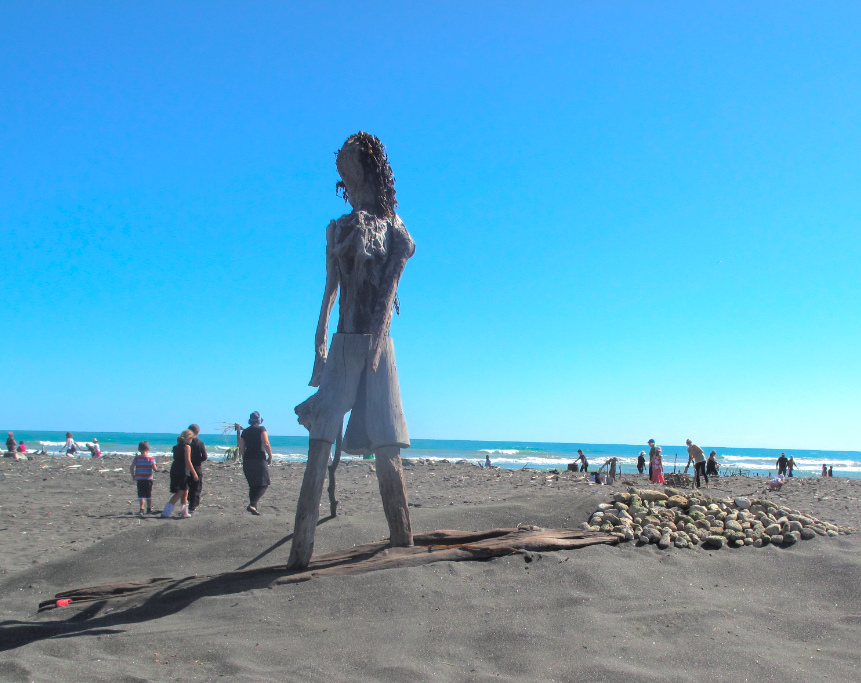
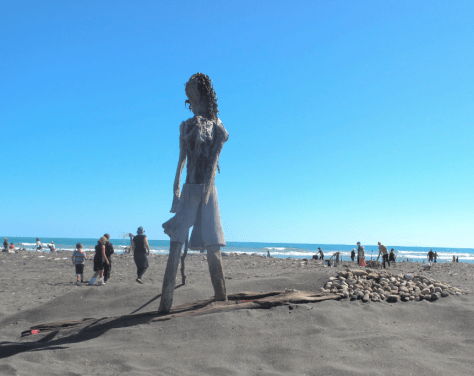
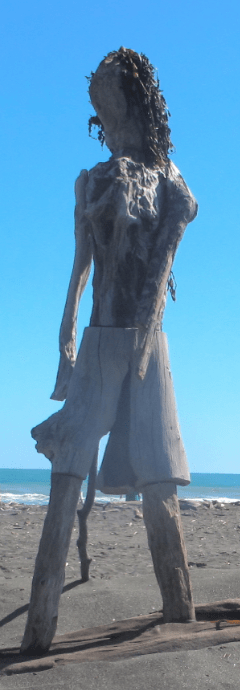
Saturday was all about Castlecliff, and the driftwood/sand sculpture contest at the beach. Ellen Waugh and Progress Castlecliff pulled off what appears to be the eco-thrifty event of the summer. With a little bit of prize money kindly donated by Mars, Jamie Waugh, and Castlecliff Four Square, and a miniscule entry fee, Ellen and P.C. were able to draw more people to the beach than I have ever seen.

The rest of the ingredients for a fabulous community day were free, abundant and non-toxic: driftwood, sand, shells, pumice, flax, sunshine, and heaps of human effort, imagination and enthusiasm.

I spent much of Saturday applying my head, heart and hands to an age-old craft that I acquired on my New England farm a decade ago: hand joinery. I know some terminology between New England and New Zealand may differ, so let me explain exactly what I mean in five words: bit, brace, chisel, mallet, saw. Screen shot 2014-03-07 at 6.44.36 AM

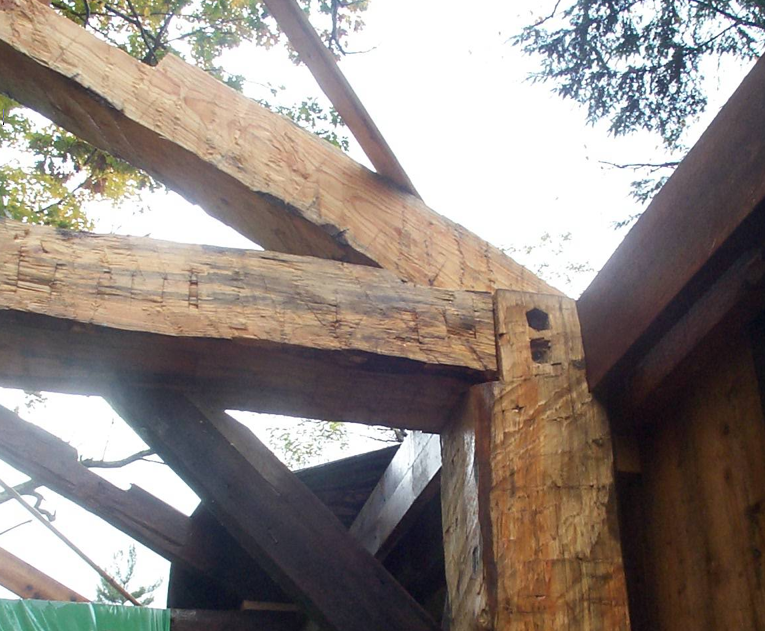
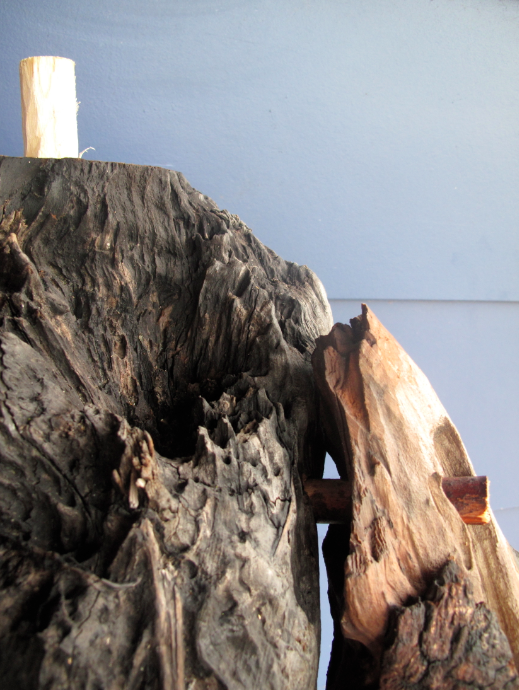
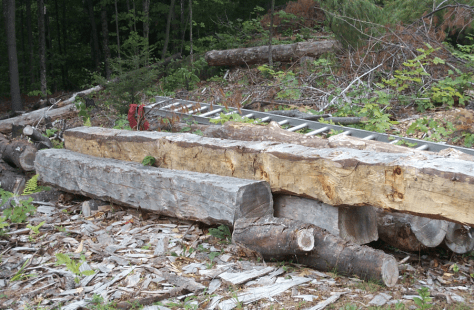
Hand joinery was traditionally applied to cutting mortises and tenons into massive, squared timbers to build post and beam structures in the 17th and 18th centuries. This was a time when steel hardware was expensive, so wooden pegs were used to hold the building frames together. (Think of an Amish barn-raising if you can, and you’ll get the picture.)
Screen shot 2014-03-07 at 6.42.31 AM

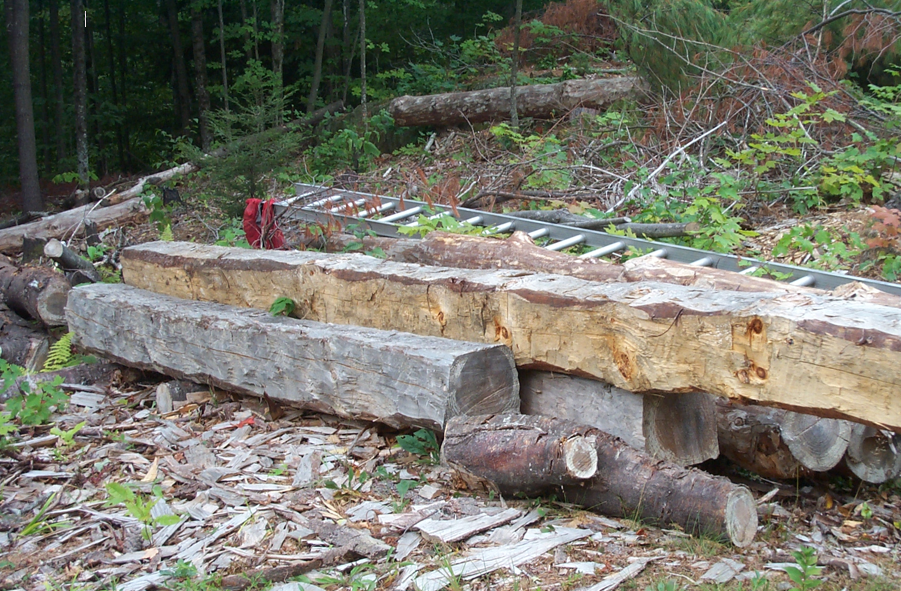
Because my post and beam farmhouse was built in 1782, and because I was young and foolish when I bought it in 2000, I decided to use a book to teach myself hand joinery and then to build a barn without power tools. To make a long story short, the job started by felling pines with an axe, hewing them by hand, and then cutting the mortises and tenons before having my own barn raising party with about 40 friends. Screen shot 2014-03-07 at 6.43.09 AM
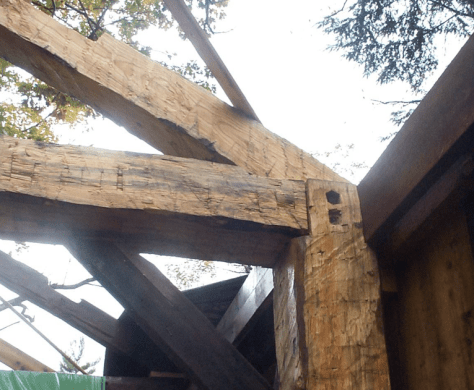
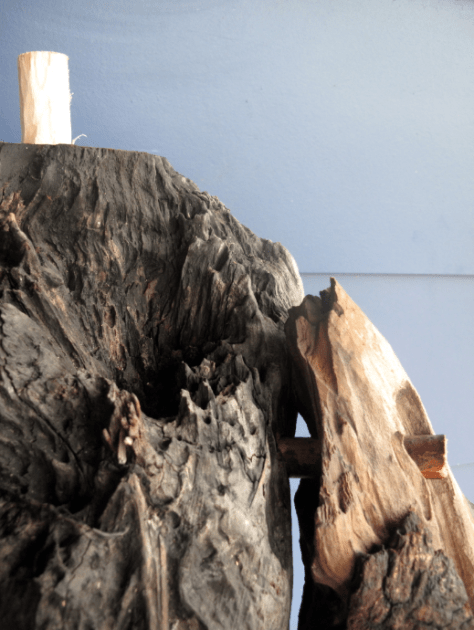
Now that I am old and foolish, and the rules of the sculpture contest allowed for hand tools, I dusted off my bits and chisels and headed for the beach. The first thing I learned was that New Zealand native timbers are much harder than New England pine. The next thing I learned is that art and hand joinery should never be rushed.
Screen shot 2014-03-07 at 6.44.15 AM

Although I spent eight hours working on Saturday, the sculpture was barely finished by the four o’clock judging, and never during that time did I experience the focused but relaxed joy of ‘joining’ that I recall while building my barn.
Screen shot 2014-03-07 at 6.44.49 AM

To make a short story even shorter, with the help of Dani, Verti, Maddy and Te Rina, our creation – Surf’s Up! – impressed everyone except the judges. C’est la vie.

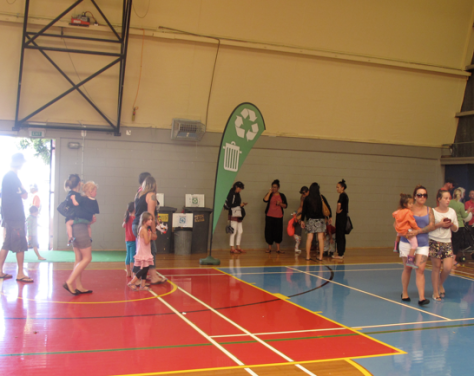
On Sunday morning, I managed to drag my limp and lifeless shoulders from bed, and load the car with bins, signs and my family to make the trip to Springvale Stadium for Children’s Day.

Good on Lynette Archer and Liza Iliffe, SKIP Co-ordinators, for committing again to waste minimization at the event. With their commitment and my 25 years of experience in waste minimization education/management, we were able to organize our strategy through five text messages, one of which was redundant!
Screen shot 2014-03-07 at 7.16.06 AM

By maximizing good design and minimizing physical effort, we were able to divert over 80% of ‘waste’ from landfill – an accomplishment rarely equaled anywhere in New Zealand. Once again, win-win-win eco-design thinking succeeds at being good for people, good for the planet, and saving money.

I strongly believe that as adults it is our highest obligation to set good examples for children to follow. If we do not teach them that recycling and composting are important enough that we ‘do’ them at community events, then what we are teaching them is rubbish.

Peace, Estwing

Response to Letter to the Editor:

Please note I wrote the accompanying column on Monday morning with no comments about council or the man who identified himself as E. Parker that verbally abused me while I participated in the driftwood sculpture event on Saturday.

But on Wednesday, E.Parker, who has previously called me a hypocrite because of my eco-design suggestions for the beach, had written a letter to the Chronicle claiming some further nonsense about me. What he did not include in the letter was a series of bizarre and clearly untrue comments and accusations he made during his tirade.

I understand that we may disagree on how the beach should be managed, but I do not understand why E. Parker has made it a personal issue. May I suggest that I like Castlecliff as much as E.Parker, a fact supported by the hundreds of hours I have spent working with all four Castlecliff primary schools, not to mention the thousands of hours of volunteer work my wife and I have done in the community. Can we agree that we both like Castlecliff while having somewhat different visions for its future?
Everybody Loves Us…Almost

Editor’s Note: This is one of my weekly columns for our city’s newspaper, the Wanganui Chronicle. I use it regularly to help facilitate transformation in our city, and to point out some of the wasteful and unsustainable practices of our council.

The last two columns told stories about our first interns, John and Amy, and how they helped us transform an abandoned villa and section full of rubbish and weeds into a little paradise of sustainability. Along the way, the process of working with us provided vital steppingstones for each of their own transformations to more sustainable worldviews.

Screen shot 2014-02-28 at 4.41.15 PM

Transformative learning, as I pointed, is a learning theory often applied to adults that seeks to explain changes of perspective that differ drastically from those held previously.

As I have pointed out in this column with regards to Castlecliff Beach, the potential for change can be scary, and so many people resist it. Transformative learning theory stipulates that in order to undergo transformation, learners must experience a “disorienting dilemma” or “cognitive crisis.”

In a nutshell, either of these conditions present the learner with the perception of mixed messages about the world and their place in it. For example, one message might say, “Buy! Buy! Buy!” while another message says, “Western consumer lifestyles are harming the planet.” Then she or he may choose to seek out learning experiences that help change their perspectives and lifestyles accordingly.

The mixed messages that most of us observe and some of us internalize are also sometimes called “cognitive dissonance.” For example, one can smoke cigarettes while believing it to be unhealthy. Psychologists suggest that those who experience such inconsistency (dissonance) are likely to be psychologically distressed.

Well people, I’m here to say I’m psychologically distressed. No, I don’t smoke. Nor am I living a consumer lifestyle. Here is the nature of my distress.

During any week, half dozen strangers will stop me on the street and say something like, “I read your column. Keep up the good work.” Or something like, “What you’re doing is so important for Whanganui. Don’t stop.”

Additionally, our work has been praised by leading permaculturists across the country and around the world. Our Eco-Thrifty projects have been featured in national and international magazines. We have been invited to other cities to present our work. Screen shot 2014-02-28 at 4.41.06 PM

Meanwhile, it appears that certain elements of Wanganui District Council does its best to ignore the work that Dani and Verti and I do to help make our community more socially, economically and environmentally sustainable.

Please note, I have been advised not to make blanket statements about “council”, as it is a large and diverse organization. I recognize that many council staff may feel their positions have little or nothing to do with sustainability, and that they are not the ones making what appear to be unsustainable decisions for our city.

On another level, I suppose an argument can be made that it is not the role of council to help people live healthier lives while saving money and protecting the environment. Indeed, a senior staff member indicated such in a letter rejecting funding for a Community Contract with which I was involved.

Our council cuts heritage trees, dumps raw sewage into the ocean, and spends tens of thousands of dollars pushing sand to windward on the beach while other councils around New Zealand support innovative and successful sustainability programmes that help people and the planet. Does this explain the cause of my psychological distress?

Leading up to the elections last year I asked the question in this column if “sustainability” and “environment” were dirty words in Whanganui because almost nobody standing for office used them. Evidence of council decision-making certainly supports the suggestion that they are. But this begs the question, WHY?

Given the amount of good will that comes my way and the number of people that ask me to stand for office, it would appear there is a quiet majority of citizens – including some council employees – who recognize and appreciate the win-win-win thinking that I share in this column.

Silence over the last three years on our work appears to indicate the positions of those recently re-elected politicians, but the good news is that two of the newly elected councilors have indicated an interest in sustainability: one has contacted me via Facebook and one recently attended a local Green Drinks gathering.

Could it be the early signs of transformation for WDC? Time will tell.

Screen shot 2014-02-28 at 4.41.24 PM

Eco-Thrifty in the International Press

There seems to be a rising level of concern lately of news stories that put Whanganui in a bad light. Of course we all know that there are many groups and individuals working hard to do just the opposite. Among them are Dani and Nelson Lebo of The ECO School (Castlecliff), whose efforts have earned them praise from a wide range of environmentalists and sustainability advocates both near and far. At present, their work is featured in the current issues of three magazines: one domestic and two international.

Screen shot 2014-02-23 at 10.15.15 AMLocal writer Helen Frances has penned a fabulous article for New Zealand Lifestyle Block that runs a full eight pages, profiling the couple’s unique philosophy and international perspective. Find one in the shops before the end of the month.

Additionally, Nelson has written a piece for Permaculture (UK), on raising an eco-thrifty baby, using many of Dani’s photographs. It’s rare for New Zealand projects to feature in this magazine, so this is a particular accomplishment for a Whanganui-based permaculture property.

And finally, Nelson also contributed to Green Teacher (Canada), describing an environmental education curriculum he developed based on the couple’s renovation in Castlecliff. You can find information on the curriculum at The Little House That Could on Facebook.

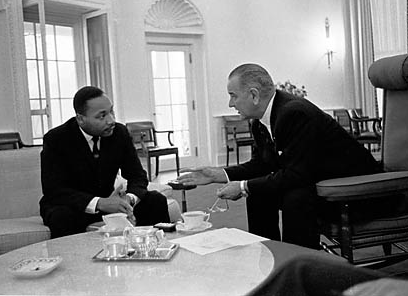
MLK and LBJ and me and you

Editors note: This is an opinion piece I wrote for our newspaper, The Wanganui Chronicle, on Monday. Part of an eco-thrifty life is working with our community to move toward fairness and resilience. I have found the newspaper is an excellent forum to address important community issues.

Screen shot 2014-01-23 at 7.46.10 AM

Martin Luther King, Jr. was shot and killed less than three weeks before my birth in April, 1968. Within two months, Robert “Bobby” Kennedy had also died from an assassin’s bullet.

But to say I was born into an age of turmoil is nothing compared to that of my best childhood friend. He was born in Detroit to mixed-race parents seven months after the riots of ’67 that resulted in 43 dead, over 1,000 injured, over 7,000 arrests, and 2,000 buildings destroyed. His mother was two months pregnant at the time.

 Screen shot 2014-01-23 at 7.48.59 AM

He was given up for adoption, and spent most of his childhood living next to my family in one of Detroit’s suburbs. Today he is a successful professional with a fabulous wife and two adopted mixed-race children.

There is no way of knowing he would have ended up differently if he had not been given up for adoption, but statistically his chances would not have been good.

 Screen shot 2014-01-23 at 7.49.14 AM

Growing up 16 miles outside of downtown, we were in a different world. Throughout the 70’s and 80’s, we watched from a safe distance as jobs, people, and wealth exited the Motor City, leaving behind debt and poverty. Last year, 50 years after King’s famous “I have a dream” speech, Detroit faced the nightmare of bankruptcy.

Research shows that very few people who grow up in poverty ever escape it. Those who go on to achieve great success are rare, and often adopt one of two diametrically-opposed viewpoints: one of empathy for those still in poverty or one of callous disregard for them.

Of the latter, recent research shows that many so-called “self-made” people are not generous with their riches toward those in need, and often adopt right-wing capitalist ideologies. Their thinking may go something like this: “I lifted myself out of that situation, why don’t they.” When interviewed, these people tend to discount luck and timing as factors in their success.

One notable exception to this was Lyndon B. Johnson, who took over as President after the assassination of John F. Kennedy. Fifty years ago this month, his State of the Union address included the declaration of a War on Poverty in America.

 Screen shot 2014-01-23 at 7.46.34 AM

Johnson, who spent much of his childhood living in poverty, said in his speech that the causes of poverty may lie “in a lack of education and training, in a lack of medical care and housing, in a lack of decent communities in which to live.”

He went on to state that too many people were “living on the outskirts of hope”:

“Some because of their poverty, and some because of their color, and all too many because of both. Our task is to help replace their despair with opportunity. This administration today, here and now, declares unconditional war on poverty in America.”

 Screen shot 2014-01-23 at 7.47.05 AM

Although my best friend still experienced racism in our suburban community, he had a warm and dry home, good medical care, and an excellent education. Taking poverty out of the equation, the color of his skin has not in itself held him back from achieving many successes in his life.

I am sure that New Zealand is full of similar stories, but unfortunately we also hear too many tales of poverty in this nation and in this city. I believe there is ample evidence that the Wanganui District Council rates structure exacerbates poverty in our community, and that it is one of the few things that our councilors can address to actually improve the quality of life for many residents.

While not declaring war on an unjust and unsustainable rates structure, I would not hesitate to call it a skirmish. I am eager to hear from all those who wish to join me, especially sitting councilors who made statements about rates during their recent campaigns and/or any councilors who see themselves as left-of-centre.

A Coastal Design Influence

I love our Whanganui coast. I take the short walk from our home to the Tasman Sea nearly every day, sometimes two, three and four times. It has gotten to the point where my wife has accused me of bringing half the coast home with me in the form of sand in my jandals and driftwood over my shoulder.
Driftwood board rack.
When I walk on the beach with my daughter, Verti, we make a special effort to pick up all of the litter we can find. By 14 months, she could spot a Cody’s can from 20 metres.
Way back before she was born, before I started writing this column, and even before our first visit from the building inspector, Dani and I embarked on our first and perhaps best beach clean-up effort. It was Christmas 2010, and a dead goat had washed up on Castlecliff Beach, where it lay sunbathing for two days at the high tide line and three metres outside of the swimming area flags.
After the first day I thought to myself, “That smells.”
After two days I thought to myself, “I can’t believe someone hasn’t removed it.”
On the third morning, I thought out loud to my wife, “Get the wheelbarrow and follow me.”
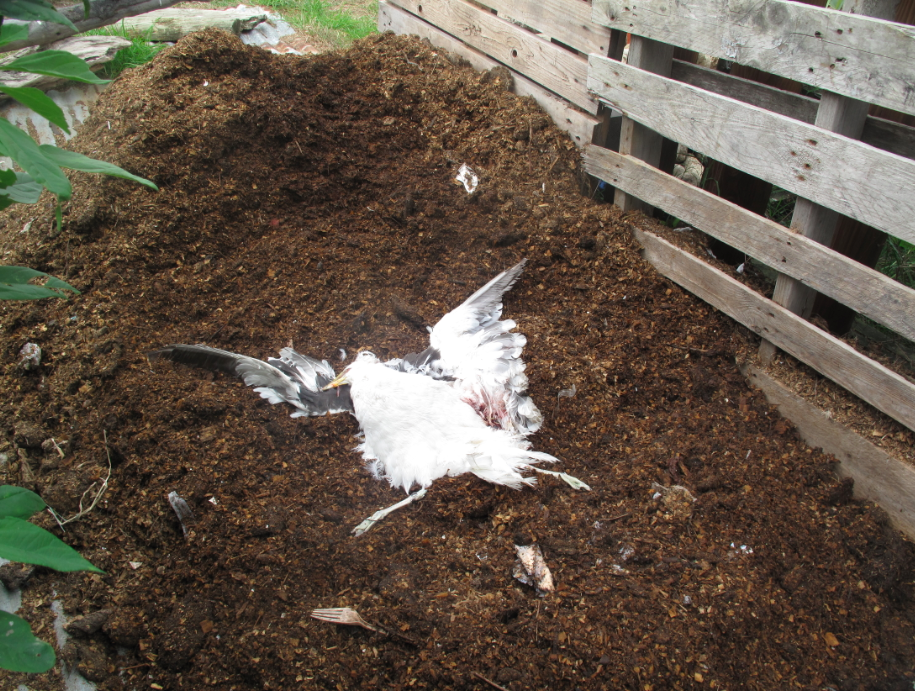
To make a long story short, we headed to the beach with the wheelbarrow, a tarp, two shovels, and a video camera. We collected the carcass and brought it home to our active compost heap. Within a week it was down to bones, but the video has yet to make it to Youtube. The “goat story”, as it has come to be known, is oft repeated when I am introduced by certain of our friends to certain of their friends.
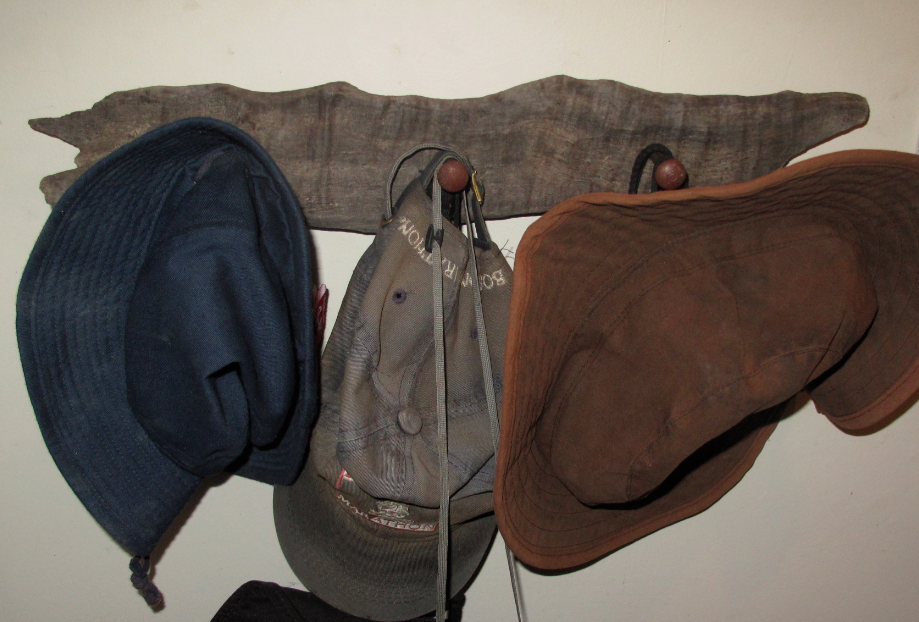
Driftwood hat rack.
That day over three years ago was the start of my ongoing relationship with our beautiful coastal zone. Since then, the relationship has developed with every walk along the sand, every wave surfed at the North Mole, and every armful of driftwood.
In the latter stages of our renovation, driftwood has become more of a design element in our attempt to meld a classic villa with a beach bach in a way that honours both while spoiling neither. Sounds like a job for Terry Lobb, but in my unprofessional hands I think things have turned out fine.
Driftwood headboard.
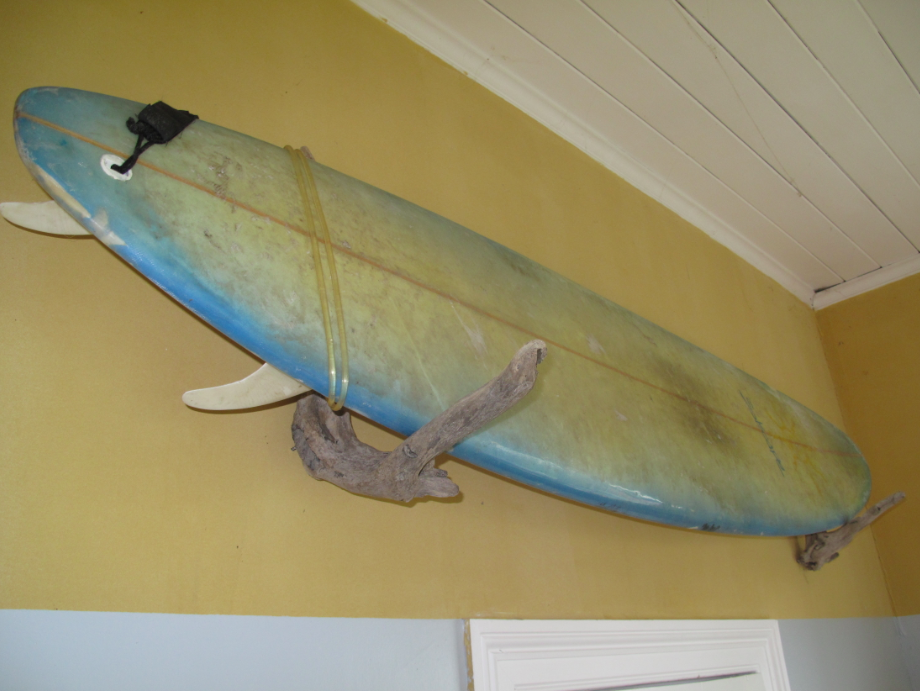
Despite what my wife says, there are still some rooms in our home without driftwood, although that may not be the case much longer after my recent venture into headboard making. Previous to the headboard, my indoor driftwood projects had been limited to surfboard racks, coat/hat/key racks, children’s toys, artwork, and our Christmas tree.
Verti’s play scarves hanging in her room.
Outdoor projects are another thing entirely. I’ll get to those another day.
 Peace, Estwing

Is there an H in Hypocrite? Climate Change Denial

Editor’s note: This ran as an opinion piece in the Wanganui Chronicle on Friday, 27th December.
Beware those bearing H’s.
No, this has nothing to do with the spelling of W(h)anganui, although I suspect there is ample crossover with those who have come to embrace the word hypocrite when attacking individuals who speak out on climate change. In other words, it’s likely that the same people who do not want an H in Whanganui are more than happy to draw the mighty H from their quiver and quill as a first-line offensive against climate change activists and ordinary citizens who have the courage to bring up the issue in the press.
In our feel-good, consumer, deflect-blame Western culture, I reckon the worst thing you can call someone is a hypocrite. We all know that we do not live 100% by our values 100% of the time, but the last thing we want to hear is someone else telling us. I suspect it is part of a psychological defense mechanism.
Knowing this human tendency, the worldwide, corporate-funded climate change denial network has come to advise its “trolls” to use the term at every possible opportunity. Calling someone a hypocrite has become a common technique of climate change deniers when asking climate scientists or activists how did they travel to a certain conference, protest, or other event. It is meant to shut down the conversation before it begins by calling their credibility into question because they may have traveled by automobile or airplane.
In Whanganui, our Chronicle Letters Page climate change denial trolls – two of whom do not live anywhere near the River City – have learned this technique, presumably from an on-line tutorial from the right-wing Heritage Foundation or other such corporate-funded denial organization.
About six weeks ago, a local writer to the Chronicle – who appears to lack enough courage to use their first name when signing her or his letters – suggested I was a hypocrite for expressing my opinion that a predicted increased incidence of severe weather events would likely make clearing sand from the Castlecliff Beach car park more costly in the future. A prudent approach, I suggested, that would both save money (rates) and reduce pollution (carbon dioxide) would be to downsize the massive, underused car park in a managed retreat.
Of course the obvious response to this reasoned, win-win, eco-design solution is to call the messenger a hypocrite. Duh.
I have been called many things in my long and lonely life, but never a hypocrite. My street ‘cred’ is ‘legit’, yo.
I suspect that anyone who knows me would agree I am many things good and bad, but not a hypocrite. Regardless of political affiliation, it would be difficult to find a former colleague of mine willing to say I am nothing if not genuine in my words and deeds. Although I would not hold a candle to Buddha or the Dalai Lama, a colleague did once call me Bodhisatva. Go ahead and laugh, but this may be closer to the truth than you think. After all, I did teach Walter Becker’s son when he was in year 9, but do not remember if he took me by the hand during our parent-teacher conference*.
Although I share a car with my wife, I ride a bicycle and take the bus the vast majority of the time. I have traveled between Whanganui and Hamilton over a dozen times on board Intercity. When purchased a week in advance, the return fare costs less than half the price of petrol alone. Public transport reduces carbon emissions, and I have time to read, write and sleep on the bus.
I suppose this means those who wish to call me a hypocrite will simply say I’m self-righteous. With some people you cannot win, but that does not stop them writing letters to the paper, nor should it. Keep ‘em coming peeps, but please follow these simple instructions: do your homework first; only use quotation marks for direct quotes; include sources and references for anything that is not considered common knowledge; have someone proofread your work; Use your full name; and, above all else, don’t write anything that will end up embarrassing you in front of the entire city.
It takes courage to write something for public consumption, and I admire courage.
* In case you missed it, Walter Becker is ½ of Steely Dan.
Peace, Estwing