Category Archives: Eco Thrifty Renovation

Multiple Functions

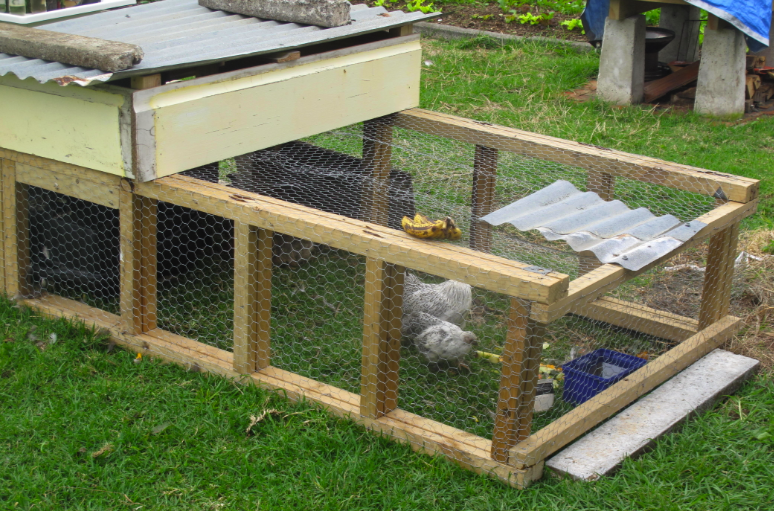
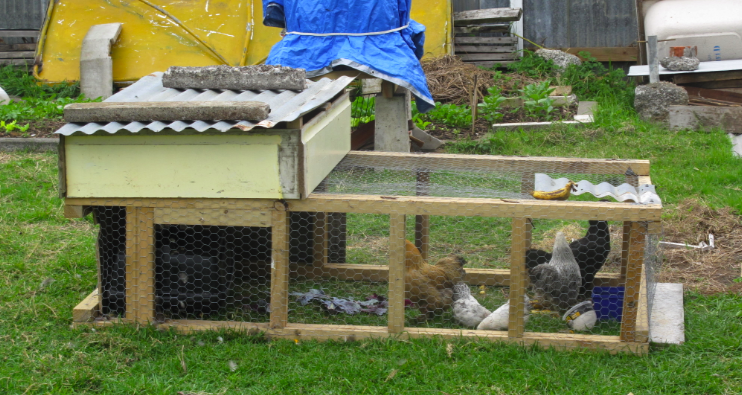
A common permaculture principle – and one I employ constantly in my design work – is that any element of a system should serve multiple functions. Bill Mollison’s classic example is of a chicken. Chooks provide eggs, meat, fertilizer, pest control, weed control and ground preparations.

Although we have chooks too, this post is about feijoas.
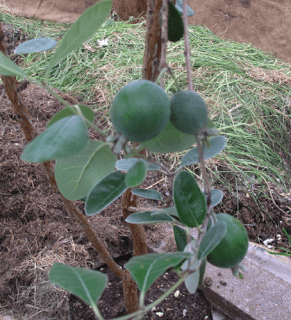
I reckon Kiwis know about feijoas but Yanks might not. So here’s the background courtesy of…
The Feijoa (Feijoa sellowiana, synonym Acca sellowiana), also known asPineapple Guava or Guavasteen, is an evergreen shrub or small tree, 1-7 m in height. It comes from the highlands of southern Brazil, parts of Colombia, Uruguayand northern Argentina.
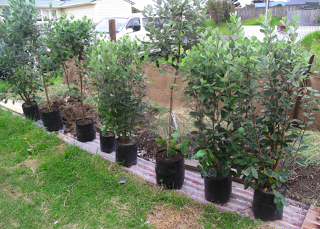

Our eight feijoas arrived Wednesday from the local garden center. On Tuesday, Dave the intern and I prepared the holes for them with plenty of compost and grass mulch that we harvested with the scythe. Mulch serves multiple functions such as: suppressing weeds, retaining soil moisture, adding nutrients and carbon to the soil as it decomposes.


We also use iron roofing as a temporary mulch. Since we have an abundance of it on this property, we often use it to edge a new garden to suppress the aggressive grasses that grow in this area.
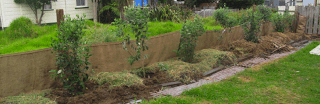

Additionally, the roofing iron is preparing the next bed that will be planted in the lee of the feijoa hedge: a blueberry bed. While feijoas are wind tolerant, blueberries are not. So we have planted our feijoas in such a way as to form a wind break. Notice in the next picture that we have alternated bushy ones and treey (?!?) ones.
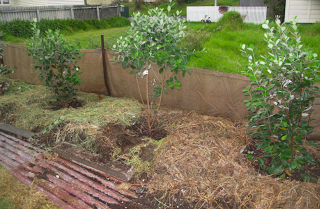
The feijoas will fill in to provide a future wind break for the blueberries, but also a privacy screen.


We do NOT want to put up tall iron fences like many of the local properties have. But the living feijoa hedge will act as a fence in some ways to define our property boundary, provide privacy, serve as a wind break, produce food for us, produce food for our flock, produce food for our neighbors, and enhance the beauty of the section.

So naturally, we want them to thrive. As with all plants, it starts with the soil. We have provided heaps of organic matter and compost at the roots, and mulched all around as mentioned above. Please also not the gentle bowl shape around the feijoa for easy watering. And never mulch up to the bark of a tree!


How shall I cook thee? Let me count the ways…

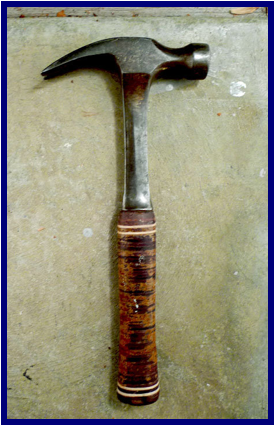
Peace…and feijoa wine! Estwing
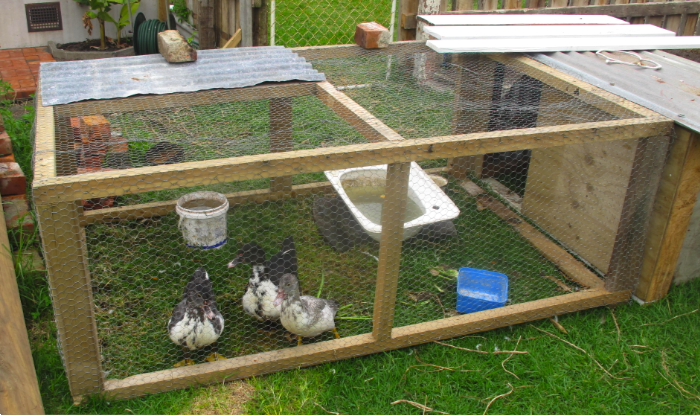
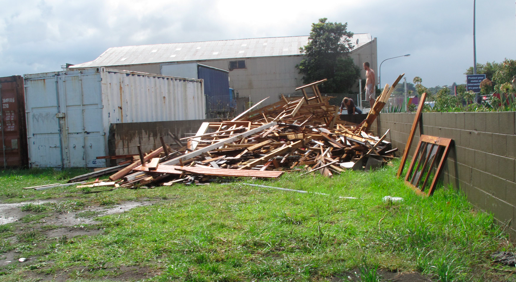
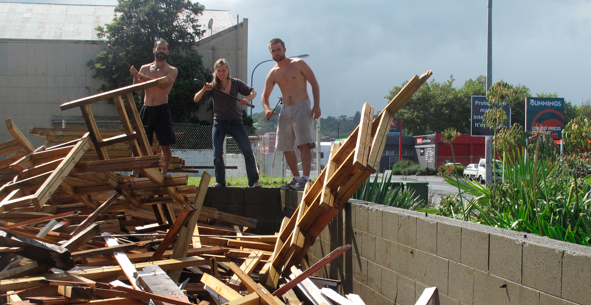
Got me a new tractor.

Some of y’all be familiar with our old tractor.


The John Ducke.


But she only runs on 3 cylinders.


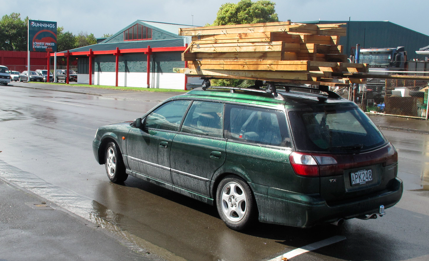
So we went down to the tractor supply.

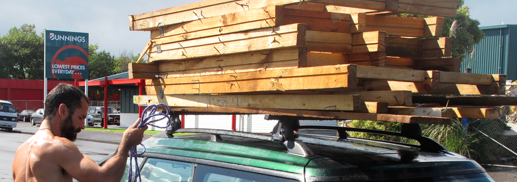
And got us some parts.

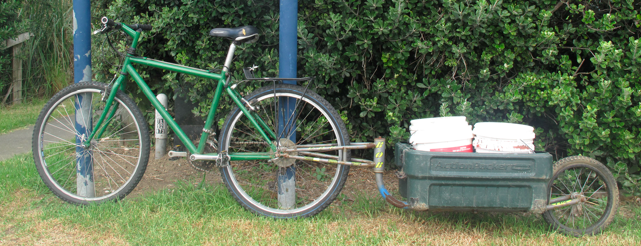
Loaded up the wagon.

(Editor’s Note: Bunnings has a lumber yard 50 meters down the street.)

And built me a new tractor.

This one runs on 5 cylinders.


John Chook?

Peace, and eggs(?), Estwing
Try this at home.

Dear America,
The people of New Zealand would like to share with you the latest energy-saving technology: the solar-powered clothes dryer. It comes in many different sizes, shapes and automated settings. Also available in wireless. Free shipping. Price includes GST.
Love, NZ
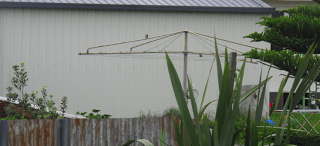
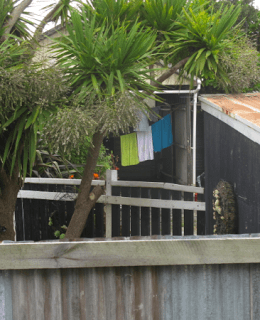
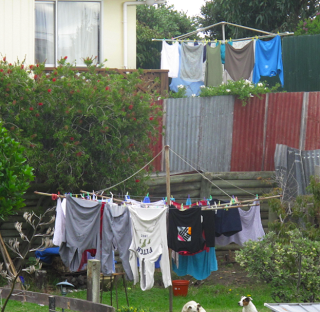
Out our back windows, I can count 7 clothes lines within view. Every single one of our neighbors has one. (If you do not believe me, go on Google Earth. 10 Arawa Place, Castlecliff, Wanaganui.) They include:
Traditional.

Rotational.

Retractable.


Under the porch.


In the car port.


The double! (Below: with security system.)


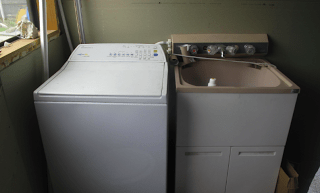
Now that we have our second-hand F & P washing machine and our second-hand laundry tub, we need to decide which of these diverse models to choose from.


And you too, America, can take part in this exciting new technology. Yes you CAN, try this at home. (Batteries not included.)
Peace, and shine on, Estwing

Still Going Bananas

A month after putting in our banana, it is thriving in the heat trap (aka “micro-climate,” “sun trap”) we have built for it. The wooden fence (built from our old decking timber) acts as a wind screen, and the bricks and Hardie board cladding act as thermal sinks.

Planted in 600 mm of compost, the banana is so happy that it had a baby!

This reverse angle shows the new fence built by me and our new intern, Dave. And it shows the old fence built by Amy the intern. Note that Amy’s fence is not meant to be a wind fence, but Dave’s is. The spacing is different for each one.

Feijoas will be on the way soon.
Peace, and remember the Deepwater Horizon, Estwing

Bridge to Nowhere

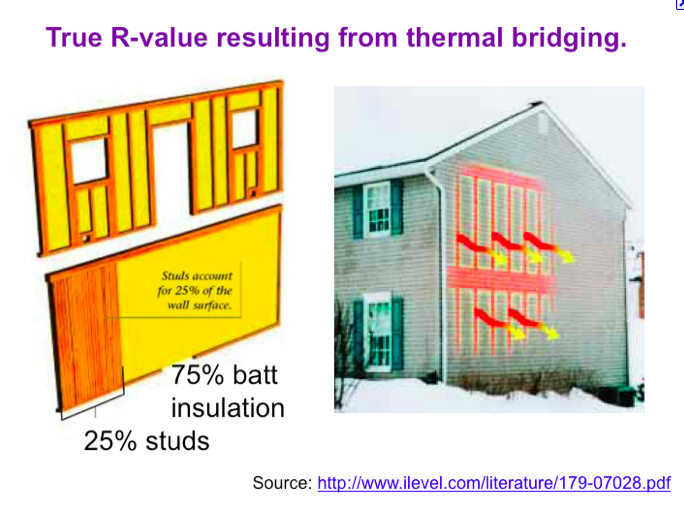
I’ve written about attention to detail regarding insulation and draft-proofing in previous posts. Today’s topic is a lesser-known factor in building performance but no less important. Thermal bridging. And attention to detail is key here as well.


This diagram does a great job of illustrating the cumulative effect of thermal bridging. Since wooden (or steel) framing has a much lower r-value than insulation, heat can flow (escape) through the studs and dwangs more quickly. In the example above, the framing makes up 1/4 of the total wall space where there is zero insulation. Since heat tends to rise, the problem of thermal bridging is even worse for ceiling insulation.


When insulation is installed between the joists, every joist becomes a thermal bridge, and the overall r-value of the ceiling is calculated as:

(r-value of insulation x area) + (r-value of joists x area)
—————————————————————-
total area

In other words, the r-value above your head is not simply the r-value as shown on the bag of insulation. If you have thermal bridging, then your r-value is lower.

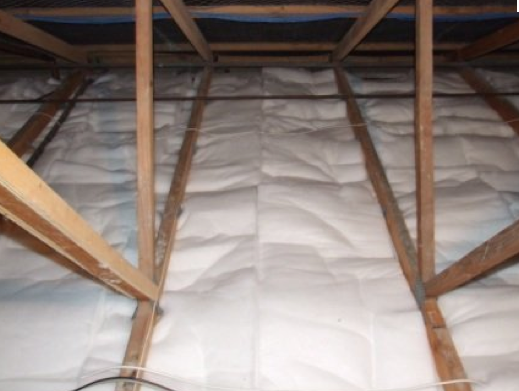
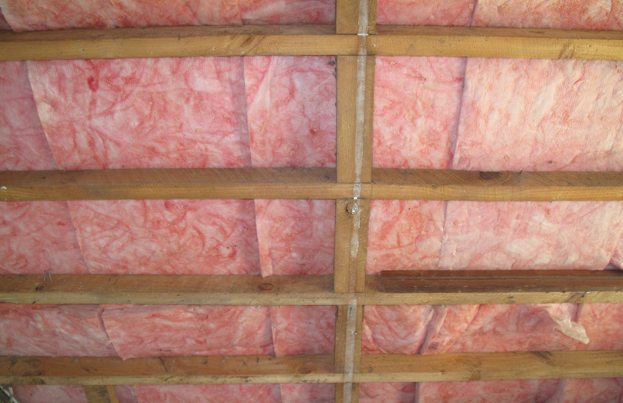
We are dealing to this by using a suggestion from Ian Mayes, the Eco-Design Adviser for Hamilton City Council. (I reckon this is about the best use of rate-payers money there ever was or will be.) Ian suggests laying the batts perpendicular to the joists and covering them completely.


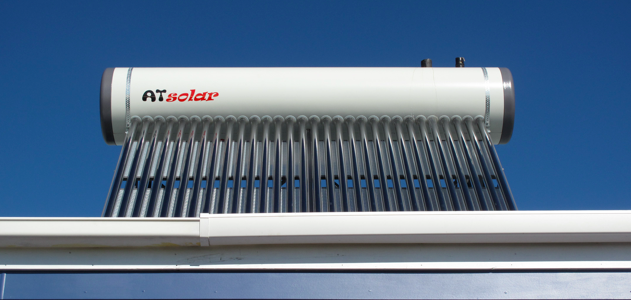
Not very exciting, but that’s what it looks like. But we did run into some extra challenges around the extra framing we had to add to support the solar hot water on the roof.


But we dealt to that in the same way.


Even a small layer of insulation will break the thermal bridge enough to save energy. This is what we’ve also done in the bathroom behind our home-made medicine cabinet (future post). You can see the black building paper directly in contact with the exterior cladding. Brrr.

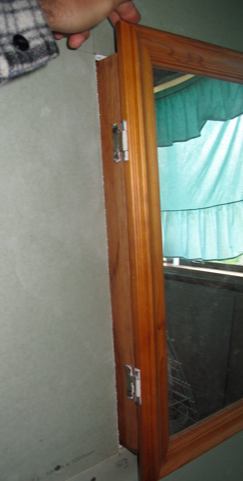
So instead of pushing the cabinet all the way back, we’re installing a thin layer of insulation…


…and pulling the cabinet out about 25 mm (1 inch).


Please note that a frame will have to go around the medicine cabinet to hide the gap with the plasterboard. This will further disguise the fact that it hangs out into the room.

Voila! Eco, thrifty, attractive.

Peace in the Middle East (but keep the oil price high), Estwing

Blast Off!

The back yard is just full of rockets these days.


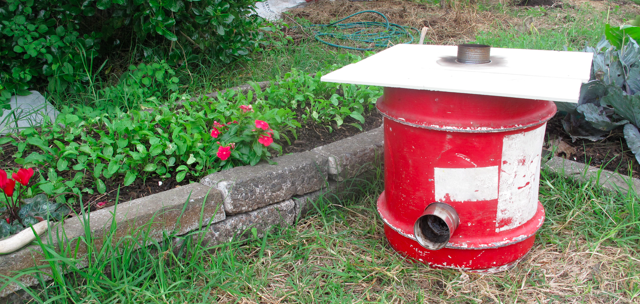
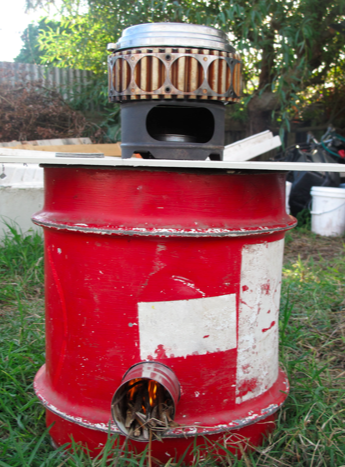
Rocket greens (arugula) in the garden and a new rocket stove on the burn. Rocket stoves are incredibly efficient for cooking. They require only small twigs and use very few of them at that. You’ll see the key to this “small is beautiful” approach to cooking in the elegant construction explained below.


One of the last projects that Amy the intern and I worked on before she left was building the rocket stove. Well, she did most of the building and I served as technical adviser and steel cutter. Here is how the process worked. First, we chose a steel drum that we got at the auction house.


Then Amy raided our recycling bin…


…and did some tin can oragami.


Then she went to the beach to collect pumice.


One of the harder parts was cutting a perfectly round hole in the barrel to minimize air flow in and out. We used a combination of hack saw and roofing snips (the kind with curved blades) with great success.


We inserted Amy’s oragami “stove pipe” into the drum and packed it with pumice for insulation. From what I understand, it is key to use a “light” material like pumice instead of a “heavy” (dense) material like sand. That way the heat from the twiggy fire heats your meal instead of the mass of the packing material inside the barrel.


In order to seal the top with a non-flammable material, we chose some off-cuts of James Hardie weather boards leftover from siding the house. Again, cutting a perfectly round hole is important to minimize air flow. We used a hole saw for this. The Hardie boards provide a nice “counter top” working surface around the stove and protect the steel drum from the rain.

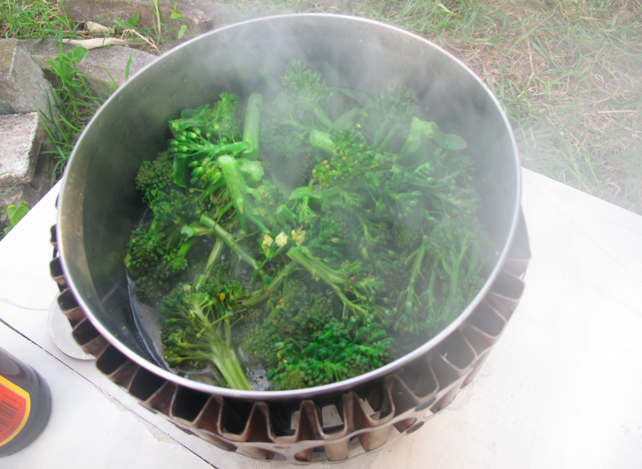
And finally, we harvested some fresh broccoli from our garden and a handful of twigs from under the willow tree…and a Tui (see bottom left-hand corner).


Once again, bon apetit!

Peace in the Middle East, Estwing

It’s the Energy, Stupid!

We watched the film Gasland on the weekend.


Heart-breaking and highly recommended. That is unless you would rather watch a vampire movie than a documentary. Or you love Dick Cheney. Or have stock in Haliburton. Or you condone the exploitation of the rural poor by wealthy corporations. Or you hate banjo music. Or you get squeamish about lighting tap water on fire.


Despite the Yankees cap, Josh Fox is a rad dude who has produced an amazing film.

The film was screened at the Whanganui Environment Base on Saturday. A couple from Parihaka on the western slope of Taranaki spoke before the film about oil and gas exploration in the Taranaki region and the use of hydraulic fracturing (fracking) there. We were all surprised, especially after watching the film on the devastating effects of fracking on groundwater and human health.


As we rode our bicycles home after the film, I was pissed.


As I picked up our dinner off the solar cooker, I was pissed.


As I took a shower with our solar hot water, I was pissed.


Even as I ate my dinner underneath a thick ceiling of fiberglass insulation, I was pissed.


Why doesn’t someone do something about this energy issue?!?

Peace in the Middle East, Estwing

Building Community- One Hit at a Time


Way back in November, before all of the holes in our house were sealed up, before we had furniture, in fact, before we had water, we met our first neighbor.

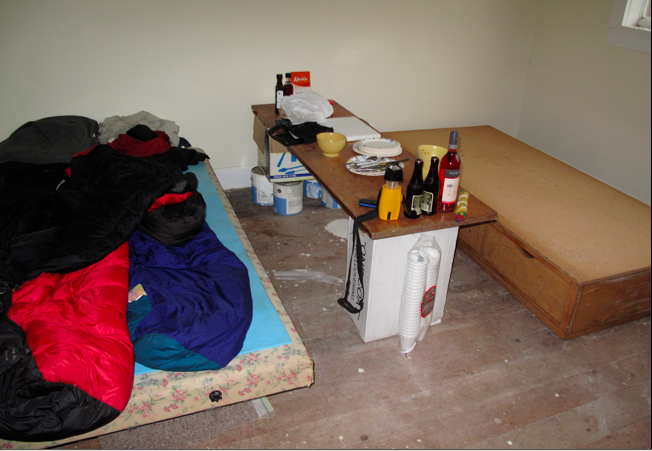
We had just spent the first full night in our house sleeping on sleeping bags laid upon camping mattresses in the one room not completely filled with rubbish. We had woken up, and Nelson had boiled some water on the camping stove to make a cup of coffee. We might have been tapping on the studs to figure out which ones were completely rotted through and which could be salvaged. Or maybe we were sweeping away the ten years worth of dust that had accumulated in a thick layer on the floors and window sills. Or, its very possible that we were just standing amongst half built framing and graftti-covered walls pondering what we had gotten ourselves into and where exactly to start.

We heard a familiar sound. Thwap. Thwap. Out of the small dining room window something caught our eye. Our neighbor was throwing a softball. Maybe they were part of a team. Maybe there was a social league. Visions of lollipop pitches and kegs of beer ran through my head. I cautiously stepped out onto our rickety deck to say hi.

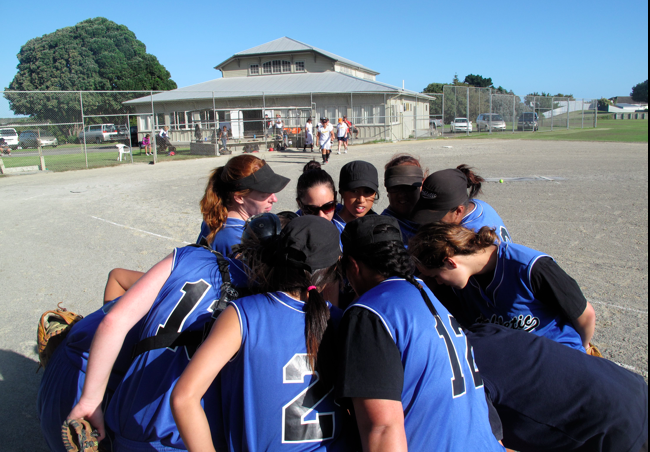
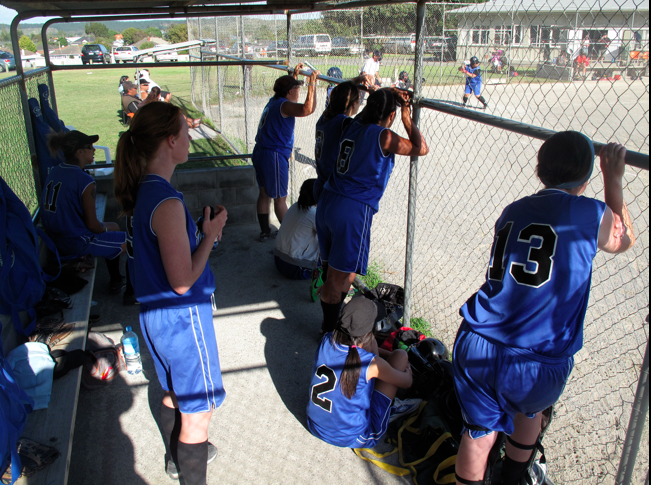
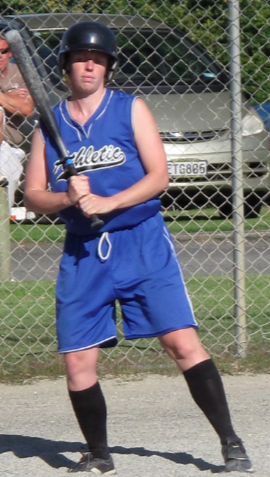
Our neighbor’s name was Des, and she did play, or rather, used to play, in a women’s fast pitch league. Her loyalties remained strong and once she heard I played softball in America it was all over (never mind that the last time I played fastpitch was over 10 years ago- in highschool). Within five minutes I had a text message from the coach. I was recruited to the Athletics Women’s Fast-Pitch Team.

Des asked how the house was going. Shocked that Nelson was boiling water on a camping stove, she insisted that we have a proper way of making a cuppa, and gifted us an electric kettle and some mugs otherwise headed for the op-shop. Too embarrassed to tell her we had no power yet, we happily accepted the gift, and it has definitely come in handy. Not only can we make a cuppa at the end of a hard day, but those mugs quickly became Nelson’s favorites. Delivering not only a dose of tea (or wine), but also a self esteem boost, with every tip up.

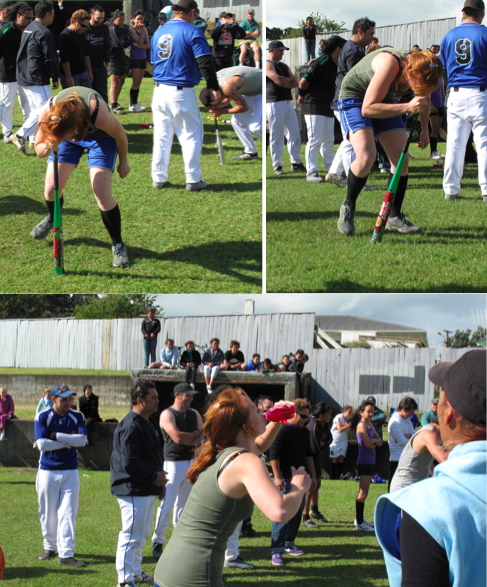
The mugs were the first of many “gifts” that we’ve received as members of the Athletics Club. Because it turns out that after initiation we became part of a whanau (family) that stretches across three generations, linking our community through sport. (Oh yes, I said initiation. We were hazed. And let me tell you, people, fizzy drinks, dizzy bats, and bourbon and cola do not mix well. Not in this belly). Our club sponsors kids teams, social teams, and adult fast pitch teams. Everyone helps to coach, umpire, and mind the little ones so that everyone can learn about the game, play hard, and enjoy themselves.

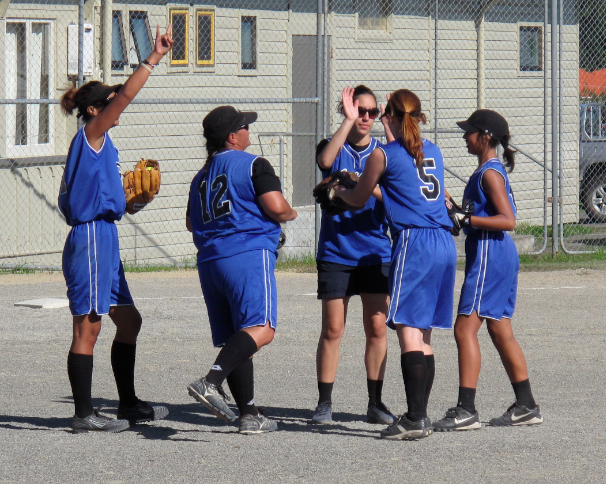
The head of the organization are “Ma” and “Pa”. One of their daughters is the coach of my team and another is the pitcher. Two of their granddaughters also play on the fast pitch team, and the rest of their moko are anxiously awaiting the day they are old enough to play on the “senior’s” teams. I was renamed “Yankee” on the first day of practice, and then as MC was slowly roped into playing a few games here and there, he was nicknamed “Boston”. We are part of the club now. We are part of the whanau.

Where am I going with all this?

There is a lot of emphasis placed on “building community” in permaculture and transition towns literature and even in the media beyond the “green” world. I would say that there are some definite lessons that can be learned from our softball club, and other sports clubs in this regard.

1. Activities that the whole family can participate in link parents to their kids, kids to other kids, and adults to other adults.

2. People want to belong. Creating a strong group culture through initiations, prize givings, and even nick names makes people feel like they are part of something bigger.

3. Softball is fun! We have fun together. And when people are having a good time they want to include their co-workers, friends, and neighbors. Social activities have a way of drawing people in that is different than courses, workshops, documentaries, lectures, etc.

And finally, and this is probably the biggest lesson I’ve learned, if you want to connect with different sectors of your community, you need to jump in and not be afraid of being different. We had a wide circle of acquaintances before I started playing softball. We had met them through the environment centre, permaculture gatherings, and other like places. Our friends were mostly… tree-huggers.

Playing softball for Athletics has allowed us to connect with people that are… not necessarily tree-huggers. It has opened up an avenue to form meaningful relationships. I am one of the only pakeha girls on the team. We are likely the only ones with a solar cooker. But I sure can smack the hell out of a softball.
-June Cleverer

Arohanui!

We have been blessed with two amazing interns for the last two months. John and Amy have gone above and beyond their duties time and again in helping us get this project rolling.

Amy working, John…supervising.


Their help has allowed us to jump ahead on projects we would not have gotten around to for months – pizza oven, brick patio, rocket stove – and complete some essential part of the renovation – hanging plasterboard, finishing the siding, installing guttering.

John and Amy are off this morning for a one month adventure of hitching and hiking around New Zealand. We wish them the best of luck and welcome them back anytime.

Arohanui, Estwing & J.C.