Category Archives: Eco Thrifty Renovation

Constructing a Solar Oven, v 1.0

Hello! I’m Amy, the new ECOSchool intern, and just arrived on Thursday. After a series of travel fiascos, including missed flights, missed buses, and missed phone calls, I was finally rescued by Dani and John in the McDonald’s parking lot in Bulls. Since, then, I have been adjusting quite nicely and am enjoying New Zealand immensely.

On Friday morning, at the start of my first full Kiwi day, we dove right into my first EcoThrifty project: constructing a solar cooker. Let me start off by saying that it was always a distant dream of mine to own one of these ingenious devices myself. Little did I know that achieving this involved little more than a good-ol’ Google search, some household materials, and a couple hours of intern time.

The patterns John found included measurements for the sides and angles for folding the parabolic shape. First, he drew up the pattern in full scale on a sheet of salvaged cardboard (from a box that formerly held a passive solar hot water heater, no less). As we didn’t have a compass, we made our own by folding up the corner of a sheet of scrap paper into 15° angles, and marked these into the cardboard. Next, we creased all our folds with a metal ruler, and got an idea of the general shape of the cooker.

In order to transform these materials from cardboard scraps into a mean, green cooking machine, we needed to cover them with a reflective surface, which turned out to be aluminum foil. We were really taking the whole do-it-yourself thing quite seriously, so we decided to make our own glue. As we were fresh out of animal hooves, we discovered the next best thing: flour and water! Affectionately known as “Marxist Glue,” its manufacturing process involved boiling water in our electric fry pan, and adding in a flour-water mixture while stirring it over the heat to thicken the mixture into a nice gloppy glue.


Sounds easy enough, but when you’re going into this blind and don’t know what the consistency of the flour-water mixture should be before it’s added to the hot water, slight disaster may ensue. Well, not disaster, but huge, useless lumps of clammy dumpling-like dough. The second try was much more successful, and we were able to lay down a pretty smooth coating over which we applied the aluminum. (After all was said and done, we realized we put the wrong side of the foil up, but it doesn’t seem to be too detrimental.)

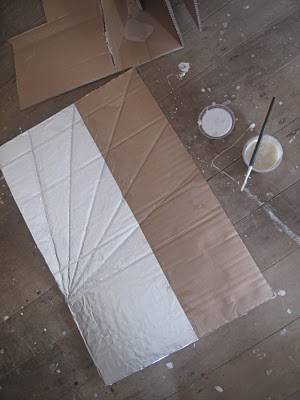
Finally, we taped the two foil-covered components together, and, “Voila!” we had a cooker. We put it to the test at dinnertime, using the somewhat weak rays of late afternoon sun to successfully warm up some leftovers. For anyone interested in embarking on a similar project, go for it. It was quick, cheap, and easy, and while we have yet to try it in full sun, it did work. Now we are dreaming of our next creation, a solar hot dog roaster! As soon as we find some suitable cans, we’ll get to work. Look for us hawking sausages on a Wanganui street corner in the near future.

– A. Lamb Down Under

Tubbin’ Tomatoes

Splish splash we threw out the bath, and filled it with dirt. By reusing the old bathtub as a huge planter we were able to create the perfect weed-free medium for growing some basil and tomatoes. Until it started to rain, and the bottom drain sank into the ground preventing the tub from draining. Now we are dealing with some rot stricken roots. Hopefully, we caught it in time and were able to raise the tub to drain off the water. Tune in later for more tomato news.
-John the Intern

Beach Logging

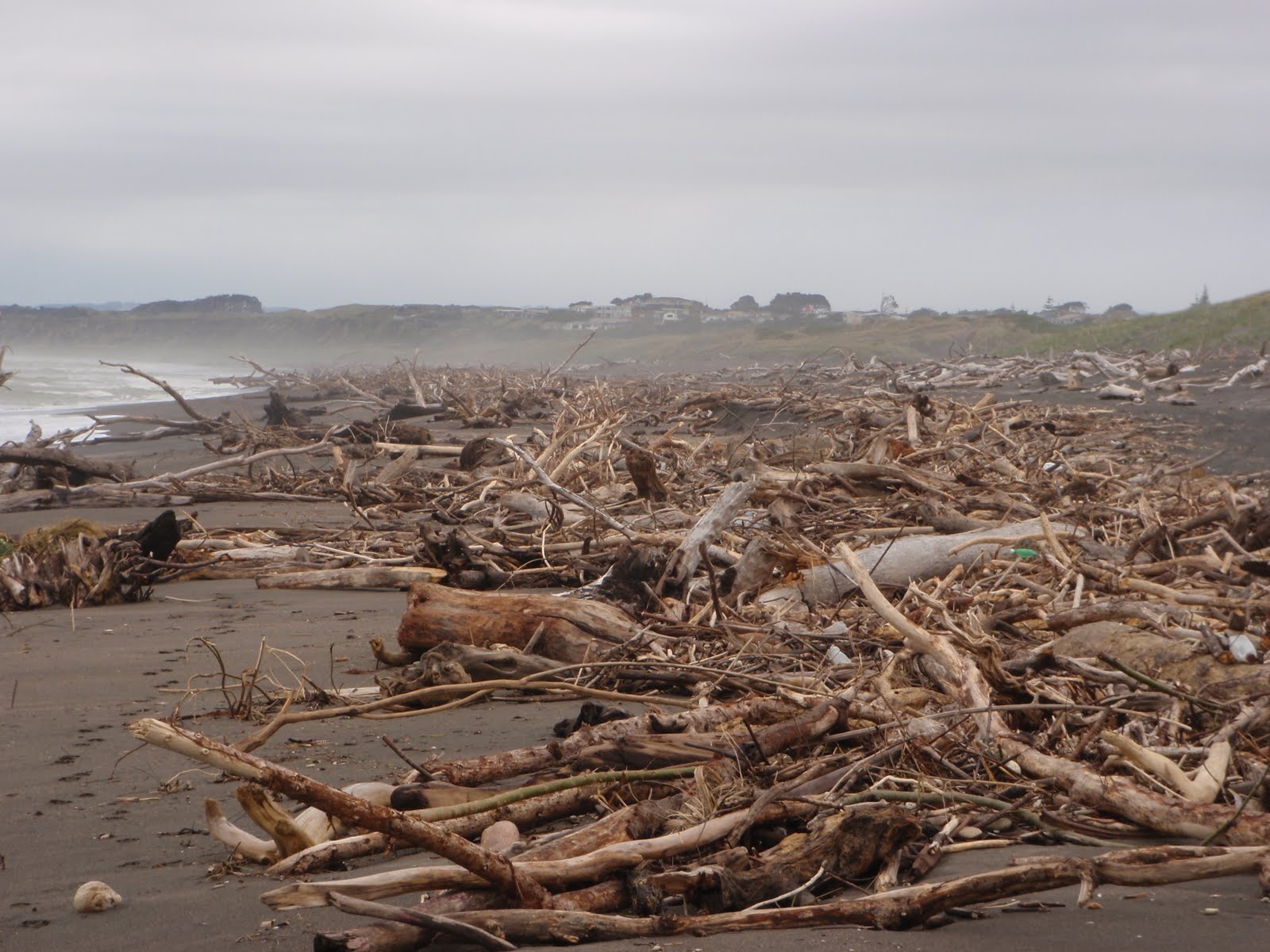
I have been splitting quite a bit of wood for our two wood stoves over the past year and figured that leaving the rural lifestyle behind me and stepping into the suburbs for a few months might offer a change of pace. This dream came to an abrupt end with the three day rainstorm we had last weekend. The Whaganui river swelled into a churning brown monster laden with debris that were belched into the ocean. I thought twice before I took a swim in New Zealand’s agricultural run-off, but figured it was all part of the experience and plunged in. Over the next twenty-four hours the beach was transformed from a smooth black sand ribbon, laced with footprints and ATV tracks, to the remnants of a clear cut gone wrong.

Whole trees were washed up and stacked randomly amongst one another, leaving little room for my daily swim routine. So began my new career as a beach logger.


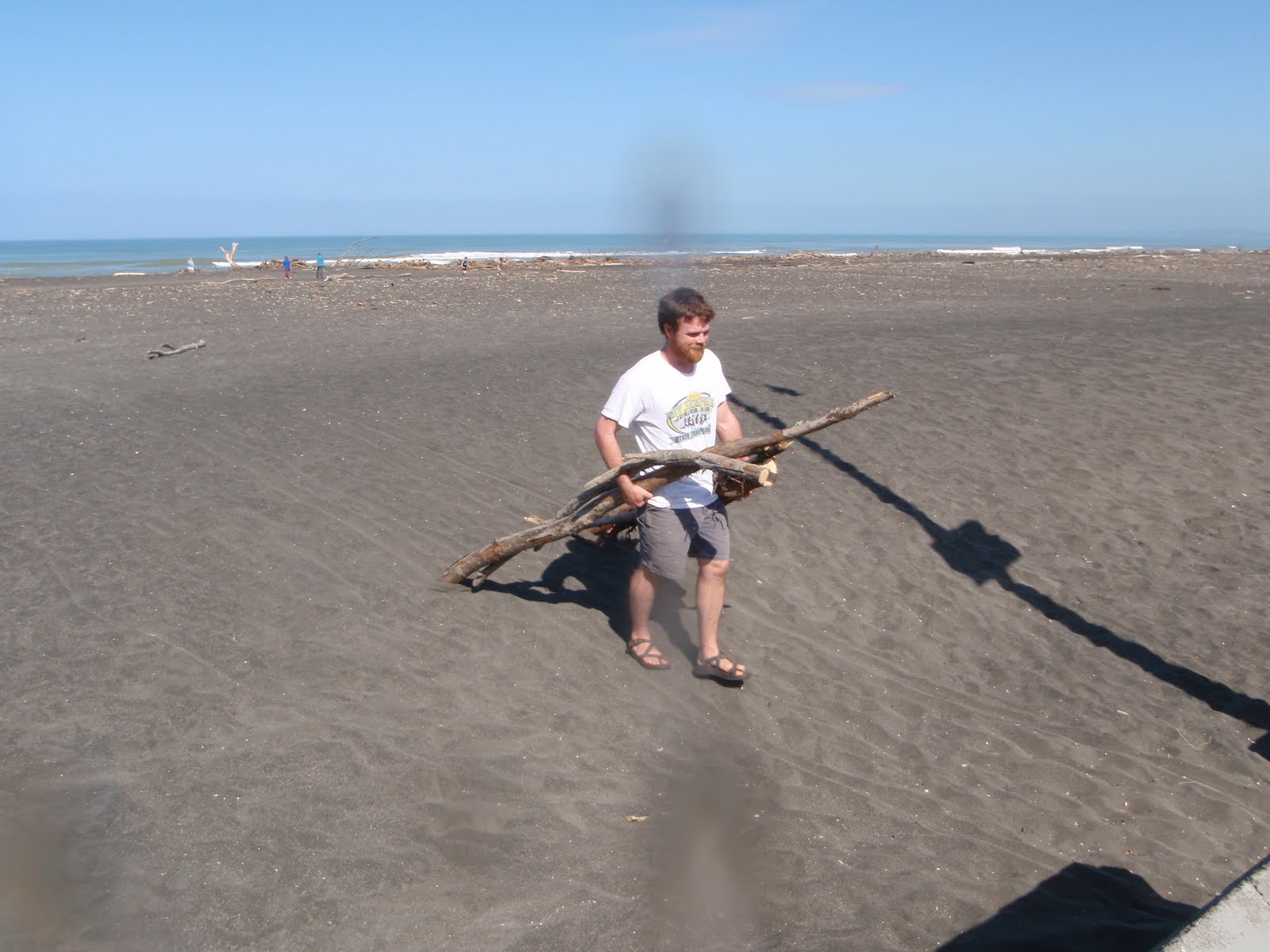
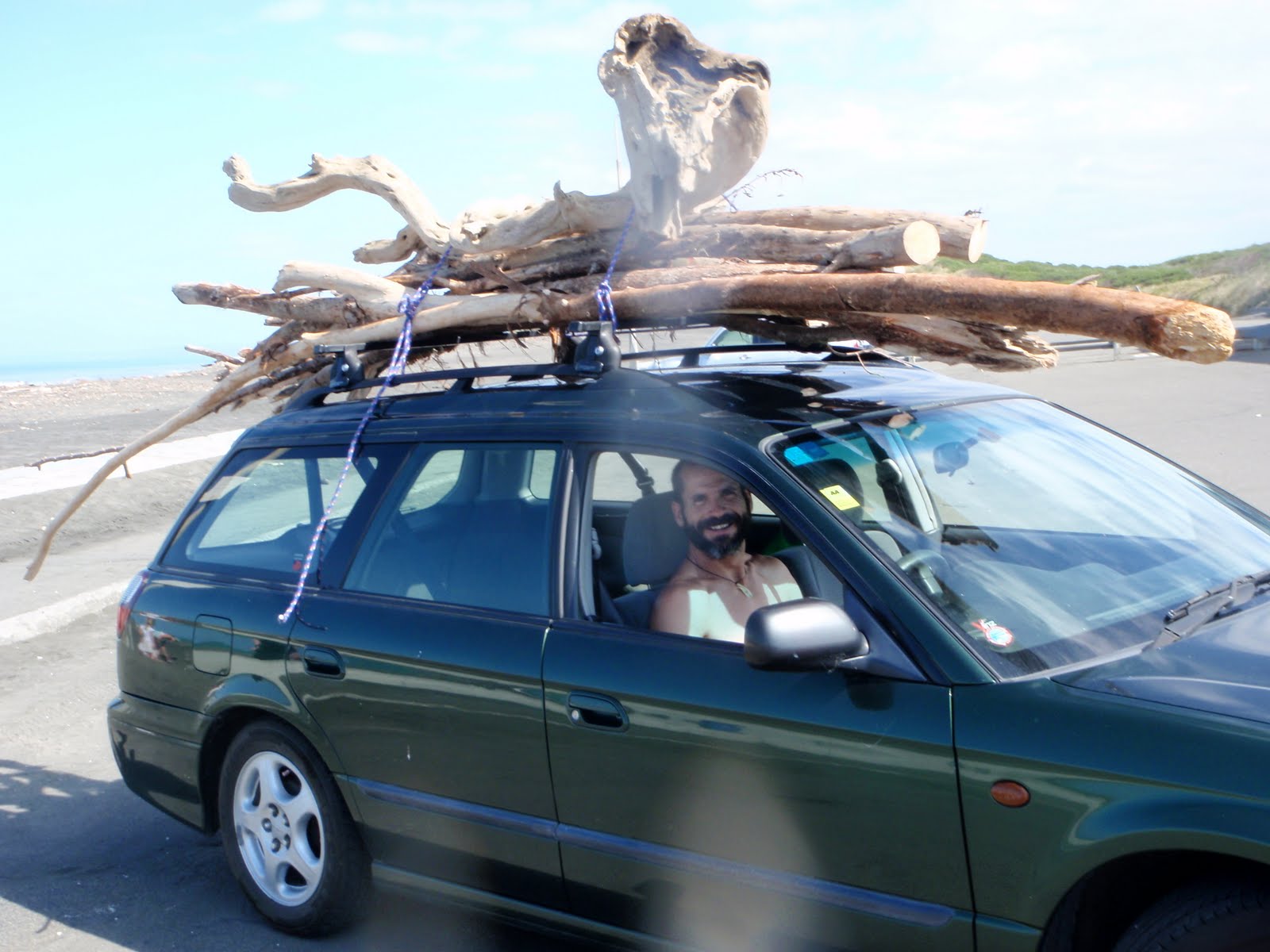
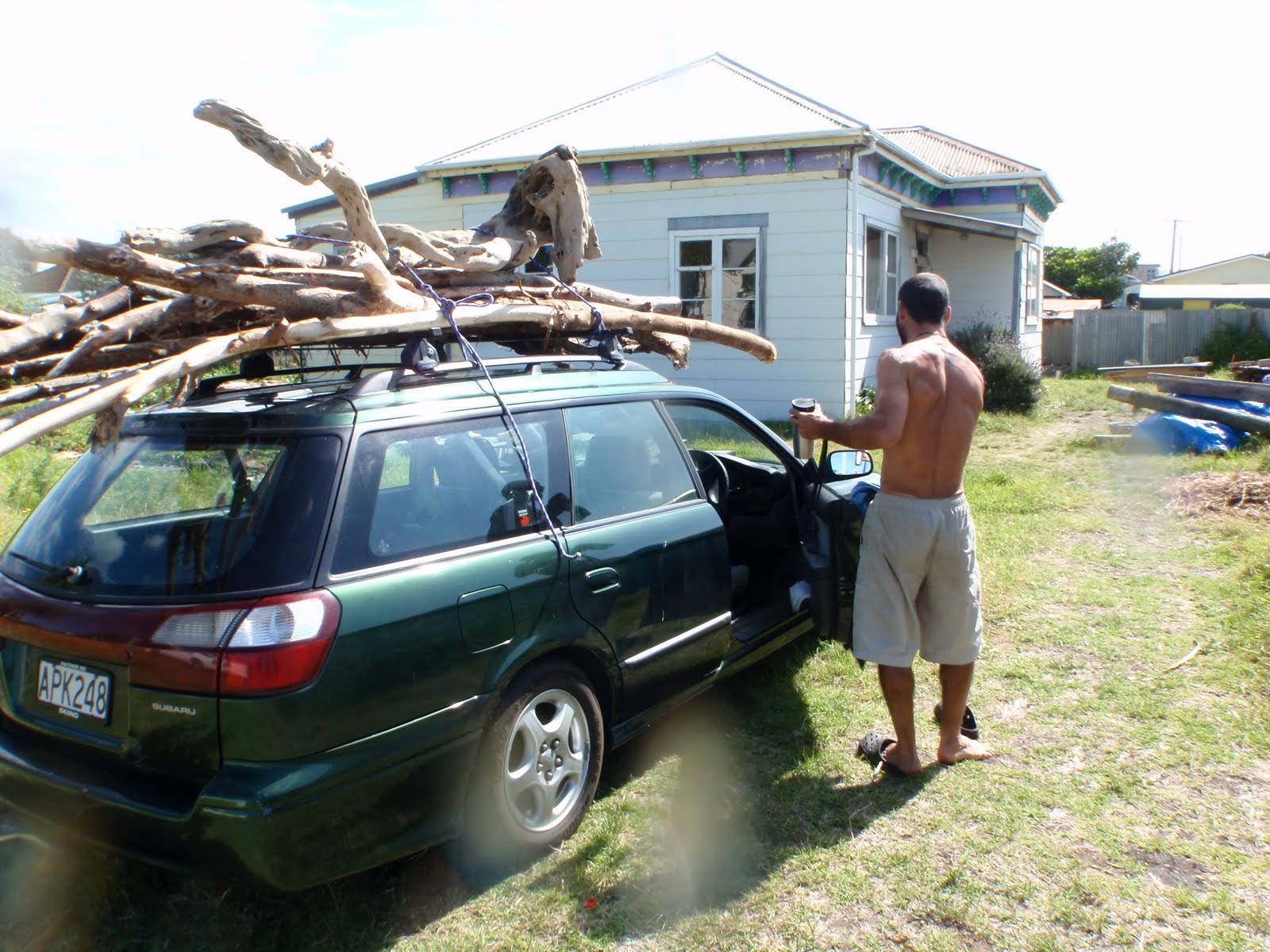
Nelson and I fire up our skidder and rumble down to the parking lot. Selecting only the finest wood for burning, we proceed to load the roof rack with logs of various sizes and up to eight meters long. Roping it all down, we headed for home.


The poor Subaru was riding low as we lumbered down the street, branches trailing close to the pavement. The four police cars we passed along the way seemed more concerned with catching hard criminals and drunks than busting us for doing a little beach clearing. Safely home, we unloaded without a scratch to the paint job. The wood now sits in a pile in the yard, awaiting the arrival of the multi-fuel stove and outdoor pizza oven.


-John the Intern

Editor’s Note: John the Intern arrived to us, straight off a lobster boat in Maine, last Friday. He has been disappointed in the rainy New Zealand summer he’s experienced thus far. But it beats the wintery thundersnows back home. He’ll be in New Zealand until May, working with us and traveling to other sites. We’ve coerced him into writing some blog posts as part of his interning duties, so you can look forward to hearing more from him in the future.

Tears and Revolution

You are probably as aware as I am that global food prices reached a record high recently, surpassing even the spike in June 2008 which caused riots in more than a few countries and led to at least one government being overthrown. This time around there also appears to be civil unrest associated this higher food prices.

I’m fascinated that a number of powerful forces are using the high food prices to try to push genetically-modified seed into markets previously resisting GM food for any number of reasons. GM (also known as GE – genetically engineered) seed, they argue, is essential for feeding an ever-growing human population and prevent starvation and malnutrition. This, of course, would lead to more concentration of power and wealth while leaving the dispossessed even more dispossessed.

It is simultaneously maddening and tragic. I don’t know whether to cry or revolt. In the end I do a little of each.

These are my tears…

and this is my revolution.

Keep growing, Estwing.

Ups and Downs

Having a bit of a rough day today, some bad news from home mixed with some sad news around here. Not to mention a few challenges here at the house, that I might or might not blog about another day.

But amidst all of that there is joy.

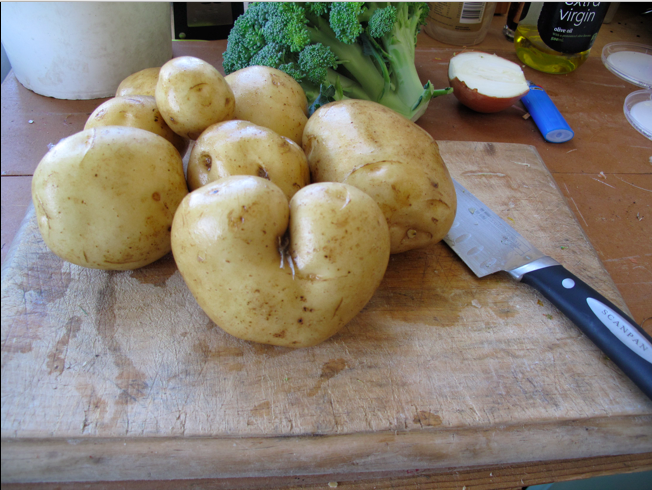
Like this heart-shaped potato.

And beautiful kids with sparklers.

And full workshops.

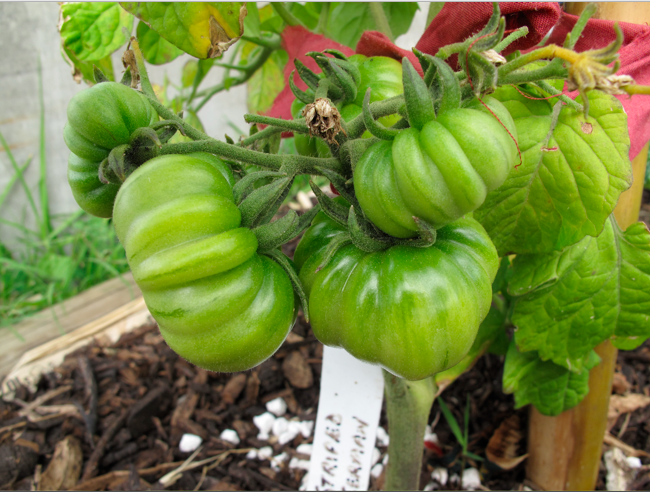
And ripening striped germans.
Some days it just takes a little more effort than other days to find the beauty in the world and remind ourselves that life is good.

-June Cleverer

4 Dimensional Design: Multiple Functions

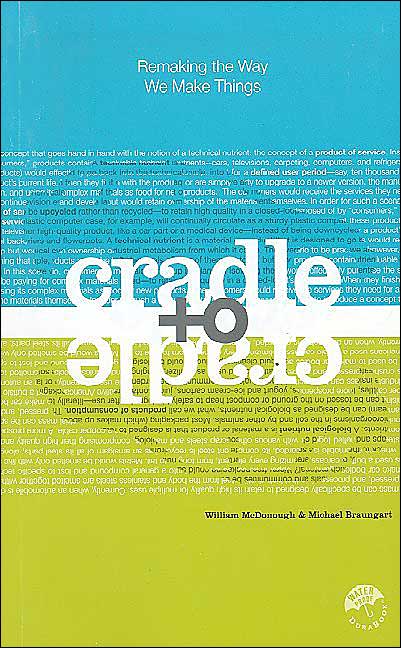
Almost everyone is familiar with the concept of multi-tasking. In this busy, busy world, it seems to becoming more and more prevalent. While I am not an advocate of texting while driving, I do see merit in being efficient with one’s time, as long as efficiency goes hand-in-glove with effectiveness. William McDonough and Michael Braungart do a good job of explaining the difference between what they call eco-efficient and eco-effective. Their book, Cradle to Cradle, is highly recommended.


I won’t try to improve on their excellent insights, but I would like to give an example of efficient/effective 4 dimensional permaculture design in action. (For those who have forgotten, TIME is the 4th dimension.) This is one of many 4 dimensional designs interacting on our property, but it illustrates the concept well.

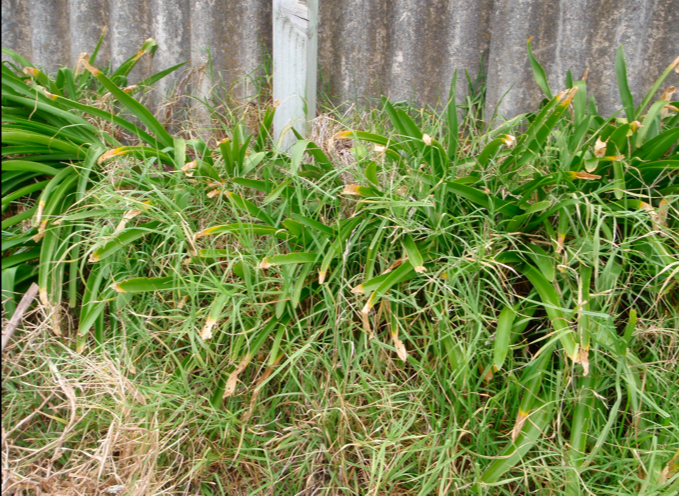
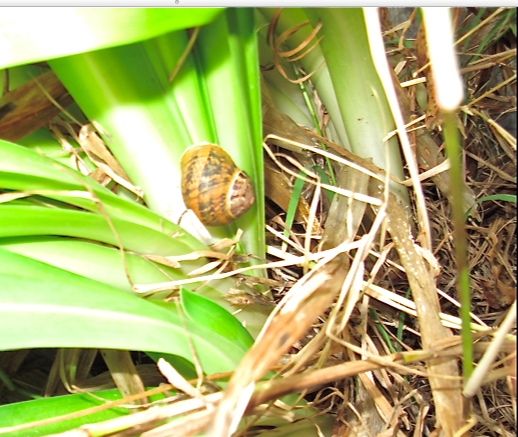
Snails love overnighting within the agapanthus but because the caycuya grass has overgrown it is difficult and time-consuming to find them to feed to the ducklings. In this sense, the caycuya is seen as a ‘liability’ because it makes the process less efficient. Further down the page you’ll see how we turn it into an ‘asset’.

Agapanthus overrun by cacuya grass.

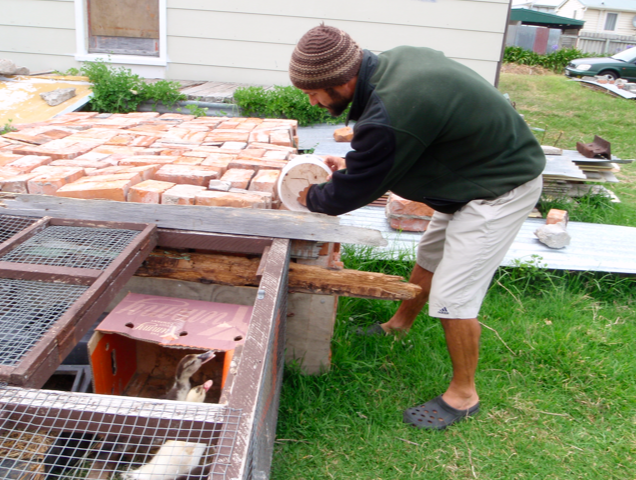
Now we could give our ducklings free range to find the snails themselves, but we have dogs in the neighborhood and no fencing out the front. So for the time-being we are offering escargot delivery services.

Escar-to go

Gardeners and physicists know that the process of squatting down and then standing up takes lots of energy. Part of being a lazy gardener (explained in a future post) is designing strategies that don’t require squatting down, and the other part is doing as much work as possible while your squatting before you stand up. With this in mind, as long as we’re squatting down to hunt for snails we might as well pull all of the caycuya we can comfortably reach. The large snails are placed in a pail and the grass is piled beside it. (The small snails are set free to be harvested another day.)

Waste = Food

When 12 to 15 snails have been harvested and all the caycuya within reach has been pulled, the job is done. until the nesting feeding time. The snails – liability to our gardens – are turned in an asset as duck food. The caycuya – also a liability to our gardens – is turned into an asset as a carbon neutral, hand-harvested, organic mulch. As a matter of fact, caycuya can be transformed from a liability to an asset within milliseconds and millimeters.

John the intern hard at work his very first day.

This is efficient/effective design because the snails are harvested on an as-needed basis. They stay fresh and grow best where they are. Why over-harvest and have to store them in a container?

The multi-tasking while squatting makes efficient use of the human component of the system. Since the caycuya poses no immediate threat, the job can be spread over a week or more taking only 5 minutes at a time.

And in the end, we’ll have free food for our hungry trio, free eco-mulch for our garden, a tidier front section, and the stage is set for quick and easy snail harvest the next time around.

Grow little snail, grow!

From a permaculture perspective, this illustrates the principle that every element of a system should serve multiple purposes. In 4 dimensional design, that element is the act of squatting down. As explained above, that single action serves multiple functions.

In my opinion, 4 dimensional design is not well understood or embraced by many permaculturists. It is something small that can make a big difference in a world of rising energy and food prices. What do you reckon?

Peace, Estwing

Willow Update

It has been nearly a month since we started our willow pollarding and pega pega experiment and we thought it might be time to give you an update.

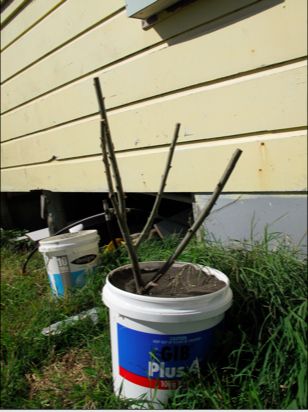
You might remember that our Christmas Willow was a single branch that we had brought indoors and kept in a bucket of damp sand.

About two weeks after Christmas we brought the bucket and branch outside and removed all of the foliage. We were hoping this would encourage the tree to put its energy into creating roots and new buds, rather than trying to heal the older foliage.

We left the branch outside right near our tap, so we would remember to water it regularly. And two weeks later…

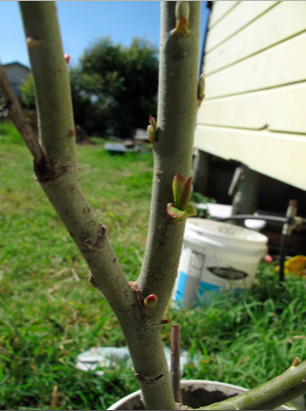
Success! We think. There appear to be healthy new buds forming on the branches. We haven’t probed into the sand, but my guess is that if we did, we would find new root buds as well. We’ll leave this little guy in the bucket until it has some more significant foliage and then will transplant it out to form the first part of our living-firewood-shelterbelt-fence.

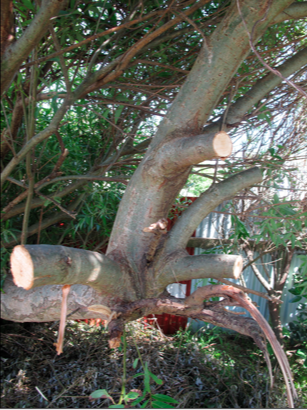
The mother willow is doing even better than the cutting. In just four weeks the place where we did our major cutting has gone from this…

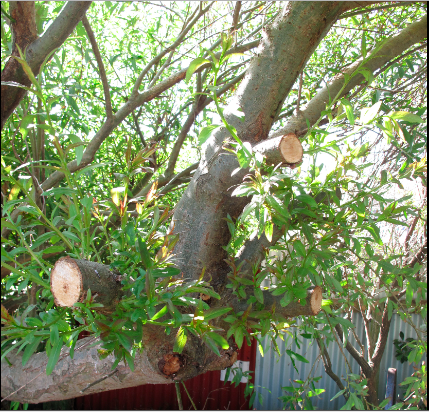
To this…

That’s a lot of growth! Now we need to decide if we want to keep all of these new branches and have about one dozen small branches, or trim them, to encourage the tree to put its energy into just one or two. My gut tells me to trim the new branches back, and leave two, but I don’t want to stress the tree too much. Any suggestions?