Category Archives: passive solar

Passive Solar Renovation

The other day we were driving home at about 5:30 – just after sunset – and could barely make out plumes of wood smoke exiting cowls on Heads Road and Cornfoot Street. The day had been sunny, but cool, as would be expected in July. Our curtains were still open, so we hurried along while remaining under 50 km/hr.
We parked, grabbed the bubs and groceries, and walked inside. Upon entering our old villa on Arawa Place, we were pleased to feel the warmth gifted us by the sun. The thermometer in the kitchen read 23 degrees Celsius.
By now, my wife is tired of hearing me say, “Wow, it’s so warm in here. I can’t believe all those houses had wood burners going.”
I chalk the difference up to legacy and sunlight.
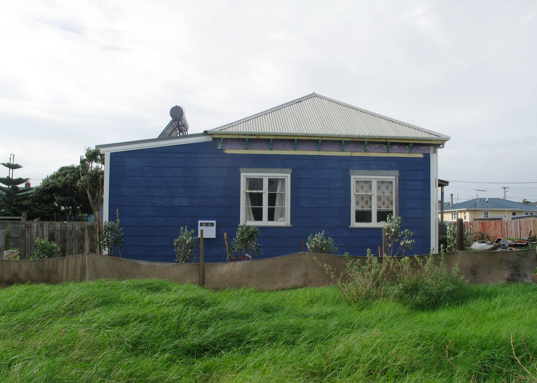
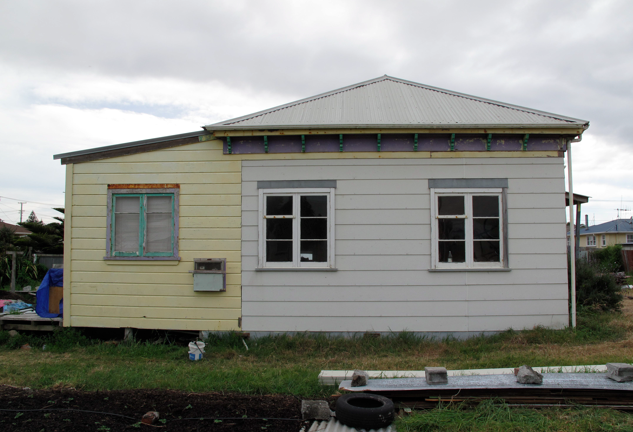
 Before
 After
Unfortunately, Whanganui has been left with a legacy of thousands of homes built with seemingly no regard to the sun or even thermal comfort for that matter. Many of the dwellings I’ve audited during the last three months through Project HEAT share these characteristics: cold in winter and hot in summer.
Our home would have been the same before its passive solar renovation. As a matter of fact, we met a woman shortly after we bought the villa who told us, “I’ve been in that house before. I babysat there once. That’s the coldest house in New Zealand.”
While no longer the coldest home in the country, it is still far from the warmest. But on a sunny winter day, we find ourselves toasty warm inside long after dark, and with plenty of solar heated water – all free energy with no daily line charge!
The primary way we tapped into this free, abundant energy source required no specialist equipment and no specialist skills. As a matter of fact, the ‘solar collectors’ we used already exist in every home in the country: windows. The problem with most homes is that the windows are evenly distributed between the north, south, east and west.
On sunny winter days, only the northerly-facing windows have a positive energy balance. In other words, they gain more heat through sunlight energy during the day than they lose through radiation at night (if properly curtained, as you would). All of the other windows have negative energy balances even on the sunniest of winter days.
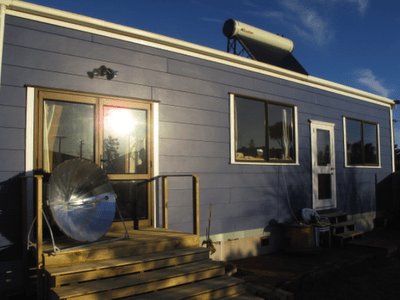
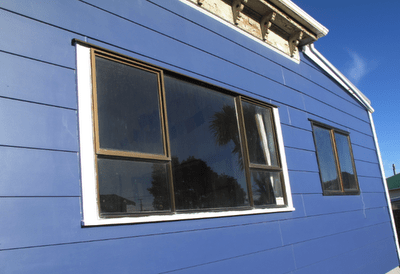
For us, the obvious solution was to ‘shift’ windows from southern exposure to northern exposure. While retaining roughly the same amount of total glazing, we were able to dramatically improve the solar gain of this old villa where – once upon a time – someone decided to put the toilet in the north corner.
 Before

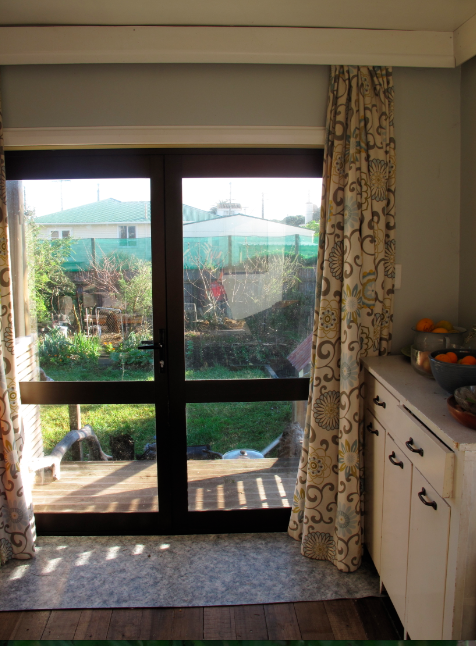
After
Shifting the toilet to a more appropriate location was accompanied by opening up the north corner to create a bright, warm, cosy kitchen with French door access to abundant backyard vege gardens and an outdoor pizza oven. All of the work was done in accordance with the New Zealand Building Code, with special attention paid to weather-tightness and bracing.
At the same time, we insulated the ceilings as well as those walls that were opened up during the renovation. And finally, we added thermal mass inside of the building envelope to moderate and store solar thermal energy, but that, my friends, is a story for another day.

Sun Angles: Winter and Summer

Mid-way between the autumnal equinox and winter solstice we find ourselves in the unenviable position of short days and long nights, and looking forward to even shorter days and longer nights for some weeks to come. Despite this, our renovated, passive solar villa has been performing well – the indoor temperature has not dropped below 18 degrees in 2013. (More on this in subsequent columns.)
The scientific explanation for the change in day length is that the Earth’s axis is ‘leaning’ the Southern Hemisphere away from the sun slightly more each day until June 21st. The way we perceive the sun in relationship to ourselves is that it rises a little further northeast and sets a little further northwest each day, as well as hanging lower in the sky at noon. Mind you, this is gradual. It takes 6 months for the ‘tilt’ to change from the sun’s highest point in the sky – and longest day of the year – and its lowest point in the sky.
A good eco-designer takes his of her lessons from nature. And nature takes his or her lessons largely from the sun. Using the transitive property, you can get the rest.
In the space below, I’ll explain two examples of good eco-design that take full advantage of the predictable behaviour of the sun: one biological and one physical.
 WBG, sold out quick-as.
If you were at Whanganui’s Saturday market for its last session before Christmas 2012, you may have been among the lucky few to have purchased The World’s Best Garlic. There is a lot that goes into growing The World’s Best Garlic besides humility. One important ingredient is timing. When I arrived in New Zealand five years ago I was told: “Plant garlic on the shortest day of the year and harvest it on the longest.” Generally speaking, this translates into June 21st to December 21st.
Please be aware, however, that this has nothing to due with full moons, cow poo vortexes, or Grecian Formula 44. It does have to due with soil temperature and gradually increasing sunlight day by day for half a year.
Also be aware that growing The World’s Best Garlic involves the right kind and amount of compost, mulch, and watering regimen, all of which are highly protected trade secrets.
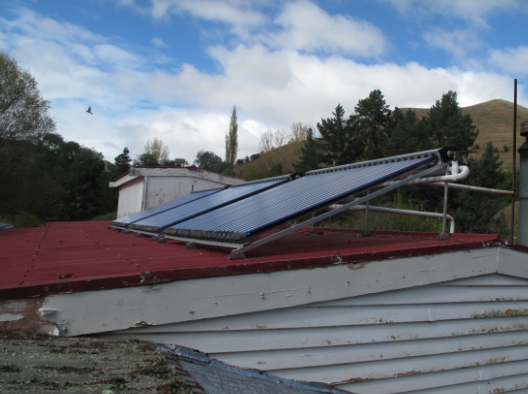
The other example of good eco-design involves two examples of solar hot water that are dramatically different from one another but each serves its own users most appropriately. One system is set on an acute angle and one on an obtuse angle to the sky. In other words, one system is set up for maximum efficiency in the winter and one for maximum efficiency in the summer.
Solar hot water set for a winter sun. 
The solar hot water system on our home is set for a winter sun angle because we know that there are fewer total hours of daylight in winter, and that our insulated tank loses more heat each night in July than in January. There also tends to be more rain and clouds in winter, so we need to take advantage of every clear patch and fine day.
Even set at this high angle, our system can boil over any given day of the summer if we don’t use enough hot water. This ‘boiling’ water shoots down the gully trap as a safety feature to the system.
Solar hot water set for a summer sun. 
So who, you may ask, would set their solar hot water system for a summer angle when there are plenty of long, fine days. Answer: YMCA Central’s Raukawa Falls Adventure Camp. They get heaps of visitors all summer long, many of whom want a warm shower at the end of each day. But for much of the winter, the camp lays more or less dormant, and a back-up wood-fired hot water system can easily fill in when needed.
As spring follows winter, so form follows function…if the design is good. 

Retrospective: Bathroom

Editor’s note: This is an early posting of tomorrow’s article in the Wanganui Chronicle. I won’t have time to post tomorrow. 
Many renovations are heavy on kitchens and bathrooms and light on everything else. It appears that there is a belief that these improvements will increase the resale value of a home while also improving functionality and/or style for the current occupants. That thinking is hard to argue with, except that new kitchens and bathrooms can cost tens of thousands of dollars each, and that the housing market appears to be stalled in Wanganui, and it could take quite a while for dwellings to appreciate enough to ‘pay’ for the renovations when ultimately sold. (Wow, that was a long sentence.)
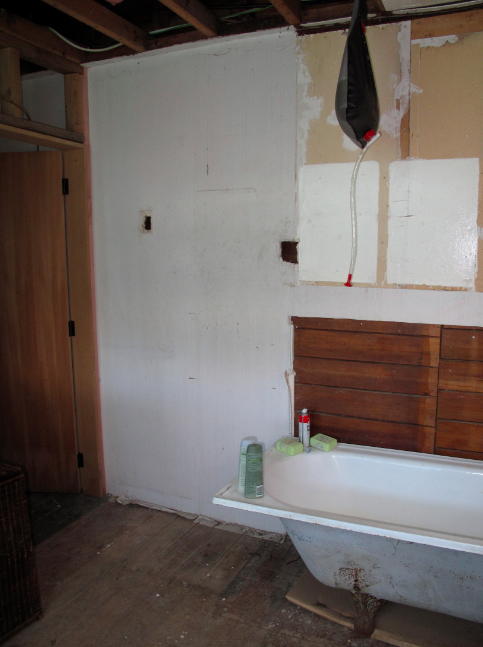
Old kitchen before conversion to bathroom.  
Large expenditures on new kitchens and bathrooms may exhaust a homeowner’s funds available for renovation, and preclude them from investing in strategies that will definitely pay for themselves in a matter of years, such as insulation and solar hot water. But let’s face it: insulation is not sexy. A new bathroom or kitchen is.
Old kitchen before conversion to bathroom.   
Eco-thrifty renovation is about finding the middle ground between serving the needs of a home’s occupants, keeping expenses reasonable, and putting less pressure on the planet. Instead of, say, spending $10,000 on a flash new bathroom and another $10,000 on a flash new kitchen, we were able to get functional and attractive versions of each, plus insulate our home and install solar hot water for under $20,000.
Terry Lobb wrote a guest column here on our kitchen a couple of months ago, highlighting some of the unique design elements made possible by shopping for second-hand, quality items, such as our antique leadlight cabinet doors purchased at Hayward’s Auctions and our Shacklock 501 coal range purchased on TradeMe. We used both of these sources, along with Wanganui’s Renovator’s Centre, when outfitting our $2,000 bathroom. Purchases included a claw foot bathtub, a toilet, a pedestal sink, a laundry tub, and a wall cabinet.
Temporary shower.  
Temporary shower.  
But quality, second-hand goods are just part of eco-thrifty renovation, which also includes efforts to improve thermal comfort and energy efficiency. Our bathroom has a large, northwest-facing window that receives a lot of winter afternoon sun that could potentially raise the temperature of the room to the high twenties, unless heat-tempering strategies were used.
We ‘capture’ some of the sun’s heat in thermal mass that takes the forms of a heavy, iron tub, and two layers of plasterboard on the wall opposite the window. Thermal mass absorbs excess heat in the afternoon, ‘stores’ it, and then releases it when the temperature of the room drops overnight. In order to slow the cooling of the room, we insulated the ceiling and the two external walls. We also installed a pelmet over the window, and use thermal curtains and window blankets during cold weather.
Extra layer to plaster board going being installed. 
This combination of materials and design strategies has provided us with an attractive bathroom (color choice made by the wife) in which we can take an evening shower in the middle of winter using free solar hot water, and then step into a 23 degree room also heated free of charge by the sun.
Fully installed tub and vanity.
All this was done in a tired, old villa. Imagine what one could accomplish if starting from scratch.
Peace, Estwing

Citizenship Day (?!?)

I discovered this week on my Yankee Magazine calendar (thanks mum) that the 17th of September is Citizenship Day. There was no further clarification as to whether this citizenship extends beyond New England, or the USA, but I will assume that this is a global event. And so I’ll write about being a global citizen.
When thinking about what it means to be a global citizen, I submit that the permaculture ethics are a good place to start: earth care, people care, fair share. As a matter of fact, that may even be a good place to end. Through this lens, let’s look at an example of poor citizenship.
This data comes from a recent article in Forbes: Wasting Away: Our Garbage by the Numbers. One of the saddest bits about this is that I recall numbers like this when I started my career as an environmental educator 20 years ago. But back then the amount of garbage the average American produced was “only” 4 pounds. It is interesting that the current number is 4.4 pounds, because that is 2 kilograms. I have not seen the number for New Zealand, but I suspect it would be similar.
The three Rs (reduce, reuse, recycle) are so fundamental that I won’t write extensively on them except to say that global citizens would take them into account with every purchasing decision they make. During our renovation and in our domestic life we produce next to no rubbish: about one bag every two months.
I’d like to challenge global citizens to raise the bar for global citizenship beyond the 3 Rs by taking serious steps at energy conservation. We have had great success with our passive solar redesign and are using less than 10% of the electricity of even what is considered a “low user” (8000 kWh/year) in New Zealand.
This is the power bill that came this morning, after a month that included the coldest week in New Zealand recorded history. During this record cold spell, with no supplemental heating except electric, we averaged just over 2 kWh per day.
Even a “low user” can average over 21 kWh per day year round. Presumably, that may vary from 15 kWh per day in summer and 25 kWh per day in winter. By comparison, our 2 kWh appears to fall into the truth-is-stranger-than-fiction category. But its true. You can see the bill above. That is the power of sunlight, thermal mass and insulation.
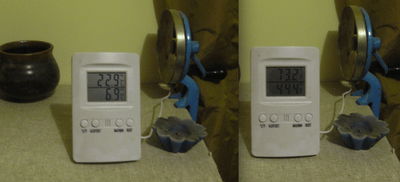
Indoor/Outdoor Temperatures in C and F at 6 pm, Sept. 4th.
Indoor/Outdoor Temperatures in C and F at 6:30 pm, Sept. 6th.
And we’re not even done insulating and draft-proofing yet.
Global citizens who are concerned about drought in East Africa, flooding in Pakistan and Bangladesh (formerly “East Pakistan”), and rising sea level in Tuvalu should feel an obligation to cut their energy use even if much of it comes from renewables like here in NZ. Even renewables have “side effects.”
Our friends in Raglan are fighting the wind mills proposed for the coastline to the north. I’ll be there a week from today helping them start that fight from home one kWh at a time.
Peace, Estwing

Draft Dodger

Editor’s note: Sorry about the misspelling of hongi on the last post. I have never seen the word spelled out, and to my untrained ear it sounds exactly like hangi. Dani knew the difference, but she is too busy to proofread my blogs, plus it would not have been much of a surprise for her had she edited for me, eh? If you are not familiar with te reo, google hangi and you will get a good laugh!
Anyway, the topic of this post is dodging drafts in an eco and thrifty manner.
From what I have heard, anyone who has ever lived in a NZ villa has commented on how cold and drafty they are. We have been working to change that, but unfortunately were a little late for the coldest week in recorded NZ weather history. Although we did not get the flue for our multi-fuel stove installed by a plumber in time, the week provided an excellent opportunity to collect data on our passive solar design. We reached indoor afternoon temperatures of 20 – 24.2 degrees Celsius all week long, although morning readings dropped to around 10 as overnight lows were in the 1 – 3 degree range. I reckon there are four main reasons for this: we have not yet insulated under the floor; the new concrete hearth is uninsulated; all of the pelmets are not up yet; and draft-proofing is not complete. One particular culprit in the case of the latter is the back door(s).
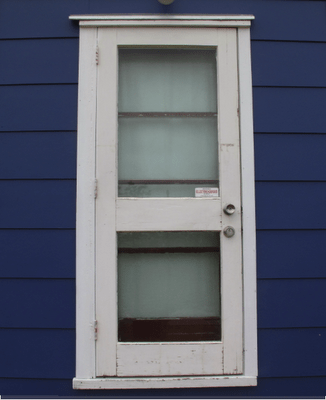
Could not track down a good old American aluminum storm door. Bought this wooden door on trade me for $40, including 2 locks and 6 keys.
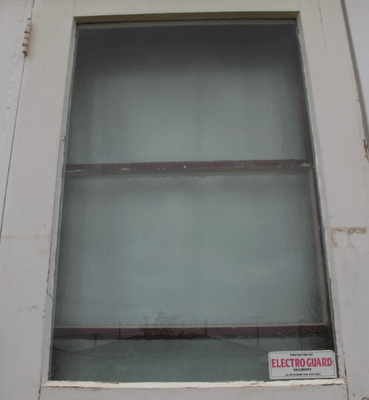
Although the back door(s) is “double glazed” so to speak…

Replaced the original traditional rimu four-panel glass door (inner door) that had been smashed by vandals with an identical one from the Renovators Centre for $100.
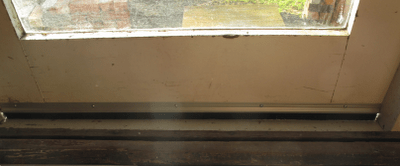
… as of last week there remained significant gaps around the perimeter.
The hardware store had a sale on door seals, so I picked up a couple. I decided to test the cheapest one along with a mid-range one. The cheapest model was on sale for $10. I reckon that is a good price, but the durability and longevity may be low as it is intended to be applied only with an adhesive strip.
That seems like a recipe for planned obsolescence. Some times being cheap is expensive. So I decided to beef up this model by pre-drilling 5 holes along its length. I used the adhesive to set it in place…
… and then tapped into my supply of stainless steel screws, which will not react with the aluminuim strip.
The entire installation took about 10 minutes and cost maybe $11 including the screws.
For the outer door, I went with the slightly more expensive model which included its own screws and was pre-drilled in the factory. I think this one was $15. But the feature that appealed to me most was the brush seal instead of the foam seal. Our new aluminium French doors has brush seals, so I figured that was a sign that they will take more wear and tear over time. Someone correct me if I’m wrong on this.
This installation took only 5 minutes.
15 minutes for both doors. Why had I not done this sooner? Oh yeah, PhD thesis, new bathroom, new kitchen, new roof, etc. And, the other measures I had already taken on these doors were functioning ok. For example, foam strips along the door frame.
Remember to follow instructions to get all sides of the frame.
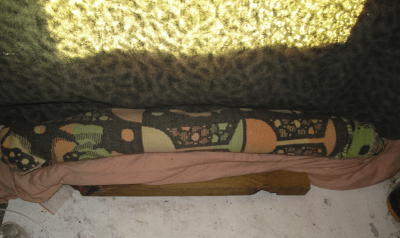
Additionally, I had already put up a pelmet above the inside door and hung a thermal curtain so that it nearly touched the floor. Then I took a pair of second hand blankets from the auction and “draft-not-quite-proofed” the bottom.
When we bought this house a year ago this door was smashed and poorly covered by a sheet of some pulp-like wood product and some roofing iron. Rain driven by northwestern winds (prevailing for us) pushed water inside.
Now, for a total of under $200 in materials, we have two draft-proofed, weather-sealed glass doors to let in sun but keep out rain and cold. And, some might say its more attractive than an aluminum storm door.
Peace, Estwing

You Might Be a Redneck…

New Zealand is gripped by a near 100 year Antarctic weather system. It snowed in Auckland yesterday for the first time in 72 years, and much of the Central North Island is paralyzed at the moment by closed roads. Even school closings! Many generations of Kiwis have never experienced a “snow day.”
Here on Arawa Place we have had morning frosts and yesterday’s high was around 8 Celsius. At the moment it is 6 C. Brrr. But the sun came out yesterday afternoon to heat our home and our water. The wife had a long, hot shower this morning as ice covered the chooks’ water dish outside.

And again this morning the sun is streaming through our northeast windows.
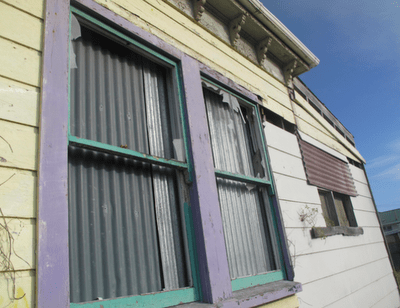
By the way, this is what the northeast wall looked like 9 months ago.
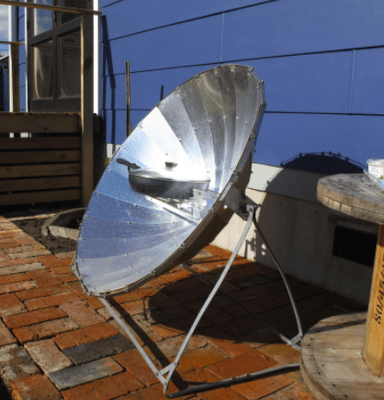
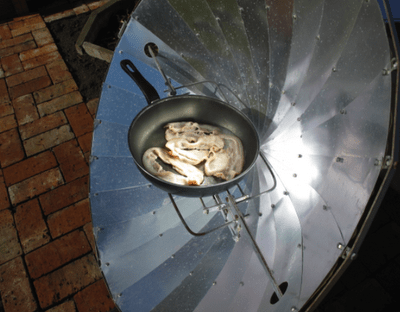
So despite the unusually cold conditions, we’re managing to stay warm in our recycled villa. And we’re even taking advantage of strong sun and light winds for a little cookout. Ummm, that smells like…
… bacon!
You might be a redneck…


Nothing says eco-thrifty like reduced price, free-range “natural” bacon on a solar cooker.


Peace, Estwing

Intersections

I reckon life is all about finding balance. And because we live in a dynamic world, the balance point is always changing. On this project we are looking for balance not only between eco and thrifty, but also factoring in the New Zealand building code and the potential for wide applicability across society and across the world. In other words, we are looking for the intersection of eco, thrifty, legal, replicable, beautiful and attractive to people other than already committed Greenies.


To my knowledge this is a unique endeavor. This project represents an everyman’s/woman’s approach to permaculture. There are lots of examples of eco-villages and perma-farms and expensive bespoke eco-homes. But in the foreseeable future, the vast majority of people will never live in such places. Most people in OECD nations live in places like this.


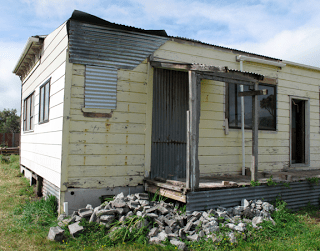
Well, much nicer than this actually. But we did not want to be accused of cherry-picking.


In response to Richard’s comment on the last post, I’ll give an example of the intersection mentioned above using insulation. Pink Batts are widely available, recognized by almost everyone, cost-effective, meet the NZ building code and contain up to 80% recycled content. Meeting (and exceeding) the NZ building code is essential to this project. So the options of insulation included Pink Batts, polypropylene batts, and wool batts. (We did not consider blown in cellulose too closely because we wanted to do the job ourselves to ensure quality installation and to keep costs down.) Polypro batts are made from recycled plastic and the wool batts are made from…wool. Both are more expensive and less available than Pink Batts.

Some people like polypro batts because they are so soft and easy to handle. But in terms of insulation, handling should be (!) a one off. I do not mind handling Pink Batts. Once they are installed, I don’t plan to touch them ever again.

Some people claim that wool batts are the most eco option possible. I question that thinking. Have you seen the unsustainable ways sheep are grown in NZ? A holistic look at the ecological footprint of wool batts must include soil erosion, herbicides, and nitrogen fertilizers. Some might argue that the ecology, soil health and water health of NZ would be much better off with fewer sheep.


In the end, the insulation intersection for this time and place and the goals of this project was Pink Batts. For the equivalent cost of polypro or wool we were able to exceed the building code at a higher r-value. In other words, we have a warmer house at the same cost. By using an innovative installation technique (see Bridge to Nowhere), we reap the benefits and can share this under-utilized approach with others to replicate from Auckland to Alberta.

Peace, Estwing

"The coldest house in New Zealand"

When we first bought this house we knew we were in for a lot of work.

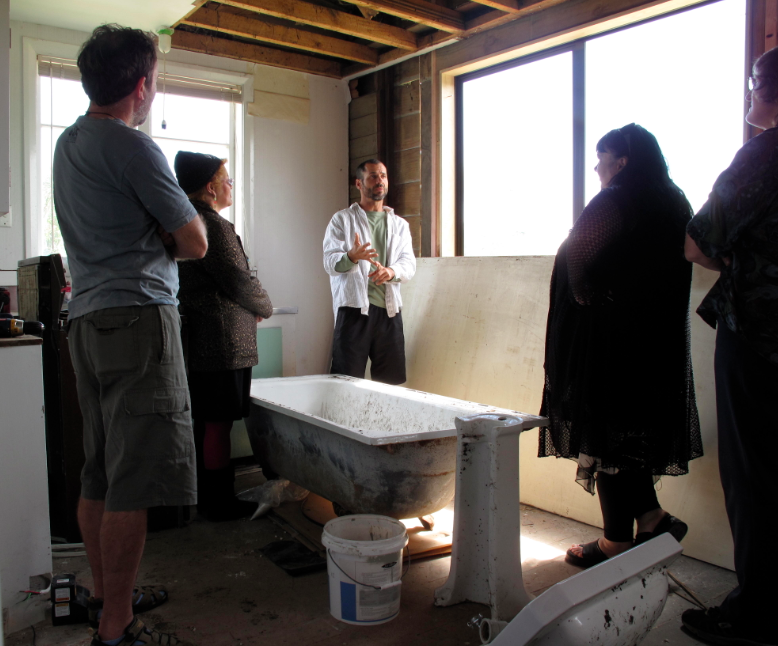
But we were ready for it. We started putting on a new roof, replacing windows, insulating, etc. We held workshops and open houses to educate members of our community about passive solar design and eco-renovation.

At one of our first open houses a woman said, “I’ve been in this house before. I baby sat here once. This is the coldest house in New Zealand.”

Despite her ringing endorsement, we persevered. We added windows to the north and removed them from the south walls. We insulated more. We are building pelmets and hanging thermal drapes. We are draft-proofing.

This week while I was promoting the Science of Sustainability at Wanganui Intermediate School I asked the students in each class if they had turned on the heat in their homes yet this autumn. Nearly all students (and teachers) raised their hands. I smiled and said, “We have not had to turn on our heat yet, because the sun is heating our house.”

Peace and passive solar success, Estwing