All posts by Estwing

Late Autumn Permaculture Update

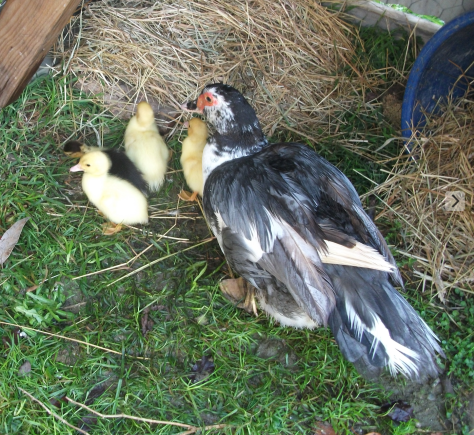
I can’t really call this early winter because cold weather has only just set in. The Indian summer and long mild autumn has caused the muscovy ducks to think it’s spring. These were born last week.

Screen Shot 2016-05-26 at 5.34.11 pm

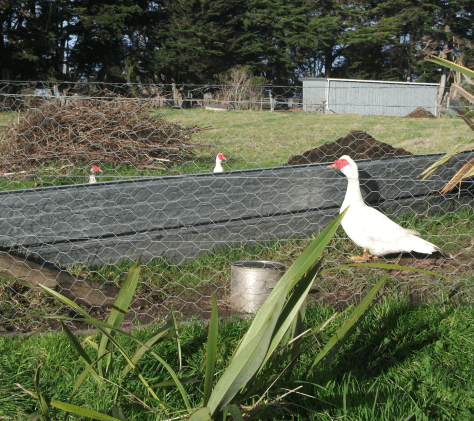
These males think that it is mating season.

Screen Shot 2016-05-26 at 5.38.53 pm

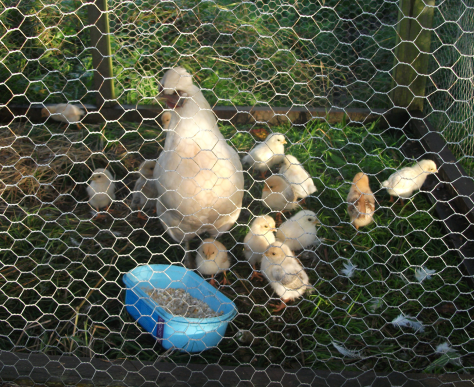
These bantams were born two weeks ago.

Screen Shot 2016-05-26 at 5.34.22 pm

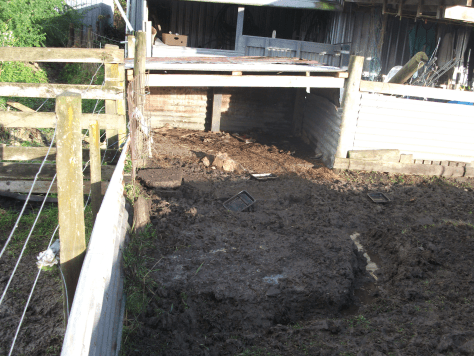
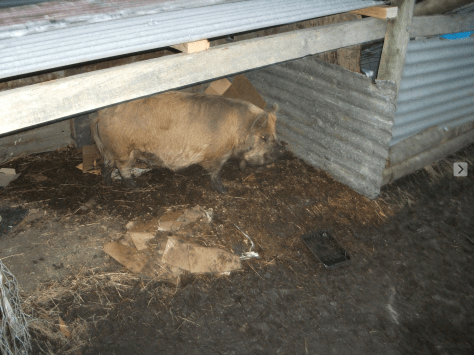
But now the rains have come and we need to keep all of the animals dry and out of the wind. We built this shelter for the kune kune pigs last weekend.

Screen Shot 2016-05-26 at 5.35.13 pm

Hilda is testing out her new bedroom.

Screen Shot 2016-05-26 at 5.33.56 pm

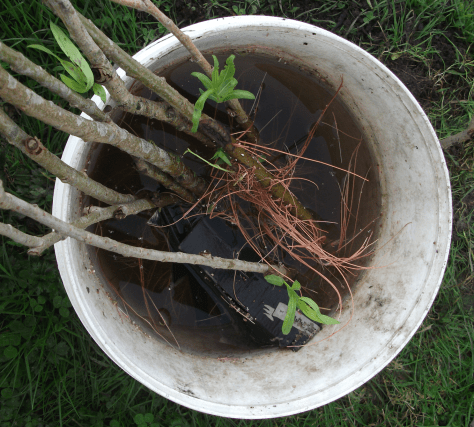
Our previous interns, Heloisa and Marina, started these willow cuttings about 8 weeks ago.

Screen Shot 2016-05-26 at 5.37.34 pm

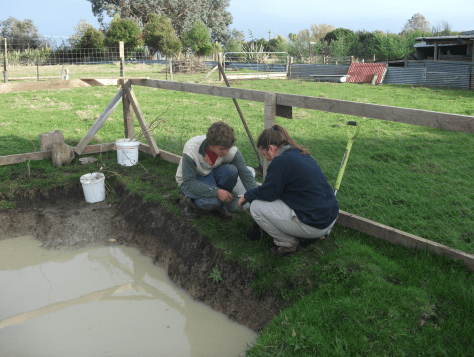
Our current interns, Mike and Sophie, planted the willows this week.

Screen Shot 2016-05-26 at 5.37.21 pm

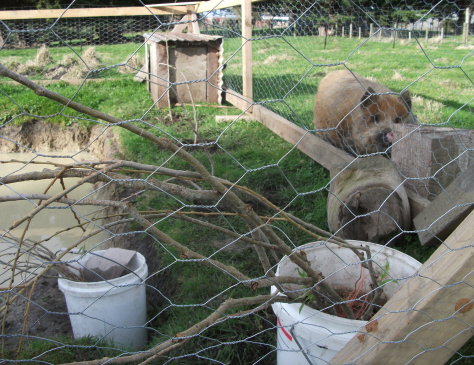
Hilda supervises the planting.

Screen Shot 2016-05-26 at 5.37.48 pm

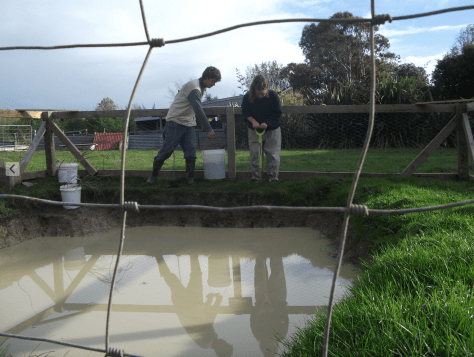
The willows will surround a pond that we have been digging by hand for the last six months. The pond will collect water in winter and store it high on the property.

Screen Shot 2016-05-26 at 5.36.57 pm

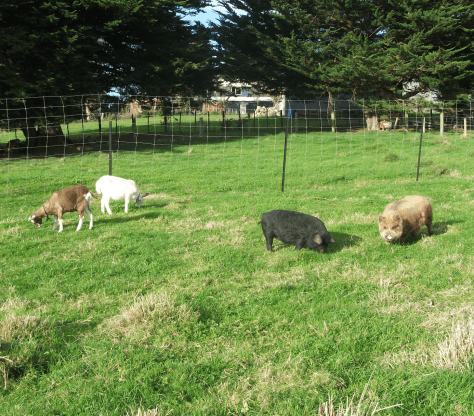
The pond is in the middle of a paddock where the goats live and the pigs spend the day.

Screen Shot 2016-05-26 at 5.37.09 pm

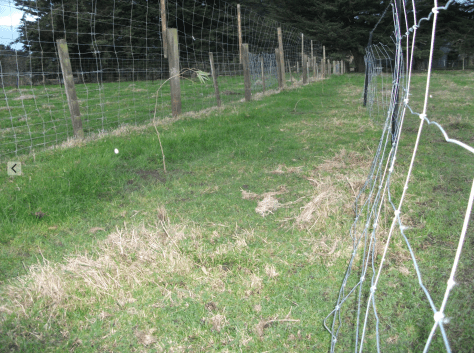
Next to the paddock we are planting a windbreak of willow and poplars.

Screen Shot 2016-05-26 at 5.33.45 pm

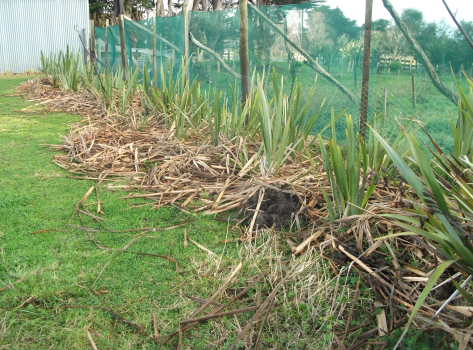
Speaking of windbreaks, these harekeke flax have taken hold well. They were transplanted 20 months ago.

Screen Shot 2016-05-26 at 5.34.36 pm

We have started our Black Boy peach stones.

Screen Shot 2016-05-26 at 5.38.00 pm

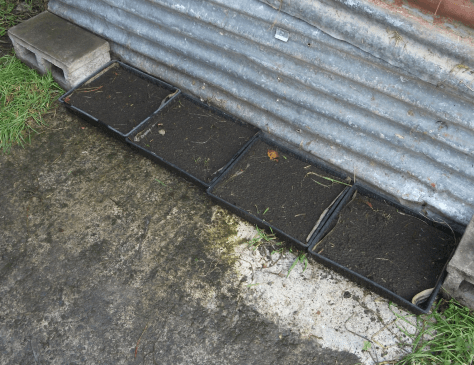
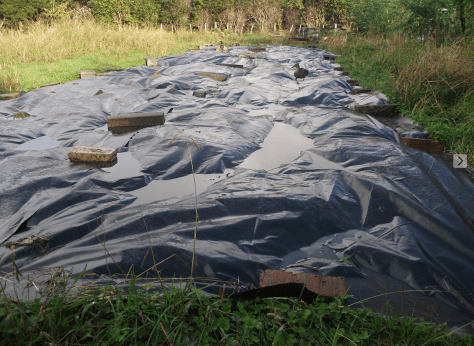
And we are preparing this bed to be planted as a market garden next spring.

Screen Shot 2016-05-26 at 5.34.51 pm

Peace, Estwing

What’s up DOC?

The New Zealand Department of Conservation (DOC) has helped us build fertility on our farm. They had a project recently in our area removing aquatic weeds, raupo and coy carp from a dammed pond, and offered to donate all of this biological goodness to us. Of course I said “Bring it on!”

Screen Shot 2016-05-14 at 7.07.09 am

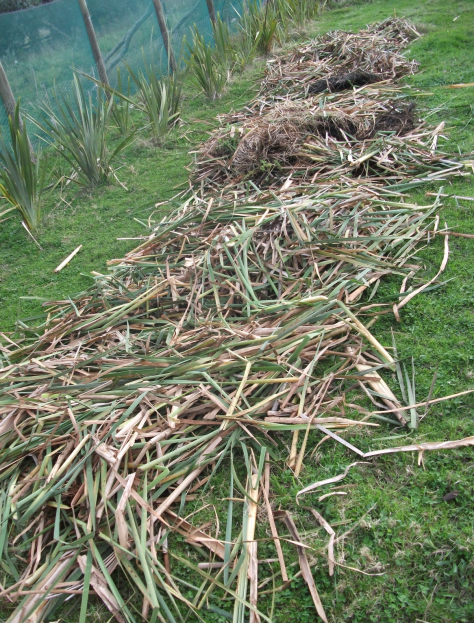
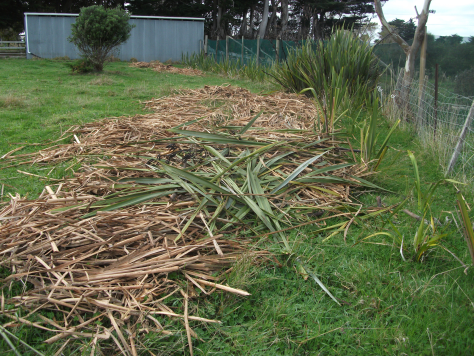
We have used the raupo to mulch harekeke windbreaks high on the property.

Screen Shot 2016-05-14 at 7.06.26 am

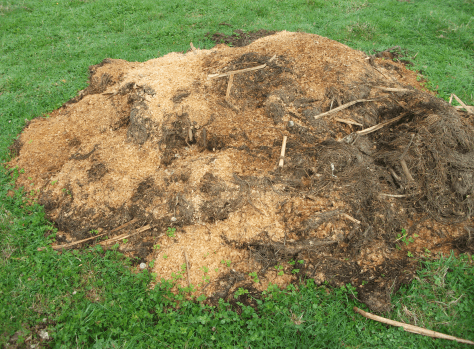
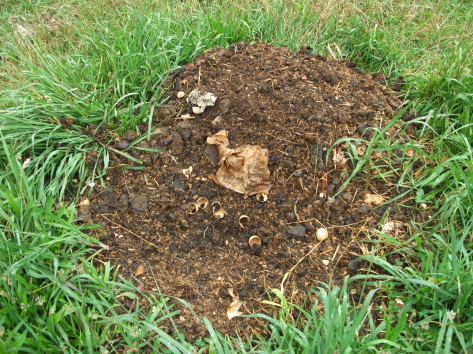
We are composting the aquatic weeds and fish along with extra wood shavings to keep the smell down and add carbon.

Screen Shot 2016-05-14 at 7.06.10 am

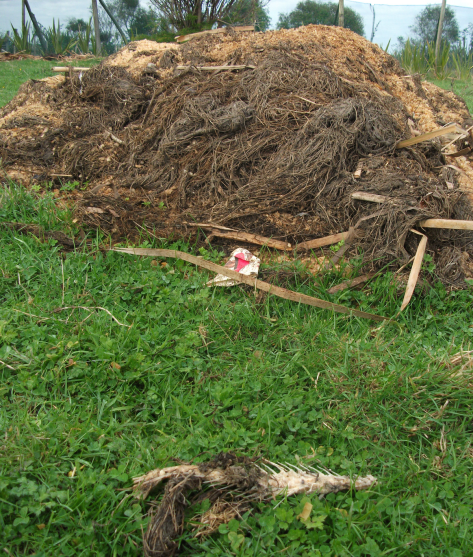
Of course the pig eventually got a whiff of the fish and that became a minor temporary problem.

Screen Shot 2016-05-14 at 7.05.58 am

But we layered the pile up with more shavings and some sheep manure. All good, and thanks to DOC for not sending this organic material to landfill!


Chur, Estwing

Insulated Door: Easy as 1-2-3

Glass doors are common in New Zealand homes.

Glass doors are cold doors.

South-facing glass doors are especially cold.

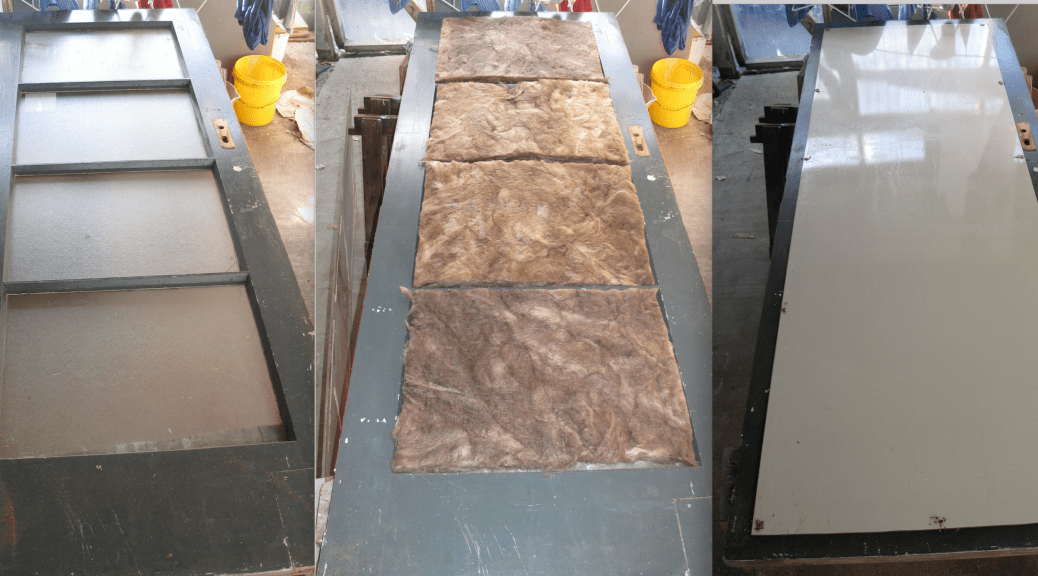
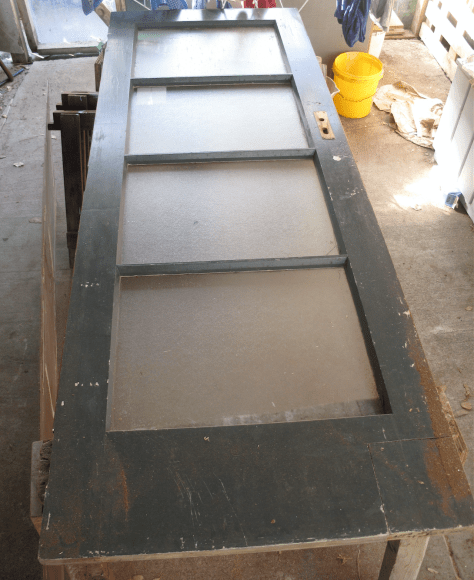
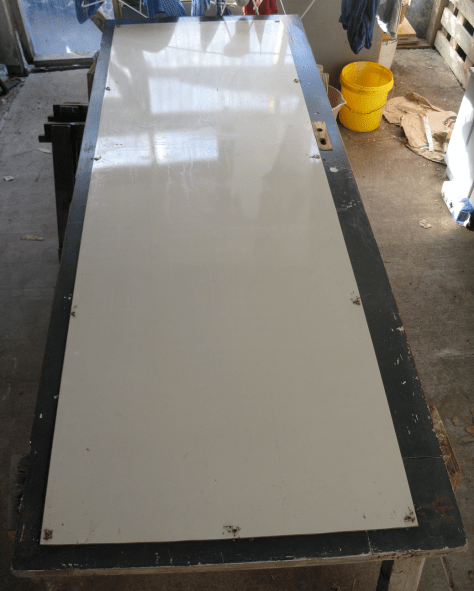
Here is a cheap and easy way to retrofit a four panel rimu glass door into a warm and cosy door. First, find yourself a comfortable working area and lay out the door.

Screen Shot 2016-05-12 at 6.30.39 am

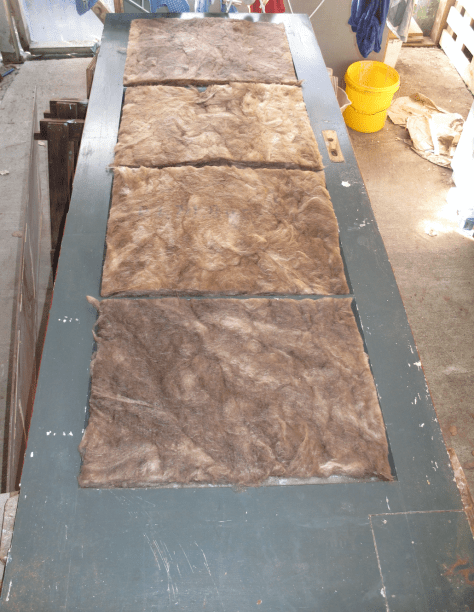
Next, cut insulation to cover each glass panel on both sides.

Screen Shot 2016-05-12 at 6.31.02 am

Finally, cover with thin ply, hardboard or other suitable material. I used the waterproof wallboards that we removed from the old laundry when we extended our kitchen. They were just sitting in the shed.

Screen Shot 2016-05-12 at 6.31.17 am

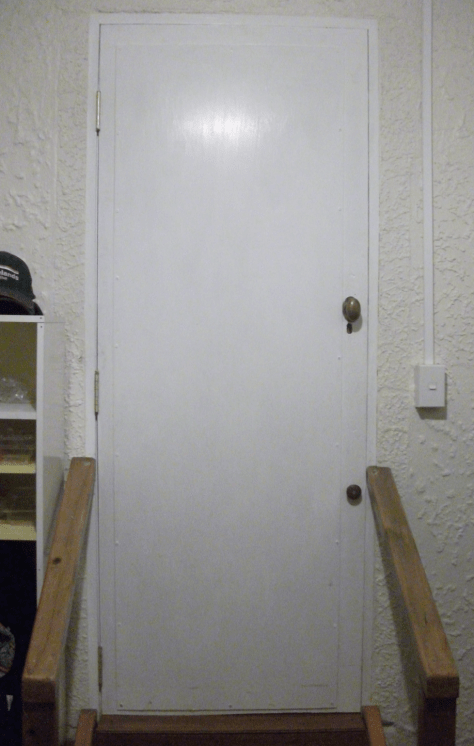
Hang the insulated door and paint the lot.

(Note the second door handle is for our three year-old daughter.)

Screen Shot 2016-05-12 at 6.29.50 am

Not 100% flash, but a very high performance door at a low price.


Peace, Estwing

Life, Death, Research and Trump

“Our already horrendous suicide rate hit a new record high last year.”

The news of New Zealand’s suicide rate did not surprise me when I heard it on the radio earlier this week. Anyone who pays attention to global trends could see this coming.

“Psychotherapists say we need a wide-ranging review into the mental health system before there are more preventable deaths” reported Newstalk ZB.

At lighter moments I joke that the best thing about living in New Zealand is that you can see worldwide trends that are heading this way, but the worst part is that noone believes you.

This is not a lighter moment. Suicide is a serious issue and one that is growing dramatically among my peer group: white middle-aged men.

The first people to notice the emerging pattern in the United States were Princeton economists Angus Deaton and Anne Case. The New York Times reported on 2nd November, 2015 that the researchers had uncovered a surprising shift in life expenctancy among middle-aged white Americans – what traditionally would have been considered the most priviledged demographic group on the planet.

The researchers analyzed mountains of data from the Centers for Disease Control and Prevention as well as other sources. As reported by the Times, “they concluded that rising annual death rates among this group are being driven not by the big killers like heart disease and diabetes but by an epidemic of suicides and afflictions stemming from substance abuse: alcoholic liver disease and overdoses of heroin and prescription opiods.

The mortality rate for whites 45 to 54 years old with no more than a high school education increased by 134 deaths per 100,000 people from 1999 to 2014.”

The most amazing thing about this discovery is that the Princeton researchers stumbled across these findings while looking into other issues of health and disability. But as we hear so often, everything is connected.

A month before releasing this finding Dr. Deaton was awarded the Nobel Prize in Economics based on a long career researching wealth and income inequality, health and well-being, and consumtion patterns. The Royal Swedish Academy of Sciences credited Dr. Deaton for contributing significantly to policy planning that has the potential to reduce rather than aggravate wealth inequality. In other words, to make good decisions policy writers need good research based on good data. Too often this is not the case.

“To design economic policy that promotes welfare and reduces poverty, we must first understand individual consumption choices. More than anyone else, Angus Deaton has enhanced this understanding.”

Days before hearing the news about New Zealand’s rising suicide rate I learned of another major finding from demographic researchers in the United States. For the first time in history the life expectancy of white American women had decreased, due primarily to drug overdose, suicide and alcoholism.

This point is worth repeating as it marks a watershed moment for white American women. After seeing life expectancies continually extend throughout the history of the nation, the trend has not only slowed but reversed. Data show the slip is only one month, but the fact that it’s a decrease instead of another increase should be taken as significant milestone.

Please note that the following sentence is not meant in the least to make light of the situation, but is simply stating a fact.

The demographic groups that are experiencing the highest rates of drug overdose, suicide and alcholism are also the most likely to be supporters of Donald Trump in his campaign for the U.S. Presidency.

It does not take a Nobel Lauriet to observe a high level of distress among white middle-class Americans. Trump simply taps into that angst.

As reported by CBS News, “The fabulously rich candidate becomes the hero of working-class people by identifying with their economic distress. That formula worked for Franklin D. Roosevelt in the 1930s. Today, Donald Trump’s campaign benefits from a similar populist appeal to beleaguered, white, blue-collar voters — his key constituency.”

I don’t blame most Americans for being angry. That the very architects of the global financial crisis have only become richer and more powerful since they crashed the world economy in 2008 is unforgiveable. The gap between rich and poor contineus to widen and the chasm has now engulfed white middle-aged workers. As the Pope consistently tells us, wealth and income inequality is the greatest threat to humanity alongside climate change.

Instead of going down the Trump track for the rest of this piece, I’d rather wrap it up by bringing the issue back to Aotearoa New Zealand and our outsized suicide rate, especially among farmers.

To provide some background for international readers, the NZ economy relies signifcantly on dairy exports and many dairy farmers hold large debts. Dairy prices are known for their volatilty, and recently the payouts have dropped below break-even points for many farmers.

Earlier this month Primary Industries Minister Nathan Guy announced that the government would invest $175,000 to study innovative, low cost, high performing farming systems already in place in New Zealand. Stuff.co.nz reported, “The government is set to pick the brains of New Zealand’s top dairy farmers in an effort to help those struggling with the low dairy payout.”

That is great news, but the government’s investment in researching the best of the best farmers is a pittance when compared with what is spent addressing issues of depression and suicide prevention among Kiwi farmers. Isn’t this a case of putting the cart ahead of the horse, or treating symptoms instead of causes?

Research shows that financial stress contributes significantly to the increasing suicide rates here and abroad. We know that innovative farmers who use low-input/high-performance systems are more profitable that their conventional farming bretheren. Would it then be a stretch to conclude that depression and suicide is much lower among these innovative and profitable farmers?

At the same time, research shows that wealth and income inequality in our urban centres contribute to anti-social behaviours such as crime, domestic abuse and illegal drug usage. Yet policy planners continually fail to treat the causes.

Angus Deaton, the Nobel-winning economist, would argue that in order for policy planners to address these issues effectively they must understand the underlying causes and resultant costs. Sadly it is more the exception than the rule.

Thankfully, we do see glimmers of that from central government instead of the usual neoliberal claptrap. Credit must be given to Finance Minister Bill English for his actuarial approach to some social issues rather than the inaccurate dogmatic positions often adopted by the right. Which brings us back to Trump.

I wrote this four months ago:

Trump’s political success relies on the fact that many people only accept information that fits their existing worldview. Facts don’t matter. Research doesn’t matter. Trained experts don’t matter. As Ray Davies sang in 1981, “Give the people what they want.”

In a world where everyone has an opinion, we run the risk of giving equal weight to an expert’s opinion based on peer reviewed research and Joe Blog’s opinion based on his preexisting worldview. Which would you go with?


Peace, Estwing
Our First Month on the Farm: An Interns Perspective

So there we were, two out of shape Brits chugging along in an ageing Subaru down the SH3 to Wanganui, wondering what to expect from the coming 2 months. What would the Eco school be like, we wondered, as we drove the through the pun-strewn town of Bulls. Coming from Bristol in the UK – a very left-leaning and progressive city, by British standards – we have learnt to be sceptical of the capitalist machine, suspicious of large businesses and selective in the things that we buy. Naturally this has made us think twice about where our food comes from, as well as sparking a keenness to learn more about self-sufficiency and organic farming. On the other hand, thinking this way also tends to make us feel a distinct pang of guilt every time we stop for a roadside McDonald’s, or fall for a particularly attractive supermarket bargain.

After a long month adventuring the South Island we were excited to be based somewhere permanent again for a while and it’s amazing how quickly you settle back into a routine even after some extended time out. Dani and Nelson soon set us up with some frequent tasks most of which we perform daily…

We begin our mornings by feeding the chickens and ducks, an enjoyable task but one that needs to be done with speed, particularly in open areas when about ten hungry ducks are on your tail or standing helpfully in the food bowl. This generally takes around 15 minutes and is a good chance to collect eggs, assess the weather and generally find out how all the inhabitants are doing that morning.

Screen Shot 2016-04-30 at 5.36.44 am

After this task we turn compost three times a week. How to make compost was one of our first lessons and a very important one. According to Nelson for successful compost you need to ensure you give it plenty of food, air and water and the biggest mistake you can make is buying a plastic compost bin- thus eliminating water entering the compost naturally and making it difficult for yourself to add air and food. A plastic bin is also, ironically, not particularly eco friendly when you think about it! To create our new heap we took bags of sawdust and sheep manure and stacked these ingredients up in 5 layers rather like a lasagne (a culinary regular of ours thanks to the abundance of courgettes and tomatoes here on the farm). We then started adding food scraps from the kitchen and anything else compostable such as coffee grounds, egg shells and all of the biodegradable waste from an event that Nelson put on at work. We take the top third off with a rake, add the ‘food’ and then rake the rest over the top three times a week.

Screen Shot 2016-01-27 at 5.28.10 pm

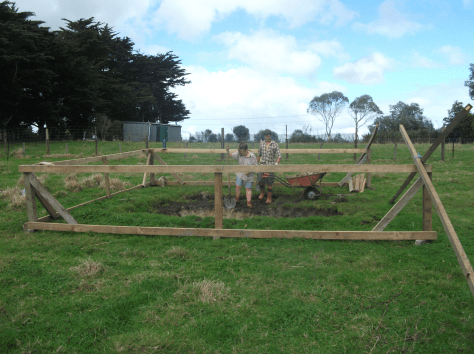
After these tasks we usually start a longer project. We’ve recently been creating a new water storage area in the middle of the goat paddock. The location of the pond was chosen because it is an excellent place for water to collect on the property as it should drain into the pond after heavy rain and throughout wetter periods of the year and will enable it to be stored somewhere useful where it can be accessed if needed, nurture young trees that we intend to plant around it and potentially provide a duck habitat. We dug out the top soil and transported it to a bank which will eventually be an avocado habitat and then dug out the clay underneath and used it to build up an unsteady bank lower down on the property. An important part of permaculture is identifying what resources are assets and which are liabilities and being able to transform liabilities into assets. The pond is an excellent example of this. By creating a place for water to collect where we want it, excess groundwater is transformed into an asset as it is now in a place where it will not cause damage to the property and can be used in times of drought. It is also popular with the goats, pigs and small children!

Screen Shot 2016-04-30 at 5.48.20 am

Verti tends to come and help with the obligatory evening bird feeding session and then our day ends with a lovely home cooked meal. Twice a week this is our undertaking and including multiple lasagnes we have attempted to adapt our standard Bristol-based repertoire to involve some of the wonderful organically grown vegetables produced here on the farm. Surprisingly perhaps, in spite of all the wholesome fruit and veg that surrounds us the ultimate aim remains to produce a proper British bangers & mash… Only time will tell whether this will become a reality…

  • Sophie and Mike

Screen Shot 2016-04-30 at 5.37.08 am

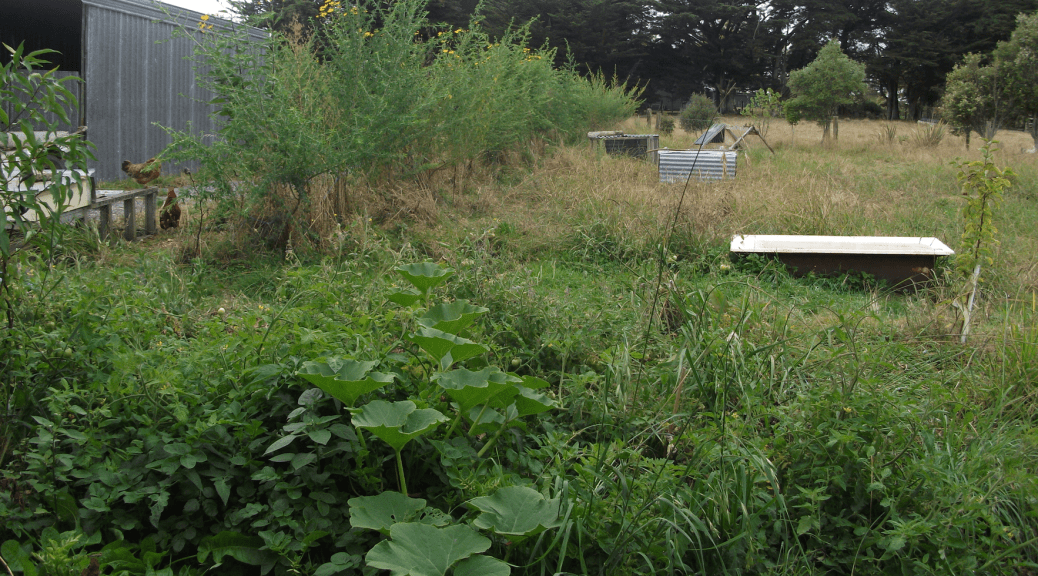
Flood and Drought: The New Normal

Over the last 10 months we have had weather records broken for wet and for dry. The heavy, compacted soils we inherited on this property don’t help either one.

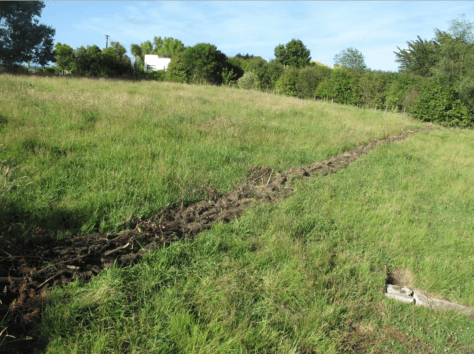
Our main goals for the property are to improve soil and soil structure, and to moderate hydrological extremes. One strategy we have employed is building a hugelkultur swale along with a series of small ponds. This is what it looked like under construction on day one.

Screen Shot 2016-03-20 at 6.38.40 am

This is what it looked like a year later.

Screen Shot 2016-03-20 at 6.47.43 am

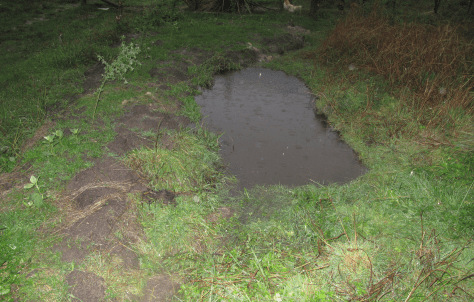
This is the day of our record floods last winter. Note the small tagasaste trees and broad beans.

Screen Shot 2016-04-24 at 6.56.22 am

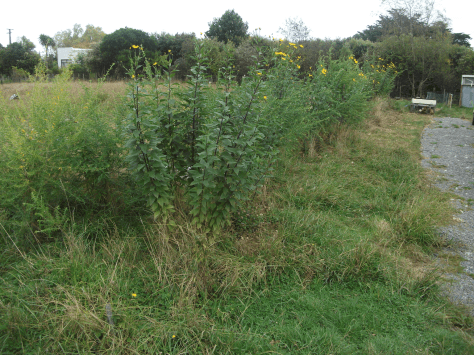
Ten months later the pond harvests water off the farm roofs. The tagasaste have grown alongside Jerusalem artichoke.

Screen Shot 2016-04-24 at 6.58.37 am

One year of growth on the swale despite a very dry summer.

Screen Shot 2016-03-20 at 6.48.34 am

Slowly but surely we are using nature and muscle to build a more resilient farm for our children and for everyone downstream.

Screen Shot 2016-03-20 at 6.46.26 am


Peace, Estwing
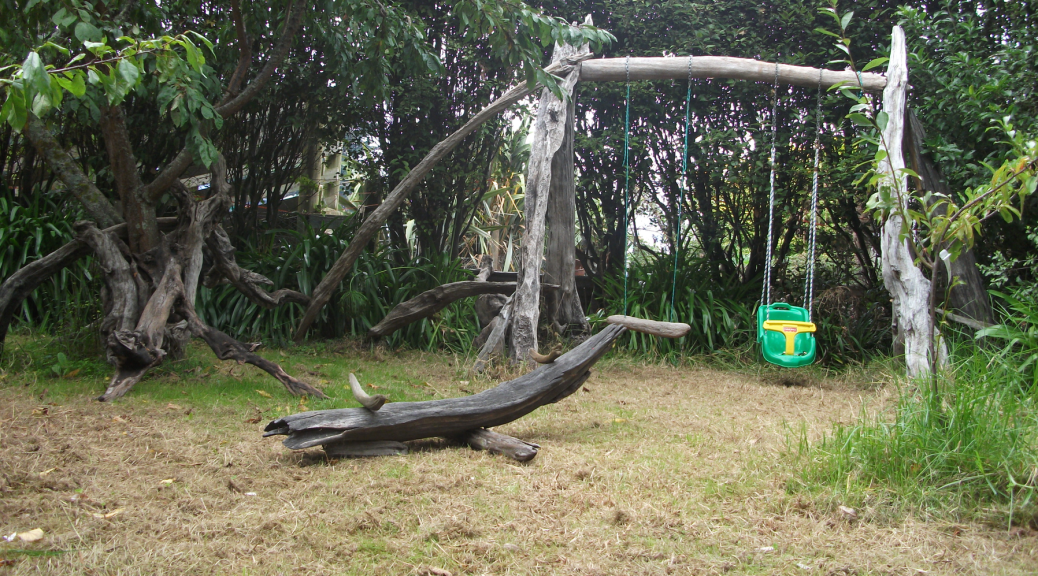
Driftwood Dream Playground

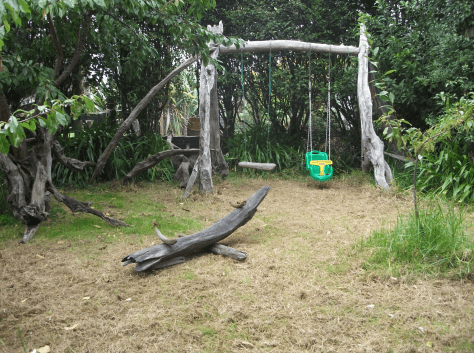
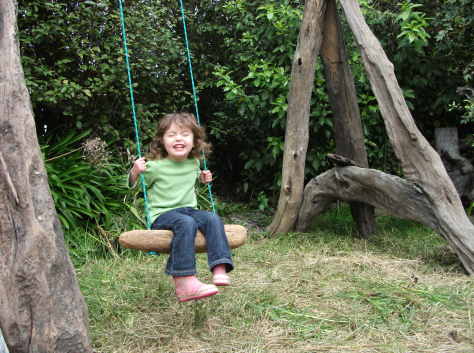
Our driftwood playground is finally complete…for now.

Screen Shot 2016-04-17 at 6.32.23 am

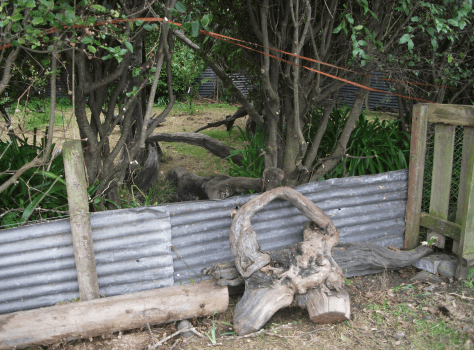
The latest addition is a child-friendly ‘bridge/ladder’ over a roofing iron fence from the pigpen to the playground. How appropriate!

Screen Shot 2016-04-17 at 6.32.47 am

Talk about a design challenge: making an overpass that is kid-friendly but pig-proof.

Screen Shot 2016-04-17 at 6.32.37 am

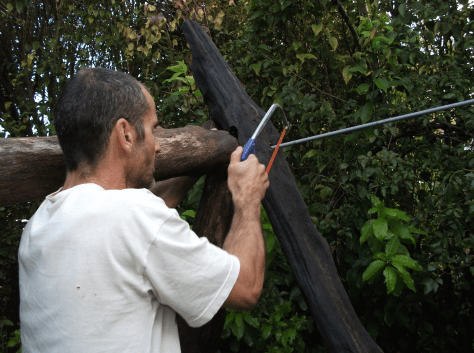
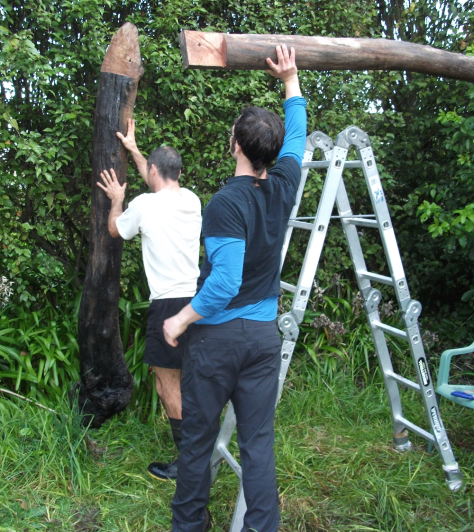
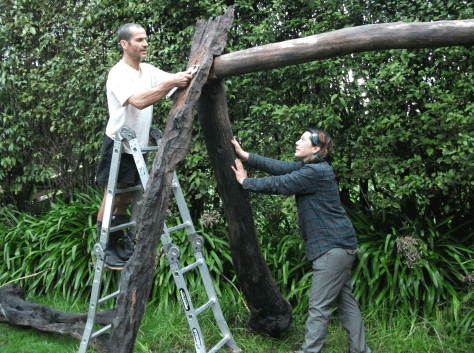
All of the playground equipment is made from New Zealand native hardwood. The swing set is held together with galvanised threaded rod.

Screen Shot 2016-04-17 at 6.35.34 am

It is a good example of chainsaw joinery.

Screen Shot 2016-04-17 at 6.34.57 am

The wood is rock hard. I dulled the chainsaw blade in 15 minutes. The swing  will easily last for decades.

Screen Shot 2016-04-17 at 6.35.13 am

And fun was had by all!

Screen Shot 2016-04-17 at 7.03.13 am

Peace, Estwing
A Muddy Birthday

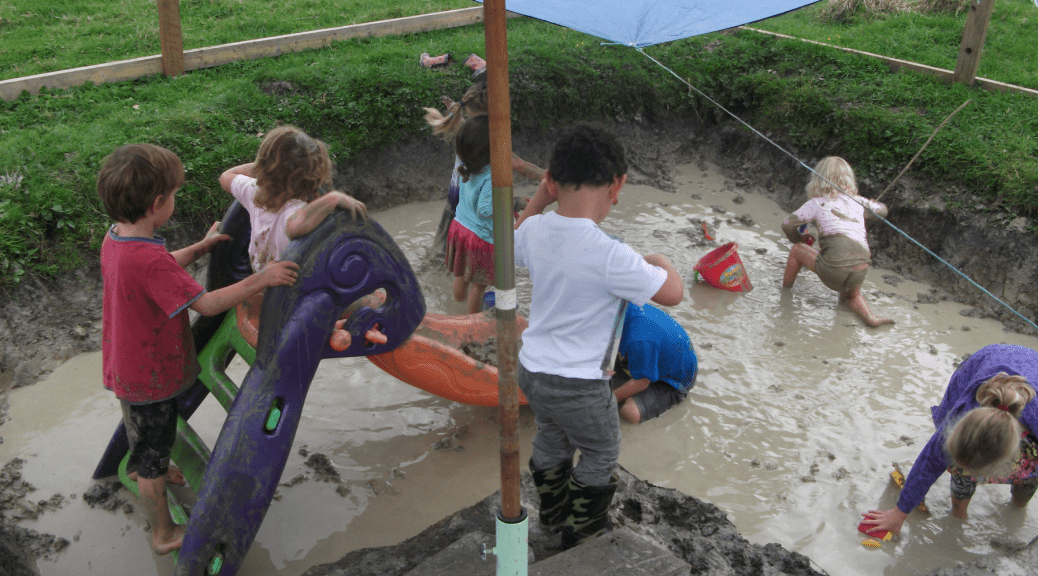
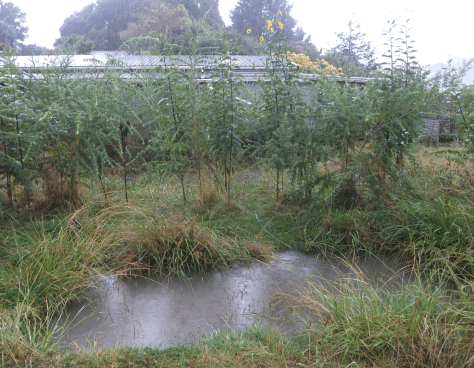
We celebrated our son Suleiman’s – aka Manu – birthday yesterday. The theme of the party was “Let’s make a mess.” (Manu is good at that.) The featured activity was the mud pit – aka farm pond partially completed. It’s amazing how much joy can be provided by clay and water. Fun was had by all.

No Manu, it’s your 1st, not your 21st!


Peace, Estwing
Waste not, want not, says mayoral candidate

From the Wanganui Chronicle.

Wasted time. Wasted money. Wasted opportunity. These are the things that have defined Whanganui for far too long.

So says eco-entrepeneur Nelson Lebo who today announces his candidacy for mayor of the city.

“If we’re so good at waste, let’s make it our primary industry,” said Dr Lebo, who joins deputy mayor Hamish McDouall and councillor Helen Craig in standing for the mayoralty at October’s local body elections. Launching his campaign with the slogan “Our Waste is Our Salvation” along with the hashtag #WastedLebo, he wants to revitalise Whanganui’s economy, create jobs and cut rates, according to his 280-page manifesto titled What Whaste Whanganui?
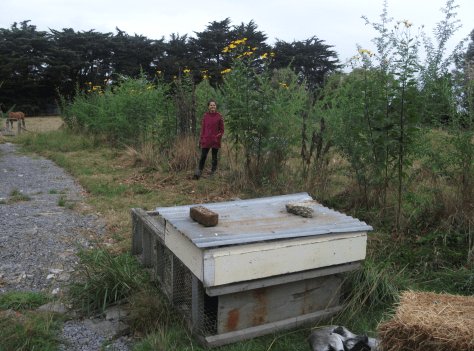
His ambitious plan is based around a complete alternative to the council’s proposed $38million wastewater treatment plant, dealing with the waste disposal issue at no cost and, he claims, actually producing revenue.

According to Dr Lebo’s calculations, the construction costs for the new plant, plus interest and operating costs, translates to $80 million over the next 20 years.

“We take $20 million of that and install composting toilets in every household in Whanganui,” he told the Chronicle.

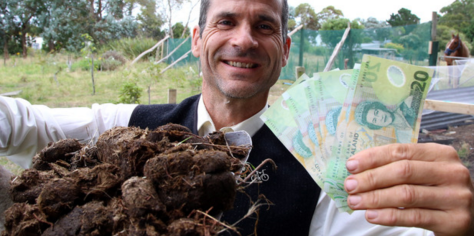
“We manage the collection of the composted ‘night soil’ by forming a council-controlled enterprise and profits from the compost are reinvested to repay the initial $20 million investment over 20 years for a net zero cost to ratepayers.”

The fats and proteins from the Heads Rd industry waste would be directed to a new soap-making company; while organic industrial waste would be made into compost and sold.

“In a strange twist of fate, it may turn out that the very substances that caused the pong can be turned into cha-ching,” he said.

Dr Lebo, an American eco-designer who has lived in Whanganui for more than five years, has secured preliminary rights for the Australasian franchise of the Paper Street Soap Company.

“My colleague in the United States, Tyler Durden, is excited to expand his soap company franchise to this region of the world but, at this stage, is not prepared to talk about it.”

As for the wastewater treatment plant, in almost presidential style, Dr Lebo declared: “We will build a wall around it and we’ll make MWH pay for it!”

Wanganui Chronicle

Wedding Renovation Baby Life