

Power prices have climbed relentlessly over the past decade.
The usual justification is that the country needs more power and that the cost of generating this has increased (power stations are expensive to build and maintain). The population is growing and we’re using more electrical technology than ever before – although greater efficiency in lighting and heating products has helped offset some of this demand.
New Zealand’s total power use has doubled in the last 30 years. Various governments have taken differing views on the relative proportions that industrial, commercial and residential users should pay for the costs of generating and supplying electricity. So in the decade from 1982 to 1992 average residential power prices rose just 0.6 percent per year in real terms (above inflation) but increased 2.1 percent per year in the following decade. From 2003 to now, they’ve risen by almost 7 percent per year in real terms – that’s even excluding the latest GST rise.
Source: http://www.consumer.org.nz/news/view/the-rising-cost-of-power
[1] Statistics New Zealand, Household Economic Survey: Year ended 30 June 2007, 2007 (online).
[2] Ministry of Economic Development, 2008, Schedule of Domestic Electricity Prices: Updated to 15 November 2008, 2008 (online).
Source: http://www.energywise.govt.nz/why-be-energy-efficient/save-money-on-your-energy-bill


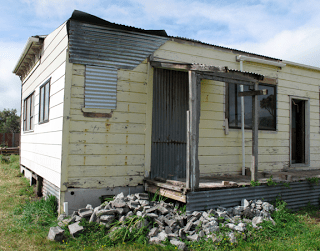
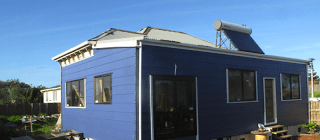
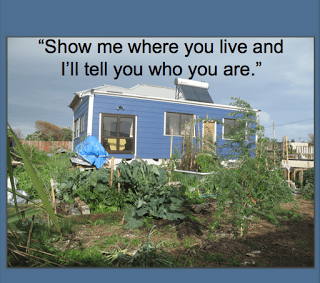
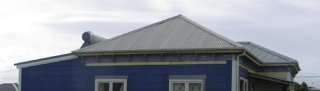
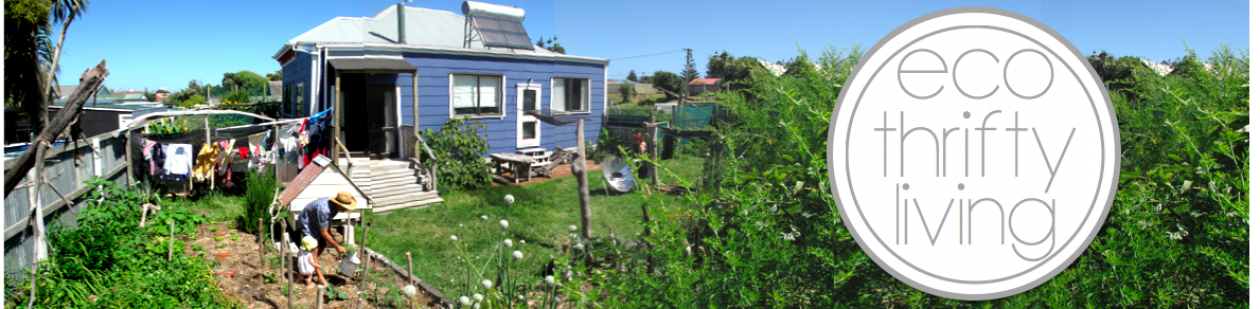
But we were ready for it. We started putting on a new roof, replacing windows, insulating, etc. We held workshops and open houses to educate members of our community about passive solar design and eco-renovation.

At one of our first open houses a woman said, “I’ve been in this house before. I baby sat here once. This is the coldest house in New Zealand.”

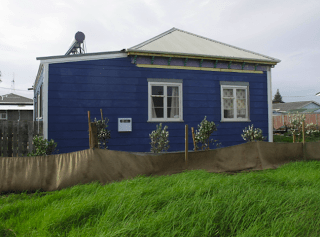
Despite her ringing endorsement, we persevered. We added windows to the north and removed them from the south walls. We insulated more. We are building pelmets and hanging thermal drapes. We are draft-proofing.

This week while I was promoting the Science of Sustainability at Wanganui Intermediate School I asked the students in each class if they had turned on the heat in their homes yet this autumn. Nearly all students (and teachers) raised their hands. I smiled and said, “We have not had to turn on our heat yet, because the sun is heating our house.”
Peace and passive solar success, Estwing
A recently completed project with Wanganui High School used the Eco-Thrifty Renovation with senior students in a Level 3 sustainability course. The project was used as an example of a “sustainability initiative” for the students to assess on its merits. Two class meetings at the school were followed by a site visit. The project received much praise from students and teacher alike. The teacher said he would definitely get his Level 2 class out for a site visit.

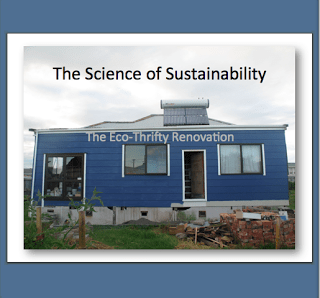
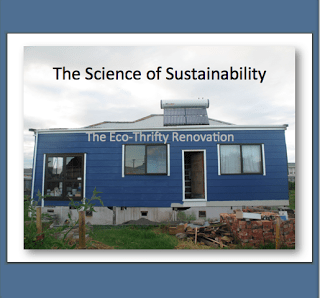
The current project – The Science of Sustainability – at Wanganui Intermediate School involves over 700 students. In coordination with the school’s science teacher, The ECO School has designed a programme to get students excited about the upcoming science fair through highlighting the science – physics, biology, chemistry – of a permaculture installation: The Eco-Thrifty Renovation. The scientific topics highlighted include passive solar design, solar cookers, rocket stoves, insulation, thermal drapes, compost, aerated compost teas, organic food production and various aspects of bicycling. Response has been excellent so far.
We’ve also had meetings with primary school teachers, but term 1 has proved a difficult time to ask them to take on anything new. We continue to meet with primary schools as term 2 appears more favorable regarding work load. Funding for these programmes comes from Wanganui District Council and is administered by Sustainable Whanganui. Thank you!
Peace, Estwing


We are pleased to announce that the Eco-Thrifty Reno has busted out of Castlecliff all the way to Wanganui Intermediate School…