All posts by Estwing

Solstice Permaculture Update

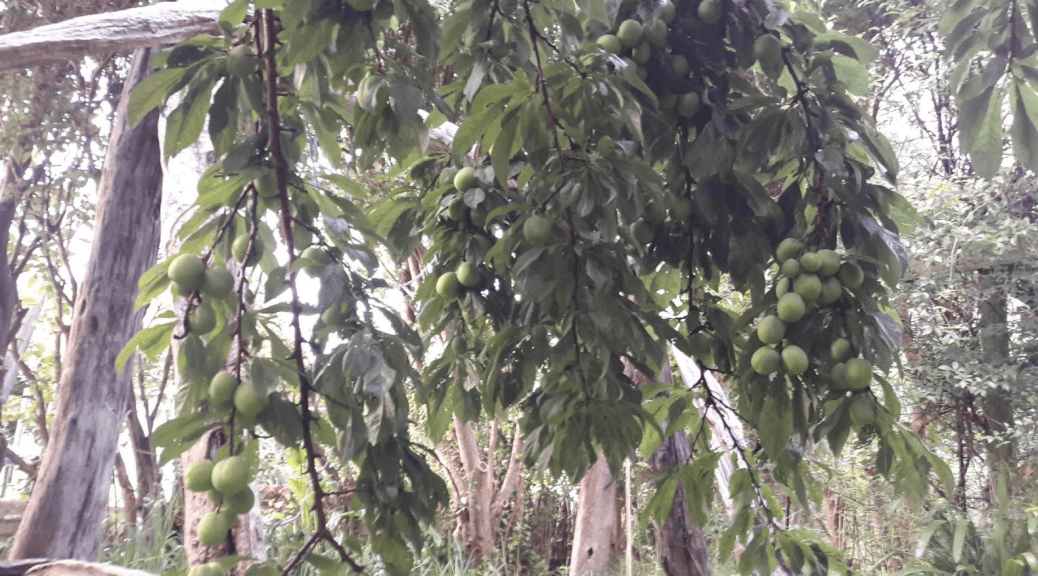
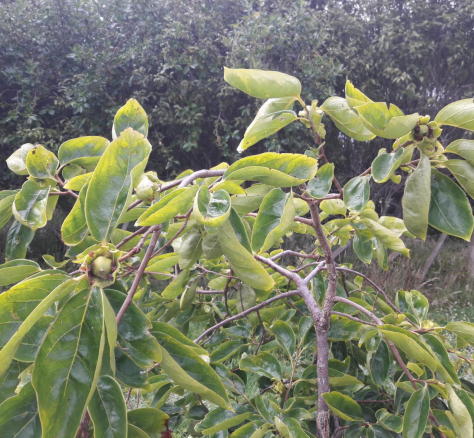
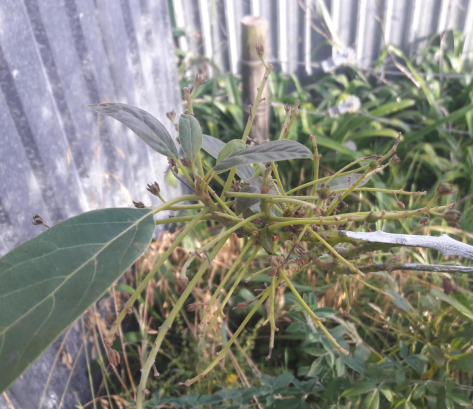
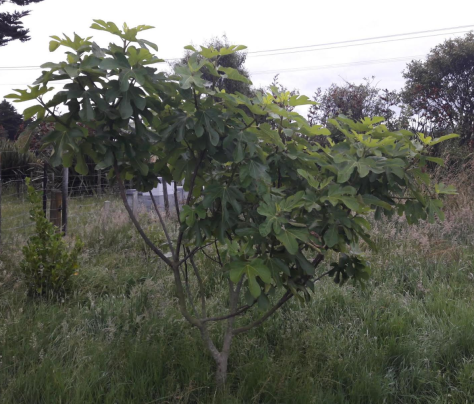
The longest day of the year has arrived in the southern hemisphere, and it is all on for Kaitiaki Farm. Some 200-odd fruit trees are setting fruit, including apples, apricots, American paw paw, blueberries, avocados, black currants, feijoas, figs, guavas, grapes, nectarines, olives, pears, plums, peaches, persimmons, prune, and quince.

Screen Shot 2018-12-19 at 4.15.57 pm

Screen Shot 2018-12-19 at 3.37.54 pm

Screen Shot 2018-12-21 at 6.57.23 amScreen Shot 2018-12-21 at 7.01.02 am

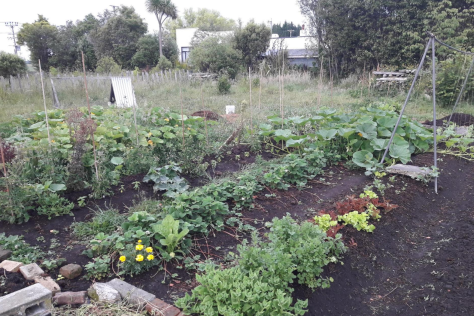
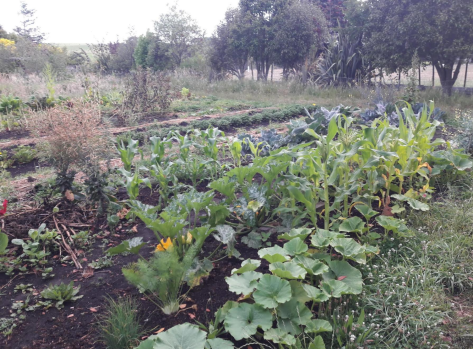
The market gardens are pumping.

Screen Shot 2018-12-21 at 6.56.53 am

Screen Shot 2018-12-21 at 6.57.43 am

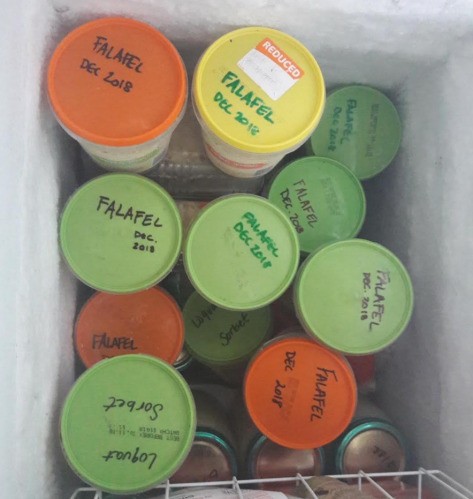
We harvested the winter crop of broad beans and made about 10 litres of falafel mix.

Screen Shot 2018-12-19 at 1.16.15 pm

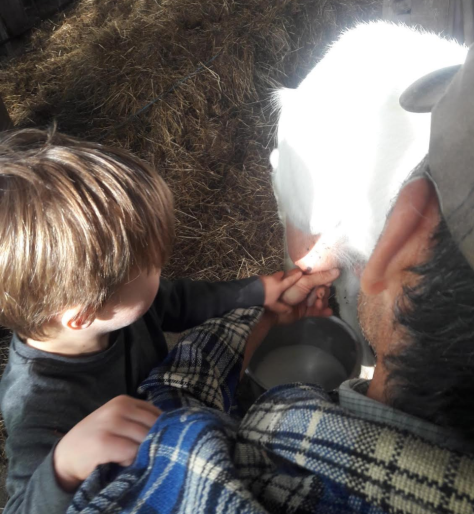
We have been milking three goats since September and making goats cheese twice a week.

Screen Shot 2018-11-20 at 6.44.21 am

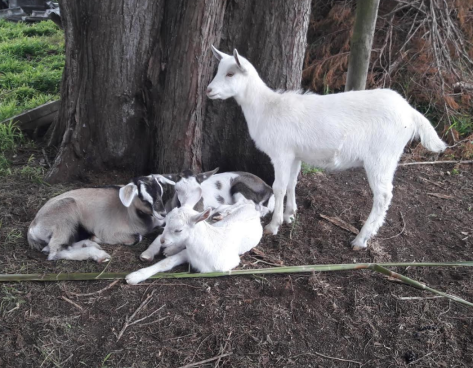
Here are the kids.

Screen Shot 2018-11-29 at 5.44.58 pm

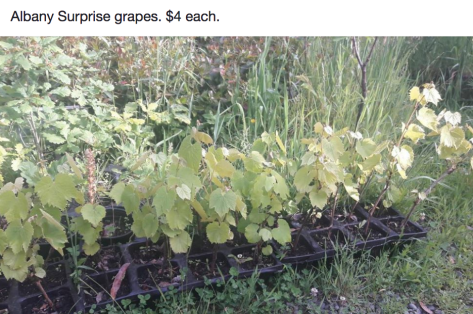
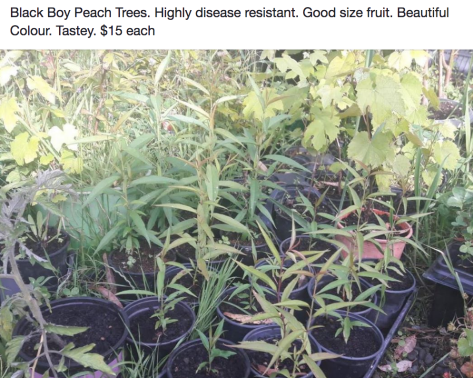
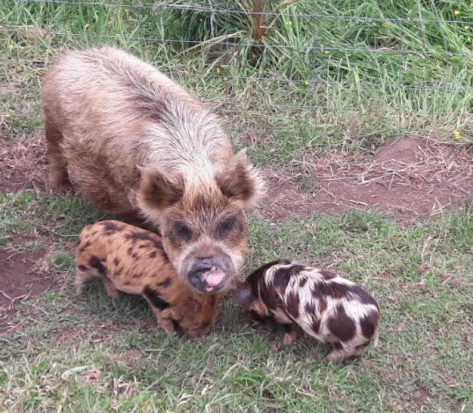
Finally, we have been selling grape vines, peach trees, muscovy ducklings, kune kune pigs. Garlic goes on sale tomorrow.

Screen Shot 2018-12-11 at 6.43.38 amScreen Shot 2018-12-11 at 6.43.57 am

Screen Shot 2018-11-29 at 5.45.40 pm

After 4 & 1/2 years, a kilometre of new fencing, and 2,500 trees planted the farm is hitting its stride. Our regenerative systems are in place and natural processes are now doing most of the work.

Happy Solstice, Estwing

Zero Tolerance Weeds

I have been farming and/or market gardening for nearly two decades. One of the first lessons I learned (the hard way) was the importance of proactive weed management. Bind weed (convolvulus) made its way onto my land (New Hampshire, USA) in a load of organic matter meant for composting.

Screen Shot 2018-12-17 at 6.38.29 am

On a tour of another small organic farm in Keene, New Hampshire, I observed first hand how it can take over entire fields of vegetable plants. Scary stuff.

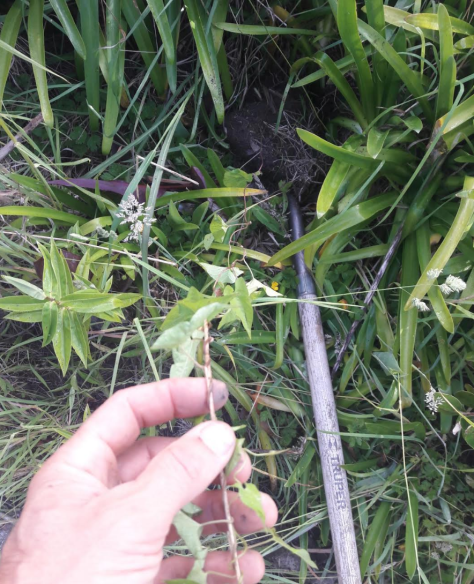
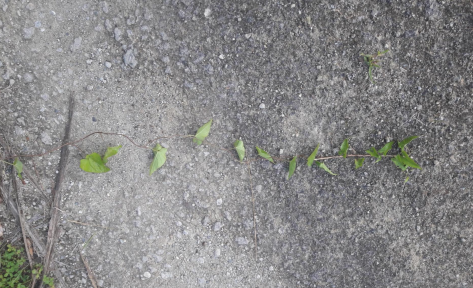
Yesterday while top-feeding some transplanted feijoa trees I recognised the familiar pattern I had come to loath.

Screen Shot 2018-12-17 at 6.28.39 am

I dug it up as best I could to get as much of the root as possible.

Screen Shot 2018-12-17 at 6.28.19 am

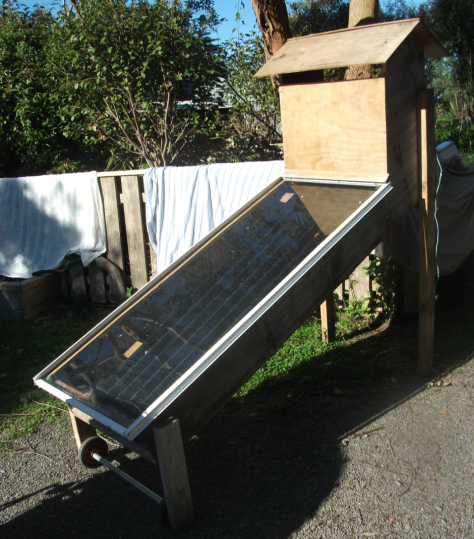
I don’t believe in putting weeds and diseased plants in plastic rubbish bags and sending them to landfill as is often recommended – I just can’t do it. So I put the convolvulus in the solar dehydrator, which we are not actively using at the moment but will be using in another months time.

Screen Shot 2018-12-17 at 6.27.49 am

The hot, dry air inside the dehydrator will dry out and completely kill the weed. Then I’ll probably put it on an iron shed roof for the rest of the hot summer. No Mercy for invasive weeds.

An ounce of prevention is worth a pound of cure. Keeping weeds off your farm with a Zero Tolerance policy early on will pay off in the long run.


Peace Estwing

Kaitiaki Farm Weekend 2019: 23rd-24th March

We open the farm each year in March for tours and workshops.

Kaitiaki is an exemplar permaculture farm just outside Whanganui, New Zealand. The farm is managed holistically for food production, land restoration and water management. We focus on resilient farming and regenerative agriculture.


Saturday 23rd March

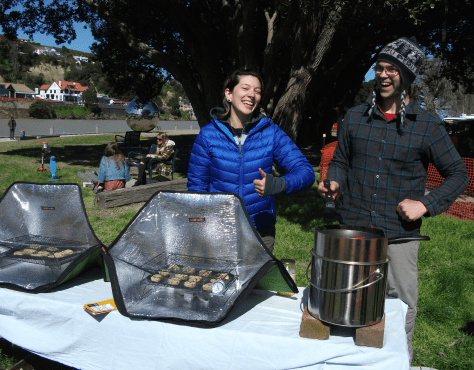
12:30-2:00. Innovative Cookers and Dehydrators. This hands-on workshop covers the use and construction solar dehydrators and rocket stoves and demonstrates three different solar cookers.

Screen Shot 2018-11-07 at 5.58.21 am

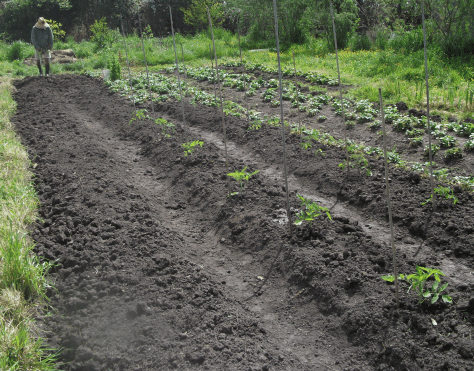
2:00-3:30. Building and Managing Weed-Free Garden Beds. This hands-on workshop covers all the steps for converting a lawn or paddock easily into a low-maintenance/high-productivity garden.

Screen Shot 2018-11-01 at 7.02.38 am

4:00-5:00. Growing Great Garlic. Learn some tips for growing delicious garlic organically. Fee includes one bulb of seed garlic and five litres of compost.

$20 each or $50 for all three.

Meals and accommodation available. Please inquire for options and prices.


Sunday 24th March

9:00-3:00. Permaculture Farm Tour. We run a fully-integrated diverse operation on 5.1 hectares integrating plants and animals in distinct relationships based on potential synergies.

Screen Shot 2018-09-14 at 9.26.04 am

The morning session covers what would be considered permaculture zones 0 – 3 focusing on eco-building and alternative energy, market gardening, hot composting, tractoring fowl, soil fertility, water management, wind breaks, and orchard planning.

The afternoon session covers what would be considered permaculture zones 3 – 5 focusing on water management, erosion control, slope and stream bank stabilization, browse blocks/pollarding stock fodder, and wetland restoration.

$75 Individuals, $120 Couples. Includes Lunch.

Register: theecoschool@ gmail dot com

Location: Okoia, Whanganui.

Primary Tutor: Dr. Nelson Lebo is an eco design professional with two decades experience in permaculture.

Bush Restoration: Permaculture Zone 5

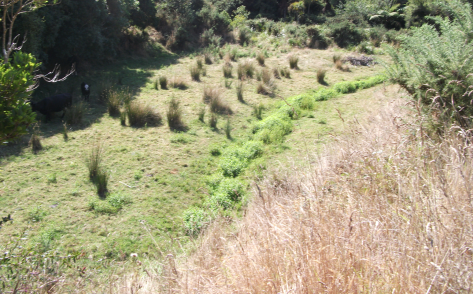
It’s been two years since we fenced off and started planting the stream and remnant wetland on our farm to native species, with 2,000 plants in the ground thanks largely to Horizons Regional Council, our farm interns, and local schools.

Screen Shot 2018-10-28 at 6.40.51 am

Before fencing and planting the stream was in rough shape. Our stock was grazing up to the water line and putting pressure on the banks.

Screen Shot 2018-10-28 at 6.17.36 am

This is a photo of the day after the 2015 floods showing the culvert just below a bend in Purua Stream. The water overtopped the culvert by almost half a metre.

Screen Shot 2018-10-28 at 6.17.06 am

This is a photo of the same area this month. Note the two large willow trees in each photo.

DSCF8065

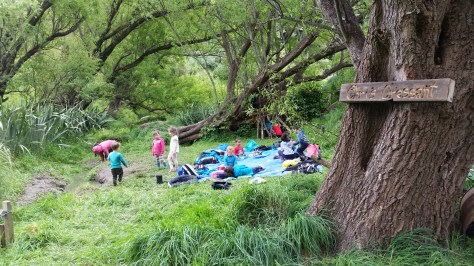
We have dedicated this area, which is used for outdoor education with children, to Dr. Chris Cresswell who helped plant trees here two years ago. We call the area “Chris Cressant” because of the bend in the stream.

20181010_125543 copy

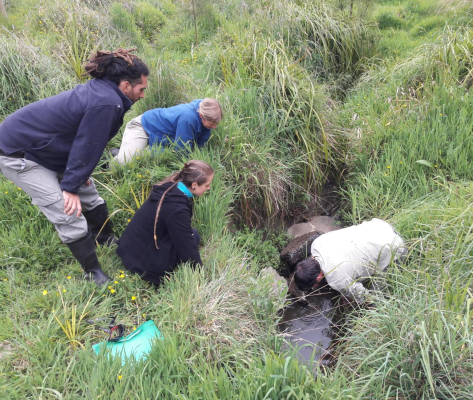
This week we found a giant kokopu living in the pool underneath the culvert. Screen Shot 2018-10-25 at 5.57.07 am

In June we found an eel just upstream of the culvert, which appears to indicate that the concrete rubble ‘fish ladder’ we built has been effective at allowing aquatic species to get through the formerly ‘perched culvert’ and upstream to the restored wetland.

Screen Shot 2018-10-25 at 5.57.28 am

Horizons is back again arranging more school plantings along Purua Stream on our farm and hopefully other land owners will do the same. What a difference it will make for everyone living downstream, which includes much of the Whanganui community.

Screen Shot 2018-10-28 at 6.38.37 am

To get your school involved contact Horizons Regional Council or contact us at Kaitiaki Farm, www.theecoschool.net

Peace, Estwing

Drainage Around the Home

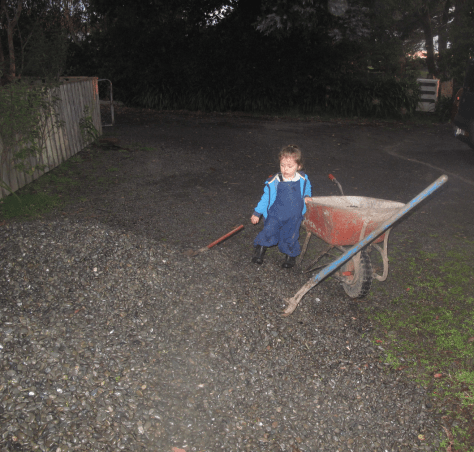
When asked at 3 years of age, “What is Dada good at?” my daughter answered, “Digging!”

Screen Shot 2018-04-06 at 9.18.50 am

Both before and after the Whanganui floods of 2015 I have focused on drainage on the farm and especially around the house where pretty much everything had been done wrong – causing a lot of water to flow underneath leading to serious damage over the last three decades.

Screen Shot 2018-04-06 at 9.23.17 am

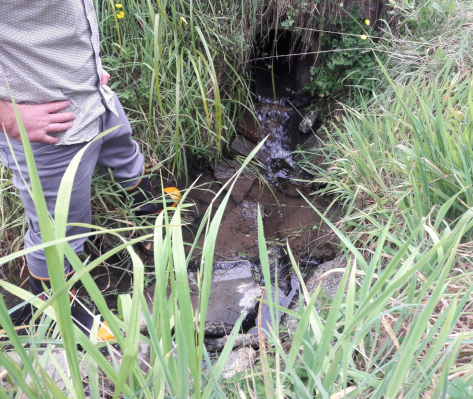
Managing water can be done well or can be done poorly. I took this photo at work one day.

Screen Shot 2018-03-01 at 6.34.35 am

It is important to direct water away from homes. Retrofitting drainage where it has been done poorly can be difficult and expensive. Along with a number of other approaches – including cutting channels in concrete – I put in a French drain on the high-side (South) of the house.

Screen Shot 2018-04-06 at 9.18.33 am

Ironically I finished the drain two days before the 2015 floods.

Screen Shot 2018-04-06 at 9.19.25 am

The perforated pipe runs the length of the south wall.

Screen Shot 2018-04-06 at 9.20.00 am

It’s surrounded by stone and wrapped with filter cloth.

Screen Shot 2018-04-03 at 7.54.06 pm

Water flows through the stone and into the pipe.

Screen Shot 2018-04-03 at 7.53.40 pm

Stone covers the filter cloth to keep it tidy and out of the sun.

Screen Shot 2018-04-03 at 7.54.29 pm

At the southwest corner the perforated pipe enters a sump and then flows under the entire home on a gentle slope through a solid pipe to the north side, and then away from the structure.

Screen Shot 2018-04-03 at 7.55.17 pm

Any amount of drainage that directs water away from a home is important!

Screen Shot 2018-04-03 at 7.53.09 pm

Peace, Estwing

Making Goats Cheese

After a mid-winter break we are back to making goats cheese on the farm.

Screen Shot 2018-09-23 at 6.25.10 am

We had a cosy Friday afternoon/evening by the cooker warming the milk (and making a shepherds pie for dinner.)

Screen Shot 2018-09-23 at 6.31.13 am

We heated about eight litres of milk to just below boiling and then added 700 ml of lemon juice.

Screen Shot 2018-09-23 at 6.21.29 am

After about 30 minutes we poured the contents into a cheese cloth and let the whey drain out. (We have mixed the whey with grains to feed to the chickens and ducks.)

Screen Shot 2018-09-23 at 6.21.00 am

The final result is about 2 kg of cheese.

Screen Shot 2018-09-23 at 6.22.23 am

Thanks for our new intern, Jasmine, for taking some of these and many other great photos of ongoings on the farm.


Peace, Estwing

Building Beautiful Beds

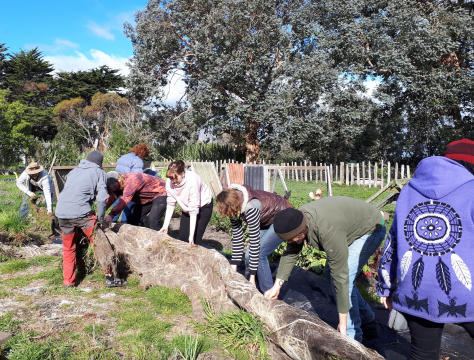
We’ve run this workshop three times this year with great feedback. I promised to summarise the process, so here goes.

Screen Shot 2018-09-14 at 9.27.34 am

Step 1) Lay polythene for five months or longer to kill the perennial grasses and weeds. We cover our polythene with mulch to prevent UV degradation of the plastic and to make the market gardens look nicer. After 20 weeks peel back the much and reuse it somewhere, and then lift the polythene.

Screen Shot 2018-09-14 at 9.28.03 am

Screen Shot 2018-09-14 at 9.28.40 am

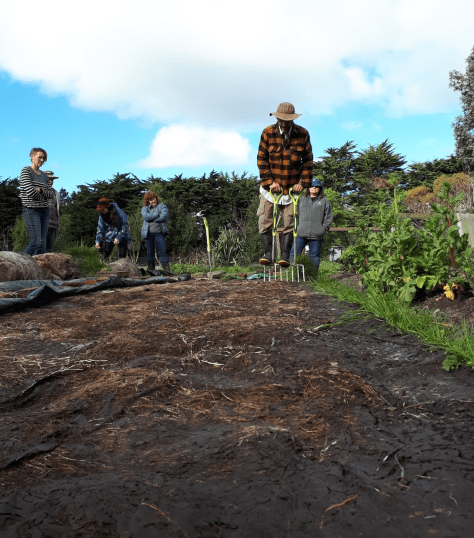
Step 2) Loosen the compacted soil. We use stainless steel broad forks that I had welded up by a friend for a box of beer. Any broad fork will do or garden fork. The point is to mechanically break up the soil. First go lengthwise.

Screen Shot 2018-09-14 at 9.29.36 am

Then go crosswise.

Screen Shot 2018-09-14 at 9.31.23 am

Screen Shot 2018-09-14 at 9.31.48 am

Step 3) Break up the soil cubes you’ve just formed into smaller chunks. This is best done when the soil is not too wet and not too dry. It may pay to wait a day or two before doing this step. A rake or a hoe or a garden fork or a spade can be used.

Screen Shot 2018-09-14 at 9.32.21 am

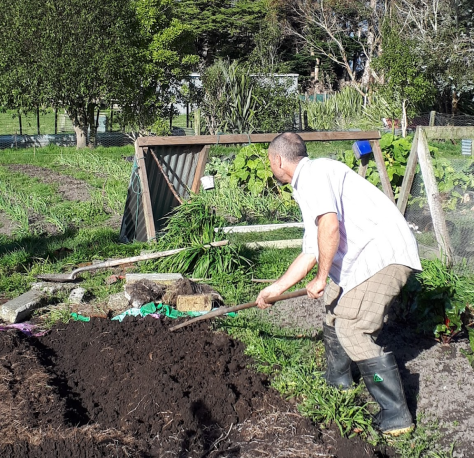
Step 4) Form beds. Standing on one side of the 1.2 metre wide bed rake the path from the other side up onto he bed. The switch sides and repeat.

Screen Shot 2018-09-14 at 9.33.03 am

Step 5) Continue to pulverise the soil and rake the beds flat with a back and forth motion to prepare a fine planting surface.

Screen Shot 2018-09-14 at 9.33.54 am

The end result is a series of raised rows in a no-dig system easily maintained with a stirrup hoe.

Screen Shot 2018-09-14 at 9.50.29 am


Peace, Estwing

Transforming a Slope with Regenerative Agriculture

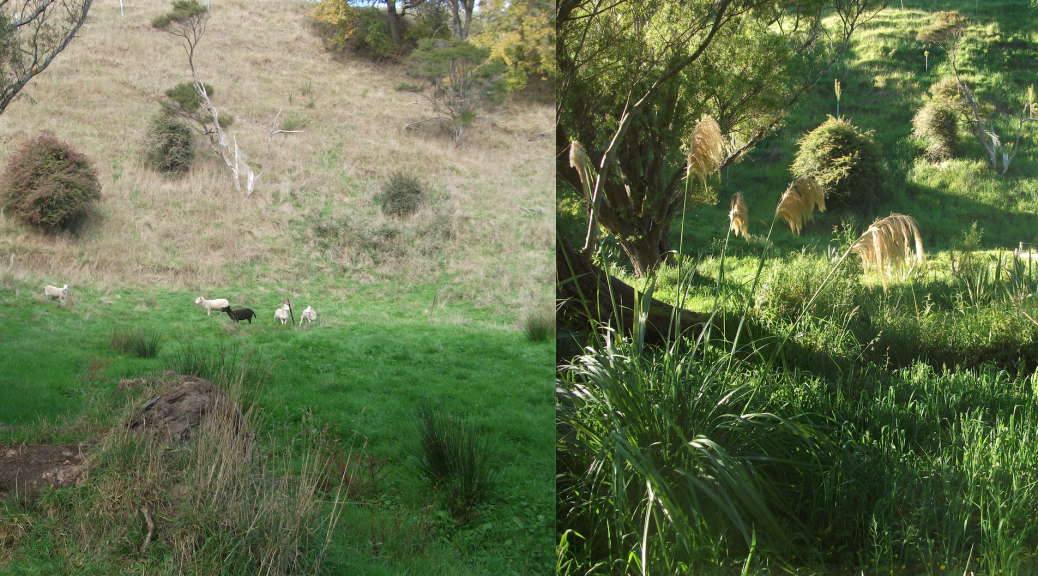
Over the past three years we have been working to make Kaitiaki Farm more productive and resilient. While there are lots of examples of this work on the farm, this is a good case study on what regenerative agriculture can look like using a step-by-step example of transforming a north-facing slope from grazing to a mixed-use perennial and animal system while including native plantings and early childhood learning programmes.

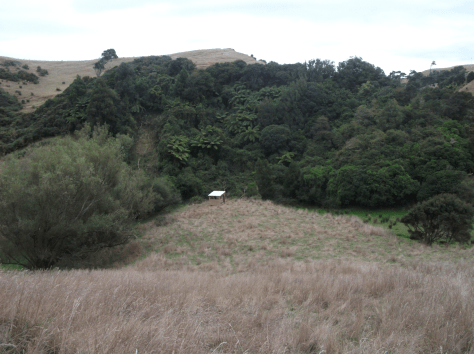
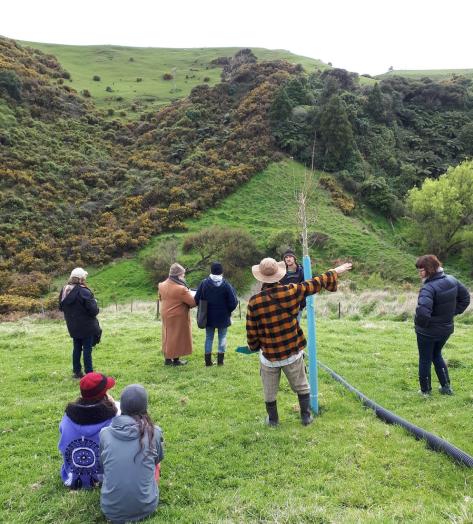
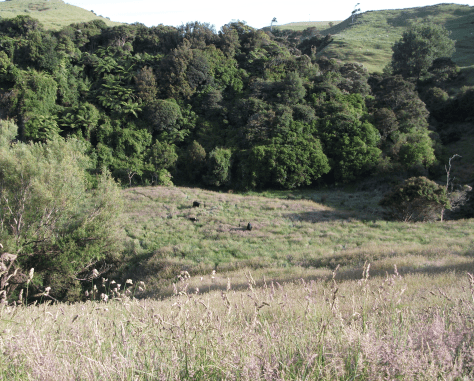
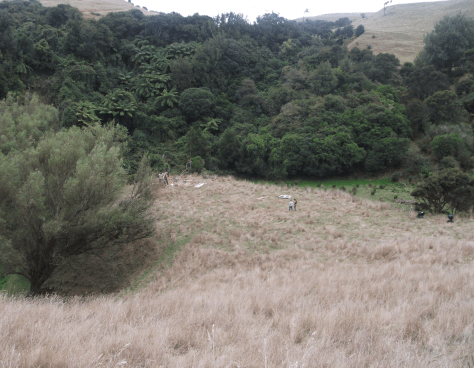
This ‘Before’ picture looks down the hillside into the valley at a shelf where the cows are grazing, a remnant wetland below it, and about one acre of native bush across the valley. We are lucky in that this may be the only native bush along Purua Stream for the entire length of the valley.
Screen Shot 2018-08-05 at 9.43.03 am

This shot shows a working bee assembling a small shelter for the Nature Play programmes we have begun running on the farm.
Screen Shot 2018-08-05 at 11.12.35 am

Here the shelter is nearly complete.

Screen Shot 2018-08-05 at 9.49.09 am

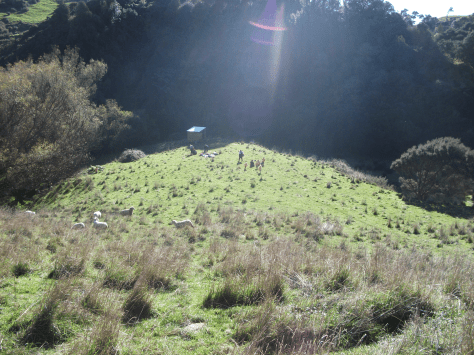
Add children and sheep.

Screen Shot 2018-08-05 at 9.52.19 am

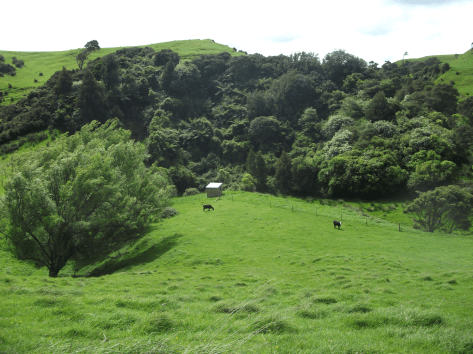
Then came the massive task of fencing off about 600 metres of the stream to keep stock out of the water and off of the banks. Horizons Regional Council assisted this process by paying half the cost.
Screen Shot 2018-08-05 at 11.30.09 am

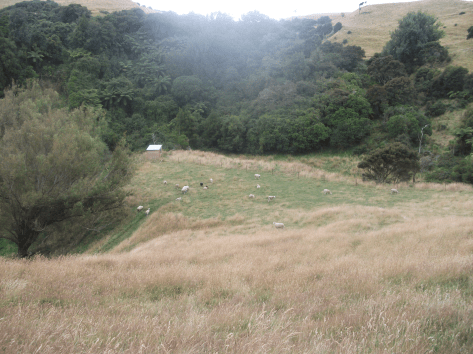
Next we commenced planting the first of over 2,000 natives along the stream, which has involved three school groups and six planting bees. It’s possible to see some of the trees just over the fence in the picture below.
Screen Shot 2018-08-05 at 9.40.47 am

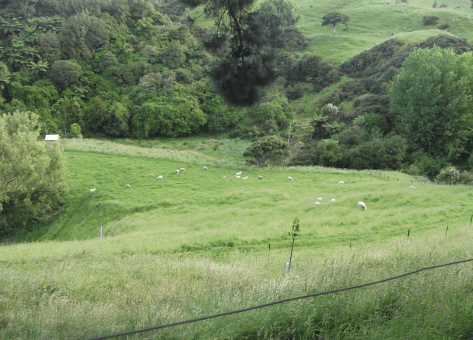
By the way, we sold the cows as they proved too damaging of the steeper slopes in winter.
Screen Shot 2018-08-05 at 2.03.33 pm

Next we shifted the sheep to the other side of the farm so we could plant the mid-slope on the hill with olive trees that will be able to withstand the hot dry summers and northwest winds that blow up the valley. (Note the poplar pole in the photo below.)
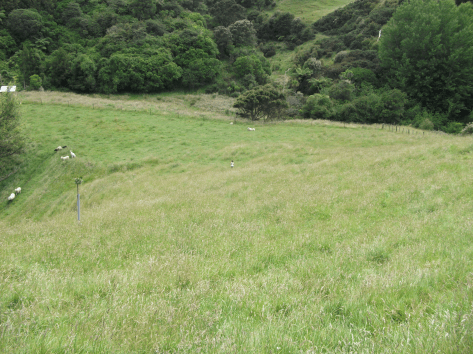
Screen Shot 2018-08-02 at 1.22.22 pm

Here are three of our interns planting the olive trees in April 2017.
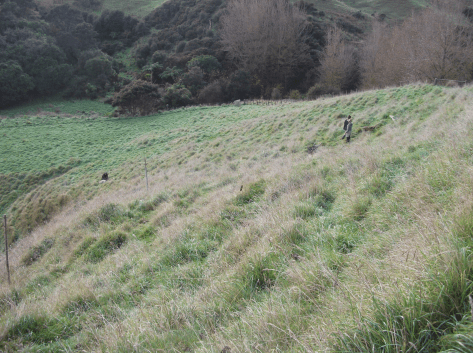
Screen Shot 2018-08-05 at 12.07.30 pm

Then we introduced kune kune pigs to eat the grass around the olive trees but not the trees themselves as the sheep and cows would.
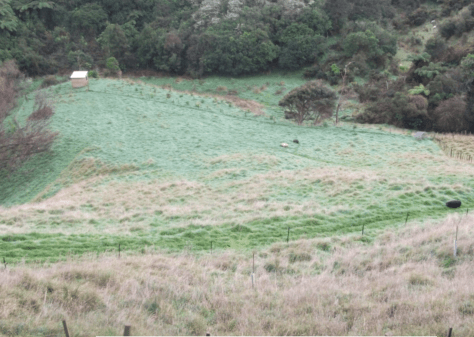
Screen Shot 2018-08-06 at 8.52.44 am

One of the final jobs to do was to fence off the shelf between the hillside and the wetland. This is the only part of the farm that has free-draining soil so we decided to put an avocado orchard there. We’ll temporarily fence out the pigs while the tagasaste nurse trees and avocado trees get established, then we’ll let them back in to graze the grass.
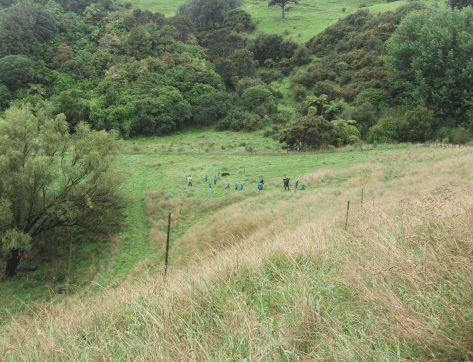
Screen Shot 2018-08-05 at 2.02.04 pm

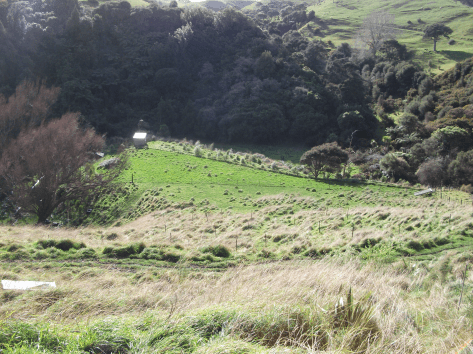
Here is the final shot for now – taken last week: over 200 tagasaste saplings have been  planted on the shelf and the avocados are waiting until a canopy is formed; two litters of kune kune piglets have been born in the valley (note the pig shelters in the shot below); the 32 olive trees have been staked with warratahs on the hillside as the pigs were walking over some of them.
Screen Shot 2018-08-05 at 10.33.48 am

On the upper slope (above the farm track in the photo above) we’ve planted native manuka, kanuka and flax, as well as more poplar poles and more tagasaste. On there slope above that are 30-year old radiata pines.

Can’t wait to plant those avocados and retire from my day job!


* FYI, here is a great definition of regenerative agriculture from Wikipedia:

Regenerative agriculture (RA) is an approach to food and farming systems that rejects pesticides, artificial fertilizers and aims to regenerate topsoil, increase biodiversity,[1] improve water cycles,[2] enhance ecosystem services, increase resilience to climate fluctuation and strengthen the health and vitality of farming and ranching communities.[3][4][5][6]

Regenerative agriculture is based on applied research and thinking that integrates organic farmingpermacultureagroecologyagroforestryrestoration ecologyKeyline design and holistic management.

On a regenerative farm biological production and ecological structure grow more complex over time. Yields increase while external inputs decrease. 


Peace, Estwing
Plastic-Free Playground

Special Edition for Plastic-Free July

My kids had been pestering me about getting a slide for ages, but I did not want to buy an expensive plastic one that at some point in the future would inevitably end up in landfill or somewhere worse due to long-term UV degradation and/or wear and tear. So I decided to make one out of wood and steel instead.

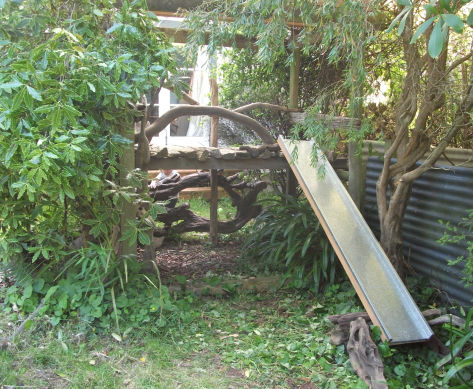
I had an off-cut of galv sheet leftover from flashing the flue for my new wood burner that I decided to use to make the slide. I figured out how I wanted it bent and took it to the boys at Steelform Wanganui. For a box of beer they bent it for me. (Chur Barnsey)

Screen Shot 2018-05-14 at 5.33.45 am

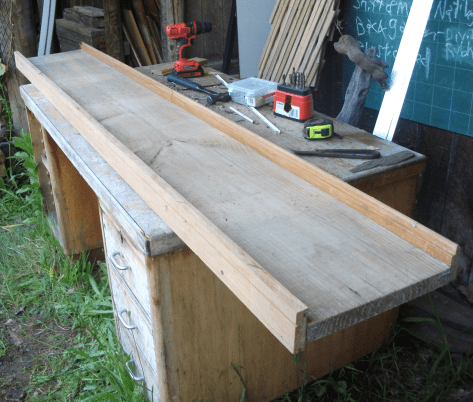
Then I found some wood diverted from landfill by Reclaimed Timber Traders in Palmerston North that suited the dimensions I needed.

Screen Shot 2018-05-14 at 5.33.34 am

I made the base for the slide out of pine and rimu

Screen Shot 2018-05-14 at 5.34.02 am

As Kevin McCloud would say, “This needs to be millimetre perfect.”

Screen Shot 2018-05-14 at 5.34.15 am

In the end it was the perfect compliment to the fort I made for them out of 100 year-old totara fence battens and driftwood on an existing garden structure.

Screen Shot 2018-05-14 at 5.34.38 am

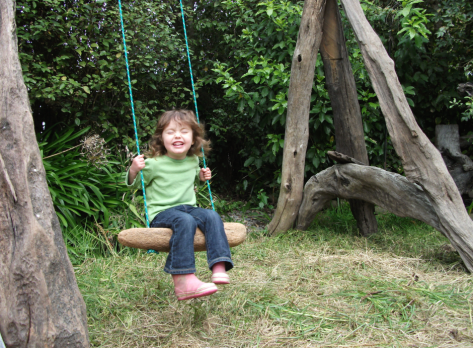
And a great compliment to the driftwood swing set I made a year earlier.
Screen Shot 2018-07-01 at 2.25.33 pm

Happy Plastic-Free July everyone!

Peace, Estwing