Category Archives: environmental education

Eco-Thrifty in the International Press

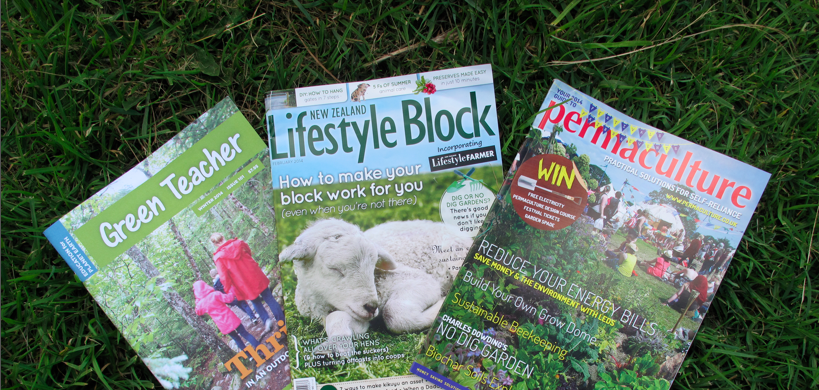
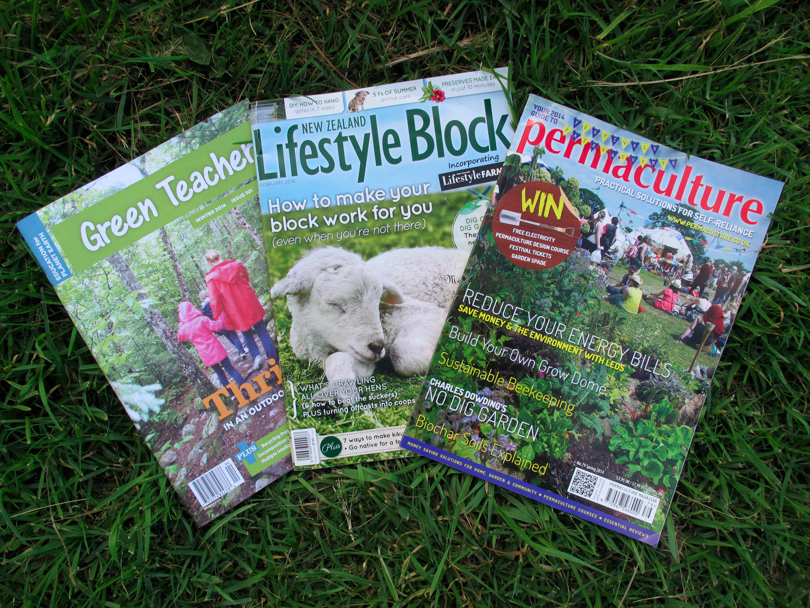
There seems to be a rising level of concern lately of news stories that put Whanganui in a bad light. Of course we all know that there are many groups and individuals working hard to do just the opposite. Among them are Dani and Nelson Lebo of The ECO School (Castlecliff), whose efforts have earned them praise from a wide range of environmentalists and sustainability advocates both near and far. At present, their work is featured in the current issues of three magazines: one domestic and two international.

Screen shot 2014-02-23 at 10.15.15 AMLocal writer Helen Frances has penned a fabulous article for New Zealand Lifestyle Block that runs a full eight pages, profiling the couple’s unique philosophy and international perspective. Find one in the shops before the end of the month.

Additionally, Nelson has written a piece for Permaculture (UK), on raising an eco-thrifty baby, using many of Dani’s photographs. It’s rare for New Zealand projects to feature in this magazine, so this is a particular accomplishment for a Whanganui-based permaculture property.

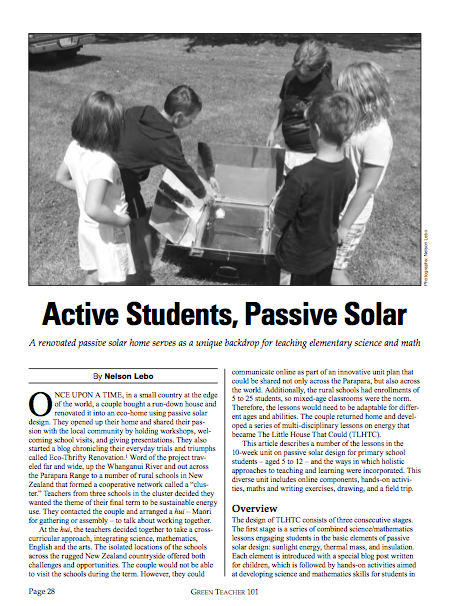
And finally, Nelson also contributed to Green Teacher (Canada), describing an environmental education curriculum he developed based on the couple’s renovation in Castlecliff. You can find information on the curriculum at The Little House That Could on Facebook.

Transformations: Part II

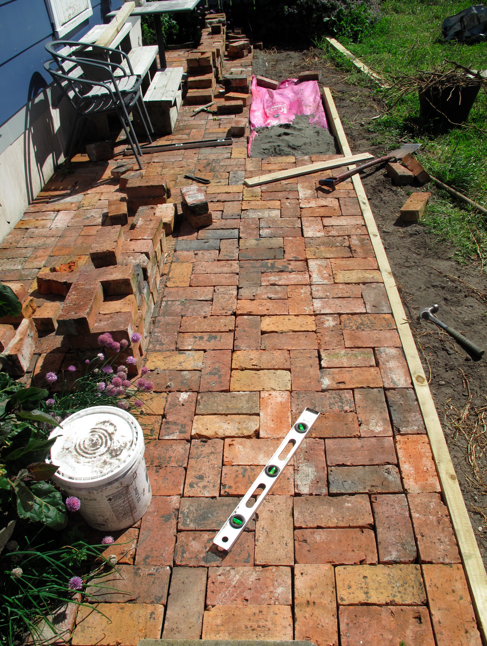
Last week I marked the three-year anniversary of the arrival of our first two interns, John and Amy. That was an opportunity to share the story of the transformation of what was once a chimney in Gonville into our brick patio in Castlecliff.

Screen shot 2014-02-22 at 7.34.09 AM

It was also a chance to talk about transformative learning, a process by which many adults undergo a profound change in the way they view the world. In order to undergo such a major shift of thinking, learners need a nudge, which can come in the form of a ‘disorienting dilemma’ or a ‘cognitive crisis’.

In other words, something happens that renders unsatisfactory their current way of thinking. An easy example of this is a diabetes diagnosis that may force a change in ones view of diet and exercise. Other examples include the loss of a job or the break-up of a marriage. It should not be hard to recognize that these would alter ones perspective on financial security and relationships.

For many people in the sustainability movement, transformative learning is sparked by a slow but cumulative body of evidence indicating that the current state of the world is unsustainable. Literally, it cannot be sustained. Trends in everything from ecosystem health to energy supplies to extreme weather events to income distribution show that we are headed for volatile times ahead.

As such, the prudent and conservative thing to do is to look for systems on our planet that are more sustainable. For example, a forest ecosystem experiences a dynamic balance of plant and animal populations as well as materials recycling.

Observing such systems has led to the development of eco-design strategies such as permaculture. As one would expect, many adults experiencing a ‘cognitive crisis’ about the damage that Western consumer culture is inflicting on the planet and many of its people turn to permaculture as an alternative worldview.

Because I knew John-the-intern before he came to us three years ago, I expected that he was already well on his way to developing an alternative worldview. But Amy came to us more or less as a stranger. When she left many months later, not only was she a friend, but also a young woman on a mission. Screen shot 2014-02-22 at 7.23.58 AM

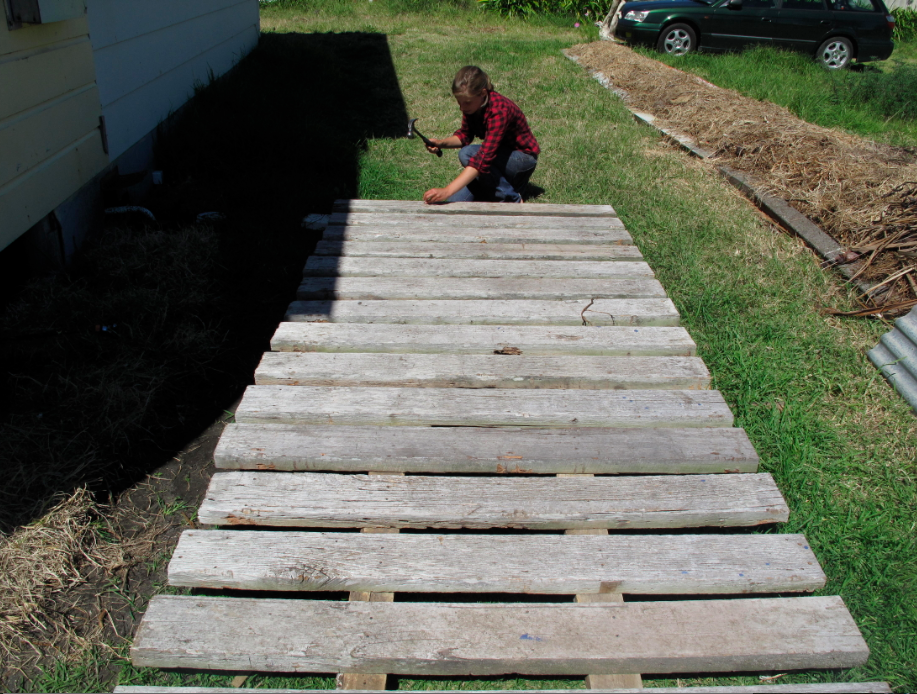
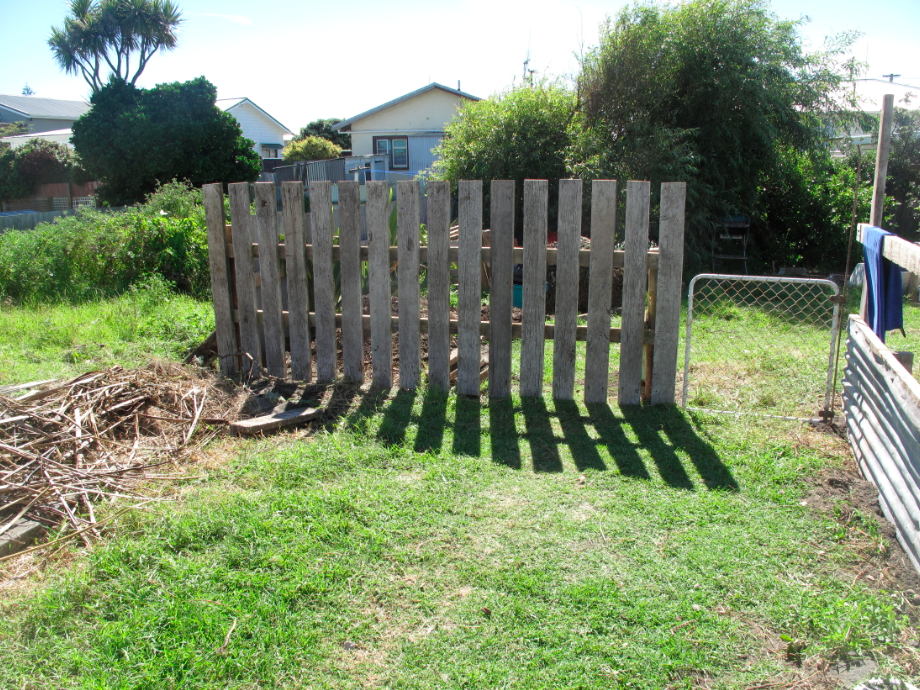
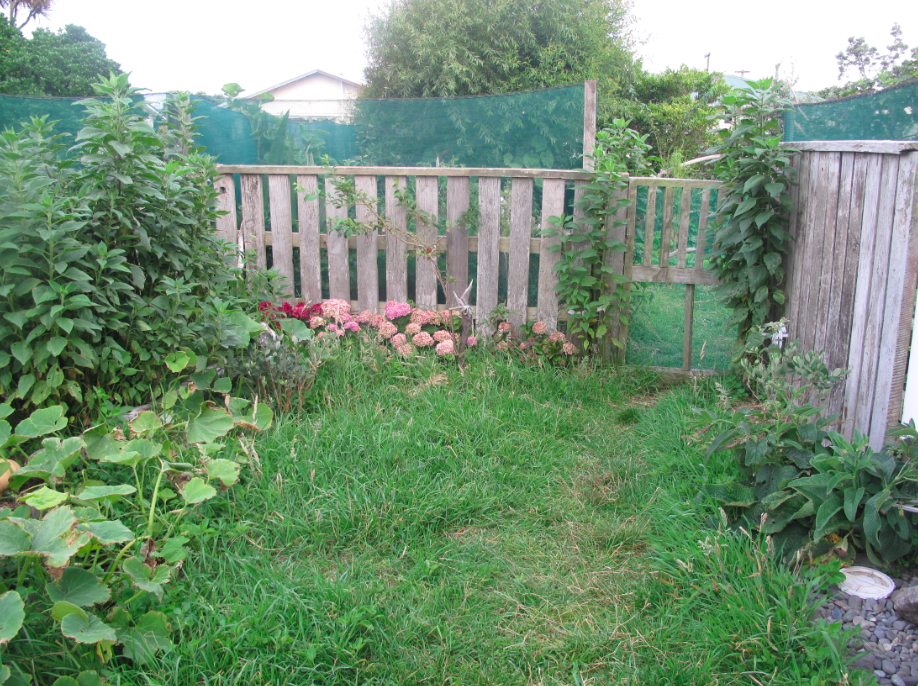
For Amy, it all started when she picked up a hammer and built us a fence. This was an empowering experience for a number of reasons. First, and most importantly, she chose the project herself from a long list of options. Second, I set her up for success by providing enough structure that the project could be accomplished with her limited building experience at the time. Third, it looks awesome!

Screen shot 2014-02-22 at 7.24.14 AM

In the same way that John transformed a chimney into a patio, Amy transformed our former deck into a beautiful and functional fence. Also like John, her experience served as a steppingstone along a path to a more sustainable worldview. Two and a half years after she left us, that path recently led Amy to the International Permaculture Congress in Cuba in December of 2013.

Screen shot 2014-02-22 at 7.23.29 AM

Interesting how transforming our little villa here in Whanganui has helped transform a few young minds along the way.

Peace, Estwing

It’s Academic

As part of our education programme, we have developed a curriculum  on passive solar design for upper primary and lower intermediate/middle schoolers. It is included in the current edition of Green Teacher, and viewable on our website: http://www.theecoschool.net/The_Eco_School/Research_and_Publications.html

Screen shot 2014-02-17 at 3.56.24 PM

Here is a story that sets the scene:

Once upon a time, in a small country at the edge of the world, a couple bought a run-down house and renovated it into an eco-home using passive solar design. They shared the project with the local community through open homes, workshops, school visits, and presentations. And they shared the project with the world with their blog. Word of the project traveled far and wide, up the Whanganui River and out across the Parapara Range to number of rural schools that formed a cooperative network called a “cluster.” Teachers from three schools in the cluster decided they wanted the theme of their final term (Term 4) to be sustainable energy use. They contacted the couple and arranged a hui – Maori for gathering or assembly – to talk about working together.

Screen shot 2014-02-17 at 4.04.41 PM

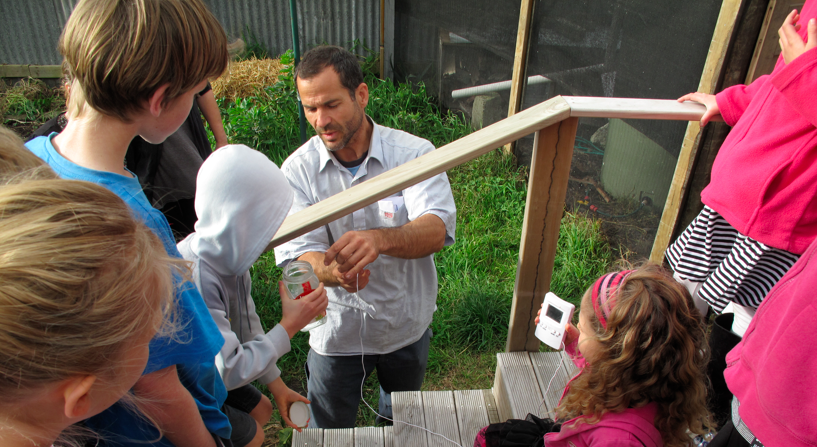
At the hui they decided together to take a cross-curricular approach, integrating science, maths, English and the arts. The isolated locations of the schools across the rugged New Zealand countryside offered both challenges and opportunities. On the one hand, the couple would not be able to visit the schools during the term. But on the other hand, they could use the Internet as part of an innovative unit plan that could be shared not only across the Parapara, but also across the world. Additionally, the rural schools had roles of five to 25 students, so mixed-age classrooms were the norm. Therefore, the lessons would need to be adaptable for different ages and abilities. The couple returned home and developed a series of multi-disciplinary lessons on energy that became The Little House That Could (TLHTC). What follows is an overview of the unit and then a number of individual lessons.

Also check out TLHTC on Facebook: https://www.facebook.com/pages/The-Little-House-That-Could/205750306163061

Transformations

We’ve just passed the third anniversary of the arrival of our first two interns. John Wright was a former student of mine from my high school teaching days, and Amy Lamb came to us through her uncle, a good friend and groomsman at our wedding. They were both in their early twenties when they arrived in Whanganui in late summer, 2011.

Screen shot 2014-02-14 at 6.54.19 AM

 We were in the heart and guts of our renovation: ripping open walls, adding insulation, hanging Gib and weatherboards, installing solar hot water. Much of what we were doing at that time required close supervision, as it would be scrutinized by our building inspector. I’ll admit I was a bit of a taskmaster, which went over better with John than with Amy.

John had come to us straight after 4 months on a lobster boat off the coast of Maine through a Northern winter. Amy was fresh out of uni, and looking for a gap year type of experience.

By the time they left us, both had experienced transformative learning experiences on different levels. John returned to the states and immediately took up a lease on a two-acre organic vegetable farm. Amy took a job with a conservation organization, enrolled in a permaculture design course, and now works with a sustainable forestry consultant.

Transformative learning theory stipulates that in order for one to transform their perspective they must first recognize that something is wrong with their current perspective, then look for alternatives, and eventually adopt a new worldview. For those like John and Amy, the Western consumer lifestyle messages bombarding them on a daily basis did not satisfy their need for meaning.

They came to us and experienced some alternative worldviews such as sustainability, permaculture, and what we call eco-thrifty living. For the first month they spent with us, most of their ‘transformative learning’ took place outside of our nine to five workday dictated by the NZ Building Code. It took place over the dinner table, in the garden, and even during our weekly trips to Hayward’s Auctions.

But as the pressure of pre-line and post-line inspections waned, I allowed John and Amy to select from a long list of non-consent jobs to engage with while I got back to writing my PhD thesis.

 Screen shot 2014-02-14 at 6.49.36 AM

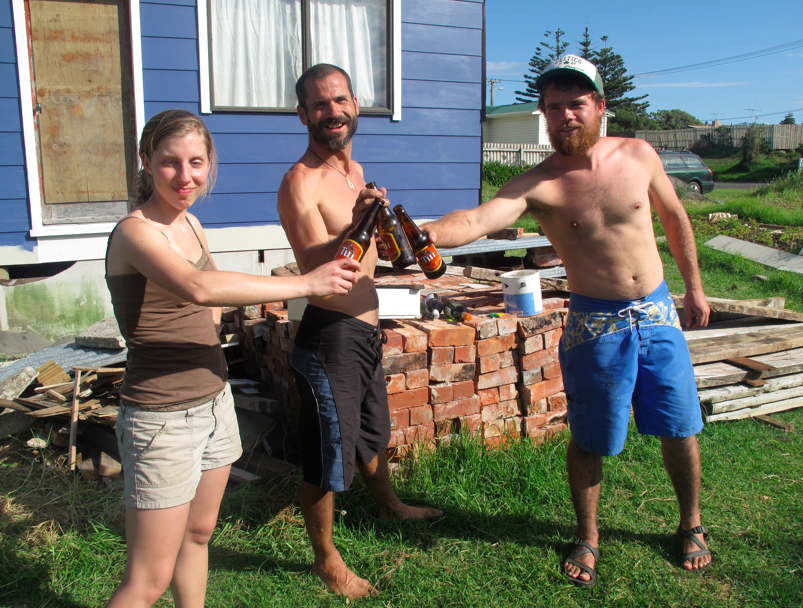
After building our outdoor pizza oven together, John embarked on laying second-hand brick for our patio and Amy set herself to constructing a fence. I’ll share John’s experience this week and Amy’s next week.

In my 14-year teaching career, John was one of my top 10 favourite students. Although not a strong academic, he always worked hard, had fun, and was open to new ideas. He was just an awesome kid.

 Screen shot 2014-02-14 at 6.49.24 AM

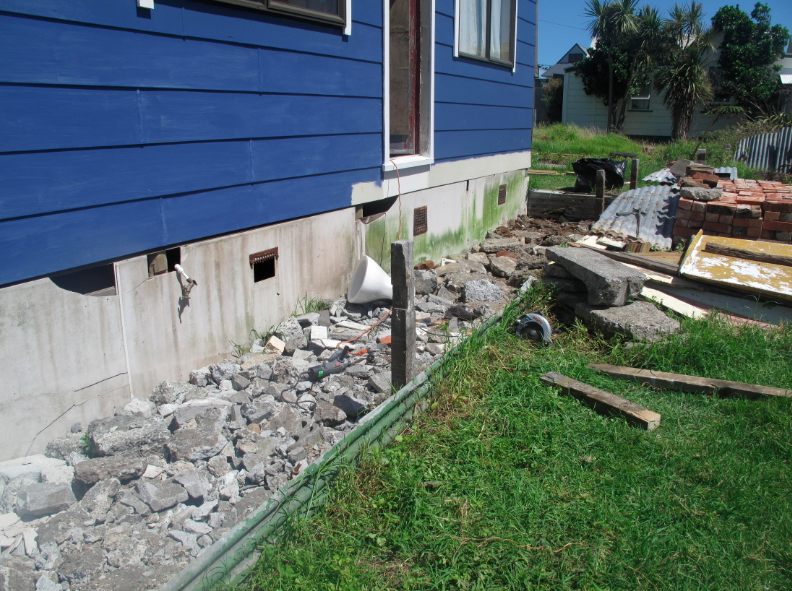
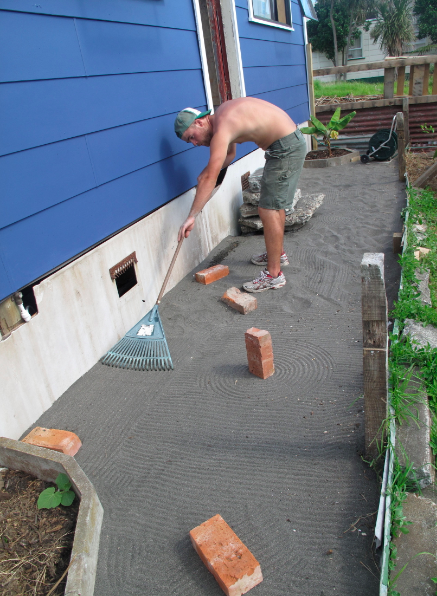
I had no problem telling him to build me a patio and trusting he would do a good job. The bulk of the work involved carting many wheelbarrows of sand to fill and level out the trench beneath the former deck that was full of rubble and rubbish. John was the perfect candidate for this job because he was strong as a horse, but also carefully used a leveling line to place each brick. John took ownership for the job and followed through with an amazing result more or less on his own.

 Screen shot 2014-02-14 at 6.49.58 AM

The project is a good example of eco-thrifty renovation because it involved second-hand materials, local materials, and free materials. With a little vision, hard work and patience, the bricks that made up a chimney in a Gonville home are now our patio in Castlecliff. What a transformation.

TPPA Bad for Health of New Zealand

Editor’s note: This piece ran in the Wanganui Chronicle as an opinion piece last week.
As a general rule, I’m not fond of the word expert. I feel it’s used too often, especially among self-proclaimed experts. At very least the designation should only be bestowed by a third party. In modern, Western culture, universities have taken on that role: A Masters Degree implies one has achieved a certain level of “mastery” of a subject, while a PhD implies the highest level of mastery, ie expertise.
When I was in the initial stages of my doctoral research, my supervisor said something to the extent: “When you’re finished you will be the world expert on your topic.” At the time I was more intimidated than inspired. Now I’m more-or-less indifferent. What good is being an expert in a field in which few people appear interested?
Recently I have ventured from my field of study and into a realm in which I am most assuredly not an expert. That realm is democracy, and if you have read previous opinion pieces, you’ll know I have tried to carefully construct logical, sequential arguments based on observable phenomenon, simple data, and the work of real experts on any given topic. That I am allowed back on the Opinion page appears to indicate that at least a few readers appreciate this approach to promoting democracy in Whanganui.
This time, however, we leave the River City to discuss topics more central to discussions happening in Wellington, Washington D.C., and the netherworld of corporate secret negotiations. The topic of this column is the ethereal Trans-Pacific Partnership Agreement (TPPA), but first a word on the timely topic of asset sales. (Remember to vote!)
While not an expert on asset sales, I do rank myself highly on the common sense scale. Considering this, I subscribe to the following simple argument I have heard in a number of places: If an asset performs well (returning an acceptable or better rate), it would appear too valuable to sell. On the other hand, if an asset is underperforming, the selling price would be so low that the state would hardly make anything from the sale.
Put another way, if private money considers public assets so potentially profitable as to purchase them, wouldn’t that expert financial insight be a signal to government that any given asset is too valuable to sell? Right-leaning politicians are always on about “trusting the wisdom of markets.” So why not trust that wisdom and hold on to those profitable assets for the people?
Globally, asset sales have been used as a technique to transfer public wealth into private hands. From what little the public has been able to glimpse of the TPPA, it appears to do the same but in different ways.
From what I have been able to gather, the TPPA is a trade agreement between nations in the general vicinity of the Pacific Ocean that is being negotiated in secret. As such, who could possibly be an expert on the topic except those insiders already sworn to secrecy?
Fortunately for democracy, some material from the TPPA has been leaked, including a 95-page excerpt published by WikiLeaks in Mid-November. Following that leak, the Herald (14 November, NZ WikiLeaks Scoop) reported that information in the excerpt includes disputes between New Zealand and US negotiators on issues of internet freedom, industrial innovation, ownership of endemic plants and animals, and, near and dear to my heart, access to affordable medicines.
(Before I go on, I would love to see a Maori perspective on “ownership of plants and animals” as related to the TPPA on this Opinion page.)
From the Herald, “A large section reveals the battle between the US pharmaceutical lobby and countries such as New Zealand that want to continue to buy cheaper generic medicines.”
In order to dissect this sentence we need to know a couple of facts: 1) the utmost duty of a corporation is to return profits to its shareholders; 2) the US – where corporations have used lobbyists to sculpt health care policy – has the most expensive health care system in the world while ranking close to 40th in performance by the World Health Organization; 3) New Zealand health care remains reasonably priced in part due to the ability to bulk buy generic medicines.
Using the numbers above in a mathematical equation: 1 – 3 = 2. In other words, if pharmaceutical corporations have their way through the TPPA, NZ health care will more closely resemble that of the US.
What this means for Whanganui is that our already strapped health services would become even more so. For example, the funds now available to pay a doctor may have to be shuffled to cover the increased costs of medicines. Along with the dollars vacuumed away, we would lose a valuable human being who lives in our city, owns a home, pays rates, and buys local products. Every dollar associated with that doctor’s salary would be wisked away to New York, San Francisco, or Hartford. We lose, they win.
I reckon it is our democratic duty to do our best to resist corporate influence globally and locally, but we need to do so proactively. Once the deal has been done, it won’t easily be undone.
Nelson Lebo, is a consultant, educator, and advocate for affordable health care.

Mutually Beneficial

We are in the unique position in that we are both permaculturists and educators. Our home is our classroom and a working model for sustainability. Our school – The ECO School – is perhaps the smallest, lowest budget non-profit on Earth. We are trying to grow it so that it can be financially sustainable, but our business model is outside of the mainstream and many people do not understand it.
The approach we take at The ECO School is an ecological one. We seek to enter into mutually beneficial relationships with individuals or organizations to provide the highest quality of education for sustainability for entire communities: from children through seniors. In nature this is called symbiosis, and more specifically mutualism. Synergy is another way to describe it: the whole is greater than the sum of its parts. In permaculture this is sometimes called “regenerative design.”
We don’t walk in to an organization, school or business and say “this is what you should do.” We say, “What are your needs and how can we help you? Here are some ideas for you to ponder, but you decide what direction we take together.” In other words, we can help others do what they do better… as long as “better” means more sustainably. Here are three recent examples:
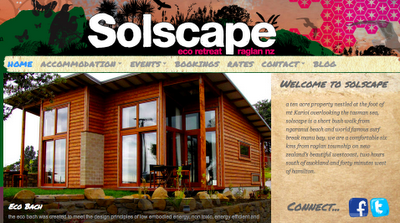
Solscape Eco-Retreat in Raglan is in the process of developing into an education and conference centre. They launched an exciting new educational initiative a week ago today, so we went up to help our dear friends celebrate this important milestone. At the same time, we were able to run workshops at Solscape over the weekend as part of Raglan’s Sustainable September calendar of events. We were able to bring the highest quality of education for sustainability to Solscape to help raise their profile as a leading facility in this area, and we were able to reach out beyond our normal audience in the greater Wanganui area and earn some money. (Well, it covered our travel expenses so we had a free weekend away with friends.)
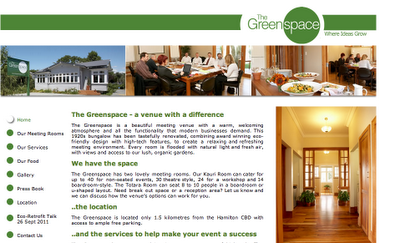
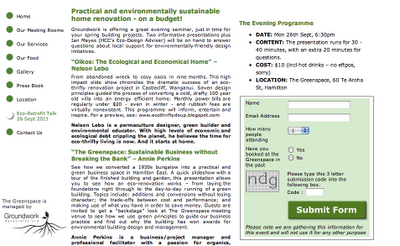
The Green Space in Hamilton is a meeting venue run by other friends. I knew they had done an eco-renovation of which they were proud. Since Hamilton is near Raglan (and where I am an enrolled PhD student) I asked our friends if they would like to tag team a workshop for Hamiltonians. Again, the goal was for a mutually beneficial relationship where the Green Space gets local exposure, attendees get an excellent, low cost educational experience and I get to do what I love to do.
This afternoon I will be heading to Kakatahi School to help a cluster of rural schools plan a term 4 curriculum based on the sustainable use of energy. In this case, the principal contacted me to arrange for this professional development programme made possible by grant writing by the Sustainable Whanganui Trust and funding from the Wanganui District Council. This is a four-way partnership that permaculturists may call a “guild.” All four entities benefit from this initiative and at least three schools will be in attendance.
Just in case you are interested in innovative, cross-curricular sustainability education, here are a few ideas I sent to the cluster to think about before our meeting this afternoon. I treat my curriculum design work like I do my permaculture landscape design work, starting with a client brief. This client brief came directly from the principal.

Brief: The topic that we would like to use for our planning would be: How can we be more sustainable in relation to Energy? (in our homes, schools, on our roads and on our farms). Each school has slightly different needs, but I think for our first meeting it would be useful to plan a unit of work for a term, based around the Energy theme. Each school could then adapt the unit to suit. It would be an Integrated Unit incorporating Science, Maths, English, Social Science and the Arts. It would be in the context of Education for Sustainability.

Preliminary ideas: Energy is everywhere around us all the time. Integrating energy across the curriculum should not be difficult, but the challenges will be meeting the needs of different schools, different age levels and different learners. I can provide ideas and support for teachers to adapt specific lessons for their students. Below is a short list of possible approaches. These can be clarified and expanded upon at the cluster meeting on the 30th.

• I have a professional development workshop called Eco-Maths that uses a PowerPoint slide show to provide ideas on how the teaching and learning of maths can be based on eco-design and home energy use. This workshop is designed to spark ideas that can be further developed by teachers with support from me or a local engineer, or green architect, etc.

• Our eco-thrifty renovation project has an active blog: www.ecothriftydoup.blogspot.com. I could set up a “kid-friendly” version of the blog, that classes to go to and post questions to which I could respond.

• I am an advocate of concept mapping as a teaching tool. I believe it is especially well suited for complex issues like energy. I would be happy to share some ideas on concept mapping.

• Some lessons on solar energy for Level 1 students can be found on the attached example of cross-curricular lesson planning at a Wangnaui primary school.

• I can share some ideas on science activities on various aspects of energy.

• I have an excellent, colorful graphic that compares the efficiency of different forms of transportation. If you have a colour copier it would be worth reproducing.

Peace, Estwing

The Failure of Environmental Education

I ran across this book today. The title is what has haunted me for the last five years.
This is the publishers description available at: http://www.ucpress.edu/book.php?isbn=9780520265394
At a time when wild places everywhere are vanishing before our eyes, Charles Saylan and Daniel T. Blumstein offer this passionate indictment of environmental education—along with a new vision for the future. Writing for general readers and educators alike, Saylan and Blumstein boldly argue that education today has failed to reach its potential in fighting climate change, biodiversity loss, and environmental degradation. In this forward-looking book, they assess the current political climate, including the No Child Left Behind Act, a disaster for environmental education, and discuss how education can stimulate action—including decreasing consumption and demand, developing sustainable food and energy sources, and addressing poverty. Their multidisciplinary perspective encompasses such approaches as school gardens, using school buildings as teaching tools, and the greening of schoolyards. Arguing for a paradigm shift in the way we view education as a whole, The Failure of Environmental Education demonstrates how our education system can create new levels of awareness and work toward a sustainable future.
Interestingly, one of the main reasons the failure of EE has haunted me is that my teaching practice in a school included organic gardens, using school buildings as teaching tools, and efforts at greening the campus grounds. And it still failed. Now this may be down to my rubbish teaching skills. But I did get plenty of positive feedback from a diversity of sources and a number of teaching awards. And I do not mean to say that this is not where schools should be headed. I was lucky enough to work at one with excellent token environmental programmes that benefited a small minority of students tremendously. But there was no systemic change. So instead of settling for tokenism any longer I left teaching to become a student. My research is still along the lines of Saylan and Blumstein, but more looking at the barriers and opportunities to actually do what they are proposing. It is neither straightforward nor easy.
One of the recent barriers I’ve come up against – not in my PhD research per se, but in other EE efforts I’m involved with – is what I am calling the Ego-movement. I’ve been saddened and discouraged by the amount of damage that those within the eco-movement inflict on others in the movement. Don’t we get enough thrashing from the outside? Why do those within the eco-movement hold the movement back because of ego? It’s a cryin’ shame. No really, it does make me want to cry, and it is a shame on our movement.
I am an eco-designer. I design systems with the intention that they be adaptive, exploratory and symbiotic. The business model of the ECO School is synergy. In other words, we seek to enter into symbiotic relationships where both parties benefit and the resultant whole is greater than the sum of the individual parts.
• What I have learned while trying to implement this ecological vision for environmental education is that most people and organizations have little or no interest in working cooperatively.
• What I have learned by taking an exploratory (evolutionary) approach to building symbiotic relationships is that most people and organizations do not answer emails which express an interest in working cooperatively. From a large number of emails sent to Transition Town groups, permaculture groups, conservation groups, environment centres, etc., my response rate is well below 20%. I understand that people are busy, but if you put your email address on your website, I would suspect that you may expect to be contacted. I find it very sad that so many of those who place themselves in leadership positions in the eco-movement cannot bring themselves – at a minimum – to say, “Thanks for the inquiry. Sounds cool, but it does not suit our present needs.” In some cases where websites explicitly call for input, those in control fail to thank contributors or even acknowledge their input.
• What I have learned about email lists, Meet-up groups, and newsletters, is that many of them are not democratic. Many of the leaders of the eco-movement who control these networks for the dissemination of sustainability information do not share the power democratically. In my opinion, sustainability networks belong to the people, and they should decide what they want to learn about or not.
• What I have learned about answering all email enquiries I receive is that many people do not make an effort to thank me for my time and effort. From what I understand, everyone has their opinion on whether saying thank you on email is appropriate or not. Call me old fashioned, but when I know that someone has gone out of their way to provide information for me or to compliment me on something I’ve done, I write a thank you note. At very least, it builds good will in the eco-movement.
One final note which may come as a surprise to those outside of academia. Since I have become a PhD student I have sent about half a dozen emails to researchers in the fields of science, psychology, and education. And I have gotten a response from every single one. Some say that academics have big egos, but they do not appear to get in the way. And so the sadness is greater that in the eco-movement, ego does appear to get in the way.
While this does not relate specifically to my research, I am still very interested in learning why this unfortunate situation (the ego-movement) appears to be retarding advances in the eco-movement. If you have any ideas or insights, please post them in the comments section or email me at the ecoschool. I promise I’ll thank you.
Peace maker, Estwing

Addicted to P

We have an addiction to P in our home. (Note: In no way do I mean to diminish the real problem of P addiction in NZ – indeed, in our neighborhood – or in the USA known as “meth.”) The P addiction in our home is all about permaculture. Please be aware that permaculture is not the only ecological design system that exists on this glorious planet, but some say that it is the most comprehensive. To that, I add the most documented. Permaculture has over 30 years of books, magazines, and even a few peer-reviewed papers, as its chronicle. This is particularly useful for those (ie, me) writing doctoral theses on ecological design in science education.

The P addiction in our home results from an approach to permaculture not as a set of principles to memorize and apply in a formulaic manner, but rather as a way of seeing the world. In other words, permaculture as systemic, not systematic. This perspective, for me, results from decades-long involvement in ecological design and a learning disability that was misdiagnosed (ignored) in my youth. In other words it is a combination of nature and nurture. I was born with a brain that is better at seeing at the space in between things than the things themselves. While this may have contributed to my success as an All-American lacrosse attackman (ie finding my way between large defensemen), it also inspired my second grade teacher to alert my parents that I would never read. Luckily, they were both teachers themselves, and sent me to a tutor instead of to the meat works (to work, that is, not to contribute my flesh).
Ethical note: NOT my second grade class. This looks like 4th grade. Wait, maybe 6th grade.

Regarding nuture, I’m not referring to the 17 years of private school or to the amazing support given to me and my brother by our parents. If anything, the rigid, traditional schooling I experienced for much of my life suppressed my potential for systems thinking. The main lesson I learned from school is that it was all a game, and the playing field was tilted in favor of certain brains and away from others. My brain was an other, and I struggled mightily not to drown (below C-level) through primary school, middle school and into high school. Around the time I hit my stride in lacrosse, I also figured out how to play school. Interestingly, some psychologists suggest that certain people outgrow their ADD after going through puberty. I don’t know if that was the case for me because I’m definitely still ADD. Instead, I think that I figured out how to succeed in a reductionist paradigm by taking a systems approach. Although I considered earning good grades a game, I never took it as seriously as lacrosse because I did not respect it. It was more of a joke, where sport is serious business.

It was not until I had graduated from university (Magna Cum Laude, now that is a joke) until I came to the unfortunate realization that I hadn’t learned how to do anything in all those years at school. I could not grow a garden. I could not prune a tree. I could not build a house. Seventeen years of private education and all I got is this lousy scroll! No, the nurturing of a more holistic perspective did not occur until I began learning how to grow food, prune trees and build – ok, renovate – houses. A garden, a tree and a house are not things. They are systems, and we can never hope to understand them from a reductionist perspective. And for me, luckily, the seed I was born with was not terminated by a “Round-Up Ready” education. I’ve heard that certain seeds can remain viable for decades and even centuries. By those standards, 17 years appears fair to middling.

But I reckon that was good enough because it germinated in the humus of a pumpkin patch and the dust beneath a crosscut saw. And during the ensuing 17 years (and then some) I’ve nurtured a holistic perspective by actively practicing systems thinking. It was not easy at first, but with practice strides came. As I took up running marathons I made the easy connection between exercising my body and exercising my mind. At the same time, as a professional science teacher (go figure) I began to develop systemic pedagogies. In other words, teaching ecology in ecological ways. The release of creativity inspired me as a teacher and inspired many of my students. (Some still preferred reductionist approaches to teaching and learning. Most likely because they were familiar to them, and that they had found numerical and alphabetic success under them.)

And around that time I found a Masters program developed and delivered by the amazing Coleen O’Connell and Cloe Chun. Mind you, I had no intention of ever going back to school as a student. But they were willing to embrace a different paradigm for education that resonated with me. I can vividly recall Coleen selling the Masters in Ecological Teaching and Learning to me at the Society for the Protection of New Hampshire Forests building in Concord. I listened politely and told her, “I do all those things already.” She replied, “And you should get credit for them.” I was sold, especially because my employer paid for the degree.

I really must thank Coleen and Cloe for helping advance my education practice, which has lead me here to this computer in this foreign land and an email address that ends in ac.nz. And I must thank the New Zealand government for offering affordable tuition to international doctoral students and very reasonable health coverage. And most of all I must thank my supervisors Chris, Kathrin and Richard. But especially Chris for being an awesome colleague and friend.

Centre for Science and Technology Education Research community garden great potato harvest of 2011.

To his credit (and maybe his regret) he encouraged me to do my research “in a permaculture way.” This half-sentence of advice has made the process of PhD research more dynamic, more enjoyable, and hopefully more robust. For example, the methodology chapter in most theses is direct, dry and formulaic. In other words, dull to read and boring to write. Thanks in part to Chris’ advice, a holistic permaculture perspective, and drugs (not P), I have had a lot of fun writing this chapter.
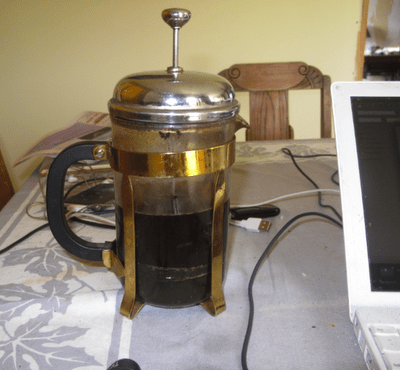
Three a day keeps distraction away.

I have engaged with the material and, in my opinion, created something entirely original. Many synergies exist between permaculture and education research. It is just a matter of creating a guild.
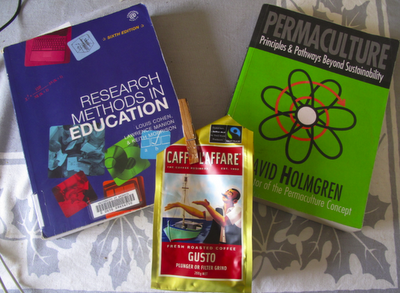
The whole is greater than the sum of its parts.

Oh, that was exhausting. For you too? This post takes a different approach than previous posts. If this is your first read, take some time to explore others. There should be something here for everyone. Maybe not Rick Perry.

For a snippet of the methodology chapter, see below. Please note it is an unedited first draft that I wrote this morning on 3 pots of organic fair trade coffee. I’d appreciate any insights or feedback. I may even acknowledge you in my thesis.

Peace, Estwing

The P of METHedology

4.7 Validity and Reliability

Many tables have four legs, but stability requires just three. A guild of three complimentary plants – such as the Hopi “Three Sisters”: corn, beans and squash – provides a stable cultivated ecology for growing food. A ship lost at sea can find its way using three beacons by a process called triangulation. In research, triangulation allows for stable (robust) findings and locates conclusions out of an ocean of data. Stable research is said to be reliable (Cohen et al., 2007).

But triangulation in every case described above is not a linear progression. In other words, two plus one does not represent the same incremental increase as one plus one. For example, a table with one leg benefits little from adding one more leg, but hugely from adding a third. Corn and squash planted together do not thrive like they do when beans are added to fix nitrogen in the soil to feed them. And a lost ship is still lost with only two points for reference. In all of these cases, there is a tipping point of integrity reached by triads when symbiosis turns to synergy. The whole becomes greater than the sum of the parts, and the system punches above its weight. Three, it appears, really is a magic number (Johnson, Year?)

In the world of research, triangulation is defined as the use of two or more data collection methods (Cohen et al., 2007). Campbell and Fiske (1959) contend that triangulation is a mighty way to demonstrate concurrent validity, and the process is deemed more or less essential for those doing qualitative research. Mixed method, or multi-method, approaches in social science research provide a number of advantages. For instance, blah blah…more here…

While major advances in validity and reliability occur between one and two, and two and three forms of data, subsequent improvements tail off quickly thereafter. A more-the-merrier attitude turns to four’s-a-crowd. That said, redundancy is bad neither in research nor permaculture. If one plant in a guild succumbs to an insect pest or disease, or if one method is found to lack validity, then an extra component in the system suddenly proves helpful. In fact, ecological validity in education research requires the consideration of as many characteristics and factors involved in the subject of study (Cohen et al., 2007). Brock-Utne (1996) promotes ecological validity when studying the adoption of new educational policies in actual classrooms. I submit that, when politics and scale are removed, that is essentially what I did in this case. In other words, I developed a new approach to teaching science, provided it to a teacher, and then attempted to chart what actually happened in his classroom. However, ecological validity can run up against boundaries determined by ethical considerations such as anonymity and non-traceability (Cohen, et al. 2007). These considerations were paramount for this study, which took place in a small school in a small town in a small country.

To be continued…

and continued…

and continued…
Times for Permaculture

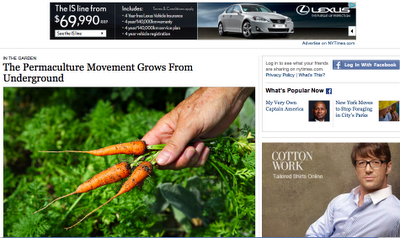
There is a fantastic article on permaculture in the New York Times that is well worth reading.
I especially love the Lexus ad at the top of the page.

Of particular interest to me as an educator are the many references to transformative learning experiences that tend to accompany peoples’ discovery of permaculture. Permaculture is a holistic, regenerative design system that can be applied to rehabilitating degraded land…
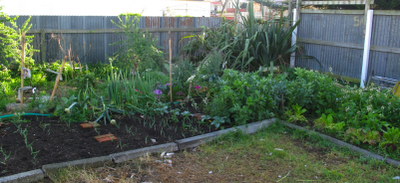
Transformed from a weed-infested yard full of rubbish.

…a falling down house…
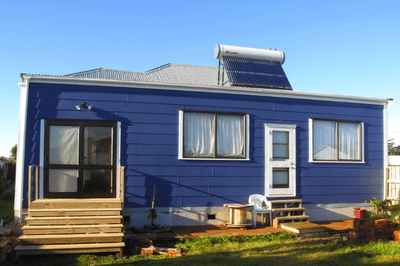
Transformed from the verge of collapse to a warm, cozy home.
…or a dysfunctional, unsustainable culture.
The belief in perpetual growth without consequences must be overcome.
For learners of all ages, permaculture can be both the journey and the destination. And the truth is, we never really arrive. It is all about embracing certain levels of sustainability, peace of mind, and joy. Here are a few gems I picked out of the article that just might make their way into my dissertation. (See link above for source.)

“It’s an ecological theory of everything,” Mr. Cody said.

The ethic of permaculture is the movement’s Nicene Creed, or golden rule: care of the earth; care of people; and a return of surplus time, energy and money, to the cause of bettering the earth and its people.

In its effort to be universal, permaculture espouses no religion or spiritual element. Still, joining the movement seems to strike many of its practitioners as a kind of conversion experience.

As a system, permaculture impressed him as panoptic and transformational. “It shook my world,” Mr. Pittman said.

“I don’t know that anyone has ever done a double-blind study of permaculture,” said Mr. Pittman of the national Permaculture Institute. “Most people in permaculture are not that interested in doing those kinds of studies. They’re more interested in demonstrating it. You can see the difference in species diversity and yield just by looking at the system.”

As Mr. Weiseman observed, permaculture may be a “leap of faith.” But not leaping might have its own consequences.

“We know what’s right,” Mr. Weiseman said. “We know what’s best. We feel this thing in our bones and in our heart. And then we don’t do anything about it. Or we do. And I did. And it’s bearing fruit.”

And I thought all the NYT was good for was mulching the garden…
Peace, Estwing

Add it up.

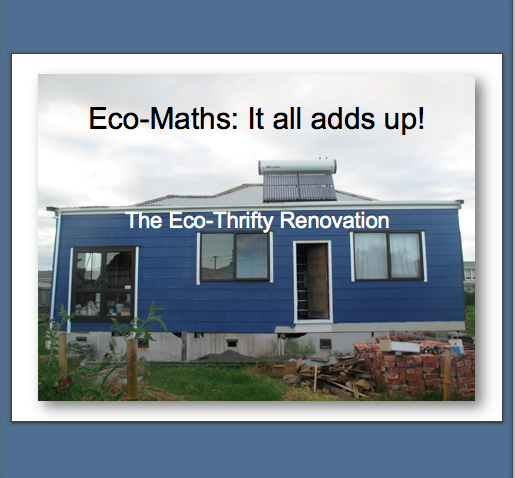
After excellent feedback on our first schools programme, The Science of Sustainability, we have developed a new programme we’re calling Eco-Maths. This will be delivered to primary and intermediate teachers in the form of a professional development session in about a month. Here is a preview:

Hey teachers…

Want to include sustainability in your lessons but don’t know how?

Want to engage students in real life application of maths?


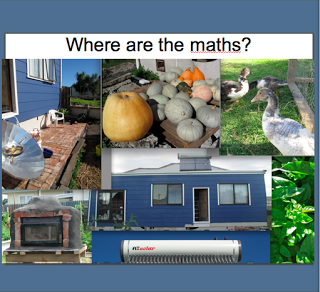
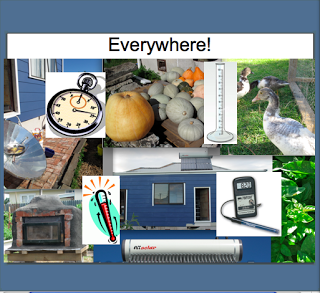
This is your chance. This training session uses eco-design and home renovation to teach mathematical concepts through saving energy and money.

Topics covered:

Area, Volume, Ratios, Percents, Units, Graphing, Rates, and More.


Date and Time: TBA

Location: TBA

Peace and Pythagorus, Estwing