Category Archives: no-dig gardens

Permaculture: Turning Liabilities into Assets

With an abundance of bad design around the world and across New Zealand, the opportunities for good design and re-design are almost endless. Simply addressing the built environment would provide thousands of jobs over many decades, to say nothing of the “natural environment.”

But this week’s column will, however, address the natural environment, which is, across most of this country, far from natural. In many cases non-native animals graze non-native plants on steep slopes that results in increased river levels and erosion during heavy rains and decreased river levels during drought. Put simply, poor design and out-dated land management techniques contribute to both flooding and drought: a lose-lose situation.

Good eco-design and contemporary land management can hold water on the land during heavy rains and provide water to plants and rivers during extended periods without rain: a win-win situation. This is called eco-design because in many cases it is the way “nature” manages water movement across the land with trees and wetlands.

Screen shot 2014-09-05 at 2.27.59 PM

This new orchard will be designed to use excess water off the roof as needed. 

Redesigning marginalized landscapes for water storage is at the heart of permaculture – an Australian eco-design philosophy first developed in the 1970s. Permaculture is now practiced by tens of thousands of eco-designers in probably every nation on Earth. In arid places such as Jordan or Arizona, deserts have been re-vegetated using permaculture design.

In New Zealand, permaculture design has been used to restore the health of degraded land and to increase its productivity. A large part of this design philosophy is turning a liability into an asset. (Sadly, this is exactly opposite to what appears to be the management philosophy of Whanganui’s wastewater treatment plant.) For example, water poses a threat to a house made from timber, but is required for a vege garden to thrive.

Screen shot 2014-09-05 at 2.27.50 PM

This area is being transformed into a vege garden alongside water management improvements. 

Good eco-design would transfer water from where it is not wanted to where it is, but without the need for costly drains or pumping. With regards to water management, good eco-design uses gravity to move it for free.

Another example of turning a liability into an asset is composting. Whether it is unwanted food scraps or an excess of manure or yard waste, composting the material and returning it to the land saves it from going to landfill where it converts into methane gas, or from running off and polluting streams and rivers. Win-Win.

Screen shot 2014-09-05 at 2.27.34 PM

Before.

Screen shot 2014-09-05 at 2.27.42 PM

After. 

If you have a small section or a large section or a lifestyle block, you may be interested in learning how permaculture design is used to manage water and soil fertility. On Sunday the 7th of September I will offer a sampler of what good permaculture design would look like on both small and larger properties (see sidebar). These events kick off Adult Eco-Literacy Week (7th-14th) and the Whanganui Permaculture Weekend (13th-14th).

Aside from being the gold standard in eco-design, permaculture is also unique in that it is an ethically-guided belief system. Central to permaculture are three ethics: Care for people; Care for the Earth; Share surplus resources.

Whanganui is unique in New Zealand in that we have a small but dedicated core of permaculturists who hold tightly to these ethics. For the second year in a row we are offering a weekend of outstanding events hosted by a range of experts in their respective fields. In other places across NZ and around the world you could expect to pay hundreds of dollars to register for such a series of events, but we are offering it to our community absolutely free.

It would be difficult to describe how unique this is, and it is one of the things I cherish about living here. Thanks to this handful of people who care deeply about our community and truly practice what they preach. And a huge thanks to Rachel Rose for helping organize the weekend.

Peace, Estwing

Sidebar:

Adult Eco-Literacy Week 2014, 7th – 14th September

7th September, 1-2 PM Eco-Design for large properties. 223 No. 2 Line

7th September, 2-3 PM Eco-Design for small properties. 223 No. 2 Line

9th September, 6:00-7:00 PM. Solar Energy. Josephite Retreat Centre, Hillside Terrrace.

10th September, 5-6 PM. Growing vege on sandy soils, Castlecliff

11th September, 12-1:15 PM. Raw Milk and Yoghurt Making, Women’s Network, 75 St. Hill St.

12th September, 5:30-6:30 PM. Best ways to use your heat pump, Josephite Retreat Centre, Hillside

14th September, 4-5 PM. Tomatoes Before Christmas, Wanganui Garden Centre. Gonville Ave.

Whanganui Permaculture Weekend, 13th – 14th September

List of events can be found here: http://whanganuipermaculture.org/
Planting Garlic Between a House and Farm Place

Due to changes in our work lives and a desire to steward a larger piece of land, we will be shifting at the end of this month. However, garlic is meant to be planted around the end of last month. What to do?

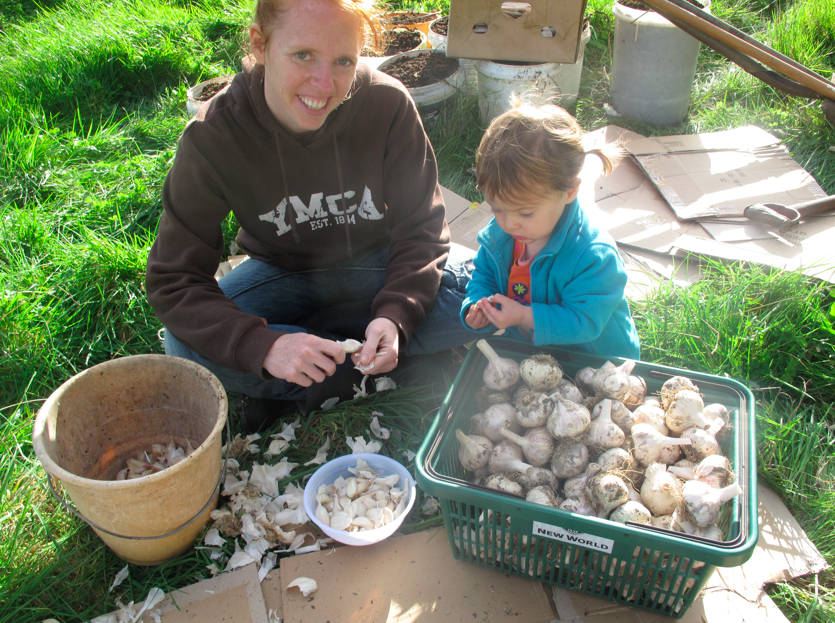
Garlic is the only crop that we sell regularly, and when you grow the World’s Best Garlic, it is worth the time and effort. Over the weekend we hurriedly got somewhere over 400 garlic in the ground at the new property. This is how we did it.

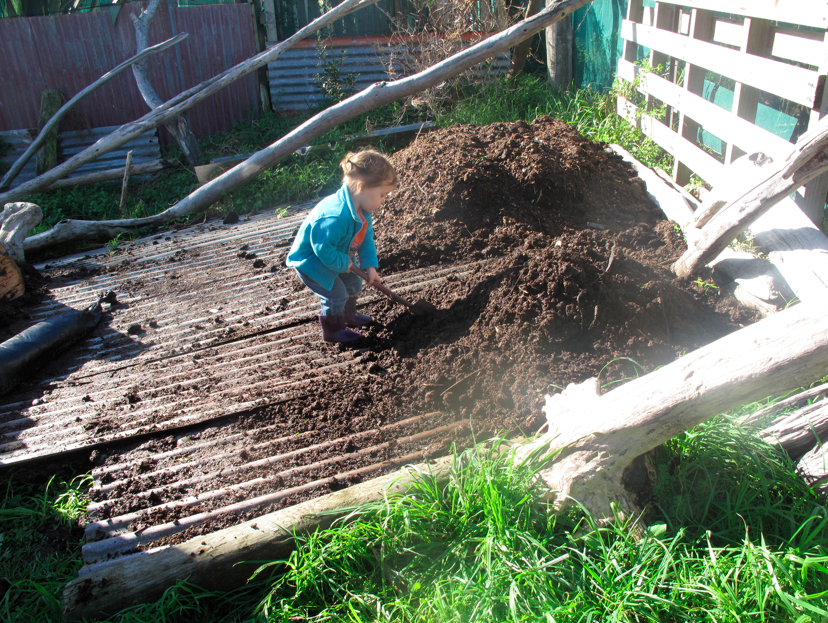
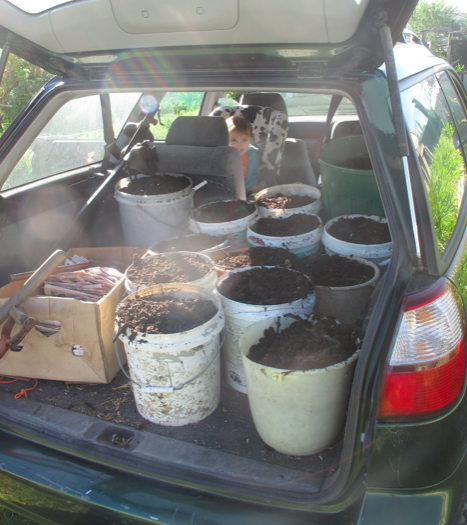
We had to transport some of our 3 cubic metres of compost

Screen shot 2014-07-02 at 8.16.33 AM Screen shot 2014-07-02 at 8.16.50 AM

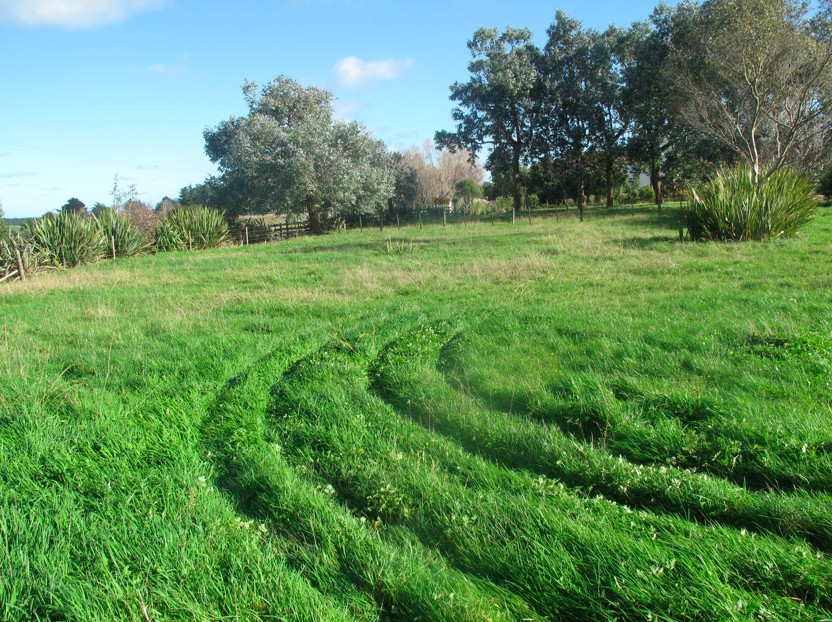
We selected a bit of flat land for our market garden.

Screen shot 2014-07-02 at 8.17.09 AM

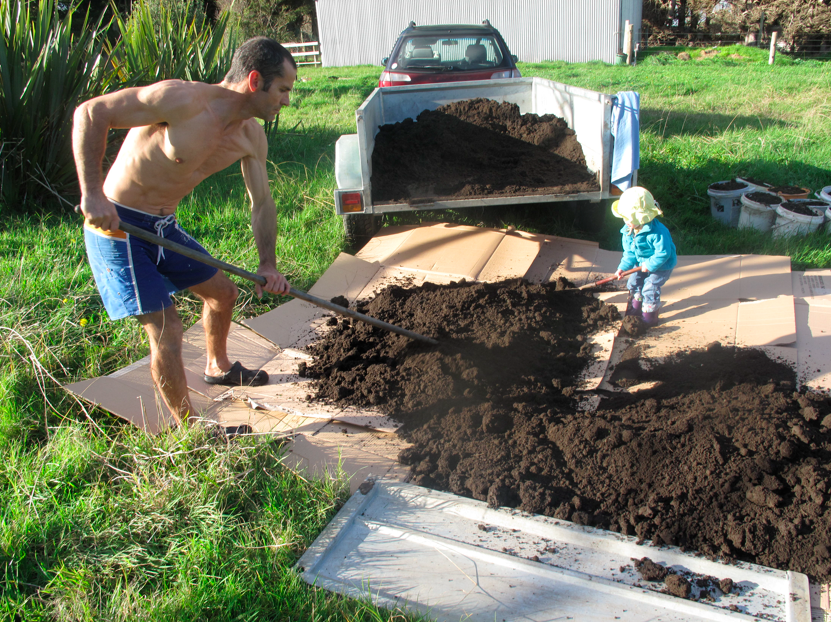
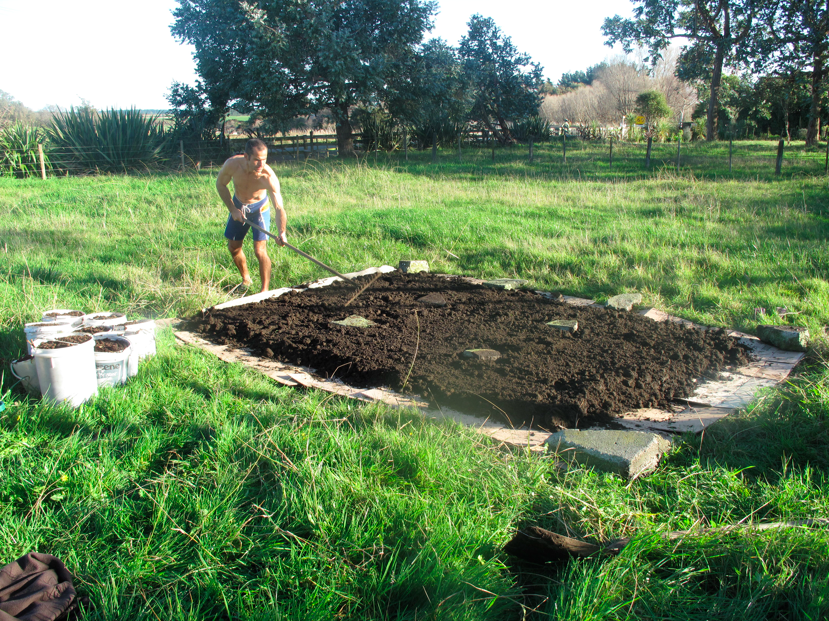
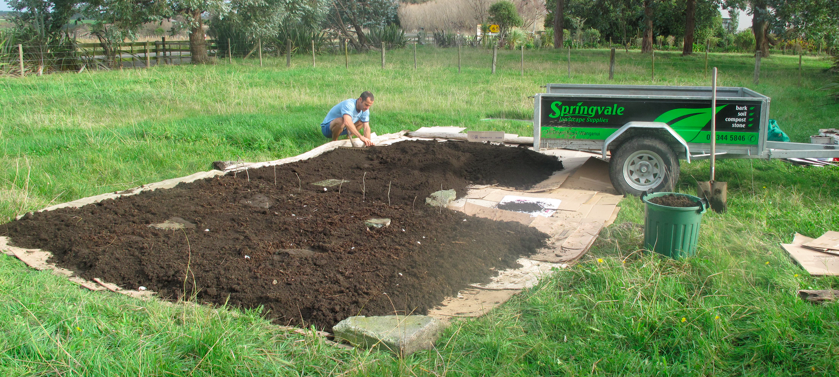
We did not have time to convert the paddock into a garden, so we brought in cardboard to kill the grass and topsoil to quickly build a raised bed.

Screen shot 2014-07-02 at 8.17.55 AM

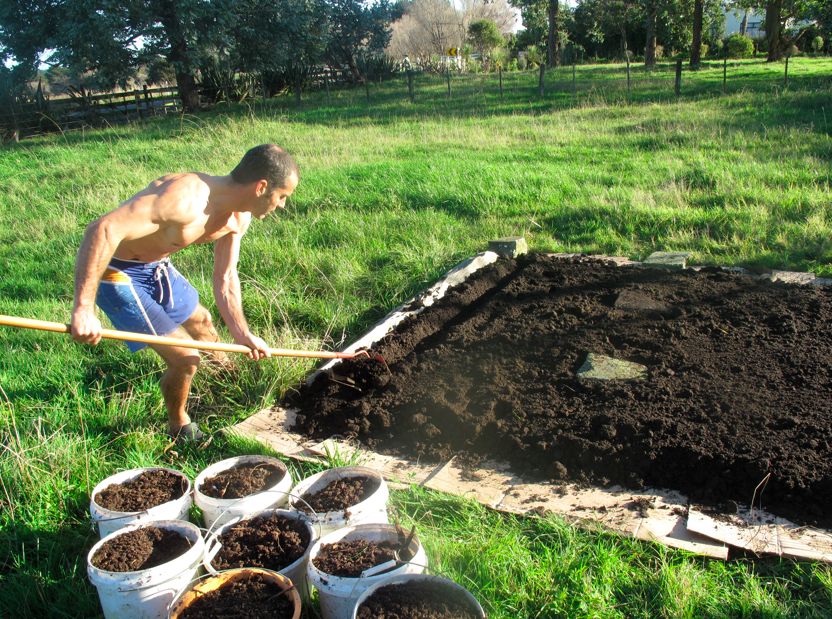
We have had great success growing garlic on top of sand by using 80 mm of topsoil.

Screen shot 2014-07-02 at 8.18.31 AM

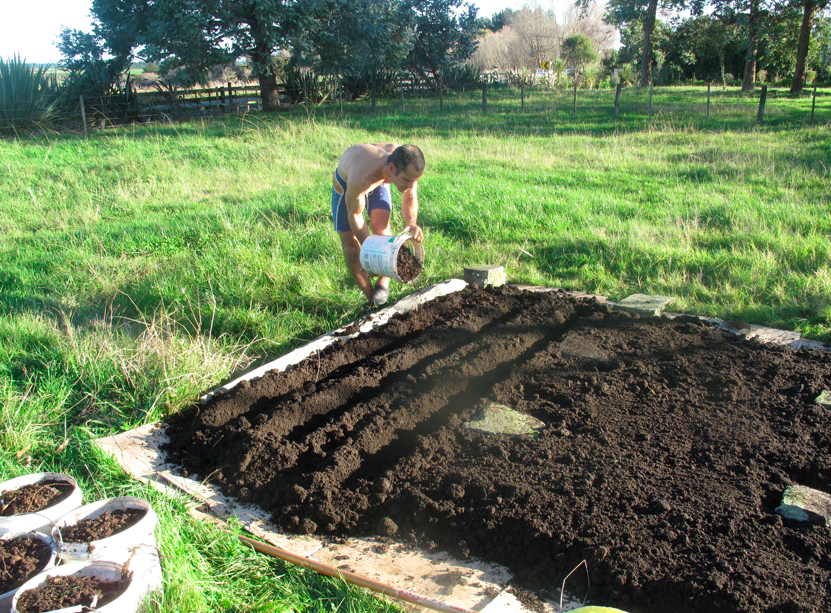
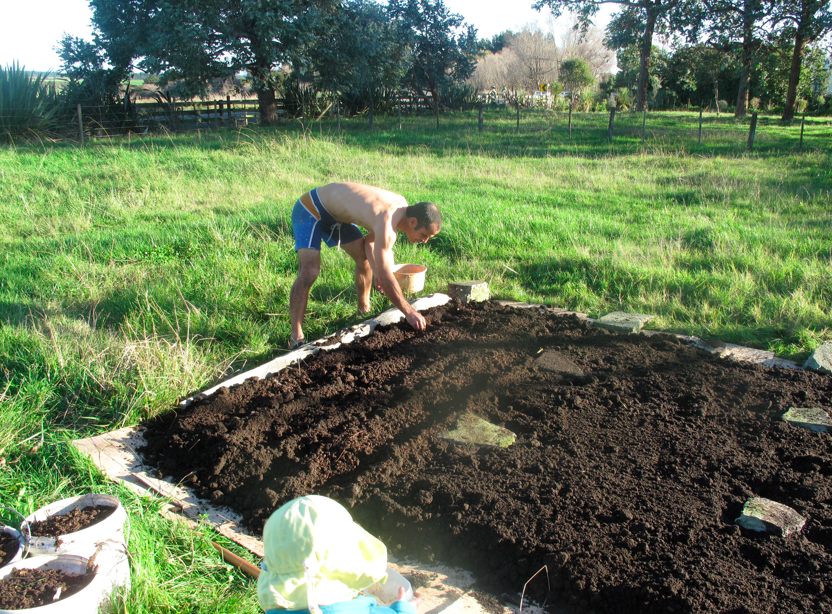
One key to growing great garlic is to use plenty of great compost. I pull a deep furrow with a hoe and then fill it with compost.

Screen shot 2014-07-02 at 8.18.49 AM

Screen shot 2014-07-02 at 8.19.04 AM

Meanwhile…

Screen shot 2014-07-02 at 8.17.33 AM

Nek minit.

Screen shot 2014-07-02 at 8.17.21 AM

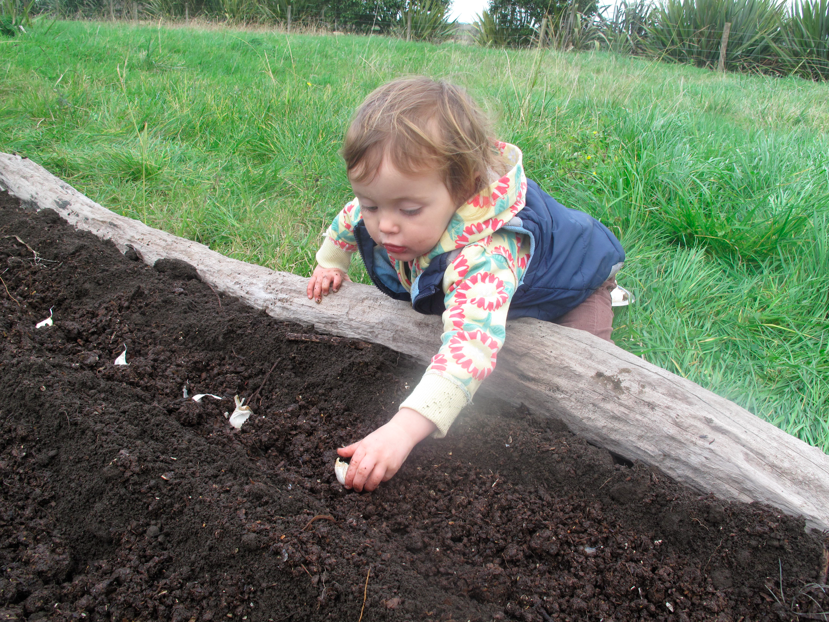
We plant the garlic at 100 mm centres.

Screen shot 2014-07-02 at 8.19.19 AM

Everyone gets involved.

Screen shot 2014-07-02 at 8.22.55 AM

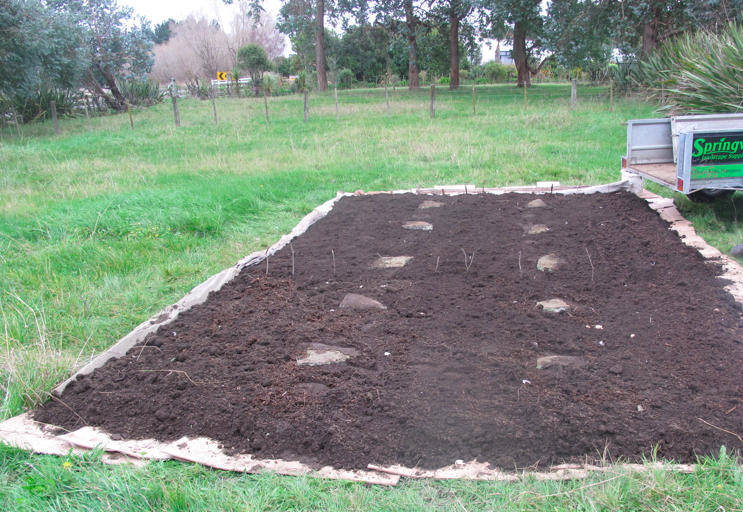
After two afternoons of work.

Screen shot 2014-07-02 at 8.23.16 AM


Peace, Estwing

Growing Great Garlic: A Matter of Design

Eco Design is a large and growing field. Facing a future of rising energy prices and increasingly volatile weather patterns, it is the inevitable future of design thinking as well as the future of business modeling, education, and governance. Those individuals and organizations that embrace eco design as early adopters will be at an advantage and those that put it off will have squandered time and money unnecessarily.

In my experience, eco-design thinking is applied in two distinct ways. The first and most intuitive way involves biological systems. In other words, using lessons learned from observing natural ecosystems to design and build managed ecosystems that serve human needs. The most obvious example of this is an organic garden.

Screen shot 2014-06-14 at 7.31.09 AM

 The other way eco-design is used is in non-biological systems, which can include buildings, vehicles, energy production, industrial processes, management, and even governance. Our renovation is a perfect example of eco-design thinking applied to a draughty old New Zealand villa. This column and Project HEAT (Home Energy Awareness Training) are attempts to promote eco-design thinking throughout our city.

Today I’ll stick to biological systems with a focus of food production.

Organic agriculture goes all the way back to the dawn of agriculture because there were no synthetic fertilizers, herbicides, pesticides and fungicides back then. Imagine a time before Monsanto!

Organic growers use eco-design thinking to produce as much food as possible while working with nature, not against it. Their ‘toolbox’ consists of a range of techniques, equipment, compost and on occasion naturally-derived pesticides. The vege plots at our home and the organic techniques we use were recently featured in a film profiling super abundant home gardens throughout New Zealand.

Eco design thinking along with a decade and a half of experience have allowed me to produce abundant healthy kai for our family at very little expense of time, effort and money. This is the type of win-win-win outcome that is almost always provided by eco-design.

Although there is no substitute for experience, one good way to leap frog your own experience is by engaging in well planned experiential learning. While I was developing my organic growing skills I took advantage of local farm tours, I enrolled in workshops, and I practiced…a lot – sometimes 14 hours a day while I was market gardening.

Those days are behind me, but I draw on that experience to manage our low-input/high-productivity gardens, or what I also sometimes call “Lazy gardening.” From my experience, one of the best crops for lazy gardening is garlic. Over the years I have grown and sold many thousands of beautiful and delicious garlic. Growing great garlic is all about working smarter instead of working harder. (See sidebar to learn more.)

Screen shot 2014-06-14 at 7.30.57 AM

Another example of low-input/high productivity food production on our property is the way we grow tomatoes: lots and lots of tomatoes. This year we have enjoyed five months of continuous garden ripened tomatoes from the middle of December through the end of May without a glass house. This abundance was made possible by designing for sun, concentrating fertility, and successive planting. But we’re still three months away from putting tomatoes in the ground so we’ll save that story for another day. Screen shot 2014-06-14 at 7.31.32 AM

Sidebar:

Growing Great Garlic Workshops

Learn how to grow the best garlic in the world. Workshops include the world’s best organic seed garlic for you to take home and two litres top quality organic compost. $15.

21st June, 9–10 am

22nd June, 9–10 am

22nd June, 3-4 pm

Registration and deposit essential. theecoschool@gmail.com, 022 635 0868, 344 5013

Successive Planting: Summer/Autumn Transition

One way we are able to produce large amounts of healthy food on a small amount of land is our approach to bio-intensive annual gardening. A combination of 80 mm (2.5 inches) of topsoil and copious amounts of high quality compost have allowed us to grow large, healthy and abundant vegetables.

Screen shot 2014-04-08 at 5.44.39 AM

Screen shot 2014-04-08 at 6.03.05 AM

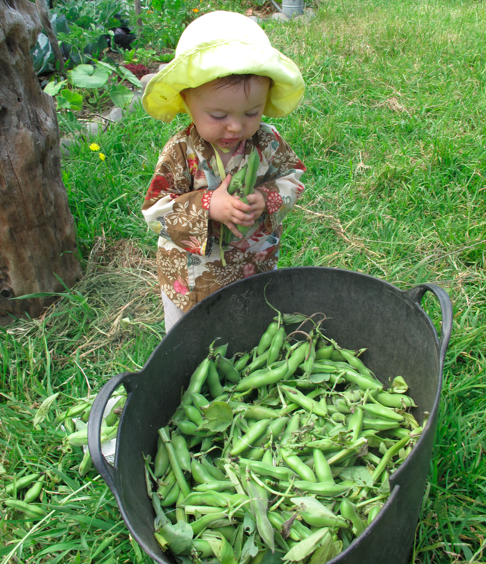
Another way that we achieve high yields is by successive planting. In other words, as soon as one crop comes out another goes in. For example, after harvesting broad beans last spring I immediately planted pumpkins in mounds of compost.

Screen shot 2014-04-08 at 5.48.45 AM

Both of these strategies rely on abundant, high quality compost in order to replenish soil fertility to make up for the food removed. We use a hot composting system called the Berkeley Method that ‘disappears’ meat and roadkill in a matter of weeks.

Screen shot 2014-04-08 at 5.31.07 AM

 Sometimes we use our lawn clippings in our compost, and sometimes we use them for mulch.

Screen shot 2014-04-08 at 5.20.30 AM

This week I have taken out some tomato plants that were in the ground since the 21st of September – 6 and 1/2 months – and replaced them with broccoli.

Screen shot 2014-04-08 at 5.19.05 AM

 You will notice there are still some capsicum (bell peppers) in the ground, and I even left two of the eight tomato plants rooted as they were still producing. I simply laid them on the ground on top of dried grass mulch.

Screen shot 2014-04-08 at 5.19.19 AM

 Each broccoli seedling is planted with a large dollop of compost.

Screen shot 2014-04-08 at 5.19.35 AM

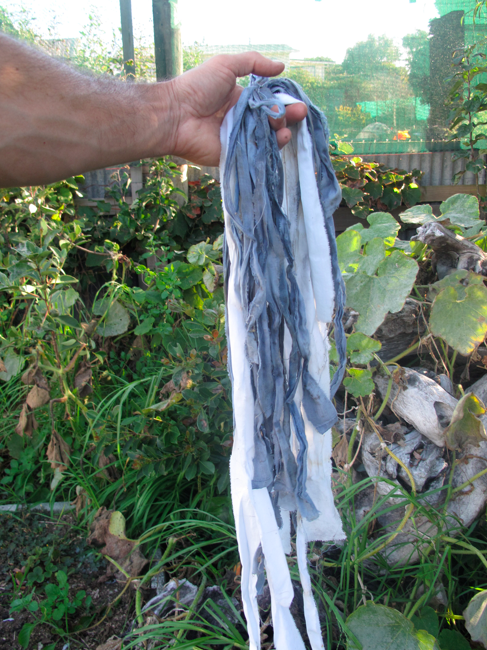
 The tomato ties – old bed sheets torn into strips – are collected and stored for next year.

Screen shot 2014-04-08 at 5.19.50 AM

And my helper and I carry on with the next chore.

 Screen shot 2014-04-08 at 5.14.40 AM

Peace, Estwing

No-Dig (Part 3): Ground Preparation

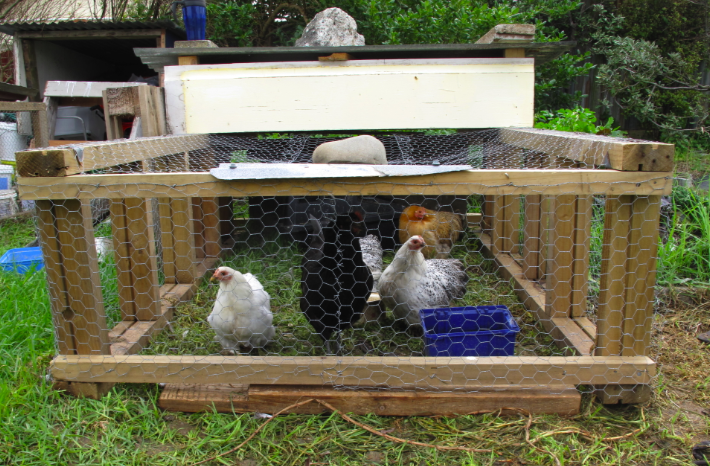
In the first post of this No-Dig series I described how decompressing the soil with a garden fork is the first step of the process. While that’s true, there are some ways to prepare the site even before forking it over. Currently we are “tractoring” ducks…

…and chooks in areas where we plan to install beds. The fowl eat the grass and fertilize the future garden bed. Because we have two particularly aggressive grasses and other invasive weeds, it is important for us to knock them back before putting in new beds.

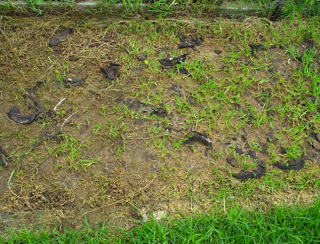
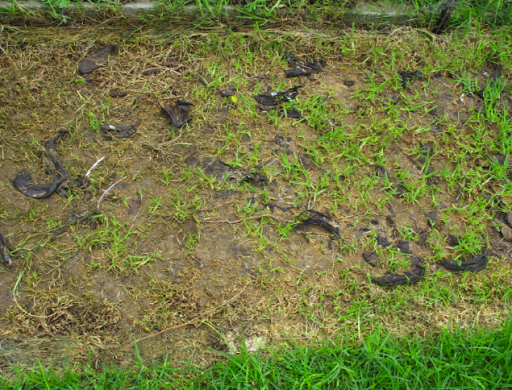
After the birds have done their job, the former lawn looks something like this. (Note the banana peels. We get “baking bananas” for $2 a box from a local veggie shop. We eat some and feed some to the ladies.)
But you may not have birds or even want them. Or maybe your municipality is even silly enough to outlaw them. Other techniques I’ve used include covering the ground with black plastic for extended periods of time (1 month to 4 months). Because plastic is UV sensitive, I extend its useful lifetime by covering the plastic with weeds. This serves multiple purposes. Along with making the poly sheets last longer, it is a way to dry out the weeds for later use as mulch and it looks much more attractive than a sheet of plastic laying in the yard.
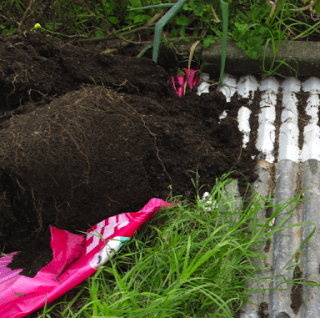
And finally, to continue the local, abundant and free theme from the two previous posts, we happen to have heaps of roofing iron on our section. We use it to knock back aggressive grasses and weeds before bed building. Just make sure you weigh it down to protect against gusting winds.


Referring back to the first post in this series once again, the bed that I built on the solstice started out looking like this.


The iron had been there for about 3 months and the pile of topsoil on top of the Pink Batts plastic had been there for about a month. Although you can see a little bit of cacuya grass between them, I pulled that foliage off before placing an extra thick layer of newspapers there.
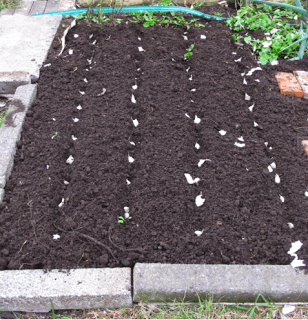
And in no time 100 garlic were in the ground.
An easy no-dig installation should be part of an easy, low-maintenance/high-productivity management system. And the key to that, in my decade plus of experience, is managing weeds. Two important parts of easy weed management are never stepping in the beds (see #1 in this series) and building in low maintenance edges (see #1 in this series).
I have run many workshops in 3 different countries on low-maintenance/high-productivity organic management. If you would like to host one in your area, please contact us. If you are a publisher, this management system is waiting for a book deal.
It is a great time to be building beds in both the Southern and Northern Hemispheres. Get on to it!

Peace, Estwing

No Dig (Part 2): Pocket Garden

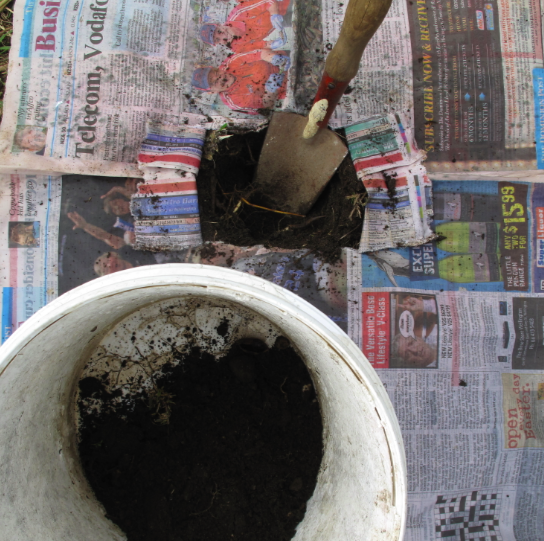
This is a technique I developed a few years ago that is fast, inexpensive and attractive. The materials you need are: wet newspapers, a trowel, a bucket of compost, an empty bucket, seedlings, and a bale of hay/straw.
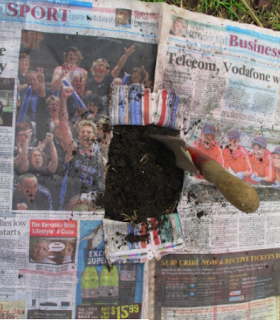
Step 1: Lay out newspaper on the lawn as explained in the previous post, and cut a capital H in the wet newspaper with the trowel.
Or a capital I if you prefer.
Step 2: Fold back the paper like opening French doors.
And dig out the sod and soil to the volume of a 1 litre/quart yogurt container. Carefully put the soil into the empty bucket so as not to allow weed seeds in the soil on top of the newspaper.

Step 3: Fill the 1 litre/quart hole with compost.
Step 4: Plant the seedling, water thoroughly, and fold back the newspaper.
Step 5: Mulch with hay or straw.
* Note that we don’t buy in hay or straw because we use tall grasses that we cut with a scythe and harvest with a rake. I have used wood chips as a mulch on one job, but that was only as a very low-budget approach in that particular case.
With a stack of newspapers and a few bales of hay/straw you could convert an entire lawn to garden in a weekend.

Peace, Estwing

No-Dig Garden Beds (Part 1)

I’m told that in the land of the long white cloud (Aotearoa/NZ) garlic is planted on the shortest day of the year and harvested on the longest. Fair enough. That’s more or less what we’ve done for the past two years. But last week I managed to land right on the 21st. It was a beautiful day and I spent a couple of hours building a new garden bed, taking pictures, planting garlic and missing an afternoon meeting that slipped my mind. Oops.

Even though it is the middle of winter here and the middle of summer in the northern hemisphere, it is still a fine time to put in a garden bed. On my farm in New Hampshire, I remained seeding fall greens (spinach, kale, Swiss chard) through the second week in August. If you have a small garden and want to expand it, or you want to start a garden on your lawn, here are a few things I’ve learned over the last 12 years of building beds.
* Please note that we use a number of techniques to prepare the plot before putting in a new bed, but those are not required. It is quick and easy to go from lawn to garden in one afternoon. I’ll explain those prep techniques in another post.
Step 1: Decompress the soil. Assuming you’re converting lawn to garden, the soil will inevitably be compacted by years of foot traffic, mowing, etc. Use a strong (thick tines) garden fork and plunge it into the soil on an angle about like this.
Push down on the handle so that the soil is just “fluffed” a little bit as such.
Work backwards so you don’t compress an area you’ve already decompressed.
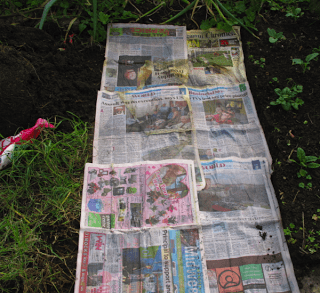
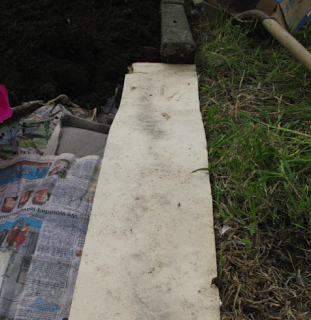
Step 2: Sheet mulch. We use newspapers (no glossy inserts), cardboard and scraps of unpainted and untreated plasterboard/drywall (Gib/Sheet Rock). It is handy to have wet newspapers, especially on windy days. You can put a stack of newspapers into a wheel barrow and run a hose over them, or…just leave them outside for a few weeks like we do.
Lay out the newspapers 3 to 6 sheets thick with generous overlap (50 to 100 mm) between each sheet. Don’t be stingy with these. In our present world old newspapers are abundant.
Here I am building the new bed adjacent to an existing bed. Edges tend to be high maintenance areas, so I design to minimize them.

Because we have some very aggressive grasses that tend to invade our beds, I “reinforce” the edge with a bit of plasterboard.
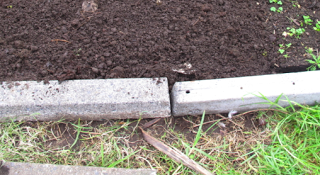
Step 3: Deciding on siding. Almost anything can be used as sides for a raised bed. You don’t even need sides at all. But many people prefer them. I like to use whatever is local, abundant and/or free. In the past I’ve used bricks, blocks, scrap wood, stone, and beams from a barn that was torn down. At present we are using a combination of concrete edging we got on Trade Me and concrete fence posts we got for free at the transfer station. I would recommend against using treated wood, but I’ve seen plenty of people do it.
Step 4: Fill ‘er up! Many people like to use a “lasagna method.” There are lots of recipes you can find by Googling. I prefer to use whatever is local, abundant and/or free. We make lots of our own compost that we use generously. But in this case we had some leftover topsoil that was just sitting in a pile conveniently next to where I decided to build this bed.
We also happened to have plenty of sheep manure that we bartered for French doors that we did not need.
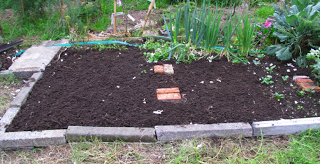
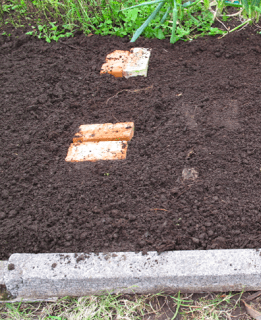
I raked the soil and manure flat in the bed. Please note that I usually make beds no wider than 1.2 meters so that I can reach halfway into them from each side without ever stepping in the bed. This is crucial in low maintenance garden management. Never step in the beds!
But in this case where the bed is wider than 1.2 meters, I placed bricks as stepping stones for access to the middle of the bed.

Step 5: Plant. Depending on what techniques you use, you can direct seed or transplant into the bed straight away. Here I planted seed garlic just wider than a stirrup hoe, which is my main weed management tool.

Over time the grass under the bed will rot down into a “green manure.” The worms will happily munch away and stir it up, and the roots of your vegetable plants will thrive in the loose, fertile soils.
Other options: In the next post I’ll explain another technique that is even faster and cheaper.
Peace, and get planting, Estwing