Category Archives: kiwi as

Swales and Rain Gardens for Water Management

It is encouraging to see the number of people engaging in meaningful dialogue about important local issues through the Letters page of the Chronicle. Sadly, too often these letters include references to failed attempts to work with Wanganui District Council on strategies that work with nature instead of against it.
For some reason, our Council appears stuck in the past on many issues of infrastructure and economic development. From most accounts, the 1950s were a great time to be alive, but in many cases ‘50s thinking no longer applies.
All of this makes it particularly significant that WDC Chief Water Engineer, Kritzo Venter, has been active and vocal about promoting progressive water management strategies that ‘mimic’ those that nature itself has developed over millions of years. (That is some investment in R&D, ain’t it?!?)
Small swale and rain garden. 
One of those water management strategies – swales – has been in use for decades in some places around the world. A swale is a long, narrow earthwork that runs perpendicular to slope. They slow the flow of surface runoff and facilitate infiltration into the ground. They are perfectly level, unlike ditches, which are sloped to drain water away like a river. Water in a swale soaks into the ground instead of running over it. A carefully constructed swale includes a level-sill spillway that gently allows it to be overtopped in a controlled manner in the event of extreme rain.
The use of swales is the type of win-win-win situation I write about in this column because it: 1) reduces stream and river levels during flood events; 2) increases groundwater reserves that can be called upon during periods of drought; and, 3) significantly reduces the overall cost of infrastructure. Eco-thrifty at its best.
For example, two years ago I was asked to consult on a proposed residential development in Kaiwhaiki that had significant drainage problems. I was told the 10-year-old quote to ‘solve’ the problem the ‘old way’ using pipes and culverts was for half a million dollars. After picking my jaw up off the floor, I told them that good eco-design, which would include cluster housing and the use of swales, would significantly slash that price. WDC Chief Planner, Jonathan Barrett, appeared supportive of those ideas during one meeting held at Council.
The other strategy promoted by Kritzo – and praised by Chronicle assistant editor, Anna Wallis – is the use of rain gardens. A common use of rain gardens is to absorb and filter runoff from new parking lots or other such impermeable surfaces. In this way, rain gardens function like wetlands: sponging up excess water and cleaning it through natural processes.
A series of mini-swales and vege gardens make up this garden.
I first learned about rain gardens in 2005 while taking a certificate programme in the States on Organic Land Care. Shortly thereafter I advised a school to install rain gardens in a number of locations where they had persistent drainage problems. This was particularly meaningful in the context of the school because it became a relevant learning experience for students.
In 2009, while living in Raglan, I built a small management system to control an excess of runoff coming from the roof of a newly built outdoor kitchen at a campground. The system consisted of a swale, a level-sill spillway, and a rain garden. We planted the swale with feijoa trees and the rain garden with plants that tolerate periods of wet and dry.
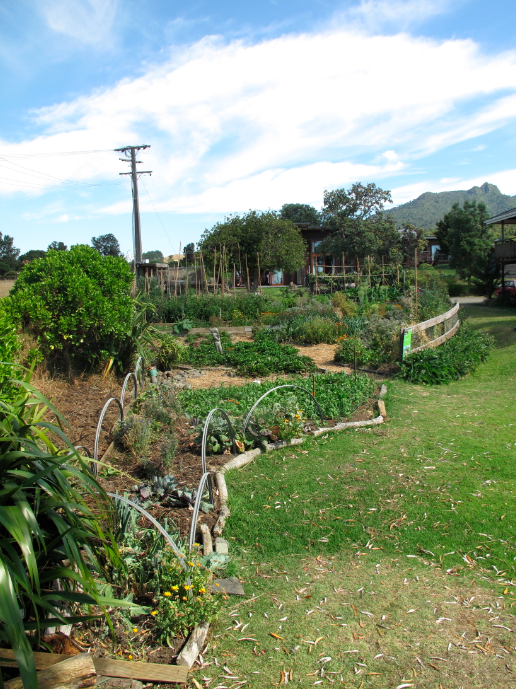
Swales and vege gardens soak up water and keep it from flooding this lawn.
While in Raglan, I also used swales as a metaphor for eco-design during a Pecha Kucha night, where artists and designers share their work through 20 slides with narration of 20 seconds per slide. That presentation, “Thinking Like a Swale,” became the inspiration for a programme I offered at the Josephite Retreat Centre earlier this year to acknowledge the UN year of water. Hopefully, when River Week 2014 comes around next year, I’ll get a chance to present it again to compliment and support the education efforts Kritzo has already made in the community.
Us ‘swale-thinkers’ gotta stick together. It’s a watershed out there.

Conservative Like Me

Editor’s note: This piece ran today as an opinion in the Wanganui Chronicle. It is in response to some complaints by the (radical) right that there are too many ‘libral’ columnists. This should give you a laugh.

Saturday was the summer solstice, the longest day of the year: a time for celebration and the harvesting of garlic; a time for BBQs and surfing (although, always is also a good time to catch waves); a time to bask in light before the long and slow slide back into the darkness of winter.
Exactly three months ago – 21st September – I wrote the first of five opinion pieces that have appeared in the Chronicle. It may have been beginners luck, but I consider that piece, which linked research on income inequality to social problems, and then to the WDC rates structure, as the best of the lot. On the day it ran, I got a text from a surfing buddy that went something like this: “Awesome article in da paper, bro. Chur. Chur.” Another friend told me, “The Chronicle shouldn’t have labeled it as an opinion. That’s the type of investigative journalism they should be doing.”
Working with the editors of the Chronicle, I had planned specifically for the piece to run on the vernal (spring) equinox as a way to reflect on balance and imbalance in our world and in our city. If you believe the international research that shows a correlation between income inequality and social problems (The Spirit Level, Wilkinson & Pickett, 2009), and can perform basic addition, multiplication and division, you will easily recognize that the WDC rates structure serves to increase the wealth gap in our city, and the annual Council rates rises widen the gap each year. (More on this, hopefully, in 2014.)
The reasons I think it was my best effort include: it is based on respected research and clear local data; it is relevant to everyone who lives in Whanganui; it was written as objectively as possible; and, the equinox was a fine metaphorical launching pad for a critical discussion on this important local issue, although from what I can tell that discussion has not really been happening…yet.
But equinoxes are easy to write about, and peer-reviewed research and replicable data is so boring. Objectivity – Shmogjectivity! The solstice is a time to be bold, opinionated, controversial!
And in that spirit, I would like to point out what has become glaringly obvious in the pages of the Chronicle: So many radicals writing so many opinions. The Chron is clearly out of balance and needs more conservative voices like mine!
Who, besides me, will stand up for conserving natural resources, other than Nicola Young and the throng of writers in Monday’s “Conservation Comment”?
Who, besides me, will advocate for a conservative position on climate change, other than Nicola Young and the gaggle of writers in Monday’s “Conservation Comment”?
Who, besides me, thinks that selling high performing government assets to foreign private investors is risky, other than Nicola Young and the pride of writers in Monday’s “Conservation Comment”?
Who, besides me, embraces the precautionary principle when considering the potential impacts of hydraulic fracturing, offshore drilling, iron sands mining, and genetic engineering, other than Nicola Young and the flock of writers in Monday’s “Conservation Comment”?
I mean, give me a break! Am I the only one, along with all of these other conservatives, who thinks wasting energy, wasting money, and wasting resources while taking radical positions on the economy, society, and environment must be addressed in a public forum?
We need more conservative voices in the Chronicle to address the radical policies of extremists that put our economy and social structure at risk.
Please join me, fellow conservatives, to stand up for risk aversion, fiscal responsibility, and the precautionary principle. Together, our combined voices and the power for the press may be able to move this new Council toward truly conservative positions. Let the radicals take the Letters page, if we can dominate the Opinions! 

Value in all things Vintage

After looking at last week’s column, I must hand it to the Chronicle editors for their mastery of the pun when writing captions for photographs. I thought I was good at word play, but I can’t handle a candle (you see there, that’s alliteration) when compared to the punsters in their new offices at the corner of Guyton and St. Hill streets. I doff my cap-tion to you, sirs and madams of our local press.
But in the world of puns, allusions, and similes, in the words of David St. Hubbins and Nigel Tufnel (This Is Spinal Tap, 1984); “It’s a fine line between stupid and, uh…”
“Clever.”
While this week’s column addresses many things vintage, it seeks to do so only with respect.
Among the many values we hold dear to eco-thrifty renovating and living is seeing potential value in building materials no matter their age or surface appearance. We have found time and again, that below the rough surface of many a piece of 100 year-old native timber beats a heart of rock-solid, tight-grained integrity.
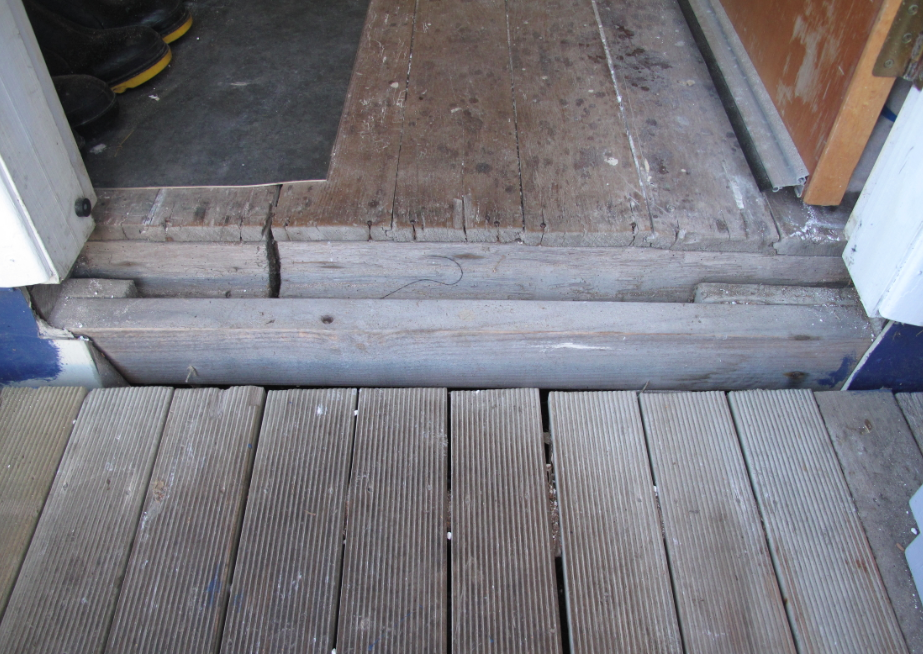
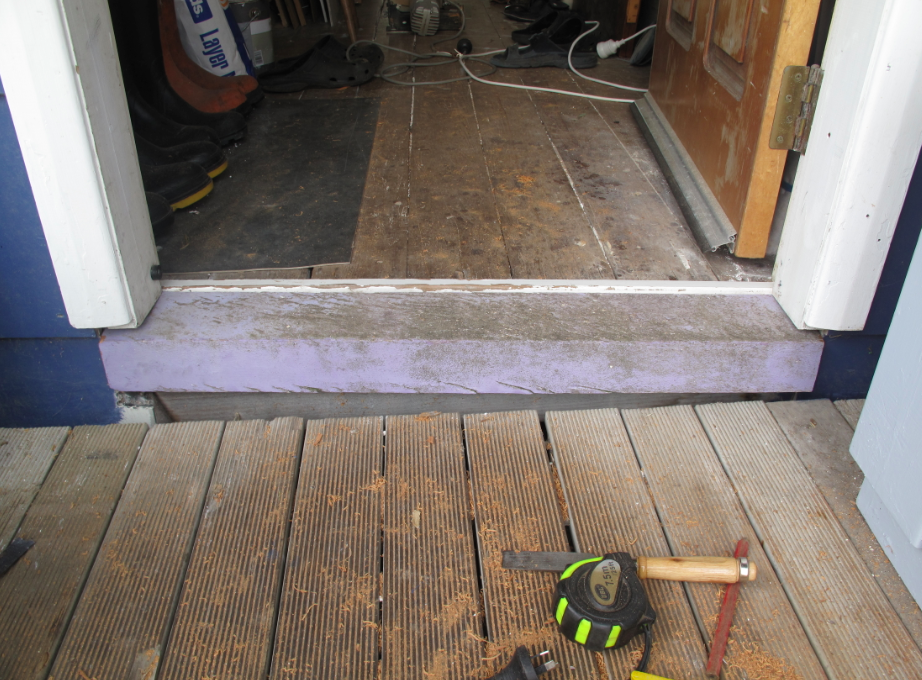
We have re-used beautiful, durable native timbers in many ways throughout our renovation. One of the latest examples – and last touches to our nearly finished home – is the threshold at the front door. Regular readers will recall I recently made reference to the fact that on day one (also on day 1,000) we had a gaping hole beneath our front door where one would expect to see a sloped sill, or some such piece of timber.
No Joke: No Hearth
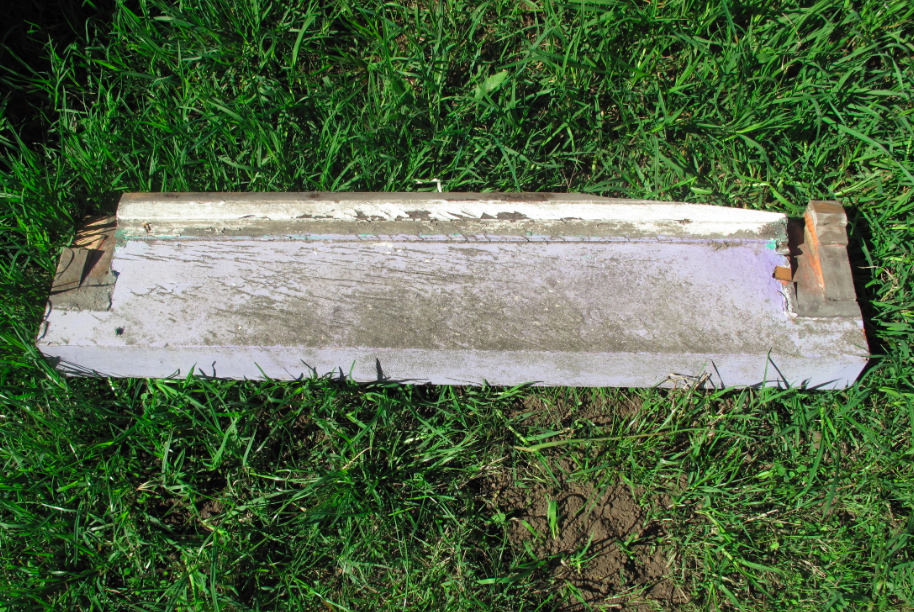
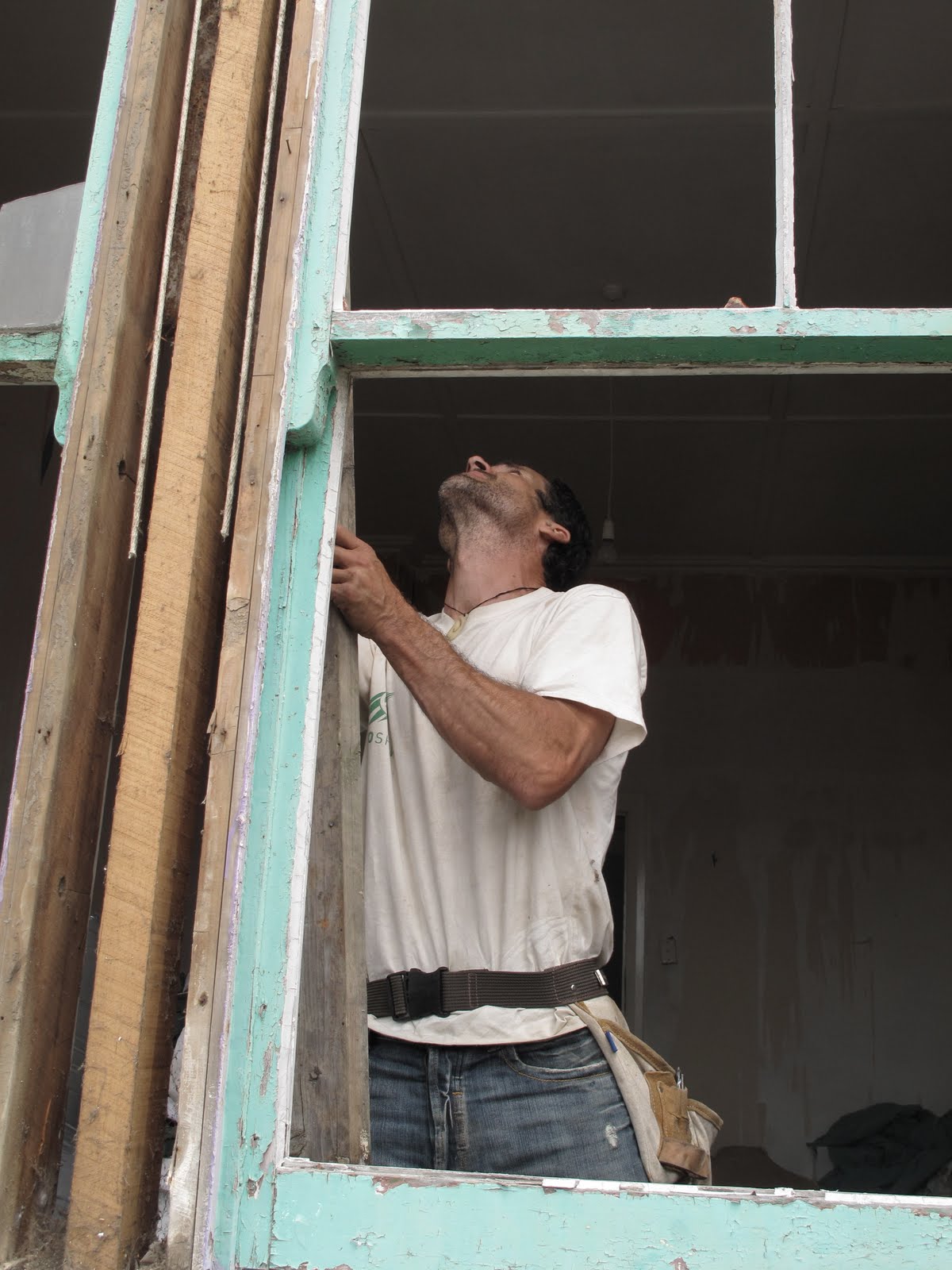
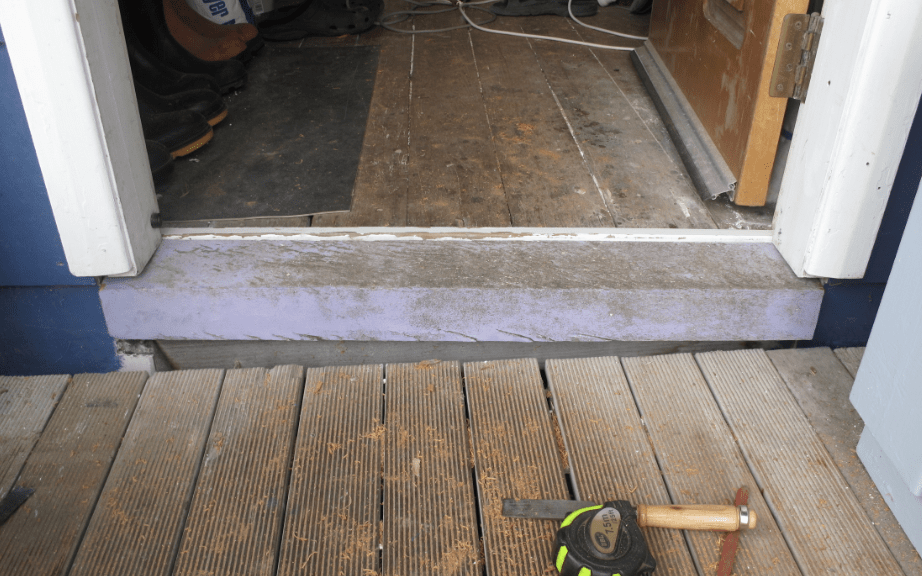
But no – just a hole that remained until I got to item number 1,478 on my list of things that needed to be done to the villa. In April of this year, I tracked down one of the original windowsills that we had removed and tucked safely away in October, 2010. As plainly seen in the first photograph, its surface was worn and weathered from 100 years of Whanganui storms, showers and sun.
Old window sill
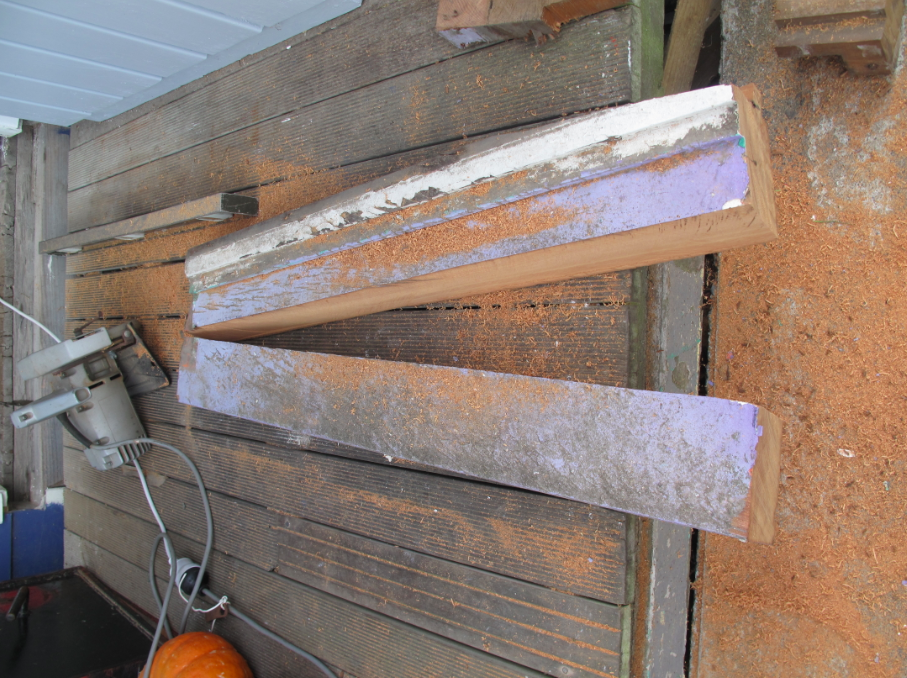
But beauty is only skin deep, and integrity comes from the heart, whether it is heart rimu, or another dense, native hardwood. After 100 years exposed to the elements, the sill had not a single borer hole of speck of rot. I cut it to length, and ripped it to width, nearly burning out the motor of my saw.
Hard-as timber
In houses and in human beings, there are those that look nice on the surface and those with integrity underneath. Some may have both, some may have neither, and some may have one or the other. Personally, I’d rather surround myself with walls and with people of integrity no matter how they look.
About two hours later
As a culture, we often disregard what is old, dated or worn. Often times our seniors feel the brunt of this ‘youth bias’ and may feel neglected, unwanted or of little value except when holidays come around and they find themselves surrounded by family for a brief period of time.
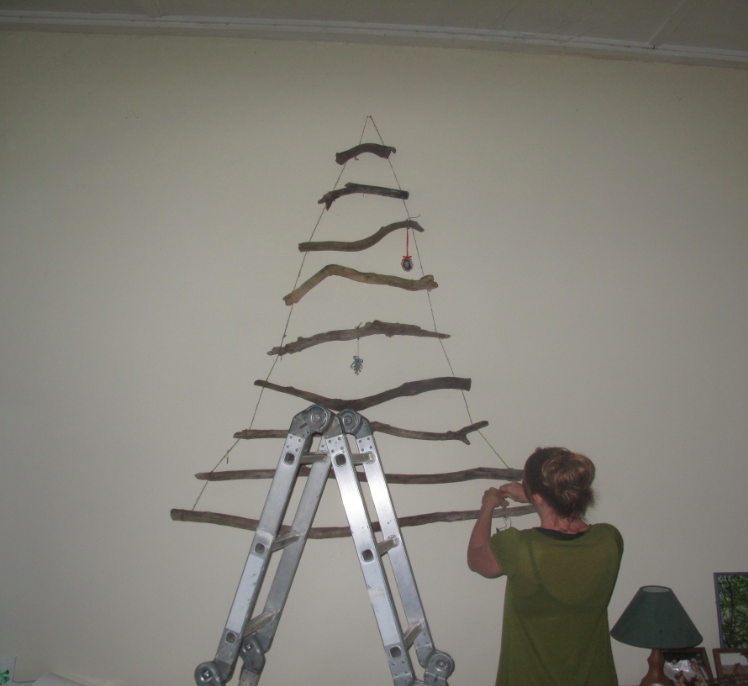
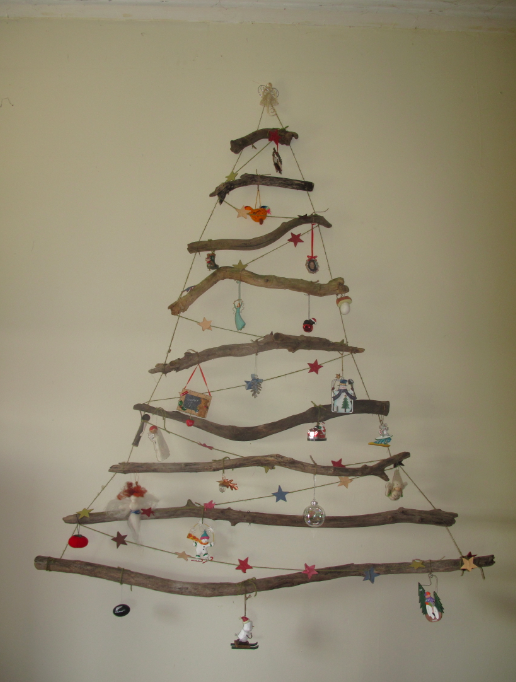
Eco-thrifty Christmas tree
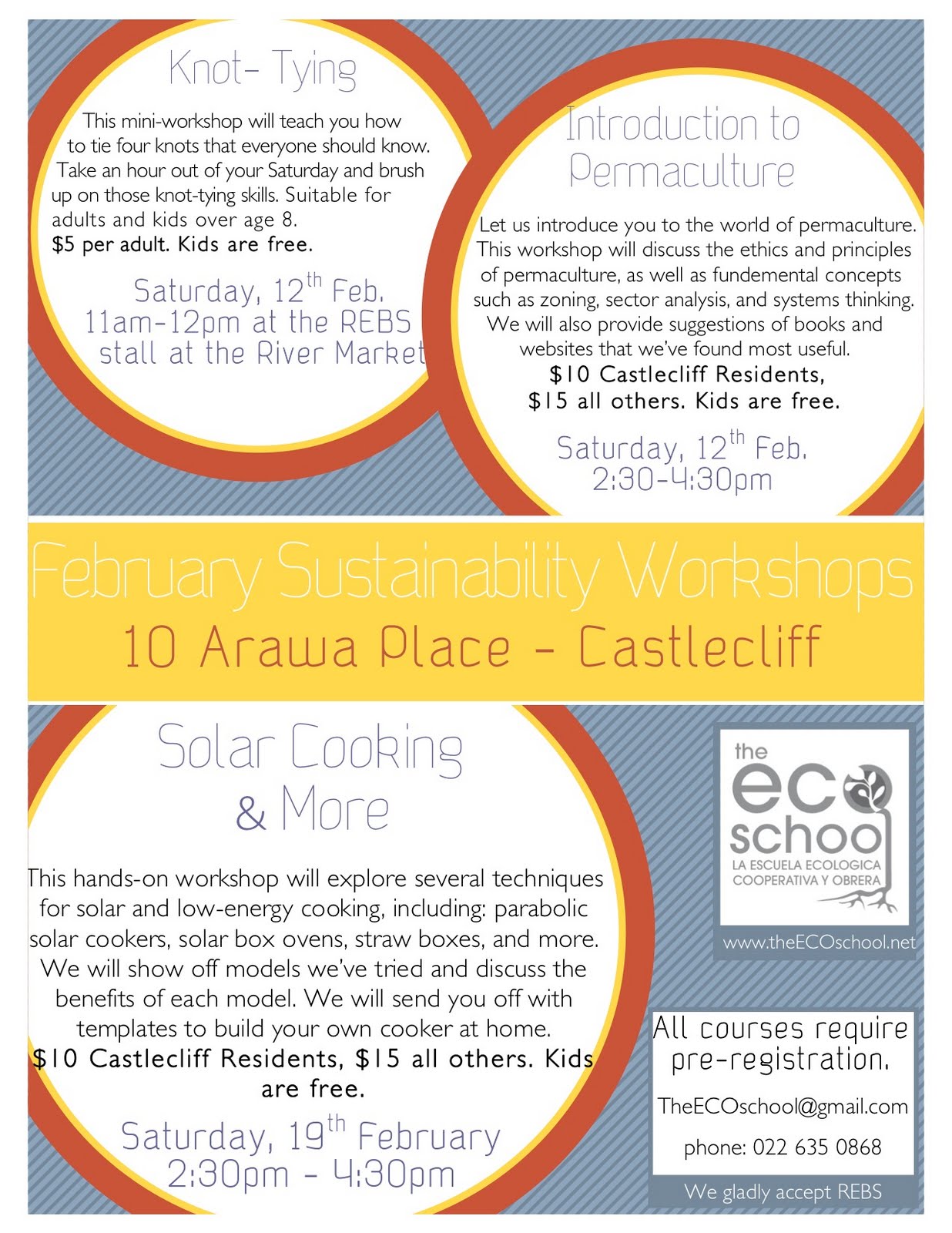
But for those seniors who may not have family nearby or even in the country, the holidays may be especially lonely or depressing. With this in mind, we would like to invite any seniors who may find themselves alone this Christmas Day to an afternoon tea at 10 Arawa Place, Castlecliff, from 2 pm to 4 pm.
Fully decorated
We will have a platter of biscuits and a bubba that enjoys cuddles. We’ll have a grand, old time – no pun intended.

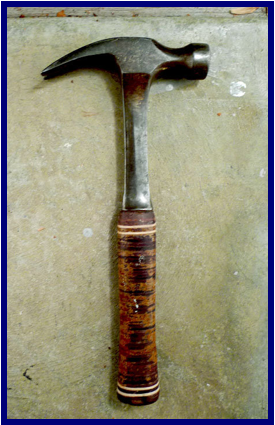
Peace, Estwing

Compost Post

Following up on the post of 12th June (Perfection), here are more details on our methods of composting organic matter. You may recall that we diverted over 95% of materials from landfill at the Connecting Families Day run by YMCA Wanganui. Alongside paper recycling and drink bottles recycling, the bulk of material came in the form of compostable organic matter: napkins, sausages, bread, apple cores and paper cups.


In anticipation of this organic matter coming onto our land, I “feather a nest” by forming a large rectangular bowl with grass cut on a neighbor’s property and “donated” to us by the landscaper. Into this bowl I easily dumped the organic matter collected at the YMCA event.


Then I added half a coal bag of sheep manure we bartered for with a surfing friend. The nitrogen in the manure will balance the high carbon content of the paper cups and napkins.


Then I covered the lot by raking grass over it to prevent wind from blowing the cups around and to allow the compost to “cook.” By turning the pile once every 48 to 72 hours, it will hold temperatures between 50 to 60 degrees Celsius (122 – 140 F) and be completely decomposed in about a month.


Then we’ll have roughly a cubic meter of beautiful, healthy compost ready for our spring planting.

Peace, Estwing

Perfection

I appears that many global forces of unsustainability have been swirling of late. The synergy with which these forces interact, and the non-linear effects make predictions near impossible. Most economists and politicians appear to be in utter denial of anything other than a return to “growth” and “business as usual.” (I’d say that is the one place we are not headed.) But one economist in particular seems to be able to recognize potential problems better than others.
You may recall that Roubini was the one who accurately predicted the financial crisis of 2008. Are you going to believe him, or someone like Greenspan or Bernanke or Geitner who had no clue?
While the right mixture of forces can, indeed, make storms perfect, the right combination of design, communication and education can make solutions perfect. For example, this weekend the ECO School helped the YMCA manage the waste stream for the Connecting Families Day.
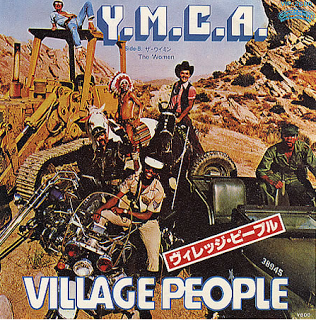
No, not that YMCA, this YMCA.
With over 20 years of experience in award-winning resource recovery programs, we felt confident about working with the Y with the goal of a zero waste event. I’ll write more about the mechanical details in another post, but the guiding principles for success when managing events such as this are:
1) Plan ahead. Sometimes called “pre-cycling,” this means thinking about the entire waste stream of the event and planning accordingly. For example, we ordered compostable cups for both hot and cold drinks. Zero waste.
2) Design. (“Failure to design is to design to fail.”) The physical lay out of collection containers is important. They must be clustered together. For example, we had bins for compost, paper recycling, drinks bottles recycling, and miscelaneous rubbish all together at one station.
3) Communication. This comes in a couple of forms. A) Signage must be brief, clear, colorful and at eye-level for both children and adults. B) Announcements can be used to remind attendees that this is a zero waste event and their efforts are crucial for success.
4) Education. Including the why and how of resource recovery is important to give people reason to act. Our education effort took two forms this weekend. A) I manned the resource recovery station to interact with people and monitor quality control. B) Our friend, Hadi, provided home composting advice at the Sustainable Whanganui table.

5) Quality control. Essential, essential, essential. No one wants to pick through dirty bins afterwards. Make sure everything goes in its proper place during the event. As mentioned above, quality control can and should go hand-in-hand with education.
By employing the above strategy, we were able to divert over 95% of the waste stream from landfill while role modeling positive behaviours to families. Those are world-class results. Not bad for weekend work.
More details on our composting process in a later post.
Peace, Estwing

Beach Logging

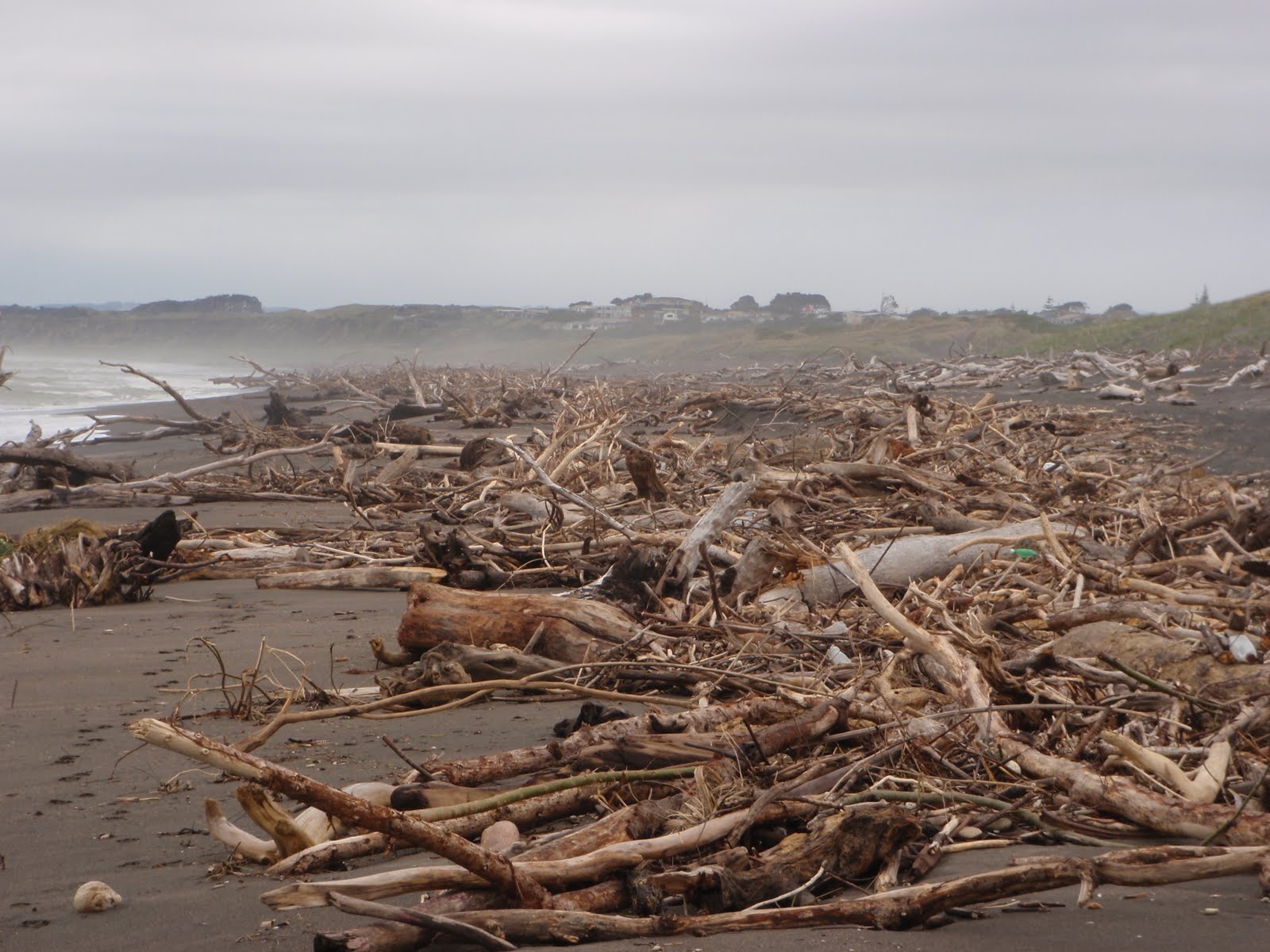
I have been splitting quite a bit of wood for our two wood stoves over the past year and figured that leaving the rural lifestyle behind me and stepping into the suburbs for a few months might offer a change of pace. This dream came to an abrupt end with the three day rainstorm we had last weekend. The Whaganui river swelled into a churning brown monster laden with debris that were belched into the ocean. I thought twice before I took a swim in New Zealand’s agricultural run-off, but figured it was all part of the experience and plunged in. Over the next twenty-four hours the beach was transformed from a smooth black sand ribbon, laced with footprints and ATV tracks, to the remnants of a clear cut gone wrong.

Whole trees were washed up and stacked randomly amongst one another, leaving little room for my daily swim routine. So began my new career as a beach logger.


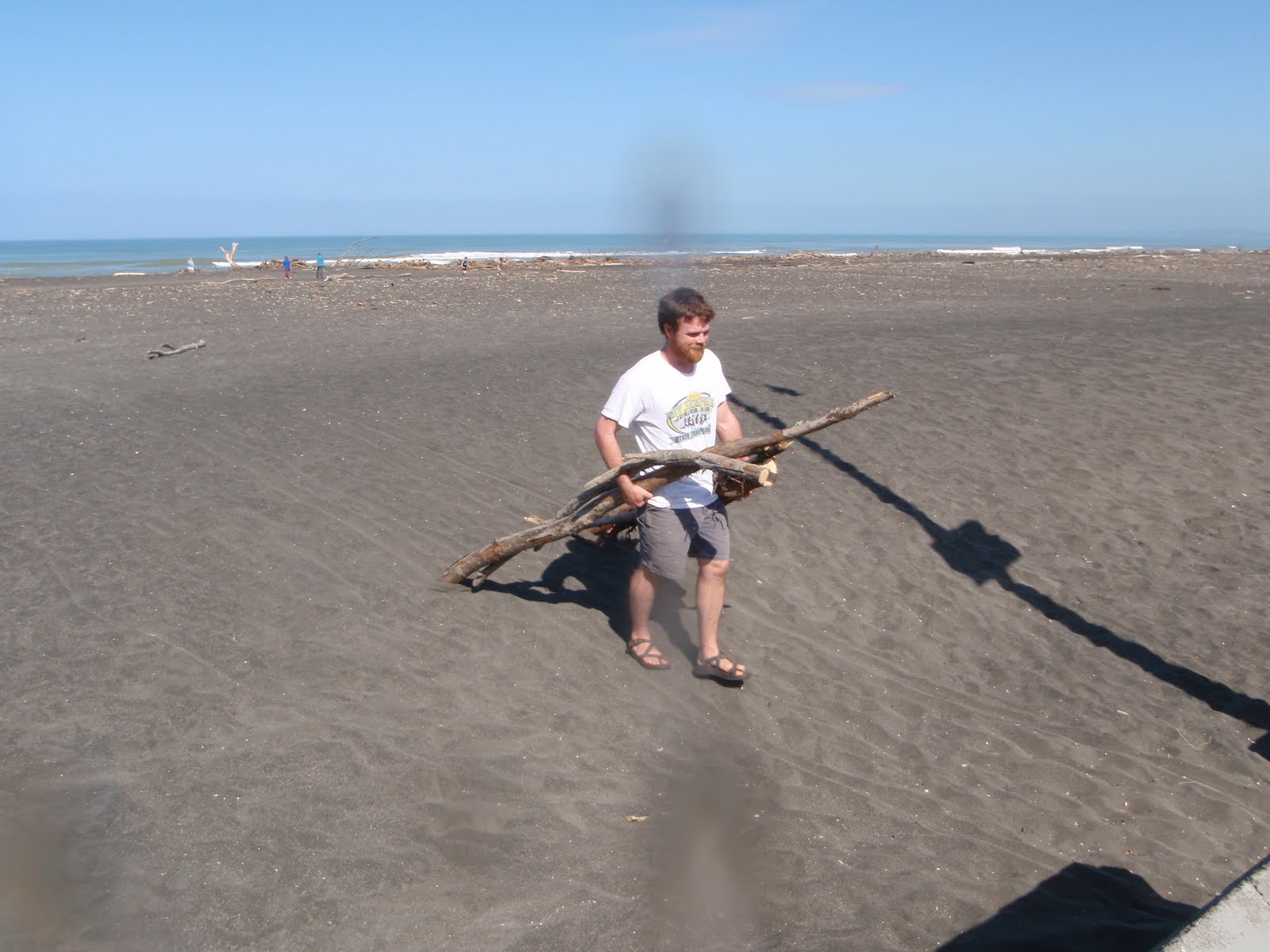
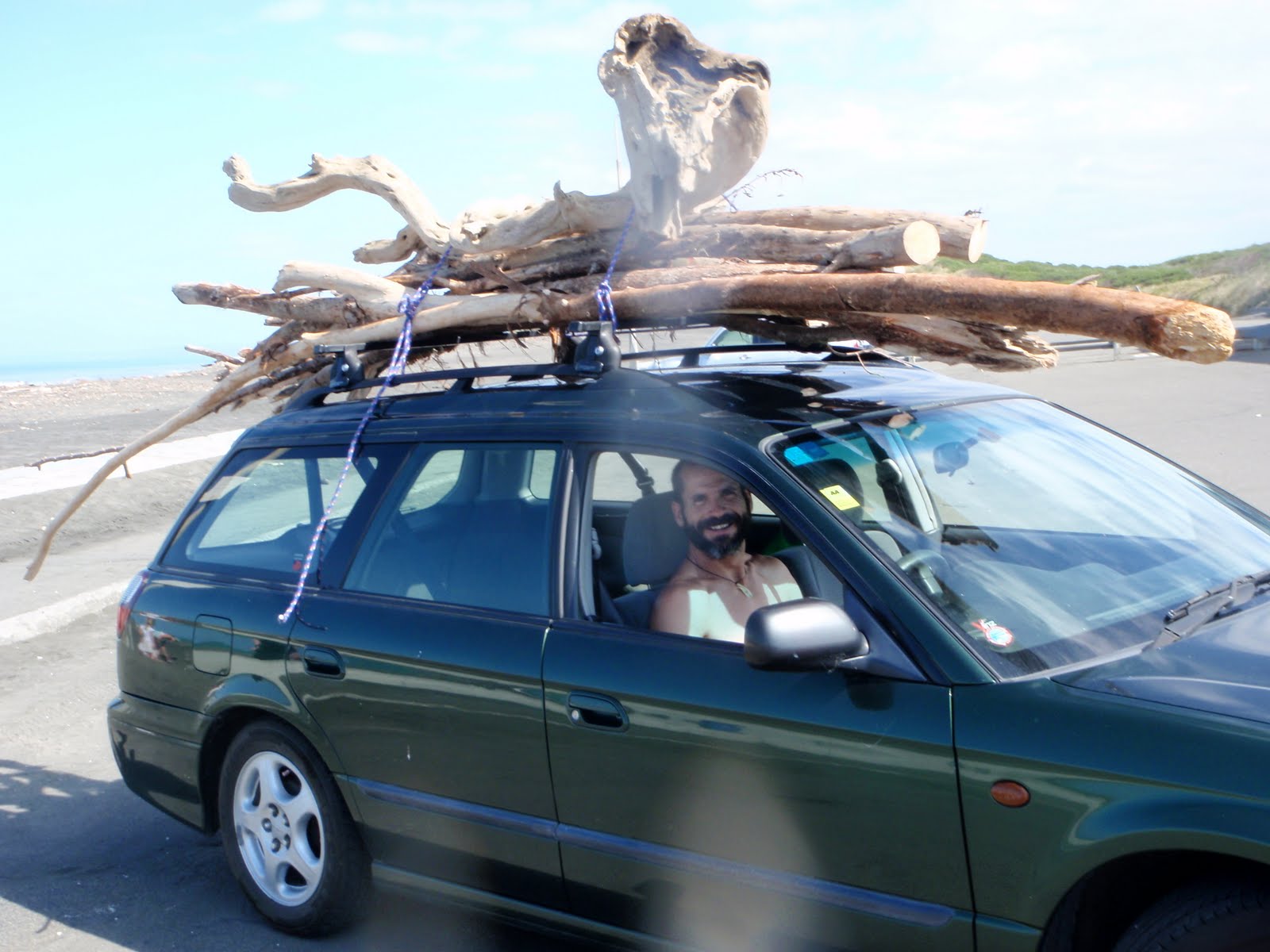
Nelson and I fire up our skidder and rumble down to the parking lot. Selecting only the finest wood for burning, we proceed to load the roof rack with logs of various sizes and up to eight meters long. Roping it all down, we headed for home.


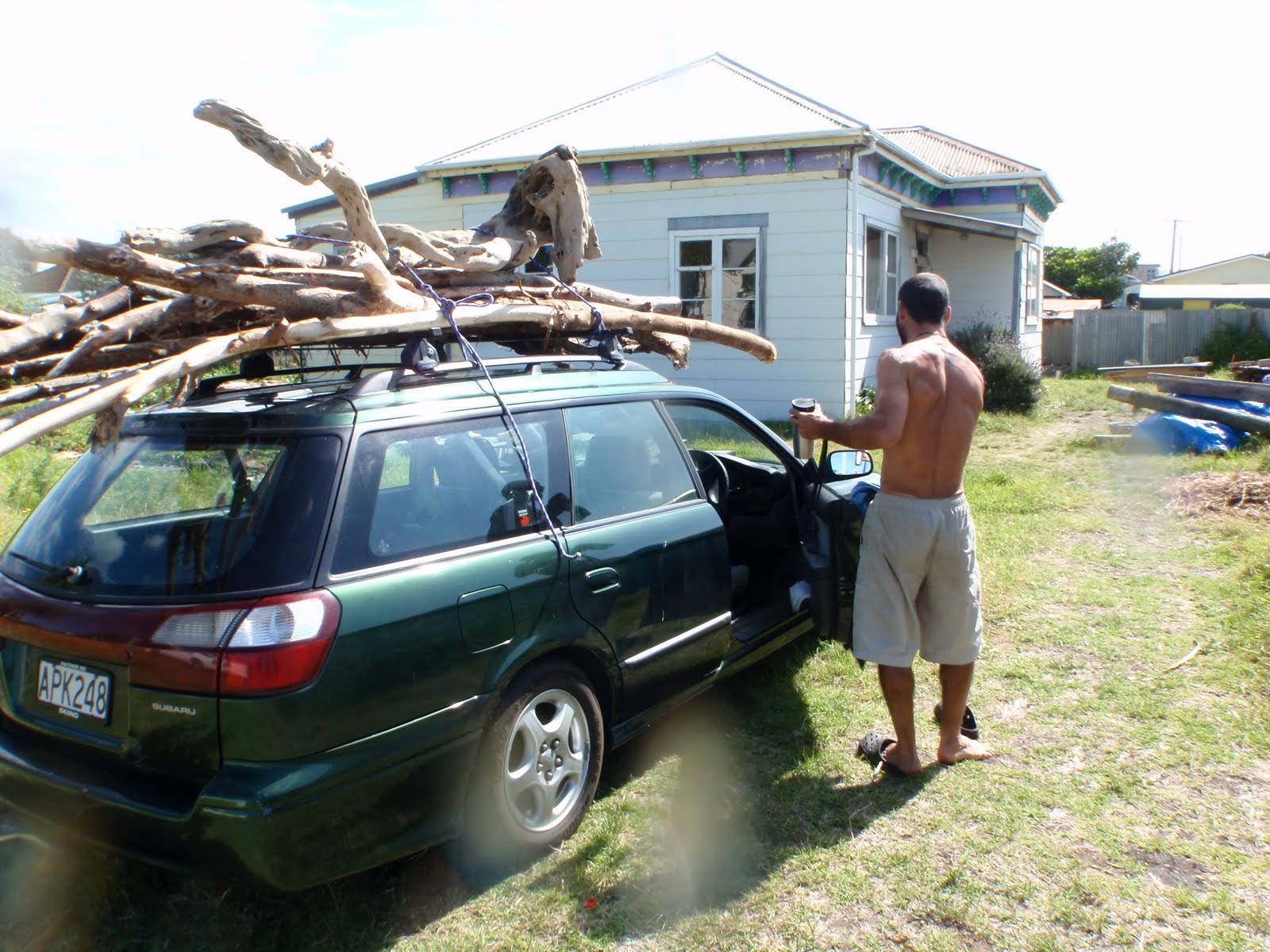
The poor Subaru was riding low as we lumbered down the street, branches trailing close to the pavement. The four police cars we passed along the way seemed more concerned with catching hard criminals and drunks than busting us for doing a little beach clearing. Safely home, we unloaded without a scratch to the paint job. The wood now sits in a pile in the yard, awaiting the arrival of the multi-fuel stove and outdoor pizza oven.


-John the Intern

Editor’s Note: John the Intern arrived to us, straight off a lobster boat in Maine, last Friday. He has been disappointed in the rainy New Zealand summer he’s experienced thus far. But it beats the wintery thundersnows back home. He’ll be in New Zealand until May, working with us and traveling to other sites. We’ve coerced him into writing some blog posts as part of his interning duties, so you can look forward to hearing more from him in the future.

Peas and Carrots: The Veggies Get Hitched

Hi…
My name is Veggie…
And I am a recap slacker.
It has been 85 days since my last post. It has been 129 days since my wedding.

129 days!!! What?!? Come on Veggie. Get crackin’. What are you waiting for, anyway?

Well it’s not like I’ve been slacking. The Veggies have been on the move. Since the end of our stay-cation-moon we have: flown back to New Zealand, moved out of our housetruck, and moved into a 100-year old villa shack work-in-progress about 6 hours down the coast. Oh yeah, and we’ve launched a new project for our non-profit, rebuilt our website, and ran six workshops. Phew.

But hive, I’ve been missing you.

And so, as one of many New Year’s resolutions, I’ve decided to get going on my recaps. I wonder if there might be a few other bees thinking along these lines too.

I leave you today with a little peek and a promise to be writing on a regular basis in the weeks to come. So get ready for some summer campin’, barn dancin’, softball playin’, compost makin’ good times.

Happy Solstice, Happy Holidays, and a very Happy New Year!

Photo: Liz Gallo. (Momma Veggie)

Answer: Bike On A Bike

Question: How does one return a borrowed bike when their own bike is their only other mode of transportation?
Here’s a product for all of your carbon-neutral bike transportation needs.

Fine print: Must have calves of steel and a sturdy backpack for successful performance. Do not attempt with folding bike on bottom. Dutiful husband not included.

You saw it here first people. Now, don’t go running out trying to market this brain child. We are trademarking this revolutionary technology as we speak. Also in the works: furniture on a bike, seedlings on a bike, and wife on a bike.

Editors note: After substantial research, it turns out that the market for these products is extremely limited. Turns out there are significantly easier ways to transport large items.

In all seriousness, living car free presents some very real challenges for us. We rely heavily on our fleet of bikes: the little folder; the hand-made green bike; the silver road bike; and our B.O.B. trailer. And I cannot express just how very thankful we are that we now live in a flat coastal town. Finding motivation to ride this 6k into town is much easier than it was to find the motivation in Raglan where the 6k involved riding up the side of a mountain. But, as easy as the trip is, riding after dark, in the rain, or with a huge load can be dangerous and inefficient.

We also love that we live two blocks from the bust stop, and that the bus runs about a dozen times a day. We’ve done our laundry, grocery shopping, and even transported timber back from town on the bus. I’ve made a little group of commuting friends who seem to ride the same routes as I do regularly, mostly older or mentally handicapped folks, or both. My favorite is an older Maori gent named Tui, who shouts a big “There she is!” every time I board, and then proceeds to tell the rest of the passengers “She’s American, you know?”. Not sure whether that’s meant as a warning or a kudos. Either way, I like to think of him as my bus boyfriend. Don’t tell the hubs. But, as nice as the bus is, the last bus is at 5:10pm and there are no buses on Sundays. What is up with that Wanganui District Council?

So really, if we want to do anything in the evenings, or transport large items. We are at the mercy of the generosity of friends. And they have been extremely generous. If we even mention that we might want to pick something up in town, we have several offers of people who are willing to help us. Heck, even our new neighbor over the back fence offered us her car after watching us carry a load of lumber back from the bus. This offer would have been more useful just a few minutes earlier, but its nice that she put it out there. But, its not sustainable environmentally or socially to rely on people shuttling us back and forth to town.

So we are left with some options. One option is to set up a barter system with one of our friends or neighbors who has a car. If we set up some kind of car share system, then with some planning we could eliminate the extra trips involved in shuttling back and forth and would feel like we are contributing to a mutually beneficial relationship (instead of a parasitical one?).

Another option of course is to cave in and join the ranks of car ownership. And there are endless details involved in that decision. Do we buy a really flash new eco car or go down the used-car route? Would we buy a small fuel efficient model or a bigger car that we could use to haul loads? We would we really have the self-discipline to limit ourselves to mandatory trips only or would our lifestyle significantly change?


What do you think? What would you do? What do you do? How do we contribute to the creation of a sustainable transportation culture without sacrificing our individual needs? Or is that even possible?

-June Cleverer

Nature as the Model


We’ve thought long and hard about what makes an eco-thrifty renovation. I say it is mindfulness. Specifically, we are trying to be mindful of energy, materials and toxics. To help guide us, we have adopted 7 guiding principles that we have drawn from nature. We’ll be providing plenty of examples in blogs, videos and podcasts to come, but for now, here they are:

  • Solar Gain
  • Thermal Mass
  • Insulation
  • Reduce Waste
  • Reuse Materials
  • Recycle Materials Not Reusable on Site
  • Minimize Toxic Materials

We hope that you’ll visit us regularly to learn and laugh.

Peace, M.C. Estwing