Peace, Estwing
Peace, Estwing
Following up on the post of 12th June (Perfection), here are more details on our methods of composting organic matter. You may recall that we diverted over 95% of materials from landfill at the Connecting Families Day run by YMCA Wanganui. Alongside paper recycling and drink bottles recycling, the bulk of material came in the form of compostable organic matter: napkins, sausages, bread, apple cores and paper cups.

In anticipation of this organic matter coming onto our land, I “feather a nest” by forming a large rectangular bowl with grass cut on a neighbor’s property and “donated” to us by the landscaper. Into this bowl I easily dumped the organic matter collected at the YMCA event. 
Then I added half a coal bag of sheep manure we bartered for with a surfing friend. The nitrogen in the manure will balance the high carbon content of the paper cups and napkins.
Then I covered the lot by raking grass over it to prevent wind from blowing the cups around and to allow the compost to “cook.” By turning the pile once every 48 to 72 hours, it will hold temperatures between 50 to 60 degrees Celsius (122 – 140 F) and be completely decomposed in about a month.

Then we’ll have roughly a cubic meter of beautiful, healthy compost ready for our spring planting.
Peace, Estwing


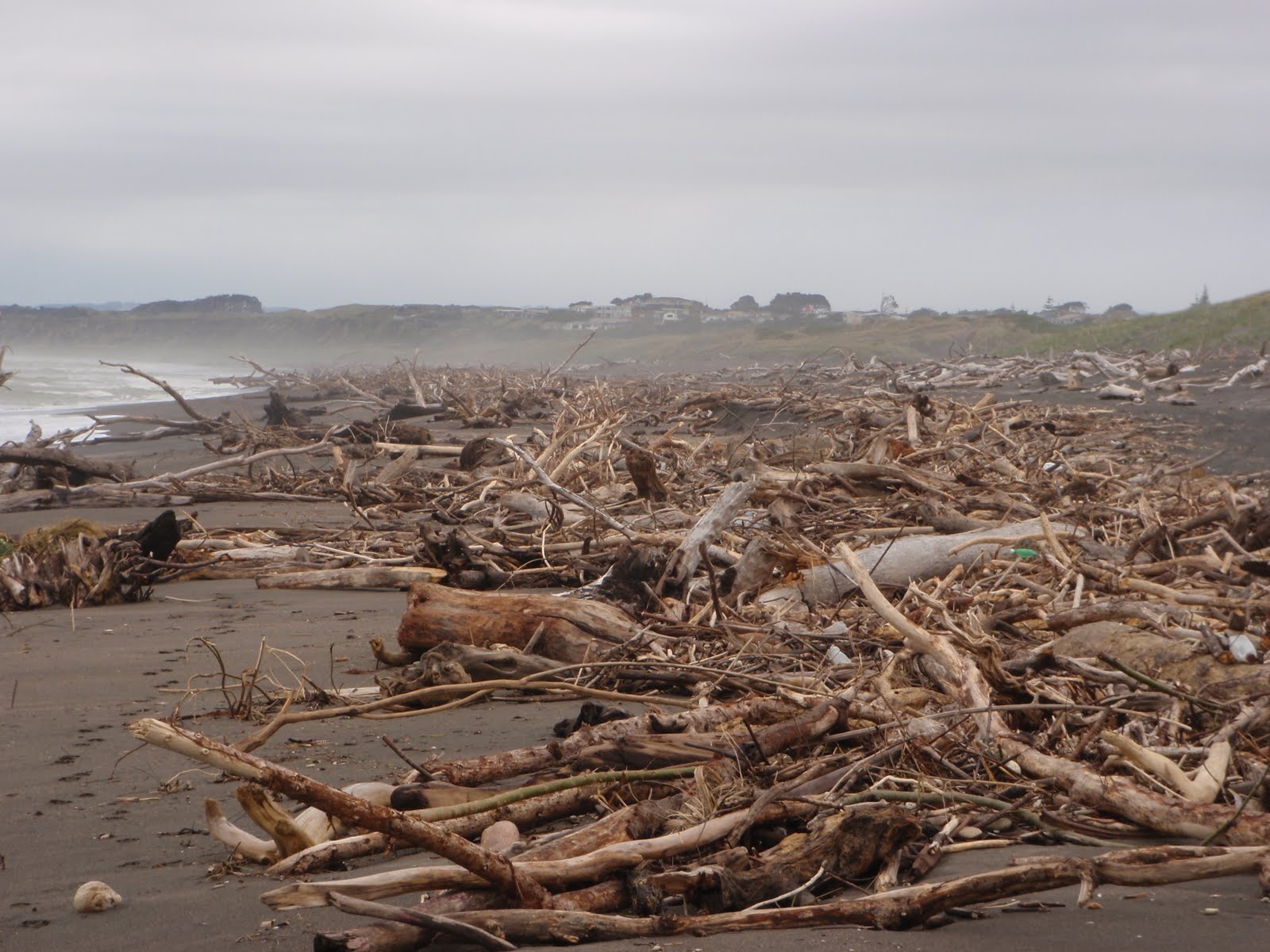
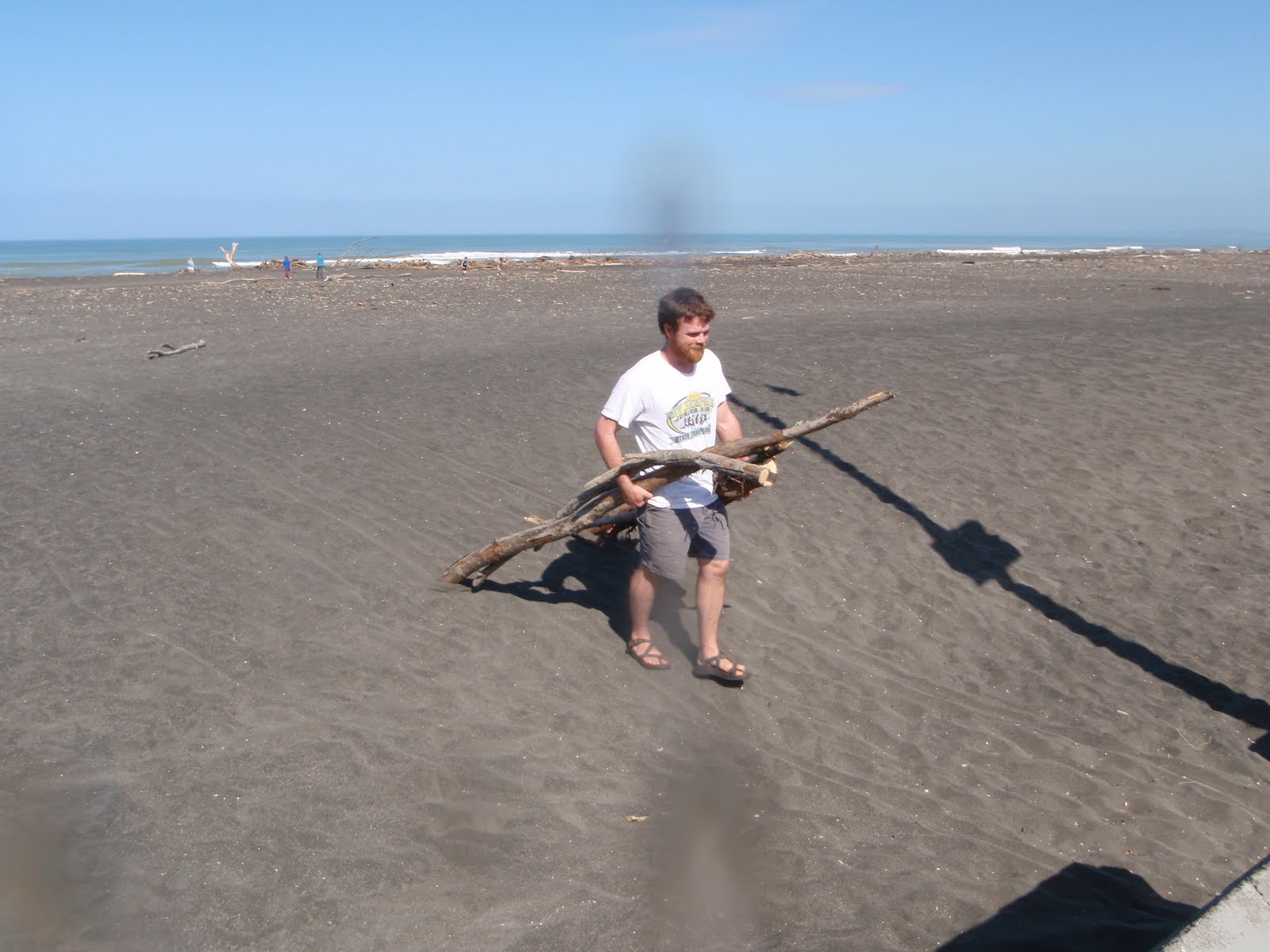
I have been splitting quite a bit of wood for our two wood stoves over the past year and figured that leaving the rural lifestyle behind me and stepping into the suburbs for a few months might offer a change of pace. This dream came to an abrupt end with the three day rainstorm we had last weekend. The Whaganui river swelled into a churning brown monster laden with debris that were belched into the ocean. I thought twice before I took a swim in New Zealand’s agricultural run-off, but figured it was all part of the experience and plunged in. Over the next twenty-four hours the beach was transformed from a smooth black sand ribbon, laced with footprints and ATV tracks, to the remnants of a clear cut gone wrong.
Whole trees were washed up and stacked randomly amongst one another, leaving little room for my daily swim routine. So began my new career as a beach logger.

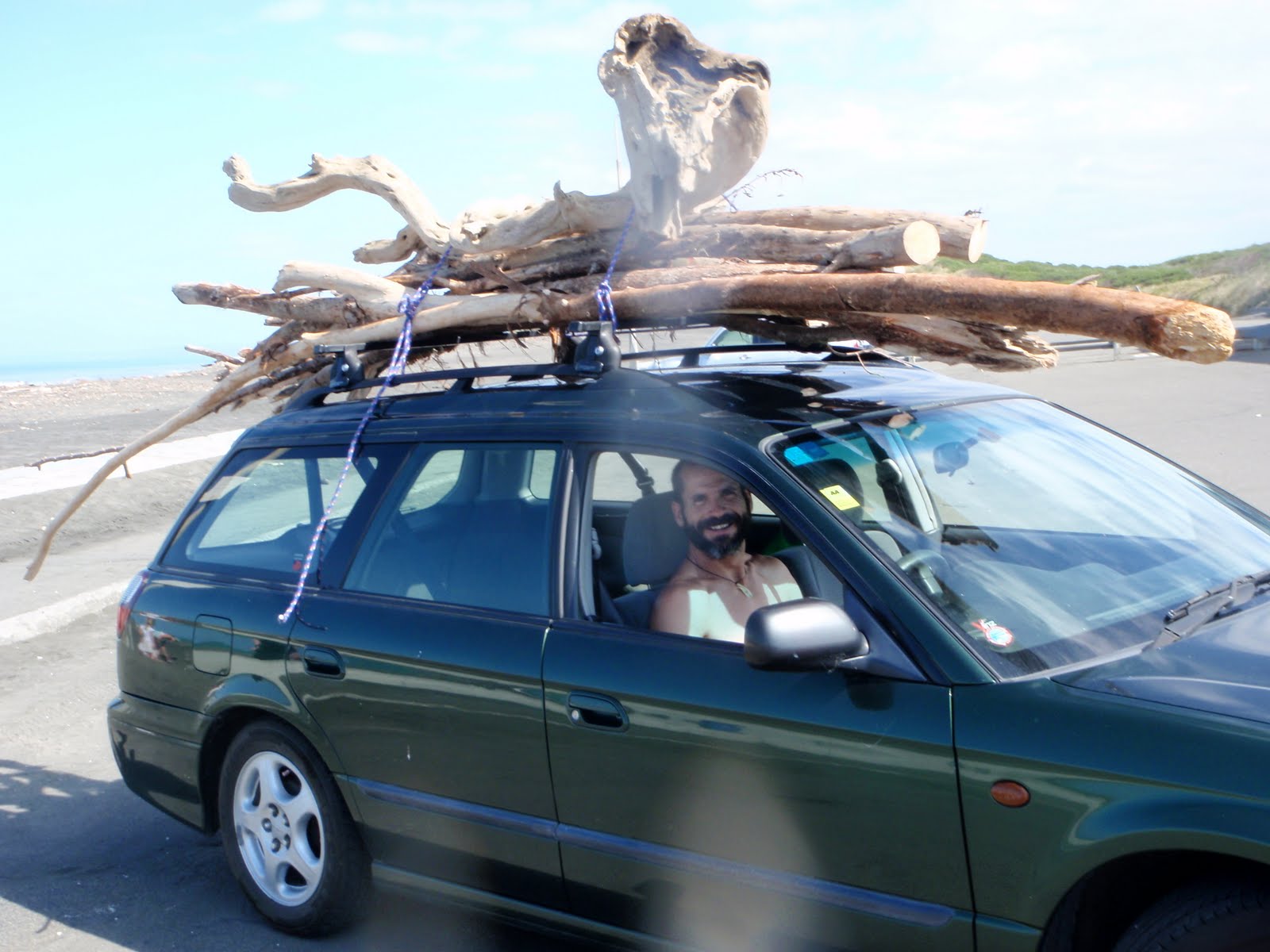
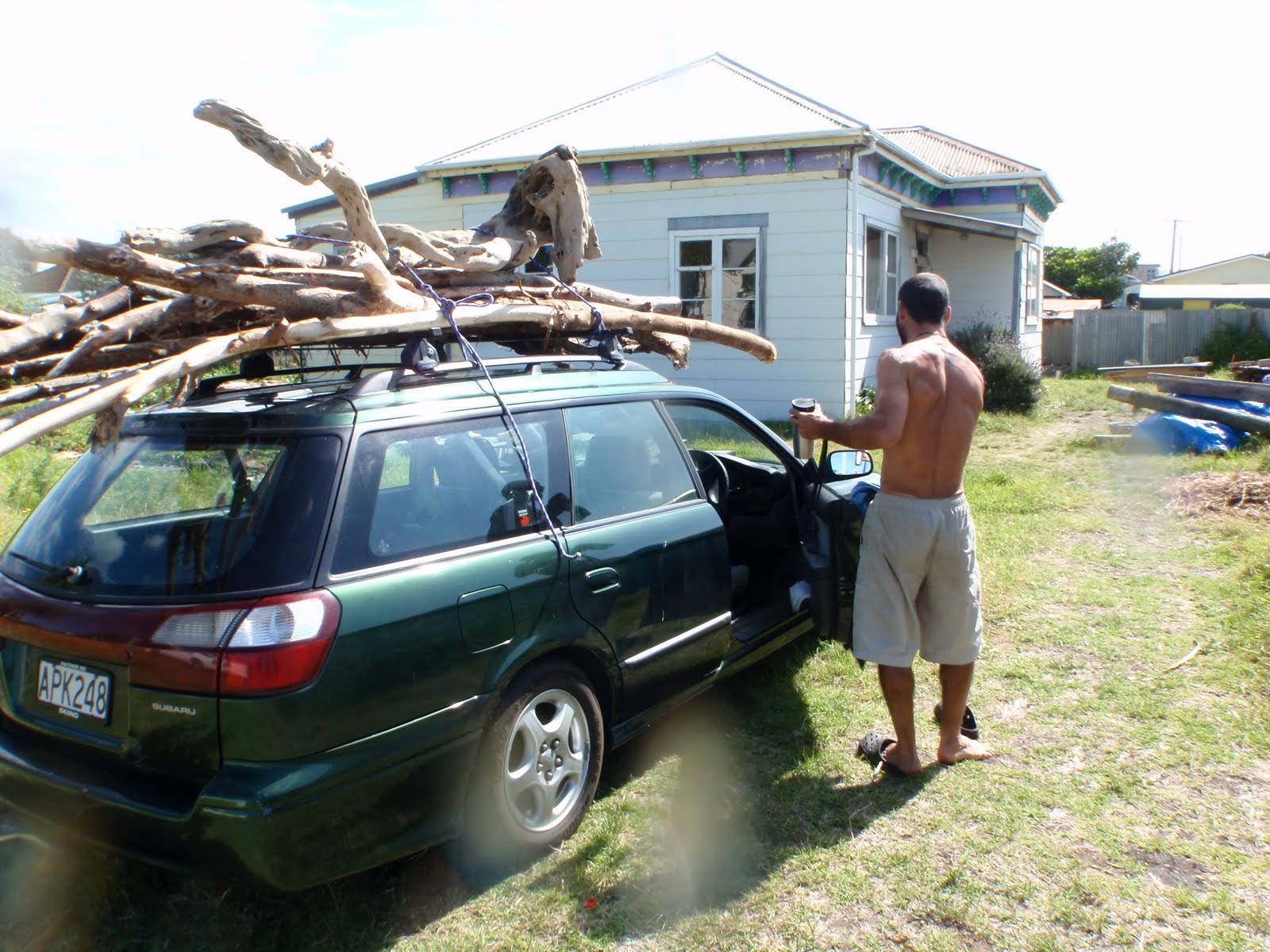
Nelson and I fire up our skidder and rumble down to the parking lot. Selecting only the finest wood for burning, we proceed to load the roof rack with logs of various sizes and up to eight meters long. Roping it all down, we headed for home.

The poor Subaru was riding low as we lumbered down the street, branches trailing close to the pavement. The four police cars we passed along the way seemed more concerned with catching hard criminals and drunks than busting us for doing a little beach clearing. Safely home, we unloaded without a scratch to the paint job. The wood now sits in a pile in the yard, awaiting the arrival of the multi-fuel stove and outdoor pizza oven.
Editor’s Note: John the Intern arrived to us, straight off a lobster boat in Maine, last Friday. He has been disappointed in the rainy New Zealand summer he’s experienced thus far. But it beats the wintery thundersnows back home. He’ll be in New Zealand until May, working with us and traveling to other sites. We’ve coerced him into writing some blog posts as part of his interning duties, so you can look forward to hearing more from him in the future.
Question: How does one return a borrowed bike when their own bike is their only other mode of transportation?
Here’s a product for all of your carbon-neutral bike transportation needs.
Fine print: Must have calves of steel and a sturdy backpack for successful performance. Do not attempt with folding bike on bottom. Dutiful husband not included.
You saw it here first people. Now, don’t go running out trying to market this brain child. We are trademarking this revolutionary technology as we speak. Also in the works: furniture on a bike, seedlings on a bike, and wife on a bike.
Editors note: After substantial research, it turns out that the market for these products is extremely limited. Turns out there are significantly easier ways to transport large items.
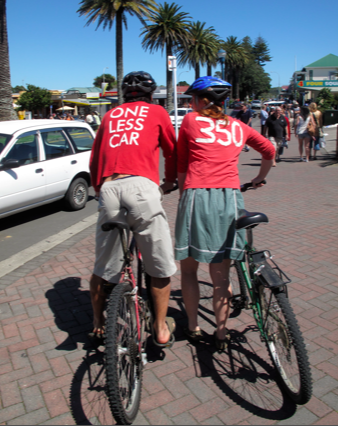
In all seriousness, living car free presents some very real challenges for us. We rely heavily on our fleet of bikes: the little folder; the hand-made green bike; the silver road bike; and our B.O.B. trailer. And I cannot express just how very thankful we are that we now live in a flat coastal town. Finding motivation to ride this 6k into town is much easier than it was to find the motivation in Raglan where the 6k involved riding up the side of a mountain. But, as easy as the trip is, riding after dark, in the rain, or with a huge load can be dangerous and inefficient.
We also love that we live two blocks from the bust stop, and that the bus runs about a dozen times a day. We’ve done our laundry, grocery shopping, and even transported timber back from town on the bus. I’ve made a little group of commuting friends who seem to ride the same routes as I do regularly, mostly older or mentally handicapped folks, or both. My favorite is an older Maori gent named Tui, who shouts a big “There she is!” every time I board, and then proceeds to tell the rest of the passengers “She’s American, you know?”. Not sure whether that’s meant as a warning or a kudos. Either way, I like to think of him as my bus boyfriend. Don’t tell the hubs. But, as nice as the bus is, the last bus is at 5:10pm and there are no buses on Sundays. What is up with that Wanganui District Council?
So really, if we want to do anything in the evenings, or transport large items. We are at the mercy of the generosity of friends. And they have been extremely generous. If we even mention that we might want to pick something up in town, we have several offers of people who are willing to help us. Heck, even our new neighbor over the back fence offered us her car after watching us carry a load of lumber back from the bus. This offer would have been more useful just a few minutes earlier, but its nice that she put it out there. But, its not sustainable environmentally or socially to rely on people shuttling us back and forth to town.
So we are left with some options. One option is to set up a barter system with one of our friends or neighbors who has a car. If we set up some kind of car share system, then with some planning we could eliminate the extra trips involved in shuttling back and forth and would feel like we are contributing to a mutually beneficial relationship (instead of a parasitical one?).
Another option of course is to cave in and join the ranks of car ownership. And there are endless details involved in that decision. Do we buy a really flash new eco car or go down the used-car route? Would we buy a small fuel efficient model or a bigger car that we could use to haul loads? We would we really have the self-discipline to limit ourselves to mandatory trips only or would our lifestyle significantly change?

What do you think? What would you do? What do you do? How do we contribute to the creation of a sustainable transportation culture without sacrificing our individual needs? Or is that even possible?
-June Cleverer
We’ve thought long and hard about what makes an eco-thrifty renovation. I say it is mindfulness. Specifically, we are trying to be mindful of energy, materials and toxics. To help guide us, we have adopted 7 guiding principles that we have drawn from nature. We’ll be providing plenty of examples in blogs, videos and podcasts to come, but for now, here they are:
We hope that you’ll visit us regularly to learn and laugh.
Peace, M.C. Estwing