Category Archives: our story

E.T.R. @ 100

Through much hard work and dedication, we have reached our 100th post. We have tried to keep our posts informative, educational, motivating, humorous and well-illustrated. You may or may not agree. This represents hundreds of hours of unpaid work thinking about appropriate topics, taking photos, writing and making videos. As permaculturists we feel an obligation to share our experiences/knowledge with others at low/no cost. The web is just one way to do that.
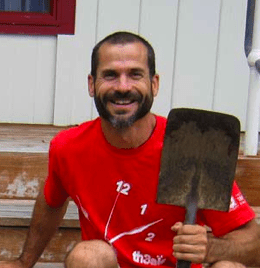
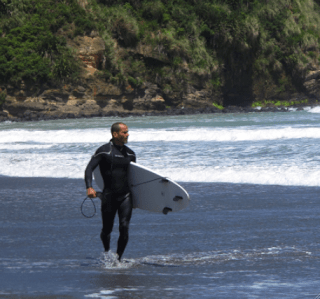
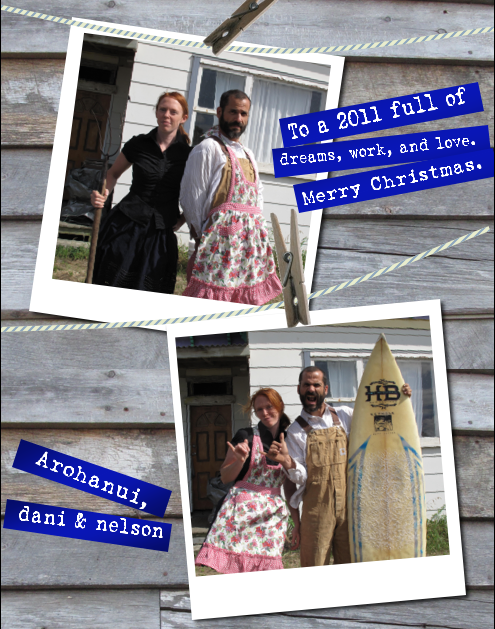
But who the heck are we anyway? Some of you know us well, but others may not. I thought that an update on we, The ECO School, might be appropriate from time to time. (Plus, I had to write a bio for a research symposium I’m going to in Australia next month, and I thought I would let it perform multiple functions for me.) So this is me at the moment. I’ll let ‘the boss’ post herself next.
You may think of me as a designer/builder/dumpster-diver/organic grower, but in fact, I am a Environmental Education/Education for Sustainability researcher. This is my bio for the Oz symposium:
Nelson Lebo, PhD Candidate, University of Waikato, Hamilton, New Zealand.

Although I have been in the field of EE/EfS for 25 years, I am new to the field of EE/EfS research. I can still recall sitting in a lecture theatre in 1986 while a professor covered the problems of the world from deforestation to ozone depletion and everything in between. That course gave a new direction to my life (other than sport) that I have been following ever since. Over the last two decades I have been a secondary school environmental and science teacher, a wilderness trip leader, an organic farmer, and green builder. In 2008 I decided to combine these experiences into PhD research that draws on them all. The challenges my research seeks to address are the high rate of attrition in science classes beyond the compulsory years, and the low uptake of EfS in high schools. As a result, both the scientific literacy and ecological literacy of many post-secondary learners is sub-optimal. While a whole school approach is recommended and appears appropriate for many primary schools, at present it does not appear to be viable for most secondary schools. The approach I’ve developed to engage students in science while incorporating high quality EfS into a Year 10 science classroom in New Zealand is to set the science learning within the context of environmental problem-solving and ecological design through the use of local permaculture projects. Transformative learning theory, systems thinking, social constructivism, and experiential learning play key roles in this research.

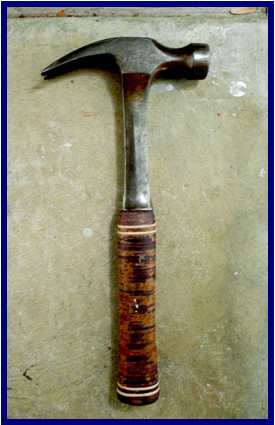
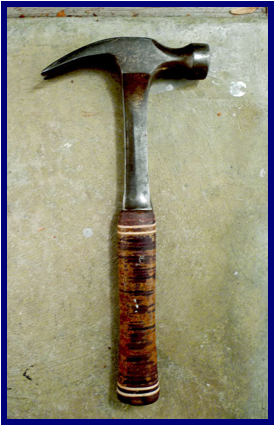
Peace, Estwing

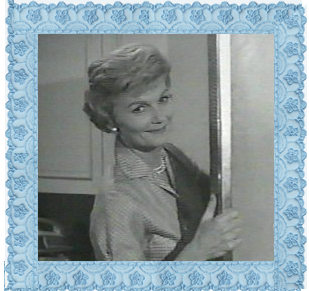
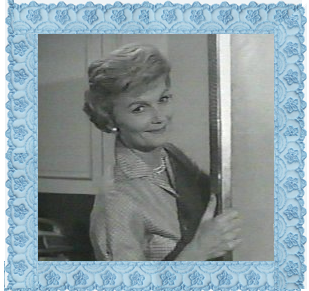
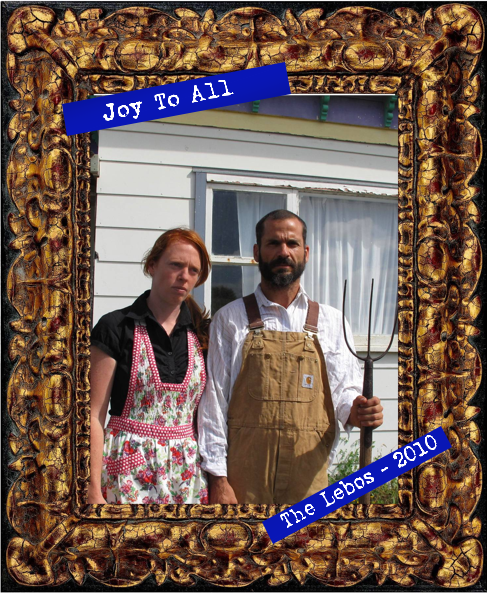
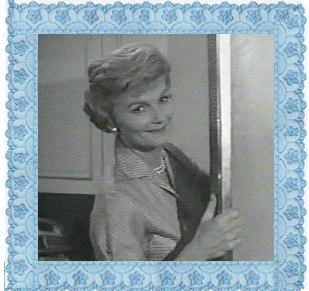
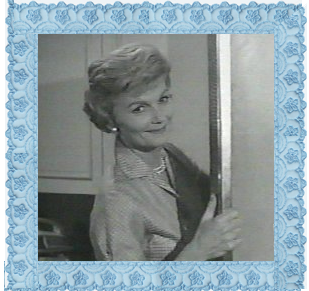
This is not my beautiful wife…

How art imitates life. Talking Heads version.
And you may find yourself in another part of the world


And you may find yourself in a beautiful house,


with a beautiful wife


And you may ask yourself, How do I work this?


And you may tell yourself, This is not my beautiful house!


And you may tell yourself, This is not my beautiful wife!


Letting the days go by/let the water hold me down


Peace, Estwing
P.S. FYI: See this article in the New York Post last week.

Tears and Revolution

You are probably as aware as I am that global food prices reached a record high recently, surpassing even the spike in June 2008 which caused riots in more than a few countries and led to at least one government being overthrown. This time around there also appears to be civil unrest associated this higher food prices.

I’m fascinated that a number of powerful forces are using the high food prices to try to push genetically-modified seed into markets previously resisting GM food for any number of reasons. GM (also known as GE – genetically engineered) seed, they argue, is essential for feeding an ever-growing human population and prevent starvation and malnutrition. This, of course, would lead to more concentration of power and wealth while leaving the dispossessed even more dispossessed.

It is simultaneously maddening and tragic. I don’t know whether to cry or revolt. In the end I do a little of each.

These are my tears…

and this is my revolution.

Keep growing, Estwing.

Ups and Downs

Having a bit of a rough day today, some bad news from home mixed with some sad news around here. Not to mention a few challenges here at the house, that I might or might not blog about another day.

But amidst all of that there is joy.

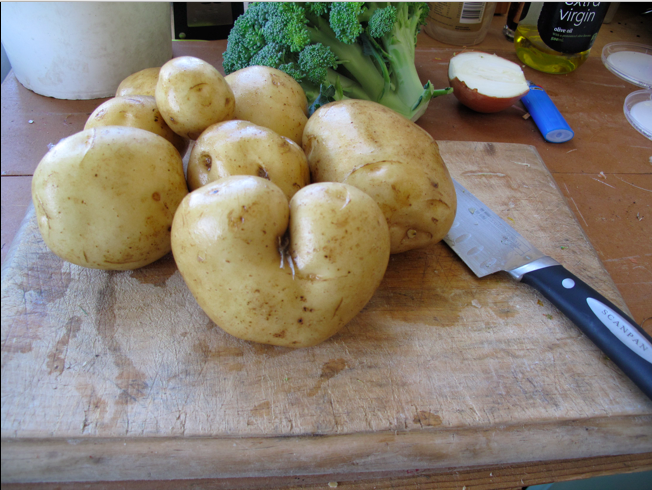
Like this heart-shaped potato.

And beautiful kids with sparklers.

And full workshops.

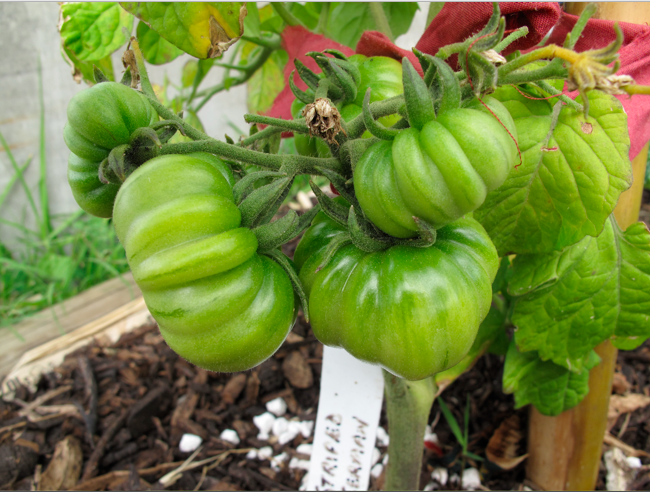
And ripening striped germans.
Some days it just takes a little more effort than other days to find the beauty in the world and remind ourselves that life is good.

-June Cleverer

A Mid-Summer Night’s Dream

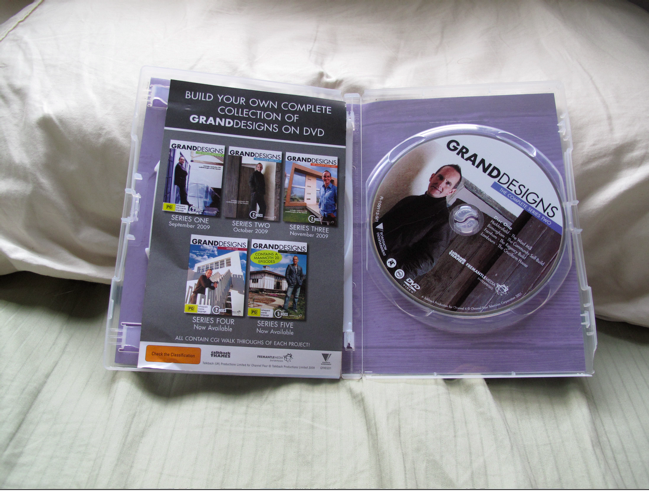
We like to watch old episodes of Grand Designs in bed. The program is highly entertaining, mildly educational, and somewhat addictive. Luckily our friend Tracy has all of the seasons on DVD and is happy to share them with us.

Over the course of watching the first two seasons I can recognize patterns that often form when couples tackle these types of building projects – particularly those that are renovations. Inevitably, the project goes over budget and over time, the couple gets stressed out, and the episode ends with host Kevin McCloud chatting with the couple by candle light in a drafty room because the house does not have electricity or windows yet.

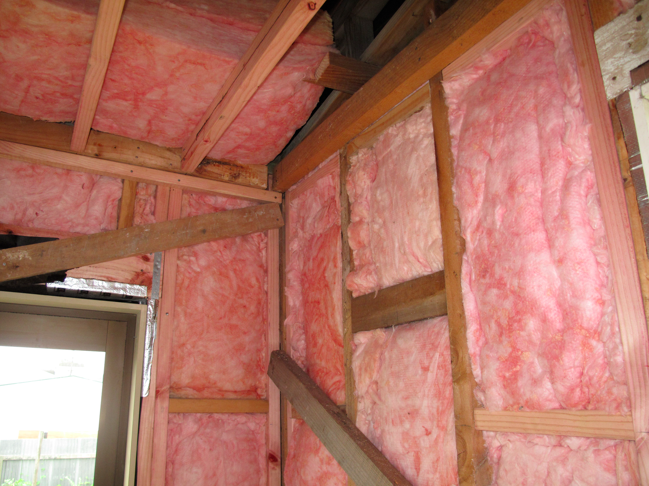
Let me make it perfectly clear that we (now) have electricity and windows, and that our design is anything but grand. (When Kev wants to start ‘Humble Designs’ we’ll be first in line.) When we bought this property we inherited an existing consent for a renovation that included a large deck, verandah, and walk-in closets. We eliminated these but added solar hot water and insulation. That’s the way we roll.

Solar hot water and insulation are about as eco-thrifty as you can get. That is, you can save money and the planet simultaneously. Each one offers a return on investment greater than any term deposit in any bank. The point at which the savings from energy bills equals the purchase price is called the ‘payback period.’ After that, all of the additional savings are untaxed income: money in your pocket.

However, there is a caveat: you have to be able to afford them in the first place. If you can’t pay cash then you end up borrowing money, and the interest robs a part of your savings and extends the payback period. Although the US and NZ governments have schemes to help homeowners include energy efficiency measures, in most cases the result is more borrowing and more debt. (More on debt in a moment.)

In my opinion, the best approach governments could take would be providing zero-interest loans for insulation and solar hot water. These loans would act exactly like a cash purchase for the homeowner who could then repay the government through savings until the payback period is reached and then, as they say here, “Bob’s your uncle.”

While I have no idea why Kiwis use this phrase, I do have an uncle Bob. I do not, however, have a zero-interest loan. Therefore, I have dipped into my life savings to pay for insulation and solar hot water. This is an excellent investment because:

• Energy prices outpace the rate of inflation and there is every indication that this will only continue and even accelerate in the future. Any hedge against energy price rises is simply smart economically. The green benefits are a bonus.

• At the rate of quantitative easing (“printing money”) in the USA, my US dollars are becoming worth less and less everyday. Why leave them sitting in a bank losing value when they can be in my walls and on my roof adding value?

• New Zealand is not immune to debt either. This land of the long white cloud has significant debt issues on many levels that will come home to roost someday in the not-so-distant future. Whether that will look like Greece or Ireland I do not know. But something is bound to give.

• In a world that seems to be spinning out of control economically, environmentally and socially, it gives me peace of mind to have a tiny bit of control over a tiny property on a short street in a small city on a petite island in a big ocean.

We are not wealthy, but we have chosen to spend what money we do have on insulation and solar hot water for the reasons outlined above. We feel good about that decision, but it does not mean that we don’t stress out about going over budget and over time. After watching another uncompleted renovation on Grand Designs last night, I had terrible dreams that kept me tossing and turning in the summer heat.

I got up this morning, made myself a cup of coffee and started writing. I feel better now because I know we are doing this for all the right reasons. We are taking an abandoned house on a derelict section and turning into an urban homestead. We are sharing our story with anyone who wants to listen. And we are having fun doing it.

Peace, Estwing

New Year – New Ducks

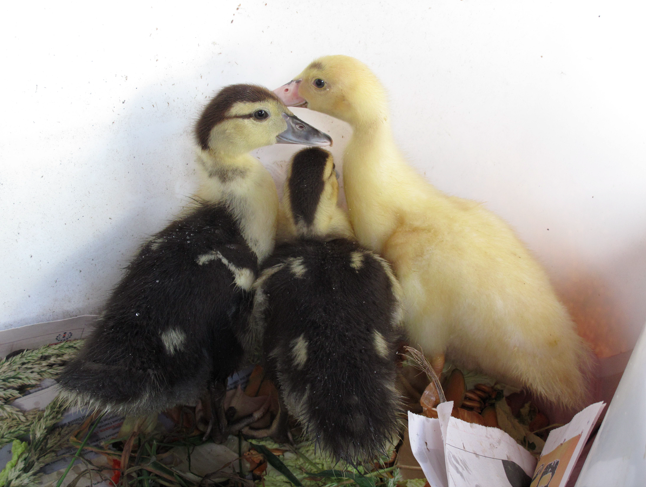
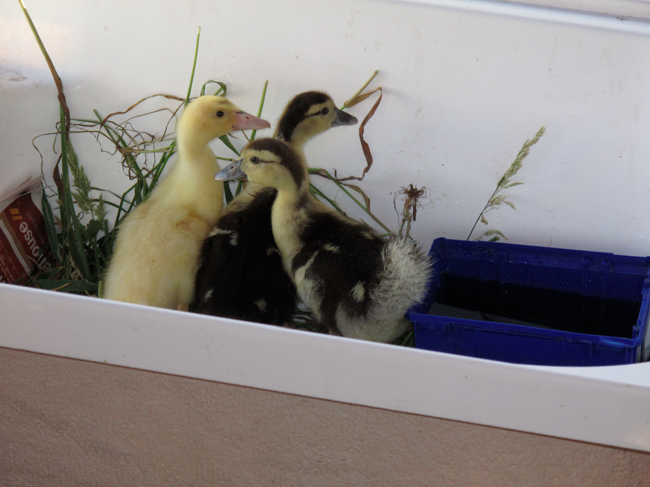
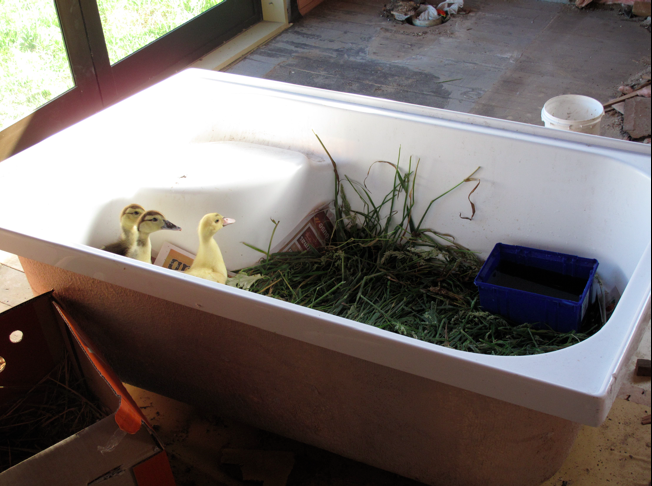
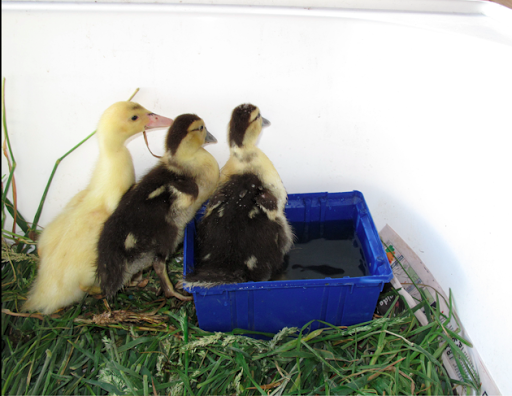
We have ducklings! Estwing took me on a surprise trip yesterday to the outskirts of town to pick up an early birthday present. We came home with a box full of chirping little pooh-filled dumplings of cuteness. I’ll stop talking and get right to the pictures, since I know that’s what you’re after.


For now they’re living in a bathtub in our future dining room.


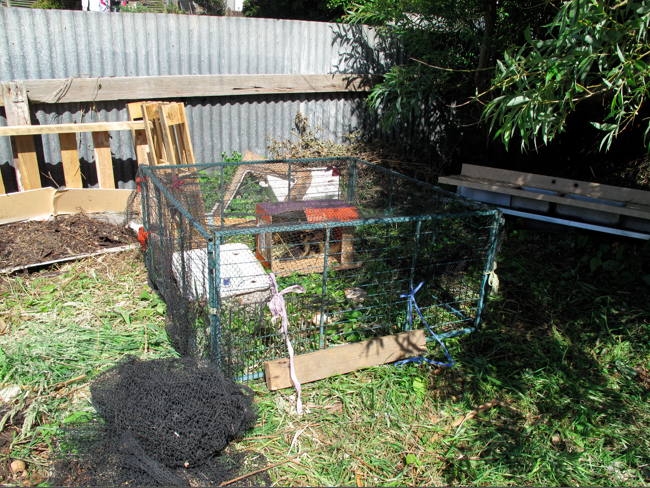
We built them a pen outside, but they escaped. Cunning little buggers. We found them nuzzled up under the willow tree while a hungry cat lurked nearby. We’ll have to modify it today to be a bit more duck proof.


Our ducks are Muscovy Ducks, which will grow up to be not too cute at all. But for the time being, they are ridiculous. For now they seem to just poop and eat and chirp at inconvenient times. But eventually they will help control pests in our garden, give us fertilizer, and provide us with edible eggs. Here’s hoping we picked three females!

We have some names picked out already, but are open to suggestions. Any thoughts?

-June Cleverer

Oh Willow Tree

Did you know that willows can be coppiced? Did you also know that when placed in water or damp soil, a willow will resprout roots? We like to use the spanish term for this “pega-pega” (“stick-stick”), mostly because its fun to say.

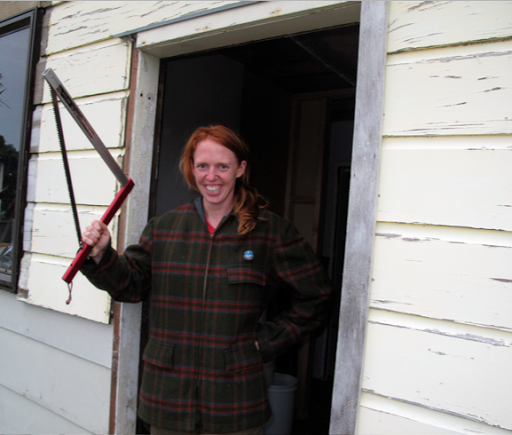
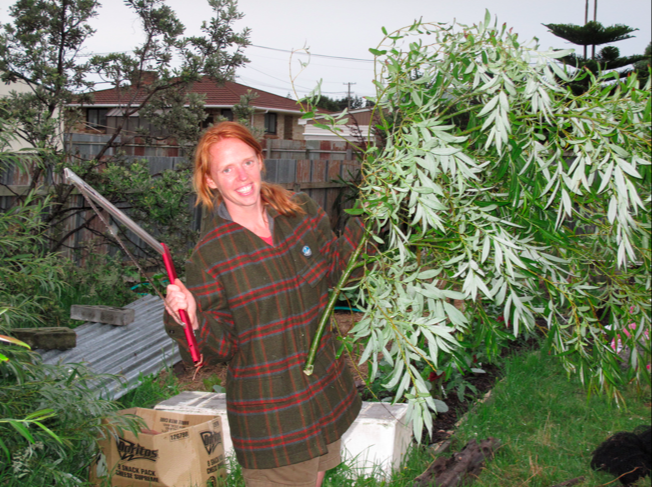
Anyhow, my desire for a christmas tree this year led me to do a bit of experimenting with coppicing and pega-pega on the willow tree growing in the back corner of our yard. Of course you can’t cut down a tree without a lumber-jacket on (I think I just invented a new word), even if it is 20 degrees Celsius.
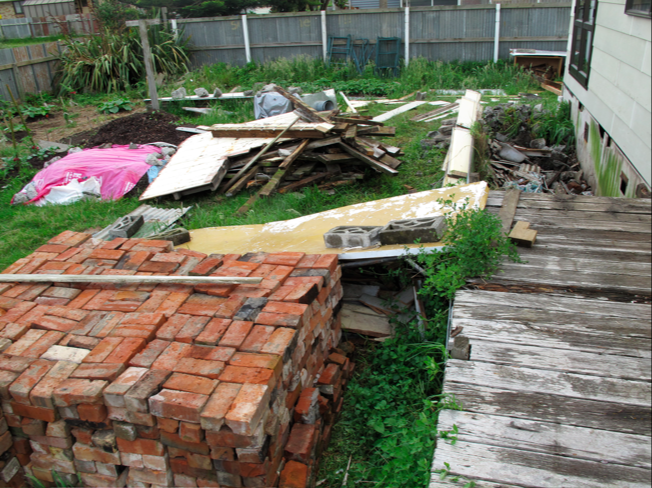
I headed out bravely into what more closely resembles a junk yard than a wilderness. And after quick rendevous with a particularly overgrown willow branch…

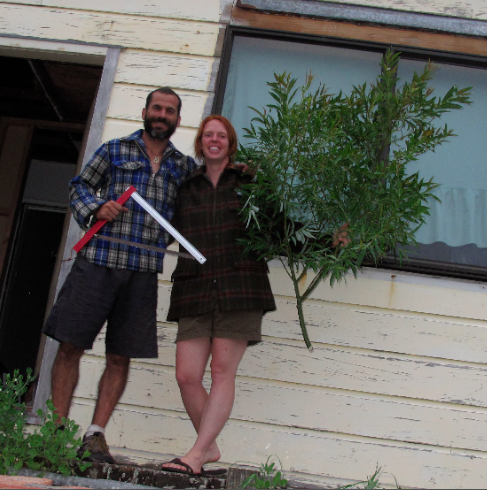
I emerged triumphant. I allowed my trophy husband to pose with me and our harvested tree, because I think he’s cute. I was feeling all merry, and humming christmas carols. Its a bit hard to get into the Christmas spirit when its hot and muggy out, but we were trying our best.

Earlier that day I had made some bundles of lavender harvested from the bush outside our front door.

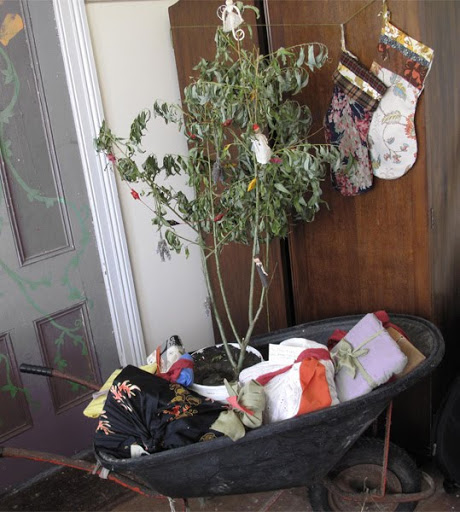
I added these to a garland and angel I bought at Trade Aid and the bride and groom cake toppers my sister made us for our wedding.

Then we set the willow branch in a bucket of sand, and lacking placement options in our home-in-progress, decided to set it in a wheel barrow, for easy transport. Then, while belting out that song from “Love Actually” and listening to that rock and roll Christmas CD we used to listen to growing up. (You know, the one with Sting and Cyndi Lauper singing Christmas Carols). We decorated that bad boy.
And look! It’s already filling up with presents.
As the kids at my day camp say… “Only 2 sleeps ’till Santa”.

-June Cleverer

The 3 R’s

In the midst of the holiday shopping rush – often called ‘Silly Season’ here in NZ – we have taken a non-traditional approach to…just about everything.

While others fill their yard with festive light displays, we…

While others buy artificial Christmas trees at the Warehouse, we…

While others carefully wraps presents in gift wrap, we…

It seems that in the week leading up to the biggest consumer orgy of the year that I introduce our next three design principles: Reduce, Reuse, Recycle. As you may be aware, the order of this trio is as important as the meaning of each one.

With regards to waste management, we want to first reduce the size of the waste stream, then reuse as much of that waste as possible, and finally recycle whatever is left over that we absolutely cannot use on site. We have already diverted over 90% of the waste stream of this project in this way.

My next posts will cover specific strategies for reduction and examples of creative reuse.

Peace, Estwing

All Thanks to Susan B. Anthony

“Hey babe, can you come here and give me a hand for a minute?”. I step away from the plastic bin I’ve been using as a temporary dish station for the past 45 minutes, hands soapy and greasy. “Can you hold this board up. OK, now can you hand me that hammer?”. “Yes, dear”.

When we first bought this house, before the wedding, before the move, before the work, I had a vision in my head of the two of us working side by side. Day after day we would saw and hammer, plan and design, sweat and problem solve. We would finish our long days exhausted, but filled with a sense of accomplishment at what we had achieved. We would have fun during the process, joking and laughing our way through errors that more experienced builders wouldn’t make. Birds would sing. Music would be playing in the background…the good life.

I can see you shaking your head. Those of you who are long-married or have attempted a renovation project with your partner before are in awe of my naivety.

The truth is that while this is a partnership, a marriage you might say, of two people working together to renovate a house, it hasn’t exactly played out like I imagined. There are a few major contributing factors:

  1. M.C. Estwing is much more handy than me. He has done all this before. I haven’t.
  2. I have a much lower tolerance for mess and dirt than MC, especially in our “living” areas.
  3. MC is actually quite a bit stronger than I am, and can work harder and longer.
  4. I have mad computer and telephoning skills.

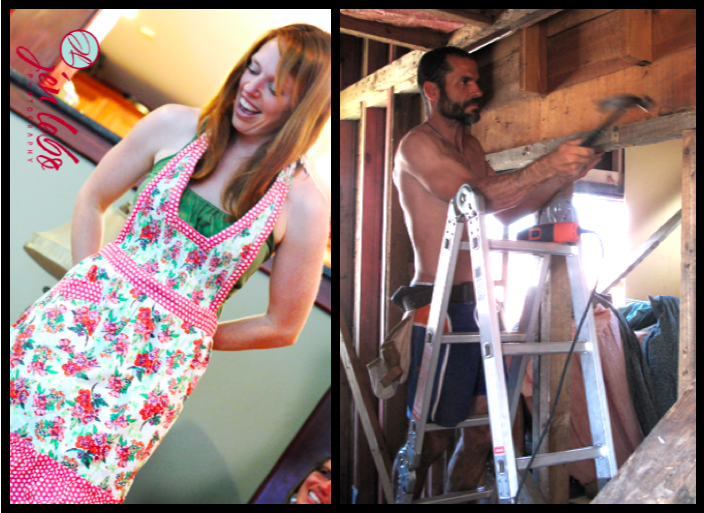
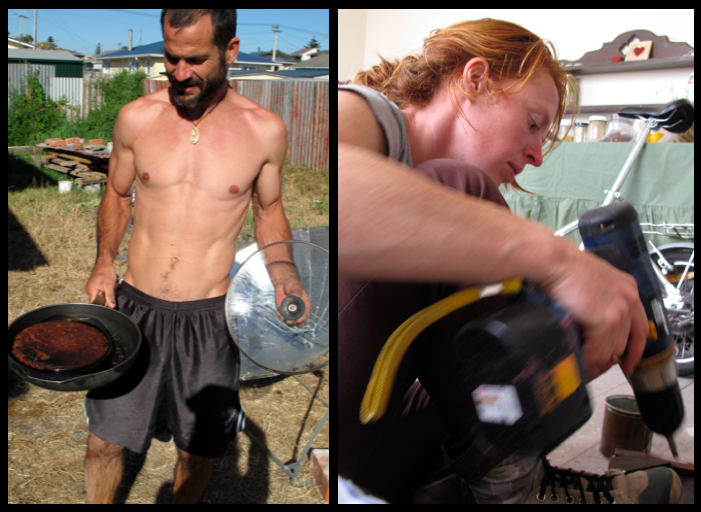
This has led to a division of labor of sorts. On this project team M.C. has landed himself the role of head carpenter and builder.

Which leaves June the roles of cook, housekeeper, secretary, oh yeah, and let’s not forget apprentice. Guess which one of us is more displeased with their roles.

I see you nodding your heads again, all you long-married experienced renovators.
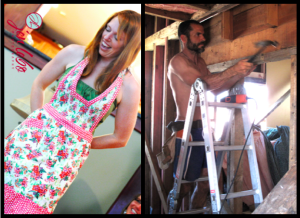
I am being a bit unfair to MC here. He has been fantastic about ensuring that we are both equally involved in the design process. Truly, he is working is butt off, long physical hours, that leave him drained. And, most importantly, he has been receptive to my feedback of the process so far.

He has also tried to engage me as much as possible in daily building tasks. This has been met with mixed success. My learning curve is steep, and his desire to see me succeed is high. This leads him to offer advice. A lot of advice. Often a lot of unsolicited advice. This doesn’t go over well.

Eventually I tire of being out of my comfort zone and efficiency wins over. My role gradually swings to go-for – “Can you pass me this? Can you hand me that? Can you bring this outside?”. I think of all the other things that need doing, and usually opt out and head for some chore that is waiting to be done. It certainly isn’t a scene filled with laughing and joking.

To be honest, the fact is that I do gain pleasure from creating a beautiful home, preparing a nice meal for my husband, and maintaining our social and business networks. I guess the problem is that I know that he would enjoy these things too, if only he had the time. Just as I would enjoy being more involved in the building, if I had the time to work through it at my own pace.

But in the end it really is just the case that he is a better builder, and I am a better homemaker. It is easier, more efficient for us each to take on the roles we are best at, and so that is what we slide back to, again and again. If we had been married at the beginning of the last century we wouldn’t have given a second thought to this division of labor.

So the challenge is this, and I pose this question to any wise person who can offer insight: How do we create a partnership where we encourage each other to break out of our comfort zones? Or is that even necessary? Should we stick to our strengths and each be the master of our own domains? Have I been raised in a post women’s lib era that has me chasing an unattainable working relationship pipe dream whose pursuit will only leave us both grumbling?
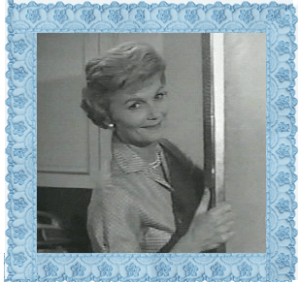
-June Cleverer