
Category Archives: Eco Thrifty Life

2014: Signs of Progress

At this time last year I reflected on what appeared to have been the Year of Eco-Thrifty. The Auckland teenager who goes by ‘Lorde’ rocketed to international fame with her song Royals, which rejects the excesses promoted by many others in popular music. Similarly an American rapper who also goes by one name, Macklemore, got considerable radio airtime with his quirky-but-catchy song, Thrift Shop. Finally, Pope Francis spent much of 2013 promoting messages of conservation and thrift, and even took on the beast of wealth inequality.

That was then, this is now. What about 2014? From my observations, Francis has been quieter this year, but certainly not inactive. The recent news that the US would be “normalizing” relations with Cuba came as a surprise to many. Likewise, that Francis had been working behind the scenes to facilitate communication between the two countries also came as a surprise.

Screen shot 2014-12-27 at 5.33.18 AM

But the more we get to know him the less of a surprise these types of things become. In a word, Pope Francis is progressive. From my perspective, that is about as much as we can ask of anybody these days.

In this world, you are either going forward, going backward, or standing still. If you are a keen observer of current events, you may recognize that standing still is not an option any more.

Take climate change as an example. Doing nothing is not an option for those who believe in peer reviewed science and are concerned about the world their grandchildren will inhabit. The recent agreement between China and the USA on carbon emissions can be seen as progress. Baby steps are important. Screen shot 2014-12-27 at 5.37.19 AM

On the home front, it has been refreshing to hear a couple of District Councillors speaking in progressive terms and even using the word “progressive” in public. It is especially encouraging that some Councillors can reflect on their decisions and change their minds. This is a sign of great progress for our community. The journey of a thousand miles starts with one step…

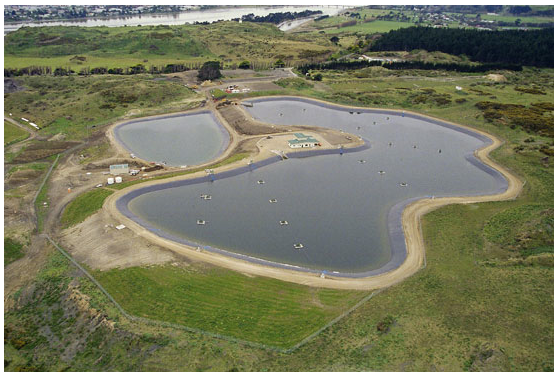
In the year to come let’s hope our community can make progress on a number of important issues such as resilience, inequality, health and the wastewater treatment plant. I suspect it will be difficult for us to progress as a community until there is some accountability for the monumental failure of the treatment plant and the ridiculous decision to spend close to a million ratepayers’ dollars squirting perfume into the air next to a windy coastline. Wouldn’t it be amazing for someone to put up his or her hand and say, “I’m sorry, and that type of bad decision will never happen again”? That would be real progress. Screen shot 2014-12-27 at 5.42.03 AM
Finally, I understand our city is looking for a new slogan and that some moderate progress has been made. To help the process along, here are a few suggestions:

Welcome to Wanganui: H me, Bro!

Welcome to Whanganui: No Longer ‘Family Friendly’

Welcome to Whanganui: Slogans Welcome

Welcome to Whanganui: Lawless

Lastly,

Welcome to Whanganui: The Bhutan of New Zealand*

* The mountain kingdom of Bhutan has become known for its measure of Gross National Happiness as opposed to the reductionist measure of Gross National Product used by most nations. Thanks to Cr. Martin Visser and his progressive ideas about quality of life in our awesome River City and the work he has done with the Social Progress Index.

This outside-of-the-square thinking is refreshing after the uninspired drone of “growth, growth, growth” we have been hearing for years. Here’s hoping 2015 brings more progress on this and other fronts for this beautiful place we all call home.

Peace, Estwing


Sidebar:

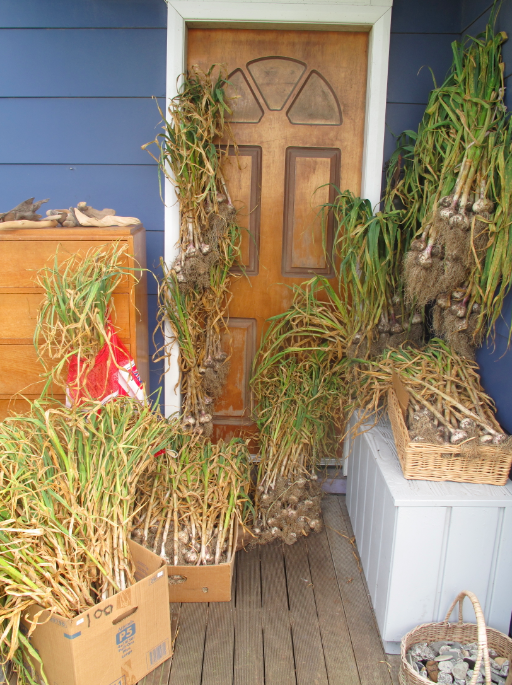
World’s Best Garlic!

2015 Permaculture Principles Calendar

Available today at the REBS stall at the River Market
A Free Range Childhood, Part 2: Cultivating Action

Richard Louv is a journalist and author who recently spoke in our River City. He advocates for children spending more time in “the woods” as North Americans call wild places with lots of trees.

I did not hear him speak in W(h)anganui, but went to a talk he presented at Dartmouth College (USA) eight or nine years ago. From what I remember, he was full of facts, figures, and statistics as any good journalist would be. From what I gather he shared the same type of information during his talk here, although presumably updated.

It is not difficult to document the loss of wild places near residential housing. Nor is it difficult to document the time children spend in front of screens instead of playing in “the woods.”

But like most journos I have known over the last two decades – Chronicle staff excepted, of course – he only tells part of the story. To illustrate this point, I have to begin with a question: For what purpose should we be striving to “reconnect kids and nature”? In other words, why bother?

Here are a few answers I have heard:

To decrease behaviour problems

To get kids “out of the house”

To help develop observation skills

To encourage “respect for nature”

To ingrain an “environmental ethic”

Screen shot 2014-12-19 at 12.08.33 PM

In my opinion, the primary purpose of providing abundant opportunities for children to spend time in nature would be as part of a greater scheme to encourage the development of ecological literacy. Simply “reconnecting kids with nature” is not sufficient, and here is where Louv misses the rest of the story.

We know that spending time in nature is insufficient to develop ecological stewards or Kaitiaki of the planet because the generations of human beings who caused the environmental degradation we now face spent considerably more time in the natural world than the current generation of children. We may have fond memories, but they do not necessarily translate into sustainable behaviours.

Interestingly, there is a growing body of evidence that suggests the current generation of young adults – sometimes called Millennials or Generation Y – embrace much more sustainable lifestyles than Baby Boomers in spite of having spent less time in “the woods.” What is also interesting in that despite their eco-friendly lifestyles, most Millennials do not self-identify as “environmentalists.” Good on them.

Screen shot 2014-12-19 at 12.08.24 PM

What could possibly explain this apparent contradiction in Louv’s “Nature Deficit” argument? The answer is simple: Recycling. Here is what I mean from a big picture perspective.

In places like New Zealand, most people who engage in sustainable behaviours do so out of a certain level of ecological literacy, which consists of environmental knowledge, an attitude of care, and the ability to act.

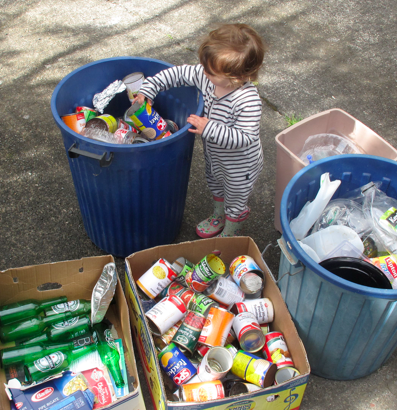
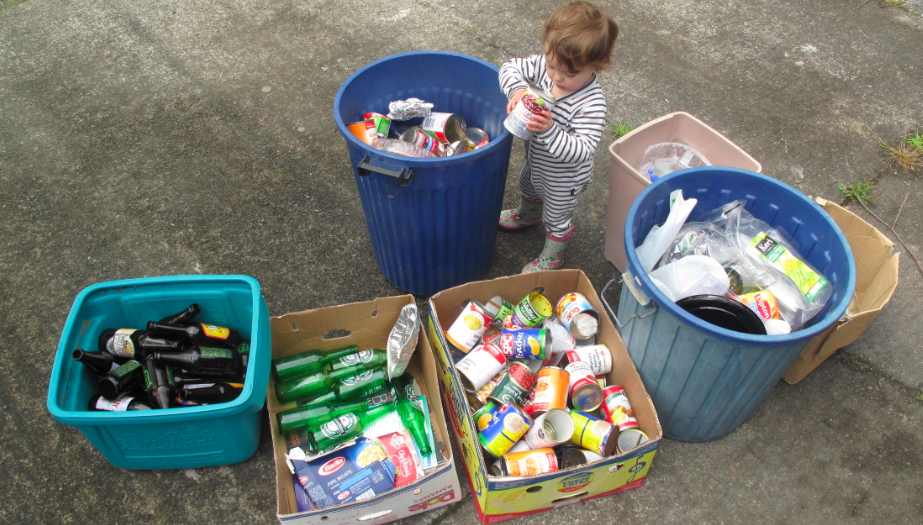
Don’t laugh, taking action is a real skill and goes right to the heart of the apparent difference between Boomers and Millennials. Many Millennials had educational experiences in primary school that included learning how to take action on environmental issues while most Boomers did not. The classic example is recycling.

 Screen shot 2014-12-19 at 12.11.12 PM

If you are over 50 or under 30, ask yourself this question: Was there a recycle bin in your classroom?

Learning to take action is equally important to learning to care, but neither is part of what an assessment-driven education system demands: learning da facts! As parents and teachers who want to do our best to raise sensitive children who engage positively with their environment and community, it is essential that we do not take Louv’s prescription as comprehensive but rather as part of a much larger and ongoing learning process. If we miss the big picture, then nature walks run the risk of tokenism, and we will fail to prepare this generation of children for what is predicted to be an increasingly volatile world with greater pressure on limited natural resources.

To be continued…

Peace, Estwing

Screen shot 2014-12-19 at 12.08.14 PM

Sidebar:

Verti’s Free-Range, Local, Organic Garlic

2015 Permaculture Principles Calendar

Available today at the River Traders Market
Early Summer Permaculture Update

This is the difference between climate and weather: while 2014 is on track to be the warmest year on record globally, we have had a long, cool, windy winter/spring here in the lower north island. The winds have been nearly relentless for the last 3 months, but the hours of daylight have increased on schedule. I’m getting up 5:00 or 5:30 am everyday now.

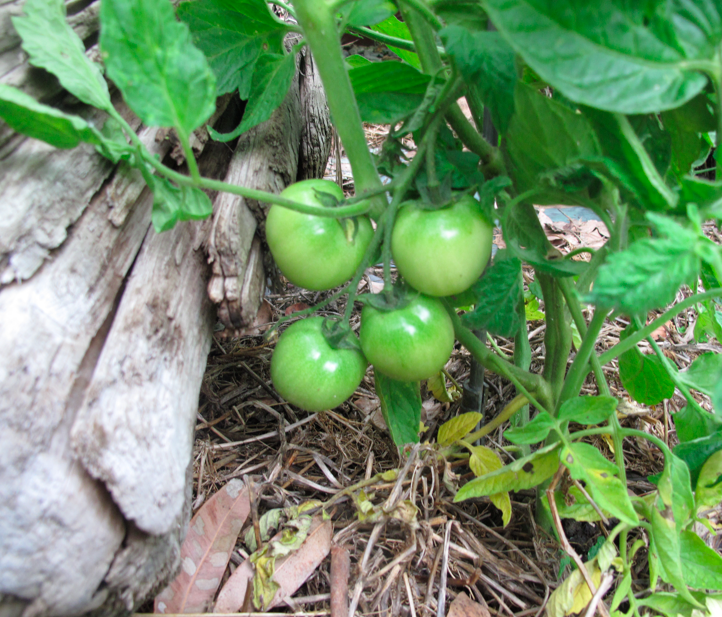
The biggest indicator of the cool weather is that our tomatoes are behind schedule.  Screen shot 2014-12-17 at 7.35.26 AM

Last year we had ripe tomatoes on the 13th of December. Two years ago it was the 20th. This year we might get them by Christmas. But it looks like we will definitely have courgettes by the weekend.
Screen shot 2014-12-17 at 7.35.15 AM

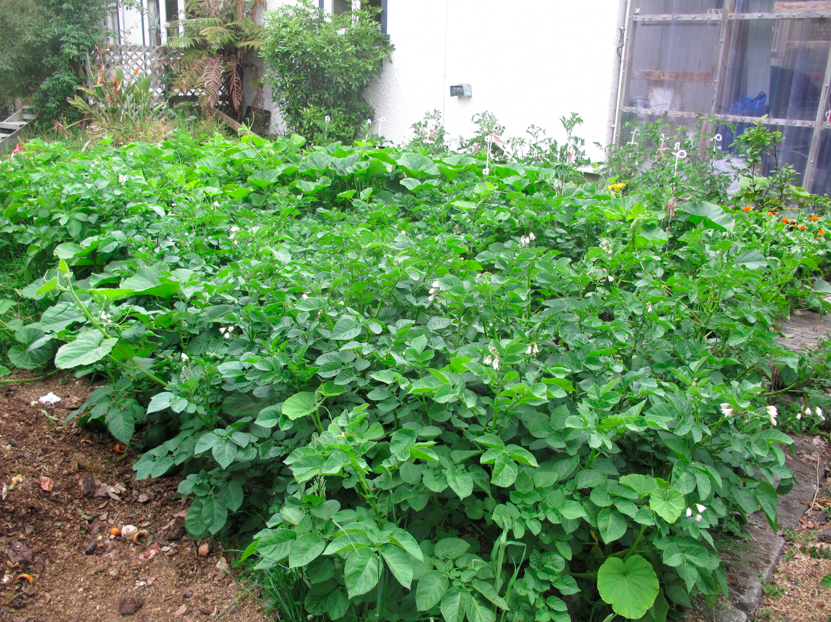
We will certainly have potatoes for Christmas.

Screen shot 2014-12-17 at 7.37.07 AM

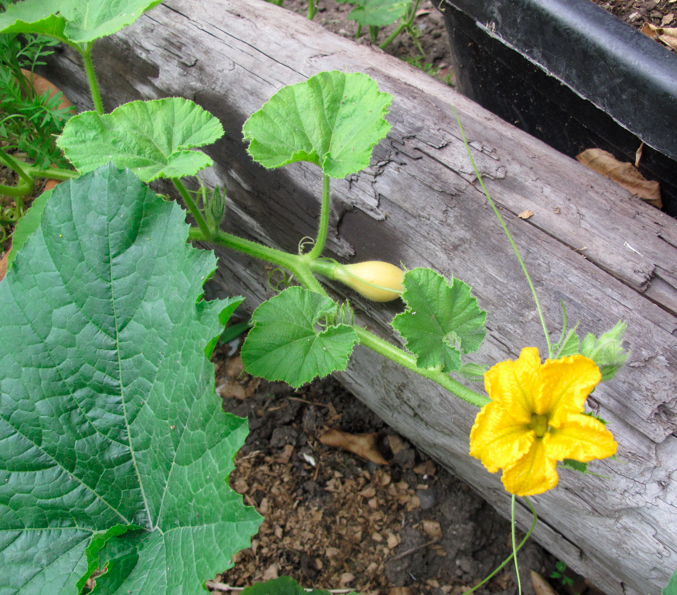
Long term, we have pumpkins forming on the vine.

Screen shot 2014-12-17 at 7.35.34 AM

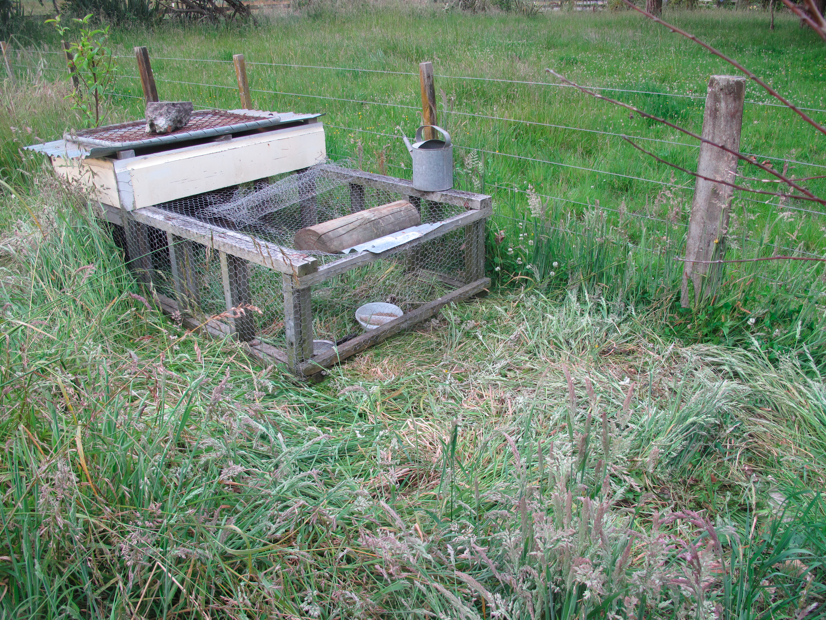
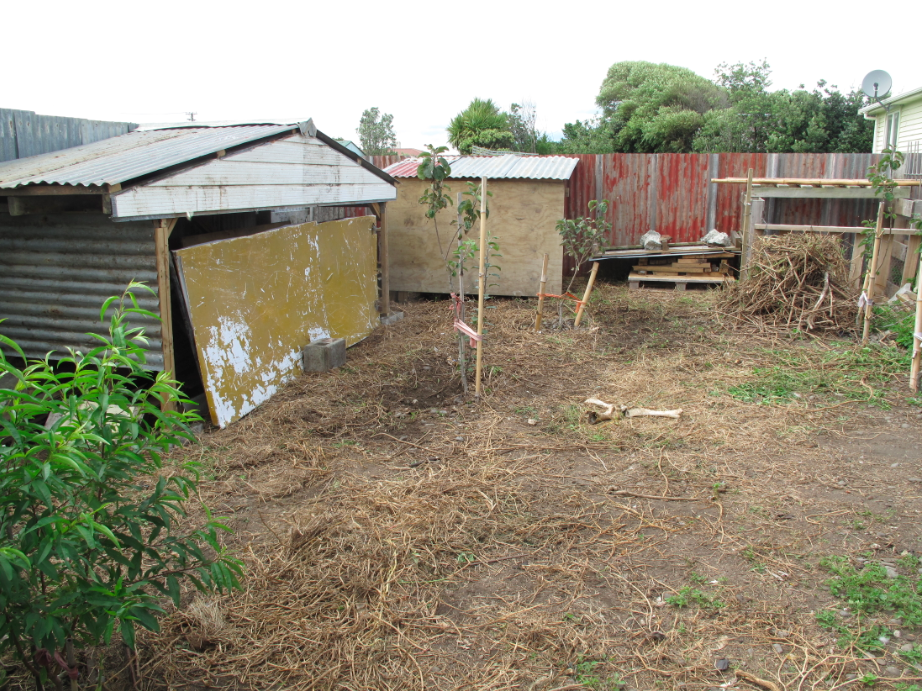
We finally got the chook tractor into the fledgling food forest.

Screen shot 2014-12-17 at 7.36.52 AM

Those birds have a big job to do.

Screen shot 2014-12-17 at 7.36.08 AM

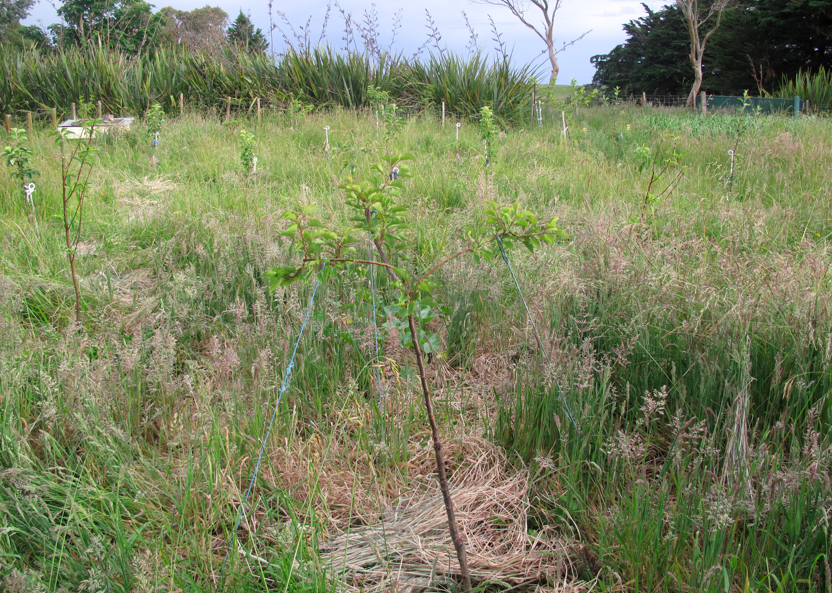
This apple has been transplanted from our last property.

Screen shot 2014-12-17 at 7.36.39 AM

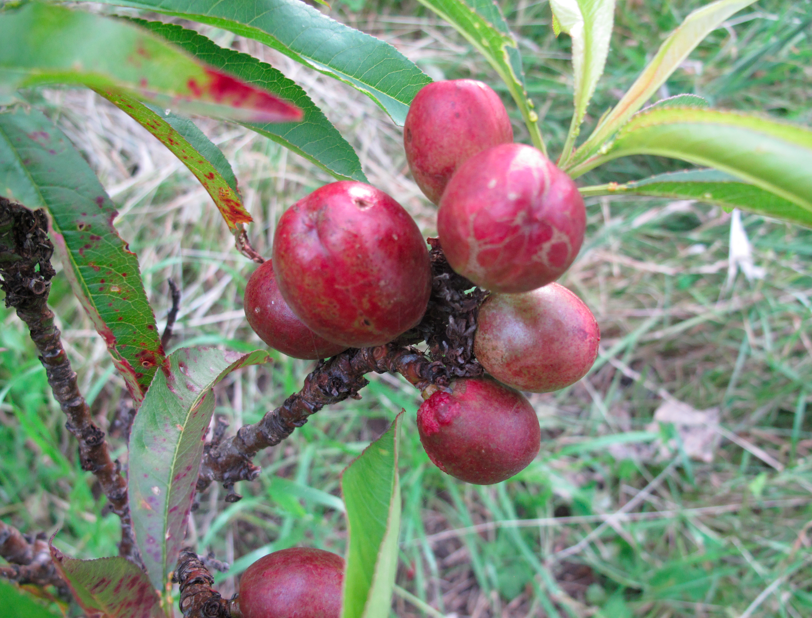
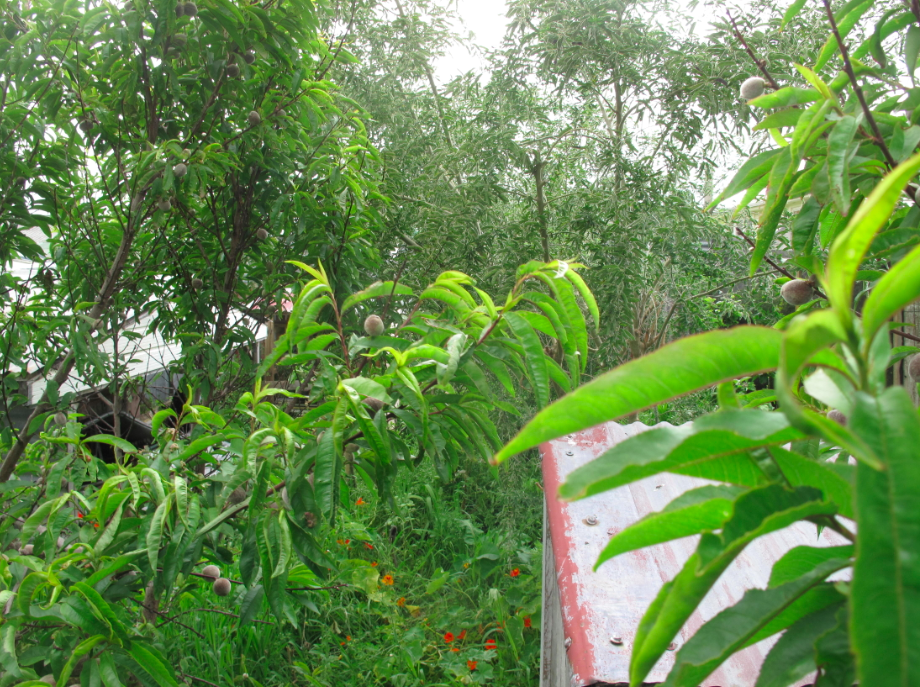
We also transplanted this dwarf nectarine. I thinned the fruit so we’re hoping to get a few good sized ones in the new year.

Screen shot 2014-12-17 at 7.36.27 AM

Peace, Estwing

Call Me “Miyagi.”

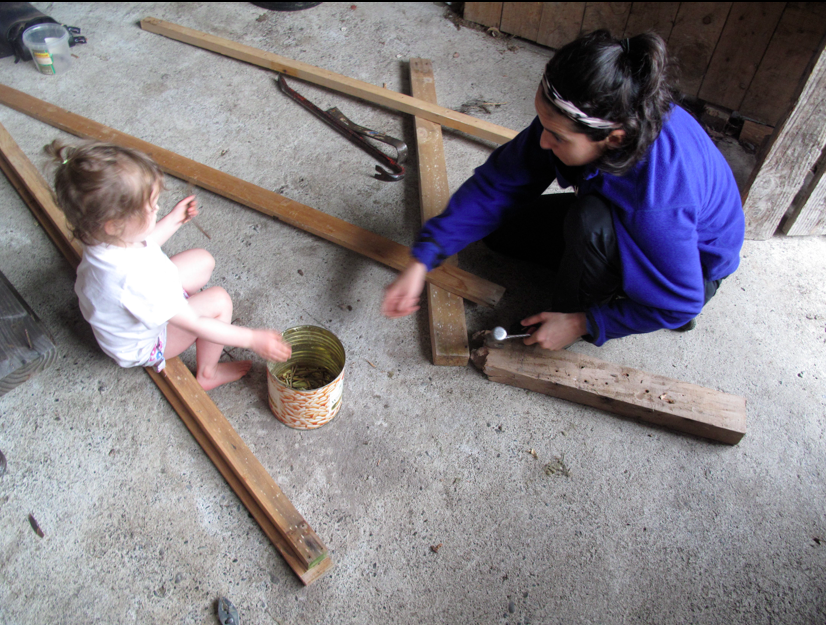
We have had a half dozen interns over the last four years. They have all been excellent. We are grateful for the time they have spent with us.

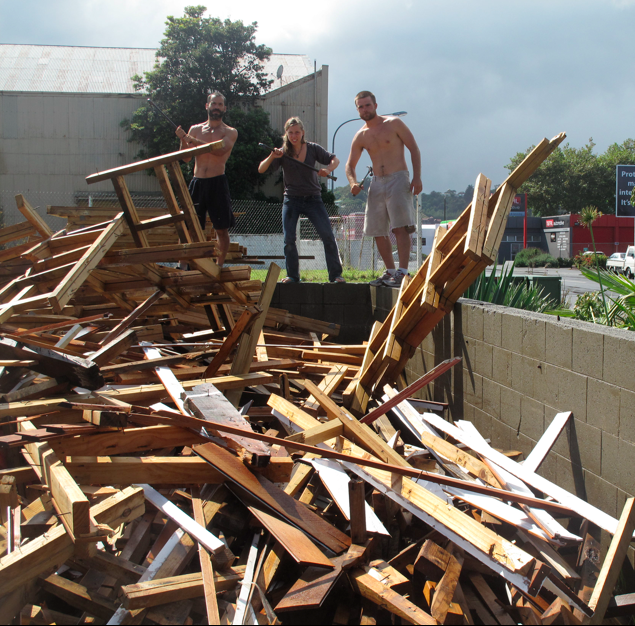
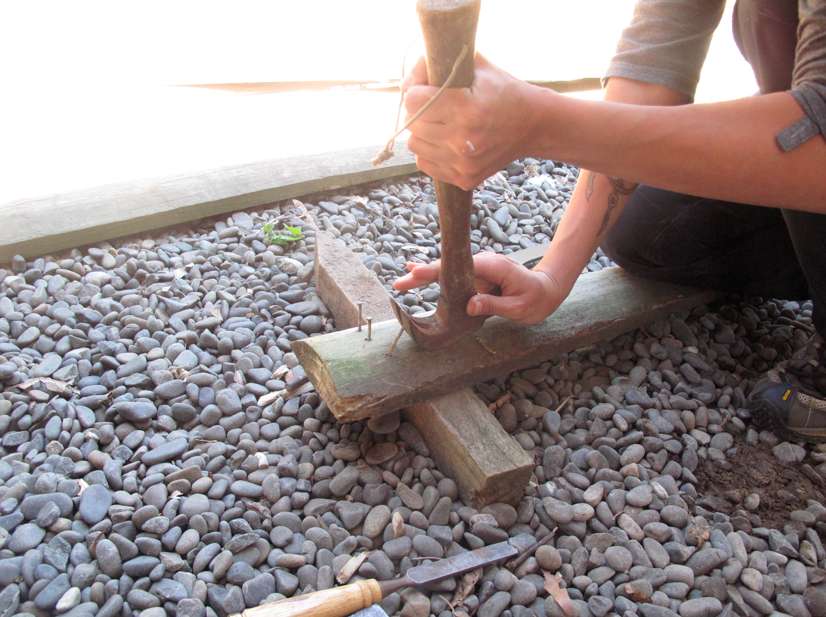
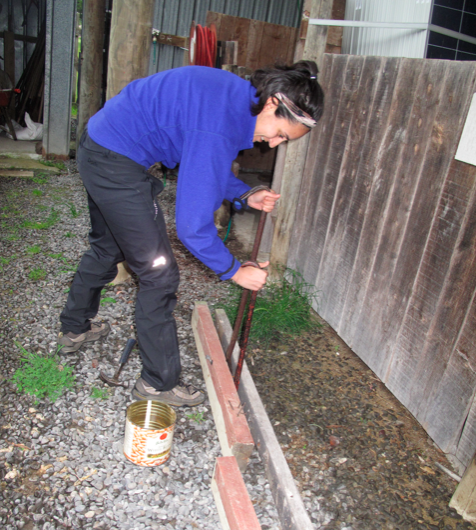
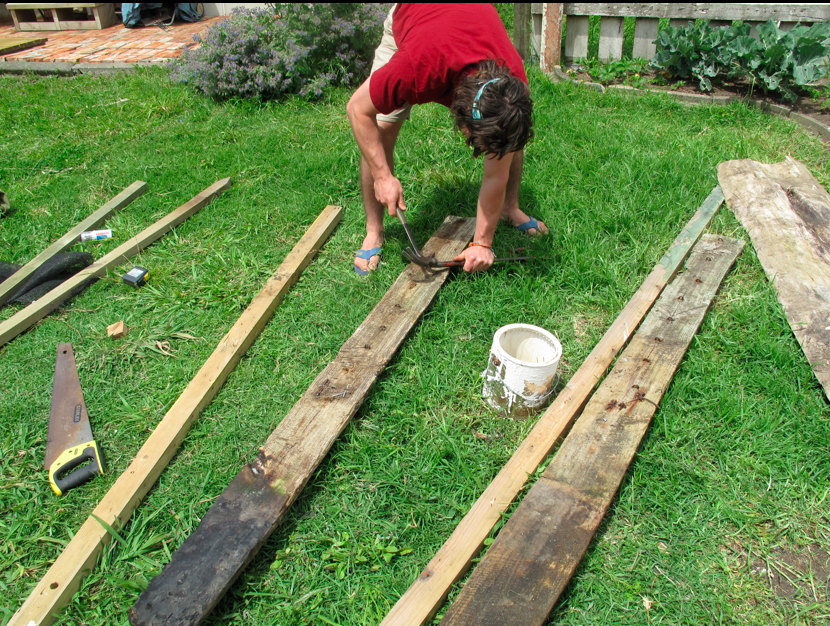
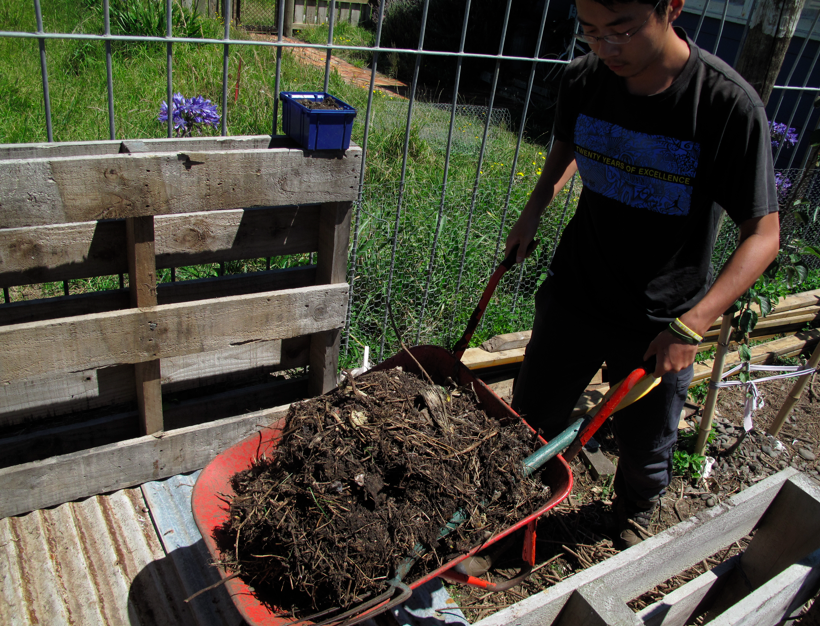
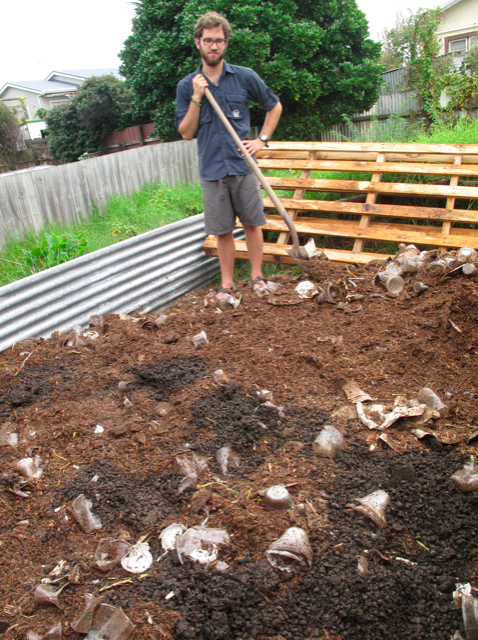
In the first week we teach them a couple of core skills, which include turning a hot compost pile and pulling nails. These skills represent the two “metabolisms” that William McDonough has identified: biological and technical.

Screen shot 2014-12-08 at 6.14.31 AM

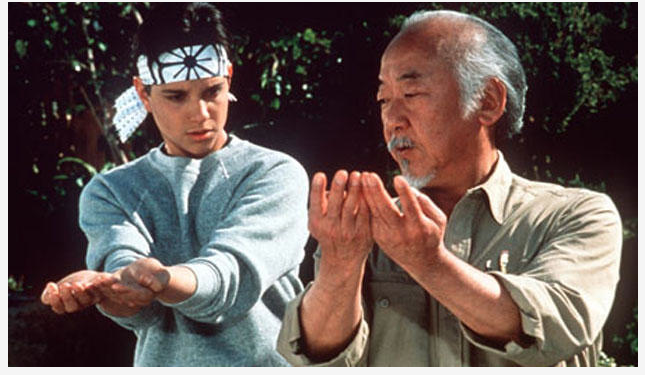
In my opinion, these also teach respect for materials and humility. This week our new intern, Camila, said, “You are like Mr. Miyagi and I am like Daniel-san.”

Screen shot 2014-12-08 at 6.23.59 AM

Here is Camila practicing her technique.

Screen shot 2014-12-08 at 6.06.02 AM

“Wax on.”

Screen shot 2014-12-08 at 6.05.11 AM

“Wax off.” 

Screen shot 2014-12-08 at 6.04.57 AM

“Like this, Grasshopper.”

Here are our other interns hard at work.

Screen shot 2014-12-08 at 6.02.37 AM

John, 2011.

Screen shot 2014-12-08 at 6.03.13 AM

Amy, 2011

Screen shot 2014-12-08 at 6.00.43 AM

Tommy, 2011

Screen shot 2014-12-08 at 5.58.32 AM

Jiquao, 2012

Screen shot 2014-12-08 at 5.57.27 AM

Xander, 2013

I believe it is a great privilege and responsibility to work with interns. For the process to be successful, all involved must see the benefits. In nature we call this “mutualism,” a mutually-beneficial relationship between two organisms where both are better off.

Peace, Estwing

Four-Dimensional Eco-Design

“If you want to build a better future, you must believe in secrets.”

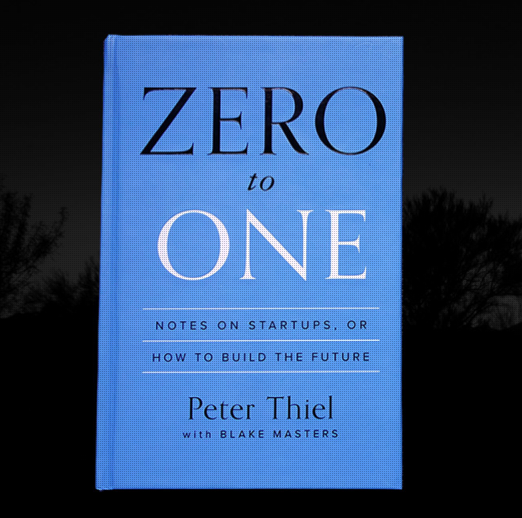
This is the provocative sentence that greeted me when I clicked on the Amazon.com page for Peter Thiel’s book, Zero to One: Notes on Startups or How to Build the Future. Written with Blake Masters, it has been favourably reviewed by a number of sources and made its way to The New York Times Best Sellers List.

Screen shot 2014-12-06 at 7.09.10 AM

I first became aware of the book a couple of months ago while listening to a radio interview. The phrase that caught my attention at the time was, “How do you develop the developed world?” In my opinion, eco-design is key to answering this question.

Eco-design has secrets that must be believed. It is inherently holistic, dynamic and future-focused. One of the things I love about eco-design is that it evolves alongside changing conditions rather than remaining static. I refer to this as four-dimensional design as mentioned in last week’s column about food forests.

Time – the fourth dimension – is an integral part of eco-design in two primary ways: 1) repeating cycles such as day and night, or the changing of seasons; 2) progressive change over time such as ecological succession.

In either case, eco-design is dynamic enough to adapt to the conditions whatever they may be. From this perspective I would suggest that eco-design inspires a level of confidence in that it involves feedback loops and is always open to adjustments. This quote from Martin Luther King Jr. sums it up:

“Faith is taking the first step even though you don’t see the whole staircase.”

I have faith in eco-design.


OK, enough with the flowery language. Let’s get to some examples.

Screen shot 2014-12-06 at 6.47.00 AM

Passive solar design makes homes warmer in winter and cooler in summer while cutting operating costs. The main factor in this win-win-win system is seasonal sun angles. A passive solar home is designed to welcome low angle winter sun while excluding high angle summer sun – all with no moving parts. The structure itself is built for seasonal change and day-night cycles.

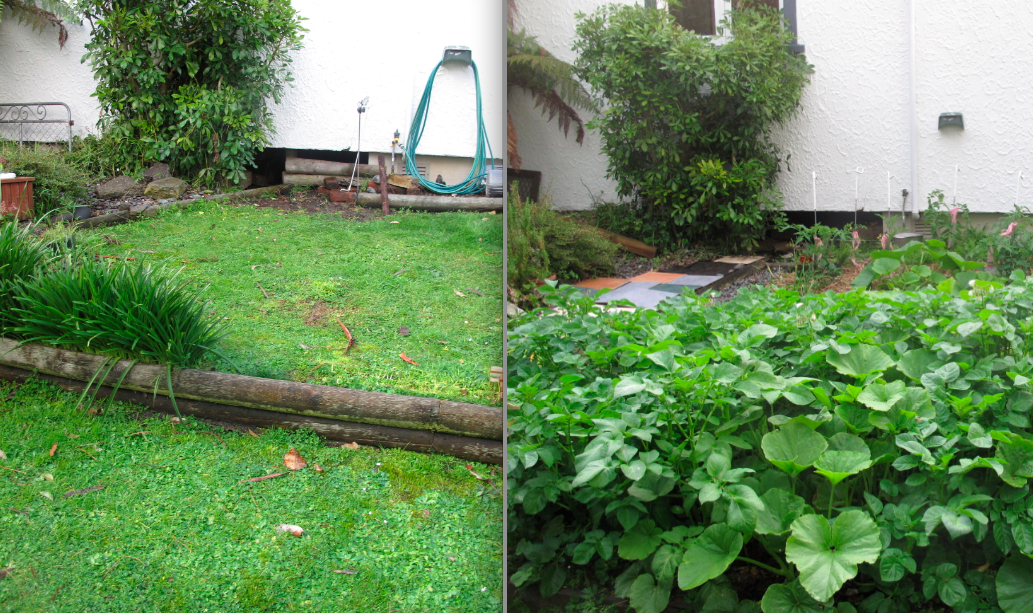
Another example of four-dimensional design is the lazy conversion of lawn into vege garden.

Screen shot 2014-12-06 at 7.03.37 AM

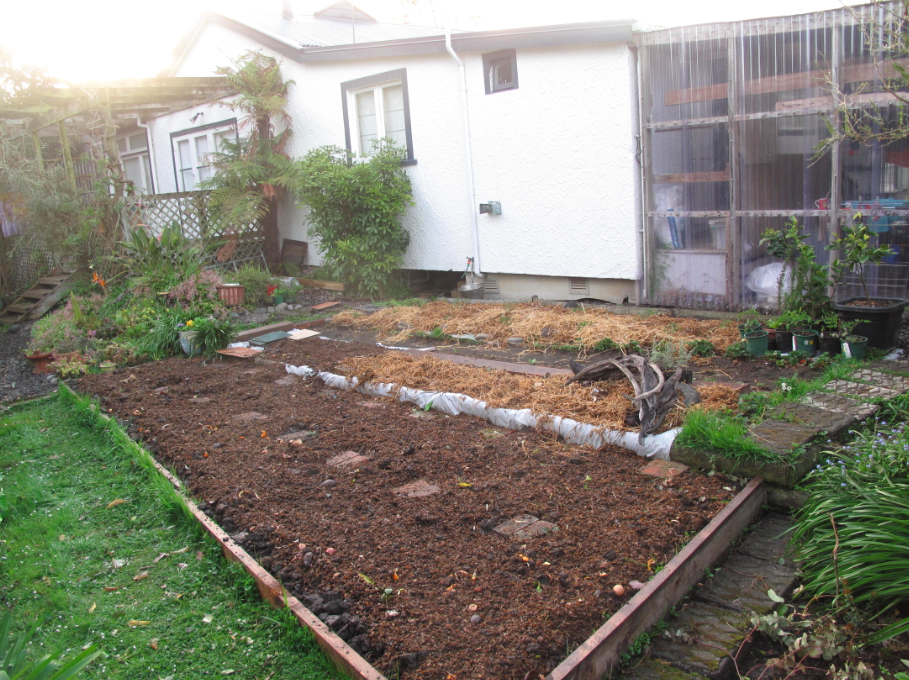
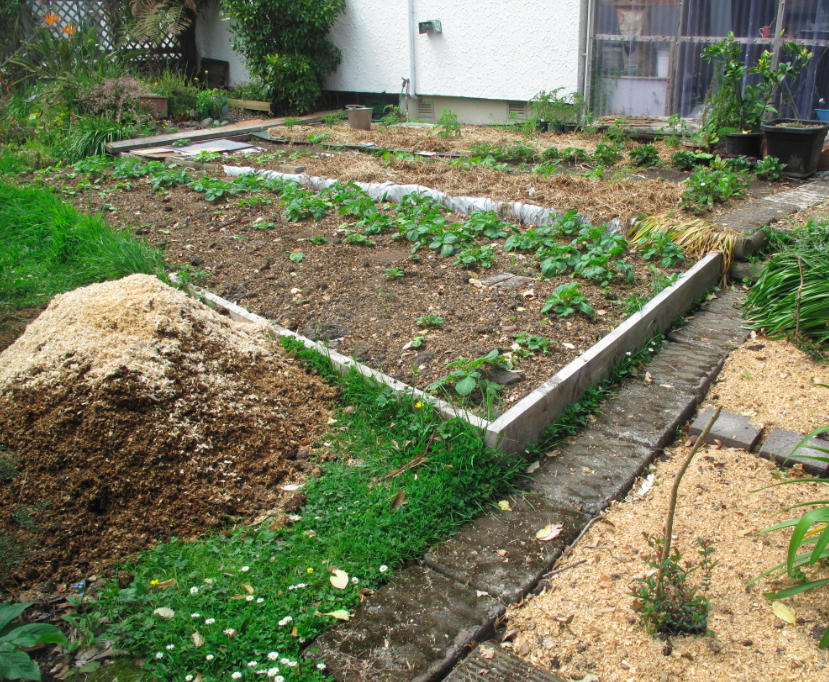
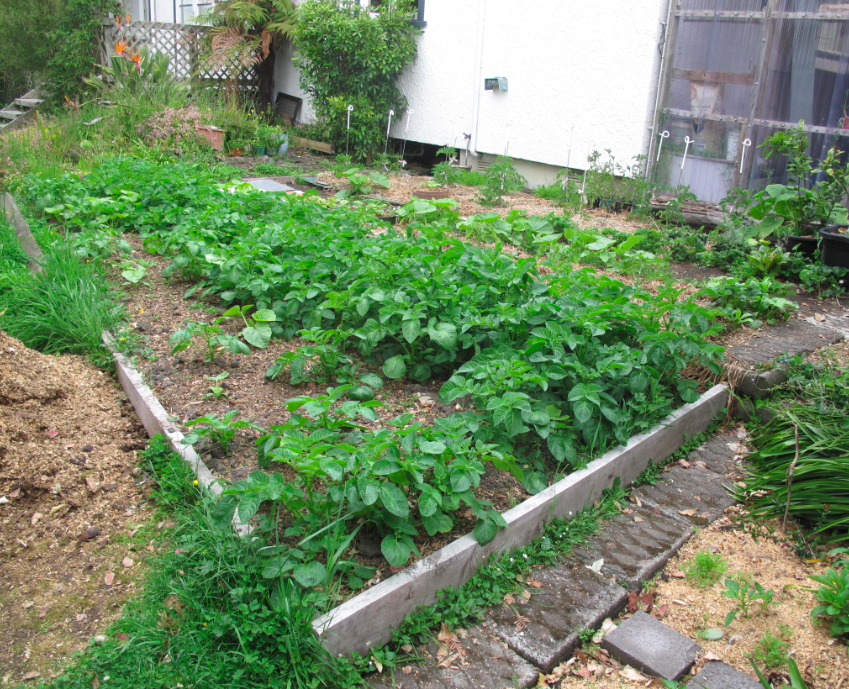
By taking it step-wise over time, the total amount of physical labour is minimized by letting nature do most of the “heavy lifting” although in this case it’s digging/tilling.

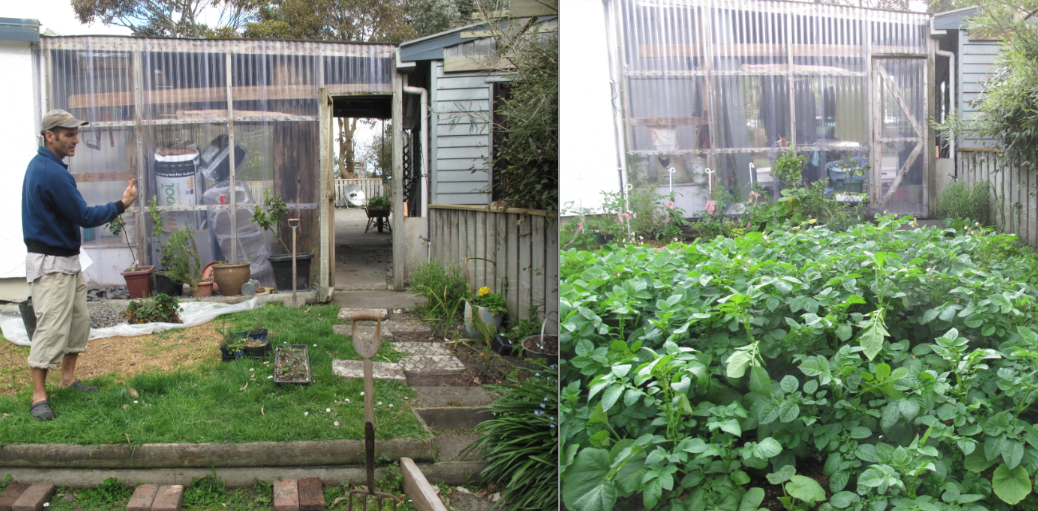
With heavy, compacted soils like we have on our property, a good way to decompress the earth is to plant potatoes. At the same time, adding organic matter helps to lighten clay soils by increasing biological activity. As the potatoes grow taller, we mulch them with more organic matter, which gives us a larger harvest of spuds while contributing even more organic matter to the new garden bed.

Screen shot 2014-12-06 at 6.51.14 AM

Preparing the beds.

Screen shot 2014-12-06 at 6.51.33 AM

Sprouting spuds.

Screen shot 2014-12-06 at 6.51.43 AM

Garden taking shape.

Another aspect of holistic eco-design comes into play when assessing a potential garden area for low-maintenance and high-productivity. The design of our new kitchen garden concentrates fertility where we want food to grow (the beds) while removing it from where we do not want weeds to grow (the paths).

Screen shot 2014-12-06 at 6.50.55 AM

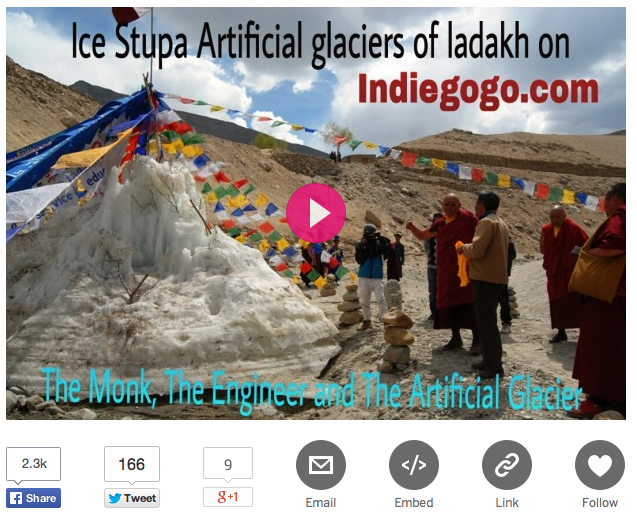
One final note of four-dimensional design: Three weeks ago I mentioned a project being undertaken by my friend in Ladakh, India, called the Ice Stupa Project.

It was my intention to share this amazing project with the Whanganui community by giving a short presentation. That does not look like it is going to happen, but I urge you to check out the Ice Stupa Project on the internet and to watch the inspiring short film on Youtube, “The Monk, The Engineer, and the Artificial Glacier.” Screen shot 2014-12-06 at 7.14.28 AM

This project represents a gold standard of eco-design and could be the most inspiring thing you see all year. The crowd-funding page for this project on Indiegogo.com is called, “Ice Stupa Artificial Glaciers of Ladakh.”


Peace, Estwing


A Permaculture Food Forest in Three Years

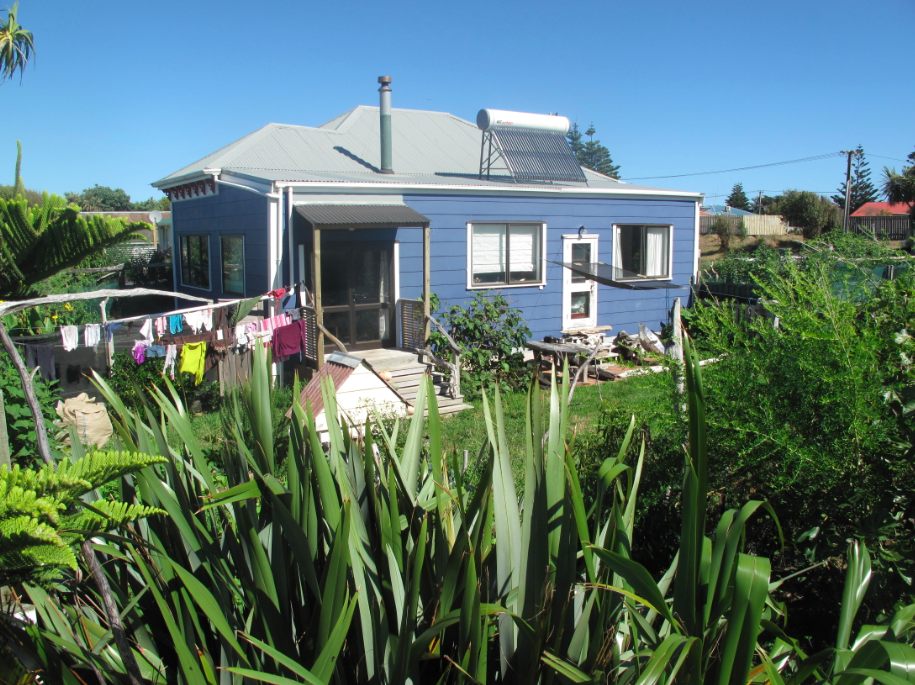
While much of our eco-thrifty renovation involved converting an old villa into an energy efficient eco-home, we also put considerable effort into turning a rubbish tip into a Garden of Eden. Much of the latter work was guided by permaculture design.

The most visible difference between permaculture and what otherwise might just be called organic gardening is the presence of a “food forest.” The word permaculture was formed in the 1970s from a contraction of the words permanent and agriculture. The choice of these words represents the emphasis on perennial crops over annuals – in other words fruit trees over vege plants.

Screen shot 2014-11-28 at 10.30.28 AM

  Before

Screen shot 2014-11-28 at 10.30.40 AM

After

This is not to say that permaculture excludes growing annual veges like tomatoes, potatoes and pumpkins, it just tips the scales toward apples, peaches and feijoas. Among the reasons for this emphasis is that perennial crops require less tilling than annuals. Tilling disrupts natural soil ecosystems, can cause erosion, and requires lots of energy.

A food forest differs from an orchard in a couple of ways. First, it consists of a wide range of species and even a number of varieties within each species. For example, we have planted a food forest with apples, apricots, peaches, plums, feijoas, guavas, pears, figs, paw paws, olives, and nectarines. Among the apples, we have over a dozen varieties.

Second, permaculturists tend to choose cultivars that are resistant to diseases, making them easier to manage organically. For example, Black Boy peach trees tend to be more resistant to curly leaf than other varieties.

Alongside disease-resistance, another characteristic that might be selected for is storage life. I remember 15 years ago when I was buying my first apple trees I selected varieties that were both “good keepers” and blight resistant. With a cool cellar underneath my home (in the U.S.) the apples would remain fresh for many months with no specialized cooling equipment. Screen shot 2014-11-28 at 10.30.51 AM

Before

Screen shot 2014-11-28 at 10.31.02 AM

After

Another characteristic of food forests is the presence of “nurse trees.” A nurse tree is one that provides services that help the fruit trees establish themselves and thrive. As the fruit trees grow up the nurse trees are pruned away.

Tagasaste (tree lucerne) is a common nurse tree. On our Castlecliff property we have used it extensively to nurture the fruit trees. Tagasaste is a preferred nurse tree for many reasons: it is fast growing – reaching a height of 2.5 metres in 18 months; it fixes nitrogen in the soil; it is relatively wind-tolerant and drought-tolerant; it’s foliage is good stock fodder; it’s flowers attract beneficial insects; it is a great chop-and-drop mulch for fruit trees; when it is no longer needed it can be cut down and burned as firewood.

Tagasaste is also a good companion for native saplings. For example, I inter-planted it with hebes and was amazed at how well the two grew together. At Te Kura Kaupapa Maori O Tupoho I inter-planted tagaste with wind-hardy corokia and grisselinia around the outdoor play space for the kohanga. In the short term the tagasaste will protect the tamariki from wind and sun, but in the long term those roles will be filled by the slower growing natives.

Screen shot 2014-11-28 at 10.31.15 AM

Before

Screen shot 2014-11-28 at 10.31.32 AM

After

Along the same lines, in our food forest the fast-growing tagasaste provides much needed wind protection for the fruit trees until the natives take over that role. I often refer to this type of planning as four-dimensional design because it involves a distinct time element.

Another example of four-dimensional design in a food forest is integrating fowl such as chooks and ducks. We have successfully rotated our “ladies” through the whole of our Castlecliff property for pest control, ‘weed-eating’, and building soil fertility.

Next weekend we will be installing a food forest in Gonville, and thought it would be a great chance to offer a very hands-on workshop. See sidebar for details.

Peace, Estwing


Sidebar:

Food Forest Design and Installation

Sunday, 7th December, 3-5 pm.

Designing a food forest for wind, sun and water using fruit trees, natives and tagasaste.

Space is limited. Registration essential.

theecoschool@gmail.com, 06 344 5013


Relevance and the 3 R’s

I’m a slow learner: it took me four years and 100,000 words to discover that relevance is a major factor for high school students learning science. Of course I knew this already from 14 years of teaching. It is just that academia required a little more evidence before it put a D and an R before my name.

For the sake of saving another four years I will go out on a limb and say that relevance is also a major factor for adult learners. In other words, “grown ups” do their best learning when they can recognise how that learning will impact their professional or personal lives.

In my experience as a sustainability educator working with adults I see this all the time. Over the last four years I have organised over 60 free or by-donation presentations and workshops in Wanganui on topics ranging from eco-renovation to growing food to permaculture to solar energy to programming a heat pump.

Why would 35 people recently crowd into the Wanganui Garden Centre on a Sunday afternoon to learn how to grow ripe tomatoes before Christmas without a glasshouse? Because they see its relevance.

An influential thinker on my doctoral research was Stephen Sterling from the University of Bath. He suggests that for sustainability learning to be sustained, it must be owned by the learner. In other words, the learner must want to learn.

Sterling also identifies different levels of change regarding an individual’s thinking about sustainability. First order change is doing more of the same but doing it better. Recycling is an example of this because it allows us to carry on our regular habits but just put the ‘waste’ into a different bin afterward.

He describes second order change as doing better things, such as reusing bags for shopping. The big step, however, is third order change: seeing things differently. An example of this from the 3 R’s would be reducing our consumer habits altogether.

Some of this may be relevant to those Chronicle readers who recently commented on Wanganui District Council’s decision on curbside (kerbside?!?) recycling. From what I read, many of the respondents appeared to see the relevance of curbside recycling to their lives and to our community.

Paul Brooks of the Midweek certainly recognizes the relevance of Referendum 06 and what he called “a clear mandate to go ahead with kerbside recycling” (Time to Recycle Result?, Midweek, 15-10-14). Brooks identified that “Councillors have said they want to save Wanganui ratepayers the extra cost of recycleables’ collection.”

Fair enough, but if the ratepayers voted for this service in 2006, would not that be an indication of the willingness to pay? On the other hand, I’m curious where the desire to save ratepayers money was when council decided to spend over $700,000 on a useless odour fence around the treatment plant.

As a researcher I look for patterns in ‘data’, and a consistent body of evidence suggests that WDC distances itself from exhibiting commitment to weighty sustainability initiatives. For example, in all of the articles about the new recycling centre council spokespersons consistently emphasized that no rates were spent to build it. Likewise, when insulation was put in some council housing the same emphasis was made – no rates were used.

It got me thinking: Is supporting recycling in our community a bad thing? Is helping low-income seniors live in warmer healthier homes a waste of money?

On no other types of projects have I observed such a consistent emphasis by council to distance itself from the appearance of financial commitment. For example, the arts are supported whole-heartedly with significant council funding with no apologies made. Of course I am not against the arts, I am just presenting patterns easily observable in our community.

Top eco-designers will tell you that money is rarely a barrier in projects, and more often the limiting factor is human will. I tend to agree with them. Here are a few examples.

The Second Annual Whanganui Permaculture Weekend held two months ago involved hundreds of people and dozens of workshops and presentations. It had no budget.

Zero Waste Events, recently administered through Sustainability Whanganui, had its origins four years ago at the YMCA’s Connecting Families Day. It had no budget and saved the Y money.

In both cases human will carried more currency than cash.

Peace, Estwing

Keep Calm and Think Different, Part 6 – “Thinking Like a Swale”

Screen shot 2014-11-07 at 6.53.45 AM

Last month I was invited to give a lecture on eco-design at a tertiary institution. As part of the lecture I provided background on why we should even bother to put the eco into design. Among the reasons was to build resilience to the predicted and observed effects of climate change: including increasingly severe weather events.

During the question and answer time a young woman tried to start a debate on climate change rather than ask questions about eco-design. Even before she said that her parents were farmers I could tell because she was parroting the same statements I’ve heard from farmers many times.

I steered the conversation back to eco-design and how a growing number of farmers are using it to their advantage to build resilience to drought and protect themselves financially. There are two primary examples of how this is done: 1) protecting waterways with fencing and plantings of trees and/or shrubs; 2) constructing swales.

 Screen shot 2014-11-07 at 7.15.56 AM

Bill Mollison’s quintessential swale. 

The young woman challenged these suggestions: “My parents can’t afford to do that.”

“Your parents can’t afford not to,” I replied.

Ask a farmer in California how expensive the current drought is for them.

Predicted and observed impacts of climate change include more frequent and severe droughts as well as more frequent and severe floods. On my farm I am preparing for both and would suspect any prudent, conservative farmer (like me) would do the same.

Screen shot 2014-11-07 at 6.53.21 AM

Small-scale swale. 

A recent announcement by the UN climate science panel revealed that there are three areas where extreme weather will have the greatest effects, two of which are particularly pertinent to NZ: farming regions and coastal areas.

Here is a good time to pause and remind readers that I do not beat the drum for carbon reductions or engage in campaigns against cow farts. I am happy for others to do those things. In life we choose our battles and my battle is to try to convince as many people as possible that eco-design is smart design and anything else is wasteful and ignorant.

In recognition of River Week I’d like to focus the rest of this column on ecological water management and specifically what I call “Thinking like a swale.” A swale is an earthen berm that runs perpendicular to slope. It is perfectly level and therefore does not drain like a ditch.

Screen shot 2014-11-07 at 6.53.30 AM

Garden built as a series of swales. 

A swale catches water in times of abundance and stores it in the earth. Instead of running off a property during heavy rains and adding to flooding, the water is held on the property in a giant underground ‘water tank.’ This stored water can be called upon in times of drought either from springs that form lower on the property or by the deep roots of certain trees whose foliage can be fed to stock.

In these ways a swale works like a bank account. Deposits are made in times of abundance and withdrawals are made in times of scarcity.

But “thinking like a swale” is not limited to water management. This type thinking relates directly to passive solar design: excess sunlight energy is collected and stored during the day in thermal mass and released at night as the indoor temperature drops.

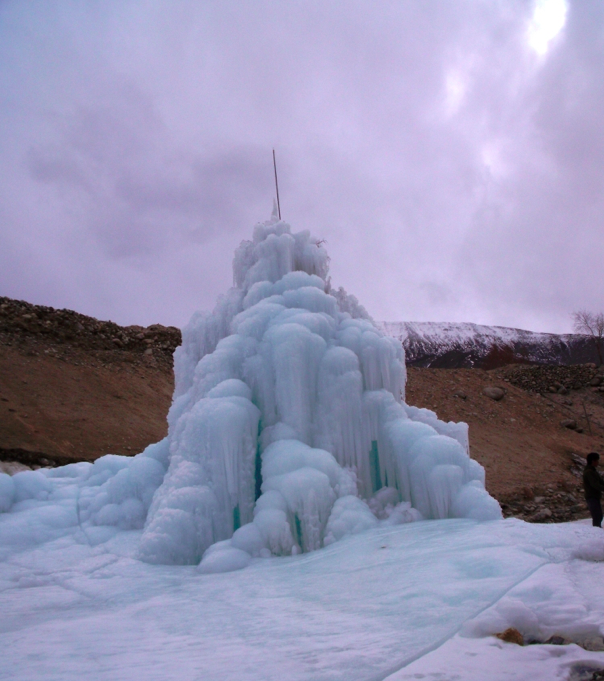
What is easily the coolest example of thinking like a swale that I have come across recently is a project undertaken by my friend Sonam Wangchuk, an eco-design engineer and education reformer in Ladakh, India. As a way to develop resilience to the effects of climate change and protect the people of Ladakh, Wangchuk has used eco-design thinking and natural energy flows to develop a working model of a seasonal artificial glacier.

Screen shot 2014-11-07 at 7.03.30 AM

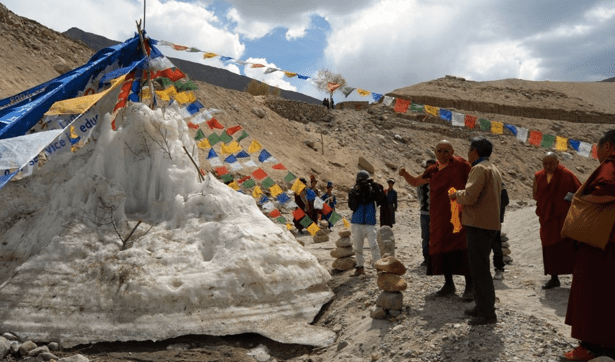
Prototype Ice Stupa

The ingenious artificial glacier, nicknamed the “Ice Stupa,” takes excess winter stream water and freezes it into a giant mound using gravity and the natural sub-zero temperatures of the Trans-Himalaya. In springtime when water is most needed by farmers to germinate their seed in the fields the Ice Stupa provides early meltwater before the higher glaciers begin thawing in early summer.

Wangchuk is among the top eco-designers in the world, and this project is one of his best. To learn more about this amazing example of eco-design and support Wangchuk’s work, see the sidebar.

Screen shot 2014-11-07 at 7.01.06 AM

Traditional stupas in Ladakh

To learn more about Wangchuk’s project, follow this link:  https://www.indiegogo.com/projects/ice-stupa-artificial-glaciers-of-ladakh


Peace, Estwing

Propagation by Cuttings: A non-expert experience

I have been mentioning in a few posts about the plant propagation course I took over the last 10 months. Here is a little more explanation of propagation by cuttings, but I am certain you can find better advice elsewhere on the internet.

Screen shot 2014-10-27 at 11.39.14 AM

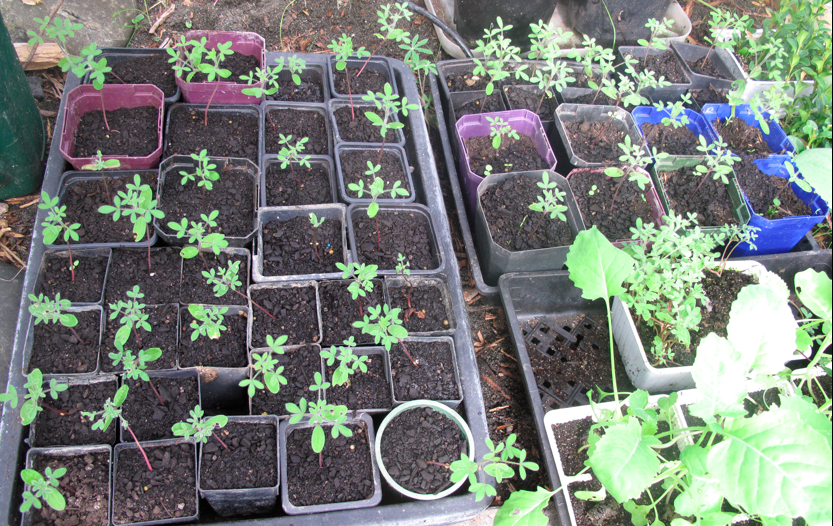
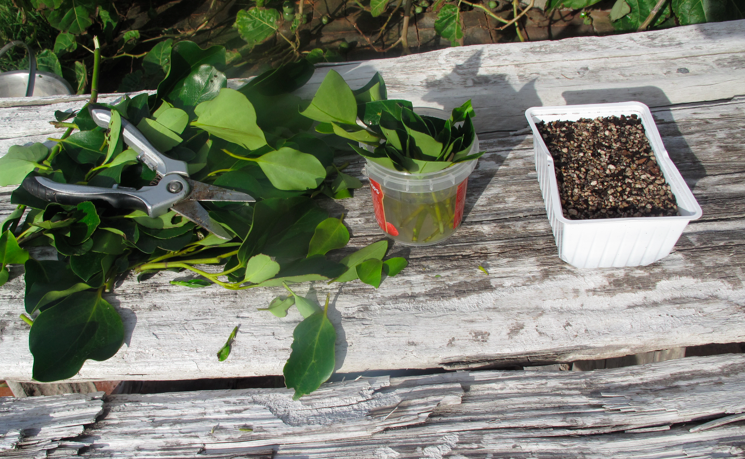
From what I recall, this is how it works. You’ll need a rooting hormone, which you can purchase in powder form, but in this case I used chopped up willow leaves that I soaked overnight.

Screen shot 2014-10-27 at 11.46.36 AM

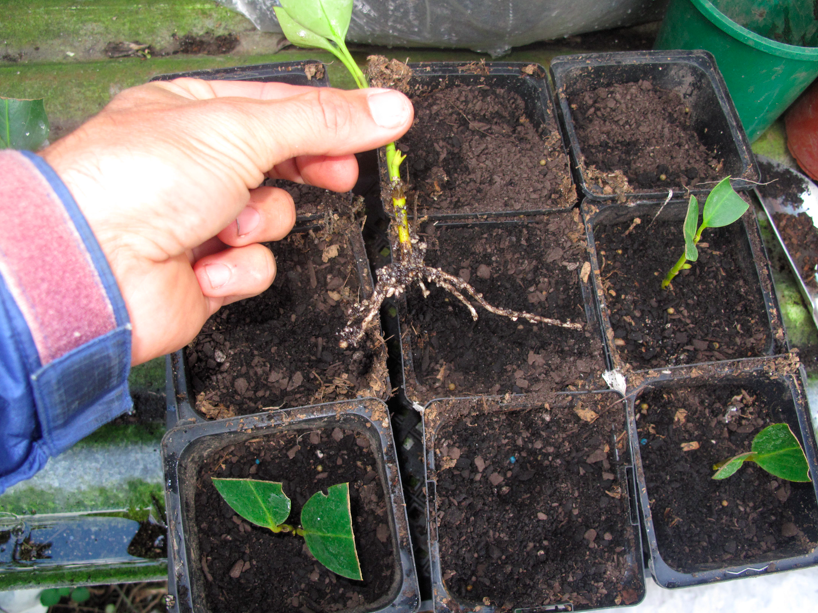
Cut the stem to three nodes and cut half off of the top leaves. This is griselinia, a NZ native tree aka kapuka in te reo. Scrape one side of the bottom of the cutting to expose the cambium.

Screen shot 2014-10-27 at 11.46.54 AM

I soaked these semi-hardwood cuttings in the willow water for half an hour before putting them into the propagation mix.

Screen shot 2014-10-27 at 11.47.08 AM

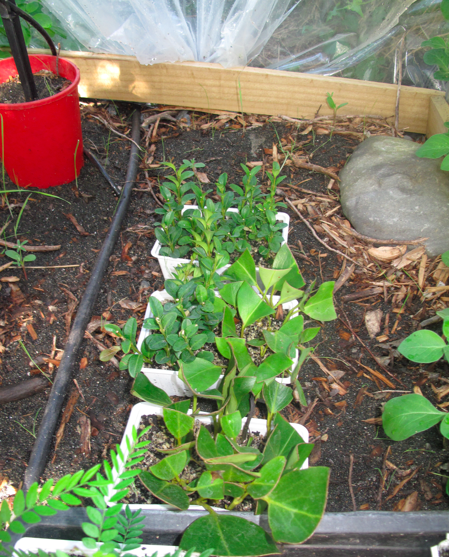
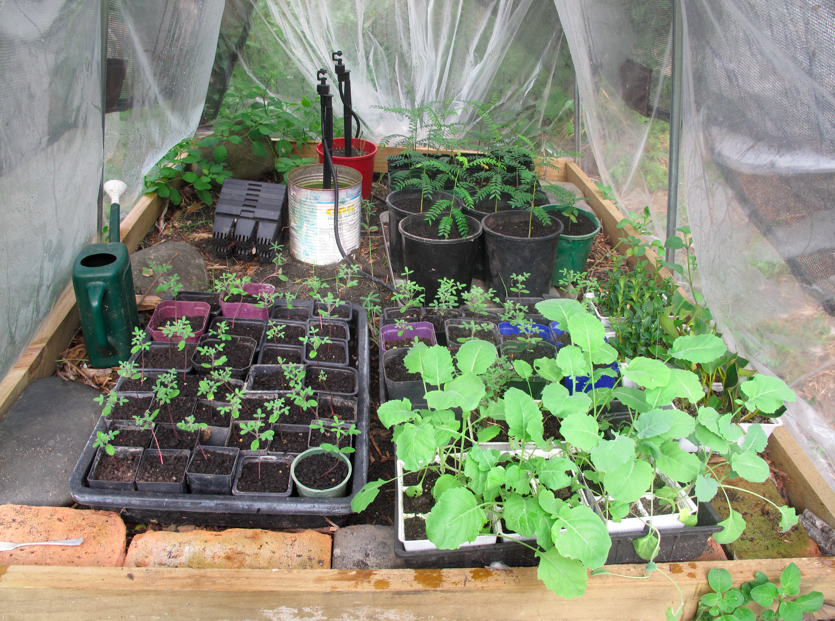
Then they go into the propagation unit, which holds in warmth and humidity. Behind the griselinia is buxus.

Screen shot 2014-10-27 at 11.38.41 AM

The unit has two misting units set on a timer.

Screen shot 2014-10-27 at 11.39.34 AM

After a few months the cuttings have put out roots.

Screen shot 2014-10-27 at 11.41.07 AM

I used my very fancy potting bench/duck house to prick them out and pot them up.

Screen shot 2014-10-27 at 11.41.25 AM

Then back in the unit for some more time to grow in a sheltered environment.

Screen shot 2014-10-27 at 11.40.26 AM

And finally outdoors.    Screen shot 2014-10-27 at 11.44.27 AM

Peace, Estwing

Keep Calm and Think Different: It Takes Money to Save Money, Part 4

   Screen shot 2014-10-24 at 2.44.18 PM

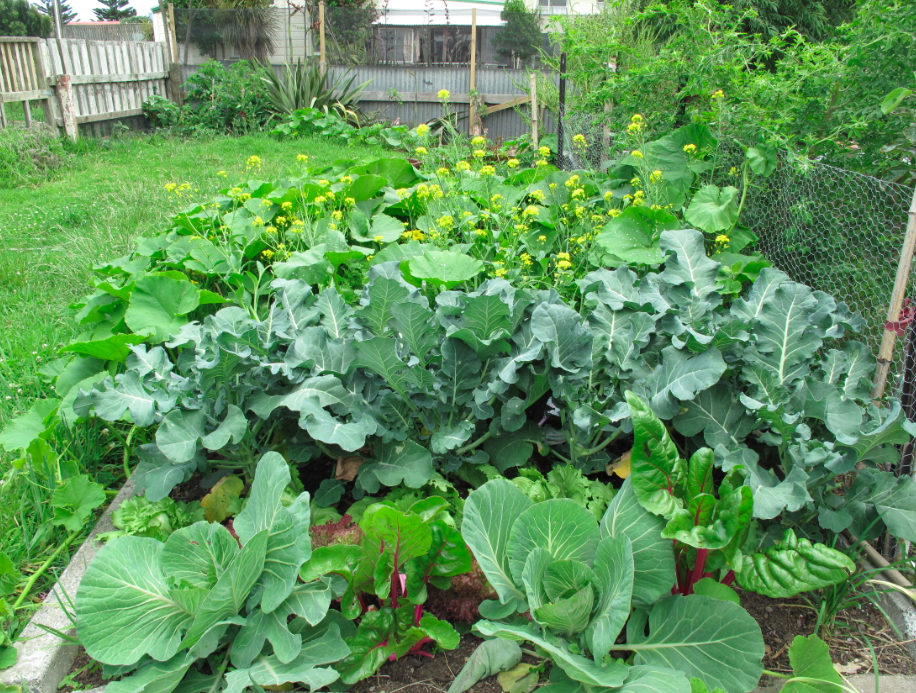
We all know that growing fresh fruit and vege at home can save money while providing one’s family with healthy kai.

Screen shot 2014-10-24 at 2.43.15 PM

But like many DIY endeavours, there are more effective ways of going about it and less effective ways of going about it. Sadly, I have seen dozens of examples of failed home and community gardens that suffered from poor design and poor management.

For example, many fruit trees have died at an unsuccessful community garden at the top of Carson Street in Castlecliff due to poor design and installation. Hundreds of dollars worth of fruit trees have been “blown away” because the trees were not given protection from the coastal winds and “leached away” because they were planted in sand without sufficient soil amendments.

Unfortunately, when it comes to fruit trees and vege gardens, being cheap can be expensive. In community gardens this represents a waste of money and sends the wrong message to the local community. In a home garden, it may be that a failed attempt discourages a family from trying it again.

The good news is that this can be avoided with appropriate design and installation. I am fond of the phrase: “Do it once. Do it right.”

Screen shot 2014-10-24 at 2.43.47 PM

This is not to discount the value of making mistakes and learning from them, but it is always better to learn from someone else’s mistakes and subsequent learning. With this in mind, here are a few things I have learned.

There are four main factors in food production: sun, wind, water and soil. Unless you are Maui, the only one that cannot be actively managed is the sun. Screen shot 2014-10-24 at 2.43.35 PM

The easiest of the rest to manage may be water. Living within city limits all you need to do is turn on your tap for unlimited free H2O for your lawn and garden. However, this can be wasteful if you live on sandy soils because most of the water leaches away carrying some of the nutrients you may have put on in the form of compost or chemical fertilizer. Additionally, it is highly likely that at some point in the future Wangaui will have metered water and we will pay for what we use.

At our Castlecliff property we have invested about $400 in topsoil that greatly enhances the productivity of our fruit trees and vege gardens by slowing the leaching of compost away from the plants’ roots. The return on this investment is far in excess of $400 in abundant organic fruit and vege. (It takes money to save money.) Screen shot 2014-10-24 at 2.43.24 PM

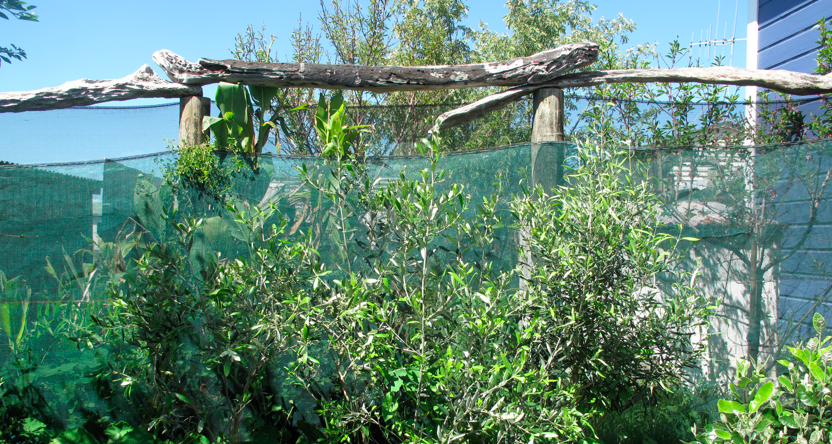
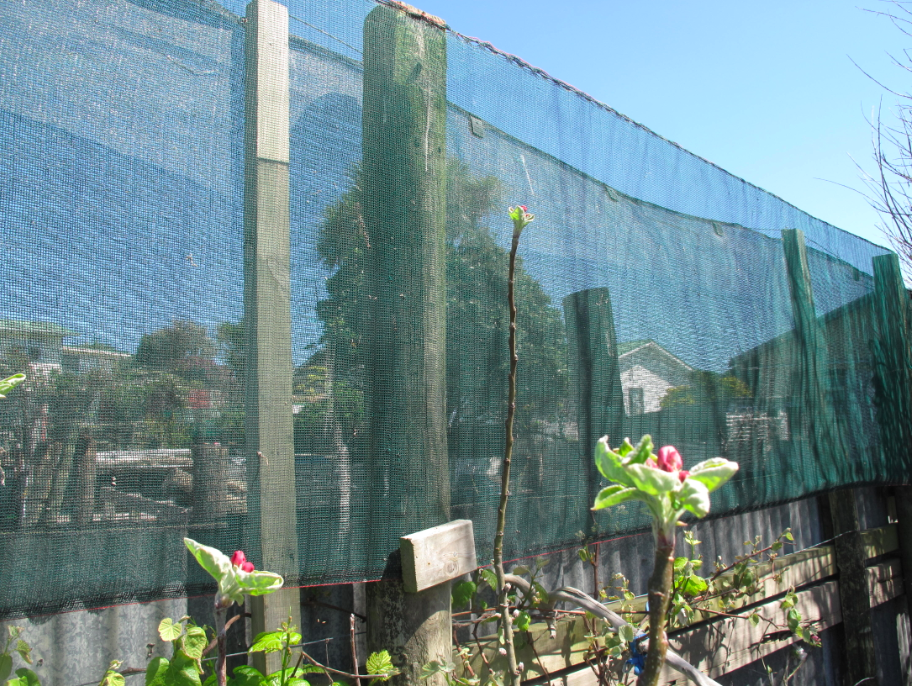
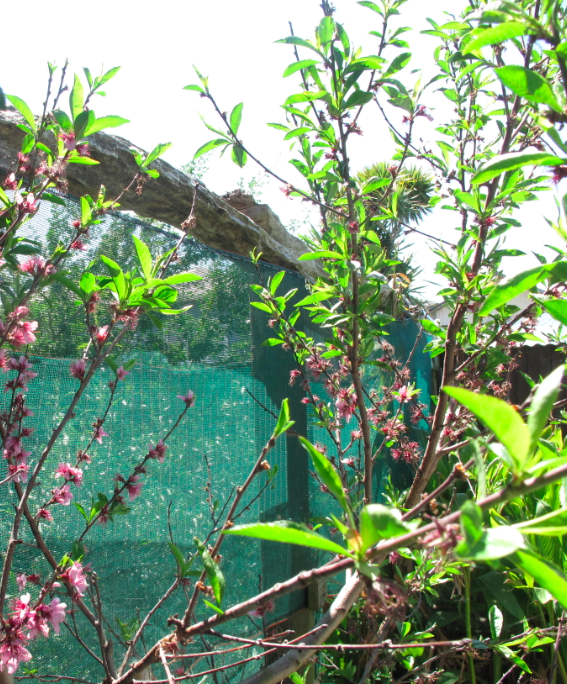
We also invested about $600 in substantial wind protection. It makes no sense to plant a fruit tree in Castlecliff if you do not protect it from the coastal winds. (It takes money to save a tree.) Adequate wind protection reduces stress on trees and results in higher fruit yields. For example, one Black Boy Peach tucked away in an especially sheltered corner of our property is perhaps the healthiest and most productive organic tree of its kind in the city. Screen shot 2014-10-24 at 2.44.06 PM

Other fruit varieties on our property include: plums, apricots, prunes, guavas, grapes, figs, bananas, oranges, loquats, feijoas, apples, olives, raspberries, and more peaches.

Alongside good property design and proper installation of garden infrastructure comes good management. Together, they can account for many thousands of dollars in fresh fruit and vege for your family with little effort. The savings on your food bill can be significant but it’s critical to invest first for success later. Screen shot 2014-10-24 at 2.43.58 PM

If you are interested in learning more about the best practices in organic garden design and management, check out the sidebar.

Peace, Estwing


Sidebar:

Workshop: Low-Input / High-Productivity Gardening

Thoughtful design and management of a vege garden can increase productivity and decrease the hours of labour. Invest two hours in this workshop and save dozens of hours weeding your garden.

Sunday 9th November, 3-5 PM. Registration and deposit required.

06 344 5013, theecoschool@gmail.com