Category Archives: Eco Thrifty Renovation

Grumble Grumble

It would be naïve to suggest that the type of win-win-win thinking associated with eco-thrifty renovation is new or original in any way. Over 200 years ago, a famous American coined the phrase, “A penny saved is a penny earned.” Many older Kiwis would simply call it “common sense.”
But sometimes common sense can be awfully uncommon. For example, last week I was doing a home energy audit in Saint John’s Hill at a home built in the 1950s. It had low ceilings with pelmets stretching down to just below the top of the windows. But sometime during the last half-century, the insulating curtains and curtain rails were removed and replaced with vertical blinds that offer virtually no insulation. I suspect this coincided with an era of cheap electricity and a changing aesthetic.
But what goes around comes around, and while I will not argue that pelmets have come back into fashion (yet!), by most accounts, electricity is no longer “cheap,” and the woman for whom I was doing the audit has decided to replace the vertical blinds with thermal curtains. Her decision-making was based on making her home warmer, reducing condensation, saving power and money, and reducing her impact on the environment, however small that may be.
This is an example of an ordinary Wanganui woman exercising the eco-thrifty, win-win-win part of her brain. But she is not alone. Almost everyone, I would argue, practices eco-thrifty design thinking on a daily basis, sometimes without even noticing it. For example, the car park between the Boys and Girls Gym Club and YMCA Central has a few spaces under a large shade tree that fill up before the un-shaded spaces.
This qualifies as eco-thrifty design thinking because it: improves human comfort; saves petrol (by not having to run the air conditioner on high when starting up a hot car); and, saves money because less petrol is used. Other employees at YMCA Central practice eco-thrifty thinking by riding bicycles – and in one case an electric bike – to work.

In all cases above, individuals appear to recognize one, two, or all of the components of the sustainability triangle: human needs; economic viability; and ecological health. I would argue the first two components are examples of enlightened self-interest. In other words, living better while saving money may be considered by many ‘selfs’ as in their interest. 
But this type of thinking appears to break down when government gets involved. Spending other peoples’ money appears to be different than spending one’s own, and decision-making that suits the sustainability triangle appears to break down.
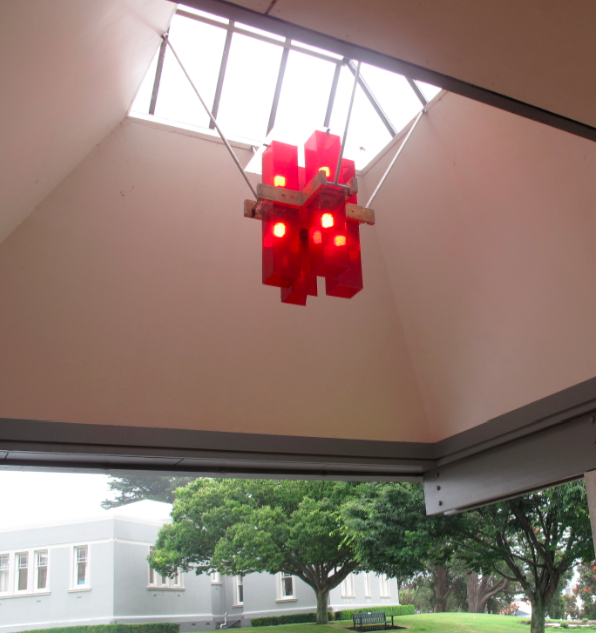
For example, I’ve been noticing the lights outside the Central Library burning all day long since I moved here two and a half years ago. The good news is that they are compact fluorescent light bulbs. The bad news is that it still costs rate-payers about $230 per year for running these eight outdoor lights during daylight hours underneath a skylight that lets in free sunlight. I raised this issue at the library over two years ago and was told they had no ability to turn out the lights.
Another example of the unsustainability of government decision-making is so comical that it deserves to appear in the New Zealand Herald ‘Sideswipes’ section, if the ‘new look H’ still has it. Last week, I went up to Hamilton to defend my PhD thesis (call me Dr., now), and took a side trip to Raglan to visit friends and surf. And there it was, sitting on the beach in all its glory: a blatant example of unsustainability proudly bearing the web address: sustainability.govt.nz. 
To the best of my recollection, the rusted recycle bin has been in place for less than four years.
Someone please answer this question: If the government requires me to use stainless steel nails on my home 200 metres from the Tasman Sea, why would it place a non-stainless, non-galvanized recycle bin within throwing distance of a body of salt water in a region known for strong, seasonal onshore winds?
These are both examples of other people spending your money. Does anyone think either one is: a) enlightened; b) in their best interest? 
Grrr, Estwing
Guest Post: Xander, our new intern

Editors Note: I am humbled by the words below from our new intern, Xander. I think this is a great, fresh perspective from an American 21 year-old. It shows the first stages of a transformative learning process: a ‘cognitive crisis’ or ‘disorienting dilemma.’ Change is good, but not easy. – Estwing
Eco School Blog Post #1
My first inclination when hearing about my internship placement at the Eco School was something along the lines of surprise and excitement. What is more exciting than eco-thrifty renovation, manual labor, and gardening? Since my work started, my excitement has grown due to what I have learned so far, what I will continue to learn, and how it can be applied back home in America (which is the most exciting aspect).
I come from Reelsville, Indiana, USA. There’s a great chance that you will never meet a person from Reelsville, that’s how small it is. I grew up in the spectacular Indiana bush. I am a friend to manual labor, especially yard chores, building porches, and putting up walls. At Earlham College, I am close to finishing my Bachelor of Arts in Biology.
No more than seven weeks ago I was destined to achieve a Ph.D. in Ecology and Evolutionary Biology, teach at the university level, and conduct independent research. A couple of years before now, I had mapped out my educational trajectory for the years to come and the potential resume-builders necessary to meet this goal. It was not until last week that these plans began to dissolve as a result of my disillusionment in biology and science as a whole.
My sole intention with this career was to end the dichotomy between humans and nature, better described as an “us” and “them” relationship, in light of the current and global environmental crises. For me, it is hard to explain why I ever decided that scientific research specifically would be able to do such a thing. On the whole, scientific research very rarely provides solutions to problems such as global climate change or over-exploitation of natural resources insofar as it is strictly research intensive, aiding little to the betterment of the human-nature relationship.
At this stage in my life, I am uncertain about how I wish to take my first steps into the real world. I have been in New Zealand for the past seven weeks on an environmental program that expires in the beginning of May. We’ve been studying the various environmental issues of the country, Māori history and culture, and conservation biology. Among all of these courses and my experiences at the Eco School and in the community, something on this island has influenced my change of heart.
As a matter of fact, it is no easy task to pinpoint the direct causes of my personal development, or dilemma. For instance, it is likely that there are numerous variables in this equation; however, I can only see the product. From what I do know (or what I think I know) is that a major contributing factor is Nelson and the Eco School. I know that I shouldn’t jump to conclusions or point fingers, but the Eco School is the culprit.
Out of my entire curriculum-based educational experience so far, I have never once learned anything as practical as what I have learned at the Eco School in the past three weeks. My time at the Eco School has provided me not only with various lifestyle changes but also the skills and means to provide for a family, a community, and myself. Not only that, but it has given me hope that in the face of forces more powerful than me, namely global climate change and politics, all is not lost. Moreover, where my ideas of scientific research failed my overall goal in life, the mission of the Eco School has prevailed and demonstrates the means for me to meet my goal back in the States.
I know that I haven’t described any of the small projects or tasks that I worked on in the past three weeks. It is not because they are insignificant, it is because they make up a much larger picture that has, to some extent, changed me on a deep and personal level. The work that is being done at the Eco School is inspiring. It goes to show that every person has the potential to make a difference in the community and the world (e.g., think global, act local). And, by community, I mean the social, economic, and environmental aspects. It is in this kind of work that the future is a little brighter for everyone.
-Xander

Seeing the Glass Half Full

There has been a lot of press dedicated to a ‘Living Wage’ lately, with a number of articles and editorials addressing the issue in the Chronicle. For our fair city, that designates a ‘hot topic,’ although I reckon our malodorous melodrama stands no chance of being displaced as the top press-getter. To alleviate the risk of upsetting advocates of $18+ per hour, I’ll try to present my contrary position as carefully and clearly as possible.
Please be aware that I am not opposed to raising wages for the lowest paid workers, but I see it as the same old glass half empty thinking that appears to pervade most thinking on the national, regional and district levels. The problem with this type of thinking is that everyone else is thinking the same way, and ‘growth’ (wage rises in this case) becomes a competitive proposition between every municipality in the country and the world. In other words, when every town, city, and country says, “We’ve got to boost ‘economic development’,” they are competing against one another for a limited number of industries and jobs.

What appears to happen is that tax incentives and other sweet deals are used to attract industry and the associated jobs. In most cases, the industry relocates, which means that jobs are lost in another community. In terms of the number of jobs, it is usually a zero sum game. This is called ‘globalization’, and in most cases it is a race to the bottom for wages. The recent ANZ announcements in Australia and New Zealand of shifting call centre jobs to India provide good examples of this.
At the same time, industry can hold municipalities and nations ‘hostage’ by threatening to leave, unless… For example, I believe some of Wanganui’s industries have said they would leave us if they had to pay for a separate treatment facility for their wastes. Not to beat a dead horse (or what smells like one!), from what I understand it was a protein dump from one of these industries that has lead to our hell smell.
Who is to blame industry to taking such a position, when ‘everyone else is doing it’, and corporations can justify anything on the grounds of maximizing profits? But what this leads to is increasing income inequality: the rich get richer and the poor get poorer. This trend has been going on worldwide since the early 1970s, and, from what I understand, in New Zealand since the mid-1980s. New Zealand now ranks among the top countries in terms of income inequality. (See The Spirit Level, Wilkinson & Picket, 2009).
What this also leads to is a zero sum game between the wealthy and the poor regarding wealth. In other words, proposing a ‘living wage’ of $18/hr means a battle over wealth transfer, because increased wages have to come from somewhere. They are not created out of thin air: an extra dollar in one’s pocket means an extra dollar from another’s pocket. This does not mean that advocates for the working poor should not advocate a ‘living wage’, but that it should not be the only, or perhaps even the main argument they advance.
Because I like to look at things from different perspectives, I would like to advance the notion of Wage Living. This is a glass half full approach to improving peoples’ lives, because it empowers them to live better here and now on their current incomes instead of wishing, waiting, hoping for more money. Researchers have found that once basic necessities of food, water, and shelter are met, subsequent advances in income do not lead to advances in happiness. Some may argue that these basic needs are not being met for some New Zealanders at present. I would argue that for these people, and any other Kiwis interested in improving their quality of life while saving money, an eco-thrifty approach to home energy-efficiency, and/or an eco-thrifty approach to lifestyle could lead to healthier, wealthier, wiser (?) individuals, whanau, and communities. If you would like me to expand on this perspective in another column, please let me know.
Some of the top tips for low-cost / high performance strategies to improve energy efficiency, thermal comfort, and bank balances will be shared in a series of 10 community presentations that kick off Monday, 4th March at the Josephite Retreat Centre.
Peace, Estwing

Retrospective: Bathroom

Editor’s note: This is an early posting of tomorrow’s article in the Wanganui Chronicle. I won’t have time to post tomorrow. 
Many renovations are heavy on kitchens and bathrooms and light on everything else. It appears that there is a belief that these improvements will increase the resale value of a home while also improving functionality and/or style for the current occupants. That thinking is hard to argue with, except that new kitchens and bathrooms can cost tens of thousands of dollars each, and that the housing market appears to be stalled in Wanganui, and it could take quite a while for dwellings to appreciate enough to ‘pay’ for the renovations when ultimately sold. (Wow, that was a long sentence.)
Old kitchen before conversion to bathroom.  
Large expenditures on new kitchens and bathrooms may exhaust a homeowner’s funds available for renovation, and preclude them from investing in strategies that will definitely pay for themselves in a matter of years, such as insulation and solar hot water. But let’s face it: insulation is not sexy. A new bathroom or kitchen is.
Old kitchen before conversion to bathroom.   
Eco-thrifty renovation is about finding the middle ground between serving the needs of a home’s occupants, keeping expenses reasonable, and putting less pressure on the planet. Instead of, say, spending $10,000 on a flash new bathroom and another $10,000 on a flash new kitchen, we were able to get functional and attractive versions of each, plus insulate our home and install solar hot water for under $20,000.
Terry Lobb wrote a guest column here on our kitchen a couple of months ago, highlighting some of the unique design elements made possible by shopping for second-hand, quality items, such as our antique leadlight cabinet doors purchased at Hayward’s Auctions and our Shacklock 501 coal range purchased on TradeMe. We used both of these sources, along with Wanganui’s Renovator’s Centre, when outfitting our $2,000 bathroom. Purchases included a claw foot bathtub, a toilet, a pedestal sink, a laundry tub, and a wall cabinet.
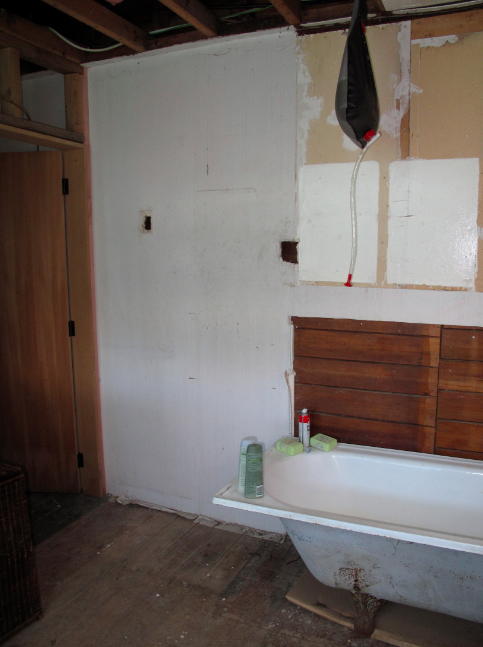
Temporary shower.  
Temporary shower.  
But quality, second-hand goods are just part of eco-thrifty renovation, which also includes efforts to improve thermal comfort and energy efficiency. Our bathroom has a large, northwest-facing window that receives a lot of winter afternoon sun that could potentially raise the temperature of the room to the high twenties, unless heat-tempering strategies were used.
We ‘capture’ some of the sun’s heat in thermal mass that takes the forms of a heavy, iron tub, and two layers of plasterboard on the wall opposite the window. Thermal mass absorbs excess heat in the afternoon, ‘stores’ it, and then releases it when the temperature of the room drops overnight. In order to slow the cooling of the room, we insulated the ceiling and the two external walls. We also installed a pelmet over the window, and use thermal curtains and window blankets during cold weather.
Extra layer to plaster board going being installed. 
This combination of materials and design strategies has provided us with an attractive bathroom (color choice made by the wife) in which we can take an evening shower in the middle of winter using free solar hot water, and then step into a 23 degree room also heated free of charge by the sun.
Fully installed tub and vanity.
All this was done in a tired, old villa. Imagine what one could accomplish if starting from scratch.
Peace, Estwing
From the Power of One to the Power of Community

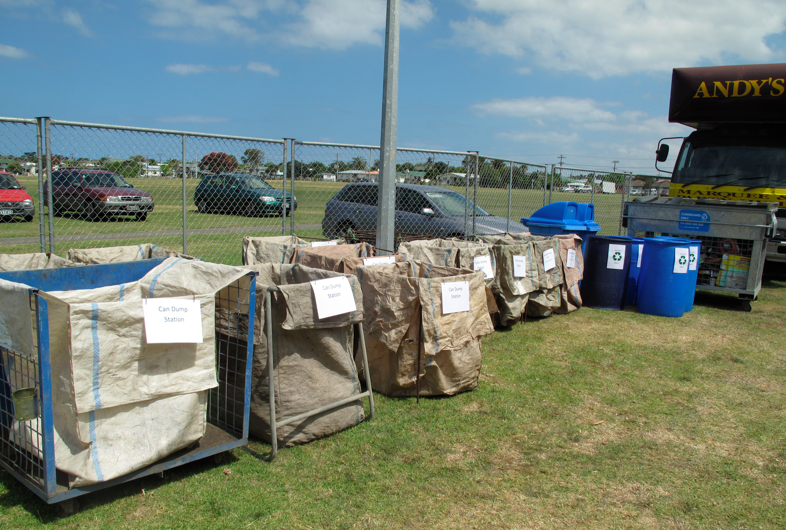
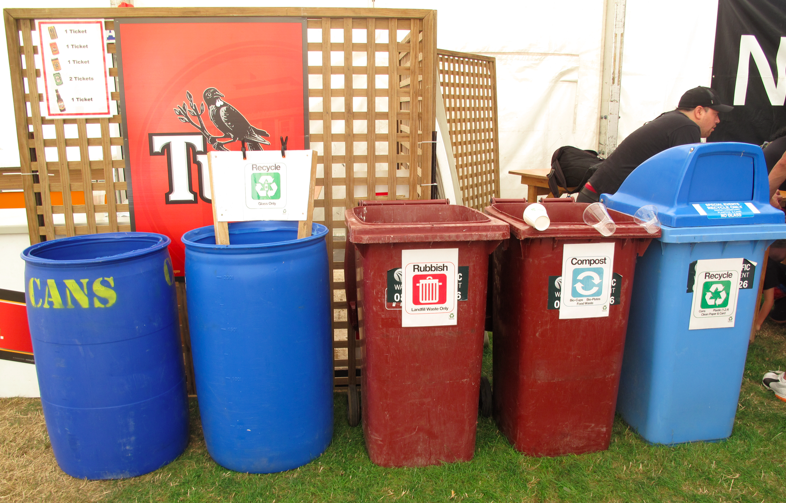
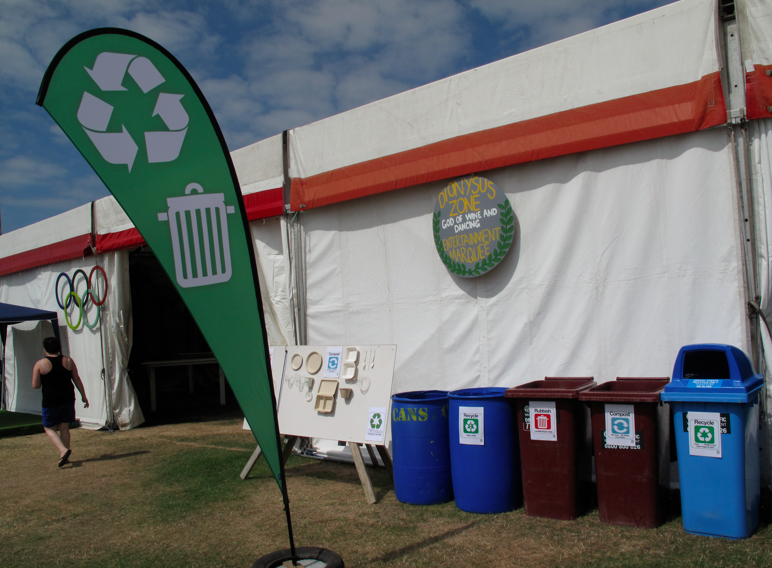
By 8:30 on Sunday morning I was covered in stale beer and smeared with butter chicken sauce. It was not a scene from The Hangover II, but the scene at the service entrance to the Masters’ Games village at Springvale Park where a team of five hardy volunteers and I had just sorted 36 and ½ barrels of resources passing through what was the Zero Waste Events programme implemented at this year’s Games.

Of that total, we tallied 14 wheelie bins of glass bottles, 13 bins of aluminium cans, four bins of plastic bottles, four bins of biodegradables, a giant stack of flattened corrugated cardboard boxes, and just one and one half bins of general rubbish. Our resource recovery rate peaked at over 95% by volume and close to 99% by mass (on account of the weight of all those glass bottles). This is a world-class effort more than likely unmatched anywhere in New Zealand. The NZ Masters Games organizers, Trustees, and volunteers have much to be proud of for this accomplishment.
But like any world-class athletic feat, this performance had humble beginnings in smaller arenas. As well, the story of Zero Waste Events consists of a string of individuals who each committed themselves to a team that grew bigger and stronger with each new member. It is also the story of ordinary people advancing an ordinary idea to achieve something extraordinary. This is how it began…
Once upon a time, there was an overfed, long-haired, leaping gnome who decided to volunteer at the YMCA of Wanganui’s Connecting Families Day. He used his knowledge of waste management to encourage the Y to order only biodegradable cups for water and hot drinks. This is called, “pre-cycling” and the Y agreed. With that sorted, almost the entire resource stream for the event would be recoverable as compost or one of the many categories of recycling used in Wanganui.
The waste minimization effort was so successful that his mate took notice. He said, “Hey mate, why don’t we apply for funding so we can replicate this.” The gnome agreed.
Together they wrote an application to the Positive Futures Trust, and received a modest amount of funding. The pair managed a couple of small events in Wanganui before taking the idea to Mike Cronin at the NZ Masters Games. Mike was receptive, and must have mentioned it to staff member Simon Watson, who expressed an interest in joining the Zero Waste effort. Over the course of eight months, the four met to share ideas, plan, and try to get as organized as possible before the opening ceremony.
And then we were off like sprinters to a starter’s pistol! Thanks to the help of our Games volunteers, we managed the 10-day even like a relay race, passing on the Zero Waste baton from weary team members to fresh team members day by day, and all the way to a world-class finish.
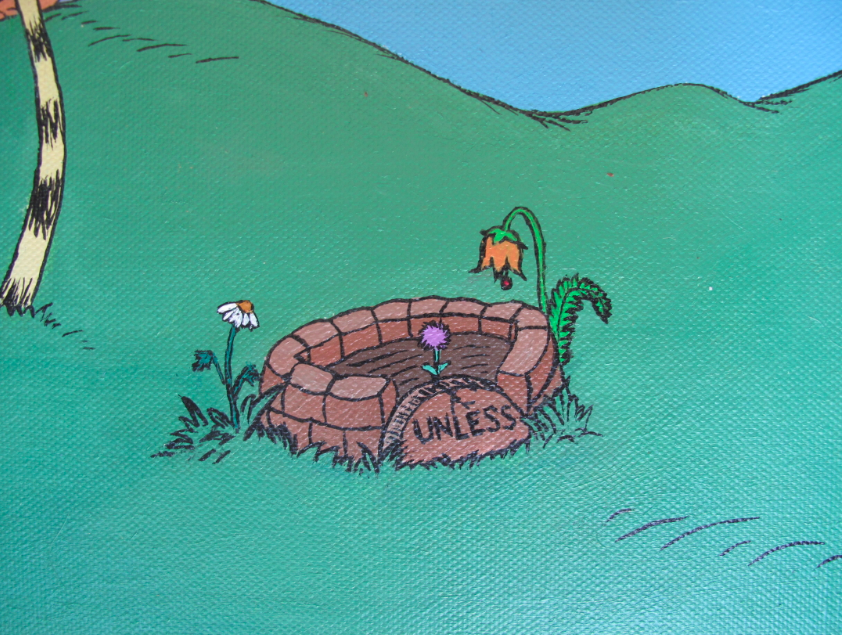
From the gnome, to his friend, to Mike, to Simon, and to the volunteers, each character in this story made a decision to make a difference. In Dr. Seuss’s well-known story, The Lorax, the tale ends with a moral summed up in one word: Unless.

“Unless someone like you cares a whole awful lot, nothing’s going to get better, it’s not.”
This is how the Power of One becomes the Power of Community.
Your Sincerely, Leaping Gnome

Partnering for a Healthier Community

Editor’s note: This is today’s column published in the Wanganui Chronicle, serving as one last invitation to community partners, and promoting our first 4 neighbourhood events. 
Project HEAT
After spending the evening at a friend’s home recently, I found my arms covered with goose bumps after a short walk to the car. It was a starry night with a crescent moon, and the temperature was dropping toward the single digits. More than a month after the summer solstice, we find ourselves sliding into autumn.
Earlier in the evening, I met a couple that told me they greatly appreciated the advice from this column last winter on ‘window blankets’. They told me that they tried them out and noticed positive results immediately. They felt their home was dramatically warmer, and that their childrens’ health had benefited from this eco-thrifty approach to slowing heat loss through windows.
That same evening, our hosts – a young couple with a 4-month old baby – mentioned that they had installed polythene sheets under their home and had noticed a major difference in terms of the rising damp.

Indoor (above) and Outdoor (below) temperatures in Celsius. 

Both of these are examples of the low cost / high performance strategies that home owners or renters or landlords can take to improve the energy efficiency and health of their dwellings.
Regular readers of this column will notice that I have not written about these types of things for the last four months. The obvious explanation can be summed up as: who wants to read about how to keep their home warm and dry during the summer?
This is not to say, however, that I am now proclaiming an end to summer, or that I intend to start writing about improving thermal comfort again this month. What it does mean is that I am inviting community groups and local businesses to become partners in Project HEAT: Home Energy Awareness Training.
Project HEAT helps renters and owners alike to make their homes warmer, dryer, healthier and less draughty in three ways: 1) presentations in every suburb explaining easy, low-cost ways to save energy at home; 2) home energy audits; 3) instructional DIY workshops that teach how to make and install low-cost energy-saving devices. The presentations and audits will be provided free thanks to the generous support of our financial backers. There will be a small fee for the DIY workshops.

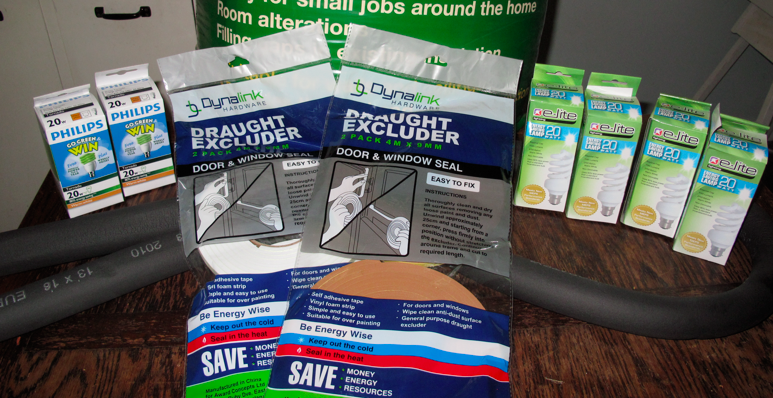
Items donated by Bunnings. 
Although the project formally kicks off in March, I wanted to make one last offer to potential partners. At the moment, we have many different types of partners.
Our funding partners are Tree Life NZ Ltd. and an anonymous donor.
Our venue partners are the Josephite Retreat Centre, Wai Ora Christian Trust, Gonville Community Centre, and Progress Castlecliff.
Our in-kind partners are the Sustainable Whanganui Trust, Bunnings Hardware, the Sisters of Saint Joseph, the Wanganui Chronicle, Mediaworks, and the Wanganui Regional Primary Health Organisation.
Our educational partner is Community Education Services.
Presently we have funding for 10 neighbourhood presentations and 83 home energy audits. Our goal is to be able to provide 100 free home energy audits to low-income families and pensioners.
We have community presentations scheduled for Saint John’s Hill (4th, March), Aramoho (7th, March), Gonville (18th, March), and Castlecliff (19th, March). This leaves us six suburbs short of our plan to serve every neighbourhood in our city. If you don’t see your suburb on this list, please alert your church, sports club, or local hall, and have them contact me as soon as possible.
Together we can make a stronger, healthier and wealthier community. Join us.
Peace, Estwing

Eco-Design Thinking

Editor’s note: The following column appeared in today’s Wanganui Chronicle to offer one more perspective on the ongoing issues with our waste water treatment plant. Is should be good for a laugh. 
Plant should work with nature, not against it.
Unlike most residents of Whanganui, I grew up around skunks. I’ve had skunks in my garbage. I’ve had skunks get into my food store while camping. Skunks had babies under my house once. And every dog I’ve ever owned has been skunked at some point in their lives. But never have I felt like I am living inside of a skunk…until now.

Whether it is opening the front door or opening the Wanganui Chronicle, I am constantly reminded of the continuing saga of the wastewater treatment facility at the heart of our malodorous melodrama. The commonly recommended remedy for a skunked dog is to wash it in tomato juice. If only our solution were as easy.
By most accounts, ‘fixing’ the problem will cost ratepayers on top of what we have already paid ‘experts’ to design, build and operate the facility. In slang usage, to skunk someone means to cheat them by failing to pay. In this case, however, it appears that ratepayers may be skunked by having to pay twice because of someone’s poorly done work whether that involved the design, the operation, or some protein discharge by industry. Someone made a mistake, but I see the problem as bigger than just finding someone to blame.
Instead of pointing the finger at ‘one of the above’ as others have in the pages of this paper over the last months, I’ll take a novel approach to the ‘problem’ by suggesting that the entire situation could have been avoided while dozens of local jobs could have been created if an eco-design perspective had been taken in the first place.
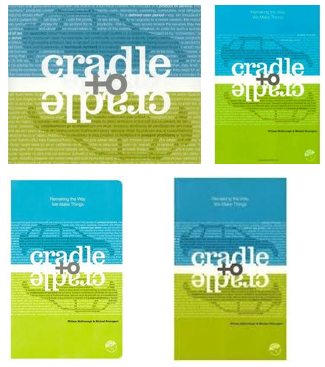
Eco-design is a large field with many slight variations, so I’ll focus on the work of two of the finest eco-designers on the planet: William McDonough and Michael Braungart. In their landmark book, Cradle to Cradle, the pair lay out their philosophy of “waste equals food” by promoting the idea that the mere concept of waste can be eliminated by designing systems in which the ‘waste’ of one process is the feedstock for another process. The same philosophy is held by Zero Emissions Research Initiatives (ZERI), which explains its perspective this way: “The common vision shared by the members of the ZERI family is to view waste as resource and seek solutions using nature’s design principles as inspiration.” (www.zeri.org).
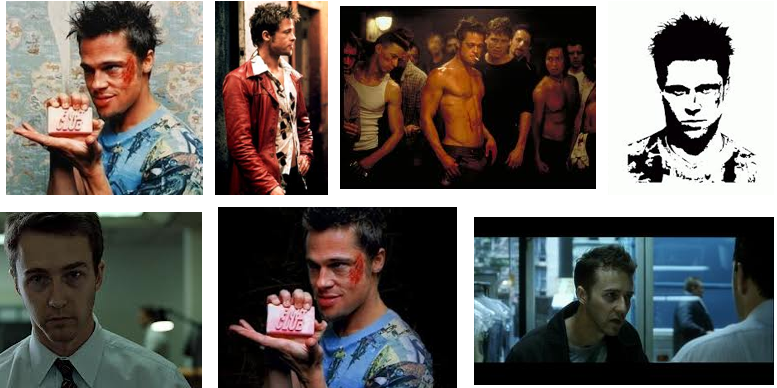
From this perspective, protein discharges never would have entered the treatment plant as ‘waste’ because they would have been used by a secondary industry making a useful product and creating jobs. What we now face as a liability may have been made an asset that would both save ratepayers money and pay wages to local residents. The process of turning a ‘waste’ into a valuable product was depicted in one of the finest films of all time, Fight Club, where Tyler Durden (Brad Pitt and Edward Norton) recovers fat from the bins outside a liposuction clinic to make soap that sells for a very handsome profit. Waste = Soap = Profits.

From an eco-design perspective, any system can be designed to work with nature instead of against it. In the vast majority of cases, the end result saves money and provides a higher quality of life for human beings. Cheaper. Healthier. Better for the environment. This is known as a win-win-win situation. Yet our community now faces the exact opposite. Expensive. Unhealthy. Polluting. Having lived in New Zealand for four and a half years I cannot claim to have a worldview of a native Kiwi. But from a North American perspective, I reckon we’ve been skunked.
Peace, Estwing

HEATing up!

The ECO School (Castelcliff) is proud to announce that Bunnings Hardware, Sustainable Engineering and Mediaworks have joined a consortium of community groups, local businesses, and individuals seeking to make Whanganui residents healthier and happier through Project HEAT: Home Energy Awareness Training. They have joined the Wanganui Chronicle, Wanganui Regional Primary Health Organisation, and the Sustainable Whanganui Trust as in-kind partners offering goods and services toward the project. Tree Life New Zealand, Ltd. and an anonymous donor are the current financial donors, although we continue to seek funding.
Power bills have risen at a rate higher than wages and benefits for the last 10 years, and that trend is likely to continue. At the same time, many Kiwis suffer from illnesses associated with cold, damp homes. Additionally, power bills make up a larger percent of the expenses for low-income families and pensioners. Our consortium of community groups, businesses and media outlets seek to help all Wanganui households, but particularly those in need.
Project HEAT helps renters and owners alike make their homes warmer, dryer, healthier and less draughty in three ways: 1) presentations in every suburb explaining easy, low-cost ways to save energy at home; 2) home energy audits; 3) instructional DIY workshops that teach how to make and install low-cost energy-saving devices. Warmer, dryer homes improve the health of the occupants, and lower power bills make money available for other household expenses.
Presently we have funding for 10 neighbourhood presentations and 83 home energy audits. Our goal is to be able to provide 100 free home energy audits to low-income families and pensioners.
Working with our venue partners, the Sisters of Saint Joseph, Wai Ora Trust, and Progress Castlecliff, we have scheduled community presentations for Saint John’s Hill (4th, March), Aramoho (7th, March), Gonville (18th, March), and Castlecliff (19th, March). If you don’t see your suburb on this list, please alert your church, sports club, or local hall, and have them contact me as soon as possible.
A DIY workshop is scheduled for 11th May with our education sponsor, Community Education Services. 
Peace, Estwing

Thrifty, yes, but is it ‘eco’?

Over the last 9 months, I have written confidently and comically about eco-thrifty renovation and eco-thrifty thinking. But this week I’m not so sure. I’ll try to keep a sense of humour, but this is serious business.
Among many ‘issues’ our villa had when we acquired it, one of the most notable was a large hole in the lounge floor through which – based on the available evidence – an unidentified person entered and exited for the purposes of sleeping and writing dirty words on the walls.
 Before

We painted over the dirty words early on, but it was not until Boxing Day of this year – 26 months into the renovation began – that we officially sealed the hole in the floor and installed over it an engineered timber ‘floating floor.’ While we would have preferred restoring the existing native hardwood tongue and groove floor, most of the boards were cupped and some had split due, presumably, to the home being moved from an area with rising damp from the soil to our present location on sand with no rising damp. When timber dries out, it shrinks, leaving gaps. And who wants gaps in their floor letting cold air into the home? OK, maybe certain Queenslanders, Victorians, and New South Welch (?!?) may enjoy a cool breeze at present. But I digress.
Interns, Jessea and Molly, slotting the floor together. 
Our approach to dealing with the lounge floor situation was to install a manufactured wood product floor, ie, sawdust and glue with an image of wood grain on top. Thrifty, yes, but is it ‘eco’?
The wood products industry would have us believe that this is an ‘eco’ product because it is made from ‘waste’ materials and low quality timber that is not straight enough to be milled into dimensional lumber. But is that just spin, or ‘green-washing’ as critics say?
In other words, is labeling this a ‘sustainable’, ‘green’, ‘earth-friendly’ product a forethought or an afterthought? And does it matter? Surely the industry makes this product because it has the technology and materials to do so profitably. Profit, after all, above all else is the legal obligation of a corporation.
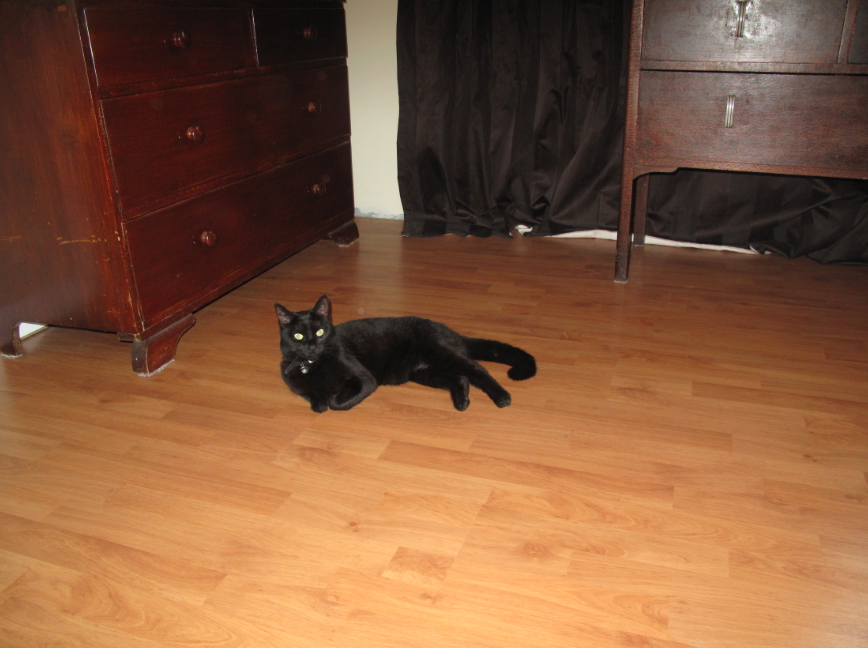
Cat tested and approved.  
Don’t get me wrong, I think the floor looks great. It is shiny, and crisp, and square – unlike most of our home. It will both reduce drafts and insulate our feet come winter. It has been cat-tested and approved (see photo), but is yet to bubs tested. (By the way, she rolled over this week for the first time, so I reckon she’ll be crawling soon.)
But what do you reckon? Here are a few questions for readers of this column:
• Are manufactured wood products sustainable products or just a sign that we’ve already cut all the good timber on Earth and are scrambling for scraps?
• Should manufactured wood products we labeled as ‘earth-friendly’?
• When a floor is made of manufactured wood products, does it lack an authenticity of a floor made from actual pieces of wood?
• Is Neil Diamond simply a great singer/song writer, or the greatest singer/song writer of all time?
I would enjoy publishing your thoughtful comments in a future column. Please email me your thoughts to theecoschool@gmail.com
 Peace, Estwing

A Market Stall for the Community

 Editors note: We are members of our local currency, I am a committee member, and I work on our bi-monthly newsletter. Here is an article I’ve written for the weekly free papers in Whanganui to increase awareness and interest in REBS, and our market stall. 
A Market Stall for the Community
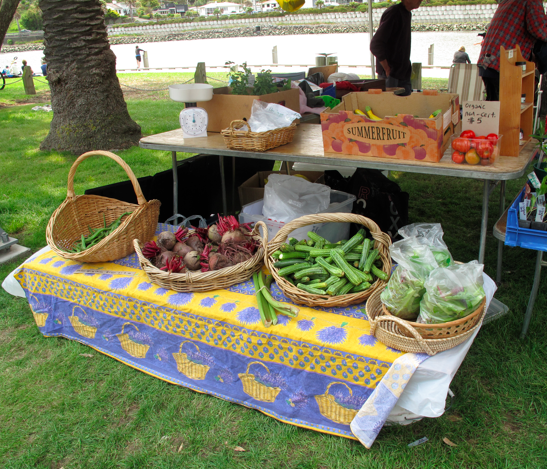
You may have noticed the River Exchange and Barter System (REBS) stall at the Saturday market and said to yourself, “What’s that all about?” Answering what REBS is about is a big task, so I’ll just say that it is form of a ‘local currency’ that allows members to sell and buy goods and services independent of the New Zealand dollar. The aim of local currencies is to maintain wealth within the community, because the ‘money’ earned and spent is only accepted by other members within the network. Whanganui’s REBS programme has been in existence for over two decades.

The REBS market stall provides the opportunity for members to sell items on Saturdays without having to buy their own tent, pay full market fees, and commit five or six hours to the endeavour. Currently, about six REBS members are splitting the stall fees and sharing the workload. The tents have been paid for, and our stall is a well-known fixture – having been at the market every Saturday for years on end! All we need is you!
Actually, we need your: fresh, local fruit and vege; quality art work; pot plants; hand crafts; high quality second-hand goods; and, if you have a valid food handling license, your prepared food items. All items on the stall can be sold part REBS currency and part NZ dollars (NZD). For example: 50% NZD and 50% REBS; 80% NZD and 20% REBS; or 100% REBS.
In order to make the stall economically sustainable, we need everyone who brings items onto the stall to commit one weekend each month and 10% of their takings. Additionally, contributors to the stall must join REBS, which has an annual subscription fee of $15. The top sellers on the REBS stall take in over $50 every weekend, and sometimes have topped $100 in a single Saturday.
For more information, please stop by the REBS stall on a Saturday to inquire. (We are located between the trolley tracks and the river.) Or contact Michael O’Shea on 344 5032. Please don’t just show up at the stall with goods in hand expecting to sell. We need a minimum of two days advance notice.
Peace, Estwing