
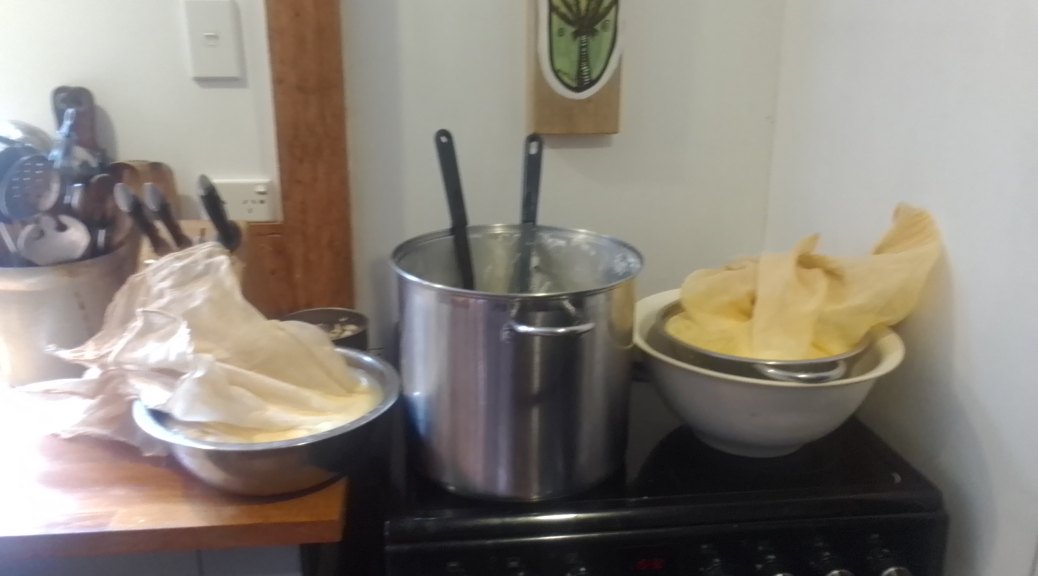
Fresh, home-made goats milk halloumi is a major part of our diet and lifestyle each year from spring on through autumn. During peak milk production I am making halloumi three or four days a week – producing about 1.5 kg each batch.
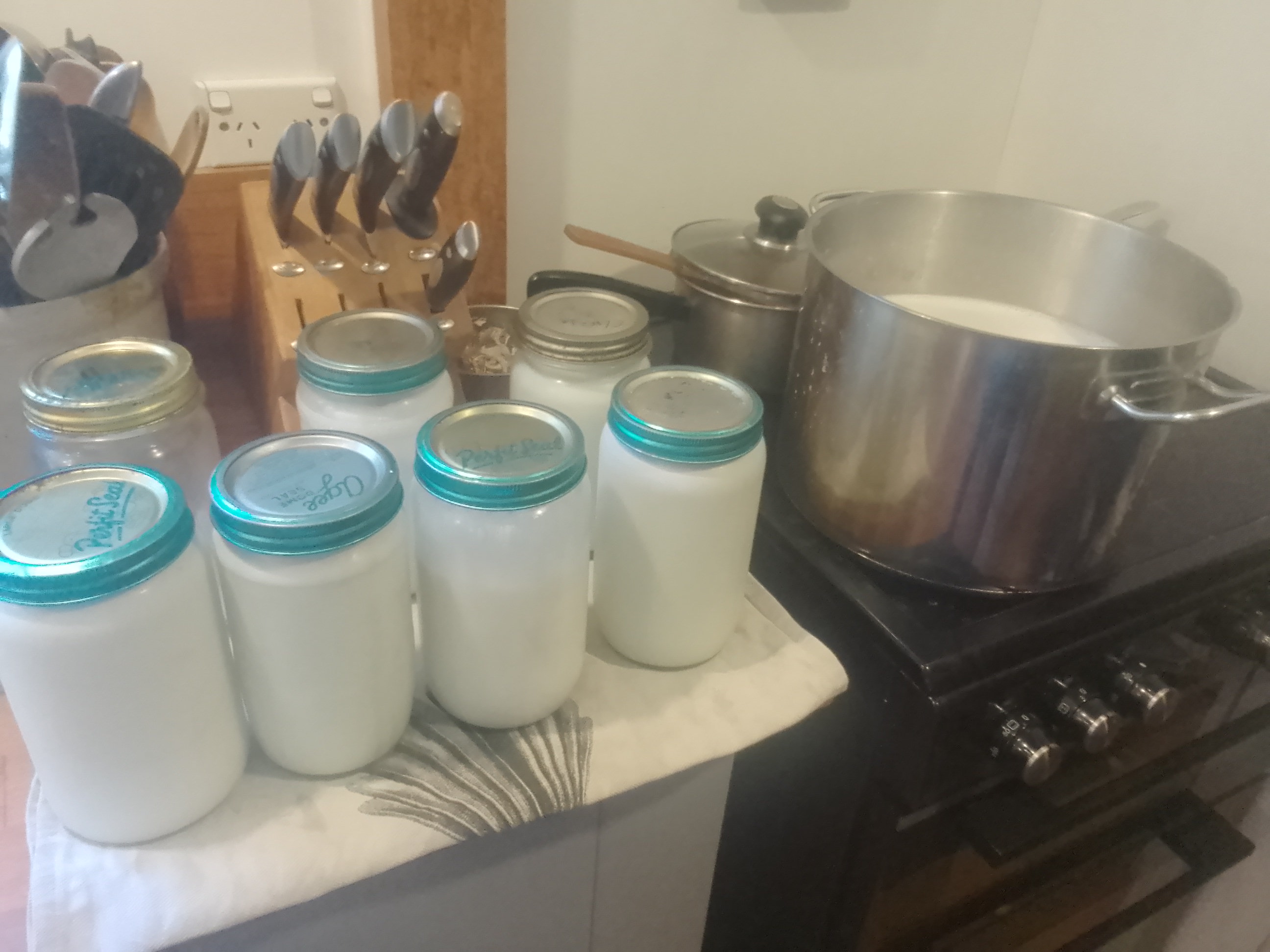
Making halloumi requires rennet, which is a complex set of enzymes produced within the stomach of ruminant animals. We buy our rennet from Renco, New Zealand one litre at a time. Only 7.5 ml of rennet is required per batch, so that first litre has lasted over two years, making well over 100 batches of delicious white gold!
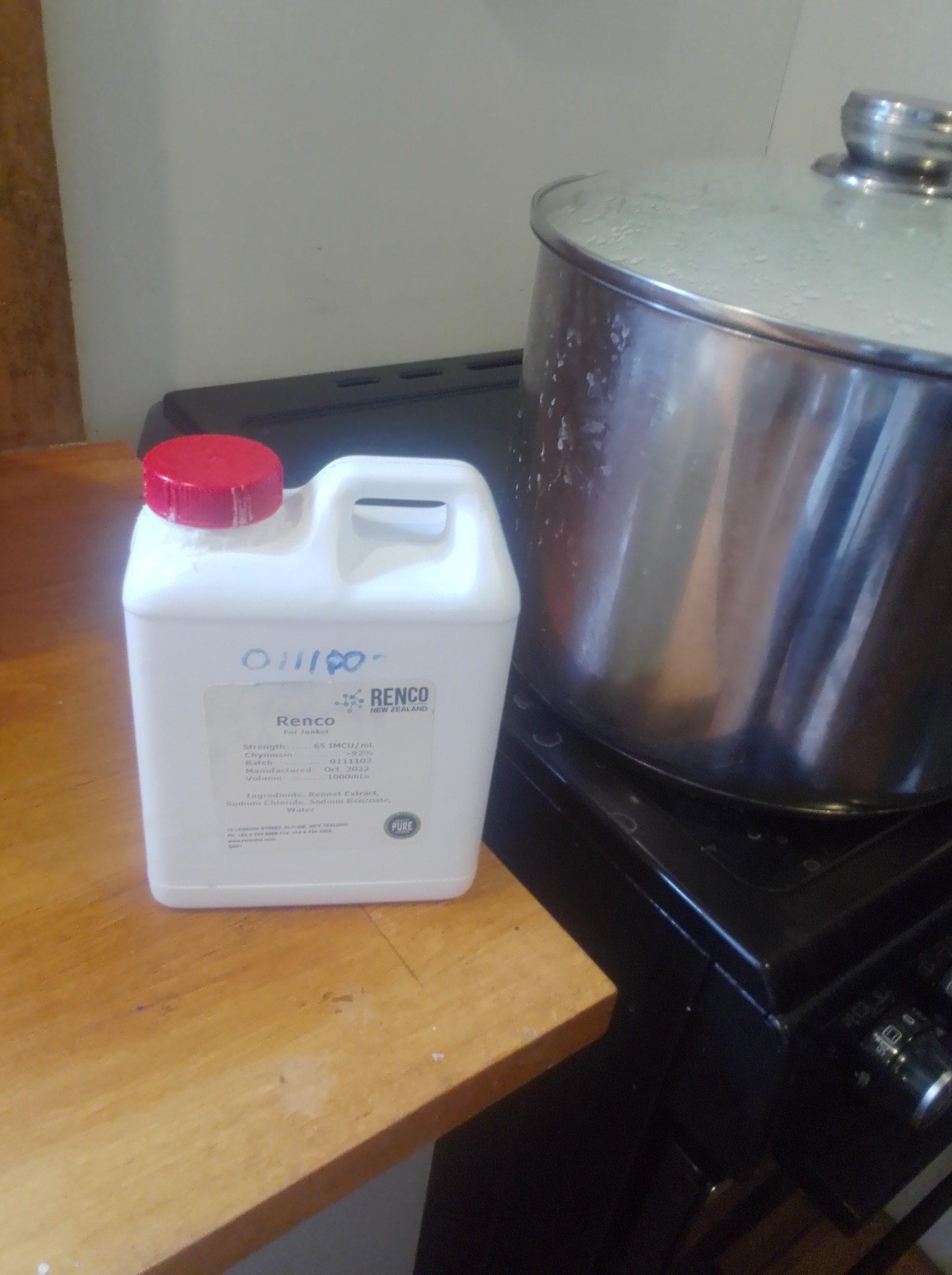
At any given time we are milking four to six goats with each giving between a litre and three litres a day. That is a lot of milk for our family of five! Here is Mindy gobbling up her tucker while being milked on the stand.
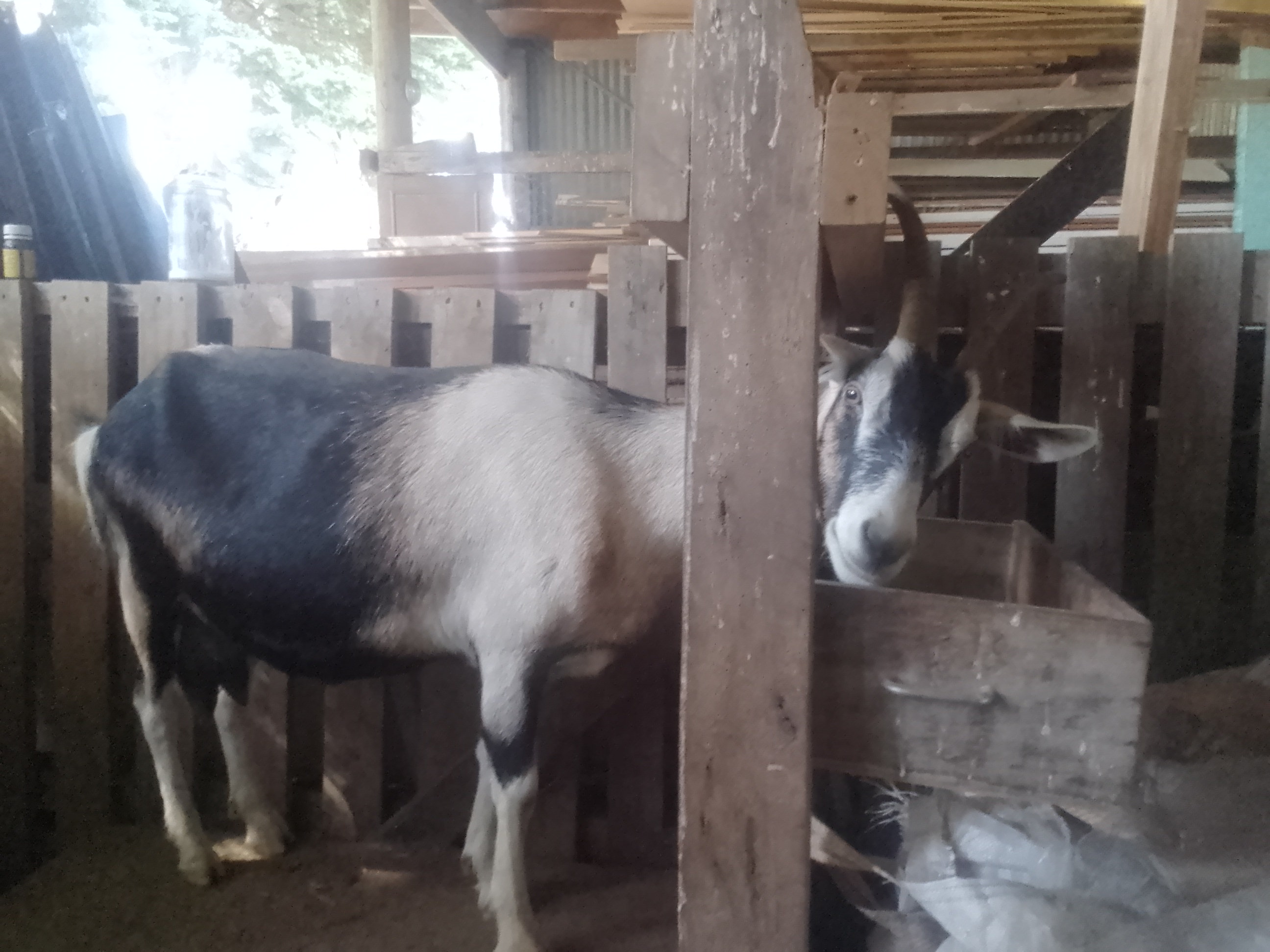
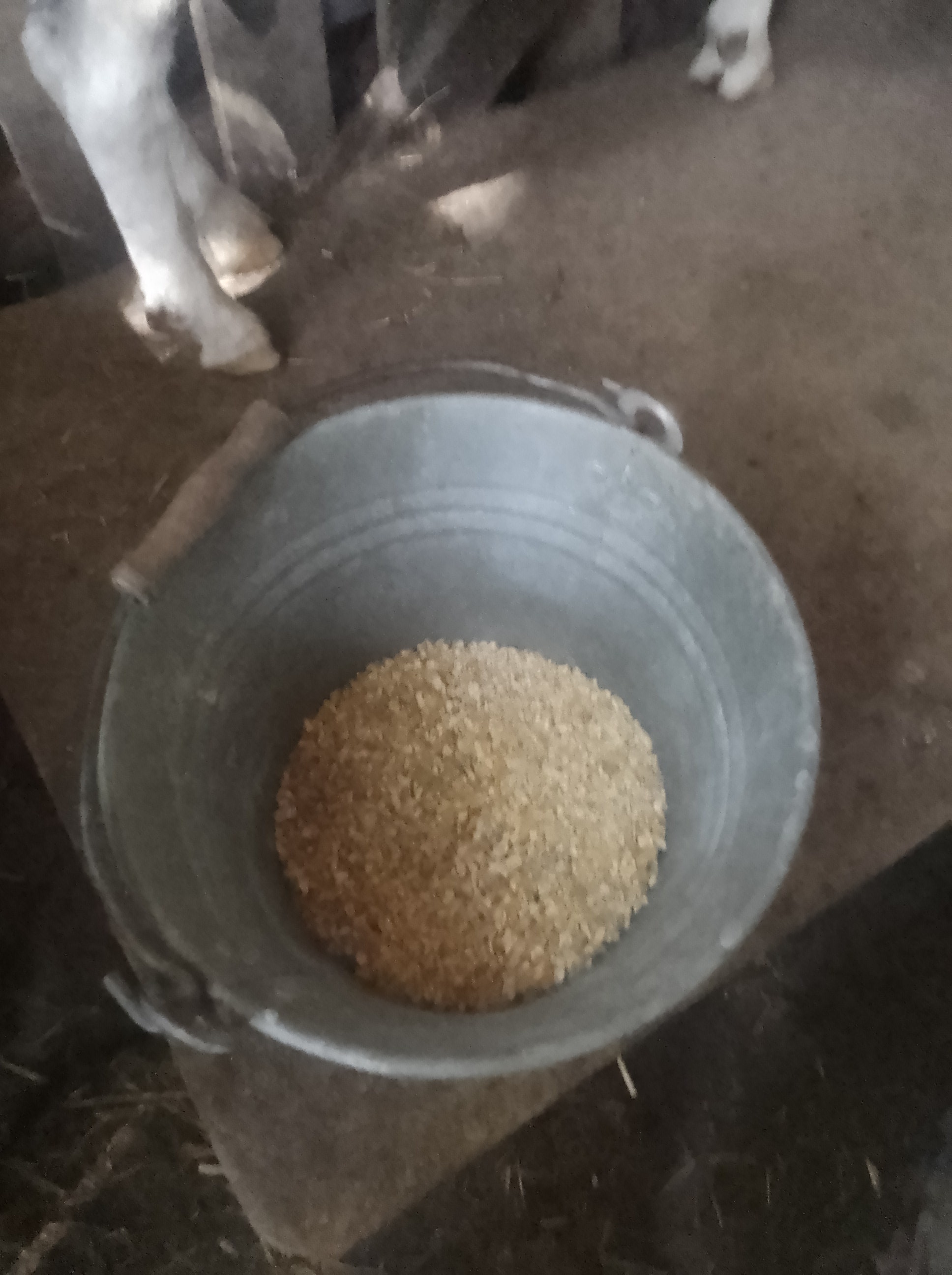
We make a home-made tucker of kibbled maize, rapeseed meal, molasses and a pinch of diatomaceous earth. They love it!
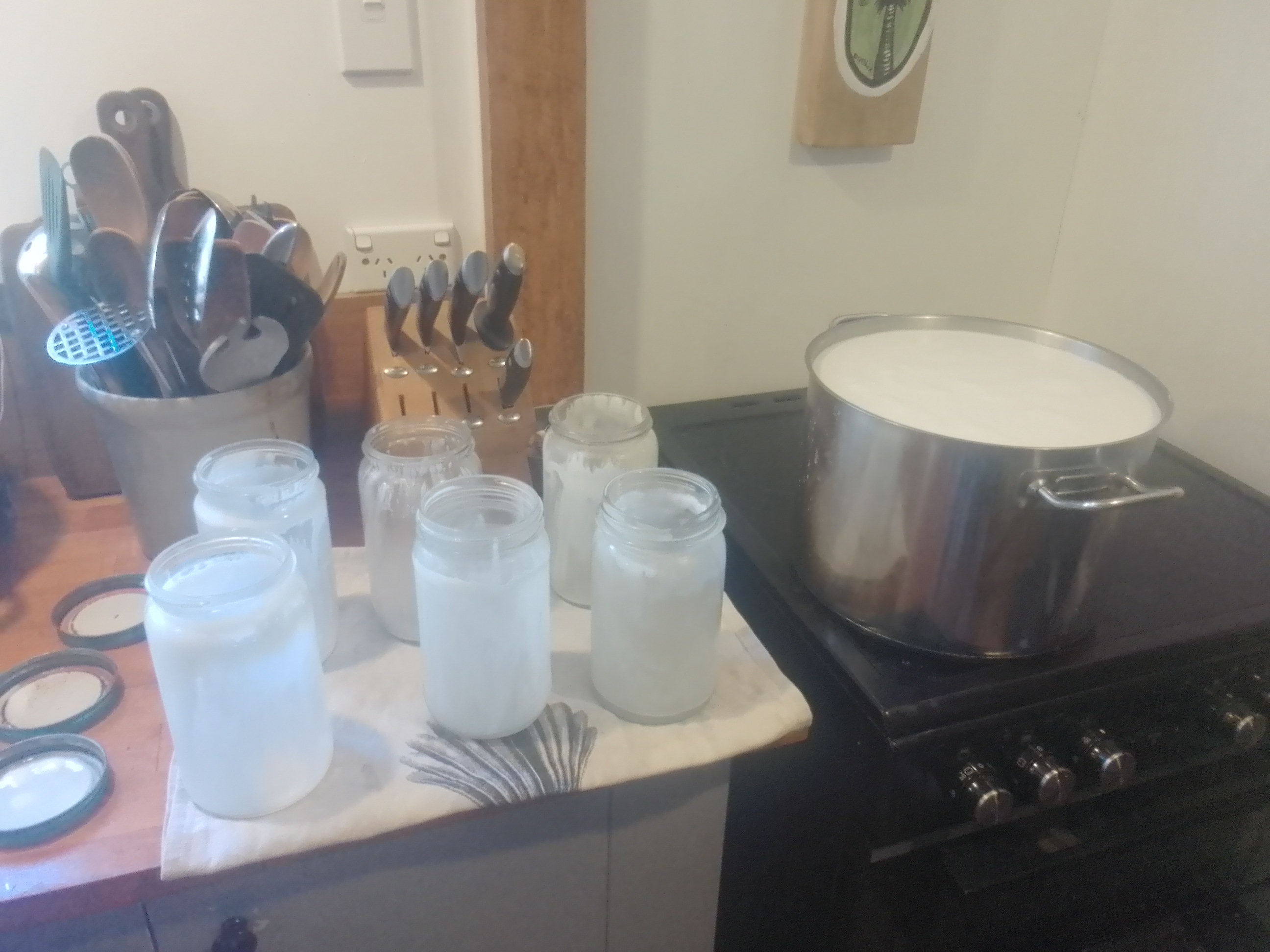
The first step for making halloumi is to fill a large pot with milk and bring it up to 35 degrees Celsius.
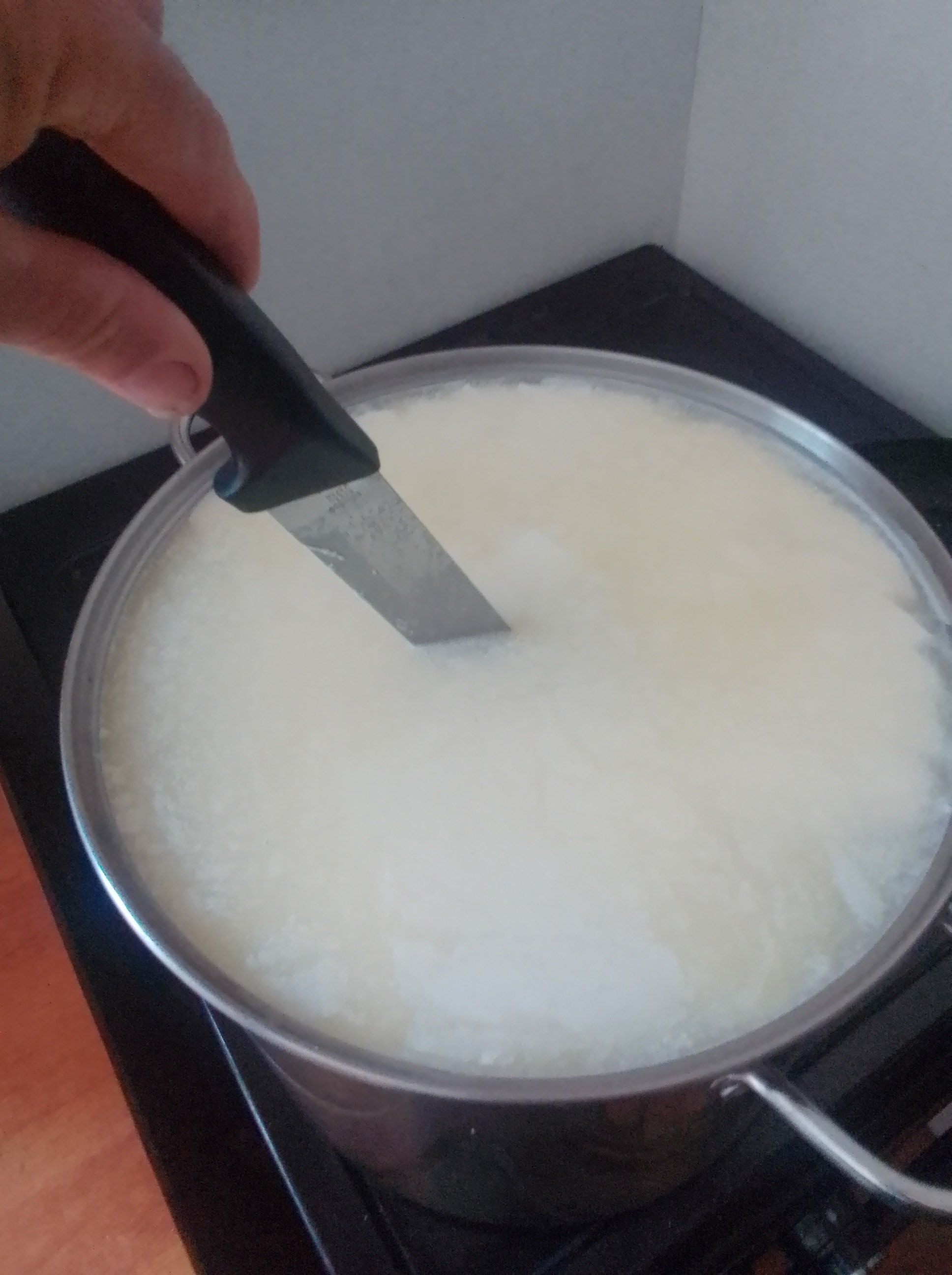
Add 7.5 ml of rennet and let stand for one hour, at which time the curds separate from the whey. Cut the curds across in both directions with a long knife.
Let sit five minutes and scoop out the curds into cheese cloth. I use two large slotted spoons.
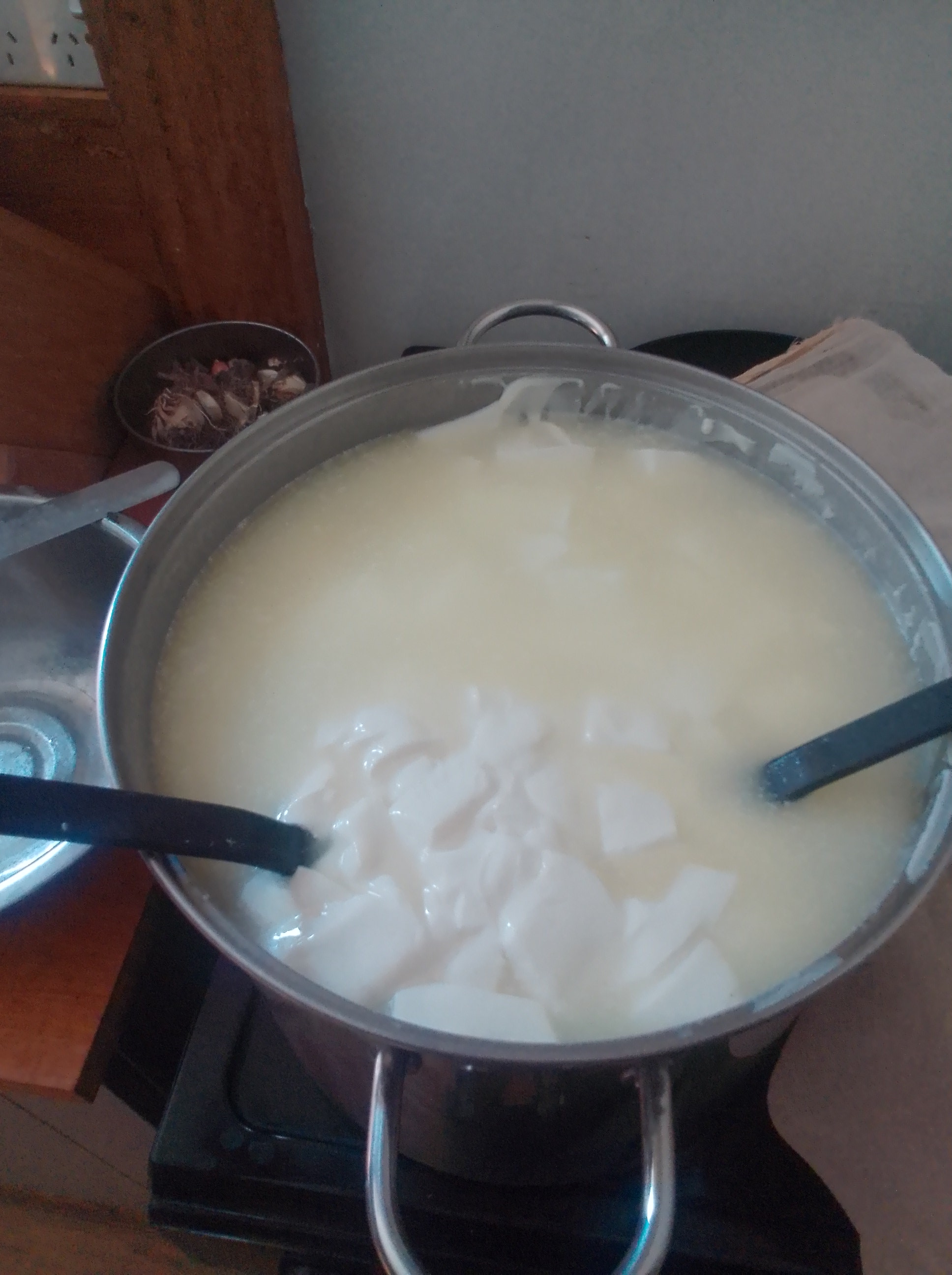
I put a colander inside a large bowl to let the whey drain out as much as possible.
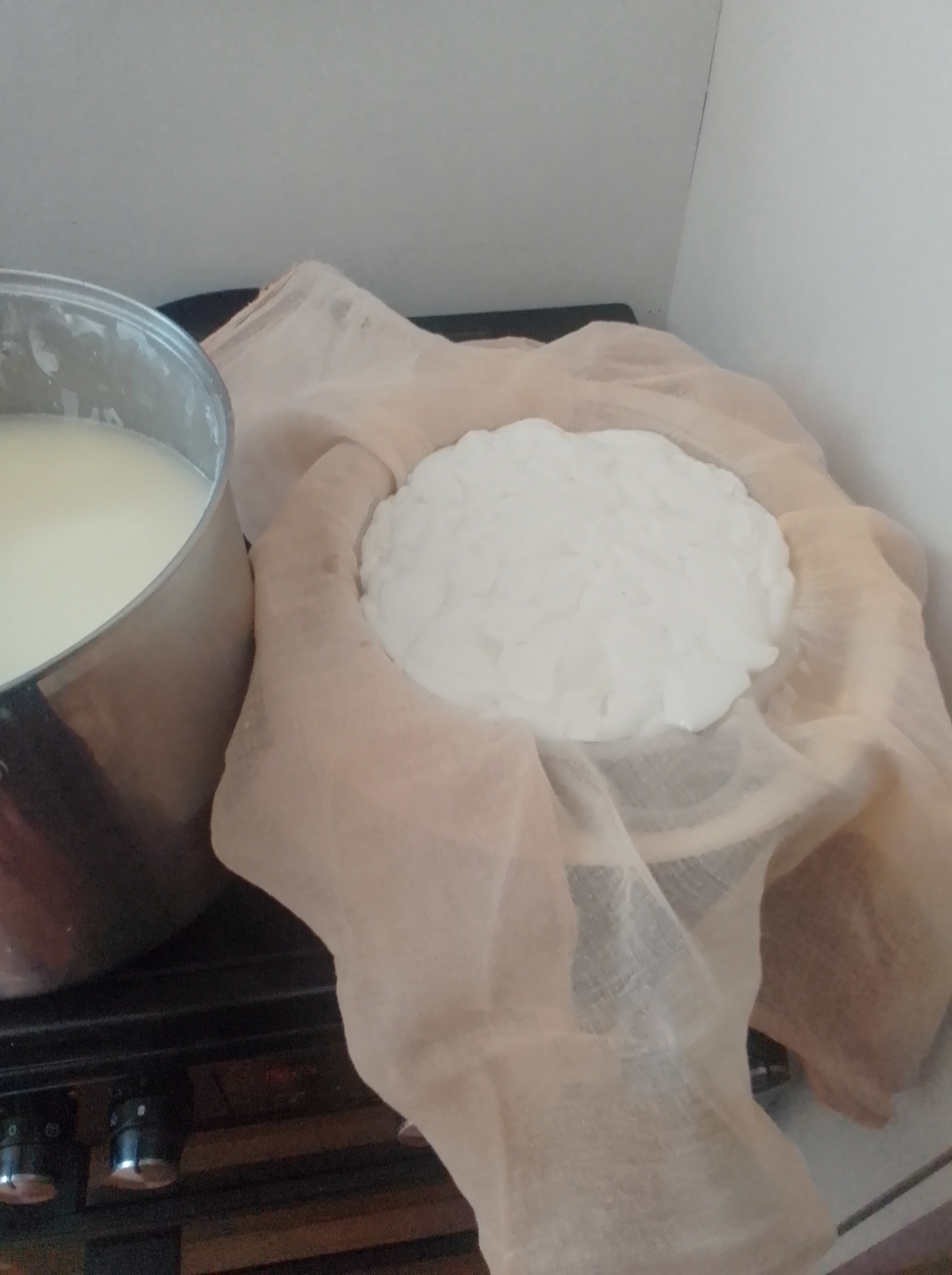
I have to fill two cheese cloths with the amount of curds that we get from each batch. Pour the whey back into the pot.
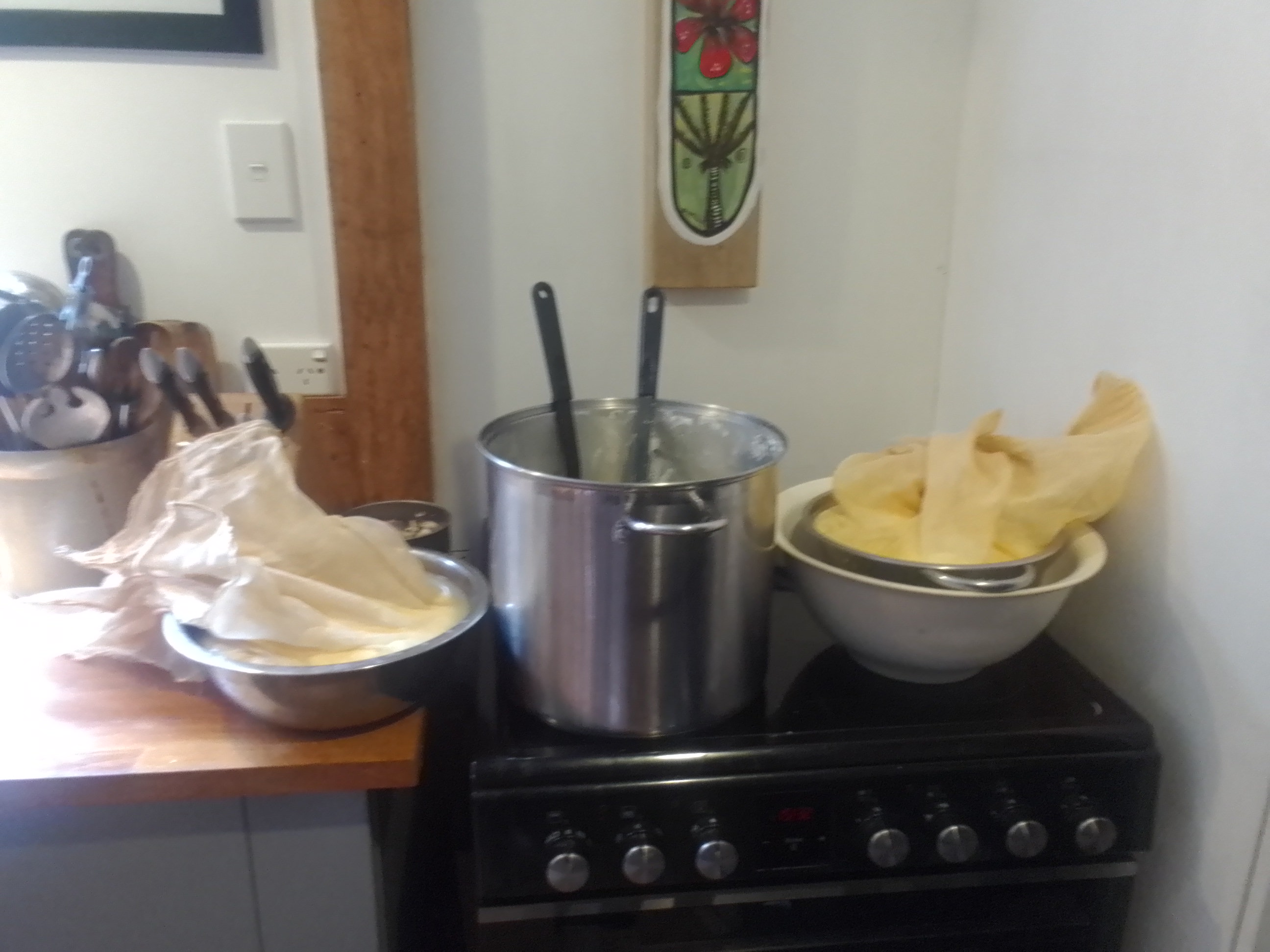
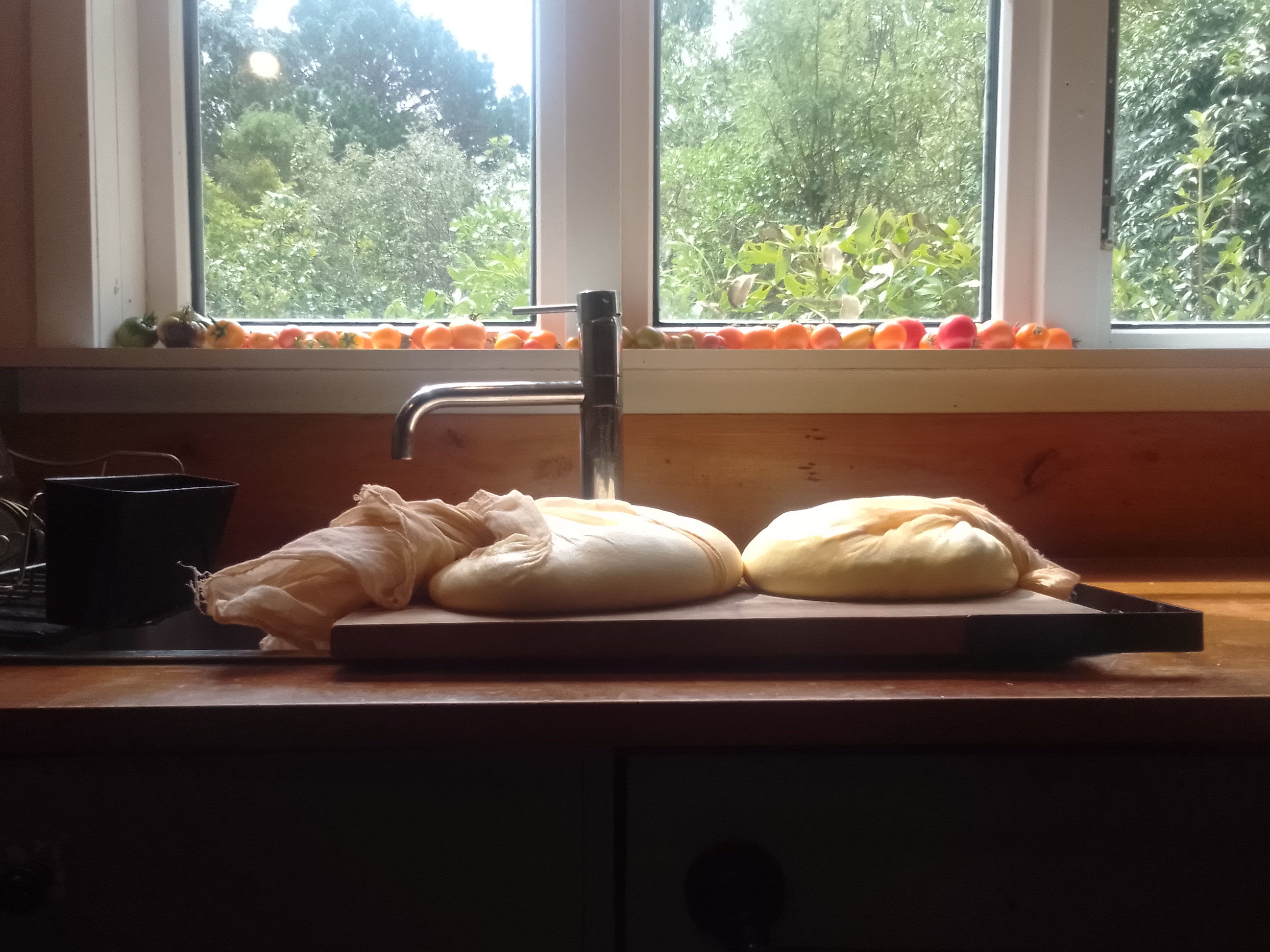
Next, put the curds wrapped in cheese cloth on a large cutting board above the sink so that the remaining whey will drip down the drain.
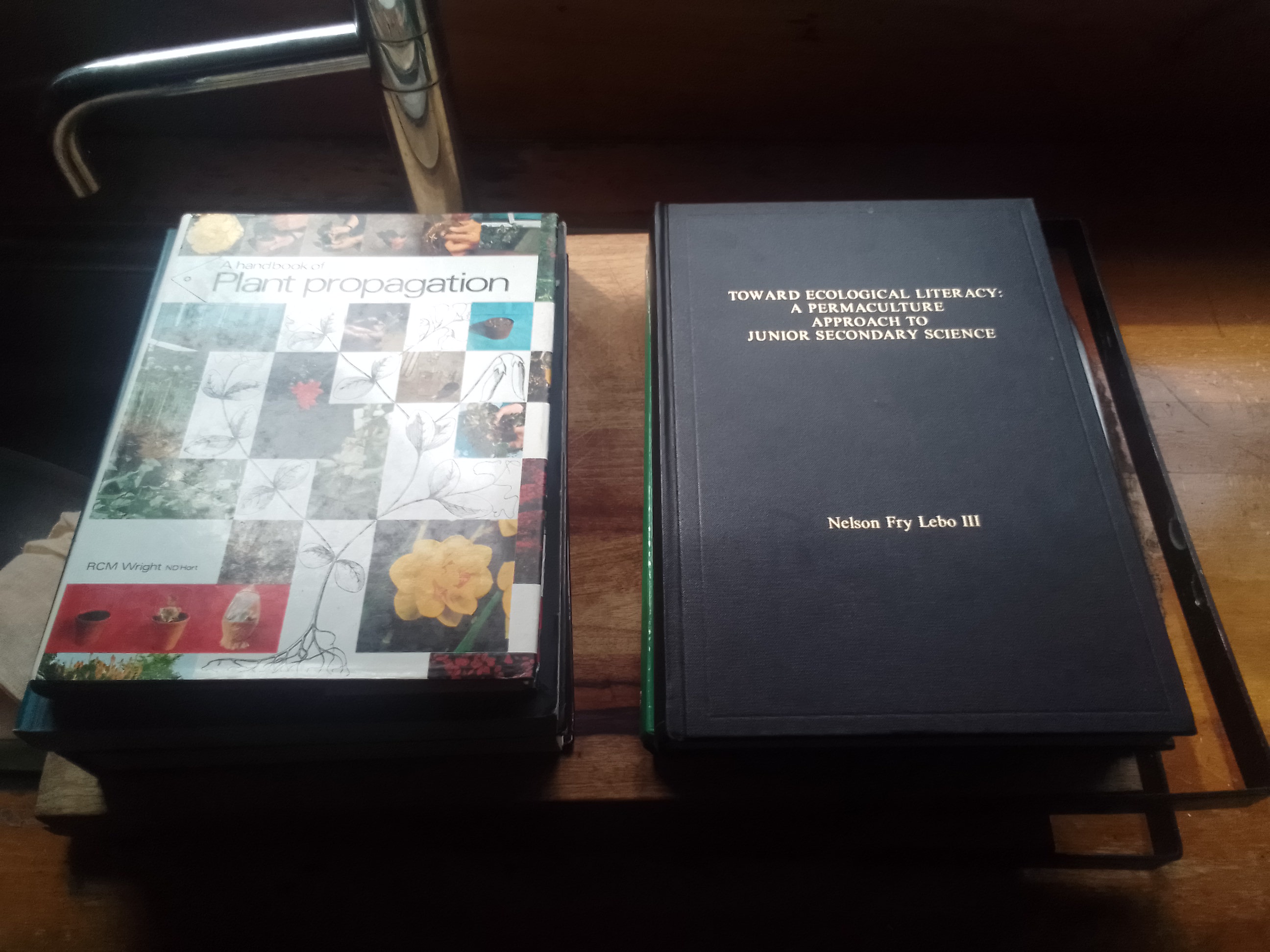
Place another large cutting board on top and add approximately 10 kilograms of weight. I use big books and a Le Creuset casserole.
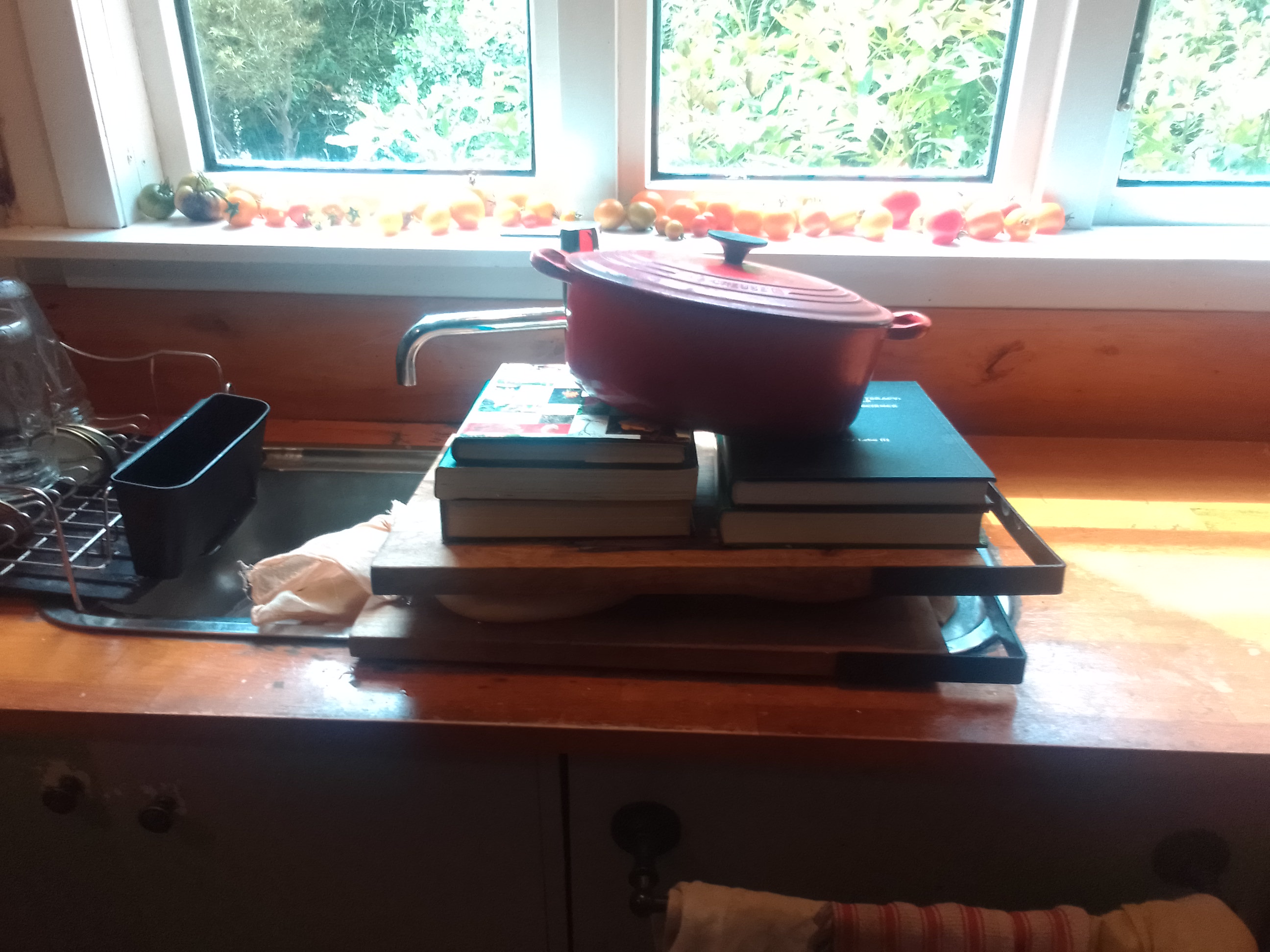
This is a particularly good use for my PhD thesis.
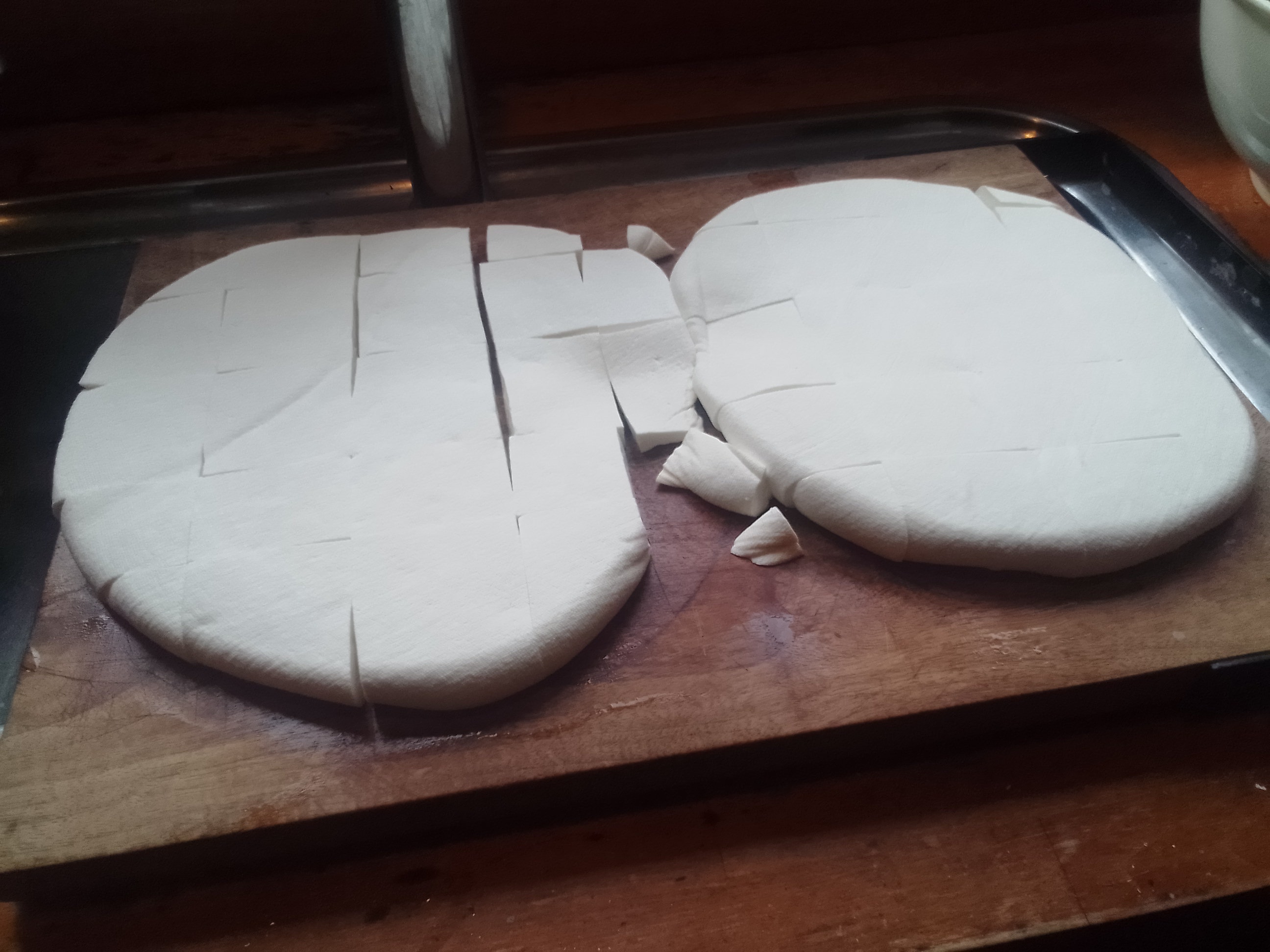
Now it’s time to cut the cheese!
The next step requires heating the whey to somewhere below boiling point and putting the blocks back into it for 30 minutes. Fish them out and lay on plates to drain, and then salt liberally. The byproduct of this step is ricotta cheese. This can be collected separately and saved for lasagne, although our cats love eating it too.
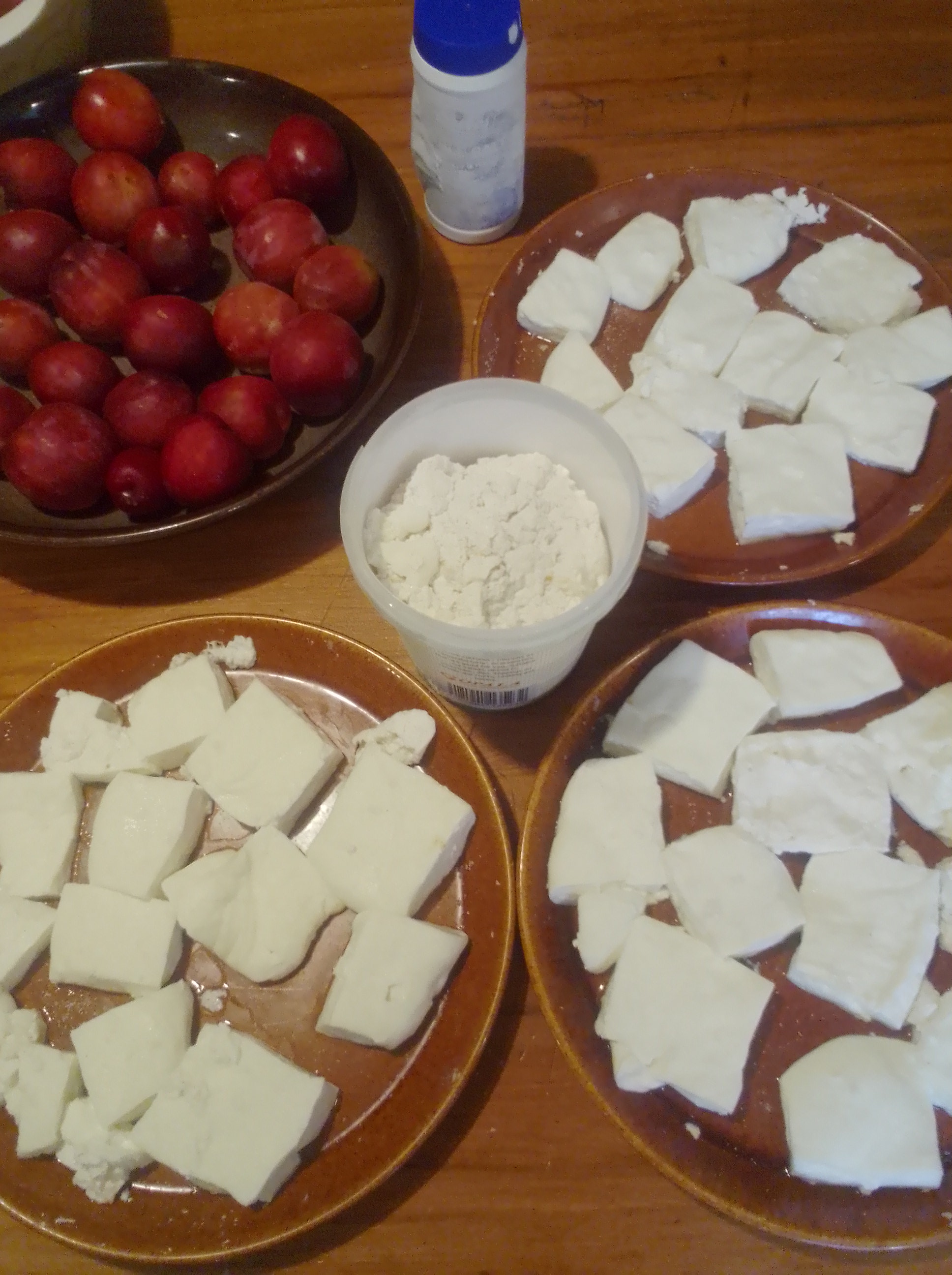
Refrigerate for a week or 10 days, but any longer and it should be frozen. We currently have about 20 kilograms in the freezer!
I usually prepare halloumi by frying lightly in oil until both sides are golden brown. Yum!

Peace, Estwing
 Eco Thrifty Living