All posts by Estwing

Slow learning in an age of instant gratification

It takes eight weeks to earn a Permaculture Design Certificate (PDC) on Kaitiaki Farm. We are slow learners.

Screen Shot 2017-11-06 at 5.08.36 am

Holmgren’s 9th Principle, Use small and slow solutions, should especially be considered when it comes to teaching and learning. Humans learn slowly, and as our digital worlds speed up, the need for slow learning only increases.

Many PDC classes happen too fast with little time to reflect on the learning and little experiential learning. As someone who has spent their entire life as an educator with multiple education degrees, I steer clear of two-week residential PDCs.

That’s one reason we developed our eight-week PDC internship programme that includes total immersion in the patterns and flows of a permaculture farm. Alongside learning permaculture our interns are living permaculture.

Cultivating learners is what we do.

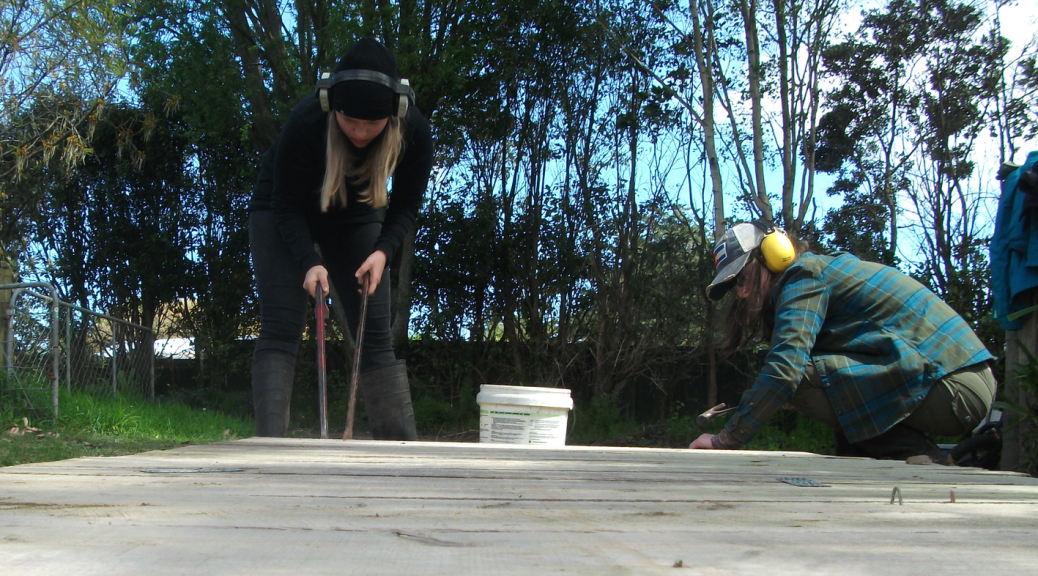
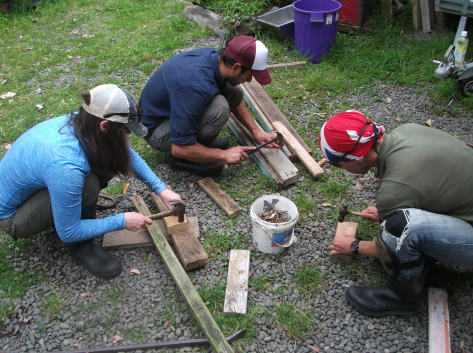
We start by pulling and straightening nails.

Screen Shot 2017-11-06 at 5.04.58 am

Holmgren’s 6th Principle, Produce no waste, is experienced by transforming materials that others have destined for landfill into valuable resources for future building projects.
Screen Shot 2017-11-05 at 5.54.52 pm

We often straighten a nail and reuse it within a matter of minutes on the farm. Going back seven years, all ECO School interns have learned this as an essential first lesson.

Another skill taught on Day One is managing hot compost. We usually have three individual piles running: one we build through collecting materials; one that is ‘cooking’; and one that is finished and ready to use. Interns turn the active piles three times each week.
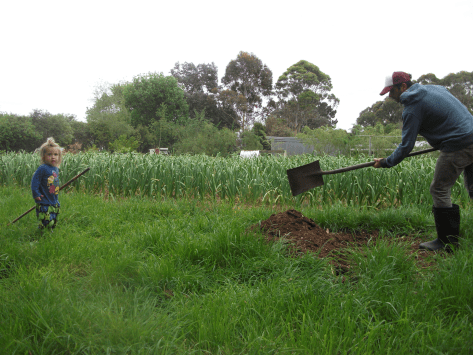
Screen Shot 2017-11-06 at 5.05.52 am


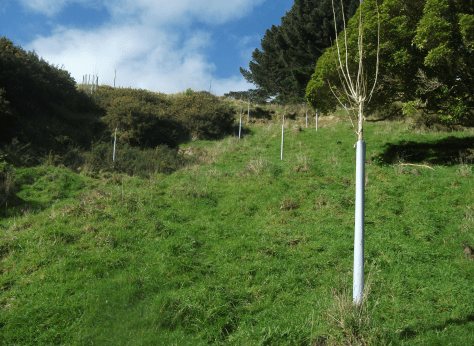
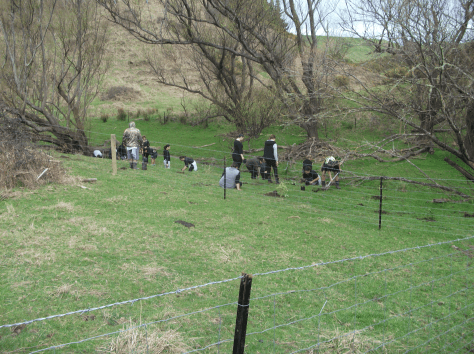
Finally, we emphasise the permanent in permaculture by planting and caring for trees, whether in the orchard or the zone 5 wetland we are establishing alongside Purua Stream.
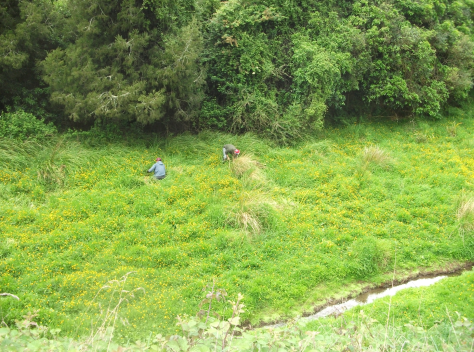
Screen Shot 2017-11-06 at 5.06.09 am


Without fail, four to five weeks pass before we see lightbulb moments happening when interns really begin to understand holistic and four-dimensional design. That’s the payoff as an educator – when you know they get it.

Our PDC internships consist of a thousand teachable moments. 

One insightful intern said, “You really need to learn to do things properly because there is no control+Z function on the farm. You can’t Undo something with your fingertips.”

Indeed.


Peace, Estwing


Guest Post: Joy in Scything

Editor’s Note: Here is a post by our intern, Penelope, who is taking a gap year during her university education.


During my time at Kaitiaki Farm, I have continued to find joy in the small tasks that make up our days. Projects sometimes consist of jobs that could be done with fossil fuel powered tools, but we choose to do the slower way which we find has the side effect of producing a better output. I keep finding these are the most meaningful job to do. When we step back and look at the task ahead of us holistically, we often just need to change a mindset to make it enjoyable. I found this to be true in scything the main garden paddock.

Most of the scything here happens in the spring, as the grass starts to really take off and grow after a cloudy, wet winter. This makes the paddocks more unruly, harder to walk though and more difficult to push wheel barrows through. We also can usually can find a good use for some cut grass, either through mulching the garlic beds or protecting plastic in the sun.

The task set forth to the interns was the cut the highest strip of grass in the paddock which will soon be removed of all of its topsoil as a driveway will be build there. So the grass doesn’t need to be there at all soon, so why not cut it now and get some use out of it?

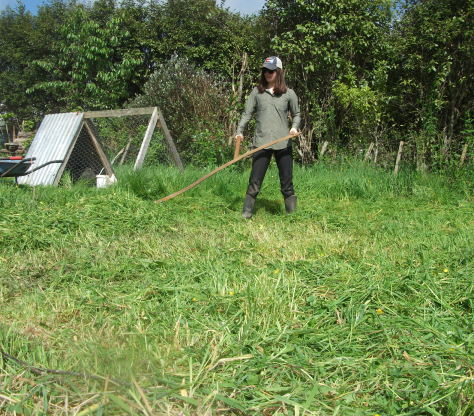
Here is picture of Ivy, a fellow intern, hard at work with the scythe:

I had some very brief experience scything rye at my old college, but this was a more meticulous task. Grass wasn’t as rigid as rye, and I would have to cut closer to the ground for a more mowed feel. The motion of scything is meant to be fluid and I may not have it totally down, but I can say for certain I don’t bury the tip in the ground nearly as much as I did when I started the paddock. Overall the project took about 4 hours to do, including raking up the cut grass and putting it on the plastic that was covering our next garden beds.

By covering a section of the grass covered paddock in a large sheet of plastic, we kill the grass after a few months and can then remove the plastic, broad fork the soil apart, aerate the soil, break it down into a finer tilth, shape some beds and voilà! You’ve made a paddock into a garden bed! (a more in depth look at that could be a whole other post) But as far as the cut grass we had on our hands, we put it onto the plastic so that we were protecting it from breaking down in the direct sunlight- prolonging the life of the plastic for us.

Here you can see the final product, littered with grass piles, but shorter than the grasses on the left.

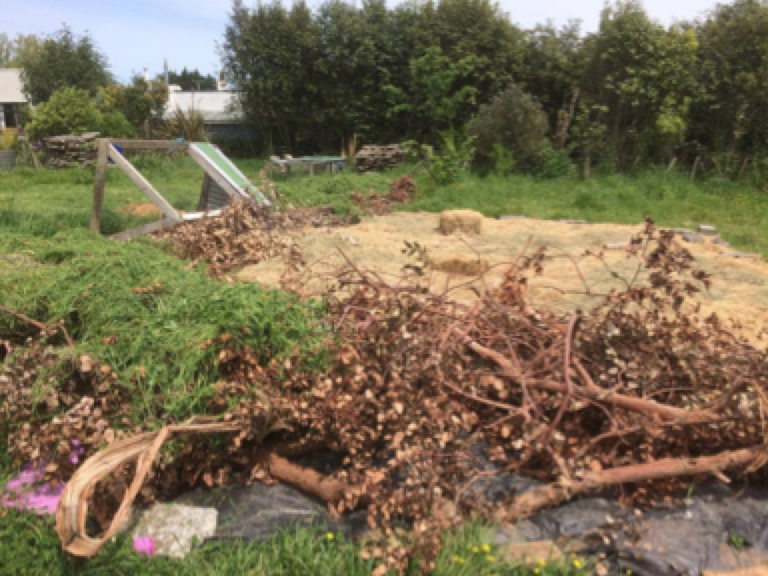
And here you can see the hay and dried grass that has been put on the plastic to protect it from the harmful sun.

By doing a task without the use of fossil fuels we are contributing to a smaller carbon footprint while working our bodies to manipulate the land we have, for our benefit. The grass doesn’t care of its long or short so why not use a bit of it? For me, manual work always comes with a sense of accomplishment that I have yet to find anywhere else. I cut that grass and then we used it for another project. Lawnmowers are loud and polluting and if we’ve got the time why would not do something that is better for the earth and better for us?

-Penelope


Guest Post: A Perfect Day to Pull Weeds

Editor’s Note: This is a post by our intern, Ivy, who just graduated from high school and is now earning her Permaculture Design Certificate with us.
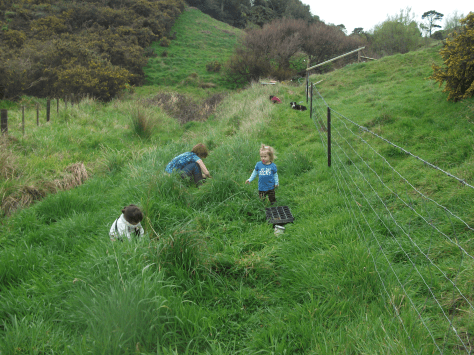
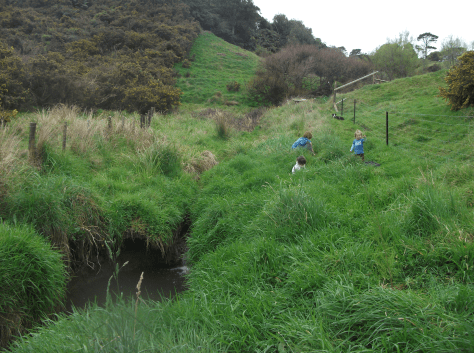
Damp dirt squelching beneath my feet, blustery breeze dancing through my hair, soothing sun shining upon my face. The day brings perfect conditions on Kaitiaki Farm. We have headed down the hillside, ready for a morning of pulling weeds. With native trees speckling the vibrantly green grass, providing a contrasting texture to the sparkle of the trickling stream, the terrain is illuminated by the persevering sun breaking free through the clouds. Our trusty group of determined interns tramp through the grass, clamber over the fence, and meander our way down the stream, finally settling onto a shaded slope to start our work. Weeding, as simple of a practice as it may seem, is only one part of the intricate system that makes a permaculture farm thrive. It is a way of purging the unwanted invaders from leeching upon the nutrients of the soil, stealing from the plants that are actually supposed to be there. Due to the subsiding dampness of a dissipating winter, the past few weeks have been ideal to journey down the hill. Several important steps are involved in the weeding of each individual plant, and it is imperative to sufficiently carry out each step before moving onto the next tree. After removing the grasses and weeds from around the base of the tree,– including the particularly tenacious buttercup weed,–  the extirpated vegetation can then be used as mulch. By tucking it down next to the stem of the tree, it will not only lock moisture into the soil, but also act as a barrier to prevent more weeds from growing. This kind of clever resourcefulness and creative problem-solving is a key concept that closely follows the principles of permaculture. Turning a liability (the undesirable weeds) into an asset (a protective boundary for the natives).

Just as the sun progresses along its arc in the sky, so we progress along our path on the ridge. Worms erupt from the soil, spiders skitter across the leaves, insects leap back into the comfort of covered vegetation, all serving as reminders that the earth below my dirty fingertips is very much alive. Weeding is a rhythmic process, almost therapeutically so. There is nothing like the serenity of nature and the purity of the landscape to revitalize your senses, refresh your mind, and rejuvenate your soul. We yank the grasses from around each shrub, pat them gently around the base, and take a deep breath of fulfilled accomplishment. Then, we methodically move onto the following plant.

Yank. Pat. Breathe. Wild peacocks squawk in the distance, adding to the harmony of twittering bird calls.
Yank. Pat. Breathe. Windy gusts overflowing with the scents of flowers and forests and freshness drift through the air.
Yank. Pat. Breathe. We encouragingly shift as one, the three of us making our way across the hill to care for each tree.
 
Our hands are aching and our backs are sore, but our hearts are full. As we travel back up to the house, we take one last glance at the sprawling valley below. The view is, as always, breathtaking, and not just because the traverse up the hill is so steep. Although we cannot physically see much of a difference, we know that we have made a positive impact, and for that we feel satisfied.


Ivy, 18 years old.

Spring Permaculture Update: Part II

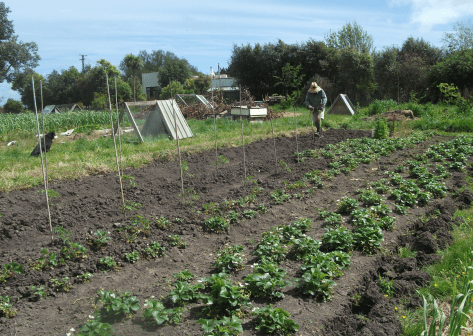
So much is happening on the farm these days that it won’t fit into one blog post. With three new interns and some dry, windy weather we are getting a lot of back-logged work done as well as seasonal chores. We recently expanded our annual beds…

Screen Shot 2017-10-22 at 3.24.15 pm

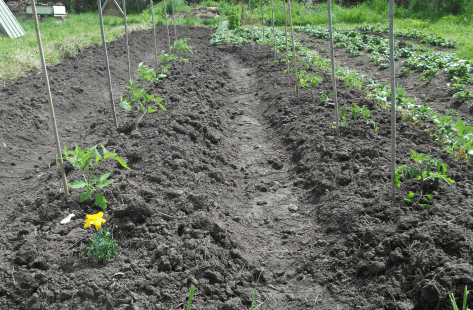
…and planted more tomatoes.

Screen Shot 2017-10-22 at 3.23.39 pm

We’ve patrolled for thistles, but after three years of manual control there are hardly any to be found.

Screen Shot 2017-10-20 at 7.16.09 am

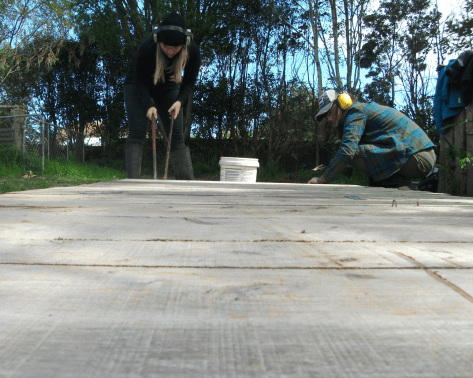
One of the first things we teach all new interns is pulling nails and salvaging timber.

Screen Shot 2017-10-16 at 6.05.28 am

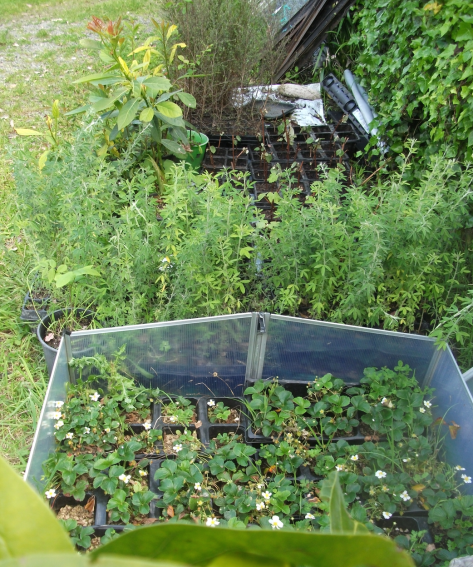
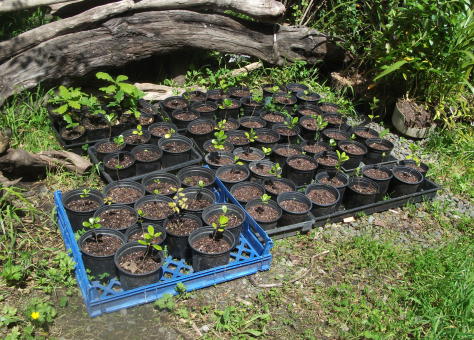
We’ve also been busy in the nursery.

Screen Shot 2017-10-20 at 7.12.51 am


Screen Shot 2017-10-20 at 7.13.11 am

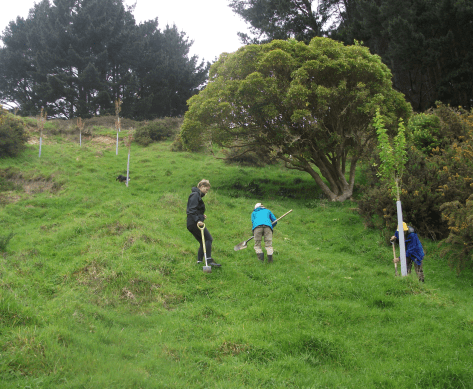
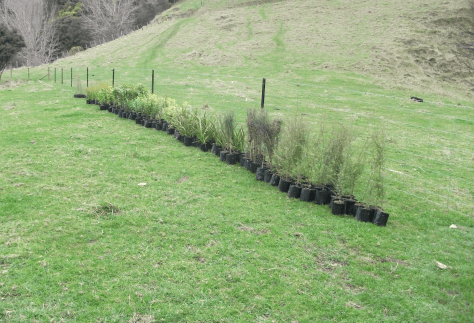
And planting native trees low on the property where soils stay moist year round.

Screen Shot 2017-10-23 at 6.35.47 am

All hands on deck!

Screen Shot 2017-10-23 at 6.34.55 am

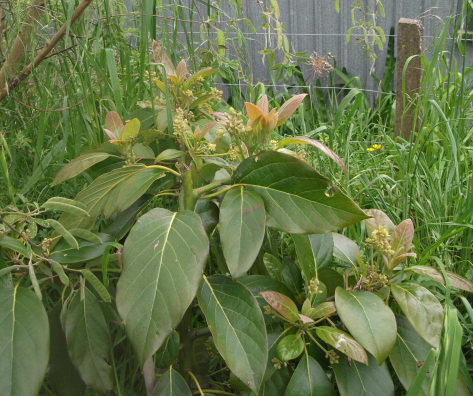
Some other cool things happening on the farm are our first avocado flower buds forming.

Screen Shot 2017-10-22 at 3.22.26 pm

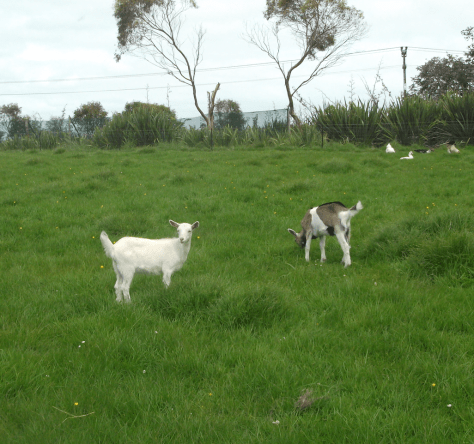
Our baby goats have become adolescent.

Screen Shot 2017-10-22 at 3.22.11 pm

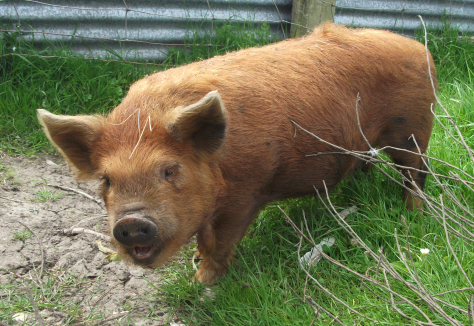
And we have a new boar, but he’s still just a wee thing.

Screen Shot 2017-10-22 at 3.21.57 pm


Peace, Estwing

Spring Permaculture Update

The equinox has come and gone, and it’s all go on the farm. Longer hours of day light and plenty of water in the ground have vegetation in overdrive. Luckily, three interns arrived last week to learn and help out on the farm.

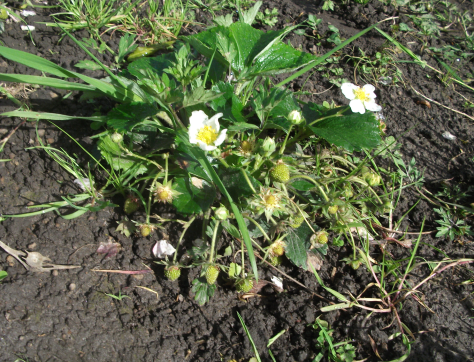
Strawberries are forming.

Screen Shot 2017-10-15 at 6.37.31 am

And plums.

Screen Shot 2017-10-15 at 6.38.03 am

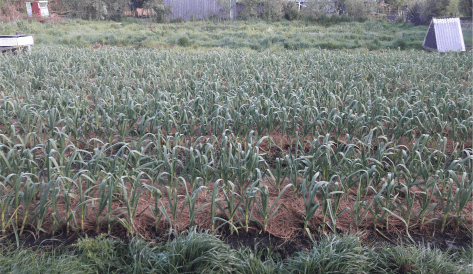
The garlic is high.

Screen Shot 2017-10-15 at 6.36.30 am

And the grass.

Screen Shot 2017-10-15 at 6.39.47 am

Hawthorn is blooming.

Screen Shot 2017-10-15 at 6.38.27 am

And poplars are leafing out.

Screen Shot 2017-10-15 at 6.38.54 am

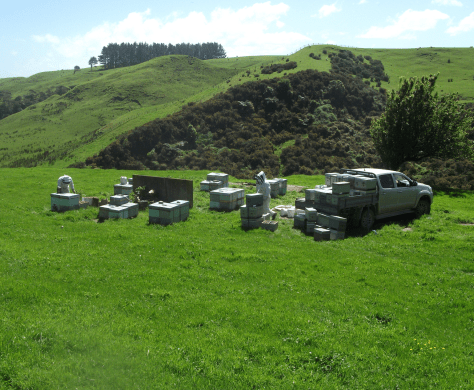
Bees are swarming, so our contracted beekeeper came to divide his hives.

Screen Shot 2017-10-15 at 6.40.20 am

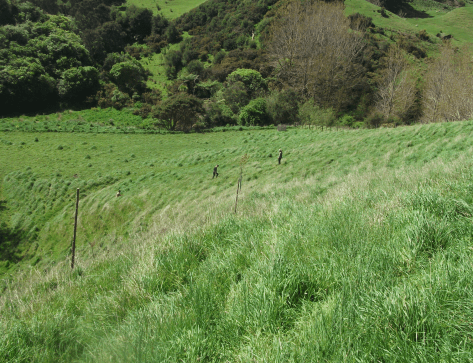
The interns headed down the hillside to weed the young olive trees we planted this winter.

Screen Shot 2017-10-15 at 6.40.44 am

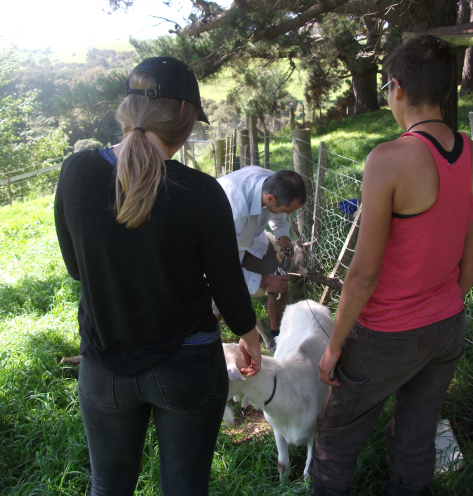
Followed by a lesson in goat pedicure.

Screen Shot 2017-10-15 at 6.42.14 am

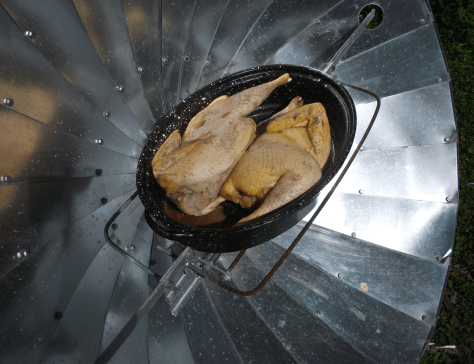
And a dinner of solar chicken.

Screen Shot 2017-10-15 at 6.41.43 am

Happy the sun has returned.


Peace, Estwing
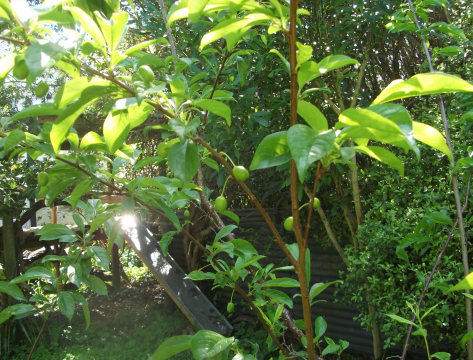
Regenerative Land Management: The Power of Plants

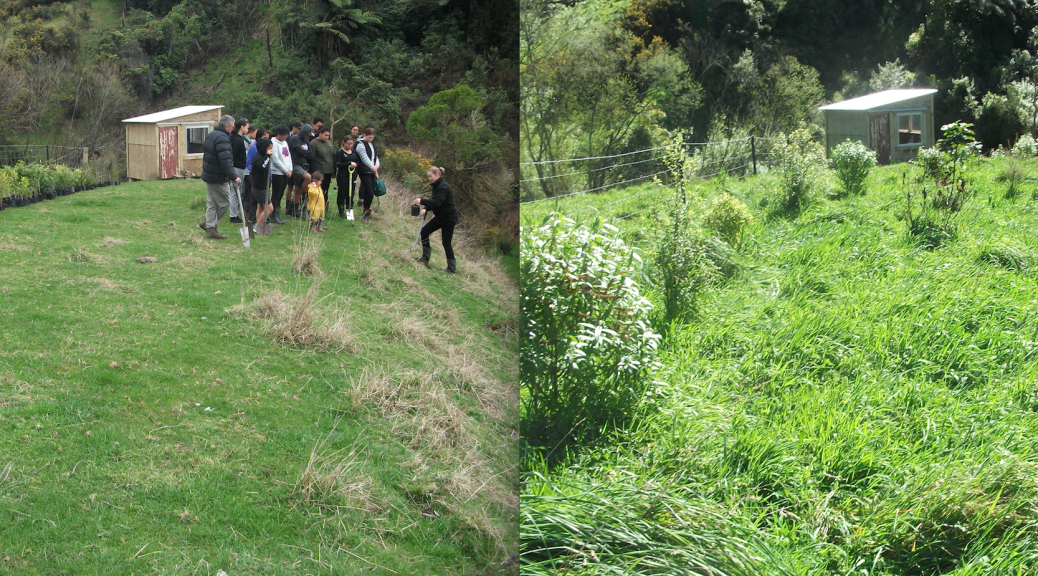
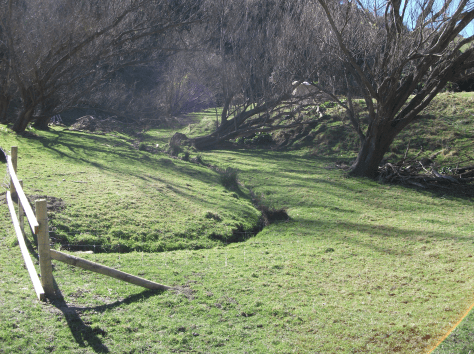
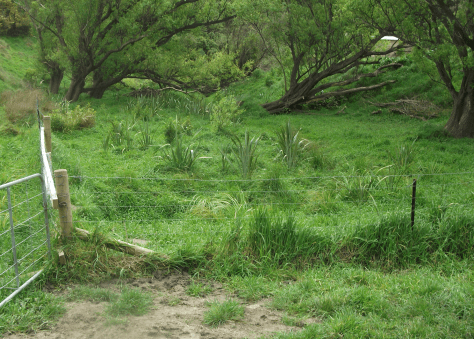
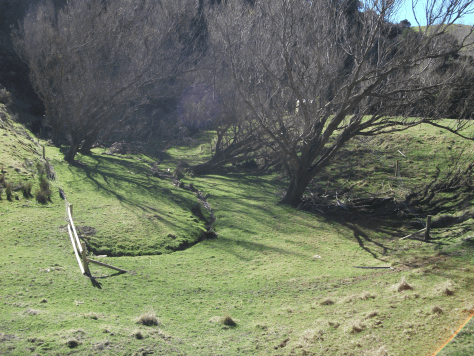
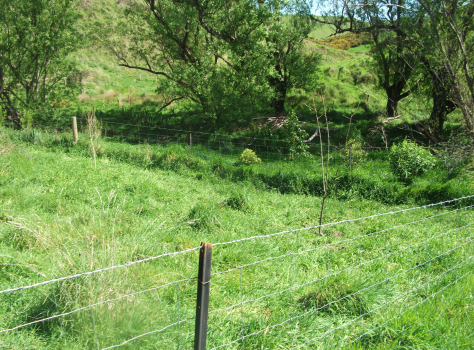
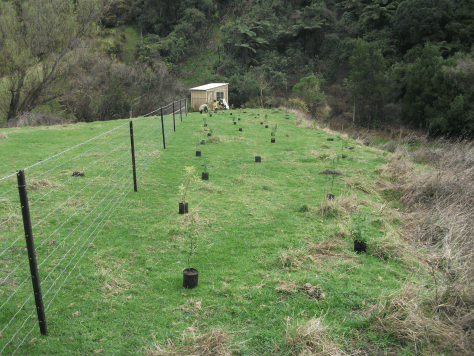
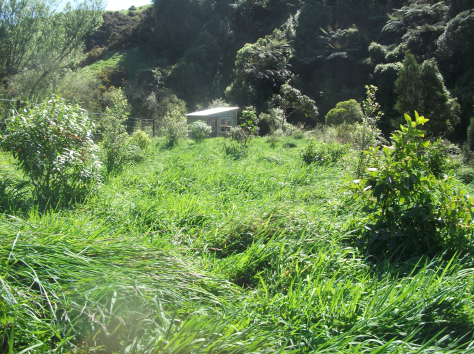
It’s been 13 months since we finished fencing our stream and had the first school group come for a planting day: Te Kura Kaupapa Maori O Tupoho. Since then we have planted over 1,600 trees and plants with the help of three local schools, two community working bees, and 11 farm interns.

Screen Shot 2017-10-08 at 6.30.22 am

What a difference a year makes!

Screen Shot 2017-10-08 at 6.33.27 am

Last Year

Screen Shot 2017-10-08 at 6.33.36 am

This Year

All of the work has been carried out with help from the forward-thinking and generous funding schemes administered by Horizons Regional Council. The final bill exceeds $10,000, and HRC has paid half of that. Thank you!

Screen Shot 2017-10-08 at 6.32.39 am

Last Year

Screen Shot 2017-10-08 at 6.32.49 am

This Year

For the most part Regional Councils manage environmental quality in New Zealand with a particular focus on water quality and flooding. By encouraging farmers to fence riparian corridors and plant native trees Regional Councils achieve both of these mandates in a holistic rather than reductionist manner. Other benefits include wildlife habitat and increased biological diversity.

Screen Shot 2017-10-08 at 6.30.59 am

Last Year

Screen Shot 2017-10-08 at 6.31.32 am

This Year

Thanks to a wet summer last year and the help of our farm interns – who hand weeded the native trees four times between October and April – the trees have thrived. As you can see from the images, some of the natives have tripled and quadrupled in size – in one year! The Horizons rural consultants said they had never seen anything like it when they came to do an audit in June. Of the 1,600 natives planted we’ve only found one that died.

Screen Shot 2017-10-08 at 6.29.03 am

Last Year

Screen Shot 2017-10-08 at 6.29.33 am

This Year

Given the investment of thousands of dollars and hundreds of hours of labour, there is a huge sense of satisfaction seeing the plants thriving. It was a big decision to fence off 15% of our land from stock and return it to native bush – permaculture zone 5. Looking at it now there are no regrets.

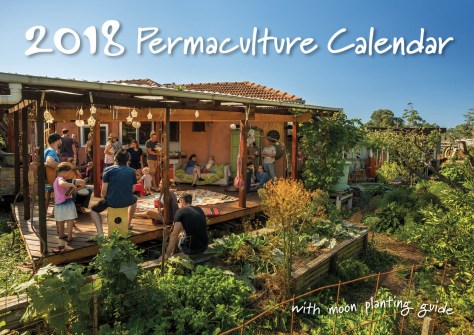
You can support the further planting of native trees along the stream – still about 600 to go – by purchasing a copy of the 2018 Permaculture Calendar. 100% of the income from New Zealand sales goes directly to this project.

2018 Permaculture Calendar Cover copy

Orders: theecoschool at gmail.com


Peace, Estwing

A Handmade Pond

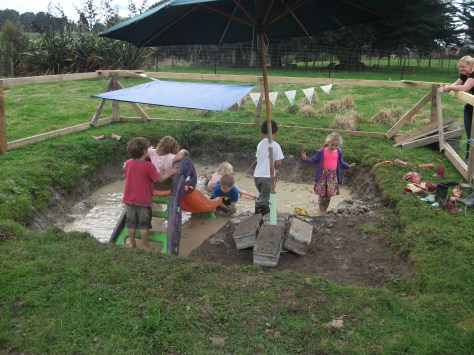
It took 10 months for us to dig a small pond on the farm.

DSCF0768

We started slowly – one wheelbarrow at a time.

DSCF0764

Deeper and deeper we dug.

DSCF2654

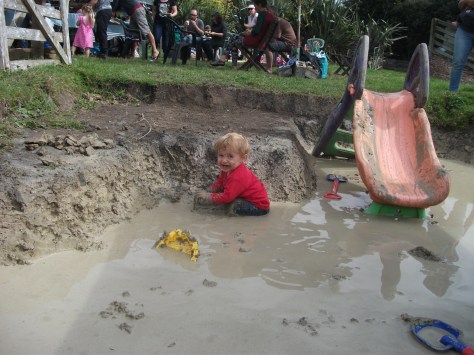
We took a break for a birthday party.

DSCF2686

Fun was had by all.

DSCF2712

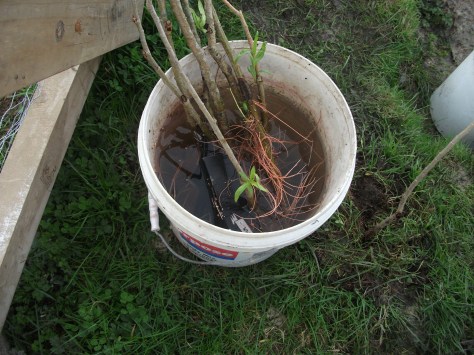
We soaked willow cuttings for  six weeks…

DSCF2942

…and then planted them around the pond.

DSCF2938

The supervisor made sure it was done properly.

DSCF2943

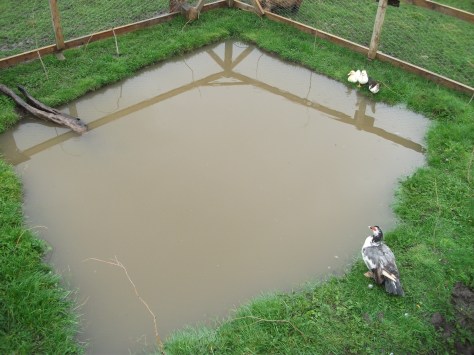
Then it rained.

DSCF3293

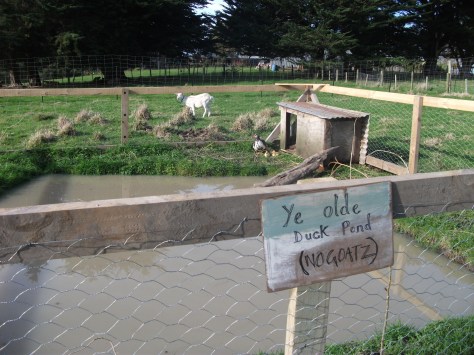
The goats were excluded so that the willows could grow.

DSCF3307

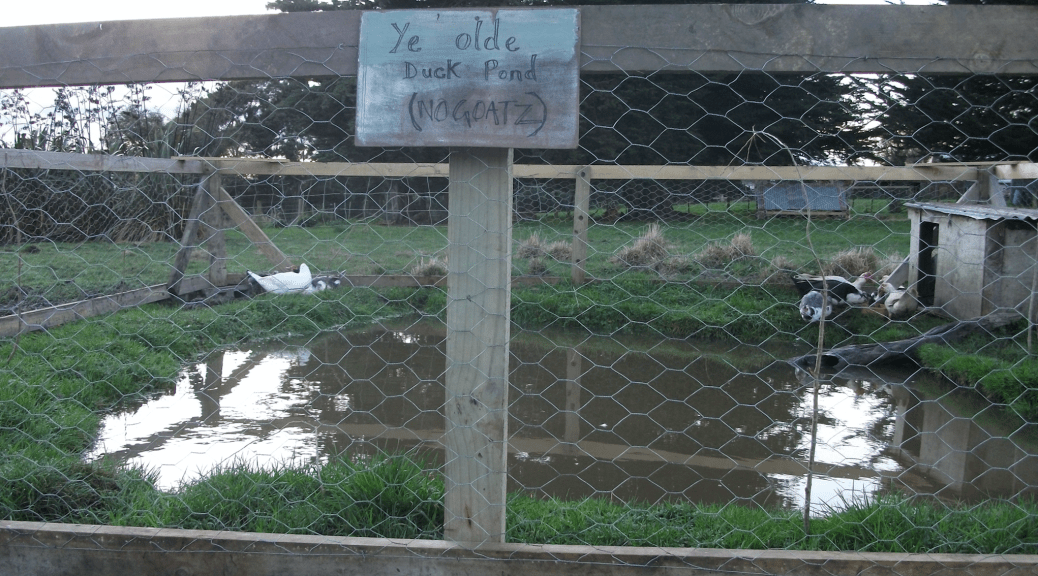
Muscovies took up residence.

DSCF3038

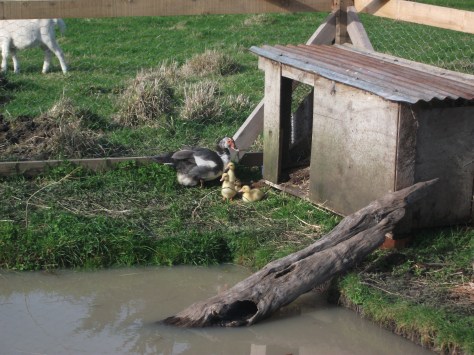
And raised a family.

DSCF3036

The willows grew.

DSCF5156

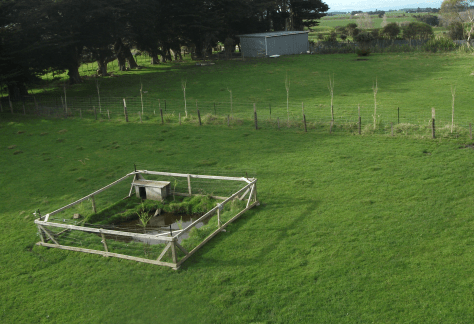
And the bare paddock became a more diverse ecosystem.

DSCF6402

Six of our interns were involved in digging the pond and transporting soil to other landforms nearby. It is one of many approaches to water management we use on the farm that simultaneously drought-proof the land and reduce runoff during heavy rain events, which reduces erosion and slips, and helps protect those living downstream from flooding. Ponds and swales slow water moving across the landscape.

For our interns, the process of making the pond was a lesson in slow learning. We encourage slow learning on our farm – it is at the heart of our PDC internship programme. It’s a place where theory and practice come together in best practice teaching and learning – one shovel-full at a time.

Peace, Estwing
2018 Permaculture Calendar

For the fifth year we are distributing the Permaculture Principles calendar in New Zealand. The calendar is published in Australia using David Holmgren’s 12 permaculture principles.

2018 Permaculture Calendar spread 2

Our ‘business model’ for the calendar is based on the permaculture ethics. We practice “Fair Share” by offering the calendar at the lowest price worldwide, and we practice “Earth Care” by using all ‘profits’ to restore a stream corridor on our farm.

Screen Shot 2017-09-16 at 6.16.22 am

Our strategy is not based on financial gain but on promoting permaculture through the informative and motivating calendar, and using the minor income to improve water quality and reduce storm damage in our region. It’s a win-win design.

2018 Permaculture Calendar Cover

The 2018 Permaculture Calendar, now in it’s 10th year, is ethically produced with the wholesome look and feel of post-consumer recycled paper printed with vegetable based inks. Internationally relevant and filled with inspirational and thought provoking images that support and reinforce your values every day of the year.

Learn each of the 12 design principles over the course of a month and be reminded of suitable garden activities with daily icons and phase times according to our moon planting guide. Includes a handy rainfall / temperature chart to keep track of the years events and moon icons for north and south hemispheres. Read more about the calendar here.

Produced in Australia on 100% recycled paper using vegetable based inks. Size: A4 (210mm x 297mm) opening to A3.

$16 postage paid/ $14 pick up

Twin Pack $29 postage paid


Order From:  TheECOSchool@gmail.com

Peace, Estwing
Guest Post — Holes and Poles or: How I Learned to Start Worrying and Read the Landscape

I grew up north of Chicago in the suburbs, far from the daily struggles and concerns that are encountered daily on the farm. At home I had been in the fortunate and privileged position of not worrying much about how much it rained or how little it didn’t, or where water was flowing or where it wasn’t.
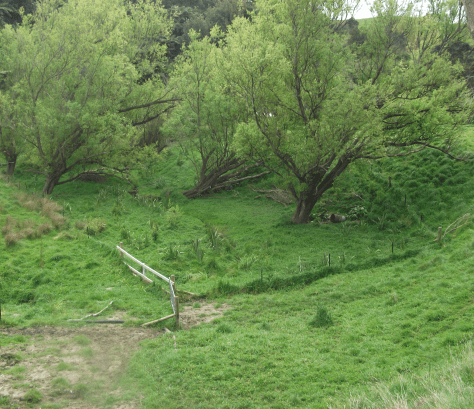
But these effects are devastatingly consequential on the farm. Waterlogged soil is devoid of too much oxygen, which causes the plant to die. Prolonged exposure to soggy soil can cause nasty infections and rot on the hoofs of most livestock. One of Nelson’s many tenants of is to be constantly observing what is happening around you with all your senses, and this is keenly important in order to keep the land running smoothly. For example after one particular rain heavy evening Nelson had noticed that the soil in one of the orchard had become too overly saturated, so we worked to dig drains that directed the excess water into swales on the lower parts of the soil. A small issue that could have caused much trouble later on was not only preemptively avoided, but that excess water via the swale would now be stored for future use. A liability was turned into an asset.
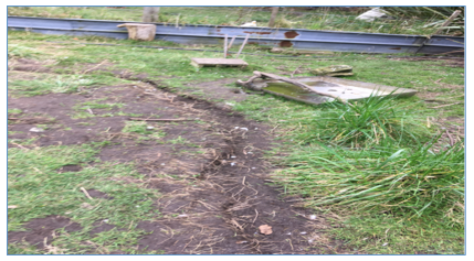
Screen Shot 2017-09-15 at 12.18.02 pm

                                       The drain we dug in the orchard

A few days later we also planted coprosma robusta into that same paddock as well as on a couple of other places on the property. Not only do these trees serve as windbreakers when they mature, but they act as another way of absorbing excess water in the soil.

This is important concerning a much bigger incident and the project I have spent the most time on with Nelson during my time on the farm. Last April, a massive slip occurred on the hillside in the back of the property due to runoff water from a neighbor. For Nelson, who had noticed the influx before the slip and was worried about this issue occurring, this was a good lesson on diligently reading the landscape and taking preventive action. (He spoke to the neighbours about it but they refused to do anything to prevent their water from running onto the farm illegally.)

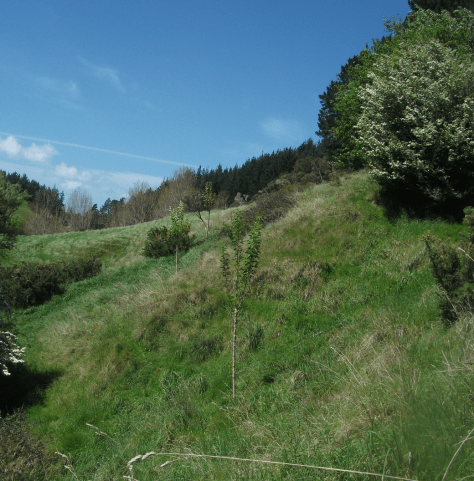
But since it did occur we have been working to prevent it from ever happening again. This is where poles and holes come in — poplar poles to be exact. Like the coprasma robusta that we planted in the paddock, the trees help to absorb excess water. But more importantly, poplar trees have an extensive and deep root system that dig into the hillside and effectively hold it to help prevent future slips.

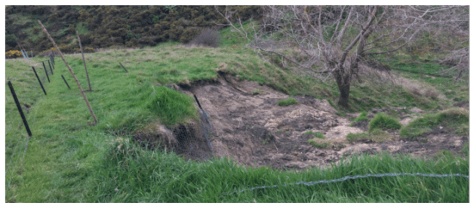
Screen Shot 2017-09-15 at 12.18.12 pm

The slip as pictured here. You can see two poplar poles planted just off to the left.

            Planting the trees themselves is where the challenge comes in. First comes scouting the location to plant the tress — another important instance of being able to read the landscape. Depressions and low spots on the hillside are the areas where water is going to flow and pool, and hence likely to cause erosion, so that’s where the trees should be planted.

Once the spot to plant the trees is scouted its times to plant the trees themselves. A spade is used to initially create the hole, with the excess soil being placed above the hole. (Later the soil is going to be placed back in. So it is easily scooped back into the hole through keeping it above the hole.) Next we used a hand auger to create a hole with the size and depth we wanted. We dug the hole 70 to 80 centimetres deep, which was about halfway between the bottom tip of the auger and the top of the handle.

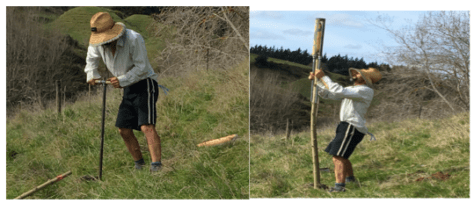
Screen Shot 2017-09-15 at 12.18.23 pm

Nelson digging the hole with auger and ramming the planted poplar pole into place

            Once the hole is dug in the pole are placed into the corner of the hole. The poles are then rammed into place from the top. We then spooned back a third of the dirt into the hole and used a tamper to pack it down, rinse and repeat until the hole was filled back up. Finally a protective sleeve went around the poles to prevent the livestock from eating them. And there you have it! But the poles take another 7 years to mature and effectively work to hold the hillside. So while they are an effective preventive long term measure, the best defense in the interim is to continuing to use our eyes and ears to protect the environment from further damage.


– Emily


Permaculture Plants

All plants are created equal – some are just more equal than others.

Screen Shot 2017-09-10 at 6.18.45 am

For those who practice permaculture, certain plants are key elements for regenerative design, serving to: build soils; provide wind breaks as well as fodder for stock and bees; protect other plants from frost and excess sun; hold stream banks and hillsides; serve as firewood; and of course provide food.

Screen Shot 2017-09-10 at 6.16.59 am

Tree lucerne (tagasaste) is a prime example of a permaculture plant. We use it on our farm to: fix nitrogen in the soil; protect young avocado trees from frost and sunburn; provide wind protection for the market gardens; feed bees and hungry mama goats.

Screen Shot 2017-09-10 at 6.05.59 am

We plant hundreds each year so we propagate them ourselves on a regular basis.

Screen Shot 2017-08-25 at 12.24.50 pm

Another example that many farmers in our hilly region use is poplar in the form of 3 metre poles. They are used in slip-prone areas to stabilise slopes while stock is still present. Cows should be excluded for 3 to 4 years. The regional council subsidises the cost of them and offer free advice and which varieties to plant for different conditions.

Screen Shot 2017-08-25 at 12.22.56 pm

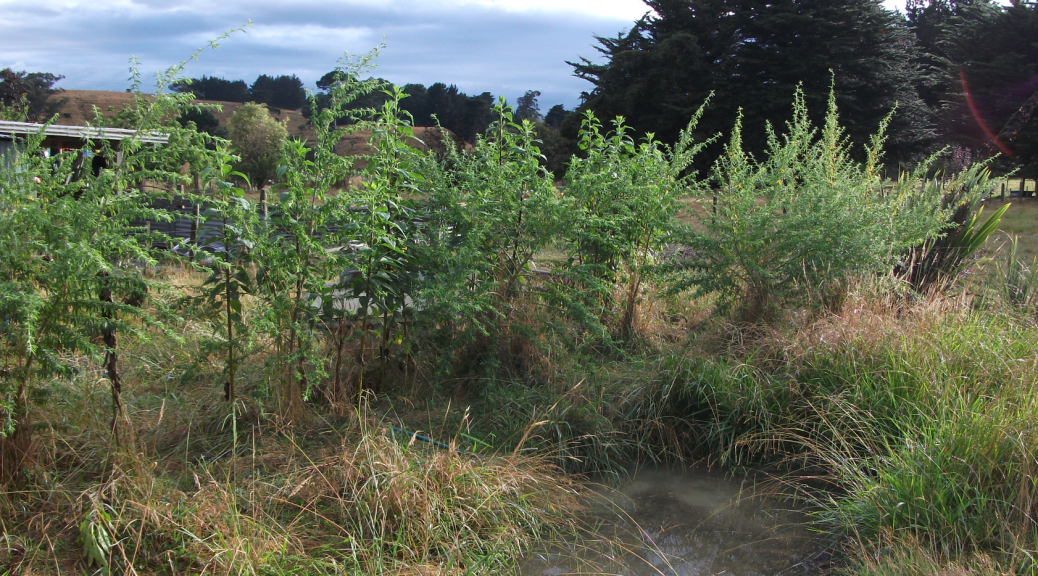
Poplars can also be used as wind breaks. We planted these just over a year ago between two paddocks. Those are willow wands planted around the duck pond.

Screen Shot 2017-09-10 at 6.16.00 am

Along our stream we are planting  sheoak (casaurina), also called river oak in Australia because of its extensive root system.

Screen Shot 2017-09-10 at 6.03.54 am

Cabbage trees are a NZ native that also help stabilise stream banks. We’ve planted hundreds over the last 18 months.

Screen Shot 2017-09-10 at 6.20.55 am

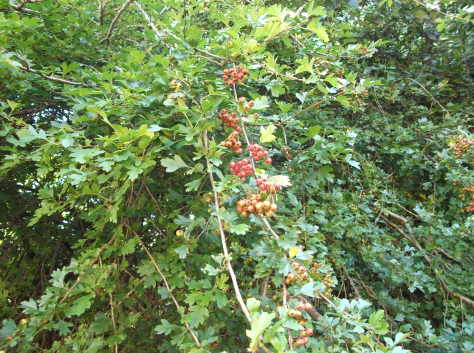
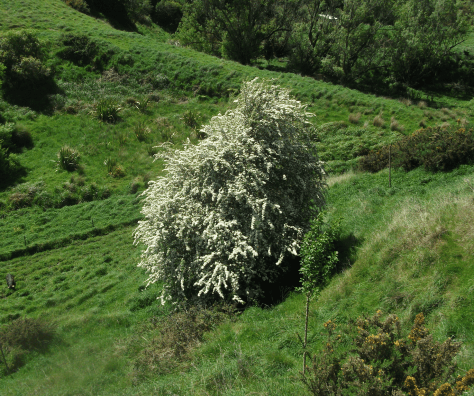
We have found hawthorn growing on our hillsides. It has a number of useful traits.

Screen Shot 2017-09-10 at 6.18.05 am

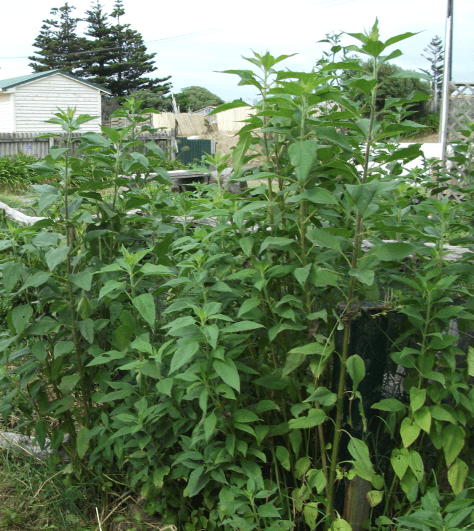
And finally, Jerusalem artichoke is another great permaculture plant. It’s an edible perennial that also produces a lot of organic matter above ground each year, which dies off in the winter. The tuber is the bit that’s eaten.

Screen Shot 2017-09-10 at 6.05.33 am

Favouring perennials over annuals is central to permaculture design. While we also have market gardens, I find it more fulfilling these days to be working with perennials.


Peace, Estwing