Editor’s note: This document was written over a year ago and submitted to Permaculture in New Zealand (PINZ) to document a two year diploma project in applied permaculture. PINZ has asked me to post it in the public domain. Please note that the links below will take you to our old blog. However, all of those posts have also been re-posted on this blog.
The Eco-Thrifty Renovation
A project completed in fulfillment of a diploma in permaculture.
Nelson Lebo
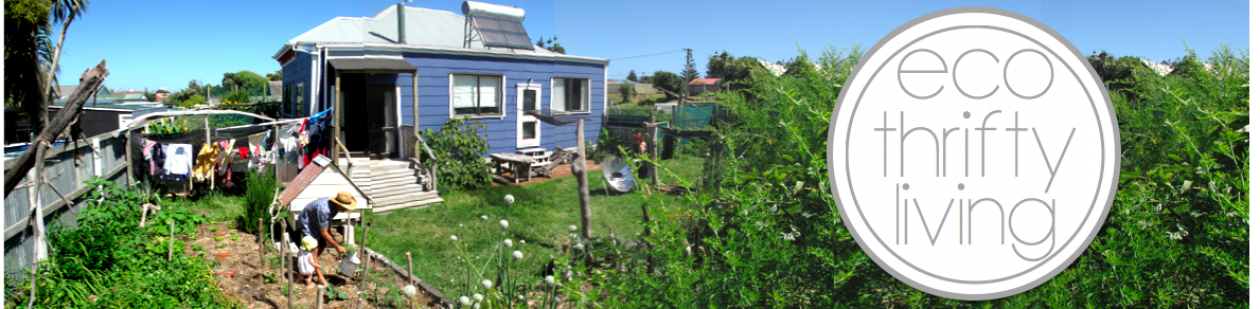
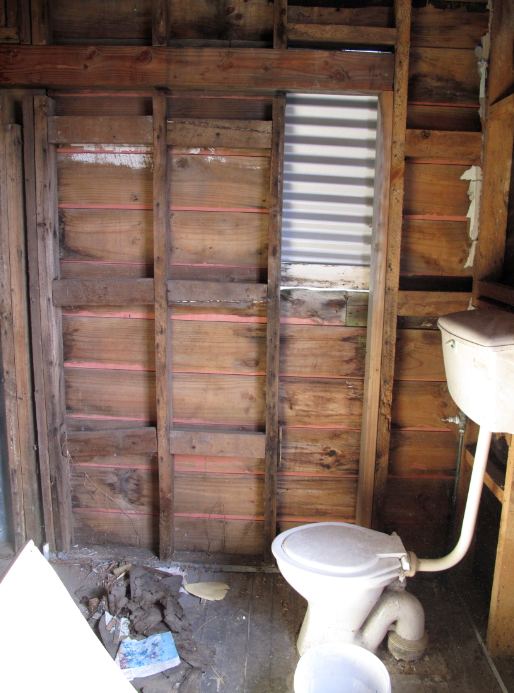
Abstract: The Eco-Thrifty Renovation (ETR) was initiated in November, 2010 and continues to be ongoing. The project aims to demonstrate that an eco-home and organic food need not be prohibitively expensive. Over the course of two years, I transformed a derelict villa into a warm, dry, low-energy home, and a section full of weeds and rubbish into a thriving foodscape. At the same time, the project has been used as an educational outreach programme for our local Whanganui community and the world through the internet. The entire project was carried out in alignment with permaculture ethics and principles.
*Note: I use the term ‘we’ often in this document to honor Dani’s contribution to this project, which was less about time and effort, and more about support. Some of the things I write about below using the term ‘we’ she may know little or nothing about (because I usually have about 8 projects going at once and she has been working 40 hours per week for the last year). Still, I feel the ETR and the ECO School are a team effort.
Permaculture Ethics
The permaculture ethics have guided the project at all levels as described below.
Care for Earth: Low-energy homes and home-grown food can address many of the environmental problems facing the planet and humanity. First and foremost, are the issues surrounding energy, its extraction, production, transport and use. On all levels, this project has demonstrated a commitment to a low-energy ‘footprint.’ Additionally, organic growing practices cut down on artificial chemicals in the environment, and composting and recycling return resources to productive systems rather than relegating them to landfill. Finally, it is hoped that our educational outreach programmes inspire and teach others how to ‘care for the Earth’.
Care for People: The main focus of this project is to provide a working model suitable for low- and moderate-income families. There appears to be a broadly accepted misconception that sustainable lifestyles are prohibitively expensive. We have demonstrated that nothing is further from the truth when thoughtful design in included.
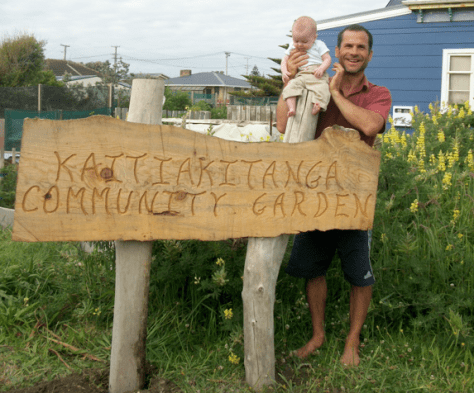
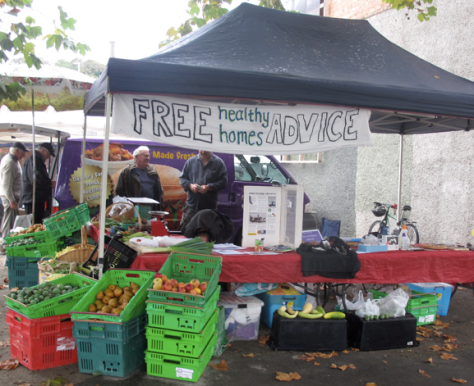
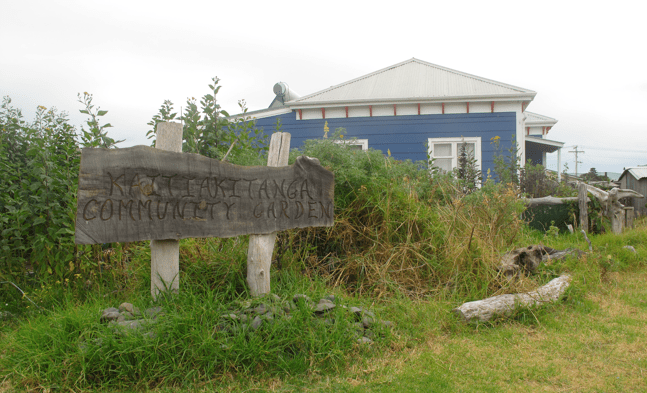
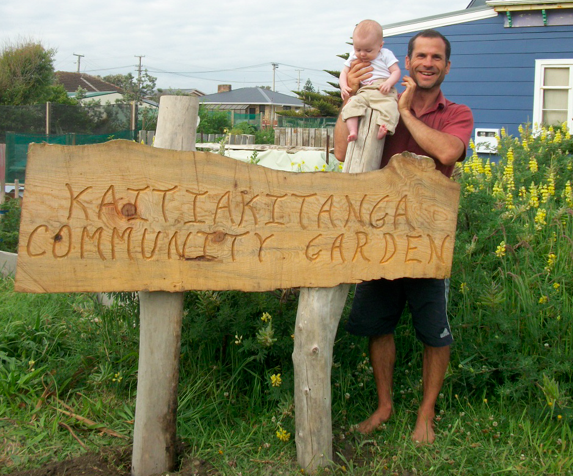
Many of our educational efforts are provided free of charge and some ask simply for a donation. Other programmes offer a sliding scale, with additional discounts for walking, riding a bicycle, or taking the bus. Recent funding allowed us to provide 80 free home energy audits for low-income families and pensioners in Wanganui. Additionally, a community garden in our front yard feeds families in our low-decile neighbourhood.
Share Surpluses: Up until now, the only surpluses have been those of ideas and enthusiasm, which were shared freely through the blog and a weekly newspaper column. Additionally, all of the fee-based education programmes we offer run at about half the price of comparable programmes elsewhere in the country, making them affordable for a wider range of people to participate. And we are finally producing surpluses of food from the community garden in front of our house, which we share with neighbours and friends.
Permaculture Principles
Although Holmgren’s (2002) permaculture principles were not intentionally or deliberately used during this project, it is easy to recognize their application across many of its aspects. Instead, I describe what are permaculture ‘habits of mind’ that are engaged automatically when working from a holistic, systems perspective. What follows is a discussion of David Bane’s (2012) recent interpretation of Holmgren’s 12 permaculture principles as they relate to the eco-renovation, the foodscaping efforts, and the educational initiatives.
1) Observe and Interact: Even before the ETR project began, observation and interaction were being employed in the design process. Dani and I looked at 30 homes in Whanganui in 2 days, ruling out 25 of them simply because they had very little potential for passive solar redevelopment. Of the five that had significant potential for solar gain, one also had advantages regarding section size, home placement on the section, and proximity to a bus stop and the beach. It also happened to be the cheapest house in Whanganui in the lowest-income neighbourhood. This set us up nicely to interact with a low-decile community with which to work directly.
The first step in the passive solar design process is to observe where the sun is at different times of the year and to plan for winter heating and summer cooling. Our villa offered a special challenge in that it was not broad-side to the northern sun, but pointing north with one corner, like a compass. Although not ideal, I was able to come up with low-budget / high-performance design and lifestyle strategies to maximize winter morning insolation – when it is needed most.
Those strategies are explained in the following blog posts:
http://www.ecothriftydoup.blogspot.co.nz/2011/10/sunrise-sunset.html
http://www.ecothriftydoup.blogspot.co.nz/2012/10/retrospective-22-let-sun-shine-in.html
http://www.ecothriftydoup.blogspot.co.nz/2012/10/retrospective-23-drawing-in-light.html
2) Catch and Store Energy: In permaculture, the classic example of catching and storing energy is a swale. The potential energy of water is stored high on a property and distributed ‘for free’ using gravity. But our property is dead flat, and our soil is sand. So instead, I have adopted thinking like a swale. What this means is mimicking the function of a swale by catching energy when it is in abundance and storing it for times of need, and slowing the flow of energy and materials on our property. One example of this is the use of thermal mass in our renovation. Thermal mass stores excess insolation during the day and releases it at night. We used a number of innovative techniques for adding thermal mass to an old villa on piles, as explained in the following blog posts:
http://www.ecothriftydoup.blogspot.co.nz/2010/11/thermal-mass-is-unsung-hero-of-passive.html
http://www.ecothriftydoup.blogspot.co.nz/2010/11/mass-ticate-on-this.html
http://www.ecothriftydoup.blogspot.co.nz/2011/10/keep-it-comfortable.html
http://www.ecothriftydoup.blogspot.co.nz/2012/05/retrospective-3-thermal-mass.html
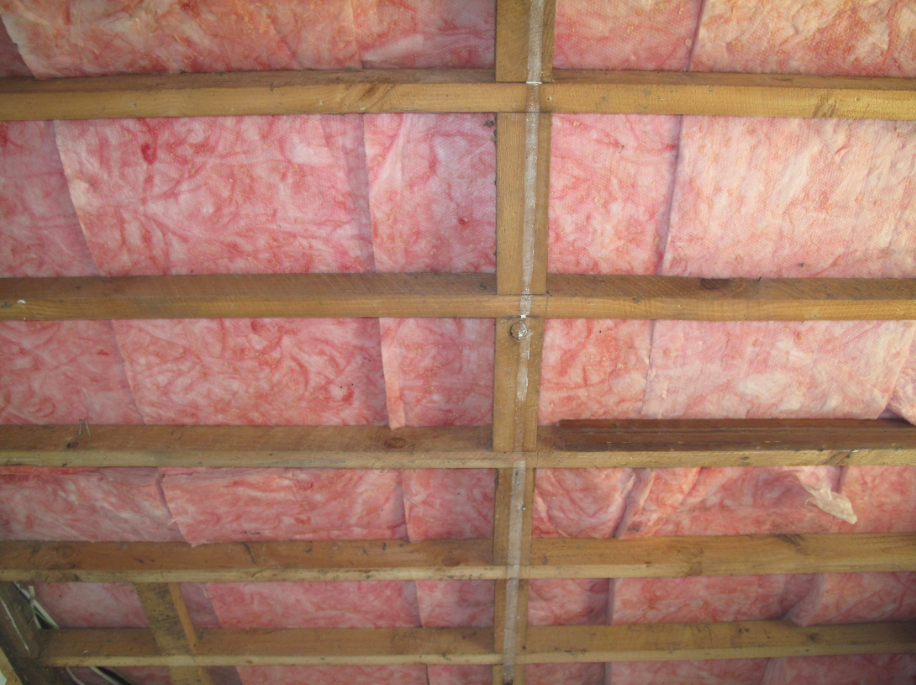
Insulation is also an example of slowing the flow of energy through a property. Thinking like a swale, insulation functions as the permeability of soil, slowing the flow of heat rather than slowing the flow of water. We have employed a wide-range of innovative low-cost and high-performance insulation strategies, as explained in the following blog posts:
http://www.ecothriftydoup.blogspot.co.nz/2010/12/design-principle-3-insulation.html
http://www.ecothriftydoup.blogspot.co.nz/2011/11/warm-and-fuzzy.html
http://www.ecothriftydoup.blogspot.co.nz/2012/05/retrospective-4-insulation.html
http://www.ecothriftydoup.blogspot.co.nz/2012/05/retrospective-6-window-battens.html
http://www.ecothriftydoup.blogspot.co.nz/2012/06/retrospective-7-window-film-insulation.html
Other ways to slow and hold resources on the property are practiced in the gardens – adding a small amount of topsoil and heaps of compost to slow the drainage of water away from vegetable plants. This post summarizes some of our efforts, and highlights the impressive results:
http://www.ecothriftydoup.blogspot.co.nz/2013/01/eco-thrifty-gardening.html
3) Get a Yield: Obtaining a yield is a natural human expectation for putting forth effort toward a goal. In the gardens, a yield can take the form of abundant, healthy food, as seen in the above post, reposted here along with others. By using a strategic combination of tools, timing and technique, we have been able to produce abundant kai for very few hours of work.
http://www.ecothriftydoup.blogspot.co.nz/2013/01/eco-thrifty-gardening.html
http://www.ecothriftydoup.blogspot.co.nz/2012/08/late-winter-garden-tour.html
http://www.ecothriftydoup.blogspot.co.nz/2012/01/abundance.html
http://www.ecothriftydoup.blogspot.co.nz/2011/09/low-maintenancehigh-productivity.html
http://www.ecothriftydoup.blogspot.co.nz/2011/12/perspectives-on-permaculture-abundance.html
Obtaining a yield in an energy-efficient renovation takes the form of a warm, dry home, and cost savings on a power bill. These can be seen as a return on an investment of time and money.
http://www.ecothriftydoup.blogspot.co.nz/2011/05/coldest-house-in-new-zealand.html
http://www.ecothriftydoup.blogspot.co.nz/2011/05/power-of-one.html
http://www.ecothriftydoup.blogspot.co.nz/2011/06/still-one.html
http://www.ecothriftydoup.blogspot.co.nz/2011/12/2020-hindsight.html
Specifically, getting a yield can be understood through the concept of payback period – the amount to time is takes for savings to pay back an investment. I have chosen to emphasize the concept of payback period in an attempt to appeal to a broad swath of the general public who may not necessarily be concerned about the environment, but are interested in lower power bills.
http://www.ecothriftydoup.blogspot.co.nz/2012/04/retrospective-1-as-published-in.html
http://www.ecothriftydoup.blogspot.co.nz/2012/12/eco-thrifty-thinking.html
http://www.ecothriftydoup.blogspot.co.nz/2012/12/eco-is-almost-always-thrifty-but.html
http://www.ecothriftydoup.blogspot.co.nz/2013/01/bright-ideas.html
4) Self-Regulate & Accept Feedback: Most learning processes involve both positive and negative feedback loops. During this project, I have experienced many feedback loops, primarily involving growing food in a coastal zone and involving the educational projects we have launched from the platform of the ETR.
Regarding growing food in a coastal zone, the challenges are sand and wind – two circumstances I have never faced as a grower. I made some good mistakes on my way to learning more about this ecosystem and microclimate, as shown in the following posts:
http://www.ecothriftydoup.blogspot.co.nz/2012/02/gimme-shelter.html
http://www.ecothriftydoup.blogspot.co.nz/2013/01/eco-thrifty-gardening.html
Regarding the learning involved in our community education projects, woah! Previously I have been a classroom teacher that dabbled in garden workshops for adults. But I have never done anything like a whole community approach to sustainability education. An overview of this approach is described in these posts, while some more details are included below.
http://www.ecothriftydoup.blogspot.co.nz/2012/01/model-for-whole-community.html
http://www.ecothriftydoup.blogspot.co.nz/2012/09/learning-what-works-in-community.html
We have experienced varying levels of success with our different educational initiatives. Because we’ve taken an ecological model to education, we can accept high failure rates without being fussed about it. Nothing ventured, nothing gained. Most people will say they learn more from failures than successes, so why not embrace failure instead of avoiding it? Perhaps 80% of my ideas go nowhere because I cannot find community partners. That just means that a particular idea is not appropriate for this place at this time. OK, shift gears and carry on.
Most importantly, I am learning what really works, what does not, and why that might be. The keys, I have found, are to be responsive to needs and not prescriptive, and to build partnerships in all endeavors.
http://www.ecothriftydoup.blogspot.co.nz/2011/02/partnering-for-planet.html
http://www.ecothriftydoup.blogspot.co.nz/2011/05/takin-it-to-streetser-schools.html
Sadly, I have learned that part of the failure of environmental education appears to come from the environmental movement itself, as described here:
http://www.ecothriftydoup.blogspot.co.nz/2011/08/failure-of-environmental-education.html
5) Use and Value Nature’s Gifts: Nature’s gifts come in the forms of matter and energy. We accept all nature’s gifts, and try to hold them (slow their flow) on our property with a previously porous home and previously porous soils. These are explained in the principle Catch and Store Energy, above. The best way to value a gift is to steward it mindfully. Some ways we do that are described below.
For a passive solar renovation, nature’s best gift is free sunshine! The redesign of our villa is based on winter sun angles, as described above, and reposted here:
http://www.ecothriftydoup.blogspot.co.nz/2011/10/sunrise-sunset.html
http://www.ecothriftydoup.blogspot.co.nz/2012/10/retrospective-22-let-sun-shine-in.html
http://www.ecothriftydoup.blogspot.co.nz/2012/10/retrospective-23-drawing-in-light.html
With this addition on free, solar energy:
http://www.ecothriftydoup.blogspot.co.nz/2011/08/power-of-sun.html
But beyond, free and abundant sunshine, nature served as the inspiration and model for the entire renovation, as seen in our design principles, as seen here:
http://www.ecothriftydoup.blogspot.co.nz/2010/11/nature-as-model.html
Another way we use and value nature’s gifts is by composting. As Geoff Lawton says, “If it lived, it can live again.”
http://www.ecothriftydoup.blogspot.co.nz/search/label/compost
http://www.ecothriftydoup.blogspot.co.nz/2012/01/get-your-together.html
Especially awesome has been a resent partnership with the New Zealand Masters Games: an 11 day event with over 6,000 participants. Working together we were able to reduce the landfill waste from the games village 95% versus the last Games in Whanganui in 2011 when their rubbish tally was: 228 wheelie bins and 4 jumbo dumpsters. This year there was a total of 14 wheelie bins and less than 1 jumbo dumpster. See more details here:
http://www.ecothriftydoup.blogspot.co.nz/2013/02/from-power-of-one-to-power-of-community.html
Finally, sometimes, nature delivers free gifts nearly to our doorstep, such as firewood flowing down the Whanganui River and washing up on the shore in front of our home.
http://www.ecothriftydoup.blogspot.co.nz/2011/01/beach-logging.html
6) Waste Not: Composting has been covered in the previous principle, so I will focus on the three R’s here. Reducing, reusing and recycling come as second nature to permaculturists. Some of the ways we put these into use can be seen in the following posts:
http://www.ecothriftydoup.blogspot.co.nz/2010/12/3-rs.html
http://www.ecothriftydoup.blogspot.co.nz/2010/12/it-does-not-take-much-to-become-world.html
http://www.ecothriftydoup.blogspot.co.nz/2010/12/r2-no-d2.html
http://www.ecothriftydoup.blogspot.co.nz/2011/01/r2-e2-ie-2nd-edition.html
http://www.ecothriftydoup.blogspot.co.nz/2011/02/r-e-c-y-c-l-e-find-out-what-it-means-to.html
http://www.ecothriftydoup.blogspot.co.nz/2011/08/recirculating-materials-and-wealth-in.html
Additionally, I have collaborated on waste education initiatives in our community, as described here. These provide some background for the amazing result from the NZ Master’s Games described above.
http://www.ecothriftydoup.blogspot.co.nz/2011/06/perfection.html
http://www.ecothriftydoup.blogspot.co.nz/2011/11/education-is-no-waste_16.html
Finally, I also found a way to make use of the untreated timber that we had to remove from the villa during the renovation, and a crappy old skil saw from the local auction house
http://www.ecothriftydoup.blogspot.co.nz/2012/06/urban-chainsaw.html
7) Design from Pattern to Details: The patterns of the Earth include day and night, the seasons, climatic patterns (although changing), as well as hydrological, geological, chemical and biological patterns. In a passive solar redesign, we begin with the natural, repeating patterns of the sun and finish with things like: adding glazing to the north and removing it from the south (as described above); and the strategic placement of thermal mass (also described above).
On the land, I have mostly designed around wind patterns, making some mistakes and then having to redesign based on the wind-hardiness of different plants. For example, even though all of the literature says that olives and feijoas will stand up to coastal winds, I found that they do need some level of protection. I moved 8 olives and built wind protection for 6 feijoas.
I also learned that summer raspberries and persimmon will not tolerate any salt winds. I transplanted the raspberries to a more sheltered position, but the persimmon died due to three weeks of onshore winds right when it was leafing out.
There are lots of good insights into our landscape design strategies including wind protection and sun traps in these two posts:
http://www.ecothriftydoup.blogspot.co.nz/2012/09/retrospective-21-eco-thrifty-yard-and.html
http://www.ecothriftydoup.blogspot.co.nz/2012/09/addition-to-retro-21-more-yard-and.html
8) Integrate: I see this as an umbrella term over the entire design process, which includes 4-dimensional design, and re-design. In my opinion, this principle represents the concept of systems thinking, or ‘ecological thinking.’ This is reflected in the famous Native American saying, “Everything is connected in a web of life.” It is embodied in the Lakota (“Sioux”) phrase, mitakuye oyasin: all my relations. This represents a worldview that recognizes a relationship to all living and non-living matter in the universe during all of time.
I believe this is a permaculture ‘habit of mind’ that can be developed through practice until it is done unconsciously all the time. Because of my learning disabilities, my brain naturally recognizes the space in between objects easier than the individual objects themselves. While the American school system tried to beat this out of me, I was able to retain enough into adulthood to re-awaken this way of seeing, and to cultivate it into a more developed form. In my twenties, I practiced systems thinking exercises (not knowing it was such at the time) that have re-trained my brain to ‘see interconnectedness’ including the 4th dimension.
Long before I ever heard of permaculture, I was thinking in ‘permaculture ways.’ Maybe that is why, when I unexpectedly met Bill Mollison at Schumacher College (Totnes, England), permaculture made so much sense to me. It may also explain why I have defined permaculture in this way:
Permaculture is an eco-design system that seeks to recognize and maximize beneficial relationships while minimizing or eliminating harmful relationships.
On our section, and beyond our section, we seek to integrate systems of energy and matter, as well as human systems. Socially, we have done well at integrating with some non-greenie groups, such as the softball club, mental health organizations, the regional PHO, and the YMCA, as well as some local Maori groups. Regarding my PhD thesis, I have spent four and a half years studying the integration of a permaculture approach to science teaching and learning in New Zealand secondary schools.
9) Choose small and slow: I could write on many different topics, but this is the one I think deserves the most attention. Here is where I can raise an observation I’ve made over my last four and a half years interacting with the permaculture community in New Zealand. Hardly any permies I’ve met (quite a few for a small country) ride bicycles or take public buses instead of driving. I know that everyone has an excuse for this, but I’m not really interested in hearing excuses. I have heard lots over the years.
In my opinion, riding a bicycle instead of driving is the single best example of choosing a small and slow solution, especially as it directly addresses the two biggest identified challenges addressed by permaculture: climate change and peak oil (Holmgren, 2009). My history with bicycle commuting (over 100 kms at times) goes back over 20 years, and I named my farm – developed over 8 years into one of the most sustainable properties in North America – Pedal Power Farm.
We chose the location of our current home for three main reasons: walking distance to the beach; walking distance to a bus stop; and, flat, short bicycle ride into the central city. These are all small and slow approaches to eco-thrifty living. Dani wrote this post ages ago:
http://www.ecothriftydoup.blogspot.co.nz/2010/11/answer-bike-on-bike.html
Here are some I wrote:
http://www.ecothriftydoup.blogspot.co.nz/2011/09/hauling-brass.html
http://www.ecothriftydoup.blogspot.co.nz/2012/12/eco-thrifty-thinking.html
10) Work Diversity: In this project, we have worked diversity in two primary ways: ecological food production; and, a holistic approach to whole community sustainability education.
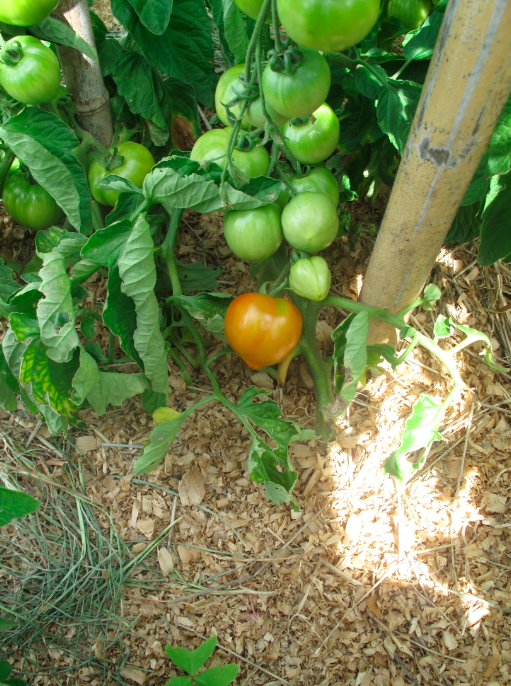
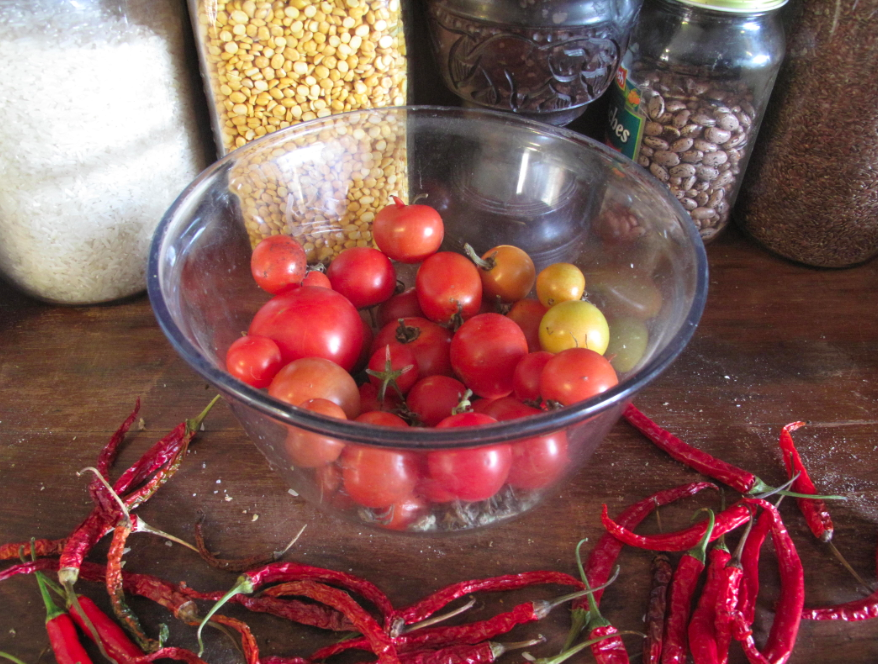
The former has been described above in some of our approaches to designing from patterns to details. We currently have planted 118 edible perennial plant species of many different varieties and cultivars. We always plant multiple varieties of tomatoes, and always have our first ripe ones well before Christmas. Talking to others around Whanganui, including professional market gardeners, this ‘beat the local market’ by many weeks. We managed this not with a glass house, but by using microclimates and selecting the best varieties to plant at the best time (observe and interact; self-regulate and accept feedback; get a yield).
Regarding an ecological model for whole community education (see above in #4), we have partnered with a diversity of community groups and businesses on many projects. Most of these entities have no overt green mission, but we were able to find common ground (kaupapa), on issues of wellness, poverty, mental health, spirituality, etc. Two of our most amazing partnerships have been with the New Zealand Masters Games and the Sisters of Saint Joseph. Meanwhile, some attempts at partnering with many green groups and all attempts to partner with the Wanganui District Council have failed. Who woulda guessed? There is no way to know unless you try. That’s why I am happy with an 80% failure rate, because I know those efforts that do work are the most robust, and, above all else, I am learning the truth about sustainability projects in a community, not some theory written by someone else or a belief I might have held because ‘it seemed logical.’
In nature, diversity often leads to stability. I believe our efforts described above will provide a high level of stability (resilience) in our lives. We are likely to have food in the event of a disruption to the food supply, and we are likely to have support from a wide swath of the community if our family falls on hard times or suffers a tragedy. In three years we have been lucky to be adopted by a large and divers whanau in Whanganui.
11)Push the Edge: How about taking a crappy, old villa and turning it into a warm, dry, low-energy home? How about power bills averaging $22/month, including a line charge of $13? How about 118 edible perennials on 900 square metres? But these things are secondary to what is really significant about this project.
In terms of making a unique contribution to the global body of permaculture knowledge, the education efforts in our community are by far the most significant. We are pushing the edge by developing a new model for community sustainability education as described multiple times above. Nowhere in the world that I am aware of is anyone taking this type of approach, especially with no initial funding source and only modest ongoing donations from local individuals and organizations.
The only way to push the edge is to take risks and accept failure. I’ve done both many times over the last three years, but the learning is worth it. Be warned, however, that when you push the edge publicly as we have, you’ll get blowback from the left and the right. That’s no problem, as we’ve received amazing feedback from the middle, where the vast majority of people reside, and where I think permaculture has largely failed to make inroads. Ha, it just occurred to me that we are pushing the edge by going to the centre. Beautiful!
12) Respond to Change: This principle gets to the heart of dynamic design and what I call ‘four dimensional design.’ We employ this principle in a number of ways, including: window treatments; annual vege production; and, refining our approach to community education.
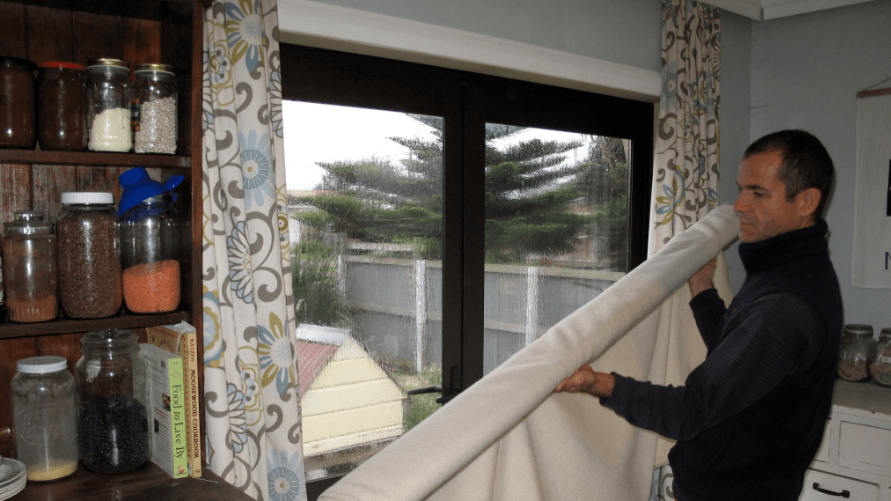
As described above, we use a combination of pelmets, thermal curtains, and window blankets as part of our holistic strategy for reducing heat loss through windows in winter. But we also use them to prevent heat gain in summer. In both cases, change is represented by day/night cycles of sunshine and temperature fluctuation.
On a winter’s morning, all curtains are drawn and window blankets are in place. With the sunrise, I open the curtain and remove the window blanket on one double-glazed window (northeast-facing) beside the breakfast table. Later, when the sun has risen more and the outdoor temperature probe that receives direct sunlight reads higher than the indoor probe in the lounge, I open the lounge curtains (also northeast-facing). At around 11 am, I then open the northwest-facing curtains. At about 2 pm, I close the northeast-facing curtains. At sunset I close all curtains and replace the window blankets.
In the summer we can reverse the pattern, as well as open windows to encourage cross-ventilation.
Regarding low-input / high-productivity methods for annual vegetable production, it is all about tools, timing and technique. These would be familiar to any small-scale market gardener worth his or her stirrup hoe. I have developed a decade of experience and learning into a design/management system that I use and have presented as a workshop in New Zealand and Australia.
The system relies on designing and managing for weed control, and getting multiple other benefits along the way. In my travels around the world as well as my reading, learning, attending workshops, etc., I have never come across a better system for low input (time, effort and money) and high productivity. If I had, I would be using it.
Finally, as described above, our ecological model for whole community sustainability education is holistic, cooperative, and adaptive. Regarding its adaptability, it is open to self-regulation and feedback to improve and expand.
For example, I approached the local primary school (low decile) to offer my services to help integrate sustainability across the curriculum. I met with the teachers at a staff meeting where they all showed great enthusiasm and said all the right things. I went home excited but then waited a month to hear that the teachers had decided that they needed to focus more on behaviour education and would not have time for sustainability education. My heart sank. Then I changed my approach.
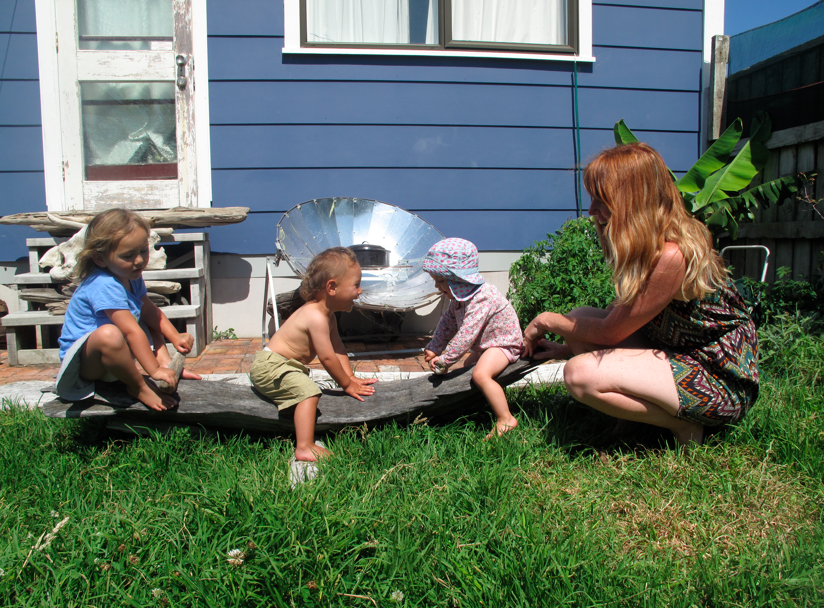
With funding through the Sustainable Whanganui Trust I was able to offer the school a solar sausage sizzle for each classroom. The principal said yes on the spot, and two weeks later every student in the school had learned about some of the applications of solar energy to power an ipod and to cook kai. Fun and learning were had by all. See some cool pics and more info here:
http://www.ecothriftydoup.blogspot.co.nz/2011/12/solar-sausage-sizzlers.html
http://www.ecothriftydoup.blogspot.co.nz/2012/10/retrospective-24-win-solar-sausage.html
Conclusion
While the permaculture ethics and principles were not overtly used during the ETR, I hope that I have made it clear that those permaculture ‘habits of mind’ embodied in the principles and ethics were used at every step. Thank you for reading, and I hope you have found it helpful.
References
Bane, P. (2012). The permaculture handbook. Gabriola Island, BC, Canada: New Society.
Holmgren, D. (2002). Permaculture: Principles and pathways beyond sustainability. Hepburn, Victoria, Australia: Holmgren Design Services.
Holmgren, D. (2009). Future scenarios: How communities can adapt to peak oil and climate change. White River Junction, VT., USA: Chelsea Green.





















 Eco Thrifty Living