Category Archives: growing food

Regenerative Agriculture: The Popular Face of Permaculture

“Hippy farms always fail.” These were the words of Chuck Barry, a small-scale organic farmer I met in Montrose, Colorado about ten years ago. Chuck made a comfortable living growing high quality vegetables on two acres in a dry and seasonally cold environment that may be compared with Central Otago high country.

His comment was based on observations of some people going into farming with good intentions but little understanding of the amount of work involved and inadequate business sense. There is popular, quaint, romantic notion among many people about growing food organically. But at the end of the day, when faced with actually doing it, most hippies opt out because it turns out to be just too hard.

On the other end of the spectrum – as we have been hearing recently in the news – many conventional farms also fail. Conventional farming wisdom over the last decade goes something like this: 1) borrow lots of money from the bank; 2) convert to dairy; 3) borrow more money; 4) rely on ever-increasing dairy pay outs; 5) borrow more money; 6) rely on ever-increasing land prices; 7) get rich; 8) what could possibly go wrong?

Well, now we know. Dairy pay outs have fallen through the floor and many farmers are pushed to the wall.

On one hand I feel sorry for those famers who have to sell because of their now un-payable debts. But on the other hand, I question why they bought into the paradigm described above in the first place, which appears to me to be very risky.

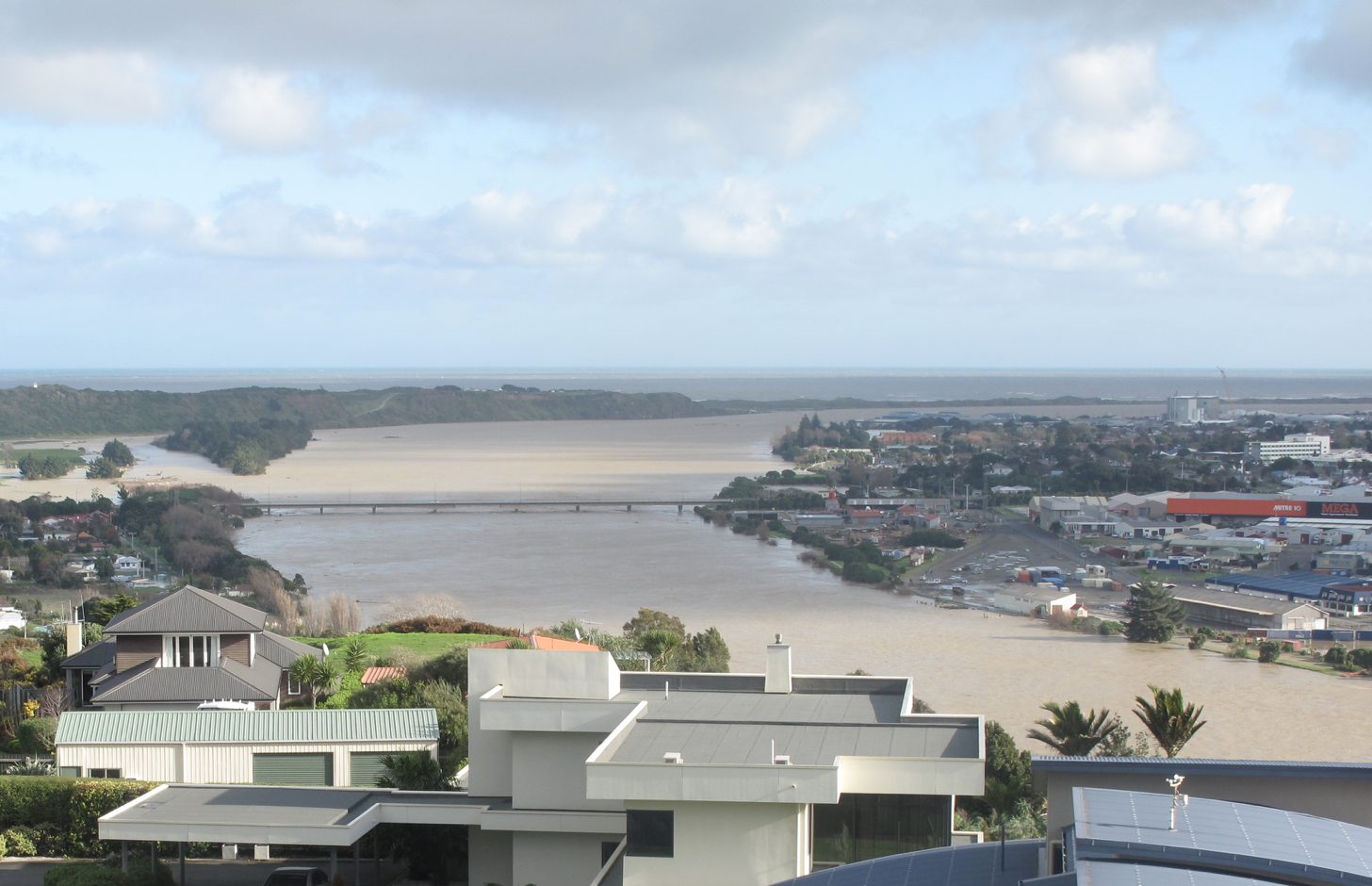
Alongside financial debt, many conventional farms also run a large soil debt. We see it every day flowing past our city and out into the Tasman Sea.
Screen Shot 2015-09-04 at 10.19.55 am

Like financial debt, soil debt is difficult to repay but not impossible. Rebuilding soil fertility while growing food is sometimes called regenerative agriculture. Regenerative agriculture can include organic farming practices, some biodynamic techniques, and holistic range management. All three of these fall within the scope of the eco-design system known as permaculture. I see permaculture as the middle ground between failed hippy farms and failed conventional farms. Screen Shot 2015-09-04 at 10.05.45 am
For those who are far right of centre, permaculture may seem like a hippy philosophy, but I would argue that its endurance (40 years and counting) proves it is not. Permaculture farming and land use is practiced around the world in a wide range of climatic conditions from desert to rainforest and in between. It is likely that someone in every country on earth is practicing permaculture in one form or another.

Locally, permaculture is practiced by a small but growing number of people in our community – mostly in the forms of organic and regenerative agriculture. But the scope of permaculture extends far beyond growing food. As a system for eco-design, it is a natural lens through which to view energy-efficient housing, and even the waste management programme for community events that I brought to Whanganui five years ago can be considered an application of permaculture thinking because it takes a holisitic perspective of inputs, outputs, and the human element of waste management. Screen Shot 2015-09-04 at 10.05.36 am
While permaculture is only one of many eco-design philosophies, what sets it apart from the others in that it is based in a set of core ethics: care for the earth; care for people; share surplus resources. It is these ethics that are the driving force behind the third annual Whanganui Permaculture Weekend, as dedicated permaculturists in our community share their knowledge, experience and enthusiasm on a wide range of topics.

Thanks to those who have stepped up with offerings next weekend and thanks to Adult and Community Education Aotearoa for working with us to organise Adult Learners Week, which starts Sunday.
Screen Shot 2015-09-04 at 10.05.26 am

Adult Learners Week – He Tangata Matauranga 2015

6th – 13th September

Whanganui

All events are free thanks in part to support from Adult and Community Education Aotearoa.

Sunday 6th 2-3 PM. Best Heating Options for Your Home, Central Library

Tuesday 8th 5-6 PM. Hot Composting, 223 No.2 Line

Wednesday 9th 4-5 PM. Reducing Heat Loss Through Windows, Gonville Café Library

Friday 11th 4-5 PM. Managing Moisture and Condensation, Gonville Café Library

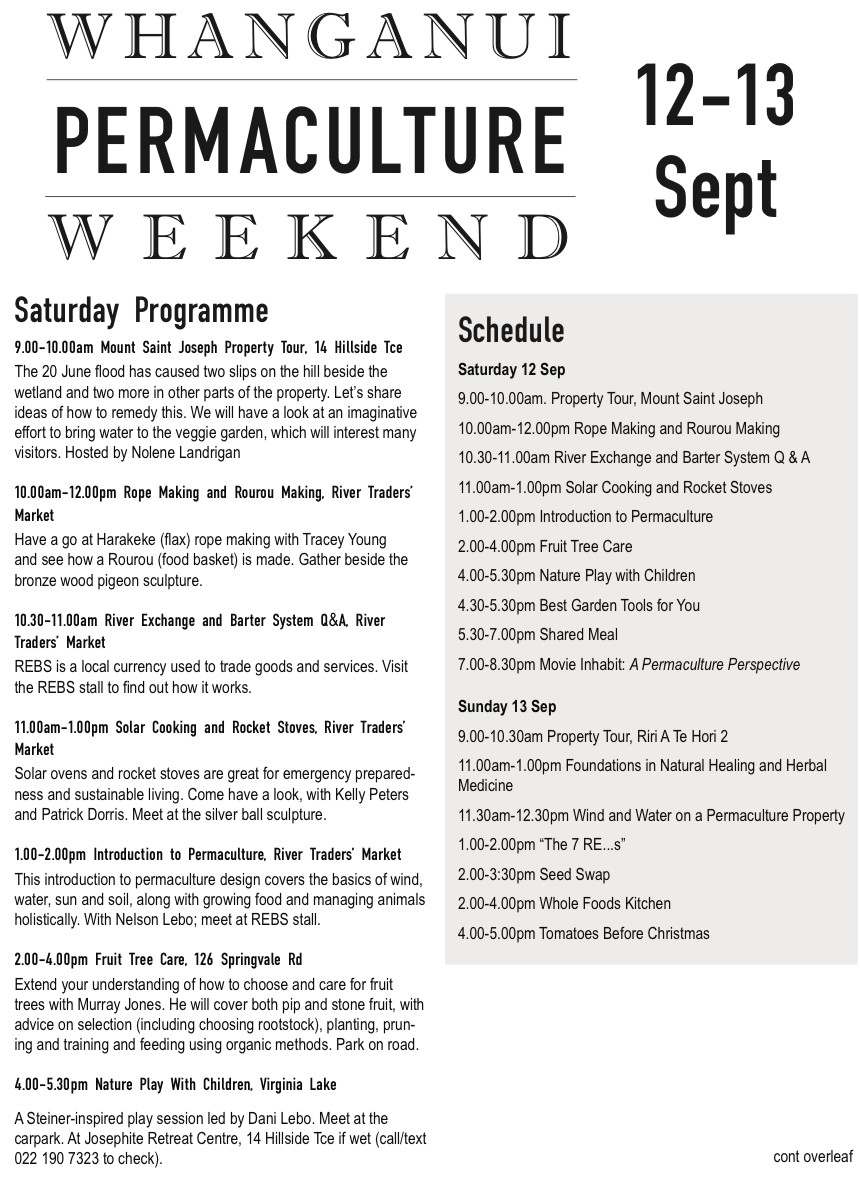
In conjunction with the Whanganui Permaculture Weekend

Saturday 12th 4:30-5:30 PM. Best Gardening Tools for You. Josephite Retreat Centre, 14 Hillside Tce.

Sunday 13th 4-5 PM. Tomatoes Before Christmas. Wanganui Garden Centre, 95a Gonville Ave.
Screen Shot 2015-09-04 at 10.24.08 am Screen Shot 2015-09-04 at 10.23.26 am

Screen Shot 2015-09-04 at 10.23.39 am

Guest Post: Kelly on Planting Trees to Stabilise Slopes

Greetings everyone, this is our first blog post as interns at the Eco School. We hail from Portland, Oregon USA and just started our 1 year New Zealand working/learning/traveling experience. The main goal of our trip is to learn more about permaculture, sustainable living and to learn about, and give back to the local communities we visit.

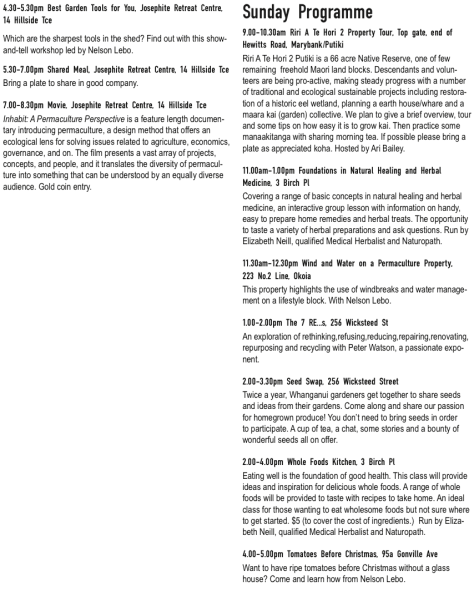
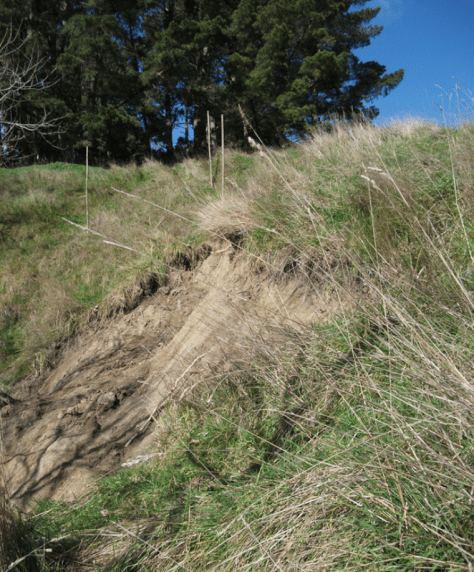
Before arriving in Wanganui we heard there had recently been some flooding. We had no idea of the severity of this flood. When we arrived, about 6 weeks after the major flood, it looked like the river was still way above normal level. There were still traces of silt on the streets and in the grass of the parks. We walked into the i-Site, or tourist info center, and saw a red line on the pillar above our waist height marking that this was the highest flood level ever recorded in Wanganui history. As we drove up the hill to our new home for the next six weeks, it looked like a hungry giant had taken multiple bites out of them. There were slips and erosion occurring everywhere we looked.  Screen Shot 2015-08-20 at 6.12.07 am

Slips far and wide. 

There is no doubt that climate change and many other factors have led to this disaster. The hills are wasting away and sometimes taking a couple of sheep with them. Some homes that were built too close to the edge looked like the Titanic going down. You can see the vast difference in the soil quality before and after the slip. Needless to say, there’s lots of work to do!

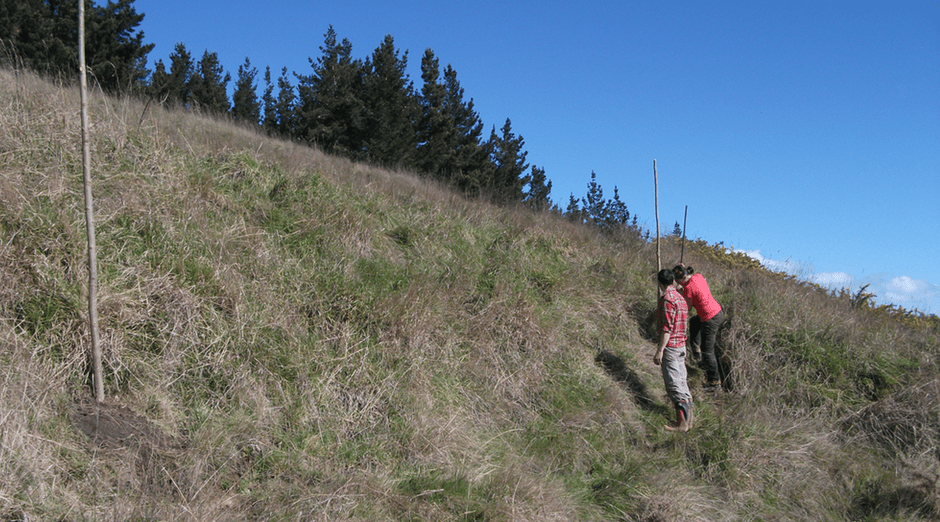
One of our tasks has been planting poplar trees. We planted 20 trees in various spots along the hillside near slip areas to help with erosion control. They also serve as wind breaks, moisture and flood control, and they can be used for animal fodder in drought season. Permaculture design rule: everything must serve at least three purposes, check.

Screen Shot 2015-08-20 at 6.11.33 am

Poles above a slip. 

They were a cheap, easy to plant, low maintenance variety that was recommended by the council. At only $7 each, you get a 3 meter high tree. To plant them we dug out as small of a hole as possible that was about 60 cm deep. This sounds easier than it was, with the clay and moisture in the soil, we had to get down on hands and knees and stick our arms in up to our elbows to pull out the dirt. It would stick to the shovel so you’d have to kick it off with your boot. By the time we were done our boots were 5 kilos heavier! We stuck the tree in on one side of the rectangular hole so that the soil only had to be tamped on one side.

Screen Shot 2015-08-20 at 6.12.20 am

Patrick tamping away. 

We then used top soil that was collected from the some of the slips to fill the holes. Most of the soil we dug out was clay, so the top soil will give the tree more organic material and a better chance at taking root. Then we tamped, stamped, tamped and packed some more. Got to make sure these guys don’t move until they’re roots are established.

Screen Shot 2015-08-20 at 6.11.08 am

Poles in the ground.

One and a half days later, they’re in and ready to start growing, soaking up the extra moisture, rooting down the hillsides and protecting the beautiful land and animals at the farm. It feels good to be putting something back into nature.

Until next time, thanks for reading.

-Kelly

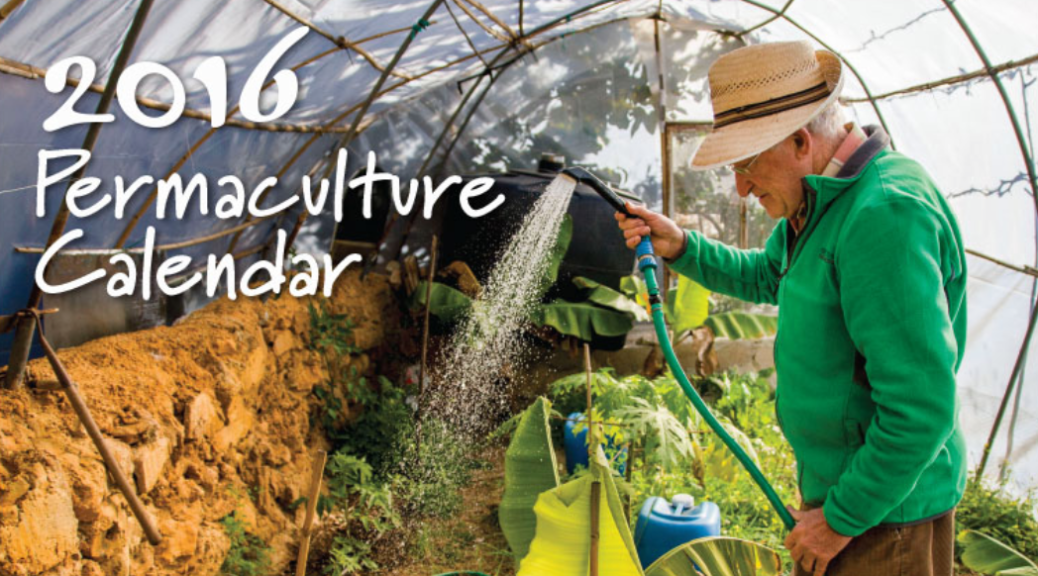
2016 Permaculture Principles Calendar and Moon Planting Guide

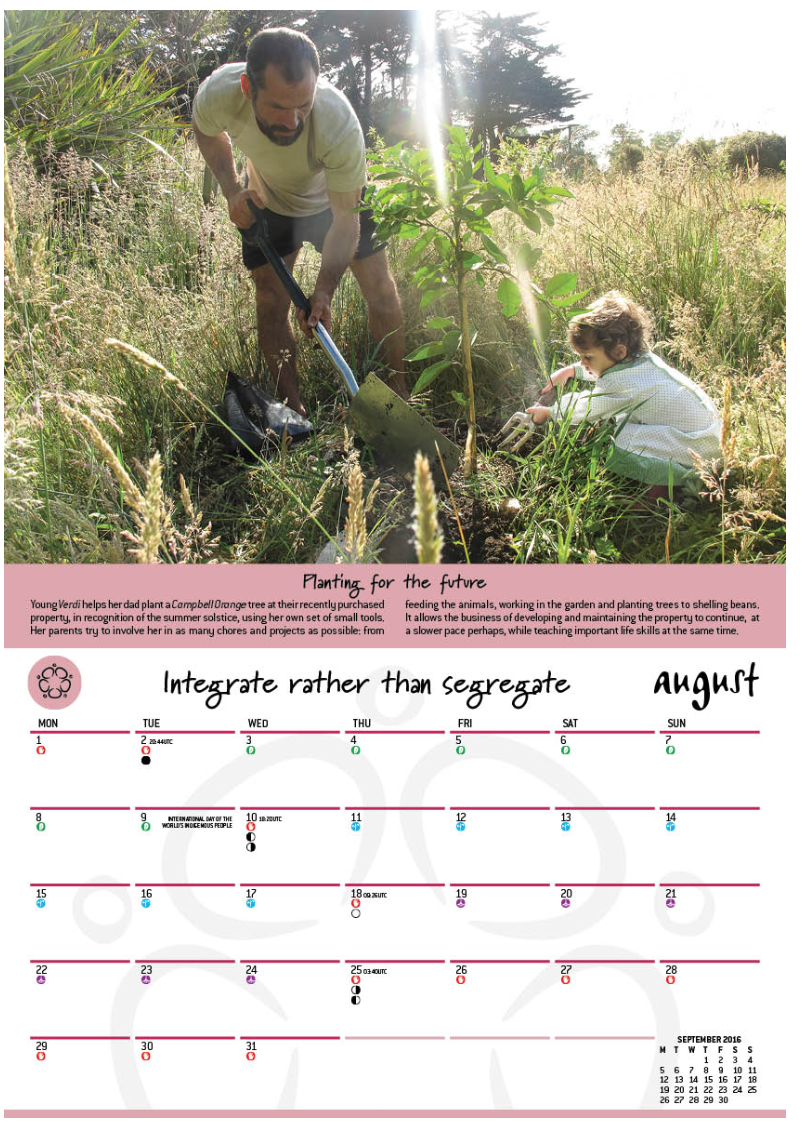
“Internationally relevant and filled with inspirational and thought provoking images that support and reinforce your values every day of the year. Learn each of the 12 design principles over the course of a month and be reminded of suitable garden activities with daily icons and phase times according to our moon planting guide. Now with a rainfall / temperature chart.”

Screen Shot 2015-08-16 at 7.45.34 am

Available in New Zealand only from The ECO School.

RRP: $18 post paid anywhere in NZ. Two for $32 post paid.

Bulk Discounts Available.

Available in Whanganui and Palmerston North at discounted rates for pick-up orders. Enquire.

To order, contact theecoschool at gmail.com

Screen Shot 2015-08-16 at 7.46.13 am Screen Shot 2015-08-16 at 7.46.00 am Screen Shot 2015-08-16 at 7.45.46 am

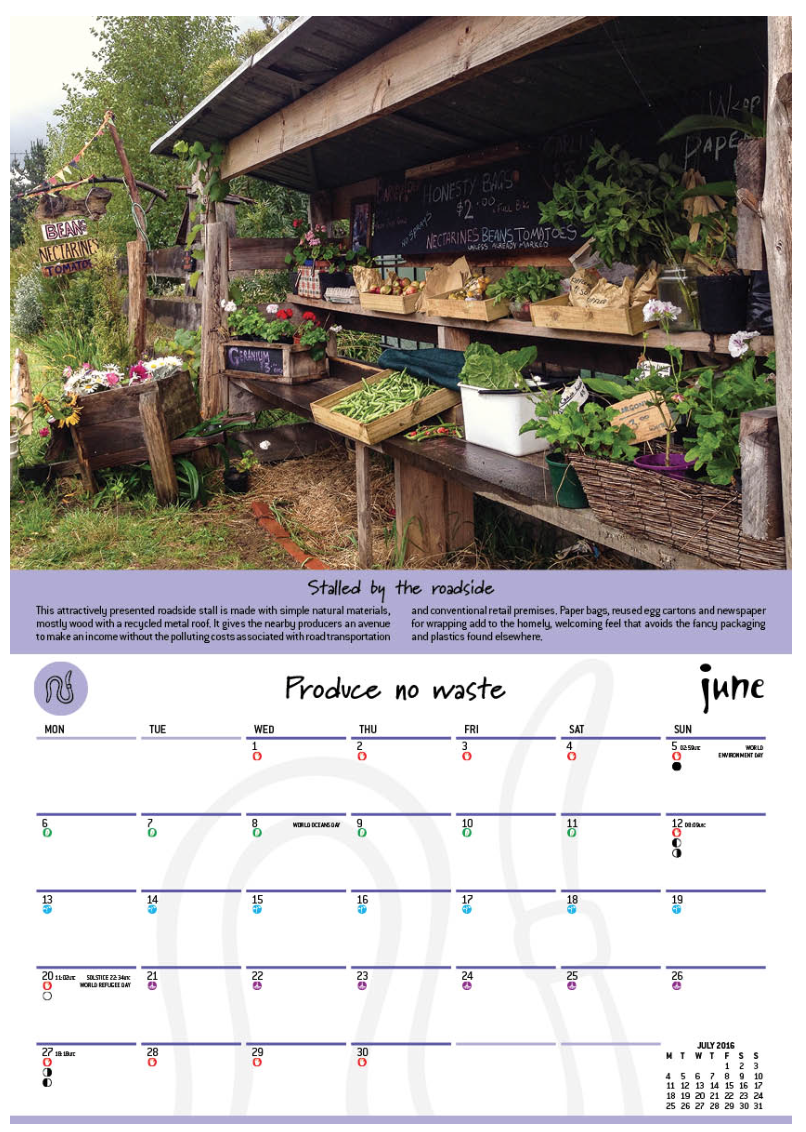
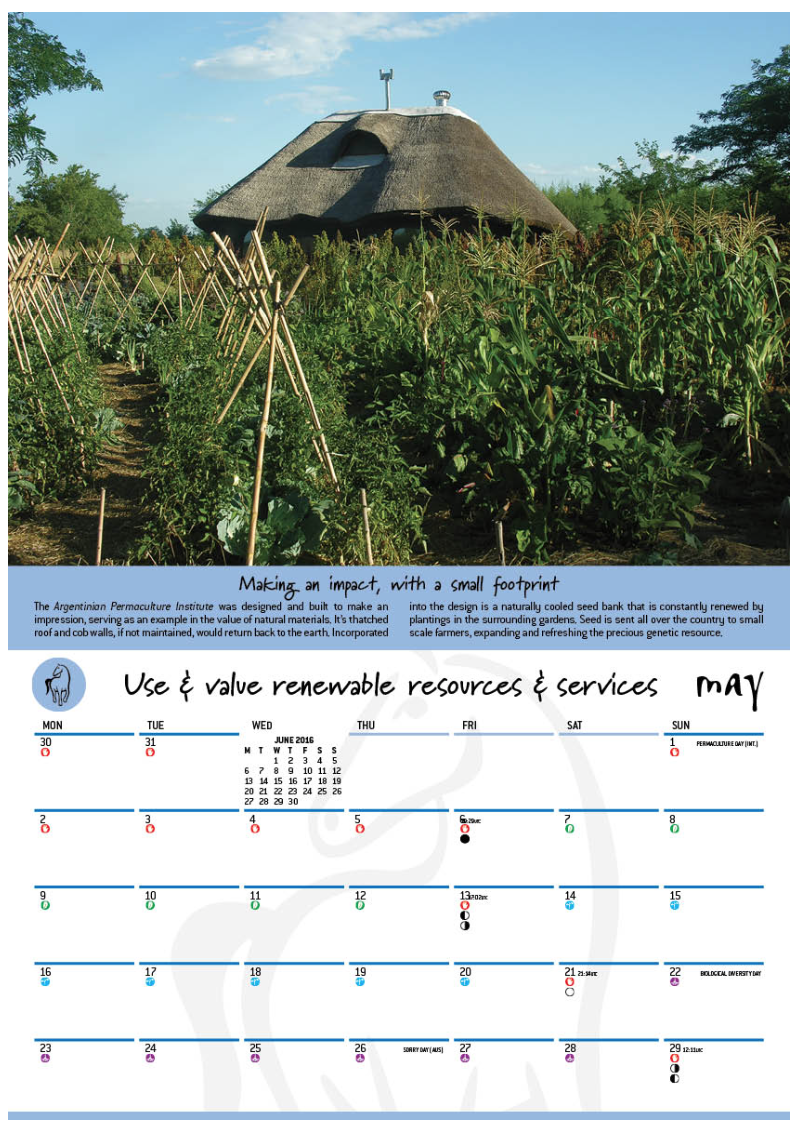
“Organise your garden, your life and share your schedule with this deceptively simple but thought-provoking permaculture calendar – for your home or workplace. Illustrating one of the twelve permaculture design principles for each month, gives you the time to absorb them. Each example includes and image and story of locally appropriate sustainable living and design.

Including a planting guide that can help yield more productive crops and healthier plants by planning your garden activities according to the moon phases. Exact phase time changes along with daily icons enhance the traditional gardening rhythms that have been handed down over the centuries.”

Screen Shot 2015-08-16 at 7.46.28 am

“The permaculture calendar is made from 100% post consumer recycled pulp on certified carbon neutral paper that is manufactured and printed in Australia using 100% renewable energy.

The calendar’s size and weight take advantage of standardised postage and reduced freight costs. Printing plates and paper waste are all recycled. Inks are vegetable based so don’t release unnecessary VOC’s into the atmosphere or require harmful solvents for clean up. Once the calendar has reached the end of its life you can recycle or compost it, hang the pictures, or keep it intact as a reminder of the principles and important events over the year.

While the production effort does a lot in limiting its impact on the earth and the people in the process, we’re also demonstrating the ethic of Fair Share by donating 10% of the net return from sales of the calendar to Permafund, supporting permaculture projects internationally.”

Peace, Estwing

Holistic Land Management: Permaculture Design in Motion

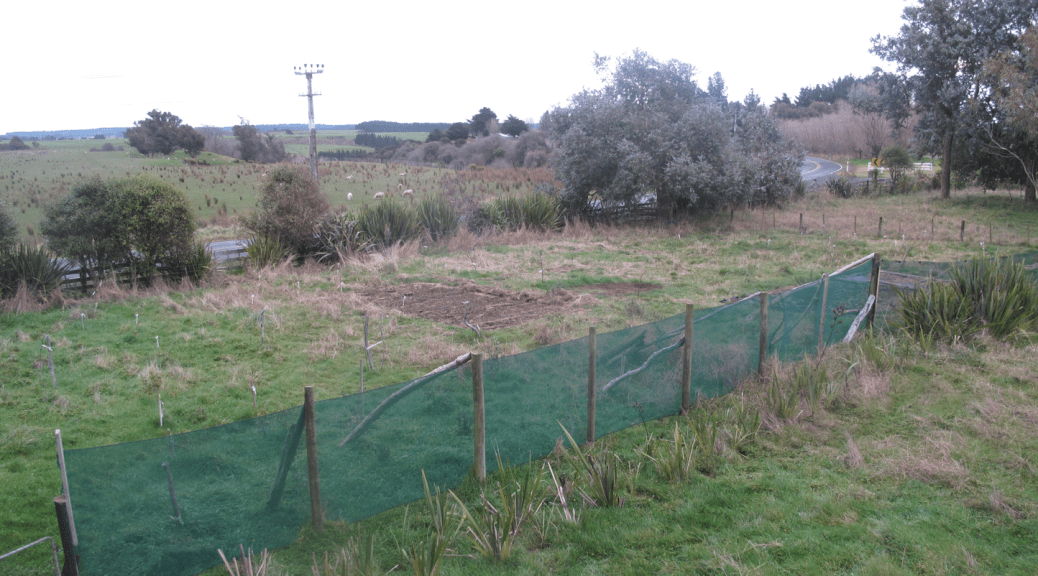
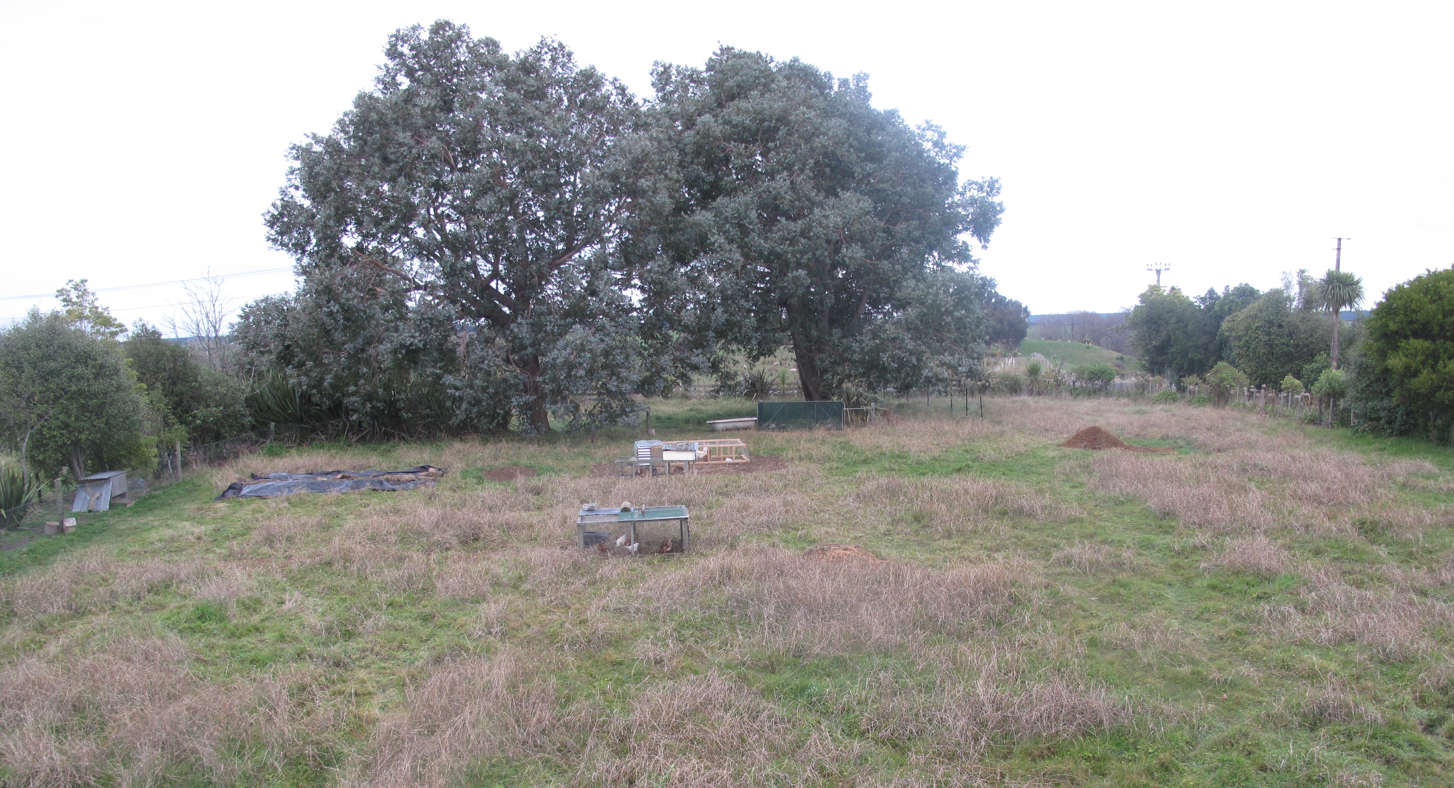
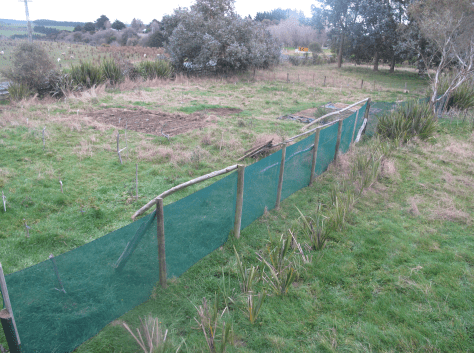
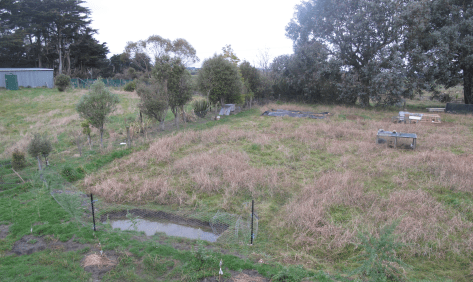
One year after arriving on this piece of land we are well on our way to developing a premier permaculture property. Like our model suburban permaculture project – the Eco-Thrifty Renovation – we intend to use this as a model for resilience education in our community and worldwide.

Screen Shot 2015-08-02 at 9.00.42 am

We call this property Kaitiaki Farm. In Te Reo Maori, kaitiaki means guardian. It is the weightiest word I have ever come across in my life, and I do not take using it to name the farm lightly. If our first child had been a boy, Kaitiaki would have been his middle name.

Screen Shot 2015-08-02 at 8.59.23 am

This extraordinary piece of land has all the makings of a textbook permaculture property and an excellent way to teach best practice in low-input / high productivity land management. It is also a great opportunity for those who want to learn by seeing a ‘work in progress’, I reckon there may be no better place in the world.

Screen Shot 2015-08-02 at 8.59.05 am

From big concept ideas to specific details, Kaitiaki Farm is a living, breathing permaculture textbook. Most of us learn by doing, so why not consider coming along to the Whanganui Permaculture Weekend 12th-13th September (more details to follow) or coming to a full-day workshop on Sunday, 27th September.

Screen Shot 2015-08-02 at 8.58.53 am

We believe in offering the highest quality resilience education and that money should not be a barrier to attendance. The Permaculture Weekend is free to attend, and all of our workshops run at half what others charge. When it comes to excellence in community resilience education, there should be no compromise.

Screen Shot 2015-08-02 at 8.58.12 am

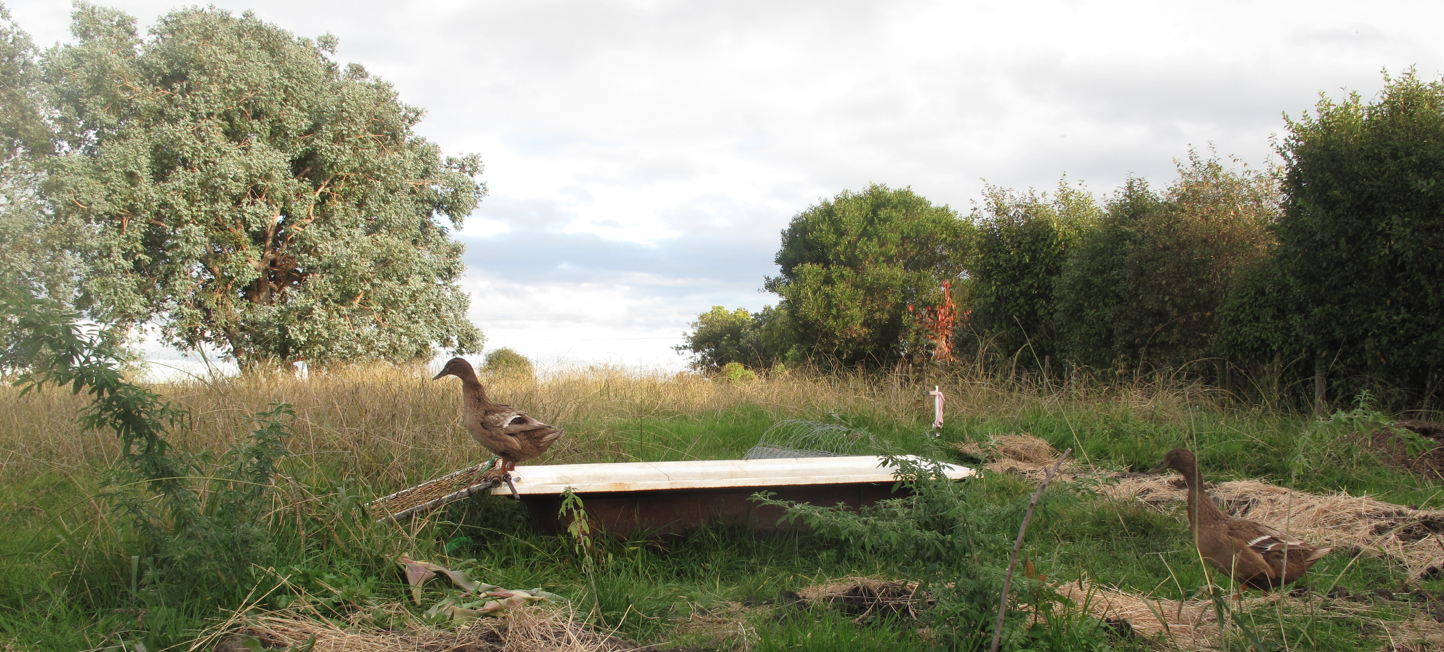
The workshop will cover many aspects of permaculture, including: designing for wind and water; tractoring birds; improving soil structure; composting; swales and drains; nurse trees; slope stabilisation; trees as fodder; pollarding firewood; alley cropping; drought-proofing; market gardening; developing and managing a food forest; scything; and more.

Screen Shot 2015-08-02 at 8.58.34 am

Peace, Estwing

Permaculture Internship: July-September, 2015

We have been blessed with amazing interns over the last five years, and now we are looking for another. Dates are roughly the end of July through September.

Screen shot 2015-07-08 at 10.34.40 AM

We are midway through developing a large (5 hectare) permaculture property and renovating an 80 year-old home.

Screen shot 2015-07-08 at 10.31.28 AM

Our interns have cherished their time with us and still keep in touch.

Screen shot 2015-07-08 at 10.28.11 AMWe believe in hard work…

Screen shot 2015-07-08 at 10.30.13 AM

…and fun.

Screen shot 2015-07-08 at 10.28.20 AM

Our work has been featured in national and international magazines and websites.

Screen shot 2015-07-08 at 10.33.32 AM

  We seek a highly-motivated individual who is keen to learn eco-design, holistic land management, organic agriculture and horticulture, green building, community organising, farm skills, and more.

Screen shot 2015-07-08 at 10.32.36 AM  Contact us on theecoschool  –  at — gmail  dot   com

Screen shot 2015-07-08 at 10.35.55 AM

Dr. Nelson Lebo is a professional eco-design eductor. He holds a diploma in permaculture and is a recognized permaculture design educator.

Screen shot 2015-03-31 at 10.23.51 AM

More on Housing and Garlic in NZ


Editor’s Note: This is my weekly column in the Wanganui Chronicle.


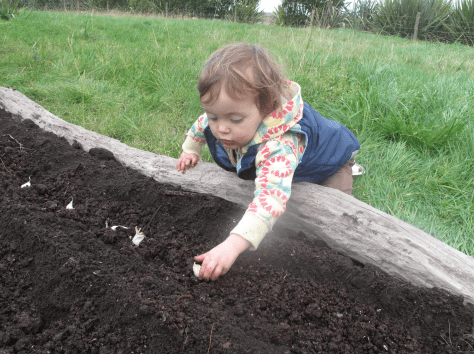
I narrowly missed my chance to be “World Famous in New Zealand” last week because I was busy planting garlic.

On Wednesday morning a producer for Duncan Garner’s Radio Live Drive programme invited me to speak with Duncan on the topic of warm, dry, healthy homes. I did not see the email until after Wednesday afternoon’s programme was done and dusted, and by Thursday the topic du jour had changed. So much for my 15 minutes of fame…

Anyone who has been following the news over the last fortnight would be well aware that a number of deaths linked to cold, damp houses has sparked a national discussion about the other housing crisis in New Zealand. I call it “the other housing crisis” because we hear much more about The Housing Crisis in Auckland and to a lesser extent in Christchurch.

As is the case with many important issues, a quantity story often outweighs a quality story. Quantity stories are easy to understand: just do the maths. But quality stories are nuanced and require more research, more careful consideration, and are best presented from a holistic perspective.

On Monday, Chronicle Editor Mark Dawson asked the question: “How many bad houses in our city?” Leave it to a seasoned journo to get both quantity and quality into one headline!

At the end of Dawson’s editorial he ruminates “about the condition of Wanganui’s states houses,” and “how many of them are substandard.”

The second of these is the easiest to answer: in all probability 100% of all state houses in our city are “substandard.” If the current New Zealand Building Code minimum is “the standard,” then by definition anything not built to that level is “substandard.”

The bad news is that the NZBC minimum would be considered by many nations as substandard in and of itself when it comes to warmth and energy performance. In other words the code sets a low bar for insulation, windows and design.
The other bad news is that Housing NZ homes are probably better than the majority of rental properties in Whanganui, and better than hundreds if not thousands of privately owned dwellings. Put another way, Housing NZ is one of the better landlords in our city. Depending on your perspective, this may be good news or bad news.

In the guts of his editorial, Dawson addresses the concept of a rental housing warrant of fitness. Last May, the Wellington based He Kainga Oranga released a report on a pilot WOF scheme that assessed 144 rental properties in Dunedin, Christchurch, Wellington, Tauranga and Auckland. Eight passed.

The takeaway: we have a large quantity of low quality homes in New Zealand.

As would be suspected, there is significant pushback from property investors and landlords against the WOF scheme. There is also the question of who would administer the scheme and who would pay. Central government would benefit from the scheme, which would lead to hundreds of millions of dollars in savings to the health system, but local governments would be the most likely bodies to shoulder the burden.

The takeaway: not likely to happen anytime soon.

In the meantime, the best thing for tenants to do is their homework. Seek out information from the EECA EnergyWise website and ecodesignadvisor.org.nz.

Don’t take landlords’ or agents’ word when they say a property is “fully insulated.” Look for yourself.

Ask the agent to bring a hygrometer to measure indoor humidity when you go to look at a potential rental.

Don’t rent a property without one of the following heaters: flued mains gas; heat pump; wood burner; pellet burner.

Don’t use unflued LPG heaters.

Make and install window blankets and/or secondary curtaining.

Draught-proof doors and windows.

The list goes on.

I’ve been thinking carefully about what renters can do to improve their living conditions for over four years – ever since veteran journo, Paul Brooks, challenged me on the issue. I gave him a handful of suggestions at the time, and now have a bucketful. That’s one reason Garner’s people contacted me.

I may have missed my chance to be World Famous last week, but at least I’ve got an early crop of the World’s Best Garlic in the ground.


Peace, Estwing

Good Design & Great Garlic

When it comes to housing and garlic, good design is more important than hard work. In both cases, the core decisions that ensure quality can be counted on one hand. Everything else are details.

In the case of housing, we can look around the world and observe examples of low energy and high performance homes. For the most part, the design principles are universal with the exception of the tropics where important tweeks must be made compared to other regions.

For example, the main goal of good tropical house design is passive cooling that relies on cross ventilation. From this perspective, homes should be rectangular with the long axis running north-south to catch breezes. For almost all other locations around the planet a home should be rectangular with the long axis running east-west to catch the winter sun and exclude the summer sun. In all cases the basic design objective is a passive structure that heats and cools itself as much as possible using natural energy flows.   Screen Shot 2015-06-12 at 8.12.51 pm

Beyond passive design, another wise choice to make with housing is to place fixed heaters on internal walls rather than external walls. Placing a heater close to the centre of a home and surrounding it by living spaces would appear to be common sense until you take a trip around Whanganui and see the preponderance of chimneys built on one extreme end of long rectangular and L-shaped homes. It appears there was an era in our city where both common sense and good design were sorely lacking when it came to home building. Some would argue it continues.

Fixing bad design is more expensive than engaging good design from the start, but the good news is that in Whanganui it is far more affordable to buy an existing home and do it up rather than build a new home. For example, our renovated villa ticks the boxes for good design for less than half the cost of building new.

Similarly, growing great garlic can be more a matter of good design than hard work. Again, the principles can be listed on one hand: good seed; great compost; plenty of moisture; minimal weed competition. Screen Shot 2015-06-12 at 8.12.59 pm

Like racehorses and livestock, genetics matter with garlic. Buying high quality seed garlic is the best place to start. I was in a big box discount store recently and noticed the so-called “Garlic Seed” they were selling and had to stifle laughter at both its size and price. The best seed garlic is local and organic.

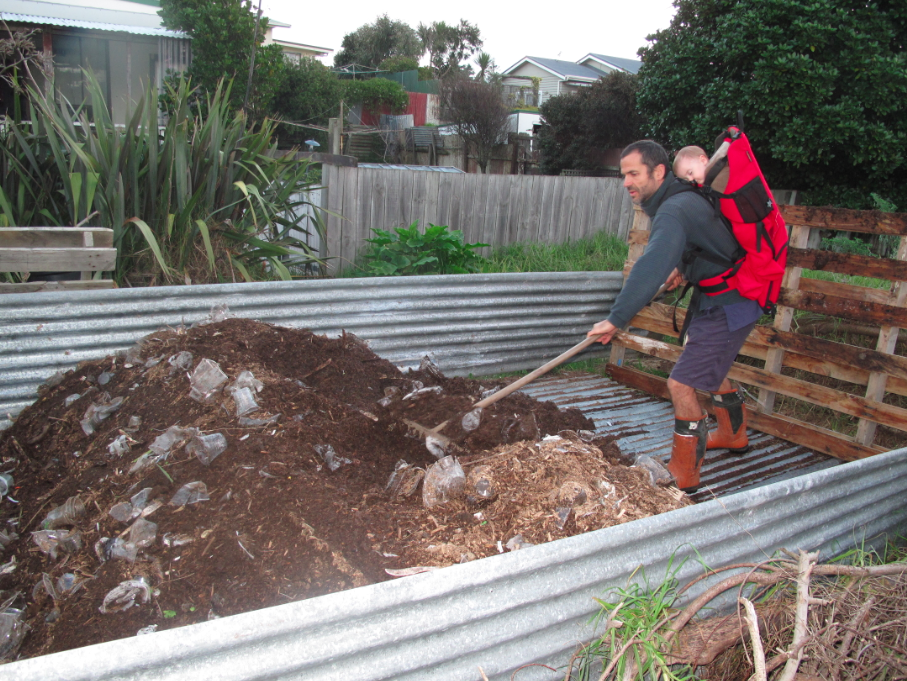
Compost provides multiple benefits to garlic while it is growing, including feeding, moisture retention, and microbial activity. High quality living compost is always better than a sealed 40-litre bag that probably lacks helpful aerobic soil organisms.

Screen Shot 2015-06-12 at 8.13.20 pm

Garlic, like all alliums, grows better with more moisture. A combination of generous compost and heavy mulch can ensure soil moisture remains high even trough extended period without rain. Mulch also doubles as a weed suppressant and encourages worms to be active closer to the soil surface.

For more information on Growing Great Garlic, come along to a workshop on the 21st of June at 3 PM. Registration essential. 06 344 5013; 022 635 0868; theecoschool – at – gmail.com

Simplest Crop Rotation on Earth

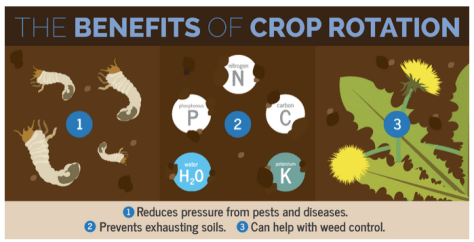
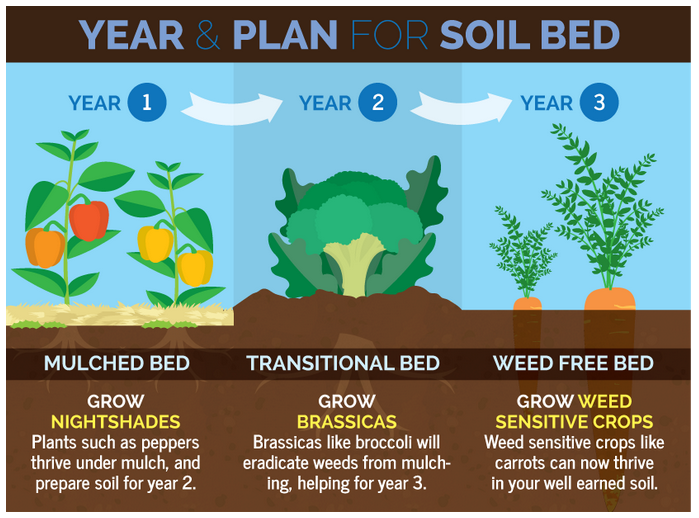
Fix.com contracted me to write an article on crop rotation. I suggested a four-year rotation, but they thought three years would be easier for beginner gardeners to understand.

Screen shot 2015-03-31 at 9.30.20 AM

With the word limit I was working to, this is the best I could do, although the editors added sections on nutrient cycling and carbon cycling.

Screen shot 2015-03-31 at 9.32.02 AM

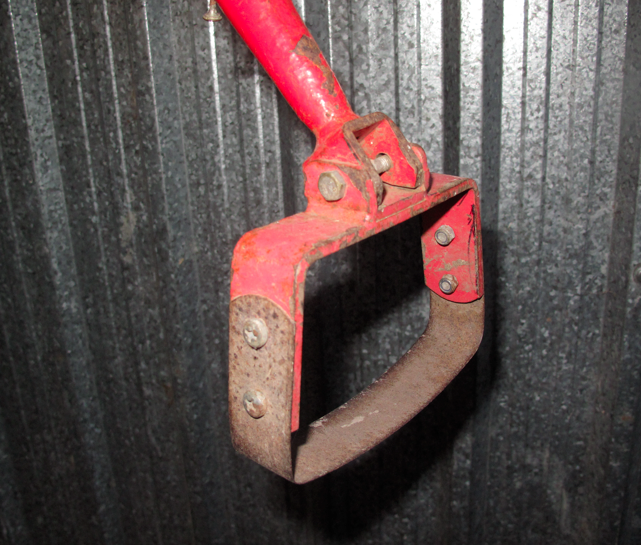
FYI, here is what a stirrup hoe looks like.

Screen shot 2015-03-31 at 9.33.51 AM

Here is the link to the article: http://www.fix.com/blog/three-year-garden-crop-rotation-plan/ Here is the cool infographic they made. <a href=”http://www.fix.com/blog/three-year-garden-crop-rotation-plan/”><img src=”http://www.fix.com/assets/content/15554/easy-crop-rotation-embed-large.png&#8221; border=”0″ /></a><br />Source: <a href=”http://www.fix.com”>Fix.com</a&gt;     Peace, Estwing

Ethical Eating, Kiwi Style with No Pretention

A huge thanks to Nicola Young for putting us onto The Katering Show in her last column. The episode titled “Ethical Eating” is great on many levels. The commentary on pretentious shoppers at a Farmers Market is priceless. For anyone who thinks about the social and environmental impacts of the food they eat, “The Kates” offer a warning not to take ourselves too seriously.

Along the same lines, the phrase “ethical eating” is pretty loaded. I would never use the term as it appears to imply that all other eating is unethical. Yow! Does that include the ‘Reduced for Quick Sale’ apple crumb cakes I buy en masse from Countdown?

In my experience with Farmers Markets and pretentious shoppers, I have always taken a proactive approach but admittedly with mixed results. About ten years ago I brought my produce to a brand new market in a wealthy village a few miles from the not-so-wealthy hamlet where I had my farm. This was during the era when “Artisinal Bread” was coming on the market and gaining a 30% mark-up because of the use of the word artisinal. I was like, “Yo! Sign me up.”

Turns out the extraordinarily pretentious lady who organised the market did not appreciate my “Artisinal Salad Greens” or my “Zesty Zero-Emissions Mesclun Mix.” Rather unceremoniously my stall space was given to a lady who knitted tea cozies, and the so-called “Farmers Market” lost one of its two actual farmers. (Everyone else was a “crafter.”) Screen shot 2015-03-06 at 7.00.38 AM

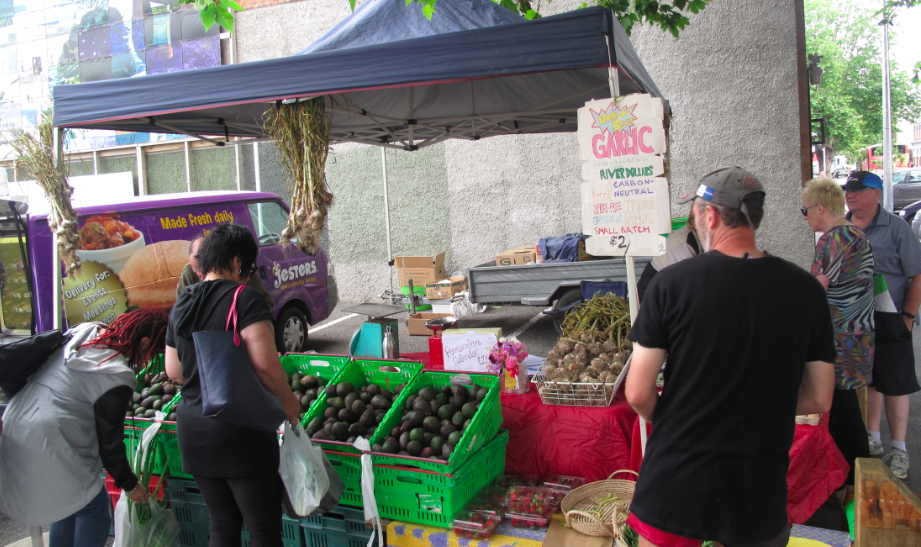
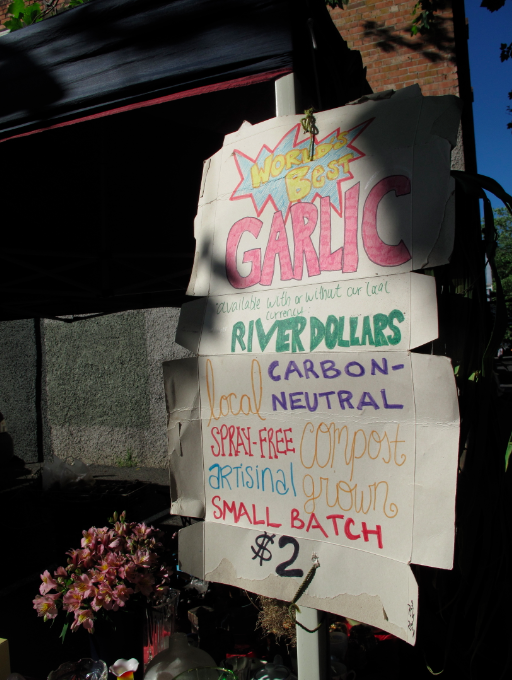
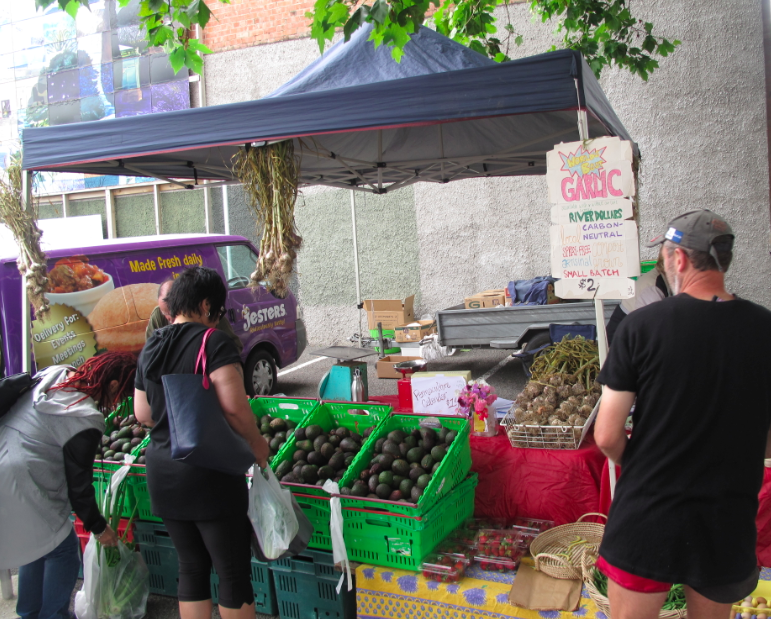
Fortunately I have encountered no such snobbery at our own River Traders Market…well not much anyway. In all good humour, we market our World’s Best Garlic as, “local, carbon-neutral, spray-free, compost grown, small batch, and artisinal.” It is available with or without the use of Whanganui’s local currency, “REBS.” We were warned not to label it “organic” because we have not paid to join that club, and the labeling Nazis may persecute us.

When it comes to unpretentious shopping for local and/or organically-grown fruit, vege and eggs there is no better place than the REBS stall on Saturday morning. My colleagues do an amazing job of keeping this community-based, cooperative stall stocked with fresh, in-season produce every weekend of the year. From my understanding, the REBS stall is one of maybe only two that have never missed a market day in over six years.

Screen shot 2015-03-06 at 7.00.53 AM

It seems every discussion of local, organically-grow food always comes around to price. Here I would like to steer the discussion away from  clever marketing and affordability to quality. There is no better tasting garlic available than that which I grow. I will admit to first equal – that’s awesome, mate – but none greater.

In olive oil there is extra virgin first cold press. In coffee there is 100% Arabica beans. In garlic there is fresh, local and grown using exceptionally high quality compost. (I’m not a wine snob so I wouldn’t know the next permeatation.) High quality food costs more than low quality food. Same with cars, houses, mobile phones, computers, beer and “escort services.” You get wacha pay for. Screen shot 2015-03-06 at 7.00.24 AM

It seems every discussion of ‘ethical eating’ also comes around to meat. There is no debate that the vast majority of methods for raising meat animals have large environmental impacts. It is also no secret that cutting back on one’s carnivourous behaiviour or choosing to be vegetarian tick the most ‘ethical’ boxes on the list.

Screen shot 2015-03-06 at 7.01.07 AM

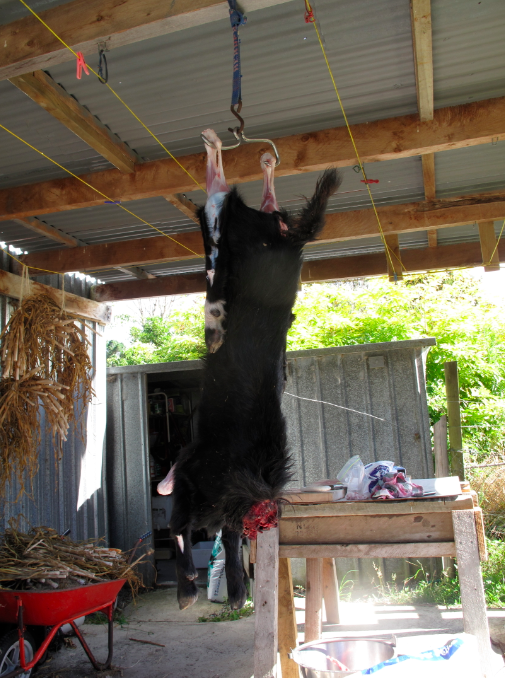
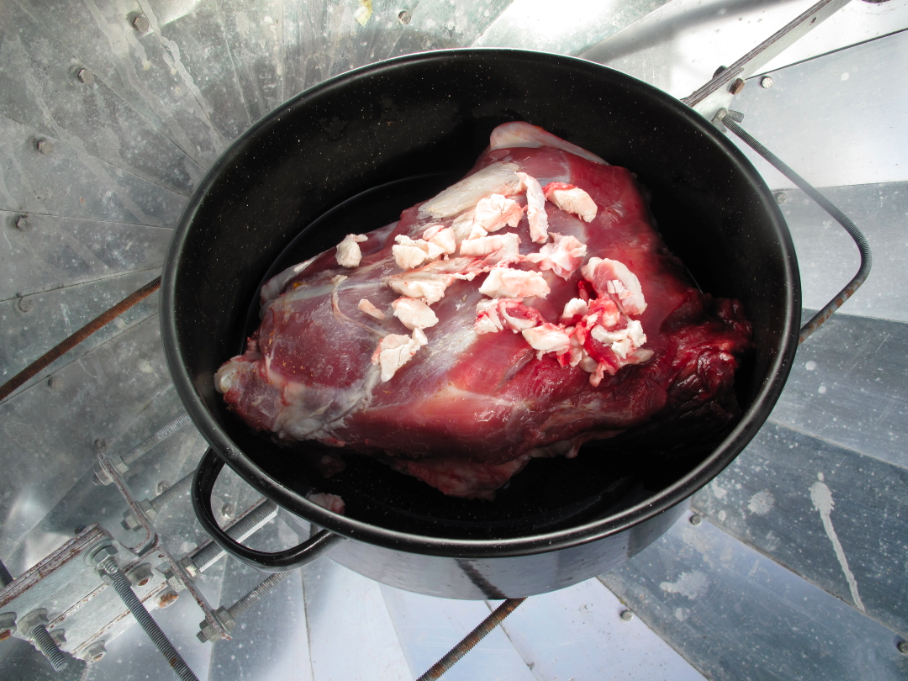
However, in New Zealand we have the unique opportunity where eating more meat is best for the environment! Too good to be true? Not at all. Step right up for a generous helping of local, organic, free-range, natural, small batch, goat humanely “demised” and lovingly processed by a skilled craftsman-of-a-Kiwi-bloke and slow-cooked to perfection over an entire day by the gentle caressing rays of the Earth’s local star. Screen shot 2015-03-06 at 7.01.17 AM

But how am I going to fit that on a sign?


Peace, Estwing

Peachy Keen

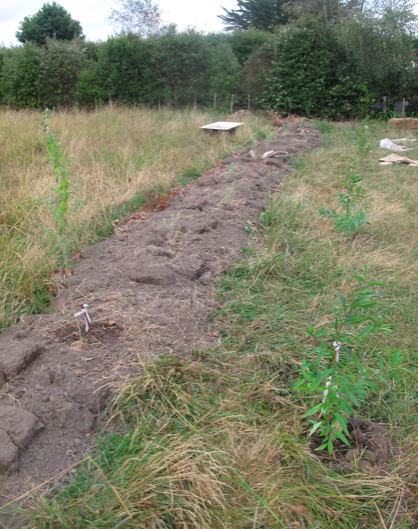
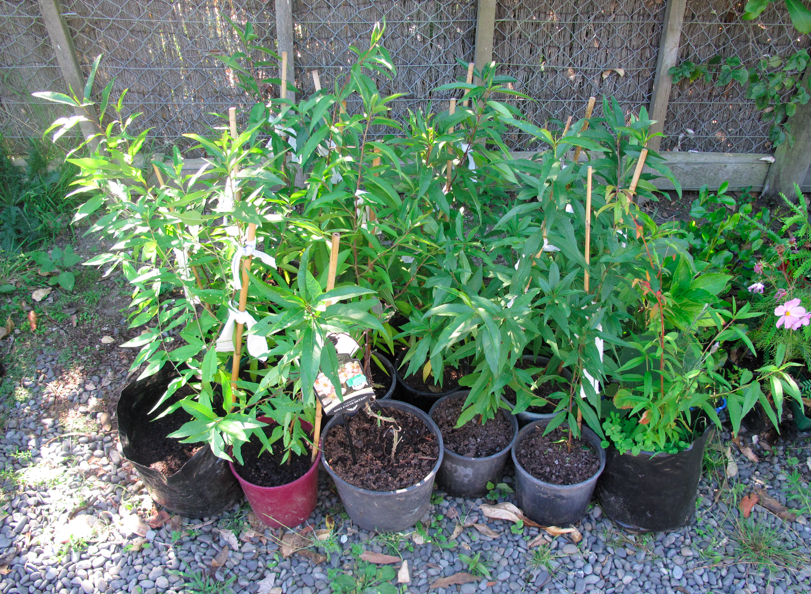
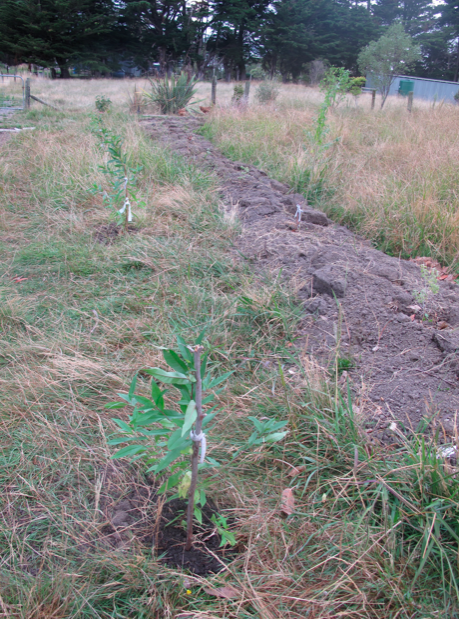
We have had a great peachy weekend. On Saturday we planted 10 of our peach trees that I raised from stones starting early last winter. Here they are next to a swale topped with tagasaste.

Screen shot 2015-03-01 at 6.11.46 PM

We still have a dozen trees that we will give away and sell.  Screen shot 2015-03-01 at 6.10.45 PM

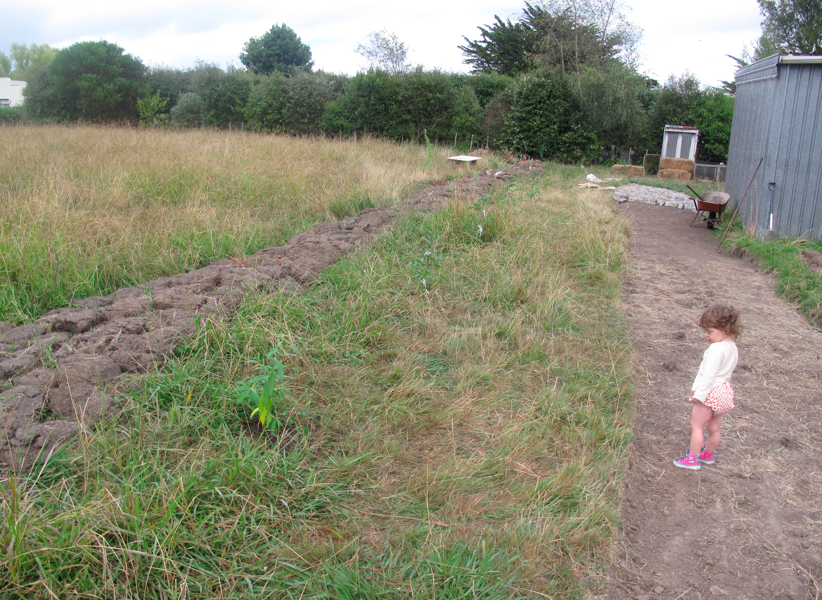
Here is Verti checking out the recent work.

Screen shot 2015-03-01 at 6.11.35 PM

This is the reverse angle of the peaches and tagasaste.

 Screen shot 2015-03-01 at 6.12.03 PM

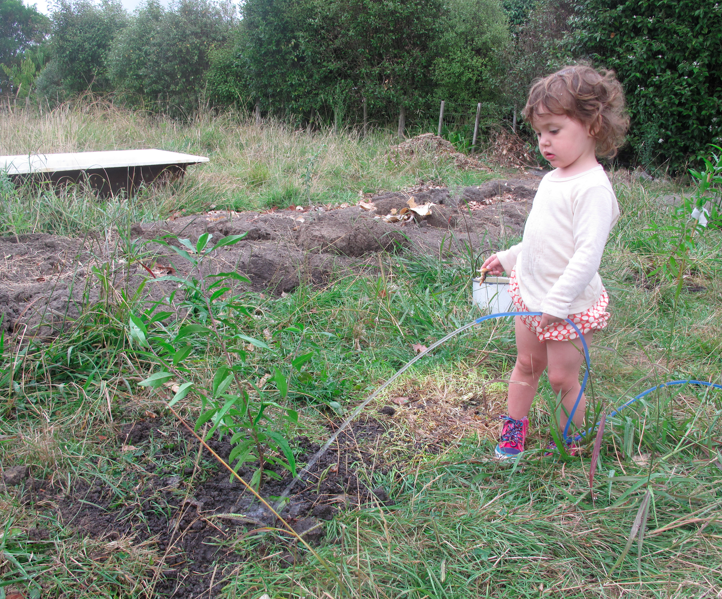
Verti watered the peach trees thoroughly.  Screen shot 2015-03-01 at 6.12.32 PM

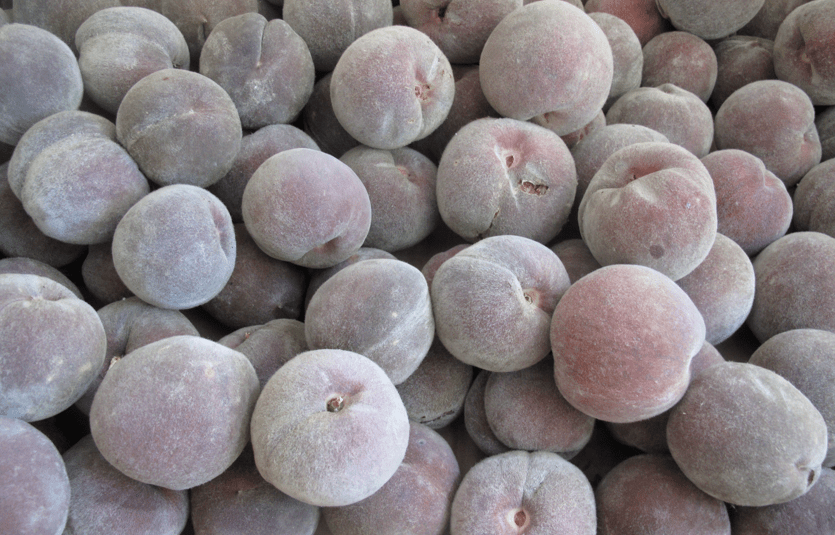
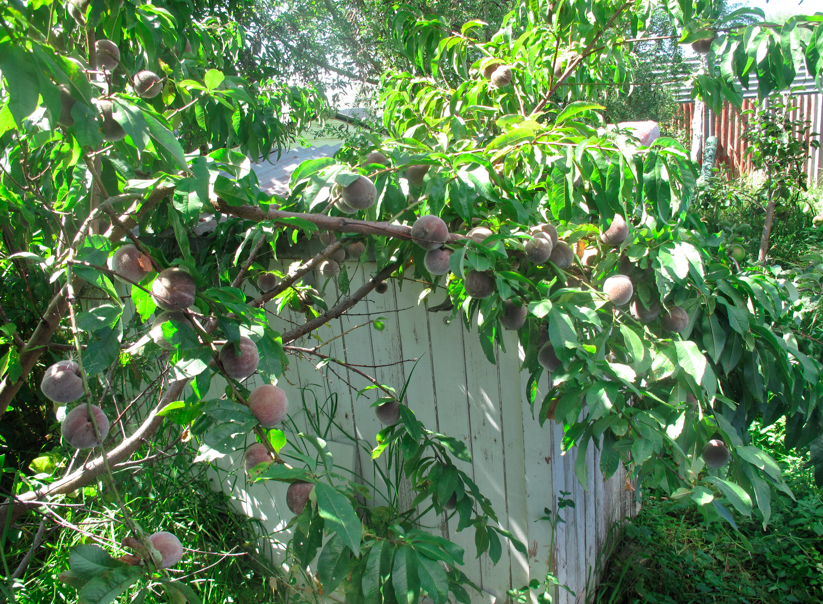
On Sunday we went to our old house to pick some of the abundant Black Boy peaches.

Screen shot 2015-03-01 at 6.11.16 PM

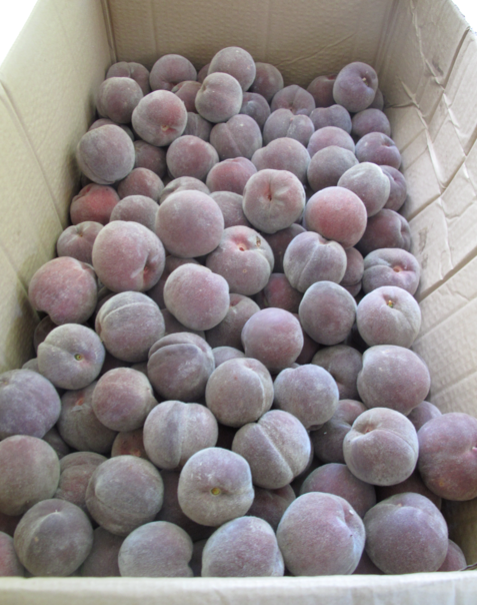
We picked this box and it hardly made a dent in the fruit still on the trees.

Screen shot 2015-03-01 at 6.10.34 PM

Yum is all I can say.


Peace, Estwing