Category Archives: Eco Thrifty Life

Donald Trump: Person of the Year

Editor’s Note: This is my last column in the Wanganui Chronicle.


Donald Trump is my Person of the Year. Who else has made a bigger splash in 2015?

Pundits say he plays on anxieties that exist among a certain voter demographic. He appears fearless in his attacks on political correctness. Bombastic is a term we hear to describe him.

But I say his most significant accomplishment has been in mastering a communication technique and ideology that has grown to achieve a critical mass of cultural significance: the double down. This is not to be confused with KFC’s Double Down – a beef burger between two pieces of fried chicken breast with cheese and bacon.

Doubling down takes many forms. It can mean making a false statement, and instead of admitting the mistake, vehemently insisting on the ‘truthiness’ of the statement in the first place. Alternatively, it might mean coming up with bad policy and then working tirelessly to try to justify it. It may be throwing good money after bad. In Trump’s case, it also means making outrageous or controversial statements and refusing to backtrack.

Doubling down means never having to say you’re sorry.

Trump is my Person of the Year not because he invented the double down or that he is the only person that does it, but because he has given it a living, breathing form. He is a meme with a comb-over and a personal jet.

Trump’s political success relies on the fact that many people only accept information that fits their existing worldview. Facts don’t matter. Research doesn’t matter. Trained experts don’t matter. As Ray Davies sang in 1981, “Give the people what they want.”

With the Balkanization of political parties worldwide and the rise of the highly effective climate change denier movement over the last decade, I’ve noticed an increasing trend in doubling down. Everyone does it, it’s just that Trump is the best, or at least most visible. The Trumpification of Western society has reached its watershed moment. It marks the end of apology.

Climate change deniers double down on the same pre-formulated arguments they find on the Internet. Trickle-down economists double down on this never proven economic theory. Even the Chronicle doubled down on misreporting the origin of events waste management in Whanganui.

I’ve noticed a subtle but consistent form of the double down that may best be described as unprofessionalism. In it’s simplest form it means not answering emails or returning phone calls, and then as a response, not responding to not responding. This is practiced across our community and it especially favoured by local government agencies and health system officials.

I’ve also noticed that double downs work both ways. Think of Shamubeel Eaqub or Duncan Garner. The fact that both men had facts on their side doesn’t matter.

If Garner became public enemy number one for counting the empty shops in Victoria Avenue, yours truly was a close second for working with him to highlight a good news story in our community during his visit. You might think having the top journalist in New Zealand highlight a Whanganui success story to a national audience would have been celebrated. Instead I was criticized in the pages of the Chronicle.

I, myself, may be accused by readers of doubling down, but from my perspective there is a big difference between doubling down on facts or the best available research and doubling down on general opinions. But if in the court of public opinion – or the Letters Page – the two hold equal weight, there is no way to advance a robust argument. It’s a no win situation, and one I’m no longer interested in.

The issues that concern me – healthy housing, community resilience and wealth inequality – get little to no traction in our community. There is no organisation, group, business or government department that takes a serious holistic approach to any of these. I’ve reached out to almost all of them over the last five years and the most common response is – you guessed it – no response.

Sadly, although our local government is in a position to address these issues it chooses not to. I have heard wide-ranging concern from informed members of our community about the so-called “Leading Edge” document, especially the Environment section. I share their concern. As a professional in the environmental field for nearly 30 years I have read thousands of books, papers and documents on the topic. Compared to everything I have read, it is among the worst – much closer to tail end than leading edge.

But I should not complain. After all, we live in a democracy and no candidate running for council at the last election chose to use the words “environment” or “sustainability.” “Give the people what they want.”

Although exceptionally weak on the environment, the Leading Edge is extremely useful for allowing council committees and officers to double down on rejecting holistic solution-oriented projects that promote community health and resilience as they have in the past with five simple words, “It’s not in the plan.” Trumped again!

After 192 consecutive weeks, this is my last column. So long, and thanks for all the fish.


Unique Permaculture Internship

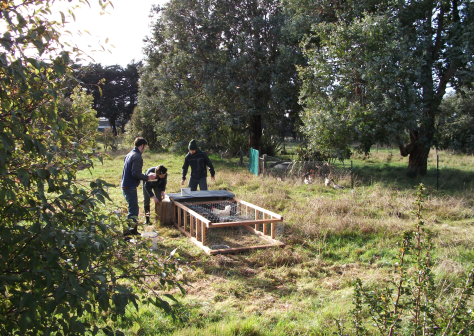
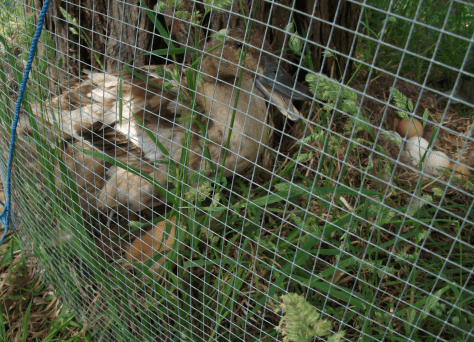
We are looking for a highly motivated individual or couple interested in learning-by-doing on a holistically managed permaculture property. Ongoing projects include using fowl to manage pasture…

Screen Shot 2015-12-30 at 9.15.19 am

organic veggies…

Screen Shot 2015-12-30 at 9.15.48 am

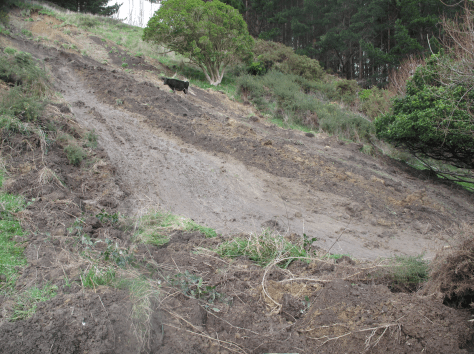
protecting vulnerable slopes…

Screen Shot 2015-12-30 at 9.16.34 am

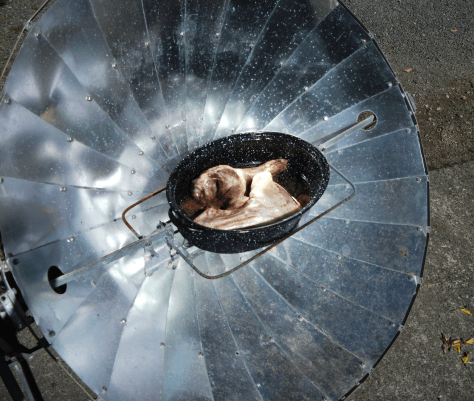
solar cooking…

Screen Shot 2015-12-30 at 9.16.53 am

eco building…

Screen Shot 2015-12-30 at 9.20.07 am

also hot composting, fruit tree care, managing pigs and goats, drought-proofing and water management.

This is a minimum 6 week commitment starting in January. Location is just outside Whanganui.

Contact theecoschool at  gmail dot com

Peace, Estwing

Solstice Permaculture Update

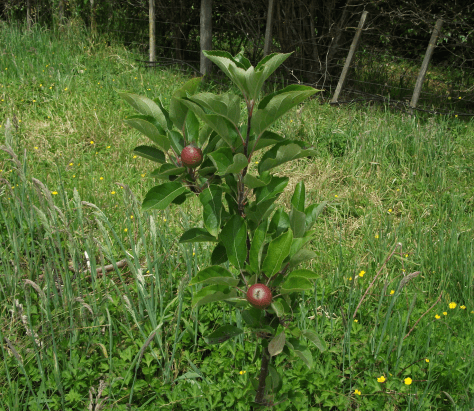
OK, the Solstice was last week, but we’ve been busy keeping up with all the growth on the farm. We see some nice apples forming on young trees.

Screen Shot 2015-12-16 at 6.51.25 am

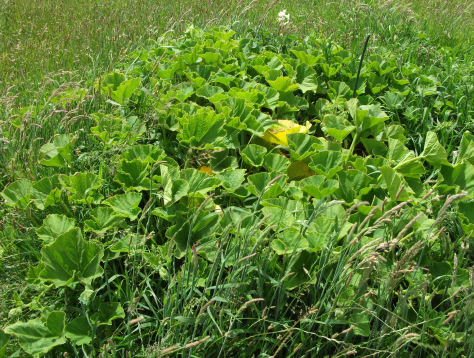
Pumpkins growing out of one of the many compost heaps.

Screen Shot 2015-12-16 at 6.51.36 am

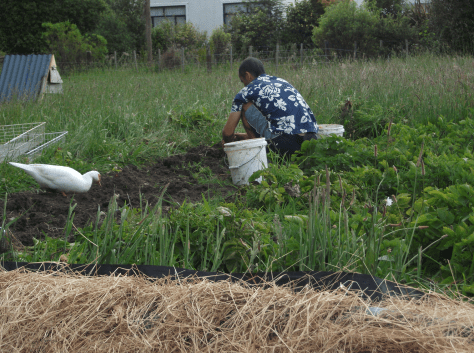
Digging spuds with a hungry duck finding worms along the way.

Screen Shot 2015-12-16 at 6.53.20 am

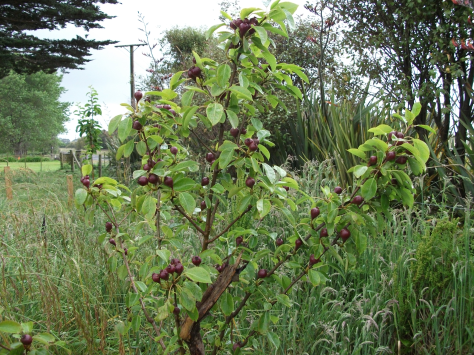
About to take the trainers off the young plum trees.

Screen Shot 2015-12-16 at 6.54.36 am

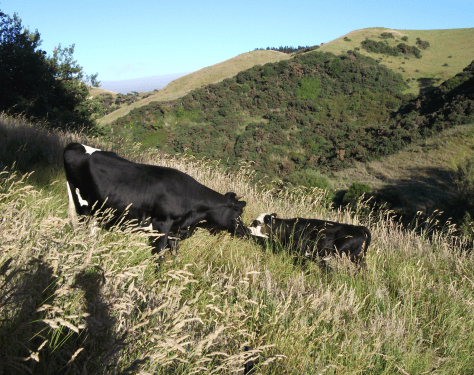
The new cow and calf have been great company for our crazy yearling heifer.

Screen Shot 2015-12-21 at 10.27.44 am

Here she is ‘kissing’ her ‘niece’.

Screen Shot 2015-12-28 at 6.01.40 am

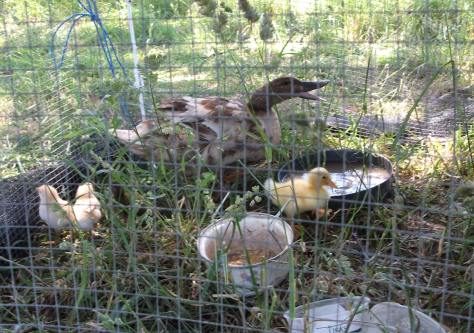
Speaking of harmony, this mixed hatch of chicks and ducklings are going well.

Screen Shot 2015-12-24 at 5.50.01 am

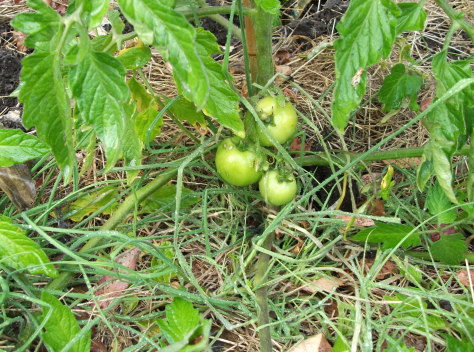
Tomatoes looking good.

Screen Shot 2015-12-28 at 6.05.46 am

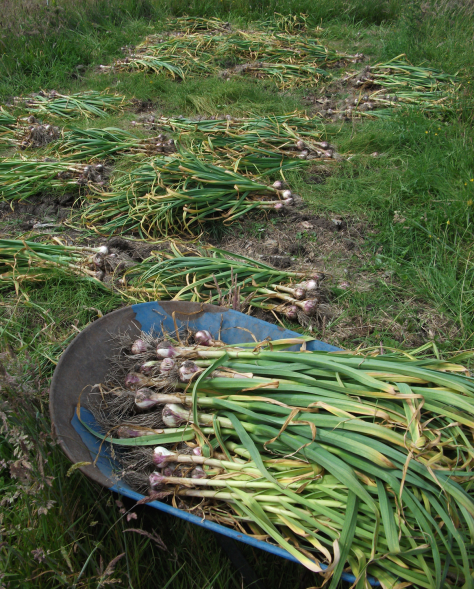
Amazing garlic harvest last weekend.

Screen Shot 2015-12-24 at 5.49.11 am

The size and flavour are amazing.

Screen Shot 2015-12-24 at 5.49.35 am

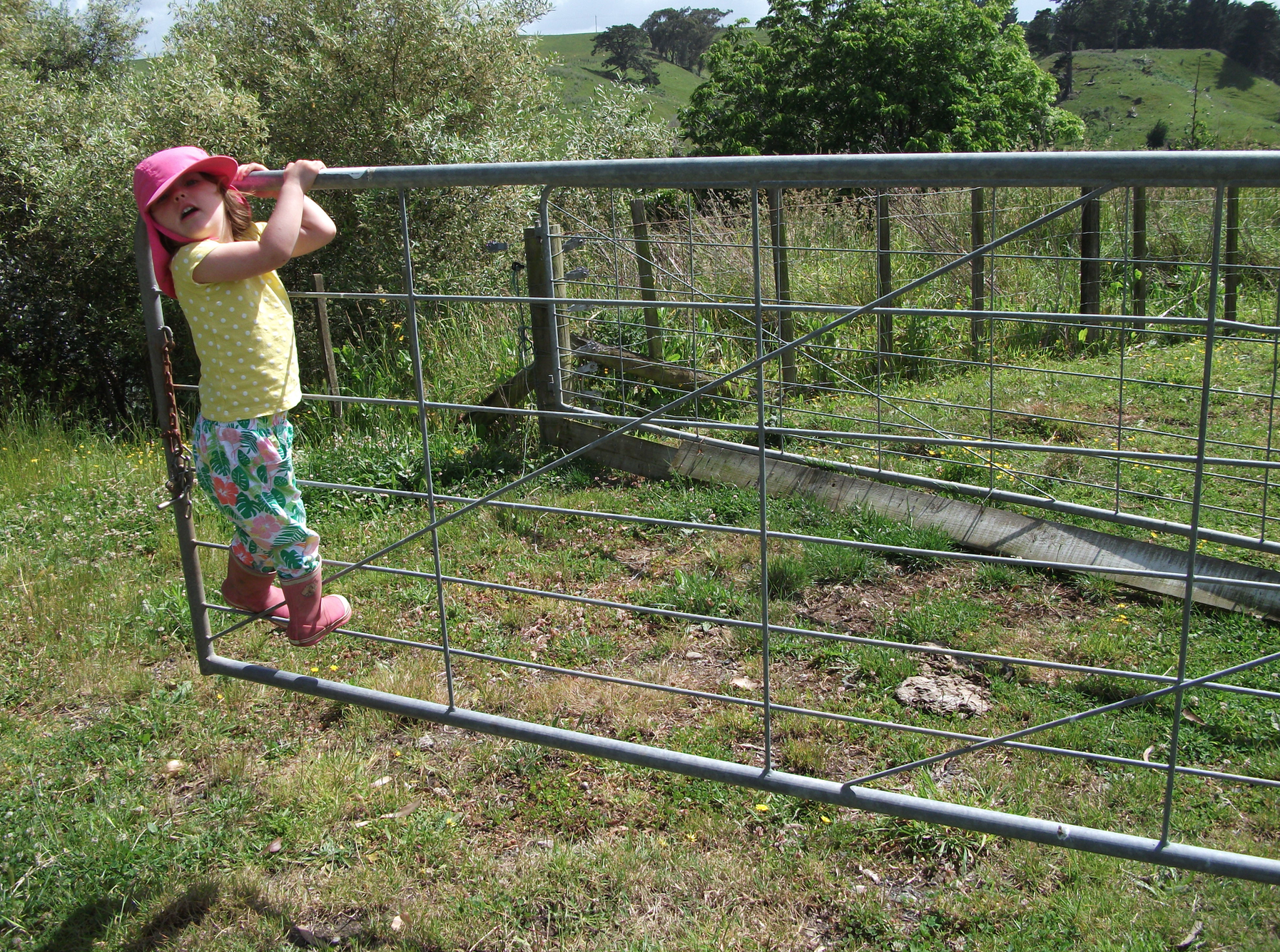
Of course I could not do it without my helper.

Screen Shot 2015-12-24 at 5.50.29 am

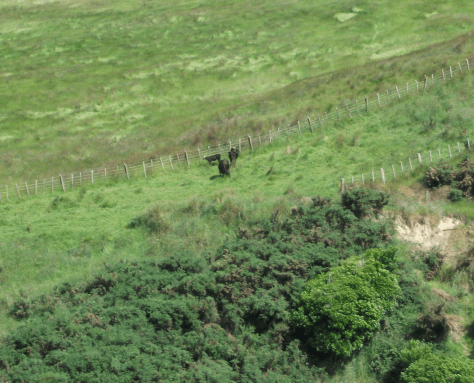
But there is always time for a fence ride. Screen Shot 2015-12-16 at 6.52.05 am

After just 16 months we are well on our way to a premier permaculture demonstration property.

    Peace, Estwing

Early Summer Permaculture Update

It has been a while since I posted an update. Lots has happened on the farm since then. Of course, the garlic is nearly ready – just one more week before the first 500 come out.

Screen Shot 2015-12-11 at 12.37.47 pm

Here is my “Good morning” everyday.

Screen Shot 2015-12-11 at 12.39.14 pm

Oh, I thought some people might be interested in our set up for processing chooks and ducks.

Screen Shot 2015-12-11 at 12.39.57 pm

Last week the farmer across the road was spraying. I have checked and found no evidence of drift.

Screen Shot 2015-12-11 at 12.40.37 pm

The grapes I planted last year are nearly up to the horizontal wires – a milestone.

Screen Shot 2015-12-11 at 12.40.58 pm

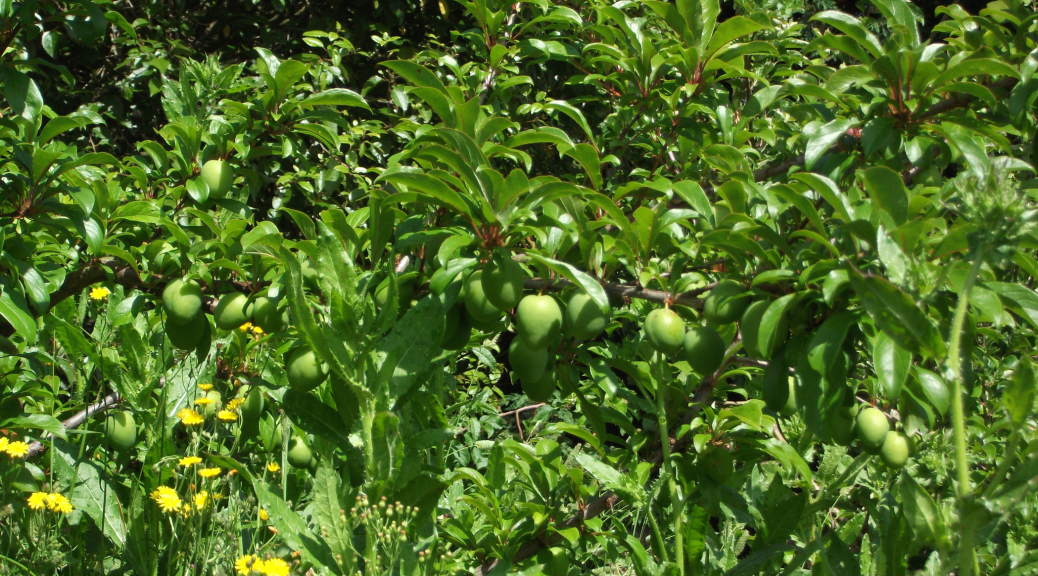
Heaps of plums on the trees as long as we can keep the possums at bay.

Screen Shot 2015-12-11 at 12.41.30 pm

Here is our happy family of a turkey poult, a duckling and a chick being looked over by a rooster.

Screen Shot 2015-12-11 at 12.41.44 pm

This pear tree is astonishing. Can’t wait.

Screen Shot 2015-12-13 at 12.08.39 pm

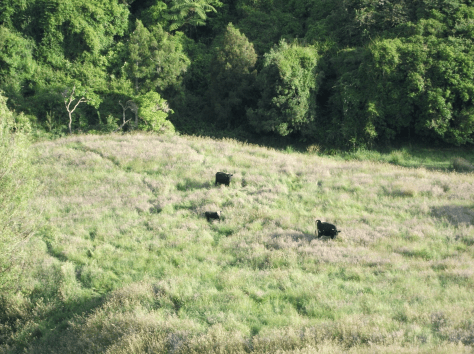
We bought a dexter cow called Toot Toot with a calf at foot. They are pictured here with our Fresian heifer called Heidi.

Screen Shot 2015-12-13 at 12.09.09 pm

I also just picked up a kune kune pig called Turiel.

Screen Shot 2015-12-13 at 12.09.45 pm

Did you notice all of the mammals are black? Can you tell we support NZ rugby?

This Khaki Campbell is sitting on a mixed nest of chook and duck eggs. The first chick has hatched. We have four other broody ducks sitting on eggs as well.

Screen Shot 2015-12-13 at 12.10.01 pm

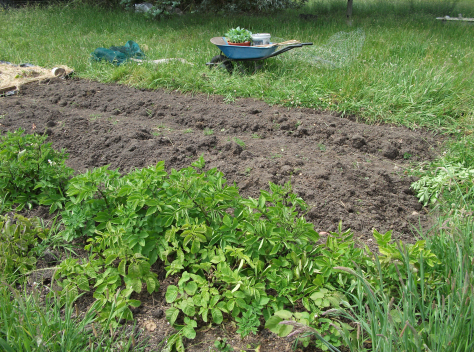
We dug about 20 kg of potatoes yesterday. This is part of our process of converting paddock to market gardens. There is a crop of cauliflower in the wheel barrow that will go straight into the ground. The spuds in the foreground are Maori potatoes. They will be harvest in another fortnight.

Screen Shot 2015-12-13 at 12.10.15 pm

New potatoes are fabulous. Yum.       Screen Shot 2015-12-13 at 12.10.35 pm


Peace, Estwing

Things May Not Be As They Appear

Editor’s Note: This is another weekly column in the Wanganui Chronicle.


Timing is everything and you can’t judge a book by its cover. It seems we’re constantly reminded of these lessons. I’ll share some examples this week.

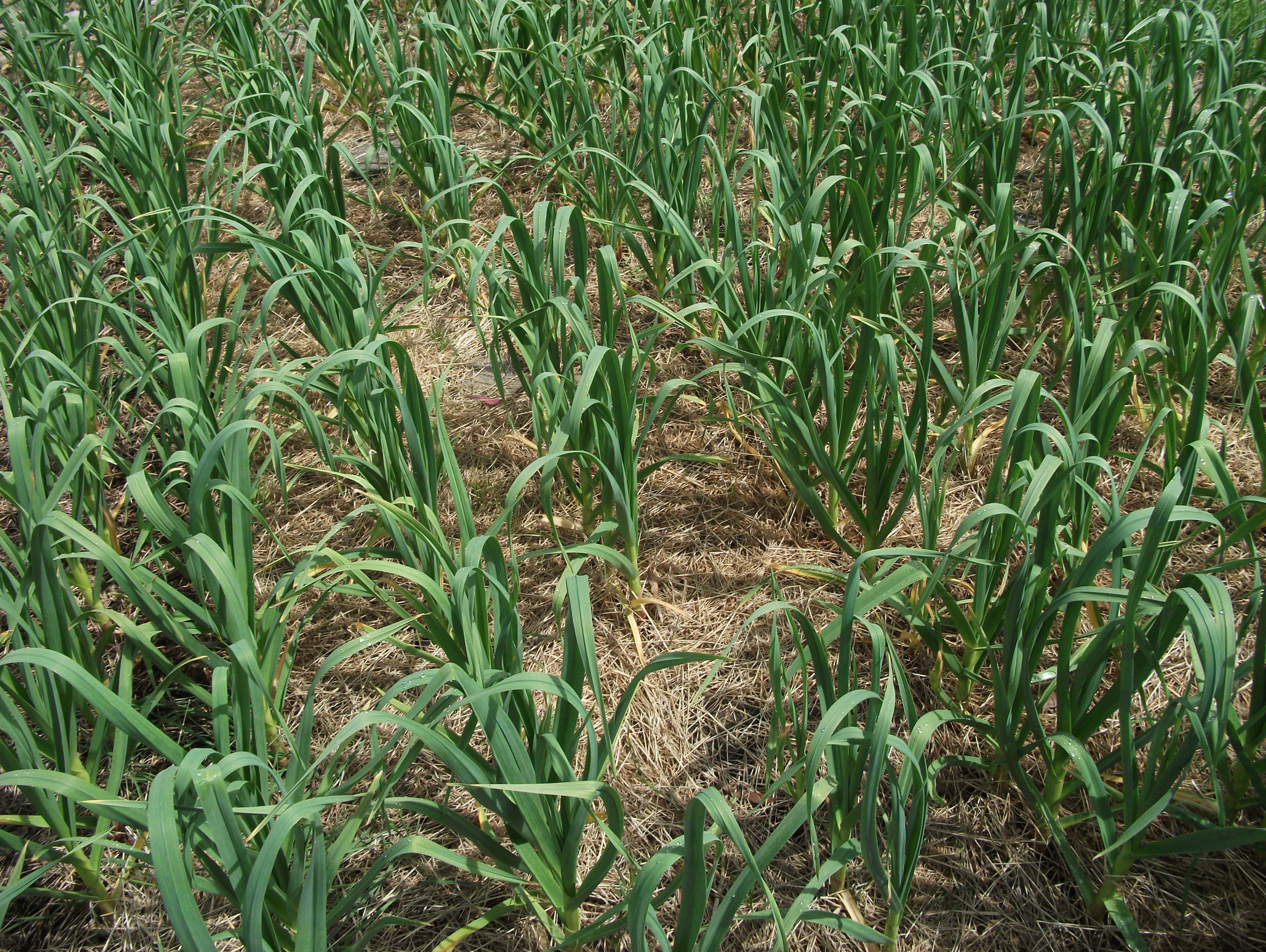
First of all, I faced these truisms late last week when I tried to push the garlic season by digging some bulbs for the Saturday market. On the surface they looked huge – stems thick and green. My hopes were high as I gently lifted the first few from the rich, dark soil only to be disappointed that what emerged did not match what was visible from above.

Screen Shot 2015-12-11 at 10.27.09 am

Yes, I was pushing the season by two to three weeks, but the stems were already so big I thought… Reminds me of another saying: Good things come to those who wait. Like fine wine, the World’s Best Garlic will not be rushed. The flavour is as good as ever, but more time will fill out the cloves. It won’t be back at the market until next week.

Another example of the importance of timing is how global climate scientists managed to manipulate the weather to cause devastating floods in England, southern Norway and India to coincide exactly with the COP 21 climate change talks in Paris. It’s obvious that climate scientists caused the massive rainfalls in England and India because they dumped the same amount – 341 millimeters – in both locations. This is exactly the type of lazy science we have come to expect from the likes of NASA, NOAA, NIWA, and the IPCC.

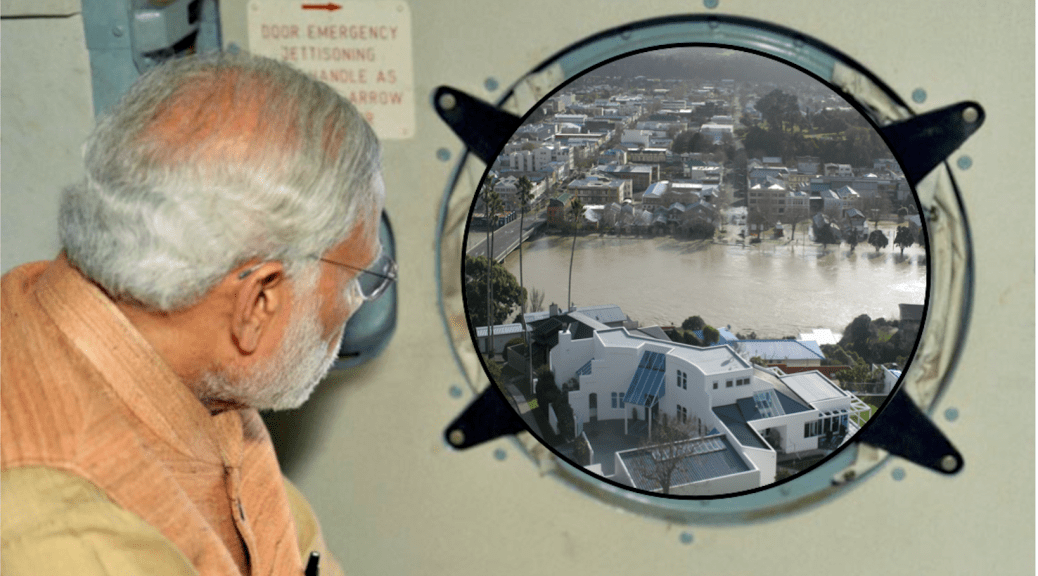
At least we can rely on India’s Prime Minister Narendra Modi, and his press office, for giving it to us straight on the flooding. What most people don’t realize is that Modi made a special trip to Whanganui in June to assess the extent of our own flooding as shown in the accompanying photo.

Screen Shot 2015-12-11 at 10.21.11 am

In the age of Photoshop, many things may not be as they appear.

But seriously, how’s this for timing: the region of Cumbria, England has experienced three record floods in a decade. After the 2009 flooding, residents were told they had experienced a once in a lifetime rain event. Nek minit, Storm Desmond with over a foot of rain in a day. Water levels were half a metre higher than the 2005 flood.

By these measures, Whanganui could experience flooding 50 centimetres higher than this year as soon as 2021. Although there is low probability of this happening, it is not out of the realm of possibility. Cumbria has set a precedent, and even if we stopped burning carbon today there are already decades of extreme weather events loaded into the atmospheric system just waiting for the right time.

England’s Environment Secretary Liz Truss said the increasing frequency of extreme rainfall is “consistent with the trends we’re seeing in terms of climate change.”

Throughout Cumbria, 45 million pounds have been spent on flood defences over the last decade. They were all overtopped, although Floods Minister Rory Stewart claims they slowed the water and allowed more time for evacuations to take place. Timing is everything.

Based on most everything coming across the wires on the environment, economy and society, the only constant we can count on is increasing volatility. As I have written time and time again, the best way to respond to volatility is with resilience, and a particular form characteristic of eco design that I call “pre-silience.”

A simple way to describe pre-silience is a stitch in time saves nine. All this means is that a timely effort now will prevent more work later. For example, a small hole in a shirt can be repaired with one stitch if caught early, but will require many stitches if allowed to tear and grow larger.

Personally, I don’t bother repairing shirts because at the present time they are cheap and abundant from op shops, but I do spend hour upon hour stitching up houses and land. That is to say making both more robust and resilient. I’ve always been attracted to old homes and marginalized land. Repairing both is fun and rewarding work.

Unfortunately, the concept of resilience has yet to arrive in our community to any significant extent, but I believe its time will come. It’s just discouraging that until then so many unrecoverable resources will be misdirected and monies misspent. I’m told that “a stitch in time saves nine” is an anagram for “this is meant as incentive.” But I’m not so sure.

Do Your Maths First Before Buying Solar PV

Editor’s Note: This is another weekly column in the Wanganui Chronicle.

Screen Shot 2015-12-04 at 10.32.32 am

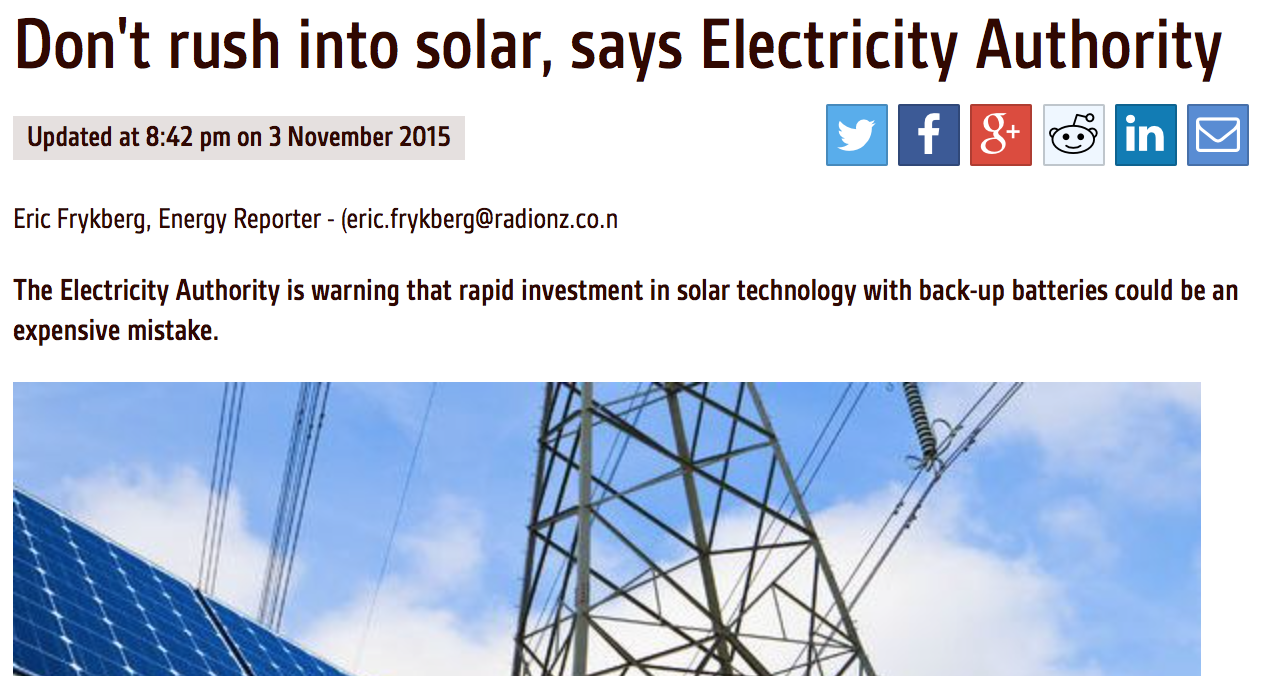
“Don’t rush into solar, says Electricity Authority.” That was the headline on Radio New Zealand News a month ago.

“The Electricity Authority is warning that rapid investment in solar technology with back-up batteries could be an expensive mistake. It puts the potential wasted investment at $2.7 billion to $5 billion over the next 10 years, and said the real economics of solar technology should be understood before people made expensive purchases of solar cells for their roof tops.”

The Radio NZ story echoes a similar warning penned by our “oily rag” friends, Frank and Muriel Newman, in April: “Dark side of renting solar panels.”

Their warning focused on a company called solarcity and their programme called solarZero, “whereby homeowners can get solar panels installed on their roof at no upfront cost – as long as they make a 20-year commitment to pay a fixed monthly fee” that functions as a rental and servicing agreement.

The Newman’s ran the numbers and found that for a “normal” household the total payments over 20 years would be $26,400. My colleagues in the eco design field came up with similar numbers, and determined that the equivalent system could be purchased today for half that.

In effect, signing a contract for the solarZero programme would be similar to taking out a loan to pay for solar panels and paying it off over 20 years. In both cases, economically savvy and fiscally prudent people would decline, and instead invest in products and strategies with much better financial returns.

This was essentially the same conclusion reached by researchers at the University of Canterbury Electric Power Engineering Centre, which I wrote briefly about last week. Those researchers found that grid-tied solar electricity systems were financially viable only for households who could pay cash up front for the panels and who use lots of electricity during daylight hours. In other words, rich people who use heaps of power. That’s fine for them, but not aligned with the theory and practice of eco-thrifty renovation.

Over the course of 500 home consultations, I have never recommended installing photovoltaic panels as one of the top twenty (or more) suggestions that are proven to be cost effective for creating warm, dry, healthy, energy-efficient homes. In response to those who protest loudly, and insist PV is cost effective, I have said for years, “Show me the numbers.” No one has come forth, yet the protests remain. Hell hath no fury like an environmentalist scorned.

Last week I also shared research showing that household PV panels have a much greater carbon footprint than wind or geothermal power that I’m sure ruffled feathers among those still clinging to dogmatic beliefs. I have found it immensely amusing and ironic that I’ve been black-listed by local greens at the same time as being thanked and praised by Federated Farmers. Makes me wonder which group is more open-minded.

Please bear in mind that this column is written by someone who owned an off-grid home powered by PV for eight years, and who presently has a stack of panels ready to mount on the roof. But that’s another story.

In the mean time, here are some other suggestions for fun, easy and cost effective ways of using solar energy: Grow a vegetable garden. Make a solar cooker. Air your washing on the line outdoors.

Personally, I am immensely grateful for the sun, and the rain, and the soil, for contributing to a record crop of the World’s Best Garlic this year. Like the mighty All Blacks, this year’s crop of Allium sativum has truly outdone itself. Available at the River Market for the next four weeks only.


Peace, Estwing

Find the Hoax: Climate Change, Clean Diesel, Household PV Panels

Editor’s Note: Here is another weekly column in the Wanganui Chronicle.


Before I remove myself from the conversation, I’d like to wrap up my part in the discussion of climate change with a couple of key points. For decades we have known that the two largest impacts that individual people have on the environment are driving and eating meat. Compared with these, choosing paper or plastic bags at the checkout counter, or recycling your toothbrush are essentially meaningless. A friend recently called it “polishing the silver on the Titanic.”

Whatever happens at COP 21 in Paris over the next fortnight, I don’t see how drastic changes can be made to transportation or diets within a timeframe that will be meaningful for the next couple of decades. There are two reasons for this.

First or all, any transition would take a long time when we consider the number of cars in the world and the increasing demand for animal-based diets. Second, there is so much carbon in the atmosphere already that even if we stopped releasing it tomorrow the effects of elevated levels of greenhouse gases would persist for decades. We are already locked in a certain amount of warming. Think of it as carbon momentum. This is true whether you drive a Holden or a Prius or take the bus or ride a bike.

The best available data analised by the best scientists show that over the last half century there has been a measurable increase in the number and severity of extreme weather events. In other words, scientists made predictions, collected data, and proved the predictions to be accurate.

In 1969, the lead track of The Rolling Stones album Let It Bleed said it all:

Oh, a storm is threat’ning; My very life today; If I don’t get some shelter; Oh yeah, I’m gonna fade away

The floods is threat’ning; My very life today; Gimme, gimme shelter; Or I’m gonna fade away Screen Shot 2015-11-27 at 10.15.59 am

Weather volatility hurts agricultural economies and costs municipalities near large water bodies. This is true whether you drive a Holden or a Prius or take the bus or ride a bike.

On a final point, climate change has a disproportionate impact on the poor because those with disposable income can buy themselves out of many effects of climate change – in the short term.

Another thing that some people with disposable income do is buy certain ‘green’ products that allow them to maintain their lifestyles but to placate their carbon conscience. One example is “clean diesel” such as Volkswagen’s range of fine German automobiles.

In case you missed it, the latest chapter in the VW fraud story is that the carbon emissions and fuel consumption ratings on 800,000 vehicles were falsely reported to make them look better than they are, including the company’s own green tick of excellence called BlueMotion. Germany’s own Spiegel magazine call the claims “a fraudulent lie.”

Another example of where claims and actual numbers do not add up is solar electric power, also known as photovoltaic or PV. A paper published this year by the Electric Power Engineering Centre at the University of Canterbury concluded that the potential reduction in carbon emissions from PV in New Zealand was minimal, and that many PV panels have a carbon footprint 10 times greater over their lifespan than wind turbines or geothermal energy. These findings suggest it would be better for the environment to simply buy power from a company that provides 100% renewable electricity than to put solar panels on your roof.

Financially, there is only a small sliver of New Zealand households for which PV is a sound investment. Another paper by the Electric Power Engineering Centre found that the only households that get a good return are those with high daytime power use and that do not need to borrow money to purchase the panels. In other words, people who are paying cash and are at home during the day using lots of power.

Dr. Allan Miller, co-author of the study, gave the examples of a large family home with a heated swimming pool or a retired couple running heaters during the day, but only if they do not need to take out loans. The study also emphasised what we have known for many decades: investments should be made in energy efficiency and conservation before even considering solar electricity.

What this all goes to show is that no matter what we do, our community is likely to experience increasingly volatile weather in the coming decades and that many well meaning but ill-informed people are investing in the wrong things. As I wrote in last week’s column, quality matters immensely in the sustainability movement, and so does using the best available data. Unless we are able to leave dogma behind we will never move forward.


Peace, Estwing

Upping the Game Against Deniers

Editor’s note: This is another weekly column in the Wanganui Chronicle.


It’s great to see the climate change skeptics gearing up for the COP 21 in Paris at the end of the month. They have arrived on cue with all the old tricks along with some new ones.
They’re still taking their advice from the inter-web advice trolls, the most popular remaining: ‘the climate has always changed.’ Tick.

Next up: cherry-picking data to show individual data points instead of long-term trends. Tick.

Alas, a new one: selecting old headlines about climate change that have not come to pass. Clever, our dear Chronicle letter writers, but researching the headlines was surely not your own work. Could you please include the website you got them from? A five second Google search leads me to believe it was climatedepot.com.

And then there is: those who believe the 98% of professional climate scientists and believe the mountains of data and peer-reviewed research are simply prone to living in fear and only seek to make others join them.

On this final tactic, I believe it’s callous toward thousands of New Zealand farmers who are experiencing the effects of increasingly frequent extreme weather events that impact the economic viability of their operations. Combined with volatile meat and dairy prices and high debt levels, is it any wonder that depression and suicide are major issues in rural New Zealand? Many farmers do live in fear of extended drought or devastating flooding and slips, as they could lead to foreclosure and loss of one’s life’s work.

Screen Shot 2015-11-20 at 10.47.16 am

But I digress. The point I wanted to make is that those with a radical bent to deny the best available science will grasp at anything and everything to sway public opinion. They’re very good at it, and as a result the scientific community and the environmental movement need to be extremely careful about what we put out there.

Quality matters a lot, and this is where the sustainability movement often fails itself – by allowing and even supporting low-quality work in the public sphere. The attitude appears to be that doing anything is better than doing nothing. I disagree. In many cases well-intentioned by misdirected efforts can do more harm than good. Those in the international aid field know this all too well!

And so it is with caution and a critical eye that I view new initiatives, especially those coming from government sources. On the other side of the coin, you may imagine the delight of discovering initiatives that are both robust and courageous, such as the Local Government Leaders Climate Change Declaration:

We have come together, as a group of Mayors representing local government from across New Zealand to:

  1. acknowledge the importance and urgent need to address climate change for the benefit of current and future generations;
  2. give our support to the New Zealand Government for developing and implementing, in collaboration with councils, communities and businesses, an ambitious transition plan toward a low carbon and resilient New Zealand;
  3. encourage Government to be more ambitious with climate change mitigation measures;
  4. outline key commitments our councils will take in responding to the opportunities and risks posed by climate change; and
  5. recommend important guiding principles for responding to climate change.

We ask that the New Zealand Government make it a priority to develop and implement an ambitious transition plan for a low carbon and resilient New Zealand. We stress the benefits of early action to moderate the costs of adaptation to our communities. We are all too aware of challenges we face shoring up infrastructure and managing insurance costs. These are serious financial considerations for councils and their communities.

To underpin this plan, we ask that a holistic economic assessment is undertaken of New Zealand’s vulnerability to the impacts of climate change and of the opportunities and benefits for responding. We believe that New Zealand has much at stake and much to gain by adopting strong leadership on climate change and ambitious emission reduction targets at the UNCOP meeting in Paris in December.

Some smart and dedicated people drafted this document that includes seven guiding principles: Precaution; Stewardship/Kaitiakitanga; Equity/Justice; Anticipation; Understanding; Co-operation; and, Resilience. Spot on.

The full declaration can be viewed here: http://www.lgnz.co.nz/assets/Mayors-Climate-Change-Declaration.pdf


Smart, Fearless, Tireless and Resilient: Key Lessons from Sport

Editor’s note: This is another weekly column in the Wanganui Chronicle.


With a few swipes of the thumb, I set the alarm on the “smart phone” for 4:30 and went to bed only slightly less excited than a child on Christmas Eve.

At 5:30 the next morning, my daughter stood in the doorway of the master bedroom saying, “’Scuse me mama and papa.” I opened my eyes, checked the time, and jumped out of bed.

“Come on,” I said scooping her up like a loose ball bouncing on the pitch, “We’re going for an adventure.”

It was halftime by the time we reached Stellar, and we had to park two blocks away. As we walked toward the nightclub turned morning club on this special occasion, I realized with sudden horror that Verti and I were both wearing green tops. Hopefully everyone would be watching the large screen televisions and not notice our hasty wardrobe choices.

For the most part that was true. All eyes were on the game as the Wallabies clawed their way back from an 18-point deficit following the sin binning of Ben Smith. The tension was palpable for a few tense minutes, until…

The bar erupted as Dan Carter’s sublime drop goal turned the tide, followed by his long distance penalty kick and Beauden Barrett’s thrilling chase of fullback Smith’s kick.

By seven o’clock in the morning I had experienced nearly the full range of human emotion. It was wonderful. And that is the point of it all, isn’t it? Being fully human.

The debate about humanity and technology has existed for well over a century. One of my favourite stories as a child was that of John Henry, “a steel-driving man.” The popular American folk tale has been told in song by Johnny Cash, Woodie Guthrie, Pete Seeger, Van Morrison, Jerry Lee Lewis, Harry Belafonte, Bruce Springsteen, and many others. Screen Shot 2015-11-13 at 10.51.17 am

As the legend goes, John Henry’s prowess as a hammerer was pitted against a steam driven hammer in a race of man against machine. At the end of the 35-minute race, according to americanfolklore.net,

“John Henry held up his hammers in triumph! The men shouted and cheered. The noise was so loud, it took a moment for the men to realize that John Henry was tottering. Exhausted, the mighty man crashed to the ground, the hammer’s rolling from his grasp. The crowd went silent as the foreman rushed to his side. But it was too late. A blood vessel had burst in his brain. The greatest driller in the C&O Railroad was dead.

After his race against David Pocock for the try line, Beauden Barrett was anything but dead. On the contrary, in that moment he and his teammates expressed the ultimate feeling of being fully alive. Here were 15 men running and jumping and tackling and kicking and celebrating. Here were 15 men being fully human. Screen Shot 2015-11-13 at 10.58.03 am

I have always believed that we are most fully human when we engage our brains and bodies and emotions at the same time. That’s what’s so great about sport.

In my opinion, what makes the All Blacks the best is that they create an unparalleled synergy on the field, and that they can bounce back from adversity and find a way to win.

Ben Smith has been my favourite AB since I first picked a favourite. The World Cup final only confirmed it. Along with being smart, fearless, and tireless, he showed true resilience after receiving a yellow card. Within a second of the infraction his hands were in the air acknowledging the mistake. After the TMO review, he accepted the card with a nod.

Returning to the field, Smith’s performance was brilliant, setting up Barrett’s try with a phenomenal kick after picking up a turnover from the attacking Wallabies. At the end of the game, I was pleased to see that he was the one kicking into touch.

As the crowd inside Stellar erupted again, Verti and I made our way out onto a quiet street that was underwater on another Sunday morning just four months earlier.

Like sport, climate change is less about technology and more about humanity. People, not solar panels, will be what tackles this immense foe. Teamwork will be essential for victory. Resilience is critical.

At the end of the day, it’s about people. And even at the beginning of the day, as my daughter reminded me, we can’t always rely on technology for what’s most important.


Peace, Estwing


Sidebar: Who are the leaders on climate change in our community?

Please send me stories of local people stepping up and making a difference.


Let it Rot: Anything and Everything

Building soil structure and fertility is fundamental to most permaculture projects. Our farm is no different. At any given time we have three to five compost piles – each one cubic metre – going somewhere on the property.

Screen Shot 2015-11-08 at 6.52.17 am

I believe in free range compost, and building piles near where the final product will be used.

Screen Shot 2015-11-08 at 6.52.09 am

This pile had a bunch of pumpkin volunteers sprouting so I decided to let them grow. We will get up to 50 kilograms of pumpkins from these plants for very little effort.

Screen Shot 2015-11-08 at 6.51.59 am

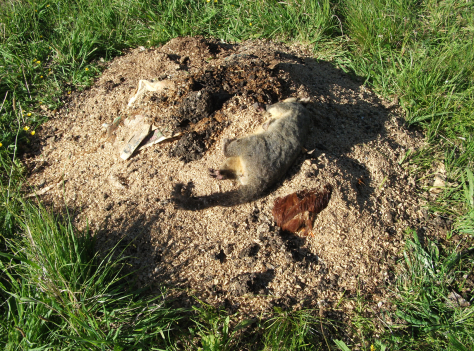
With a hot composting system, we run all organic matter through it, including possums, dead chooks, goats, and a few lambs that sadly died this spring.

Screen Shot 2015-11-08 at 6.51.40 am

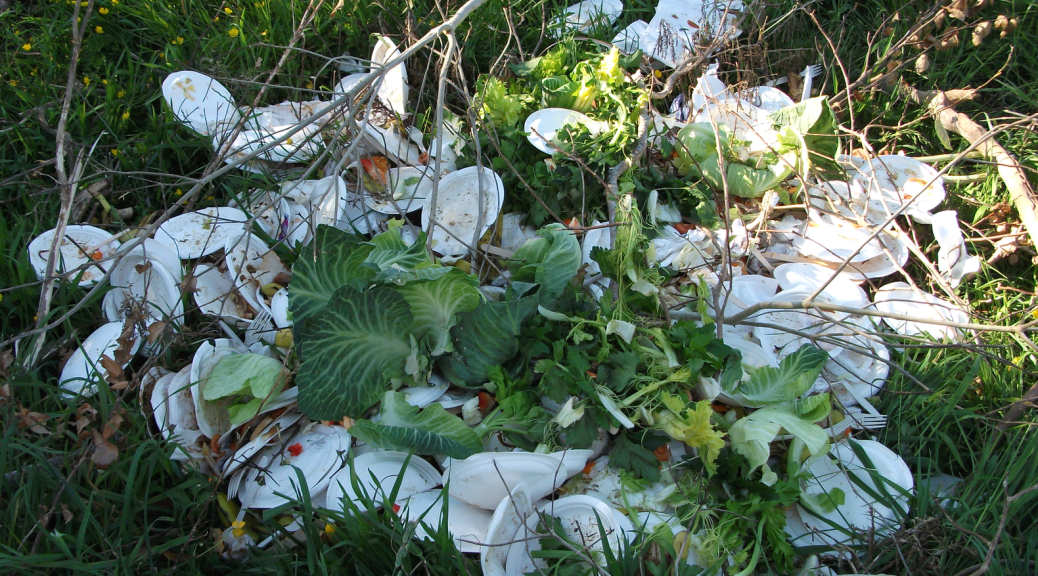
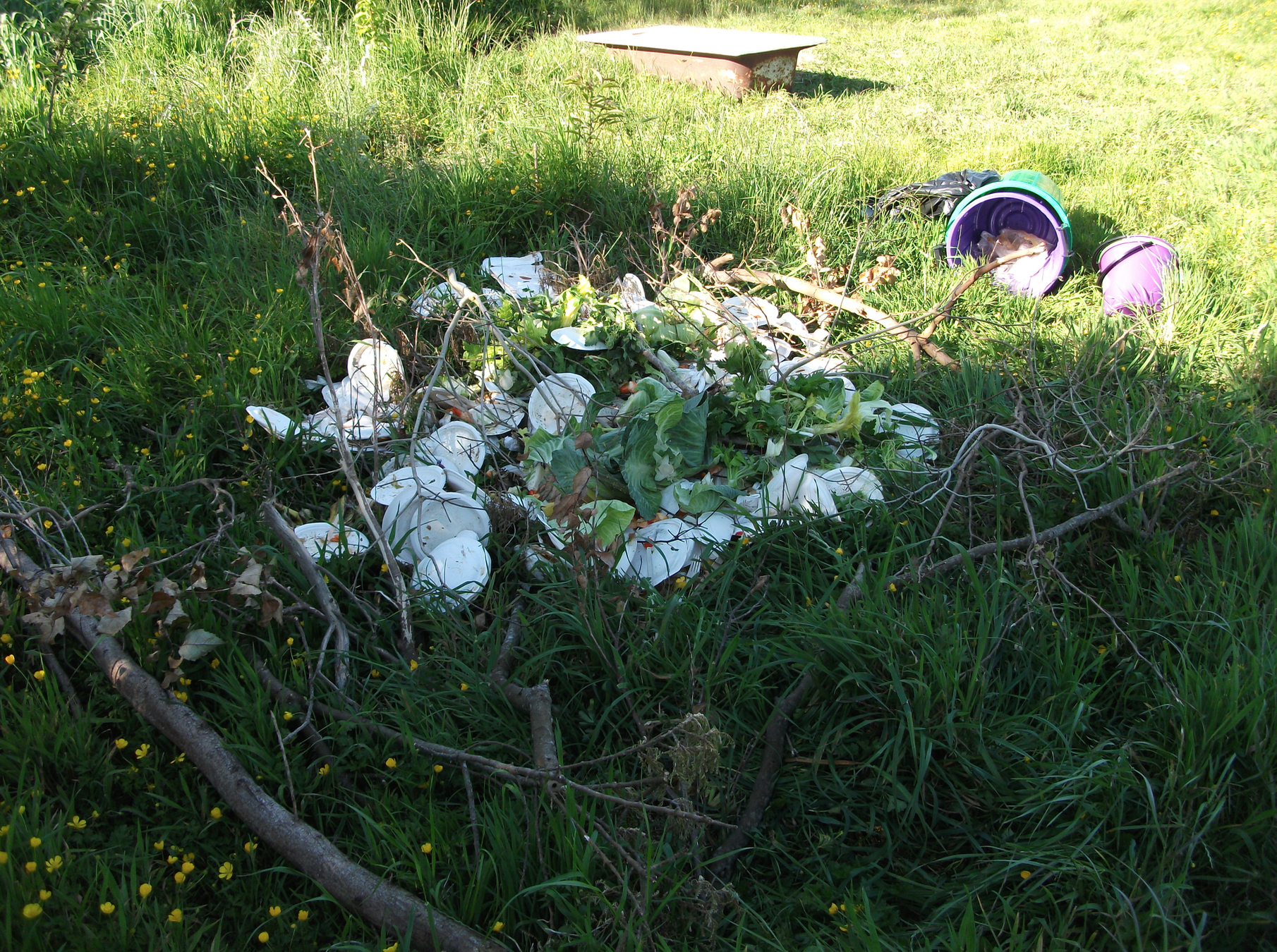
We have also been building hugelkutltur swales and hugelkultur mounds. Yesterday I was managing the waste stream at a large community event and brought 3 barrels of paper plates, serviettes, and food scraps home. I tipped the barrels among the branches that I have been collecting for this hugelmound. The free-range ducks helped themselves to bits of bread and sausages among the plates.

Screen Shot 2015-11-08 at 6.51.10 am

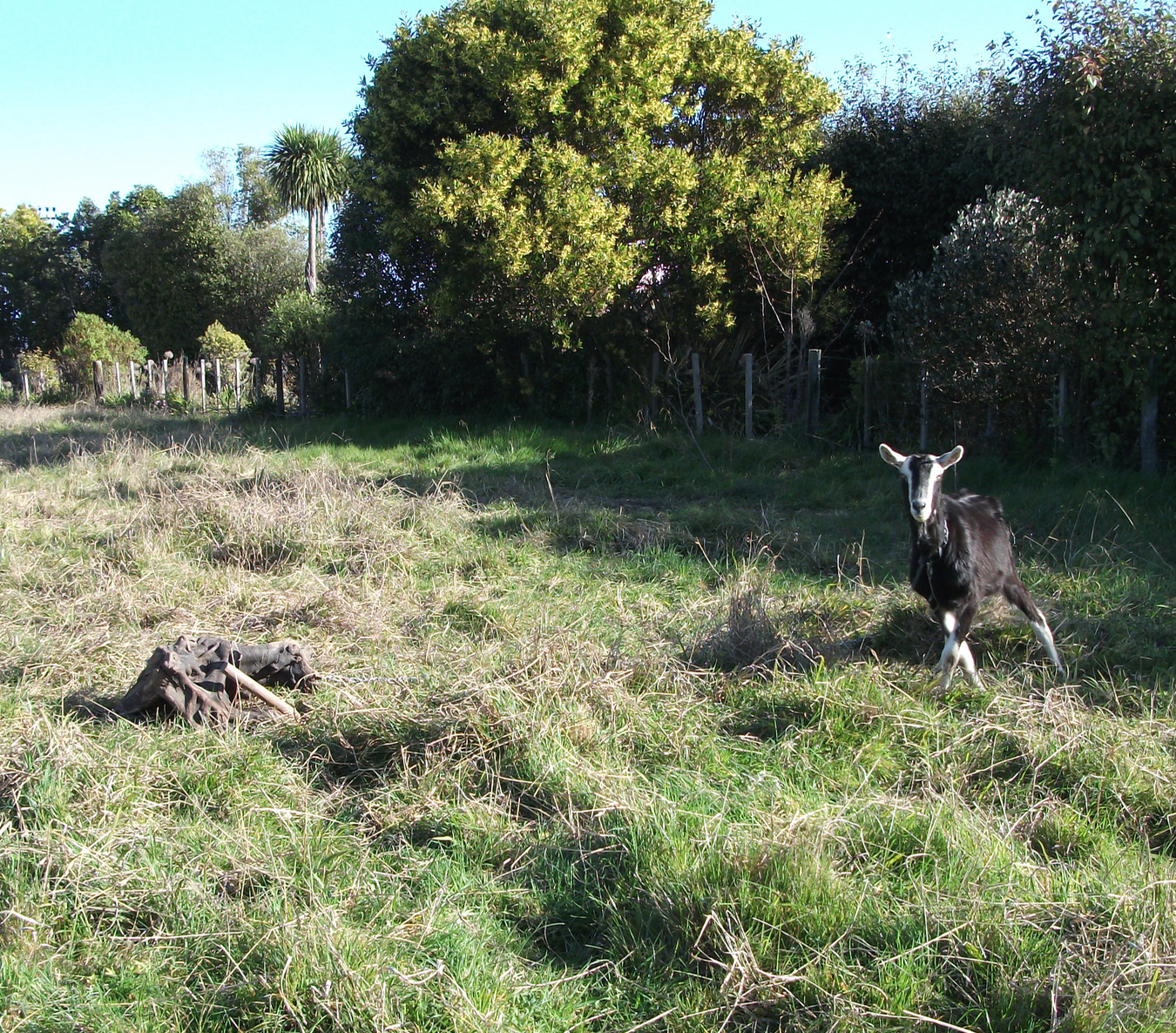
The branches will keep the plates from blowing around in the wind until I cover the lot with soil. I have been cutting branches along the drive and around the house and feeding them to Goat Buster. He happily eats the leaves and some of the bark. Then I put the stripped branches onto the mound. GB poops out the leaves he ate and helps improve the soil of the paddock.

Screen Shot 2015-11-08 at 7.22.25 am

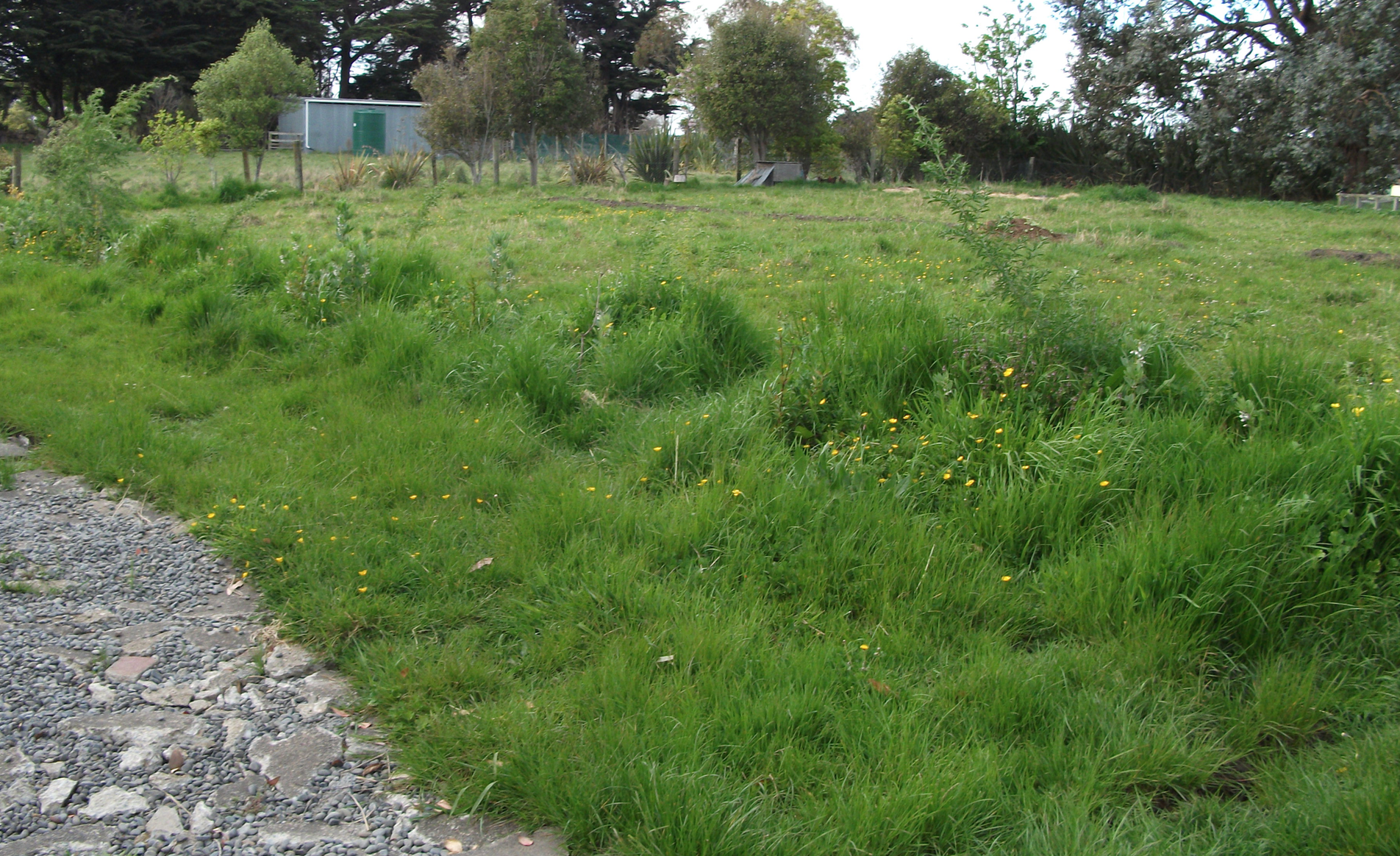
Here is a hugelkultur swale we built less than a year ago. It is thriving with a diversity of plants, shrubs and trees, while moderating water flows on the farm.

Screen Shot 2015-11-08 at 6.53.42 am

Using these holistic management techniques are already showing significant results although we have been on the property only 15 months.


Peace, Estwing