Category Archives: Eco Thrifty Life

Seeding an Herbal Ley Around Fruit Trees

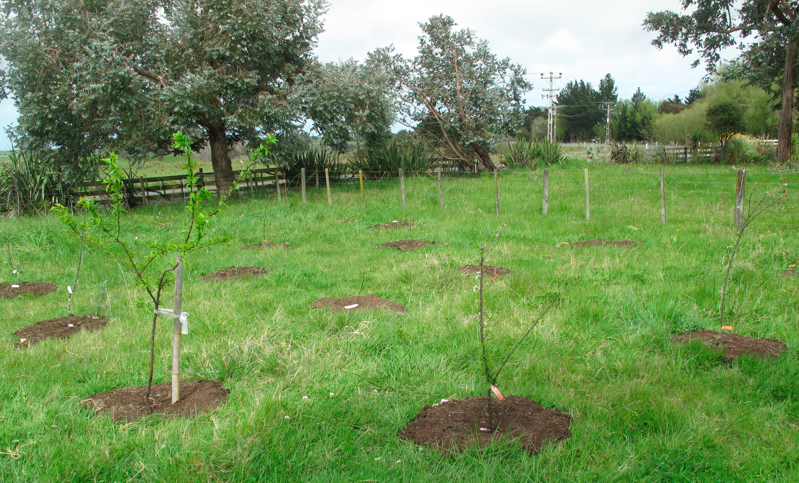
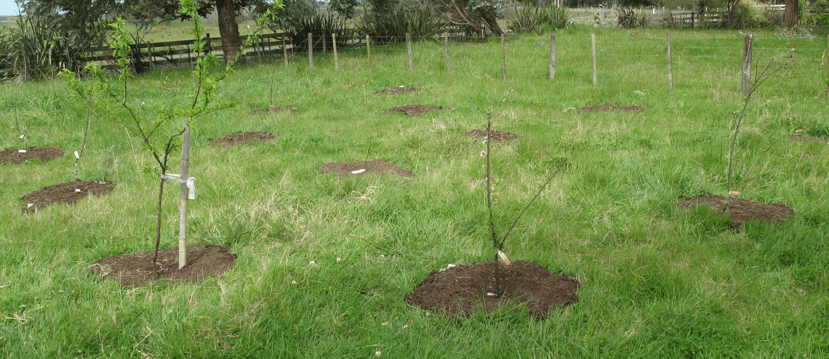
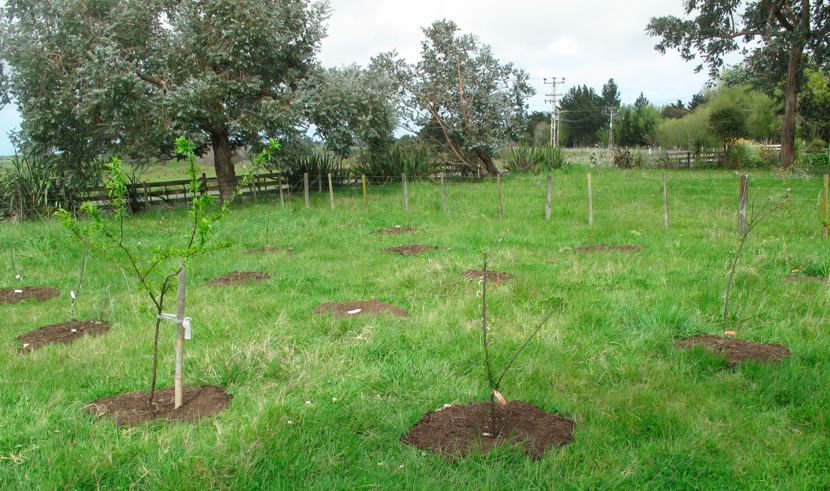
I have been rushing to get our fruit trees planted before the cool, rainy weather gives way to long, hot, dry days. With 74 trees planted so far I am nearing the end of the job.

Screen shot 2014-10-21 at 10.04.27 AM

But essential to the process is getting an herbal ley seeded around each tree while the rain will still provide the irrigation. This is important because most fruit trees are shallow-rooted and they compete directly with grasses for nutrients and water. An herbal ley is a diverse mix of plants that are meant to provide a range of services in an orchard that grass does not.

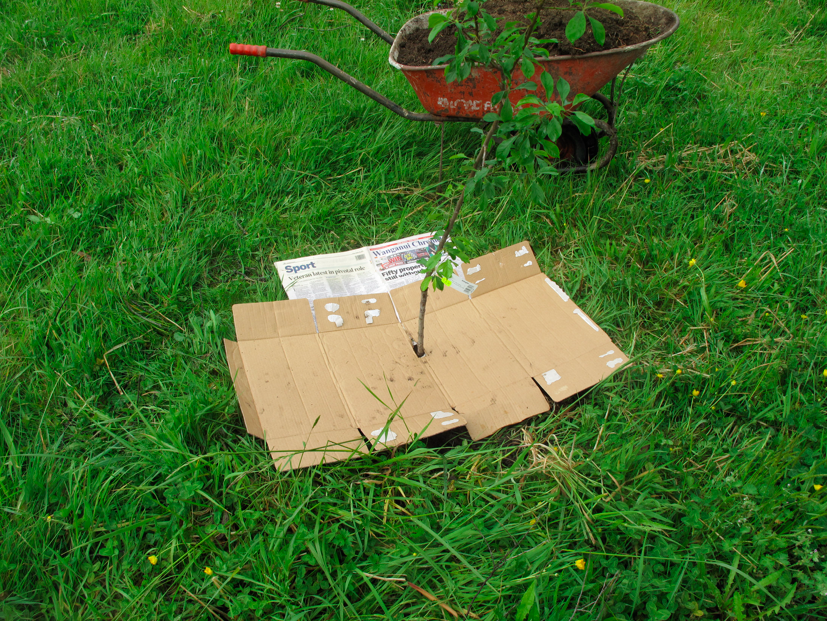
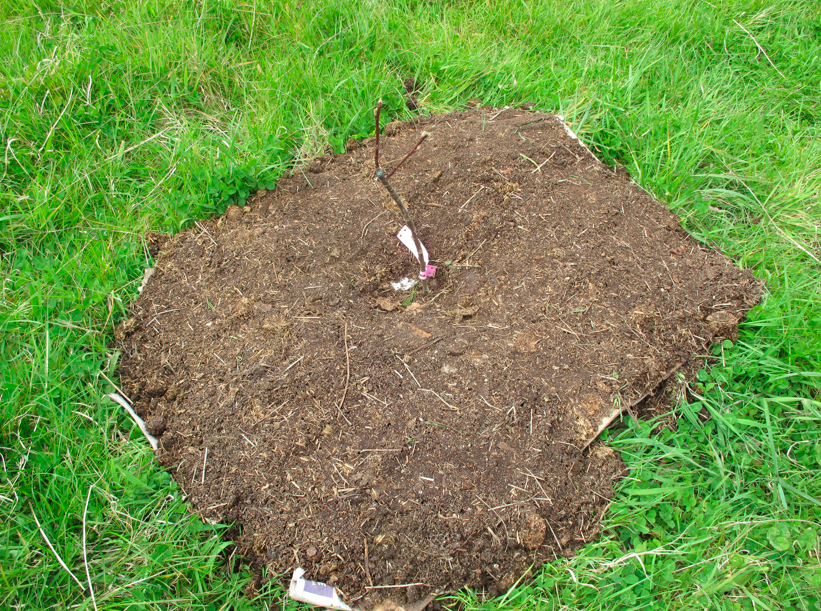
Obviously the first step is to kill off the grass. The easy organic way to do this is to smother it with cardboard and/or newspaper.

Screen shot 2014-10-21 at 8.33.02 AM

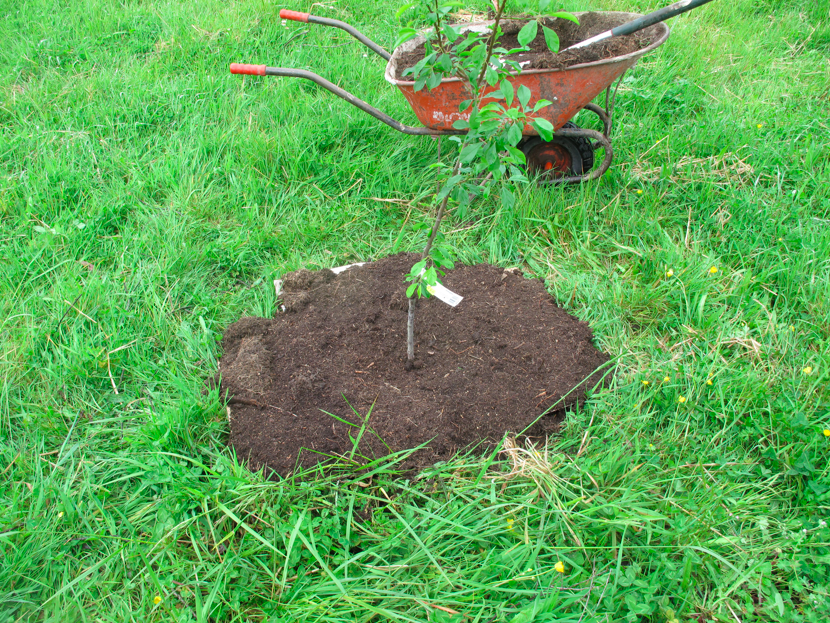
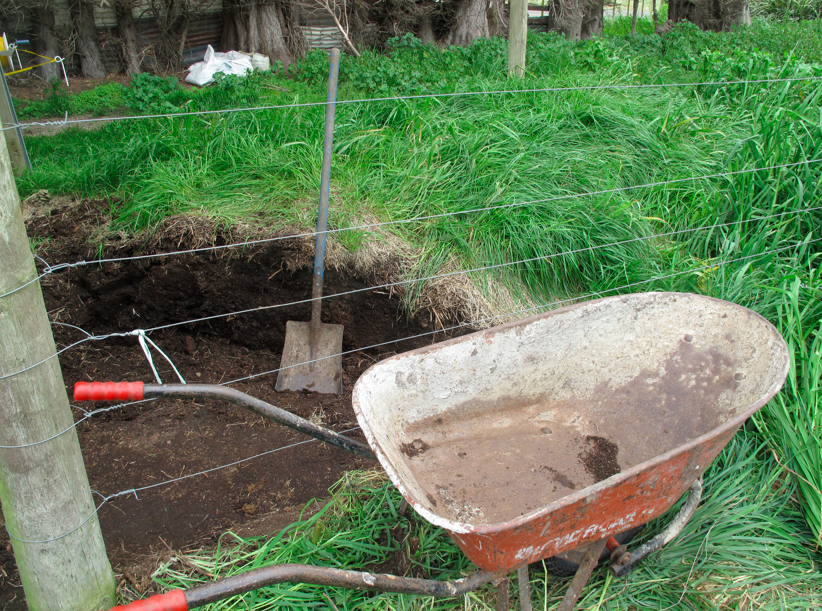
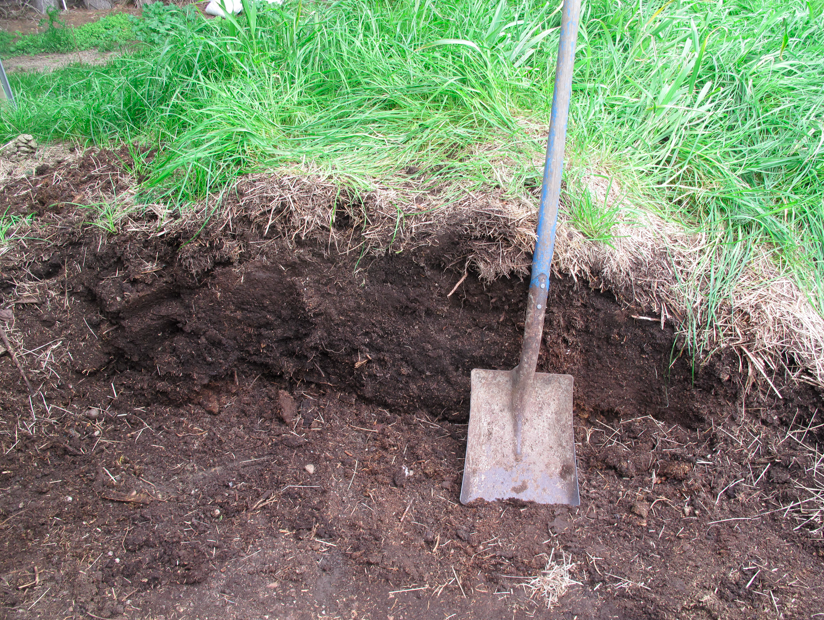
I then mulched this with copious amounts of rotted horse manure while being careful not to mulch against the trunk.

Screen shot 2014-10-21 at 8.33.12 AM

The seed mix I got from friends of ours so I cannot tell you exactly what it contains. You can easily Google recipes for different regions and different climates.

Screen shot 2014-10-21 at 8.33.24 AM

Sprinkle lightly over the top of the rotted manure.

Screen shot 2014-10-21 at 8.33.47 AM

Then lightly cover with more mulch and pat it down.

Screen shot 2014-10-21 at 8.34.08 AM

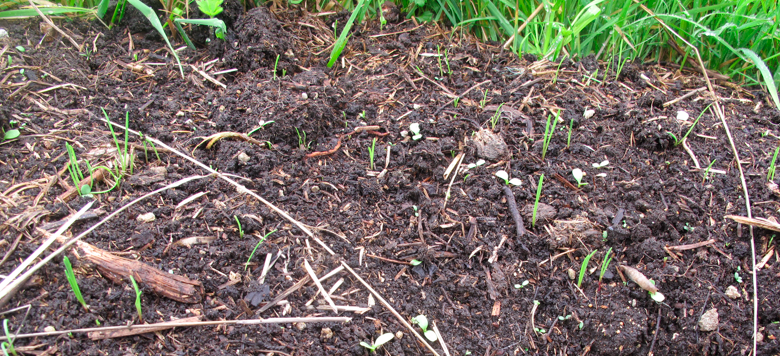
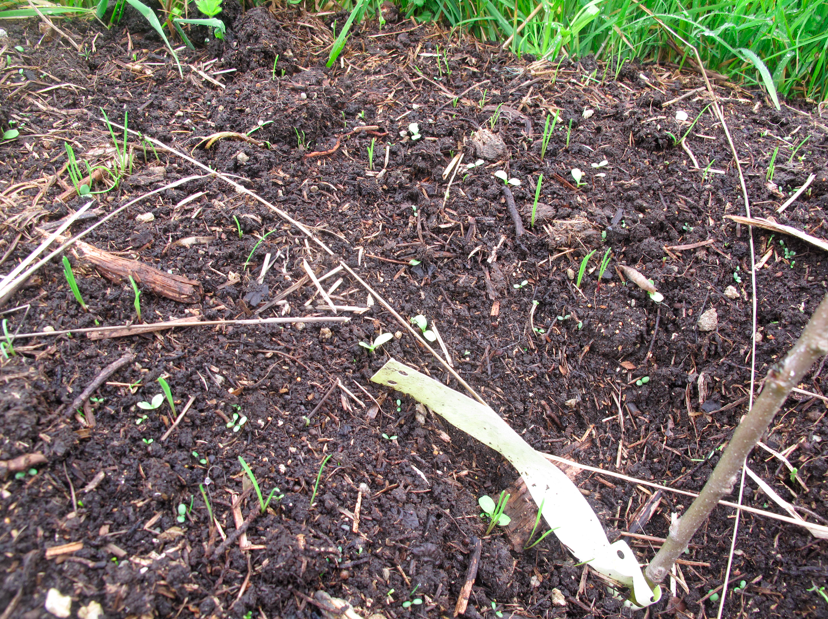
With a bit of rain it will start to germinate.

Screen shot 2014-10-21 at 8.34.27 AM

As the grass dies beneath the mulch it turns into food for the fruit trees and the herbal ley.

Screen shot 2014-10-21 at 8.34.39 AM

Easy-peasy. Now repeat 73 more times.


Peace, Estwing

Roots and Shoots: Permaculture Update

I just finished a plant propagation course after 9 months. I have enjoyed learning a wide range of propagation techniques, especially propagation from cuttings. We started with semi-hardwood cuttings from NZ native plants, and then proceeded to softwood cuttings from rosemary and lavender.

Screen shot 2014-10-13 at 6.31.17 AM

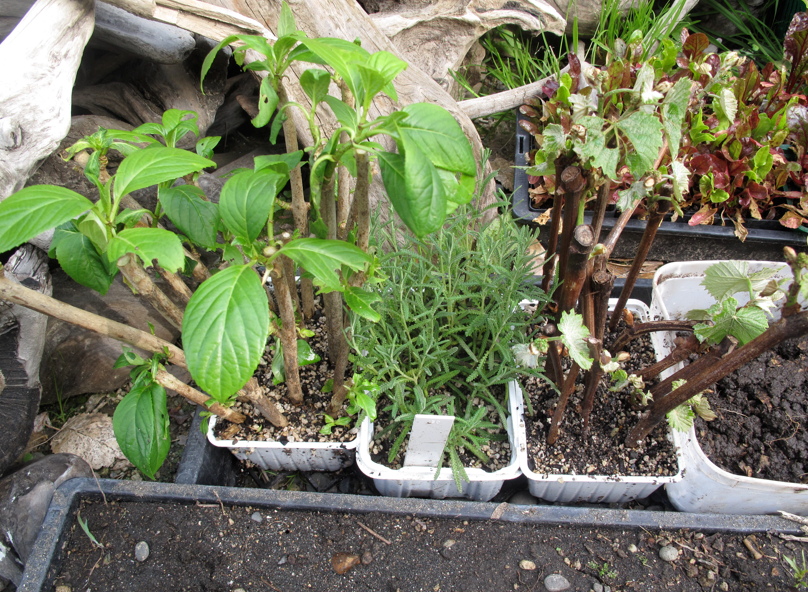
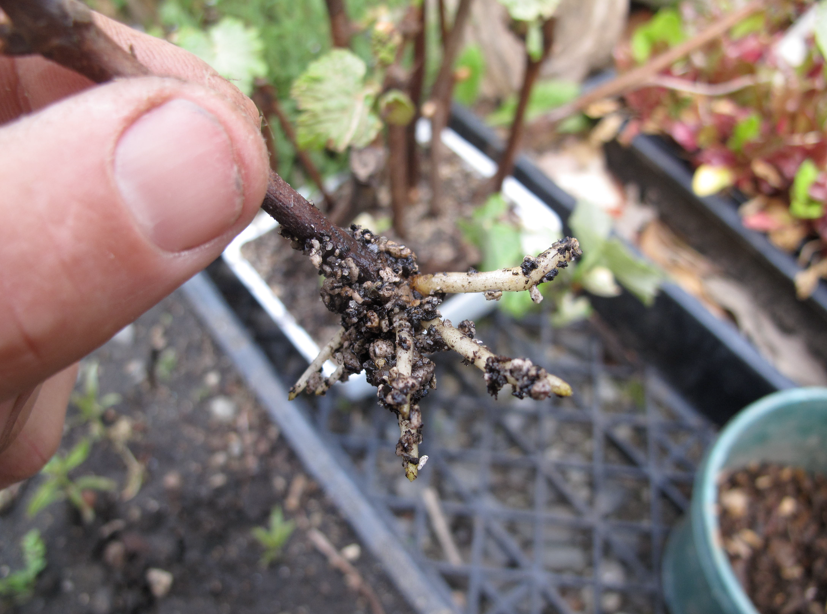
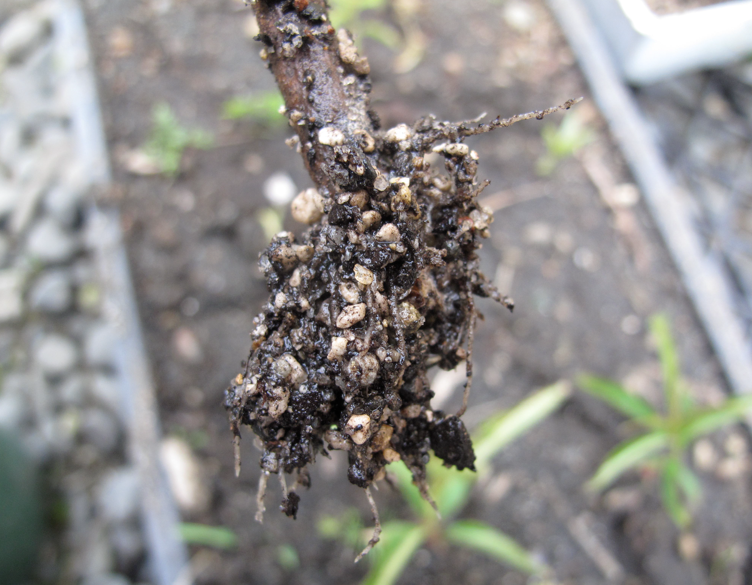
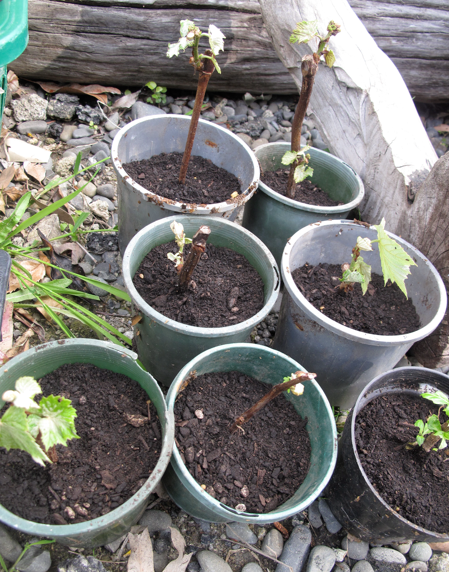
Finally we took hardwood cuttings from grapes and hydrangea. After months in the propagation mix it is so cool to see the roots have formed. Here is a grape.

Screen shot 2014-10-13 at 6.28.49 AM

Here is hydrangea.

Screen shot 2014-10-13 at 6.29.02 AM

On another note, yesterday I divided a fabulous autumn raspberry to transplant to our new property.

Screen shot 2014-10-13 at 6.32.37 AM

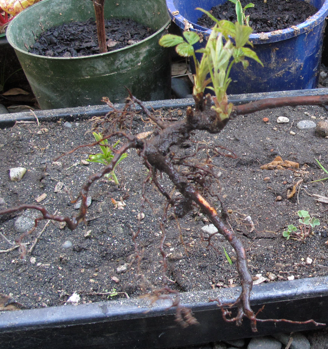
Raspberry roots and shoots.

Screen shot 2014-10-13 at 6.30.05 AM

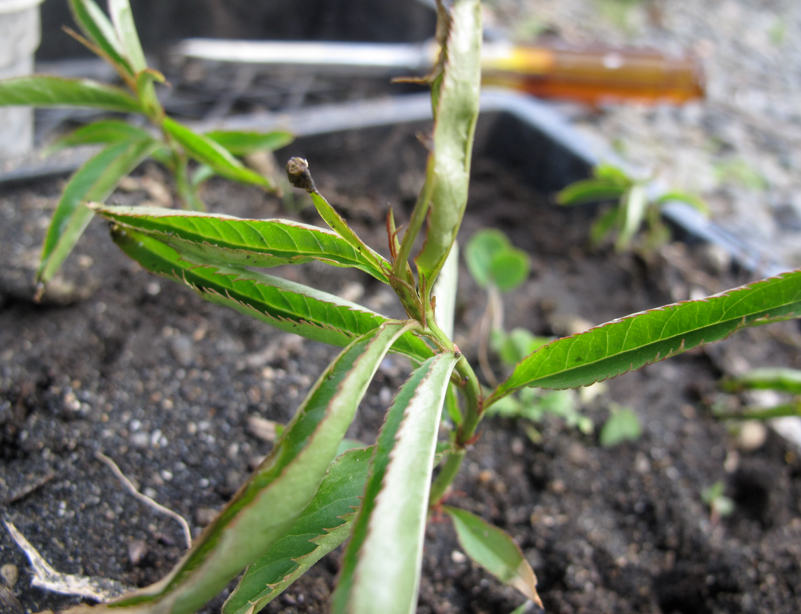
I’m also excited that the Black Boy peach stones have germinated after a winter in sand.

Screen shot 2014-10-13 at 6.31.04 AM

How cool!   Screen shot 2014-10-13 at 6.30.46 AM

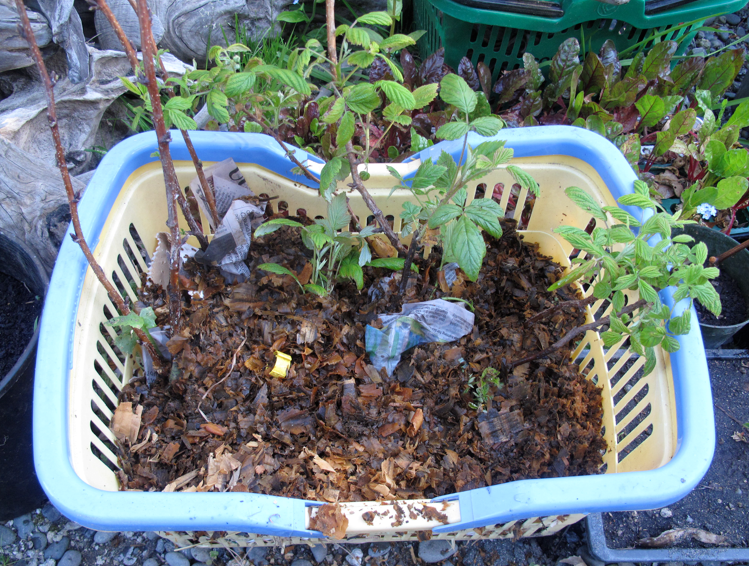
I am now busy potting up the grapes and hydrangea.

 Screen shot 2014-10-13 at 6.31.43 AM

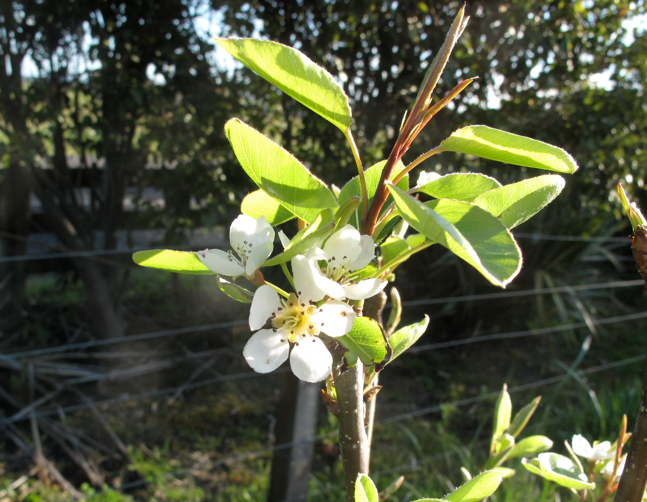
Meanwhile, out in the orchard we have pears blossoming.

Screen shot 2014-10-13 at 6.32.56 AM

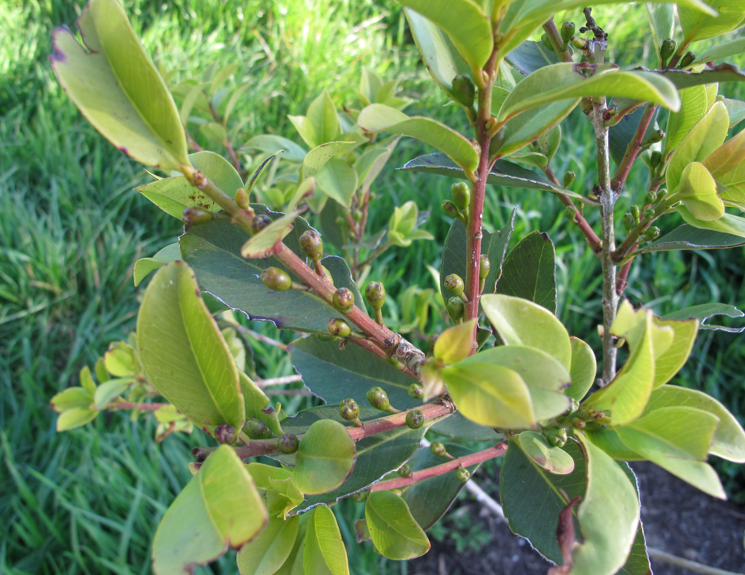
Guavas about to flower.

Screen shot 2014-10-13 at 6.33.13 AM

Feijoa flowers ready to burst. Screen shot 2014-10-13 at 6.33.23 AM

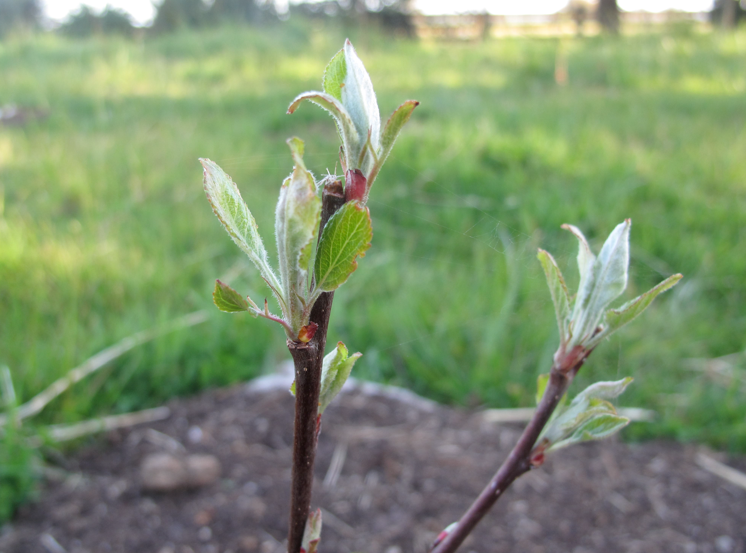
Apple saplings leafing out.

Screen shot 2014-10-13 at 6.33.35 AM

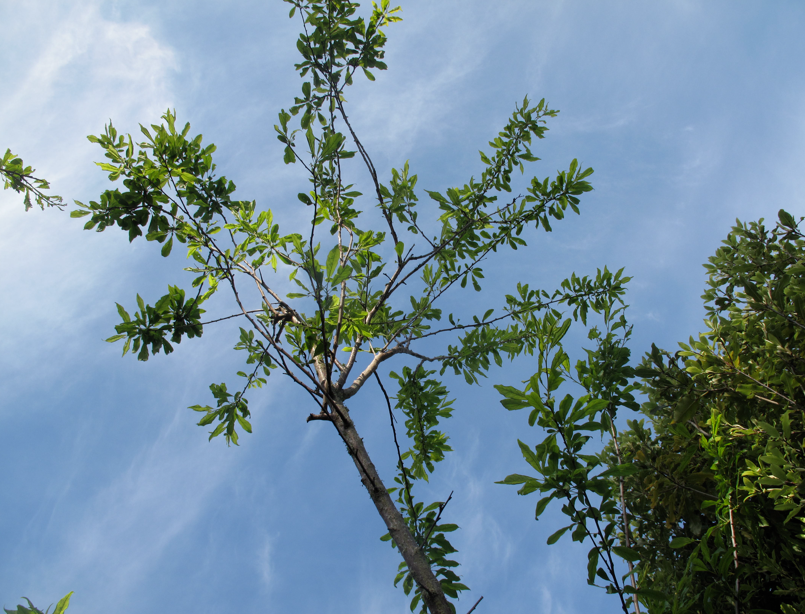
This apricot is being trained to grow out instead of up.

Screen shot 2014-10-13 at 6.33.49 AM

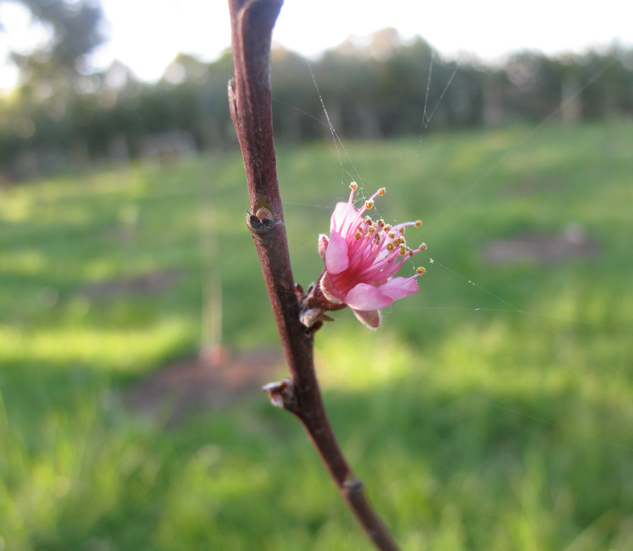
Peach blossom.

Screen shot 2014-10-13 at 6.33.58 AM

I also found blackberries growing in the bush.

Screen shot 2014-10-13 at 6.34.34 AM

And even a plum among the native trees.   Screen shot 2014-10-13 at 6.34.42 AM

Exciting times, these!


Peace, Estwing

Spring Permaculture Update

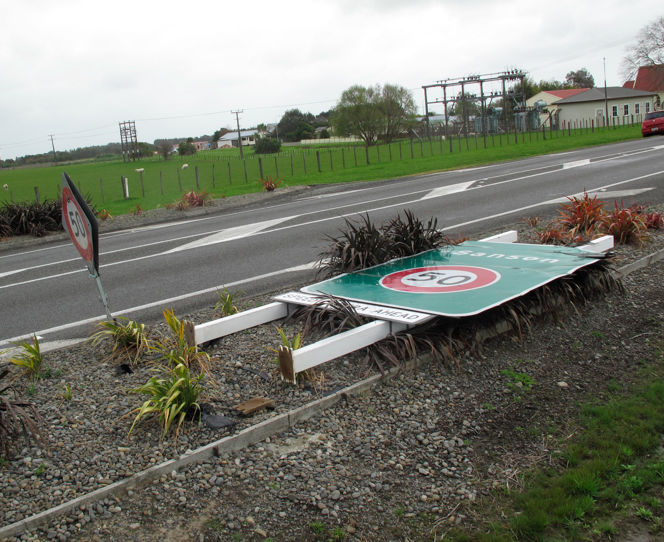
The equinoxal (sp?) winds are battering Aotearoa New Zealand.

Screen shot 2014-10-06 at 5.18.44 PM

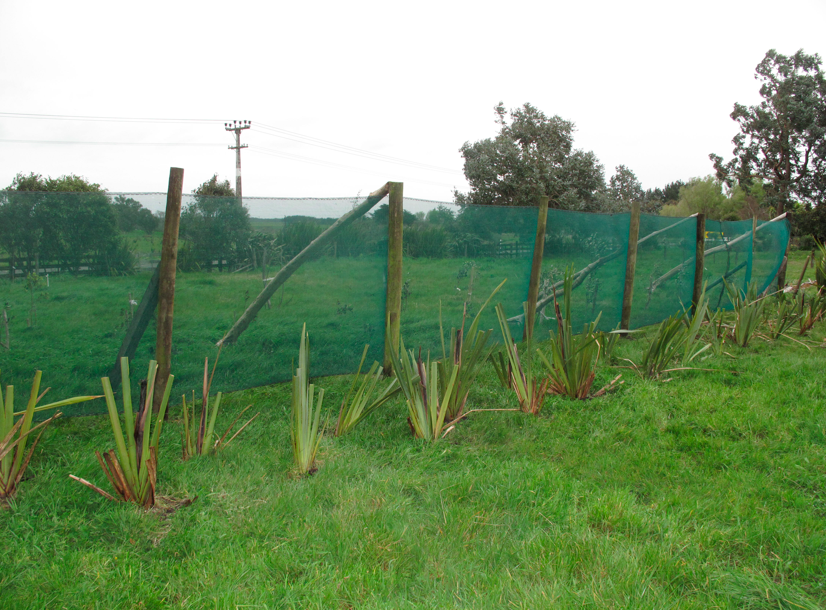
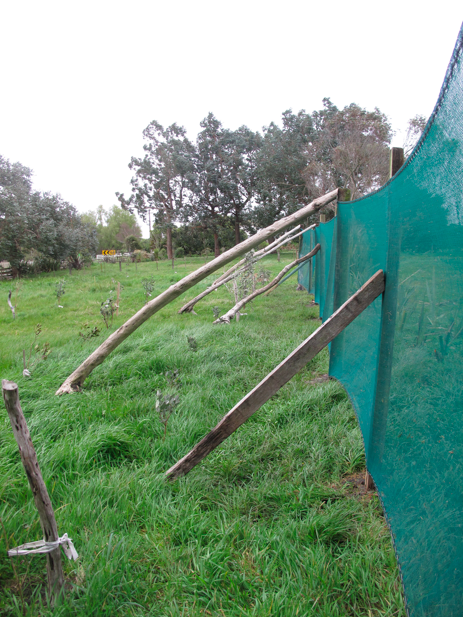
Here are my attempts to protect our newly planted fruit trees.

Screen shot 2014-10-06 at 5.19.10 PM

 Screen shot 2014-10-06 at 5.19.22 PM

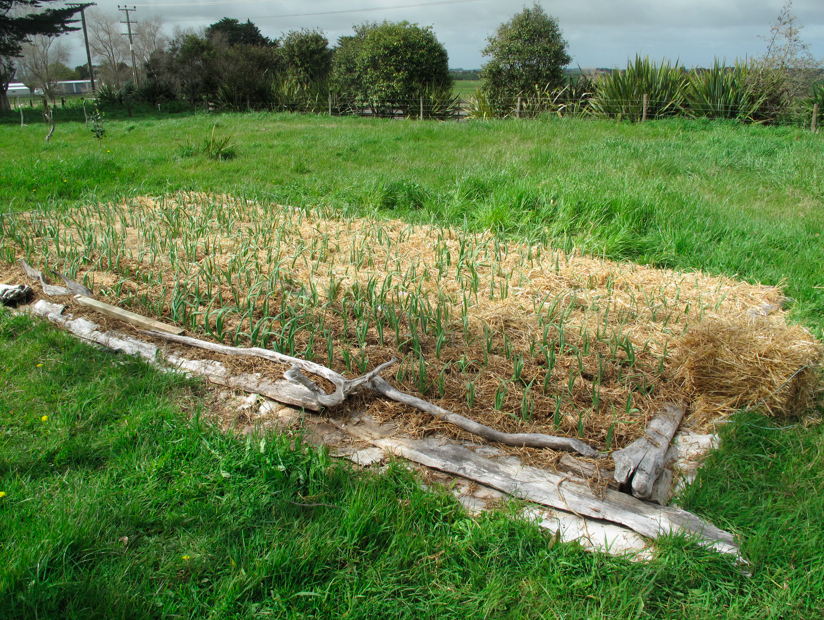
I barely was able to get the garlic fully mulched on the weekend before the gale started.

Screen shot 2014-10-06 at 5.19.45 PM

After I mulched the garlic I also mulched about 50 new fruit trees.

Screen shot 2014-10-06 at 5.19.55 PM

Be aware it is important not to place mulch against the sapling itself.

Screen shot 2014-10-06 at 5.20.06 PM

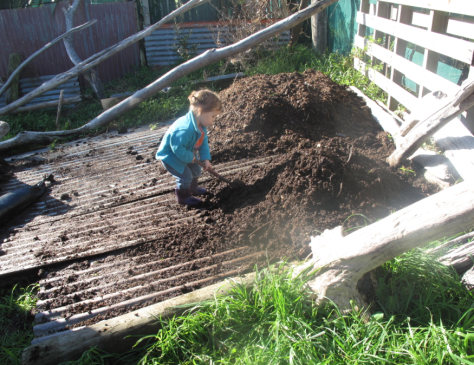
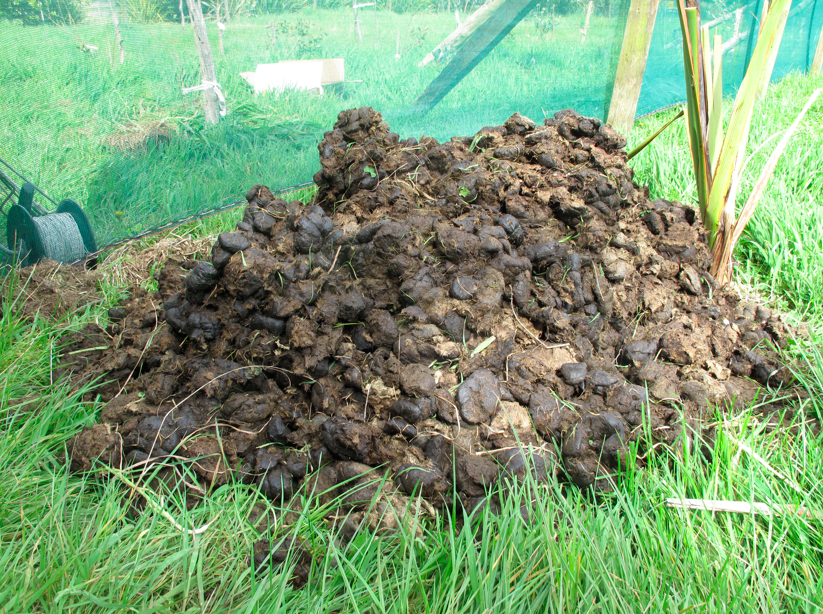
Having recently purchased this former horse property, we have 25 years of rotted pony poo to work with.

Screen shot 2014-10-06 at 5.20.19 PM

This gives you an idea of what we have. There are two more piles just as big.

Screen shot 2014-10-06 at 5.20.27 PM

We are boarding a horse now. This is what he produced in 2 weeks.

Screen shot 2014-10-06 at 5.20.43 PM

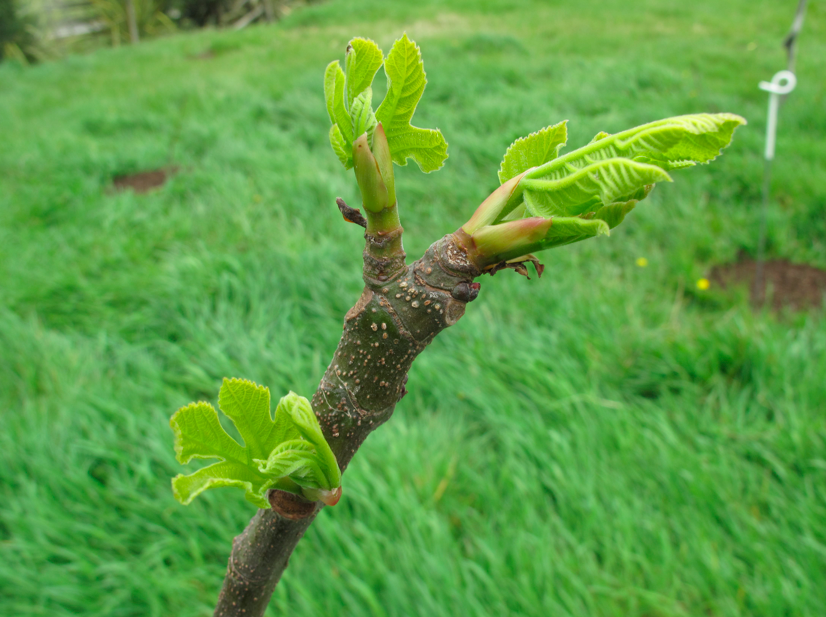
Despite the winds, it’s great to see signs of spring, like this fig cutting leafing out.

Screen shot 2014-10-06 at 5.20.53 PM

Peace, Estwing

Keep Calm and Think Different: It Takes Money to Save Money, Part 1

 Screen shot 2014-10-04 at 7.12.41 AM

“It takes money to make money” – a phrase so common it’s cliché. It is an ideology that drove growth during the 20th Century and resulted in multiple boom and bust cycles. It is a philosophy fueled by cheap energy and cheap money (ie, low interest rates).

Taken to the extreme it nearly crashed the global economy six years ago and has resulted in an extended economic slowdown. New Zealand’s self-proclaimed “Rock Star Economy” during this time is a result of central government running up massive debt and the temporary effect of the Christchurch rebuild.

Data suggests that nearly all of the growth experienced in the country during the last half decade has been in Christchurch and Auckland. The provinces – and particularly Wanganui – have not been part of “the band” but surprisingly remain avid growth “groupies” by clinging to inappropriate economic models.

Judging from the constant whinging we hear about the lack of “growth” in our city and how unfair it is that central government is abandoning the regions, one might think we are a town of pessimists. This glass-half-empty thinking does not serve our community and actually holds back economic development and innovation.

However, my observation is that this argument breaks down along the same lines as the climate change “debate.” In other words, those people who have chosen to ignore the overwhelming agreement by atmospheric scientists that humanity is altering the planet’s climate are the same ones who deny that Wanganui needs to consider different ways of thinking about our local economy. From this perspective, whatever I write in this column won’t make a bloody bit of difference. But since when has that stopped me?

As a researcher, I believe that robust arguments are supported with data and facts. From this perspective, let’s look at some examples of different economic strategies locally and nationally.

The Chronicle recently reported that the uptake of ultrafast internet services in Whanganui has been slower than “forecast” despite what I have observed as a massive, prolonged and shadowy PR campaign. For many months I chuckled while reading un-authored articles in the free weekly papers making all sorts of dubious claims about ultrafast internet services. I would suggest that the less-than-stellar result despite substantial Council support at rate payers’ expense is because the entire enterprise was undertaken under an inappropriate economic model. (Whingers let out a grown now.)

Alternatively, Air New Zealand gives us an example of innovative glass-half-full thinking that I would describe as “It takes money to save money.” Earlier this year the airline invested massively in new, fuel efficient Boeing 787-9 Dreamliner aircraft. Instead of chasing elusive growth and profits, Air NZ has identified money that already exists within its budget (fuel costs) and invested in reaping savings through investment.

Screen shot 2014-10-04 at 7.14.43 AM

Along the same lines, Wanganui collectively sends tens of millions of dollars annually to energy companies in Auckland and Christchurch. As such, we are voluntarily impoverishing ourselves and enriching these already wealthy centres. Why?

Over the last three years I have developed a working model of an affordable energy-efficient home that uses less than a quarter of the power of the average New Zealand home. I have calculated that the renovated villa in Castlecliff will save roughly $30,000 in electricity over ten years compared with the house next door. Those savings exceed that portion of the renovation budget spent on efficiency and solar energy, and represent a rate of return far in excess of the best term deposit in the country.

 Screen shot 2014-10-04 at 7.12.07 AM

In addition, our renovation pumped approximately $35,000 into the Whanganui economy by supporting local businesses and tradespersons. Employees of those businesses and the tradies presumably spent some of those dollars within the local economy, and so on and so on.

This is what I mean by different thinking, by glass-half-full, and by spending money to save money. But just like the climate change “debate,” one can choose to believe the data or choose to believe the rhetoric.

Peace, Estwing

The Americas in New Zealand

Yesterday afternoon felt very American to me. I went over to visit with our friend Mark Christensen and collect bean seeds (most from  Turtle Island) and some suckers off an American paw paw.

Screen shot 2014-09-29 at 6.59.30 AM

Mark works with others to propagate and disseminate heritage beans, tomatoes and apples, among some others.

Screen shot 2014-09-29 at 6.59.55 AM

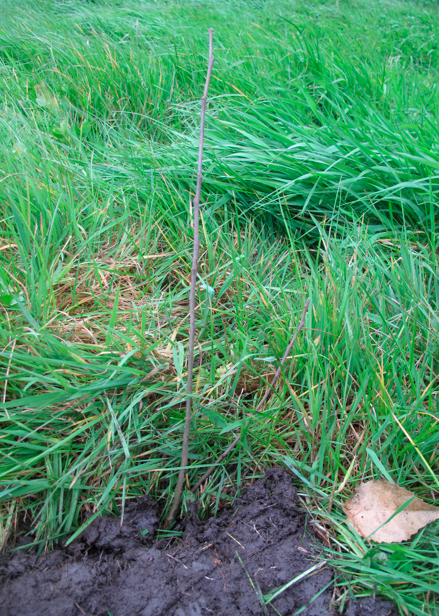
The paw paw was a tree in Mark’s heritage orchard. When I was visiting him about 6 months ago he mentioned it was sending out suckers. I made a note to come back and dig some out. Yesterday I finally did.

Screen shot 2014-09-29 at 7.00.21 AM

The suckers were so small they were hard to pick out in the tall grass. According to wiipedia, here is some information about the paw paw:

Asimina, the pawpaw genus, a genus of trees and shrubs native to eastern North America

  • Common pawpaw (Asimina triloba), a temperate fruit tree, native to eastern North America


Screen shot 2014-09-29 at 7.19.11 AM Screen shot 2014-09-29 at 7.20.00 AM

Here is what the suckers looked like planted at our place.

Screen shot 2014-09-29 at 7.00.36 AM

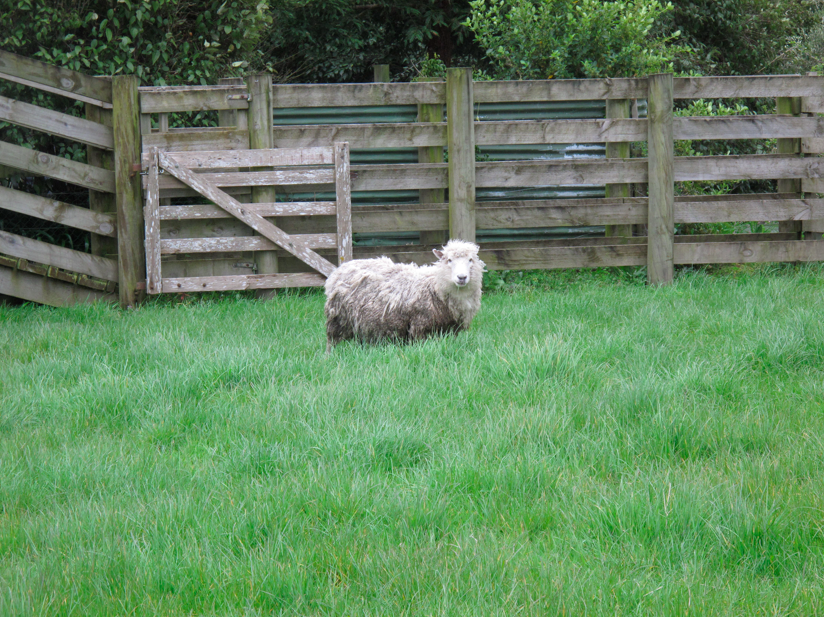
As we try to manage the property to be productive, we have brought some animals onto the land to graze the grass while it is still young and tender. Our friend SImon brought by this ewe…

Screen shot 2014-09-29 at 7.00.53 AM

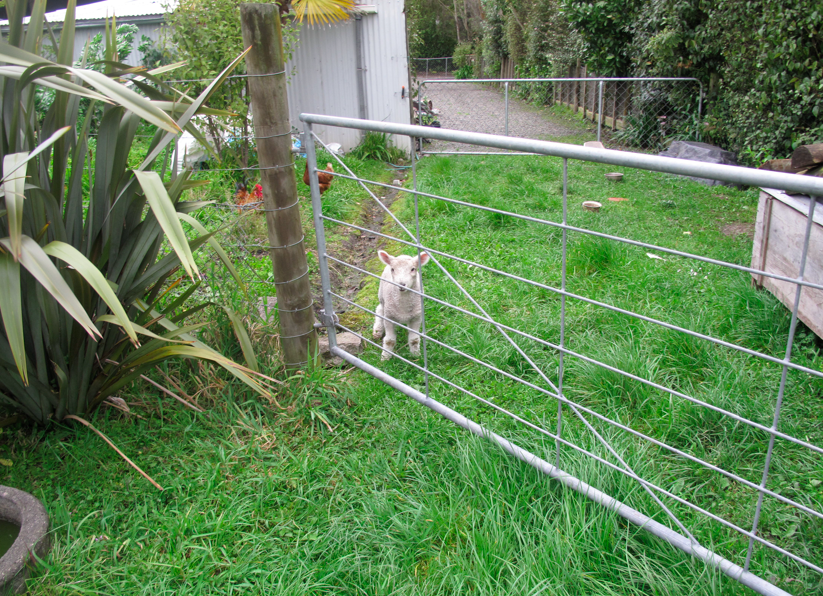
…and this lamb.

Screen shot 2014-09-29 at 7.01.06 AM

We also have a temporary border called Shady.

Screen shot 2014-09-29 at 7.00.07 AM


Peace, Estwing

Everyone loves cheese, especially governments. In a democracy like New Zealand, “block-of-cheese-tax-cuts” have become a popular pre-election promise. Even in dictatorships like North Korea, cheese appears to be essential to the political elite. Recent news reports indicate that Kim Jong Un is addicted to Swiss Emmental cheese – eating large amounts of it to gain weight so as to resemble his grandfather, North Korea founder Kim Il-sung.

  Screen shot 2014-09-26 at 8.36.53 PM

Of course cheese must be elemental to the French government, but my own experience has been with an enigmatic orange mass called American Processed Cheese Food Product. “Government cheese” as it was affectionately called, was part of the vocabulary and diet for millions of Americans from the 1960s through the early 1990s. “Government cheese is a processed cheese that was provided to welfare, food stamp recipients and the elderly receiving Social Security.” (Wikipedia)

According to the “Urban Dictionary” (.com), it was “A block of orange-yellow processed “USDA Cheese Food” issued by “Da Gubment” to aid needy families by supplementing their food resources. Used for making grilled cheese sandwiches and macaroni & cheese but also causes severe, bowel obstructing constipation, silent but deadly stinky gas, and/or “the runs” diarrhea in those who are lactose intolerant.”

 Screen shot 2014-09-26 at 8.35.55 PM

In the states, the term “government cheese” has come to refer to any type of government handout. The Rainmakers described the situation in song in 1986:

“They’re turning us all into beggars ‘cause they’re easier to please. They’re feeding our people that Government Cheese.”

“I don’t believe in anything, nothing is free. They’re feeding our people that Government Cheese.”

As suggested above, “government cheese” in a contemporary New Zealand context appears to have come to refer to the offer of inconsequential tax cuts at election time while avoiding meaningful changes like removing GST from fresh fruit and vege and/or taxing capital gains. Even in America these things have been in place for decades, and capital gains are listed as “unearned income” on tax returns.

As a child growing up outside of Detroit in the 1970s I was aware that certain items at the grocery store had tax on them while others did not. It was all very confusing at the time, but now I just go to the Internet to find it clearly explained:

“Retail sales of food and food ingredients for human consumption normally considered as grocery items for home consumption are tax exempt. This would include…cheese products, meat, nuts, popcorn, etc. The exemption does not include prepared food intended for immediate consumption.” (Source: fundraisetaxlaw.org)

Somehow, many decades ago and before “smart phones” existed, the state of Michigan figured out a way to differentiate between prepared foods and raw ingredients. Yet if you listen to Talk Radio in New Zealand in 2014 you hear arguments about how onerous and complicated it would be to replicate that process. Really? With barcodes and computer networks? I would suggest a pair of teenagers, an Iphone, and a long weekend would be all that is required to come up with a free app to do just that.

What’s the point? Holistic-thinking economists identify GST on food as a regressive tax on low-income families that serves to widen income inequality, exacerbate social problems and slow economic activity. A regressive tax “imposes a greater burden (relative to resources) on the poor than on the rich” (Wikipedia).

Food, energy and rates make up a larger proportion of the household budget for low-income families than high-income families. As such, the government plays a role in widening income and wealth inequality. To repeat, both central and local governments play roles in increasing wealth and income inequality.

Research worldwide has shown a direct relationship between wealth and income inequality and social problems such as crime, drug abuse, domestic violence, and teen pregnancy (Wilkinson & Pickett, The Spirit Level, 2009).

Additionally, certain economists-who-must-not-be-named might suggest that regressive taxes act as a drag on the economy. In other words, when people have fewer dollars in their pockets they spend fewer dollars in local shops. (I admit it is a radical concept.)

For a struggling provincial economy such as Whanganui, I would suggest some of the “new ways of thinking” that local business and government engage in would include moving away from regressive taxes and an inequitable rates structure that stifle economic activity and stimulate anti-social behaviour.

To quote the Big Cheese, Winston Peters, “It’s just common sense.”

 Screen shot 2014-09-26 at 8.38.28 PM

Prepping for Tomatoes Before Christmas

I have had great success pushing the season outdoors by planting tomatoes on the vernal equinox and reaping ripe fruit before Christmas Day. This year is no different although it has been a struggle to do so.

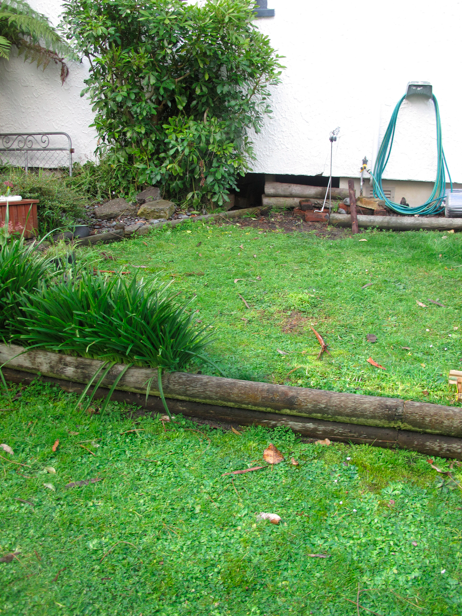
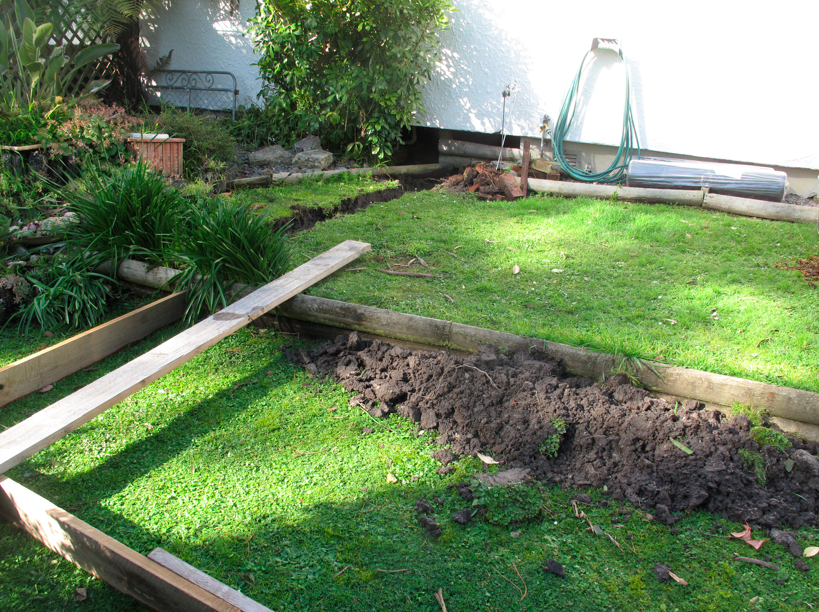
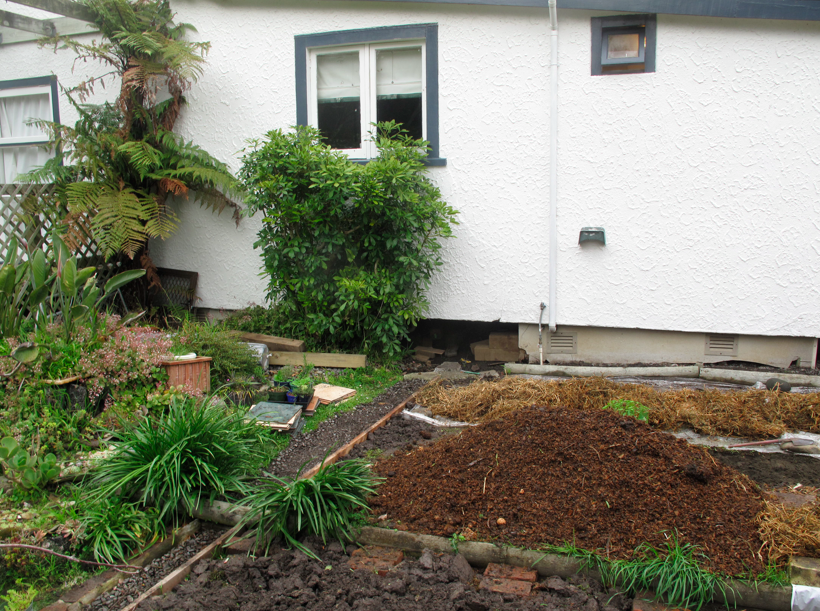
This is what we started with: a sodden, compacted, clay lawn with poor drainage around the house foundation.

Screen shot 2014-09-23 at 5.24.22 PM

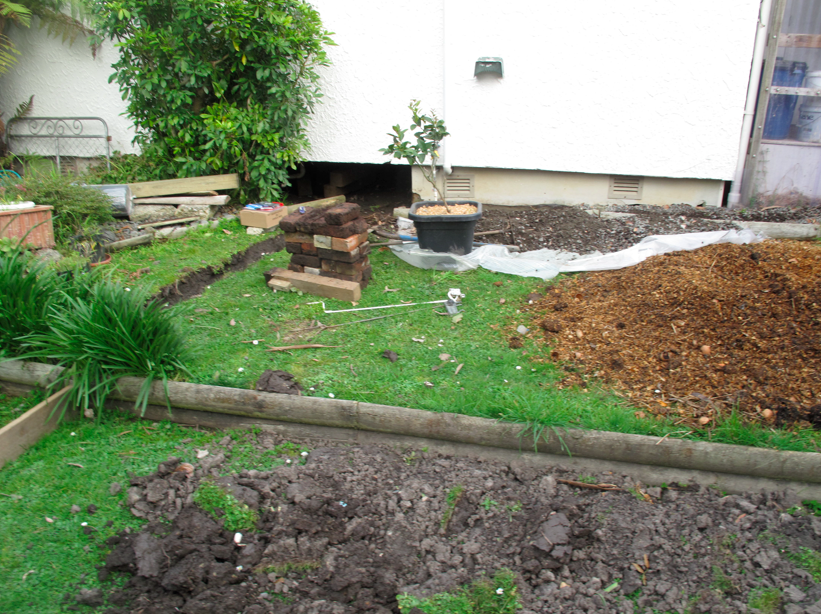
I started by preparing to improved the drainage while also building more garden beds.

Screen shot 2014-09-23 at 5.24.50 PM

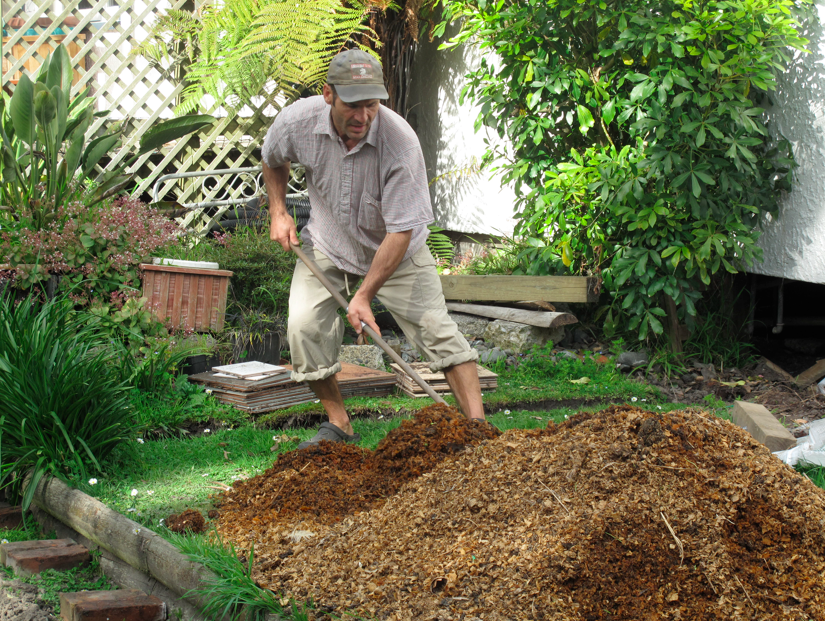
This process took a while as there was lots of soil to move. Simultaneously I was making a cubic metre of compost where one of the garden beds would go.  Screen shot 2014-09-23 at 5.25.12 PM

The hot compost we make takes about 30 days to mature.

Screen shot 2014-09-23 at 5.25.48 PM

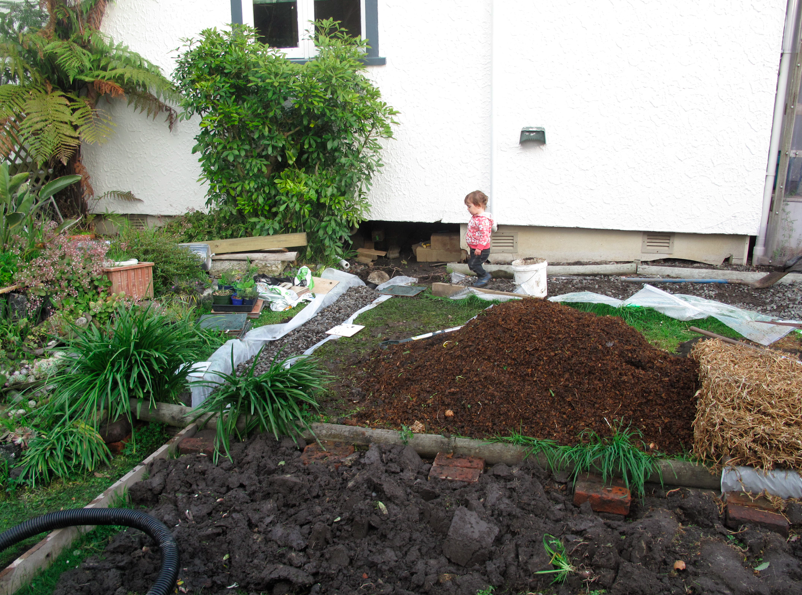
I had a helper for part of the job.

Screen shot 2014-09-23 at 5.26.13 PM

Finally ready by September 21st, the vernal equinox, to put in the tomatoes.  Screen shot 2014-09-23 at 5.26.34 PM

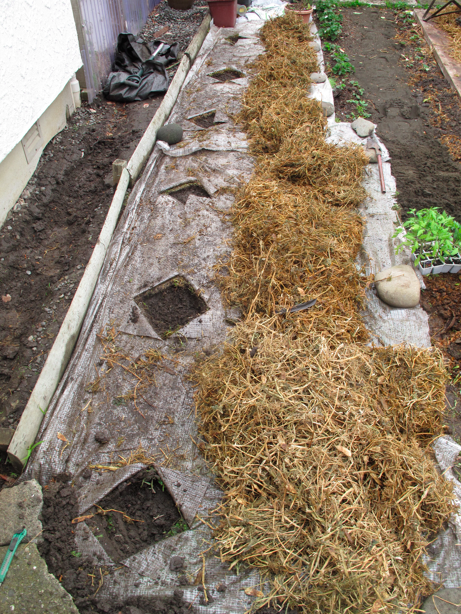
I had some plastic sheets that our new ceiling insulation came wrapped in. I used it to suppress some of the grass before cutting it to an X and then skimming the turf.

Screen shot 2014-09-23 at 5.26.41 PM

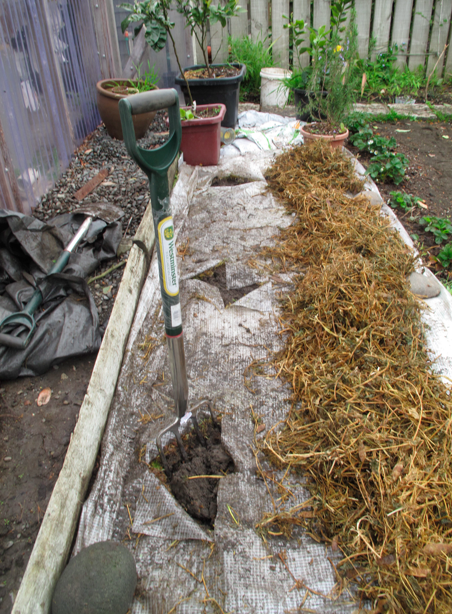
As the soil was severely compacted, I forked it to help with aeration. These will be no dig garden beds once established.

Screen shot 2014-09-23 at 5.26.59 PM

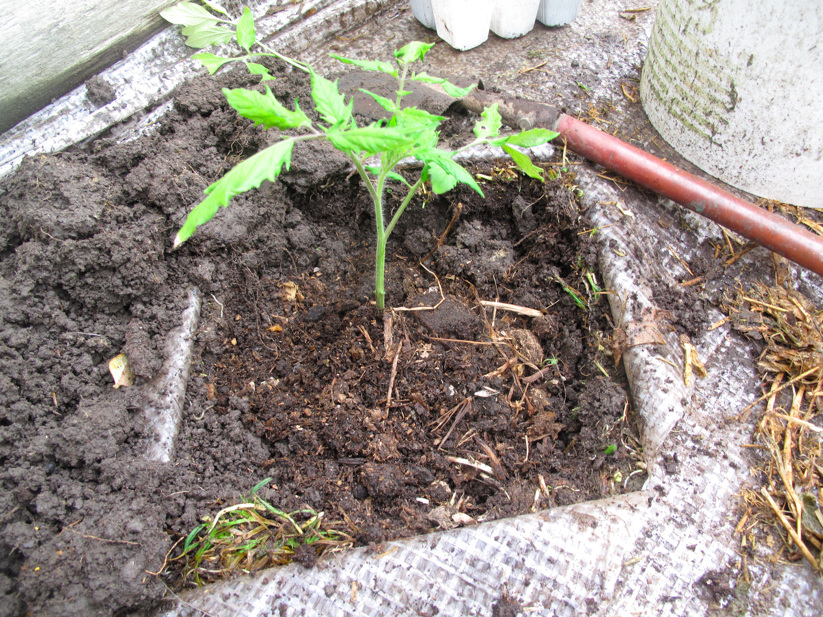
I always plant my seedlings with a litre or more of compost. Screen shot 2014-09-23 at 5.27.12 PM

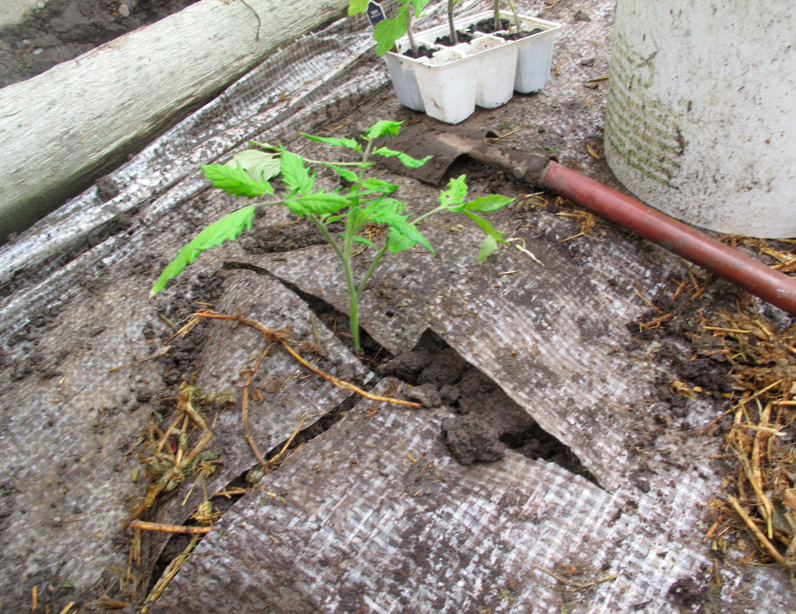
Fold back the plastic…

Screen shot 2014-09-23 at 5.27.20 PM

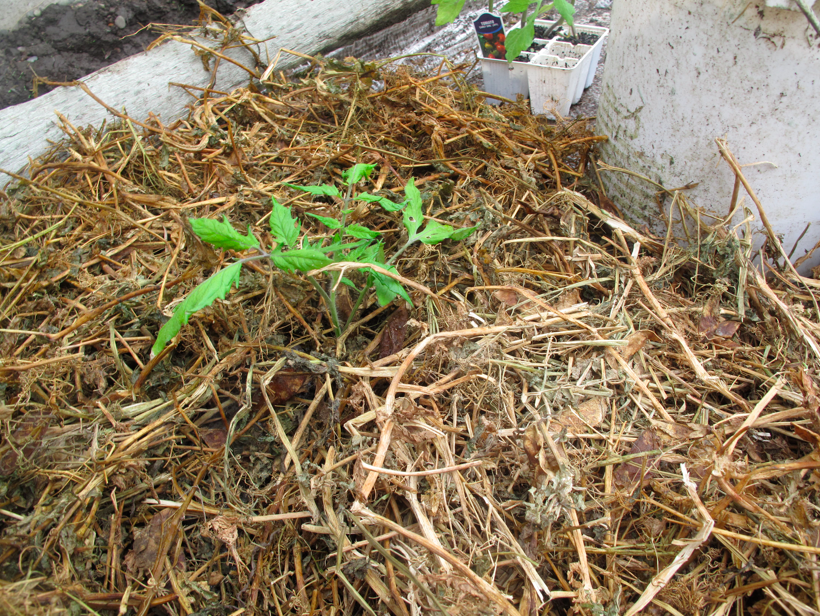
…and cover with mulch. Mind you, the plastic will only be in place for this one growing season. After the sod is killed and the tomatoes have done their dash, I will remove the plastic, fork the bed again, add compost, and then just treat it as a no dig garden bed.

Screen shot 2014-09-23 at 5.27.27 PM

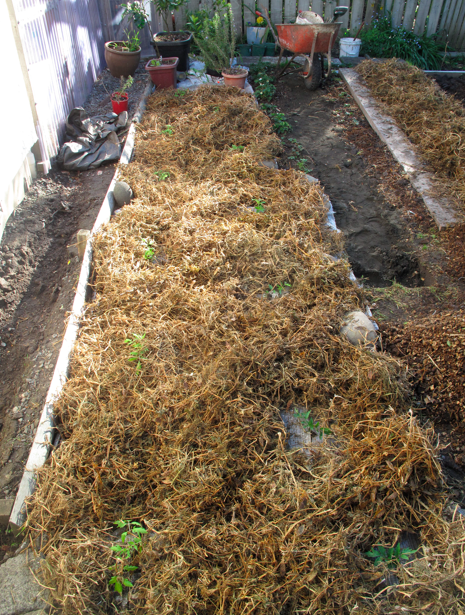
These first six plants are Early Girl. They will bear ripe fruit around the 10th – 15th of December.

Screen shot 2014-09-23 at 5.27.35 PM

The next six plants are Money Maker. I have good luck with them as a consistent, heavy cropper and relatively good a resisting plant diseases.

 Screen shot 2014-09-23 at 5.27.48 PM

Peace, Estwing

Pouring a New Cup of Tea for Whanganui

There once was a family who put salt in their tea thinking it was sugar. Their tea did not get sweet so they added more salt. But it still did not get sweet. They complained bitterly, and kept adding more salt.

Finally, someone convinced them that they should contact the Old Woman from Philadelphia. Reluctantly they did. And what did the Old Woman from Philadelphia tell them? “You need to pour a new cup of tea.”

From all appearances Shamubeel Eaqub is not old, is not a woman, and in all likelihood not from Philadelphia. But his message regarding regional economies is essentially the same. “We keep on trying to use the same broken models in terms of regional development,” he told the Chronicle during his visit to Whanganui three weeks ago. Screen shot 2014-09-19 at 6.52.14 PM

He spoke about short-sighted policy that inevitably failed, and added, “We shouldn’t get hung up on growth for the sake of growth.” Does that sound like what a middle-aged man from Detroit has been suggesting through a certain weekly column on page B5 in the Chronicle?

Eaqub went on in his interview to advocate the asking of hard questions and that “We’ve got to shock people into talking about these issues because it’s uncomfortable. We need to create the urgency for action.”

Anyone familiar with the low quality of housing stock in New Zealand and its negative effects on health would echo his words. For example, Philippa Howden-Chapman from the Otago School of Medicine recently shared the following:

  • “New Zealand is famous in international public health circles for the dreadful state of our housing.”
  • 1/3 of New Zealanders shiver in their homes
  • 180 different types of mould have been found in NZ homes
  • some cot deaths are related to cold homes because parents bring babies into their own beds as the rest of the house is frigid

These sentiments are shared by Mike Underhill, the Chief Executive of EECA, the Energy Efficiency and Conservation Authority.

  • Over a million homes built before 1978 do not come close to meeting the current standards for energy efficiency
  • “Most older homes in New Zealand are in poor condition.”
  • at temperatures below 12 degrees inside a home there is an increased rate of cardiac arrest, and NZ experiences 1600 more deaths each winter compared to summers

Wait, it gets worse. New Zealanders spend up to 75% of their lives in their homes, and unhealthy homes have been linked to learning and behaviour problems in children at school. Unhealthy homes cost our medical system tens of millions of dollars annually due to increased hospital visits. The list continues.

But other studies have shown that every dollar spent on insulation saves five dollars in medical expenses. A recent study on Auckland’s Retrofit Your Home programme showed a Social Return on Investment (SROI) ratio of 3.1:1, with “positive social and economic outcomes.”

 Screen shot 2014-09-19 at 6.59.49 PM Screen shot 2014-09-19 at 7.00.30 PM

Mike Underhill from EECA also recognizes the co-benefits of energy efficiency, and recognizes benefits to the nation valued at over a billion dollars. Philippa Howden-Chapman believes “Housing can lead the way in the green economy,” and cited research showing that children living in well-insulated homes miss two less days of school during the winter and have reduced asthma symptoms. The list of benefits from healthy homes is a long as the list of problems with unhealthy homes.

In the pages of the Chronicle I have read: principals complaining about absenteeism and poor student outcomes; social service people complaining about landlords not providing insulation for tenants; and, most recently, Children’s Commissioner Dr. Russell Wills suggest that our Council’s role is “vital in fighting child poverty.”

Ironically, it was this Council that summarily rejected a robust proposal to improve the quality of housing in Wanganui with all of the associated benefits for health, learning, social welfare, and increased activity in the local economy. The proposal was rejected because it was not relevant to the policies within the 10-year plan.

Despite the mountain of evidence showing the problems and opportunities in the housing sector, WDC has so far declined to be any part of a positive solution. To quote Tim Williams from the Committee for Sydney, “It’s not evidence based policy making but policy based evidence making.”

As yet, the leadership from local government, business and community leaders that Eaqub identifies as essential has not emerged. But I remain optimistic that some progressive minds will have the courage to engage in meaningful change for our community rather than clinging to the old “broken models.”


Peace, Estwing

Permaculture Ethics in Action

Last week I wrote about permaculture as one type of eco-design that is unique because it is built around three central ethics: Care for People; Care for the Earth; Share Surplus Resources. The first time I learned about permaculture I was told “it is a system of science and ethics.” That resonated with me.

While there may be ample debate around personal ethics, there is somewhat less disagreement about science with the possible exception of the Chronicle’s Letters Page.

From personal experience, basing my design decisions on physics, chemistry, biology, geology and hydrology has proven to be very successful. Additionally, centering eco-design projects around helping people and the planet in a mutually beneficial win-win strategy has resulted in benefits far beyond expectations.

Sharing surplus resources can take on surprising forms and flow in strangely cyclical patterns. Here are some examples that we have experienced in the last few years among the small but dedicated permaculture community in Whanganui.

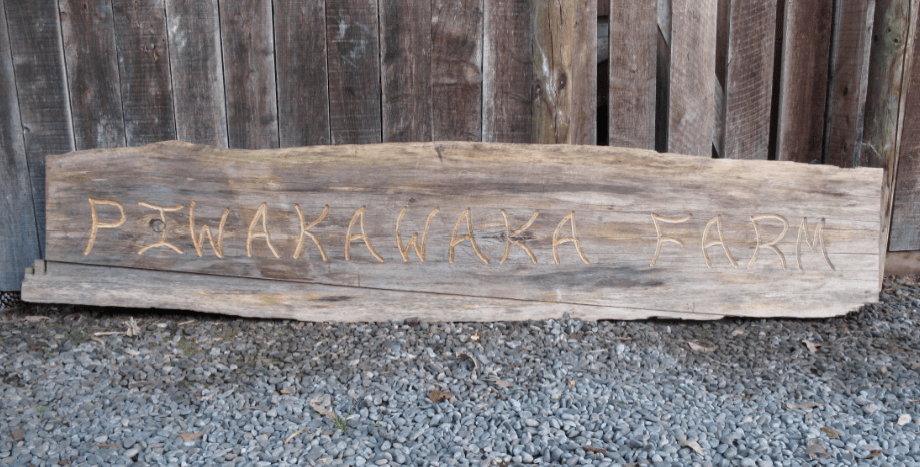
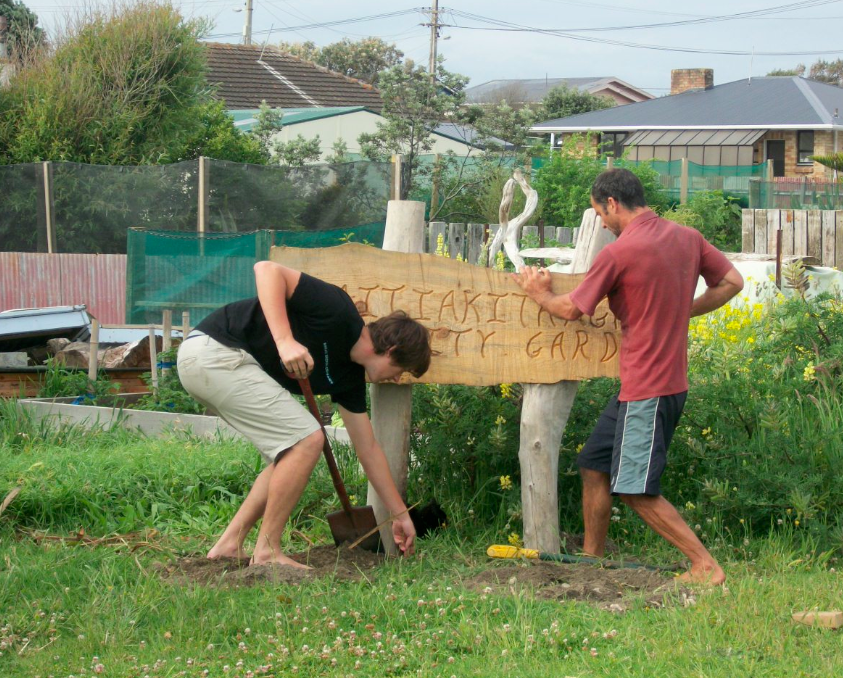
Two years ago we started a community garden in front of our Castlecliff home. One friend gave us a piece of slab wood and another one leant his router. With a few pieces of native hardwood washed up on the beach I was able to make a welcoming sign. Screen shot 2014-09-12 at 6.56.36 PM

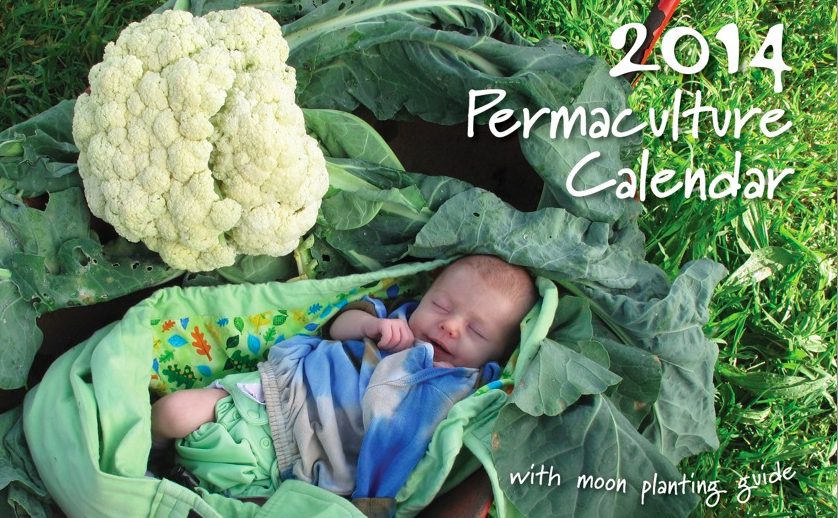
Some other friends donated fruit trees and seeds. We, in turn, were able to share surplus building materials, some calendars we ‘won’ in a photo competition, and looking after a friend’s daughter while he was working on his house.

Screen shot 2014-09-12 at 6.56.46 PM

Many months later I was able to use a second piece of slab wood to make another sign for those friends who had shared their surplus fruit trees with us. I had to borrow the router again, but that was ok because we had just hosted that friend’s children for a morning of puzzles and baking in our home while he was otherwise engaged. Screen shot 2014-09-12 at 6.58.48 PM

Meanwhile, another friend offered to help me organize the second annual Whanganui Permaculture Weekend. She had a surplus of her time to share and has willingly given it to our community to help make us more resilient. One day when she came to our home to meet with me about the schedule for the weekend she complained that all of the firewood she had recently purchased was still green and not heating her home efficiently. I immediately told her we had a shed full of seasoned wood and that she should help herself.

One might call this a positive version of “what goes around comes around.” I could fill weeks of columns with similar examples. Please be aware, however, that these are not straight barter arrangements, but simply generous people “spreading the wealth.” It just happens.

Screen shot 2014-09-12 at 6.58.41 PM

From a permaculture perspective, “spreading the wealth” can take many forms as described above, or something as simple as an individual sharing his or her experience, expertise or enthusiasm for a certain topic. That’s what this weekend – the Whanganui Permaculture Weekend – is all about.

Today and tomorrow are filled with events that are free and open to the public. Printed schedules can be found at many locations around the city, including the libraries, I-Site, River Market, and some local businesses.

Events schedule can be viewed online at: http://whanganuipermaculture.org/


Peace, Estwing

Permaculture: Turning Liabilities into Assets

With an abundance of bad design around the world and across New Zealand, the opportunities for good design and re-design are almost endless. Simply addressing the built environment would provide thousands of jobs over many decades, to say nothing of the “natural environment.”

But this week’s column will, however, address the natural environment, which is, across most of this country, far from natural. In many cases non-native animals graze non-native plants on steep slopes that results in increased river levels and erosion during heavy rains and decreased river levels during drought. Put simply, poor design and out-dated land management techniques contribute to both flooding and drought: a lose-lose situation.

Good eco-design and contemporary land management can hold water on the land during heavy rains and provide water to plants and rivers during extended periods without rain: a win-win situation. This is called eco-design because in many cases it is the way “nature” manages water movement across the land with trees and wetlands.
Screen shot 2014-09-05 at 2.27.59 PM

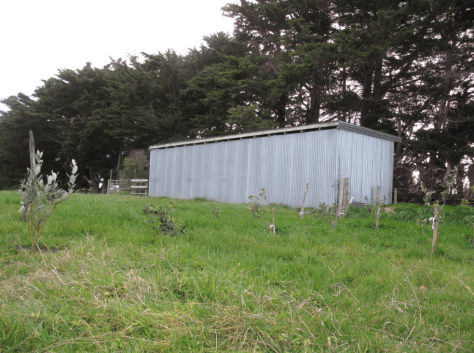
This new orchard will be designed to use excess water off the roof as needed. 

Redesigning marginalized landscapes for water storage is at the heart of permaculture – an Australian eco-design philosophy first developed in the 1970s. Permaculture is now practiced by tens of thousands of eco-designers in probably every nation on Earth. In arid places such as Jordan or Arizona, deserts have been re-vegetated using permaculture design.

In New Zealand, permaculture design has been used to restore the health of degraded land and to increase its productivity. A large part of this design philosophy is turning a liability into an asset. (Sadly, this is exactly opposite to what appears to be the management philosophy of Whanganui’s wastewater treatment plant.) For example, water poses a threat to a house made from timber, but is required for a vege garden to thrive.

Screen shot 2014-09-05 at 2.27.50 PM

This area is being transformed into a vege garden alongside water management improvements. 

Good eco-design would transfer water from where it is not wanted to where it is, but without the need for costly drains or pumping. With regards to water management, good eco-design uses gravity to move it for free.

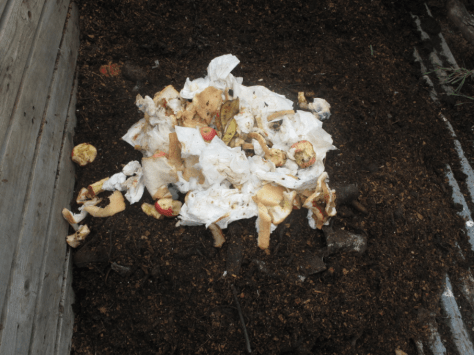
Another example of turning a liability into an asset is composting. Whether it is unwanted food scraps or an excess of manure or yard waste, composting the material and returning it to the land saves it from going to landfill where it converts into methane gas, or from running off and polluting streams and rivers. Win-Win.
Screen shot 2014-09-05 at 2.27.34 PM

Before.

Screen shot 2014-09-05 at 2.27.42 PM

After. 

If you have a small section or a large section or a lifestyle block, you may be interested in learning how permaculture design is used to manage water and soil fertility. On Sunday the 7th of September I will offer a sampler of what good permaculture design would look like on both small and larger properties (see sidebar). These events kick off Adult Eco-Literacy Week (7th-14th) and the Whanganui Permaculture Weekend (13th-14th).

Aside from being the gold standard in eco-design, permaculture is also unique in that it is an ethically-guided belief system. Central to permaculture are three ethics: Care for people; Care for the Earth; Share surplus resources.

Whanganui is unique in New Zealand in that we have a small but dedicated core of permaculturists who hold tightly to these ethics. For the second year in a row we are offering a weekend of outstanding events hosted by a range of experts in their respective fields. In other places across NZ and around the world you could expect to pay hundreds of dollars to register for such a series of events, but we are offering it to our community absolutely free.

It would be difficult to describe how unique this is, and it is one of the things I cherish about living here. Thanks to this handful of people who care deeply about our community and truly practice what they preach. And a huge thanks to Rachel Rose for helping organize the weekend.

Peace, Estwing

Sidebar:

Adult Eco-Literacy Week 2014, 7th – 14th September

7th September, 1-2 PM Eco-Design for large properties. 223 No. 2 Line

7th September, 2-3 PM Eco-Design for small properties. 223 No. 2 Line

9th September, 6:00-7:00 PM. Solar Energy. Josephite Retreat Centre, Hillside Terrrace.

10th September, 5-6 PM. Growing vege on sandy soils, Castlecliff

11th September, 12-1:15 PM. Raw Milk and Yoghurt Making, Women’s Network, 75 St. Hill St.

12th September, 5:30-6:30 PM. Best ways to use your heat pump, Josephite Retreat Centre, Hillside

14th September, 4-5 PM. Tomatoes Before Christmas, Wanganui Garden Centre. Gonville Ave.

Whanganui Permaculture Weekend, 13th – 14th September

List of events can be found here: http://whanganuipermaculture.org/