Category Archives: permaculture

Ecological Farming is the Most Affordable Option

Editor’s Note: This is another weekly column in the Wanganui Chronicle.

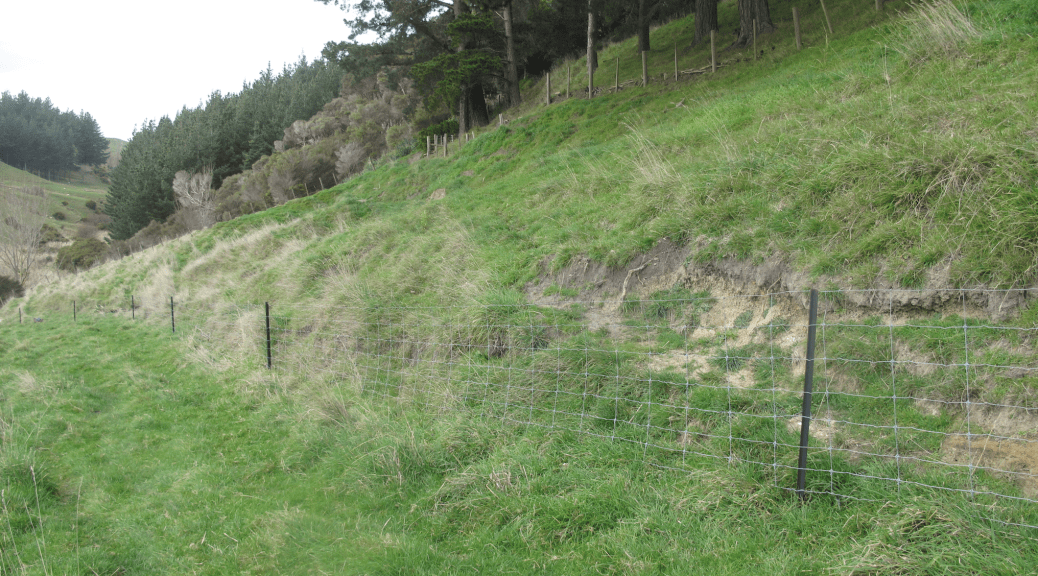
I could not agree more with Wanganui provincial president of Federated Farmers, Brian Doughty, and his recent thoughts on the damage caused to vulnerable slopes due to outdated management practices and June’s weather bomb: “We need, at least, to think outside the square in an attempt to minimise the effects from an ever-increasing number of these storm events because it will happen again.” Screen Shot 2015-11-06 at 9.45.38 am
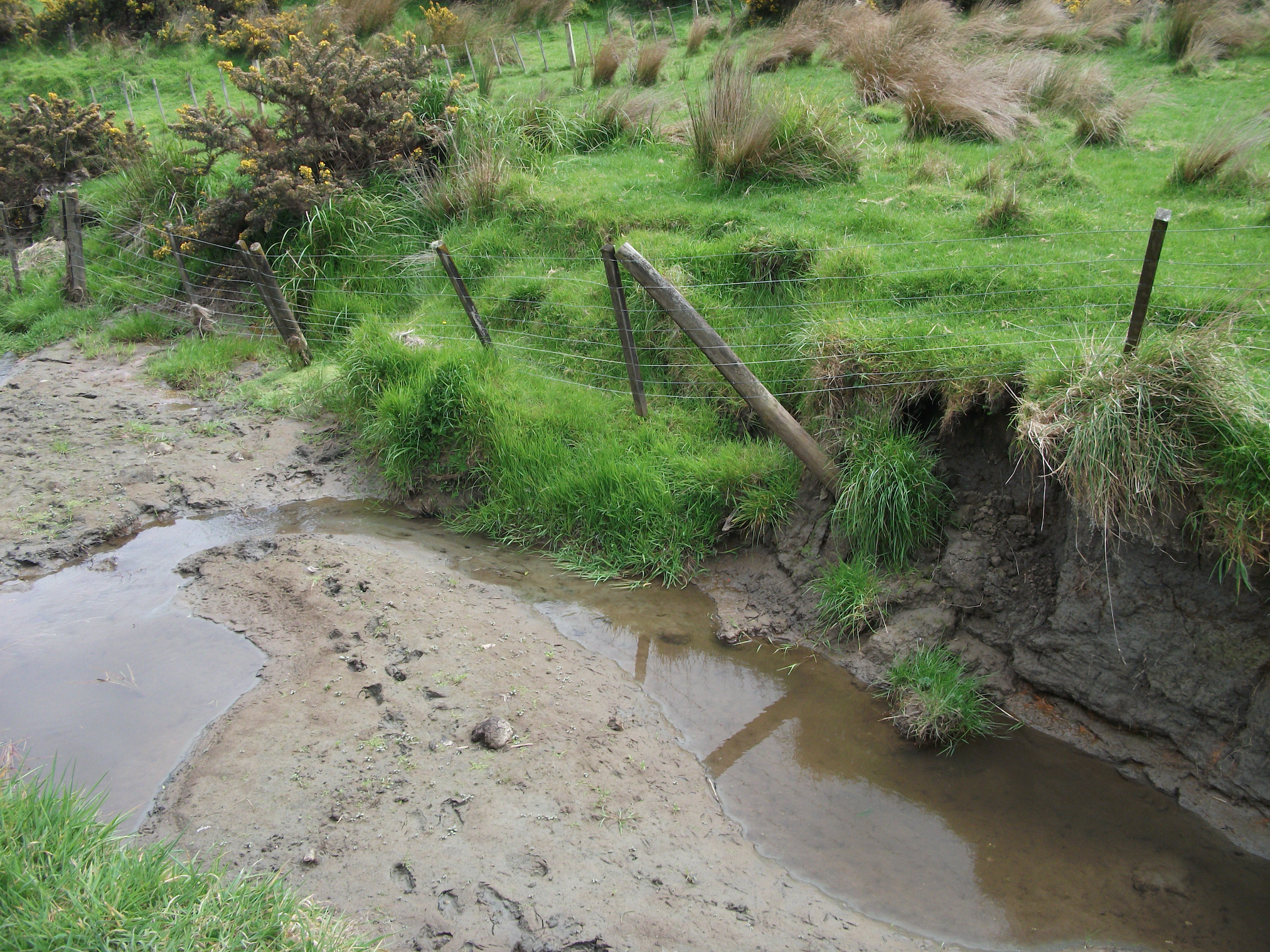
A difficult and costly repair job after the flood.

From my reading of Brian’s Conservation Comment, he makes two main points in the second half of the piece: 1) climate change will bring more frequent extreme weather events; 2) redesigning our farms to work more closely with nature will save farmers money in the long run. As any regular reader of this column recognises, these are two of the central tenants of eco-thrifty renovation.

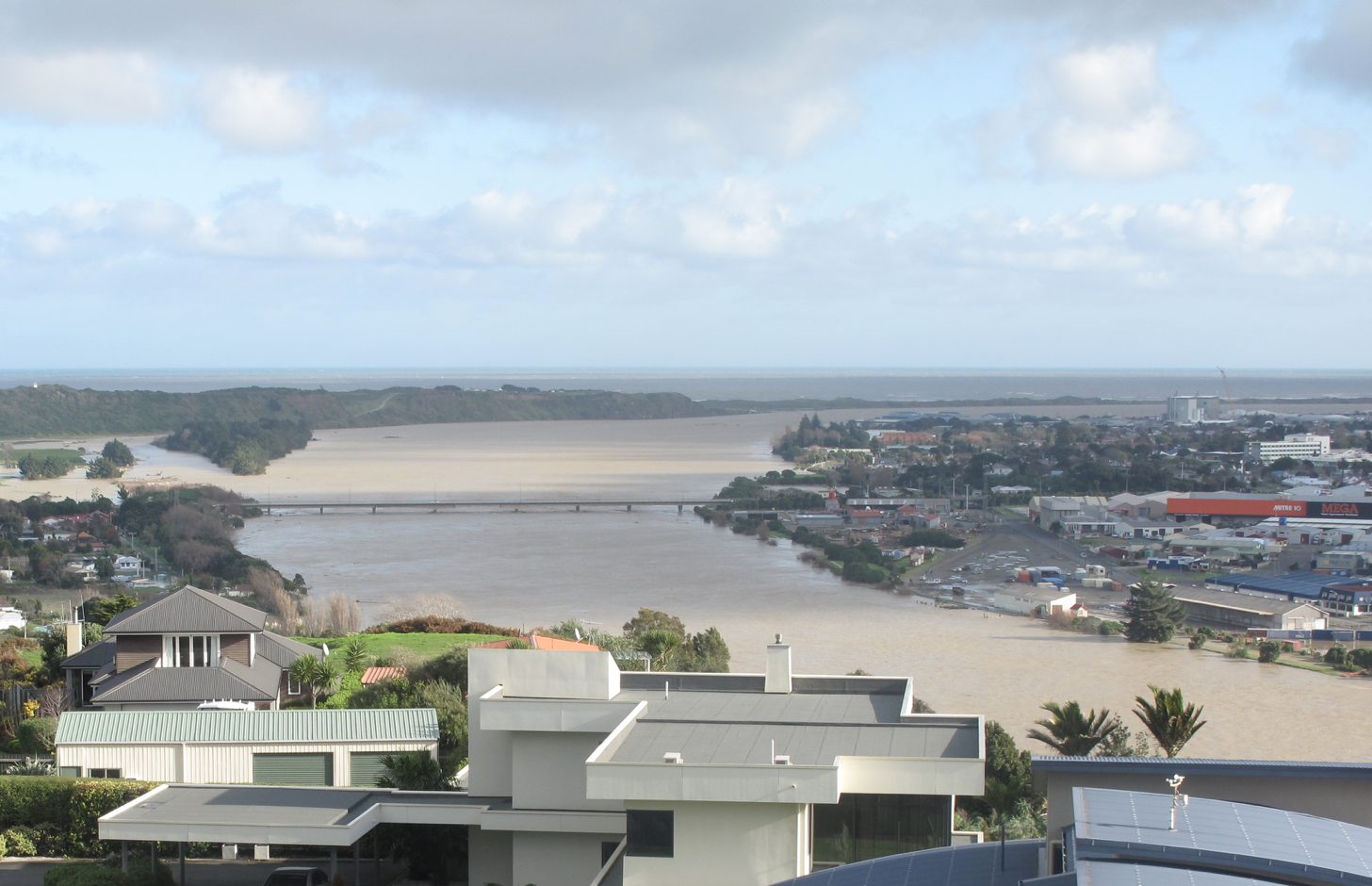
When eco-thrifty thinking is applied to the land it can be called “holistic land management” or “permaculture” or “ecological farming.” Whatever you call it, it relies heavily on pattern recognition. Specifically, the patterns that Brian addresses are ridges and gulleys and the best locations to place tracks and fences within the landscape to minimise damage from slips. This is sage advice, and we wish Brian could have been on the committee that chose to move the Sargent Gallery into a floodplain.

Designing with recognition for the patterns in nature has two clear advantages for farmers: 1) higher productivity; 2) greater resilience. In the day-to-day workings of a farm, holistically managed farms are more profitable, and during extreme weather events – either storm or extended drought – are more resilient.

And who would have guessed that ex-farmer and current Letters writer G.R. Scown was an eco-farmer long before it was fashionable?!? I admit to pleasant surprise as he waxed eloquently (Letters, 22-10-15) about worms, soil bacteria, humus, moisture retention and seaweed.

Similarly, I have experienced great results in pasture quality using some of the methods Scown describes along with rotational grazing. The result is a win-win-win situation that includes a healthier mix of pasture species, healthier animals (from eating better plants), and a resilient farm better able to weather both ends of predicted weather extremes.

A recent study by researchers at Stanford and Berkeley published in the journal Nature concludes that, “Climate change could cause 10 times as much damage to the global economy as previously estimated, slashing output as much as 23 percent by the end of the century” (Bloomberg News). Another recent report identifies that “Land degradation is costing the world as much as $10.6 trillion every year, equivalent to 17% of global gross domestic product” (Guardian, 15-09-15).

But none of this would be news to our outstanding regional council. For a long time, Horizons has taken a holistic, proactive and hands-on approach to land management and working with farmers. I have nothing but respect and admiration for the leadership shown by Horizons and the high quality advice and support offered by expert professionals.

I have been impressed with more than one regional councillor’s understanding and advocacy for holistic perspectives on issues ranging from watershed management to environmental education. Getting rid of the “Green Rig”, for example, was an excellent decision.
Screen Shot 2015-11-06 at 9.45.48 am

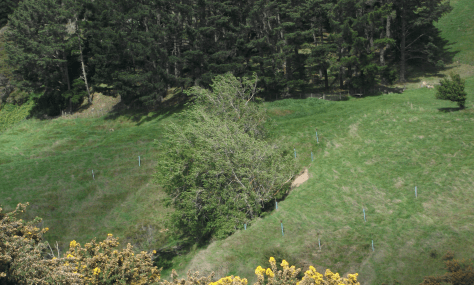
Poplar poles planted this winter on a vulnerable hillside. 

I have also worked with a number of Horizon’s staff on issues of soils, slopes and tree planting. The advice was top notch and the customer service outstanding. I actually enjoy paying my rates because I know my dollars are doing great work. Speaking of which, I seem to recall reading that the regional rates bill was going to increase by $2 per household to buy more poplar poles for farmers. I reckon that should be doubled because decades down the track we’ll all be better off for it.

– Estwing
Late Spring Permaculture Update

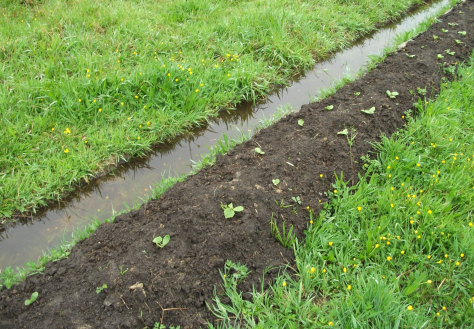
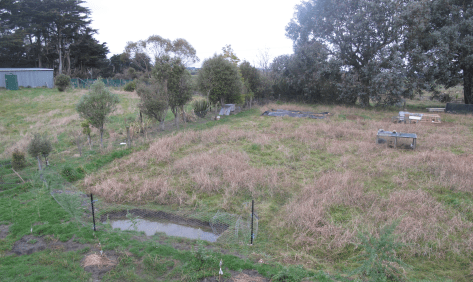
As we transition from the wet season into the dry season, the importance of water management is clear. We have installed a number of small water management features such as this swale.

Screen Shot 2015-10-26 at 6.15.00 am

This filled during a 30 mm rain event. The water will feed the pumpkins planted along its length.

Screen Shot 2015-10-26 at 6.15.11 am

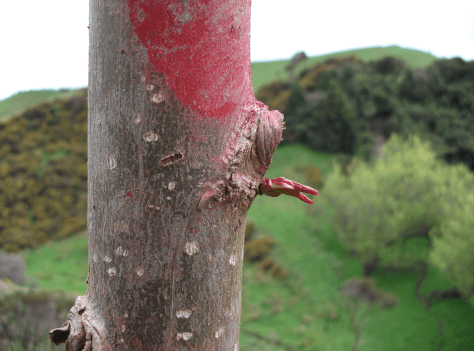
We have also planted a vulnerable hillside with poplar poles seen here with blue protective leaves.

Screen Shot 2015-10-26 at 6.18.41 am

Meanwhile, here is the neighbouring farm.

Screen Shot 2015-10-26 at 6.16.42 am

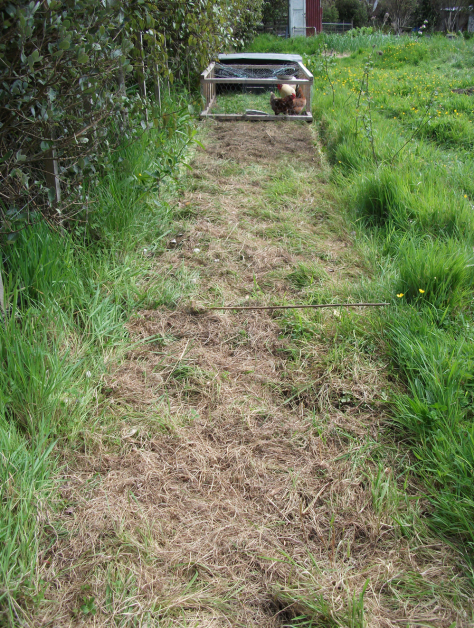
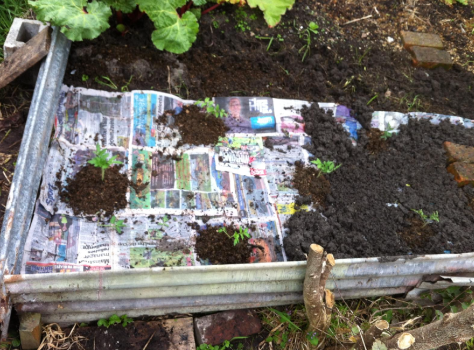
Water management can also be as easy as mulching heavily.

Screen Shot 2015-10-26 at 6.16.12 am

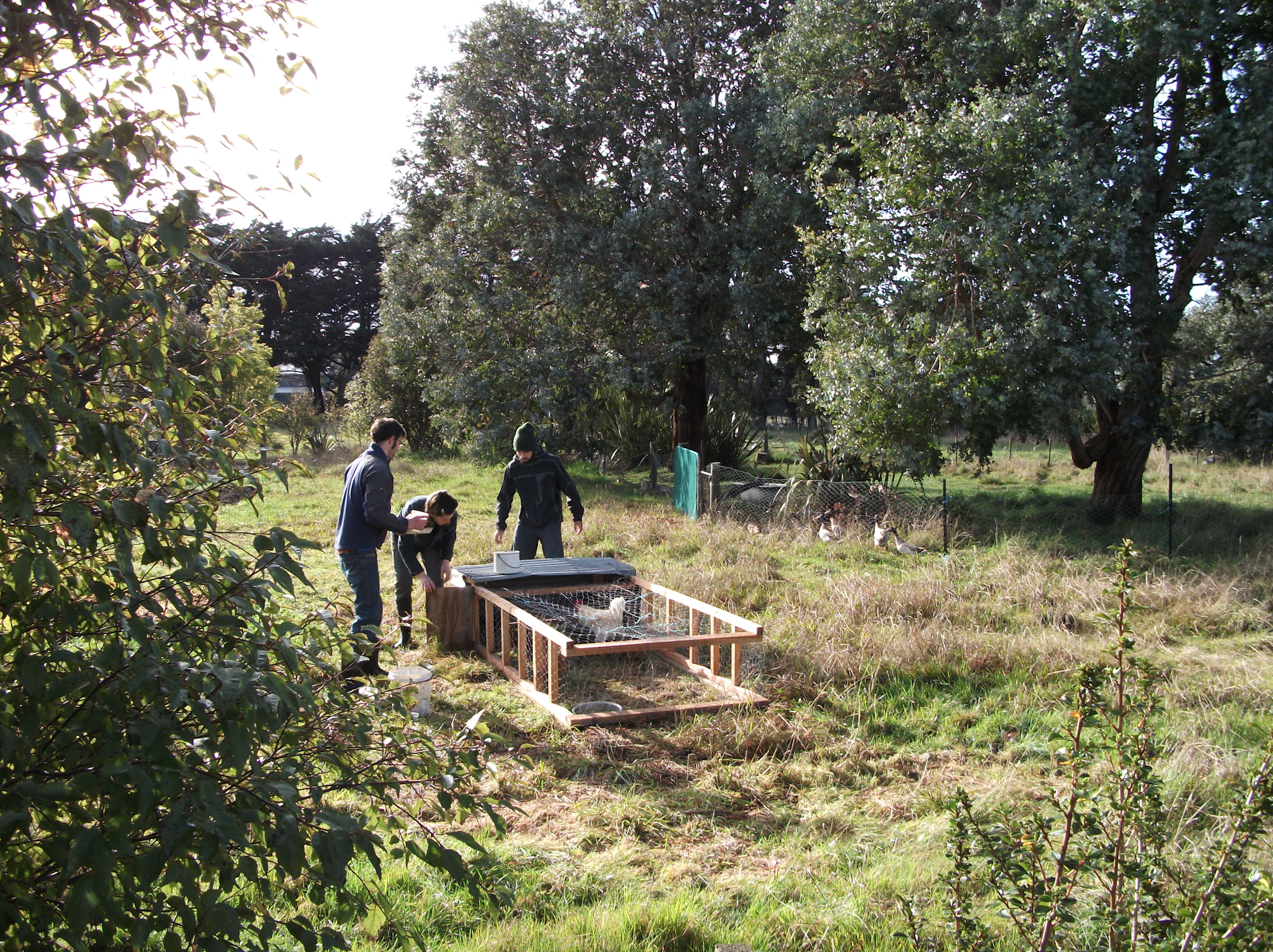
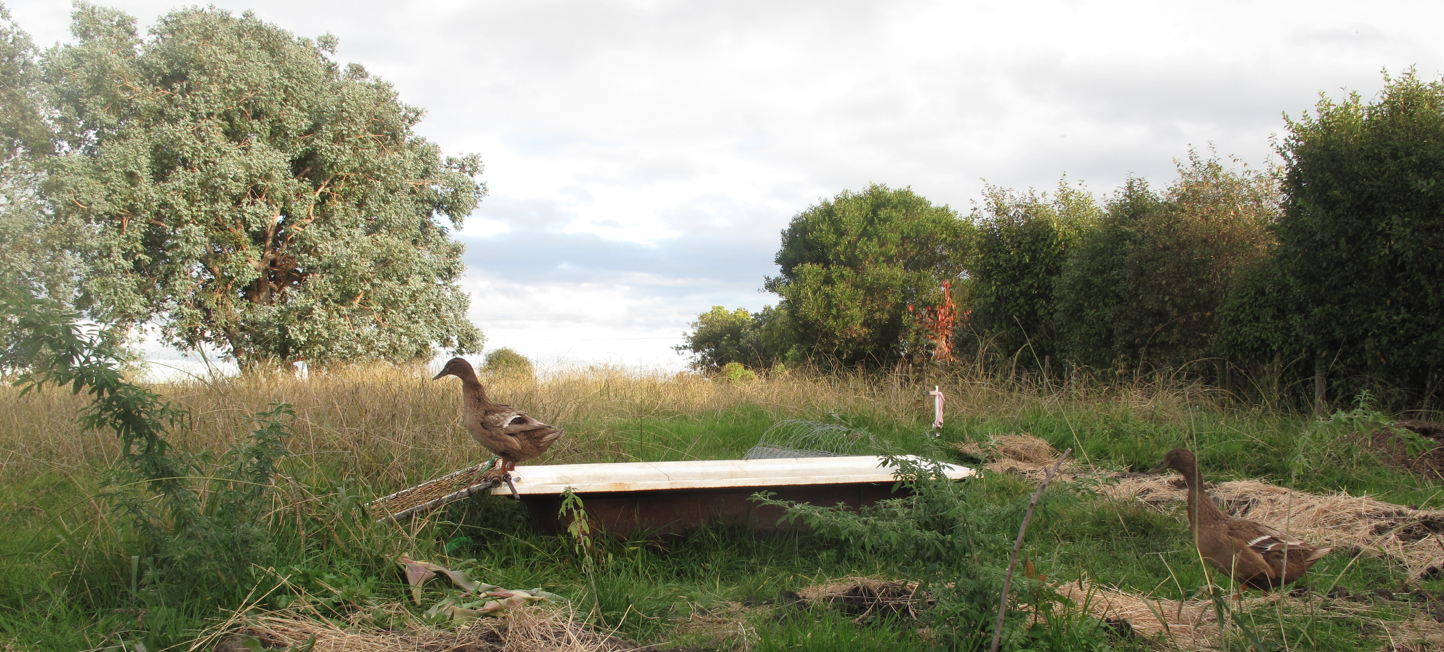
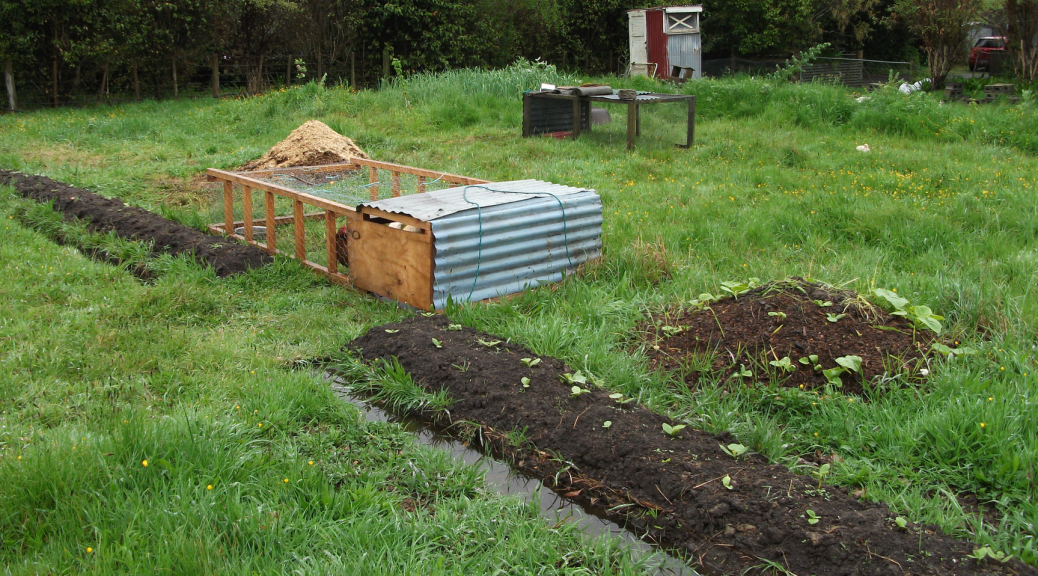
We’re also having great success tractoring chooks and ducks around the orchard and market gardens.

Screen Shot 2015-10-26 at 6.17.55 am

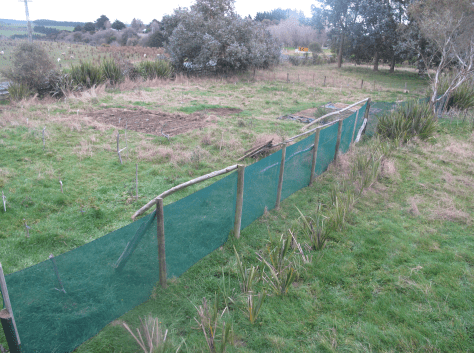
Edges tend to be high maintenance so I like to use the birds to do the work.

Screen Shot 2015-10-26 at 6.20.54 am

Recent signs of spring include pear blossoms.

Screen Shot 2015-10-26 at 6.15.30 am

I have a real affinity for pear trees.    Screen Shot 2015-10-26 at 6.15.38 am

Another sign of the season is Jersusalem artichoke starting to poke through.

Screen Shot 2015-10-26 at 6.16.21 am

Love this time of year.

Peace, Estwing

Whanganui Permaculture Weekend: Guest Post by Patrick

Permacutlure weekend:

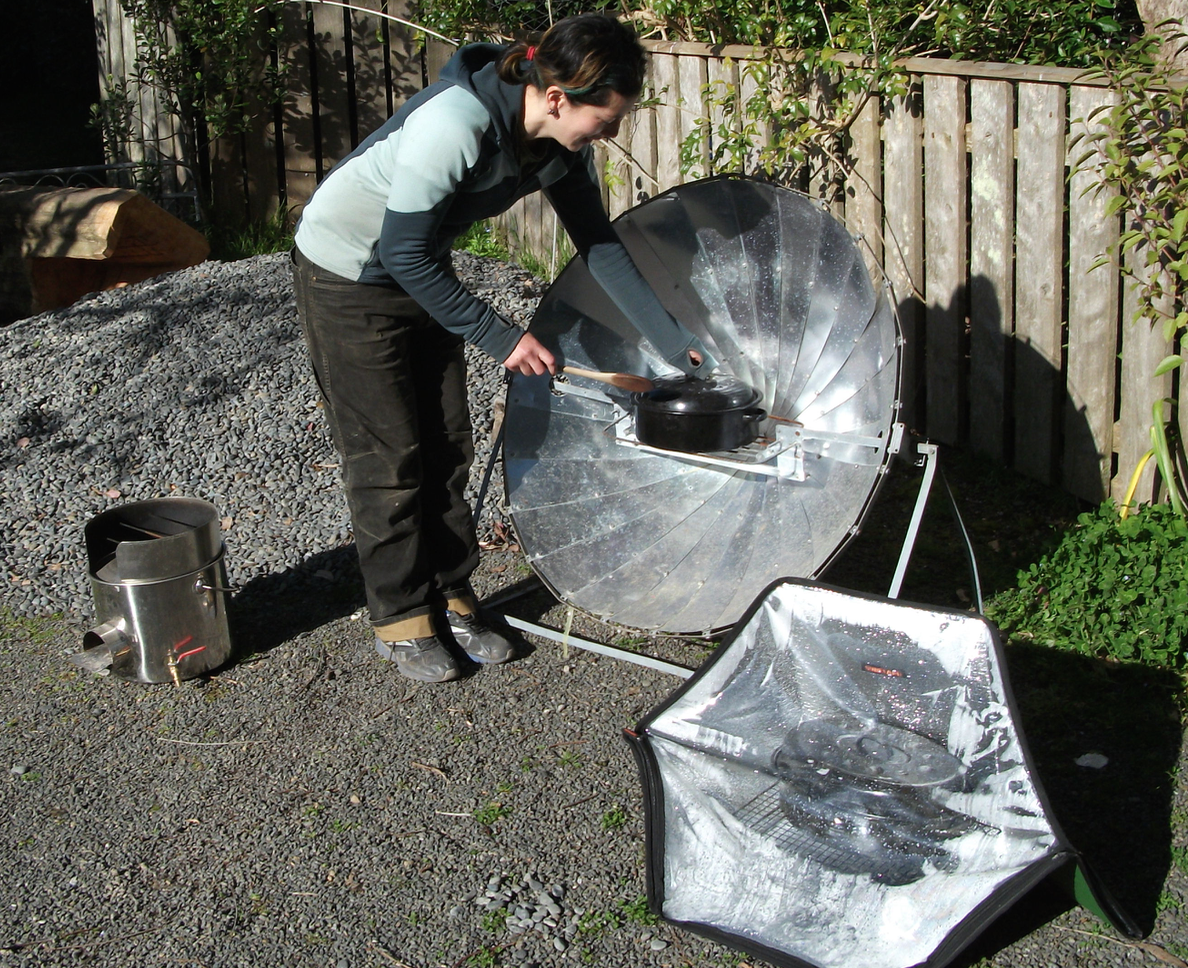
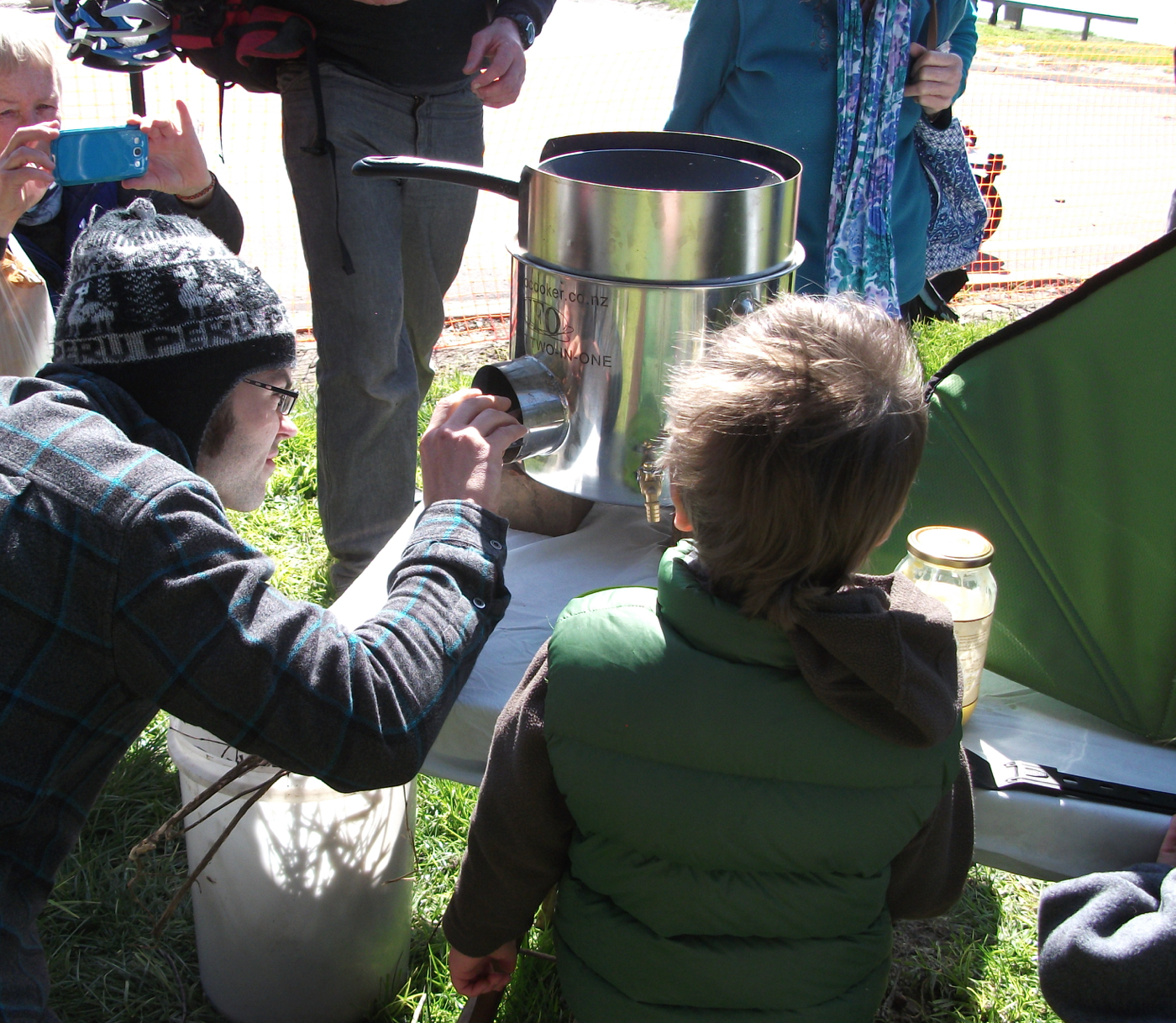
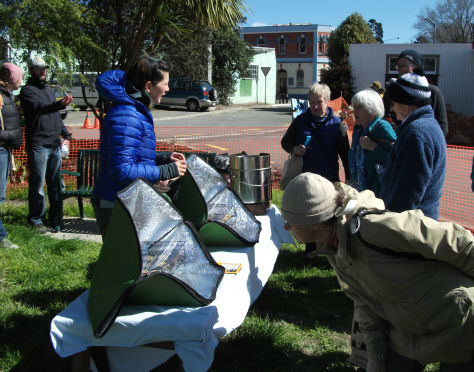
Enthusiasm, second only to the flu, has been the most highly infectious thing to hit Wanganui recently. It was the annual Permaculture weekend here in Wanganui a couple of weeks ago. Kelly and I hosted a solar oven and rocket stove demonstration near the Whanganui River during the weekend market. We had incredibly positive feedback and drew a surprisingly large crowd of enthusiastic locals as well as visitors during our two hour demo. It was great seeing so much excitement surrounding this straight forward, highly effective technology. Both the solar oven and the rocket stove are wonderful for camping, summer days when you don’t want to heat up the house, emergency preparedness, as well as reducing your energy costs throughout the year.

Screen Shot 2015-10-21 at 6.30.45 am

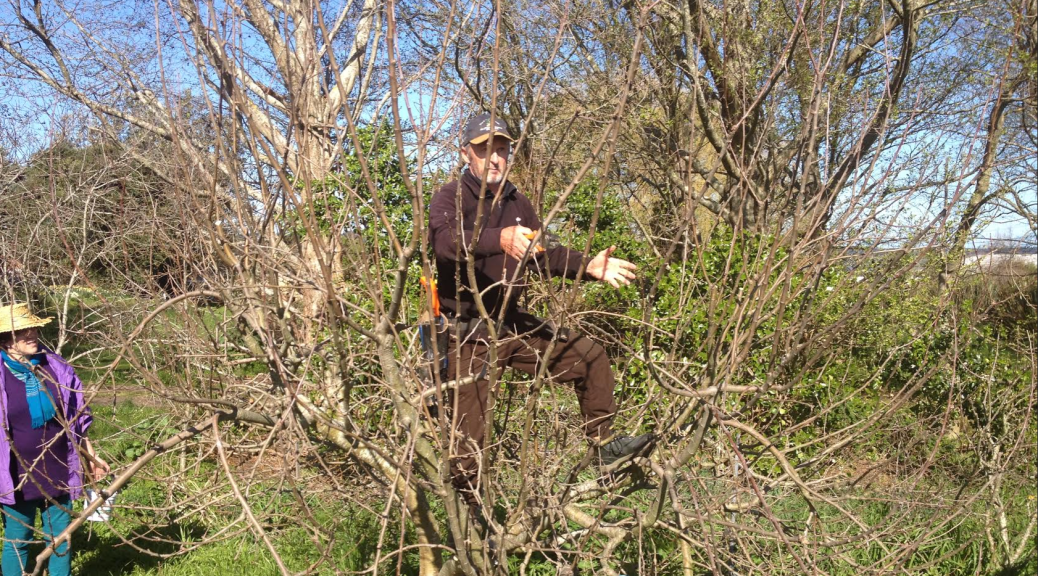
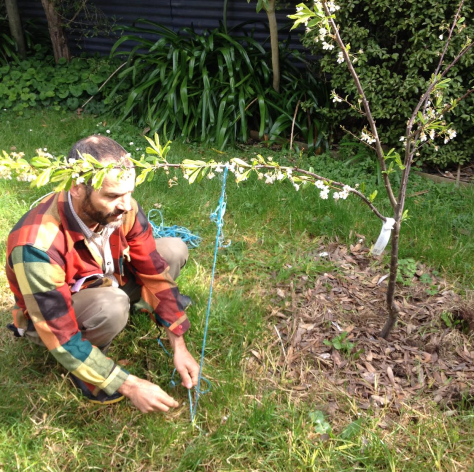
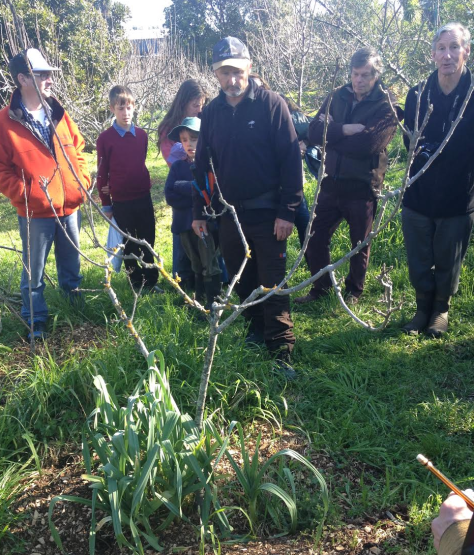
We also attended a fruit tree pruning and grafting demonstration conducted by Murray Jones where we learned heaps of useful information about keeping your fruit trees happy, healthy and productive. These things are achieved through attentive, and sometimes aggressive pruning, to insure the removal of all dead wood as well as branches that grow straight up or back into the tree, robbing it of nutrients that could be put into the fruit or productive new growth. Training branches to reinforce the desired shape (a vase in this instance) was also covered.

Screen Shot 2015-10-18 at 4.37.13 pm

Shaping your tree is done so that fruit is easy to reach and to insure that all areas of the tree receive ample sunlight. Additionally there is at least one more advantage, it becomes possible to stand inside the frame of the tree when pruning time comes around in following seasons.

Screen Shot 2015-10-18 at 4.37.43 pm

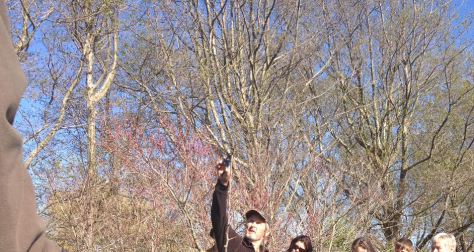
Murray also gave a brief explanation of why it is advantageous to perform bud thinning. This task is performed when your fruit tree is blossoming, you go through and pick a portion of the blossoms so that your tree will produce fewer fruit of a much higher quality. Also there are times when you will remove a specific blossom or blossoms from a cluster so that the fruit has enough space to fully develop. It was stressed that each fruiting species will have individual needs as to how and when to prune or thin blossoms, the focus of the demo was on apples, plums and pears.

Screen Shot 2015-10-18 at 4.36.46 pm

In addition to the pruning work shop we attended a community seed swap at the Quaker House in Wanganui. This was a really cool event and started off with each person introducing his or herself to the group of attendees and including a bit about their gardening history. As with the previous demos there was a really large and enthusiastic turn out. Experience levels ranged from seasoned veterans to novice level gardeners/farmers. Some of the seeds and plants available included fryer’s hat hot chili peppers, giant pink banana pumpkin, Jack be little pumpkins (whole fruit), zucchini, American Paw Paw, a large variety of corn and beans, sunflower, marigold, and even a Brazilian native tree that produces vibrant red flowers and is best utilized as a windbreak/bird and bee fodder. Everyone at the seed swap was incredibly friendly, enthusiastic and excited to learn or teach given their level of experience.

Next we went to a community screening of Inhabit, a documentary film showcasing North American permacutlurists and their properties. This film was hugely inspiring. There were projects and properties ranging from small urban settings up to a 106 acre organic farm in Wisconsin, all of which were tremendously productive and successful. One of my favorite aspects about the film was the attention given to people care, many of the featured projects were community efforts to rehabilitate polluted or unused urban blocks, as well as one project in California that offered ex-convicts a unique opportunity to transform land and themselves. Also it was really amazing to see the enormous yields of healthy food put forth from the execution of permaculture principles and way of life. It is about more than being less bad, we can be a positive creative force for our planet, that is a really empowering idea and one that resonates truth.

Screen Shot 2015-10-18 at 4.36.26 pm

Lastly we attended a tomato planting workshop hosted by Nelson Lebo. In this workshop we learned about selecting tomato plants, how and when to plant them, strategies for obtaining high yields from early to late season, fast economic ways to train your tomatoes, as well as shaping and feeding your plants. Again the turnout was excellent and full of people eager to learn, and one or two with some useful tips of their own.

Screen Shot 2015-10-18 at 4.35.51 pm

All in all the Wanganui Permaculture weekend was a really amazing, positive experience. So much information was shared about an astounding array of subjects, and some furious note taking will ensure that most of it will be retained, or stored when it will be called upon at a later date. Seeing so much energy put forth to promote such a positive way of life that is Permaculture has been so inspiring, I can’t wait for myself and Kelly to get to work on our own project. We have enjoyed our time at the Ecoshool immensely and will miss all of our new friends and hosts, but fear not Wanganui we shall return.

Screen Shot 2015-10-18 at 4.36.03 pm

Patrick Dorris

Permaculture Internship Opportunity

We have had amazing success with interns over the last five years. Our recent amazing interns have departed and we are keen for someone to join us from early November to early January.

Screen Shot 2015-10-10 at 6.50.16 am

We can offer an exceptional opportunity to learn whole systems design, land management, organic agriculture and horticulture, eco-renovation, water management, solar energy, resilient design, and community education.

Screen Shot 2015-10-10 at 6.51.09 am

The application process is rigorous, and we expect a lot of work from the interns including digging, cooking, and playing with our two children.

Screen Shot 2015-10-10 at 6.49.48 am

Our 5 hectare farm in on the outskirts of Whanganui. Although we have been here for just over a year, it is well on its way to becoming a premier permaculture property.

Screen Shot 2015-10-10 at 6.49.22 am

Contact us on: theecoschool at gmail dot com

Peace, Estwing

More Signs of Spring

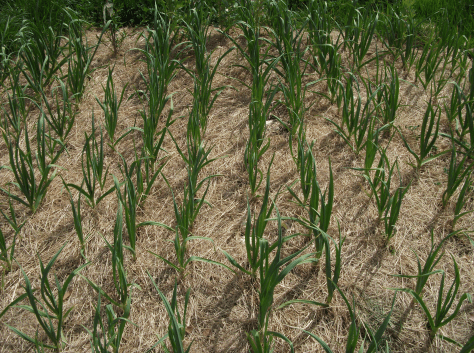
The signs of spring just keep coming. What a great time of year. The garlic looks to be a bumper crop with all of the rain and a good blanket of mulch.

Screen Shot 2015-10-04 at 1.33.28 pm

We are also eagerly anticipating strawberries.

Screen Shot 2015-10-04 at 1.33.47 pm

Other residents have different tastes.

Screen Shot 2015-10-04 at 1.33.59 pm

We discovered some overlooked potatoes yesterday.

Screen Shot 2015-10-04 at 1.34.08 pm

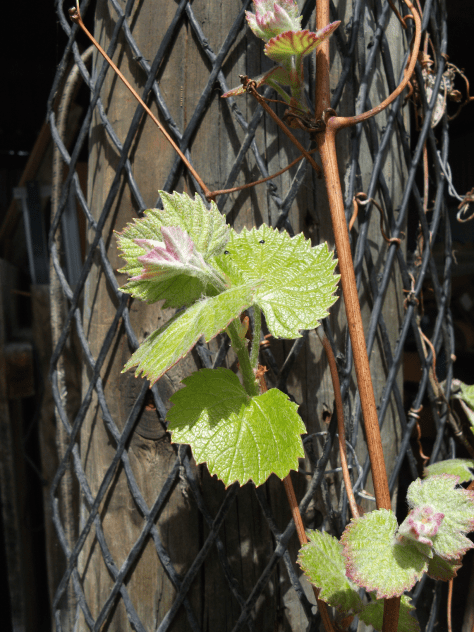
Grape vines are growing by the hour.

Screen Shot 2015-10-04 at 1.34.26 pm

The first plums are forming.

Screen Shot 2015-10-04 at 1.34.34 pm

   Although some of the plums look very strange. Any suggestions?    Screen Shot 2015-10-04 at 1.34.48 pm

And we really need to start eating more rhubarb.

Screen Shot 2015-10-04 at 1.35.01 pm

Peace, Estwing
More Signs of Spring

What an exciting time of year. Everyday there seems to be something to notice around the farm. For example, the poplar poles have sprung to life.

Screen Shot 2015-10-01 at 6.40.48 am

These Maori potatoes are on their way.

Screen Shot 2015-10-01 at 6.43.52 am

I put these hazelnuts in during winter and now they are leafing out.

Screen Shot 2015-10-01 at 6.43.13 am

In fact, the plants are growing so fast that we have engaged the help of Goat Buster to keep on top of the weeds.

Screen Shot 2015-10-01 at 6.41.45 am

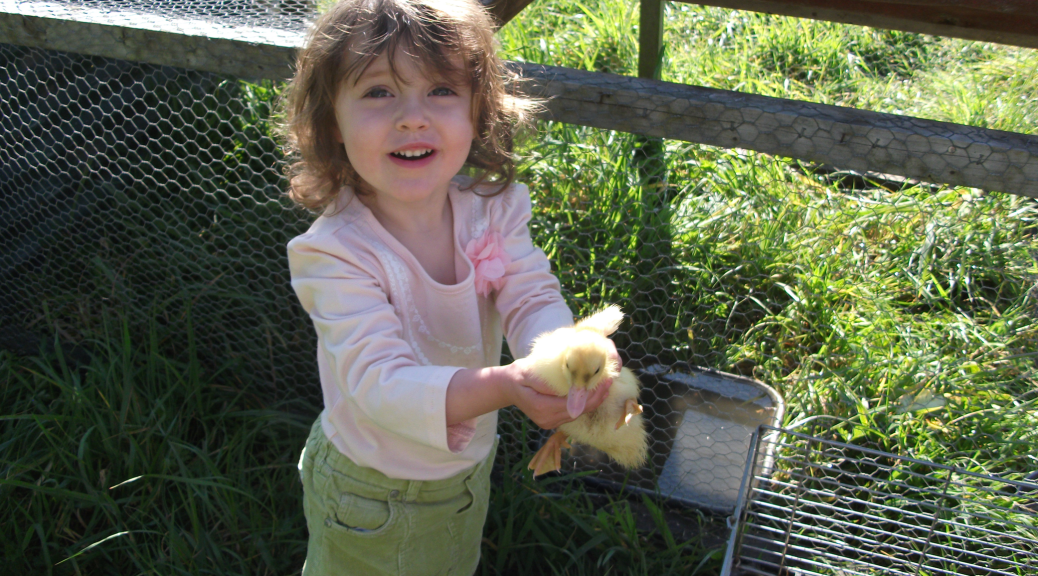
Other signs of spring, Amelia the muscovy is sitting on a next.

Screen Shot 2015-10-01 at 6.43.41 am

 I also picked up a muscovy family on my way home this week.

Screen Shot 2015-10-01 at 6.42.10 am

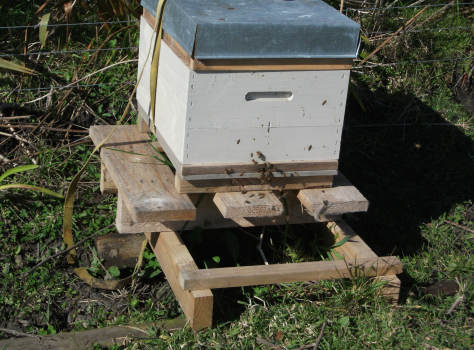
The bees know it’s spring.

Screen Shot 2015-10-01 at 6.43.30 am

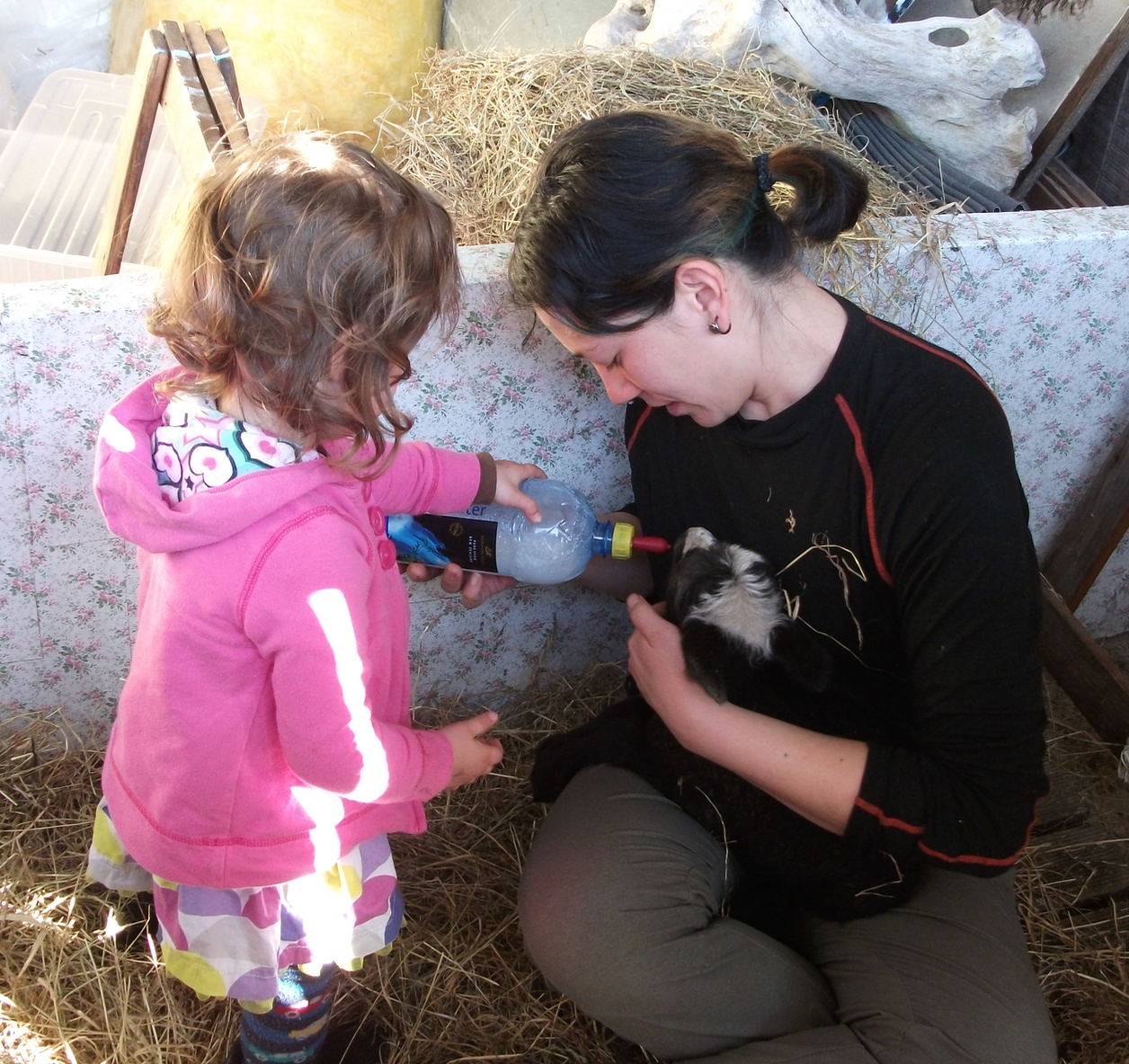
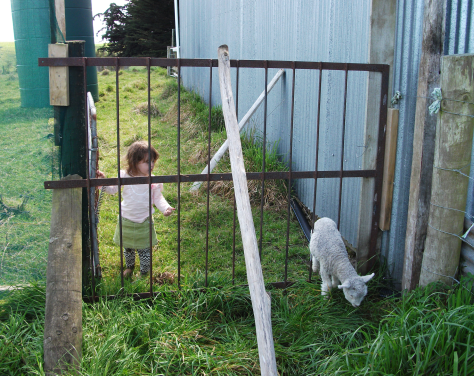
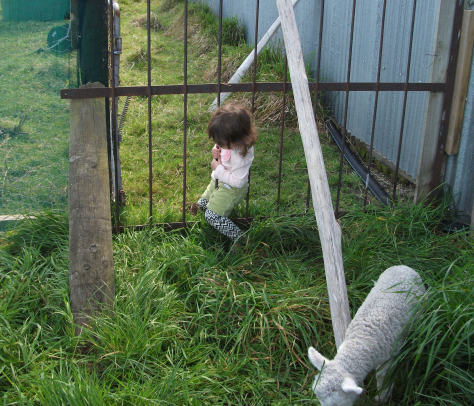
I have installed this gate to allow the lambs to access fresh grass un-grazed by their mums. This is part of the weaning process.

Screen Shot 2015-10-01 at 6.44.23 am

It works for three year-olds too.

Screen Shot 2015-10-01 at 6.44.44 am

Unfortunately, spring also means increased possum activity. With 130 fruit trees in the ground, we need to be on the defensive. This one is about to be mixed into the compost heap.

Screen Shot 2015-10-01 at 6.41.30 am

Peace, Estwing

Mid-Spring Permaculture Update

As the days get longer, life springs forth. Almost daily there is another example of the season. The garlic is up and thriving.

Screen Shot 2015-09-20 at 6.54.28 am

Our kitchen garden is pumping. Salad anyone?

Screen Shot 2015-09-20 at 6.58.17 am

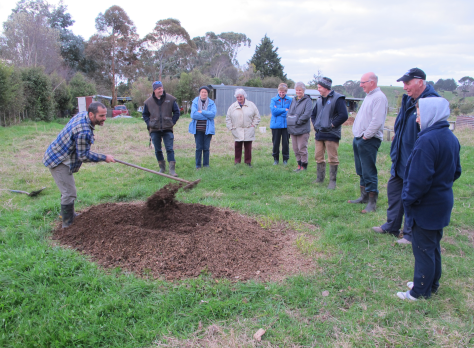
We just celebrated our third annual Whanganui Permaculture Weekend, alongside Adult Learner’s Week. Events included a hot composting workshop.

Screen Shot 2015-09-20 at 6.55.05 am

Demonstrations of the rocket stove…

Screen Shot 2015-09-20 at 6.57.39 am

… and solar cookers.

Screen Shot 2015-09-20 at 6.57.17 am

We’ve had some beautiful home kill lamb.

Screen Shot 2015-09-20 at 6.56.32 am

Tomato seedlings went in the ground yesterday.

Screen Shot 2015-09-20 at 6.54.04 am

And finally, the poplar poles are showing their first signs of life.

Screen Shot 2015-09-20 at 6.53.09 am

Peace, Estwing
Weighing Words

The best of Whanganui was on display last weekend. It was the root hairs of the grassroots; the calcium chloride of the salt of the earth; the best of times – the worst of times. Actually, it was just the best of times. But most importantly, it was real people doing real things.

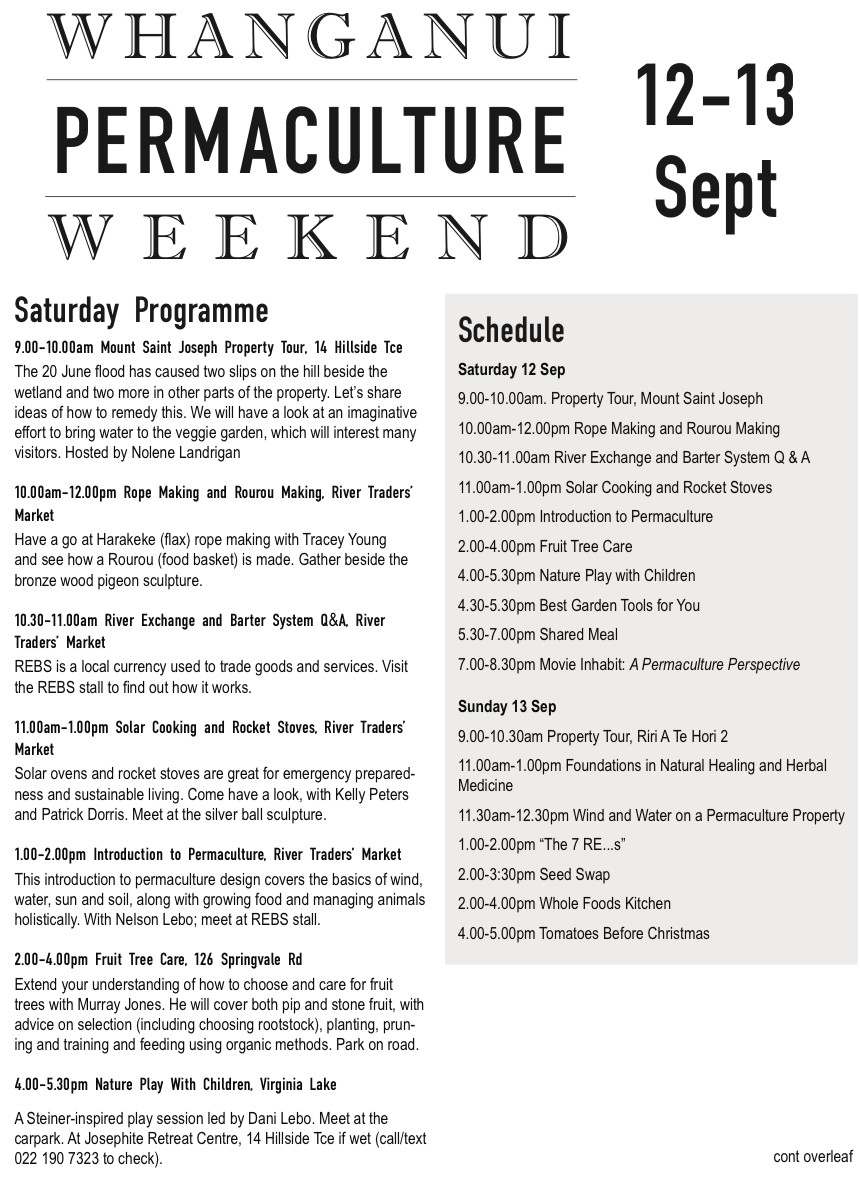
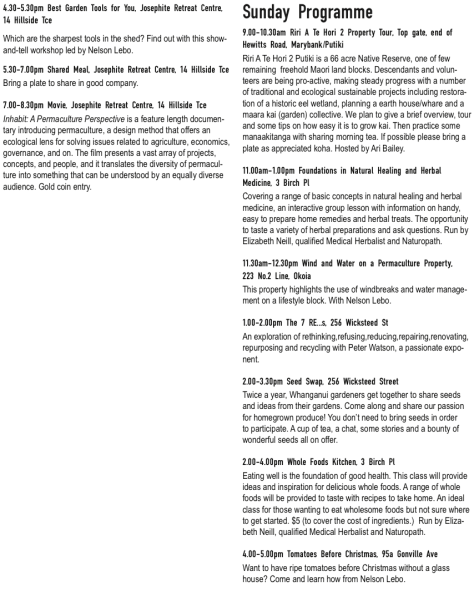
Whanganui Permaculture Weekend is the premier sustainability event in our region. The third edition held last weekend provided fabulous learning experiences for over 300 people at no cost aside from a gold coin donation to cover venue hire for the shared meal and amazing film: Inhabit: A Permaculture Perspective. The film was standing room only and many other events attracted 40-plus participants, some of whom traveled from Wellington, Taranaki, Raetehi, the Manawatu and Rangitikei.

The minimum estimated value of the weekend programme is $30,000. It is an event of the community and for the community: a real event for real people. We gave it to everyone for free.

As a keen observer of this city by the awa for the past five years, I reckon our community has less of a need for conferences that charge $1,000 per person and claim to be about sustainability (as we saw late last year), and more of a need for events that provide practical, affordable experiences and solutions.

Expensive talkfests have their place (somewhere), but they don’t and won’t meet our particular community’s needs. Real people taking real action is what meets our real needs. A good Maori friend once told me, “It’s too much hui and not enough do-ee.”

I’ve been in the sustainability game for nearly three decades and have never found a more genuine approach than permaculture. It’s great to see permaculture gaining traction in and around the River City, in addition to other grass roots initiatives. For example, I know of three start-up garden projects that are in the works or just underway. Good luck, friends.

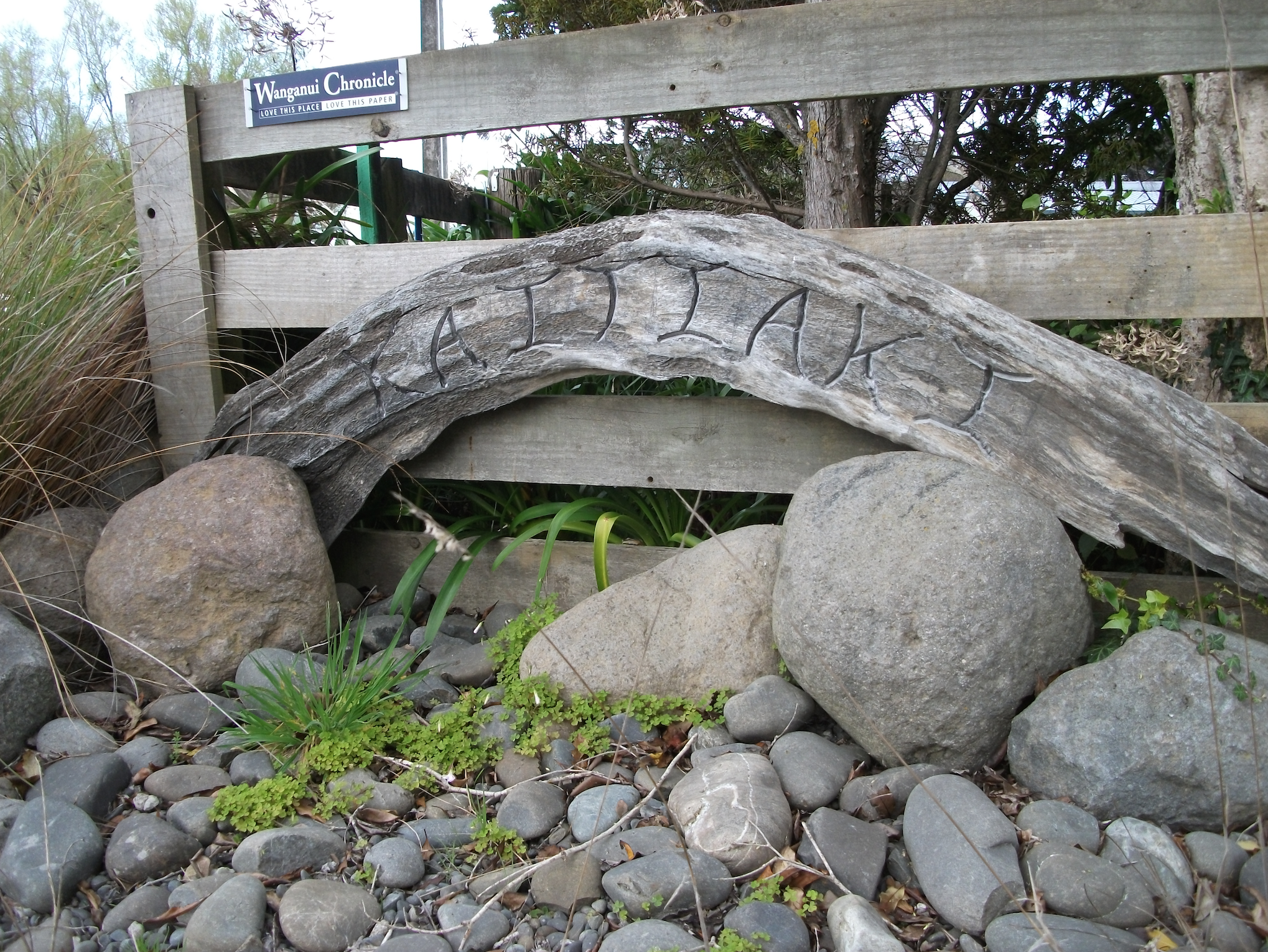
Almost everything I know about community gardens and permaculture can be summed up in one word: kaitiakitanga. It is the weightiest term I have run across in any language worldwide.

According to Te Ara, the Encyclopedia of New Zealand, “Kaitiakitanga means guardianship, protection, preservation or sheltering. It is a way of managing the environment, based on the traditional Māori world view” (www.teara.govt.nz).

From my limited perspective, this concept can equally be applied to the TPPA protesters in Whanganui and notably Dr. Chris Cresswell and his recent zen-like car surfing exercise. Chur, bro!

I also think that the success or failure of any garden project relies on having one or more kaitiaki – guardian. In other words, it takes a garden guardian. Sadly, previous community garden projects have failed on this point.

Another weighty word I hold in great regard is ganas – Spanish for desire or inclination. This term played a key role in the 1988 film about a high school maths teacher in a low decile school in East Los Angeles. It is a must see for any teacher or spouse of a teacher.

Ganas and guardianship are the key to success for any gardener, and so it was with great pleasure that I recently visited Sarah O’Neil’s blog: “Sarah the Gardener: Real Gardening in my Real Garden.” Good stuff, Sarah!

Sarah will be sharing her passion for gardening and writing at an event tomorrow as part of the Whanganui Literary Festival. From the brochure:

“Sarah lives on a lifestyle block in the Waikato with her family… Her book, The Good Life: Four Seasons in MY Country Garden, is a funny and inspiring look at the ups and downs of a year in the garden. Join Sarah for High Tea (BYO Gumboots).”

Sounds great, but one question: Do I really have to put on my gumboots again? I’ve been living in the bloomin’ things for months!

 Screen Shot 2015-09-18 at 10.08.26 am

Sidebar: Missed the weekend but want to learn about permaculture? We’re offering books and calendars to Whanganui locals for well below retail prices. Contact us for details.

Two New Flavours: Pre-silience and Post-silience

Volatility and resilience have entered the lexicon of politicians and economists over the last seven years. It is not uncommon to hear these words uttered by John Key, Tim Groser, Andrew Little, Russell Norman, or Metiria Turei. I have not heard Winston Peters specifically use these words, but I assume he has because he’ll say anything.

Gareth Morgan, Shamubeel Eaqub, and journalist Rod Oram appear to recognize market volatility and the importance of building resilient industries and communities. Parts of the recent regional growth study recognise these as well.

As a risk averse, conservative thinker myself, I spend a lot of time pondering volatility and resilience, and have come to divide what we commonly hear about the latter into two categories: pre-silience and post-silience.

Pre-silience is about being proactive and trying to avoid something bad from happening. When it is successful, no one notices. It’s like when Child Youth and Family does a fantastic job 99% of the time we never hear about it. It does not make the news. In other words, pre-silience is critically important but low profile.

During the renovation of our Castlecliff home, pre-silience was about adding lots and lots of insulation, installing curtains properly, and shifting windows around. This is not sexy stuff.

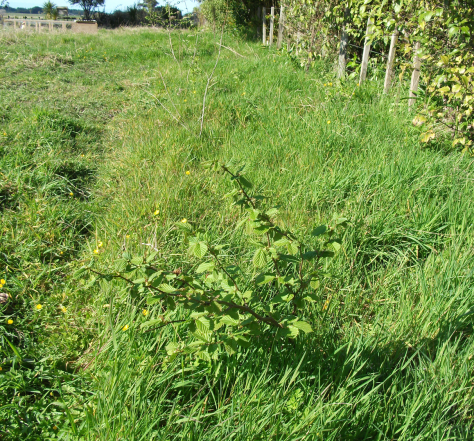
On our farm, pre-silience takes the form of building soil fertility, improving drainage and water storage, planning and planting windbreaks, and protecting vulnerable slopes. This is not sexy stuff.

Post-silience, if not sexy, is definitely “news worthy.” Post-silience, or lack thereof, pops up suddenly after volatility rears its head be it geological, climatic or economic. For example, the Christchurch earthquakes exposed weaknesses in some families’ and communities’ abilities to respond to the disaster. Poo is a great example. What do you do with it when the sewer lines are broken? Two of our friends in the permaculture movement made it their mission to build and promote composting toilets as a viable solution to post quake sanitary human waste management.

Post-silience was front and centre in our own community during the aftermath of the June floods as thousands of volunteers joined in the effort to support affected families and clean up silt from roads and sidewalks. People are great at rallying in a pinch, and post-silience is much more photogenic than pre-silience.

Economic volatility – especially in global dairy markets – has slammed farmers who are also suffering from climatic volatility. I was gob smacked recently when I heard talk of severe drought on the horizon for some of our farming regions. Too much water and too little water: this is the future of farming in Aotearoa: the land of the long white cloud. Indeed, scientist tell us we will be seeing more heavy grey clouds, cumulonimbus, and weeks on end without a cloud in the sky. How do you say that in te reo?

Well over half the work I do on our farm is in preparation of increased extreme weather events. The bad news is that all of this investment provides no financial return in the short run. The good news is that all of it protects financial returns (and minimises losses) in the long run. A thriving, pre-silient farm is my life insurance policy for my children.

But it is not all digging ditches, aerating soils, making compost, and planting trees. We also embrace low-energy technology that contributes to both pre- and post-silience. Two great examples are solar cooking and rocket stoves.

Screen Shot 2015-09-11 at 11.18.21 am

Both are highly energy efficient and do not rely on mains power, gas, batteries or LPG.

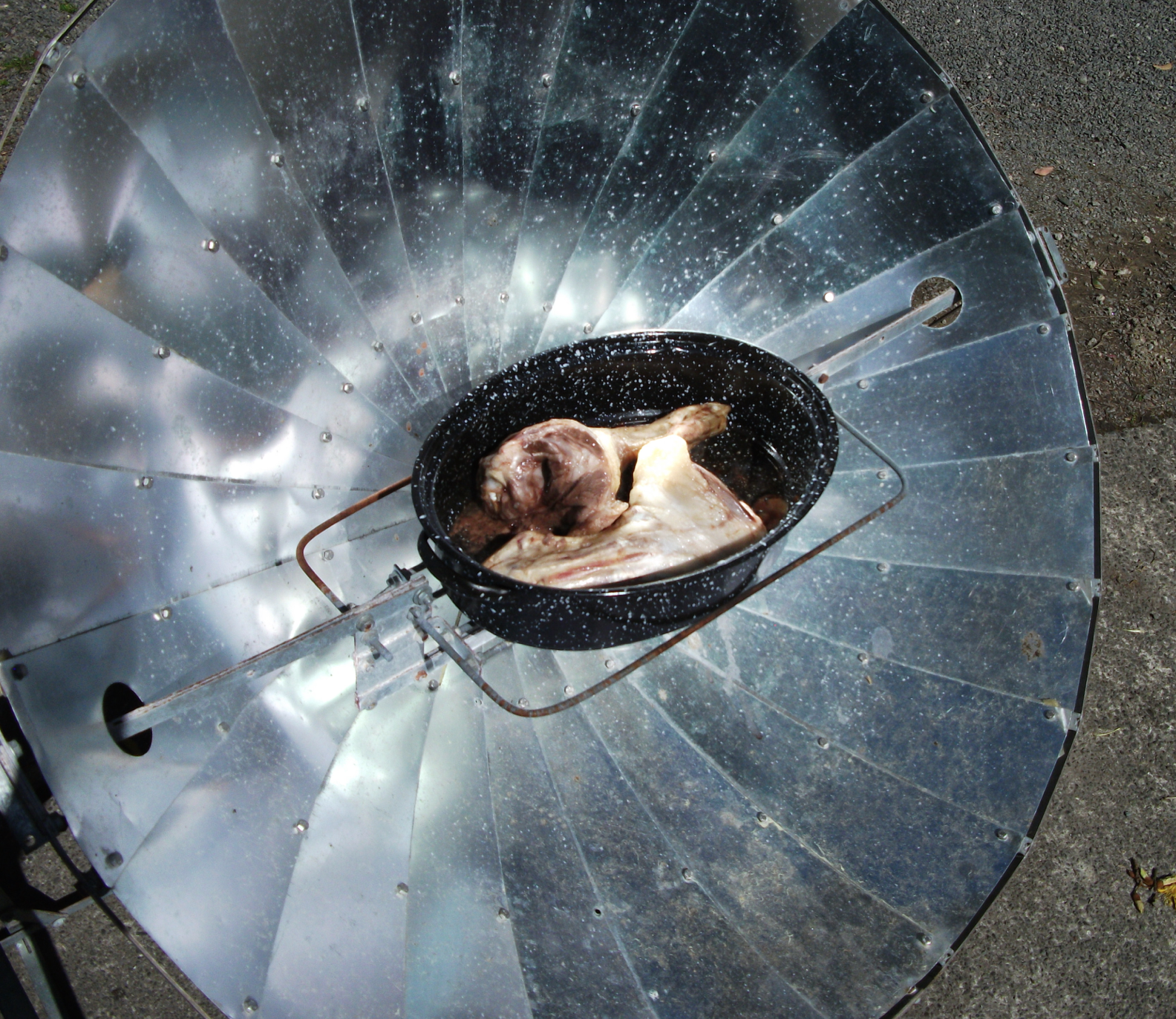
We have been solar cooking for nearly a decade and rocket-stoving for half that. A power loss due to earthquake or windstorm would have little effect on our culinary abilities. We often do our Sunday roast on the solar cooker and recently our interns Patrick and Kelly brewed a Kiwi IPA on the rocket stove.

They will be demonstrating their skills from 11 to 1 today along the riverside near the Silver Ball sculpture as part of the 3rd Annual Whanganui Permaculture Weekend. If you are curious about permaculture design, there will be an introductory workshop at 1 today. Meet at the REBS Market stall. Screen Shot 2015-09-11 at 11.18.37 am

The full programme can be viewed at the Permaculture Whanganui Facebook page or at the REBS stall. It was also published in full in last week’s River City Press.

Regenerative Agriculture: The Popular Face of Permaculture

“Hippy farms always fail.” These were the words of Chuck Barry, a small-scale organic farmer I met in Montrose, Colorado about ten years ago. Chuck made a comfortable living growing high quality vegetables on two acres in a dry and seasonally cold environment that may be compared with Central Otago high country.

His comment was based on observations of some people going into farming with good intentions but little understanding of the amount of work involved and inadequate business sense. There is popular, quaint, romantic notion among many people about growing food organically. But at the end of the day, when faced with actually doing it, most hippies opt out because it turns out to be just too hard.

On the other end of the spectrum – as we have been hearing recently in the news – many conventional farms also fail. Conventional farming wisdom over the last decade goes something like this: 1) borrow lots of money from the bank; 2) convert to dairy; 3) borrow more money; 4) rely on ever-increasing dairy pay outs; 5) borrow more money; 6) rely on ever-increasing land prices; 7) get rich; 8) what could possibly go wrong?

Well, now we know. Dairy pay outs have fallen through the floor and many farmers are pushed to the wall.

On one hand I feel sorry for those famers who have to sell because of their now un-payable debts. But on the other hand, I question why they bought into the paradigm described above in the first place, which appears to me to be very risky.

Alongside financial debt, many conventional farms also run a large soil debt. We see it every day flowing past our city and out into the Tasman Sea.

Screen Shot 2015-09-04 at 10.19.55 am

Like financial debt, soil debt is difficult to repay but not impossible. Rebuilding soil fertility while growing food is sometimes called regenerative agriculture. Regenerative agriculture can include organic farming practices, some biodynamic techniques, and holistic range management. All three of these fall within the scope of the eco-design system known as permaculture. I see permaculture as the middle ground between failed hippy farms and failed conventional farms. Screen Shot 2015-09-04 at 10.05.45 am

For those who are far right of centre, permaculture may seem like a hippy philosophy, but I would argue that its endurance (40 years and counting) proves it is not. Permaculture farming and land use is practiced around the world in a wide range of climatic conditions from desert to rainforest and in between. It is likely that someone in every country on earth is practicing permaculture in one form or another.

Locally, permaculture is practiced by a small but growing number of people in our community – mostly in the forms of organic and regenerative agriculture. But the scope of permaculture extends far beyond growing food. As a system for eco-design, it is a natural lens through which to view energy-efficient housing, and even the waste management programme for community events that I brought to Whanganui five years ago can be considered an application of permaculture thinking because it takes a holisitic perspective of inputs, outputs, and the human element of waste management. Screen Shot 2015-09-04 at 10.05.36 am

While permaculture is only one of many eco-design philosophies, what sets it apart from the others in that it is based in a set of core ethics: care for the earth; care for people; share surplus resources. It is these ethics that are the driving force behind the third annual Whanganui Permaculture Weekend, as dedicated permaculturists in our community share their knowledge, experience and enthusiasm on a wide range of topics.

Thanks to those who have stepped up with offerings next weekend and thanks to Adult and Community Education Aotearoa for working with us to organise Adult Learners Week, which starts Sunday.

Screen Shot 2015-09-04 at 10.05.26 am

Adult Learners Week – He Tangata Matauranga 2015

6th – 13th September

Whanganui

All events are free thanks in part to support from Adult and Community Education Aotearoa.

Sunday 6th 2-3 PM. Best Heating Options for Your Home, Central Library

Tuesday 8th 5-6 PM. Hot Composting, 223 No.2 Line

Wednesday 9th 4-5 PM. Reducing Heat Loss Through Windows, Gonville Café Library

Friday 11th 4-5 PM. Managing Moisture and Condensation, Gonville Café Library

In conjunction with the Whanganui Permaculture Weekend

Saturday 12th 4:30-5:30 PM. Best Gardening Tools for You. Josephite Retreat Centre, 14 Hillside Tce.

Sunday 13th 4-5 PM. Tomatoes Before Christmas. Wanganui Garden Centre, 95a Gonville Ave.

Screen Shot 2015-09-04 at 10.24.08 am Screen Shot 2015-09-04 at 10.23.26 am

Screen Shot 2015-09-04 at 10.23.39 am