
Category Archives: Eco Thrifty Renovation

Around the World in Eight Designs: Part 8

Last week I wrote about a centuries-old style of home that ticks most of the boxes for good house design. The New England Saltbox can be said to be an early example of passive solar design, which takes advantage free heating by sunlight during winter months.

The obvious first requirement of passive solar design is to have more windows facing the equator than facing the poles (depending on which hemisphere the structure happens to be located in). Windows are both an asset and a liability to a warm home. When winter sun shines directly through glazing a house is warmed, but when it does not, windows release warmth to the outdoors.

In our region, south-facing windows lose heat more or less all the time between May and October. Even north-facing windows lose heat during winter nights, which happen to last 14 to 16 hours. From this perspective, window placement is key to passive solar design.

Taken to the extreme, a passive dwelling could have glazing on the entire north side and none to the south. This is exactly the type of structure I encountered a decade ago in Ladakh, India, although the orientation was reversed for the northern hemisphere.

The region of Ladakh lays mostly between the Himalaya and Karakoram Mountain ranges. The Ladakhi people live between 3,000 and 4,000 metres elevation. I spent five months working with a remarkable organisation called the Students Educational and Cultural Movement of Ladakh (SECMOL). Among the excellent work done by SECMOL is passive solar design/build using rammed earth.

Ladakh is a desert in the sky. Its primary resources are earth and sun. Trees are scarce. Wood is costly. Homes have been made using rammed earth for centuries, but better design has improved their performance during the last two decades. It is now possible to build homes, schools, and offices that are completely heated by sunshine. I spent a winter there in a room that was much warmer than most homes in the Manawatu.

Passive solar design is not only about sunshine. It also relies on thermal mass and insulation in proper proportions. Getting the balance right can result in warm, comfortable homes with very low running costs. And here is the best part: building a high performance passive solar home is cost comparable with building a typical New Zealand home.

Maybe rammed earth or a Saltbox is not your cup of tea. No worries. These are just examples of good passive solar design. There can be variations on the theme, but the theme does not change:

A-B-C, easy as 1-2-3, simple as solar gain, thermal mass and insulation. That’s how easy a cosy home can be.

Screen Shot 2015-07-24 at 10.27.29 am

Around the World in Eight Designs: Part 7

Over the last month and a half I have introduced some of the basic principles in good home design. I started with examples of passive solar heating and cooling in Colorado and New Mexico, USA. Next I made the point of passive cross-ventilation by recalling time spent in Granada, Nicaragua. For the last two weeks I’ve written about my former home – a 230 year-old farmhouse in New Hampshire, USA.

This week’s example of good home design combines all of the principles already discussed, but in an 18th Century context. For it’s time, the New England Saltbox was innovative, and can serve as a rough model for what would be an ideal dwelling for the Manawatu.

 Screen Shot 2015-07-12 at 10.33.43 am

In its most basic sense, a passive solar home has more windows facing the equator than facing the poles. The New England Saltbox home solved this problem by having two floors facing south and only one facing north. This was accomplished by an extended roof pitch to the north, which made the home resemble the form of a box in which salt was kept at the time. Thus, the name.

 Screen shot 2015-05-19 at 7.54.52 AM

From the side, a Saltbox is asymmetrical, but that is exactly the point. With the majority of windows facing the winter sun, the dwelling can be passively warmed. Meanwhile, the long pole-ward roof directs icy winds up and over the structure.

Another element of the Saltbox is a central chimney, much like the Cape Cod house design I have been writing about for the last fortnight. A centrally located heat source will almost always perform better than a heater located on an external wall.

Finally, even in New England where snow cover can persist for four months a year, summer temperatures can reach nearly 40 degrees. To deal with these conditions, a Saltbox is perfectly suited for passive cross ventilation: warm air flows out of the upstairs windows while cool air enters downstairs widows from the shady side of the home.

This is not to say that we must be building Saltboxes across our region. It is to say, however, that we should follow the basic design principles that make the Saltbox so successful in terms of energy performance, health and comfort. Additionally, as I mentioned last week, there is a lot to be said for simple rooflines and fewer external corners than we see on most new homes being built in New Zealand.

Think about it, every time we see a picture of an award-winning eco-home it has four corners and a simple roof. Back to basics is best practice for good home design.


Peace, Estwing

Around the World in Eight Designs: Part 6

Last week I wrote about the first home I ever owned: an elegantly simple farmhouse built in 1782. The style of the house is called “Centre Chimney Cape Cod.” The 233 year-old structure has endured with minor repairs, and the Cape Cod style has also endured. To this day homes are still built in New England, USA with the same basic form. I believe the Cape Cod home has endured for a number of reasons.

First of all, the style is timeless: four walls, two roof pitches, and a large chimney smack dab in the middle. It is a quintessential home design that keeps out the weather and holds in heat.

Screen Shot 2015-05-25 at 7.39.43 am

Second, it is inexpensive to build. The design is so straight-forward that construction costs are kept low. A Cape Cod can be built quickly with efficient use of materials. About a decade ago, my neighbours in New Hampshire, USA had a two-story Cape built in a factory and delivered on four trucks.

In less than a week the large home was weather-tight and ready for plumbers and electricians. There can be little doubt that this type of approach would improve both the speed and affordability of home construction in Auckland and Christchurch. Whether it would be appropriate for the Regions remains to be seen.

Another of my neighbours in New Hampshire runs a small company called Shelter-Kit. They build flat pack kit buildings that can be packed into a shipping container and transported anywhere in the world. All of the materials are pre-cut and pre-drilled, and designed so that two people with basic tools can assemble a home in two to three weeks. They call their model the “Barn House.”

A third reason the style has endured is that it is durable. What I mean by this is that there are no complex rooflines or special flashing details required to keep water out. “Leaky homes” is a lingering problem in New Zealand with the estimated cost exceeding the Christchurch rebuild according to some sources. Keeping water out starts with good design, and in most cases the simpler the better.


Peace, Estwing

Positive Pressure – Negative Results

Editor’s note: Another weekly column in the Wanganui Chronicle.


Oops! What a difference a word makes. In last week’s column I inadvertently used “our home” when I should have used “a home” when referring to a positive pressure ventilation system. In the context of explaining that dehumidifiers are valuable at times, I wrote:

“It’s there at the ready should we need it, but like a positive pressure ventilation system installed in a roof cavity it only removes the damp that is already inside our home.”

Please note we do not have a positive pressure ventilation system nor would I ever consider installing one. They are expensive and research shows that they make homes two to three degrees colder. As such, they are certainly not suited to an eco-thrifty approach to low-cost / high-performance housing.

Screen Shot 2015-07-01 at 7.24.56 am

The term “positive pressure” may not be familiar to you, but the name brands certainly will be. The two largest companies are known by their initials and are more-or-less household names in New Zealand. Smaller companies tend to put a snappy word in front of the word “vent” to brand themselves. Fictional examples would be Platinum-Vent, Uber-Vent, or Sweet-As-Vent.

To the best of my understanding, positive pressure ventilation systems make homes colder in two ways. The first and most obvious way is that they pump cold, dry air from the roof cavity into the living spaces. This tends to make homes dryer at the expense of warmth.

The other way requires a more holistic understanding of how a home functions, so we can expect letters of complaint to the Chronicle from those ardent writers who neither read for comprehension nor tend to believe in scientific research.

As I have written dozens of times over the last 40 months, restricting airflow around curtains is critical to their functioning as window insulation. Closing off the top of a curtain track with a pelmet or similar strategy, and ensuring that curtains touch the floor are the most important factors in curtain performance. But at least one positive pressure ventilation company specifically recommends that purchasers of their system leave the tops and bottoms of curtains open to allow ample airflow. This advice makes homes colder.

Aside from the accidental miswording, last week’s column was all about arresting moisture before it builds up in a home. Dehumidifiers and positive pressure ventilation are after-the-fact approaches. They treat symptoms of unhealthy homes. But like modern medicine, treating causes is better and more cost effective than treating symptoms.

With this in mind, here is a question from a Chronicle reader.

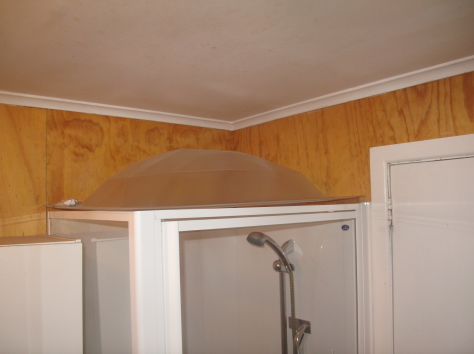
What is the best covering for bathroom windows? I have a large window over the bathroom vanity. I like to keep the bathroom door open for ventilation but all winter the cold is coming in via the window. Wary about putting thermal curtains up in a room prone to moisture. I have a showerdome which is brilliant at minimising steam from shower. Your advice would be appreciated. – Liz  Solly

 Screen Shot 2015-07-01 at 7.27.33 am

Thanks Liz,

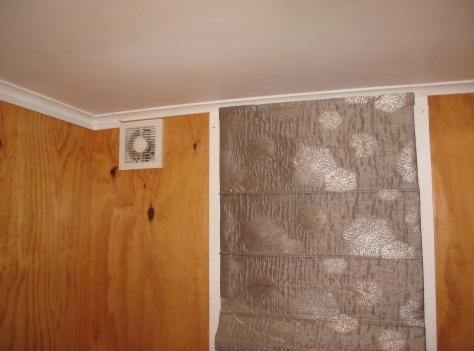
There is no reason that any bathroom cannot have a curtain or Roman blind. The key, as you have identified, is managing moisture. Shower Domes are great, as is a similar product called Steam Stopper. But in both cases, an extractor fan with a ten-minute delay timer may be an additional measure to ensure that the bathroom won’t suffer from perennially high humidity. From this perspective, any type of window covering should do, although I would avoid cotton. Manage moisture first and effectively at its source, and then you should never have to worry about mould.

 Screen Shot 2015-07-01 at 7.25.19 am

Along the same lines, I got this feedback from another reader:

“Since [we] put polythene under my house, my home is significantly warmer and drier.  In the kitchen it was common for me to have large damp patches appearing on my wooden floor, so bad I used to think that the kids had spilled something without telling me!  Since the polythene went down there is no sign whatsover of that rising damp…. My home feels healthier, drier and warmer, my only regret is that I wish I would have done this years ago. Thoroughly recommend. Thank you Nelson. 🙂 ”


Peace, Estwing

Around the World in 8 Designs: Part 5

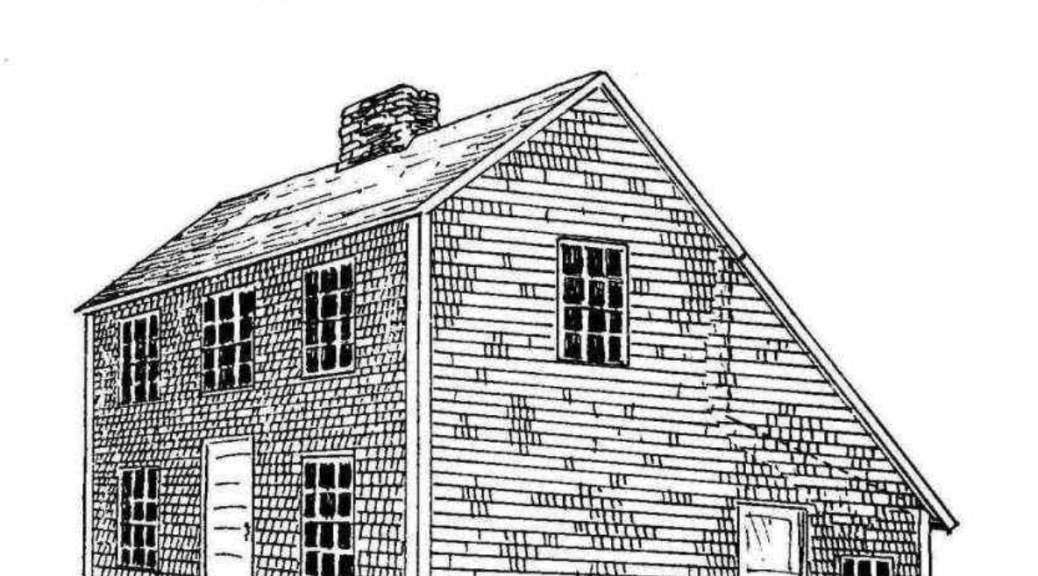
This week’s column is special to me because it’s about my first home in New Hampshire, USA. The house was built in 1782. I bought it in 2000. Locally, the style of the home is called a Centre-Chimney Cape Cod. Cape Cod is a peninsula extending into the Atlantic Ocean from Boston, Massachusetts. Summers on the Cape are brilliant, but winters can be brutal. Early residents built their homes around a huge chimney containing up to four fireplaces. (You read that correctly.)

Screen Shot 2015-05-25 at 7.39.56 am

As the first half of the name implies, chimneys were located at the geographical centre of the home, surrounded by living spaces. Put another way, the fire(s) were specifically located as far away from external walls as possible. Put simply, this is good home design. It is so obvious, in fact, you may wonder why I bring it up at all. Apparently, some time between 1782 and the present day, architects forgot where to place fixed heating devices. Every week I see a dozen homes with poor heater placement. The classic example is the flued gas heater in the lounge at one extreme end of a long rectangular house. Meanwhile the bedrooms at far end of the home are frigid and more than likely mouldy as well. A somewhat misguided solution to this situation was to put an unflued gas heater in the hall between the bedrooms. Screen shot 2015-05-19 at 7.30.01 AM While on the surface the location of the heater may seem appropriate, there are two flaws: 1) unflued gas heaters release 1 litre of water per hour into a home often contributing to the mouldy walls in those far flung bedrooms; 2) a hall may be central to a home, but it is not a living space. Another brilliant aspect of the design of my 18th Century home is that it had no hallways. Just four rooms around a central chimney – elegant simplicity and a lesson for today’s architects. Screen shot 2015-05-22 at 12.47.38 PM Special Note: Last week I departed from what was meant to be the 4th example of good home design from around the world (today’s column) to discuss the issue of indoor moisture caused by rising damp. Because of the rain we’ve had recently, I’m afraid that rising damp will be a huge problem for our region for the rest of this winter. Soils are saturated everywhere and it will be summer before they are dried. If your home has been especially damp lately, please ring me at the number below.

Dealing to Damp Indoors

Editor’s note: Another weekly column in the Wanganui Chronicle.

At the risk of sounding repetitive, cold and damp homes have considerable impact on many aspects of our society. The good news is that every home can be made healthier with careful thought and directed effort. A few dollars doesn’t hurt either.

Often times, sorting the warmth is easier than sorting the dry. In other words, there seems to be much more confusion about managing moisture than managing heat. I have received a number of emails recently regarding indoor humidity, so this seems like a good time to address the topic.

The best way to minimize indoor humidity is to manage the sources of moisture themselves. In many homes, there are four to five major sources of water vapour: cooking, showering, airing laundry indoors, and using an unflued gas heater. For homes with raised floors (piled), rising damp can be added to this list.

Steam from cooking and showering can be effectively managed by using extractor fans vented to the outdoors and not into the ceiling space. For bathrooms, it’s a good idea to put a 10-minute delay timer on your extractor fan.

Moisture coming off of wet clothes and unflued gas heaters is best controlled by avoidance. Put another way, try not to do either if at all possible. Whenever you are able, try to dry your clothes outdoors on the line. If the weather does not cooperate, airing them in a shed or under a deck or waiting for a sunny, windy day would be preferable.

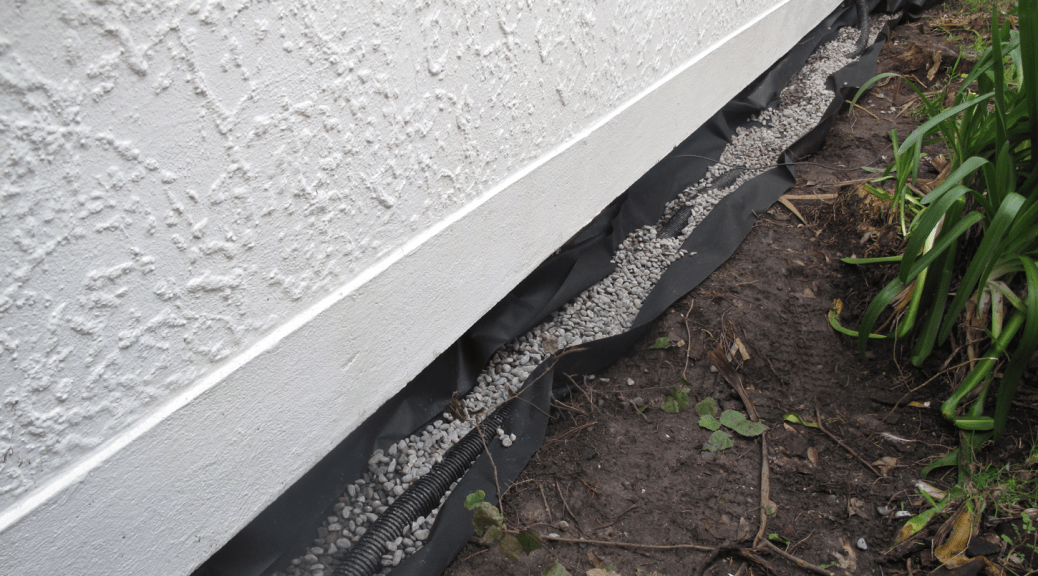
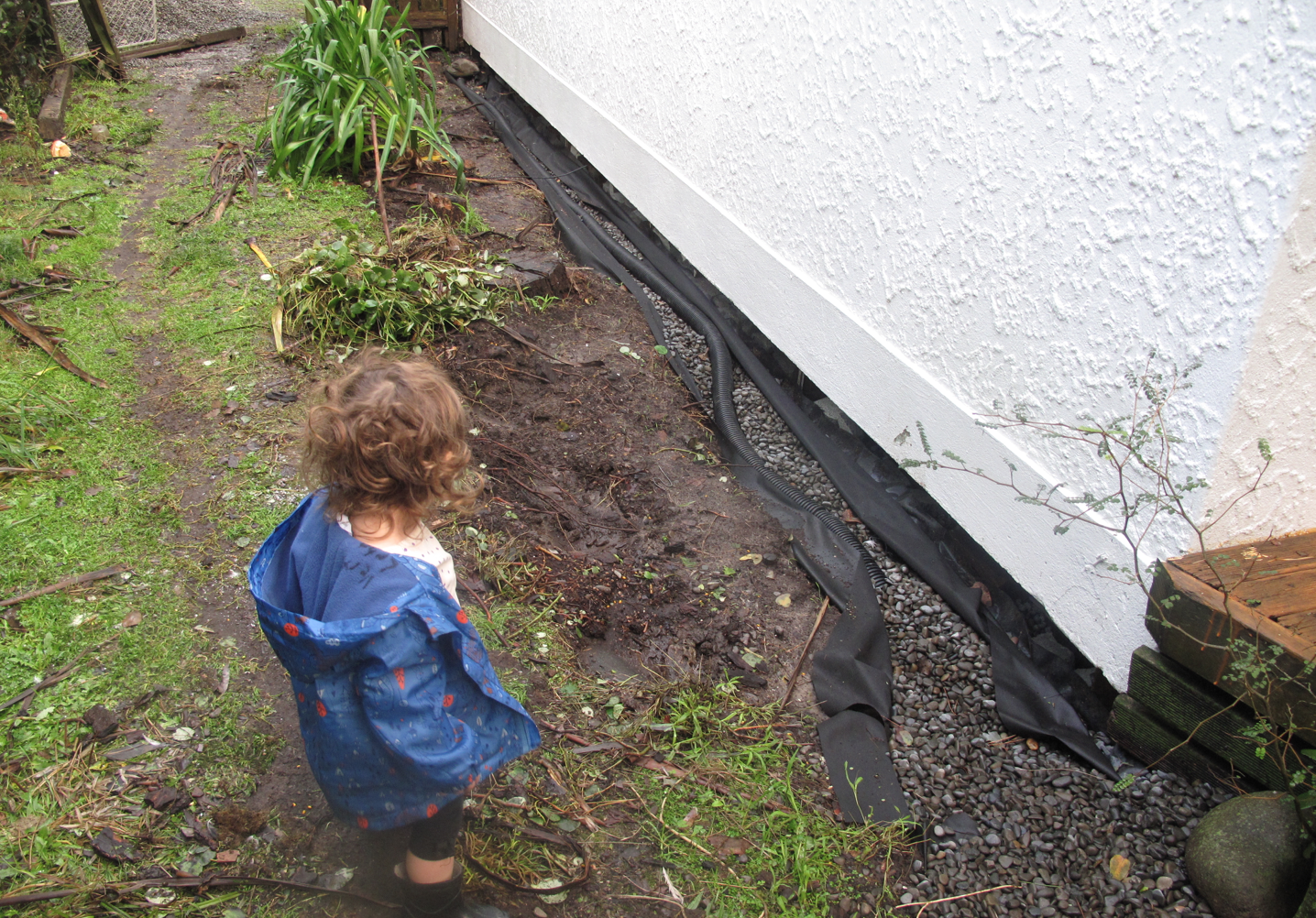
For homes that are built on piles, rising damp can be the largest source of internal moisture by a country mile, accounting for 40-60 litres per day depending on the size of the structure, soil type, drainage, and subfloor ventilation. Screen Shot 2015-06-26 at 3.38.24 pm

Dealing to rising damp can be as easy as laying a ground vapour barrier (aka damp-proof membrane) or – in my case – improving drainage around the perimeter of the structure, increasing subfloor ventilation and then installing a ground vapour barrier.

Over the last six months I have spent hundreds of hours and dollars on all three of these. I finished the work two days before the recent deluge arrived. Ironically, the lowest moisture reading ever recorded inside our home (so far) was the day 88 millimeters of rain fell on our roof.

The combination of drainage work, builder’s polythene and more vents has reduced the indoor humidity from a very unhealthy 85% when we arrived to 64% – a level just within what is considered healthy. There is no sign of mould and we can literally feel the difference in the air.

Dehumidifiers are brilliant, and we have used one up until recently. It’s there at the ready should we need it, but like a positive pressure ventilation system installed in a roof cavity it only removes the damp that is already inside our home. Like modern medicine, treating causes is better and more cost effective than treating symptoms.

The following tips come from “Reducing Moisture and Condensation” available free at: http://www.ecodesignadvisor.org.nz.

  • Keep beds and furniture at least a hand-width from external walls.
  • Wipe condensation from windows as soon as you see it.
  • Leave wardrobe doors slightly ajar to allow air circulation.
  • Regularly check for mould behind curtains and furniture, and in corners.
  • Spray a mixture of 70% white vinegar and 30% water on mouldy surfaces, leave for 15 minutes to an hour, and then scrub. Be sure to rinse off the vinegar afterward with a sponge. This is extremely important as mould will grow back on the vinegar residue if not rinsed properly.
  • Wash or dry clean affected curtains.
  • If there is no extractor fan in the bathroom, open windows when showering or bathing.
  • Flush your home with fresh air once or twice each day for 10 to 20 minutes by opening windows and doors. During winter months the best time to do this is around mid-day when outdoor temperatures are highest. It is better to fully flush the home with fresh air than to leave windows ajar all day and night.
  • Only consider a positive pressure or dilution ventilation system as a last resort. They are not suitable for all houses and can cause more problems than they solve.

Peace, Estwing

Around the World in Eight Designs: Part 3


Last week I expanded on the concept of passive design using the example of Earthships in the desert environment of New Mexico, USA. The point of the article was not that we should all start living in Hobbit Homes made from old tyres filled with earth, but that passive design is a great approach to housing all around the world, including right here in the Manawatu.

We can have passive design without tyres, and as a matter of fact it can look very much like the homes we already inhabit.

A well-designed passive solar home in Palmerston North could easily cut its winter heating budget by more than half compared to an equivalent home poorly design and laid out. That is a significant savings on power along with increased comfort in the home. But staying warm in winter is only half the story of passive design.

We know that summer temperatures can get on the uncomfortable side here and that many homes overheat due to poor design and inadequate ceiling insulation. The good news is that in many cases we can take a lesson from the tropics and use cross-ventilation to cool our homes without the need for air conditioning.

I have traveled to Nicaragua on a number of occasions and was surprised at first to learn about passive design in tropical regions. Instead of orienting homes on an east-west axis to maximize solar gain in winter as is the practice in most places on Earth, homes are built along a north-south axis to maximize the cooling effects of cross breezes. Of course this also means that ample windows allow those breezes to pass through indoor living spaces and cool the occupants.

 Screen shot 2015-05-24 at 7.40.53 AM

A distinctive design feature in Nicaragua’s colonial architecture is a slatted wooden vent above the front door. This allows constant cross ventilation through the structure – provided there are open windows opposite the door – while maintaining security by leaving doors closed at times.

Wide eaves, high ceilings and light construction are also aspects of tropical architecture. But in my opinion the main lesson we can take is cross ventilation. Most homes in the Manawatu can benefit from cross ventilation that is either passive or active.

Passive ventilation works well for homes with windows on opposite walls and few or no obstructions between them. It also works well when the wind is blowing.

But some homes are long and L-shaped, or have curving hallways, or abut another home one on or more sides, or are sheltered from the wind. In these cases, active cross ventilation means opening windows at opposite ends of the structure and using an electric fan to push air out one window, which draws cool, fresh air in through the other.

Yes, you read that right. Using the fan as an exhaust is the best strategy for active ventilation for cooling. In many countries there is a product you can buy called a “window fan.” But any fan will do providing it does not fall out the window!


Peace, Estwing

Around the World in Eight Designs: Part 2


Editor’s note: This is the second of an eight part series.


Last week I introduced the concept of passive design using the ancient cliff dwellings of Mesa Verde (Colorado, USA) to illustrate the point. In a nutshell, the “Ancestral Pueblo Peoples” – also known as the Anasazi – chose certain cliffs that excluded the hot summer sun but welcomed its warming rays in winter.

The Anasazi first occupied the caves over 1,000 years ago. Warm in winter and cool in summer: they were no dummies. Here is what we can learn from them: design for the climate; use local materials; harness free energy.

During the 1970s as small group of hippies used these same design principles in the same region of the US Southwest but in a radically different way. Using beer cans, old tyres and soil, they built what they called Earthships. Here is what Wikipedia has to say:

“An Earthship is a type of passive solar house that is made of both natural and recycled materials (such as earth-filled tires), designed and marketed by Earthship Biotecture of Taos, New Mexico. Earthships are constructed to use available natural resources, especially energy from the sun. Earthships are designed to use thermal mass construction and natural cross ventilation, assisted by thermal draught (Stack effect), to regulate indoor temperature.” Screen Shot 2015-06-11 at 6.53.27 am

Both the Anasazi and the hippies figured out ways to live comfortably in a climate that ranges from 40 degrees in the summer and minus 10 in the winter by using passive design. An Earthship is designed to allow low angle winter sun to reach deep inside the structure but to exclude high angle summer sun. Once the winter sun enters the structure some of it is stored in what is called thermal mass, such as an earthen floor, bricks, tiles and even the earth-filled tyre walls.

Believe it or not, thermal mass is essential for keeping these structures from overheating in the middle of winter on cold, sunny days when the temperature outside is right at the freezing point. Thermal mass acts as a battery in that it stores excess energy (in the form or heat) during the day and releases it at night. Of course the Earthships also contain plenty of insulation to hold that heat inside the structure overnight. Screen Shot 2015-06-11 at 6.53.11 am

All of this falls into the category of passive design because it requires no moving parts such as fans or pumps, or the electricity to run them. Passive means it just happens by natural energy flows and cycles.

Earthships also employ passive cooling systems, but I see I am out of words for this week and next week’s column is all about passive cooling with examples from the tropical nation of Nicaragua.


Peace, Estwing

Deadly Cost of NZ Housing

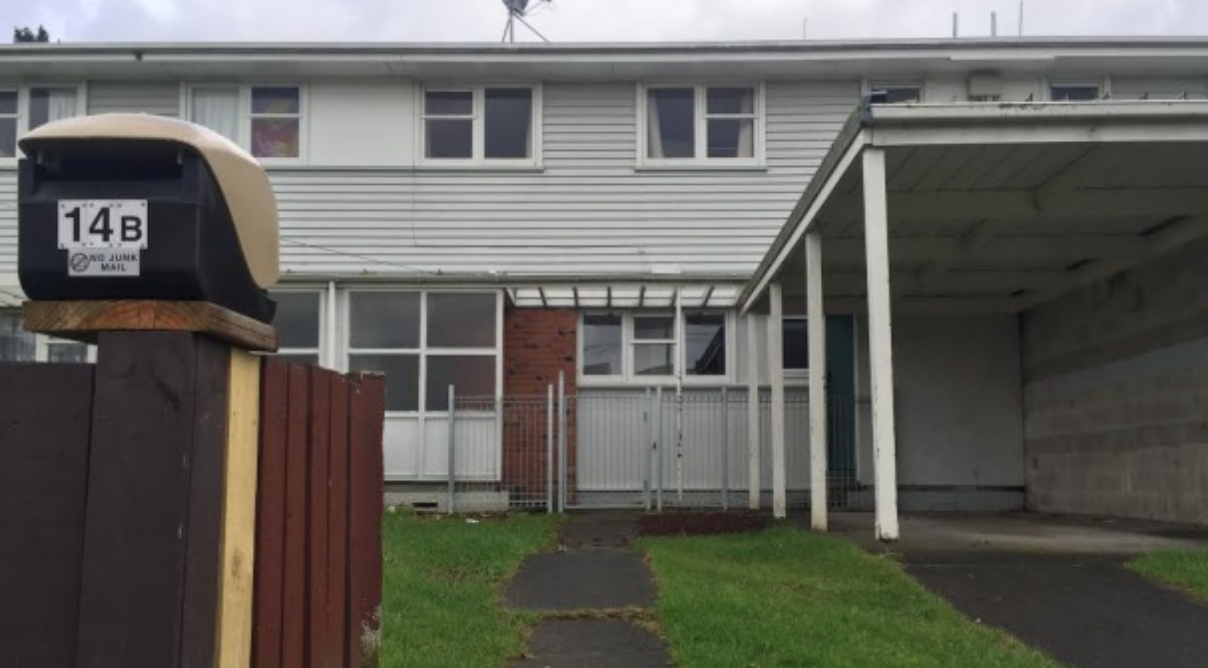
Talk radio was saturated at the end of last week with opinions on the tragic deaths of two toddlers. Chronicle readers are well aware of one of these deaths, which occurred in January and had its sentencing hearing at the High Court in Wanganui on Friday.

The other death occurred in August, 2014 at Auckland’s Starship Hospital, but the coroner’s report released last week blamed the cold and damp conditions of the family’s home in Otara as a contributing factor to the toddler’s death. Screen Shot 2015-06-10 at 4.54.50 pm

Emma-Lita Bourne suffered from bronchopneumonia for days before her death, which Coroner Brandt Shortland identified had caused a septic embolism that lead to an acute brain bleed. “I am of the view the condition of the house at the time being cold and damp during the winter months was a contributing factor to Emma-Lita’s health status.”

Sadly, the coroner’s report did not come as a surprise to those of us who work in the fields of “healthy homes” and eco-design. The social and medical costs of poorly designed and constructed homes in New Zealand is well documented. The Energy Efficiency and Conservation Authority (EECA) estimates that unhealthy homes cost $400 million per year in unnecessary medical costs and $300 million per year in unnecessary energy costs.

On Tuesday this week, the death of 37 year-old Soesa Tovo was also linked to a cold, damp, Housing New Zealand home.

It is important to understand that it is not just Housing New Zealand homes that fall into the category of unhealthy, and that simply insulating a structure is only the first of many steps to improving its health, comfort and energy efficiency. Note that the ceiling of Emma-Lita’s home was insulated.

Cold, damp homes contribute to hundreds of deaths in New Zealand every winter, particularly elderly residents. There is no doubt in my mind that dozens of seniors in Whanganui have died prematurely due to unhealthy living conditions. Three years ago while assessing a home for a mother of five, she said she called because she was convinced the house had killed her mother-in-law who was the previous occupant.

Around the same time I visited a 75 year-old woman who rang because her house was frigid and difficult to heat. After assessing the home with her for an hour we both came to the conclusion that the best thing for her to do was to move out. The irony was that she had just bought the home six months earlier, but nothing short of a $50,000+ renovation would have made it fit for purpose. The house may as well have been her coffin.

While the premature deaths of seniors do not make headlines, our city could suffer a toddler’s death just as easily as Otara, and it would not necessarily happen in a state house either.

If and when that tragedy were to occur in our community, and the headline of the Chronicle were to echo that of the Herald – Damp house played part in toddler’s death – we would hear complaints that our daily paper only puts bad news stories on the front page. The story would be another black spot on our community spread by the national media painting Whanganui as a third rate city.

As someone working at the coalface of this issue, I can assure you that many of these deaths – and a massive amount of suffering, illness, missed school and work – is preventable. What people need is good, accurate, affordable advice. The other thing they need is someone to trust.

There is a significant amount of misunderstanding, deception, half-truths, bad advice, corner-cutting, and high pressure sales tactics in the housing sector in New Zealand, which I believe disempowers people when it comes to making good decisions. I see it everyday in my work with renters, owners, landlords, and public service agencies.

When my two year-old daughter sees me putting on trousers and a collared shirt she says, “Are you going to work?” I say yes.

“Why you go to work, papa?” I say to help people.

“Fixing their houses, eh?” I pause, and say yes.

While I love my job and thrive off of the positive feedback I get from clients everyday, it is discouraging that I must travel away from Whanganui to do it. There is huge need in this community and no one wants another “negative headline” putting us in the national spotlight.

Above all else, improving the housing stock of New Zealand and of Wanganui is a matter of will. As yet that will has not emerged in our community to any significant extent. Will it take an Emma-Lita to shock us into action?

Screen Shot 2015-06-10 at 4.54.22 pm

Peace, Estwing

Changing Times: Estate Agents and Light Bulbs

To every thing there is a season, and a time to every purpose under heaven:

A time to be born, and a time to die; a time to plant, and a time to pluck up that which is planted;

A time to top up ceiling insulation and a time to lay ground vapour barriers; a time for real estate agents to recognize that more and more discriminating house hunters will be looking at warmth and energy performance, and a time to buy domestic LED light bulbs;

Ecclesiastes 3:1 King James Modified and Updated Version

How refreshing it was to meet with the team from a local real estate agency recently and see a room full of nodding heads. Our scheduled 30-minute meeting ran to 40 minutes due to a steady stream of questions, but I am used to that. I often say, “The future of buying and selling homes will increasingly include health, comfort and energy performance.” It is inevitable, but the shift won’t necessarily be rapid.

Four years ago I approached a number of local agencies and the President of the Chamber of Commerce on this exact issue. To say there was zero interest at the time would be an understatement. As Bob Dylan has told us, “The times they are a-changing.”

As often is the case, the change is being driven by consumers (house-hunters) instead of sellers or those in the real estate industry itself. However, savvy real estate agents recognize the change and will place themselves at the forefront of the market. That is just smart business.

Rarely do we have the opportunity to witness a so-called light bulb moment in someone else. Less than a week before the meeting described above I found myself poking around a very large, beautiful home valued at roughly twice the Wanganui average with a then skeptical but friendly estate agent.

I had been asked to look at the home by a couple that wanted to ascertain the warmth and comfort of the structure before considering an offer. With camera in hand, we took a tour of all the home’s thermodynamic shortcomings. I could tell the agent was annoyed.

But sometime between minute 30 and minute 50 the proverbial light bulb switched on, and less than a week later I was talking to the agency’s entire team.

Screen shot 2015-06-05 at 9.59.18 AM

My experience with LEDs (Light Emitting Diodes) is more than twice as long as my experience with local estate agents, but the stories are similar. Over a decade ago I learned about LEDs in specialty applications such as museum lighting and emergency lighting, but they were not available for household use.

About six years ago when domestic LEDs started to be imported into New Zealand the prices were high and the quality was variable. They were available only through specialty suppliers. I waited.

About four years ago they started turning up in shops with price tags around $30 each. At that price it was better to stick with CFLs (Compact Florescent Lights) at $5 each. I waited.

Late last year I saw more and more LEDs in the shops with prices under $20 each. I bought two to trial and they worked brilliantly.

In April I bought six more at under $10 each to go into the renovated kitchen of our new home. We worked with a local lighting shop and the best sparky on Earth to come up with a beautiful and cost effective lighting design that my photos can’t give proper justice. The new LEDs provide excellent illumination at a fraction of the cost of traditional incandescent bulbs without the awkward spiral shape of most CFLs.

Attractive, affordable, and efficient: the light bulb moment for domestic LEDs has finally arrived.

Screen shot 2015-06-05 at 9.59.08 AM

Peace, Estwing