Category Archives: Uncategorized

Capitalism and Surfing: Each in Moderation

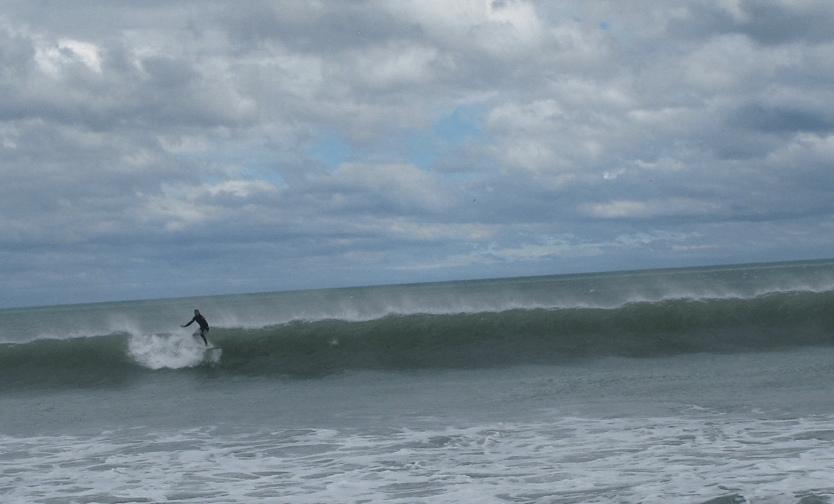
There are two activities in which I have increased my involvement since moving to NZ seven years ago: surfing and democracy.

When I came here I had no interest in surfing and little interest in democracy. I always voted, but that was about it. But my interest and involvement in both increased in 2008 when I moved to Raglan and started PhD research at the University of Waikato.

Although I was researching science education, the concept of democracy came up again and again in the literature. Science education for all pupils – not just those who plan to pursue a career in science – is critical to democratic nations that face increasingly complex choices involving ecological problems, choices of ‘appropriate technology’ and genetic engineering. Surfing, I discovered, is critical to remaining sane while writing a 300-page thesis. Screen shot 2015-03-06 at 11.24.42 AM
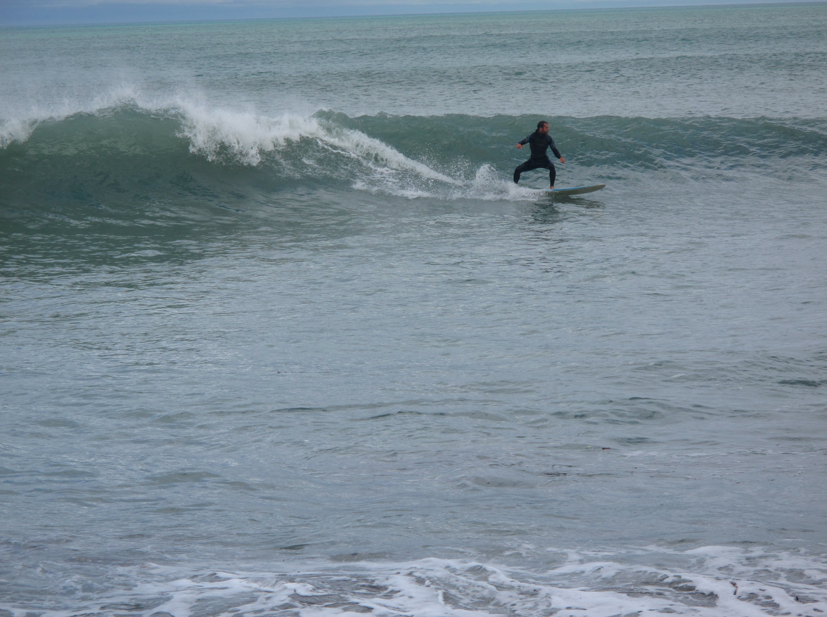
As we look around the world, modern democracies rely on capitalism in the same way that surfing relies on waves. So-called ‘free markets’ go hand-in-hand with democracy as both ‘consumers’ and voters choose their brands of breakfast cereal and their governments. When ‘the economy’ is booming, the governing party tends to retain power at the next election, and when recession hits the government is often voted out. Similarly, when the surf’s up you go surfing. When it’s not you stay home and winge about it.

“A rising tide,” we have been told, “lifts all boats.” But trickle-down economics has never been shown to work for those struggling economically with their heads under water.

The link between ‘economic growth’ and retaining political power has resulted in the growing influence of corporations over governments to withdraw legislation that previously reigned in dodgy corporate behaviours that in the past led to the exploitation of workers, environmental degradation, and even the Great Depression.

Over the last thirty years – since Thatcher and Reagan – the world has witnessed the steady deregulation of laws that were put in place to safeguard people and the planet. This trend in deregulation directly caused the Global Financial Crisis in 2008. In surfing terms, this is called “going over the falls”: taking off late on a big wave, getting stuck on the lip (tip-top of breaking wave), falling vertically in front of the wave, and then often getting sucked back up the face and dumped again. Screen shot 2015-03-06 at 11.23.35 AM

Here we are in 2015 and the whitewash from the 2008 GFC has not cleared. The wealth gap between rich and poor is wider than ever, and the biggest corporations are even bigger than they were before the crisis.

As with most things in life, surfing and capitalism require moderation and knowing one’s limits. In both, getting in over one’s head can be deadly.

What we face in the Trans Pacific Partnership Agreement (TPPA) is a potential tsunami of capitalism that drowns democracy in New Zealand. I have surfed some big waves over the last seven years and had many spectacular wipeouts, but I always came up to breath. If this government signs up to the TPPA, there is no way out – no escape clause – no coming up for air. Once signed, we will be bound to the agreement in perpetuity.

When it comes to surfing and democracy, I tend to be conservative. Going after huge waves and giving more power to huge corporations is just plain dangerous. In both cases, I think about my daughter, her future, and my duty as a responsible parent.


Peace, Estwing
A Free-Range Childhood, Part 1

It is hard to be a child in 2014. The pressures and distractions of adulthood inevitably trickle down to children who often suffer the effects of mum’s and dad’s increasingly digital lifestyles. At a time when research shows what young children need most is quality time with their parents, the trend is in the other direction.

For some reason I have always been fascinated with this type of tension between extremes. Perhaps this is why I gravitated toward Buddhism, which is based on the story of a royal prince who takes a vow of poverty and then finds a middle way. Screen shot 2014-12-12 at 2.28.40 PM

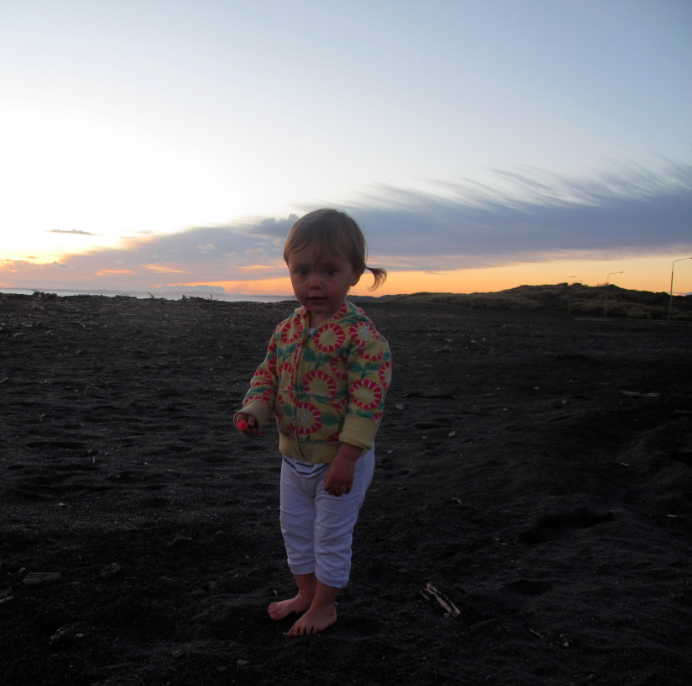
Verti finds her Middle Way. 

In common language we call the middle way a “balanced life.” My observation is that it is hard to achieve and getting harder all the time. As a social science researcher I am fascinated by the way people live their lives, especially when certain behaviours run contrary to what they report to be their values. In other words, there is a dynamic tension between what we do and what we think we ought to do.

From my observations there was a similar dynamic tension at the centre of the A Place to Live Conference recently held in W(h)anganui. I chose not to spend $1,000 to attend the three-day conference, so my perspective is based only on what has come through the media.

It appears that the conference had a significant focus on refuting Shamubeel Eaqub’s recent comments, which came through at times in what Kim Hill identified as “boosterism” during her radio show. Fair enough. Most of us love living here and are not afraid to say it. I love living in W(h)anganui and “boost” it at every opportunity.

But at the same time I am not afraid to critically reflect on our city in an attempt to make it even better. We hear from various sectors of our community the desire to change, but without critical reflection we are destined to stay the same. In the spirit of critical self-reflection, here is some food for thought.

Screen shot 2014-12-12 at 2.28.30 PM

Verti in a moment of reflection. 

On the one hand, the keynote speaker brought from America for the conference, Richard Louv, promoted the value of children spending time in nature. On the other hand, numerous speakers representing Whanganui promoted the digital world and ultra-fast broadband.

While there may be nothing inherently wrong with either of these messages, placing them side-by-side presents us with what is probably the most difficult proposition facing humanity: our ongoing disconnection with nature caused largely by our increasing connectivity with technology. We are separating en masse from our life support system (Earth) in favour of a tech support system (Microsoft).

As difficult as it is for adults to find balance between Mother Earth and motherboard, I suggest it is infinitely harder for children. They are so easily dazzled by the colours, sounds, and movements of passive screen entertainment.

If we as parents, teachers and a Whanganui community wish to instill an abiding love and respect for nature in our children, it will be a monumental task made all the more difficult by the increasing role of technology in our lives. This is not a judgment, but a statement of fact.

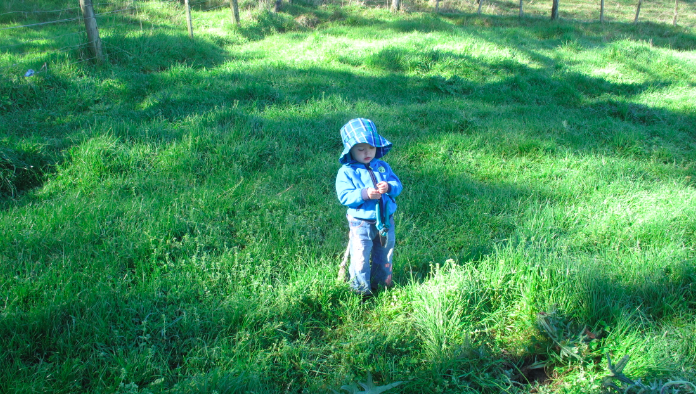
I know this because my wife and I have spent the last 27 months trying to raise a free-range child with an active, independent mind. It has been damn hard work. Yes, at times it feels like work, but if you know our daughter, Verti, you know that at two she is already an inquisitive, creative problem-solver. Screen shot 2014-12-12 at 2.28.57 PM

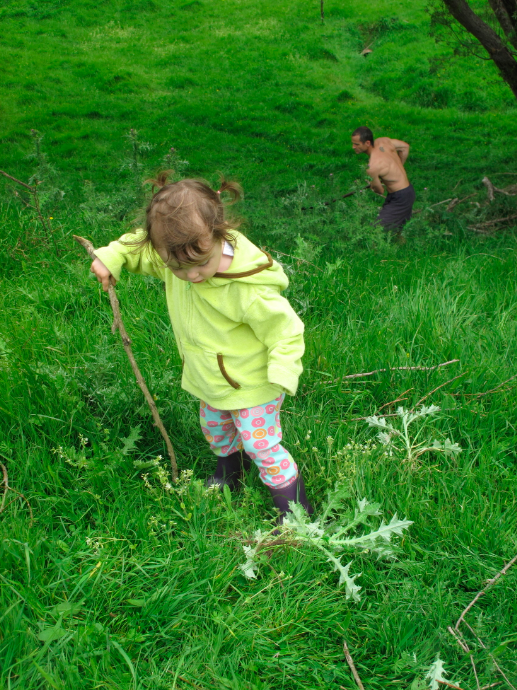
Verti engaged in play – imitating papa.

Our simple formula is based on research in brain development: 1) no screen technology before age three; 2) constantly talking to her from day one; 3) providing her with opportunities for creative, independent play.

The aim is not to raise a Luddite child – technology will inevitably come. The aim is to prepare a human being who is best able to consider a vast array of competing factors and choose her own middle way.

To be continued…


Peace, Estwing

Successive Planting: Summer/Autumn Transition

One way we are able to produce large amounts of healthy food on a small amount of land is our approach to bio-intensive annual gardening. A combination of 80 mm (2.5 inches) of topsoil and copious amounts of high quality compost have allowed us to grow large, healthy and abundant vegetables.

Screen shot 2014-04-08 at 5.44.39 AM

Screen shot 2014-04-08 at 6.03.05 AM

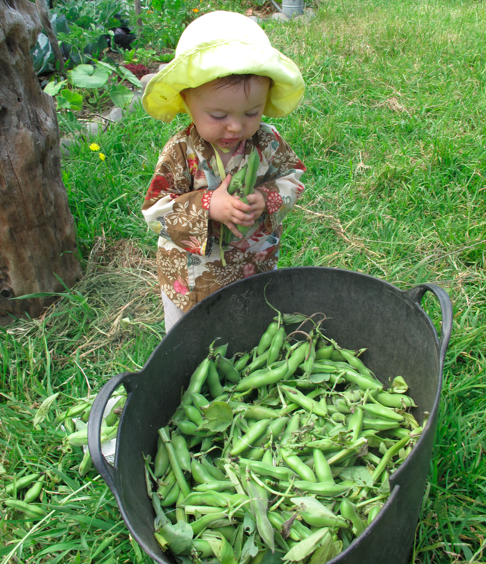
Another way that we achieve high yields is by successive planting. In other words, as soon as one crop comes out another goes in. For example, after harvesting broad beans last spring I immediately planted pumpkins in mounds of compost.

Screen shot 2014-04-08 at 5.48.45 AM

Both of these strategies rely on abundant, high quality compost in order to replenish soil fertility to make up for the food removed. We use a hot composting system called the Berkeley Method that ‘disappears’ meat and roadkill in a matter of weeks.

Screen shot 2014-04-08 at 5.31.07 AM

 Sometimes we use our lawn clippings in our compost, and sometimes we use them for mulch.

Screen shot 2014-04-08 at 5.20.30 AM

This week I have taken out some tomato plants that were in the ground since the 21st of September – 6 and 1/2 months – and replaced them with broccoli.

Screen shot 2014-04-08 at 5.19.05 AM

 You will notice there are still some capsicum (bell peppers) in the ground, and I even left two of the eight tomato plants rooted as they were still producing. I simply laid them on the ground on top of dried grass mulch.

Screen shot 2014-04-08 at 5.19.19 AM

 Each broccoli seedling is planted with a large dollop of compost.

Screen shot 2014-04-08 at 5.19.35 AM

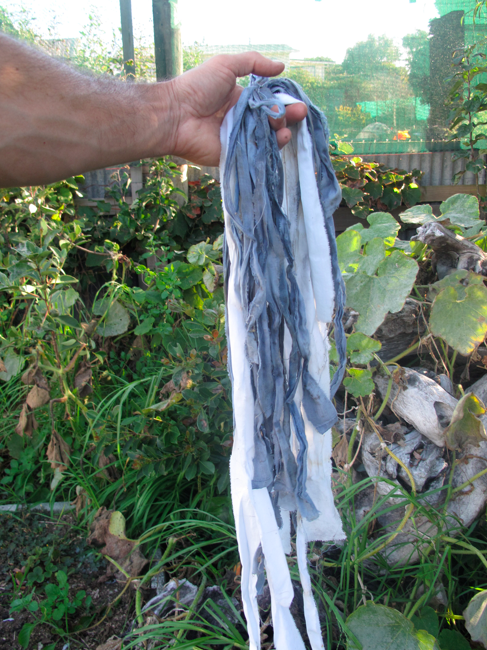
 The tomato ties – old bed sheets torn into strips – are collected and stored for next year.

Screen shot 2014-04-08 at 5.19.50 AM

And my helper and I carry on with the next chore.

 Screen shot 2014-04-08 at 5.14.40 AM

Peace, Estwing

Beach as Eco-Thrifty Design Exercise

Screen shot 2014-01-25 at 6.54.54 AM

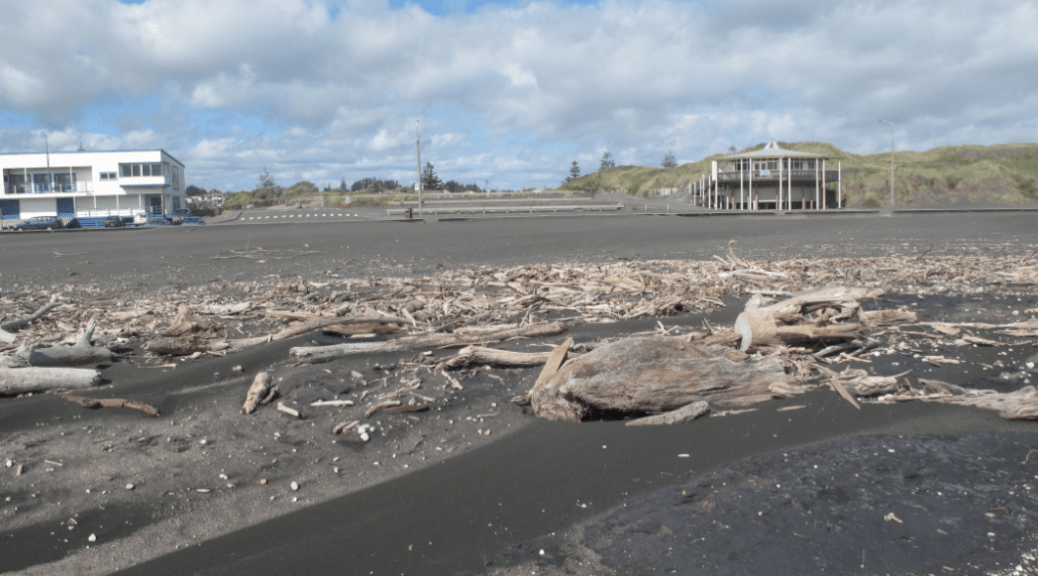
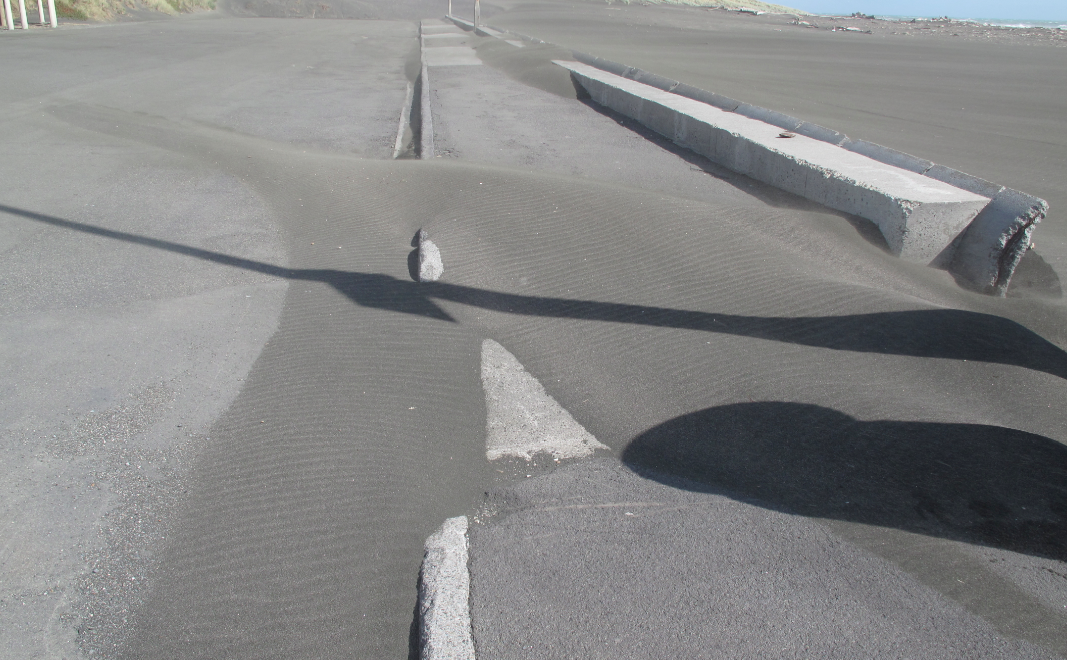
When I first wrote in October about what appeared to be the needless waste of rates “grooming” Castlecliff Beach it was in response to a comical situation: moving sand to windward with heavy equipment only to have it blown back into place within weeks.

Screen shot 2014-01-25 at 6.52.24 AM

Then it happened again and again. Weeks after a second massive effort pushing hundreds of tons of sand to windward, it was all back in place, and an excavator was moving it a third time while damaging the car park in the process.

Screen shot 2014-01-25 at 6.57.25 AM

When the first piece ran, the editor of the Chronicle gave it a title something along the lines of “Fighting Nature is Expensive.”

Eco-design has shown millions of times that working with nature is almost always cheaper in the long run. With this in mind, my suggestion was to take an eco-design approach to downsize the massive and underused car parks, which would save us all money and release less pollution through diesel fumes. I used the phrase ‘managed retreat’ because I had heard it used in reference to parts of the flood zone, and that it suits what would probably be a carefully considered, staged programme of right-sizing and retreat.

What I saw as a common sense win-win situation has made me the target of a few individuals who appear desperate to keep the beach as it is. I think we’d all admit that change can seem difficult, and these people are probably afraid of changes to our beach so they lash out at anyone suggesting new ideas. I can assure them that my vision is for a better beach attracting more visitors at less expense.

Living in a democracy, we all have the right to express our opinions on how our rates are spent. Elected officials choose to listen or not.

In key ways, the context of Castlecliff Beach is similar to the context of our villa when we bought it: big, draughty, expensive to maintain. As such, we can use the beach as a thought exercise in eco-thrifty renovation.

Screen shot 2014-01-25 at 6.52.33 AM

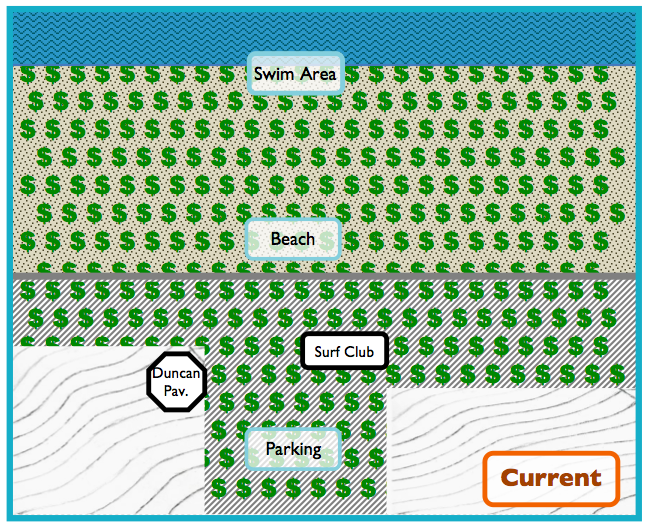
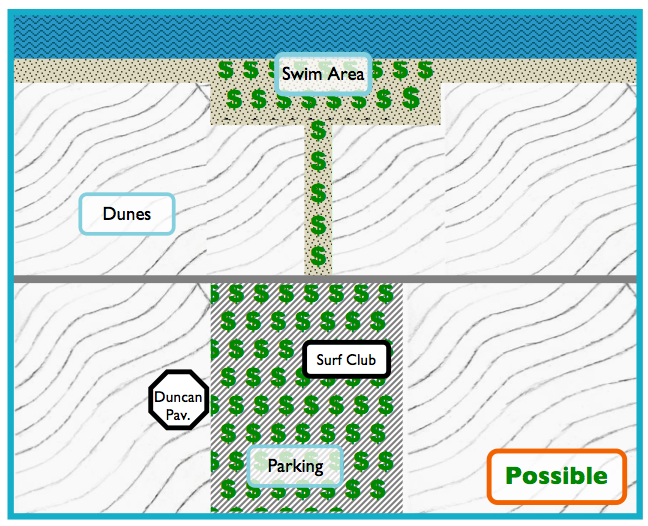
Form follows function: Although the area groomed appears larger than the infield at Cook’s Gardens, well over 90% of beach goers congregate only around the swimming area, which is usually about the size of a church hall. As such, why spend thousands of dollars grooming a large area of black sand into the Gobi Desert when the swimming area looks like Omaha Beach on D-Day? In terms of customer service, this arrangement falls apart: the dollars are not spent on what beach goers actually use.

Right-Sizing: Along those lines, the parking areas at the beach are oversized and underused. It reminds me of a birthday party I once attended where the host prepared massive amounts of food and drink and almost nobody came. I left feeling sad.

Again, comically (why does this term keep reappearing?!?) Council recently spent thousands of dollars resurfacing the least used of six distinct parking areas. I liken it to having your least worn of six suits dry-cleaned: fine if you have the money, but probably not if you’re on a budget.

Screen shot 2014-01-25 at 6.56.02 AM

As the first diagram shows, most money is being spent on places where no one goes, creating the look of big, empty, uninviting expanse.

Screen shot 2014-01-25 at 6.52.59 AM

I suspect our mayor, who has an awesome stall at the River Traders Market, will tell you that to attract people, the front of a stall must appear full of goods – giving a look of abundance, not scarcity.

By right-sizing the car parks and beach, we can have a more inviting, less costly venue for free recreation. The second diagram shows what a beach might look like when money is spent where people go instead of where they don’t go.

Screen shot 2014-01-25 at 6.53.21 AM

I will leave the next stage of retreat to the experts, some of whom may even live in our community.

The Bottom Line: We are facing a situation where more frequent extreme weather events are pushing more sand around at the same time we have a large debt, and an inequitable and unsustainable rates structure. The practice of beach grooming will end one day. The question is: Do we continue to throw good money after bad, or do we invest in a more sustainable re-design that will save money while working with nature?

Here is a suggestion to my editor for the title of this piece: “Sustaining the Unsustainable.”

Our Eco Thifty Life

I suppose it’s your typical boy meets girl story. Boy meets girl.

us

He woos her with his veggie garden. She woos him with her ability to tie a trucker’s hitch. True romance.

kaiiwi

Boy and girl move to New Zealand and live in a house truck for a few years. Why New Zealand? We don’t really know. But it all seems to have worked out.

Wedding285

Boy and girl have an eco thrifty wedding. Oh my gosh was that fun!

Our house before and after

Boy and girl decide to buy the cheapest house they can find in a bit of a dodgy neighborhood and start an eco thrifty renovation. Two years later we are nearly done with that project and our little non-profit continues to do community sustainability education.

Screen shot 2011-10-10 at 7.04.14 PM

Boy and girl feel like they are winning at life; living their values, contributing to their community, being as green as they can…

and then BAM!

Boy and girl make a baby. It becomes much harder for them to do all those things.

Free Sunlight, Permaculture Thinking and Abundance

Permaculture is a long word for common sense, and the ethical treatment of people and the planet. It’s a little disappointing that the word itself may put some people off – because it is unfamiliar to them – but any unique worldview requires an individualized name. The term was coined in the 1970s by a pair of Australians as a contraction between permanent and agriculture, indicating their advocacy for a shift toward low-input perennial crops and away from energy and chemical intensive annual crops.
In this way, permaculture is similar to eco-thrifty renovation in that is seeks low input/high performance design strategies and techniques. In both cases, the sun is the most important element of the system: sun grows food; sun can power a home. First, the home.
Now that we are tipping into winter, and the sun is falling on the northern horizon, the passive solar redesign of our villa is coming back from its ‘summer holidays.’ In other words, our home has been redesigned to let the sun in during the winter months and exclude it during the summer months. By considering the seasonal pattern of the sun, we are able to harness free heating when we most need it: May, June, July and August.
I have written in this column about the key components of passive solar design – solar gain, thermal mass, and insulation – and I’ll revisit them in the months to come. But how, you may ask, does passive solar design work? Although we have a wood burner in our home, we only used it about 2 days per week last winter. The rest of the time our villa was heated for free by sunlight.
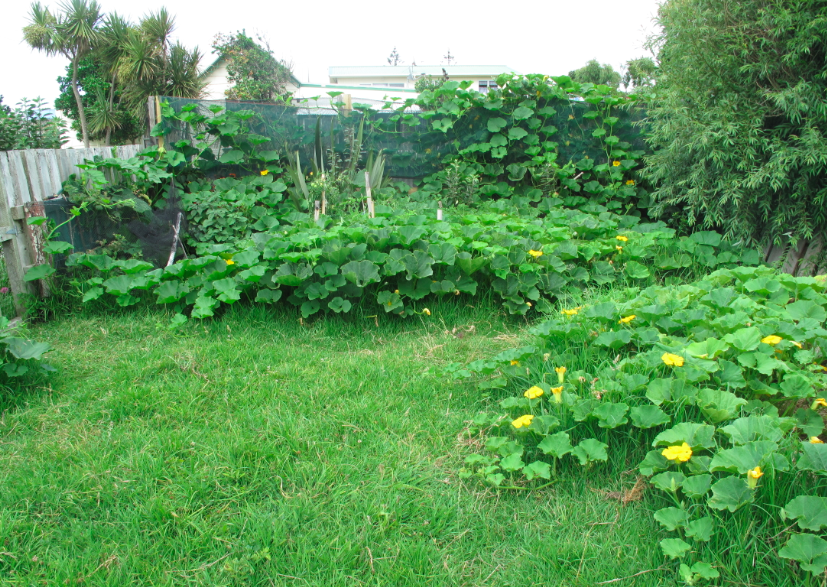
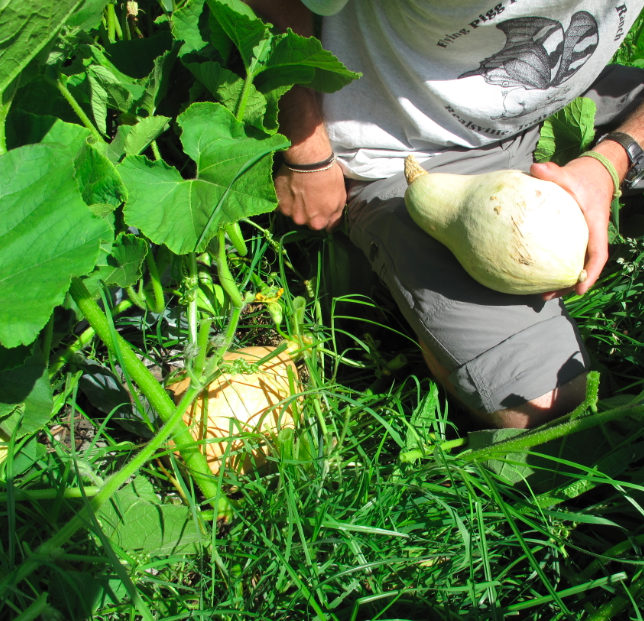
Sunlight also grows much of our food for free. That’s hardly news, but on a small section, we’re able to grow a large amount of food by maximizing sunlight exposure by utilizing vertical surfaces. For example, we let pumpkins climb up our fences, which they naturally do. Why fight it?
By growing five or six vines out of one mature compost pile, and letting them run, we are able to enjoy huge yields with hardly any work. Watering and weeding is virtually eliminated growing pumpkins this way. Low input/high productivity.
We also use the sun to cure our pumpkins before storage. This simply entails letting them sunbath for three weeks somewhere their bums can remain dry. We use the north-facing steps of our deck.
Once cured, the thick-skinned pumpkins are transferred to a cool, unused bedroom on the south side of our home. There they can remain ‘fresh’ for 12 months or more with no processing or refrigeration. It’s just natural cool storage.
In late February this year, we ate the last of our last-years’ pumpkins after the first of this-year’s pumpkins were ready to harvest. That means we have 12 months of homegrown, healthy, inexpensive, organic pumpkins at our beck and call. Oh, the recipes.
Interested in learning more about permaculture and permaculture ways of thinking? See the side bar for upcoming workshops.
Sidebar:
ECO School Workshops – Autumn, 2013
20th April, 9-5 Thinking Like a Swale: Advanced Permaculture Workshop
27th-28th April. Suburban Permaculture Weekend
5th May, 3-5. International Permaculture Day. Introduction to Permaculture
11th May. Home Energy Savings DIY Workshop
Registration essential: theecoschool@gmail.com; 06 344 5013; 022 635 0868

Reducing Our Ecological Footprint by Reusing

Over the last three weeks I’ve shared a handful of stories from newspapers both international and local. This week I’ll just start the column by referring to an article that appeared in the Herald in mid-March: Kiwis take more than fair share (Jamie Morton, 15-03-13).
This headline may come as a bit of a shock to those who consider New Zealand to be a fair, just, egalitarian nation. (But then again, we do rank among the top countries in income inequality.) This headline refers to a concept called Ecological Footprinting, which measures the overall environmental impact of an individual, a family, a city, or, in this case, a nation. In other words, as the article states: “If the entire world lived like a New Zealander we’d need more than two planets to sustain us.”
The article reports on two papers released by the Royal Society of New Zealand that looked at the following areas: food production, water quality, biodiversity, fisheries, transportation, and climate change. The combined direct and indirect impacts of all of these add up to the Ecological Footprint, which can be reported in “fair earth shares.” A fair earth share is calculated by taking the world’s total arable land, and dividing it by the human population. The current figure is 1.7 hectares per person, while estimates for New Zealand citizens fall between 5 and 8 hectares. 
But even for those of us who have traveled to Africa, India, or parts of Asia, and seen people existing on a fraction of an earth share (1.7 hectares), the concept can remain abstract. I’ll try to simplify it by using a reference that may be more familiar, the 3 Rs: Reduce, Reuse, Recycle. It should be fairly easy for anyone to recognize that ‘doing’ the 3 Rs would shrink his or her ecological footprint.
Recycling, at this point in time, should be a no-brainer for everyone in New Zealand as it saves money, conserves resources, and helps the environment. This is the type of win-win-win situation preferred in eco-thrifty thinking. Yet I am shocked at how little recycling takes place in many of our public places and sporting venues around Whanganui. After the outstanding, world-class waste minimization effort at the New Zealand Masters Games in February, I was surprised to find out that the organisers of other large, public events in our city have chosen not to make efforts at waste reduction.
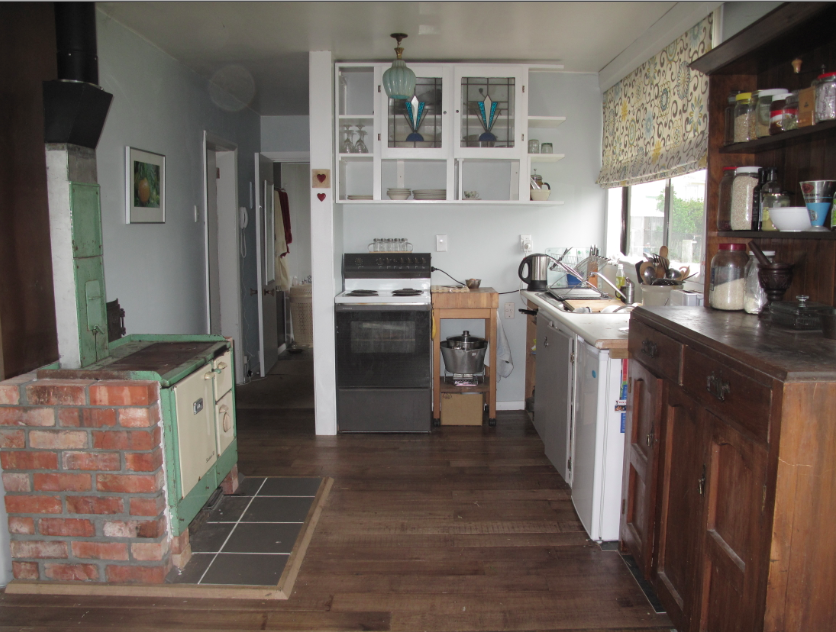
Reducing and reusing, for me, go hand-in-hand. Put another way, by reusing, we reduce. For example, nearly everything in our entire ‘new’ kitchen is second-hand, saving the mining and transportation of new resources, the manufacture and transportation of new products, and the disposal of old products.
 New, second-hand kitchen
Another example is the second-hand flue pipes I bought for our second-hand Shacklock 501. Reusing them saved me about 75% of the cost of buying new flues, saved the large carbon footprint of steel production, and supported a locally-owned and operated business, The Renovator’s Centre.
New, second-hand flue 
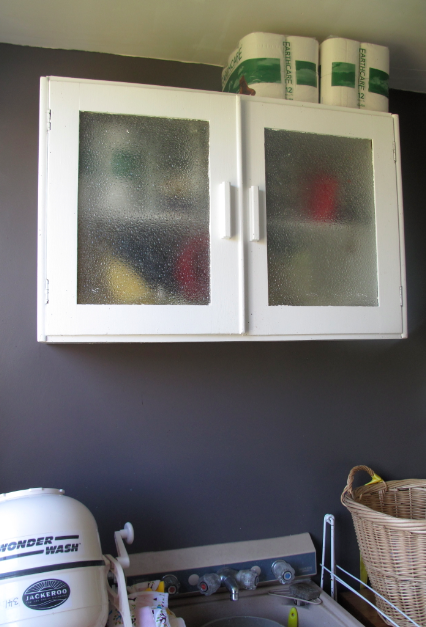
One final example, although I could describe dozens, is our hanging laundry cabinet that was once a floor cabinet, and came to us via Hayward’s Auctions. Although Nicky, the cashier at Hayward’s, was rightly horrified when we told her we planned to paint the rimu cupboard, it turned out alright.
Before 
Some tricks that I used when converting the floor unit to a hanging unit were: 1) inverting it so the original top is now the bottom, revealing the nice side, not the grotty side; 2) taking off the hinges and taping the glass when painting helps to make second-hand items look first rate.
After 
Reducing, reusing and recycling help keep dollars in our community, extend resource reserves for our children and grandchildren, and reduce our impact on the environment. The Win-Win-Wins keep piling up, a lot like the All Blacks. 
Peace, Estwing

Project HEAT Update

Project HEAT: Home Energy Awareness Training
A small consortium of community groups and local businesses have partnered on an innovative programme with the aims of helping Whanganui residents make their homes warmer, dryer, and healthier while saving power and money. This Win-Win-Win situation for people, the local economy, and the planet is the hallmark of the Eco-Thrifty Renovation, the Castlecliff project that inspired Project HEAT.
During the month of March, seven community presentations were held throughout Whanganui. The presentations highlighted seven of the ‘low-hanging fruit’ of home energy savings: compact fluorescent light bulbs, window and door seal, draught excluders, window blankets, hot water cylinder wraps, draught blockers, and the humble but effective ‘straw box.’ Each of these requires a very low upfront investment, which then pays for itself in energy savings in a matter of months or years: representing literally 10% to 200% return on investment!
These community presentations were the first of three stages planned for Project HEAT. The second stage involves a limited number of home energy audits to be performed within the city limits. The audits roughly follow the format used in the Eco Design Advisor programme that is used by Councils throughout New Zealand, the closest to us being Palmerston North. Any household is eligible for a free audit, but priority will be given to those where all decision-makers will be present at the audit, along with at least one adult (friend or whanau) that does not live in the home. This way we can extend the limited amount of funding to reach as many people as possible. To register your interest, either email Nelson, theecoschool@gmail.com, or ring Richard, 927 6635.
The third stage of Project HEAT is a DIY workshop being organized by Community Education Service for the 11th of May. During this workshop, participants will have the opportunity to make their own custom fit window blankets and draught blockers. The workshop may be particularly helpful for those people who do not have their own tools for making these eco-thrifty energy-savers. Contact CES to register: 345 4717.
The success of Project HEAT for the Whanganui community could not have been realized without the critical partnerships we have established. This is truly a project of the community and for the community. Partnering with The ECO School, the current list of local businesses and community groups includes: Tree Life New Zealand, Ltd., Wanganui Chronicle, Mediaworks, Bunnings Hardware, Sustainable Engineering, Ltd., Richard Collins – Freelance Software Development, Community Education Service, Sustainable Whanganui Trust, and the Whanganui Regional Primary Health Organisation. As well the following organizations donated the use of their venues for the community presentations: Josephite Retreat Centre, YMCA Central, Gonville Café Library, Progress Castlecliff (Duncan Pavilion), Wanganui Community Arts Centre, St. Barnabas Church, and All Saints Church. Thank you!