Tag Archives: climate change

Designing for Climate Change II

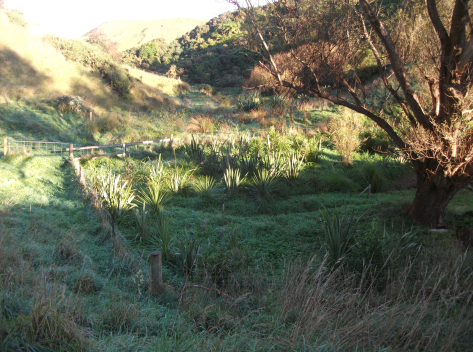
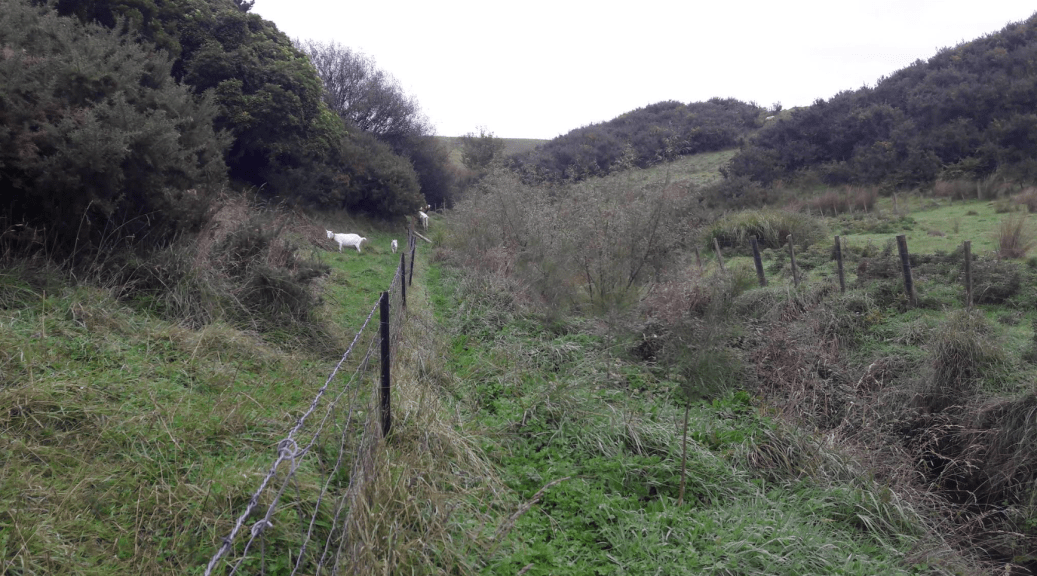
In the first post I wrote about stabilising the stream banks and feeding out pollarded willows to the goats. I also mentioned the casuarina and cabbage trees planted in the riparian corridor. Here is an image of them.

Screen Shot 2018-05-03 at 1.16.59 pm

Much of this work designing for climate change came after the 2015 Whanganui floods. Here is a picture of the neighbours place the day after.

Screen Shot 2018-05-03 at 1.28.33 pm

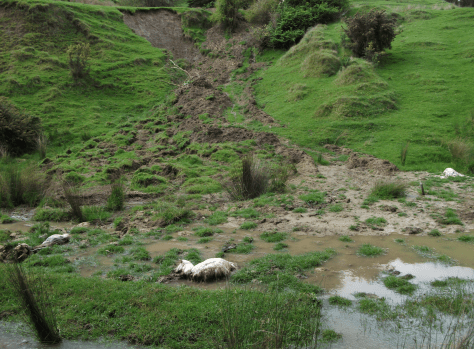
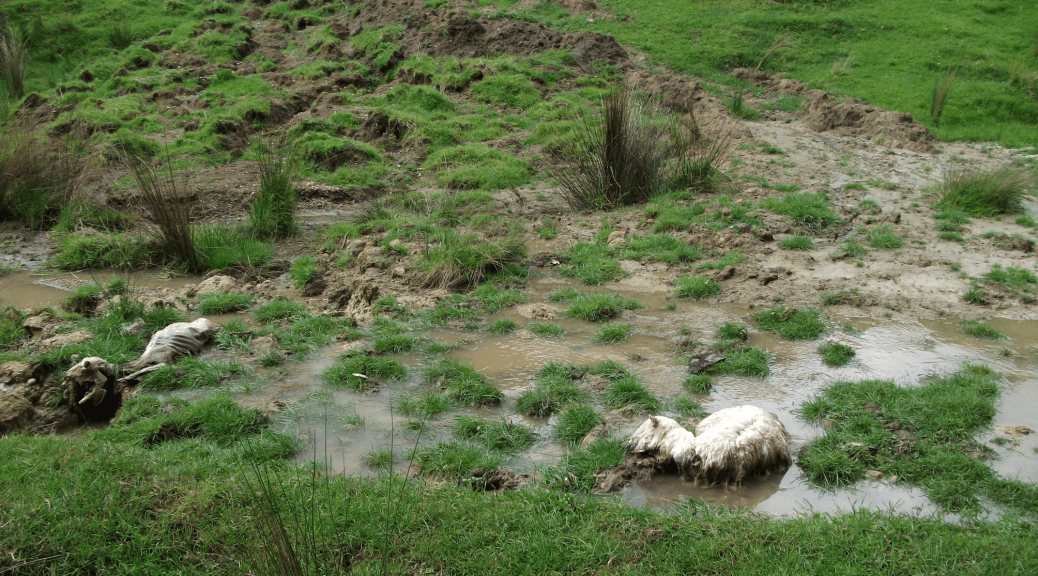
This is the neighbour on the other side. Lots of dead sheep.

Screen Shot 2018-04-30 at 3.59.40 pm

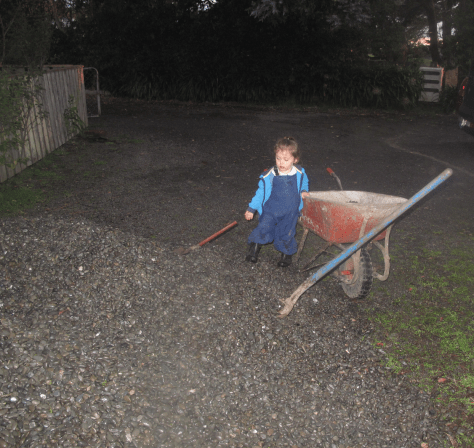
But truth be told we had started our work before the June flood. As a matter of fact, just two days before the storm hit the Whanganui region I was finishing up a French drain around our home with the help of my daughter.

Screen Shot 2018-05-03 at 1.36.44 pm

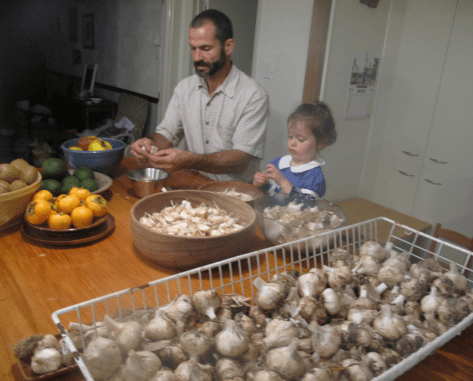
Because it was mid-June we were also preparing our garlic for planting later that night.

Screen Shot 2018-05-03 at 1.37.08 pm

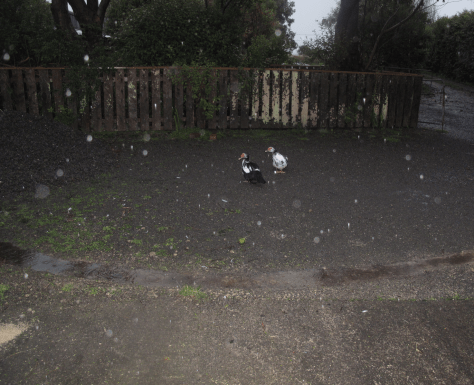
At least someone enjoyed the weather.

Screen Shot 2018-05-03 at 1.37.29 pm

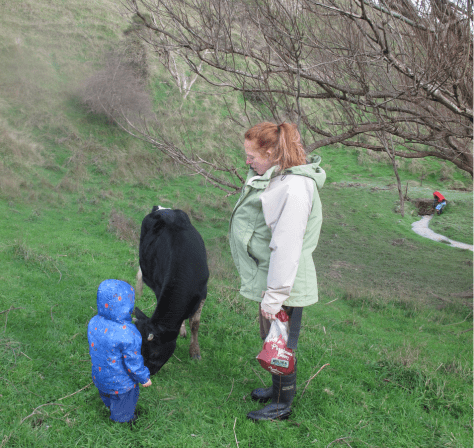
Our calf, Heidi, weathered the storm down in the valley. Note the culvert that I am clearing in the image below and keep it in mind when viewing the image that follows.

Screen Shot 2018-05-03 at 1.38.17 pm

The willow in the foreground gives you the relative location of the culvert, which you can’t even see due to the extensive plantings along the stream following fencing off the riparian corridor.

Screen Shot 2018-05-03 at 1.15.47 pm

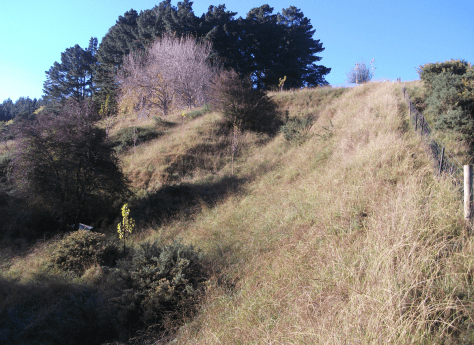
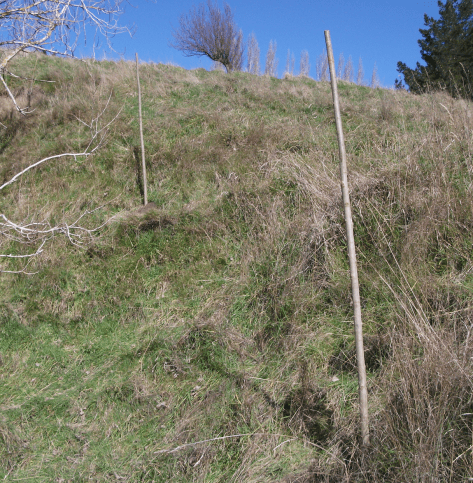
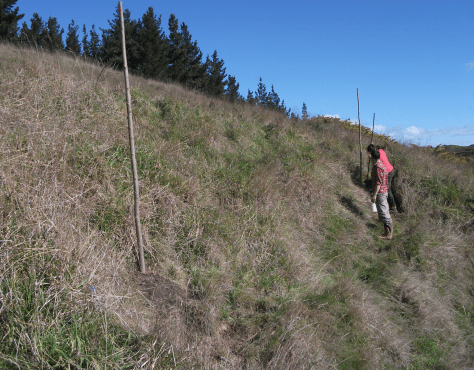
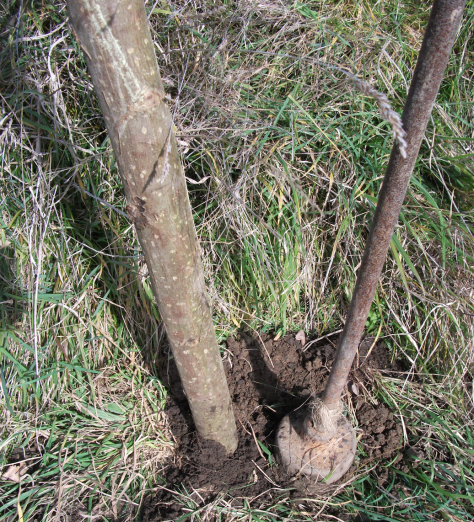
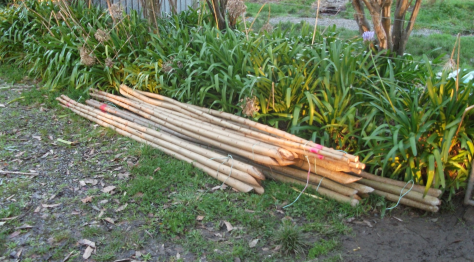
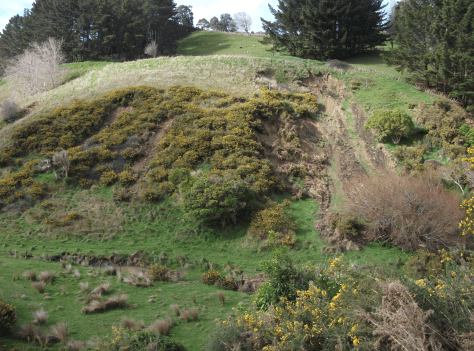
But this post should really be about the hillsides, where slips occur, and how to reduce the risks of future slipping. We have planted over 100 3-metre poplar poles that come from the regional government. They should be soaked for a week before planting 700 mm deep in mid-winter.

Screen Shot 2018-05-03 at 1.33.37 pm

We locate them mostly in the valleys where water is concentrated during storms.

Screen Shot 2018-05-03 at 1.17.34 pm

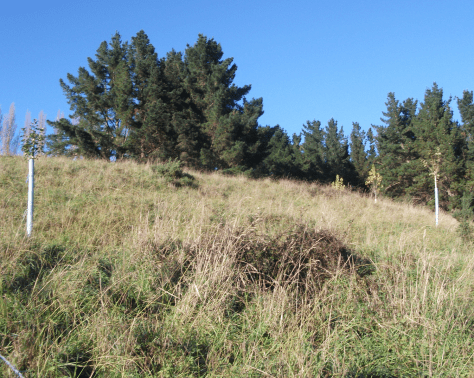
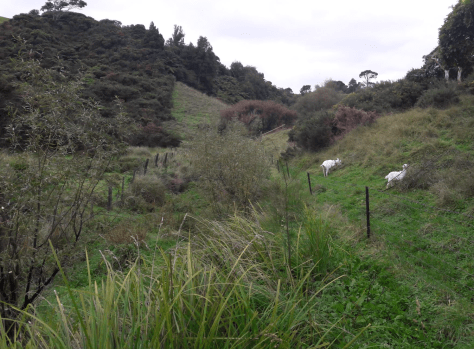
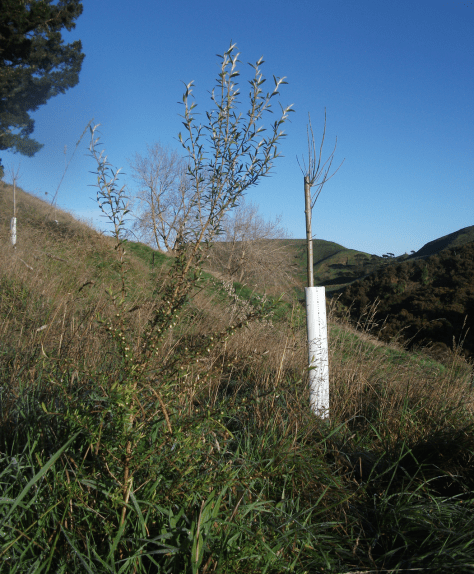
After three winters of planting, we are now up to the upper slopes. On the side of the farm with the goats we use tree guards and on the side with the kune kune pigs we do not use them.

Screen Shot 2018-05-03 at 1.17.57 pm

But I am told that it takes seven years for the roots of poplars to grow broad enough to hold the hillsides against slips, which raises the question: what to do during the intermediate years to prevent slips from taking out the poplars? Our answer has been targeted drainage.

Screen Shot 2018-05-03 at 1.18.20 pm

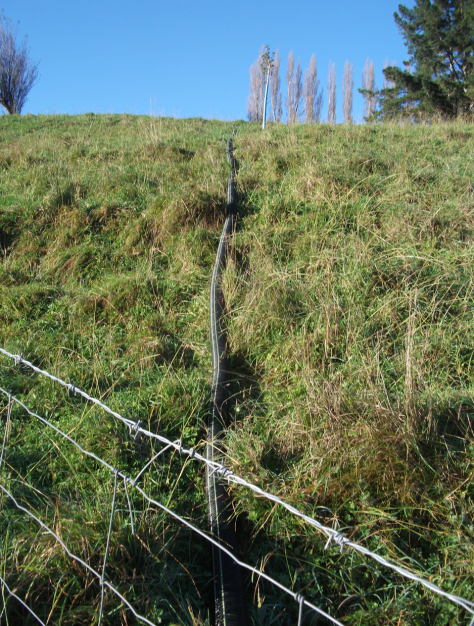
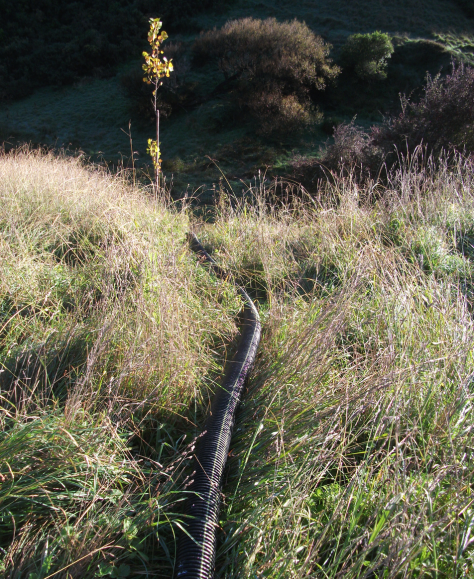
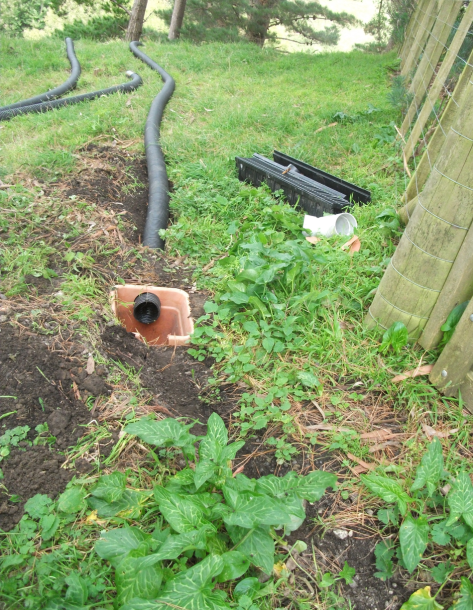
There are certain areas where we can capture concentrated surface runoff on the hillsides and leapfrog it over the most vulnerable slopes. This is not ideal, but may be a reality in a world of increasing extreme weather events.

Screen Shot 2018-05-03 at 1.18.33 pm

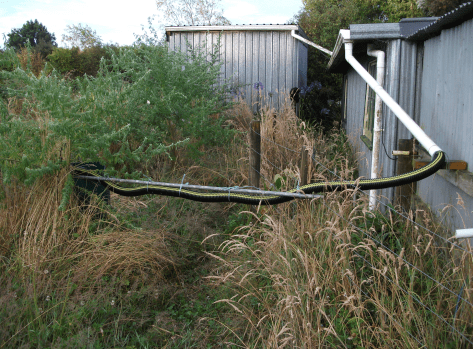
In summer we take the pipes down and store them under trees out of direct sunlight. This preserves the plastic pipes and retains water high on the landscape during the dry season. It is an expensive measure but part of what I call Triage Permaculture. Seasonally installing and dis-installing the pipes is part of what I call four-dimensional design management.

Screen Shot 2018-05-03 at 1.29.45 pm

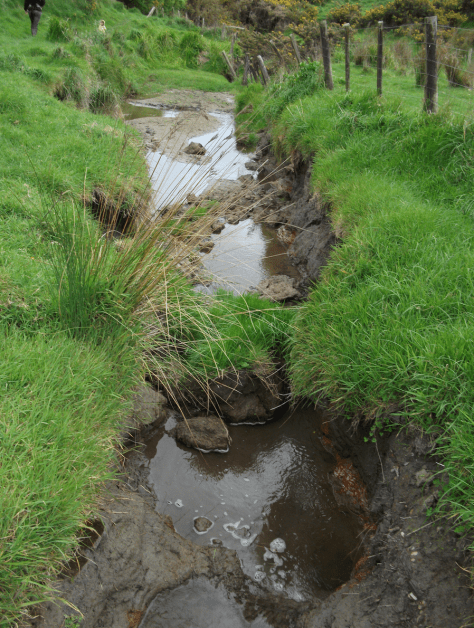
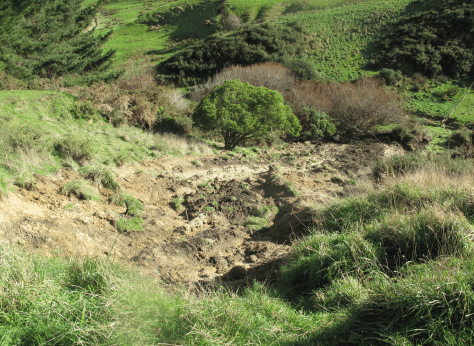
Sadly, we’ve also had a neighbour dumping water onto our land illegally, which has caused an additional slip.

Screen Shot 2018-05-03 at 1.29.31 pm

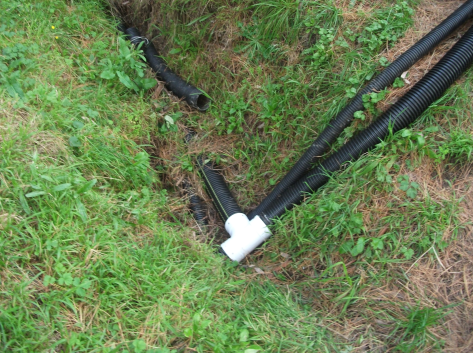
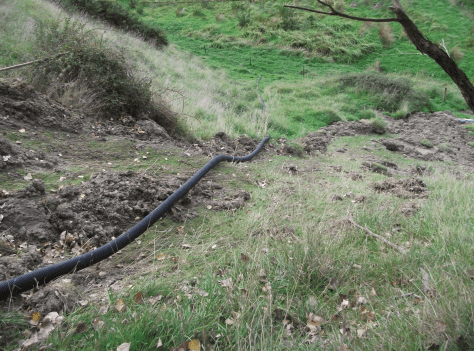
Because they will not take responsibility for their own water as prescribed under The Building Act, I have had to put in a drain and a sump (made from a flower pot) and more plastic pipe to redirect the water away from the vulnerable area.

Screen Shot 2018-05-03 at 1.29.14 pm

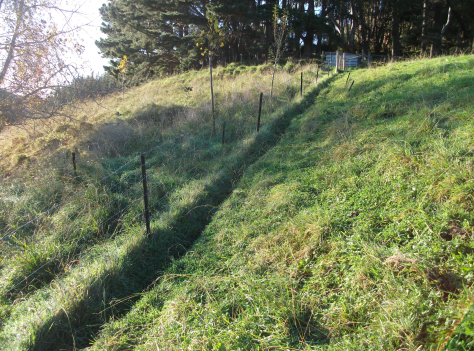
We’ve also put in a surface drain to draw stormwater away from the top of the slip, which is dangerously close to a fence and a major farm track.

Screen Shot 2018-05-03 at 1.18.48 pm

This has all been a massive effort requiring tens of thousands of dollars and hundreds of hours labour. But at the end of the day, if I want my children to inherit a resilient farm there really is no other option.


Peace, Estwing

Designing for Climate Change

Above all else, we design our farm for climate change. Primarily this means drought-proofing and flood-proofing simultaneously. While we employ many strategies along these lines, here is one that is very straight-forward.

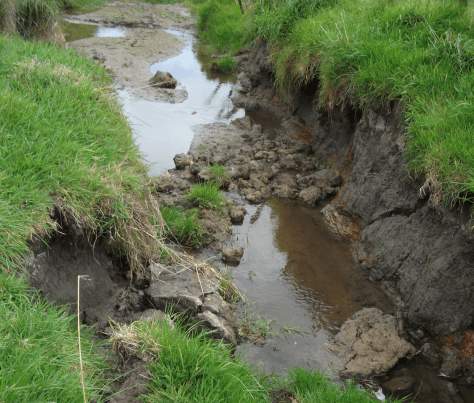
In June, 2015 Whanganui experienced an extreme rain event that caused slips and erosion on our farm. In one area approximately 30 cubic metres of stream bank disappeared overnight.

Screen Shot 2018-04-27 at 9.35.53 am

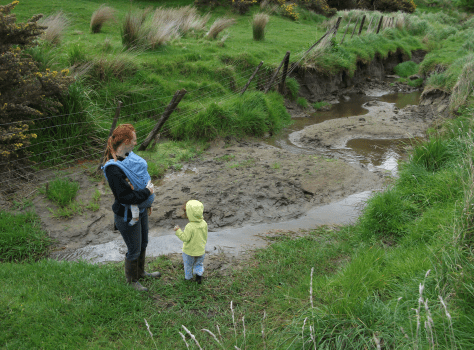
When we went to inspect it the next day we were awed by the destructive power of the water.

Screen Shot 2018-04-27 at 9.36.21 am

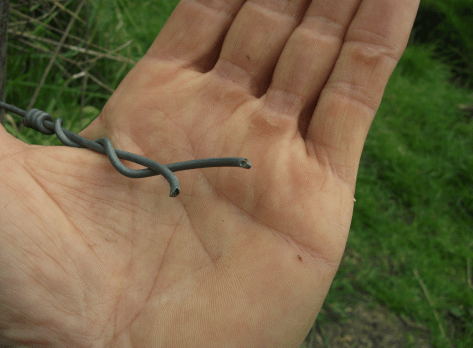
The flood was so powerful is sheered fencing wire through pure tension.

Screen Shot 2018-04-27 at 9.37.45 am

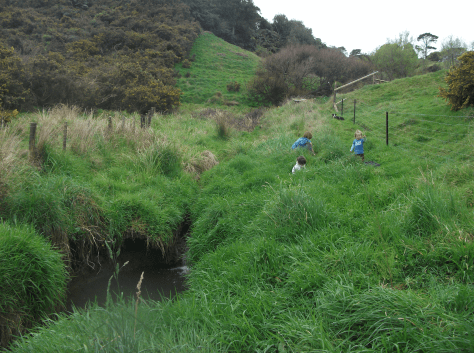
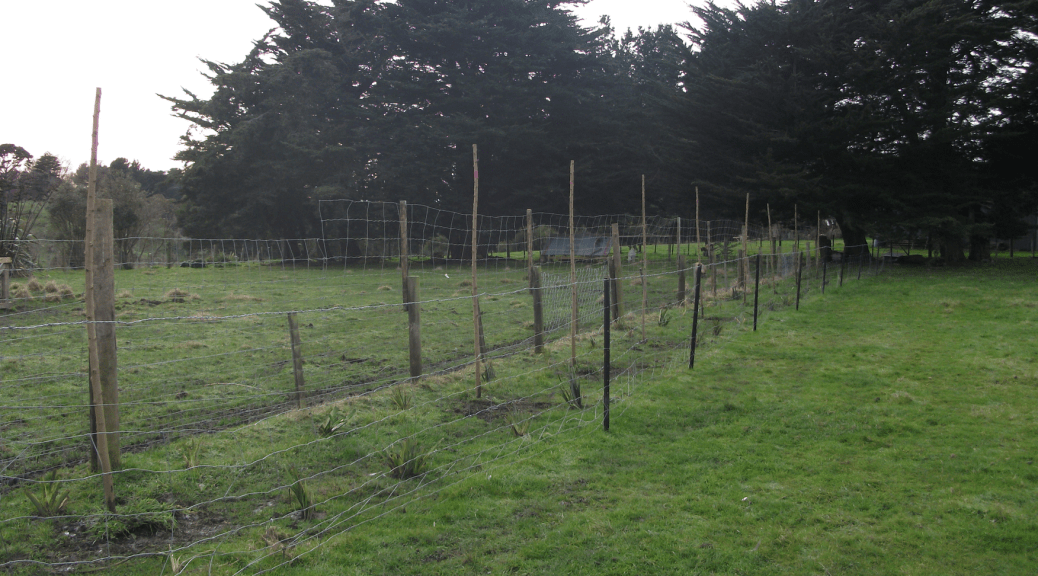
From that day – just 10 months into our ownership of the farm – our thinking about how to manage the 13 acre property took a drastic change. We fenced over 400 metres of stream, planted over 2,000 trees, and put in another 500 metres of fencing to exclude stock from sensitive areas.

Screen Shot 2018-04-27 at 9.58.21 am

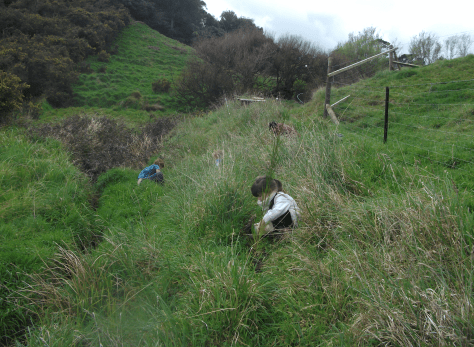
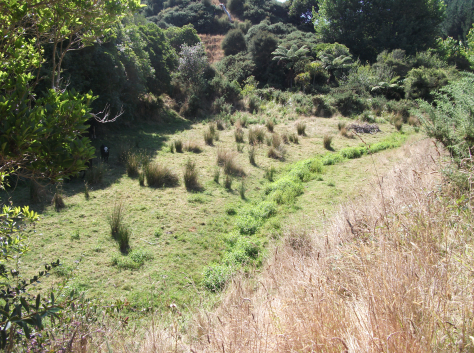
Along the stream we planted a host of native species including grasses and cabbage trees known for their fibrous root systems that hold soil in place. We also planted over 100 Australian casuarina, also known as sheoak and river oak.

Screen Shot 2018-04-27 at 9.40.19 am

As an emergency measure we drove willow poles into the stream bank in the worst effected areas. We intended to use the willow and sheoak as stock fodder – easily pollarding it and dropping branches over the fence for eager goats.

Over the last two years the willows have grown up to the point where this week we were able to cut branches for the goats for the first time. Although we’re not in a drought at the moment this is the type of emergency stock feeding we’ve designed for in case of long periods with no rain.

Screen Shot 2018-04-27 at 9.49.17 am

Willow is healthy stock fodder. Here is great link to a resource explaining all about it: https://beeflambnz.com/knowledge-hub/PDF/poplars-and-willows-fodder

At the end of the day, by fencing the stream and planting its riparian corridor with the proper species we are able to flood-proof and drought-proof this section of our farm simultaneously. In a future of increased extreme weather events it seems like the only viable option.


Peace, Estwing

Boredom Punctuated by Terror

It does not matter what the weather is like 99.9 percent of the time. The other bit can destroy roads, homes, lives and cities. Extreme weather events have been on the rise for over three decades and seem to be picking up in force and frequency in the last five years. The news provides a steady stream of such catastrophes. Climate scientists often call this, “an increased incidence of extreme weather events.”

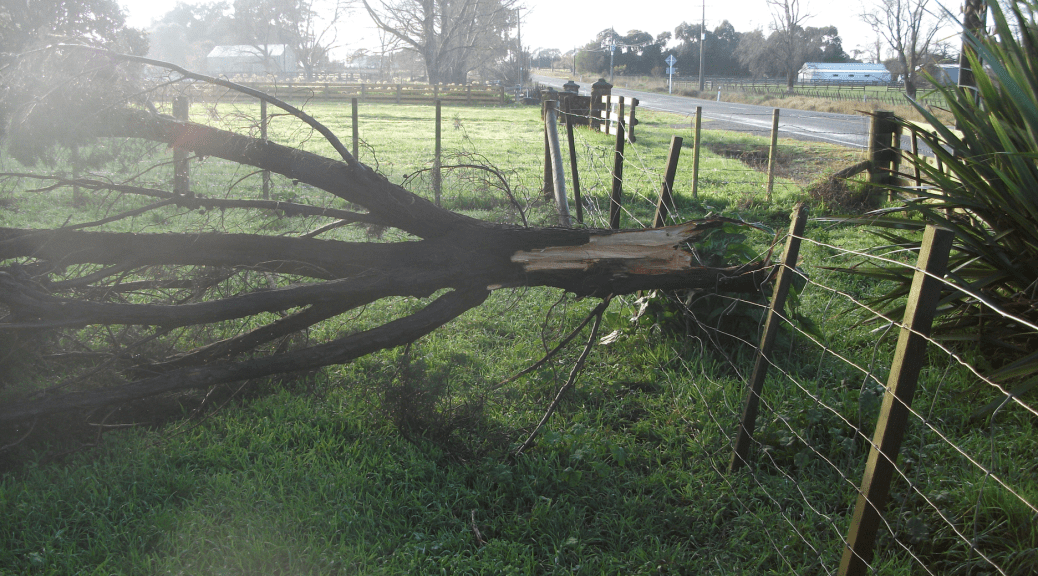
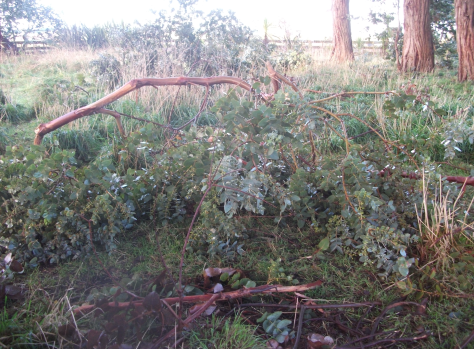
Two months ago we had a strong wind event that brought down lots of branches on our farm.

Screen Shot 2017-07-17 at 7.29.52 am

It only takes a few hours of high winds to do the damage.

Screen Shot 2017-07-17 at 7.08.18 am

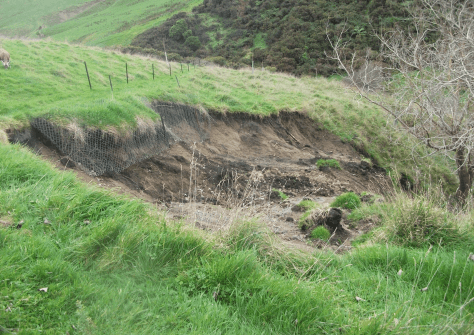
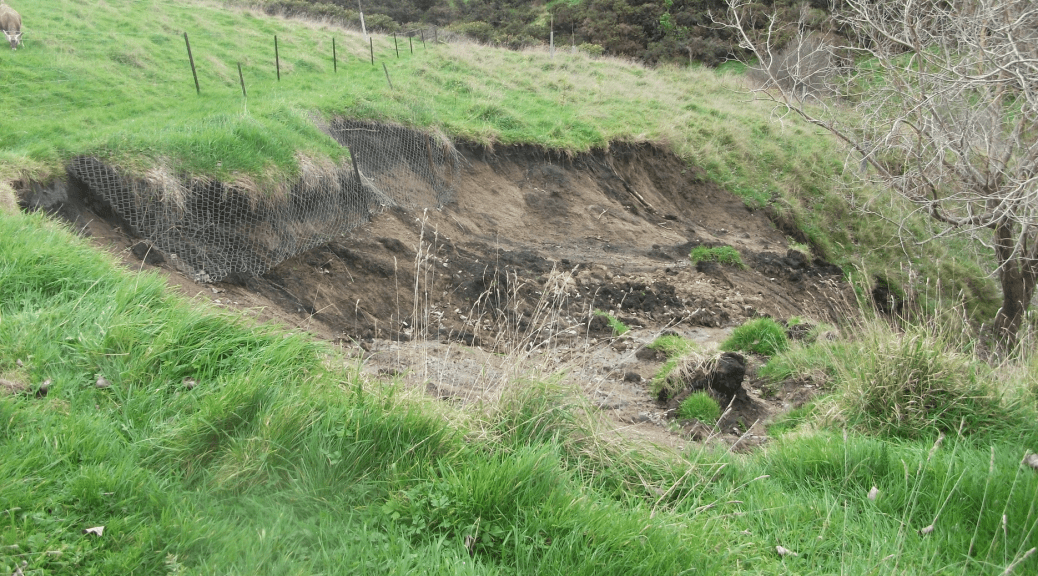
In April we had two rain events that caused a large slip – mostly due to a neighbour illegally dumping water onto our land.

Screen Shot 2017-07-17 at 7.27.20 am

A major challenge for permaculturists is to design for extreme weather events. It will be the greatest challenge of our time. We are developing a resilient farm that can best resist both droughts and floods by turning liabilities into assets and buffering shocks.

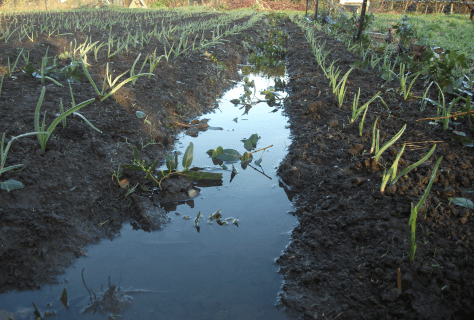
Our garlic is high and dry – by design. All of our growing beds are raised rows perpendicular to slope with drainage on the ends.

Screen Shot 2017-07-17 at 7.30.07 am

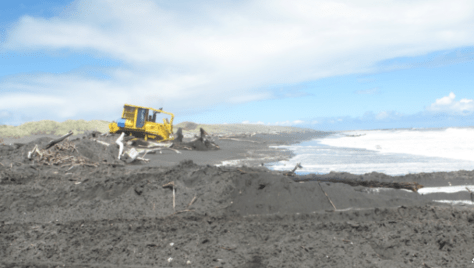
Meanwhile, this is how the Whanganui District Council responds – bulldozing wind- and wave-driven sand back into the Tasman Sea. Fighting climate change with diesel fuel! Good luck with that.

Screen Shot 2017-09-06 at 7.08.01 am


Peace, Estwing

Triage Permaculture: Healing the Land

Sustainability is not enough. We need regenerative approaches to taking on the challenges facing humanity and all life on earth. As with all of the permaculture principles, regenerative design thinking can be applied to every aspect of modern human existence. Bringing land back to health is just one example.

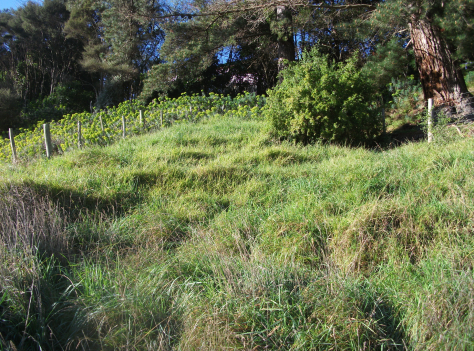
On Kaitiaki Farm we have been bringing a worn-out horse property back to health for the last three years. For the most part the results have been incredible so far. This area was mostly bare soil with a light covering of thistles three years ago. Now it has a complete blanket of grass and not a thistle in sight.

Screen Shot 2017-08-25 at 12.20.35 pm

On the slope just below it we’ve planted manuka and poplars.

Screen Shot 2017-08-25 at 12.20.58 pm

Below that we planted tagasaste.

Screen Shot 2017-08-25 at 12.21.21 pm

And further down there are now olives and then avocados.

Screen Shot 2017-07-31 at 6.55.49 am

And finally – at the bottom of the valley – we’ve fenced the stream and planted 1,500 native trees, shrubs and grasses.

screen-shot-2017-02-01-at-6-35-00-am

Elsewhere on the farm we’re also seeing great recovery. The slope below suffered a major slip during the floods of 2015. We have worked hard to protect and restore the hillside since then.

Screen Shot 2017-08-25 at 12.22.56 pm

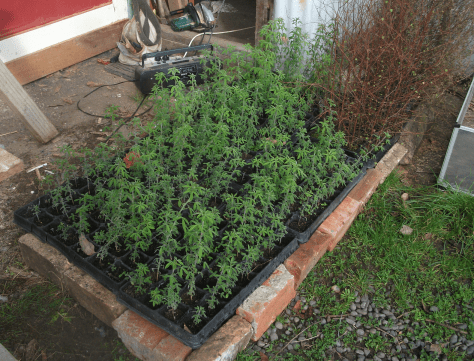
All of this planting means lots of propagation. Here are 4 trays of tagasaste grown from seed.

Screen Shot 2017-08-25 at 12.24.50 pm

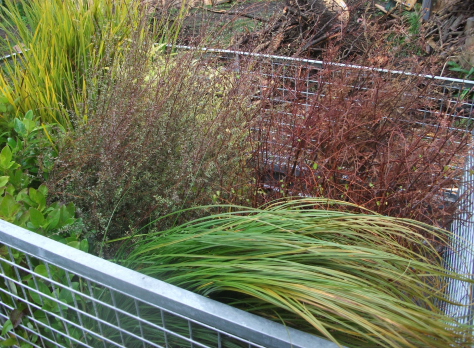
Additionally we buy in and have donated hundreds of native plants.

Screen Shot 2017-08-25 at 12.25.53 pm

On this farm we’re taking the long view. Investing in erosion control, soil health, and water management now will pay dividends in the future. I call this “triage permaculture.” Vegetable gardens can come later.


Peace, Estwing

Before the Flood

Editor’s Note: This is an opinion piece for the Wanganui Chronicle.

Before the Flood is a double album featuring Bob Dylan and the Band recorded live in1974. Joining Dylan on stage during the American tour were Robbie Robertson, Rick Danko, Garth Hudson, Levon Helm and Richard Manuel. From New York to Los Angeles, the superstar line up rocked the States, and the album was eventually certified platinum.

Before the Flood is also a documentary film about climate change featuring Leonardo DiCaprio that debuted at the Toronto International Film Festival last month. The film opens in theaters the 21st of October and will be broadcast on the National Geographic Channel worldwide on the 31st of October.

With over a decade of experience on the front lines of the issue, Dicaprio has established himself as a global leader on climate change. He stays up to date on the issue, which is critical because scientists’ understanding of climate change changes constantly. One recent revelation in the United States is that flood maps used by the Federal Emergency Management Agency (FEMA) are no longer valid. In other words, major flooding is occurring in places it never occurred before and impacting on tens of thousands of homeowners without flood insurance.

Families and entire communities are being devastated by extreme weather events that come with larger and larger repair bills. Our region has experienced this and will continue to experience it going forward: higher repair bills leading to higher rates.

Horizons Regional Council reported that the 2015 floods caused $120 million in damage not including costs to the rural sector. There were over 2,000 slips on roads, which included 25 road closures. The next major rain event will cost more. In fact, the next flood in Whanganui will cost ratepayers far more than the wastewater treatment plant. The next mega-storm is already baked into the cake due to the persistence of carbon in the atmosphere.

The question for our community is: what will we do before the flood?

The answer, my friends is Blowin’ in the Wind, because All along the Watchtower you can see the waters risings Up on Cripple Creek after the Rainy Day Women #12 and 35. Like a Rolling Stone, The Weight of a huge slip closed Highway 61 Revisited. Don’t think twice, it’s (not) all right.

But seriously, the first thing we need to do is change our perspective. So far climate change has been framed as an environmental issue with ranting, finger pointing, denial, protests, and token gestures – all with little effect.

Taking a rigorous and holistic look at the impacts of climate change on our district makes it clear that for the next half century it will manifest as an economic and social issue. On the one hand drought and flood will disrupt economic activity, cost farmers dearly in production losses and repair bills, and make transport difficult or impossible in some areas. On the other hand, enormous repair bills will add to the rates burden and suppress local economic activity. Ratepayers with fewer dollars in their bank accounts will spend less in local shops and local business owners will lose profitability. Middle and lower income families will feel the burden most acutely.

If we’re able to shift our perspective on the issue, the next thing to do is take action. In theory this means holding water on the land during major rain events to take the peak off floods. In practice this means restoring wetlands, fencing and planting streams, and planting trees on hillsides. Ordinary citizens need to support the efforts in these areas being made by our councils.

If we are to seriously address climate change in our community we need approaches that are robust, holistic and inclusive. Gone are the days of talking and finger pointing. These are days for action.

Dr. Nelson Lebo has been studying climate change for 30 years.

Join the Front Lines of Climate Change Action

An increasing incidence of extreme weather events.

That is the climate scientist way of saying, “More superstorms, more record floods, more record droughts.” Worldwide the repair costs will run into the trillions. Building more stop banks, levies, dykes and other flood protection will be expensive and ultimately ineffective.

Research shows the best way to mitigate severe flooding is to hold back water from large rivers during major rainfall events. This is done by taking a holistic approach to watershed (catchment) management, which includes these specific actions: replanting trees on steep overgrazed hillsides; restoring degraded wetlands; and, protecting riparian (stream-side) corridors. Other benefits of these actions include improved water quality and increased biological diversity.

A history of less-than-ideal farming and land management practices makes the Whanganui District and Whanganui city particularly vulnerable to extreme weather events such as last year’s flood, which caused thousands of slips district wide, severe erosion and record flooding. We will see more of the same and even worse in the decades to come, and the repair bills will cost rate payers hundreds of millions of dollars.

Ultimately it would be cheaper to take the steps described above than to do nothing and accept the devastation and massive costs of clean up and repair. It is a case of an ounce of prevention is worth a pound of cure.

screen-shot-2016-09-13-at-1-25-43-pm

Last year our tiny stream burst its banks and carried cubic meters of soil off into the Whanganui River and on to the Tasman Sea.

screen-shot-2016-09-13-at-1-24-14-pm

This historic wetland was nothing but a drainage channel during the floods.

flooded-valley

So we have decided to take direct action to address the effects of climate change in our community. We have initiated the Purua Stream Restoration Project to serve as a model of private-public-community partnership. The vision of the Project is to protect the entire stream by working with landowners, community members and Horizons Regional Council to fence it off and plant tens of thousands of native trees, grasses and wetland plants.

We have started the process on our property.

screen-shot-2016-09-13-at-12-56-05-pm

screen-shot-2016-09-13-at-12-57-35-pm

screen-shot-2016-09-13-at-12-57-05-pm

screen-shot-2016-09-13-at-1-21-04-pm

Stage One at Kaitiaki Farm has involved fencing off an acre of land and planting 800 – 1,000 natives. The entire bend in the stream in the photo below has been protected.

screen-shot-2016-08-21-at-4-15-26-pm

After spending six weekends to build a stock proof fence, two working bees have involved the Whanganui community, planting the stream sides…

screen-shot-2016-09-13-at-12-53-34-pm

…and the higher banks.

screen-shot-2016-09-13-at-12-54-08-pm

Horizons Regional Council has excellent programmes that help defer the costs of fencing and provide plants grown at the Kaitoke Prison nursery.

screen-shot-2016-09-13-at-12-55-25-pm

Additionally, we have had over 800 more plants donated so far.

screen-shot-2016-09-13-at-12-56-22-pm

Stage One is nearly complete and we’re keen to proceed with Stage Two, which will involve fencing off another 1 and 1/2 acres and planting 1,000 native plants.

Stage Three will involve working with landowners up and down the stream.

Stage Four will involve replicating this model of private-public-community partnership throughout the entire Whanganui catchment.

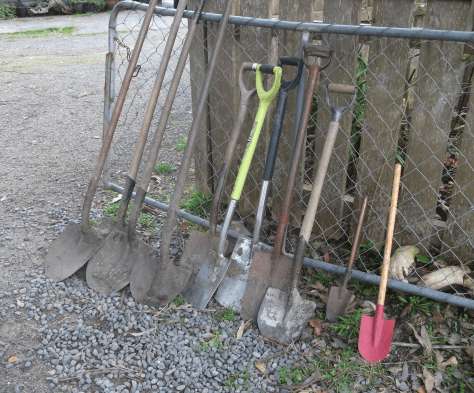
If you are concerned about the direct effects of climate change on our community and want to get involved, grab a spade, dig a post hole, plant a tree. We can make a difference here and now, and for the future.

screen-shot-2016-09-13-at-12-54-57-pm

Get involved today. Email: crew.whanganui at gmail dot com

Peace, Estwing

Permaculture Ethics and Design

My observations are that the eco design methodology known as permaculture suffers in two fundamental ways: a confusing name and dogmatic application by inexperienced converts.

The name is the name – no changing it at this point – and there is no antidote for dogma. But for a general audience of readers I’d like to lay out the ethics and practice of permaculture using two concrete examples.

When engaging with permaculture as a design methodology, practicioners are bound to follow a basic set of ethics: care for the environment; care for people; share surplus resources. I appreciate this ethical code because it helps distinguish a permaculturist from anyone else who may be involved in the ‘sustainability movement’ such as an organic gardener, recycler, green builder, eco-activist.

This is not to say that a permaculturist cannot engage in all of these, but that anyone who practices one or more than these is not necessarily engaging with the permaculture ethics.

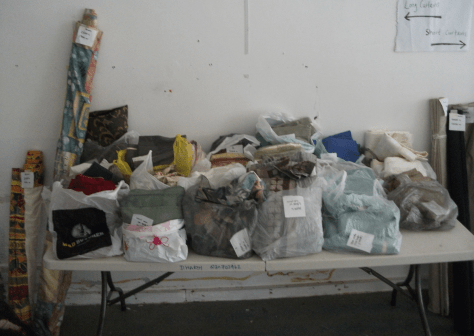
I also appreciate the ethics because they are an integral part of the design process. For example, the ‘pop-up curtain bank’ that recently opened in our community is a direct application of the permaculture ethics. Screen Shot 2016-08-10 at 7.38.32 am

Sharing surplus resources: Members of the community who have curtains they no longer require can drop them off and members of the community who need curtains can pick them up. Like any bank it accepts deposits and grants withdrawals.

Caring for people: It’s no secret that most of the housing in our city is substandard: cold and/or damp. These unhealthy homes are especially hard on children and seniors. Getting properly installed curtains, insulating blinds and window blankets into as many homes as possible helps make the occupants more comfortable and healthier.

Care for the earth: Improving the ‘thermal envelope’ of a home is the best way to save energy required for heating and cooling. Saving energy is generally considered good for the environment.

The other example I’ll share is a direct application of eco-design: imitating nature to develop or reestablish robust ecological systems. The latter of these is sometimes called ‘regenerative design’.

We are in the process of reestablishing a wetland on our farm and protecting streams from stock. Additionally, we are planting native trees and poplar poles on steep hillsides to prevent slips and erosion. Screen Shot 2016-08-06 at 7.54.04 am

All of this work is supported by Horizons Regional Council, which offers expert advice, low-cost poplar poles, and in some cases funding for fencing and plantings. I cannot speak highly enough of these programmes.

Forests and wetlands play important roles in moderating seasonal water flows across large land areas. In other words they store water high on the landscape during wet periods and release it slowly during dry periods. It works like a bank by accepting deposits and granting withdrawals.

Much of the farmland in our region suffers from extreme weather on both ends – wet and dry. Neither is good for stock, nor for farmers, nor for water quality, nor for anyone living downstream. The reasons are clear: not enough trees on hillsides and streamsides.

The solution is to build resilient waterways by imitating nature, or in other words engaging in eco design. Projects like ours are the most direct way that landowners and the wider community can address the extreme weather events associated with a volatile and changing climate.

The restoration work we are doing on our farm will help – to a tiny degree – everyone who lives and works downstream and downriver from us.

Screen Shot 2016-08-06 at 7.49.52 am

So, in a nutshell, what this is all about is developing alternative banking systems – stream banks and curtain banks – and getting the community involved. This is what resilience is all about, and it is the heart and soul of permaculture design thinking.

If you are the least bit concerned about healthier homes and climate change, you too can get involved.

Please donate clean curtains and Roman blinds to the Curtain Bank before 5th August: 91 Guyton St.

Please donate native trees to the Kaitiaki Wetland Restoration by popping into the Wanganui Garden Centre before 17th August: 95 Gonville Ave.


Peace, Estwing

Going to the Poles

Our Australian neighbours have recently gone to the polls, and the UK’s infamous Brexit referendum is still playing out post voting. And of course the American polls open on 8th November for a historic decision whichever way it goes.

At Kaitiaki Farm we have gone to the poles in a very different way: poplar poles.

Screen Shot 2016-07-24 at 7.50.50 am

For the second year in a row we have planted poplar poles to hold vulnerable slopes and prevent slips. Here are our interns, Kelly and Patrick, ramming poles last year.

Screen Shot 2016-07-24 at 7.49.48 am

Poles are planted 600 mm to 700 mm deep and it is critical to pack the soil tightly around the base of each one.

Screen Shot 2016-07-24 at 7.49.16 am

Here is a slip that occurred last winter during especially heavy rains. We had been on the land less than a year at that time. The slips were a wake up call. This slip now has 18 poplar poles in and around it.

Screen Shot 2016-07-24 at 7.45.21 am

At the time of the slips we had ordered poles from Horizons Regional Council but had not planted them yet as the storm occurred in early winter. Kelly and Patrick and I planted the first 20 poles in late August. They take about seven years to develop a sufficient root mass to hold slopes, so the sooner they are in the ground the better.

Below is this year’s order of 30 poles that were delivered by Horizons a month ago. The three metre poles cost $7 each.

Screen Shot 2016-07-24 at 7.42.33 am

They need to be soaked for a week first to ensure they take up plenty of water before planting.

Screen Shot 2016-07-24 at 7.42.10 am

We planted nine poles as a wind break between two paddocks at the top of the property where it is relatively flat. Our intern, Weis, dug the holes by hand relatively easily. I put the poles in the ground last week.

Screen Shot 2016-07-24 at 7.41.34 am

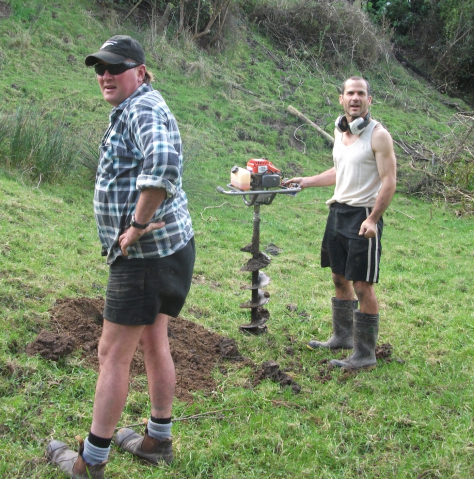
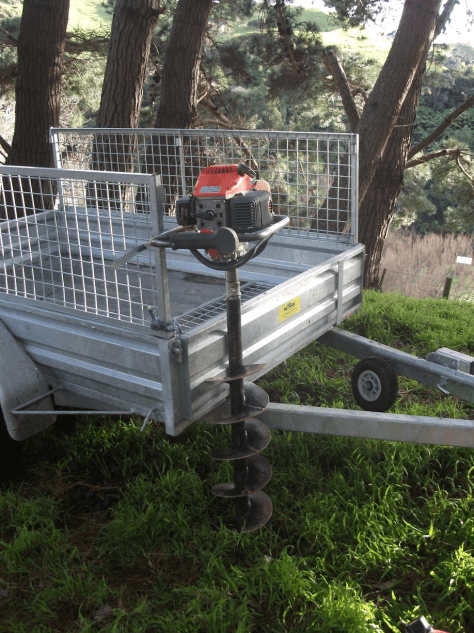
This weekend I hired a post hole borer to put in some new fences for our wetland restoration project, and took the opportunity to drill another 21 holes for the rest of the poplars.

Screen Shot 2016-07-24 at 7.33.29 am

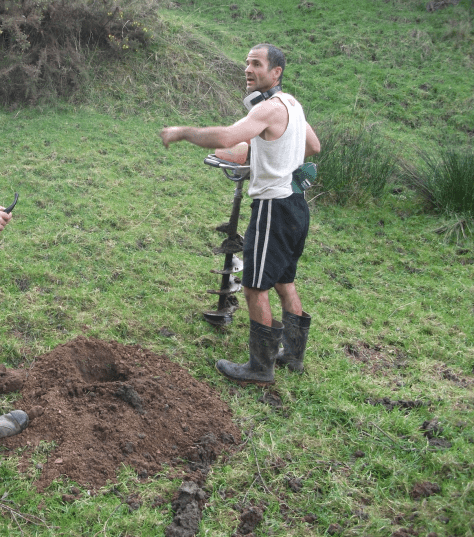
On Saturday I drilled 35 holes into heavy clay soil. I have not been so bone tired in a decade.

Screen Shot 2016-07-24 at 7.34.14 am

It is not an easy thing to carry up and down hill all afternoon, but the borer got the job done and was back at the hire shop fully cleaned before 5:00 pm.

Screen Shot 2016-07-25 at 5.45.11 am

Fifty poles and counting.

Peace, Estwing

Damned if we do -damned if we don’t: The case for resilience


Editor’s note: This has been published simultaneously on The Automatic Earth

https://www.theautomaticearth.com/2016/07/climate-energy-economy-pick-two/


Carbon double-bind

There appears to be increasing levels of anxiety among environmental activists around the world and in my own community. After all, temperature records are being set at a pace equaled only to that of Stephen Curry and LeBron James in the NBA Finals. A recent Google news headline said it all: “May is the 8th consecutive month to break global temperature records.”

In other words, October of last year set a record for the highest recorded global monthly temperature, and then it was bettered by November, which was bettered by December, January, and on through May. The hot streak is like that of Lance Armstrong’s Tour De France dominance, but we all know how that turned out in the end.

Making history – like the Irish rugby side in South Africa just over two weeks ago – is usually a time to celebrate. Setting a world record would normally mean jubilation – not so when it comes to climate.

Responses to temperature records range from sorrow, despair, anger, and even fury. Anyone with children or grandchildren (and even the childless) who believes in peer review and an overwhelming scientific consensus has every right to feel these emotions. So why do I feel only resignation?

We are so far down the track at this point that we are dammed if we do and dammed if we don’t. Remember the warnings 30 years ago that we needed 30 years to make the transition to a low carbon economy or else there would be dire consequences? Well, in case you weren’t paying attention, it didn’t happen.

While these warnings were being issued by scientists much of the world doubled down – Trump-like – on Ford Rangers, Toyota Tacomas, and other sport utility vehicles. The same appears to be happening now, with the added element that we are experiencing the dire consequences as scientists issue even more warnings and drivers buy even more ‘light trucks’. Forget Paris, the writing was on the wall at Copenhagen.

The bottom line is that most people will (and currently do) experience climate change as a quality of life issue, and quality of life is related to a certain extent on disposable income. Acting or not acting proactively or reactively on climate change is expensive and gets more expensive everyday.

If the international community ever takes collective action on climate change it will make individuals poorer because the cost of energy will rise significantly. If the international community fails to act, individuals will be made poorer because of the devastating effects of extreme weather events – like last year’s historic floods where I live as well as northern England, etc – shown to be on the increase over the last 40 years in hundreds of peer-reviewed papers with verifiable data.

And here is the worst part: most economies around the world rely on some combination of moderate climate and cheap fossil fuels. For example, our local economy is heavily dependent on agriculture and tourism, making it exceptionally vulnerable to both acting and not acting on climate change.

Drought hurts rural economies and extreme winds and rainfall can cost millions in crop damage as well as repairs to fencing, tracks and roads. As a result, both farmers and ratepayers have fewer dollars in their pockets to spend on new shoes, a night out, or a family trip. This is alongside living in a degraded environment post-disaster. The net result is a negative impact on quality of life: damned if we don’t.

On the other hand, tourism relies on inexpensive jet fuel and petrol to get the sightseers and thrill seekers to and around the world with enough dollars left over to slosh around local economies. Think about all of the service sector jobs that rely on tourism that in turn depend entirely on a continuous supply of cheap fuel. (This is not to mention peak oil and the lack of finance available to fund any long and expensive transition to an alternative energy world.) I’m told 70% of US jobs are in the service sector, most of which rely on inexpensive commuting and/or a highly mobile customer base.

Any significant approach to curbing carbon emissions in the short term will result in drastic increases to energy prices. The higher the cost of a trip from A to Z the less likely it is to be made. As a result, business owners and ratepayers at Z will have fewer dollars in their pockets to spend on new shoes, a night out, or a family vacation of their own. The net result is a negative impact on their quality of life: damned if we do.

I suppose it deserves repeating: most OECD economies and the quality of life they bring rely on both moderate climate and cheap fossil fuels, but these are mutually exclusive. Furthermore, regardless of emissions decisions made by the international community, we are already on track for decades of temperature records and extreme weather events that will cost billions if not trillions of dollars.

The response in many parts of the world has been to protest. That’s cool, but you cant’ protest a drought – the drought does not care. You can’t protest a flood – the flood does not care. And even if the protests are successful at influencing government policies – which I hope long-term they are – we are still on track for decades to climatic volatility and the massive price tags for clean up and repair.


Resilience is where it’s at

Go ahead and protest, people, but you better get your house in order at the same time, and that means build resilience in every way, shape and form.

Resilience is the name of the game, and I was impressed with Kyrie Irving’s post NBA game seven remarks that the Cleveland Cavaliers demonstrated great resilience as a team.

As I wrote for The Automatic Earth over a year ago, resilience is the new black. If you don’t get it you’re not paying attention.   http://www.theautomaticearth.com/2015/05/resilience-is-the-new-black/

This article received a wide range of responses from those with incomplete understandings of the situation as well as those in denial – both positions dangerous for their owners as well as friends and neighbours.

The double bind we find ourselves in by failing to address the issue three decades ago is a challenge to put it mildly. Smart communities recognize challenges and respond accordingly. The best response is to develop resilience in the following areas: ecological, equity, energy and economic.

The first two of these I call the “Pope Index” because Francis has identified climate change and wealth inequality as the greatest challenges facing humanity. Applying the Pope Index to decision-making is easy – simply ask yourself if decisions made in your community aggravate climates change and wealth inequality or alleviates them.

For the next two – energy and economic – I take more of a Last hours of ancient sunlight (credit, Thom Hartmann) perspective that I think is embraced by many practicing permaculturists. Ancient sunlight (fossil fuels) is on its way out and if we do not use some to build resilient infrastructure on our properties and in our communities it will all be burned by NASCAR, which in my opinion would be a shame.

As time passes, everything that is not resilient to high energy prices and extreme weather events will become economically unviable and approach worthlessness. On the other hand, investments of time, energy, and money in resilience will become more economically valuable as the years pass. Additionally, the knowledge, skills and experience gained while developing resilience are the ultimate in ‘job security’ for an increasingly volatile future.

If you know it and can do it and can teach it you’ll be sweet. If not, get onto it before it’s too late.


Peace, Estwing
 

When Water Flows Uphill

June brought an historic flood to our city. December was the driest on record.

Climate scientists have warned us to prepare for these types of extremes. They have certainly arrived around the world, and according to predictions will only increase in frequency and severity. No matter what happens post-Paris in terms of carbon emissions, the planet is already locked into decades of volatile weather.

What is your community doing about it? What are you doing about it?

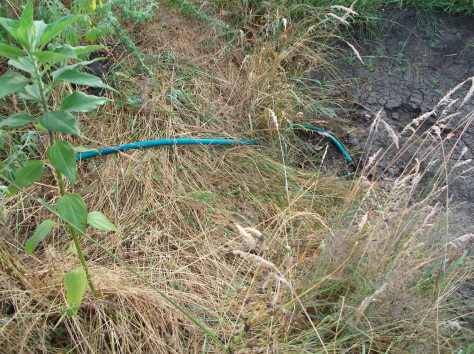
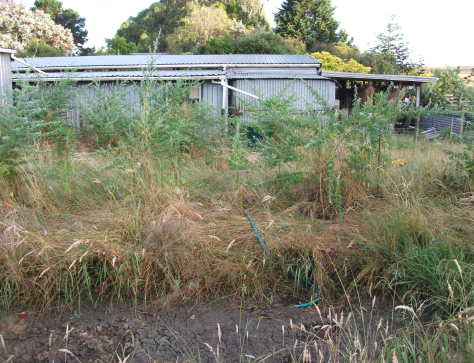
On our farm we have designed to address both drought and flood simultaneously. Here is one small example of how I am directing water to flow ‘uphill’ and over a swale to where it will be most useful to the black boy peach trees and blueberry bushes planted along the swale. The higher and longer we can hold water on the property the better. But at the same time we direct water away from buildings made of wood and steel.

This little water diversion project starts on the huge roof of our multi-shed complex. I’ve changed the spouting and run it into a section of Novaflo. In winter the same piece of Novaflo carries the water away from and to the side of the buildings. But for the dry summer I have decided to run the water uphill.

Screen Shot 2016-01-18 at 11.08.55 am

The weight of the water is so great that I’ve had to build a ‘splint’ to support the flexible pipe from the fence to the barrel.

Screen Shot 2016-01-18 at 11.09.17 am

Can never have too much baling twine!

Screen Shot 2016-01-18 at 11.09.26 am


As the barrel fills, the pressure forces water through the hose fitted to the bottom of the side. The hose will eventually be covered by stone as it crosses the road.

Screen Shot 2016-01-18 at 11.09.38 am

Then it climbs over the swale to the small pond dug behind it.

Screen Shot 2016-01-18 at 11.09.48 am

I checked it this morning after a small 5 mm shower last night. The bottom of the pond was very damp and the end of the hose was full of water.

Screen Shot 2016-01-18 at 11.10.01 am

Here is a reverse angle showing the water’s pathway up and over the swale. In winter the swale keeps water flowing down the hillside away from the buildings. But by the end of this dry December the ponds were dry and the small fruit trees were drying out. I was spending a lot of time watering them with a hose and decided that this project was to jump to the head of the line.
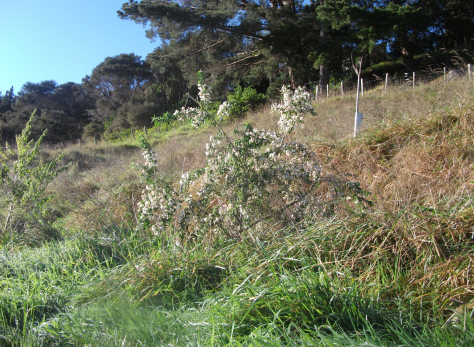
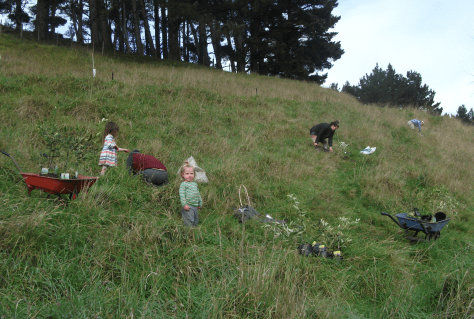
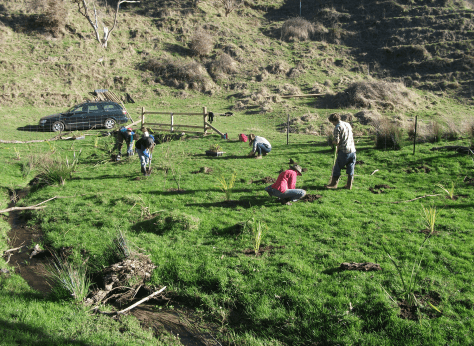
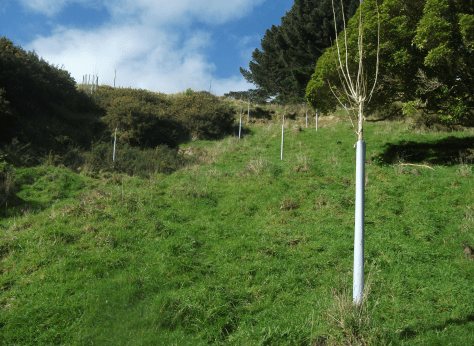
This hugelkultur swale was built one year ago and is already thriving compared with the worn out paddock around it.

Screen Shot 2016-01-18 at 11.10.15 am

My belief is that it’s fine and good and important to talk about cutting emissions and embracing non-carbon based energy sources. But it is equally important to prepare ourselves and our communities for the extremes of both wet and dry. Good design moderates them both for the better. To me it’s all about designing and building resilient systems. This is just one small example on one small farm in the corner of the world. It was made in a morning by materials laying around the place at no cost.

What do you think you can achieve at your place?


Peace, Estwing