Celebrating Our Suppliers

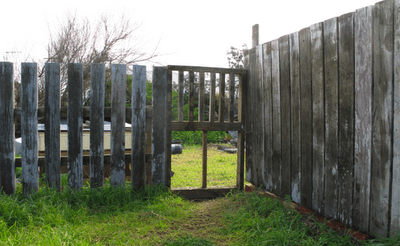
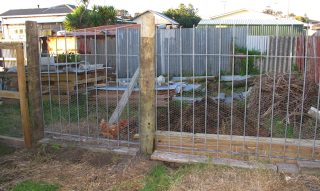
Permaculture is more than a set of design principles. It is a way of seeing. It involves seeing energy and how it flows through a system. And it involves seeing the potential in materials that others may ignore. What many consider useless, permaculturists can repurpose into functional and beautiful elements. For example, we turned a dangerous collapsing deck into an attractive fence and gate to keep dogs away from our fowl, which also serves as a windbreak for our banana plant.
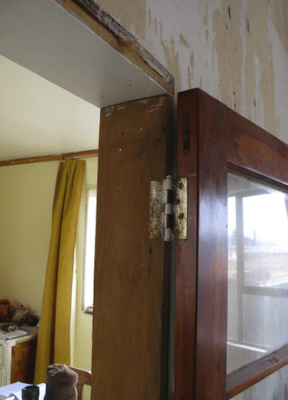
We have made wide reuse of materials left on this property when we purchased it, such as these bits of timber to frame a doorway.
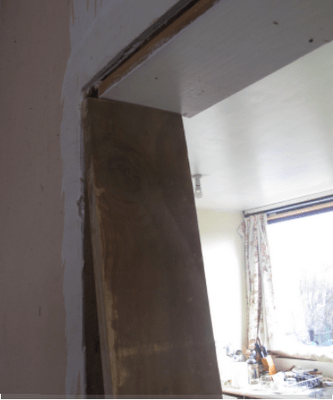
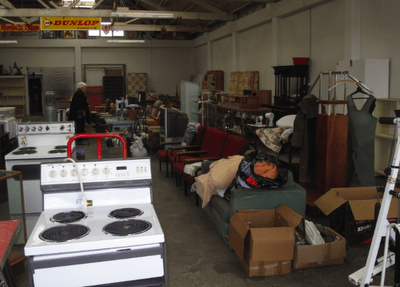
But I was one board short of framing the doorway, so I went down to the Reno Centre…
… and found one for just $5.
And while I was at the Reno Centre I was lucky enough to find some galvanized flue pipe at a fraction of the price of buying it new.


Along with the Reno Centre, Wanganui is blessed with many Opportunity Shops (“Opp-Shops”) where we like to find many things, especially bric ‘a’ brac!
And speaking of bric ‘a’ brac, there is no better place than…
Hayward’s Auctions!
From a permaculture perspective, Hayward’s is the ideal venue to fulfill multiple purposes: great stuff at great prices and high quality entertainment. We go every Thursday night. It is our date night.
And, of course, there is metals bin at the local transfer station.

Together, all of these awesome local suppliers have helped us turn this…
Before
… into this!
After
Thanks to all our suppliers for providing a valuable service to the community.
Peace, Estwing

Celebrating Spirit!

Exuding enthusiasm.

We celebrate our dear friend Melinda Hatherly on the occasion of her birthday. We feel so blessed to know Lindy and her husband, Murray Jones. Caring, generous, community-minded, the list goes on.

This Whonderful Whoman from Whanganui played a key role in our Whedding and Whare Wharming in February.

Whedding theme was “Opp-Shop Melbourne Cup.”

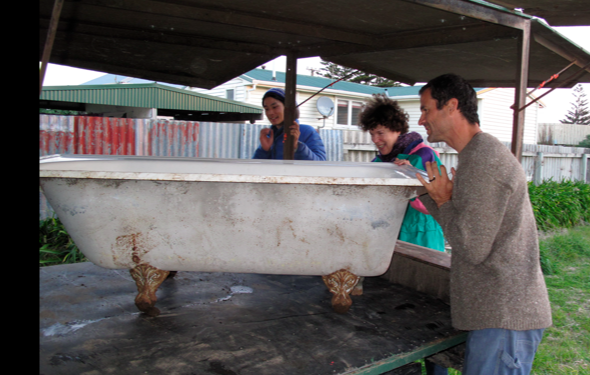
She was also there last October to help deliver our second-hand bath…


… and our first dinner party (before we had power or water).


And, along with Murray (back left in photo above), provided the best house warming gifts ever: fruit trees and bags full of organic compost!


As she helped us celebrate our special day, we want to celebrate hers.

Peace, Estwing

Nick of Time

I do not know much about wedding protocol (just ask my wife) but from what little I understand, there is a one year window for gift giving. By some small miracle, I have just squeaked in before the deadline. Hope you like it, Dearheart.


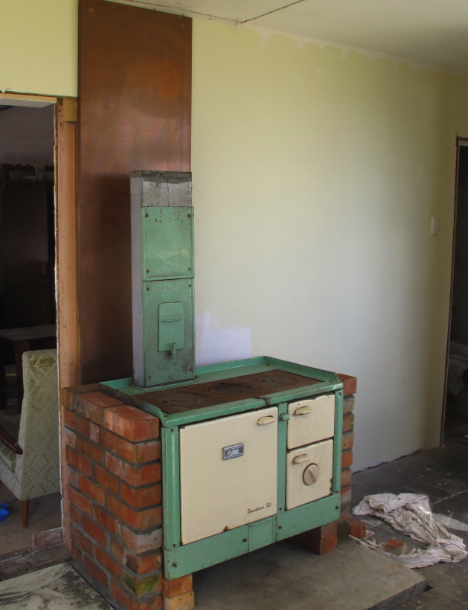
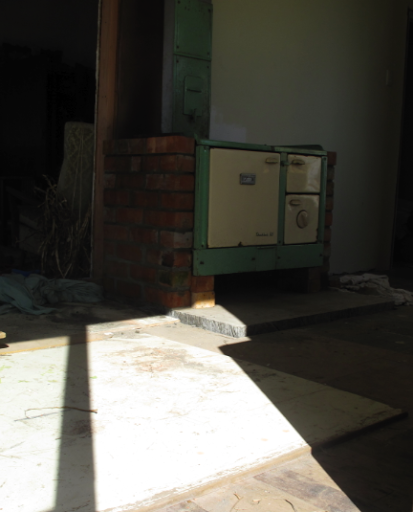
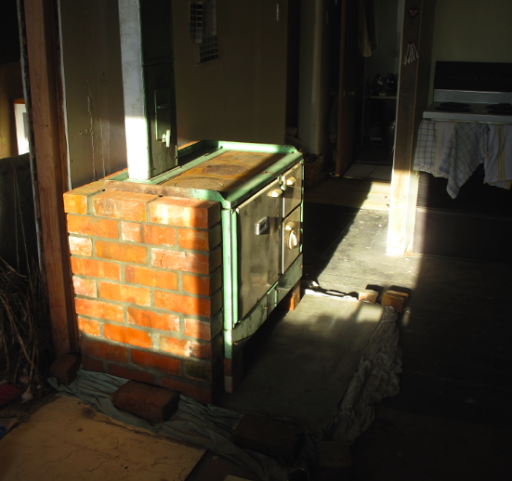
Now that that’s sorted, I wanted to explain how our coal range acts as thermal mass. Its placement is such that it receives winter morning sun through a northeast window.

It then receives winter mid-day sun through the French doors. Since we are nearly 2 months past the solstice, the sun is barely reaching the hearth. On June 21st it will reach of the first 3 courses of bricks.
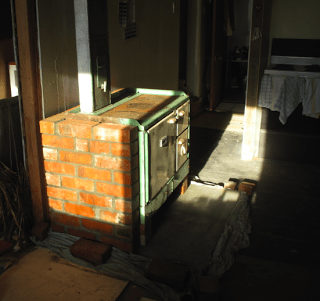
And afternoon sun through a northwest window.


Even when not burning wood, our trusty Shacklock still has an energy role to play in our home. It slowly absorbs heat from the sun during the day and reradiates it at night. And the wife thinks its cute.
Peace, Estwing


Beached As

In the post yesterday, I introduced Jonah and the whale. Today I am happy to report that the whale is beached. Or, as we say in NZ, “Beached as, broo.”
J is the MAN.


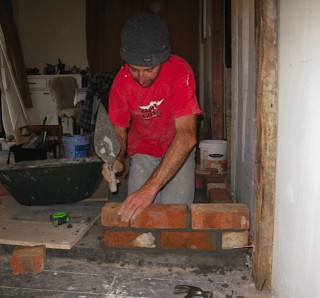
Jonah is an amazing bicycle mechanic and community-minded individual. We adore him, and were pleased to find out – quite by surprise – that he can lay bricks.
Classic Kiwiana
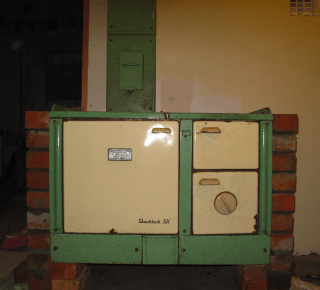
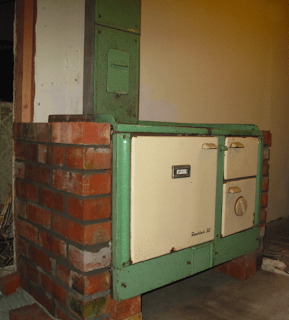
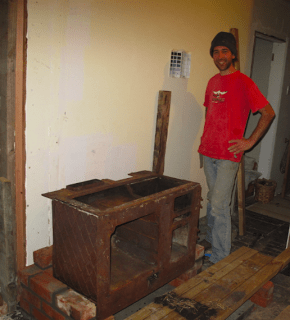
Not only will this beautiful reused coal range heat our home and cook our meals, but it is the quintessential Kiwi-green color that completes our evolving palette.
Admiring Jonah’s sweet as brick work.


Thanks Jonah. Rock on, bro.
Peace, Estwing

Jonah and the Whale

Although we have made it most of the way through this winter relying on passive solar heating, there have been a few cloudy days that have tested our reserve and forced us to get out the electric heater. None the less, our power bill remains under $30. But for a long time we have planned to install our second hand Schacklock 501 coal range (“multi-fuel stove”) in the kitchen. In true permaculture fashion, it will serve multiple purposes. We plan to use it for cooking and space heating. (I bought it on Trade Me even before we bought the house.)
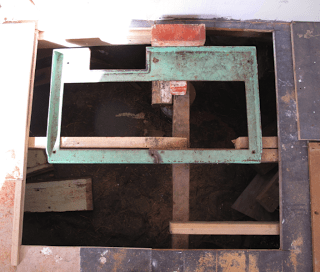
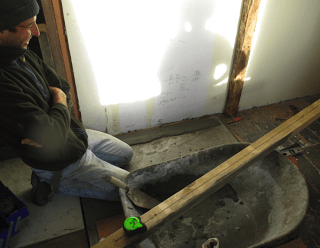
Working closely with Building Control, we embarked on the process of building a full foundation and hearth slab. This first entailed cutting a hole in the floor…

… and determining where to build the foundation using the enamel stove top as a template.

To make a long story somewhat shorter, I spent a lot of time under the house digging, building boxing (form work), placing steel, pouring concrete and setting concrete blocks.

Then my little helper packed all of the cavities with pumice from the beach to support and insulate the bottom of the hearth slab.

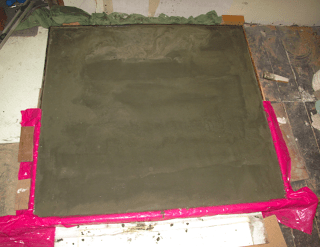
After the building inspector checked our handy work, I poured the slab.

Enter Jonah, man of many talents.


He can move heavy objects.


He can pray.


But most importantly, he can lay bricks.

We used the stove top as a template again to get the first course laid.


And by tea time we had the whale in place.


But we ran out of mortar before Jonah could finish the brick work up the sides and back. So we had a nice curry and went to bed.


To be continued…
Peace, Estwing

Chooks by the Book

Dedicated to Mr. Carver.
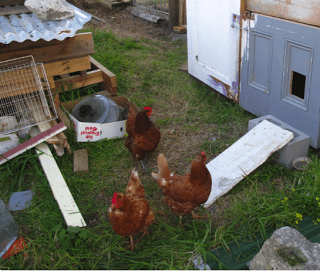
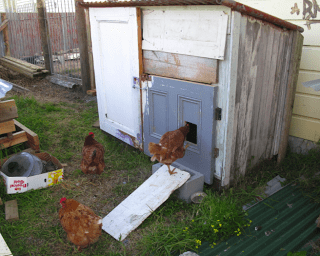
Although we have been farmers for a decade, we are new to poultry of all types. We have been feeding 3 ducks and 5 chooks for months with nary an egg in sight. We have written about our cute-as ducklings and tractoring our pekins and muscoveys. We have lost 2 ducks and 3 chooks to the elements and local dogs, but just received 4 large red shavers from a friend. Supposedly they lay.
They are fairly large for tractoring, so we decided to build a chook yard for them using various second-hand materials.
And reinforced against dogs!
In true permaculture fashion, we will use our new chooks for their multiple talents: eggs, fertilizer, meat and cultivation.
Ultimately, we will remove the valuable resources currently in the yard and replace them with other valuable resources such as fruit trees.
Keeping fowl in and around fruit trees helps control insect pests, keeps grasses down and automatically cleans up all fallen fruits. And we look forward one day to…
Is it?
Could it be?
The $80 egg!

Peace, Estwing

PowerPoint to the People!

With 9 months of blood, sweat, tears, blisters and photos accumulated, we’ve put together our first PowerPoint slideshow for the general public. It launches tomorrow with the Wanganui PROBUS club, and then will be presented at the monthly permaculture gathering on the 17th of this month. In September it goes to Hamilton and Raglan. Here is an article I just wrote for the Wanganui Chronicle updating the community on our progress.

The Eco-Eco Home
The words economy and ecology are both derived from the Greek word oikos, which means home. Our home in Castlecliff is living up to this double billing by saving energy and money as a result of a substantial renovation of a 100 year-old villa we embarked upon in November of last year. The economical and ecological success of this project results from a series of design principles that have guided us – along with the New Zealand Building Code – through the process. The principles can be divided into two categories: energy and matter. I’ll use this article to explain our approach to energy conservation and a future article to explain our approach to resource conservation.

We’ve saved energy and money by incorporating passive solar design into the renovation and installing energy efficient products. Passive solar design relies on three components: solar gain, thermal mass and insulation. We increased the amount of sunlight entering our home in winter by adding windows to the north side and removing them from the south. What a difference it has made! We are reaching indoor temperatures well above 20 degrees on sunny July days. But one danger of passive solar design is the potential for overheating on the sunniest days. This is addressed by adding thermal mass inside the building to slowly absorb excess heat during the day and reradiate it at night. This can be tricky in a renovation, particularly with a home built on piles. We’ve added mass by putting an extra layer of Gib on north-facing walls that receive direct sunlight, installing a cast iron bathtub in our sunny bathroom, and building a brick surround for our multi-fuel stove, which gets all-day sun in winter. As far as insulation goes, we’ve filled all exposed wall cavities as well as installed under-floor and attic insulation. We also make use of thermal curtains and pelmets. These elements are working beautifully together, but represent a fairly low-tech approach to energy conservation.

The other ways we save energy and money are slightly higher tech, including the use of energy efficient light bulbs and appliances as well as solar hot water. In total, our compact fluorescent light bulbs, under-the-bench refrigerator, Energy-Star washer and solar hot water helped us achieve a power bill of just $17 for the month of June. Yes, June as mild, but that $17 included a line charge of 38 cents per day. In case you missed the recent headlines, inflation is at a 21-year high, with electricity up 8%. That concerns my wife and I, and I imagine it concerns other Wanganui residents. That’s why we have been using this project as an educational tool to share the successful strategies and techniques for an eco-thrifty renovation. Our educational efforts so far have included workshops, school programming (in partnership with the Sustainable Whanganui Trust with funding from the Wanganui District Council), presentations to seniors groups and our blog www.ecothriftydoup.blogspot.com.

There will be a short presentation of this project at the monthly Wanganui Permaculture Gathering on August 17th at 6:30 pm at the Whanganui Environment Base on Wicksteed Street.

For more information contact: theecoschool@gmail.com.

-Nelson Lebo