All posts by Estwing

Around the World in Eight Designs: Part 2


Editor’s note: This is the second of an eight part series.


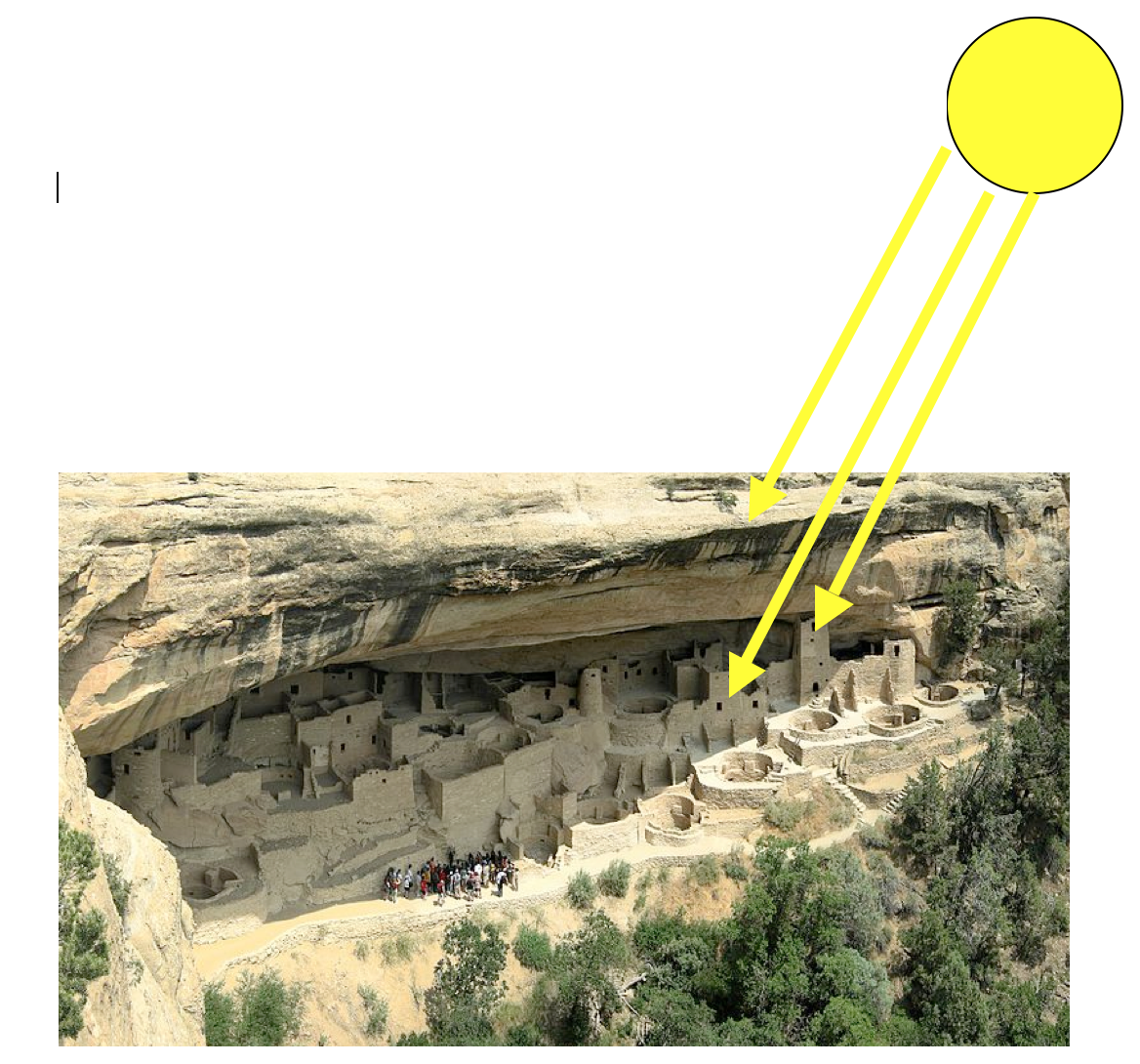
Last week I introduced the concept of passive design using the ancient cliff dwellings of Mesa Verde (Colorado, USA) to illustrate the point. In a nutshell, the “Ancestral Pueblo Peoples” – also known as the Anasazi – chose certain cliffs that excluded the hot summer sun but welcomed its warming rays in winter.

The Anasazi first occupied the caves over 1,000 years ago. Warm in winter and cool in summer: they were no dummies. Here is what we can learn from them: design for the climate; use local materials; harness free energy.

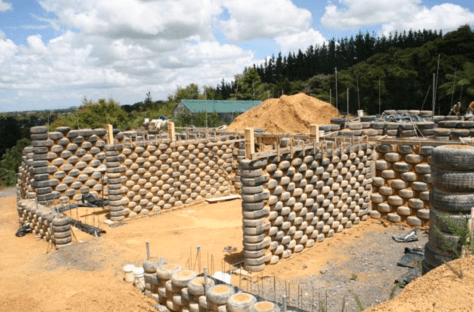
During the 1970s as small group of hippies used these same design principles in the same region of the US Southwest but in a radically different way. Using beer cans, old tyres and soil, they built what they called Earthships. Here is what Wikipedia has to say:

“An Earthship is a type of passive solar house that is made of both natural and recycled materials (such as earth-filled tires), designed and marketed by Earthship Biotecture of Taos, New Mexico. Earthships are constructed to use available natural resources, especially energy from the sun. Earthships are designed to use thermal mass construction and natural cross ventilation, assisted by thermal draught (Stack effect), to regulate indoor temperature.” Screen Shot 2015-06-11 at 6.53.27 am

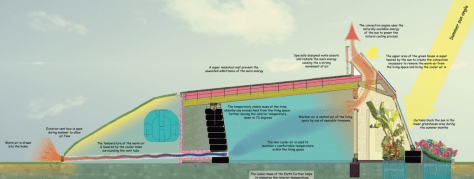
Both the Anasazi and the hippies figured out ways to live comfortably in a climate that ranges from 40 degrees in the summer and minus 10 in the winter by using passive design. An Earthship is designed to allow low angle winter sun to reach deep inside the structure but to exclude high angle summer sun. Once the winter sun enters the structure some of it is stored in what is called thermal mass, such as an earthen floor, bricks, tiles and even the earth-filled tyre walls.

Believe it or not, thermal mass is essential for keeping these structures from overheating in the middle of winter on cold, sunny days when the temperature outside is right at the freezing point. Thermal mass acts as a battery in that it stores excess energy (in the form or heat) during the day and releases it at night. Of course the Earthships also contain plenty of insulation to hold that heat inside the structure overnight. Screen Shot 2015-06-11 at 6.53.11 am

All of this falls into the category of passive design because it requires no moving parts such as fans or pumps, or the electricity to run them. Passive means it just happens by natural energy flows and cycles.

Earthships also employ passive cooling systems, but I see I am out of words for this week and next week’s column is all about passive cooling with examples from the tropical nation of Nicaragua.


Peace, Estwing

Deadly Cost of NZ Housing

Talk radio was saturated at the end of last week with opinions on the tragic deaths of two toddlers. Chronicle readers are well aware of one of these deaths, which occurred in January and had its sentencing hearing at the High Court in Wanganui on Friday.

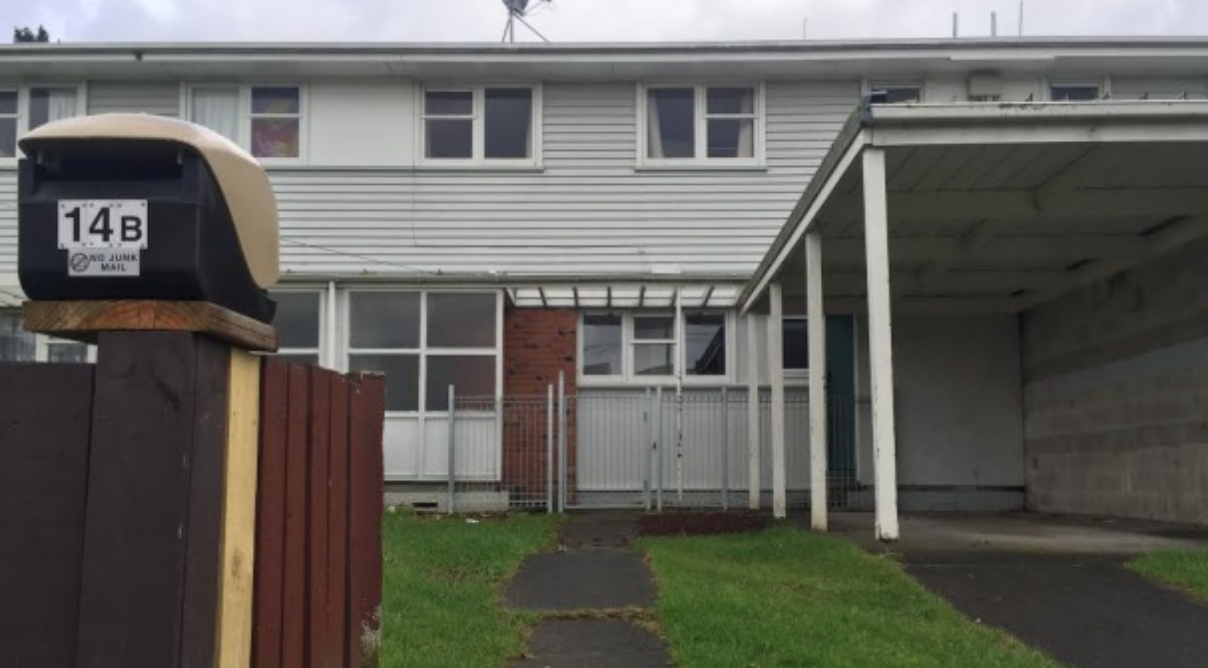
The other death occurred in August, 2014 at Auckland’s Starship Hospital, but the coroner’s report released last week blamed the cold and damp conditions of the family’s home in Otara as a contributing factor to the toddler’s death. Screen Shot 2015-06-10 at 4.54.50 pm

Emma-Lita Bourne suffered from bronchopneumonia for days before her death, which Coroner Brandt Shortland identified had caused a septic embolism that lead to an acute brain bleed. “I am of the view the condition of the house at the time being cold and damp during the winter months was a contributing factor to Emma-Lita’s health status.”

Sadly, the coroner’s report did not come as a surprise to those of us who work in the fields of “healthy homes” and eco-design. The social and medical costs of poorly designed and constructed homes in New Zealand is well documented. The Energy Efficiency and Conservation Authority (EECA) estimates that unhealthy homes cost $400 million per year in unnecessary medical costs and $300 million per year in unnecessary energy costs.

On Tuesday this week, the death of 37 year-old Soesa Tovo was also linked to a cold, damp, Housing New Zealand home.

It is important to understand that it is not just Housing New Zealand homes that fall into the category of unhealthy, and that simply insulating a structure is only the first of many steps to improving its health, comfort and energy efficiency. Note that the ceiling of Emma-Lita’s home was insulated.

Cold, damp homes contribute to hundreds of deaths in New Zealand every winter, particularly elderly residents. There is no doubt in my mind that dozens of seniors in Whanganui have died prematurely due to unhealthy living conditions. Three years ago while assessing a home for a mother of five, she said she called because she was convinced the house had killed her mother-in-law who was the previous occupant.

Around the same time I visited a 75 year-old woman who rang because her house was frigid and difficult to heat. After assessing the home with her for an hour we both came to the conclusion that the best thing for her to do was to move out. The irony was that she had just bought the home six months earlier, but nothing short of a $50,000+ renovation would have made it fit for purpose. The house may as well have been her coffin.

While the premature deaths of seniors do not make headlines, our city could suffer a toddler’s death just as easily as Otara, and it would not necessarily happen in a state house either.

If and when that tragedy were to occur in our community, and the headline of the Chronicle were to echo that of the Herald – Damp house played part in toddler’s death – we would hear complaints that our daily paper only puts bad news stories on the front page. The story would be another black spot on our community spread by the national media painting Whanganui as a third rate city.

As someone working at the coalface of this issue, I can assure you that many of these deaths – and a massive amount of suffering, illness, missed school and work – is preventable. What people need is good, accurate, affordable advice. The other thing they need is someone to trust.

There is a significant amount of misunderstanding, deception, half-truths, bad advice, corner-cutting, and high pressure sales tactics in the housing sector in New Zealand, which I believe disempowers people when it comes to making good decisions. I see it everyday in my work with renters, owners, landlords, and public service agencies.

When my two year-old daughter sees me putting on trousers and a collared shirt she says, “Are you going to work?” I say yes.

“Why you go to work, papa?” I say to help people.

“Fixing their houses, eh?” I pause, and say yes.

While I love my job and thrive off of the positive feedback I get from clients everyday, it is discouraging that I must travel away from Whanganui to do it. There is huge need in this community and no one wants another “negative headline” putting us in the national spotlight.

Above all else, improving the housing stock of New Zealand and of Wanganui is a matter of will. As yet that will has not emerged in our community to any significant extent. Will it take an Emma-Lita to shock us into action?

Screen Shot 2015-06-10 at 4.54.22 pm

Peace, Estwing

Changing Times: Estate Agents and Light Bulbs

To every thing there is a season, and a time to every purpose under heaven:

A time to be born, and a time to die; a time to plant, and a time to pluck up that which is planted;

A time to top up ceiling insulation and a time to lay ground vapour barriers; a time for real estate agents to recognize that more and more discriminating house hunters will be looking at warmth and energy performance, and a time to buy domestic LED light bulbs;

Ecclesiastes 3:1 King James Modified and Updated Version

How refreshing it was to meet with the team from a local real estate agency recently and see a room full of nodding heads. Our scheduled 30-minute meeting ran to 40 minutes due to a steady stream of questions, but I am used to that. I often say, “The future of buying and selling homes will increasingly include health, comfort and energy performance.” It is inevitable, but the shift won’t necessarily be rapid.

Four years ago I approached a number of local agencies and the President of the Chamber of Commerce on this exact issue. To say there was zero interest at the time would be an understatement. As Bob Dylan has told us, “The times they are a-changing.”

As often is the case, the change is being driven by consumers (house-hunters) instead of sellers or those in the real estate industry itself. However, savvy real estate agents recognize the change and will place themselves at the forefront of the market. That is just smart business.

Rarely do we have the opportunity to witness a so-called light bulb moment in someone else. Less than a week before the meeting described above I found myself poking around a very large, beautiful home valued at roughly twice the Wanganui average with a then skeptical but friendly estate agent.

I had been asked to look at the home by a couple that wanted to ascertain the warmth and comfort of the structure before considering an offer. With camera in hand, we took a tour of all the home’s thermodynamic shortcomings. I could tell the agent was annoyed.

But sometime between minute 30 and minute 50 the proverbial light bulb switched on, and less than a week later I was talking to the agency’s entire team.

Screen shot 2015-06-05 at 9.59.18 AM

My experience with LEDs (Light Emitting Diodes) is more than twice as long as my experience with local estate agents, but the stories are similar. Over a decade ago I learned about LEDs in specialty applications such as museum lighting and emergency lighting, but they were not available for household use.

About six years ago when domestic LEDs started to be imported into New Zealand the prices were high and the quality was variable. They were available only through specialty suppliers. I waited.

About four years ago they started turning up in shops with price tags around $30 each. At that price it was better to stick with CFLs (Compact Florescent Lights) at $5 each. I waited.

Late last year I saw more and more LEDs in the shops with prices under $20 each. I bought two to trial and they worked brilliantly.

In April I bought six more at under $10 each to go into the renovated kitchen of our new home. We worked with a local lighting shop and the best sparky on Earth to come up with a beautiful and cost effective lighting design that my photos can’t give proper justice. The new LEDs provide excellent illumination at a fraction of the cost of traditional incandescent bulbs without the awkward spiral shape of most CFLs.

Attractive, affordable, and efficient: the light bulb moment for domestic LEDs has finally arrived.

Screen shot 2015-06-05 at 9.59.08 AM

Peace, Estwing

Around the World in Eight Designs, Part 1

Editor’s note: This is the first of an eight part series.

Good home design is not rocket science. Some would say it’s a matter of common sense. But sometimes a lot of bells and whistles get in the way of common sense and we have to step back for a moment. As long as we’re stepping back, let’s step way back – 1,000 years back – to Mesa Verde, Colorado and the cliff dwellings of the “Ancestral Pueblo Peoples” also known as the Anasazi.

Mesa Verde is located in the Four Corners Region of the U.S. where the states of Colorado, New Mexico, Arizona and Utah meet. Temperatures can reach 40 degrees in summer and minus 10 in winter. In an average year snow can fall during parts of seven months.

Given the building technology available in 1015, what constitutes good home design and how did the Anasazi accomplish it?

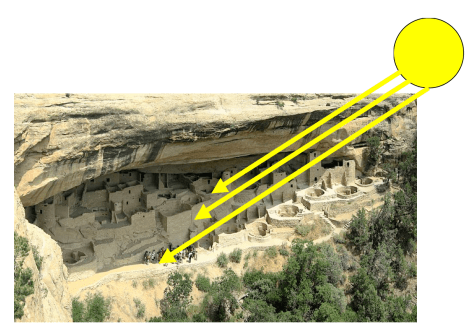
One reason that Mesa Verde was attractive to them was a series of south-facing (toward the equator) cliffs that were warm in winter and cool in summer. “What’s this?” you say. How so?

Screen Shot 2015-06-03 at 6.45.01 am

It all has to do with sun angles. During summer the sun is high in the sky and is largely excluded from the caves in the same way that wide eaves exclude the hot sun from a well designed home.

In the winter, however, the sun is low in the sky and its warming rays can penetrate deep into the caves providing warmth and light to the occupants. This would also be true of a well designed home, but unfortunately we do not commonly see it in the existing housing stock of the entire country for that matter.

In design language this is called “passive solar design” because it involves no fancy technology or moving parts. It is passive – just like a cat napping in a sunny window or a sun worshipper lounging on a beach. A well designed passive solar home keeps it’s occupants warm in winter and cool in summer using no power other than the sun.

Screen Shot 2015-06-03 at 6.44.50 am

Of course new homes can be designed and built to harness free solar heating in winter while excluding sunlight in summer, but many existing homes can be renovated to improve their solar performance. It’s free energy delivered with no service fee. Why not sign up?

So what have we learned from the Anasazi about good home design?

  • It should be appropriate to the climate.
  • It should harness free energy.
  • It should be passive.

Next week we’ll fast forward 1,000 years to the same region of the southwestern U.S. desert and see how designers and builders have taken lessons from the Anasazi and added a few of their own.

Peace, Estwing

Marketing vs. Physics

Hundreds of shoppers in our community will misspend thousands of dollars at major local retailers buying inefficient heating products partly due to deceptive advertising and unsubstantiated claims.

I offer this as an observation based on physics and language, as well as what appears to be woefully poor legislation on what might be called “false advertising.”

The following list of dubious claims was collected in about 20 minutes: 10 minutes walking around the heating department of a large store, and 10 minutes leafing through circulars that appeared in my letterbox last Saturday morning. All of these claims apply to what is basically the same product: a plug-in electric heater.

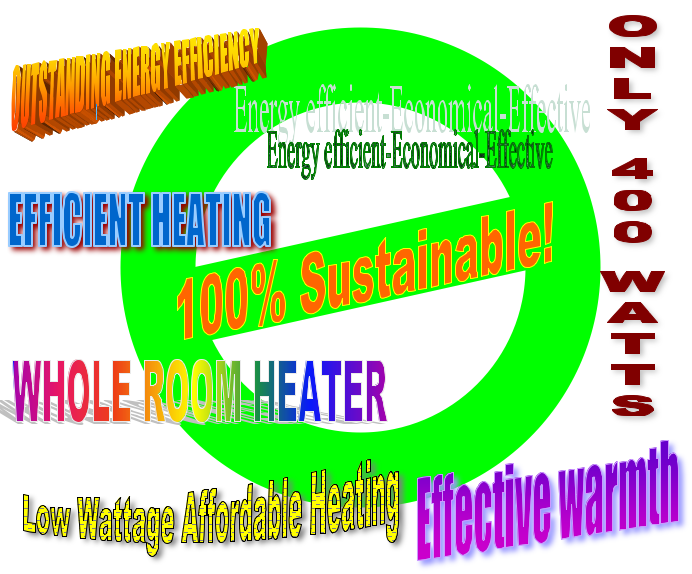
ECO; EFFICIENT HEATING; “Real warmth, real savings”; “High Efficiency Heating”; “LOW WATTAGE Affordable heating”; “Effective warmth”; “Energy efficient – Economical – Effective”; “Save up to 50% or more on your heating costs”; “ONLY 400 WATTS”; “WHOLE ROOM HEATER”; “OUTSTANDING ENERGY EFFICIENCY”. Screen shot 2015-05-25 at 8.07.56 AM

Before we dissect the language of these claims let’s take a look at the physics. Any plug-in electric heater – oil fin heater, fan heater, resistance heater, “eco” heater, etc – has an efficiency ratio of 1:1. This means that one unit of power (1 kilowatt hour) produces one unit of heat (1 kilowatt). (Remember that there are 1,000 watts in a kilowatt.)

Let’s take a standard 2-kilowatt (2,000 watt) heater as our baseline for this discussion. Over the course of one hour this heater will use 2 ‘units’ of power (costing 50-60 cents) to produce to ‘units’ of heat.

Got the physics? Now, on to the language.

Efficiency is recognized as the ability to reduce waste, save effort or energy, or generally to accomplish more by using less. For example, an energy efficient light bulb produces the same amount of light while using less power. Similarly, a fuel-efficient vehicle travels 100 km on fewer litres of petrol than an inefficient vehicle.

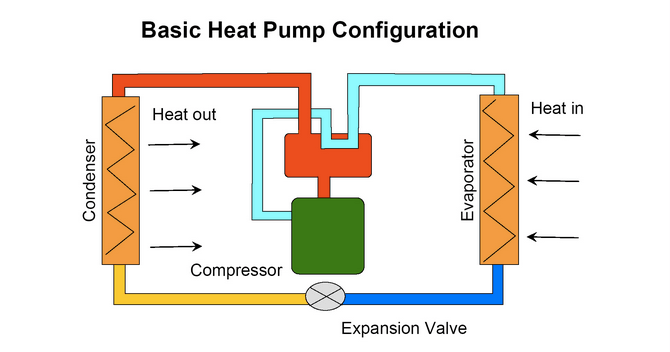
In most cases, efficiency is a matter of relativity. In other words, one thing is seen as efficient relative to something else that is inefficient. Here is the kicker for today’s discussion: all plug-in electric heaters are considered inefficient when compared with heat pumps, wood burners, and flued mains gas heaters. By comparison, heat pumps have an efficiency of 1:3 or 1:4. This means that for one unit of power they produce three or four units of heat.

From this perspective, the claims above appear completely out of line. Let’s start with the last one: “OUTSTANDING ENERGY EFFICIENCY.” Shocking claim. I suggest this squarely falls into the category of false advertising. Sadly, it probably works brilliantly and has resulted in many sales to well meaning and unsuspecting pensioners and parents of young children.

Next up: “ONLY 400 WATTS.” This gets to the heart of the e/eco/econo/ecocalifragilisticexpialidocious claims on certain plug-in electric heaters. They are small and give off little heat. When compared to a 2,000 watt plug-in heater, a 400 watt heater uses 1/5 the power and generates 1/5 the heat. In both cases the efficiency ratio is 1:1.

Imagine you pull into a petrol station and the offer of the day is 1/5 tank of petrol for only 1/5 the price of a full tank. Is that a bargain worth spelling out IN ALL CAPS?

Which brings us to another claim: “Save up to 50% or more on your heating costs.” According to my calculations, if you replace every 2,000-watt heater in your home with a 400-watt heater you will save exactly 80% on your heating costs because you will live in a very cold home. No wonder the package of one product claims: “LOW WATTAGE Affordable heating.” True, but certainly misleading.

I could go on all day but it appears I’ve run out of words, so I’ll leave you with this: “WHOLE ROOM HEATER.” Absolutely true for a VERY SMALL ROOM or a VERY WARM DAY.

Once again the lesson is to be very cautious of all claims on how to make your home warmer and drier. Seek independent expert advice from the EECA Energywise website (www.energywise.govt.nz) or the Eco Design Advisors website (www.ecodesignadvisor.org.nz).

Peace, Estwing

Weighing up Your Best Heating Options

Last week I wrote about the balance between time and money in life and in renovation, and which heaters are good, bad and okay. To review, most of us trade our time for money and our money for time. (More on this later.) The Energy Efficiency and Conservation Authority (EECA) recommends that homes have at least one energy efficient fixed heater with a low running cost. These may include a flued mains gas heater, a wood burner, a wood-pellet burner, or an Energy Star rated heat pump. On the other hand, what EECA does not recommend is the use of unflued gas heaters be they mains tied (usually in the hall) or LPG tank heaters. If you know anyone who uses these heaters please share the following sentence: These heaters make homes damp and release toxic gases, and LPG heaters are a fire risk and are THE MOST EXPENSIVE FORM ON HOME HEATING IN NEW ZEALAND. EECA sees no problem using plug-in electric heaters for short periods of time in bedrooms, bathrooms and other rooms that are used periodically. In my opinion it is better to use a dehumidifier in a bedroom on the south side of a home than an electric heater if there is an efficient heater in the lounge. Of course no heating decisions should be made for a home without first topping up ceiling insulation and addressing the huge heat loss from windows and glass doors. (More on these in the weeks to come.) EECA’s EnergyWise website lists the pros and cons of fixed heaters. Here are some highlights:

Screen shot 2015-05-22 at 10.00.45 AM

Modern woodburners are good for:

  • low running costs, especially if you have access to free or cheap firewood
  • the environment – they produce very little pollution and use renewable wood energy as a fuel
  • heating large spaces
  • heating hot water in winter through a wetback system.

However, be aware that:

  • firewood must be dry to burn most efficiently
  • building consent approval for installation is needed

 Screen shot 2015-05-22 at 9.57.38 AM

Wood pellet burners are good for:

  • the environment – the pellets are made from waste products and burn very cleanly
  • heat control (better than a wood burner)
  • heating large spaces
  • heating hot water in winter through a wetback system

However, be aware that:

  • they won’t work if your electricity isn’t working
  • building consent is needed for installation

 Screen shot 2015-05-22 at 9.59.10 AM

Flue gas heaters are good for:

  • convenience – you can control the temperature and timing with the thermostat and timer controls
  • heating larger areas for longer periods

However, be aware that:

  • you may have to pay a fixed charge for reticulated gas supply
  • EECA recommends choosing  an ENERGY STAR qualified model
  • gas heaters must always be installed by a registered gas fitter Screen shot 2015-05-22 at 9.56.28 AM

Heat pumps are good for:

  • low running costs when used properly
  • producing instant heat
  • convenience – you can control the temperature and timing with the thermostat and timer controls.

However, be aware that:

  • they must be sized correctly – for the space and the climate
  • some are a lot more efficient than others – look for the ENERGY STAR® mark
  • they won’t work during a power cut.

What all of these heaters have in common are low running costs but a higher installation bill. In most cases these heaters will pay for themselves over time and afterward represent ongoing savings for you year after year. This is known as ‘payback period’ and can be applied to everything from LED lightbulbs to Energy Star refrigerators to heat pumps. After the initial investment they save you oodles of cash over the long run. See, time really is money.   Peace, Estwing

Resilience is not Prepping

Editor’s Note: Here is a short response to a large amount of mis-reading of misunderstanding of the last post (which I wrote for The Automatic Earth), which was reposted on over a dozen websites including Naked Capitalism and Zero Hedge.


The article I wrote for TAE last week – Resilience is the New Black – appears to have caused a stir in certain sectors of the internet. It’s great that the piece struck a chord with so many but came as a surprise to me. We have been publishing our blog – www.ecothriftylife.wordpress.com – for over four years but only get 50 to 100 views per day.

The other two things that surprised me were the misreading of the piece and a huge amount of confusion and uncertainty about what ‘resilience’ even means. I’ll address both in this article.

Ilargi first alerted me that Ives Smith had posted the article on Naked Capitalism with some comments of her own. I had a look and was a bit shocked at what she had written. Her comments appear to misrepresent the article and perhaps served to bias readers before they got into the piece itself.

It appears that the two main points of her critique miss the mark: 1) that I have abandoned the notion of sustainability; and, 2) that I have turned my back on the world and focus only on “me, mine, my family.

Here is what I submitted to the comments section, admittedly after reading a number of bizarre musings from courageously anonymous posters:


Thanks for posting this article. Raul tipped me off. It’s great to see it has sparked healthy debate. Two important points that I think you missed in your preamble.

First, it was not my intention to indicate an “abandonment of the notion of sustainability.” What I wrote is that I do not bang the drum for sustainability anymore. I practice it on a daily basis. I have meant to make a couple of points in the article: 1) My observations of the global debate on many issues has shifted to resilience over the last 7 years; and 2) Most people in my direct experience relate much stronger to the notion of resilience than sustainability. I work with patterns and both of these are strong patterns I have observed since 2008. As a community educator, it is my duty to take the most effective approach to support my fellow citizens. The resilience approach has been hugely successful across the socio-economic spectrum.

Second, the word community is used three times in my article along with a reference to sharing our project locally. I’d say that scores 4 mentions of us supporting our neighbours and our city. Characterizing the piece as focusing on “me, mine, my family” is simply inaccurate. I know of few people in the sustainability movement worldwide who are more community-focused than us or who are more generous with their time. Ask anyone who has ever met us or worked with us, including Ilargi and Nicole at the Automatic Earth.

I see no problem challenging someone on their own “home turf.” I think it is important to do. But it is necessary to make sure you are accurate in your critique.


My thesis was that resilience has surpassed sustainability at the forefront of many people’s minds in recent years. But to embrace resilience does not mean to deny sustainability completely. If resilience is ‘the new black’ it doesn’t mean you don’t wear sustainability once in a while. Personally, I wear it everyday, but I bang the drum for resilience because more people listen.

On the second point above, Ives is totally off the mark. I am heavily involved with the permaculture movement and sustainability networks, and know of few people globally who can match our community projects here. How did she overlook the major emphasis on community in the piece? Reading further down the comments section gave me some possible clues.

One person suggested resilience was simply “prepping” and another thought it might be some new hipster term for…I don’t remember. My point is that there appears to be a huge amount of misunderstanding of resilience. I suspect that Miss Smith labeled me a “prepper” and then stereotyped all of the common attributes of preppers.

I am used to the term sustainability being interpreted in hundreds of different ways, including being co-opted by corporations. It seems the concept of sustainability is surrounded by grey area, but I was not expecting the same for the concept of resilience. It appears the Internet can make anything grey, so I’ll try to put things in black and white.

Resilience is not “prepping.” I repeat, resilience is not “prepping”.

A three second search of the Internet found these definitions:

1) the ability of a substance or object to spring back into shape; elasticity

2) the capacity to recover quickly from difficulties; toughness.

While both definitions focus on after-the-fact aspects of resilience, the most important aspects in the context of climate change, income inequality and volatile energy prices involve building resilient capacity. In other words, the ability of bounce back requires lots of up front groundwork. In these contexts, the groundwork that needs to be done is moderating extremes.

The human body is a great example of moderating extremes. When we are too hot we sweat and when we are too cold we shiver. Like the Buddha, our bodies seek a middle way. But unhealthy living conditions weaken the immune system and decrease the body’s resilience. I have been a crusader for warm, dry, healthy homes in my community (and world wide through the web) for over four years. I even developed a maths/science curriculum on passive solar design using our Eco-Thrifty Renovation as an example. The Little House That Could can be found on Facebook.   https://www.facebook.com/pages/The-Little-House-That-Could/205750306163061?ref=hl

In the context of climate change, resilience means moderating climate extremes, especially those involving water and the lack thereof. In both cases eco-design is the best approach to take: imitating the way nature moderates for climatic variability. We are currently using eco-design to drought-proof our farm while also managing for periods of excessive rainfall. I have written an article for fix.com on how to drought-proof a suburban property but it is yet to be published. If you’re interested keep an eye out for it.

In the context of income inequality, we also need to buffer society from extremes. Researchers have told us that there is a correlation between wealth inequality and social problems. If we want a resilient society – and I sure do – we need to work to moderate those extremes. That’s why I have put so much volunteer work into raising awareness of the TPP in my community.

In the context of volatile energy prices, I believe it is important to design for resilience for ourselves and our communities. Our Eco-Thrifty Renovation project represents this approach, and would be considered one of the best such initiatives anywhere in the ‘developed world’. For a summary of the project, see this page I posted as part of my diploma work in permaculture: https://ecothriftylife.wordpress.com/2015/03/30/eco-thrifty-renovation-by-the-numbers/

We have lots of mottos and catch phrases, but one of the best is Act Locally – Share Globally. Our work represents thousands of volunteer hours that are both locally and globally focused. As an individual, I answer every email I get requesting information about our projects. Who else can say that?

The bottom line is that extremes and their consequences are almost always expensive. Avoiding and moderating them is both conservative and practical. I believe our world and my family will both be better off if I promote resilience to extremes on all levels. Nothing grey about that, is there?


Peace, Estwing


Balancing Time and Money to Ensure a Healthy Home

Editor’s note: Here is another weekly article in the Wanganui Chronicle. 

About a month ago, the same Saturday edition of the Chronicle contained a pair of insightful columns depicting two sides of the same coin: time and money. One columnist shared her decision to return to fulltime work and how that would impact on the time she had for other things, while another columnist who is on a benefit complained of the opposite: not enough money to renew her driver’s license.

I have no idea how fellow columnists spend their time and money nor do I care. The point is that the old saying “time is money” appears truer today than ever. At work we trade our time for money and when we hire someone to do a job we don’t want to do we trade our money for ‘free time’. When we go out on the town we trade our money for ‘a good time.’ We might even hear Cyndi Lauper on the radio singing “Time After Time.”

In today’s society, time and money appear to be the primary assets and everything else flows from them. The same is true when renovating a home. If you have heaps of time and little money there is a lot you can accomplish along the lines of what we have done. On the other hand, if you work full-time and hire someone to do the renovations, chances are they will be more skilled and get the job done faster than you could.

In both cases, however, the utmost attention should be paid to creating the conditions for a healthy home. When it comes to maintaining healthy indoor temperatures there are two main factors: generating heat and holding heat inside.

The World Health Organization recommends 18 -22 degrees in living areas of a home and 16-18 degrees in bedrooms. The best way to maintain these conditions is to have adequate insulation and an efficient heat source.

Screen shot 2015-05-15 at 6.09.36 AM

Baby Manu is always well insulated. 

Adequate insulation can mean many things to many people, but in the coming weeks I will explain the best levels of insulation for the ceiling and under the floor, along with what to aim for with windows and glass doors. Today I’ll focus on what heaters give you best value for money and which do not.

The Energy Efficiency and Conservation Authority (EECA) has a programme called Energywise (www.energywise.govt.nz) that provides excellent independent advice on everything from which tyres will give your car its best fuel economy to which heaters are best and why. Next week I’ll work through each type of heater, their strong points and their drawbacks. But for now I’ll group them into three categories: always; sometimes; never.

Always: According to Energywise, “For rooms that you use regularly it is well worth investing in suitable, fixed heaters which enable you to heat them effectively and cheaply. Clean, effective forms of heating include modern wood and wood-pellet burners, ENERGY STAR® qualified heat pumps and high star-rated, flued gas heaters.”

Screen shot 2015-05-15 at 6.09.48 AM

Our modern wood burner almost installed. 

Sometimes: “For rooms that only get used occasionally, for short periods of time, electric heaters which are cheap to buy but slightly more expensive to run can often be sufficient. There are different types to suit different needs.”

Never: For both economic and health reasons, the use of unflued gas heaters (natural or LPG) should be avoided.

Screen shot 2015-05-15 at 6.11.51 AM

Don’t do it!

According to EECA:

  • unflued LPG heaters are the most expensive form of heating (except for some open fires)
  • there are health risks – it will pollute air with toxic gases and large amounts of water vapour, so you must keep at least one window open when it is in use and never use it in bedrooms
  • they can make your home damp.
  • portable LPG heaters can be a fire risk, as anything too close can catch fire quickly.

As with the trade-offs between time and money, there are trade-offs with each type of “suitable, fixed heaters” as listed by EECA above. Next Saturday we’ll examine them.

Peace, Estwing

Resilience is the New Black

Sustainability is so 2007. Those were the heady days before the Global Financial Crisis, before $2-plus/litre petrol here in New Zealand, before the failed Copenhagen Climate Summit, before the Christchurch earthquakes, before the Trans Pacific Partnership Agreement (TPPA)…the list continues.

Since 2008, informed conversations on the economy, the environment, and energy have shifted from ‘sustainability’ to ‘resilience’. There are undoubtedly many reasons for this shift, but I’ll focus on just two: undeniable trends and a loss of faith. Let me explain.

Since 2008, most of the pre-existing trends in income inequality, extreme weather events and energy price volatility have ramped up. Sustainability is about halting and reversing these trends, but there is essentially no evidence of that type of progress, and in fact the data shows the opposite.

Plenty of quantitative data exists for the last seven years to document these accelerated trends, the most obvious is the continually widening gap between rich and poor everyone else. The second wave of commentary on the Baltimore riots (after the superficiality of the mainstream media) has been about the lack of economic activity and opportunity in many of the largely African-American neighbourhoods. Tensions have been simmering for years (decades) and overzealous police activity appears to have been just been the spark. This should come as no surprise to anyone who has read The Spirit Level, or any similar research on the correlation between wealth inequality and social problems.

You can only push people so far before they crack. For residents of Baltimore’s disadvantaged neighbourhoods the inequities are obvious. People are not dumb. We can see the writing on the wall, and know for the most part that government on every level has not taken significant steps to embrace sustainability be it economic, environmental or social . To me it seems we are running on the fumes of debt on all three: over-extended financially on nearly all levels; over-extended on carbon emissions (and post oil peak); and a powder keg of social unrest waiting for a tipping point.

Which brings me to my second point: a loss of faith.

For most of my adult life I have banged the drum for sustainability. I don’t anymore. Sustainability is about voluntarily balancing three factors: human needs, environmental health, and economic viability. My observation is that it has been a failed movement and that the conversation has naturally shifted to resilience.

These observations do not come casually. I have worked full-time in the environmental/sustainability/resilience field for twenty-five years and I have a PhD in science and sustainability education.

Dennis Meadows, a well-known scientist who has been documenting unsustainable trends for over 40 years puts it this way:

The problem that faces our societies is that we have developed industries and policies that were appropriate at a certain moment, but now start to reduce human welfare, like for example the oil and car industry. Their political and financial power is so great and they can prevent change. It is my expectation that they will succeed. This means that we are going to evolve through crisis, not through proactive change.

This is the same quote that Illargi recently highlighted here at The Automatic Earth. Clearly it resonated with me.

This is not to say we cannot and should not be proactive. It is more about where we direct our ‘proactions.’ Being proactive about resilience means protecting one’s self, one’s family, and one’s community from the trends that make us vulnerable economically, socially and environmentally, as well as to sudden shocks to the system.

The recent earthquake in Nepal is another reminder of the critical importance of resilience. Before that it was Christchurch and Fukushima. In the wake of earthquakes we often hear about a lack of food and water in the effected area, along with disruptions to energy supplies in the wider region. In Nepal these have lead to significant social unrest.

Whether it is Kathmandu over the last month or New Orleans after Katrina, we know that we cannot count on “the government” for significant assistance in the immediate aftermath of natural disasters. Along the same lines, we cannot count on governments to protect us from unnatural disasters such as the TPPA and TTIP.

Whether it is a potential earthquake or the next mega-storm and flood, the more prepared (ie, resilient) we are the better we will get through. Even rising energy prices and the probable effects of the TPPA will siphon off money from our city and exacerbate social problems in our communities.

In most cases, the same strategies that contribute to resilience also contribute to a more ‘sustainable’ lifestyle. But where for most people sustainability is largely abstract and cerebral, resilience is more tangible. Perhaps that’s why more and more people are gravitating toward it.

Resilience is the new black.

A resilient home is one that protects its occupants’ health and wealth. From this perspective, the home would have adequate insulation, proper curtaining, Energy Star appliances, energy-efficient light bulbs, and an efficient heater. By investing in these things we protect our family’s health as well as future-proofing our power bills. Come what may, we are likely to weather the storm.

Beyond the above steps, a resilient household also collects rainwater, grows some of its own food, and has back-up systems for cooking and heating. When we did up an abandoned villa in Castlecliff, Whanganui, we included a 1,000 litre rain water tank, three independent heat sources, seven different ways to cook (ok, I got a little carried away), and a property brimming with fresh fruit and vege. These came on top of a warm, dry, home and a power bill of $27 per month. (We did it all for about half the cost of an average home in the city.)

A loss of power and water for two or three days would hardly be noticeable. A doubling of electricity or fresh vege prices would be a blip on the radar. During the record cold week in 2011 our home was heated for free by sunshine.

Sustainability may be warm and fuzzy, but resilience gets down to the brass tacks.

Above all else, I am deeply practical and conservative. The questions I ask are: does it work?; is it affordable?; can I fix it myself?; and, importantly, is it replicable? Over the last decade I have developed highly resilient properties in North America and New Zealand. All of these properties have been shared as examples of holistic, regenerative permaculture design and management. We have shared our experience locally using open-homes, workshops and property tours, as well as globally through the internet.

When the proverbial hits the fan, which all the trends tell us will happen, I know that I have done my best to help my family and community weather any storm be it a typhoon, an earthquake, rising energy prices, or the TPPA.
Mid-Autumn Permaculture Update

Here is another update on the development of our new property. The rains have brought some beautiful mushrooms up in our new vege garden, but we don’t know what type they are. We are playing it safe.

Screen shot 2015-04-27 at 8.38.36 AM

This should give you an idea of how much rain we have had in the last month. This tub was empty on April 7th.

Screen shot 2015-04-27 at 8.39.20 AM

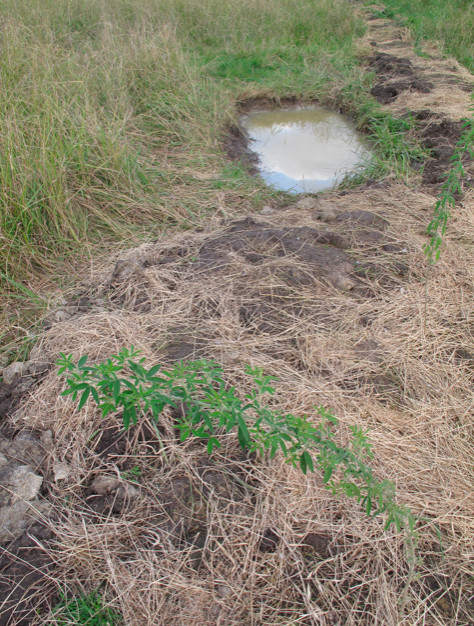
The pond I have been digging is filling quickly.

Screen shot 2015-05-02 at 6.08.46 PM

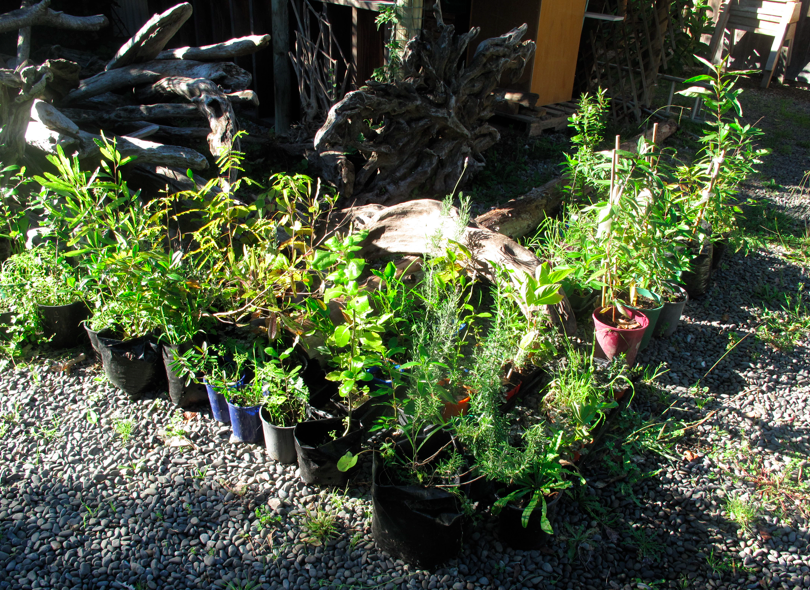
We have lots of trees ready to plant out.  This is about half of the trees we will plant this winter.

Screen shot 2015-04-27 at 8.38.46 AM

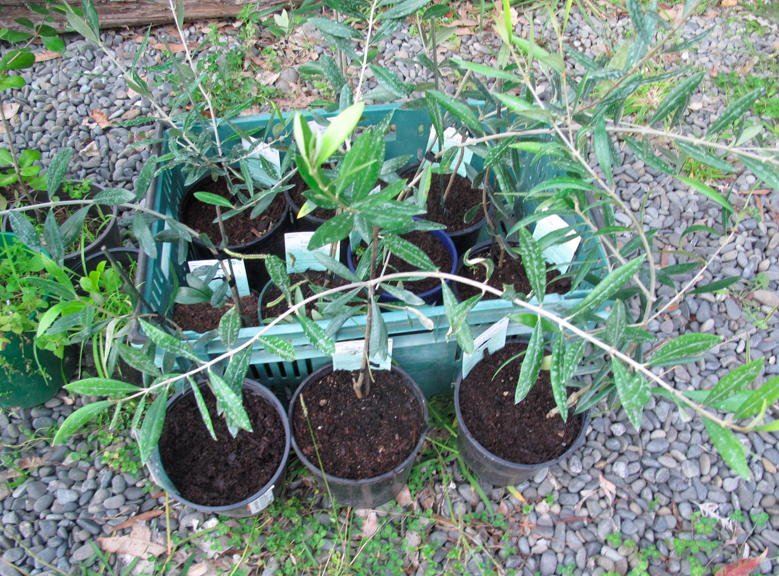
I bought 10 olive trees for $4 each. I have transplanted them into larger pots and will let them grow for another year before planting them out.

Screen shot 2015-05-02 at 6.08.10 PM

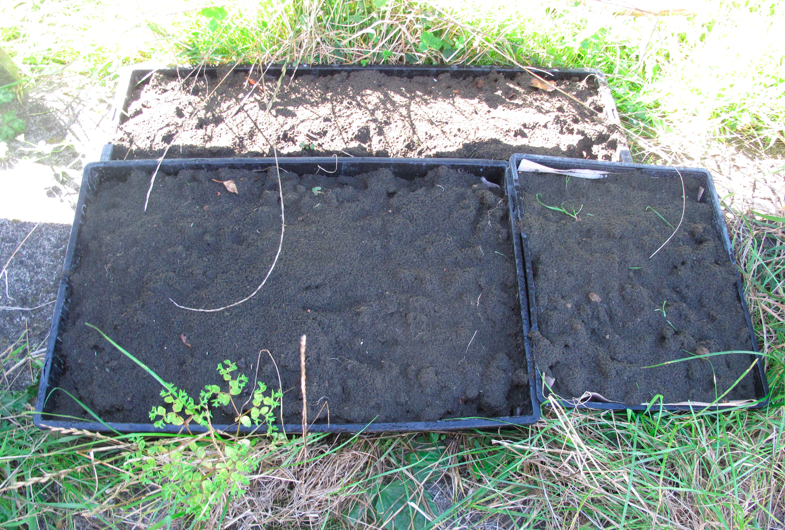
I have planted about 100 Black Boy peach stones in these sand beds. They will germinate next spring after spending the winter outdoors. Then I will prick them out and pot them up.

Screen shot 2015-04-27 at 8.38.54 AM

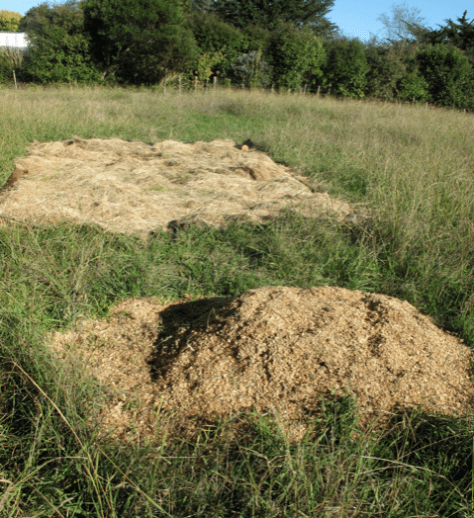
We are preparing to plant a couple thousand garlic in late June. Here is a bed being prepared by killing the grass and managing a compost pile next to it for easy access.

Screen shot 2015-04-27 at 8.39.09 AM

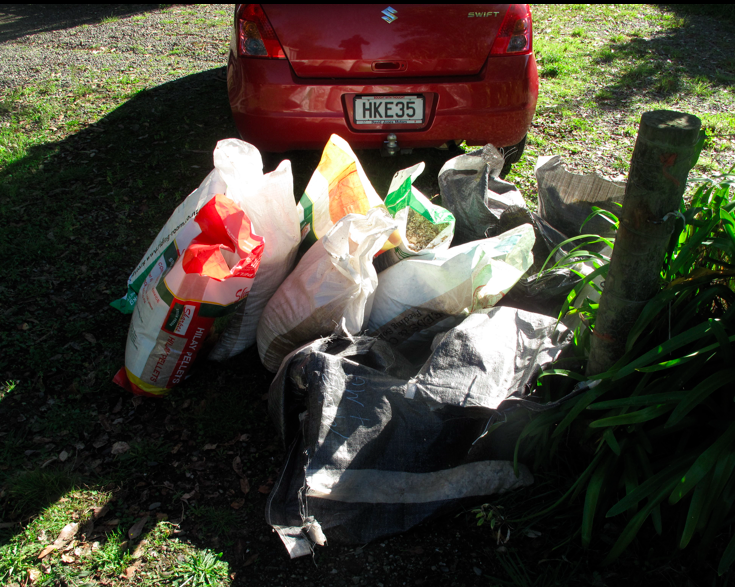
We have a great source of wood shavings from our midwife who keeps fancy chickens. I can fit about his much in the back of my Swift on the way home from work each fortnight.

Screen shot 2015-04-27 at 8.39.51 AM

Speaking of chickens, our little chicks are getting their adult plumage just in time for the cold weather.     Screen shot 2015-04-27 at 8.39.34 AM

Some friends dropped this Orpington rooster by yesterday. They live in town and only discovered last week that he is a and not a she. The neighbours were not impressed.

 Screen shot 2015-05-02 at 6.07.42 PM

And speaking of midwives, we planted baby Manu’s placenta with this apple tree, which is one of the original root stocks of the Monty’s Surprise.

Screen shot 2015-04-27 at 8.39.45 AM

Yesterday I also got delivery of a broadfork that a friend welded for me. A broadfork is used to decompress soils. I’ll write an entire post on broadforks in the future.

Screen shot 2015-05-02 at 6.07.58 PM

Also yesterday I found this waiting for me next to the barn first thing in the morning.

Screen shot 2015-05-02 at 6.08.24 PM

Never a dull moment on a permaculture farm.  Screen shot 2015-05-02 at 6.10.13 PM

  Peace, Estwing