
Category Archives: Eco Thrifty Renovation

Around the World in Eight Designs, Part 1

Editor’s note: This is the first of an eight part series.

Good home design is not rocket science. Some would say it’s a matter of common sense. But sometimes a lot of bells and whistles get in the way of common sense and we have to step back for a moment. As long as we’re stepping back, let’s step way back – 1,000 years back – to Mesa Verde, Colorado and the cliff dwellings of the “Ancestral Pueblo Peoples” also known as the Anasazi.

Mesa Verde is located in the Four Corners Region of the U.S. where the states of Colorado, New Mexico, Arizona and Utah meet. Temperatures can reach 40 degrees in summer and minus 10 in winter. In an average year snow can fall during parts of seven months.

Given the building technology available in 1015, what constitutes good home design and how did the Anasazi accomplish it?

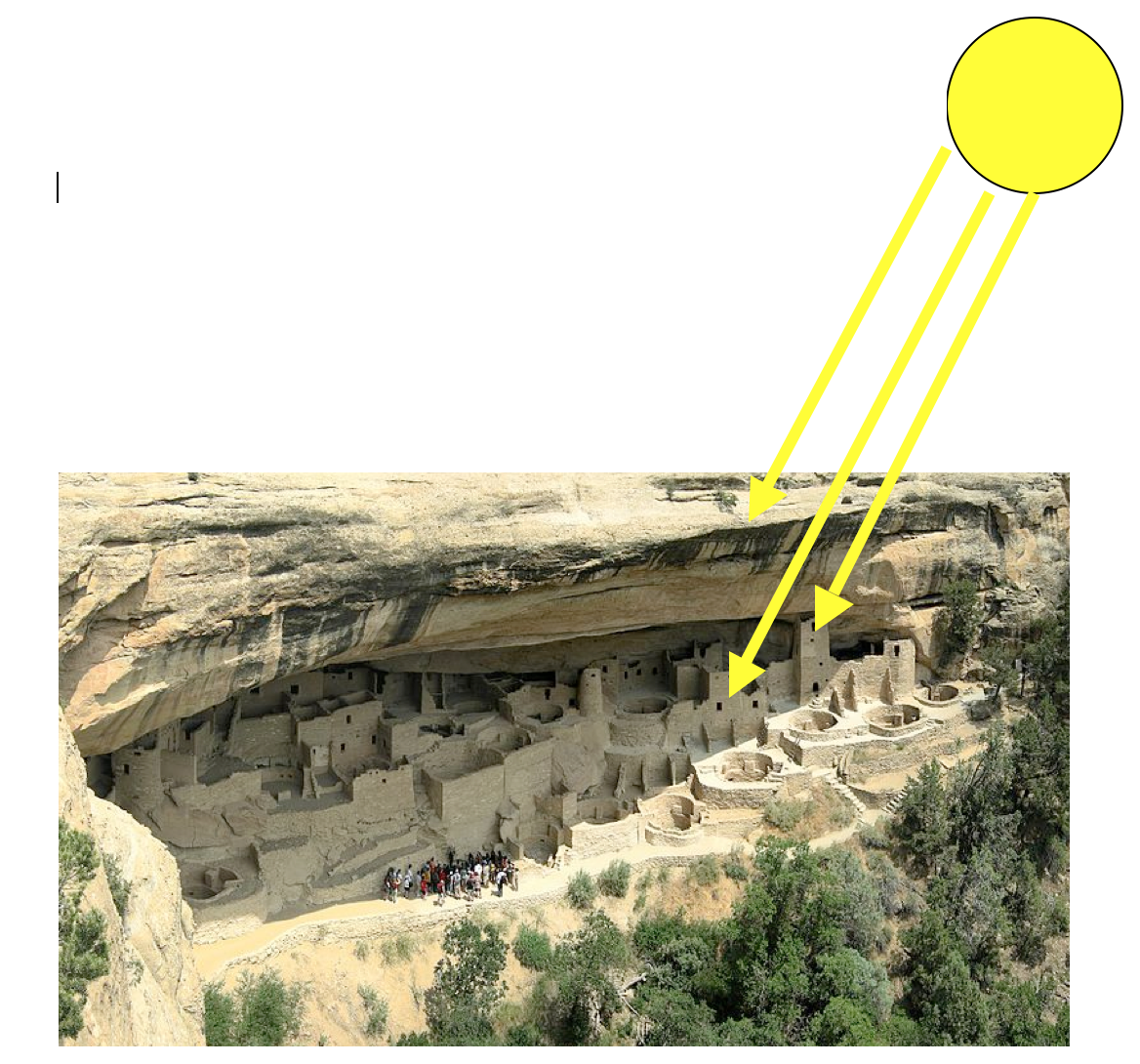
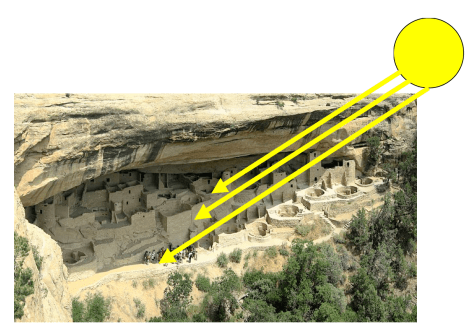
One reason that Mesa Verde was attractive to them was a series of south-facing (toward the equator) cliffs that were warm in winter and cool in summer. “What’s this?” you say. How so?
Screen Shot 2015-06-03 at 6.45.01 am

It all has to do with sun angles. During summer the sun is high in the sky and is largely excluded from the caves in the same way that wide eaves exclude the hot sun from a well designed home.

In the winter, however, the sun is low in the sky and its warming rays can penetrate deep into the caves providing warmth and light to the occupants. This would also be true of a well designed home, but unfortunately we do not commonly see it in the existing housing stock of the entire country for that matter.

In design language this is called “passive solar design” because it involves no fancy technology or moving parts. It is passive – just like a cat napping in a sunny window or a sun worshipper lounging on a beach. A well designed passive solar home keeps it’s occupants warm in winter and cool in summer using no power other than the sun.
Screen Shot 2015-06-03 at 6.44.50 am

Of course new homes can be designed and built to harness free solar heating in winter while excluding sunlight in summer, but many existing homes can be renovated to improve their solar performance. It’s free energy delivered with no service fee. Why not sign up?

So what have we learned from the Anasazi about good home design?

  • It should be appropriate to the climate.
  • It should harness free energy.
  • It should be passive.

Next week we’ll fast forward 1,000 years to the same region of the southwestern U.S. desert and see how designers and builders have taken lessons from the Anasazi and added a few of their own.

Peace, Estwing
Weighing up Your Best Heating Options

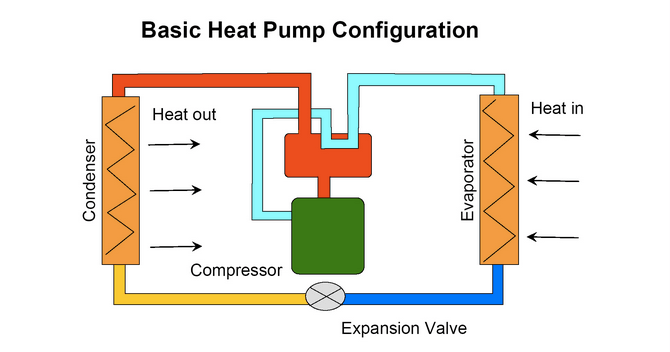
Last week I wrote about the balance between time and money in life and in renovation, and which heaters are good, bad and okay. To review, most of us trade our time for money and our money for time. (More on this later.) The Energy Efficiency and Conservation Authority (EECA) recommends that homes have at least one energy efficient fixed heater with a low running cost. These may include a flued mains gas heater, a wood burner, a wood-pellet burner, or an Energy Star rated heat pump. On the other hand, what EECA does not recommend is the use of unflued gas heaters be they mains tied (usually in the hall) or LPG tank heaters. If you know anyone who uses these heaters please share the following sentence: These heaters make homes damp and release toxic gases, and LPG heaters are a fire risk and are THE MOST EXPENSIVE FORM ON HOME HEATING IN NEW ZEALAND. EECA sees no problem using plug-in electric heaters for short periods of time in bedrooms, bathrooms and other rooms that are used periodically. In my opinion it is better to use a dehumidifier in a bedroom on the south side of a home than an electric heater if there is an efficient heater in the lounge. Of course no heating decisions should be made for a home without first topping up ceiling insulation and addressing the huge heat loss from windows and glass doors. (More on these in the weeks to come.) EECA’s EnergyWise website lists the pros and cons of fixed heaters. Here are some highlights:

Screen shot 2015-05-22 at 10.00.45 AM

Modern woodburners are good for:

  • low running costs, especially if you have access to free or cheap firewood
  • the environment – they produce very little pollution and use renewable wood energy as a fuel
  • heating large spaces
  • heating hot water in winter through a wetback system.

However, be aware that:

  • firewood must be dry to burn most efficiently
  • building consent approval for installation is needed

 Screen shot 2015-05-22 at 9.57.38 AM

Wood pellet burners are good for:

  • the environment – the pellets are made from waste products and burn very cleanly
  • heat control (better than a wood burner)
  • heating large spaces
  • heating hot water in winter through a wetback system

However, be aware that:

  • they won’t work if your electricity isn’t working
  • building consent is needed for installation

 Screen shot 2015-05-22 at 9.59.10 AM

Flue gas heaters are good for:

  • convenience – you can control the temperature and timing with the thermostat and timer controls
  • heating larger areas for longer periods

However, be aware that:

  • you may have to pay a fixed charge for reticulated gas supply
  • EECA recommends choosing  an ENERGY STAR qualified model
  • gas heaters must always be installed by a registered gas fitter Screen shot 2015-05-22 at 9.56.28 AM

Heat pumps are good for:

  • low running costs when used properly
  • producing instant heat
  • convenience – you can control the temperature and timing with the thermostat and timer controls.

However, be aware that:

  • they must be sized correctly – for the space and the climate
  • some are a lot more efficient than others – look for the ENERGY STAR® mark
  • they won’t work during a power cut.

What all of these heaters have in common are low running costs but a higher installation bill. In most cases these heaters will pay for themselves over time and afterward represent ongoing savings for you year after year. This is known as ‘payback period’ and can be applied to everything from LED lightbulbs to Energy Star refrigerators to heat pumps. After the initial investment they save you oodles of cash over the long run. See, time really is money.   Peace, Estwing
Balancing Time and Money to Ensure a Healthy Home

Editor’s note: Here is another weekly article in the Wanganui Chronicle. 

About a month ago, the same Saturday edition of the Chronicle contained a pair of insightful columns depicting two sides of the same coin: time and money. One columnist shared her decision to return to fulltime work and how that would impact on the time she had for other things, while another columnist who is on a benefit complained of the opposite: not enough money to renew her driver’s license.

I have no idea how fellow columnists spend their time and money nor do I care. The point is that the old saying “time is money” appears truer today than ever. At work we trade our time for money and when we hire someone to do a job we don’t want to do we trade our money for ‘free time’. When we go out on the town we trade our money for ‘a good time.’ We might even hear Cyndi Lauper on the radio singing “Time After Time.”

In today’s society, time and money appear to be the primary assets and everything else flows from them. The same is true when renovating a home. If you have heaps of time and little money there is a lot you can accomplish along the lines of what we have done. On the other hand, if you work full-time and hire someone to do the renovations, chances are they will be more skilled and get the job done faster than you could.

In both cases, however, the utmost attention should be paid to creating the conditions for a healthy home. When it comes to maintaining healthy indoor temperatures there are two main factors: generating heat and holding heat inside.

The World Health Organization recommends 18 -22 degrees in living areas of a home and 16-18 degrees in bedrooms. The best way to maintain these conditions is to have adequate insulation and an efficient heat source.

Screen shot 2015-05-15 at 6.09.36 AM

Baby Manu is always well insulated. 

Adequate insulation can mean many things to many people, but in the coming weeks I will explain the best levels of insulation for the ceiling and under the floor, along with what to aim for with windows and glass doors. Today I’ll focus on what heaters give you best value for money and which do not.

The Energy Efficiency and Conservation Authority (EECA) has a programme called Energywise (www.energywise.govt.nz) that provides excellent independent advice on everything from which tyres will give your car its best fuel economy to which heaters are best and why. Next week I’ll work through each type of heater, their strong points and their drawbacks. But for now I’ll group them into three categories: always; sometimes; never.

Always: According to Energywise, “For rooms that you use regularly it is well worth investing in suitable, fixed heaters which enable you to heat them effectively and cheaply. Clean, effective forms of heating include modern wood and wood-pellet burners, ENERGY STAR® qualified heat pumps and high star-rated, flued gas heaters.”

Screen shot 2015-05-15 at 6.09.48 AM

Our modern wood burner almost installed. 

Sometimes: “For rooms that only get used occasionally, for short periods of time, electric heaters which are cheap to buy but slightly more expensive to run can often be sufficient. There are different types to suit different needs.”

Never: For both economic and health reasons, the use of unflued gas heaters (natural or LPG) should be avoided.

Screen shot 2015-05-15 at 6.11.51 AM

Don’t do it!

According to EECA:

  • unflued LPG heaters are the most expensive form of heating (except for some open fires)
  • there are health risks – it will pollute air with toxic gases and large amounts of water vapour, so you must keep at least one window open when it is in use and never use it in bedrooms
  • they can make your home damp.
  • portable LPG heaters can be a fire risk, as anything too close can catch fire quickly.

As with the trade-offs between time and money, there are trade-offs with each type of “suitable, fixed heaters” as listed by EECA above. Next Saturday we’ll examine them.

Peace, Estwing
Caveat Emptor

Have you ever been rung by a company promising you a product that will improve the health of your home? Have you ever been told over the phone that you qualify for an insulation subsidy? Have you ever been promised a “free estimate”?

Yes, it’s true, when something seems too good to be true it usually is.

I have been amused recently by an advertisement on local radio claiming that solar energy is a great way to “save” power. Um, excuse me but solar photovoltaic panels do not save electricity. They generate electricity. This is about as fundamental a flaw in understanding of electrical power as our local authority’s demonstrated understanding of wastewater treatment. And we all fear what that will cost.

The same ad claims that solar panels “essentially” pay for themselves over their lifespan. First of all, what does “essentially” mean? It does not seem like a guarantee of performance to me. And even if it did, the last time I checked, the lifespan of most photovoltaic panels was 30 years. A payback period of 30 years represents a very marginal return on investment that does not compare to dozens of better investments one can make in power savings for the home.

On one level this type of marketing is amusing but on another level it is concerning because it deceives most of those who hear it.

Please understand, I do not mean to pick on one particular company. I am simply using this as an example to demonstrate my point. Businesses are in business to do business. This means selling you products or services that you may or may not need.

This is not to say that all businesses use questionable sales pitches. Many do not. What it does mean is that enough do that it should make all consumers very cautious. We often hear about “cowboys” in the building and home improvement trades.

Perhaps “bandits” would be more accurate. Sadly, there are enough of them out there to colour the whole industry.

Here is a short list of things to be aware of to protect yourself from getting less-than-your-money’s-worth:

Cold Calls – If you are contacted out of the blue with a “special offer”, ask yourself why have I not heard about this in other ways?

High Pressure Sales Techniques – The more pressure salespersons apply to you (ringing repeatedly, urging you to sign an agreement without having time to reflect), the more skeptical you should be!

Unsubstantiated Claims – Ask to see data that proves the claim. Ask for a guarantee of performance in writing.

“No money down” and Payment Plans – When you buy something on credit you always end up paying more.

Unneeded Products and Unneeded Services – Remember, a salesperson is just that. If you speak to one on the telephone or one comes to your home, they have one thing in mind: to get you to open your wallet.

Sadly, we know that pensioners are targeted in many of these ways. Over the last two years I have visited many homes in Wanganui occupied by seniors who have not been given value for money on everything from curtains to heating systems to ventilation systems. It’s frustrating to come in after the fact and witness the impacts of slick salesmanship or simply bad advice, particularly when it effects those on fixed incomes.

Yes, in this world, good advice comes at a price, but bad advice is almost always more expensive. Fortunately, when it comes to the housing sector there are a number of sources of free, independent, expert advice. Here are a few:

The Energy Efficiency and Conservation Authority (EECA): www.eeca.govt.nz

Beacon Pathway: www.beaconpathway.co.nz

Eco Design Advisors: www.ecodesignadvisor.org.nz

These are considered among the most accurate and trustworthy sources of advice in New Zealand on everything involving heating and cooling, insulation, controlling moisture, and appropriate ventilation.

Closer to home, you can contact the Whanganui Regional Health Network for advice and to see if you really qualify for a government (EECA) insulation subsidy. Additionally, you can submit your questions to the Chronicle and I will answer them over the next three months. Please submit your inquiries to Anna Wallis, Wanganui Chronicle, PO Box 433 Wanganui or anna.wallis@wanganuichronicle.co.nz

 Screen shot 2015-05-01 at 11.02.24 AM

Byline: Dr. Nelson Lebo diagnoses unhealthy homes and prescribes cost-effective remedies for any budget.

No Really, I Am a House Doctor

Editor’s Note: This is my regular weekly column in the Wanganui Chronicle.   For three years I have strived to provide topical and accurate advice and commentary on eco-renovation, healthy homes, edible landscaping, solar energy, composting, organic gardening and creative reuse, as well as on local issues of sustainability or lack thereof. That’s 156 consecutive weeks, and as far as I recall there was only one instance in which I have been corrected: a case of writing about a change to the New Zealand Building Code that had been reported inaccurately to me. (I should have done my homework.) The point is I would never intentionally mislead readers and I go to lengths to cite my sources where appropriate. The legitimacy of columnists relies on the accuracy of the information they share. And so it was with great surprise that I opened last Saturday’s paper to see hash marks around my educational prefix: “Dr.” Although the extra punctuation was probably an error during sub-editing, I want to ensure Chronicle readers that I am indeed a Dr without the inverted double-commas. My father says I’m “not a real doctor” because I do not practice medicine, but I am at least as much a doctor as Dr Russell Norman, co-leader of the Green Party. It is widely recognized that Dr Norman has brought a new level of legitimacy and acceptance to the Greens since he assumed a leadership position. If it means bringing legitimacy and acceptance to the concepts of healthy homes and energy efficiency then call me “Doc.” Hardly a week goes by that we do not hear something in the news about the major challenges related to housing. In last week’s Chronicle it was Chief human rights commissioner David Rutherford who urged all parties to come together over this “very serious” issue. He called for the provision of adequate housing which “would reduce the incidence of childhood illnesses due to cold, damp, overcrowded accommodation, and the call for more of our elderly to be cared for in homes which are in many cases likely to be unsuitable for elderly habitation to name just a few of the issues.” Just before that article appeared, Melissa Wishart reported on Professor Paul McDonald’s visit to “Wanganui” during which he discussed a holistic approach to the health sector that addresses social issues first: “Most people think that health is a series of medical challenges that sometimes have social consequences…health is a series of social challenges and opportunities that sometimes have medical consequences.” Both Rutherford and McDonald undoubtedly draw on the work of Dr Philippa Howden-Chapman, professor of public health at Otago University, Wellington. She is widely recognized as the premier ‘House Doctor’ in New Zealand, heading up Healthy Housing/He Kainga Oranga, a housing and health research programme, as well as the New Zealand Centre for Sustainable Cities. If Dr. Howden-Chapman is the brain surgeon of healthy homes in New Zealand I would qualify as something like a general practicioner. In my day job I visit up to four homes a day (yes, I do house calls) to discuss with residents the things that constitute a healthy home and what are the first and best steps for them to take given their budget and lifestyle. Every home I visit is different and every family is different. Being able to provide the most up-to-date independent advice specifically tailored to a young family or retired couple is a rewarding way to make a living. The strength of my advice relies completely on trust, as clients rely on my diagnosis of problems with their home, and my prescriptions for how to address them. In this way, I do very much feel like a medical doctor. It is an honour to serve society in this way, but also a great responsibility to maintain the highest levels of accuracy and integrity. As we roll into winter 2015, I will be happy to answer your questions on insulation, ventilation, heating, moisture and condensation, mould, heat transfer, household appliances, and even light bulbs. Submit questions to Anna Wallace, Deputy Editor, Wanganui Chronicle.

Screen shot 2015-04-24 at 10.49.47 AM

Peace, Dr. Estwing

Local Innovation

Editor’s note: This is my regular weekly column in the Wanganui Chronicle.


Periodically we hear talk of “innovation” in and around our River City. The term is spouted, touted and the “innovators” are outed. But from what I can tell, innovation must be a lot like beauty: it is in the eye of the beholder. In other words, many of the so-called innovations are simply not very original and/or useful to society.

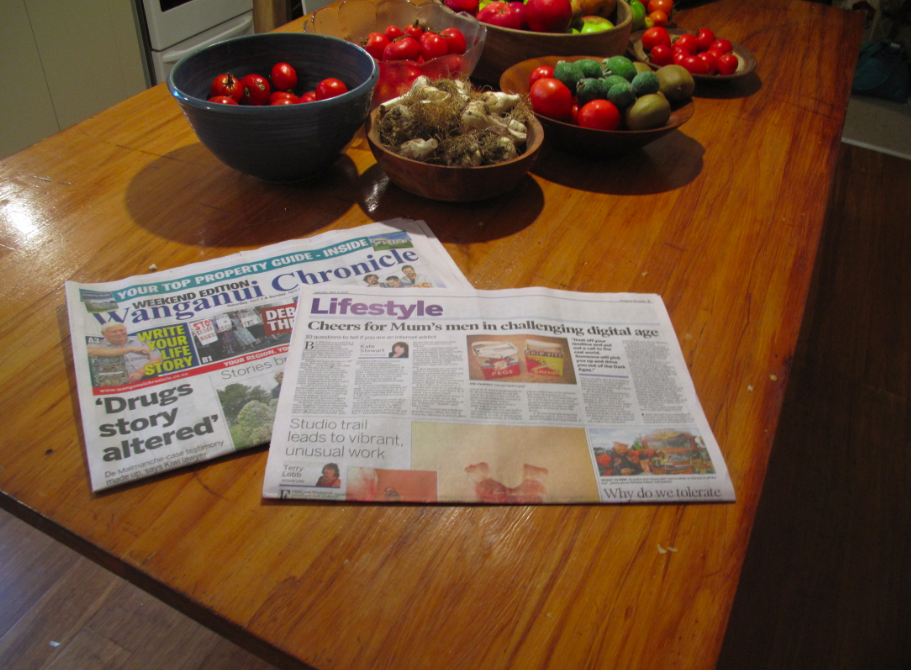
Meanwhile, what I consider one of the most innovative local businesses has gone unrecognized for its success and even moderate growth despite considerable headwinds. Who is that business? You’re holding it. Screen shot 2015-04-17 at 6.11.25 AM

The Wanganui Chronicle is a thriving regional newspaper in an age of global print media decline. For example, the New Orleans Times Picayune reduced its print run to a Wednesday/Friday/Sunday schedule in 2012. The New Orleans metropolitan area has a population of around 1.2 million. Compare that to the Whanganui region.

I’ll admit that New Orleans had been through hard times, so I’ll give another example. In 2009, the new owners of the Boston Globe – one of the finest newspapers is America – aggressively pursued $20 million (US) in cost savings due to decreasing revenues.

As with any business, there’s income and expenses. As income is squeezed and expenses rise or remain static, innovation is essential. Although there are probably many innovations of which I am unaware, I’ll mention a few here.

Three years ago this week the Chronicle launched its tabloid-style Monday-Friday paper and its new-look weekend broadsheet edition. These changes were accompanied by the beginning of a trend in regular local columnists of which we three on page B5 were the first. (Happy Anniversary Terry and Kate!) With over a dozen local writers now contributing regular weekly columns, the Chronicle is supplied with abundant, relevant, and shall we say “cost effective” content to fill the pages with issues that matter to our community.

Let’s classify the above changes to the Chronicle as right-sizing and using local resources. From one perspective, these can be considered eco-thrifty strategies. Add to these the fact that APN shares printing presses with rival publisher Fairfax, and you have a series of innovative, cost-effective measures that ensure our local paper continues to publish six days a week.

Screen shot 2015-04-17 at 6.10.45 AM

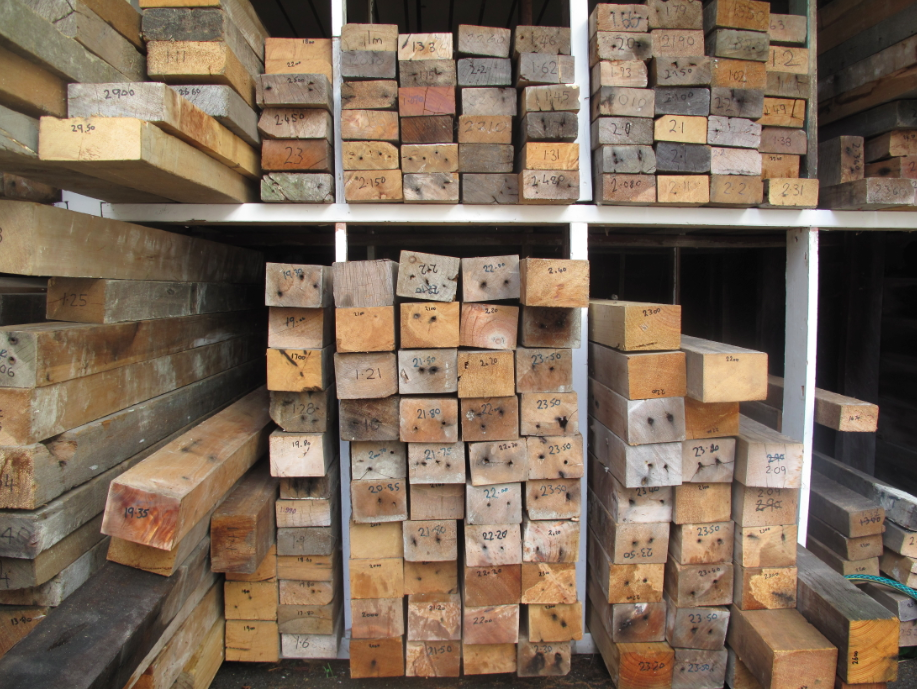
Another innovative organisation I discovered recently in Palmerston North is Reclaimed Timber Traders. To put it bluntly, I am amazed by this organization. From their website:

“In an effort to contribute to a more sustainable environment and conserve native forests, we are recycling treated and non-treated timber that would otherwise go to landfill here in The Manawatu, extending to other regions in the near future.

Whilst providing employment, training and social opportunities for disadvantaged and unemployed in our community.”

The environmental benefits of RTT are clear and admirable, but the social benefits are truly impressive. Also from their webiste:

“Some of us at RTT have faced barriers to working, and as a Social Enterprise we actively try to help others find employment by offering work experience and volunteering opportunities. Many of our volunteers have found employment.

We provide a supportive family / whanau environment to encourage life and social skills in order to raise self worth, and work readiness to reduce unemployment and associated negative outcomes. E.g. imprisonment and suicide.”

If that was not enough to earn this tiny organisation huge praise, they also provide shipping containers full of reclaimed building materials to international disaster areas. This function is facilitated by their charitable arm, Human Aid Focus.

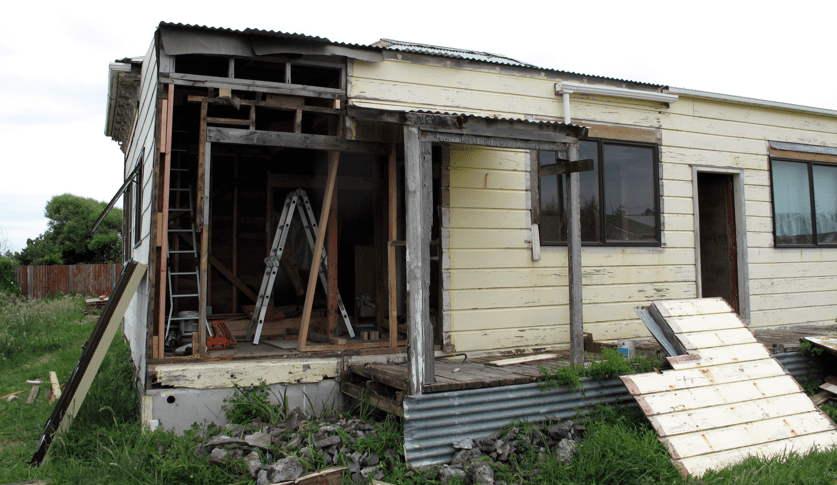
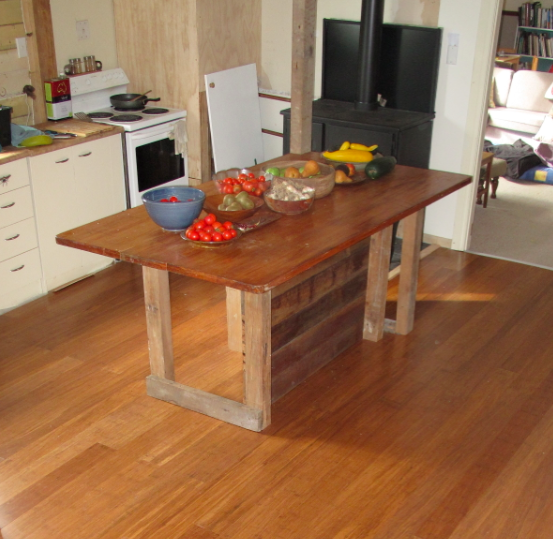
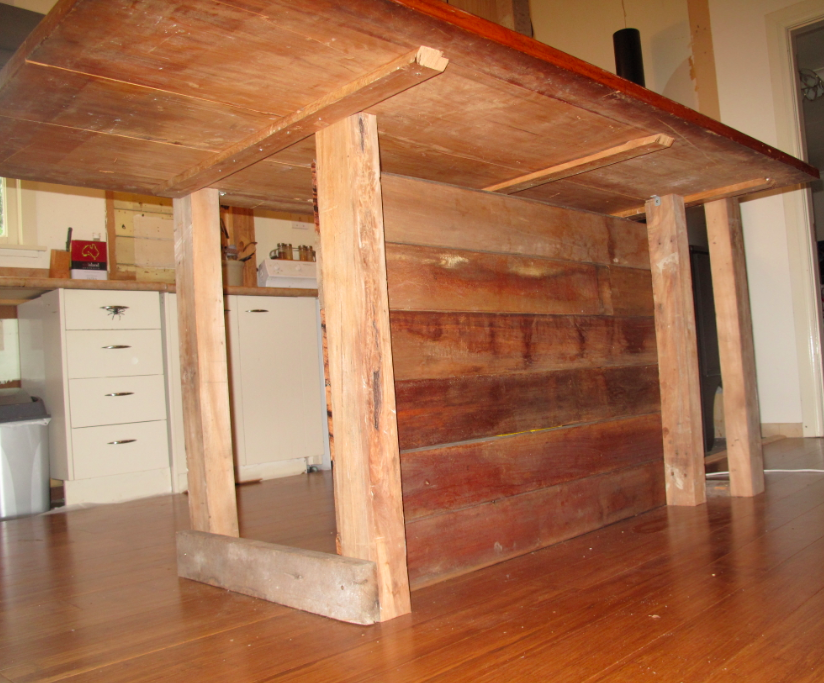
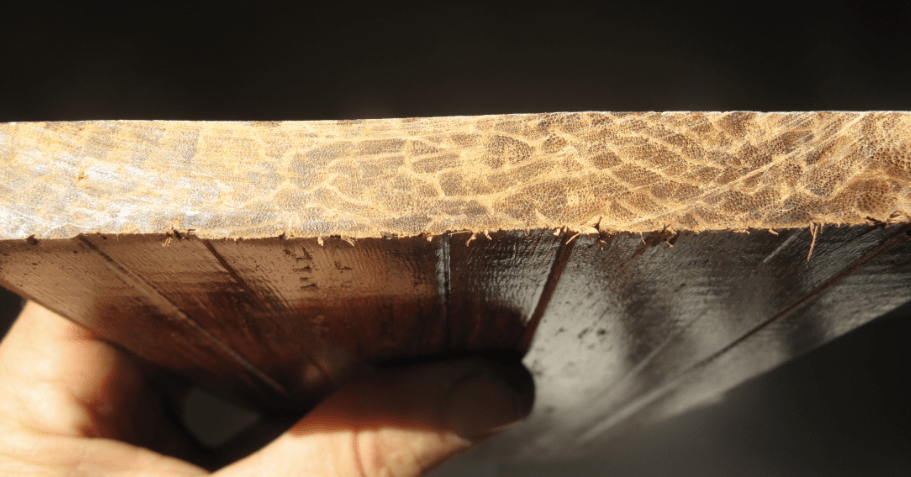
I recently purchased a selection of native timbers to frame a kitchen island. While the top is a reclaimed rimu bar I bought on Trade Me last winter, the matai legs come from RTT, and the tounge and groove is the former lean-to ceiling of our Castlecliff villa. Total cost: $107. Screen shot 2015-04-17 at 6.11.00 AM

Screen shot 2015-04-17 at 6.11.14 AM

If you would like more information about Reclaimed Timber Traders or Human Aid Focus, their website is: www.reclaimedtimbertraders.co.nz


Peace, Estwing

Bamboo Flooring

Screen shot 2015-04-10 at 7.37.49 AM

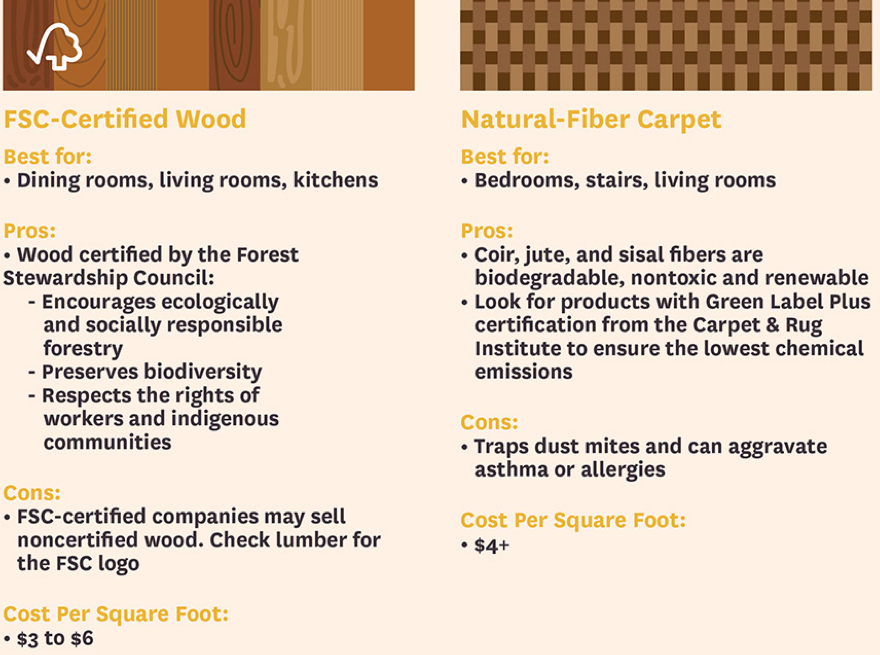
Three years ago we installed an attractive, low-cost laminate floor in our lounge and hallway. Sadly, it did not take long for buyer’s remorse to set in: 20 minutes to be exact. That’s how long it took to put a noticeable gouge in the new floor while shifting a large wardrobe back into place. Next it took a week for our kitten to wee under a sideboard, which seeped between two pieces of flooring and caused the ‘Wheatbix’ substrate to swell and warp. Later I heard from a man who used to work in a factory manufacturing such flooring. He said the process involved toxins and that he had left the job for health reasons. Thrifty: yes. Eco: maybe not. The laminate floor was a conspicuous outlier in our renovation in that it did not represent an investment in durability and performance. I have learned my lesson. Recently we were in the position of covering a wide swath of 1980’s linoleum with some sort of ‘floating floor’ but not another cheap laminate.The term ‘floating floor’ refers to any flooring product that has no nails, screws or other type of brackets to hold it down. It is usually applied on top of a thin foam/foil material, and simply ‘floats’ on it. One of my colleagues at Fix.com recently wrote an article on sustainable building materials. Four flooring types were included: FSC (Forest Stewardship Council) certified wood; natural-fibre carpet; cork; and, bamboo.

Screen shot 2015-04-04 at 8.12.12 AM Screen shot 2015-04-04 at 8.12.34 AM

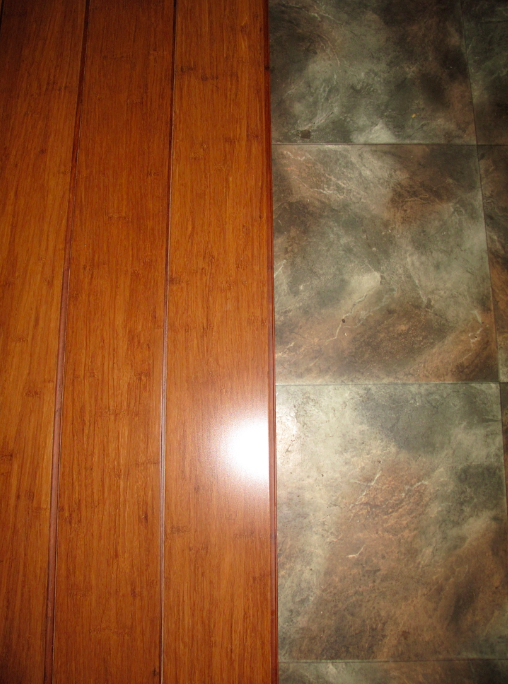
(If you want to read the entire article, go to www.fix.com, and open the web page for Green Living.) After a bit of research, my wife and I decided to go with bamboo. The reasons included: durability, scratch resistance, eco-friendly, and easy to install.

Screen shot 2015-04-10 at 7.37.31 AM

Thanks for helping. 

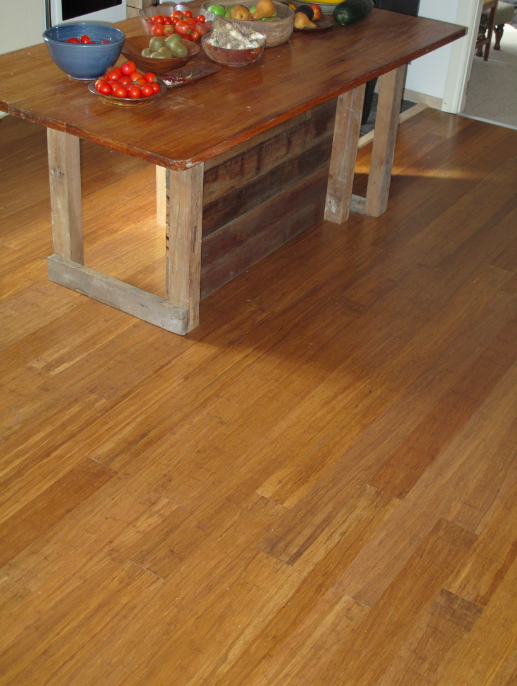
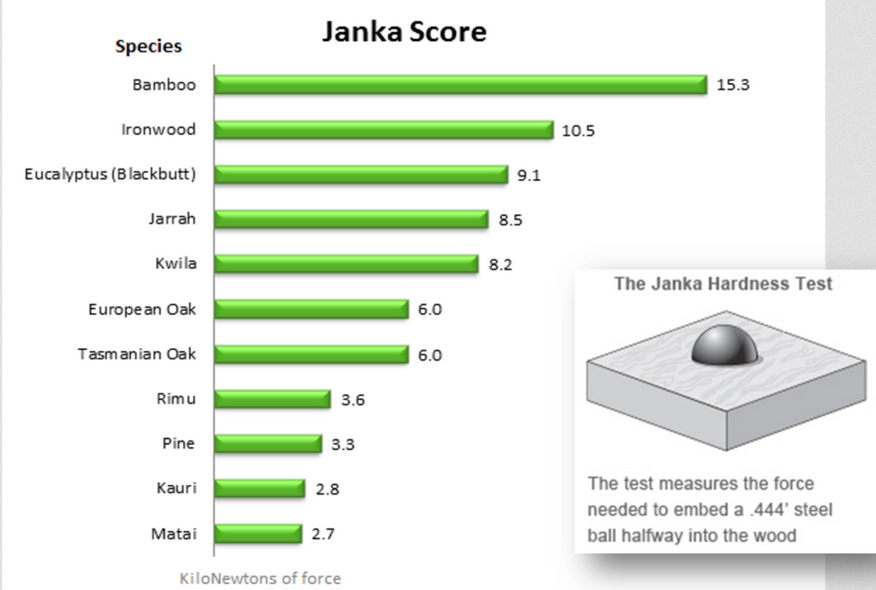
Alongside energy-efficiency and reusing materials, durability (aka, resilience) is a cornerstone of eco-thrifty renovation. Regarding durability, bamboo has been tested to a Janka Hardness Level of 15.3 kilonewtons. So what, you may say, until learning that rimu has a score of 3.6 and kwila measures 8.2. Even ironwood only reaches 10.5 on the Janka scale. Screen shot 2015-04-04 at 8.24.26 AM In terms of its eco-cred, here is what the website, www.woodlandlifestyleflooring.com has to say: “Bamboo is one of the fastest growing plants on earth, with some species growing several feet per day. Bamboo flooring is a renewable and sustainable resource.” Additionally, our floor was coloured using a process called “carbonisation”, which means that there is no need for toxic stains or worrying that the finish may scratch off. The bamboo strands are pressure heated, which turns them a beautiful coffee colour throughout.

Screen shot 2015-04-10 at 7.37.39 AM

New meets old.

But all bamboo floors are not created equal. We went with what is called “solid strand woven bamboo flooring” made from long kiln-dried fibres mixed with resin as a binder, and then compressed. This process results in the densest and hardest of bamboo flooring options. This also results in a product that is easy to install for what I would consider an intermediate DIYer. Don’t get me wrong, the floor clicks together marvelously, it is just all the cutting around the edges that requires some skill and confidence. In order to get a clean look, keeping tidy edges is key, especially because you have to leave expansion/contraction gaps all the way around. Screen shot 2015-04-10 at 7.37.22 AM Many rooms have four corners, but our new kitchen has 16! What may have been a one-day job in a rectangular room turned into a two-day job for us. Patience is essential for a good finish, along with a new blade in your circular saw. I reckon a couple extra hours of focused work is worth the 25+ years of life the bamboo floor will give in return, not to mention its stunning looks.   Peace, Estwing
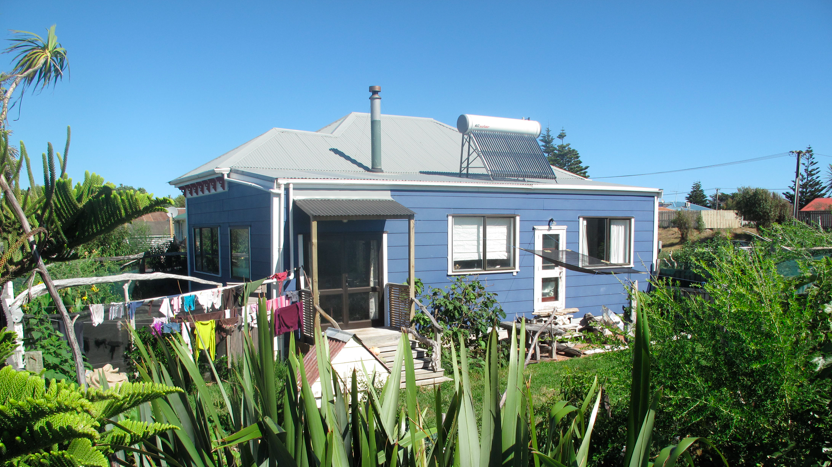
Eco-Thrifty Renovation by the Numbers

     Screen shot 2015-03-31 at 10.14.34 AM

Abandoned villas: 1

Screen shot 2015-03-31 at 10.15.00 AM

Smashed windows: 13

Screen shot 2015-03-31 at 10.15.14 AM

Functioning power points: 1

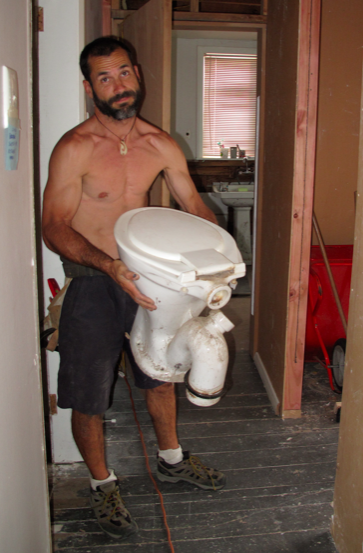
Functioning toilets: 0

Screen shot 2015-03-31 at 10.15.58 AM

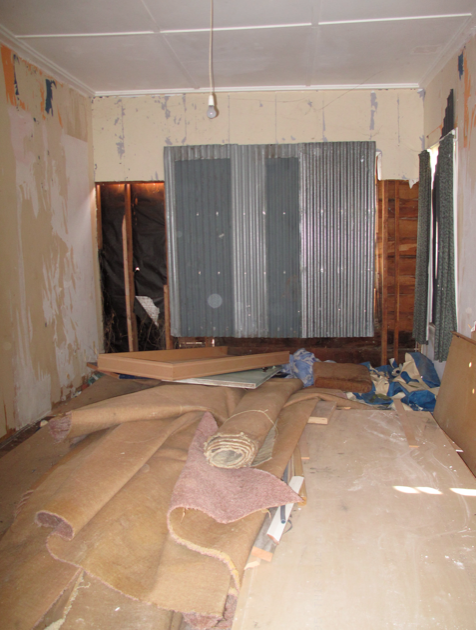
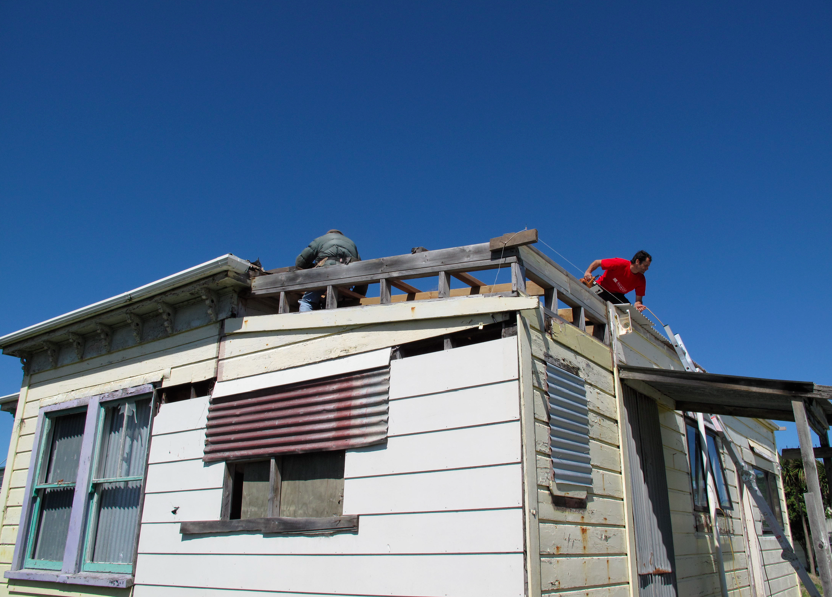
Holes in the roof: 1001

Villa size: 110 M2

Property size: 700 M2

Proximity to surf beach: 300 meters

Purchase price: $65,000

Renovation costs: $65,000

Total investment: $130,000

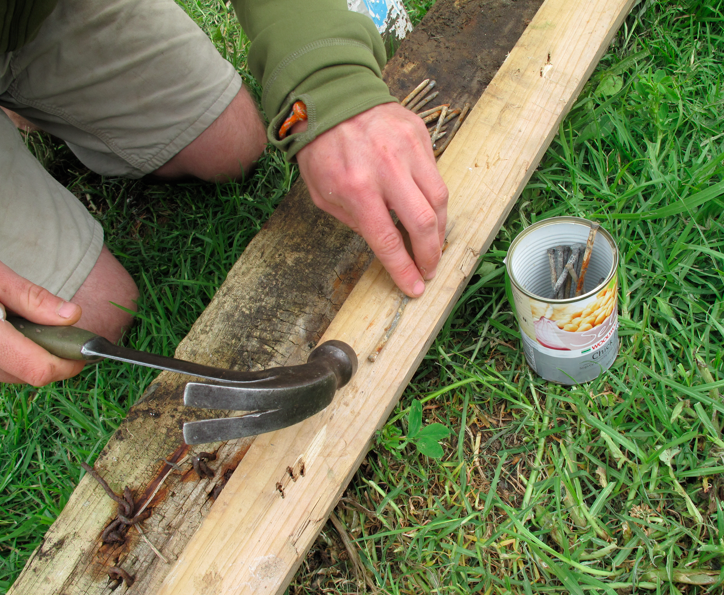
Straightened nails: Countless

Screen shot 2015-03-31 at 10.19.53 AM

Celebrity guests: 2

Screen shot 2015-03-31 at 10.24.27 AM

Homebirths: 1

Screen shot 2015-03-31 at 10.30.14 AM

Earth Care

Monthly power usage: 60 kWh

Average NZ home power usage: 660 kWh

Savings per month: 600 kWh

Savings over 4 years: 28,800 kWh

Ceiling insulation: R 5.0  (NZBC minimum: R 2.9)

Cubic meters of compost: 14

Screen shot 2015-03-31 at 10.17.48 AM

Fruit trees: 46

Screen shot 2015-03-31 at 10.33.14 AM

Vege gardens: 50 M2

Screen shot 2015-03-31 at 10.21.45 AM

Chooks: 4

Ducks: 3

Lawn mowers: 0

 Screen shot 2015-03-31 at 10.23.05 AM

People Care

Interns: 6

Screen shot 2015-03-31 at 10.17.01 AM

Free & gold coin community events: 73

Open homes: 4

Property tours: 7

Screen shot 2015-03-31 at 10.15.42 AM

Presentations: 38

Workshops: 16

School groups: 9

Screen shot 2015-03-31 at 10.26.55 AM

Spin-off projects: 6

Project HEAT

Screen shot 2015-03-31 at 11.20.39 AM

The Little House that Could

Screen shot 2015-03-31 at 11.21.13 AM

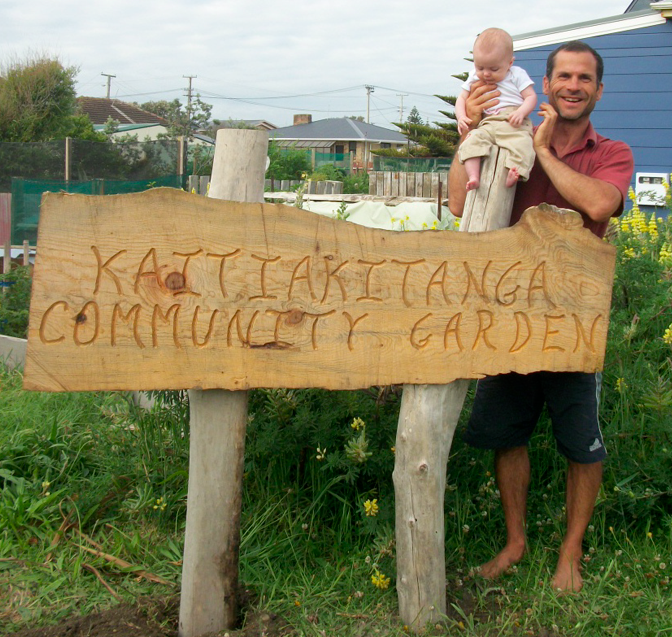
Kaitiakitanga Community Garden

Screen shot 2015-03-31 at 10.32.00 AM

Eco-Thrifty Renovation, Wanganui Chronicle

Adult Eco-Literacy Week

Whanganui Permaculture Weekend


Fair Share

 Blog posts: 668

Newspaper columns: 176

Screen shot 2015-03-31 at 10.32.30 AM

Free healthy home consultations: 103

Partnerships with other groups: 20+

Volunteer hours: 1,000+

Pirated photos (from us): Countless

Screen shot 2015-03-31 at 10.37.28 AM

Screen shot 2015-03-31 at 10.34.43 AM

 Screen shot 2015-03-31 at 10.38.59 AM

Equinox: Honoring the Sun

Screen shot 2015-03-21 at 7.02.24 AM

We’ve reached the autumnal equinox and there is probably not a person in the city that would not say what a glorious summer we have had. Plenty of sunshine, light winds, and, after an initial dry spell, enough rain to green up the pastures and the garden.

But, like it or not, summer will come to an end, and the equinox is a reminder that we are tipping toward winter with the hours of daylight becoming shorter than hours of darkness for the next six months. It is also a timely reminder of how valuable the sun is to life on earth, and what a difference its absence can make.

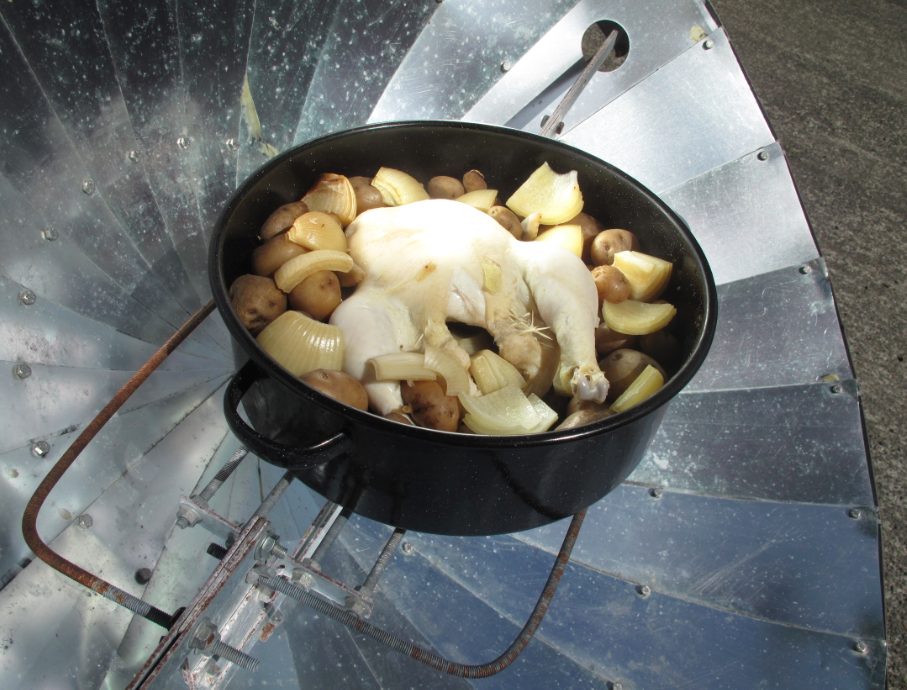
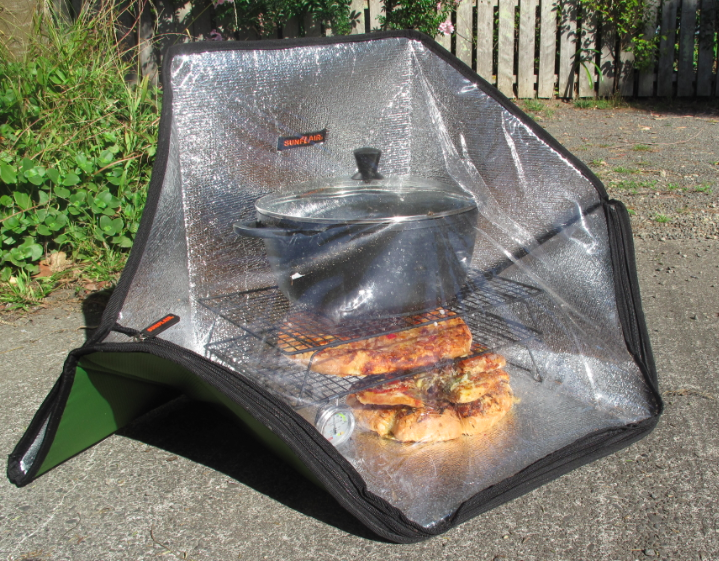
But like every great Achilles, Solar energy has its heal: it only works when the sun is shining on our side of the planet. I often use a solar cooker as a way to engage people in conversation about the potential for sunlight energy. Inevitably someone will ask, “What happens when the sun isn’t out.” Screen shot 2015-03-21 at 7.02.14 AM

Sadly, no one has yet to invent a lunar cooker, but there are many ways to store solar energy overnight and even for a number of cloudy days in a row. With solar cooking, the best place to store it is in your belly, but other solar storage systems include batteries, water and concrete.

Batteries are often used to store electricity generated by photovoltaic (PV) panels in places not served by mains power. Whether it is a yacht at sea or a bach in the wop wops, these situations are often called, “off-grid.” The “grid” refers to the network of power lines that serve the vast majority of us.

Obviously, off-grid housing is not vulnerable to mains power interruption, and is therefore valuable for emergency preparedness. Even though our rural home is served by mains power, I am designing a hybrid PV system that will heat our water most of the time but also have a small battery bank for emergency lighting, water pumping, radio and mobile phone charging.

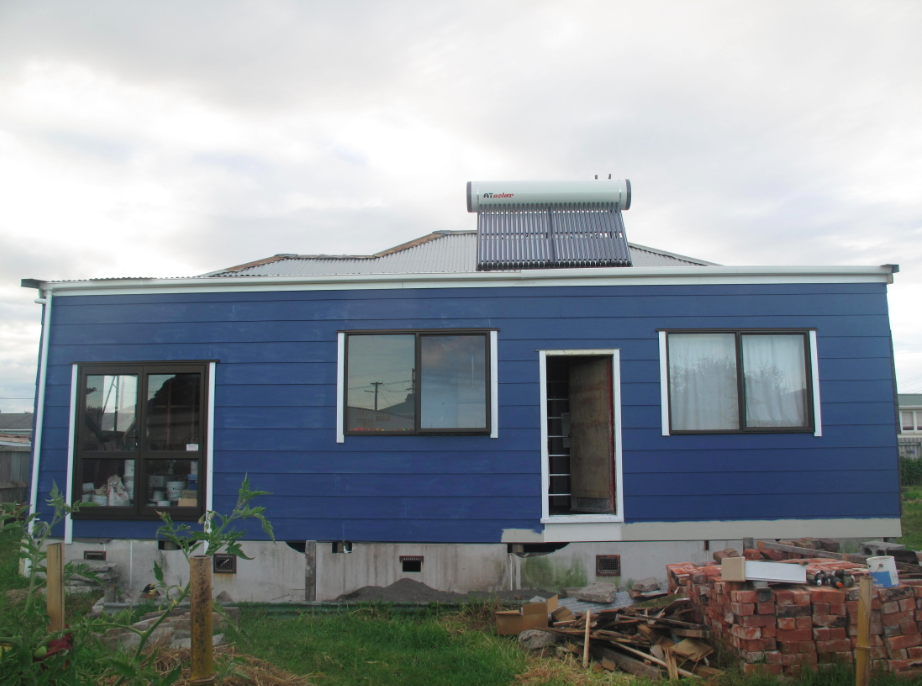
Without meaning to offend anyone’s intelligence, a traditional solar hot water system stores sunlight energy in the form of heated water. The energy itself (heat) is stored inside of an insulated cylinder overnight. Depending on the amount of insulation around the cylinder and a household’s hot water use, the supply can last for three or four cloudy days. Solar hot water would also be a treat in the case of a prolonged mains power outage. Screen shot 2015-03-21 at 7.02.38 AM

Sunlight energy stored in an insulated concrete slab is called “thermal mass.” Like solar hot water, the heat is stored overnight and potentially for a number of cloudy days in a row. For any new home being built in New Zealand, passive solar design is an affordable approach to a high performance dwelling. Additionally – you guessed it – a passive solar home would serve its occupants very well during a mid-winter power failure if their only heating sources relied on electricity such as a heat pump or plug in heater.

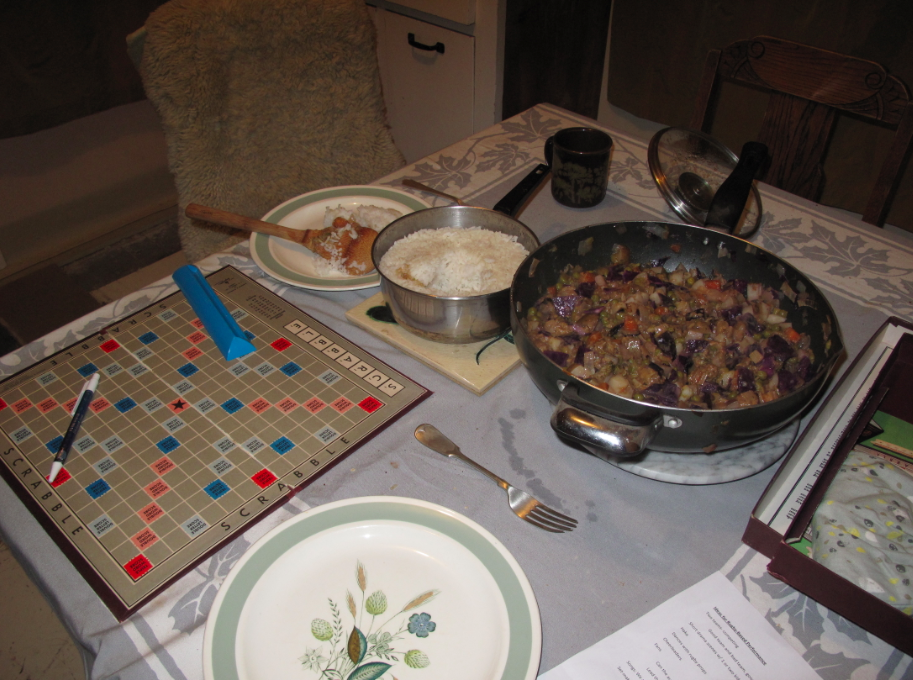
Finally, don’t make the mistake of thinking that solar cooking is only a summertime endeavour. We have cooked through the last six New Zealand winters with great success. Memorably, during the week-long cold snap in August 2011 when we had snow flurries in Majestic Square, I managed to burn a pot of rice and a curry on the very same day. That is solar power. Screen shot 2015-03-21 at 7.02.46 AM

Peace, Estwing
Reality, No TV: Our First Home

Our First Home is the name of a new programme on TV One. I have not seen it, but I have a pretty good idea of what to expect. I’ve seen plenty of programmes along the same lines and ‘been there / done that’ myself. Screen shot 2015-02-20 at 10.19.36 AM

It’s all about the drama. Renovating an old home is stressful. Living in it while renovating is especially stressful. Apparently it makes for great TV.


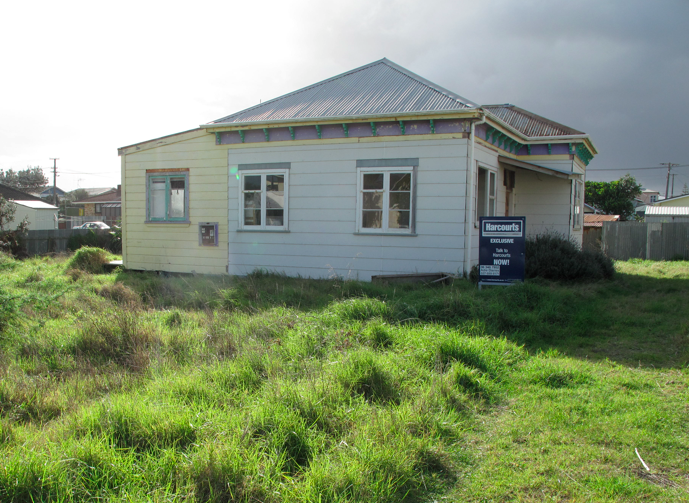
Our first home was in Castlecliff. The condition we found it was far worse than any house on Our First Home or The Block NZ. There were no TV cameras to document the drama, although a Chronicle reporter and photographer turned up in December, 2010 to see what we were up to.

Screen shot 2015-02-20 at 10.07.54 AM

We started our blog – www.ecothriftydoup.blogspot.com – in October, 2010 and have posted at least once every week since then. Last year we upgraded and expanded the blog: www.ecothriftylife.wordpress.com. The central premise behind our work is living within limits both financial and ecological.

Programmes like The Block NZ and Our First Home are based on the premise of “the property ladder,” which we don’t really have in our River City. From my observations we have more of a property step stool at best, and in some cases a hole in the floor. At the moment it is an unrealistic expectation to borrow money to do up a kitchen and bathroom, and expect to recoup the costs upon resale. This sets us dramatically apart from those doer uppers in Auckland, although there is still some common ground. Screen shot 2015-02-20 at 10.08.03 AM

According to the ourfirsthome website, the “Expert Tips” for Week One include:

  • Try to face living areas north with indoor/outdoor flow to add value.
  • Indoor/outdoor flow is a key…point.
  • Heating is important.
  • Privacy and seclusion add value.

If my editors would allow me use all caps for an entire sentence it would be this:

I would never consider buying a home with living spaces to the south and bedrooms to the north. Screen shot 2015-02-20 at 10.08.12 AM

Wait, I take that back. If I were to return to the Northern hemisphere I certainly would! But with a climate like the Whaganui region has, a home with the living spaces to the south is bass ackwards. Even the TV One “Experts” say that “Heating is important,” and free heating from the sun is the most important of all.

Free heating from the sun – aka passive solar design – goes alongside the indoor/outdoor flow that should accompany the northerly living spaces. Our first home in Castlecliff has the additional advantages of a private and secluded section at the end of a cul-de-sac. The flow is from kitchen to kitchen garden, through French doors, across a deck and past the outdoor pizza oven.

We planted the backyard with native trees for wind protection and fruit trees for healthy food production. The combination adds privacy and seclusion to that quintessential indoor/outdoor flow of contemporary Kiwi lifestyles whether in overpriced Auckland or affordable Wanganui.

But please don’t be tempted by what you see on TV to overextend your finances with the false expectation that “property prices only go up.” All bubbles burst. The Aucklanders will learn this too, and some will wish they bought here instead.


Peace, Estwing