Category Archives: Eco Thrifty Renovation

Our Weekly Newspaper Column Marks Two Years

This weekend marks the two-year anniversary of this column – 104 weeks of eco-design thinking, advice, maths, science, Neil Diamond tributes, and the tiniest bit of constructive criticism. To mark the anniversary, I’ve decided to remind myself and readers how this column came about in the first place.

In February 2012, former editor Ross Pringle rang me to ask if I’d be interested in writing for the new-look Chronicle that would launch in late April. He said that a column I wrote for the weekly Conservation Comment – which appears on Mondays – in December 2011 struck a chord.

Funny thing, I hurriedly wrote that column for Peter Frost who was trying to fill a gap in the Conservation Comment rotation of writers because someone could not produce a piece that week. Here is just the beginning of that column from two and a half years ago followed by updates and an exciting announcement.

Screen shot 2014-04-18 at 9.44.28 AM

Twenty-Twenty Hindsight: A Year of Living Lightly on the Planet

“We are now over the 12-month mark of renovating an abandoned villa in Castlecliff into a warm, dry energy-efficient home. When we set out on this low budget / high performance retrofit we had no specific numbers in mind for energy savings and waste reduction. We simply wanted to push the envelope and do the best we could.

As it turns out, our power bill has averaged $20 per month (this includes the daily line charge) and we have spent a total of $20 in rubbish fees for the entire year. I’ve come to call this our “20-20 hindsight” but there is no reason it could not also be a 20-20 vision for others to work toward by the year 2020. Of course electric rates will increase by then, but that is all the more reason to invest in efficiency now. (At current rates of annual change, electric rates will double in under ten years.)”

Screen shot 2014-04-18 at 9.39.19 AM

That was then and this is now. Our power bill has skyrocketed to $25 per month on average, but our rubbish fees have decreased to about $15 annually. 25-15 hindsight?!? Not so catchy.

But since it is an election year, I’ve decided to start my own political party. All important, as one would expect, is the name. It’s got to be something people recognize; something people like; something people will be remind of constantly.

The Chocolate Party? The All Blacks Party? The Sex Party – no, scratch that.

I know, I’ll call it the Internet Party. Everyone knows the internet. Everyone loves the internet. What could possibly be wrong with The Internet Party? Oh, taken already, eh?

Which leaves me with no option than calling it the Eco-Thrifty Party. Based on my calculations, we can offer our followers up to $50 per week (in power savings) in their pocket – almost as good as what Labour has pledged. We can pledge to out conservative the National Party by employing the Precautionary Principle when engaging any science and/or technology that may have consequences that ultimately outweigh the benefits.

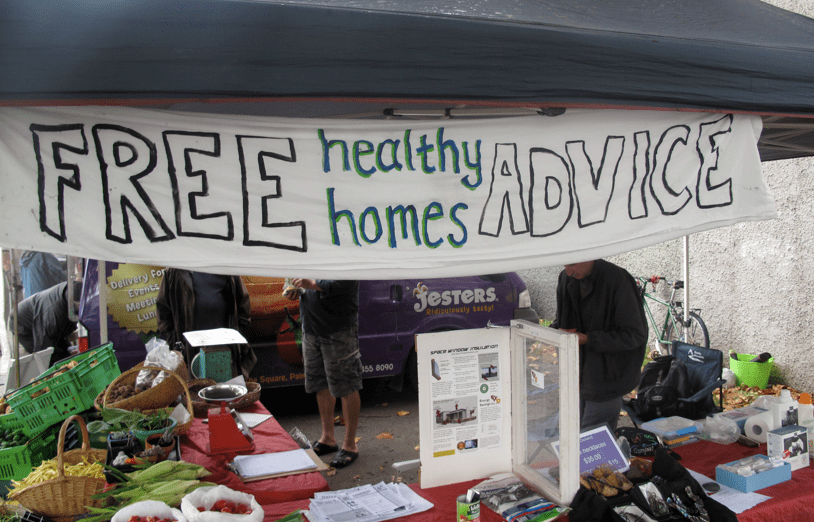
Calling on my American roots, we also pledge a free-range chicken in every pot, home-grown tomatoes in every salad, an energy efficient light bulb in every socket, a bicycle in every garage, and free, independent ‘Healthy Home’ advice for every resident of Whanganui.

Screen shot 2014-04-18 at 9.30.49 AM

Screen shot 2014-04-18 at 9.30.40 AM

Seriously, we are offering free, independent ‘Healthy Home’ advice for every resident of Whanganui. No politics required.

Nelson Lebo is not the founder of the Eco-Thrifty Party, but does enjoy parties as long as he can be home and in bed by 9 pm. He is co-founder of The ECO School. 

Upcoming Events:

Warm, Dry, Healthy Homes. 19th April, 10 am – 1 pm. Drop in advice at the River Traders Market, River Exchange and Barter System (REBS) stall, Taupo Quay.

Seven Easy Steps to a Low-Energy Home, 22nd April, 6:30-7:30 pm. Community Room behind Gonville Library, 46 Abbott St.

Window Blanket DIY Workshop. 4th May, 3-5 pm. Duncan Pavilion. Please register.


Project HEAT Offers Free Eco-Design Advice

As much as I love living in Whanganui, I must admit that Palmerston North has impressed me. From the Palmerston North City Council website:

“Palmerston North has a strong focus on becoming a sustainable city. Reducing the city’s energy consumption is critical to this goal. Ensuring that homes in Palmerston North are warm and healthy will also build towards a sustainable community.”

From a job vacancy posted by PNCC:

“The overall purpose of council’s strategy is to facilitate a decrease in the amount of non-renewable energy used by households. This role plays a key part in achieving this through the provision of advice and information within the community on sustainable building, energy efficient retrofit and design on a one-to-one basis to residents.”  Screen shot 2014-04-12 at 7.17.53 AM

By contrast, two efforts to establish a similar programme with Wanganui District Council have been less inspiring. The first came in the form of a comprehensive Community Contract application with letters of support from six well-respected community groups. It was declined due to its lack of relevance to the WDC 10-year plan. (Never mind that power prices have doubled in the last ten years.)

The second effort came in the form of a visit from Richard Morrison, who serves the role described above for Kapiti Coast District Council. He presented to WDC and then to a small group of interested local professionals including myself. I may never forget the words of the council staff member representing WDC administration following Richard’s presentation.

“There is concern that the job title sounds too green.”

And with that definitive statement, effort number two bit the dust.

Job title: Eco Design Advisor.

The following councils have full-time permanent eco design advisors: Auckland, Hamilton, Palmerston North, Kaptit Coast, Hutt Valley, Nelson, and Invercargill.

Screen shot 2014-04-12 at 7.17.44 AM

In the wake of these two failed efforts to work with WDC to help Whanganui residents improve the health and energy efficiency of their homes, Project HEAT came into existence through a casual conversation followed by an anonymous donation.

Project HEAT (Home Energy Awareness Training) provides free, independent advice to Whanganui residents on how to save energy and money while making their homes healthier. Last year, over 400 Whanganui residents benefited from free presentations on eco-thrifty ideas for the home, free home energy audits based on the eco design advisor model, and low-cost DIY workshops.

Screen shot 2014-04-12 at 7.18.24 AM

Feedback was overwhelmingly positive. Of those who completed the survey following a home energy audit, all said they would recommend the service to a friend. Comments included:

Practical, objective, low cost suggestions from someone who isn’t trying to sell you any particular product. You feel like you are getting genuine well-researched advice that you can trust.

It made me think about how to keep the heat in versus keep heating a cold home.

Lots of different tips to save energy. It’s great to have a selection of improvement ideas. I’ll use different solutions in different areas. Awesome!

Practical, functional advice.

Practical solutions with a real space to visualize solutions.

Excellent explanations re: heat loss and cheap, effective solutions. How to fit a window blanket.

Thanks to additional anonymous donors along with other partners who have been recognized elsewhere in the local press recently, Project HEAT is back for 2014. Expanded programme offerings will include the above along with free drop-in advice at certain community events as well as the Saturday River Market – starting today!

Watch the sidebar to this column over the next four months for upcoming events.

 Screen shot 2014-04-12 at 7.18.11 AM

Sidebar:

Free Eco-Design Advice:

Warm, Dry, Healthy Homes. 12th April, 10 am – 1 pm. River Traders Market, River Exchange and Barter System (REBS) stall, Taupo Quay.

Permaculture: Working with Nature: 13th April, 2 pm. River Room Community Arts Centre, Taupo Quay.

Warm, Dry, Healthy Homes. 19th April, 10 am – 1 pm. River Traders Market, River Exchange and Barter System (REBS) stall, Taupo Quay.

Eco-Design, Payback Period and Savings

Editor’s Note: This is more or less the 100th weekly column I have written for our city’s newspaper, the Wanganui Chronicle.  Screen shot 2014-03-29 at 6.58.46 AM

Nearly two years have passed since I was invited to write this column, which brings us to what is approximately the 100th edition of Eco-Thrifty Renovation.

Since starting the weekly column  23 months ago, we have received our certificate of compliance for the renovation, I have been capped a Doctor of Philosophy by Waikato University, we witnessed the birth of our first child, and saved approximately $5,000 on electricity when compared to the average NZ household.

Yes, $5,000, not a misprint.

Savings earned from investment in energy efficiency is known as ‘payback’, and the time that it takes to recoup the investment is known as ‘payback period’.

For example, a compact fluorescent light bulb that costs $5 will usually “pay for itself” in energy savings over the course of about 12 months depending on use. This means the payback period is 1 year, representing a 100% return on investment. During the second year that $5 is in your pocket.

We’re not specific about exactly how much we save from each of our many energy efficient investments. We simply look to our monthly power bill – ranging from $17 to $31 – to gauge our performance against average domestic users.

While I have been writing this column for 23 months, we have lived in our Castlecliff home for 40 months, meaning our total energy savings thus far is approximately $9,000: roughly 1/3 of our investment in passive solar redesign, solar hot water, and energy efficient appliances.

This puts us on track for a payback period of under 10 years. In other words, we will essentially “double our money” by saving the same amount we initially invested. After the payback period, every dollar saved is a dollar in our pocket: hundreds each and every month.

In the meantime, the faster power prices rise, the shorter our payback period becomes: 9 years, 8 years. Some people might say we have “future-proofed” ourselves against rising prices. We have achieved all this by using eco-design to work with natural energy flows.

Investing is good design saves energy and money, but sustaining bad design costs energy and money.

Screen shot 2014-03-29 at 6.58.16 AM

For example, a recent article in the Chronicle indicated that Wanganui District Council decided to bulldoze the beach as its management strategy 12 years ago. At a reported cost of $25,000 per year, simple maths tells us ratepayers have contributed $300,000 during that time and we still have the same poorly designed beach, with a high probability of higher ‘grooming’ expenses in the future.

This is like having a big, draughty villa full of energy-gobbling appliances and light bulbs, and paying hundreds of dollars month after month for power, and after 12 years being in the same situation. Alternatively, after 12 years we will have saved over $30,000 on power, paid back all of our investment, pocketed the savings, and have a warm, dry, low-energy home.

Using an imaginary time machine, let’s travel back and consider that council made the decision 12 years ago to invest in a beach redesign that worked with natural energy flows instead of against them. As long as we’re pretending, let’s say we take the $300,000 with us.

Back in 2002, say we invested $100,000 in a beach eco-redesign that resulted in $7,000 annual maintenance instead of $25,000. This resulted in yearly savings of $18,000 and a payback period of five and a half years. From the sixth through 12th years we saved $18,000 per year for a total savings of over $108,000. (Please note, these estimates are used for explanation only.)

By 2014, we could look forward to saving $18,000 or more per year moving forward. Additionally, we would have “future-proofed” ourselves against rising diesel prices and what the vast majority of climate scientists have predicted will be increased extreme wind events, as we’ve already seen this spring and summer.

While hindsight is 20/20, eco-design thinking and payback period allow us to ‘travel’ into the future and look back at what decisions will be most cost effective. It’s worked brilliantly for us.


Peace, Estwing


Everybody Loves Us…Almost

Editor’s Note: This is one of my weekly columns for our city’s newspaper, the Wanganui Chronicle. I use it regularly to help facilitate transformation in our city, and to point out some of the wasteful and unsustainable practices of our council.

The last two columns told stories about our first interns, John and Amy, and how they helped us transform an abandoned villa and section full of rubbish and weeds into a little paradise of sustainability. Along the way, the process of working with us provided vital steppingstones for each of their own transformations to more sustainable worldviews.

Screen shot 2014-02-28 at 4.41.15 PM

Transformative learning, as I pointed, is a learning theory often applied to adults that seeks to explain changes of perspective that differ drastically from those held previously.

As I have pointed out in this column with regards to Castlecliff Beach, the potential for change can be scary, and so many people resist it. Transformative learning theory stipulates that in order to undergo transformation, learners must experience a “disorienting dilemma” or “cognitive crisis.”

In a nutshell, either of these conditions present the learner with the perception of mixed messages about the world and their place in it. For example, one message might say, “Buy! Buy! Buy!” while another message says, “Western consumer lifestyles are harming the planet.” Then she or he may choose to seek out learning experiences that help change their perspectives and lifestyles accordingly.

The mixed messages that most of us observe and some of us internalize are also sometimes called “cognitive dissonance.” For example, one can smoke cigarettes while believing it to be unhealthy. Psychologists suggest that those who experience such inconsistency (dissonance) are likely to be psychologically distressed.

Well people, I’m here to say I’m psychologically distressed. No, I don’t smoke. Nor am I living a consumer lifestyle. Here is the nature of my distress.

During any week, half dozen strangers will stop me on the street and say something like, “I read your column. Keep up the good work.” Or something like, “What you’re doing is so important for Whanganui. Don’t stop.”

Additionally, our work has been praised by leading permaculturists across the country and around the world. Our Eco-Thrifty projects have been featured in national and international magazines. We have been invited to other cities to present our work. Screen shot 2014-02-28 at 4.41.06 PM

Meanwhile, it appears that certain elements of Wanganui District Council does its best to ignore the work that Dani and Verti and I do to help make our community more socially, economically and environmentally sustainable.

Please note, I have been advised not to make blanket statements about “council”, as it is a large and diverse organization. I recognize that many council staff may feel their positions have little or nothing to do with sustainability, and that they are not the ones making what appear to be unsustainable decisions for our city.

On another level, I suppose an argument can be made that it is not the role of council to help people live healthier lives while saving money and protecting the environment. Indeed, a senior staff member indicated such in a letter rejecting funding for a Community Contract with which I was involved.

Our council cuts heritage trees, dumps raw sewage into the ocean, and spends tens of thousands of dollars pushing sand to windward on the beach while other councils around New Zealand support innovative and successful sustainability programmes that help people and the planet. Does this explain the cause of my psychological distress?

Leading up to the elections last year I asked the question in this column if “sustainability” and “environment” were dirty words in Whanganui because almost nobody standing for office used them. Evidence of council decision-making certainly supports the suggestion that they are. But this begs the question, WHY?

Given the amount of good will that comes my way and the number of people that ask me to stand for office, it would appear there is a quiet majority of citizens – including some council employees – who recognize and appreciate the win-win-win thinking that I share in this column.

Silence over the last three years on our work appears to indicate the positions of those recently re-elected politicians, but the good news is that two of the newly elected councilors have indicated an interest in sustainability: one has contacted me via Facebook and one recently attended a local Green Drinks gathering.

Could it be the early signs of transformation for WDC? Time will tell.

Screen shot 2014-02-28 at 4.41.24 PM

Transformations: Part II

Last week I marked the three-year anniversary of the arrival of our first two interns, John and Amy. That was an opportunity to share the story of the transformation of what was once a chimney in Gonville into our brick patio in Castlecliff.

Screen shot 2014-02-22 at 7.34.09 AM

It was also a chance to talk about transformative learning, a process by which many adults undergo a profound change in the way they view the world. In order to undergo such a major shift of thinking, learners need a nudge, which can come in the form of a ‘disorienting dilemma’ or a ‘cognitive crisis’.

In other words, something happens that renders unsatisfactory their current way of thinking. An easy example of this is a diabetes diagnosis that may force a change in ones view of diet and exercise. Other examples include the loss of a job or the break-up of a marriage. It should not be hard to recognize that these would alter ones perspective on financial security and relationships.

For many people in the sustainability movement, transformative learning is sparked by a slow but cumulative body of evidence indicating that the current state of the world is unsustainable. Literally, it cannot be sustained. Trends in everything from ecosystem health to energy supplies to extreme weather events to income distribution show that we are headed for volatile times ahead.

As such, the prudent and conservative thing to do is to look for systems on our planet that are more sustainable. For example, a forest ecosystem experiences a dynamic balance of plant and animal populations as well as materials recycling.

Observing such systems has led to the development of eco-design strategies such as permaculture. As one would expect, many adults experiencing a ‘cognitive crisis’ about the damage that Western consumer culture is inflicting on the planet and many of its people turn to permaculture as an alternative worldview.

Because I knew John-the-intern before he came to us three years ago, I expected that he was already well on his way to developing an alternative worldview. But Amy came to us more or less as a stranger. When she left many months later, not only was she a friend, but also a young woman on a mission. Screen shot 2014-02-22 at 7.23.58 AM

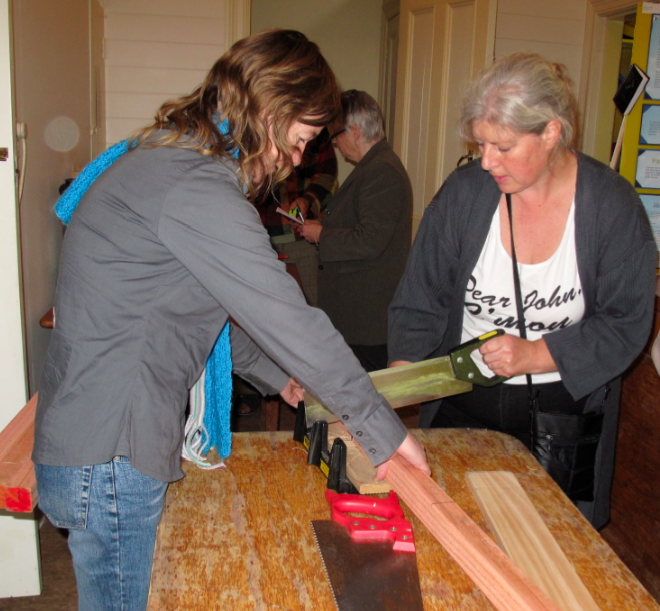
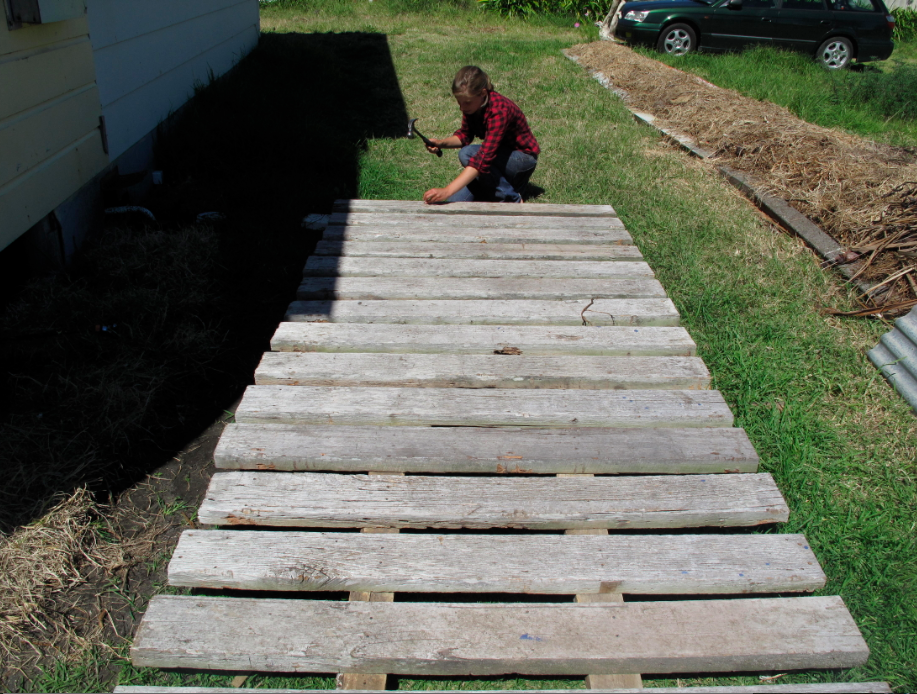
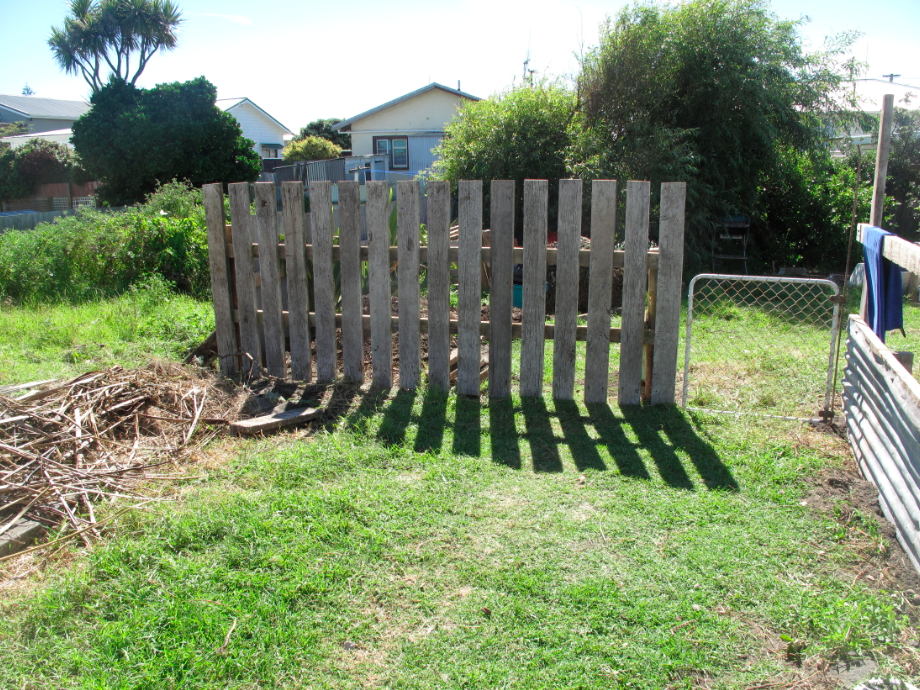
For Amy, it all started when she picked up a hammer and built us a fence. This was an empowering experience for a number of reasons. First, and most importantly, she chose the project herself from a long list of options. Second, I set her up for success by providing enough structure that the project could be accomplished with her limited building experience at the time. Third, it looks awesome!

Screen shot 2014-02-22 at 7.24.14 AM

In the same way that John transformed a chimney into a patio, Amy transformed our former deck into a beautiful and functional fence. Also like John, her experience served as a steppingstone along a path to a more sustainable worldview. Two and a half years after she left us, that path recently led Amy to the International Permaculture Congress in Cuba in December of 2013.

Screen shot 2014-02-22 at 7.23.29 AM

Interesting how transforming our little villa here in Whanganui has helped transform a few young minds along the way.

Peace, Estwing

It’s Academic

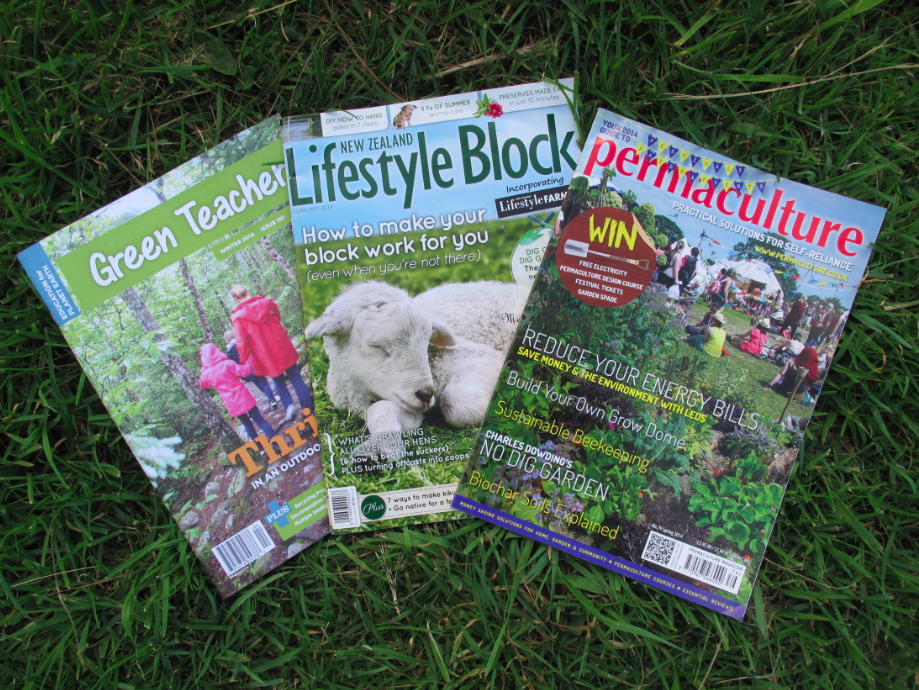
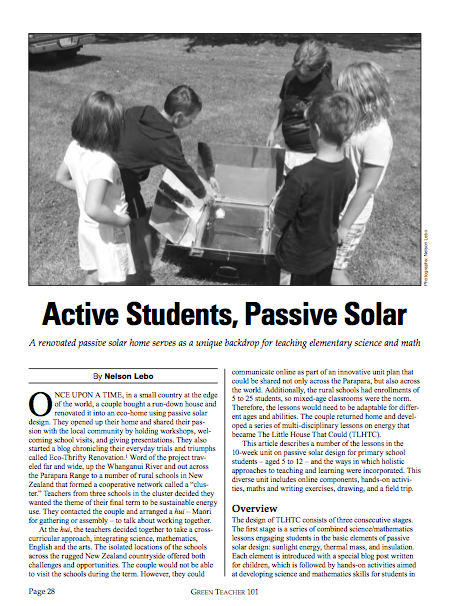
As part of our education programme, we have developed a curriculum  on passive solar design for upper primary and lower intermediate/middle schoolers. It is included in the current edition of Green Teacher, and viewable on our website: http://www.theecoschool.net/The_Eco_School/Research_and_Publications.html

Screen shot 2014-02-17 at 3.56.24 PM

Here is a story that sets the scene:

Once upon a time, in a small country at the edge of the world, a couple bought a run-down house and renovated it into an eco-home using passive solar design. They shared the project with the local community through open homes, workshops, school visits, and presentations. And they shared the project with the world with their blog. Word of the project traveled far and wide, up the Whanganui River and out across the Parapara Range to number of rural schools that formed a cooperative network called a “cluster.” Teachers from three schools in the cluster decided they wanted the theme of their final term (Term 4) to be sustainable energy use. They contacted the couple and arranged a hui – Maori for gathering or assembly – to talk about working together.

Screen shot 2014-02-17 at 4.04.41 PM

At the hui they decided together to take a cross-curricular approach, integrating science, maths, English and the arts. The isolated locations of the schools across the rugged New Zealand countryside offered both challenges and opportunities. On the one hand, the couple would not be able to visit the schools during the term. But on the other hand, they could use the Internet as part of an innovative unit plan that could be shared not only across the Parapara, but also across the world. Additionally, the rural schools had roles of five to 25 students, so mixed-age classrooms were the norm. Therefore, the lessons would need to be adaptable for different ages and abilities. The couple returned home and developed a series of multi-disciplinary lessons on energy that became The Little House That Could (TLHTC). What follows is an overview of the unit and then a number of individual lessons.

Also check out TLHTC on Facebook: https://www.facebook.com/pages/The-Little-House-That-Could/205750306163061

Transformations

We’ve just passed the third anniversary of the arrival of our first two interns. John Wright was a former student of mine from my high school teaching days, and Amy Lamb came to us through her uncle, a good friend and groomsman at our wedding. They were both in their early twenties when they arrived in Whanganui in late summer, 2011.

Screen shot 2014-02-14 at 6.54.19 AM

 We were in the heart and guts of our renovation: ripping open walls, adding insulation, hanging Gib and weatherboards, installing solar hot water. Much of what we were doing at that time required close supervision, as it would be scrutinized by our building inspector. I’ll admit I was a bit of a taskmaster, which went over better with John than with Amy.
John had come to us straight after 4 months on a lobster boat off the coast of Maine through a Northern winter. Amy was fresh out of uni, and looking for a gap year type of experience.
By the time they left us, both had experienced transformative learning experiences on different levels. John returned to the states and immediately took up a lease on a two-acre organic vegetable farm. Amy took a job with a conservation organization, enrolled in a permaculture design course, and now works with a sustainable forestry consultant.

Transformative learning theory stipulates that in order for one to transform their perspective they must first recognize that something is wrong with their current perspective, then look for alternatives, and eventually adopt a new worldview. For those like John and Amy, the Western consumer lifestyle messages bombarding them on a daily basis did not satisfy their need for meaning.

They came to us and experienced some alternative worldviews such as sustainability, permaculture, and what we call eco-thrifty living. For the first month they spent with us, most of their ‘transformative learning’ took place outside of our nine to five workday dictated by the NZ Building Code. It took place over the dinner table, in the garden, and even during our weekly trips to Hayward’s Auctions.

But as the pressure of pre-line and post-line inspections waned, I allowed John and Amy to select from a long list of non-consent jobs to engage with while I got back to writing my PhD thesis.

 Screen shot 2014-02-14 at 6.49.36 AM

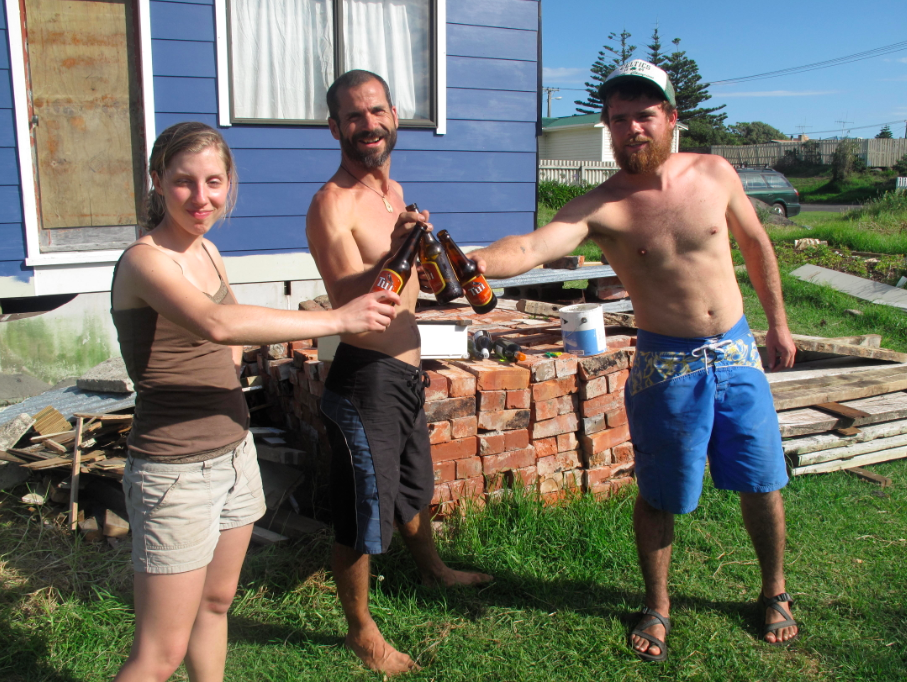
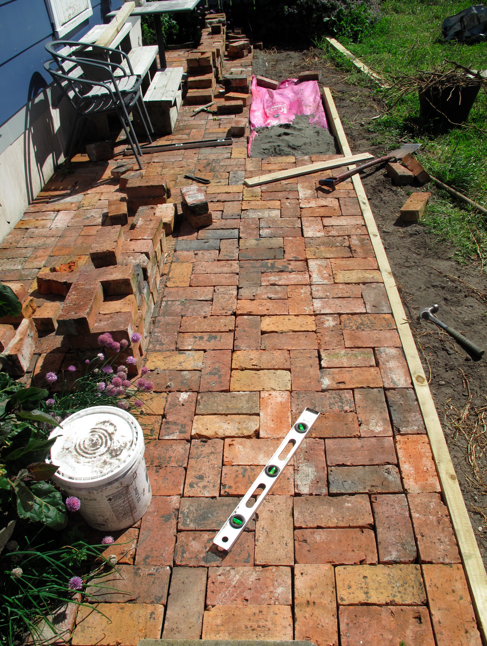
After building our outdoor pizza oven together, John embarked on laying second-hand brick for our patio and Amy set herself to constructing a fence. I’ll share John’s experience this week and Amy’s next week.

In my 14-year teaching career, John was one of my top 10 favourite students. Although not a strong academic, he always worked hard, had fun, and was open to new ideas. He was just an awesome kid.

 Screen shot 2014-02-14 at 6.49.24 AM

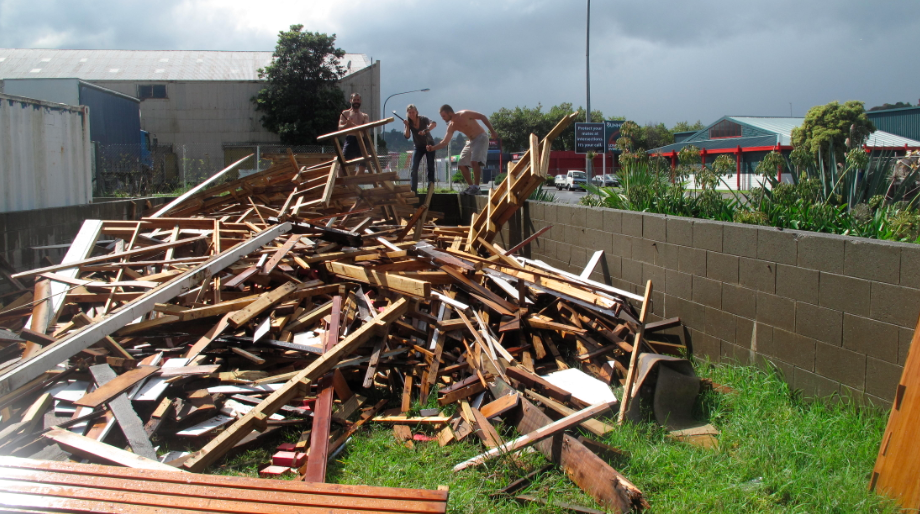
I had no problem telling him to build me a patio and trusting he would do a good job. The bulk of the work involved carting many wheelbarrows of sand to fill and level out the trench beneath the former deck that was full of rubble and rubbish. John was the perfect candidate for this job because he was strong as a horse, but also carefully used a leveling line to place each brick. John took ownership for the job and followed through with an amazing result more or less on his own.

 Screen shot 2014-02-14 at 6.49.58 AM

The project is a good example of eco-thrifty renovation because it involved second-hand materials, local materials, and free materials. With a little vision, hard work and patience, the bricks that made up a chimney in a Gonville home are now our patio in Castlecliff. What a transformation.

Beach as Eco-Thrifty Design Exercise

Screen shot 2014-01-25 at 6.54.54 AM

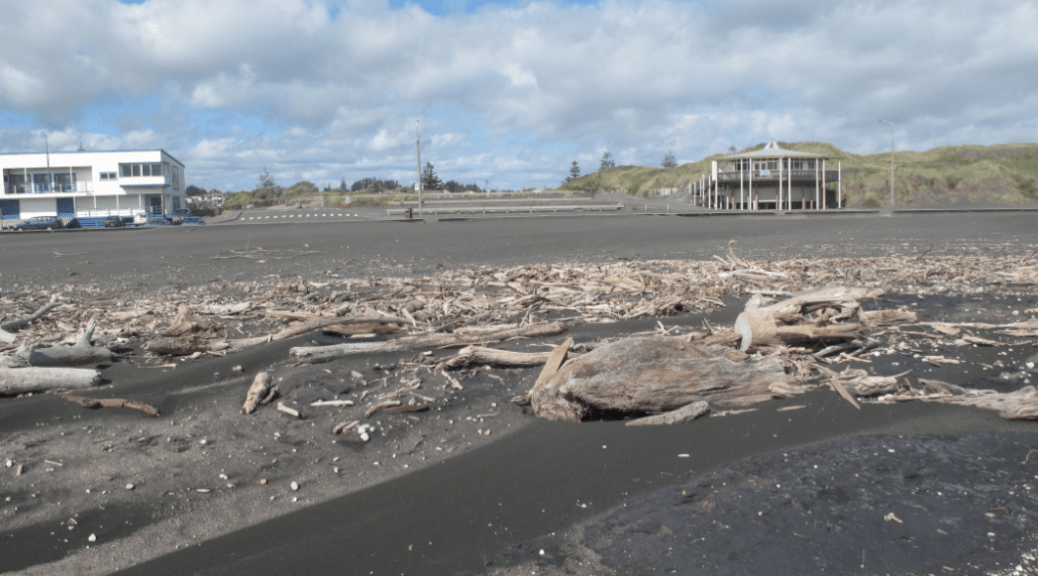
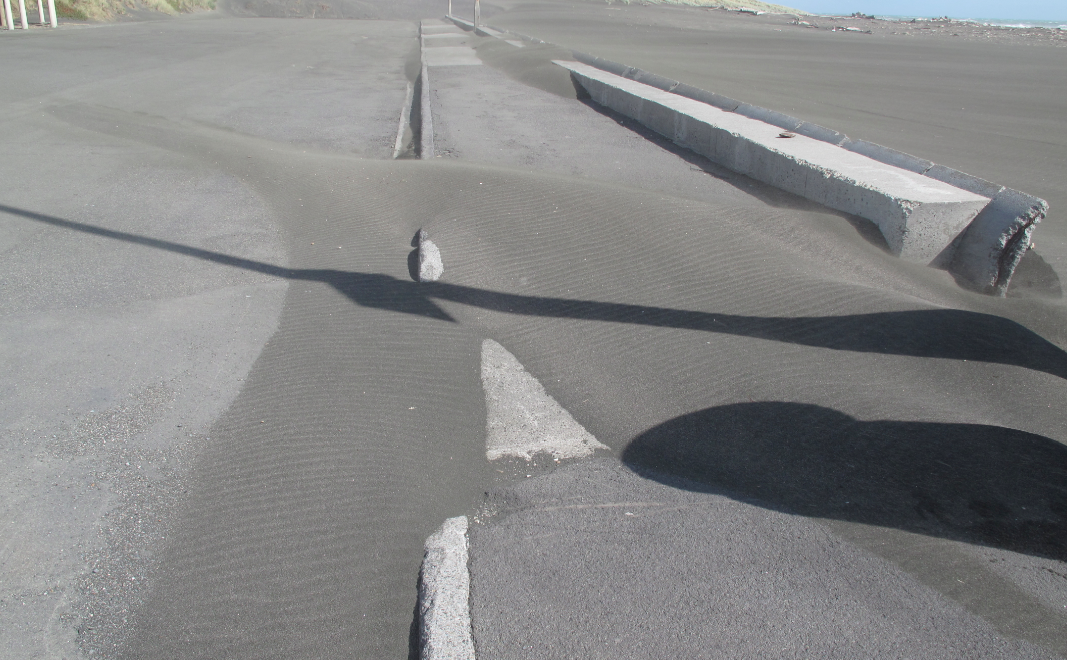
When I first wrote in October about what appeared to be the needless waste of rates “grooming” Castlecliff Beach it was in response to a comical situation: moving sand to windward with heavy equipment only to have it blown back into place within weeks.

Screen shot 2014-01-25 at 6.52.24 AM

Then it happened again and again. Weeks after a second massive effort pushing hundreds of tons of sand to windward, it was all back in place, and an excavator was moving it a third time while damaging the car park in the process.

Screen shot 2014-01-25 at 6.57.25 AM

When the first piece ran, the editor of the Chronicle gave it a title something along the lines of “Fighting Nature is Expensive.”

Eco-design has shown millions of times that working with nature is almost always cheaper in the long run. With this in mind, my suggestion was to take an eco-design approach to downsize the massive and underused car parks, which would save us all money and release less pollution through diesel fumes. I used the phrase ‘managed retreat’ because I had heard it used in reference to parts of the flood zone, and that it suits what would probably be a carefully considered, staged programme of right-sizing and retreat.

What I saw as a common sense win-win situation has made me the target of a few individuals who appear desperate to keep the beach as it is. I think we’d all admit that change can seem difficult, and these people are probably afraid of changes to our beach so they lash out at anyone suggesting new ideas. I can assure them that my vision is for a better beach attracting more visitors at less expense.

Living in a democracy, we all have the right to express our opinions on how our rates are spent. Elected officials choose to listen or not.

In key ways, the context of Castlecliff Beach is similar to the context of our villa when we bought it: big, draughty, expensive to maintain. As such, we can use the beach as a thought exercise in eco-thrifty renovation.

Screen shot 2014-01-25 at 6.52.33 AM

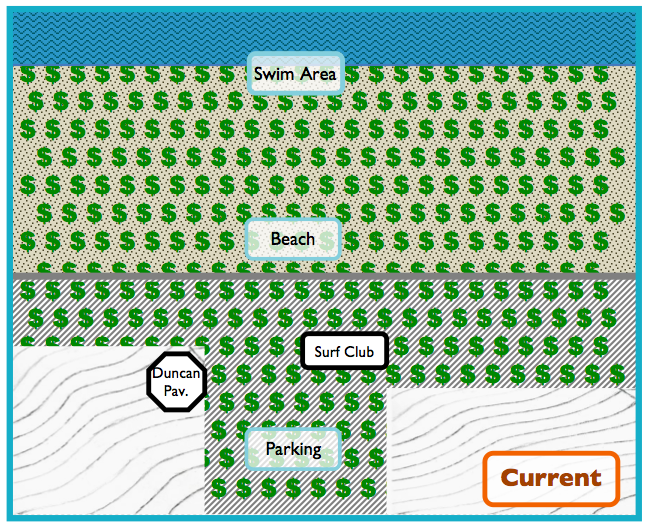
Form follows function: Although the area groomed appears larger than the infield at Cook’s Gardens, well over 90% of beach goers congregate only around the swimming area, which is usually about the size of a church hall. As such, why spend thousands of dollars grooming a large area of black sand into the Gobi Desert when the swimming area looks like Omaha Beach on D-Day? In terms of customer service, this arrangement falls apart: the dollars are not spent on what beach goers actually use.

Right-Sizing: Along those lines, the parking areas at the beach are oversized and underused. It reminds me of a birthday party I once attended where the host prepared massive amounts of food and drink and almost nobody came. I left feeling sad.

Again, comically (why does this term keep reappearing?!?) Council recently spent thousands of dollars resurfacing the least used of six distinct parking areas. I liken it to having your least worn of six suits dry-cleaned: fine if you have the money, but probably not if you’re on a budget.

Screen shot 2014-01-25 at 6.56.02 AM

As the first diagram shows, most money is being spent on places where no one goes, creating the look of big, empty, uninviting expanse.

Screen shot 2014-01-25 at 6.52.59 AM

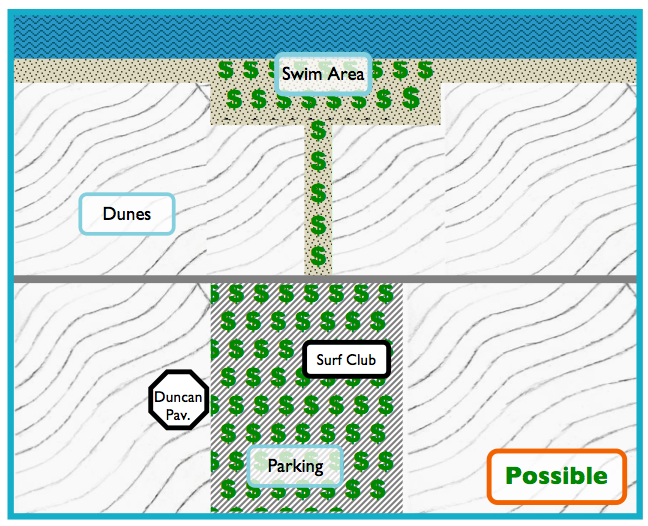
I suspect our mayor, who has an awesome stall at the River Traders Market, will tell you that to attract people, the front of a stall must appear full of goods – giving a look of abundance, not scarcity.

By right-sizing the car parks and beach, we can have a more inviting, less costly venue for free recreation. The second diagram shows what a beach might look like when money is spent where people go instead of where they don’t go.

Screen shot 2014-01-25 at 6.53.21 AM

I will leave the next stage of retreat to the experts, some of whom may even live in our community.

The Bottom Line: We are facing a situation where more frequent extreme weather events are pushing more sand around at the same time we have a large debt, and an inequitable and unsustainable rates structure. The practice of beach grooming will end one day. The question is: Do we continue to throw good money after bad, or do we invest in a more sustainable re-design that will save money while working with nature?

Here is a suggestion to my editor for the title of this piece: “Sustaining the Unsustainable.”

A Coastal Design Influence

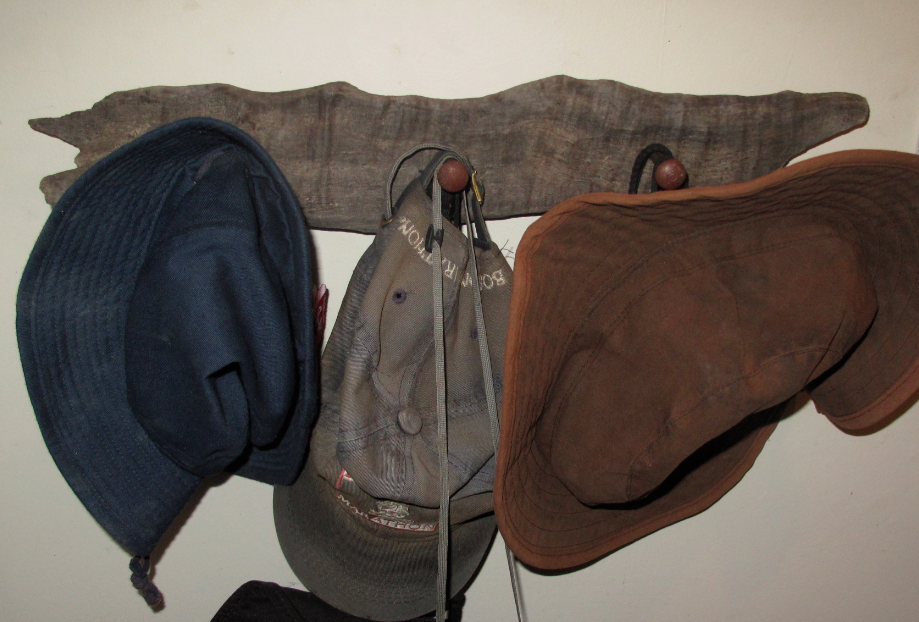
I love our Whanganui coast. I take the short walk from our home to the Tasman Sea nearly every day, sometimes two, three and four times. It has gotten to the point where my wife has accused me of bringing half the coast home with me in the form of sand in my jandals and driftwood over my shoulder.
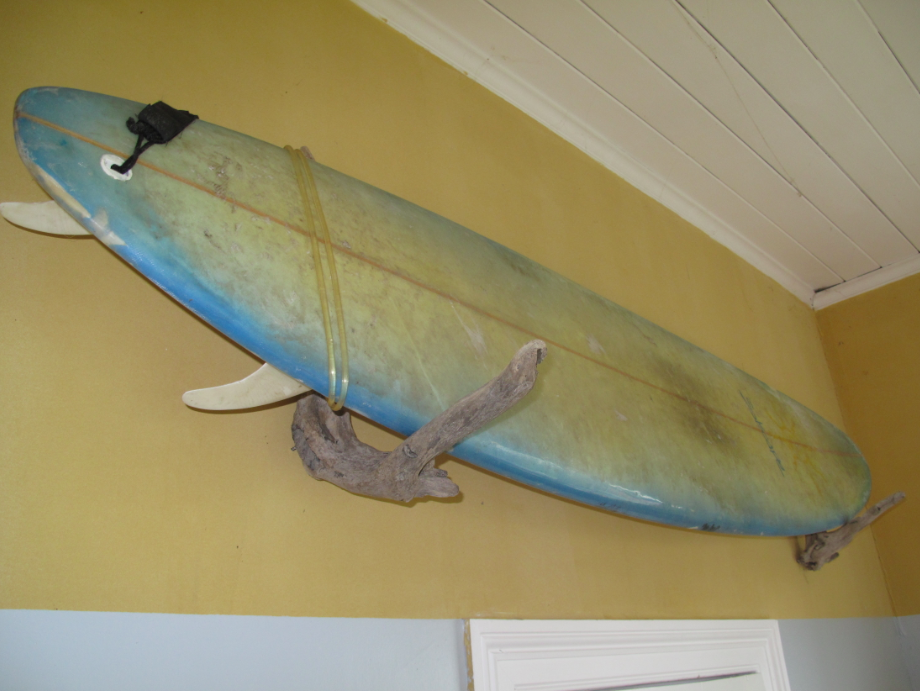
Driftwood board rack.
When I walk on the beach with my daughter, Verti, we make a special effort to pick up all of the litter we can find. By 14 months, she could spot a Cody’s can from 20 metres.
Way back before she was born, before I started writing this column, and even before our first visit from the building inspector, Dani and I embarked on our first and perhaps best beach clean-up effort. It was Christmas 2010, and a dead goat had washed up on Castlecliff Beach, where it lay sunbathing for two days at the high tide line and three metres outside of the swimming area flags.
After the first day I thought to myself, “That smells.”
After two days I thought to myself, “I can’t believe someone hasn’t removed it.”
On the third morning, I thought out loud to my wife, “Get the wheelbarrow and follow me.”
To make a long story short, we headed to the beach with the wheelbarrow, a tarp, two shovels, and a video camera. We collected the carcass and brought it home to our active compost heap. Within a week it was down to bones, but the video has yet to make it to Youtube. The “goat story”, as it has come to be known, is oft repeated when I am introduced by certain of our friends to certain of their friends.
Driftwood hat rack.
That day over three years ago was the start of my ongoing relationship with our beautiful coastal zone. Since then, the relationship has developed with every walk along the sand, every wave surfed at the North Mole, and every armful of driftwood.
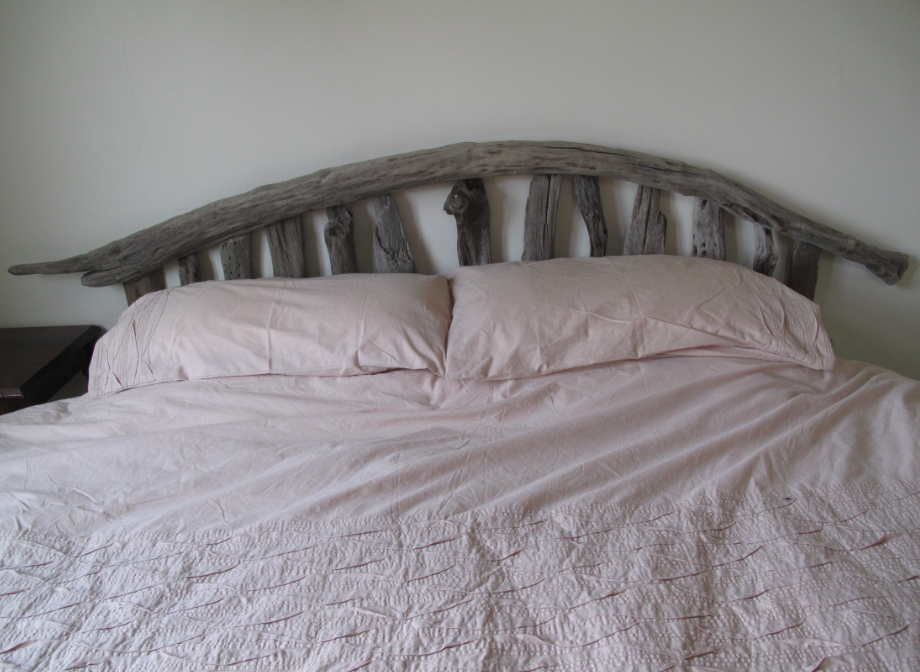
In the latter stages of our renovation, driftwood has become more of a design element in our attempt to meld a classic villa with a beach bach in a way that honours both while spoiling neither. Sounds like a job for Terry Lobb, but in my unprofessional hands I think things have turned out fine.
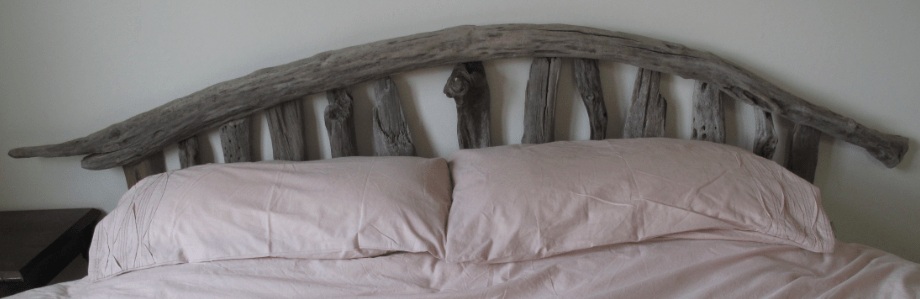
Driftwood headboard.
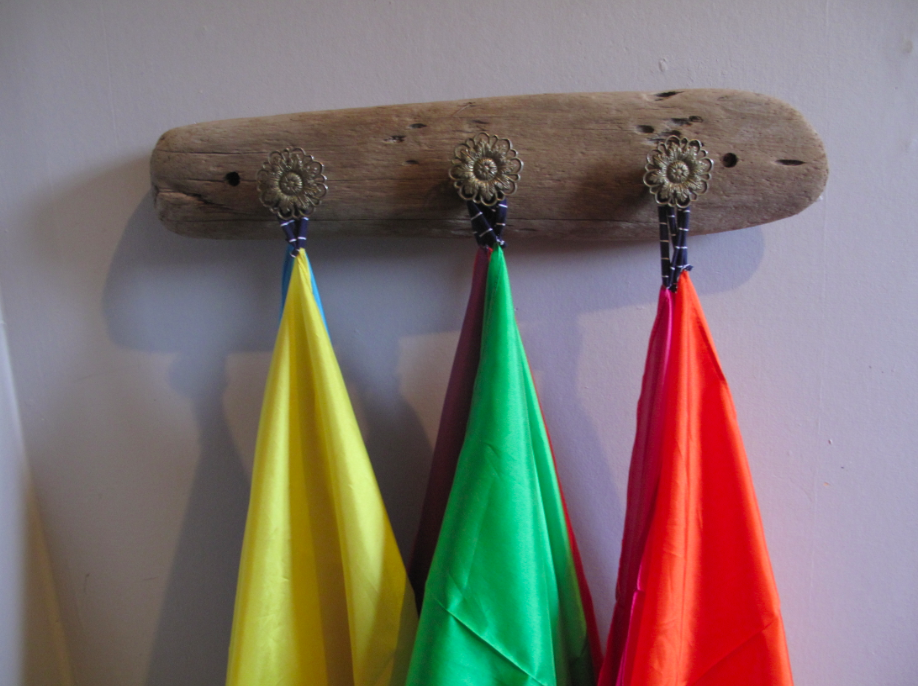
Despite what my wife says, there are still some rooms in our home without driftwood, although that may not be the case much longer after my recent venture into headboard making. Previous to the headboard, my indoor driftwood projects had been limited to surfboard racks, coat/hat/key racks, children’s toys, artwork, and our Christmas tree.
Verti’s play scarves hanging in her room.
Outdoor projects are another thing entirely. I’ll get to those another day.
 Peace, Estwing

Swales and Rain Gardens for Water Management

It is encouraging to see the number of people engaging in meaningful dialogue about important local issues through the Letters page of the Chronicle. Sadly, too often these letters include references to failed attempts to work with Wanganui District Council on strategies that work with nature instead of against it.
For some reason, our Council appears stuck in the past on many issues of infrastructure and economic development. From most accounts, the 1950s were a great time to be alive, but in many cases ‘50s thinking no longer applies.
All of this makes it particularly significant that WDC Chief Water Engineer, Kritzo Venter, has been active and vocal about promoting progressive water management strategies that ‘mimic’ those that nature itself has developed over millions of years. (That is some investment in R&D, ain’t it?!?)
Small swale and rain garden. 
One of those water management strategies – swales – has been in use for decades in some places around the world. A swale is a long, narrow earthwork that runs perpendicular to slope. They slow the flow of surface runoff and facilitate infiltration into the ground. They are perfectly level, unlike ditches, which are sloped to drain water away like a river. Water in a swale soaks into the ground instead of running over it. A carefully constructed swale includes a level-sill spillway that gently allows it to be overtopped in a controlled manner in the event of extreme rain.
The use of swales is the type of win-win-win situation I write about in this column because it: 1) reduces stream and river levels during flood events; 2) increases groundwater reserves that can be called upon during periods of drought; and, 3) significantly reduces the overall cost of infrastructure. Eco-thrifty at its best.
For example, two years ago I was asked to consult on a proposed residential development in Kaiwhaiki that had significant drainage problems. I was told the 10-year-old quote to ‘solve’ the problem the ‘old way’ using pipes and culverts was for half a million dollars. After picking my jaw up off the floor, I told them that good eco-design, which would include cluster housing and the use of swales, would significantly slash that price. WDC Chief Planner, Jonathan Barrett, appeared supportive of those ideas during one meeting held at Council.
The other strategy promoted by Kritzo – and praised by Chronicle assistant editor, Anna Wallis – is the use of rain gardens. A common use of rain gardens is to absorb and filter runoff from new parking lots or other such impermeable surfaces. In this way, rain gardens function like wetlands: sponging up excess water and cleaning it through natural processes.
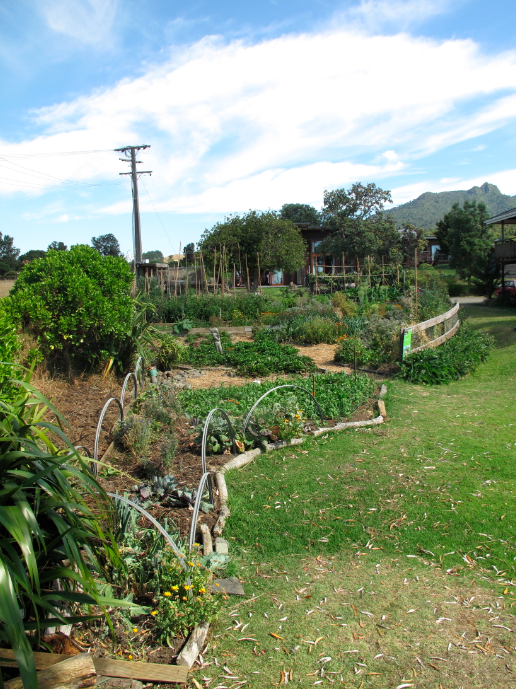
A series of mini-swales and vege gardens make up this garden.
I first learned about rain gardens in 2005 while taking a certificate programme in the States on Organic Land Care. Shortly thereafter I advised a school to install rain gardens in a number of locations where they had persistent drainage problems. This was particularly meaningful in the context of the school because it became a relevant learning experience for students.
In 2009, while living in Raglan, I built a small management system to control an excess of runoff coming from the roof of a newly built outdoor kitchen at a campground. The system consisted of a swale, a level-sill spillway, and a rain garden. We planted the swale with feijoa trees and the rain garden with plants that tolerate periods of wet and dry.
Swales and vege gardens soak up water and keep it from flooding this lawn.
While in Raglan, I also used swales as a metaphor for eco-design during a Pecha Kucha night, where artists and designers share their work through 20 slides with narration of 20 seconds per slide. That presentation, “Thinking Like a Swale,” became the inspiration for a programme I offered at the Josephite Retreat Centre earlier this year to acknowledge the UN year of water. Hopefully, when River Week 2014 comes around next year, I’ll get a chance to present it again to compliment and support the education efforts Kritzo has already made in the community.
Us ‘swale-thinkers’ gotta stick together. It’s a watershed out there.