Category Archives: passive solar

Around the World in Eight Designs: Part 7

Over the last month and a half I have introduced some of the basic principles in good home design. I started with examples of passive solar heating and cooling in Colorado and New Mexico, USA. Next I made the point of passive cross-ventilation by recalling time spent in Granada, Nicaragua. For the last two weeks I’ve written about my former home – a 230 year-old farmhouse in New Hampshire, USA.

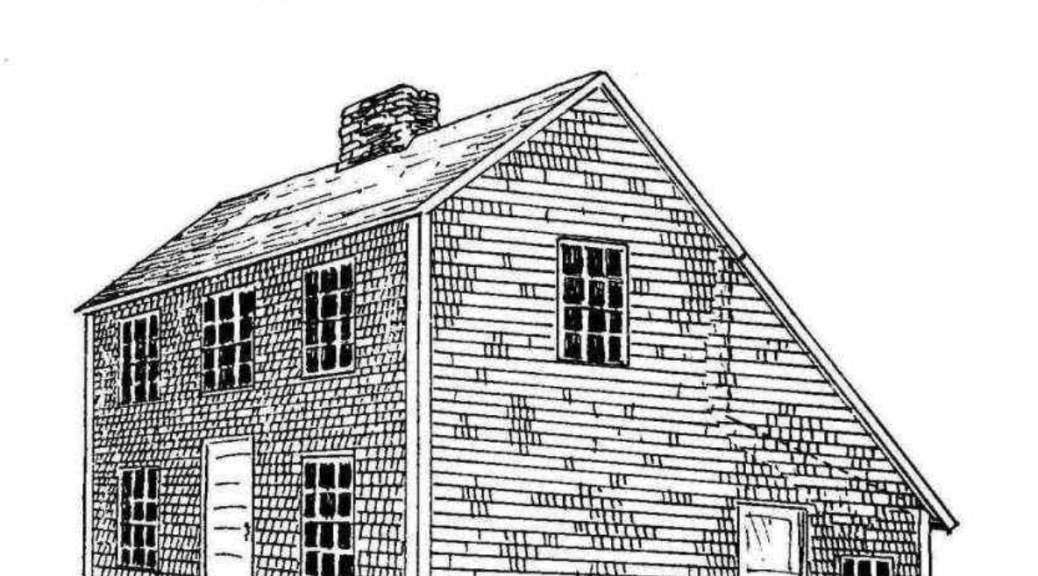
This week’s example of good home design combines all of the principles already discussed, but in an 18th Century context. For it’s time, the New England Saltbox was innovative, and can serve as a rough model for what would be an ideal dwelling for the Manawatu.
 Screen Shot 2015-07-12 at 10.33.43 am

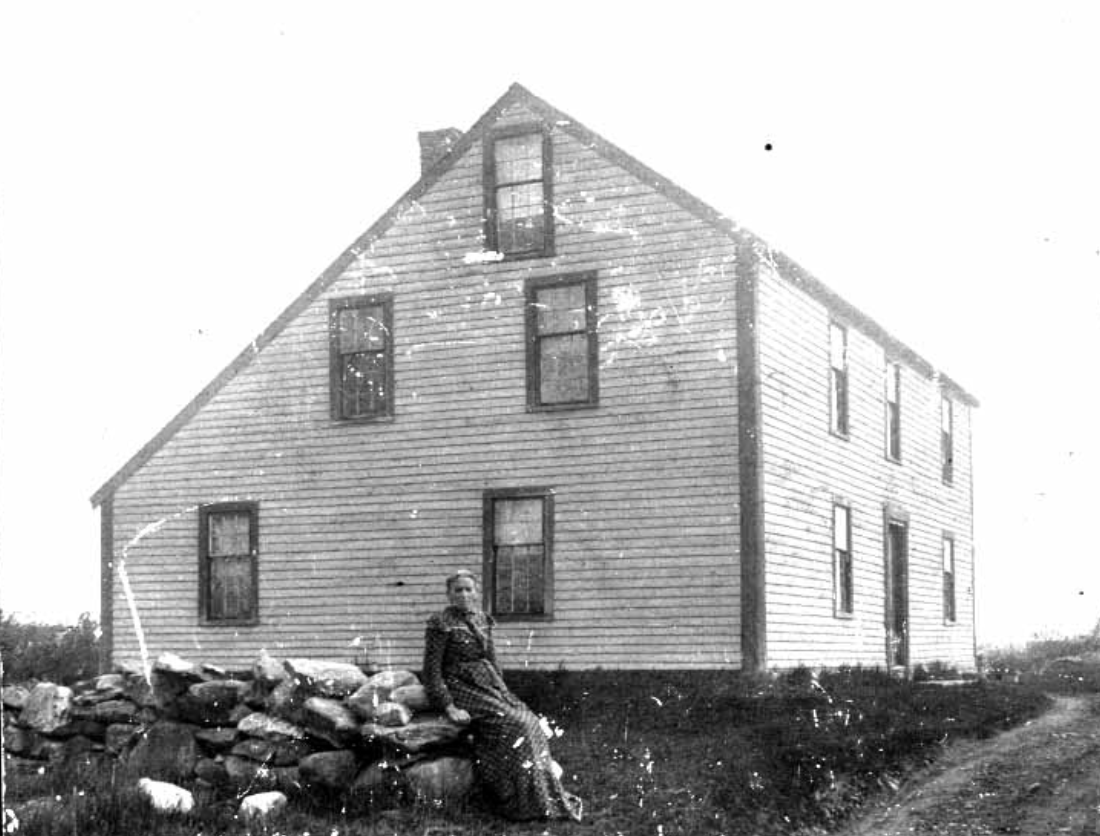
In its most basic sense, a passive solar home has more windows facing the equator than facing the poles. The New England Saltbox home solved this problem by having two floors facing south and only one facing north. This was accomplished by an extended roof pitch to the north, which made the home resemble the form of a box in which salt was kept at the time. Thus, the name.

 Screen shot 2015-05-19 at 7.54.52 AM

From the side, a Saltbox is asymmetrical, but that is exactly the point. With the majority of windows facing the winter sun, the dwelling can be passively warmed. Meanwhile, the long pole-ward roof directs icy winds up and over the structure.

Another element of the Saltbox is a central chimney, much like the Cape Cod house design I have been writing about for the last fortnight. A centrally located heat source will almost always perform better than a heater located on an external wall.

Finally, even in New England where snow cover can persist for four months a year, summer temperatures can reach nearly 40 degrees. To deal with these conditions, a Saltbox is perfectly suited for passive cross ventilation: warm air flows out of the upstairs windows while cool air enters downstairs widows from the shady side of the home.

This is not to say that we must be building Saltboxes across our region. It is to say, however, that we should follow the basic design principles that make the Saltbox so successful in terms of energy performance, health and comfort. Additionally, as I mentioned last week, there is a lot to be said for simple rooflines and fewer external corners than we see on most new homes being built in New Zealand.

Think about it, every time we see a picture of an award-winning eco-home it has four corners and a simple roof. Back to basics is best practice for good home design.


Peace, Estwing

Around the World in Eight Designs: Part 2


Editor’s note: This is the second of an eight part series.


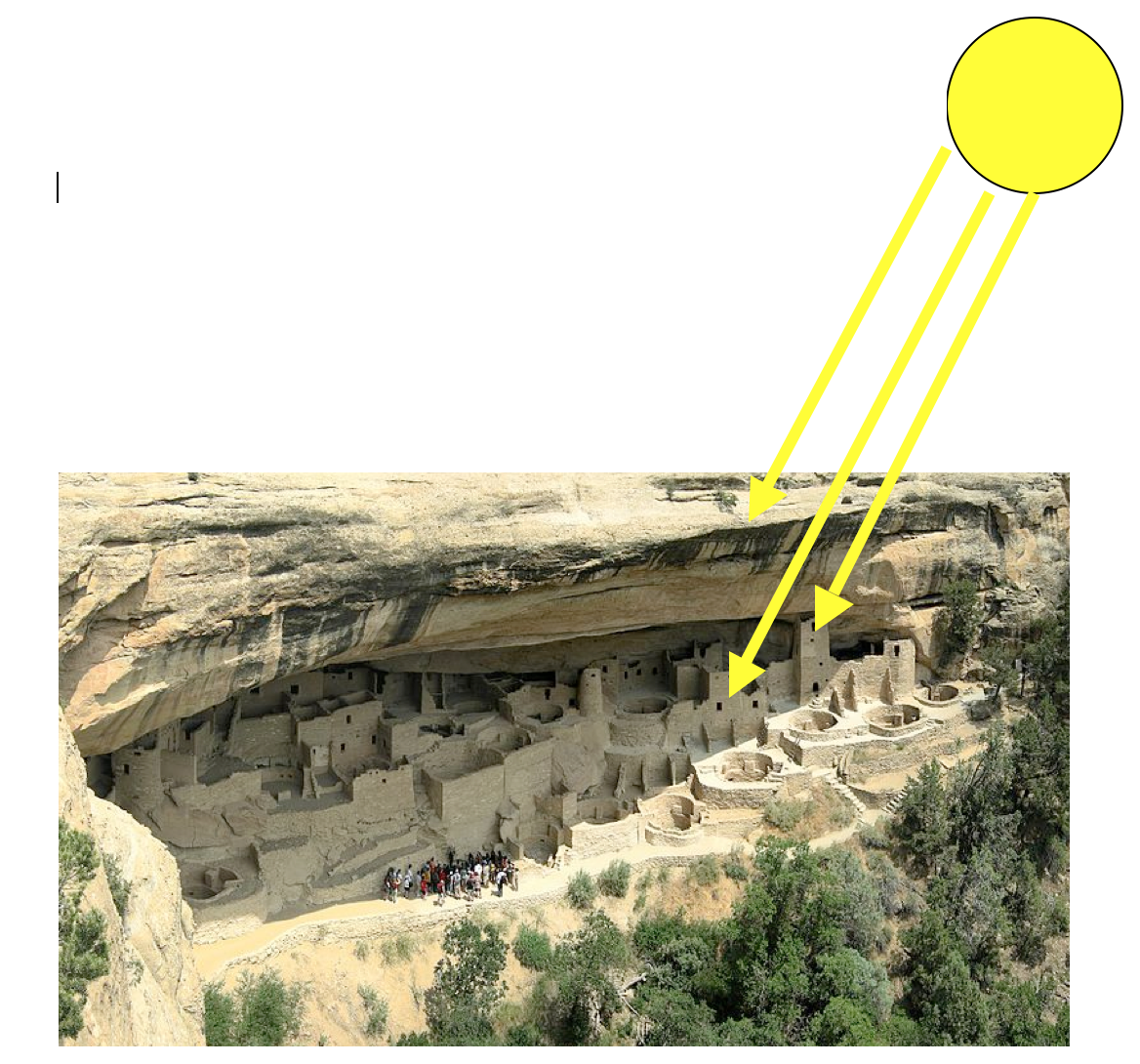
Last week I introduced the concept of passive design using the ancient cliff dwellings of Mesa Verde (Colorado, USA) to illustrate the point. In a nutshell, the “Ancestral Pueblo Peoples” – also known as the Anasazi – chose certain cliffs that excluded the hot summer sun but welcomed its warming rays in winter.

The Anasazi first occupied the caves over 1,000 years ago. Warm in winter and cool in summer: they were no dummies. Here is what we can learn from them: design for the climate; use local materials; harness free energy.

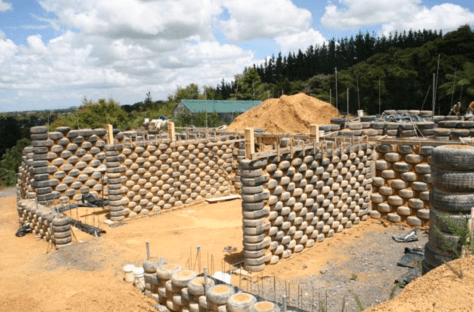
During the 1970s as small group of hippies used these same design principles in the same region of the US Southwest but in a radically different way. Using beer cans, old tyres and soil, they built what they called Earthships. Here is what Wikipedia has to say:

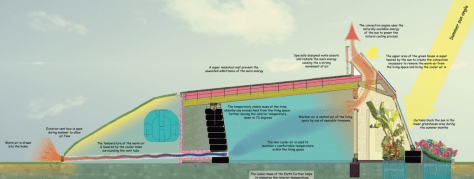
“An Earthship is a type of passive solar house that is made of both natural and recycled materials (such as earth-filled tires), designed and marketed by Earthship Biotecture of Taos, New Mexico. Earthships are constructed to use available natural resources, especially energy from the sun. Earthships are designed to use thermal mass construction and natural cross ventilation, assisted by thermal draught (Stack effect), to regulate indoor temperature.” Screen Shot 2015-06-11 at 6.53.27 am

Both the Anasazi and the hippies figured out ways to live comfortably in a climate that ranges from 40 degrees in the summer and minus 10 in the winter by using passive design. An Earthship is designed to allow low angle winter sun to reach deep inside the structure but to exclude high angle summer sun. Once the winter sun enters the structure some of it is stored in what is called thermal mass, such as an earthen floor, bricks, tiles and even the earth-filled tyre walls.

Believe it or not, thermal mass is essential for keeping these structures from overheating in the middle of winter on cold, sunny days when the temperature outside is right at the freezing point. Thermal mass acts as a battery in that it stores excess energy (in the form or heat) during the day and releases it at night. Of course the Earthships also contain plenty of insulation to hold that heat inside the structure overnight. Screen Shot 2015-06-11 at 6.53.11 am

All of this falls into the category of passive design because it requires no moving parts such as fans or pumps, or the electricity to run them. Passive means it just happens by natural energy flows and cycles.

Earthships also employ passive cooling systems, but I see I am out of words for this week and next week’s column is all about passive cooling with examples from the tropical nation of Nicaragua.


Peace, Estwing

Around the World in Eight Designs, Part 1

Editor’s note: This is the first of an eight part series.

Good home design is not rocket science. Some would say it’s a matter of common sense. But sometimes a lot of bells and whistles get in the way of common sense and we have to step back for a moment. As long as we’re stepping back, let’s step way back – 1,000 years back – to Mesa Verde, Colorado and the cliff dwellings of the “Ancestral Pueblo Peoples” also known as the Anasazi.

Mesa Verde is located in the Four Corners Region of the U.S. where the states of Colorado, New Mexico, Arizona and Utah meet. Temperatures can reach 40 degrees in summer and minus 10 in winter. In an average year snow can fall during parts of seven months.

Given the building technology available in 1015, what constitutes good home design and how did the Anasazi accomplish it?

One reason that Mesa Verde was attractive to them was a series of south-facing (toward the equator) cliffs that were warm in winter and cool in summer. “What’s this?” you say. How so?

Screen Shot 2015-06-03 at 6.45.01 am

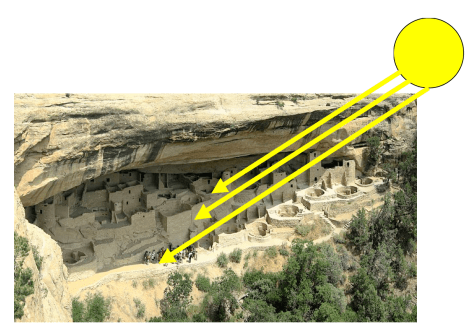
It all has to do with sun angles. During summer the sun is high in the sky and is largely excluded from the caves in the same way that wide eaves exclude the hot sun from a well designed home.

In the winter, however, the sun is low in the sky and its warming rays can penetrate deep into the caves providing warmth and light to the occupants. This would also be true of a well designed home, but unfortunately we do not commonly see it in the existing housing stock of the entire country for that matter.

In design language this is called “passive solar design” because it involves no fancy technology or moving parts. It is passive – just like a cat napping in a sunny window or a sun worshipper lounging on a beach. A well designed passive solar home keeps it’s occupants warm in winter and cool in summer using no power other than the sun.

Screen Shot 2015-06-03 at 6.44.50 am

Of course new homes can be designed and built to harness free solar heating in winter while excluding sunlight in summer, but many existing homes can be renovated to improve their solar performance. It’s free energy delivered with no service fee. Why not sign up?

So what have we learned from the Anasazi about good home design?

  • It should be appropriate to the climate.
  • It should harness free energy.
  • It should be passive.

Next week we’ll fast forward 1,000 years to the same region of the southwestern U.S. desert and see how designers and builders have taken lessons from the Anasazi and added a few of their own.

Peace, Estwing
Equinox: Honoring the Sun

Screen shot 2015-03-21 at 7.02.24 AM

We’ve reached the autumnal equinox and there is probably not a person in the city that would not say what a glorious summer we have had. Plenty of sunshine, light winds, and, after an initial dry spell, enough rain to green up the pastures and the garden.

But, like it or not, summer will come to an end, and the equinox is a reminder that we are tipping toward winter with the hours of daylight becoming shorter than hours of darkness for the next six months. It is also a timely reminder of how valuable the sun is to life on earth, and what a difference its absence can make.

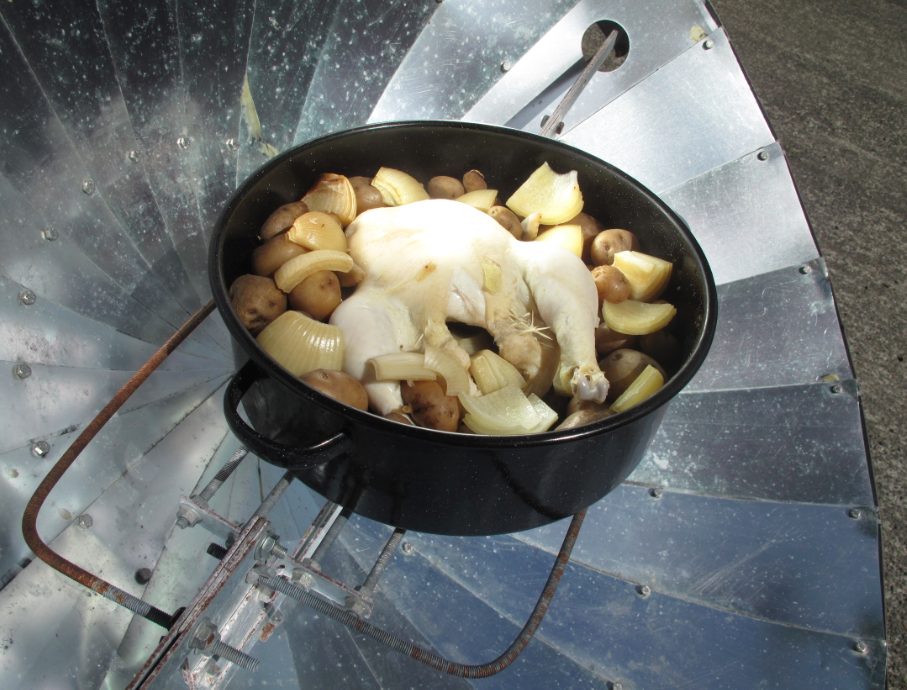
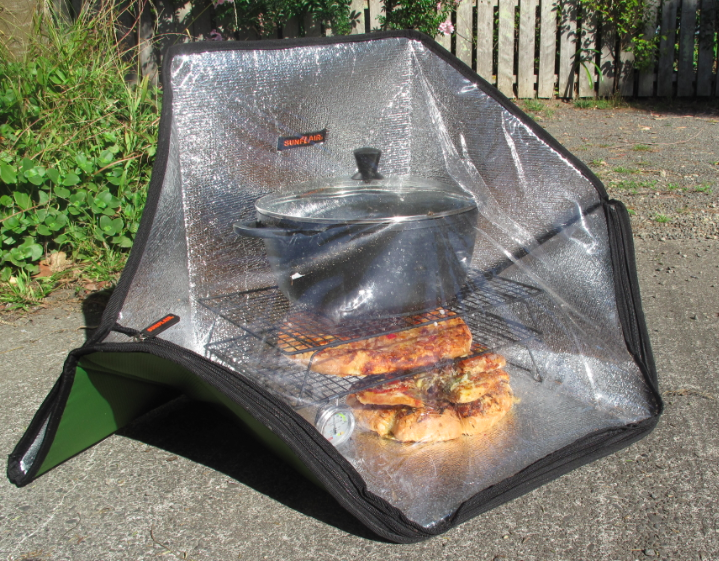
But like every great Achilles, Solar energy has its heal: it only works when the sun is shining on our side of the planet. I often use a solar cooker as a way to engage people in conversation about the potential for sunlight energy. Inevitably someone will ask, “What happens when the sun isn’t out.” Screen shot 2015-03-21 at 7.02.14 AM

Sadly, no one has yet to invent a lunar cooker, but there are many ways to store solar energy overnight and even for a number of cloudy days in a row. With solar cooking, the best place to store it is in your belly, but other solar storage systems include batteries, water and concrete.

Batteries are often used to store electricity generated by photovoltaic (PV) panels in places not served by mains power. Whether it is a yacht at sea or a bach in the wop wops, these situations are often called, “off-grid.” The “grid” refers to the network of power lines that serve the vast majority of us.

Obviously, off-grid housing is not vulnerable to mains power interruption, and is therefore valuable for emergency preparedness. Even though our rural home is served by mains power, I am designing a hybrid PV system that will heat our water most of the time but also have a small battery bank for emergency lighting, water pumping, radio and mobile phone charging.

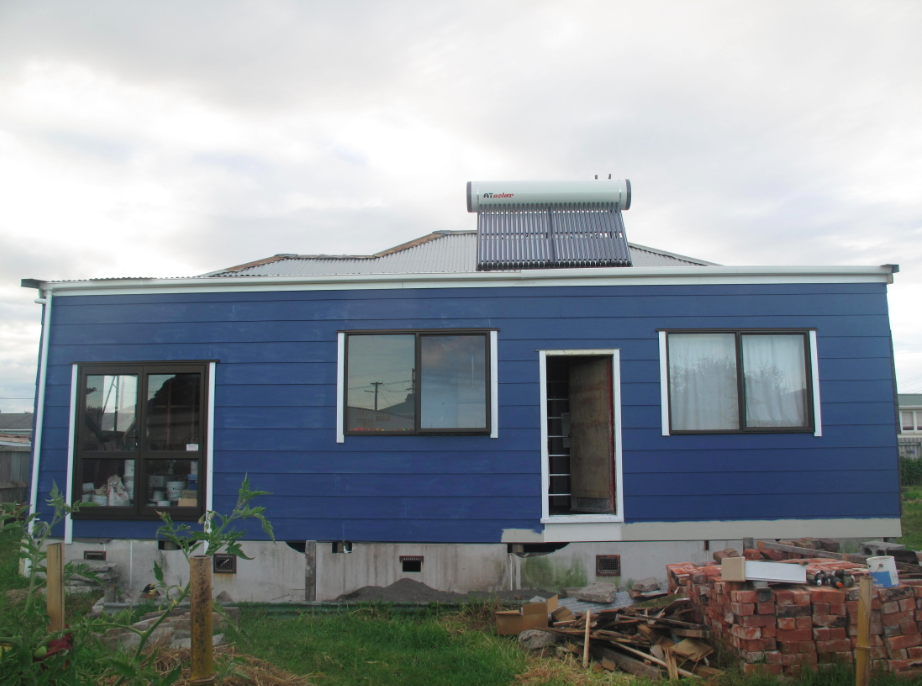
Without meaning to offend anyone’s intelligence, a traditional solar hot water system stores sunlight energy in the form of heated water. The energy itself (heat) is stored inside of an insulated cylinder overnight. Depending on the amount of insulation around the cylinder and a household’s hot water use, the supply can last for three or four cloudy days. Solar hot water would also be a treat in the case of a prolonged mains power outage. Screen shot 2015-03-21 at 7.02.38 AM

Sunlight energy stored in an insulated concrete slab is called “thermal mass.” Like solar hot water, the heat is stored overnight and potentially for a number of cloudy days in a row. For any new home being built in New Zealand, passive solar design is an affordable approach to a high performance dwelling. Additionally – you guessed it – a passive solar home would serve its occupants very well during a mid-winter power failure if their only heating sources relied on electricity such as a heat pump or plug in heater.

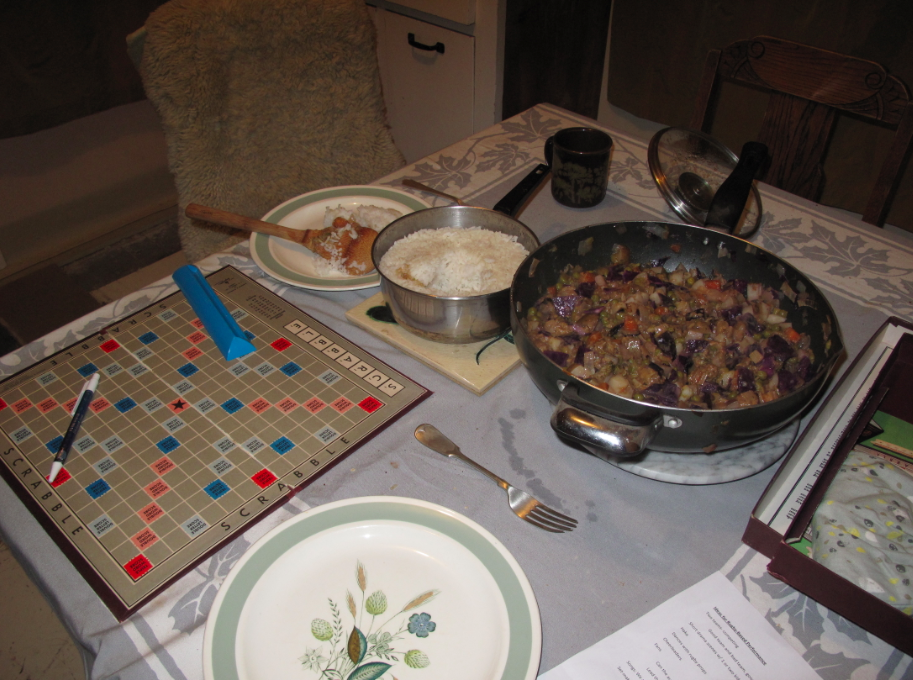
Finally, don’t make the mistake of thinking that solar cooking is only a summertime endeavour. We have cooked through the last six New Zealand winters with great success. Memorably, during the week-long cold snap in August 2011 when we had snow flurries in Majestic Square, I managed to burn a pot of rice and a curry on the very same day. That is solar power. Screen shot 2015-03-21 at 7.02.46 AM

Peace, Estwing

Reality, No TV: Our First Home

Our First Home is the name of a new programme on TV One. I have not seen it, but I have a pretty good idea of what to expect. I’ve seen plenty of programmes along the same lines and ‘been there / done that’ myself. Screen shot 2015-02-20 at 10.19.36 AM

It’s all about the drama. Renovating an old home is stressful. Living in it while renovating is especially stressful. Apparently it makes for great TV.

Our first home was in Castlecliff. The condition we found it was far worse than any house on Our First Home or The Block NZ. There were no TV cameras to document the drama, although a Chronicle reporter and photographer turned up in December, 2010 to see what we were up to.

Screen shot 2015-02-20 at 10.07.54 AM

We started our blog – www.ecothriftydoup.blogspot.com – in October, 2010 and have posted at least once every week since then. Last year we upgraded and expanded the blog: www.ecothriftylife.wordpress.com. The central premise behind our work is living within limits both financial and ecological.

Programmes like The Block NZ and Our First Home are based on the premise of “the property ladder,” which we don’t really have in our River City. From my observations we have more of a property step stool at best, and in some cases a hole in the floor. At the moment it is an unrealistic expectation to borrow money to do up a kitchen and bathroom, and expect to recoup the costs upon resale. This sets us dramatically apart from those doer uppers in Auckland, although there is still some common ground. Screen shot 2015-02-20 at 10.08.03 AM

According to the ourfirsthome website, the “Expert Tips” for Week One include:

  • Try to face living areas north with indoor/outdoor flow to add value.
  • Indoor/outdoor flow is a key…point.
  • Heating is important.
  • Privacy and seclusion add value.

If my editors would allow me use all caps for an entire sentence it would be this:

I would never consider buying a home with living spaces to the south and bedrooms to the north. Screen shot 2015-02-20 at 10.08.12 AM

Wait, I take that back. If I were to return to the Northern hemisphere I certainly would! But with a climate like the Whaganui region has, a home with the living spaces to the south is bass ackwards. Even the TV One “Experts” say that “Heating is important,” and free heating from the sun is the most important of all.

Free heating from the sun – aka passive solar design – goes alongside the indoor/outdoor flow that should accompany the northerly living spaces. Our first home in Castlecliff has the additional advantages of a private and secluded section at the end of a cul-de-sac. The flow is from kitchen to kitchen garden, through French doors, across a deck and past the outdoor pizza oven.

We planted the backyard with native trees for wind protection and fruit trees for healthy food production. The combination adds privacy and seclusion to that quintessential indoor/outdoor flow of contemporary Kiwi lifestyles whether in overpriced Auckland or affordable Wanganui.

But please don’t be tempted by what you see on TV to overextend your finances with the false expectation that “property prices only go up.” All bubbles burst. The Aucklanders will learn this too, and some will wish they bought here instead.


Peace, Estwing
Four-Dimensional Eco-Design

“If you want to build a better future, you must believe in secrets.”

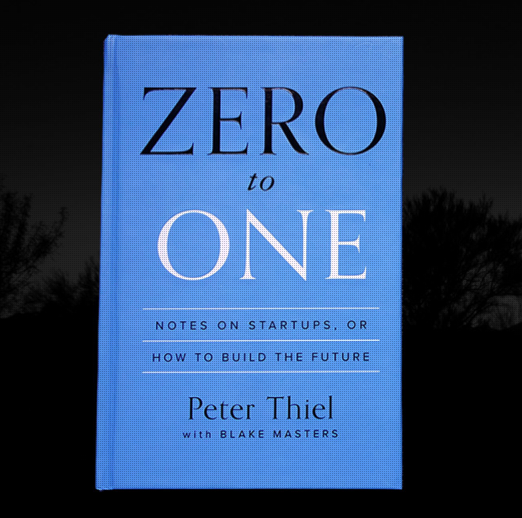
This is the provocative sentence that greeted me when I clicked on the Amazon.com page for Peter Thiel’s book, Zero to One: Notes on Startups or How to Build the Future. Written with Blake Masters, it has been favourably reviewed by a number of sources and made its way to The New York Times Best Sellers List.

Screen shot 2014-12-06 at 7.09.10 AM

I first became aware of the book a couple of months ago while listening to a radio interview. The phrase that caught my attention at the time was, “How do you develop the developed world?” In my opinion, eco-design is key to answering this question.

Eco-design has secrets that must be believed. It is inherently holistic, dynamic and future-focused. One of the things I love about eco-design is that it evolves alongside changing conditions rather than remaining static. I refer to this as four-dimensional design as mentioned in last week’s column about food forests.

Time – the fourth dimension – is an integral part of eco-design in two primary ways: 1) repeating cycles such as day and night, or the changing of seasons; 2) progressive change over time such as ecological succession.

In either case, eco-design is dynamic enough to adapt to the conditions whatever they may be. From this perspective I would suggest that eco-design inspires a level of confidence in that it involves feedback loops and is always open to adjustments. This quote from Martin Luther King Jr. sums it up:

“Faith is taking the first step even though you don’t see the whole staircase.”

I have faith in eco-design.


OK, enough with the flowery language. Let’s get to some examples.

Screen shot 2014-12-06 at 6.47.00 AM

Passive solar design makes homes warmer in winter and cooler in summer while cutting operating costs. The main factor in this win-win-win system is seasonal sun angles. A passive solar home is designed to welcome low angle winter sun while excluding high angle summer sun – all with no moving parts. The structure itself is built for seasonal change and day-night cycles.

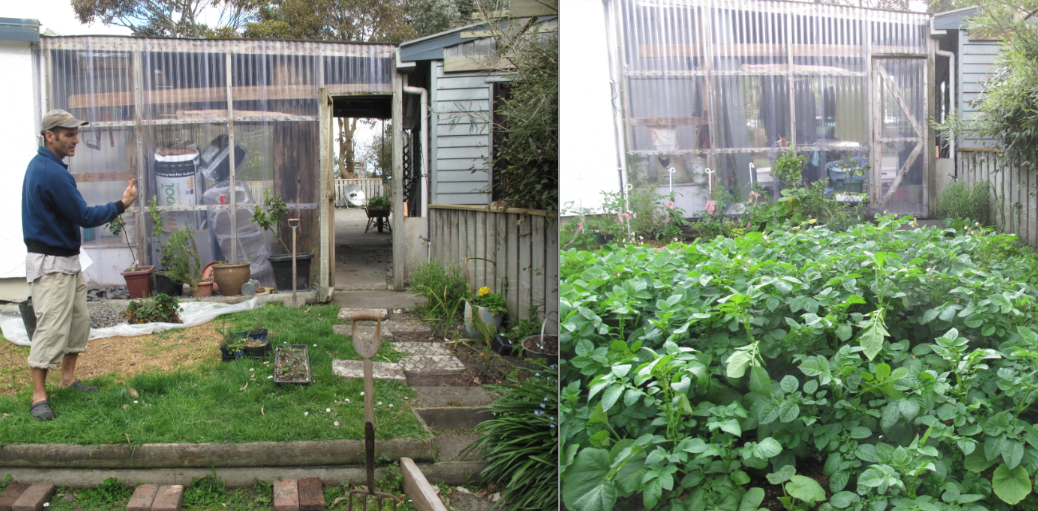
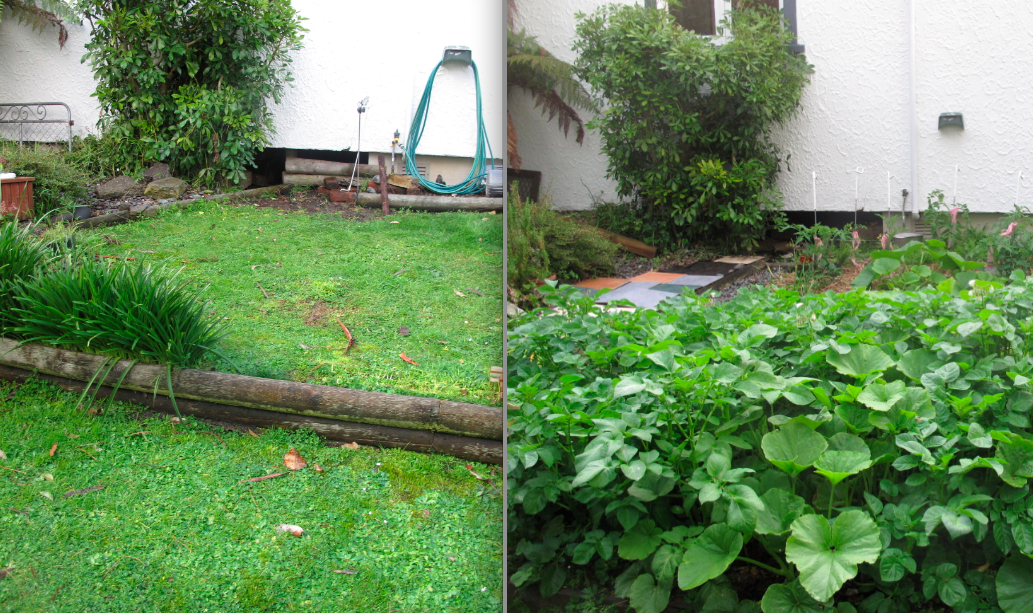
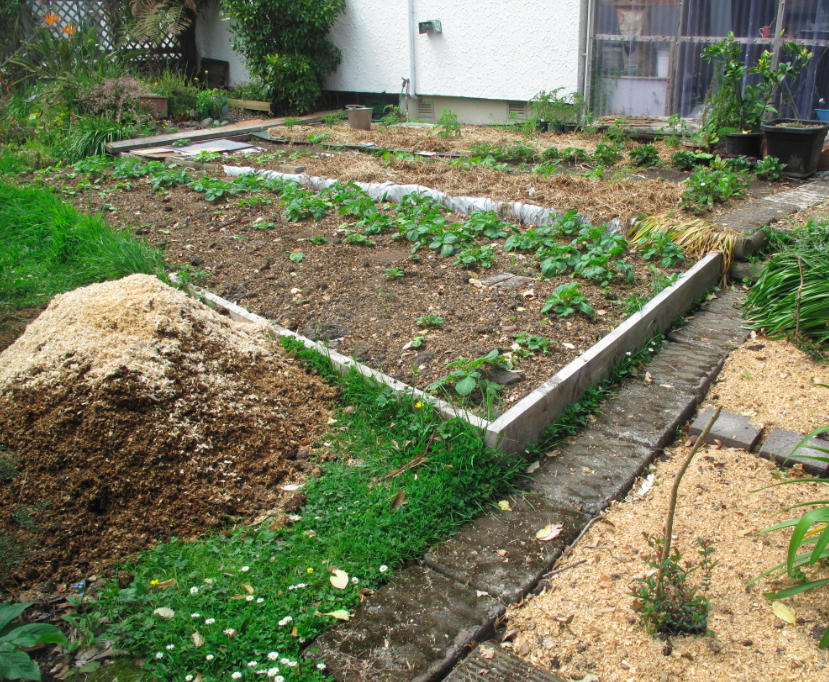
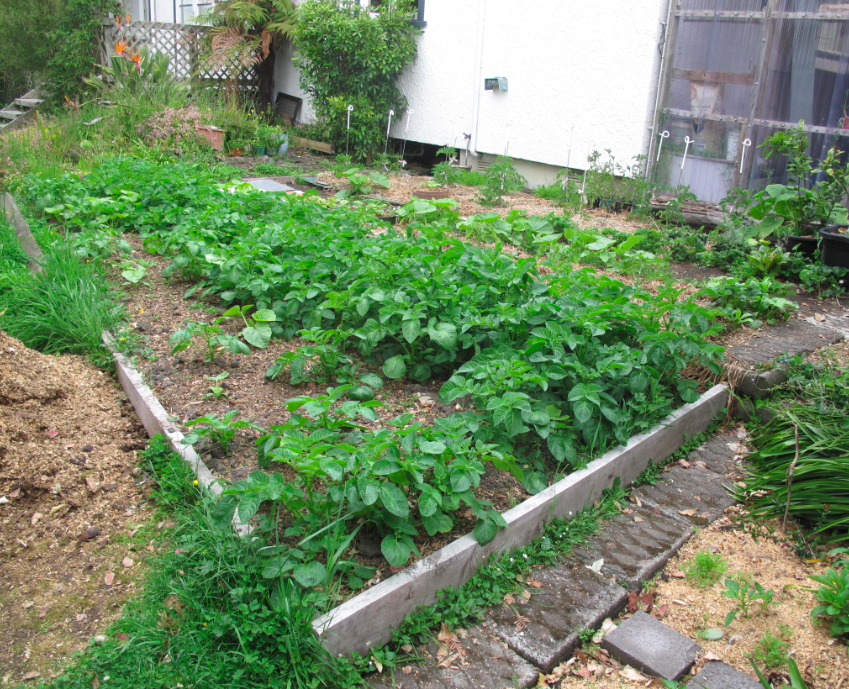
Another example of four-dimensional design is the lazy conversion of lawn into vege garden.

Screen shot 2014-12-06 at 7.03.37 AM

By taking it step-wise over time, the total amount of physical labour is minimized by letting nature do most of the “heavy lifting” although in this case it’s digging/tilling.

With heavy, compacted soils like we have on our property, a good way to decompress the earth is to plant potatoes. At the same time, adding organic matter helps to lighten clay soils by increasing biological activity. As the potatoes grow taller, we mulch them with more organic matter, which gives us a larger harvest of spuds while contributing even more organic matter to the new garden bed.

Screen shot 2014-12-06 at 6.51.14 AM

Preparing the beds.

Screen shot 2014-12-06 at 6.51.33 AM

Sprouting spuds.

Screen shot 2014-12-06 at 6.51.43 AM

Garden taking shape.

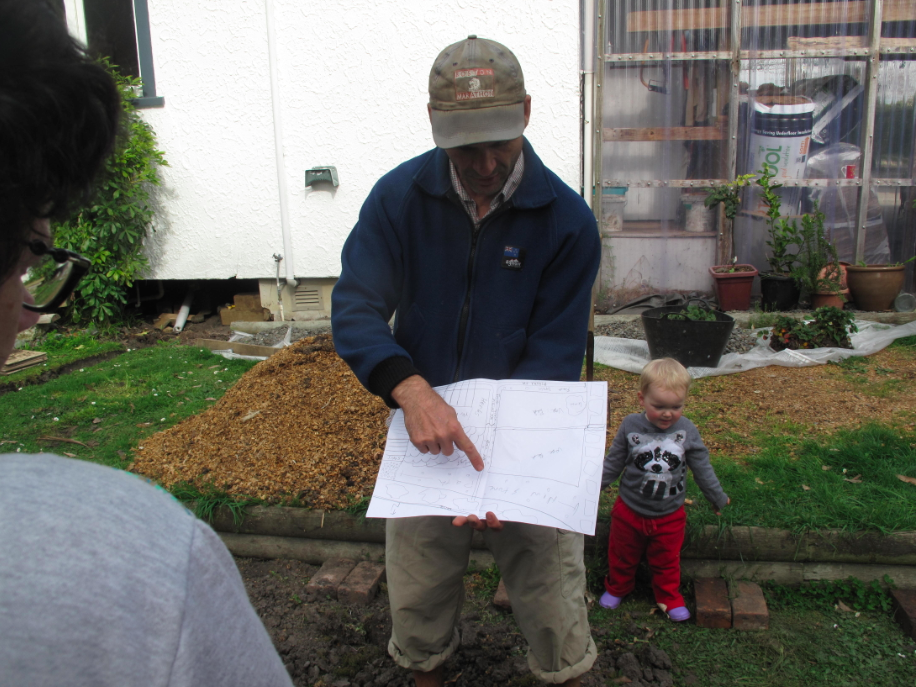
Another aspect of holistic eco-design comes into play when assessing a potential garden area for low-maintenance and high-productivity. The design of our new kitchen garden concentrates fertility where we want food to grow (the beds) while removing it from where we do not want weeds to grow (the paths).

Screen shot 2014-12-06 at 6.50.55 AM

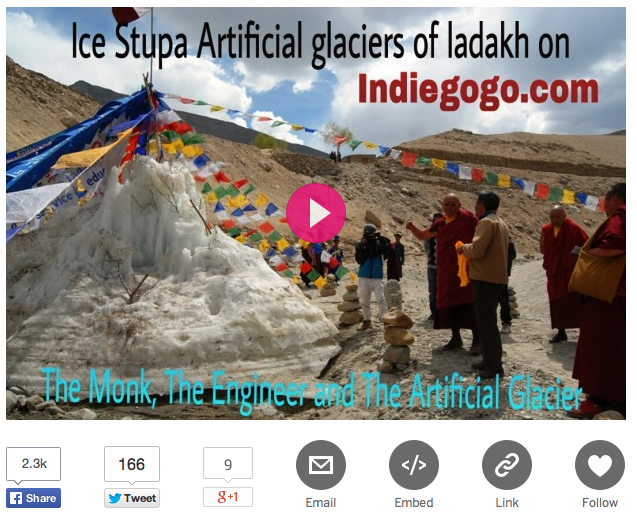
One final note of four-dimensional design: Three weeks ago I mentioned a project being undertaken by my friend in Ladakh, India, called the Ice Stupa Project.

It was my intention to share this amazing project with the Whanganui community by giving a short presentation. That does not look like it is going to happen, but I urge you to check out the Ice Stupa Project on the internet and to watch the inspiring short film on Youtube, “The Monk, The Engineer, and the Artificial Glacier.” Screen shot 2014-12-06 at 7.14.28 AM

This project represents a gold standard of eco-design and could be the most inspiring thing you see all year. The crowd-funding page for this project on Indiegogo.com is called, “Ice Stupa Artificial Glaciers of Ladakh.”


Peace, Estwing
 

Keep Calm and Think Different: It Takes Money to Save Money, Part 2

Screen shot 2014-10-10 at 8.10.02 PM

Last week I introduced a new variation on an old adage: it takes money to save money. Of course this idea is not new to most people, nor is it new to this column, which has focused on the concept of ‘payback period’ since it was first published two and a half years ago.

But this concept is long overdue for the New Zealand housing sector that is known for high running costs and low performance. According to Nick Collins, the CEO of the housing performance research organization Beacon Pathway, “Much of New Zealand’s existing housing is cold, damp and unhealthy which leads to poor social and health outcomes. Poor quality, poorly performing housing affects residents’ health, education and quality to life, the resources we use, and general community wellbeing.”

I would suggest Collins’ words describe the situation in Wanganui to a tee, yet this issue does not seem to get significant traction in our community. As a self-described “struggling provincial economy” it astonishes me that, ‘zombie-like’, we voluntarily send millions of dollars to power companies in Auckland, Wellington and Christchurch every year when we could easily retain them in our community.

Maybe it comes from growing up alongside the dying city of Detroit, or maybe it comes from being an under-sized gridiron (American football) player, but I have always made it a point to stand up for the ‘little guy.’ I hate waste and I like supporting local businesses.

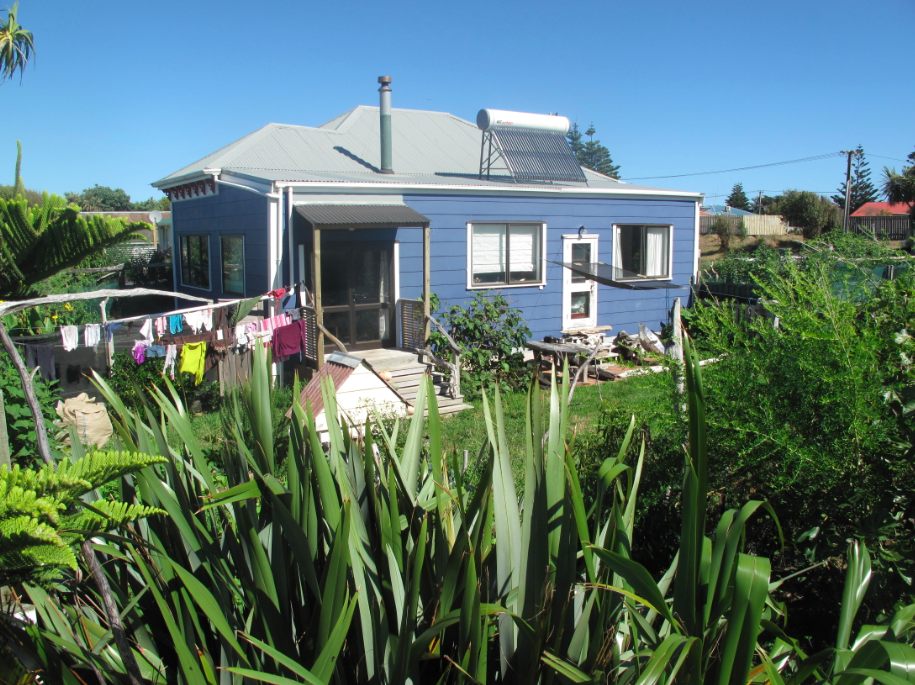
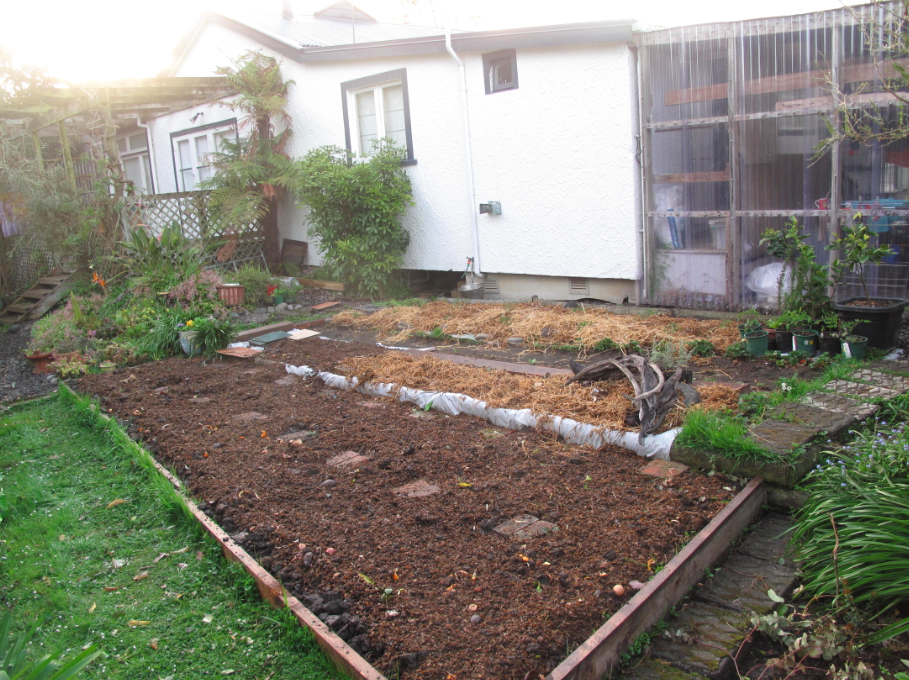
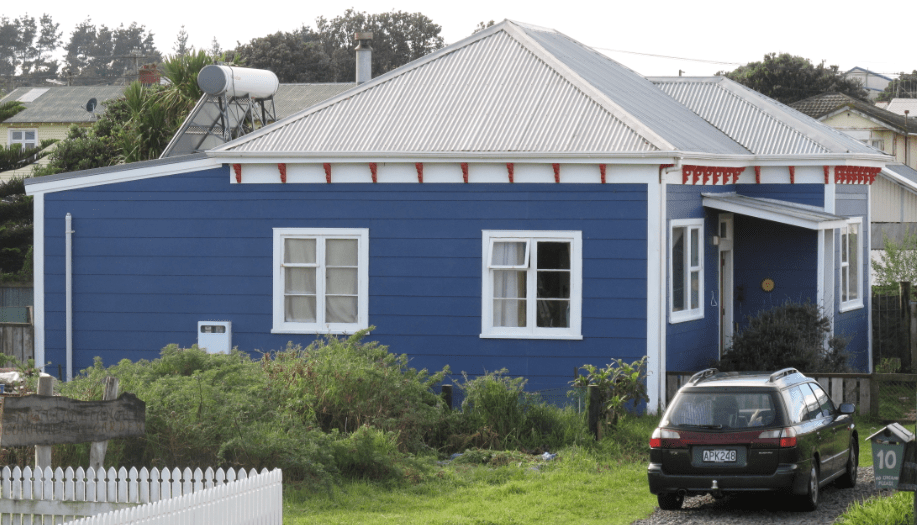
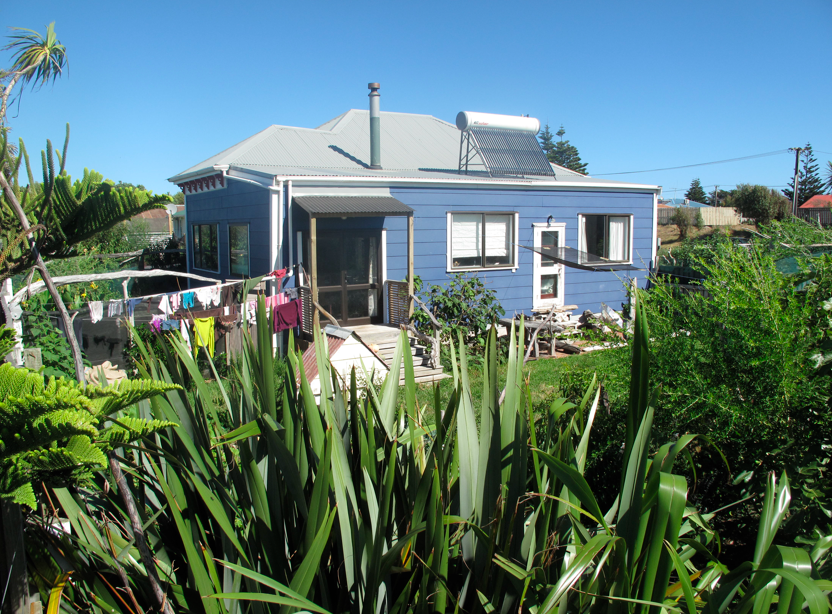
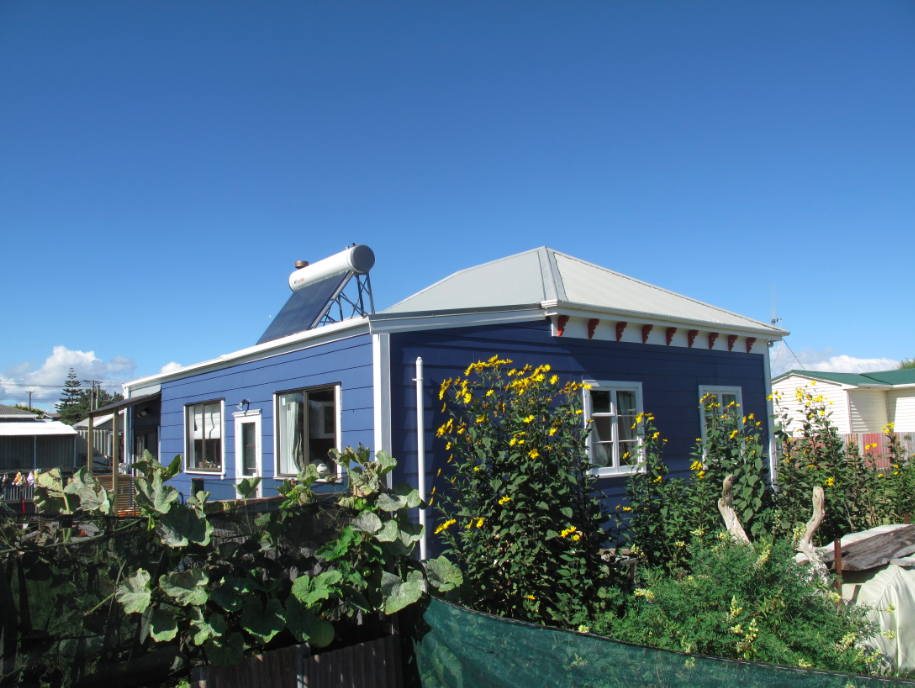
The process of renovating our villa in Castlecliff ‘stimulated’ the local economy to the tune of $35,000. This total sum will be ‘paid back’ through energy savings and low maintenance costs over the course of about 12 years. The exceptional level of sustainability of this property can be explained through exemplary levels of energy efficiency, long-term durability of products, and the high productivity of fruits, veges and fowl. The entire property has been designed and managed to be low-input and high performance, ie, it takes money to save moneyScreen shot 2014-10-10 at 8.09.50 PM

As regular readers are aware, the villa was redesigned and renovated as a passive solar home. Between April and August, morning sunlight reaches deep into the structure, bringing warmth inside early in the day when the temperature is lowest. An abundance of glazing on the northeast and northwest sides ensure that free sunlight energy heats the northern parts of the home on most winter days to 20 – 25 degrees.

Throughout the day some of the sunlight energy is absorbed within thermal mass, ensuring that the interior does not overheat while storing the excess warmth overnight when it is released into the home. This extra thermal mass takes the form of a second layer of Gib on the walls, a cast iron claw foot bathtub, and a multi-fuel cooker with brick surround. When the sun is not shining, the multi-fuel stove easily heats the northern part of the home to 20 degrees or above on a few sticks of wood, with the added benefits of cooking and baking.

Two-thirds of the home is easily heated by this combination of sunshine and a small amount of firewood. (The southern bedrooms are kept cooler as is common in most Kiwi homes.) A super-insulated building envelope ensures that much of the heat remains in the structure overnight. Temperature in the lounge, kitchen and bathroom rarely drops below 14 degrees overnight with no heaters running. Some of this energy performance can be attributed to a combination of double-glazing, pelmets, and floor-length lined curtains, Roman blinds and window blankets. This combination of window treatments performs to a level of triple-glazing or better.

Screen shot 2014-10-10 at 8.09.39 PM

Other energy-efficiency measures we used in the home were Energy Star appliances, compact fluorescent light bulbs, and solar hot water. This combination meant that our power bills over the last year ranged from $17 to $35 per month. Contrary to what some of our critics claim, we do not sacrifice comfort or convenience. Solar hot water allows us to take long showers even in winter, while our appliances include the following: refrigerator, freezer, oven, toaster, electric kettle, cake mixer, wizzy stick, wifi, alarm system, clocks, radios, power tools, etc.

How’d we do it? By thinking different: it takes money to save money.

Peace, Estwing

Would You Buy This House? Part 1: Energy

Sustainability at 10 Arawa Place

The exceptional level of sustainability of this property can be explained through exemplary levels of energy efficiency, long-term durability of products, and the high productivity of fruits, veges and fowl. The entire property has been designed and managed to be low-input and high performance.

Screen shot 2014-09-06 at 8.04.05 AM

Part 1: Energy Efficiency

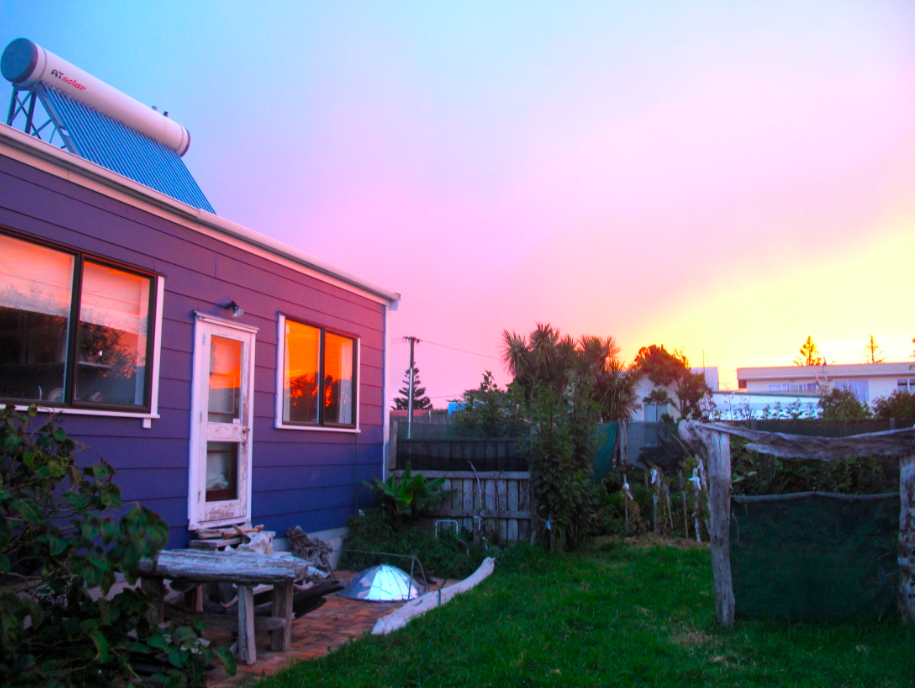
10 Arawa Place has been redesigned and renovated as a passive solar home. Between April and August, morning sunlight reaches deep into the structure, bringing warmth inside early in the day when the temperature is lowest.

Screen shot 2014-09-06 at 7.59.58 AM

An abundance of glazing on the northeast and northwest sides ensure that free sunlight energy heats the northern parts of the home on most winter days to 20 – 25 degrees. Screen shot 2014-09-06 at 8.01.59 AM

Throughout the day some of the sunlight energy is absorbed within thermal mass, ensuring that the interior does not overheat while storing the excess warmth for overnight when it is released into the home. Beyond the mass already in the structure, we added approximately one thousand kilograms of thermal mass that receives direct winter sunlight from sunrise to sunset through three large windows and the French doors. Screen shot 2014-09-06 at 8.00.21 AM

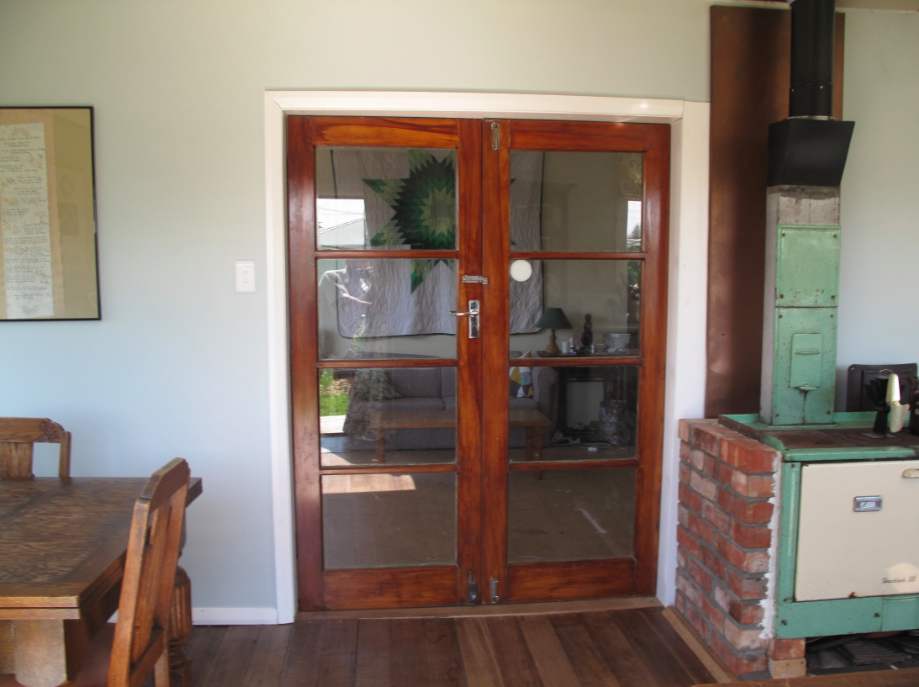
This extra thermal mass is essentially invisible because it takes the form of an extra layer of Gib on the walls, a cast iron claw foot bathtub, and a multi-fuel cooker with brick surround. When the sun is not shining, the multi-fuel stove easily heats the northern part of the home to 20 degrees or above on a few sticks of wood, with the added benefit of cooking and baking.

Screen shot 2014-09-06 at 8.00.30 AM

Two-thirds of the home is easily heated by this combination of sunshine and a small amount of firewood. (The southern bedrooms are kept cooler as is common in most Kiwi homes.) A super-insulated building envelope ensures that much of the heat remains in the structure overnight.

Screen shot 2014-09-06 at 8.01.46 AM

The walls in the northern parts of the villa are insulated to R-2.8 and the ceilings are insulated to R-3.6 above the kitchen and bathroom and to approximately R-5 above the lounge and all three bedrooms. These all far exceed the building code. (The underfloor insulation is incomplete at the moment.)

Screen shot 2014-09-06 at 8.00.10 AM

We spent two winters in the small bedroom and never used a heater. Our body warmth alone kept the room above 15 degrees all night long. Temperatures in the lounge, kitchen and bathroom could drop to 14 or maybe 13 on the rare morning with a frost. Some of this strong energy performance can be attributed to a combination of double-glazing, pelmets, and floor length lined curtains, Roman blinds and window blankets. This combination of window treatments performs to a level of triple-glazing or better. Screen shot 2014-09-06 at 8.02.07 AM

Other energy-efficiency measures we used in the home were Energy Star appliances, compact fluorescent light bulbs, and solar hot water. This combination meant that our power bills over the last three years ranged from $17 to $31 per month including the daily line charge. The appliances we operated were: refrigerator, freezer, oven, toaster, electric kettle, cake mixer, wizzy stick, wifi, alarm system, clocks, radios, power tools, etc. Screen shot 2014-09-06 at 8.02.16 AM

The solar hot water system is set to a winter sun angle to maximize performance when hours of sunlight are shortest. The 240-litre tank allows ample storage to bridge three winter days without sun. We placed the temperature monitor in the hall next to the bathroom so it can be easily referenced. Over three winters, we only turned on the electric boost for the hot water a handful of times for 20 to 30 minutes each.

Screen shot 2014-09-06 at 8.01.28 AM

To be continued…


Part 2: Durability

Coloursteel Maxx roof, November, 2011.

New, low-maintenance exterior cladding, 2012.

High quality exterior paint.

Walls braced against earthquake and wind.

Sistered bearers and joists fro added strength under floor

All floors treated for borer

All new wiring, November, 2011

Capping on fences to protect end grain from rain

Wind-hardy trees to protect netting from long-term UV damage

Earthen pizza oven protected from rain and wind

Brick patio instead of wooden deck

Driftwood – durable native hardwood timber for landscaping


Part 3: Productivity

Topsoil: 6 cubic metres for garden beds, trees and top-dressing lawns.

Wind protection: double-layer of wind cloth with new treated posts.

Rainwater collection

Compost: 8-10 cubic metres.

Native plantings for privacy and wind protection.

52+ Fruit trees: 7 feijoas; 11 olives; 13 apples; 5 peaches; 3 plums; 1 apricot; 2 guavas; 4 grapevines; 2 figs; 1 banana; 1 tamarillo; 1 orange; 1 loquat; plus rhubarb, cape gooseberry, strawberries, summer and autumn raspberries,

Vegetable gardens:

Rotational grazing of ducks and chooks:


First Things First: Health & Comfort

In any home, there are two major factors for winter comfort and health: temperature and humidity. A warm, dry home makes the human body feel good, and keeps the immune system strong. Conversely, cold, damp homes do just the opposite. Unfortunately, New Zealand housing is known more for the latter than the former.

It has been easy to forget about the sad state of NZ housing while living in our passive solar, super-insulated villa in Castlecliff. The temperature never dropped below 14 degrees even when a frost carpeted the ground outside, and the relative humidity never rose above 50%. It was easy to maintain a healthy home for our young daughter while paying power bills in the low double digits.

Now that we have shifted, we are confronted with the challenges of living in a cold, damp, draughty home. While the new house and property have huge potential, the living conditions during our first weeks of residence have been a shock to the system. We have had a few mornings of 10 degrees in the lounge, and a relative humidity consistently around 70%. It has been difficult to keep our daughter’s bedroom above 16 degrees overnight, and I suspect the high humidity contributed to her recent illness. I anticipate that our first power bill will be well over a hundred dollars – more than three times dearer than our previous high.

Taking possession in the middle of winter has added an element of urgency to improving the health and comfort of the home. With limited time and budget, I had to prioritize the first best steps to take. Using eco-thrifty thinking and an understanding of how energy and moisture flow through a structure, I focused on a number of low-budget / high-performance strategies.

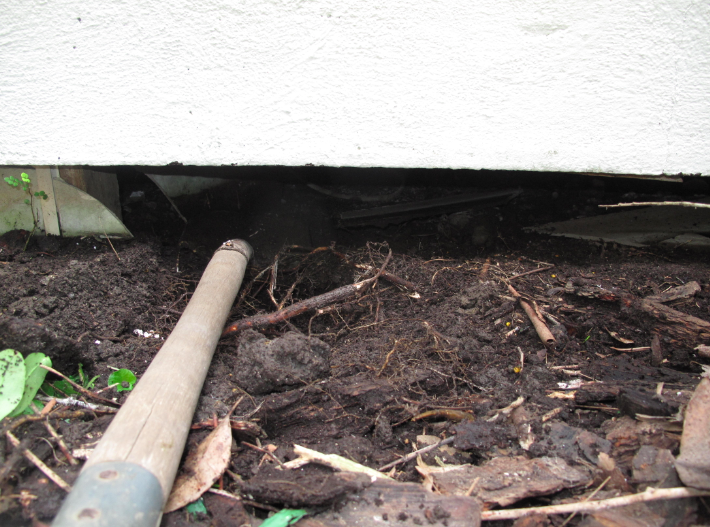
Shifting from a villa on free-draining sand to a bungalow on clay has meant that rising damp has gone from a non-issue to a huge concern. Up to 40 litres of water vapor enters the average Kiwi home every day from the ground beneath it. A lack of adequate ventilation under our bungalow may mean that we receive even more than that daily dose of damp. While the long-term option for dealing with this is to install polythene sheets as a vapor barrier, a short-term solution to get us through this winter was to break out a piece of Hardie board opposite the access way to allow the wind to cross ventilate.  Screen shot 2014-08-22 at 6.08.30 PM

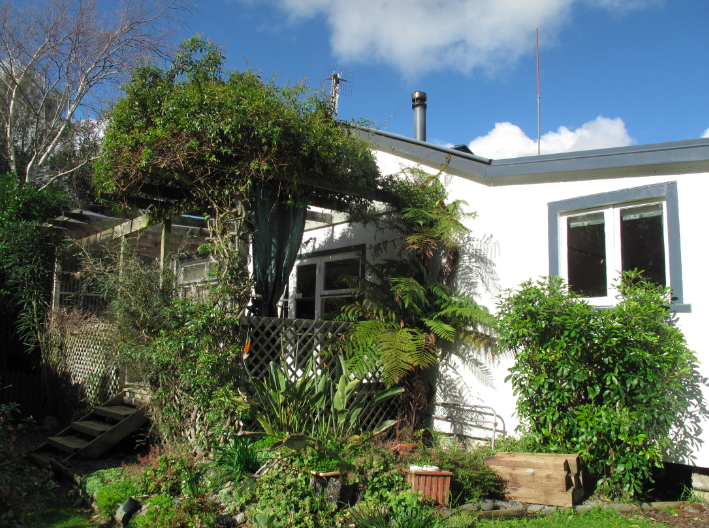
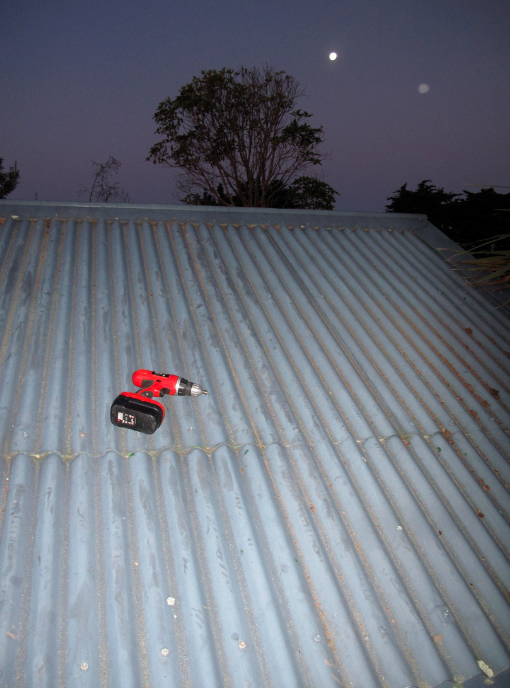
The next low-budget and high-performance weekend chore I undertook was simply trimming back a vine that was blocking midday sun from entering the lounge. The winter sun is a free heater and the vine was acting like a wall plug switched off. Ultimately, a number of trees to the north will also need to be felled to improve passive solar gain. Screen shot 2014-08-22 at 6.08.40 PM

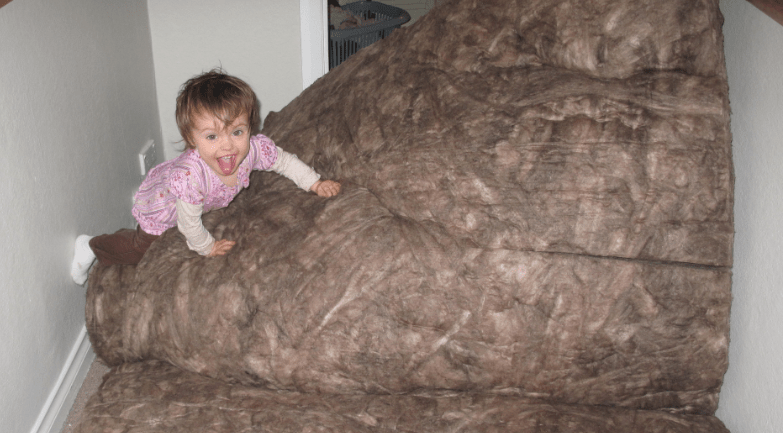
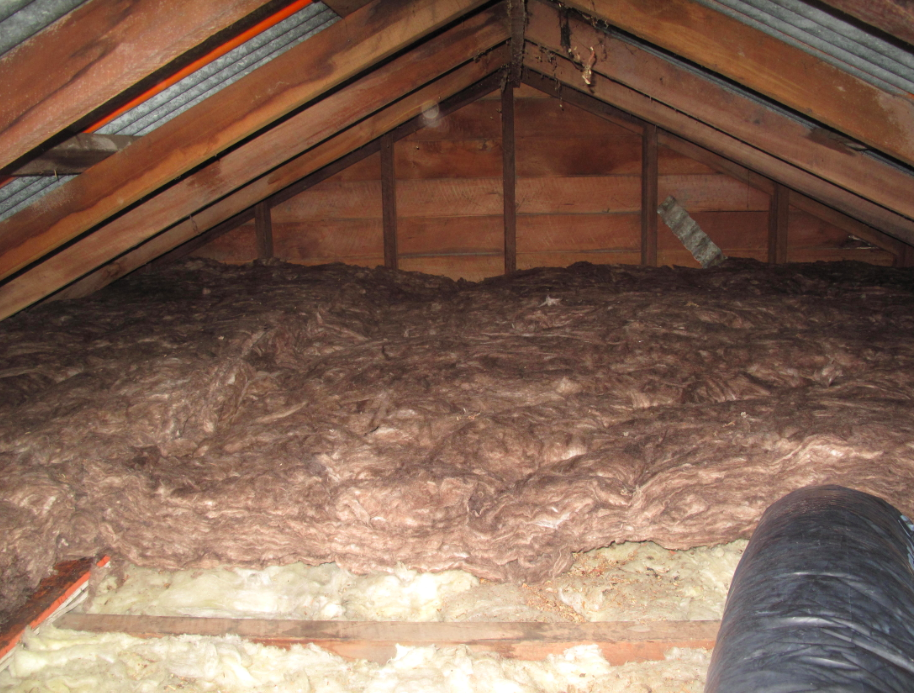
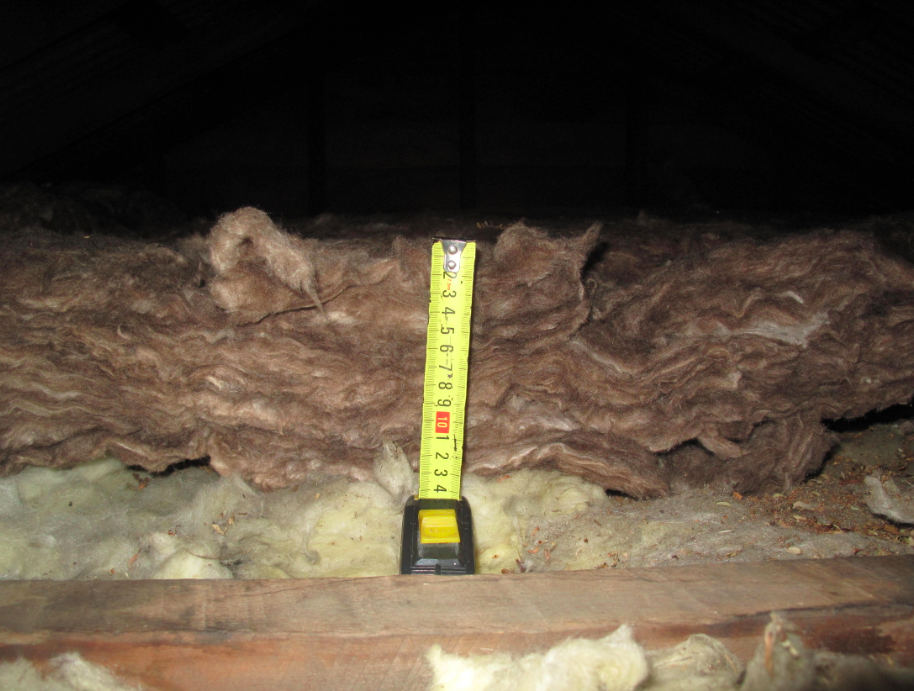
With more free heat entering our home, the next important thing to do is to hold onto it as long as possible. As described in last week’s column, that meant topping up our ceiling insulation with wool/fiberglass blankets to an R-value of over 5.0 – nearly twice the requirement of the NZ building code. Screen shot 2014-08-22 at 6.08.49 PM

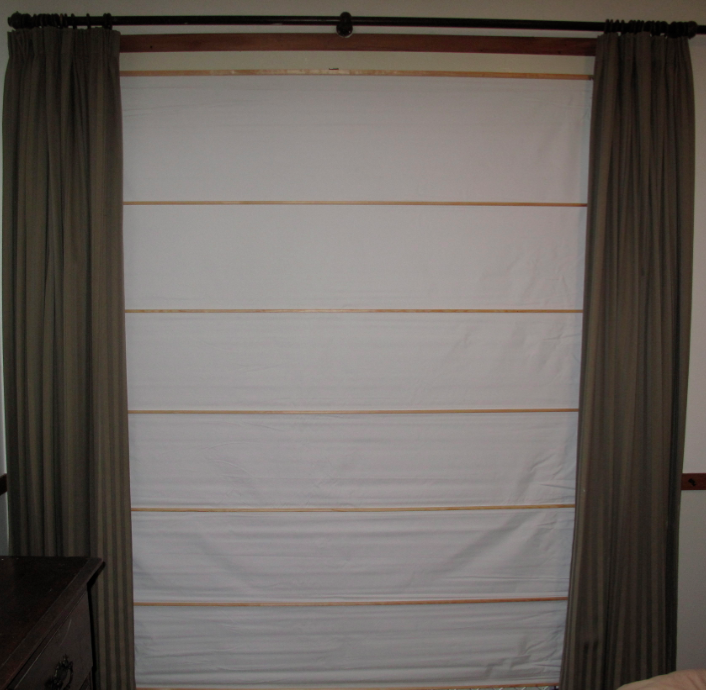
But as that extra warmth is held in by our ceiling, it “stacks” downward only to radiate quickly through the single-glazed windows (R-0.15). Windows and glass doors are the weak link in most Kiwi homes, and until we can all afford double-glazing, we endeavor to use curtains to their greatest potential. Just as we layer up with clothing on a cold day, we should cover our windows with a minimum of two layers of fabric and strive for three.

By luck I found some ready-made Roman blinds deeply discounted and bought the lot. It took about 20 minutes to install each blind behind the existing curtains.

Screen shot 2014-08-22 at 6.08.19 PM

One weekend’s work and less than $1,000 has improved the health and comfort of our new home by leaps and bounds. And this is just the beginning.

Screen shot 2014-08-22 at 6.08.57 PM


Peace, Estwing

Sidebar:

Coming 7th – 14th September: Adult & Community Eco-Literacy Week.

Free Events.

7th September, 1-2 PM Eco-Design for large properties. 223 No. 2 Line

7th September, 2-3 PM Eco-Design for small properties. 223 No. 2 Line

9th September, 6:00-7:00 PM. Solar Energy. Josephite Retreat Centre, Hillside Terrrace.

10th September, 5-6 PM. Growing vege on sandy soils, TBD

12th September, 5:30-6:30 PM. Best ways to use your heat pump, TBD


Topping up Ceiling Insulation

No matter which side you supported in the FIFA World Cup, the Super Rugby final, or the current Rugby Championships, one thing on which almost all of us can agree is that heat rises. While this is not to omit the possibility of a strongly opinionated letter on the contrary to the Chronicle by an avid physics denier (you know they’re out there), it is less likely to stir anyone’s ire when compared against evolution, climate change, a flat Earth, the ability of the Green Party to “create jobs” or the spelling of our city’s name.

Some days when I read the Letters page and an article about any given council meeting I think it would be most appropriate to change the name of our River City to De-Nile.

At any rate…back to the topic at hand. When thinking about how to improve the warmth and comfort of a home, insulation decisions are best made from top to bottom. In other words, spend your insulation dollars first to top up your ceiling insulation to an R-value of over 4.0. Please note that the building code calls for ceiling insulation to be a minimum of R 2.9, but why settle for this minimum, which is low by world standards?  Screen shot 2014-08-15 at 8.06.05 PM

We know that power prices have doubled in the last 10 years and that a mathematician would strongly suggest this trend will continue. A decade from now do you want to be stuck with a marginally mediocre minimum of insulation over your head? Not me!

After pumping tens of thousands of dollars into the Whanganui economy over the last four years by converting an abandoned villa into a high-efficiency healthy home, I am doing it all over again. Yes, I am so committed to supporting our local businesses and tradespersons that I have continued my campaign to retain dollars in our local economy rather than sending them to power companies in Auckland, Wellington and Christchurch.

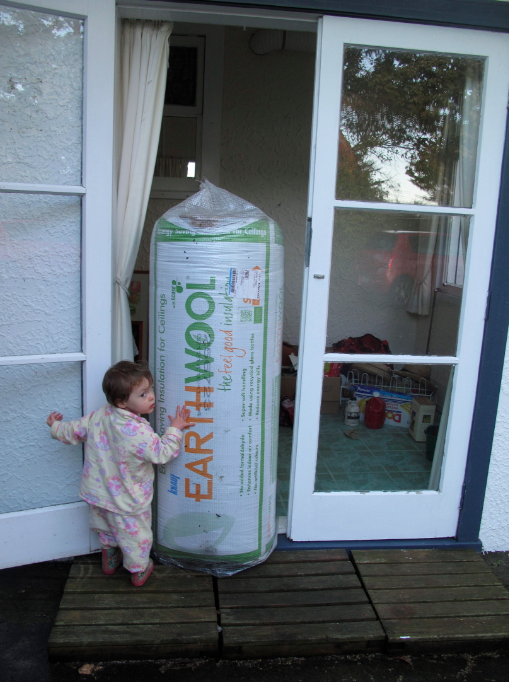
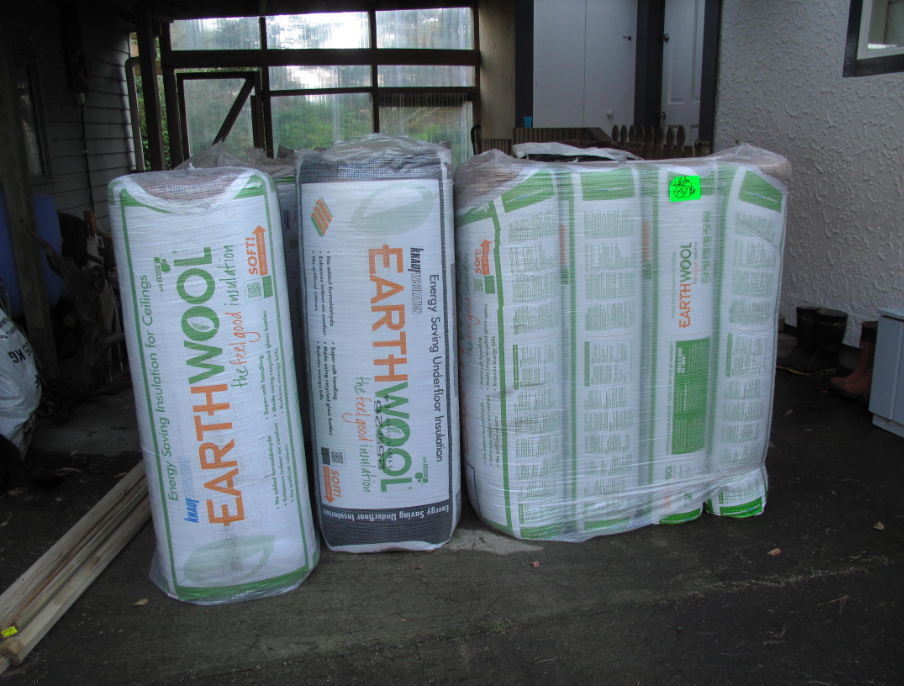
When I got home Friday from back-to-back 10-hour days of work, my weekend was sitting in the carport waiting for me. Not a new ATV. Not a Jet Ski. Not even a mountain bike. Instead I was faced with $2,000 worth of insulation and polythene.

Screen shot 2014-08-15 at 8.05.55 PM

I’ve written about polythene recently, so I’ll stick to insulation today. Pay attention – this is important.

In case you missed it above, the minimum requirement for insulation in NZ homes is pathetically low and power prices are on track to double in ten years. With both of these factors in mind, an eco design perspective calls for a total R-value (existing insulation plus top up) of 4.0-plus in Whanganui, and 5.0-plus in Ohakune, Taihape, and anywhere in the upper Parapara.

An eco-thrifty design perspective suggests the best strategy for topping up ceiling insulation is low-cost and high-performance. Too good to be true? Oh, ye of little eco-thrifty faith. Screen shot 2014-08-15 at 8.06.39 PM

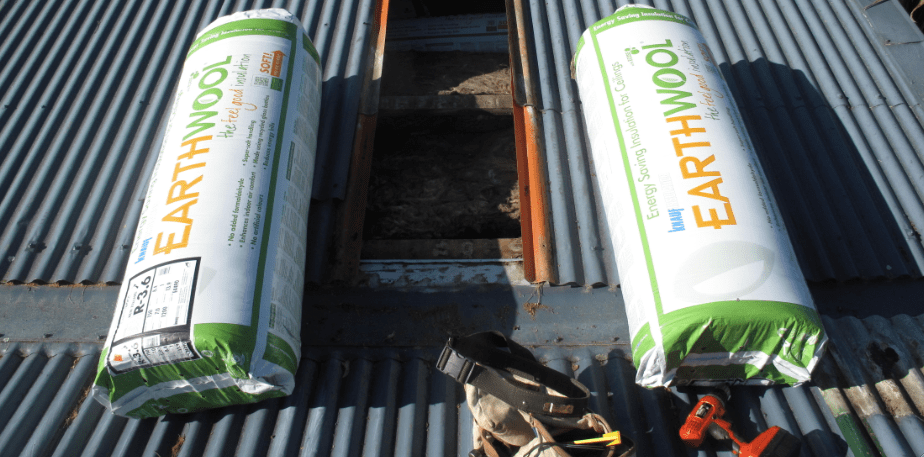
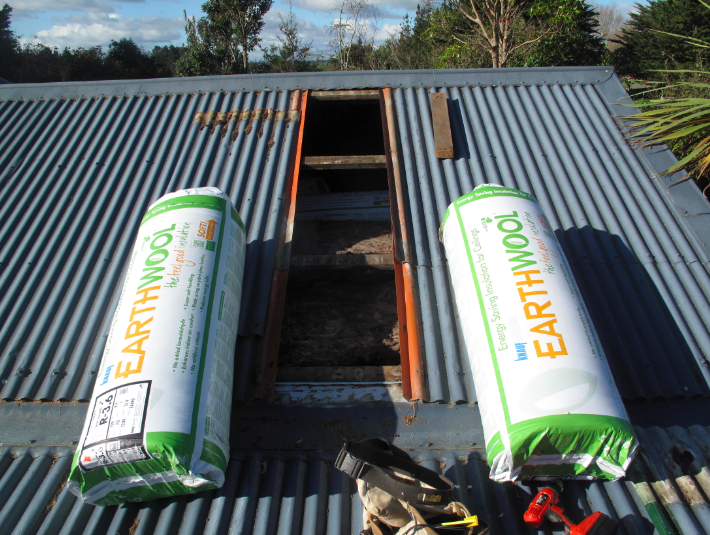
An excellent new-ish product on the market is known roughly as blanket insulation. It is exactly what it sounds like. Instead of individual batts that are laboriously placed between the ceiling joists, blanket insulation simply rolls out over the top of the joists and any existing insulation. As such, it is quicker and easier to install, and mildly less expensive to purchase. Additionally, it is a higher performing product because there are fewer gaps between pieces than would be the case of ‘blanketing’ with batts (as we did in our villa four years ago), and it blocks the thermal bridging of heat through the ceiling joists. With a top-up of R 3.6 blankets in addition to the existing batts, we will have a total R-value of over R 5.0 over our heads. This is roughly the same as our villa, but with the added bonus that our new ceiling is 600 mm lower! Screen shot 2014-08-15 at 8.06.31 PM

There you have it: Win-Win-Win as usual using eco-thrifty design thinking. The only Win missing is that of Argentina in the FIFA World Cup. But I have them down to be the surprise champions of this year’s Rugby Championship by upsetting the Springboks, the Wallabies, and yes, the mighty ABS. Don’t cry for me Argentina!

Peace, Estwing

Coming Soon, 7th – 14th September
Adult & Community Eco-Literacy Week and Whanganui Permaculture Weekend.

A series of high-quality educational events free and open to the public. More details to follow.