
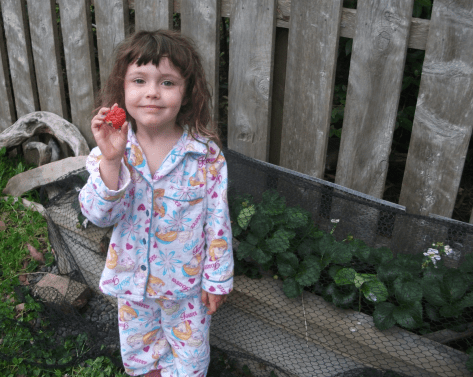
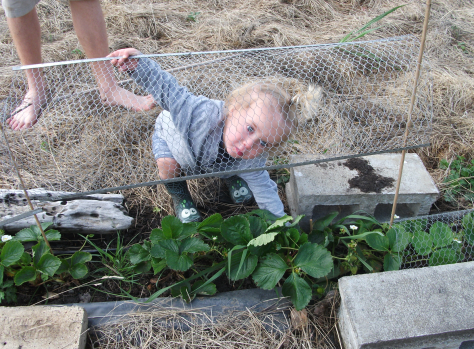
Verti likes to take pictures, and she always comes up with interesting perspectives. Here is a gallery of her recent images.


Peace, Estwing
Verti likes to take pictures, and she always comes up with interesting perspectives. Here is a gallery of her recent images.
Peace, Estwing
This is the second and final post by our intern, James.
This is the first Christmas I have spent without my immediate family in 25 years of life. Snow covered mountains, fireside hot cocoa, and village carolers have always been some of the pavlovian cues to get me salivating about the holiday season. Strangely, without all these things, I have not felt the pangs of homesickness. Perhaps it is the sunny and lengthening days, or the warm and temperate weather. Maybe it is the bi-weekly beach trips and ocean view, or the constant distraction of farm work. No, I think it is much more than just a radical change of scenery that has relieved symptoms of nostalgia.

I have never been particularly drawn to children, nor they to me. I certainly do not dislike them, but am more or less indifferent to unknown children the same way one is indifferent to unknown adults—I try to be kind, but I have never been a socialite. Within a day of arriving at the farm, little Verti, a four-year-old girl, was pulling my hands out of my pockets just so she could hold them as I was being shown around the grounds. To feel the affection of a small child is heart-melting enough, but one that I had known for less than 24 hours? Despite her age, the immediate warmth from a total stranger took me aback. I spent the last 6 months in frequent contact with several similarly-aged children, but none seemed as readily-loving as Verti.
Manu, the family toddler, often tries to attract some of my attention with one of the few words he knows while hitting my thighs, or whatever other body part happens to be available to his height. Like his older sister, he too is readily physical and affectionate—my meditations and stretching are often interrupted by a slap on my belly coupled with his boisterous giggle. I open my eyes to his toothy and charismatic smile, begging for play.
On my first arrival I greeted Dani, mother of Manu and Verti, with a handshake. It was refused as I was told, “we are huggers.”
With my impending departure from the farm, Nelson, the father, has helped me acquire and modify items necessary to my next several months of living out of a mini-van.
I have known the fellow interns here for less than 2 months, and yet I can recall few occasions where I have laughed as often and as loudly. Sometimes the laughter is debilitating, temporarily rendering me useless for physical work. I am not complaining.
Conversation among interns, Nelson, or Dani is comfortable, can consist of nearly anything, and flows freely. Talks are inspired and of substance, rarely superficial in scope. As our backgrounds differ drastically, disagreements are common but not heated. I think this openness to one another and new ideas has opened each other’s perspectives to new ways of thinking and being in the world.
This is how I account for an absence of homesickness. The change of circumstances and lack of usual Christmas cues helps, I am sure. More potent though, is the camaraderie among interns and enveloping familial atmosphere that the farm exudes. Maybe it will be different when the actual date rolls around. I hope I am not misunderstood, as I deeply love my family. But for now, I could not feel more at home.

-James
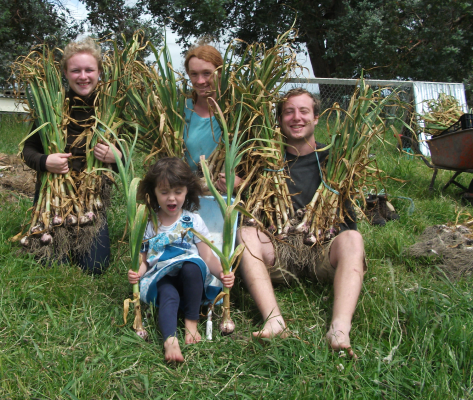
The keys to growing great garlic are these: start with high quality seed garlic; plant with ample balanced compost; mulch thoroughly; water as needed.
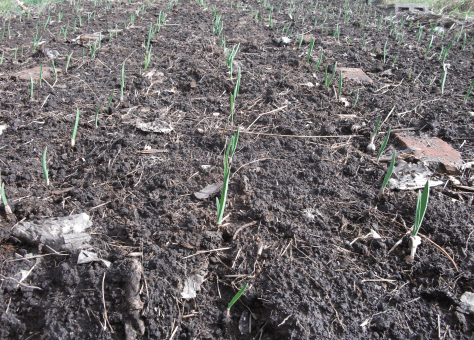
Bed preparation is similar to any annual vegetable crop: remove perennial weeds; aerate the soil; adjust pH as needed.
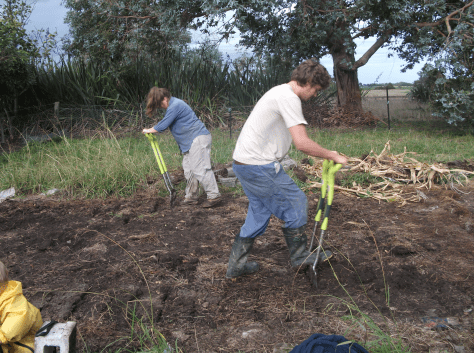
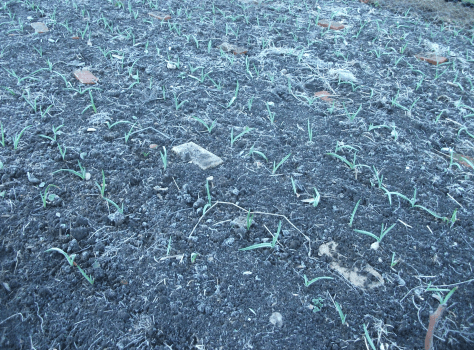
Planting is anytime between the beginning of June and end of July. The go-to date is 21st June. Here are some sprouts under a hard frost.
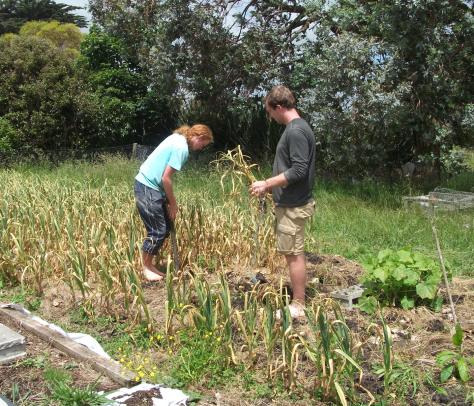
Harvest is between mid-December and mid-January. The go-to date is 21st December.
We grade it into three sizes: seed, sell and eat.
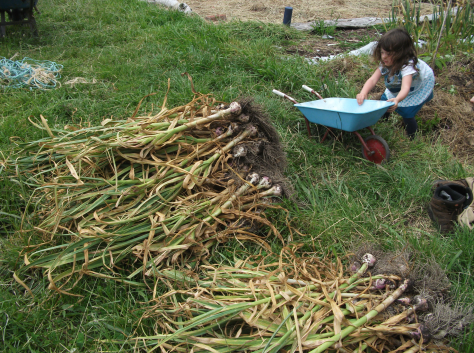
We tie it into twin bundles of ten for easy counting and easy hanging.
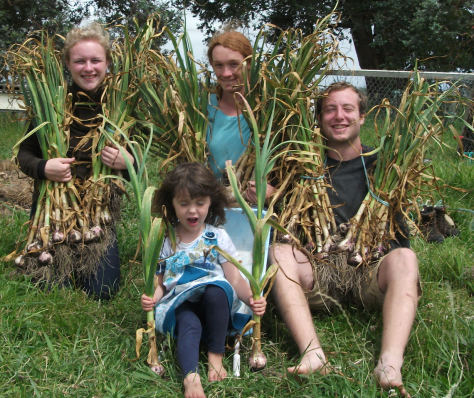
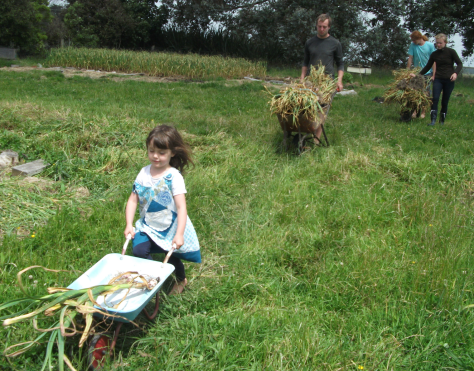
The Great Garlic Parade!
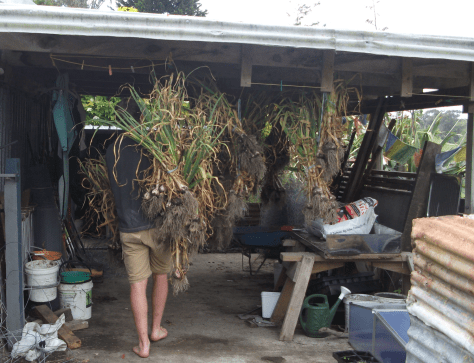
We hang it for three to four weeks and then cut off the tops and tails. It stores for up to 10 months.
Wait six months and repeat the process.
Peace, Estwing
I’m not fond of plastic toys that are bound for landfill after a day or even after a decade. Neither is OK in my mind.
When it came to providing a slide for the kids play fort I was faced with a dilemma. Plastic slides cost up to $200 for a…plastic slide. I think they are ugly and ultimately break down from UV damage. So I came up with an alternative.

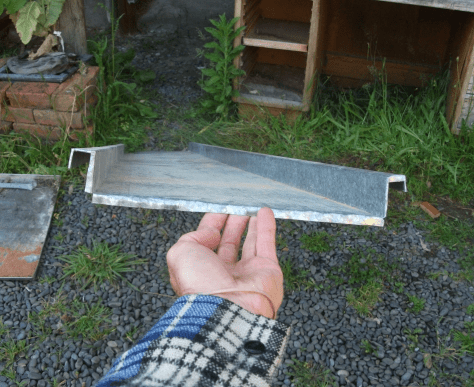
I had an off-cut galvanised sheet from the flashing for the flue from our new wood stove. I took it to the local steel formers and had them bend it for me in exchange for a box of beer.
Then I got some salvaged timber from the shed to make a rigid form.
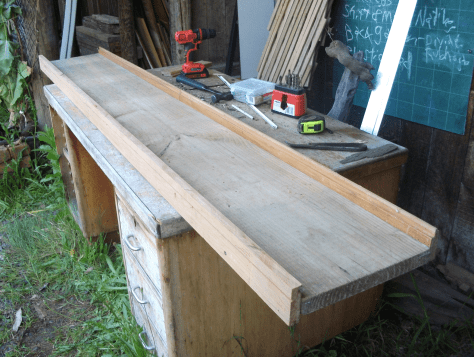
Here’s what it looks like.
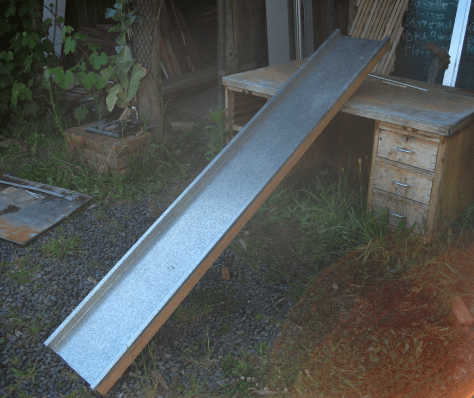
Here is the response.
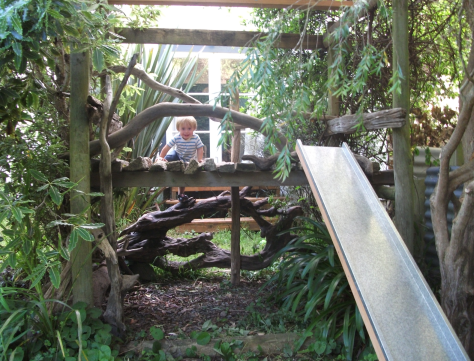
Total cost: $40
Peace, Estwing
Oliver is an 18 year-old intern on our farm. He plans to stay “indefinitely.”
Since arriving at the Lebo’s farm two months ago, the theme of kaitiakitanga has perpetuated through every aspect of our work on the farm. For the people who have visited the eco school and seen the “Kaitiaki” signs at the door and driveway you might wonder what the title of the farm means, and why Kaitiaki is such an important aspect of life here that it gains the honour of the farm’s namesake.
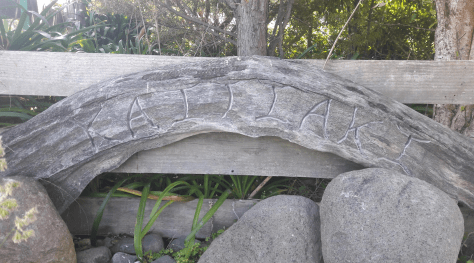
In its simplest translation, kaitiakitanga means guardianship and protection of the environment through sustainable practice, a Kaitiaki is someone who practices the philosophy of kaitiakitanga.
For just about every piece of work we do on the farm you could ask “how does this demonstrate kaitiakitanga”. Whether it is something small like composting our waste, or not using chemical fertilizers and pesticides. Or something big like giving up land that could be used to produce food, and restoring it into wetlands, which help protect the land from flooding, erosion, and droughts.
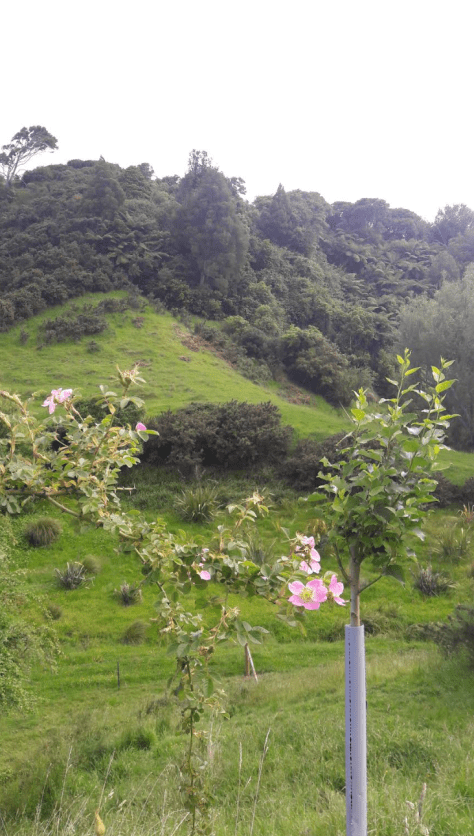
Often with kaitiakitanga a task is done in a seemingly normal or obvious way in terms of the short term goal, the long term goal is where the distinction is made between common practice and kaitiakitanga.
If you take feeding and moving the chickens everyday as an example for kaitiakitanga you would ask:
“Why do you feed and move the chickens?”
“So they don’t die” Would be the general answer to that question, but to discern a Kaitiaki you would question further:
“Why don’t you want them to die?”
Here most farmers would say they want the chickens because they give them meat and eggs, a Kaitiaki would say that they keep chickens alive to fertilize, control weeds, and pests, so that the use of chemicals which harm the soil aren’t necessary.
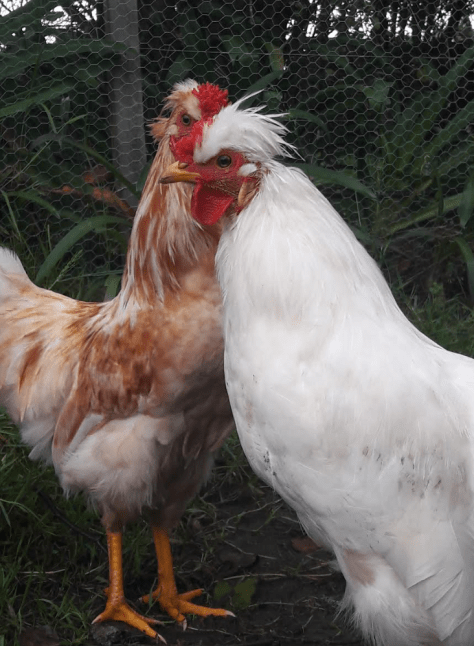
Over time the tractoring of chickens on a piece of land improves the overall health of the soil by increasing the amount of macro and micro-organisms it can support. To a Kaitiaki the production of meat and eggs is a bi product of using animals to heal and regenerate land.
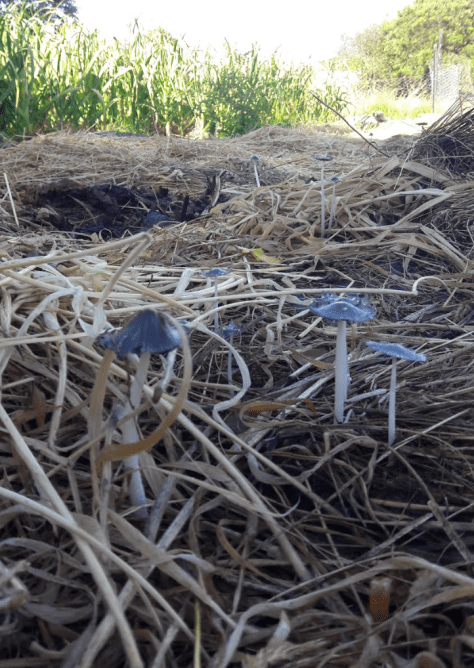
To me, the biggest difference between a farmer and a Kaitiaki isn’t what is being done but how it is being done. A farmer uses the land to produce food and money, a Kaitiaki stewards and protects the land through much the same crops and practices but with slight differences intended to ultimately give back to the land as much as is taken.
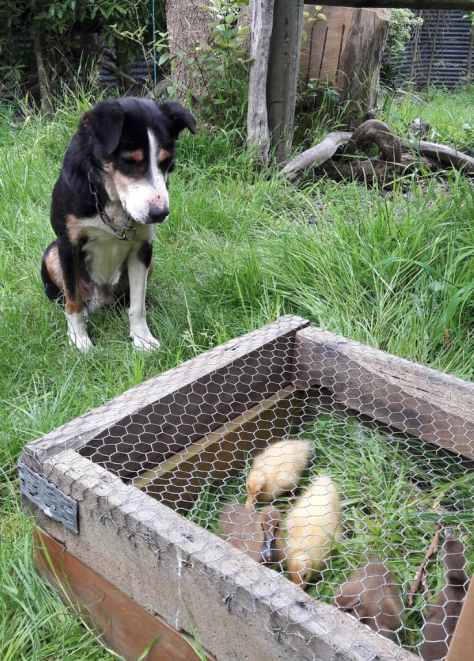
Oliver
James has been working with us as an intern for five weeks. Here are some of his thoughts so far.
There are few who would consider farming and food production spiritual endeavors. I personally never connected the two seemingly-separate pursuits for years. My time at the Eco School in Whanganui has changed my view of what it means to be a farmer, and I can no longer imagine farming without taking spirituality into account. The complex systems involved in farming extend well beyond the material and physical world, and bring the spiritual dimension into clear view. Becoming an expert in a single pursuit often reveals insight into all other aspects of life. As Miyamoto Musashi states in the Book of Five Rings, “If you know the way broadly you will see it in all things.”
I hesitate to even use the term “farmer,” as it is not farming that is being done at the Eco School, in the traditional sense of the word. “Farming” is far too simplistic a term, conjuring up images of depressed barns, monotonous rows of wheat and corn, swaths of tired land, and maybe some dreary-eyed cows huddled together on a worn patch of mud. No, this certainly does not give an accurate picture of the Eco School. While difficult to label and neatly box up, the activities here consist of (but are not limited to) animal and crop husbandry, land management, forest and wilderness stewardship, regeneration of soil biology, and philosophical education. I do not think the casual observer would associate anything from the previous list of activities with farming other than “animal and crop husbandry” as I certainly did not so many years ago. However, all of these activities are interconnected, and one cannot be done without the other.
To raise animals or crops for human consumption, as the word “farming” implies, we must first have a piece of land. I have learned that in New Zealand, a solid and unmoving piece of land cannot be taken for granted the same way it can in, say, Nebraska. It is concerning to see the abundance of fallen chunks of earth on surrounding hillsides. These slips, as they are called, are due to unwise grazing practices and weather events, which are unfortunately increasing in both frequency and severity. If a farmer wishes to continue utilizing her piece of land, she cannot be a passive victim of these events. She must proactively deal with these slips before they arise by planting trees, avoiding over-grazing (or grazing at all depending on the slope of the hill), and safely diverting and diffusing floodwaters. Animal access to streams must be limited to reduce erosion and water pollution. A farmer must plant trees to save the hillsides from disintegrating into the rivers or streams below, where they will be washed into the ocean. Yes, New Zealand is literally being washed away to sea by these indiscriminate events of weather. The farmer must dig ditches to drain fast-moving and dangerous waters away from steep slopes; she must displace this water so it can slowly be absorbed and used purposefully, and she must plant native plants that typically thrive in these environments. As Nelson, the patriarchal figure of the Eco School says, she must turn a liability into an asset.
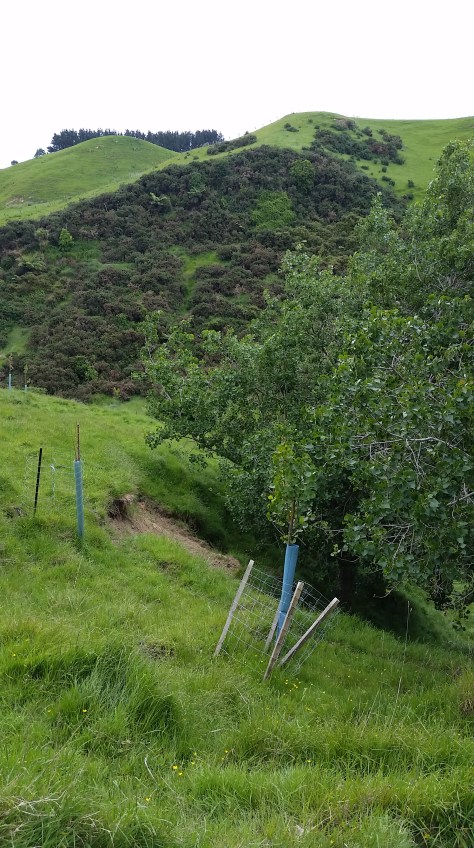
Drought is as much a pertinent issue as is flooding and erosion, and must be addressed as well. Water stores need to be utilized or created to effectively deal with drought, and nothing holds water more readily and efficiently than wetlands. At the Eco School, we have strategically planted several hundred individuals of native species that serve several purposes. In times of flooding, they hold the hillsides together. In times of drought, they hold moisture that can be redirected to other areas of the farm. These planted areas will soon resemble native wetlands/forest, requiring yet another set of management practices. The reader should keep in mind that we began with the simple endeavor of raising animals for food. We have progressed to planting trees and native wetland species to fight erosion and favorably manipulate water, entering into the surprisingly-complex realms of land management, forestry, and wilderness stewardship.

We can finally get to both the literal and metaphorical meat and potatoes of farming. Once a piece of land is established as stable and usable, it can be utilized for crops/animals for human consumption. Remember that a significant portion of the land is closed off to husbandry of any sort, as it is dedicated to wilderness area, forestry, or otherwise not feasible to raise animals or crops on. Pastures and crop fields can be made of the remaining land. Thinking ahead, one must wonder: how will these fields continue to produce food 1, 5, 10, 100 years from now? They will require some type of fertilization or regeneration. This is best done by use of animals and their by-products. Poultry and ruminant species are used in combination with food crops and pasture to mutually sustain one another. The animals produce fertilizer and compost to feed the crops and pasture, which in turn produce food for the animals. Over time, these grazing practices add matter and biological components to the topsoil. Perhaps counter-intuitively, this makes the land more productive over time as opposed to depleting soil fertility. This means that the farmer’s children and grandchildren will be able to produce more food per unit of land than the previous generation. This of course assumes that the farmer and each subsequent generation use some of the responsible and sustainable practices I have attempted to illustrate.

We end up coming full circle. I could have begun or ended the discussion with the necessity for philosophical education on a farm like the Eco School. There is no place for chemical fertilizers, pesticides, or profit-centric thinking on a holistic farm that aims to be sustainable in its practice. A profit-centric view would scoff at turning potential grazing areas into forestry or wetlands, and would wonder why we need to bother with compost when we can simply treat pasture with chemical fertilizers each year. This is the prevailing view in our world, and unfortunately it is the same view that has so massively contributed to climate change, pollution, and arguably the diseases and disorders that now plague many western societies (cancer, diabetes, heart disease, etc.). When we eat an animal that has eaten herbicide-treated, chemical-fed grass or grain, it is a small wonder why we get sick. When this animal is free to defecate in rivers and stomp over steep hillsides, it does not take extensive investigation to uncover causes of water pollution and where the land is going. Thus, the issue at hand is not one of technological advancement or a matter of accumulating knowledge. We know what the problems are, where they are coming from, and how to fix them. The issue boils down to a fundamental difference in philosophies. A typical farmer chases dollars at the expense of all other factors, which is again why I am so hesitant to call what is done at the Eco School “farming.”
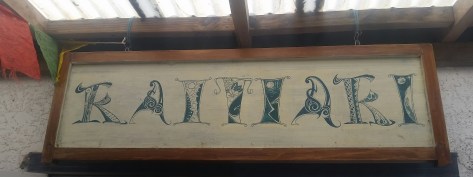
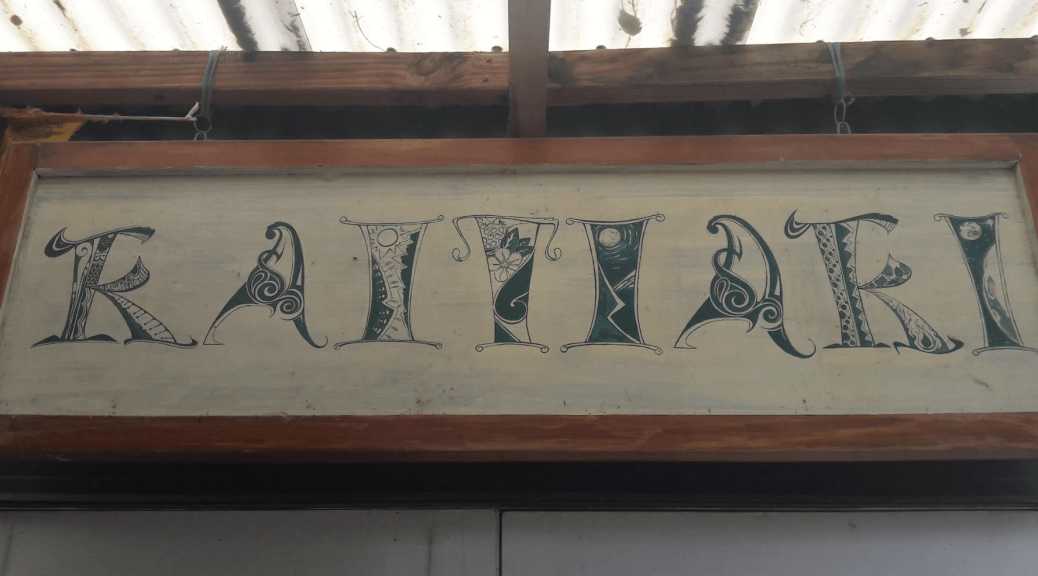
The “KAITIAKI” sign hangs above the main entrance to the house, a constant reminder of the farm’s philosophical foundation.
Signs hang over both the entrance to the driveway as well as main house inscribed with the word “KAITIAKI”. When I asked what this word meant at the dinner table one night, it led to an interesting and spirited discussion, as is typical here. My understanding of the word is that it refers to a guardian of the land, one who protects and manages in a responsible, productive, protective, and helpful way. This differs I think from a steward in that stewardship implies a superiority over the land, that the land was put here for our use, care, or exploitation. I find “Kaitiaki” to be a far superior descriptor for the happenings at the Eco School in Whanganui than “farmer.” A philosophy steeped in sustainability and responsibility to one’s community is embedded in that word, and a pursuit of monetary or material gain does not begin to come to mind.
A family member recently asked me how one can be spiritual without believing in God or something greater than ourselves. This prompted an extensive internal dialogue with myself, and I wondered how to articulate my thoughts on the subject in an eloquent way. I have settled on the thought that recognition of the spiritual dimension boils down not to necessarily believing that something external is greater than ourselves, but simply in recognizing that there is more to reality than the merely-physical.
Certainly, one can see that a kaitiaki is not concerned with the material world alone. In some sense, a kaitiaki must recognize that there is more to our occupation in life than pursuit of money or material gain. Otherwise, they would see the world as a means to an end, they would see their acreage as potential dollar signs. On the contrary, a kaitiaki sees value in each part of their acreage because of its relation to the whole. Each aspect of the land depends on every other aspect, and they create a workable system together. If one piece is missing from the puzzle, the big picture is not realized or even able to function. A kaitiaki takes a holistic view to food production.
I have come to see farming as intrinsically spiritual. A true farmer, or kaitiaki, sees the world as interconnected, each aspect just as valuable as the last. No part of the land is more important or valuable than another. When one can see the interconnectedness in something as simple as a piece of land, one begins to see the interconnectedness of all things. One acknowledges that CEOs of corporations could not produce if the garbagemen did not come pick up his waste, that the field cannot grow without decay, that birth cannot be without death. There is simply not one without the other. What is more spiritual than the realization that opposites are intrinsically contained within another—in other words, that all things are contained in another, that everything is ultimately made of the same “stuff,” that everything is ultimately unified as one?

A pumpkin plant sprouts from a decaying pile of compost, a vivid illustration that birth cannot exist without death.
-James
In the process of developing one of the most resilient farms on the planet there was one factor we did not take into account: the Trump Factor.
So now, alongside resilience to climate change, resilience to energy price volatility, resilience to GMOs, resilience to earthquakes, and resilience to another potential global financial crisis, we need to design in resilience to Trump. Actually, all that means is that we need to double down on all of the above. Well, maybe not earthquakes.
Additionally, we should say that we love diversity within and among our interns. We would love interns of multiple faiths, genders and sexual orientations. Some of our very best interns so far have been gay, and we would have them come back again in a heartbeat.
Other than that, it’s business as usual at Kaitiaki Farm. Here is a late spring update.
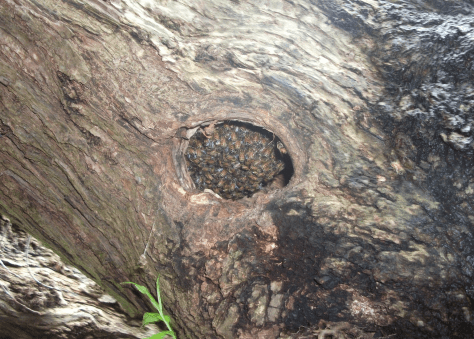
We’ve had two swarms lately. This one took up residence in a willow tree.
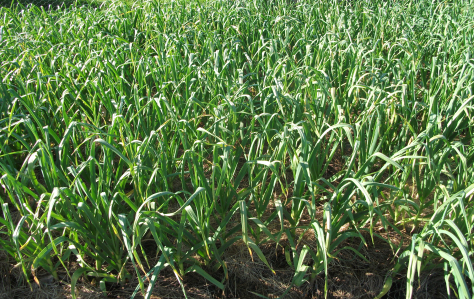
The World’s Best Garlic looks to be even better than last year’s record crop.
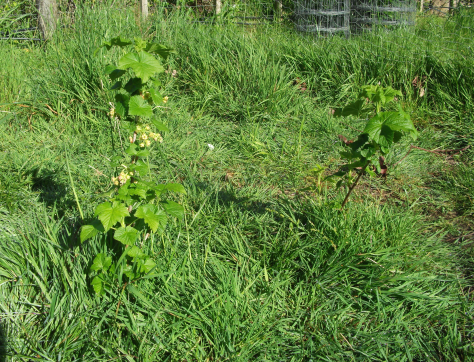
The new black currant plantings are already producing.
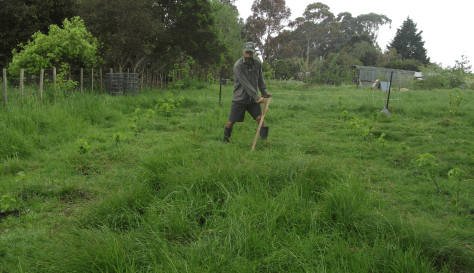
Although some maintenance is required.
We’ve got lots of new arrivals.
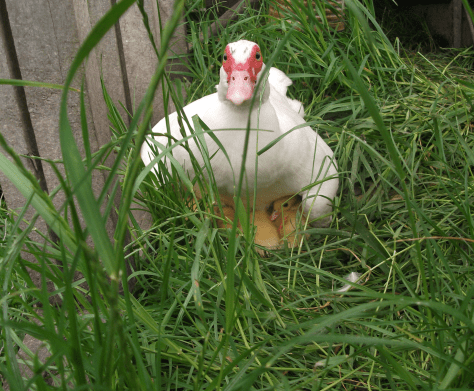
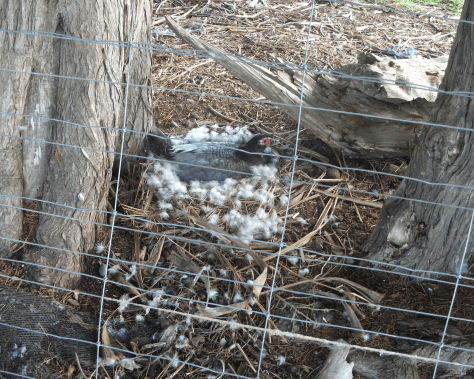
And soon-to-be arrivals
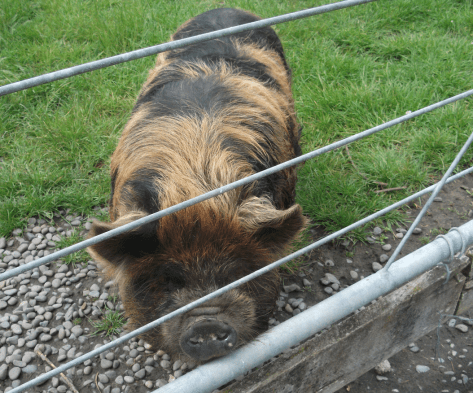
Hopefully our new boar will figure out the other two pigs are lovely ladies.
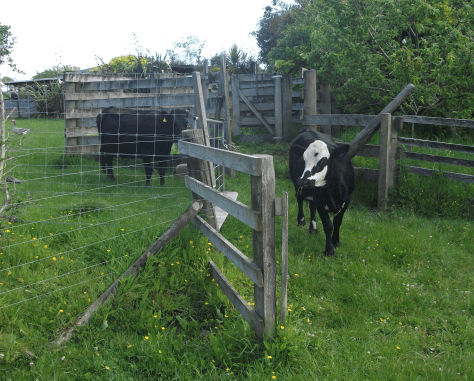
Our Dexter is due to calf in three weeks, and her yearling calf can smell the milk coming in. Gotta keep ’em separated.
Our current interns, James and Oliver, have been hard at work helping to protect and restore our stream.
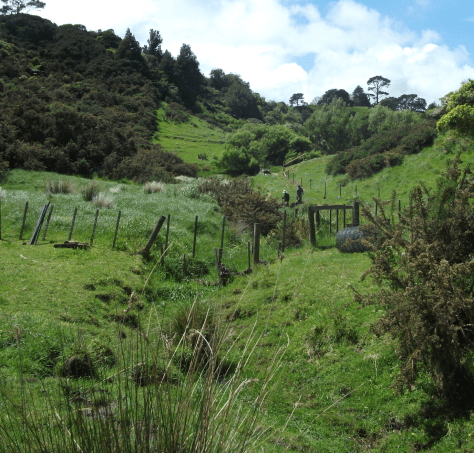
We put in some willow poles in the hope they will take even this late in the season and help stabilise this vulnerable bank.
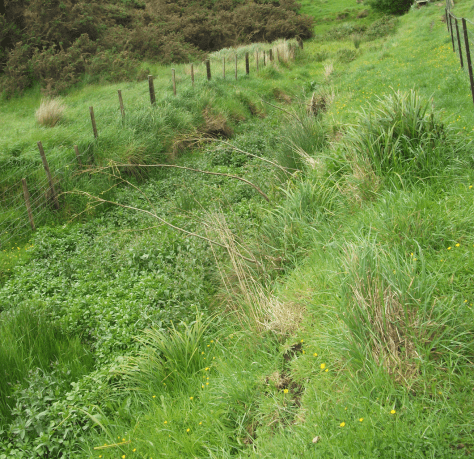
And there is even a new sleepout / getaway for those so inclined.
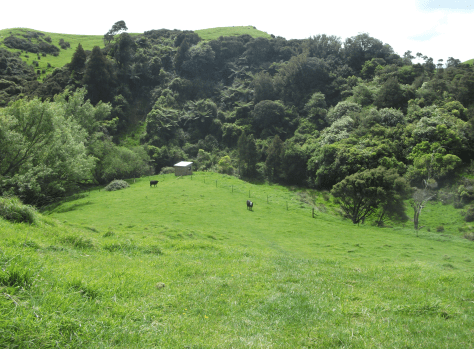
Peace, Estwing
I’m told children benefit from routine in their lives. A farm provides that in spades. Patterns of each day and each season repeat with a regular rhythm.
Manu is such a keen helper he does not bother getting dressed before morning chores. He is the official taster for the chook food.

He also enjoys tasting hammers.
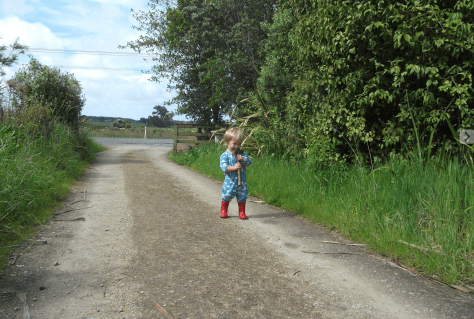
But seriously, he loves helping in anyway possible, even if it is just carrying something.
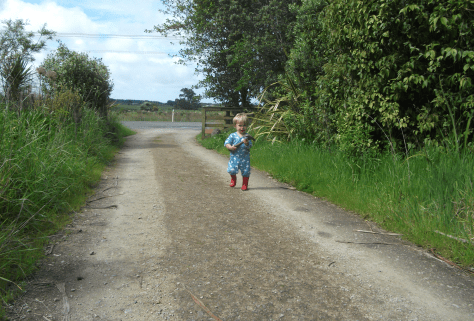
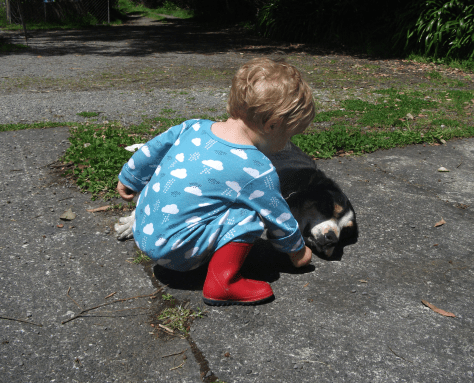
Or feeding the dog…apple slices. (Dog not enthused.)
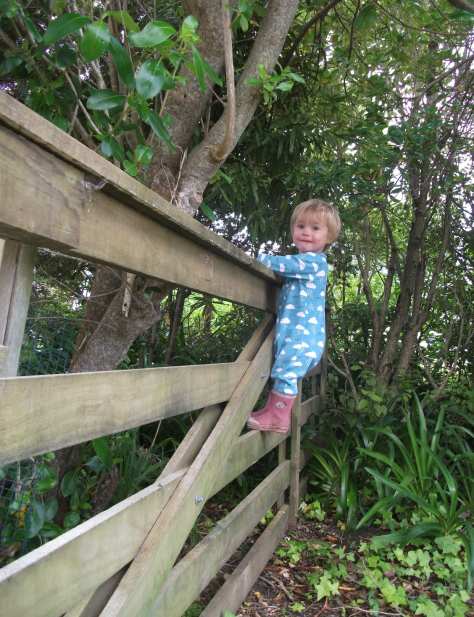
Children learn through play, and Manu treats work on the farm as play. For example, hanging a gate is just a different way of saying, “Let’s climb!”
If he only had more horsepower in that thing we could get some serious work done.

Peace, Estwing
Following the flooding of last year most of our time, energy and money has gone into protecting our stream sides from further erosion, which appears to have accelerated since the flood. The process involves fencing off the streams from stock and planting lots and lots of trees, shrubs, flax and native grasses.
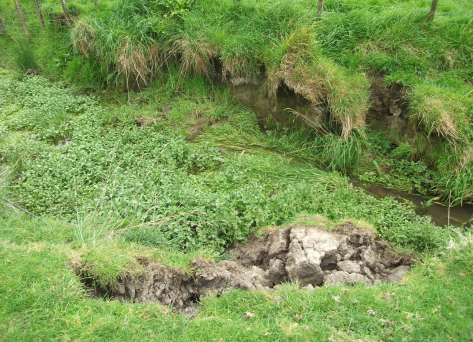
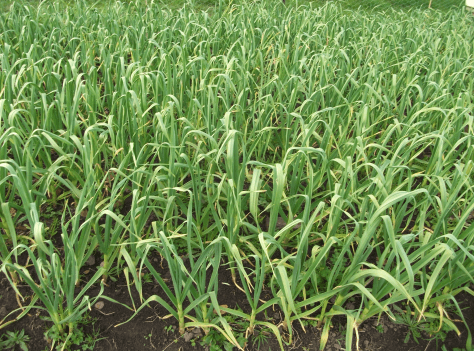
All of that work means I have spent hardly anytime in the annual gardens, except getting all of the garlic in before the end of July. We sold out last year and have about 2,000 in the ground this year. We are establishing new beds on an ongoing basis – converting an old horse property to annuals production is not easy.
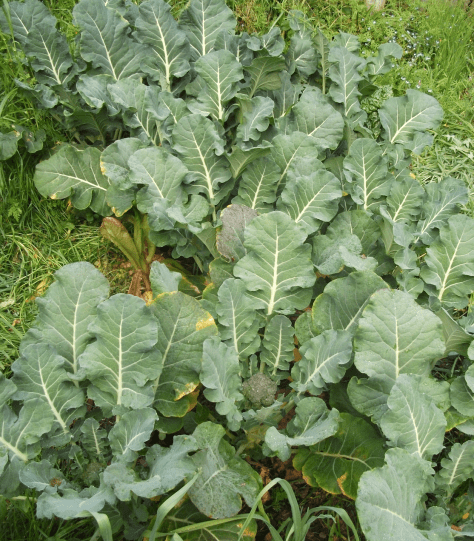
Somehow a few months ago I quickly put some broccoli and cauliflower in the ground. It has thrived in the cool weather with heaps of great compost. Now we are reaping the benefits. This is my favourite variety – Marathon.
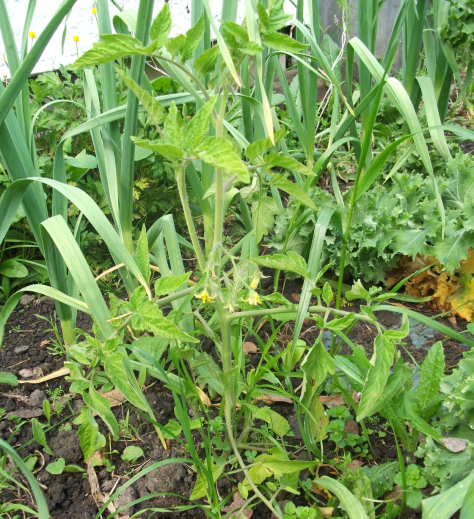
As per my tradition, I also planted Early Girl tomatoes on the 21 of September to ensure ripe tomatoes before Christmas. Can’t wait. These have been interplanted with garlic as a space-saving staggered planting technique.
Just this week the peach stones have started germinating. They have been in damp sand for about 4 months. We expect around 100 to germinate.
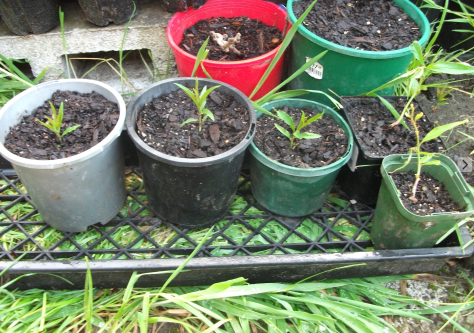
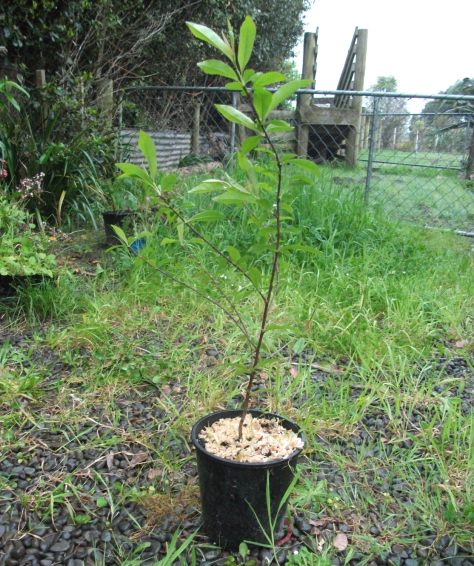
Here is an example of a yearling Black Boy peach trees, which are selling nicely at the moment. We sold out last year and expect to sell out again this year.
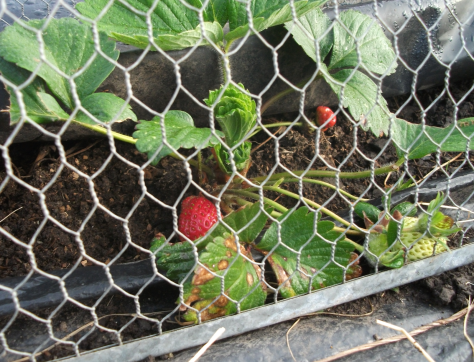
These were a great surprise this morning. In the years to come we hope to branch out into organic strawberries.
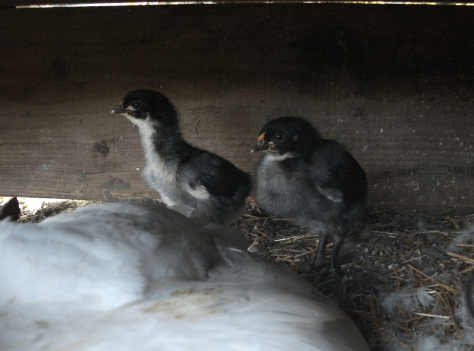
And these two arrived last week.
Never a dull moment and never a lack of jobs to do.
Peace, Estwing
Last week I posted some images of what is going on here at Kaitiaki Farm. Since then I have taken another walk around the farm with my camera to catch some more of the happenings. These include:
Strawberries forming. We should have ripe ones within a week.
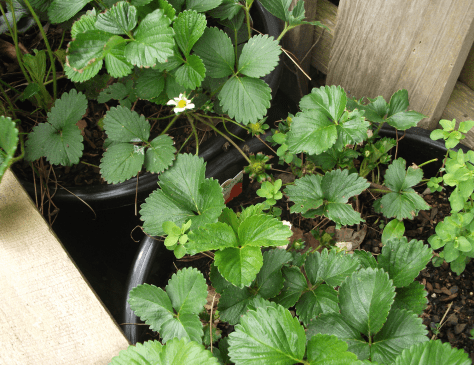
Apple blossoms.
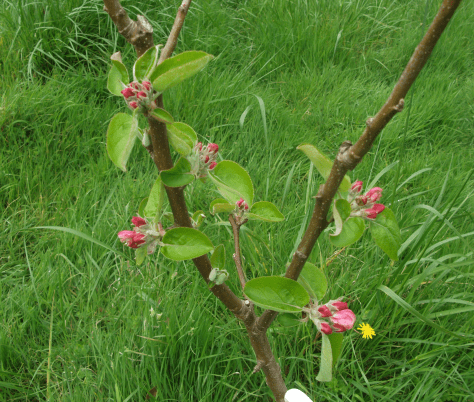
These pomegranate are leafing out.
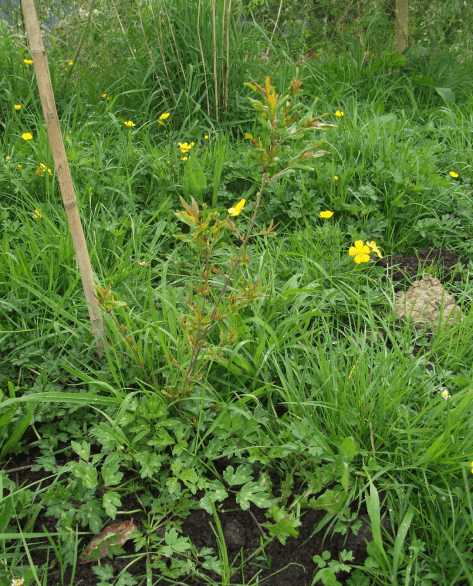
As is this persimmon.
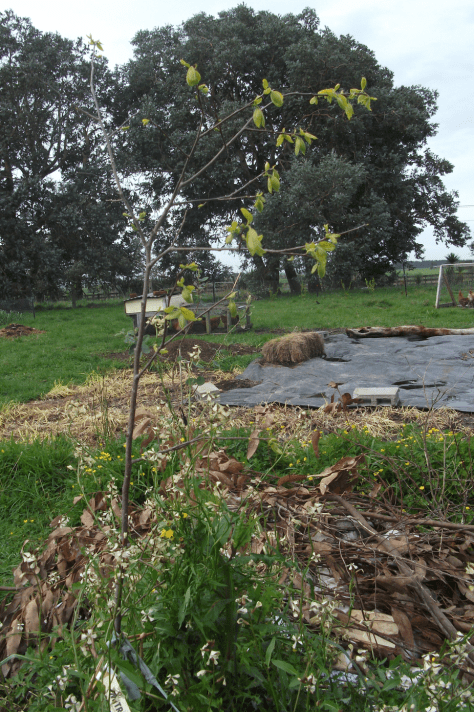
And the hazelnuts.
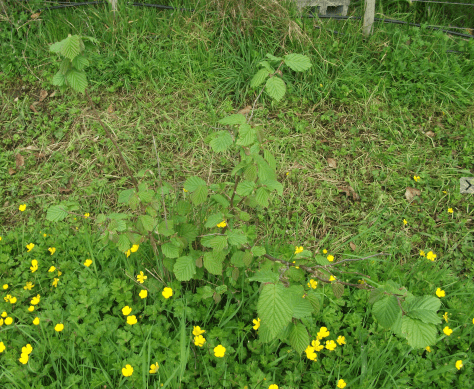
And grapes.
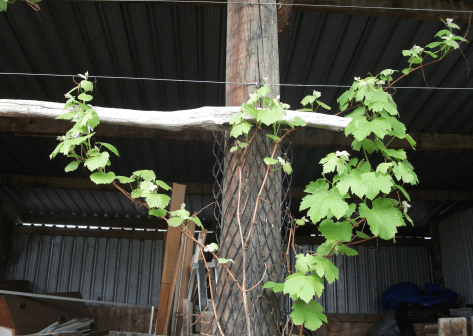
The black boy peach stones are germinating.
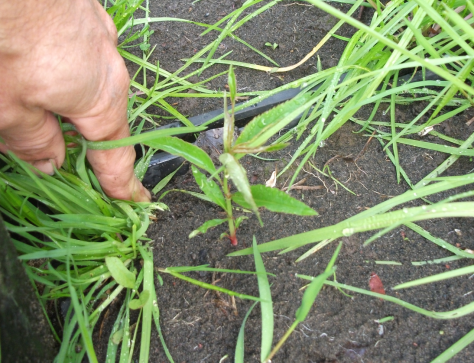
These blackberries are coming to life after being divided.

And the willow wands are happy in their pond side location.
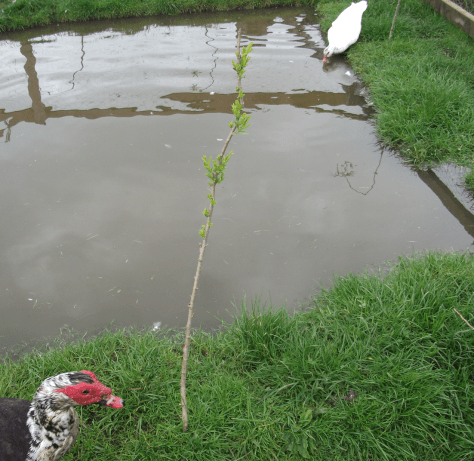
Love the spring. So much happening.
Peace, Estwing




 Eco Thrifty Living