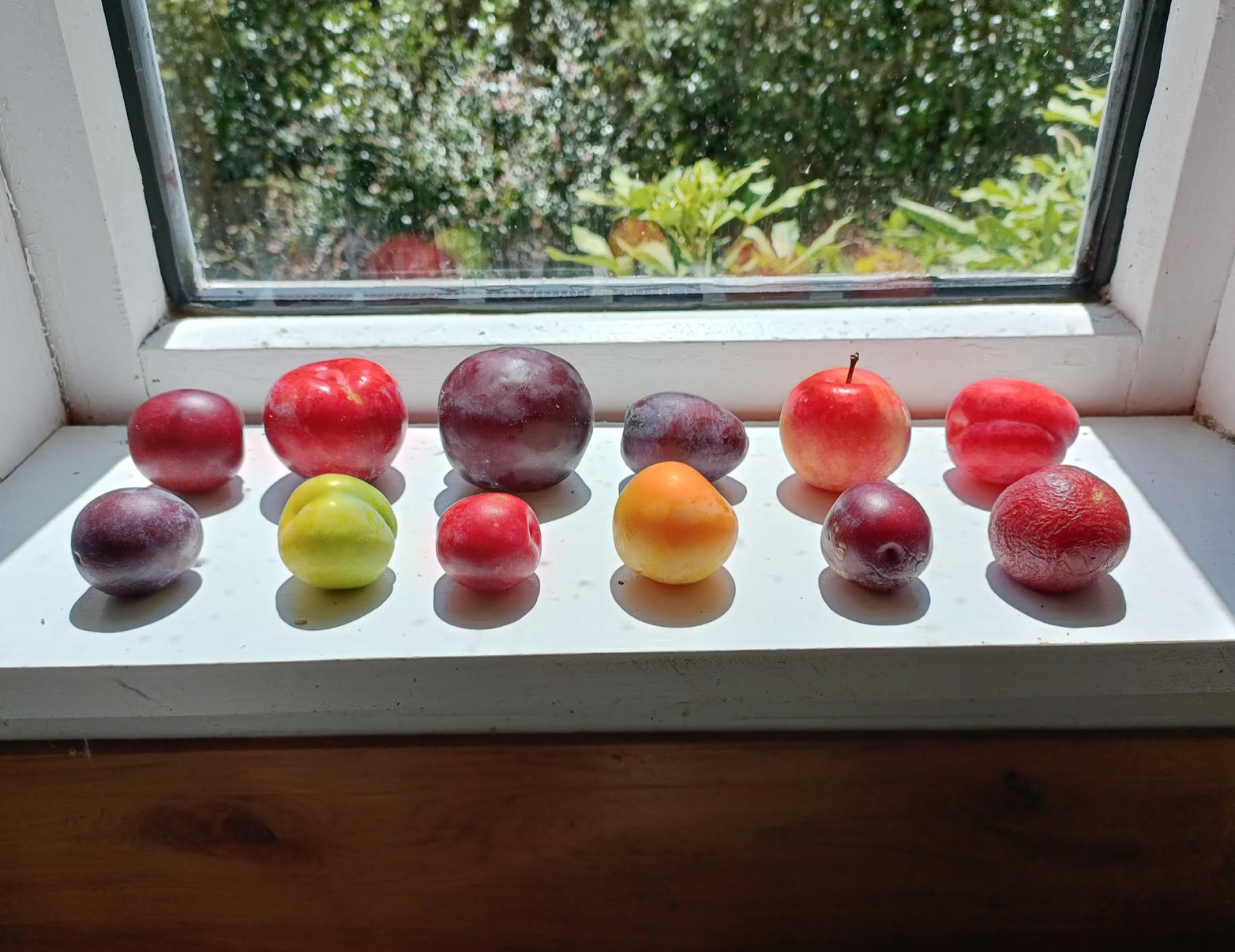
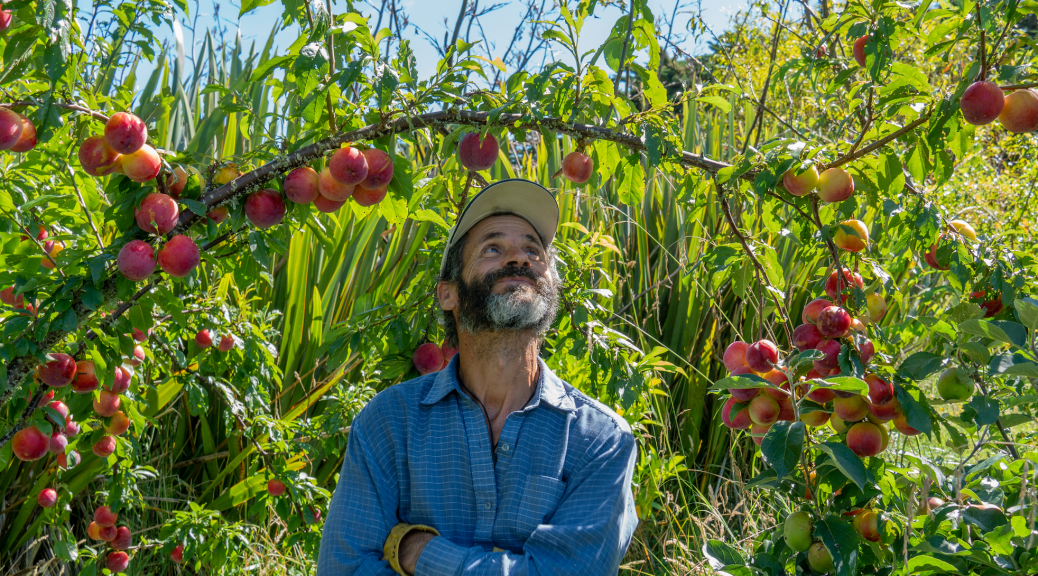
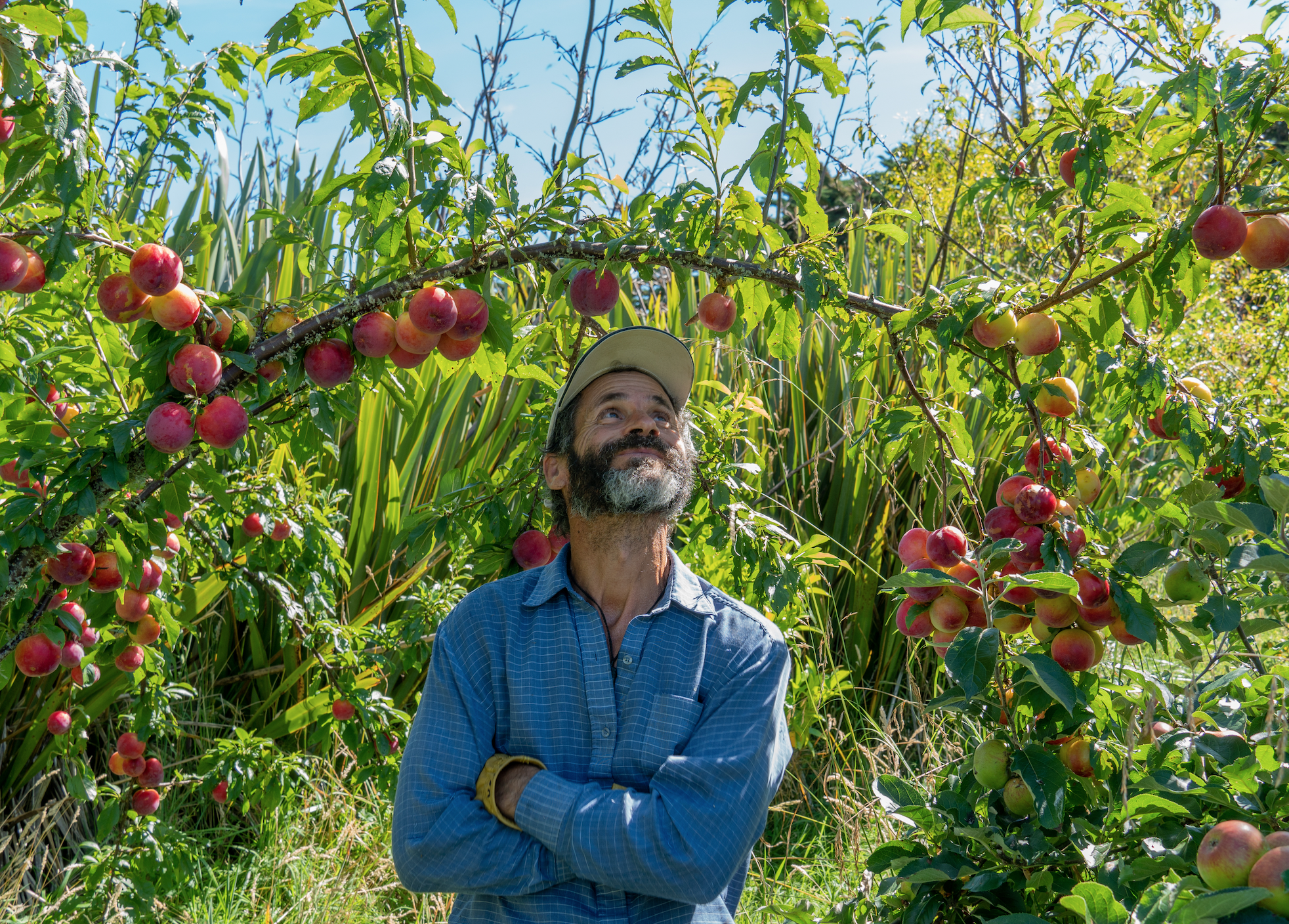
It’s been a long time since we last posted, but it has been a great growing season for us on Kaitiaki Farm. We counted 12 varieties of plum this season and we have three new ones to plant this winter.
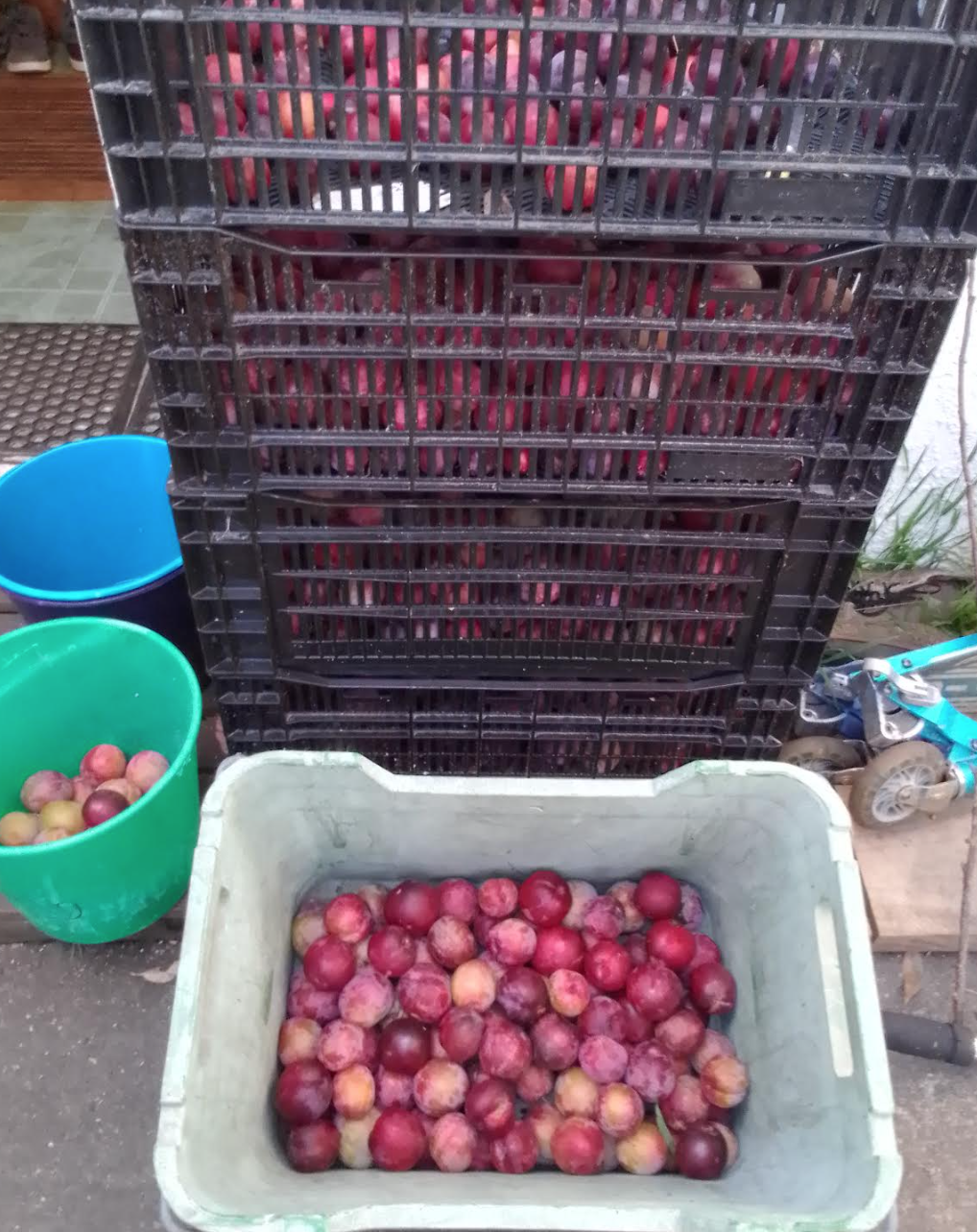
We had so many prune plums this year that we wanted to preserve them by making jam. Just add lots of sugar.
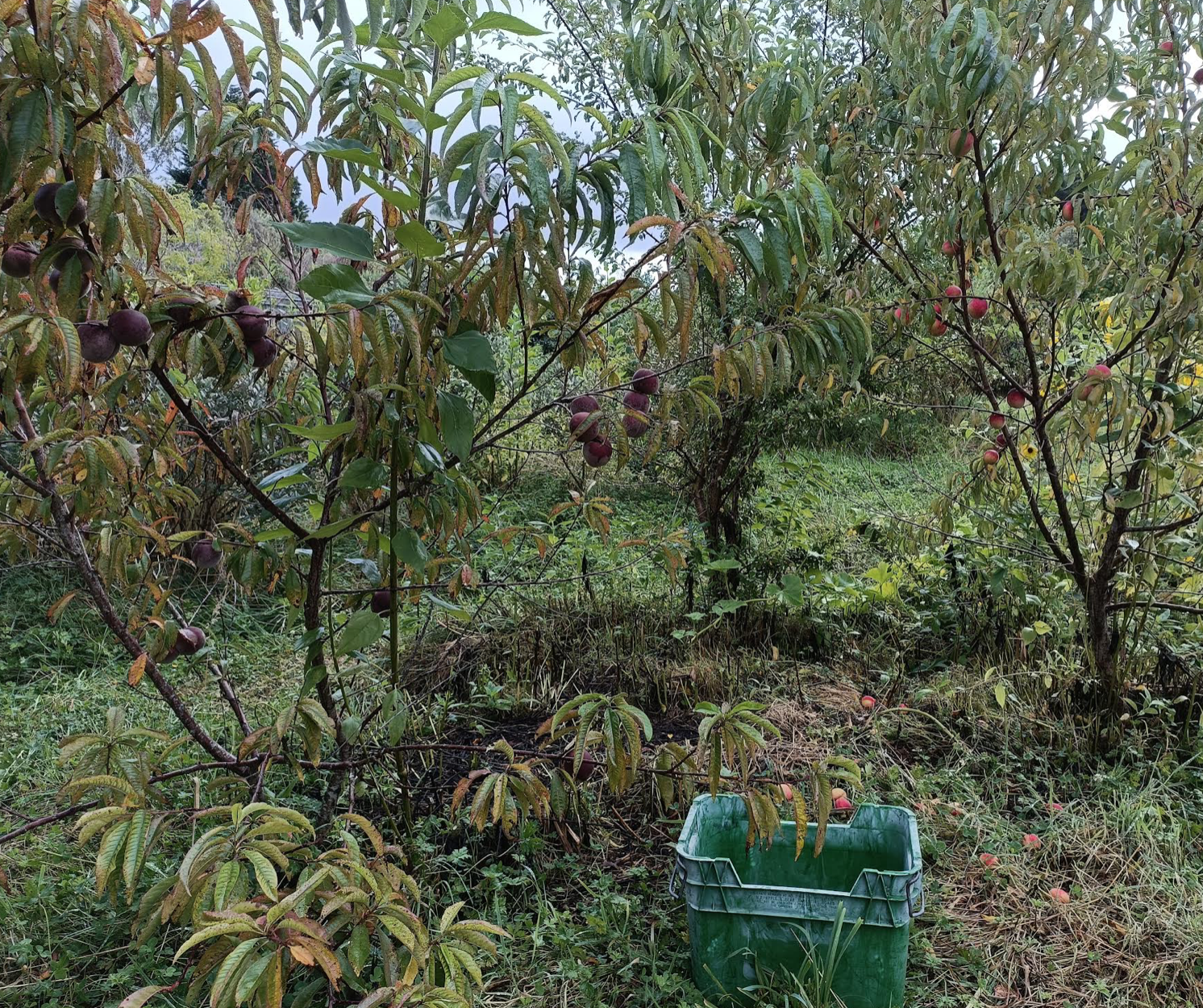
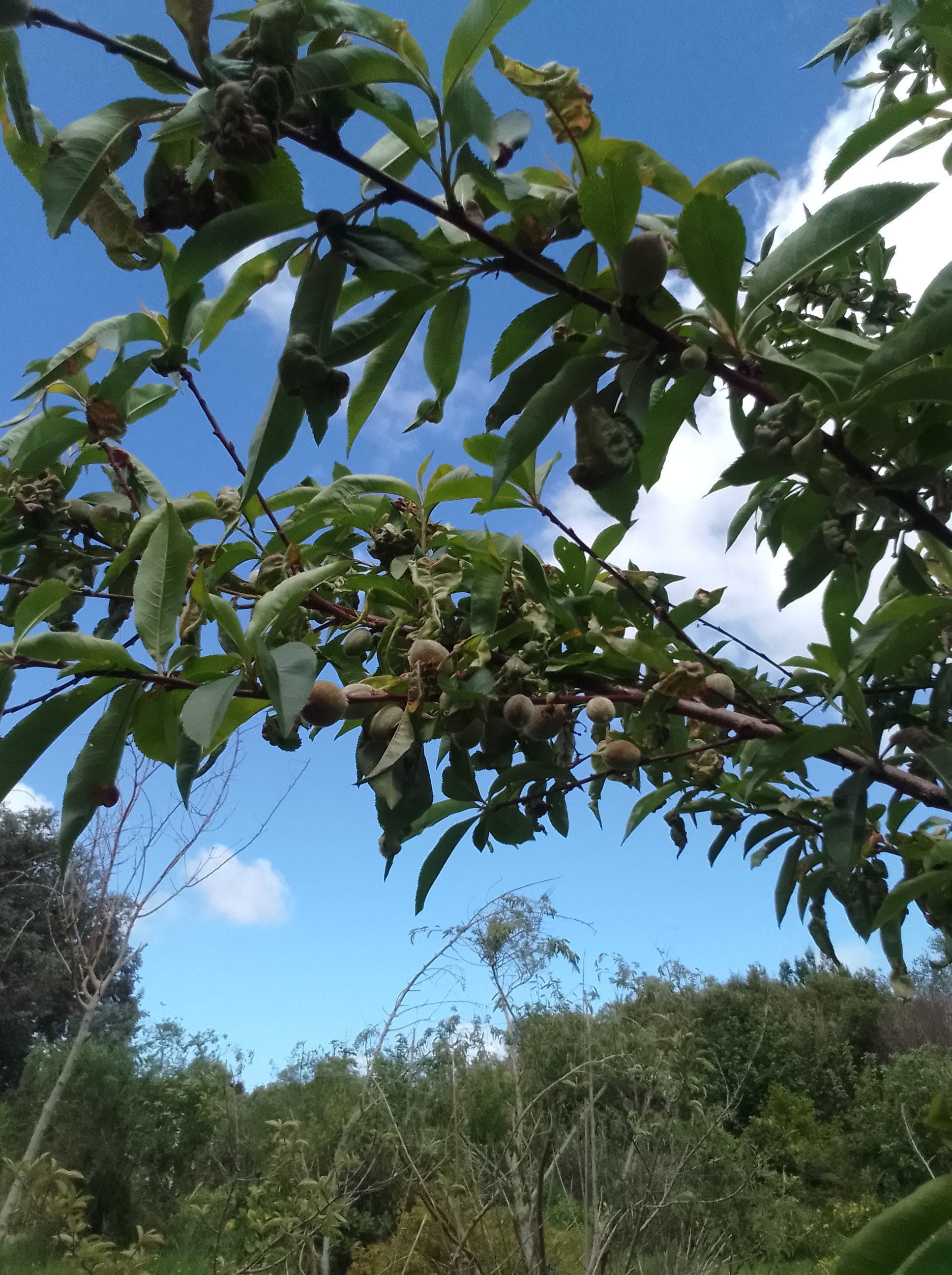
Just as the plums are winding up the peaches are cranking.
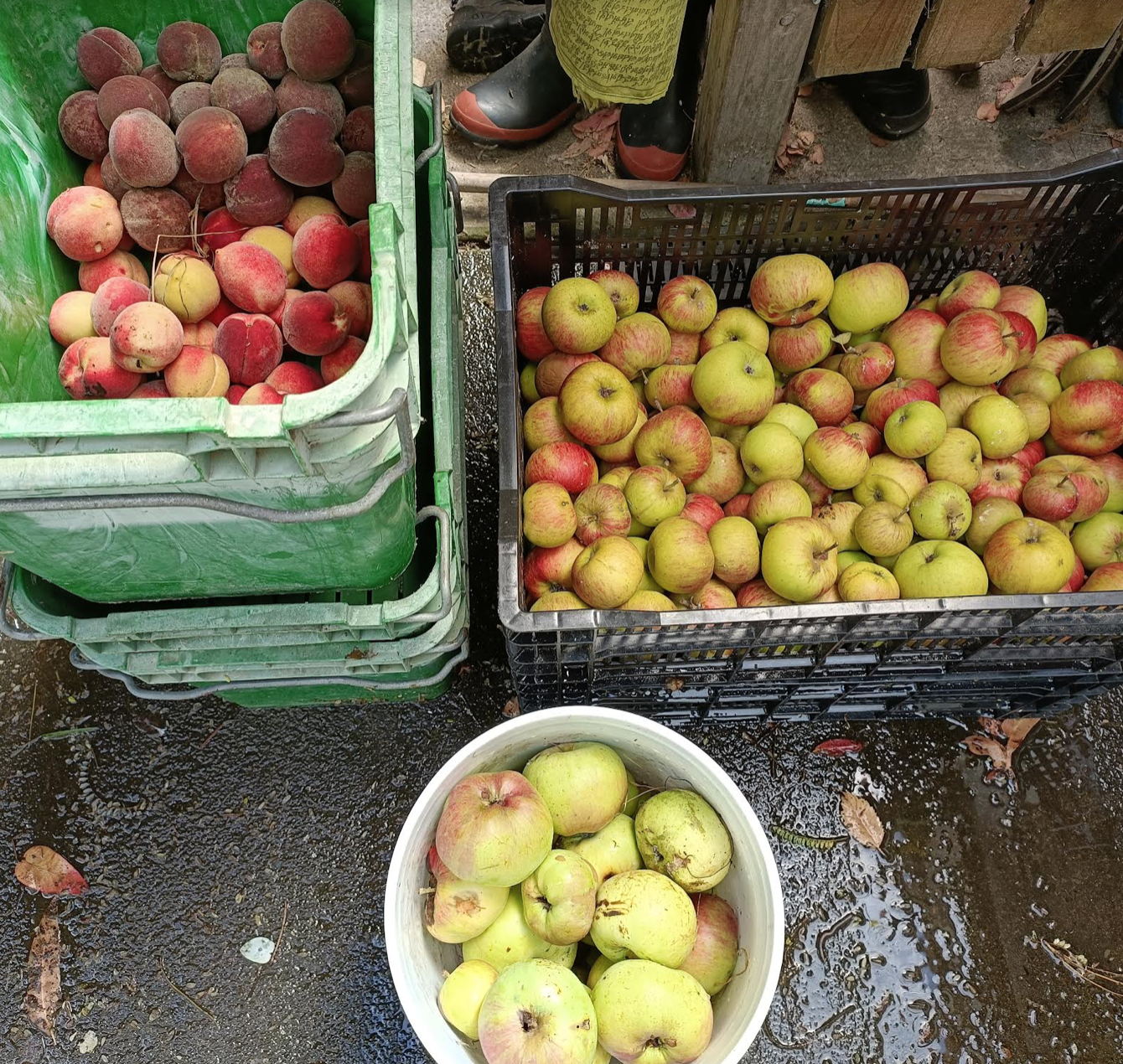
We’ve had some early apples so far but most of them are mid and late season varieties.
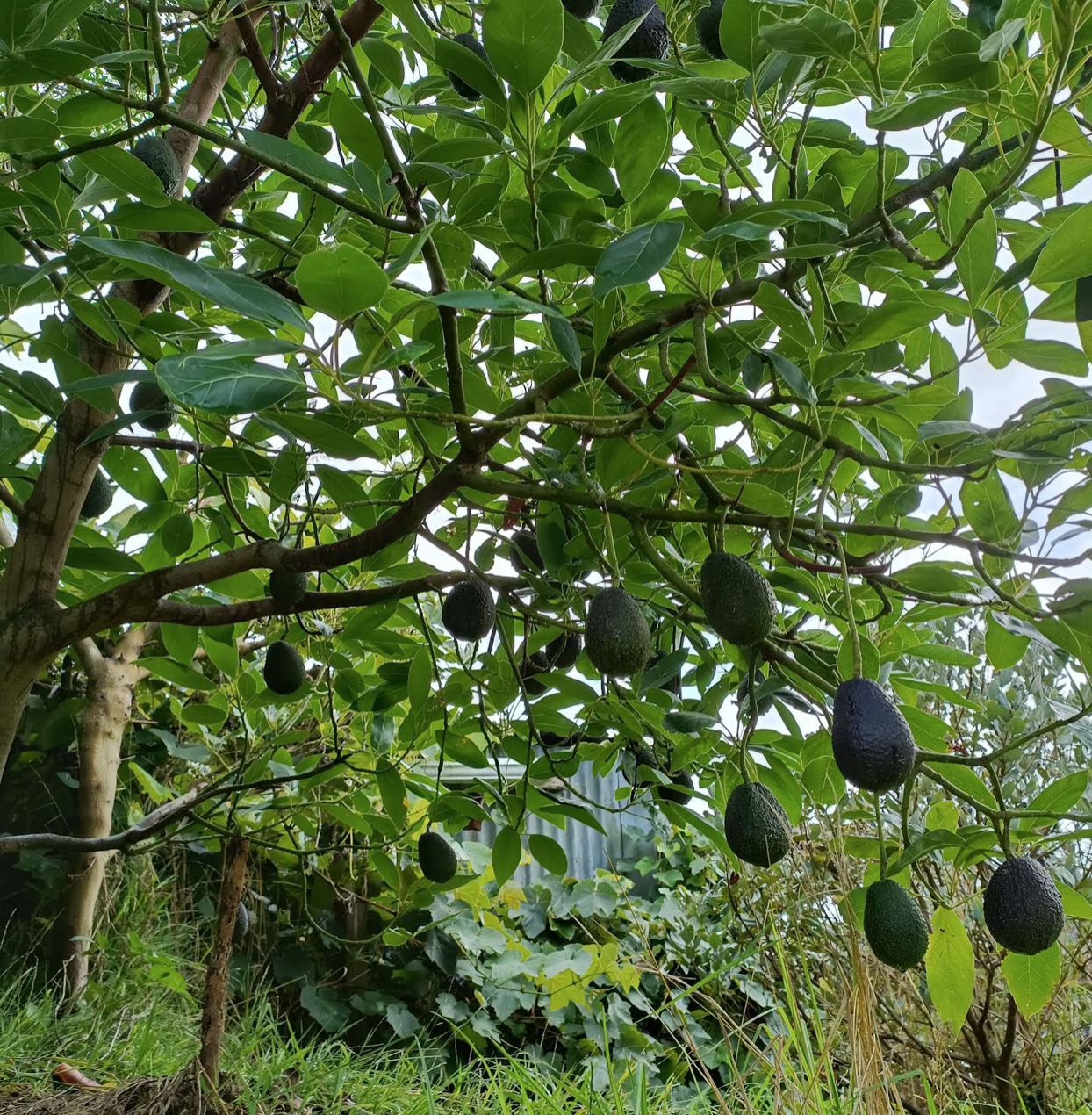
Pears, persimmons and feijoas are still a little ways away, but avocados are ever present.
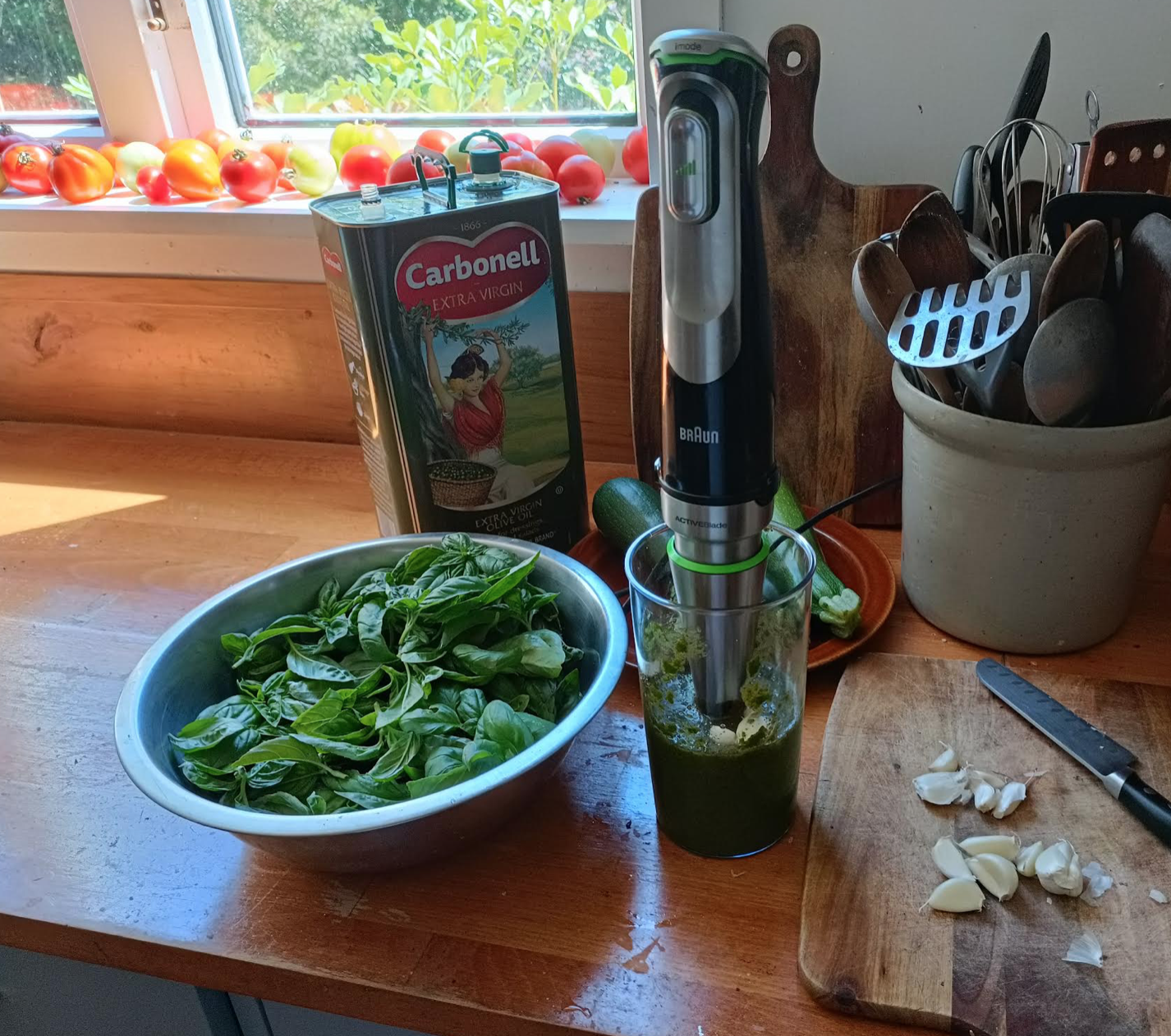
The garden is winding down but still plenty of basil for pesto.
Also grapes, guavas, quince and plenty of citrus on the way!
Despite the consistent strong spring winds and apparent lack of bees we have had excellent fruit set on our stone and pip fruit. I addition to these it appears all the other fruits are also doing well. Below are peaches and plums.
Exif_JPEG_420Exif_JPEG_420
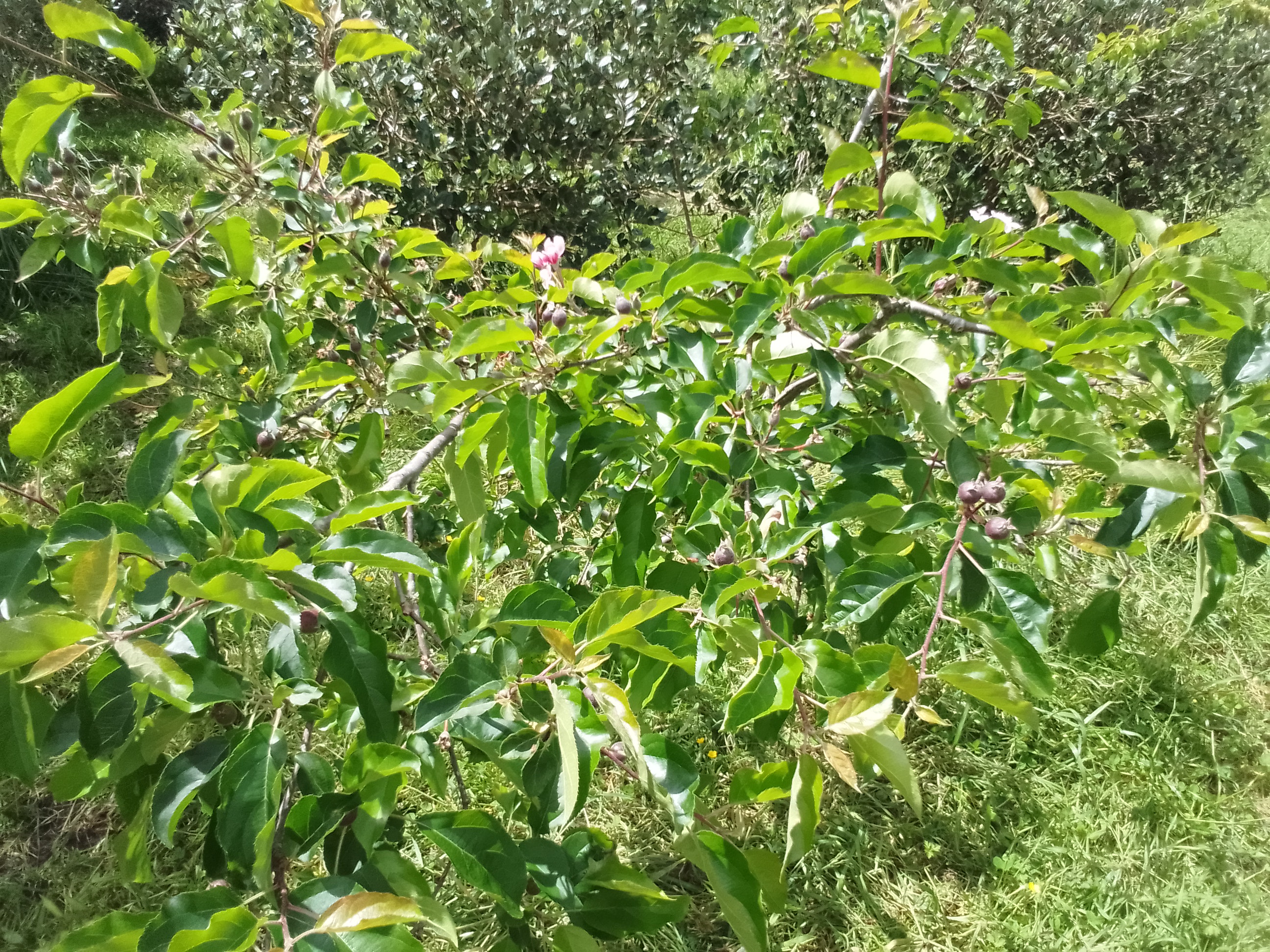
Incredible fruit set on the apple trees.
Exif_JPEG_420
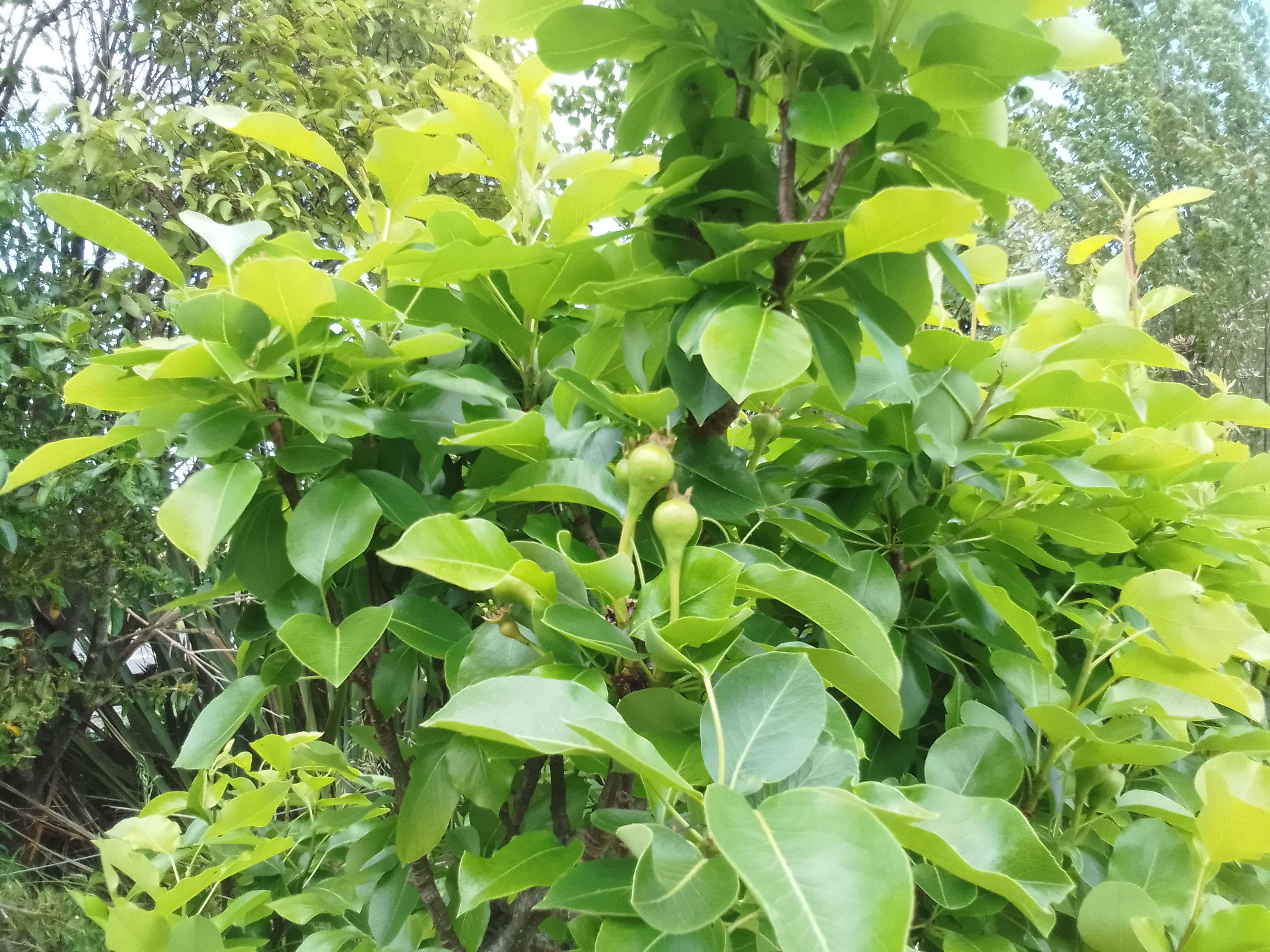
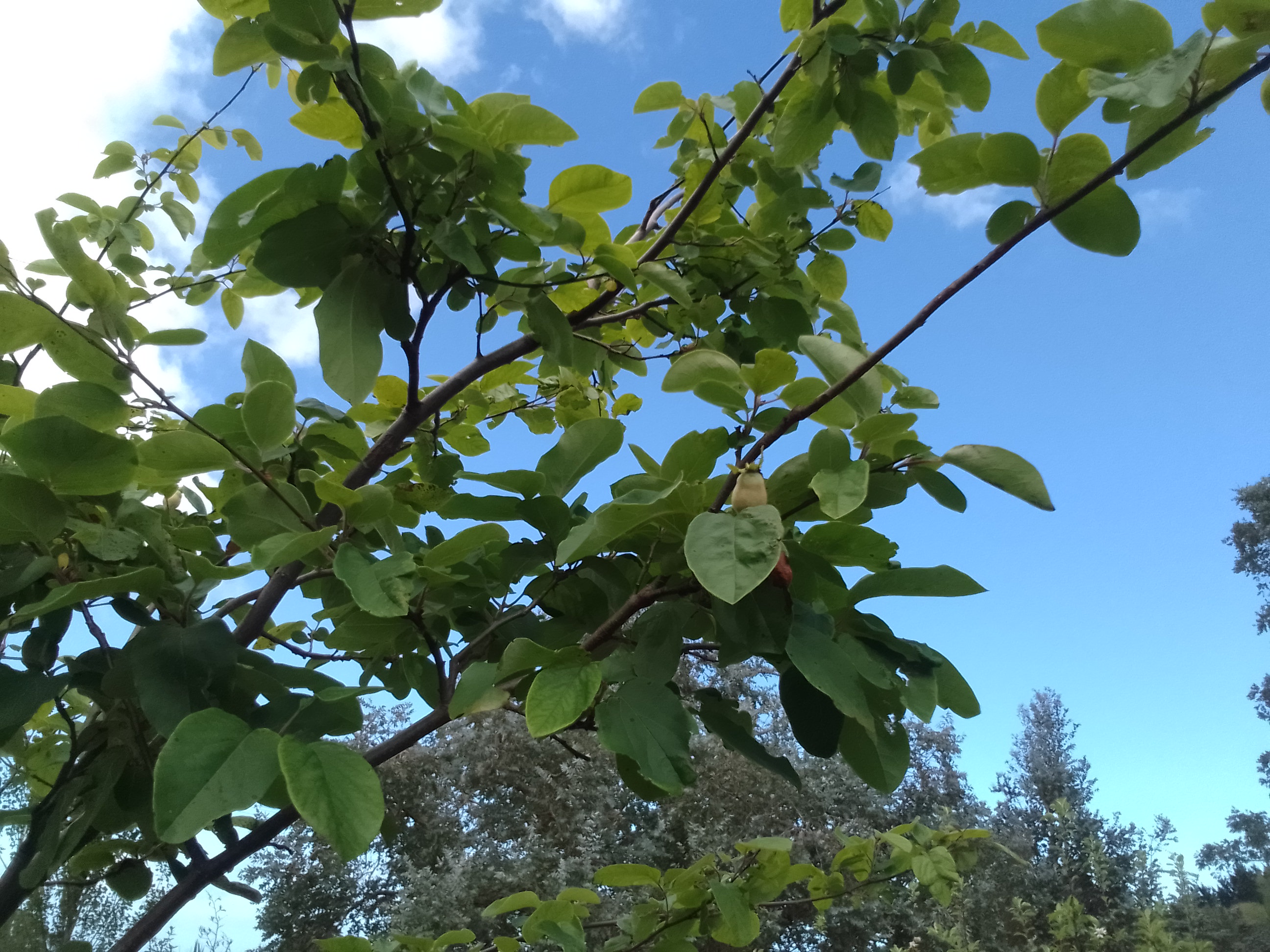
Pears and quince below.
Exif_JPEG_420Exif_JPEG_420
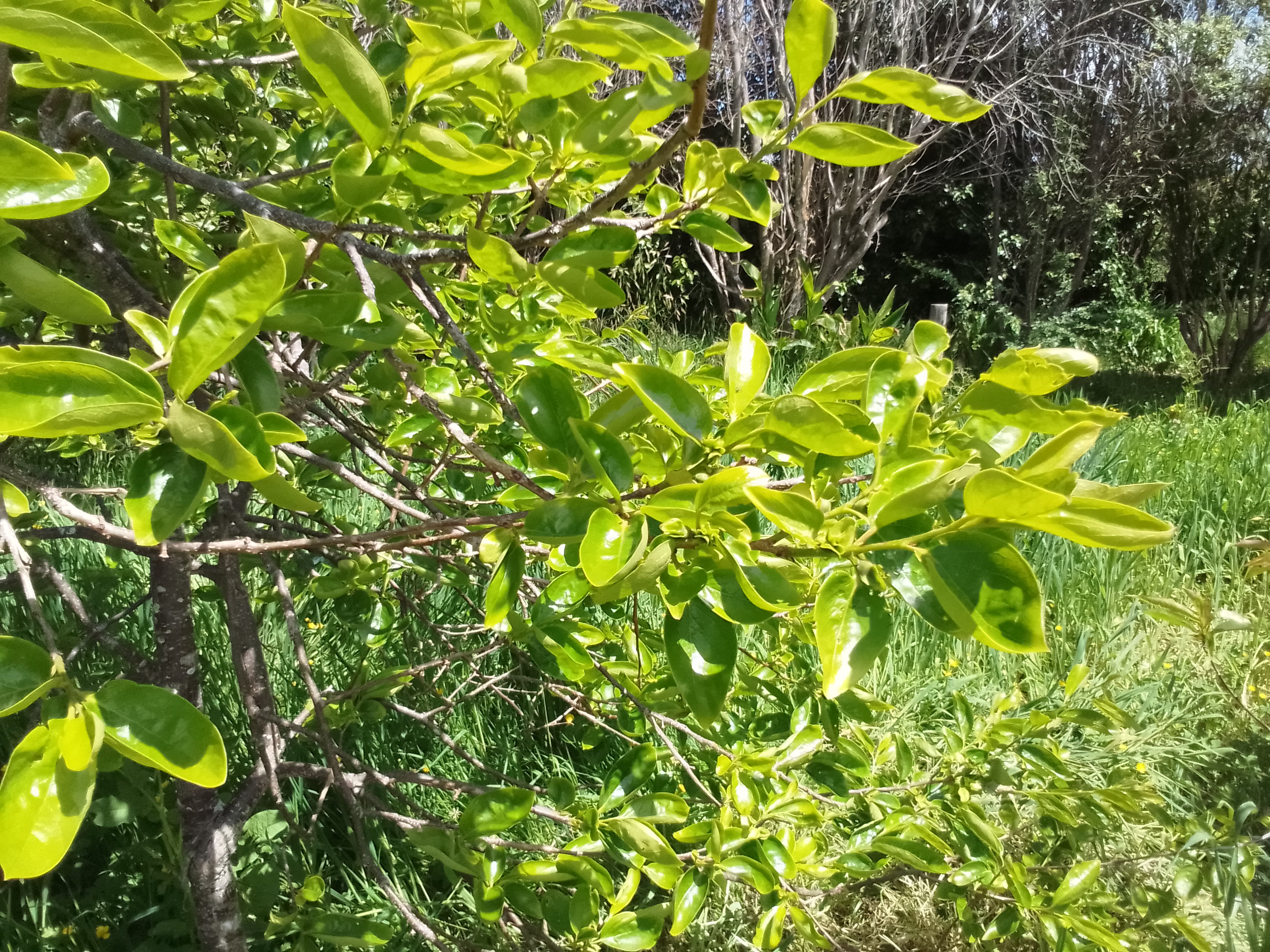
Feijoas and avocados are just blossoming, and persimmons on the verge.
Exif_JPEG_420Exif_JPEG_420Exif_JPEG_420
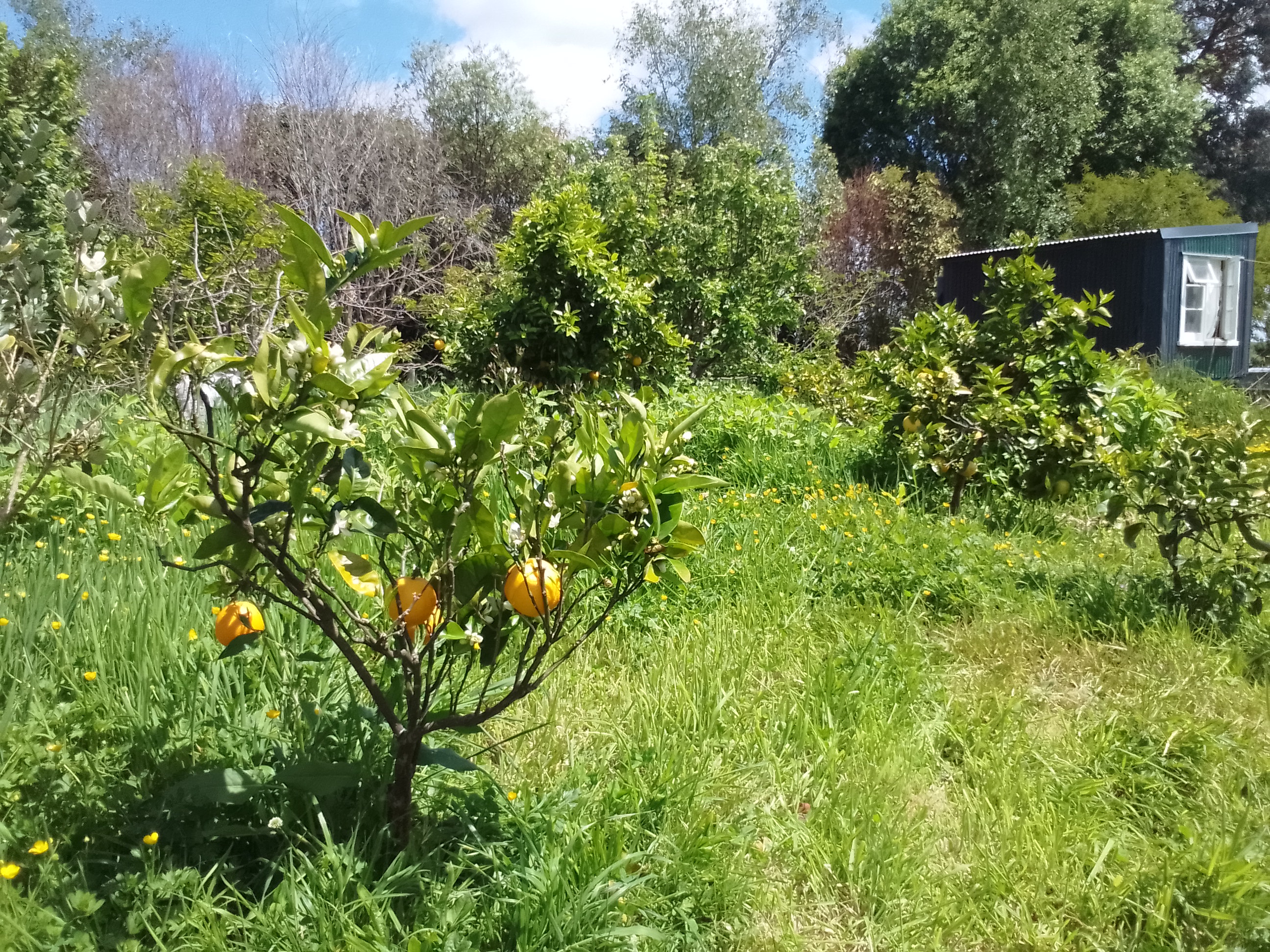
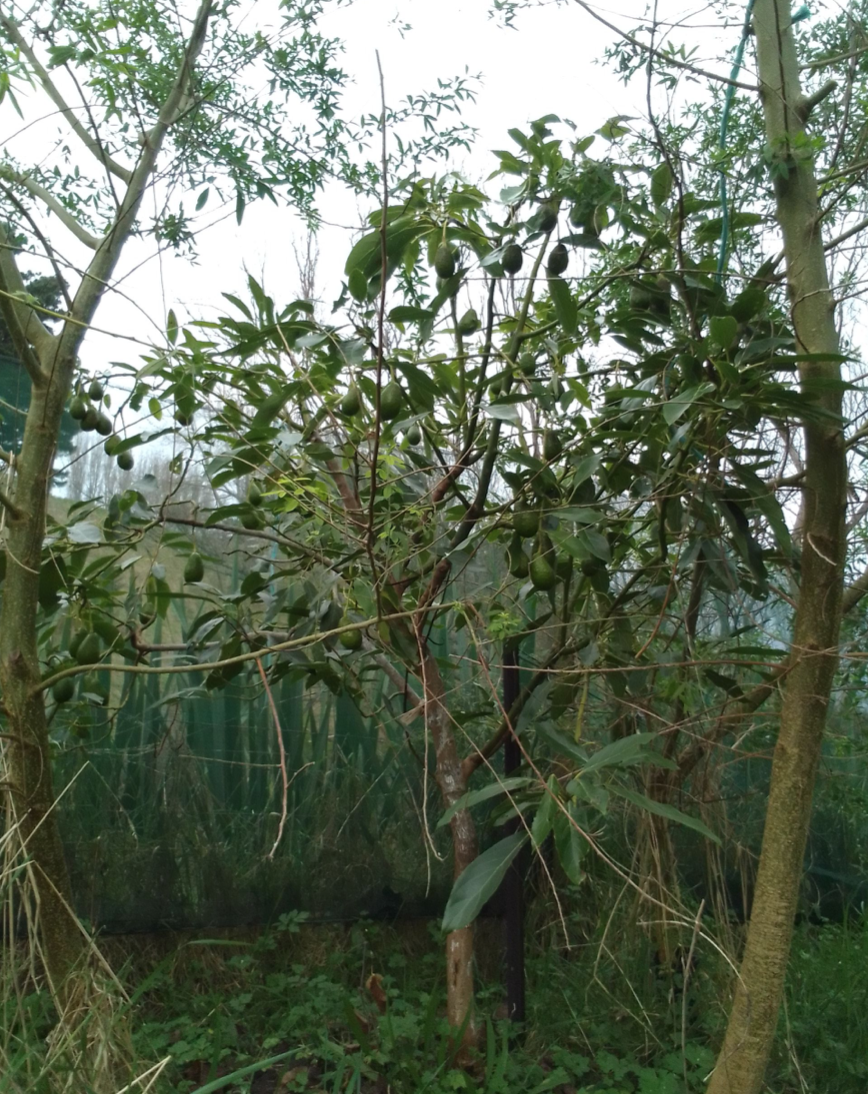
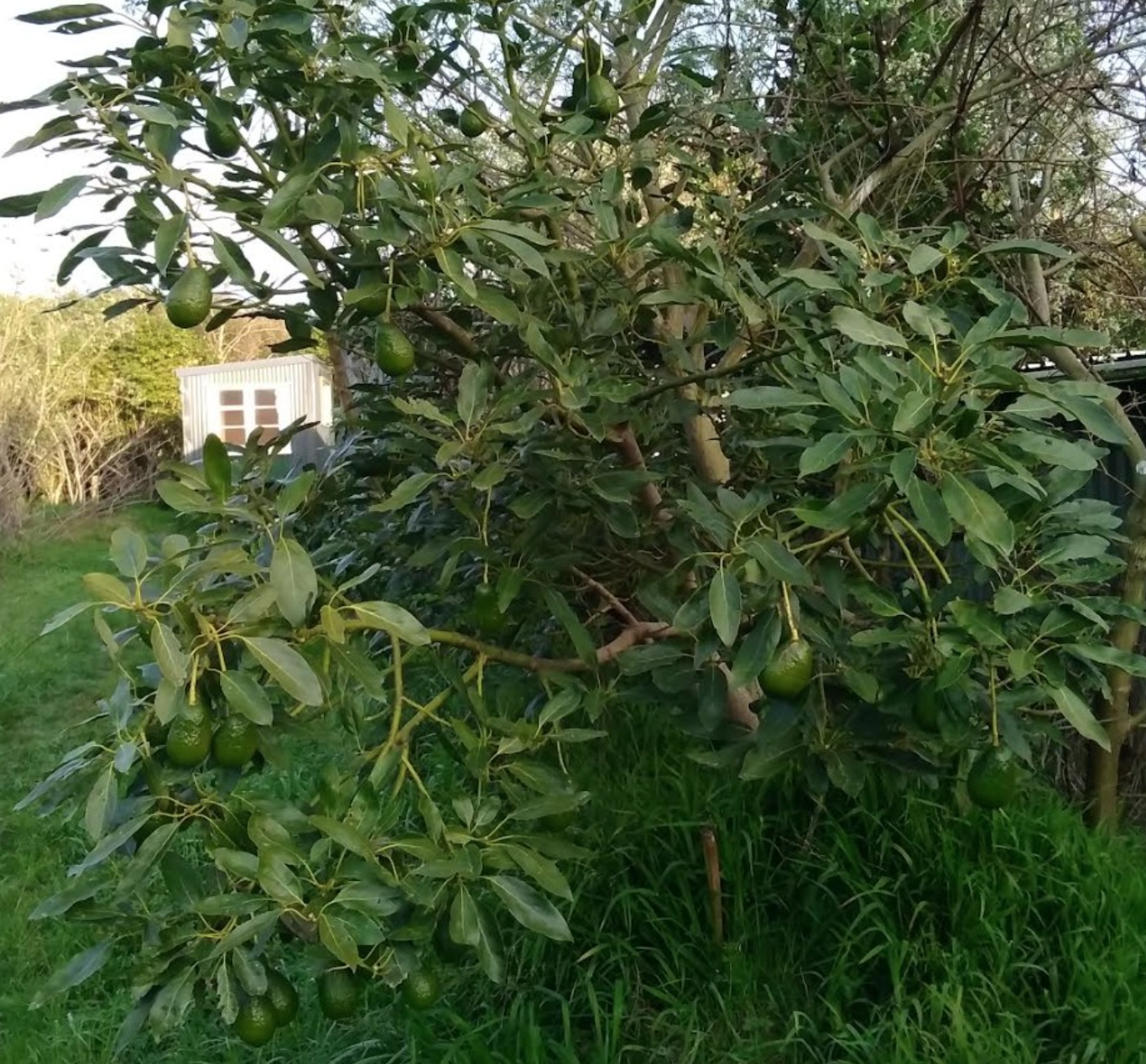
Still plenty of fruits on the avocado trees and citrus.
Exif_JPEG_420Exif_JPEG_420
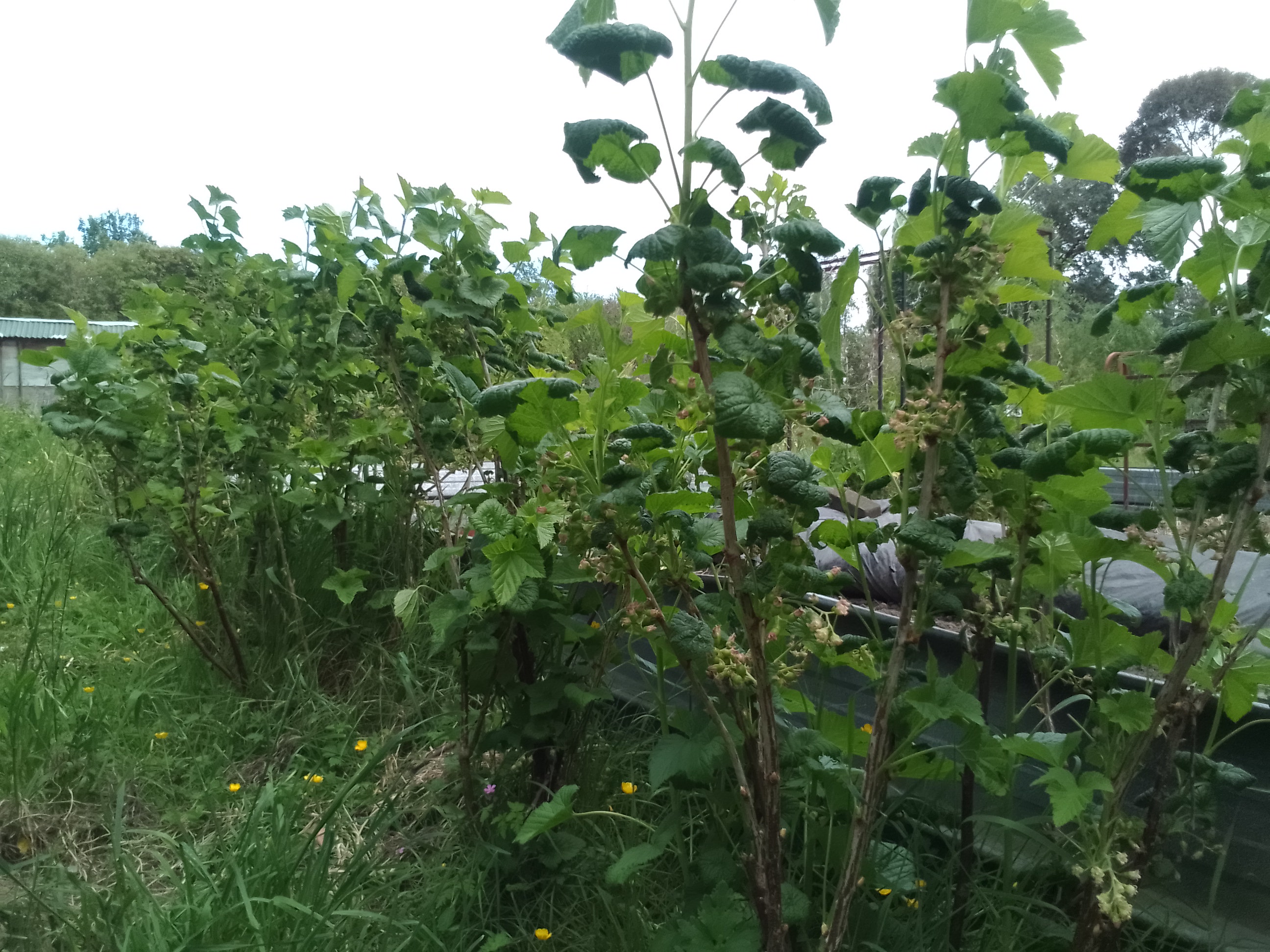
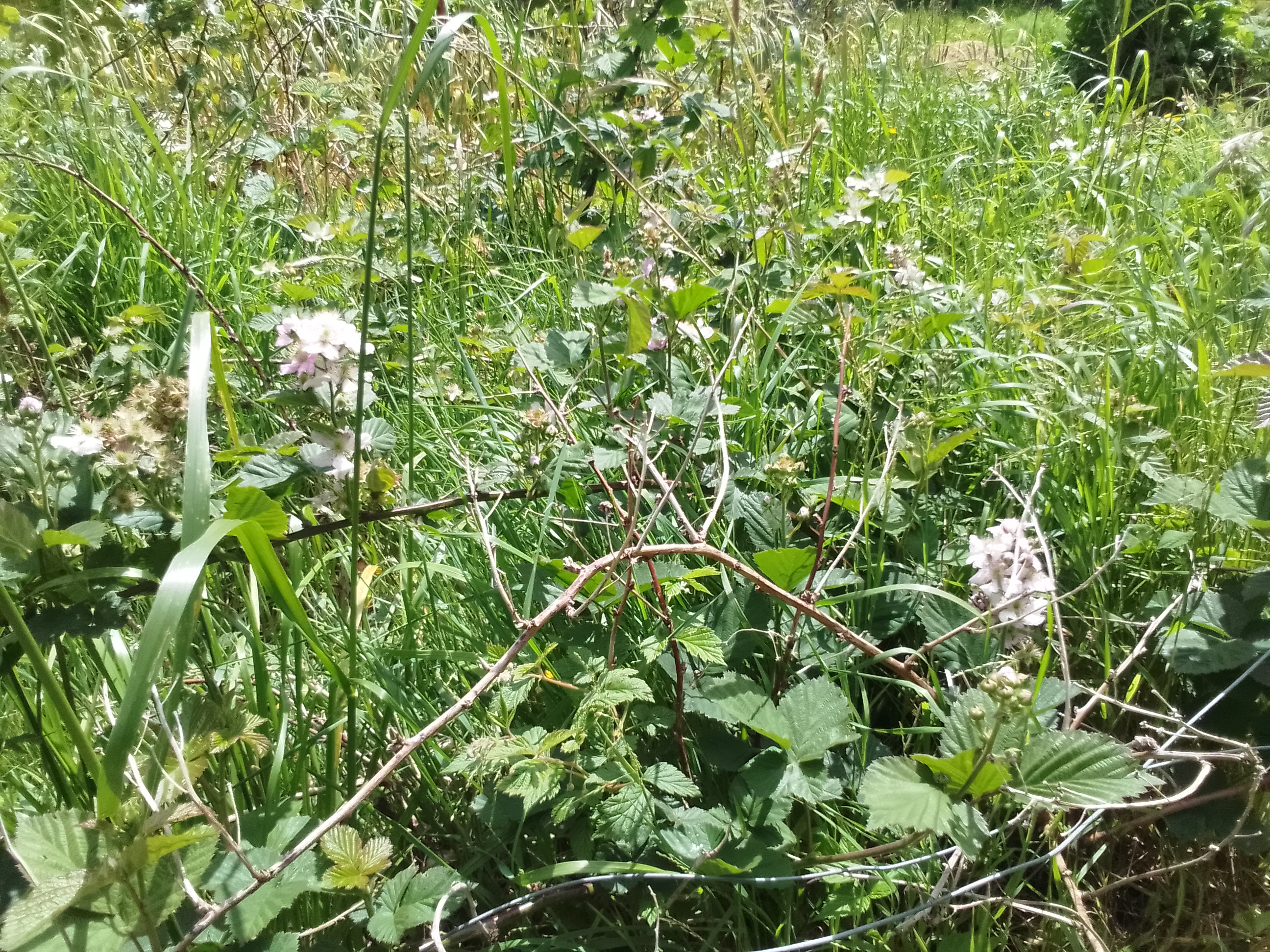
Also we’ve got black currants, grapes, raspberries and boysenberries.
Exif_JPEG_420Exif_JPEG_420Exif_JPEG_420
I forgot to take images of the lemon tree and blueberries. Too much fruit to even remember!
Kia ora friends! It’s been a mild and wet winter, which has served our native tree plantings well. With over 500 natives in the ground this winter we are hoping for moist soils as far into summer as possible.
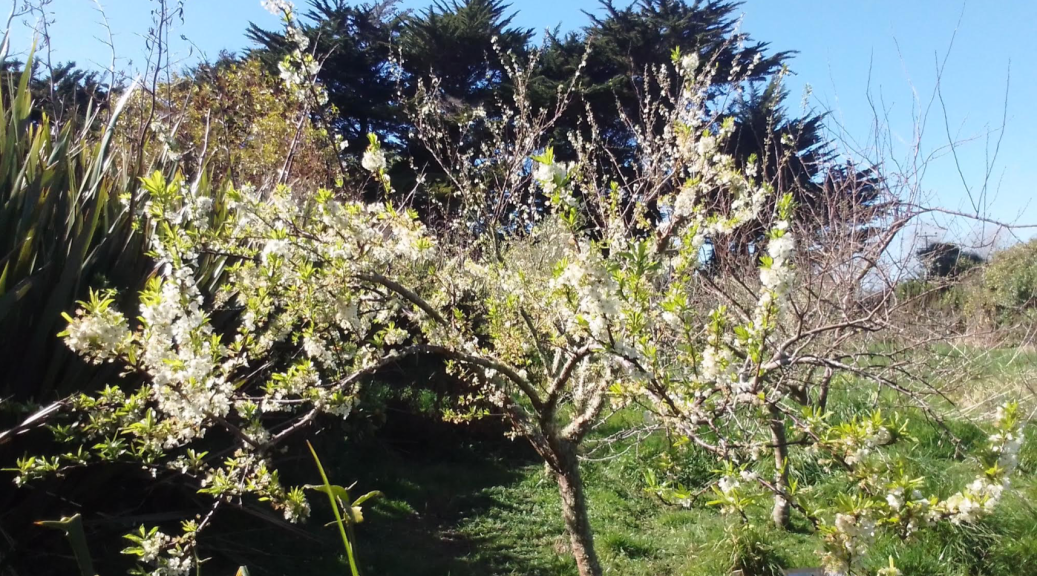
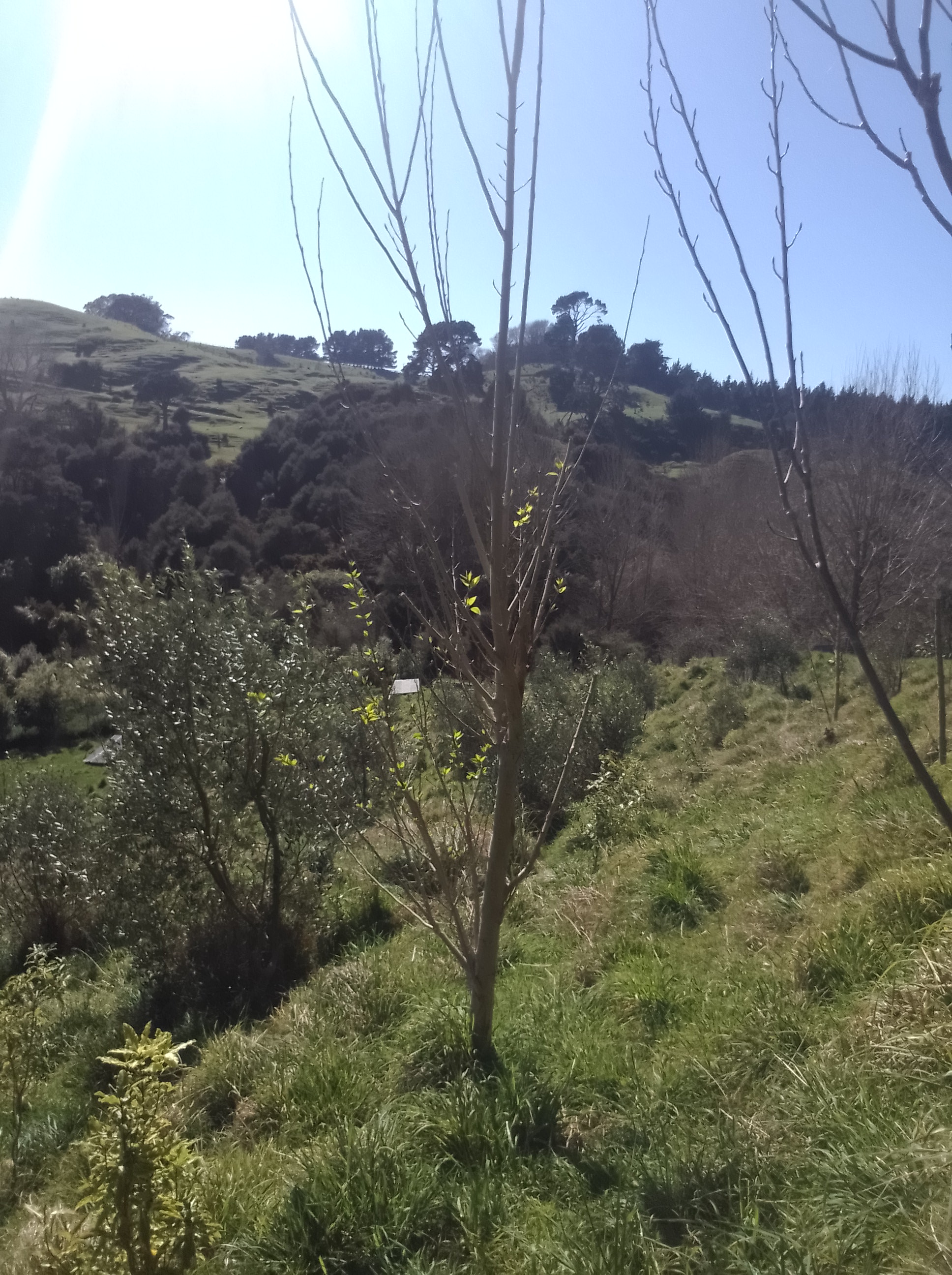
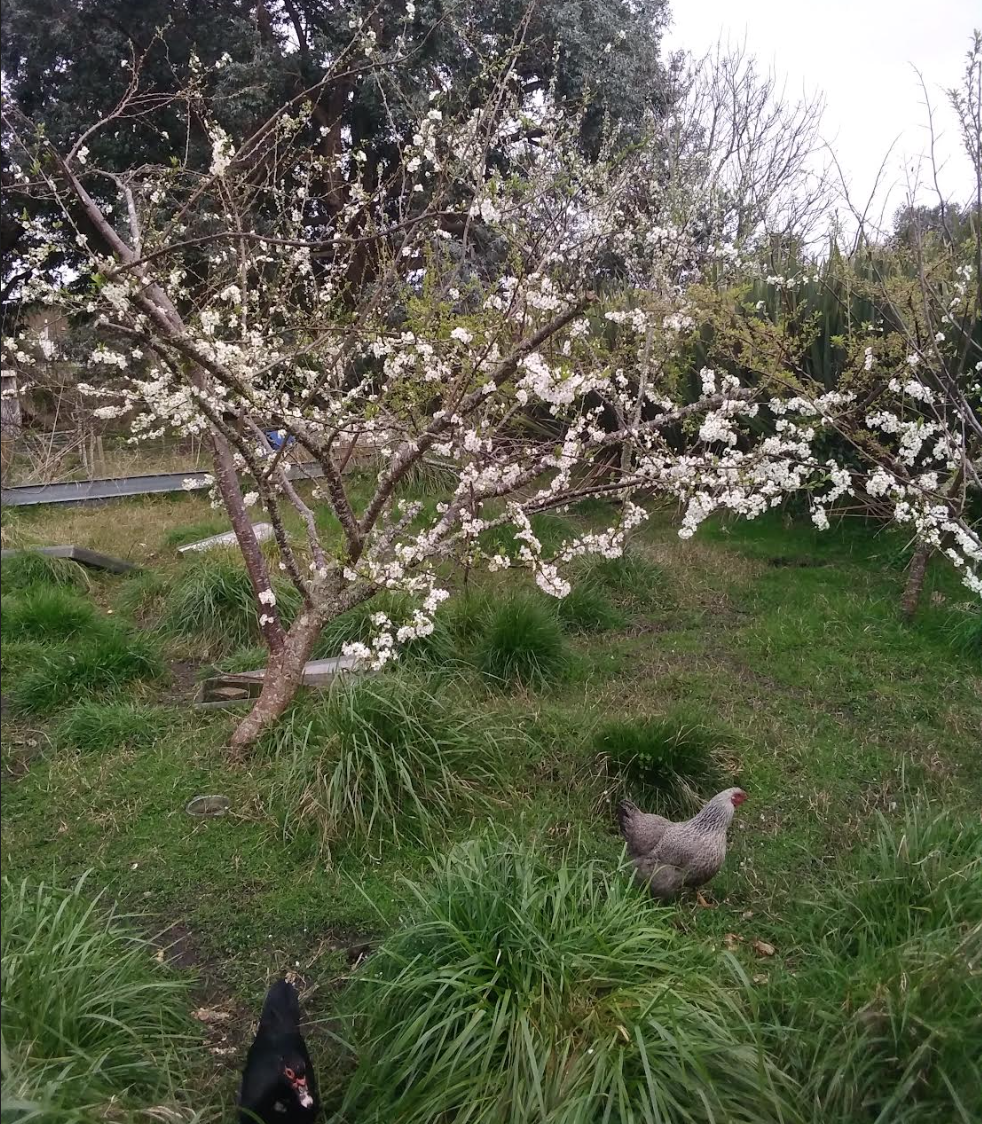
One of the first signs of spring are the plum trees in bloom as seen on the featured image. Another is the poplars leafing out.
Exif_JPEG_420
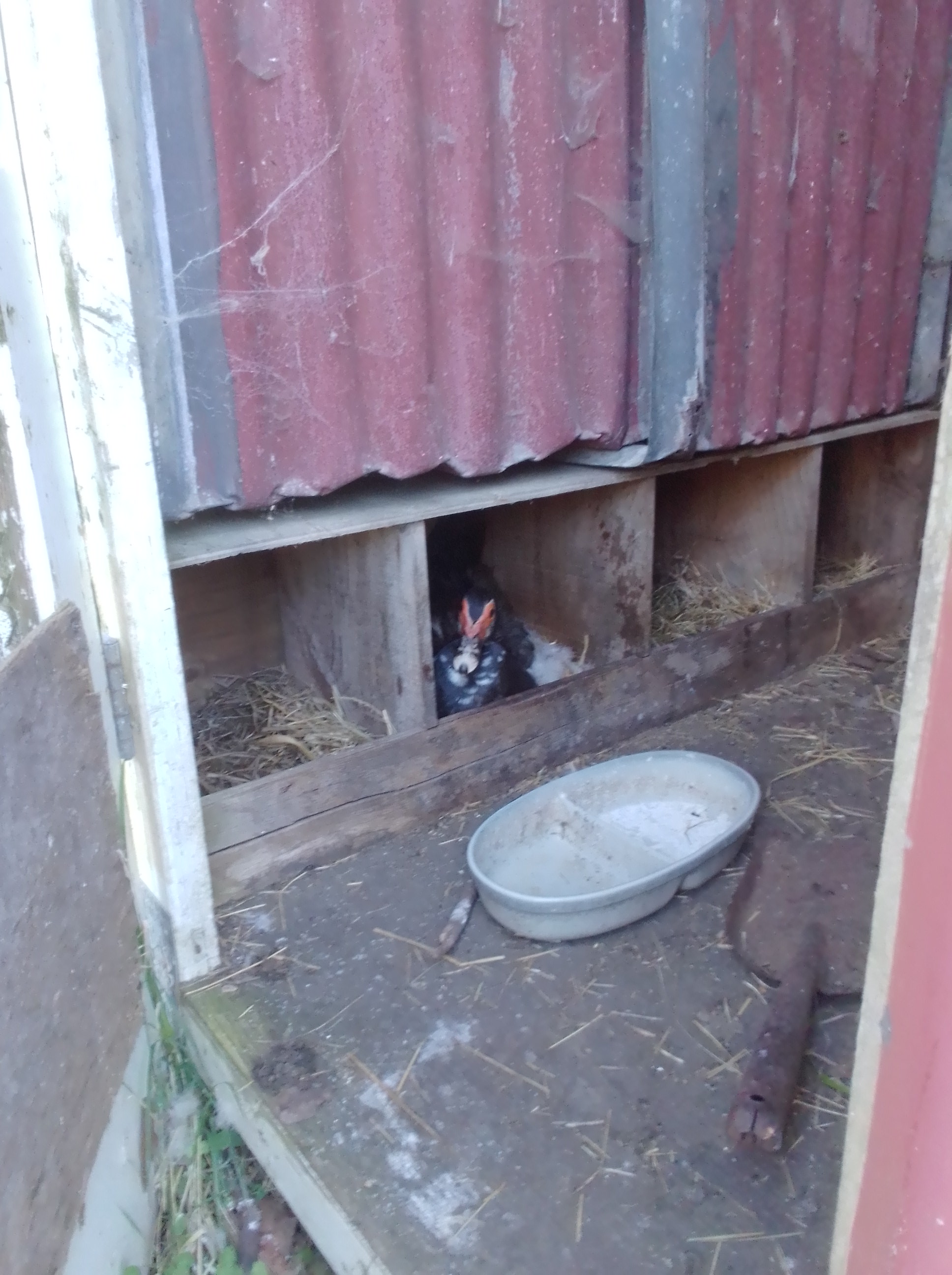
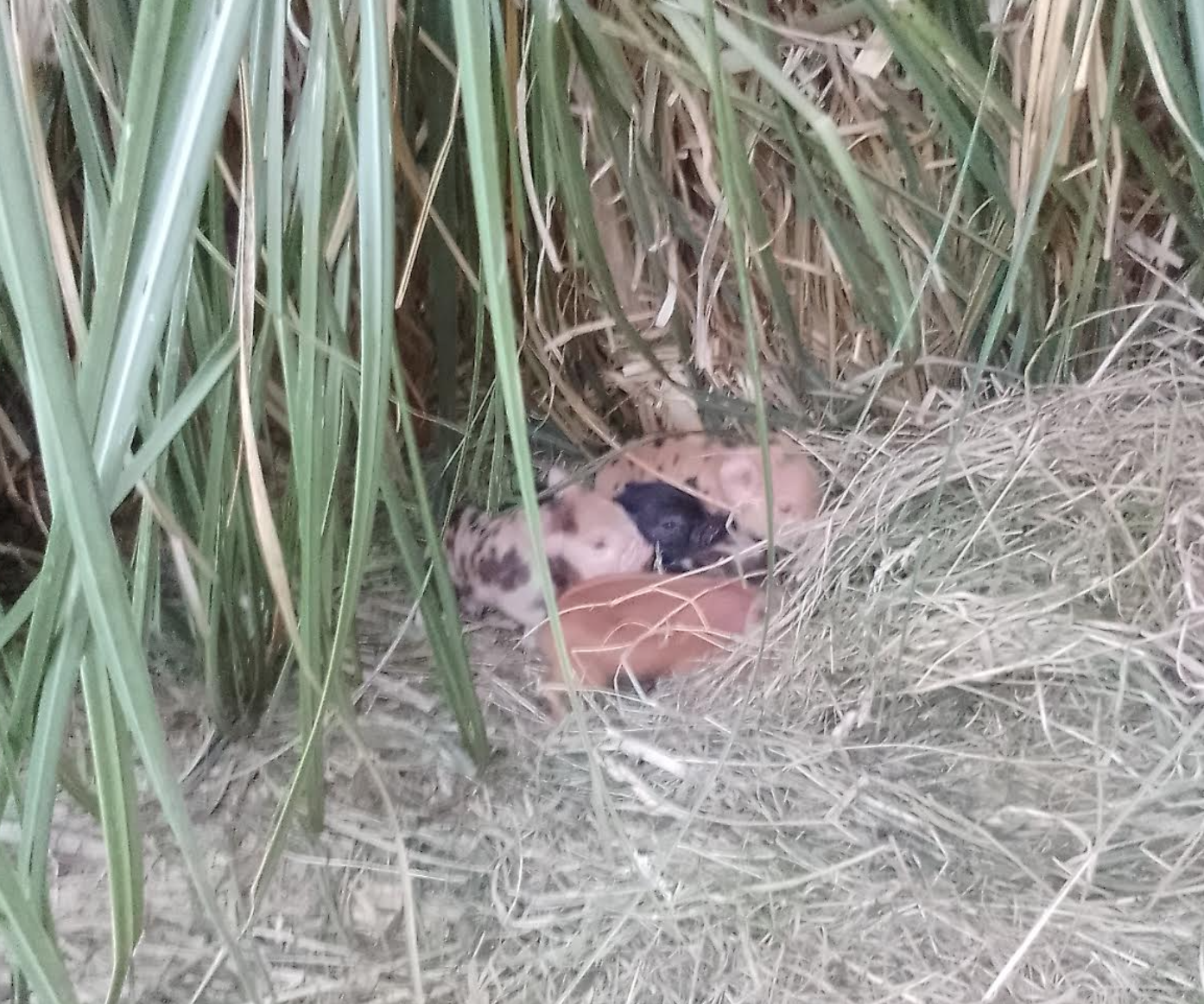
We also see the muscovies sitting on eggs.
Exif_JPEG_420
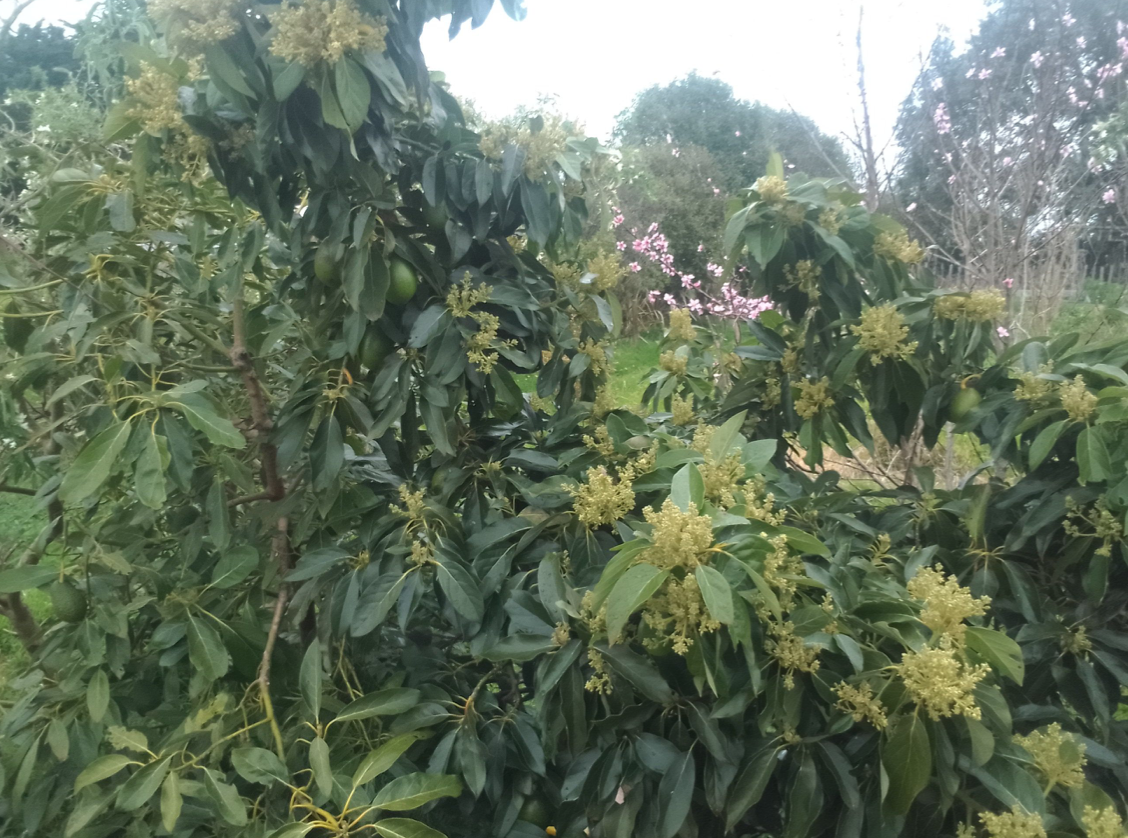
And avocados (and peaches) blossoming.
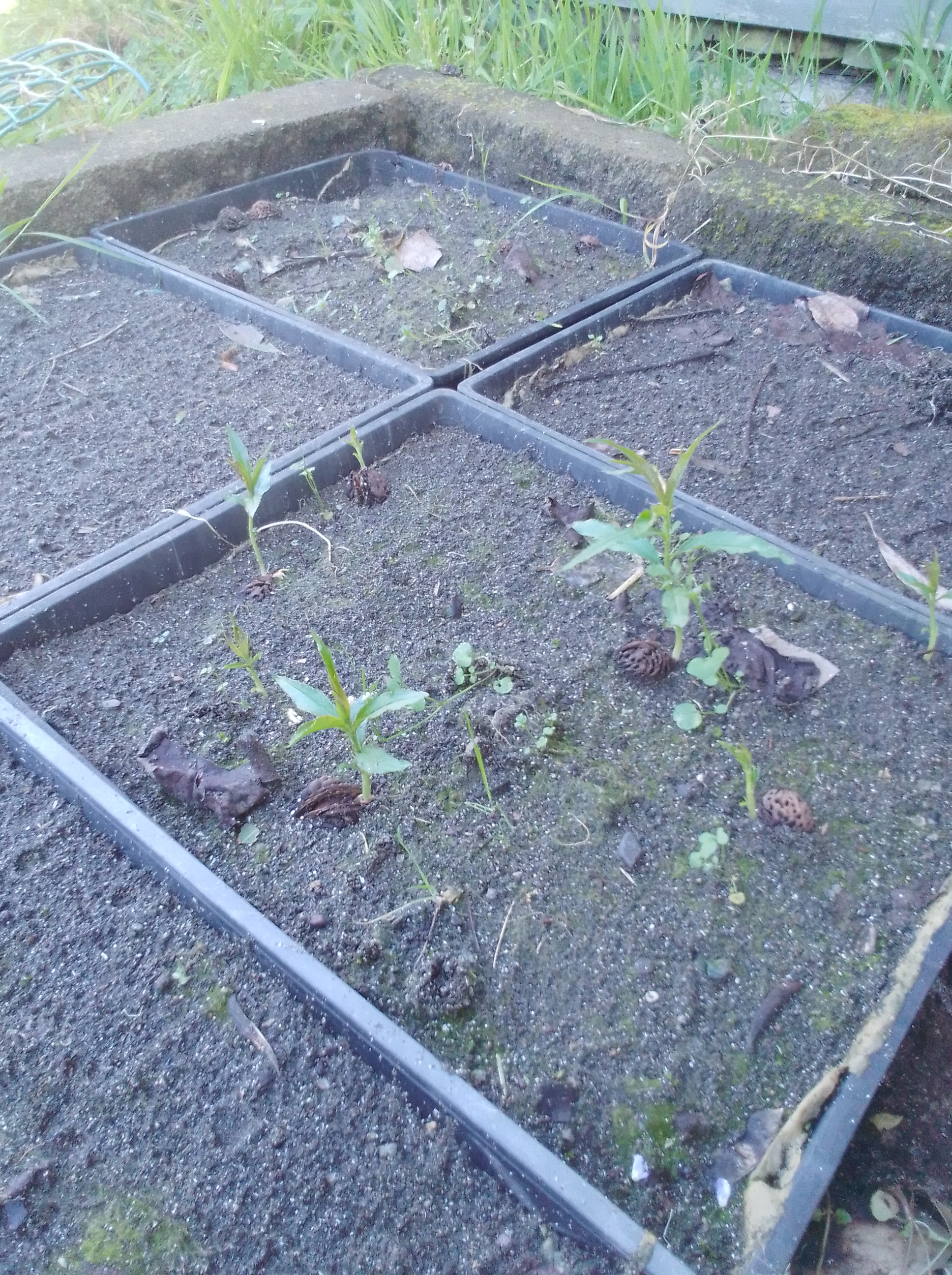
At the same time, the peach stones are germinating in their propagation beds – ready to prick out and pot up.
Exif_JPEG_420
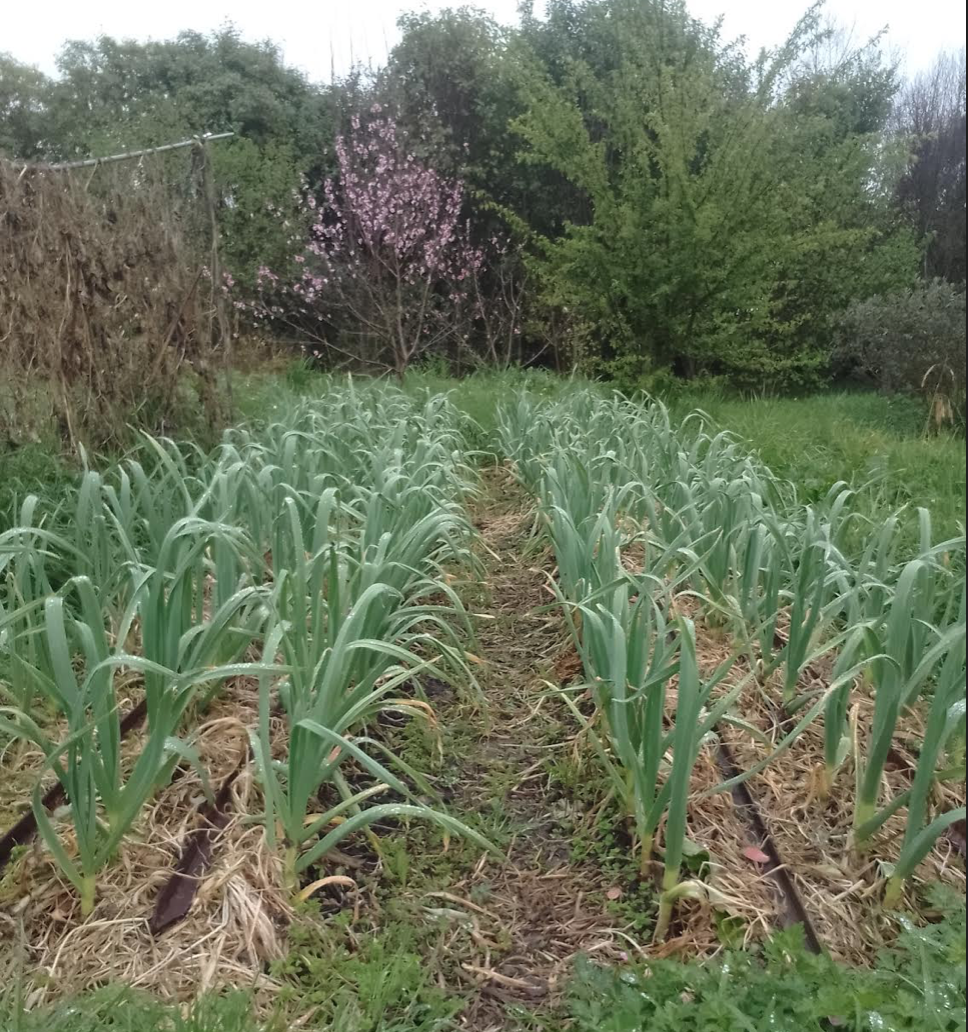
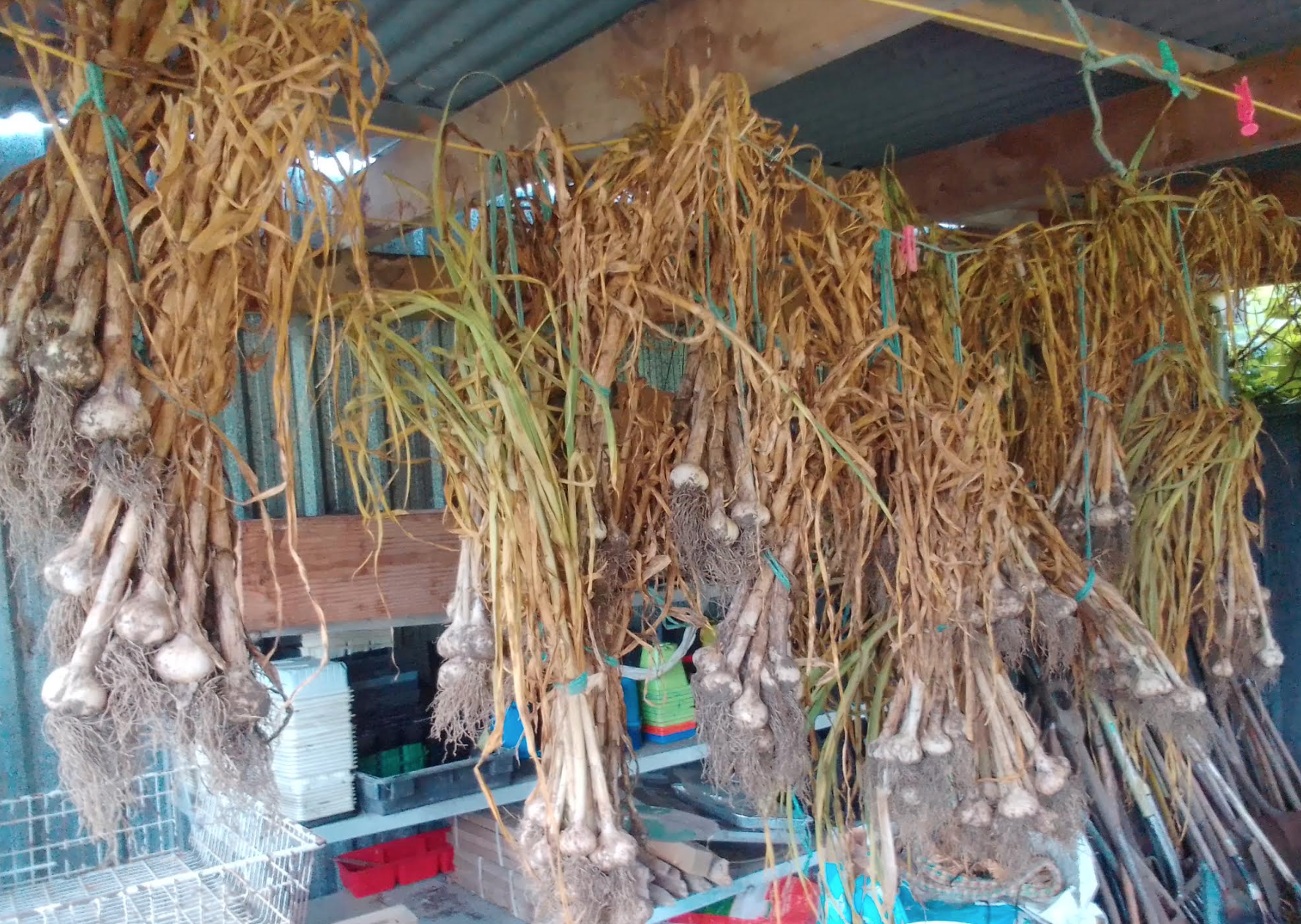
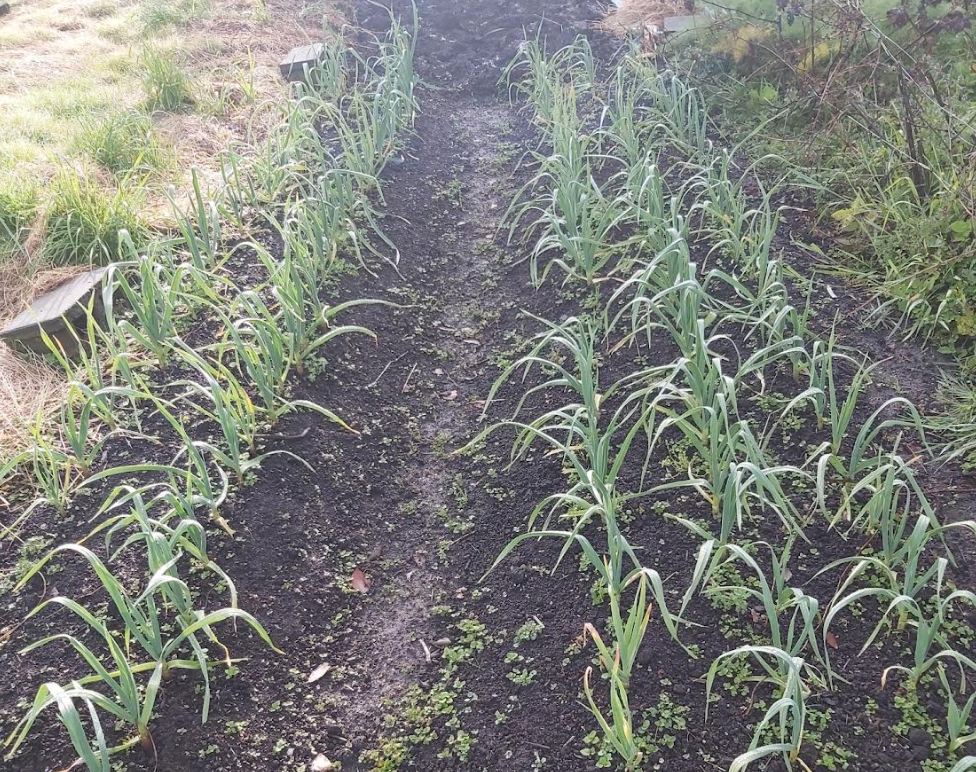
September marks about the halfway point of the growing season for garlic. We have just mulched ours but have had to put y-posts on top to keep the mulch from blowing away in these big winds!
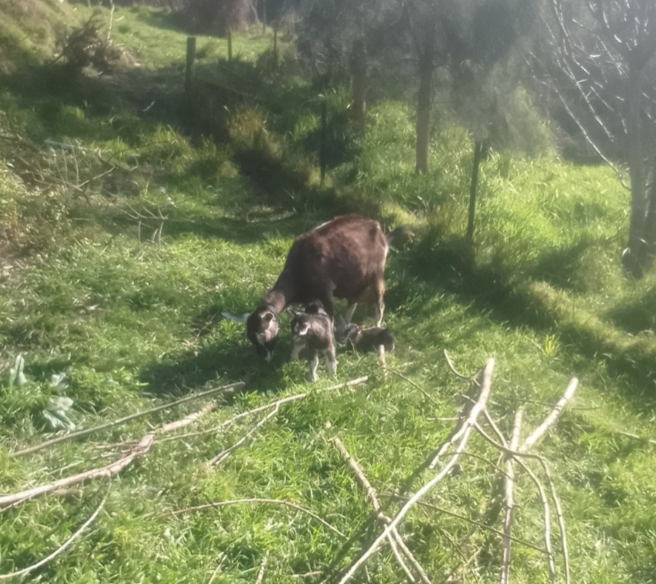
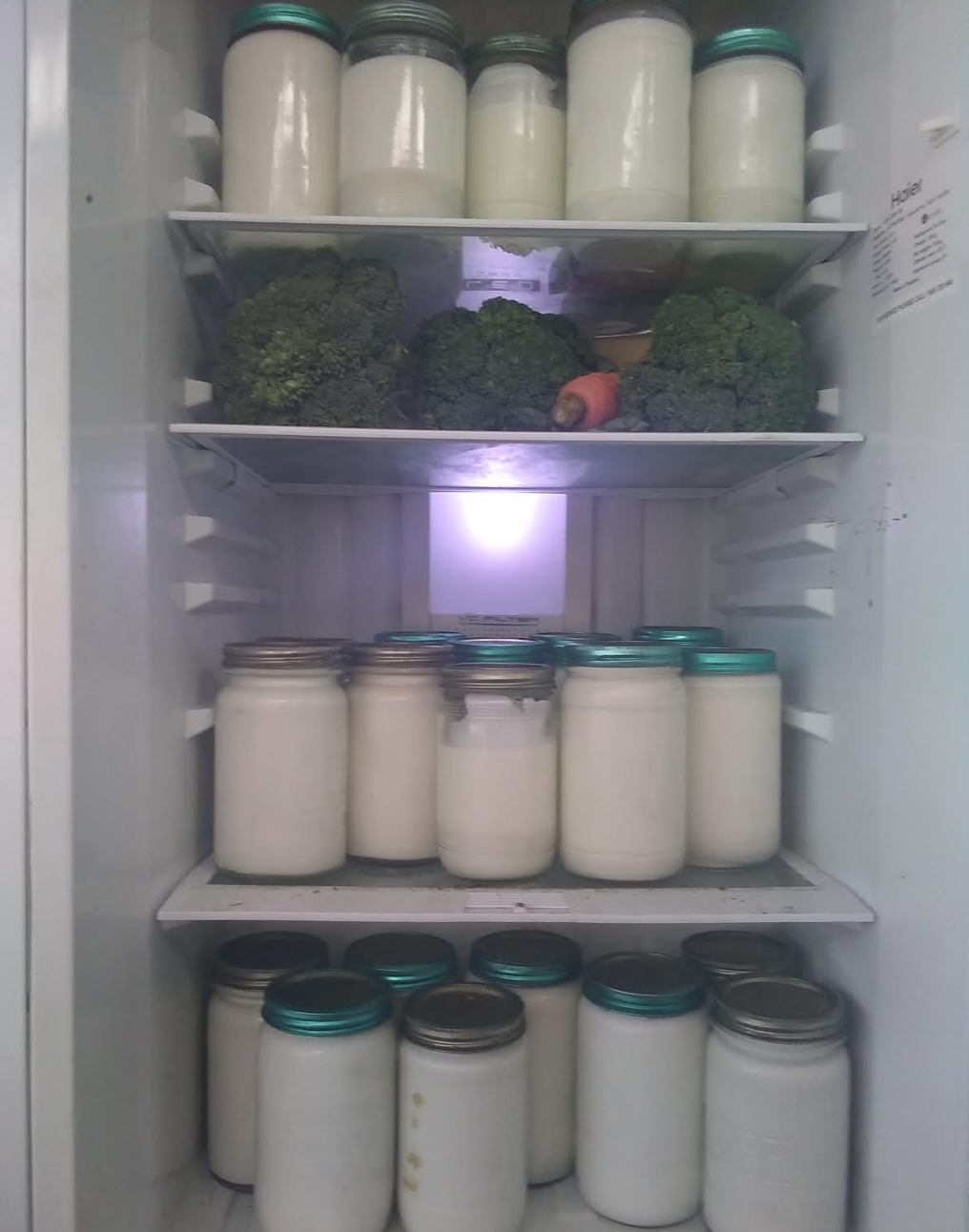
All the does have given birth so we’ve got a paddock full of kids and fridge full of milk.
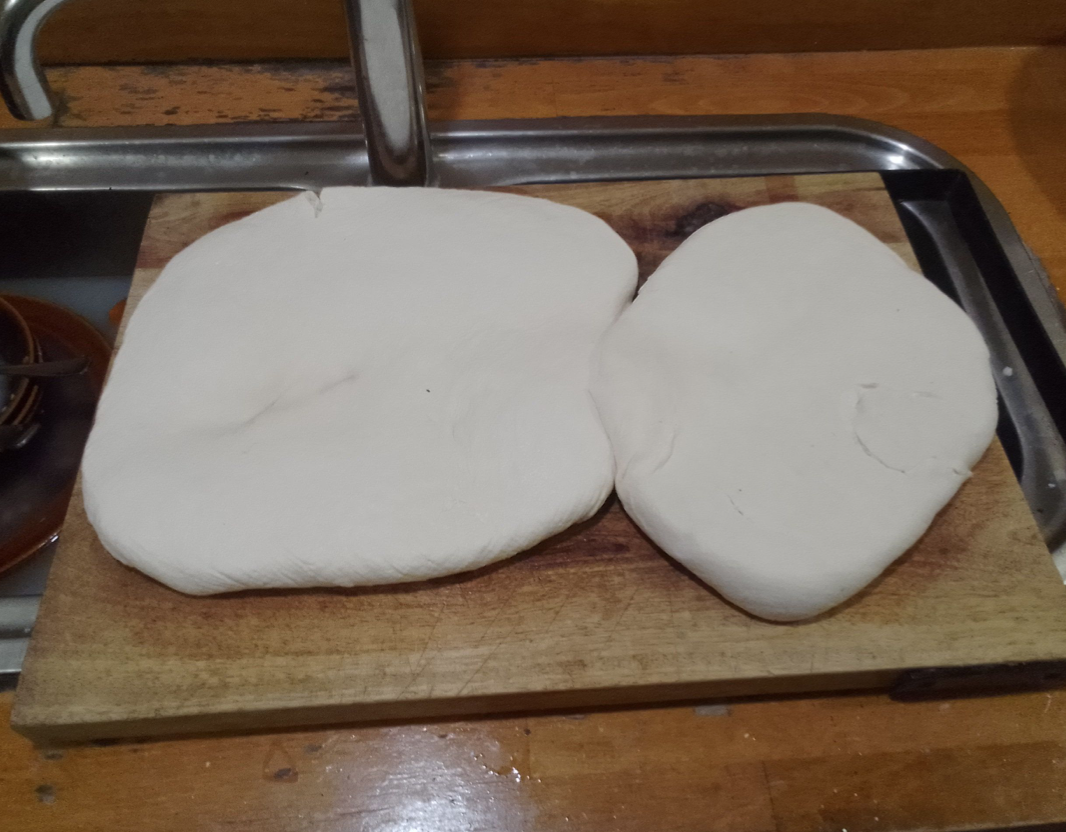
And Cheese Season has kicked off with a massive double batch of halloumi.
Love this time of year and looking forward to the abundance of this growing season.
Trees make up a large part of our approach to land management on this challenging 5.1 hectare property. We plant trees to prevent erosion. We plant trees to protect stream banks. We plant trees for fruit. We plant trees for stock fodder. We plant nurse trees to protect other trees. We plant native trees for biodiversity. We plant trees for shade. We plant trees to bees.
In a nutshell, we love planting trees. Oh wait, we plant trees for nuts too!
Winter is when we plant most of our trees and this year is no exception. We’ve been planting native trees on the valley sides above Purua Stream. Here is a bucket of trees ready to be planted.
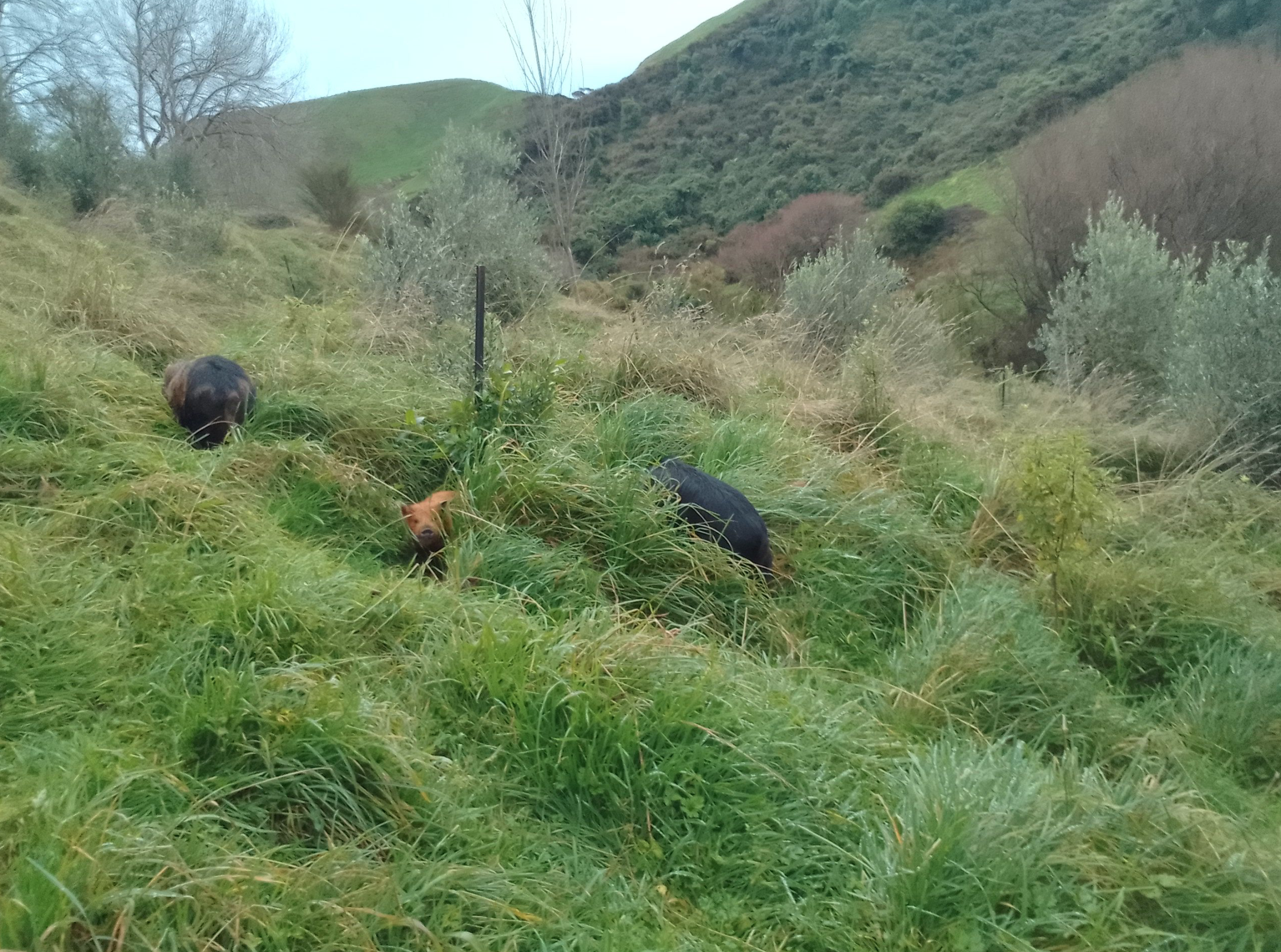
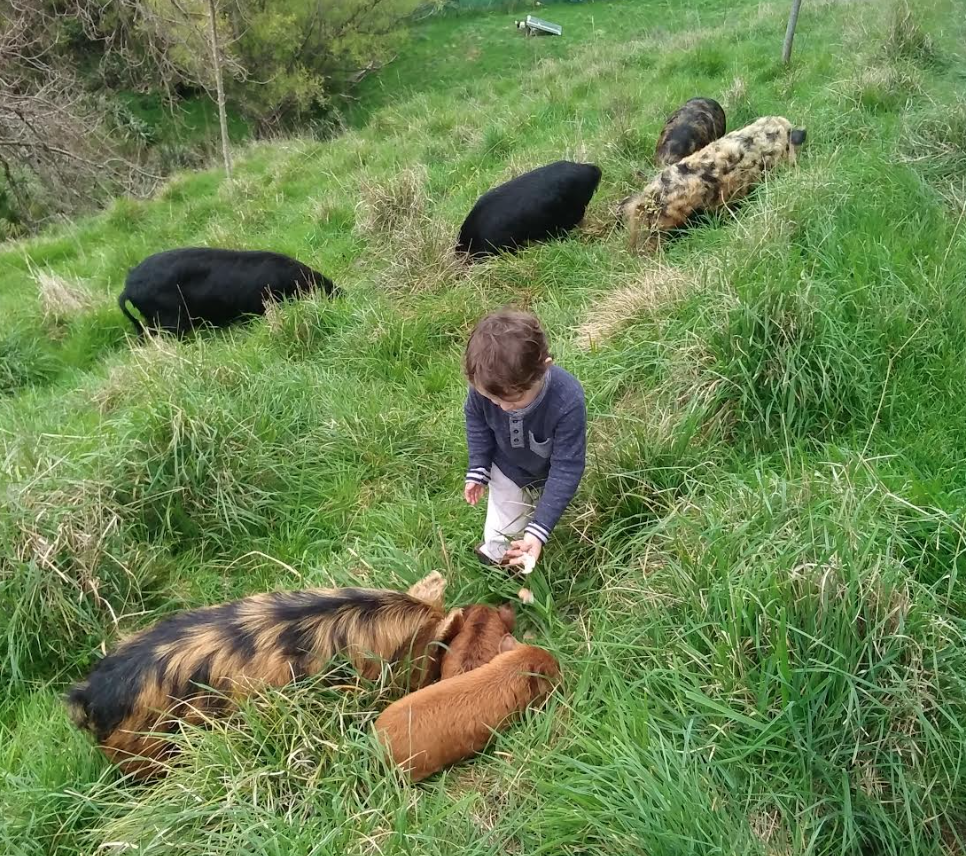
Of course I also brought along a little treat for my helpers. Our kune kune pigs eat much of the grass around the trees we plant so they won’t get covered by the fast growing grass come springtime.
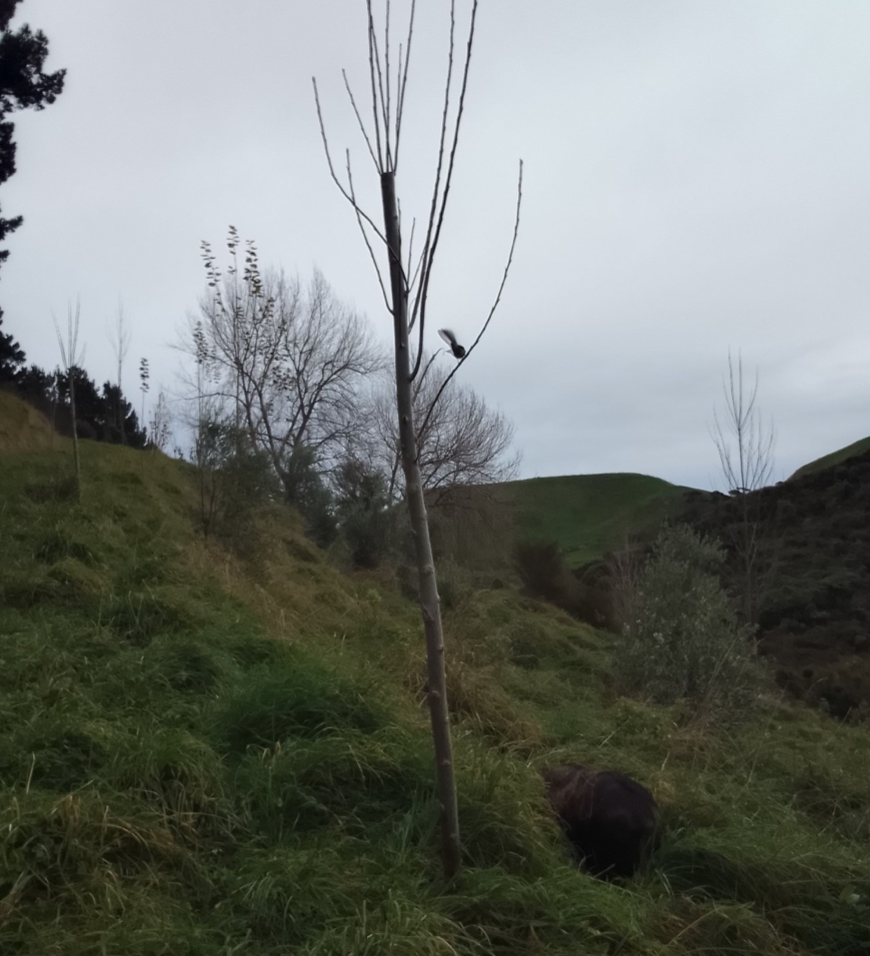
When the pigs came to find the scraps I had thrown for them a small flock of piwakawaka appeared. They eat flying insects that were disturbed by the pigs and I.
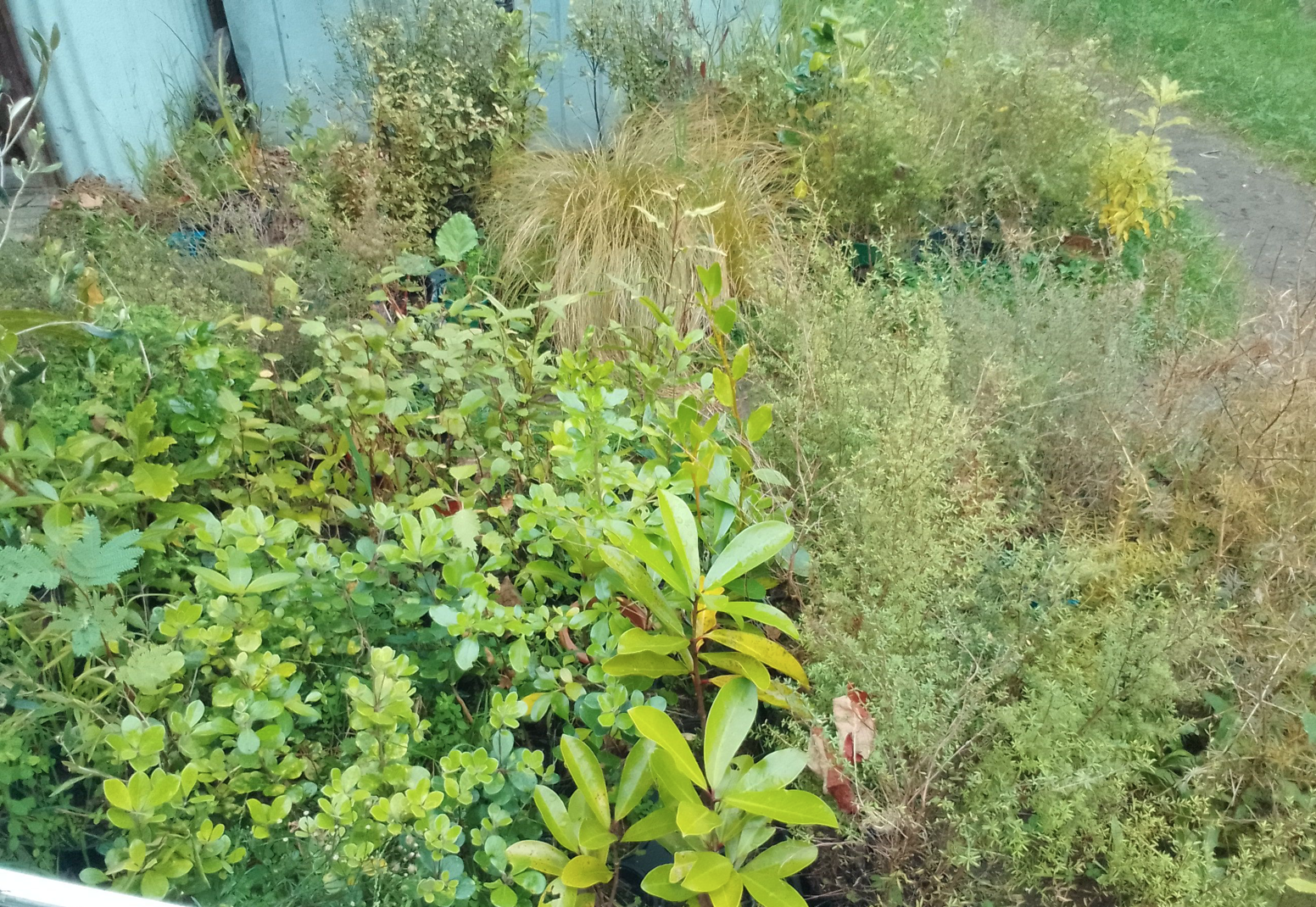
Here is an image for some trees in the nursery waiting to be planted out.
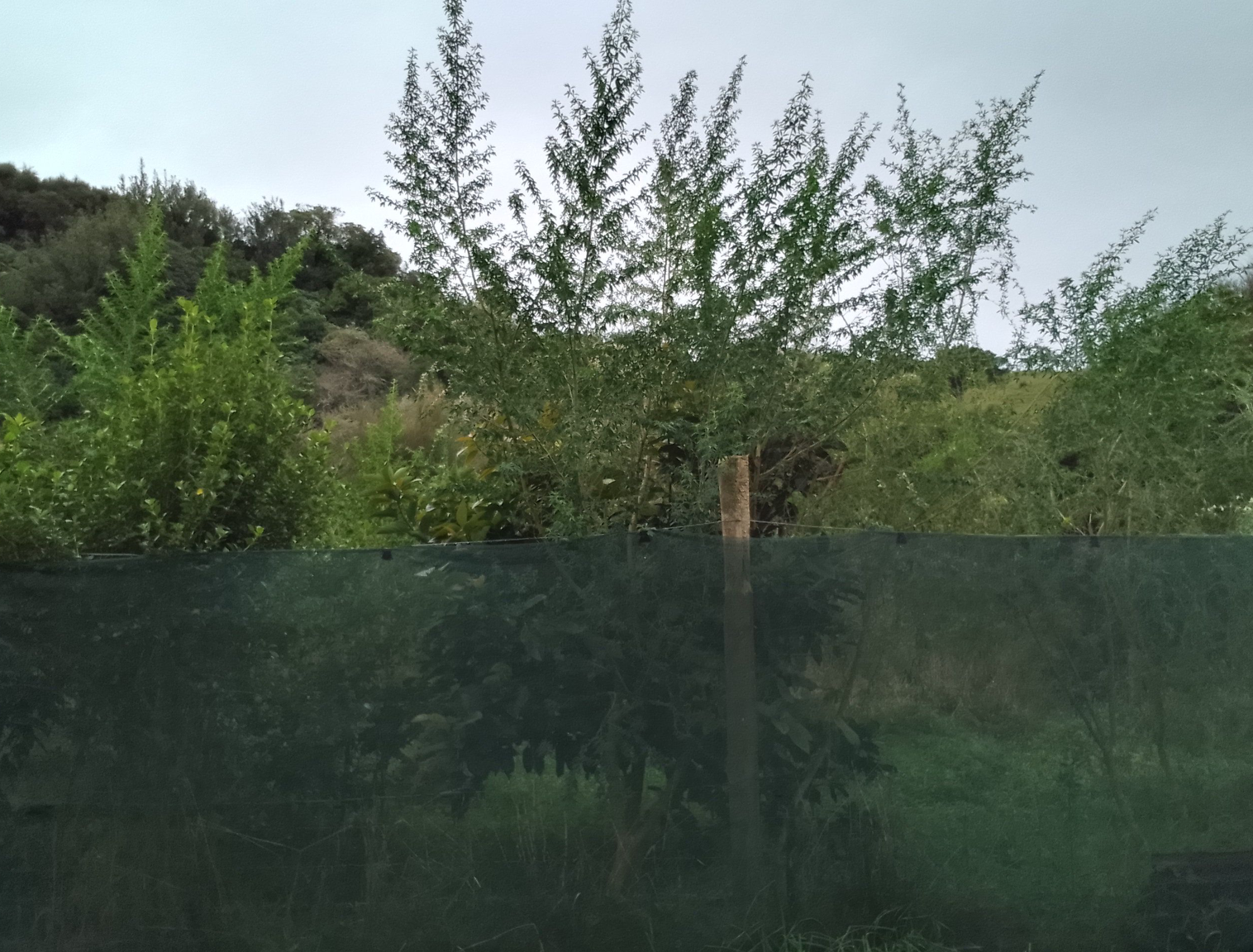
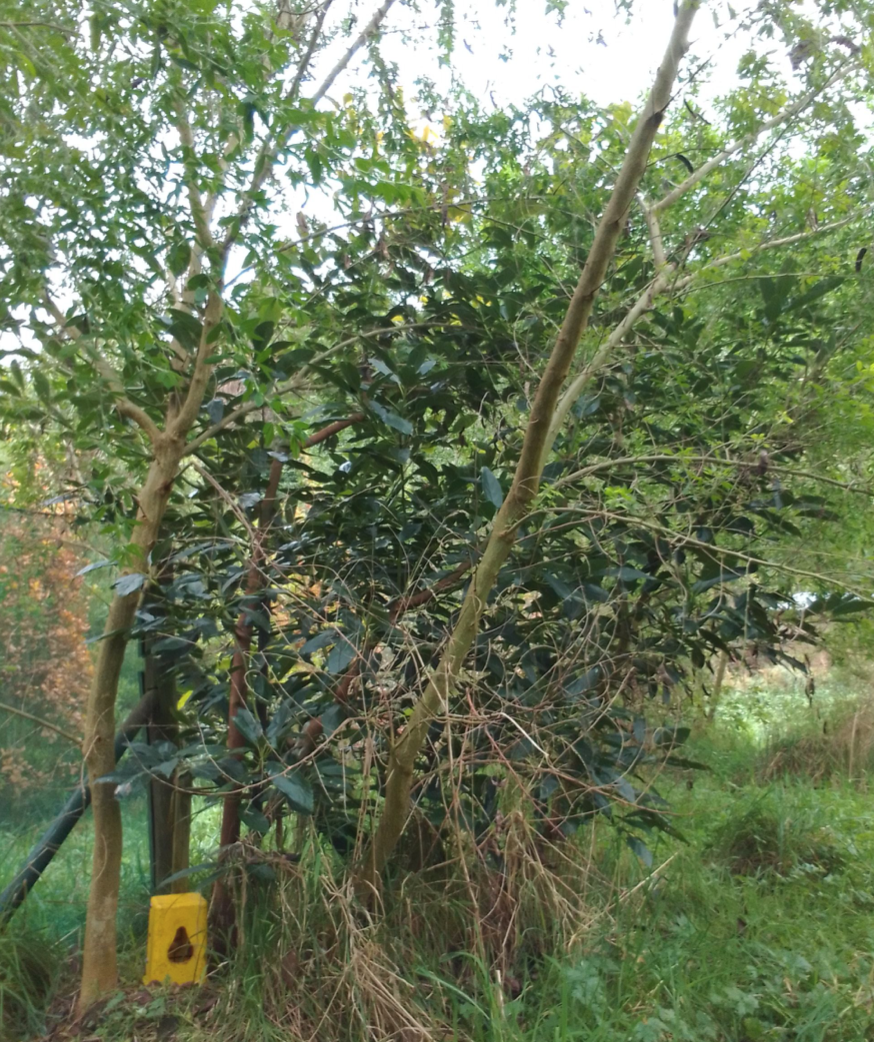
On a shelf above the stream I’ve planted a small avocado orchard where there is some well drained soil. When young the avos need protection from high winds, frosts and sunburn, so I planted tagasaste as nurse trees, which also add nitrogen to the soil.
Here you can see a small avo tree under larger tagasastes.
We also need to protect the avocado trees from possums.
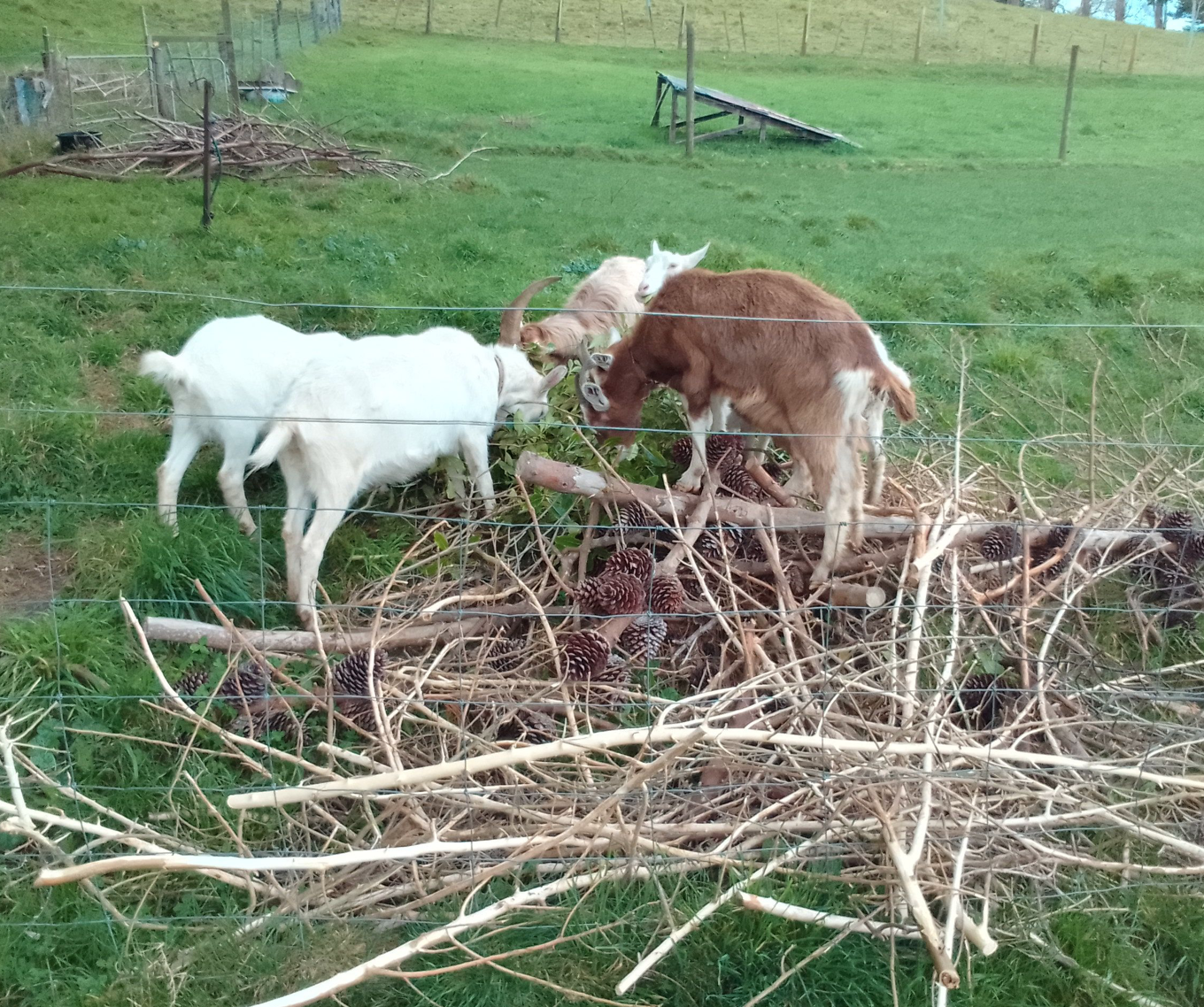
As the avocado trees get older they are more frost and sun tolerant. While they grow upward I can selectively prune tagasaste branches, which are taken in winter to the goats as a treat. They love it!
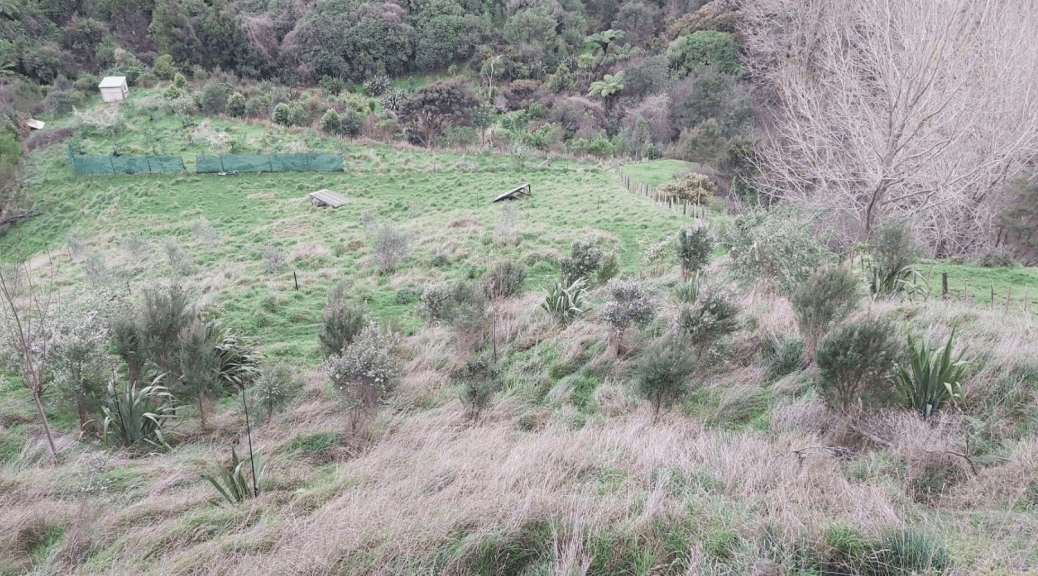
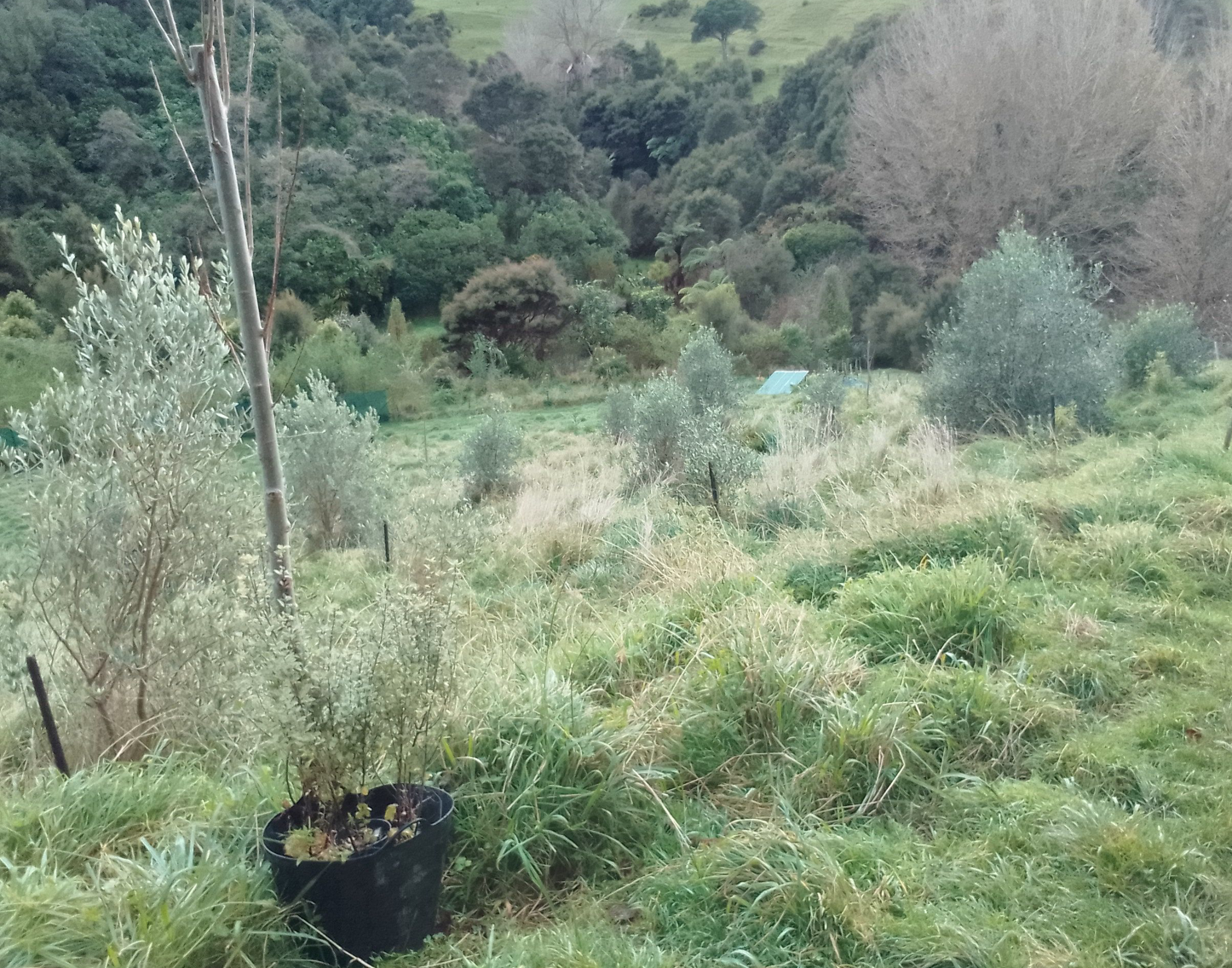
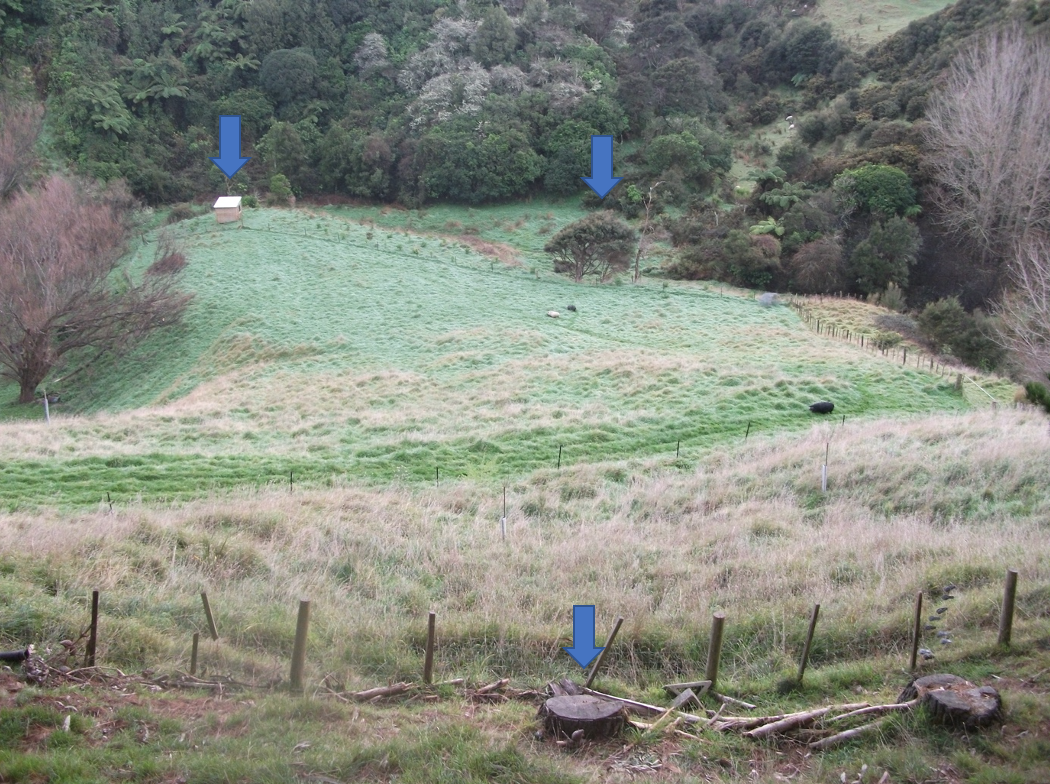
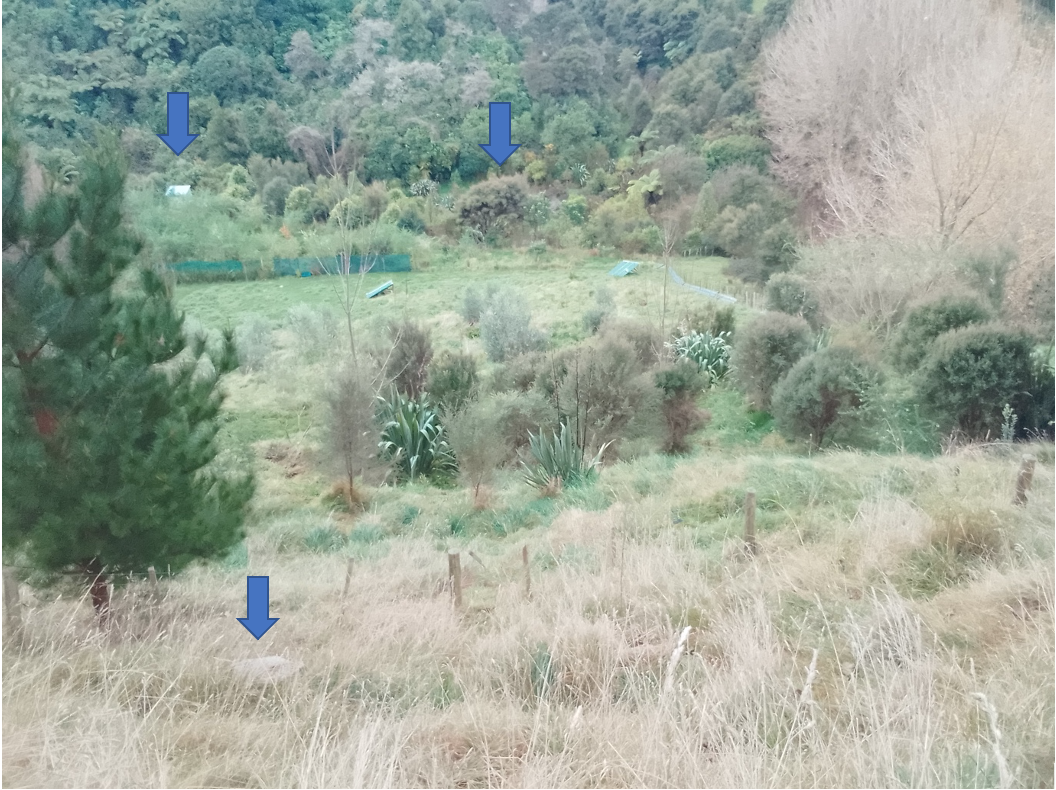
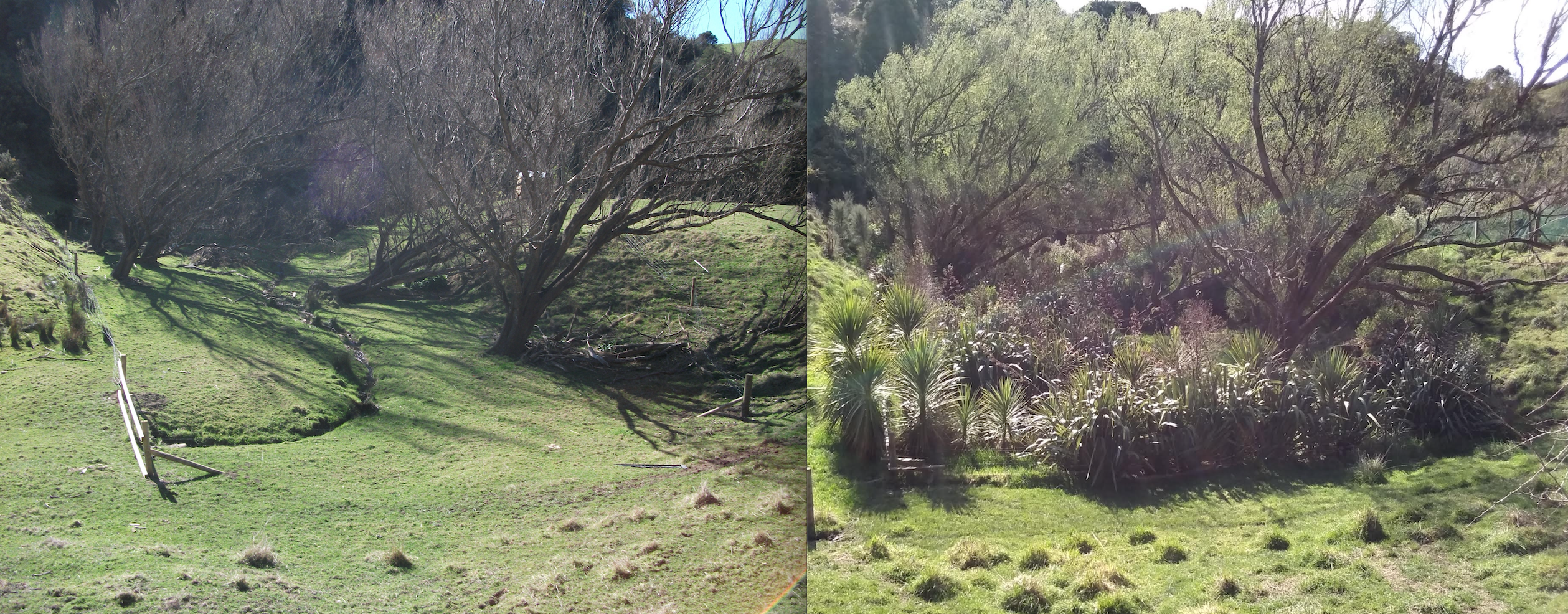
See below an image of the valley before we started our native and orchard plantings. Notice the shed on the left and the large manuka on the right, as well as the tree stump in the foreground.
I’ve marked those same landmarks in the image below so you can see the difference.
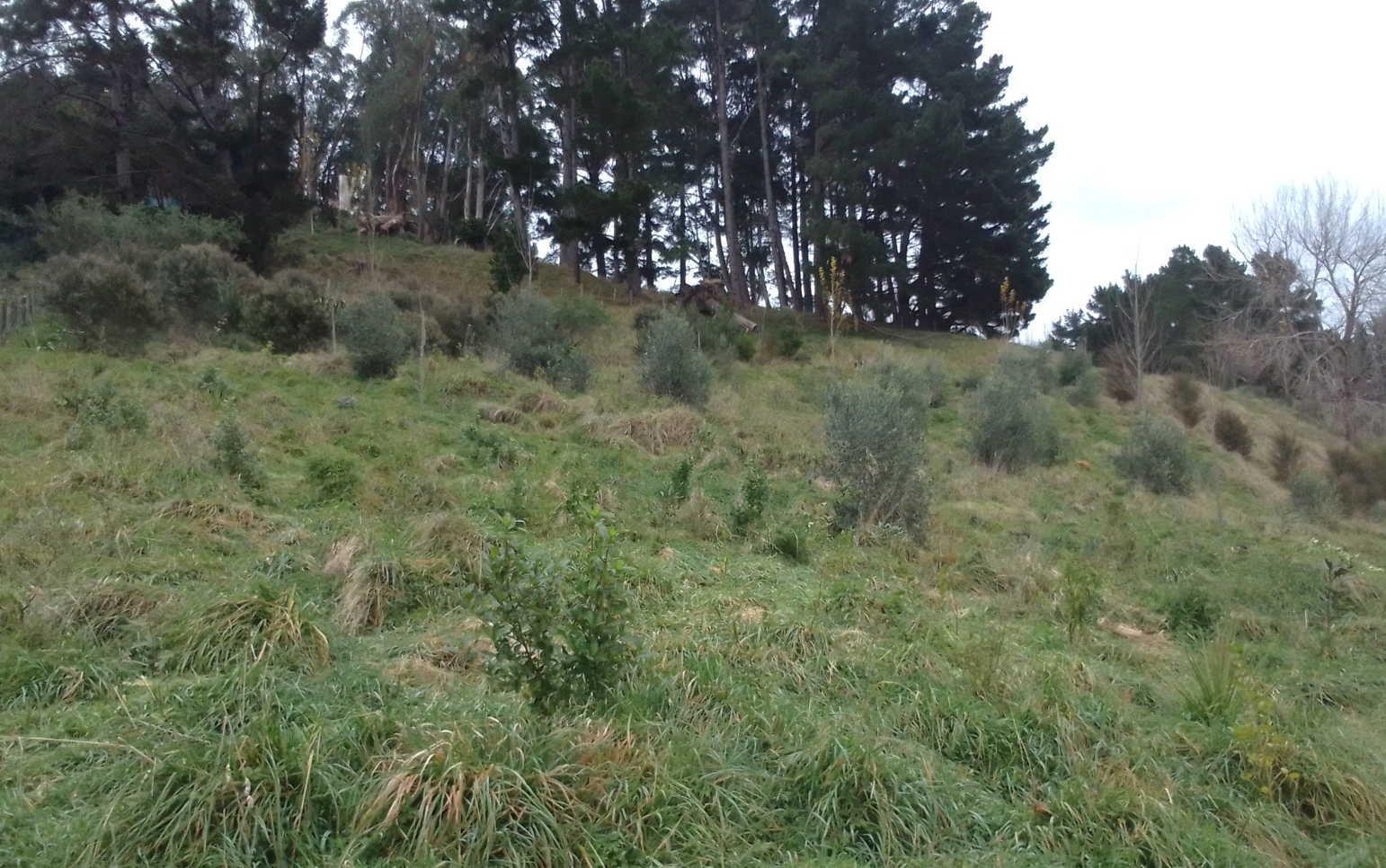
Here is a reverse angle looking back up the hillside. It may be hard to pic out the trees as most of them are small – and my camera is not very good.
We’ve planted a lot of trees over the nine years we’ve been on the farm and we seem to just keep planting more!
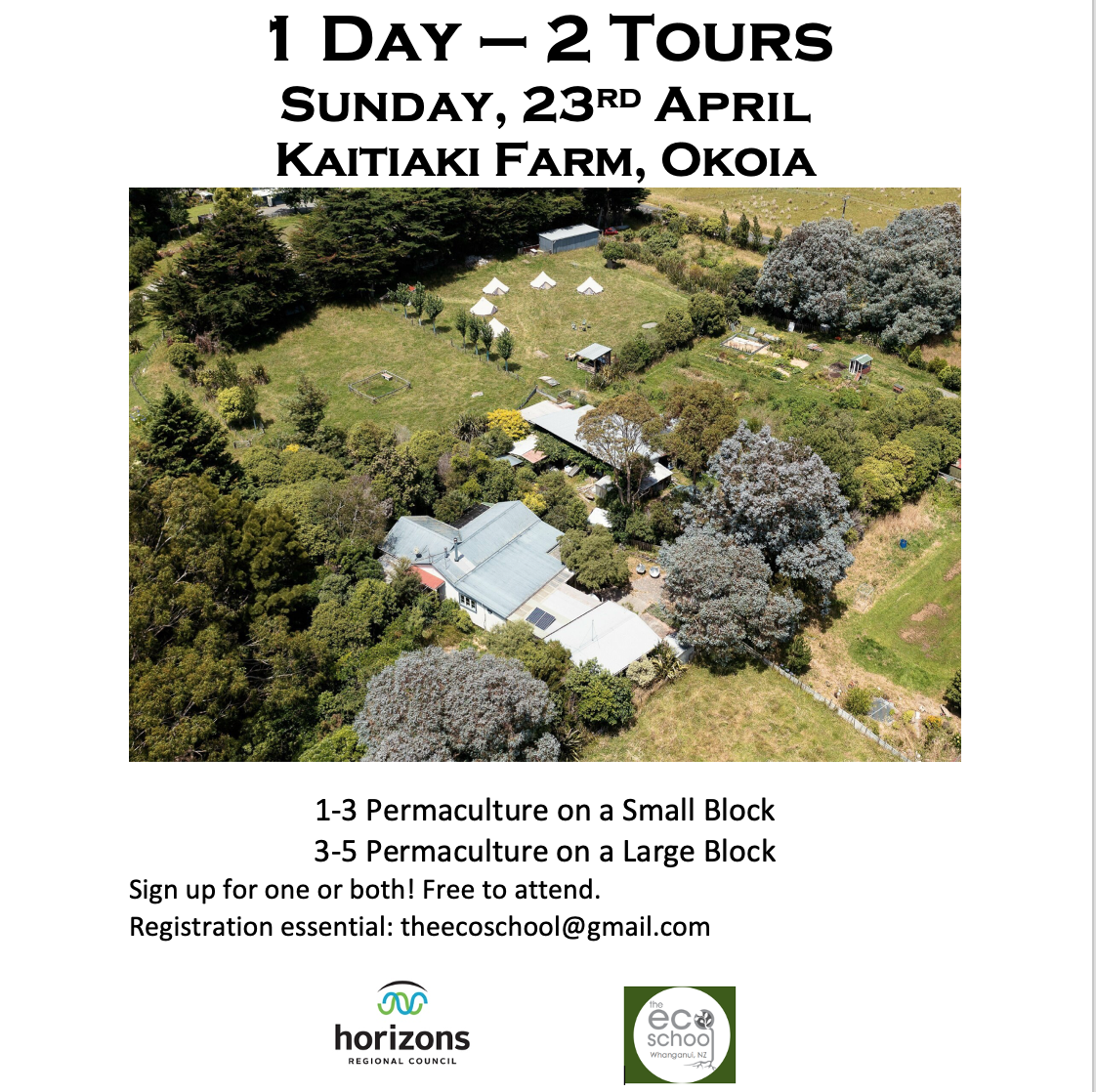
We are excited to offer an extensive programme for April thanks to our partners and funders. Some events require registration and some do not. Please see below for details.
These events are free to attend. Partial funding comes from Whanganui District Council.
RetroSuburbia Property Tours An introduction to permaculture and how it can be used to improve the resilience of suburban properties. Saturday 25th March at 2:30 pm. 9 Tainui St. Castlecliff. Sandy and windy site. Monday 10th April 2:30 pm. 37 Downes Ave. Springvale. Large site Sunday 16th April at 10:30 am. 6 Plunket. Durie Hill. Clay soil and gully.
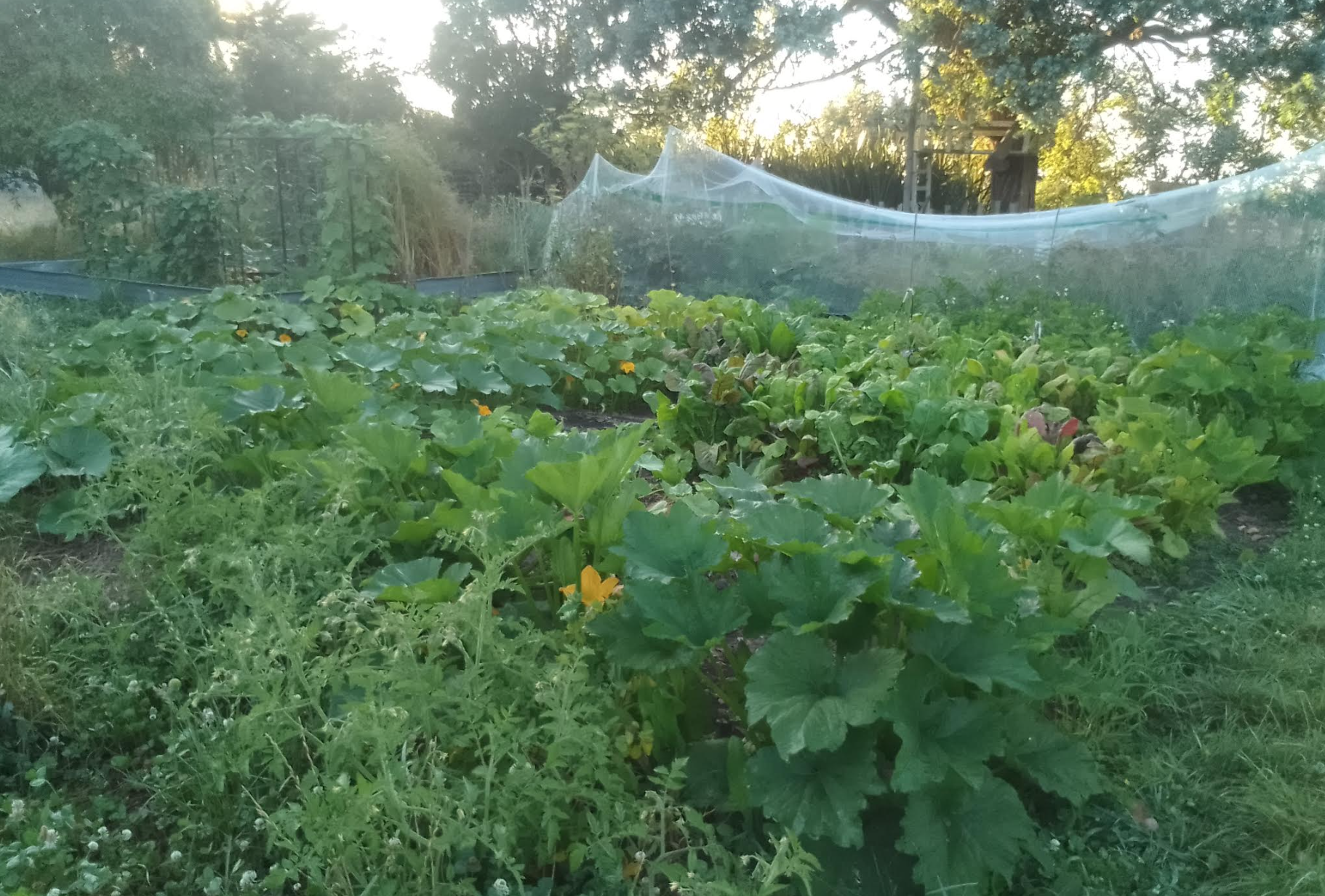
The growing season here on Kaitiaki Farm has been fantastic so far. Plenty of rain and plenty of sunshine have resulted in abundant yields in the orchards, paddocks and gardens.
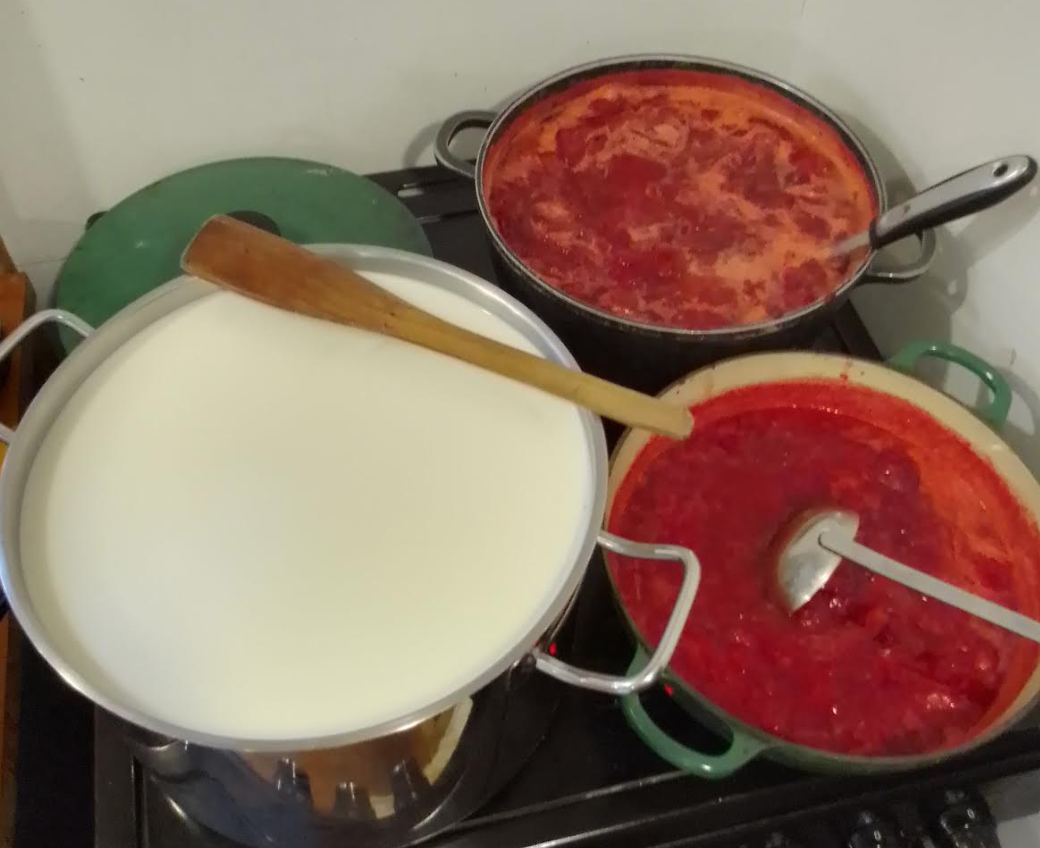
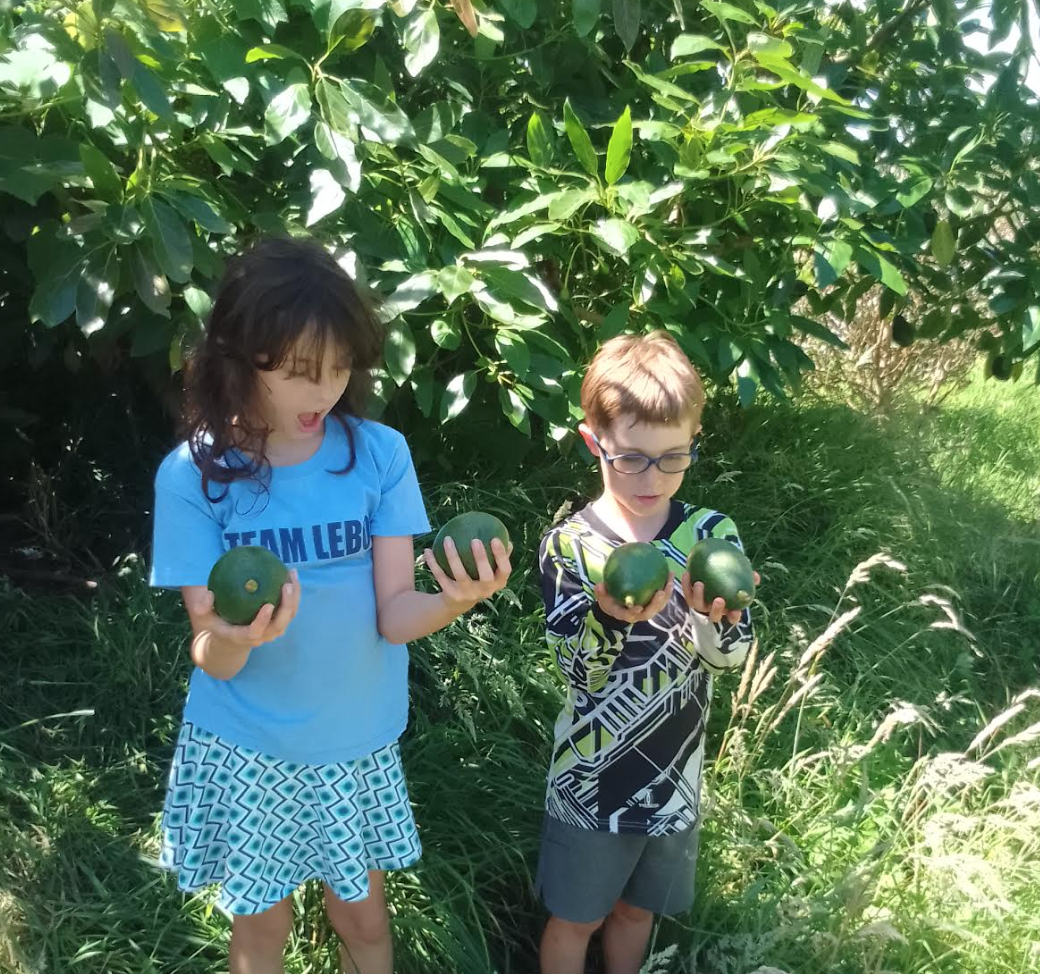
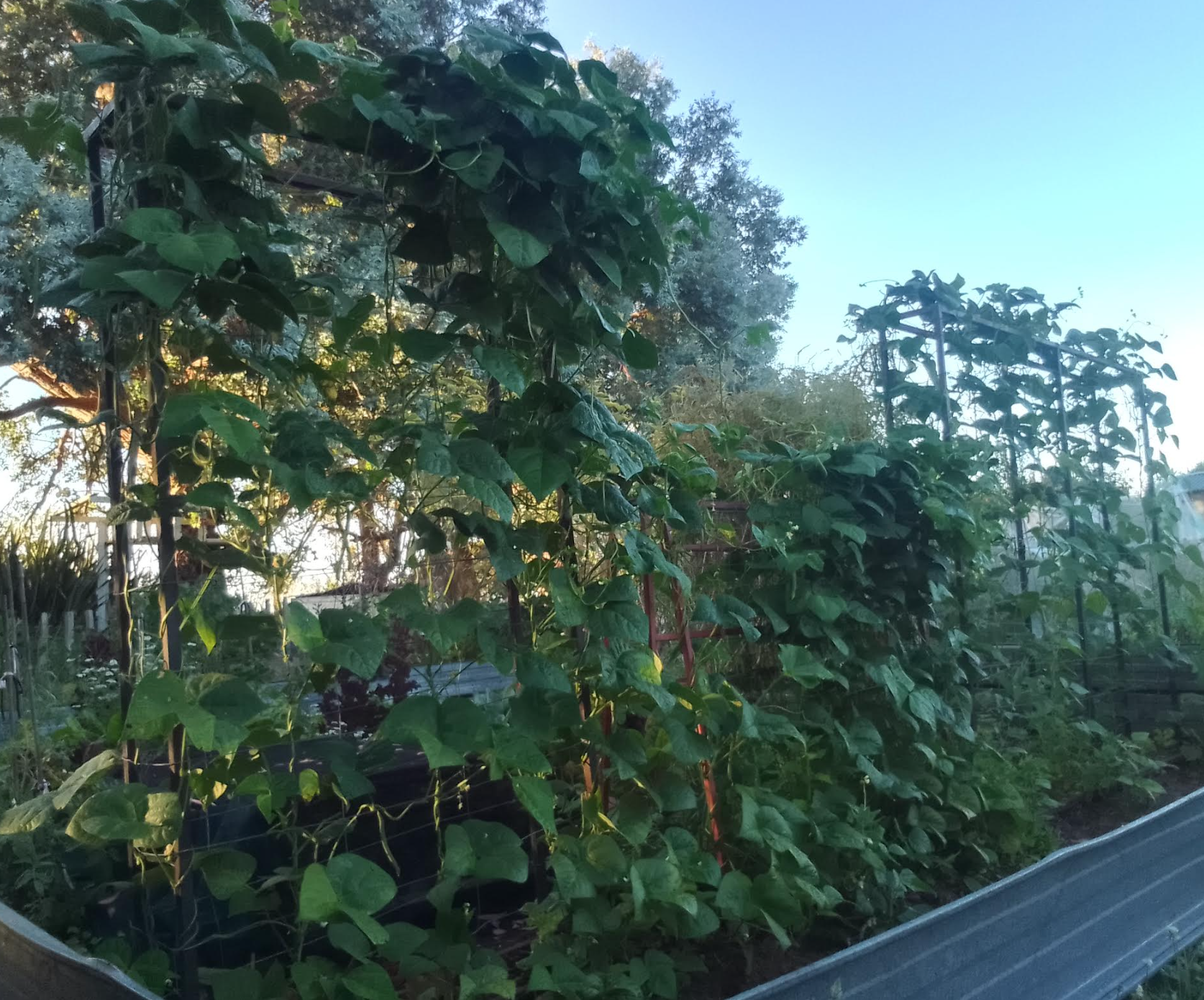
At the moment we’re flush with plums, goat’s milk, avocados, zucchinis, green beans , silverbeet, and eggs among other things. We’ve been busy preserving plums, making cheese, and freezing green beans.
We’ve got a great group of permaculture interns helping with all this and enjoying the fresh, healthy kai.
*One note, however, our garlic season was a bit ordinary because of a fungal disease on the leaves.
We’re also looking forward to forthcoming abundance in basil, potatoes, pumpkins, chokos, peaches, apples, feijoas, pears, persimmons and citrus.
Join us for a tour of restoration projects along with speakers on water quality, sustainable land management, and regenerative agriculture.
Kaitiaki Farm hosts a wide variety of landforms, site conditions and micro-climates within its 5.1 hectares. Holistic, integrated, and regenerative approaches are applied across the challenging landscape alongside extensive wetland, riparian and bush restoration work.
Speakers
Phill Hodges is Horizons land management advisor for the lower Whanganui region. The land management team works with landowners to aid with the mitigation of hill country erosion and sedimentation in waterways. We achieve these results through our Sustainable Land Use Initiative (SLUI) program, assisting with space planting of poplars, retirement of land and afforestation.
Scotty Moore is the Horizons Freshwater Coordinator for the Jobs for Nature Stream Fencing and Riparian Planting programme and is based in Whanganui. The Horizons Freshwater team work with landowners, farmers, iwi, hapū, trusts and community groups to improve water quality and native fish habitat in Aotearoa waterways and wetlands primarily through stream fencing and riparian planting grants.
Richard Pedley is a research student at Massey University studying if spiders are suitable biological indicators of soil health in the context of New Zealand pastoral farms. In particular, if spider diversity demonstrates a sensitivity to the impact of grazing practices associated with regenerative farming on soil health.
Coffee and Tea Provided. Please BYO lunch.
Notes for attendees:
Requires walking up and down hills.
Dress for the conditions, including sun hat.
Bring a water bottle.
Draft Schedule
10-10:30 Arrival and Morning Tea
10:30 Welcome & Safety Briefing
1045-12 Session 1
12-1 Lunch – BYO
1-215 Session 2
215 Thanks & Farewell
Free to attend. Registration essential: theecoschool@gmail.com
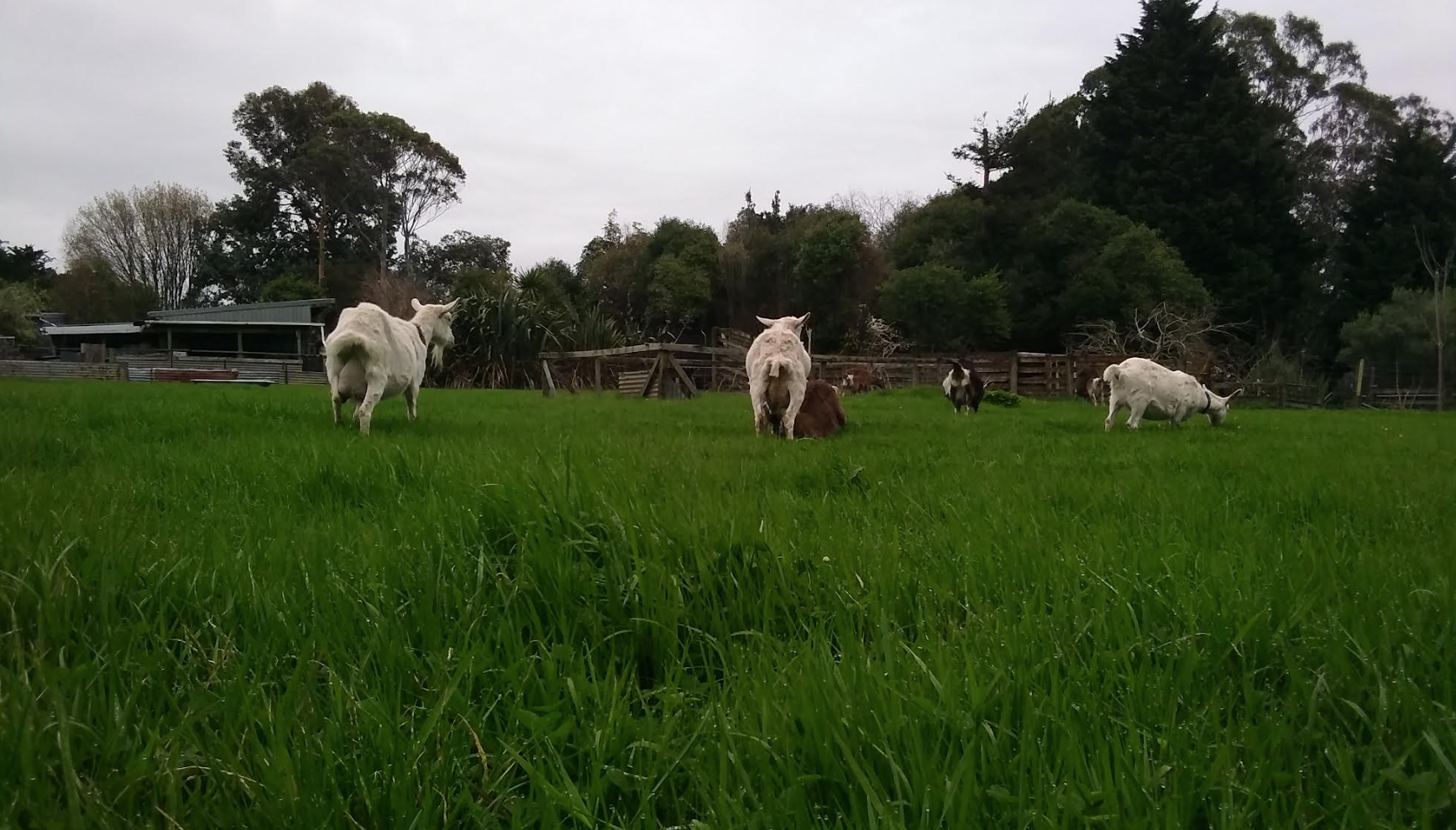
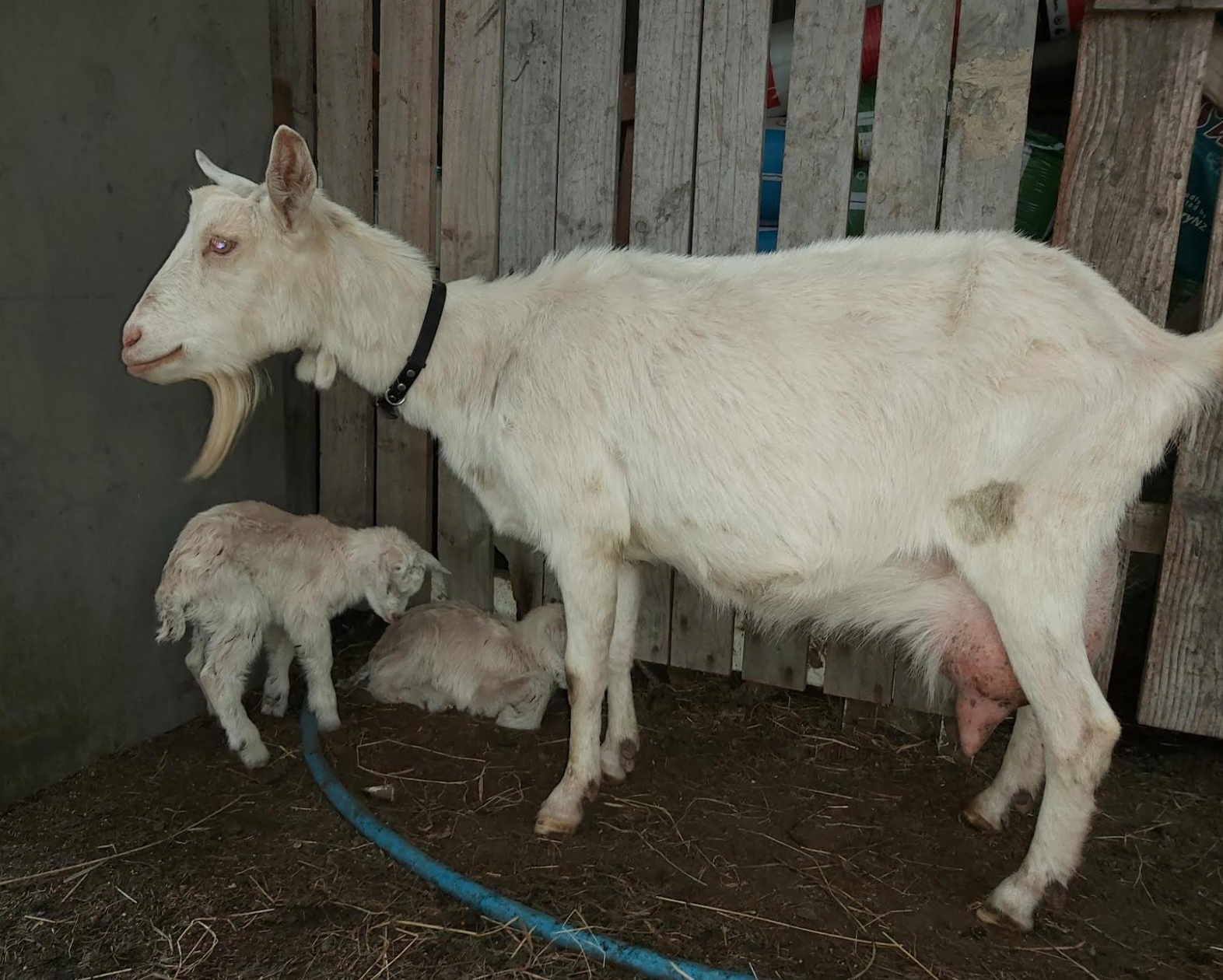
Despite a very wet winter the farm is looking fabulous and the animals are very healthy. These pregnant goats were shifted into this paddock for a good spring feed.
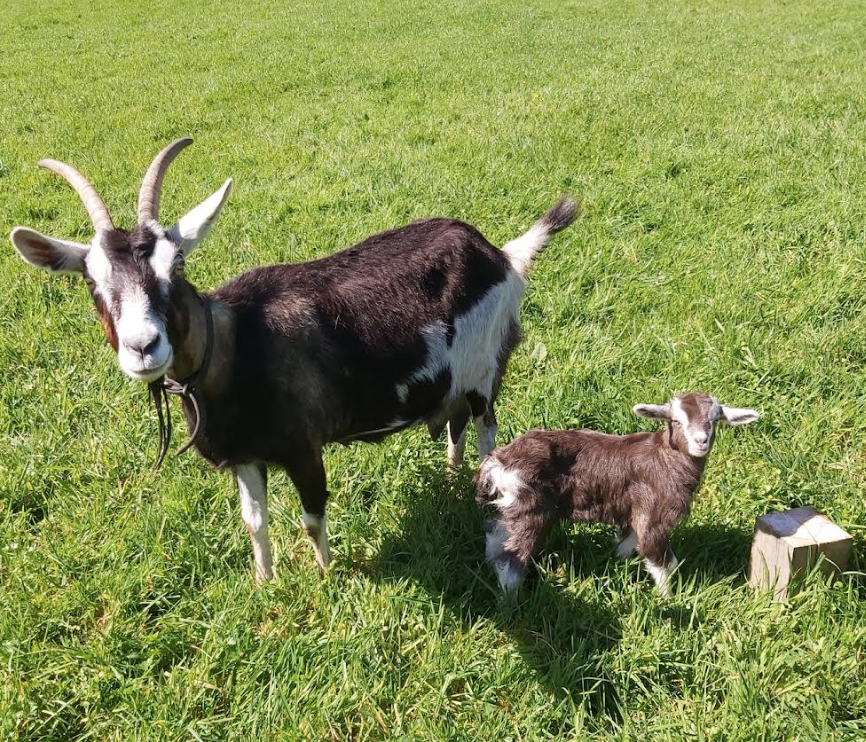
We’ve had a dozen kids born this season with one doe left to go. Sophie had twins on Sunday afternoon.
Mindy had a Mini-Me
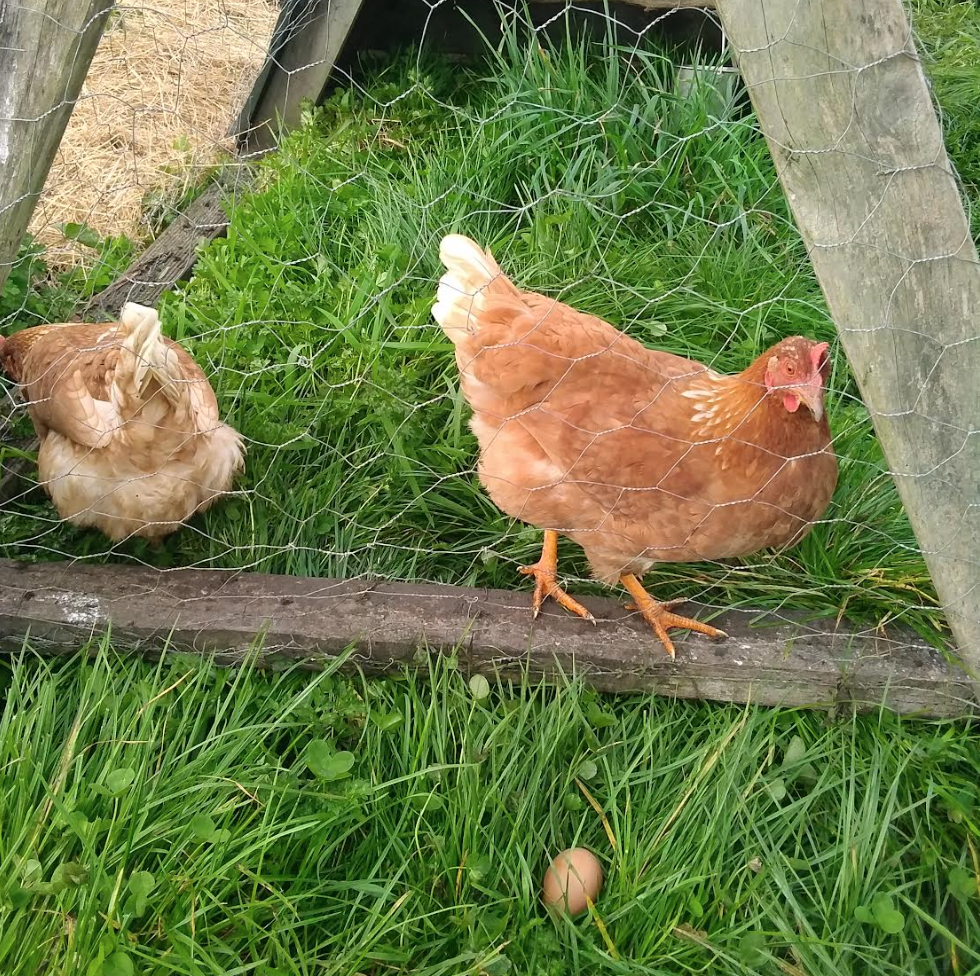
The red shaver chicks we bought in the autumn have grown into hens and laying eggs with the longer days. Eight hens are laying 5 to 6 eggs per day.
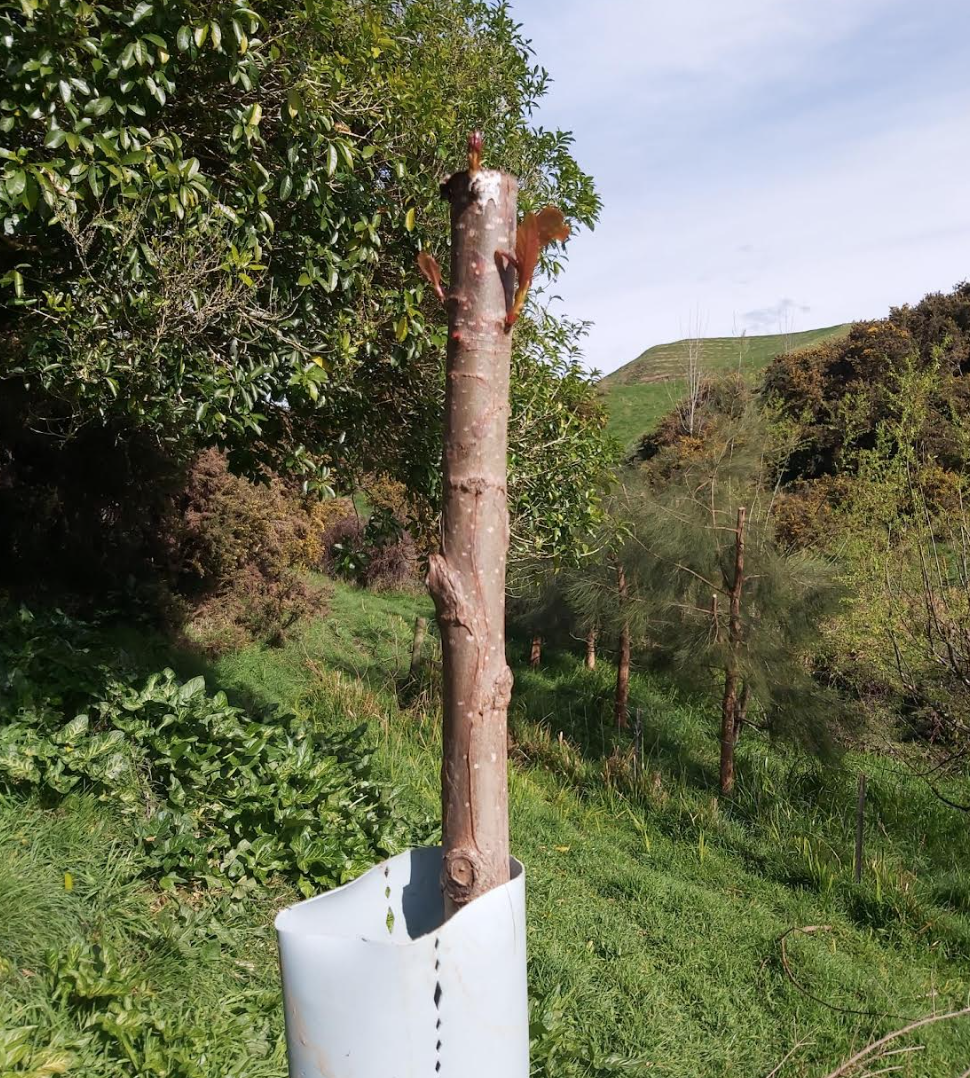
The 100+ poplar poles we planted this winter are starting to leaf out.
The piglets are looking plump and healthy, while the sows and boars are keeping on top of the fast growing grass.
The garlic is up and going – almost ready to be mulched.
Plum and peach blossoms have been plentiful and we are hoping for good fruit set.
Avos are ready to be picked.
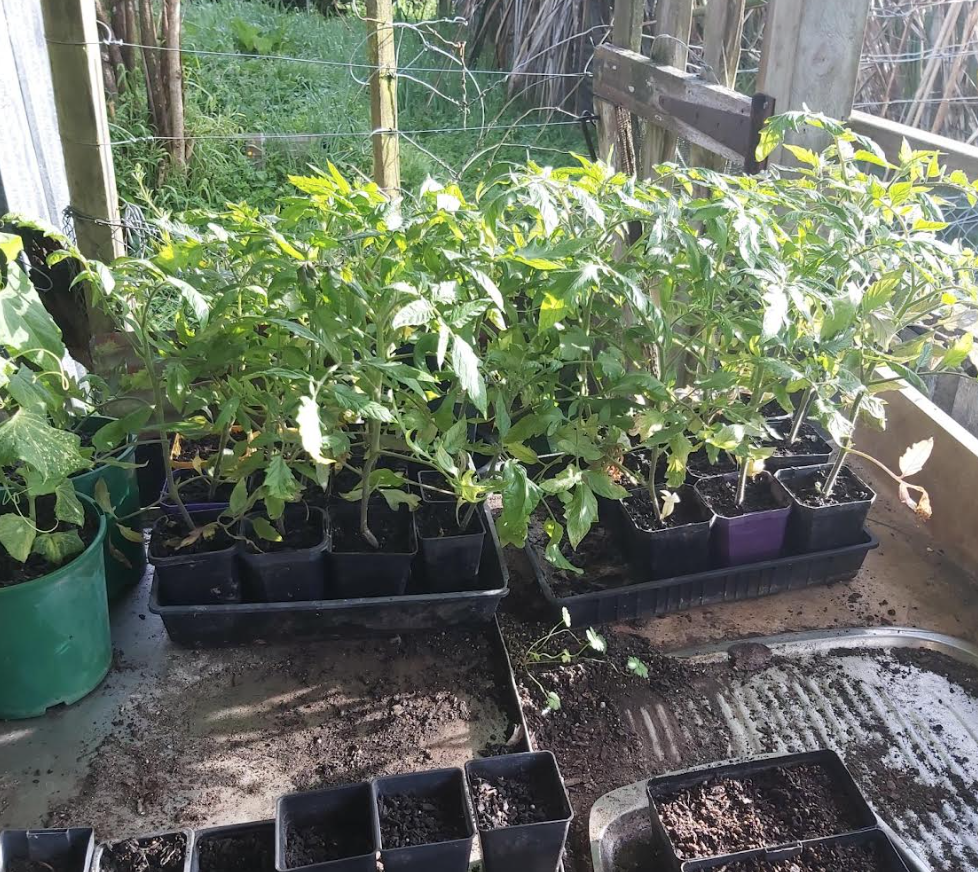
And tomatoes are ready to go into the ground.
So much more to report but also so much work to be done!
Earn a Permaculture Design Certificate on one of New Zealand’s best permaculture farms.
Our programme is unique in the world of permaculture in that it combines best practice teaching and learning along with best practice regenerative land management.
The programme balances content, process and reflection, while nurturing systems thinking skills. It’s about developing a way of thinking that recognizes the connections between diverse elements on the farm and how they interact, along with the hands-on skills required to work effectively with cultivated ecologies.
3RD JANUARY, 2023 – 8 WEEKS WITH A WEEK OFF IN THE MIDDLE. $850 CLIMATE RESILIENCE PDC IMMERSE YOURSELF IN ECO-DESIGN FOR CLIMATE RESILIENCE – WORKING WITH NATURE INSTEAD OF AGAINST IT. THIS PDC FOCUSES ON ECOLOGICAL LAND MANAGEMENT, REGENERATIVE FARMING, WATER MANAGEMENT, ECO HOUSING, APPROPRIATE TECHNOLOGY, HUMAN-SCALE APPROACHES,AND TRANSPORT ALONG WITH THE FULL PDC CURRICULUM.
7TH MARCH, 2023 – 8 WEEKS WITH A WEEK OFF IN THE MIDDLE. $850 ABUNDANCE PDC AUTUMN IS A GREAT TIME TO BE ON THE FARM WITH HEAPS OF FRESH KAI FROM THE ORCHARD, GARDENS AND ANIMALS. THIS PDC FOCUSES ON GROWING, PROCESSING AND PRESERVING KAI ALONG WITH ANIMAL CARE, BUSH RESTORATION, AND SOME ECO-BUILDING PROJECTS.




















 Eco Thrifty Living